Search

Adventures in the Villa

Category

2018 Southwest Adventure Caravan

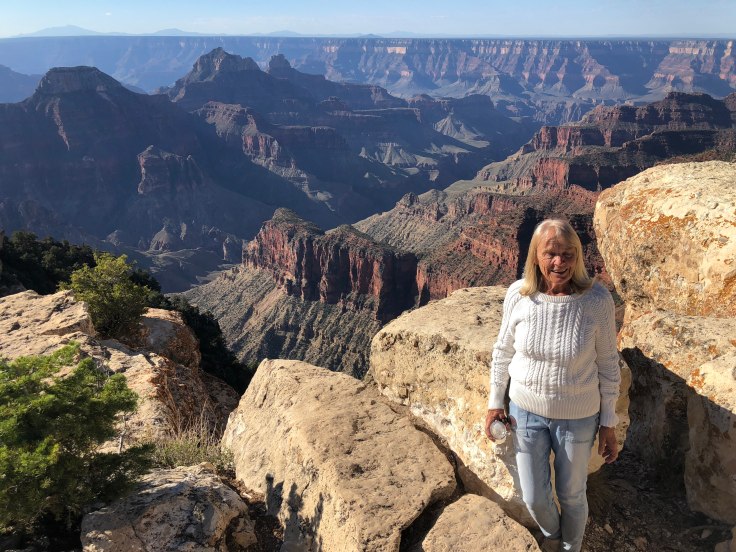
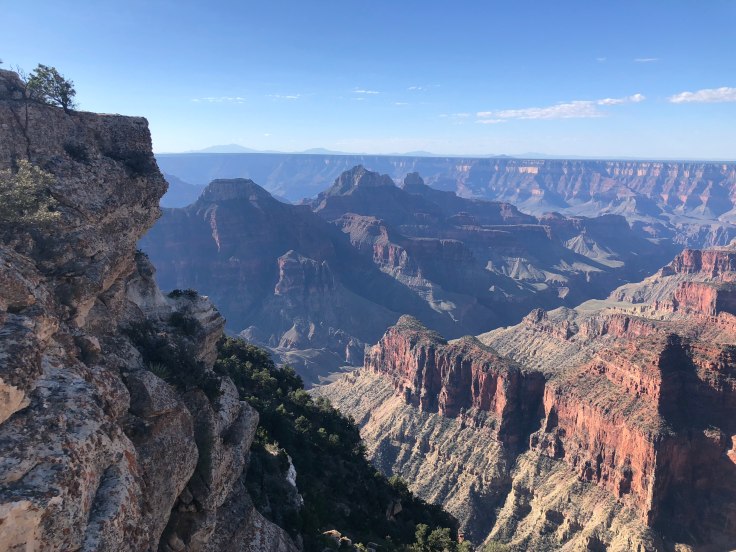
2018-09-22 – WBCCI 2018 Southwest Adventure Caravan – Day 35 – North Rim of the Grand Canyon – 12 mile hike…

img_8182img_55531

We woke up early this morning – it was still dark.  We quickly got dressed and we were out the door before sunrise.

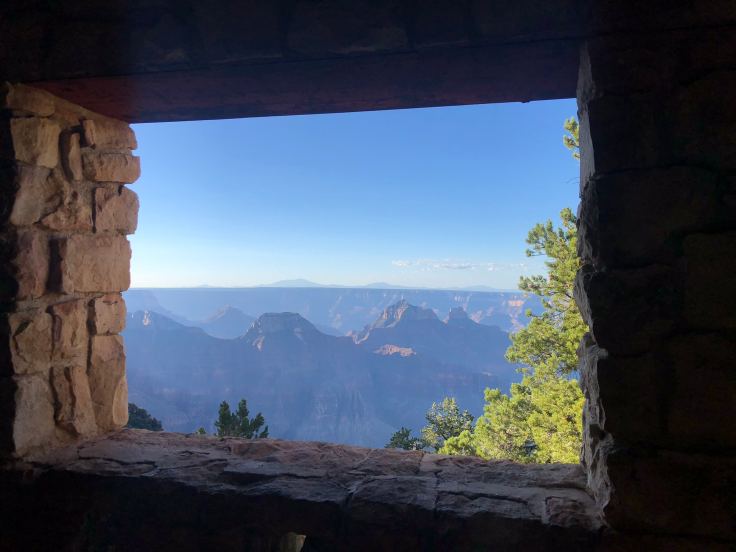
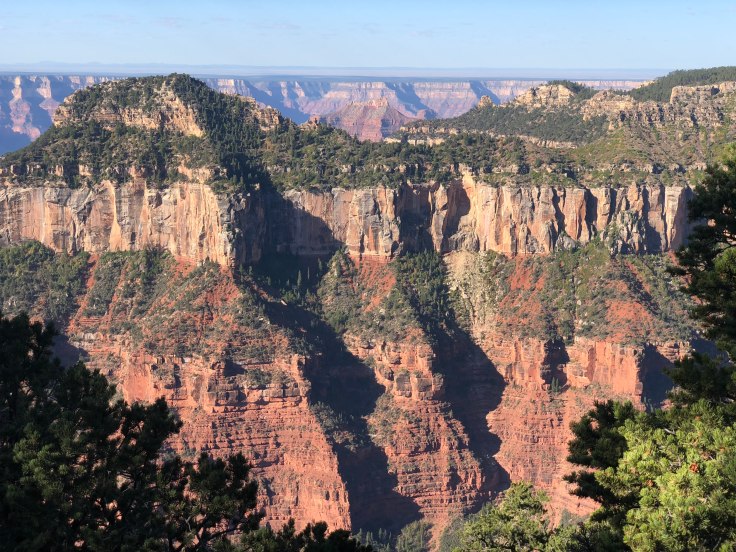
We walked the Transept Trail to the lodge.  Transept is the name of a cross canyon that leads to the main Grand Canyon.  The trail winds along the rim of the canyon.  We were generally walking south, looking west, watching the sun light up the east facing canyon walls across the way…

img_8190img_8194img_8196img_8197img_5559img_8202img_5566After 1 1/2 miles along the trail we arrived at the Lodge…

img_8208img_8209img_5571img_5572img_8210img_5577

After arriving at the lodge, (1.5 miles) we again walked out to the end of Bright Angel Point… (+.5 miles = 2.0 miles)  Not to many teenagers risking life and limb this morning…

We bought coffee at the lodge, then sat on the terrace and watched as the sun continued to rise and paint the canyon walls…

img_8214img_8219img_5583img_5580img_5584img_8229img_8231img_8235img_8245img_8247img_8252img_8253img_8254img_5597img_8267img_8269

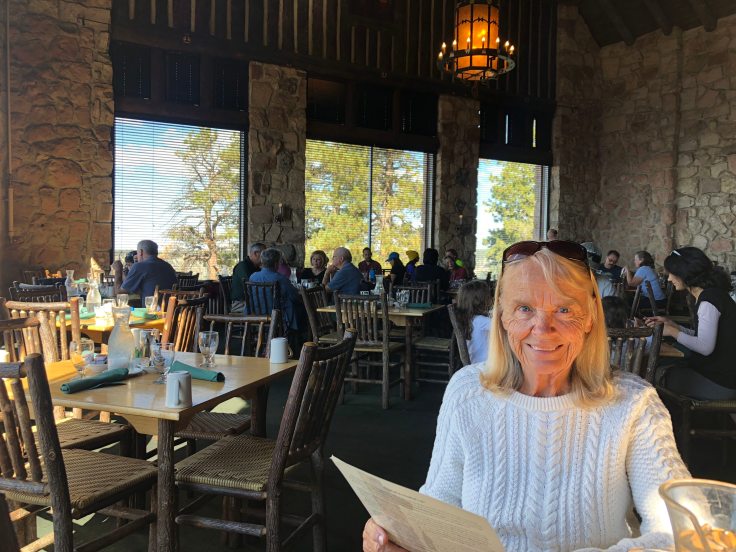
Finally we went to the dining room and had a late breakfast of Pancakes and Eggs Benedict…

img_8272

We then needed to do some more walking.  We walked back towards the campground along the Bridle Trail…

img_8274

img_8275

Then we continued to the trail-head for Uncle Jim’s Trail. (+3.0 miles = 5.0 miles)…

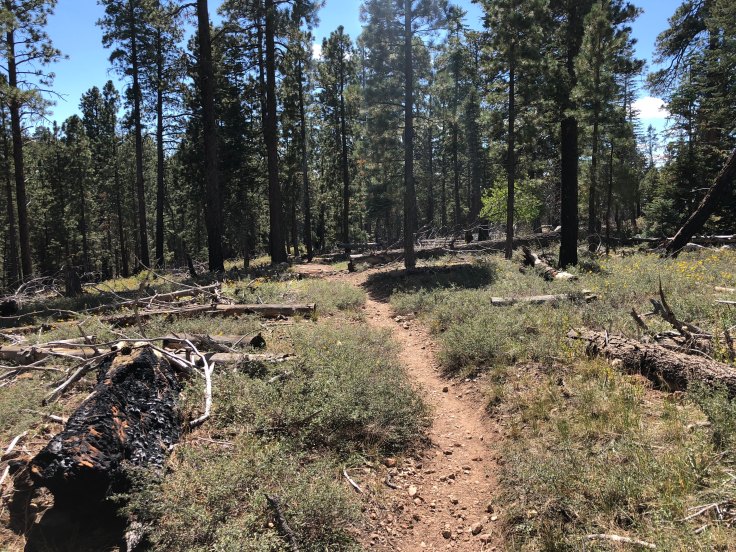
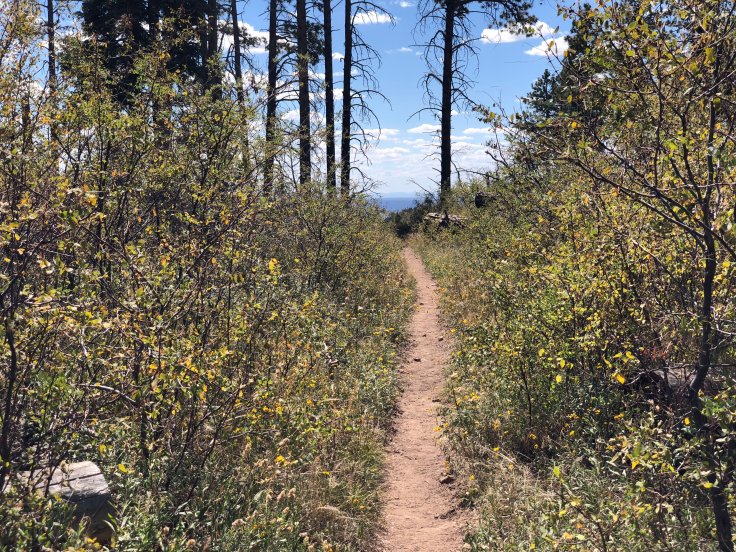
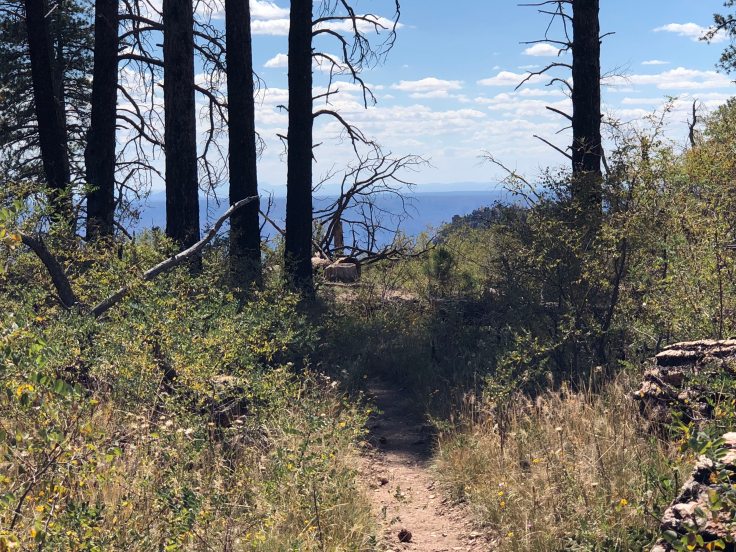
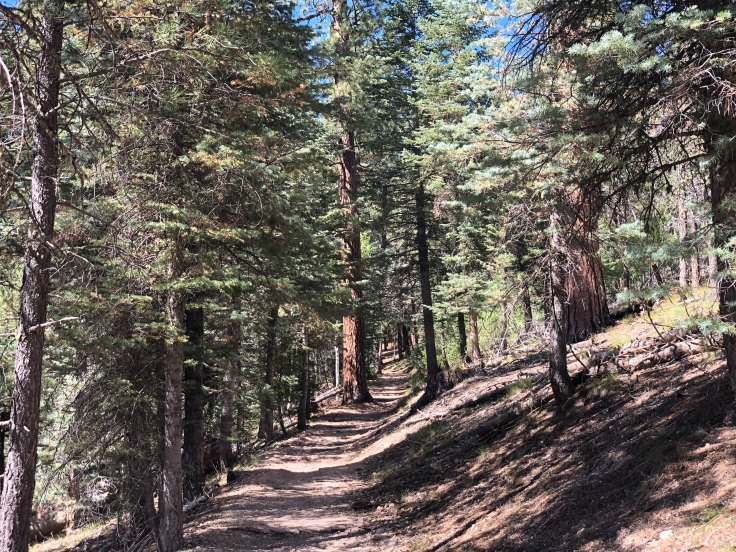
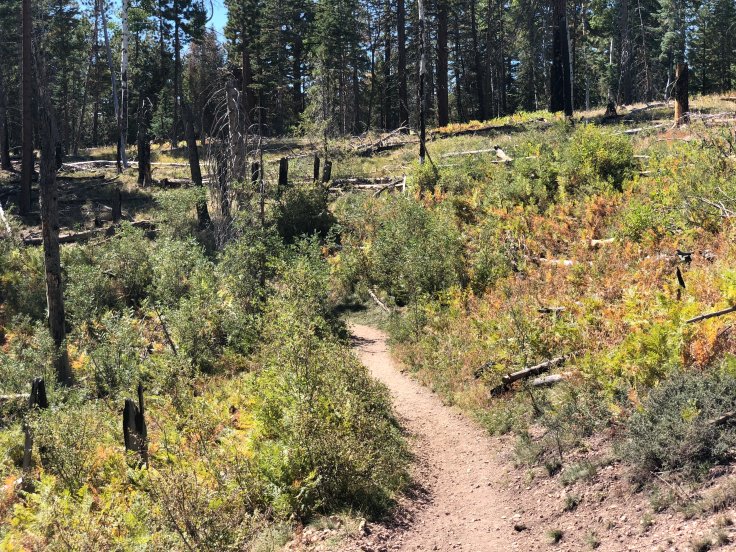
We walked the entire loop of Uncle Jim’s Trail.  (+5.0 miles = 10.0 miles)  Pro-Tip:  Don’t bother – views were less than overwhelming, and the trail contained many trip hazards – roots, rocks, pine cones, and mule poop…

img_8276

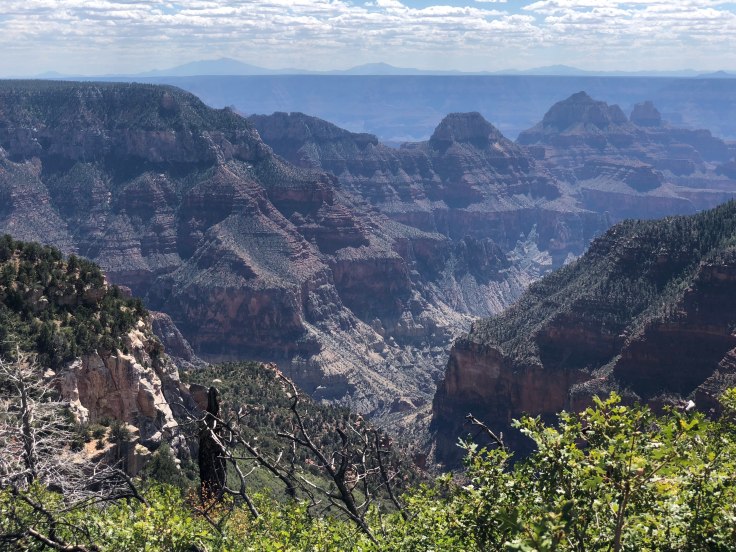
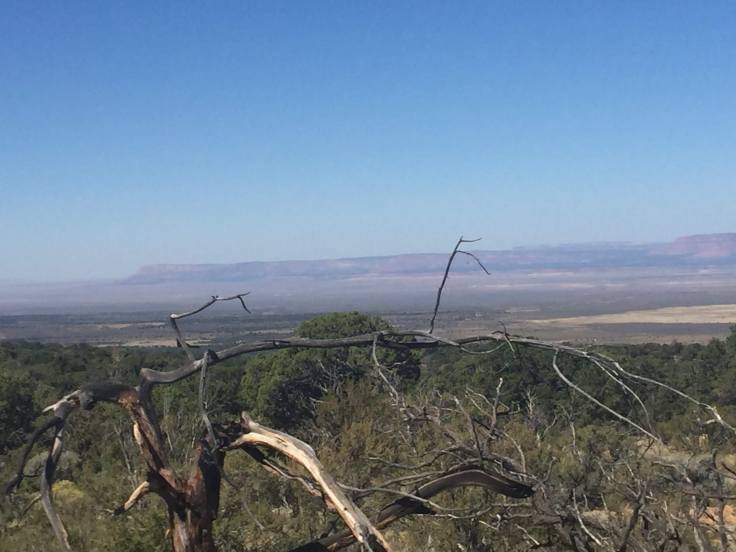
We walked so far I thought I spotted the ocean on the horizon…

img_8278img_8279

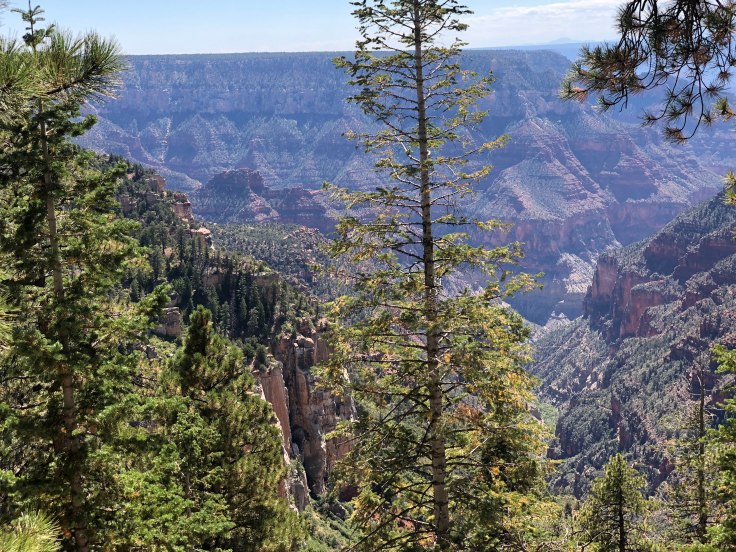
No, it was only more of this hole in the ground surrounded by rocks… And a hazy view at that…

img_8280img_8282

More trails, with more obstacles…

img_8285img_8294img_8295

After returning to the trail-head we walked back to the Villa.  (+2.0 miles = 12.0 miles).  Other Airstreamers were having happy hours, sitting around campfires, and going out to dinner.  We took off our shoes, drank a few bottles of water, and went to bed before dark…

img_8300img_8301

And a tiring time was had by us…

2018-09-21 – WBCCI 2018 Southwest Adventure Caravan – Day 34 – Traveling to the North Rim of the Grand Canyon

img_5533

We started the day by realizing that we might need propane.  We are headed to a campground at the North Rim of the Grand Canyon; there will be no electricity (or any other hook-ups) and it will be cold at night, so propane becomes pretty important.  So rather than having a leisurely morning and leaving at the indicated time, we hitched up and headed to the town of Kanab…

According to Yelp, there are 3 places in town that offer propane.  The first one we came to had a giant sign that said, “We’ve Moved”.  So we traveled on.  The second place was closed.  No signs or anything – just no one there… The third one looked good – large lot, lots of activity going on.  We pulled in and I walked to the office to see what the procedure was.  I was told, “Sorry – our RV propane guy is not here today…!”  I asked where else I could go, and the nice lady told of a nearby gas station that has propane.  So the fourth time was the charm and we topped off our tanks.  (It turned out we were getting bad readings from our gauges and we really weren’t that low…)

So we headed south, across the Arizona Strip…

img_5535

Our intermediate destination is Jacob Lake, a really tiny lake, campground, and lodge.  It gave us a nice break and a chance to stretch our legs.  When we arrived there were 5-6 Airstreams already here.  By the time we left, there were 20…

img_5537

We decided to stay for lunch with another caravan couple…

img_5538img_5539

After lunch we continued on south.  The scenery changed along the way…

We are traveling to a much higher elevation – about 3,000 feet higher…

img_5536

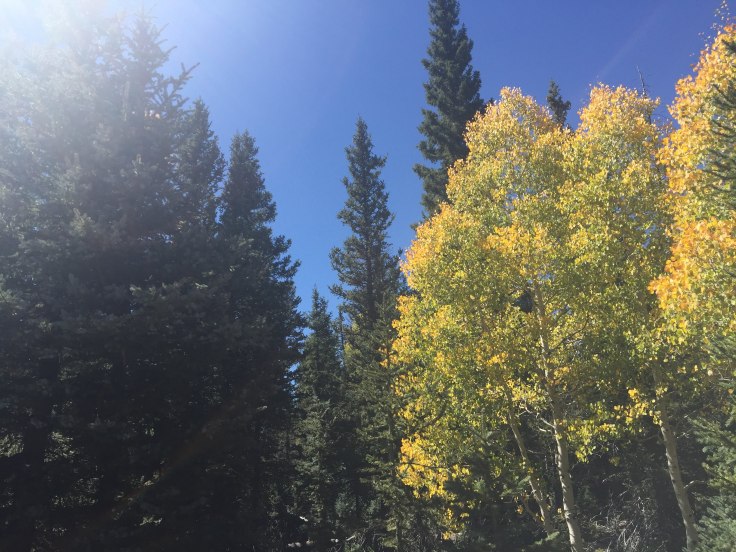
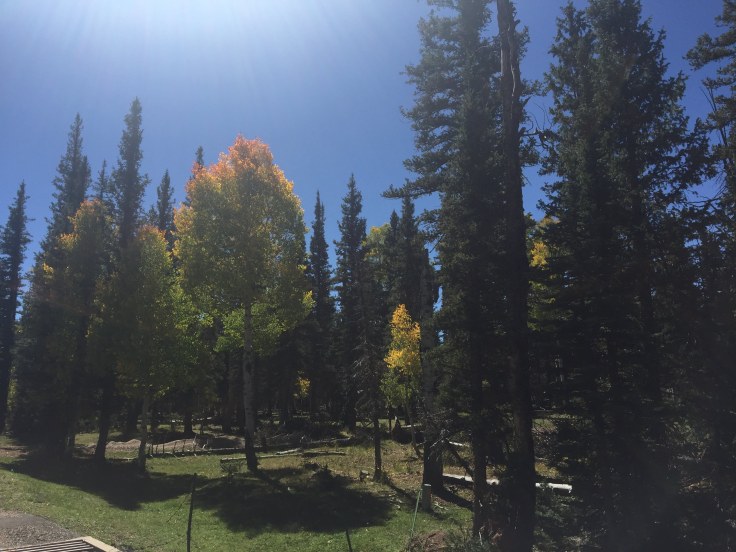
We soon were treated to the Aspens changing colors…

img_5541

This meadow is called Grass Lake… there are many similar meadows.  At one of them, there were several Bison in the distance… we just didn’t get any pictures of the bison…

img_5542

As we approached the campground we found ourselves in the forest…

img_5545img_5546

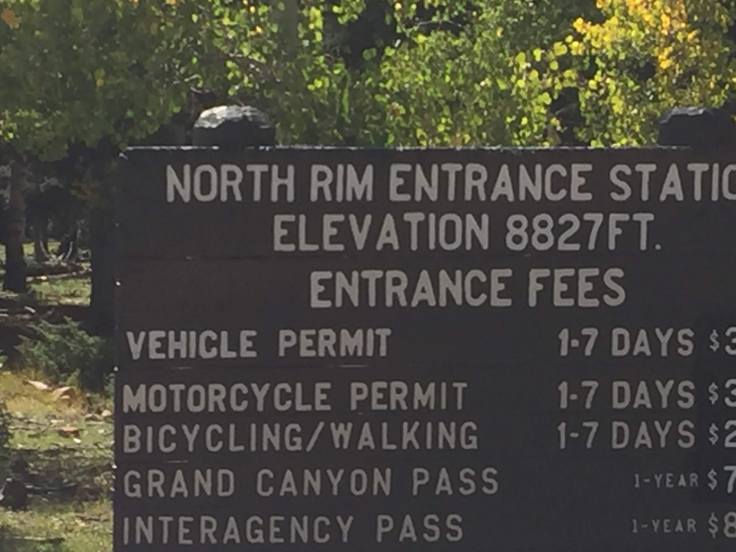
8,827 Feet!

img_5547

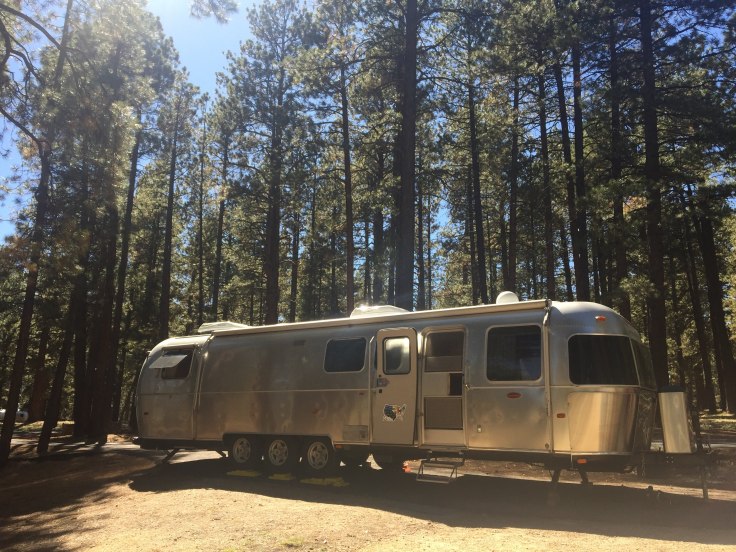
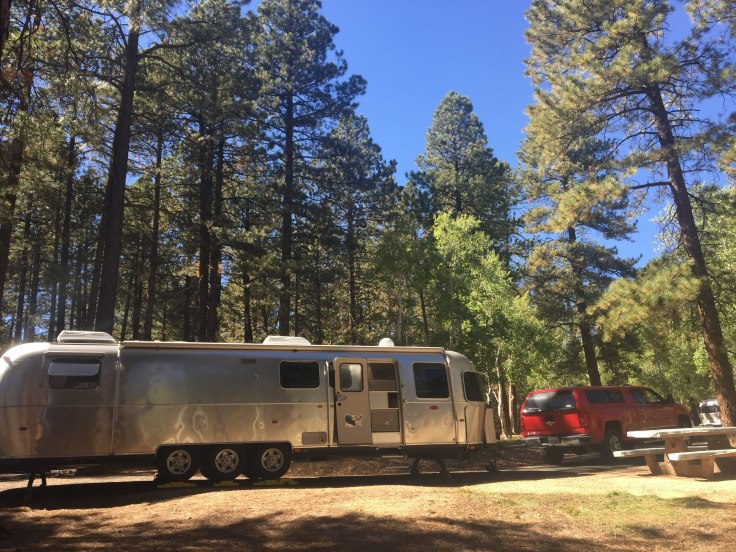
It doesn’t take long to set up when there are no hook-ups…

img_5550img_5551img_5552

We had been sitting all day, so we went looking for a hike (really a walk…).  We have 8:00 pm reservations for dinner in the lodge tonight, so we have some time to kill, too…

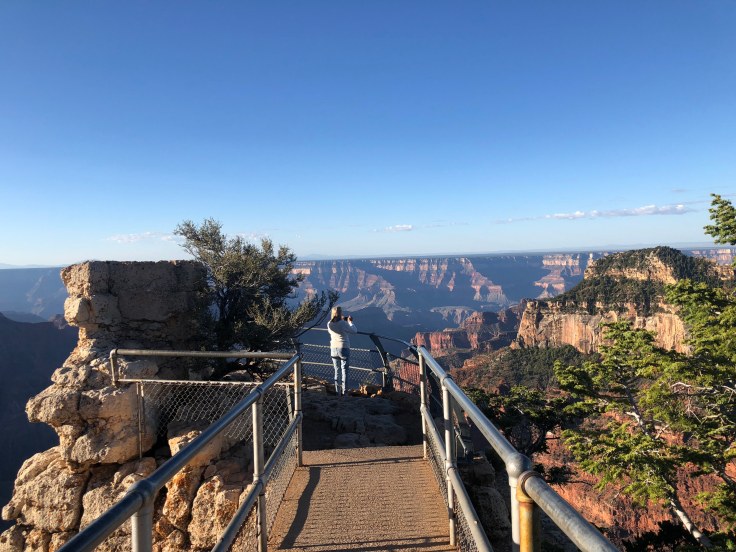
We walked the Bridle Trail from the campground past the Lodge to Bright Angel Point.  It was late afternoon and the sun was about to be setting, so it was lighting up the cliffs across the canyon…

img_81271img_81291img_81322

Out on Bright Angel’s Point some people are braver than others…

img_81382

img_81392

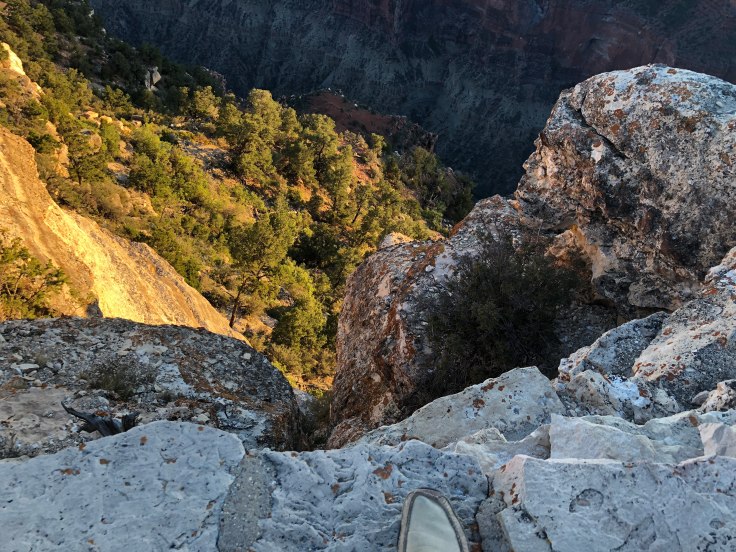
The drop off into the canyon below is steep!

img_81402img_8141

More brave (or crazy) people…

img_81431

More steep canyons…

img_81441

Lynda was brave enough to walk across this bridge to get to the far point…

img_81451

She didn’t look down…

img_8146

More sun-lit canyon walls…

img_81471img_81481

More crazy people…

img_81501img_8153img_8154

We returned to the Lodge…

img_8155

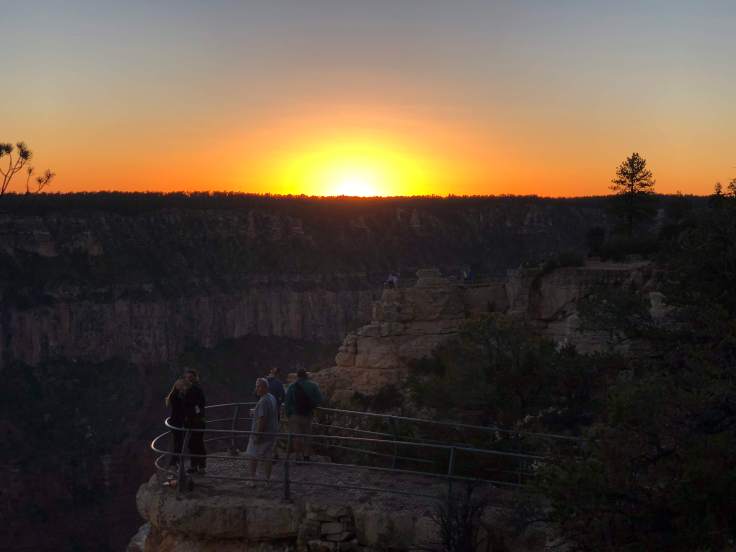
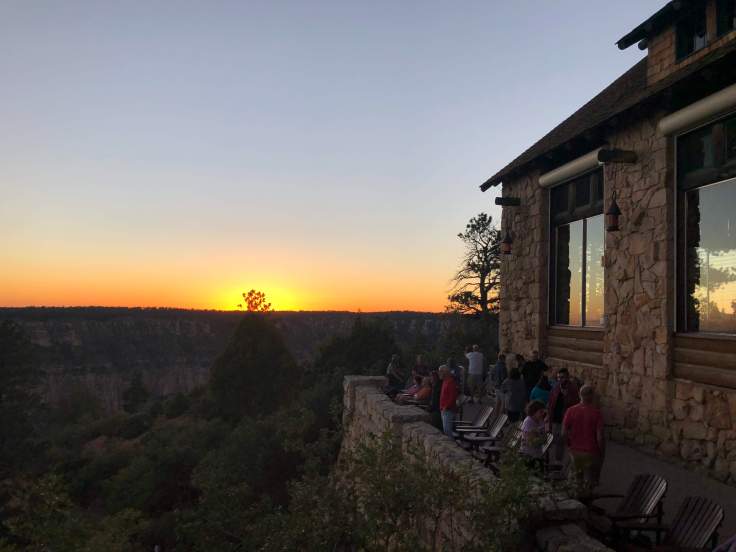
And watched the sunset…

img_81574img_81593

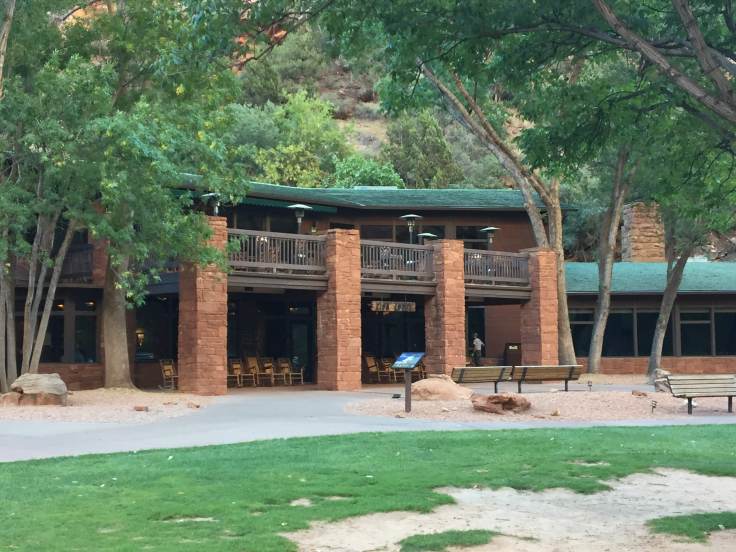
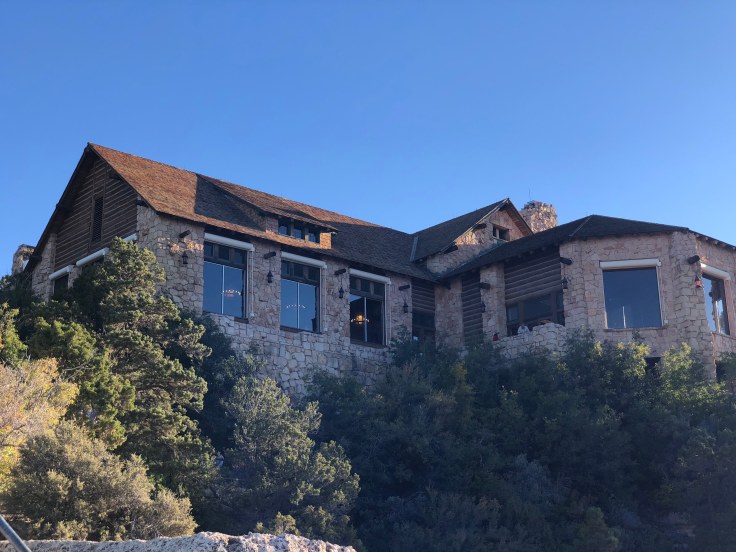
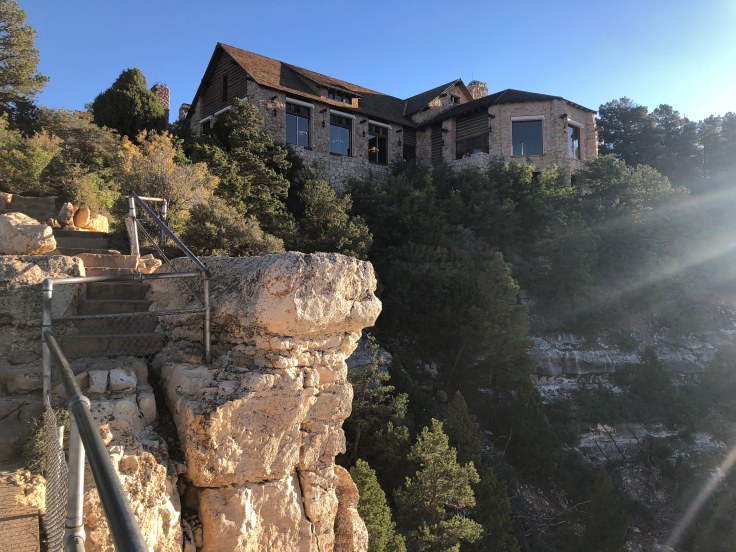
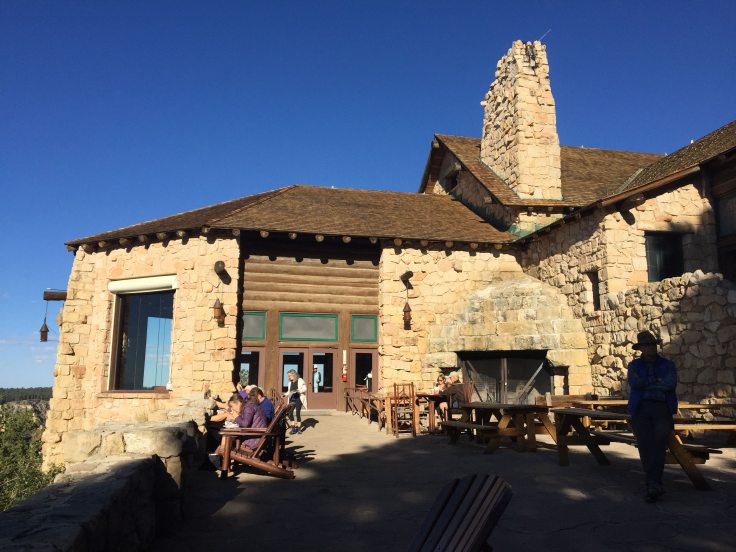
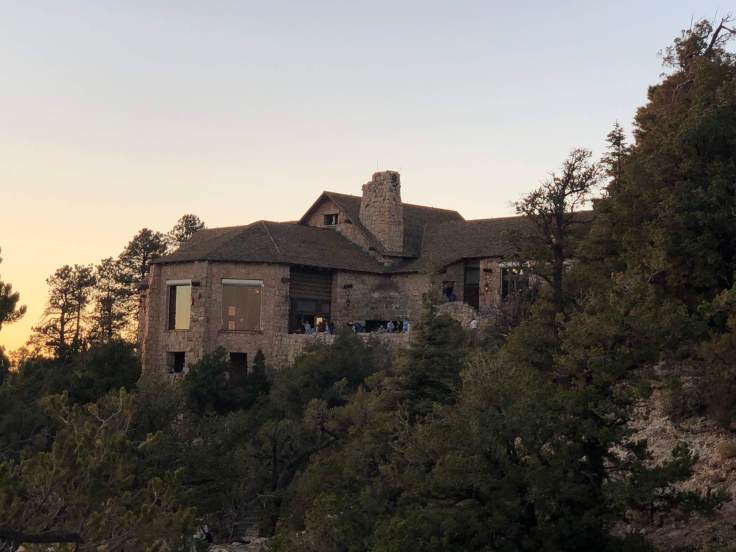
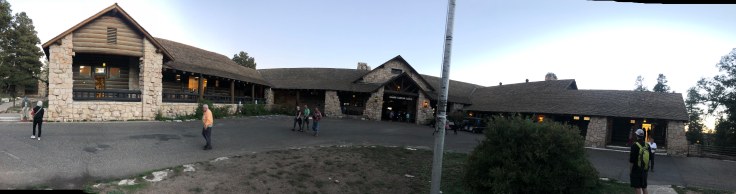
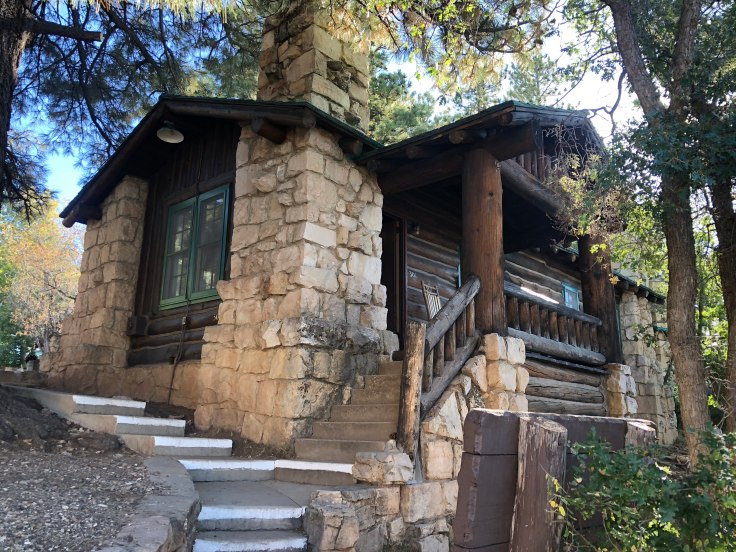
The Grand Lodge is a spectacular pile of stone and wood.  It looks exactly like what you would expect for a National Park Lodge.  The Front of the Lodge:

img_8163img_8164

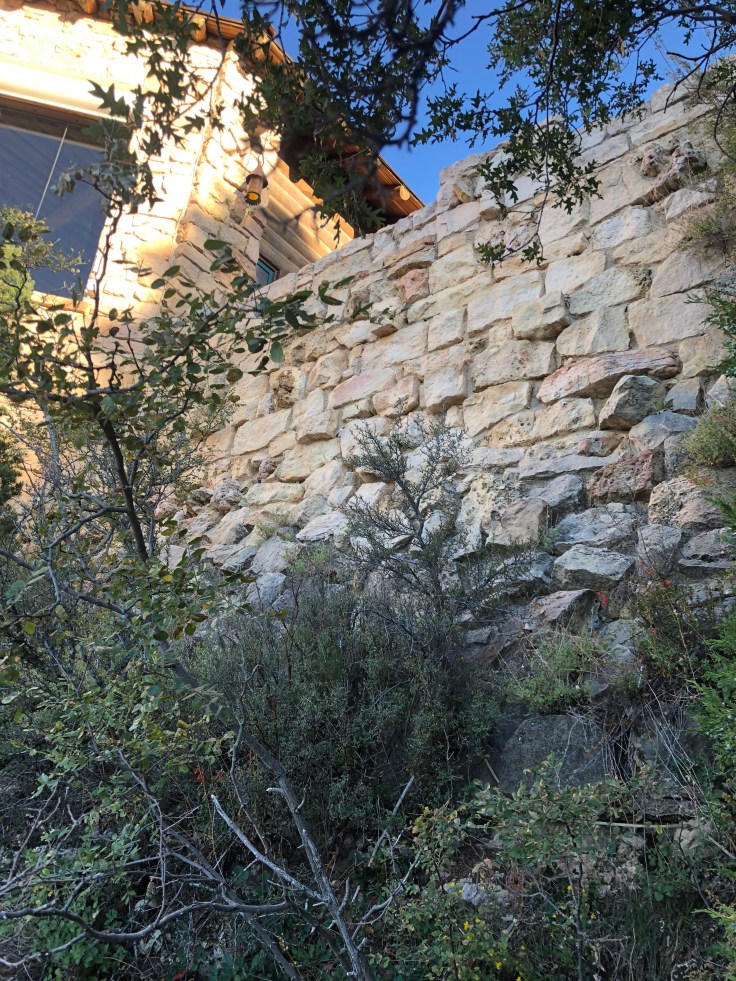
The Grand Canyon Lodge at the North Rim was designed by architect Gilbert Stanley Underwood and was finished in 1928.  Native stone and timber were used to make the lodge with much of the main lodge featuring Kaibab limestone that makes up the cliff at Bright Angel Point.  The stonework makes it appear to grow right out of the cliff!  Very “organic”!  Frank would be proud!

img_8211img_8225

They built 120 cabins surrounding the main lodge then later added 20 more in 1928. The lodge was initially owned by, financed, and run by the Utah Parks Company, a subsidiary of the Union Pacific Railroad, who also did the same in Zion and Bryce Canyon National Parks and at Cedar Breaks National Monument.

The lodge flourished after it was initially opened, but a devastating fire that began in the basement nearly destroyed all of the main lodge and two of the cabins.  In spite of this setback, in 1936 the lodge began being rebuilt.  While the original stonework was reused, the lodge was scaled back to ensure it could withstand the strong winter snow that comes to the North Rim. For this reason, the original second story and the third story observation tower were not rebuilt; however the main Dining Room and Recreation Rooms were reconstructed with higher roofs.  It officially earned designation as a National Historic Landmark on May 28, 1987.

The Lodge is great fun and it has many places just to hang out.  After our viewing of the sunset we headed to the Saloon for a drink while we waited for another caravan couple who would join us for dinner


img_8179

We went to dinner in the Dining Room… Dinner in the grand dining room was much fun.  Food was OK, as expected in a remote location like this, but the service was good (most servers (and other employees) live here in the National Park, in dormitories…).

img_8180img_8181

Our friends gave us a ride back to the Villa (walking 1.5 miles on a dirt trail in the dark didn’t seem like a good idea…).

And an enjoyable time was had by all…

2018-09-21 – WBCCI 2018 Southwest Adventure Caravan – Special Note

We will be traveling into the wilderness again today… We will be dry camping at the North Rim of the Grand Canyon, and we will have little electricity and little internet access…

Stay tuned!  You should hear from us again when we are at Lake Powell…


2018-09-20 – WBCCI 2018 Southwest Adventure Caravan – Day 33 – The Arizona Strip

2018-09-19 – WBCCI 2018 Southwest Adventure Caravan – Day 32 – Zion National Park adjacent

Slow, quiet day today.  We need one of these every now and then…

We slept in, caught up on the blog, and read the newspaper; we walked around a bit…

img_8075

We did walk across the street to the Pipe Springs National Monument… It is an historic site documenting the life and times of the Mormons in this area.  The irony is that these 40 acres are in the middle of the Kaibab Paiute Reservation…

The Indians, of course, have been in this area forever.

The water of Pipe Spring has made it possible for plants, animals, and people to live in this dry desert region.  Ancestral Puebloans and Kaibab Paiute Indians gathered grass seeds, hunted animals, and raised crops near the springs for at least 1,000 years.  The land at that time was rich is grasses, not desert sand as it is today…

In the 1860s Mormon pioneers from St. George, Utah, led by James M. Whitmore brought cattle to the area, and a large cattle ranching operation was established.  In 1866 the Apache, Navajo and Paiute tribes of the region joined the Utes for the Black Hawk War, and they raided Pipe Spring and killed Mr. Whitmore and his ranch foreman.  The  ranch was later purchased by Brigham Young for The Church of Jesus Christ of Latter-day Saints (Mormon Church), and a fort was built over the top of Pipe Spring.  The LDS Bishop of nearby Grafton, Utah, Anson Perry Winsor, was hired to operate the ranch and maintain the fort, soon called “Winsor Castle”. This isolated outpost served as a way station for people traveling across the Arizona Strip, that part of Arizona separated from the rest of the state by the Grand Canyon.

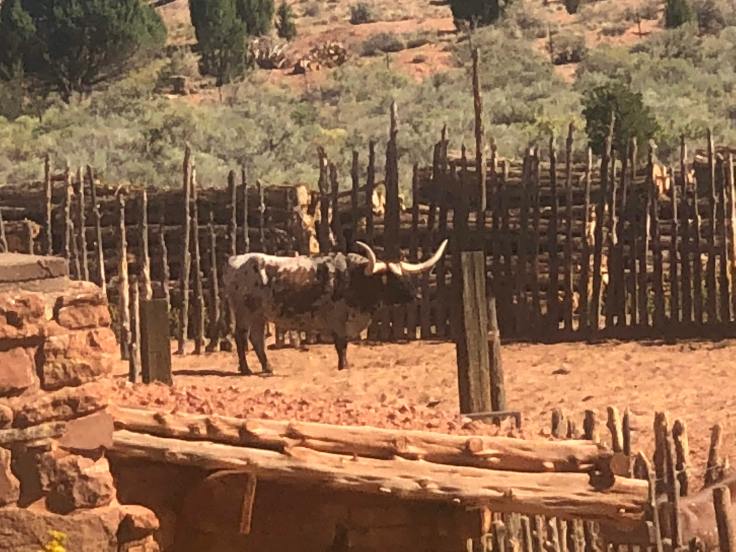
The main function of the ranch was to accept tithes from the local Mormons, in the form of cows, chickens, etc.  The ranch fed the animals, and milked the cows and made cheese, and shipped it all off on weekly trips to St. George, Utah.

The Pipe Spring area also served as a refuge for polygamist wives during the 1880s and 1890s. The LDS Church lost ownership of the property through penalties involved in the federal Edmunds-Tucker (Anti-Polygamy) Act of 1887.

In the mean time, overgrazing from as many as 100,000 cattle decimated the grasslands; the topsoil soon blew away, and the land was left with the desert sand and sagebrush we see today.  There are attempts in the area, through better grazing practices, to bring back the grasslands.

As the Mormons took over the ranch lands, the local Indians were deprived of their main water source, and times were hard on the Paiute.  However, they continued to live in the area and by 1907 the Kaibab Paiute Indian Reservation was established, surrounding the privately owned Pipe Spring ranch. In 1923, the Pipe Spring ranch was purchased and set aside as a national monument to be a memorial to western pioneer life.

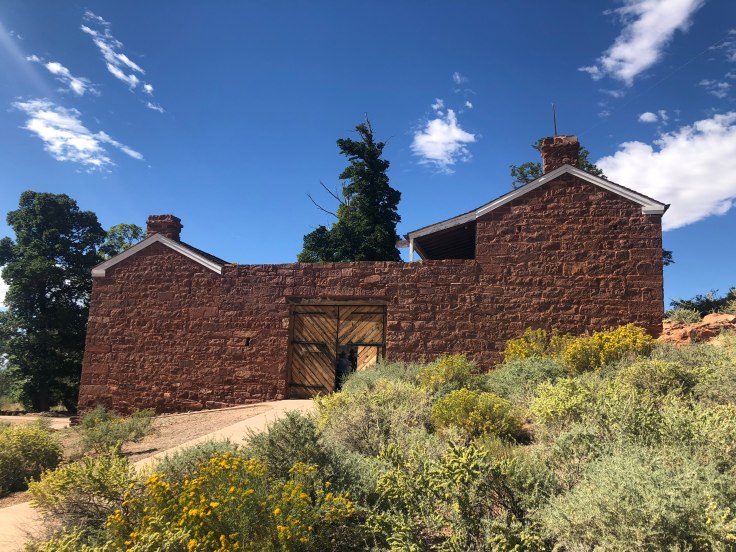
The Winsor Castle has been restored, as well as several smaller cabins.  The tours are very informative, and “living history” is on view in the form of a lady demonstrating the use of a spinning wheel, and a blacksmith using a primitive forge.

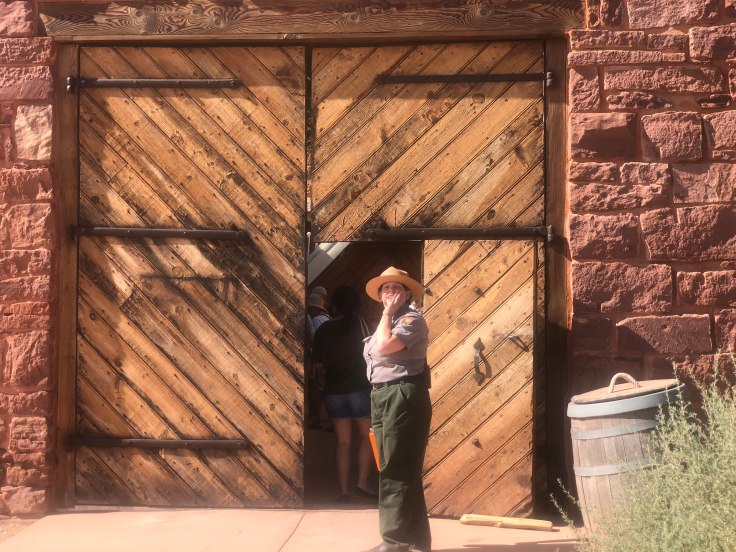
This is Winsor Castle… We were met at the entrance by the NPS tour guide…

img_8089img_8088img_8079

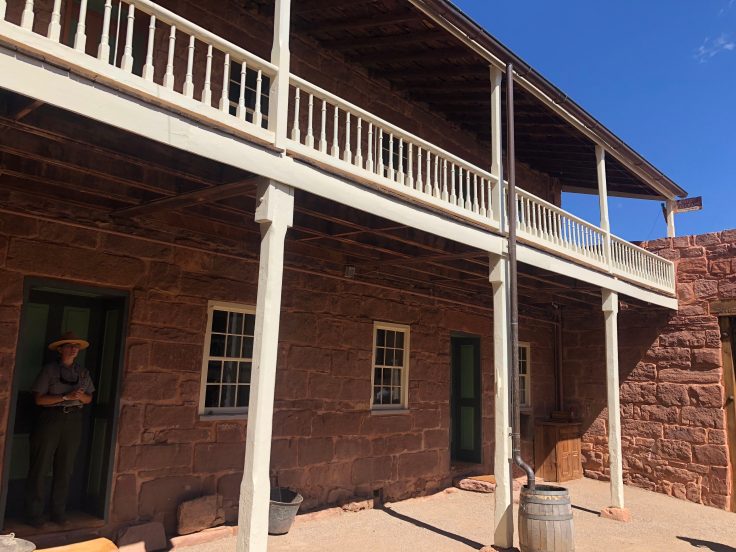
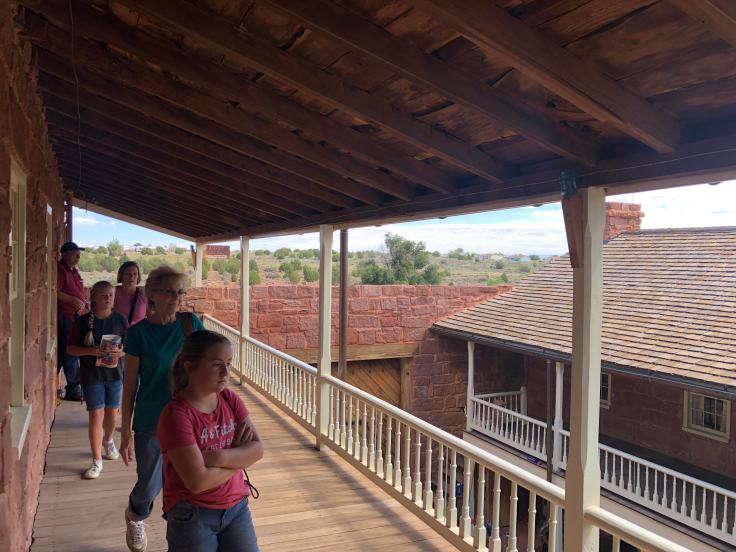
The interior of the castle are typical of a well-made outpost such as this…

img_5514img_8093img_8094img_8096img_8097

This is the entrance to the Spring Room.  The spring water ran through here, keeping the room at about 55 degrees (perfect for wine, but these were Mormons living here…).

img_8098

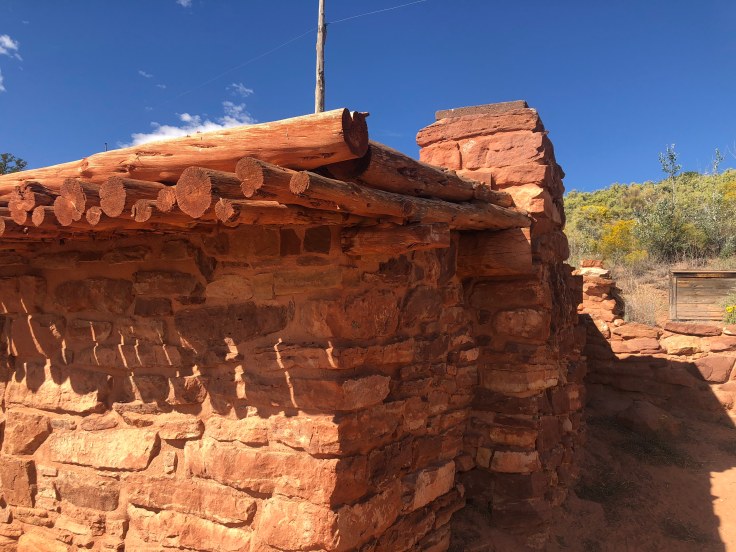
We saw some of the out-buildings and cabins for visitors… Interesting earthen roof…

img_8083img_8086img_8087img_8084

We watched the spinning wheel lady doing her thing…

img_5505img_5504

The view of the area known as the Arizona Strip… More on this tomorrow…

img_5501

After a few hours we walked back to the RV Park and relaxed and did laundry…

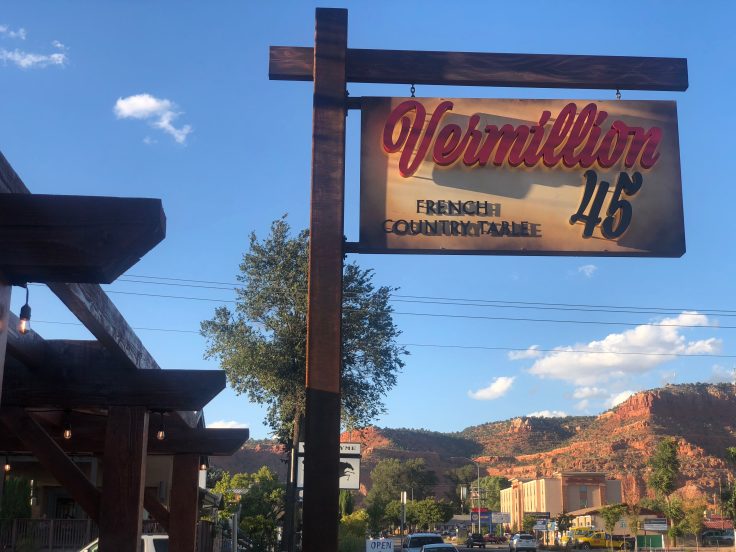
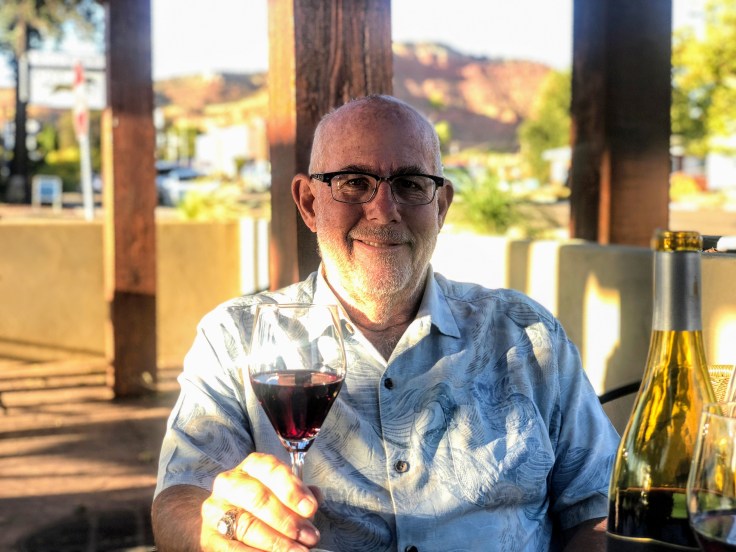
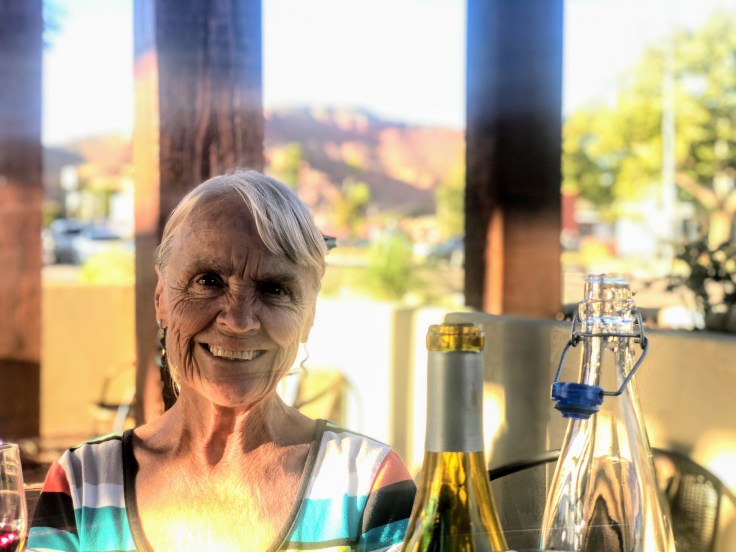
We drove to Kanab for dinner at a very nice, and very busy, French Restaurant.  It has only been open for 6 weeks.  We wished we could have spoken with the proprietor and learn more, but as I said, it was packed – on a Wednesday evening…!

img_8108img_8105img_8101

And an enjoyable time was had by all…

2018-09-18 – WBCCI 2018 Southwest Adventure Caravan – Day 31 – Zion National Park

Today we explored Zion National Park…

img_5496

Yes, more rocks… But different rocks, and different colored rocks…

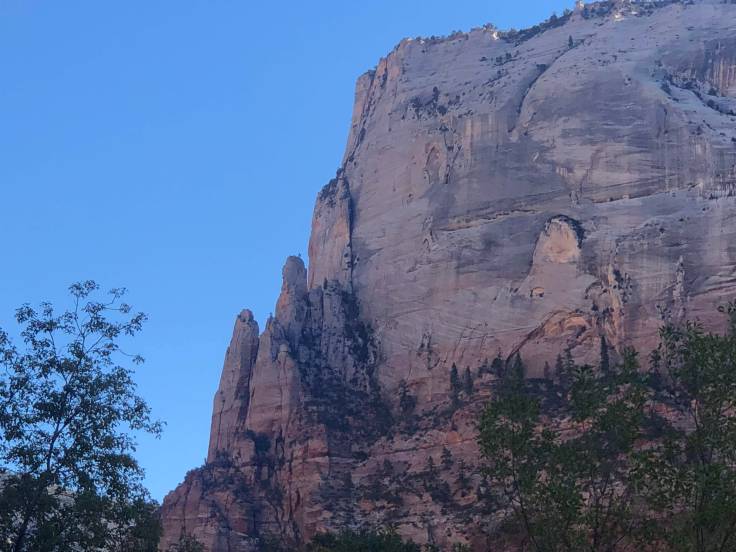
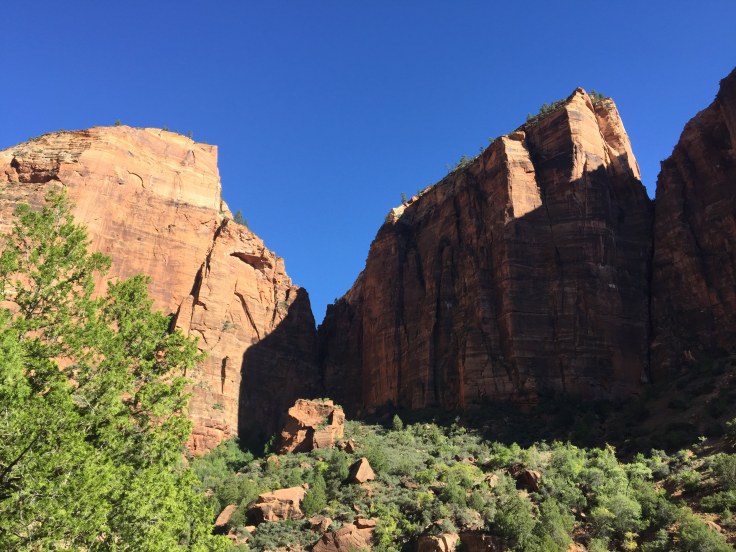
Zion National Park is an national park located in Southwestern Utah near the city of Springdale.  A prominent feature of the 229-square-mile park is Zion Canyon, which stretches 15 miles long and spans up to half a mile deep.  It cuts through the reddish and tan-colored Navajo Sandstone by the North Fork of the Virgin River.  The lowest point in the park is 3,666 ft at Coalpits Wash and the highest peak is 8,726 ft at Horse Ranch Mountain.  Located at the junction of the Colorado Plateau, Great Basin, and Mojave Desert regions, the park has a unique geography and a variety of life zones that allow for unusual plant and animal diversity.

Zion National Park includes mountains, canyons, buttes, mesas, monoliths, rivers, slot canyons, and natural arches.  Human habitation of the area started about 8,000 years ago with small family groups of Native Americans;  however, these Indians moved away by 1300 and were replaced by other Southern Paiute subtribes.  Mormons came into the area in 1858 and settled there in the early 1860s.  In 1909, President William Howard Taft named the area Mukuntuweap National Monument in order to protect the canyon.  In 1918, the acting director of the newly created National Park Service, Horace Albright, drafted a proposal to enlarge the existing monument and change the park’s name to Zion National Monument, a name used by the Mormons.  According to historian Hal Rothman: “The name change played to a prevalent bias of the time.  Many believed that Spanish and Indian names would deter visitors who, if they could not pronounce the name of a place, might not bother to visit it.  The new name, Zion, had greater appeal to an ethnocentric audience.”  On November 20, 1919, the United States Congress established the monument as Zion National Park, and it was signed by President Woodrow Wilson.  The Kolob section was proclaimed a separate Zion National Monument in 1937, but was incorporated into the park in 1956.

We left the RV park at just before 6:00 am, Utah time… Wow! It is really dark out here!

Light finally came just as we arrived at Zion, just after 7:00 am.

The entrance station was still closed.  We entered the tunnel (1.1 mile long, took 3 years to complete in the 1930s…) and emerged to the sun rising over the valley below…

img_5413

Maybe I should have cleaned my windshield…

img_5415img_5418img_5421img_5422img_5424

As we drove through the almost deserted park we recalled that we had been told that Zion is the 3rd most visited national park in the USA, yet it is one of the smaller parks.  We were arriving early precisely to avoid these expected crowds.

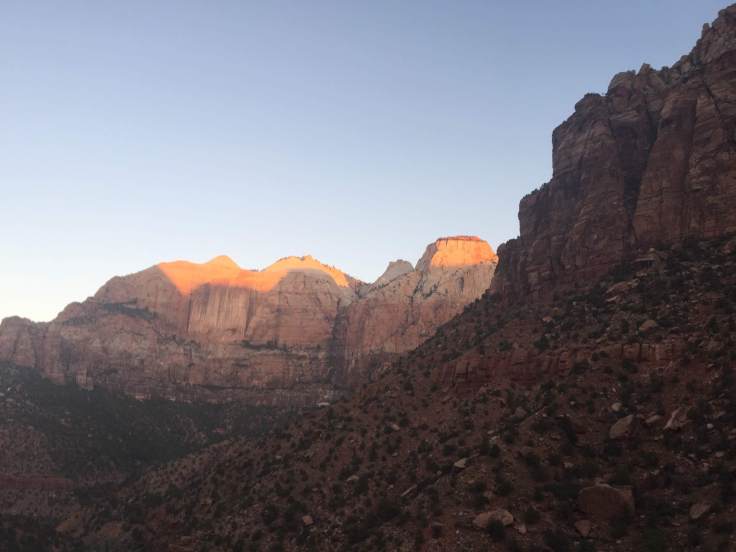
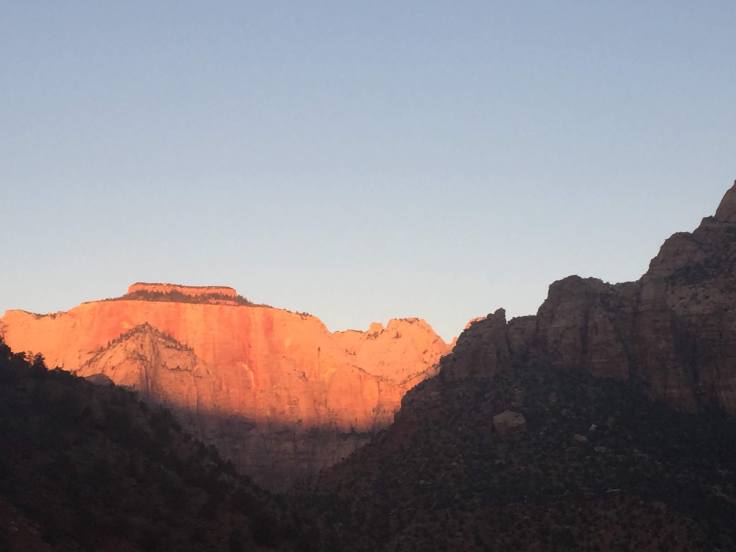
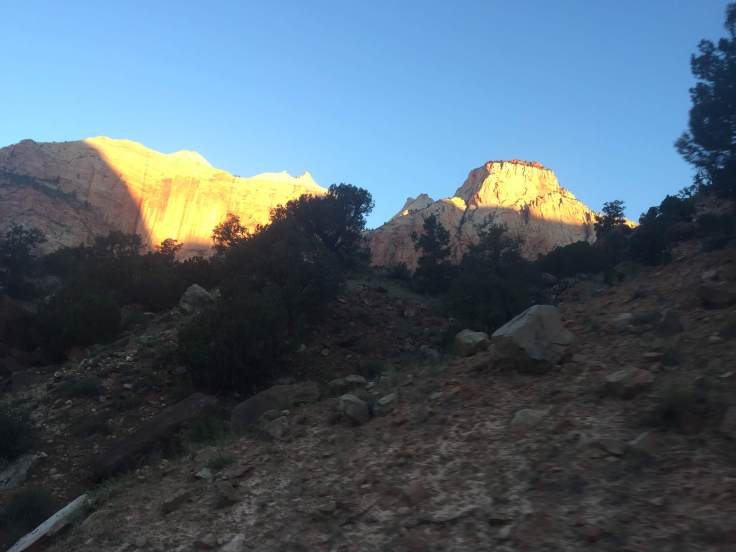
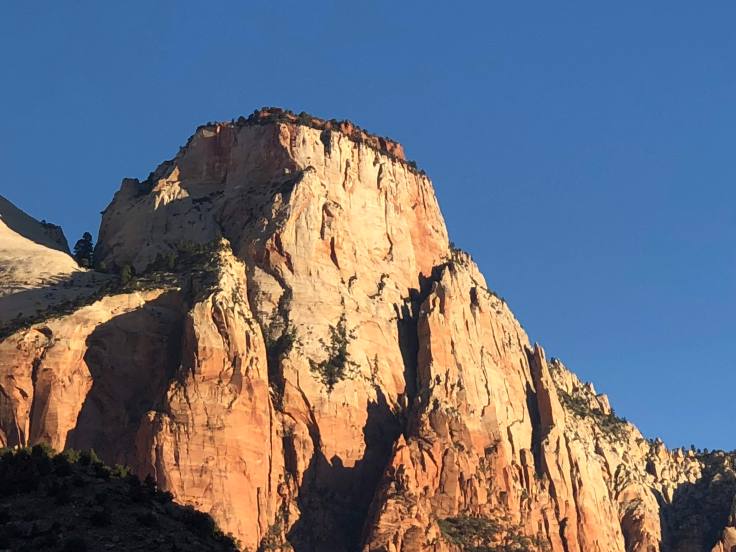
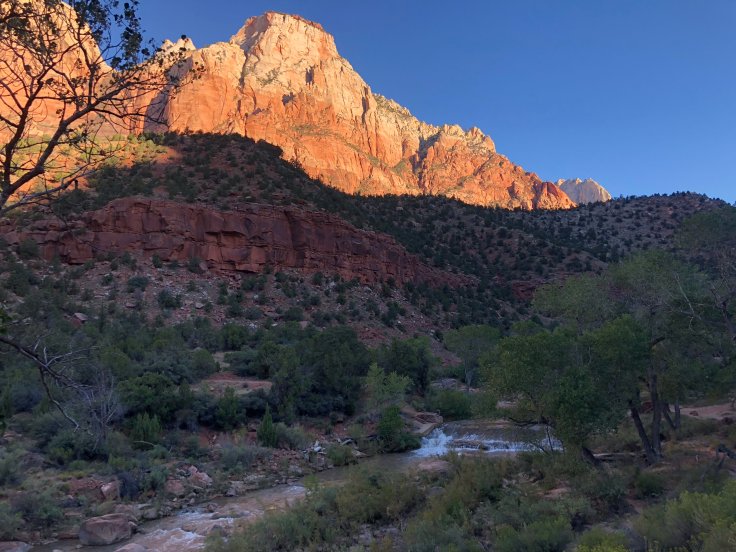
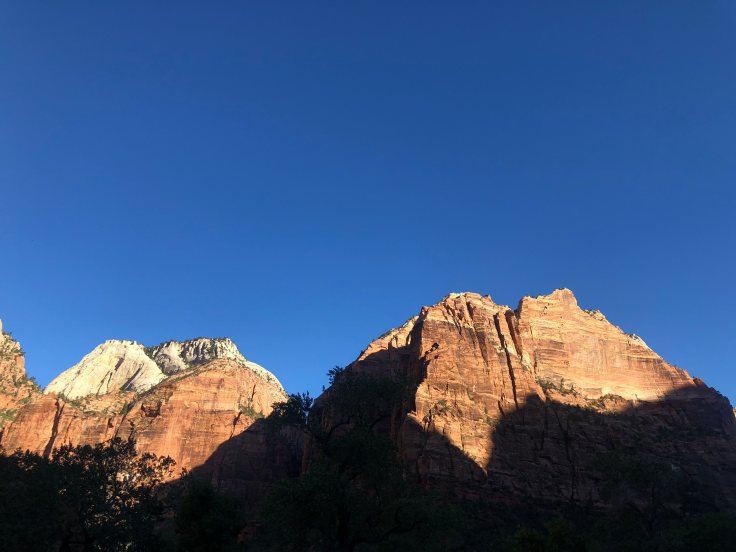
As we drove to the visitor center we found many interesting sights as the rising sun began to hit the higher peaks…
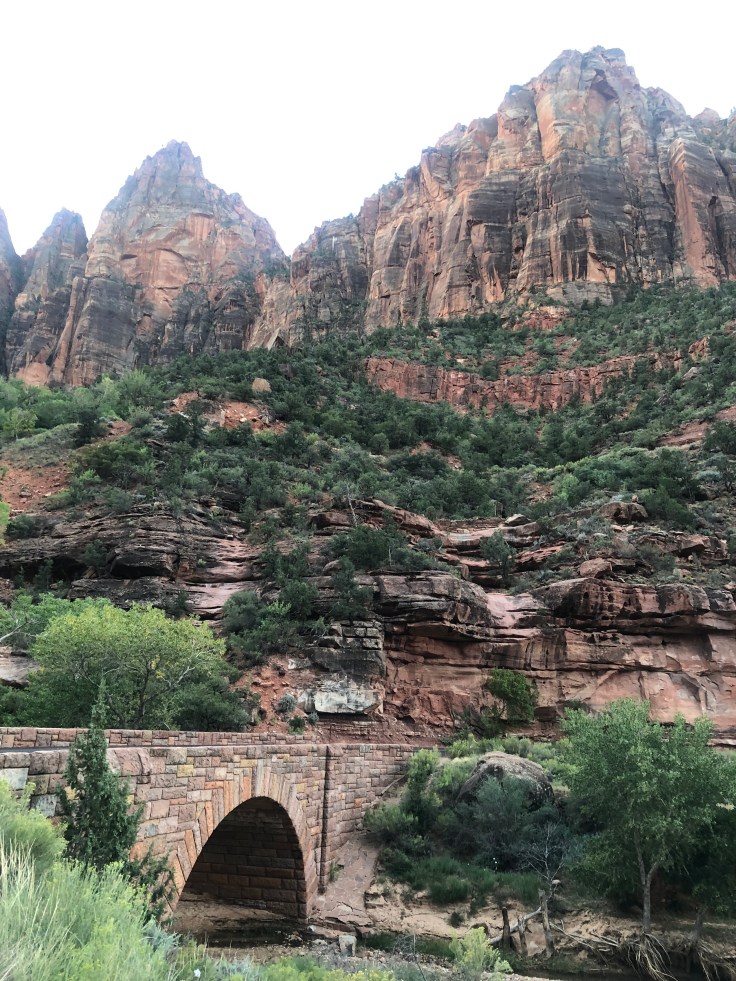
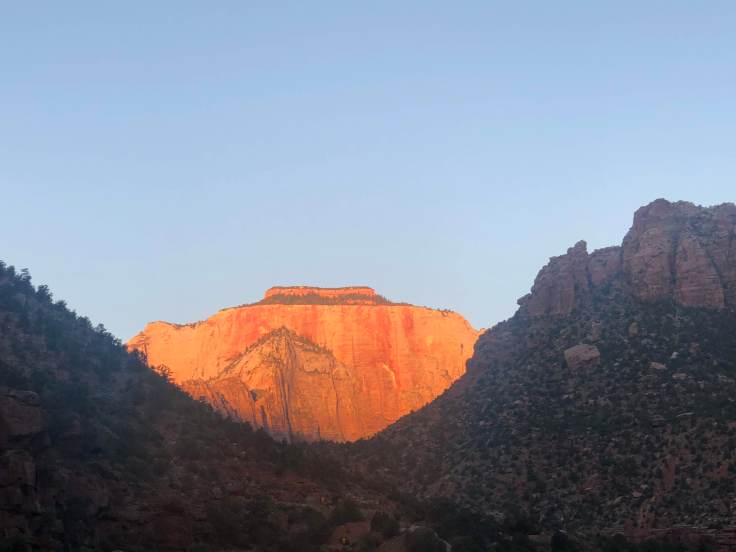
img_8018img_8019img_5429img_8021img_8023img_8025img_8026img_8027

We arrived at the visitors center (which was not yet open) and parked.  We then walked the Pa’rus Trail, along the Virgin River for about 1 1/2 miles…

img_8029img_5431

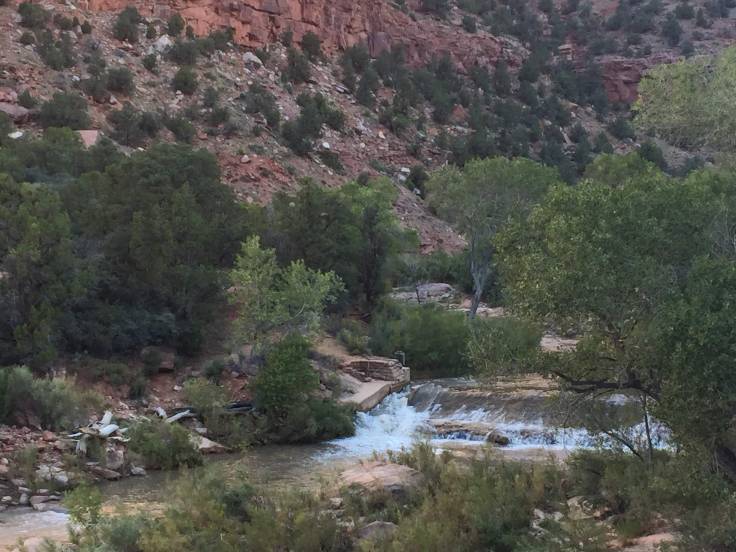
Lynda went off-road to get a picture of the rapids…

img_8031img_5433

The sun continued to reveal move sights…

img_8032img_8033img_5434img_8034img_5435img_8035img_8036

We arrived at Canyon Junction, where we caught the shuttle to the Lodge…

img_8037img_5438

We had a nice late breakfast in the second floor dining room, then set out to walk the Lower Emerald Pool Trail… Only one mile, round trip…
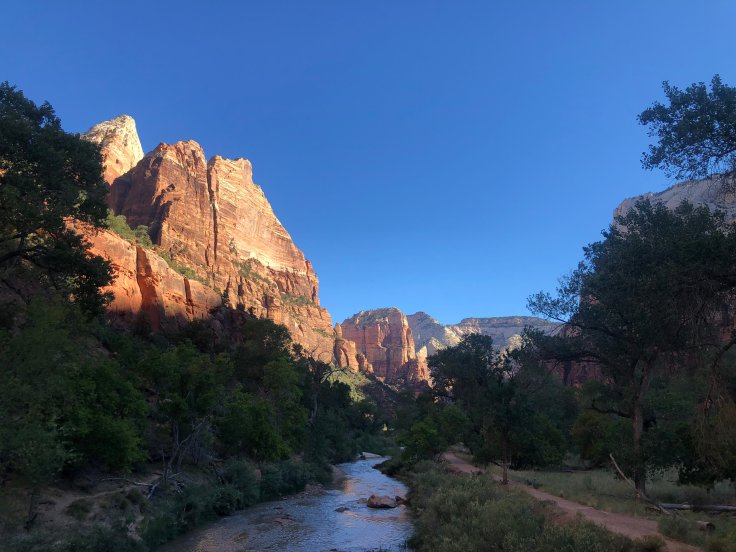
img_8039img_5439img_8040img_8042img_5440img_5441img_8043img_8044img_8046

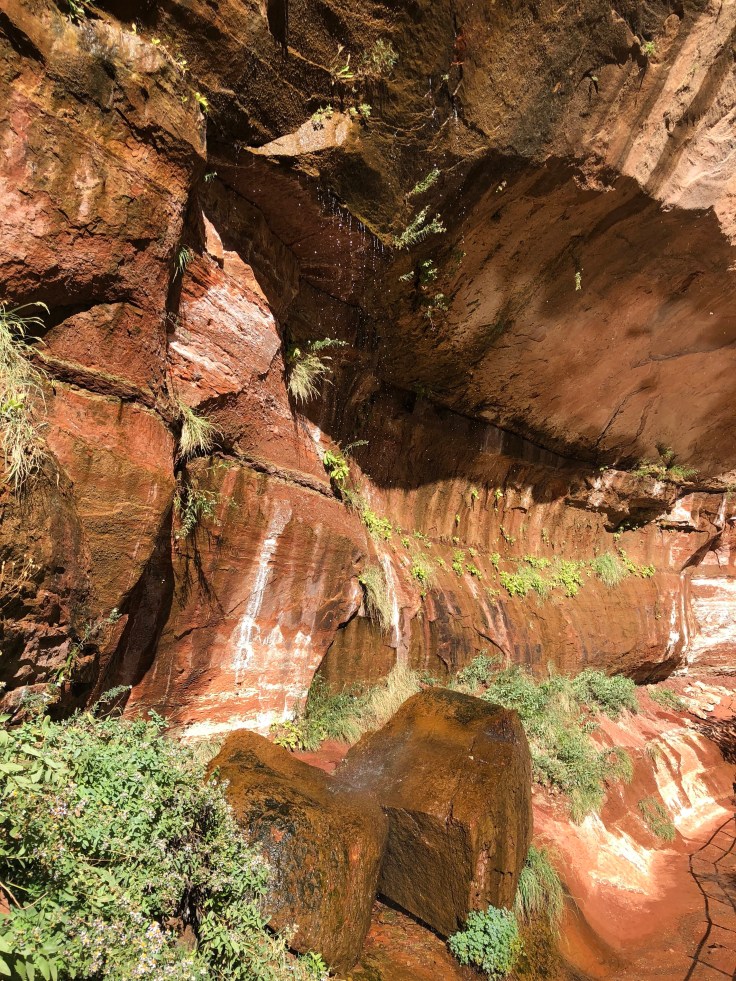
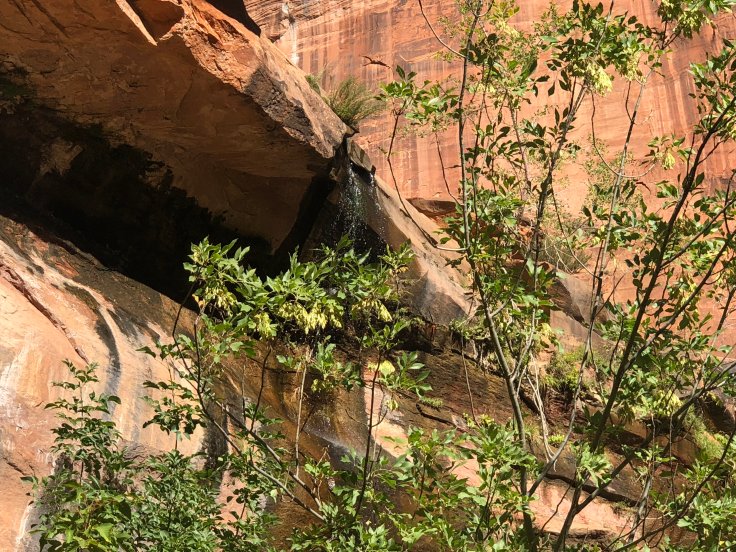
Finally we arrived at the “waterfall”… More of a “wet wall”…
img_8047img_8048

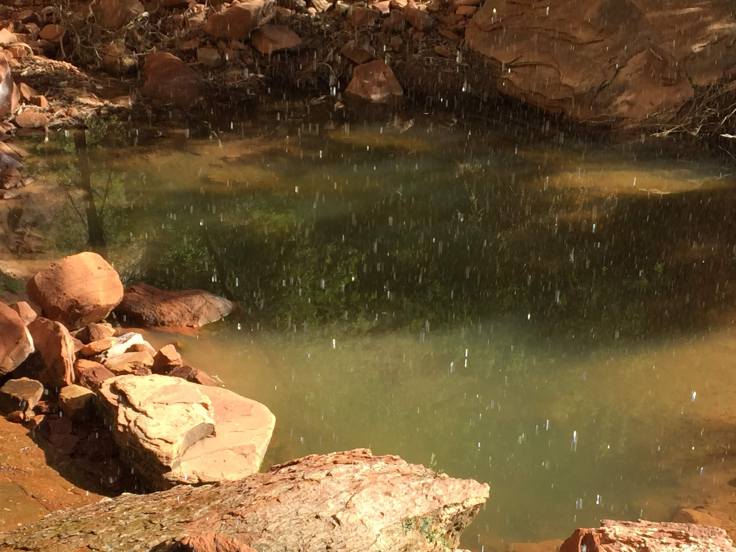
The pool was a little bit emerald…

img_8049img_8050

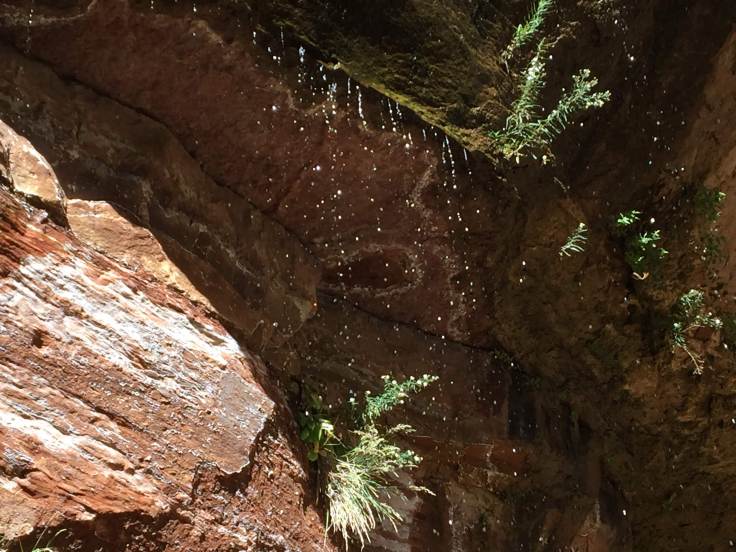
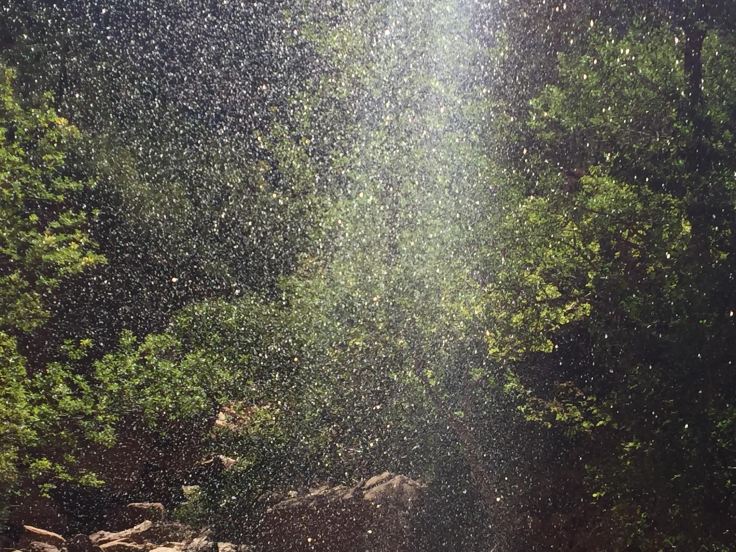
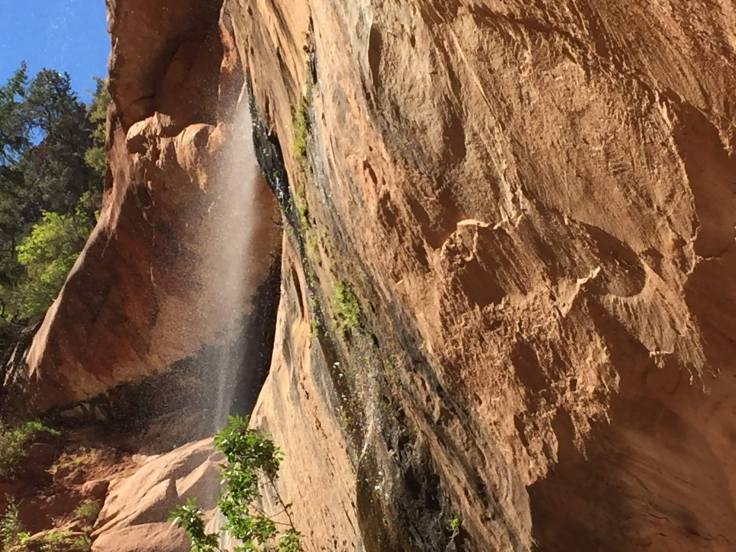
Now we see falling water…

img_5445img_8052img_5447img_8055img_5449

Falling into the Emerald Pool…
img_5446img_5448img_5451img_5454

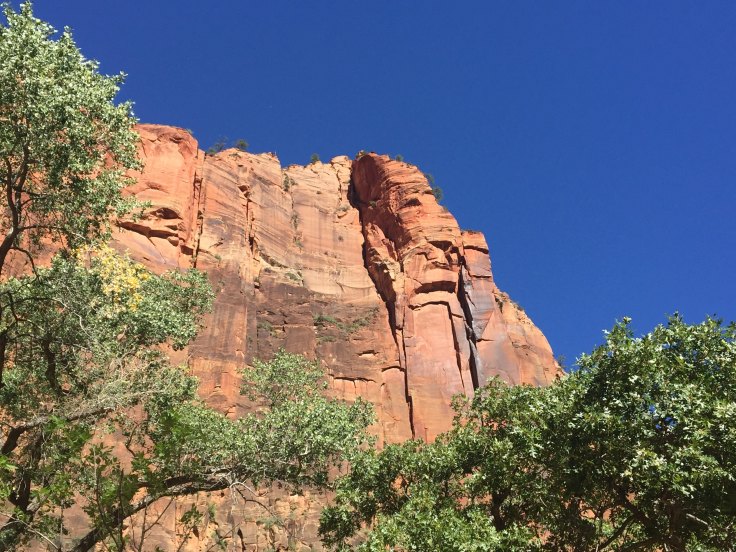
We back-tracked to the lodge and caught the shuttle to Temple of Sinawava… They tried to explain which rocks looked like a temple, but I didn’t see it…
img_5458

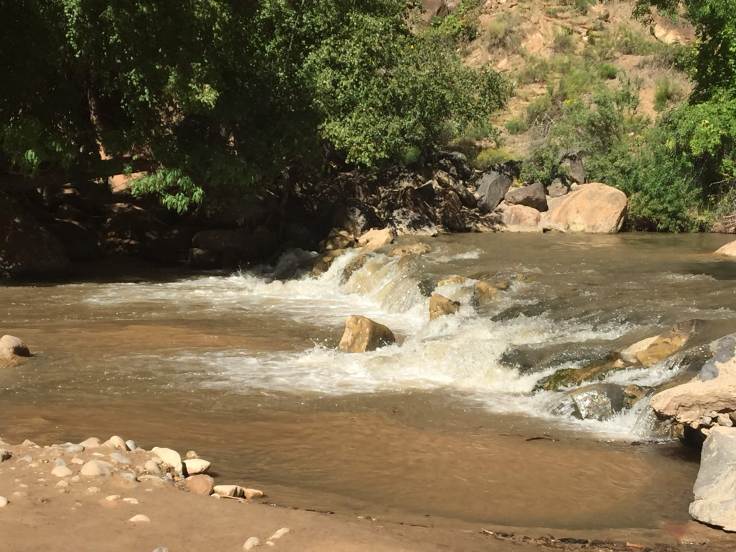
We are following the Virgin River, once again, about two miles round trip.  At the top of the canyon is “The Narrows”.  In the mean time, we see the flora and fauna…
img_5459img_8058img_5460img_8060img_8061img_8062img_8063img_5461img_8064img_8066img_8067img_5465img_5466img_5467

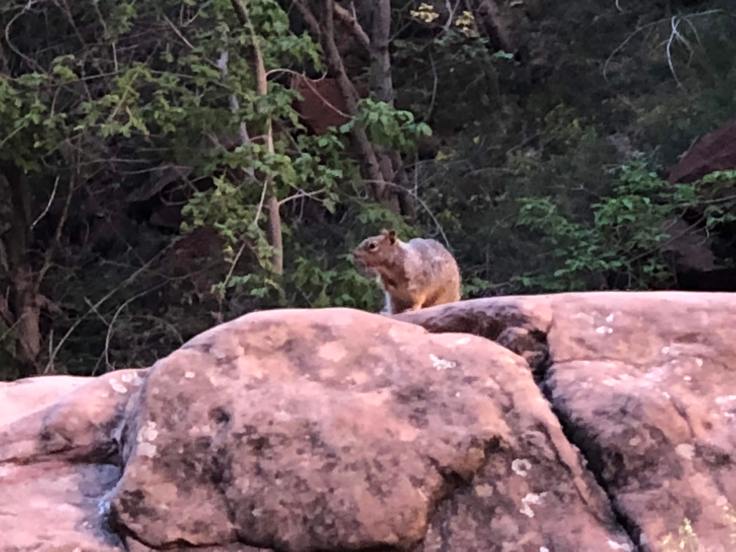
If you squint, and imagine it 100 times as big, it almost looks like a bear… Lynda says she wants to see a bear…
img_8068

Finally we reach the end of the trail.  No, this is not a throng of Mormons being baptized… This is where “The Narrows” begins.  To see the narrows up close, where the canyon walls are only 20′ apart, you need to hike upstream through the water for about a mile… We didn’t…

img_5471img_8069img_8070

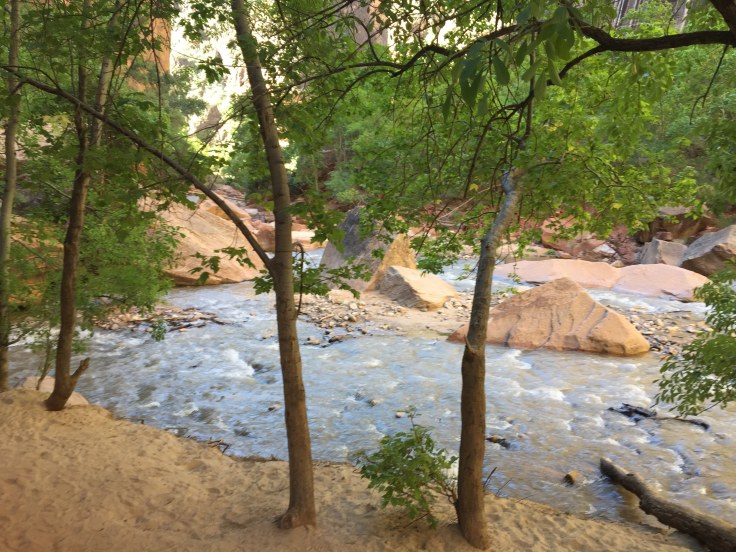
We were not about to walk in the river, so we returned along the path, seeing the canyon from the other direction…
img_5474img_8072

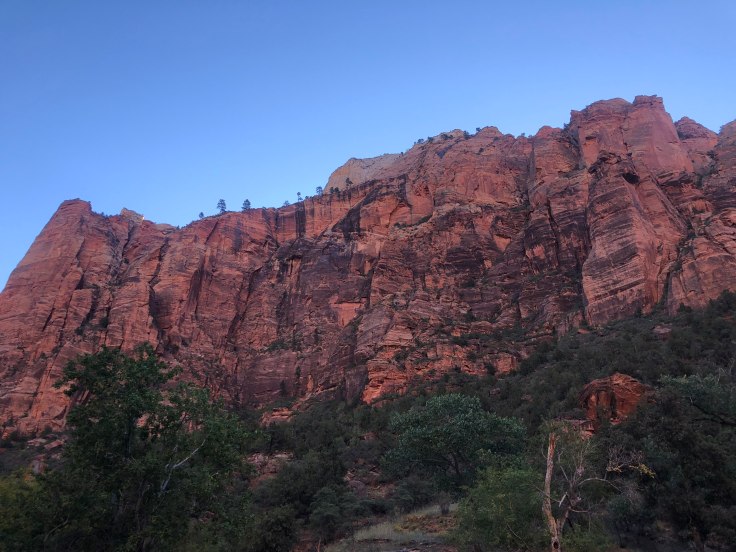
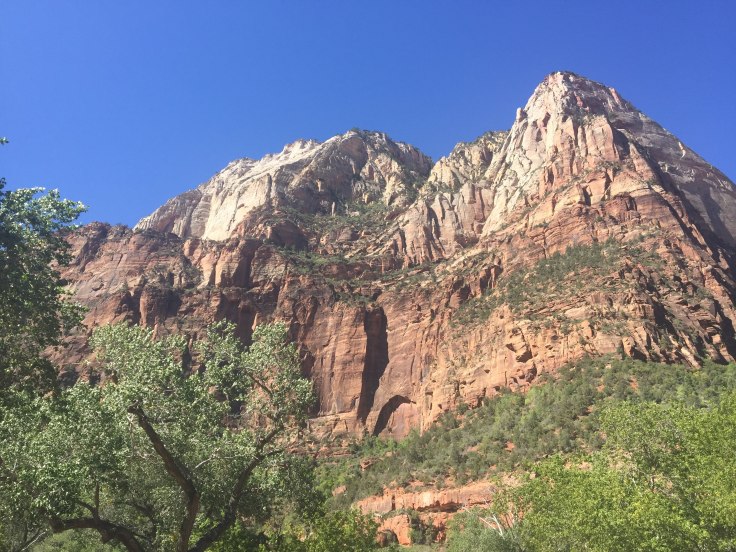
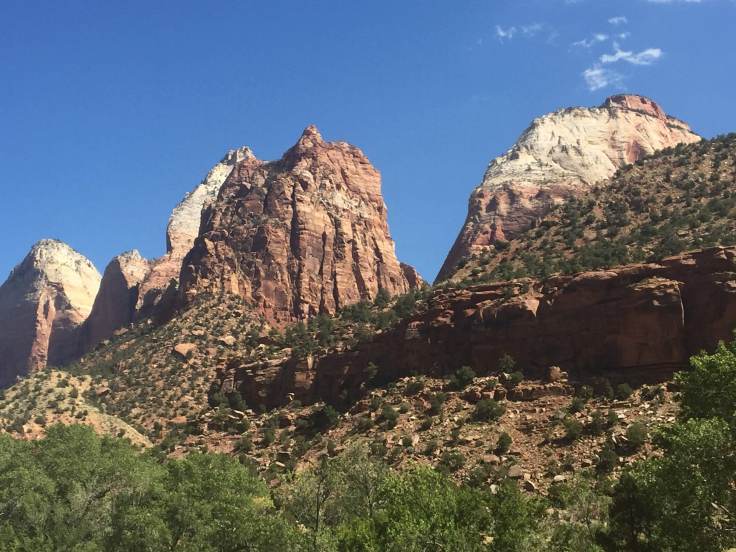
At the trail head we caught the shuttle back to the visitors center, and thus to the Big Red Truck.  As we headed out of the park we saw the sights that we missed by arriving when it was still dark…
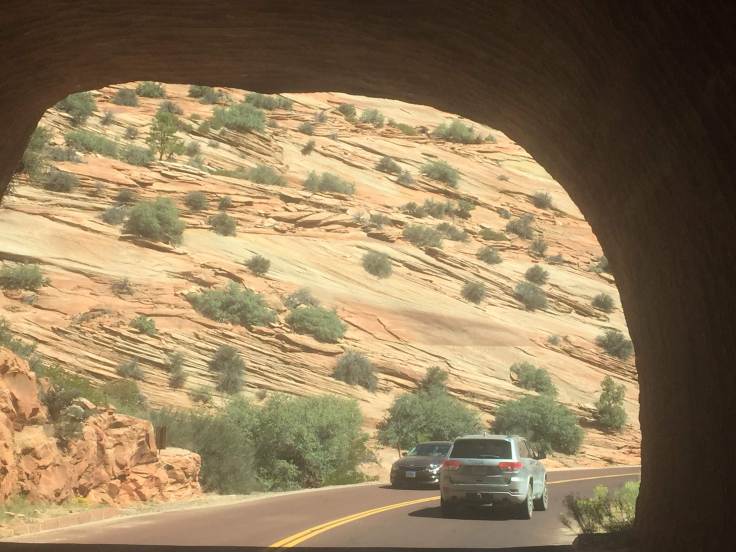
img_5475img_5476img_5479img_5480img_5481img_5482img_5483 We emerged from the tunnel… and we were on our way…
img_5484img_5488img_5493

We returned to Kanab, where we enjoyed a late lunch at the Wild Thyme Cafe.  We returned to The Villa, where the AC was running strong (it is 93 degrees today…), took a nap, and had Happy Hours…

And an enjoyable time was had by all…

2018-09-17 – WBCCI 2018 Southwest Adventure Caravan – Day 30 – Traveling to Fredonia, AZ, near Zion National Park

Today we traveled to Zion National Park.  Except, not exactly… We are camping 13 miles outside Fredonia, AZ, at the Kaibab Paiute Band Tribal RV Park.  The RV park is across the street from the Pipe Springs National Monument, and is about 50 miles from Zion…

I took this picture because… Not Rocks!

img_5383

It was an easy drive.  After about 1 1/2 hours we arrived at the town of Kanab, UT, a nice little town…

We stopped for lunch at the Rocking V Cafe… Interesting place in this very remote town…

img_8011img_5385

Other Airstreamers were in town, too, having lunch, shopping for groceries…

img_8013

We also shopped for groceries – finally found half-&-half.  The last four grocery stores didn’t have any… What’s up with Southern Utah and their lack of half-&-half?

As we left the grocery store and headed to the RV park, we noticed a strange thing:  It is 1:34 pm, and we will arrive at our destination, 20 miles away, at 1:06 pm…

img_8014

Obviously we are in Utah, and our destination is in Arizona.  They are in the same time zone, but Arizona does not believe in Daylight Saving Time…  However, as we approached the RV park, rather than changing the actual time to Arizona time, it changed the destination time to Utah time!  Apparently the RV Park is quite close to cellular towers in Utah.  Our Apple devices and our computer similarly kept switching back and forth such that we never able to know what time it was… To avoid the confusion we set a real clock on Utah time, and the Caravan all agreed that we would operate on Utah time… Of course, Zion is on Utah time…

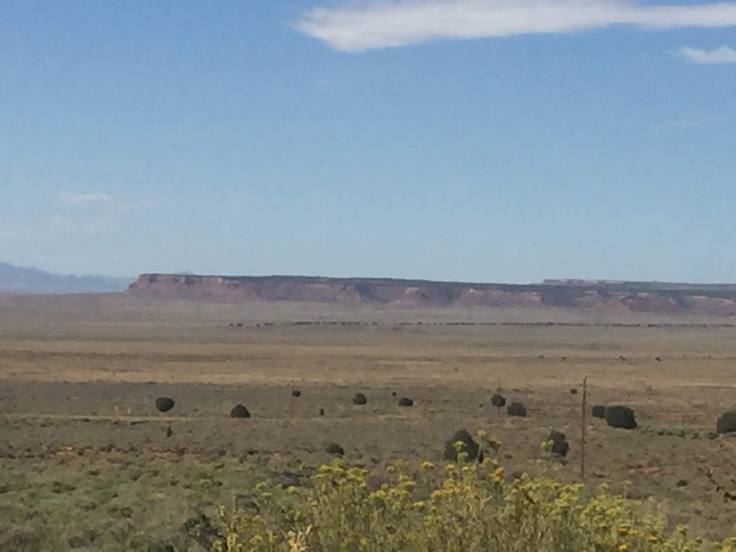
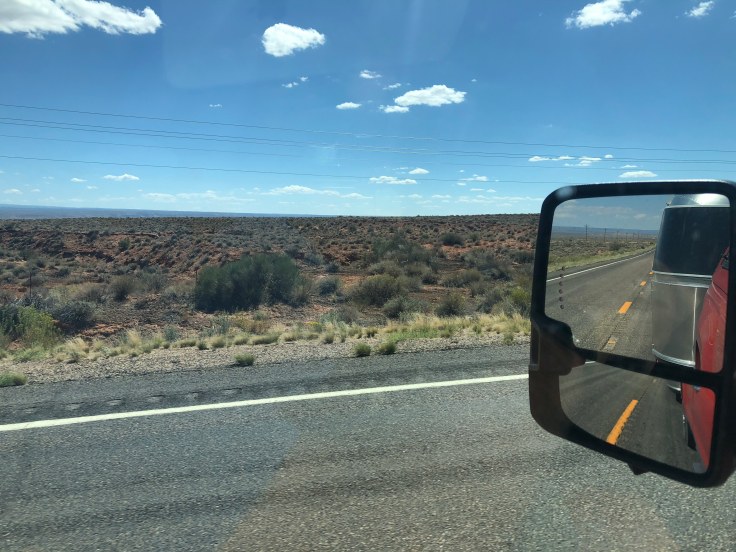
As we approached the RV park, this was the landscape surrounding us… Arizona looks a lot like Wyoming around here…

img_8015

Zion National Park is an national park located in Southwestern Utah near the city of Springdale.  A prominent feature of the 229-square-mile park is Zion Canyon, which stretches 15 miles long and spans up to half a mile deep.  It cuts through the reddish and tan-colored Navajo Sandstone by the North Fork of the Virgin River.  The lowest point in the park is 3,666 ft at Coalpits Wash and the highest peak is 8,726 ft at Horse Ranch Mountain.  Located at the junction of the Colorado Plateau, Great Basin, and Mojave Desert regions, the park has a unique geography and a variety of life zones that allow for unusual plant and animal diversity.

Zion National Park includes mountains, canyons, buttes, mesas, monoliths, rivers, slot canyons, and natural arches.  Human habitation of the area started about 8,000 years ago with small family groups of Native Americans;  however, these Indians moved away by 1300 and were replaced by other Southern Paiute subtribes.  Mormons came into the area in 1858 and settled there in the early 1860s.  In 1909, President William Howard Taft named the area Mukuntuweap National Monument in order to protect the canyon.  In 1918, the acting director of the newly created National Park Service, Horace Albright, drafted a proposal to enlarge the existing monument and change the park’s name to Zion National Monument, a name used by the Mormons.  According to historian Hal Rothman: “The name change played to a prevalent bias of the time.  Many believed that Spanish and Indian names would deter visitors who, if they could not pronounce the name of a place, might not bother to visit it.  The new name, Zion, had greater appeal to an ethnocentric audience.”  On November 20, 1919, the United States Congress established the monument as Zion National Park, and it was signed by President Woodrow Wilson.  The Kolob section was proclaimed a separate Zion National Monument in 1937, but was incorporated into the park in 1956.  

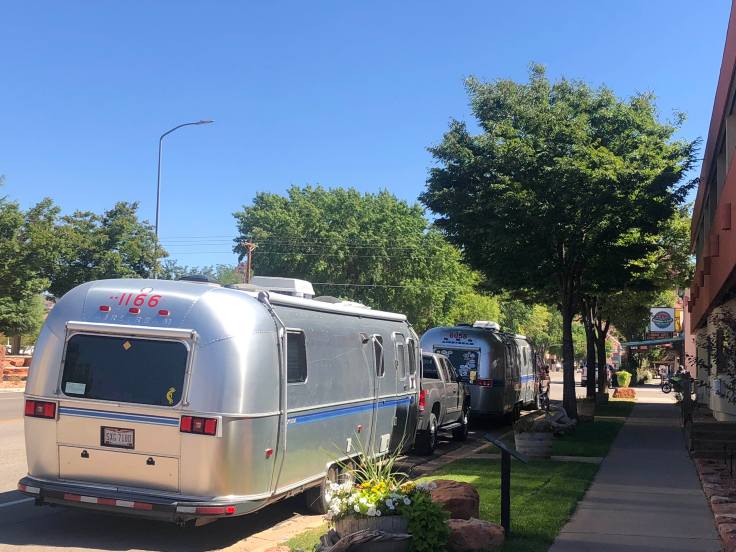
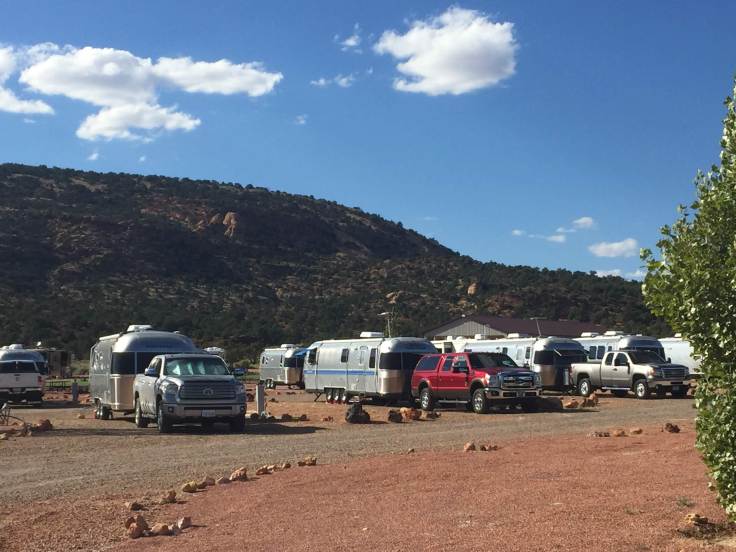
We parked The Villa and set up camp… As did all the others…

img_5389img_8016

As we settled in at the RV park we learned that one of the Caravaner couples, who live in coastal North Carolina, had learned that their property (not their house) had sustained damage due to debris and flooding from Hurricane Florence, so they decided to leave the caravan and return home… We held an impromptu gathering to wish them well…

img_5390img_5393img_5391

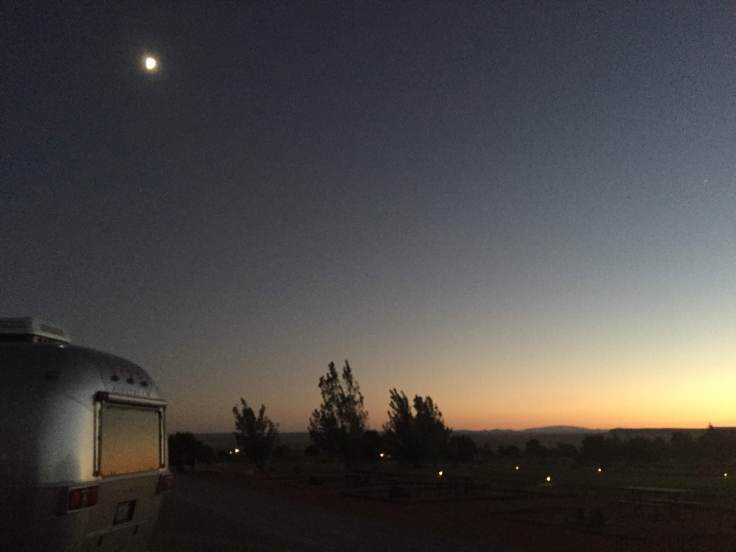
After the gathering, as we headed back to The Villa.  The sunset was striking…

img_5407


Another momentous event occurred 39 years ago today … Our daughter, Erin, was born… She celebrated today by letting her not-quite-three-year-old capture her on film:

img_8073

I think he has caught her essence…


And an enjoyable time was had by all…
2018-09-16 – WBCCI 2018 Southwest Adventure Caravan – Day 29 – Bryce Canyon National Park

This is our last day in Bryce.  We took advantage of the free time and drove through the park on our own…

We visited the Natural Bridge, at elevation 8,627’…

img_7977

img_5367

Of course, as we know, this is not a bridge at all, but an arch…

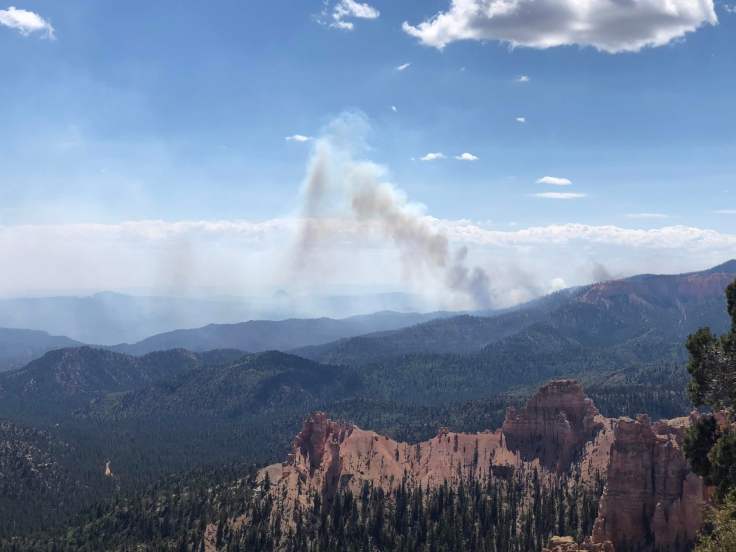
We would have gone on further to see other sights, but the road was closed due to a controlled burn in the park…

img_7980

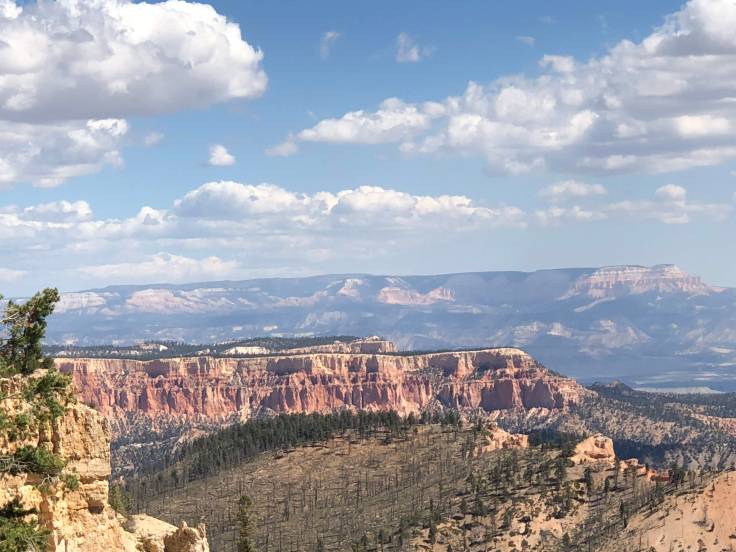
We visited the Farview Overlook, at elevation 8,819’…

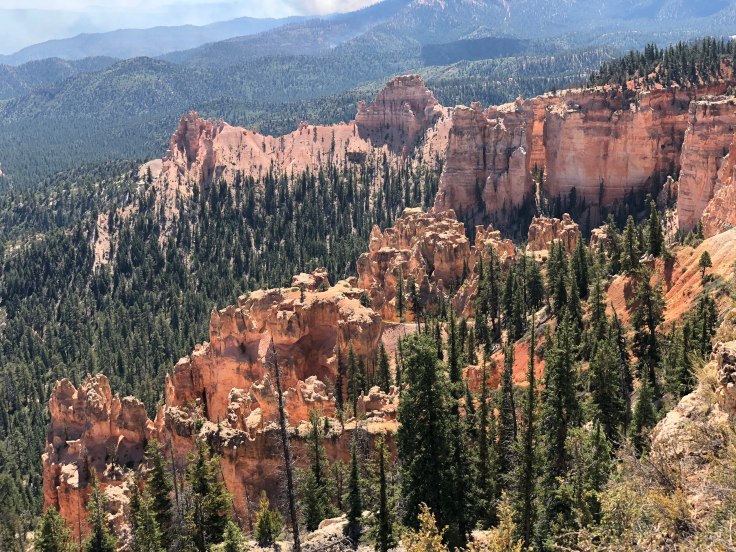
img_7983img_5369img_7982img_7984img_7988img_7991

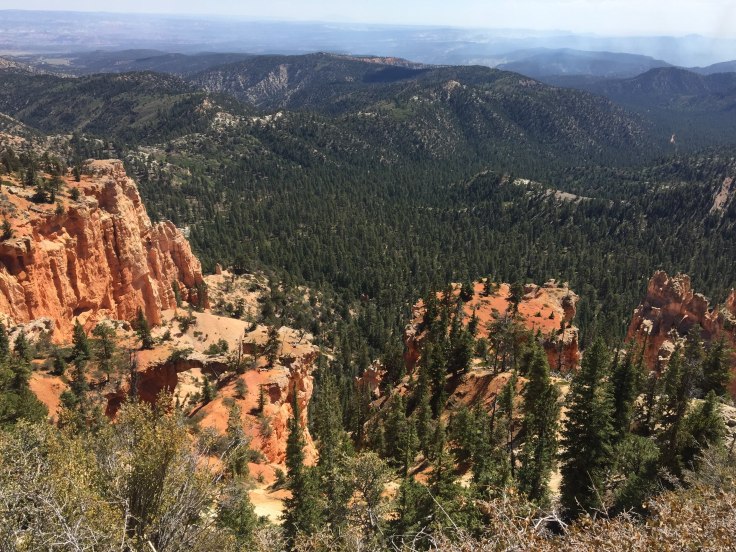
We visited the Swamp Canyon overlook…

img_5374img_5375

We visited Fairyland Canyon, at elevation 7,758’…

img_7994

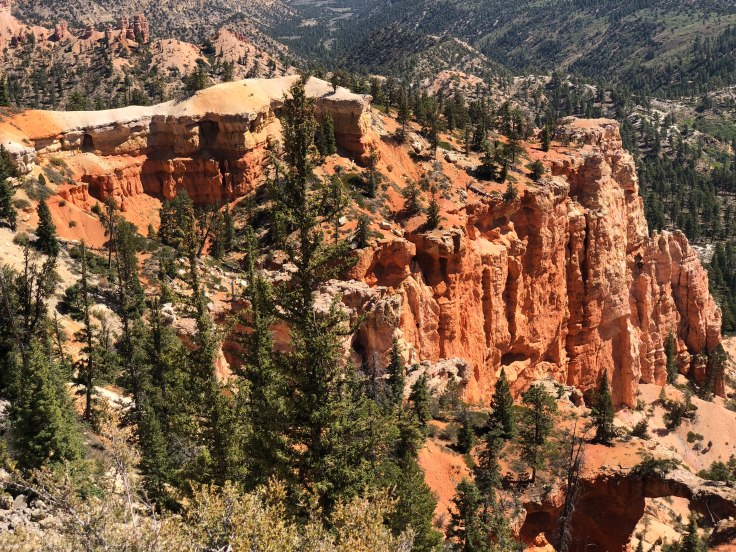
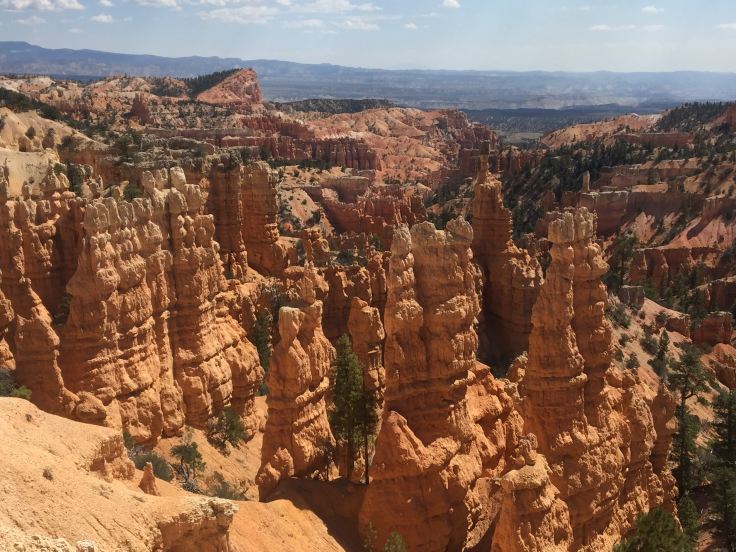
We saw marvelous rock formations that looked like they were copying something from Disney…

img_7995img_7996img_7998img_7999img_5378

We had a shared dessert of assorted pies, then we had our usual Drivers Meeting to review our move tomorrow to Fredonia, AZ, staging area for our visit to Zion National Park and Pipe Springs National Monument…

img_8004img_8005

And an enjoyable time was had by all…

2018-09-15 – WBCCI 2018 Southwest Adventure Caravan – Day 28 – Bryce Canyon National Park

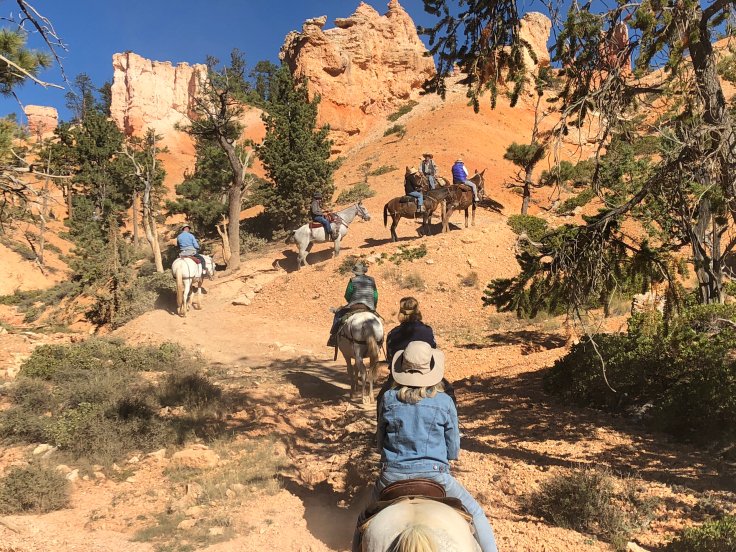
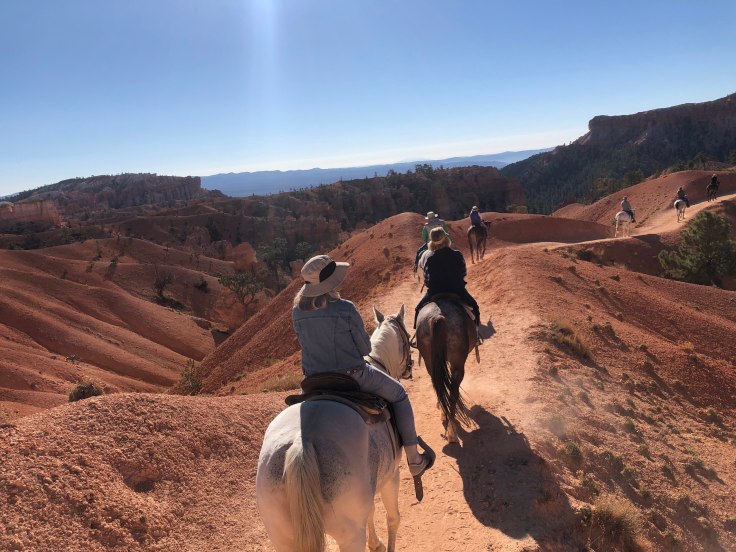
Today we enjoyed the famous Mule-Horse Trail Ride down into the amphitheater of Bryce Canyon National Park…

I had heard from previous caravaners that this ride was terrifying – that the mules walk along the outer edge of the trail above vertical cliffs, that the mules make turns at the last minute, when their heads are cantilevered over the vast emptiness below.  Frankly, I found that the ride was more like the kiddie pony rides offered at Griffith Park…

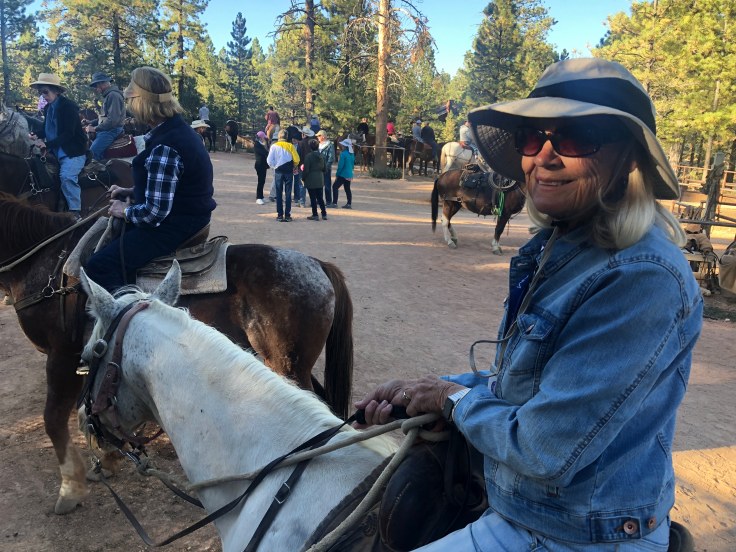
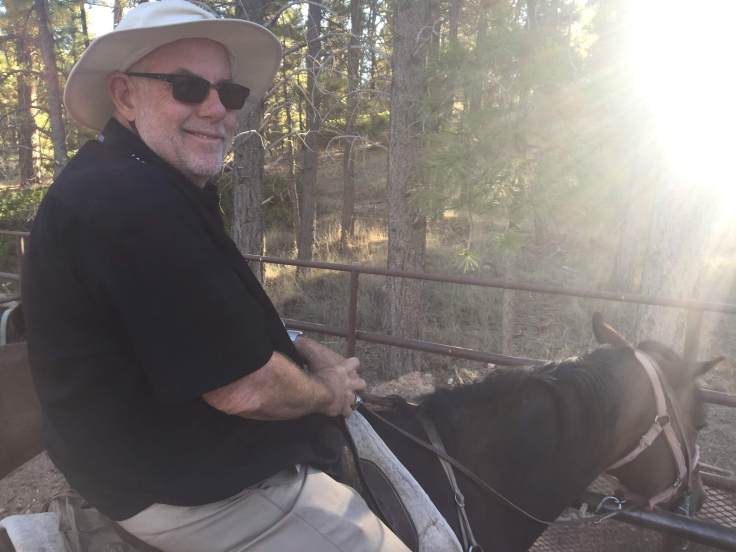
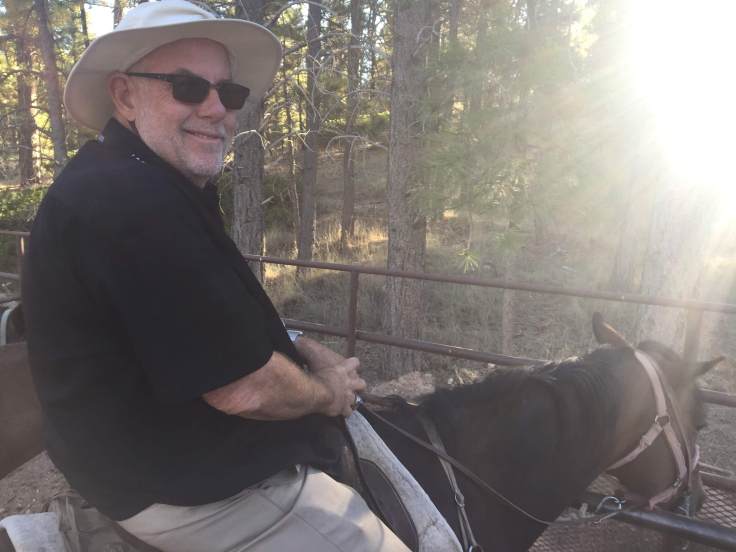
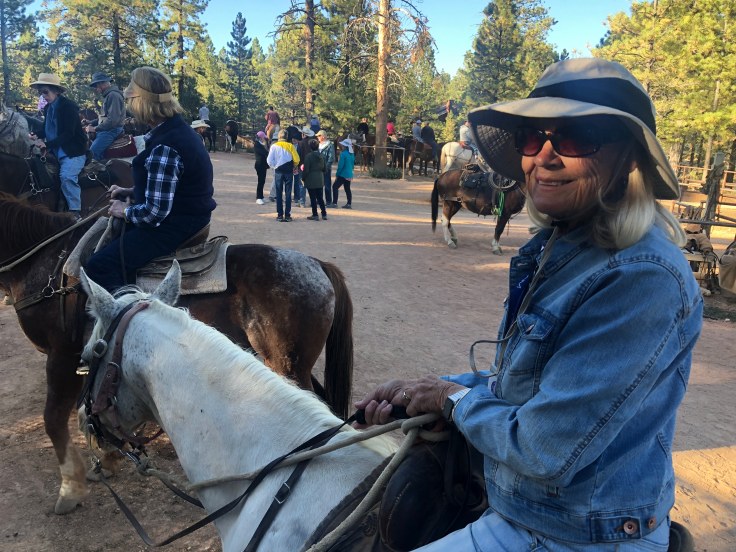
We began our adventure at the corral, where, after an excruciatingly long wait, we were shown to our trusty steeds…

img_7912img_7914img_5309

Finally we set out down the trail… at a plodding pace…

img_5310

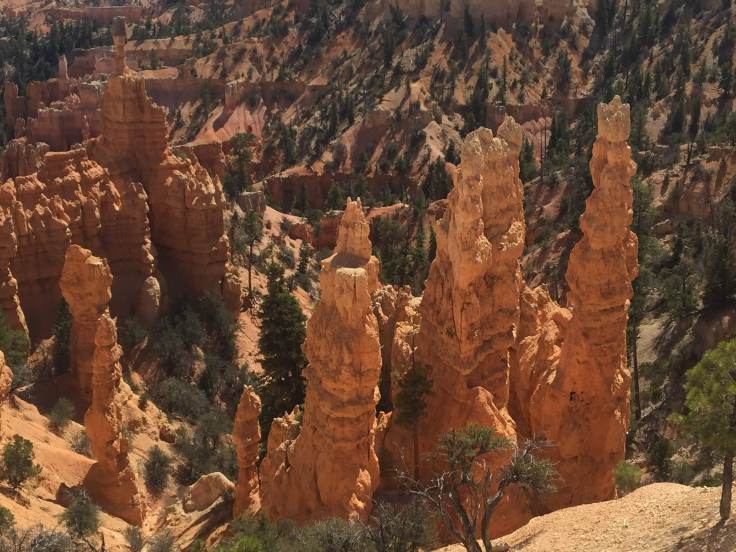
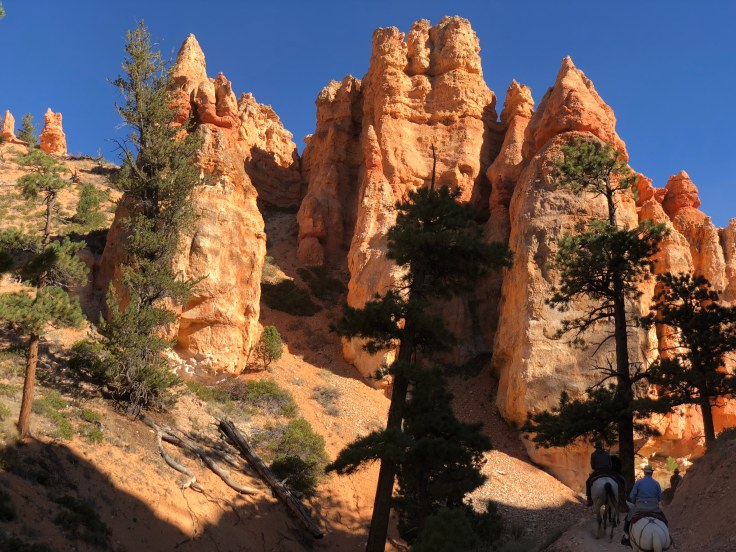
The first thing we enjoyed along the trail was to be up close with the hoodoos and pinnacles and other rock formations here…

img_7919img_7931img_7933img_7938img_7942img_7954img_7963img_7971img_7970

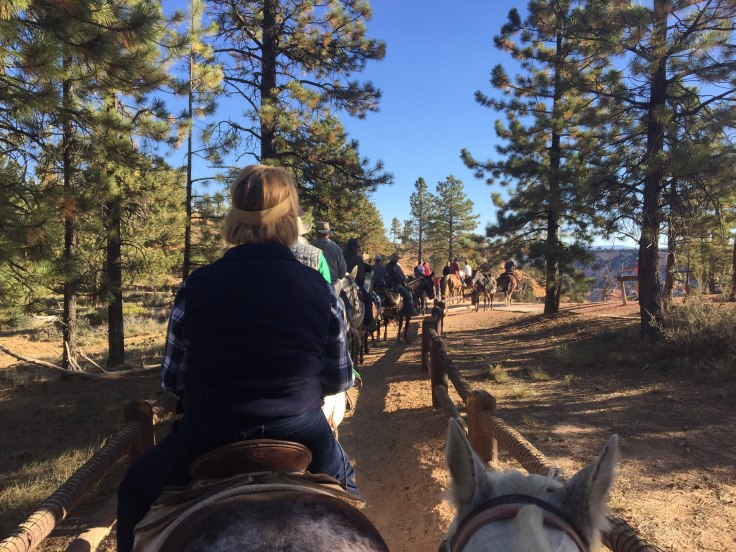
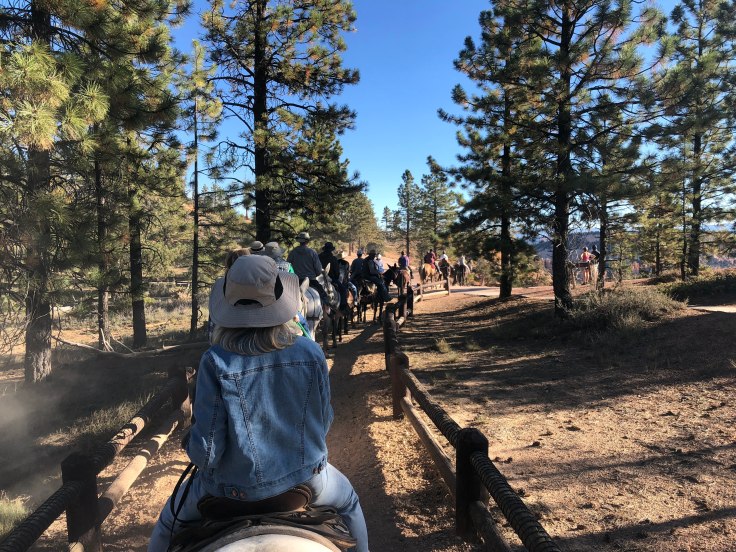
All along the trails, up, and down, these mules and horses walked at their plodding pace.  They walk these trails twice a day, and they have been doing it for years.  They are sure footed and very responsive, plodding along, following the animal in front of them.  Very little drama…

img_7945img_7941img_7922img_53101

After an hour and a half we returned to the corral…

img_7915img_53091img_79141

Upon dismounting, we learned that our limbs had been stretched into an unusual position for the last two hours.  Getting them back to their normal positions took a little time… We were not alone – everyone was walking funny…

All in all, it was interesting.  I wouldn’t exactly call it fun.  Interesting to see these animals do there jobs, interesting to see how other people react to the animals… It was great to see the rocks up close… And it was not terrifying or dangerous…

We returned to the RV park, stopping along the way for fuel and groceries.  We relaxed in The Villa, watching football… After all, it is Saturday…!  Too bad, Auburn, UCLA, Florida State, USC…

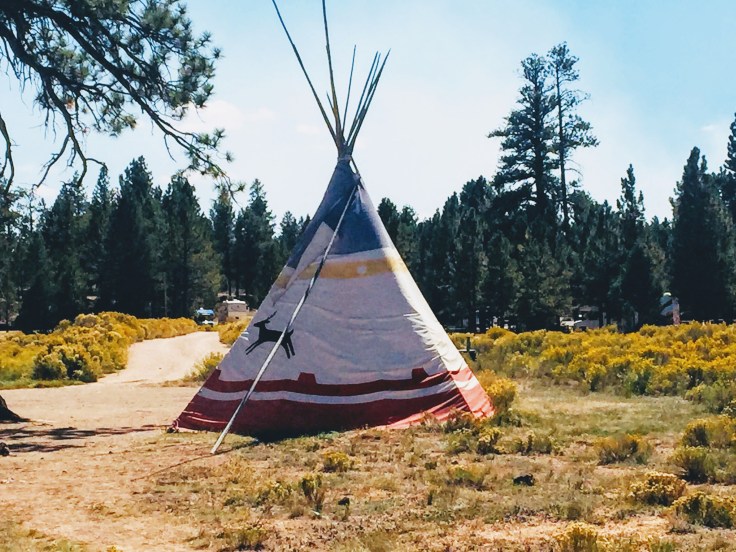
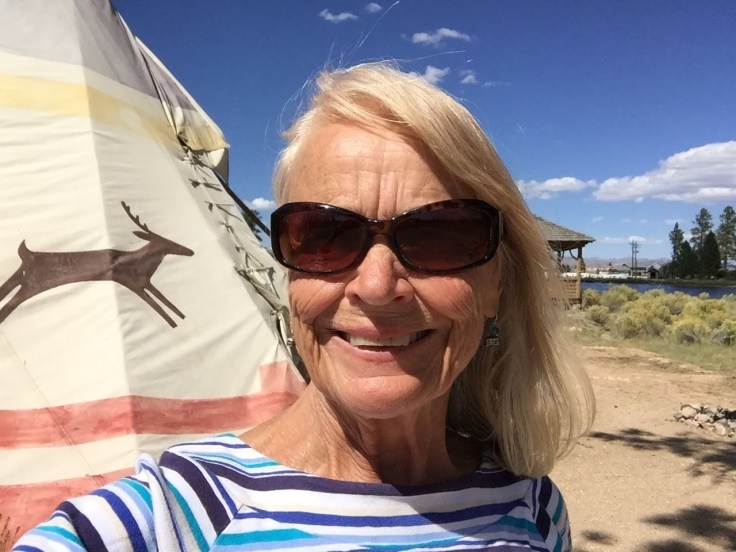
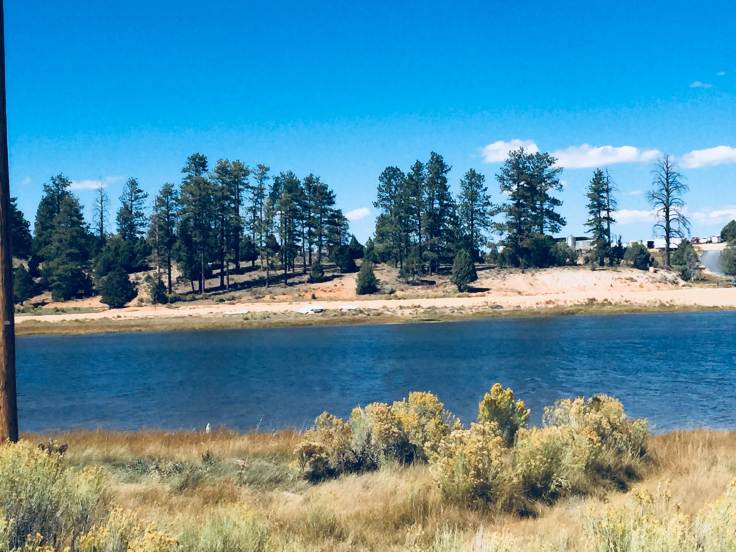
We walked about a bit. We found a lake nearby, and we found teepees that you can rent if you want to camp this way…

img_5360

img_5364img_5357

We shared happy hours from 5:00 to 9:30 with several other caravaners…

And an enjoyable time was had by all…

Blog at WordPress.com.

Up ↑