Search

Adventures in the Villa

Category

2021 Oregon Trail Caravan

2021-08-14 – The Oregon Trail caravan … Day 17 – Traveling Fort Bridger, WY to Montpelier, ID

We spent just one night at Fort Bridger, and we move today to Montpelier, Idaho. This will be a three state day: Lunch in Wyoming, Dinner in Utah, and sleep in Idaho.

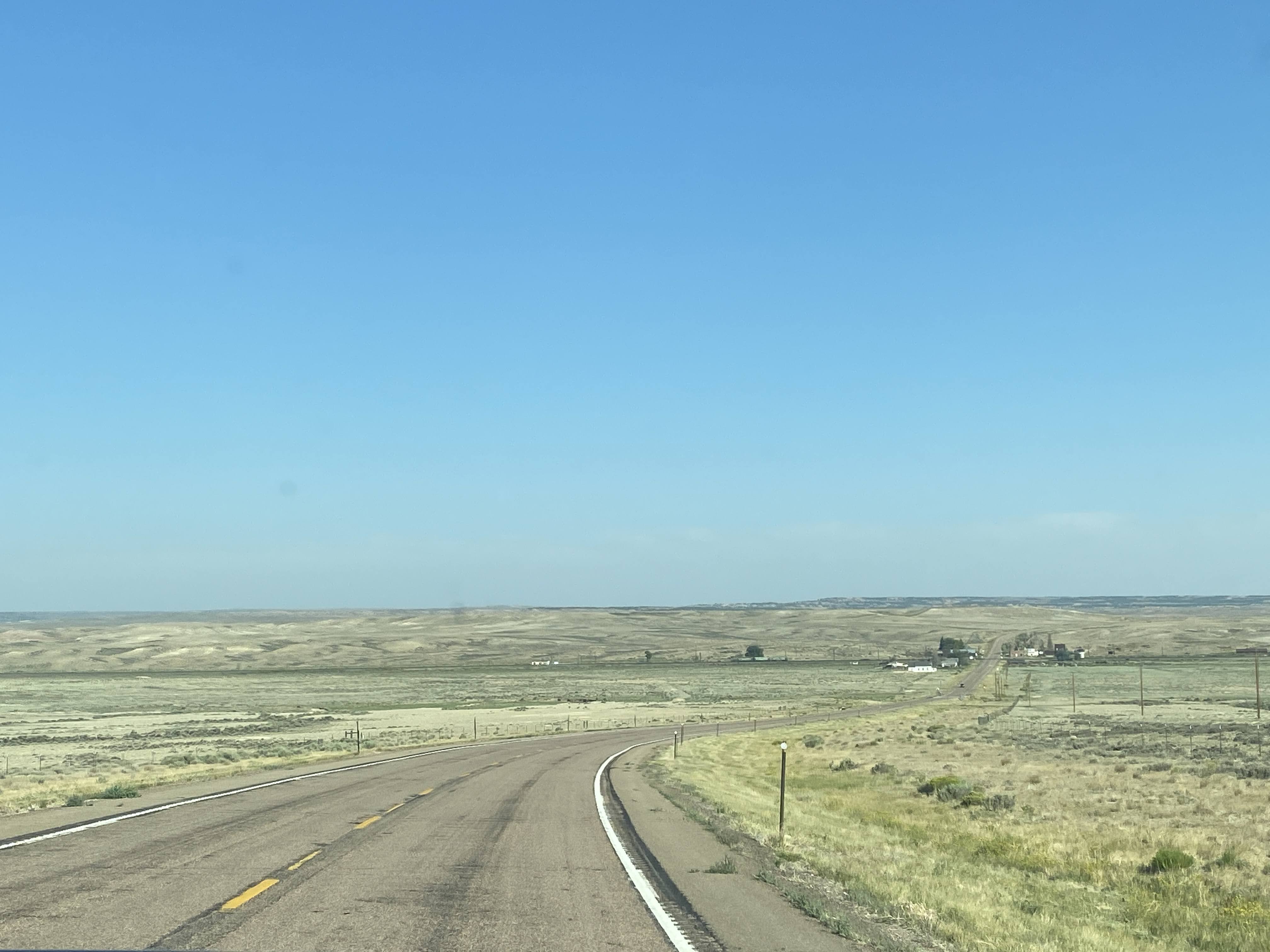
We began again with the ever-changing Wyoming landscape…
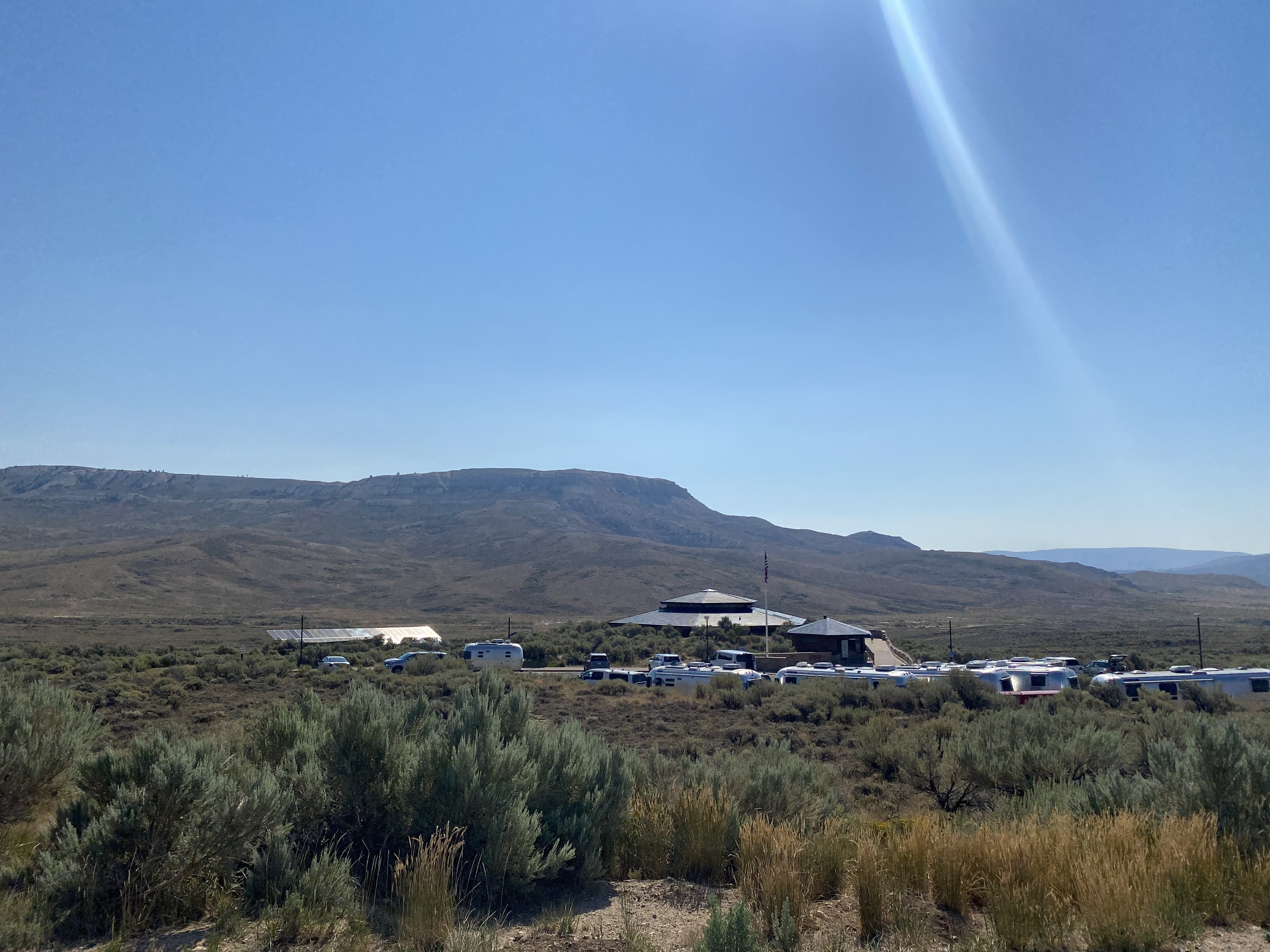
We are headed to the Fossil Butte National Monument.

This image has an empty alt attribute; its file name is img_2674x.jpg

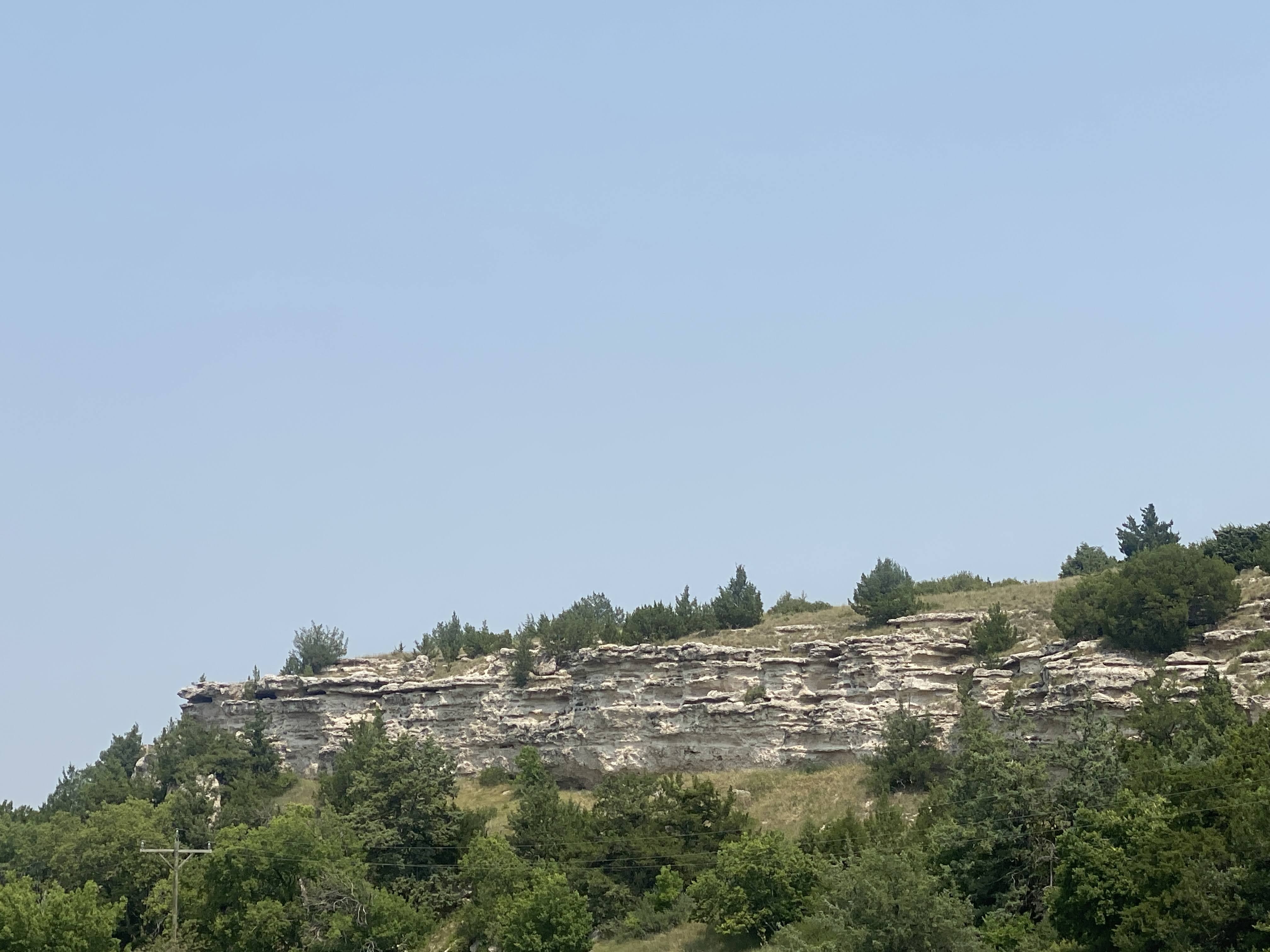
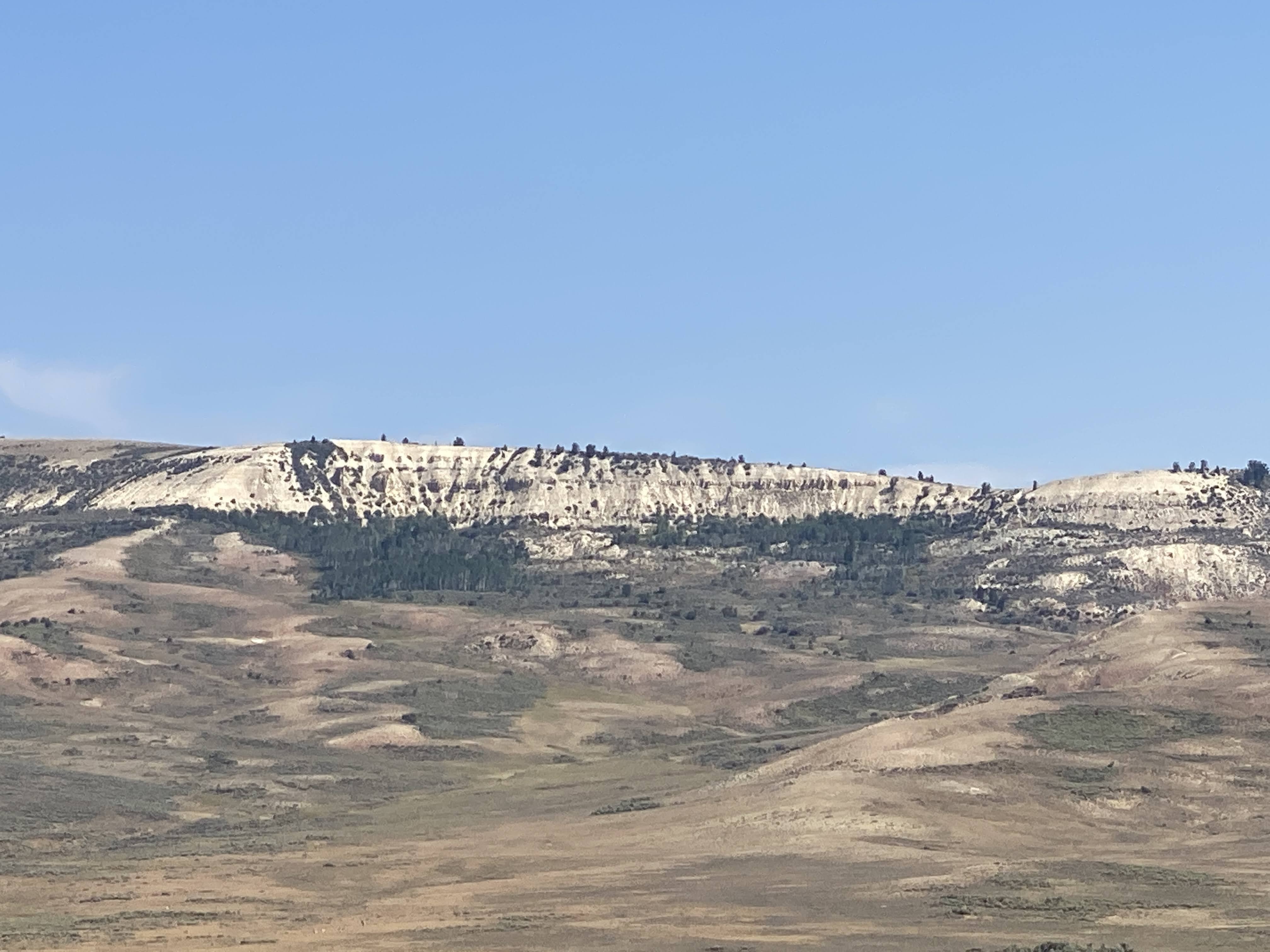
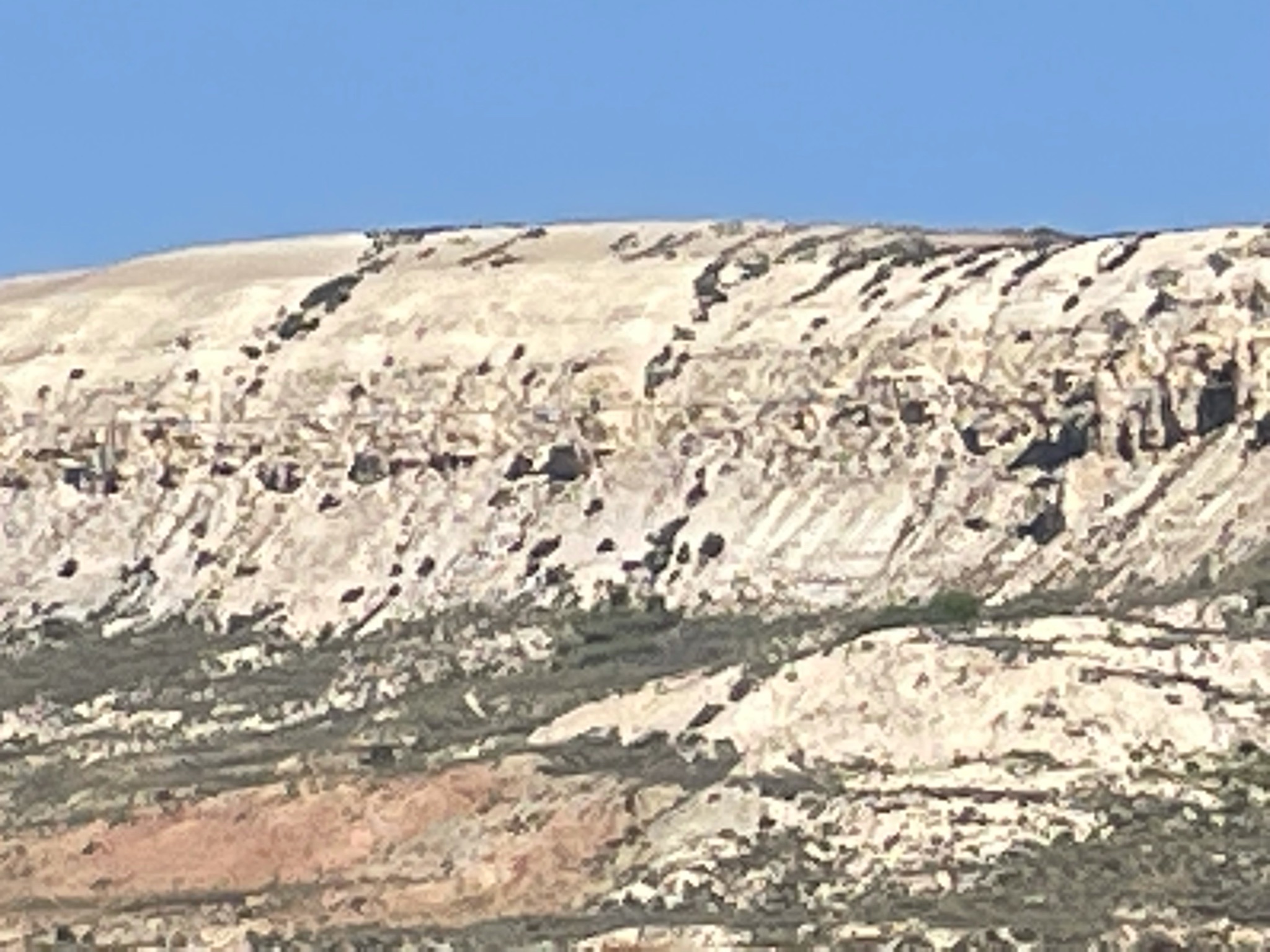
These bluffs are the shoreline of an ancient inland sea… The fossils we will be seeing are all sourced from here…

We proceeded to the Visitors Center

We were not the first to arrive…
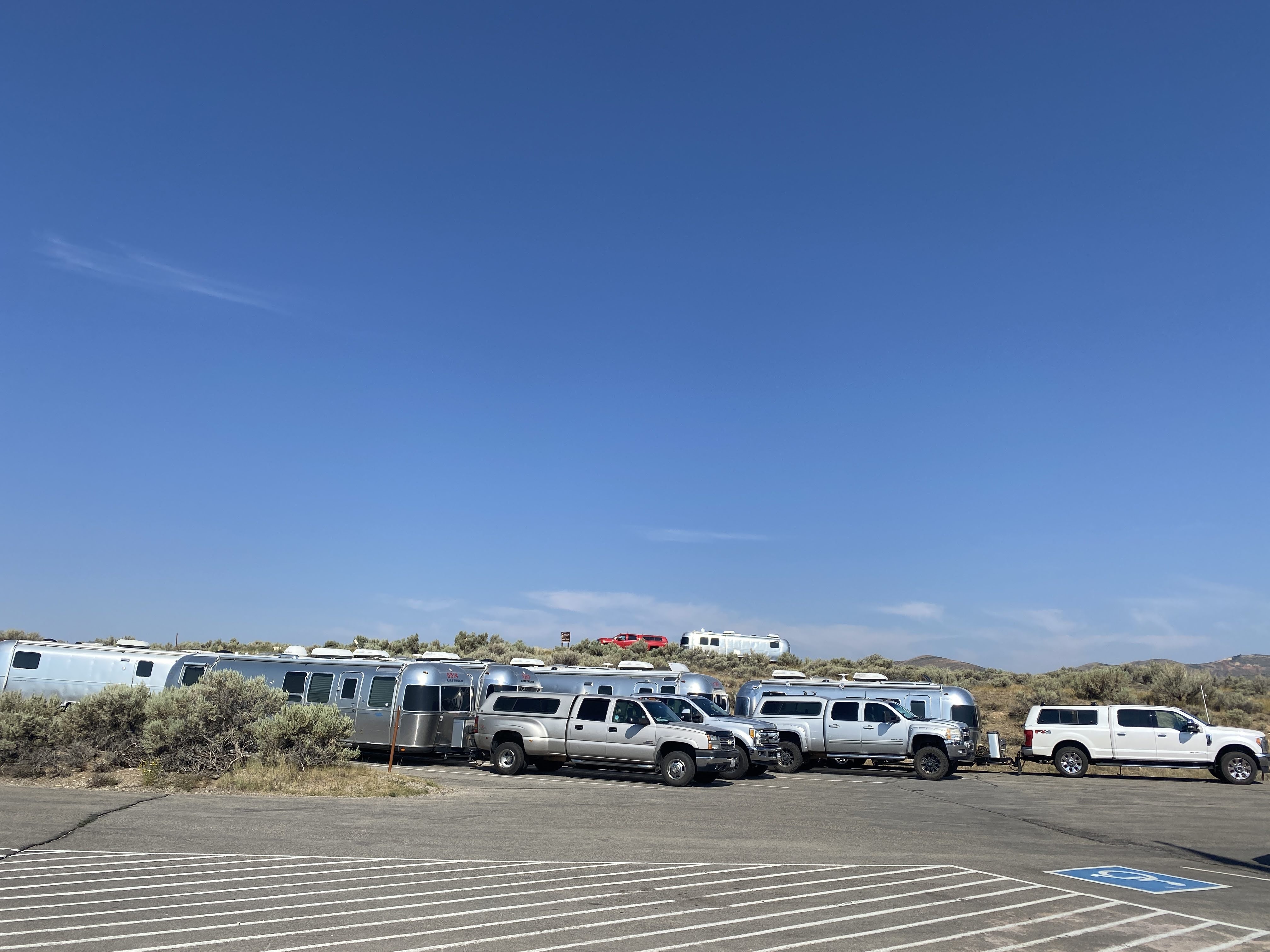
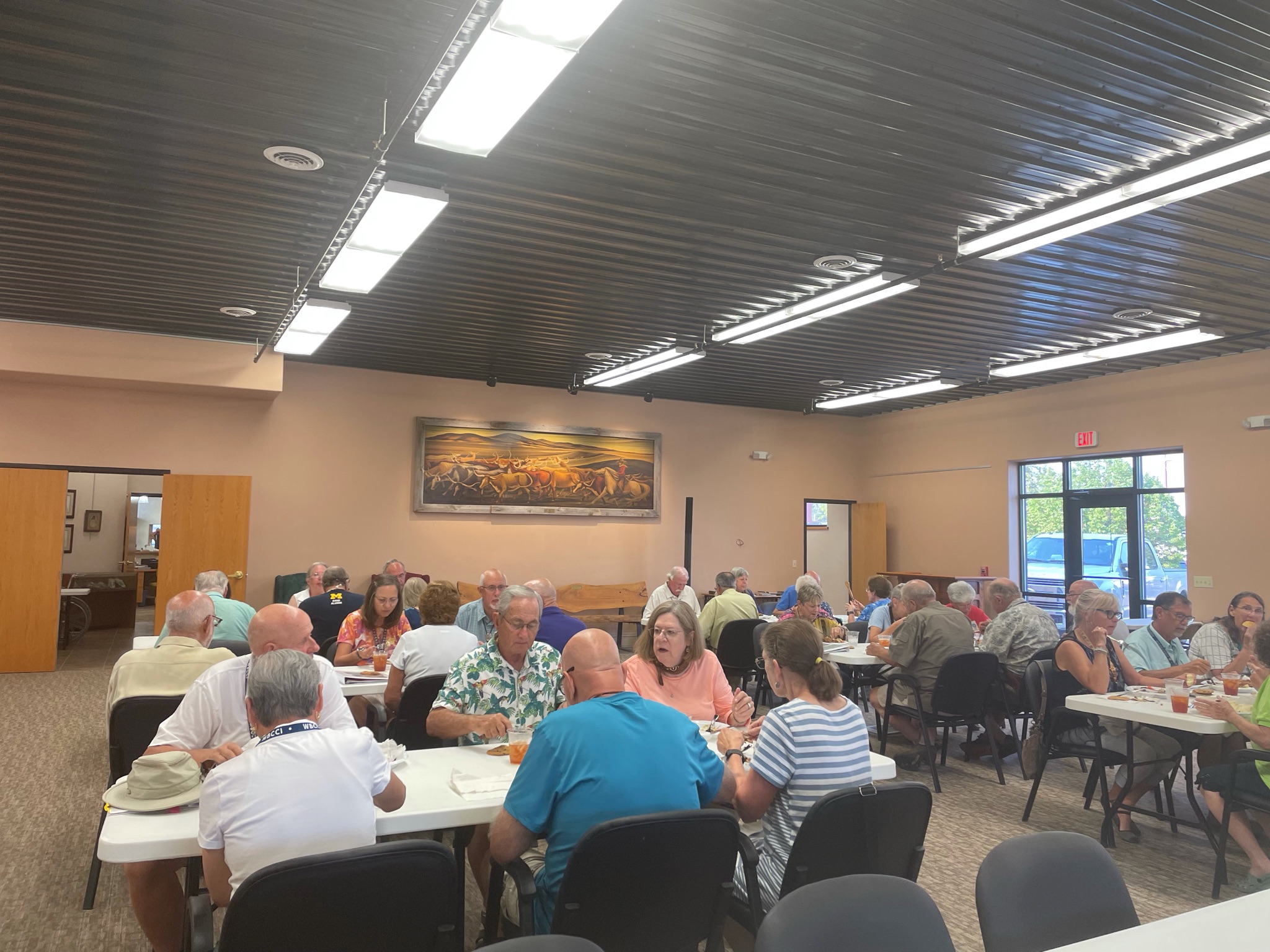
Inside is a nice collection of fossils found nearby. There was also a good video showing how the fossils are found and extracted… Also, there was a man uncovering fossils as we watched…

We saw a crocodile…

A palm frond…

And a turtle…

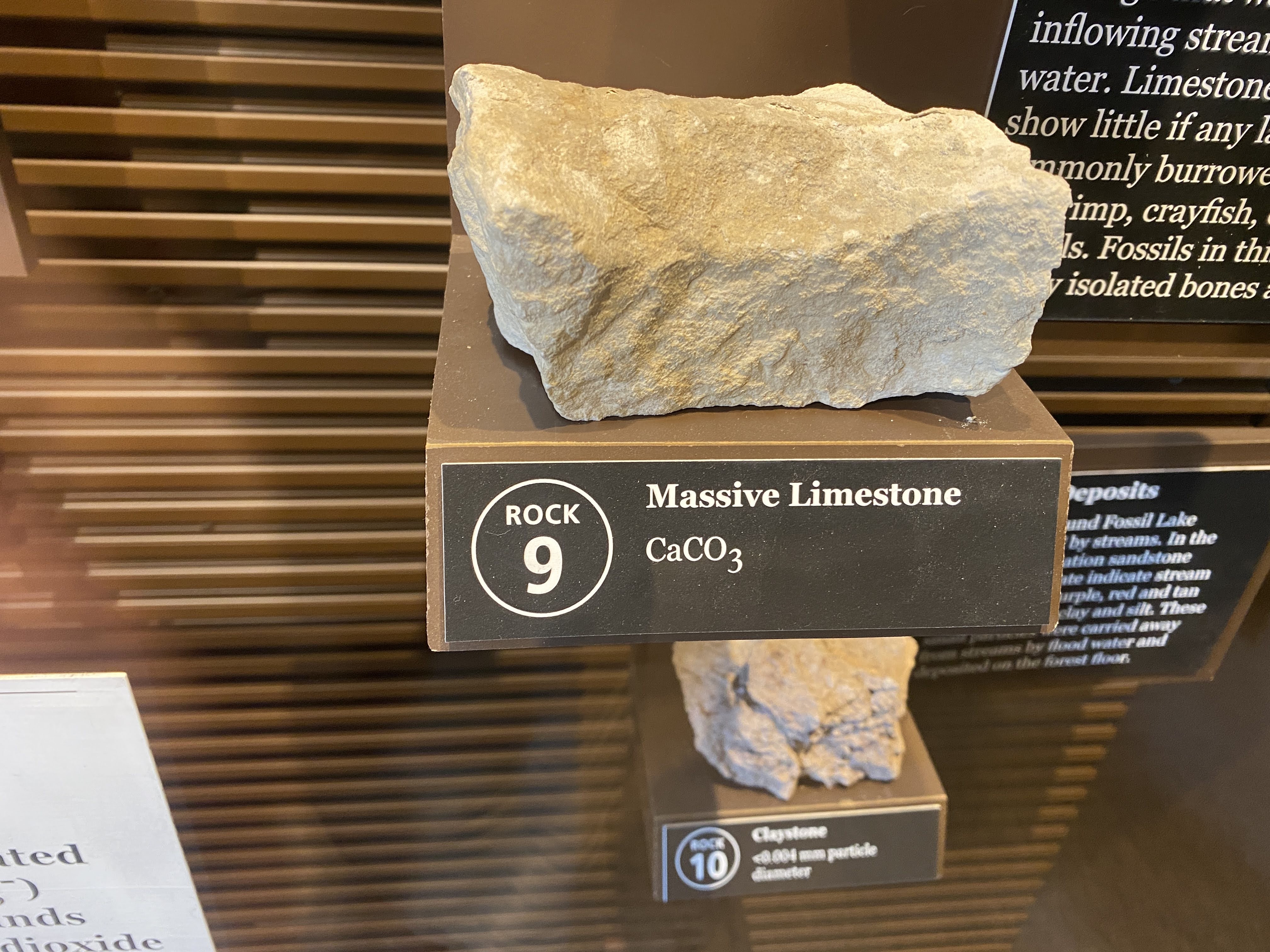
We discovered that many rocks contain lots of Carbon…

In fact, note the Calcium Carbonate shown here; you will see mention of it later in this blog…
More views of the bluffs…
We headed out and shortly found a fuel stop and an opportunity for lunch…
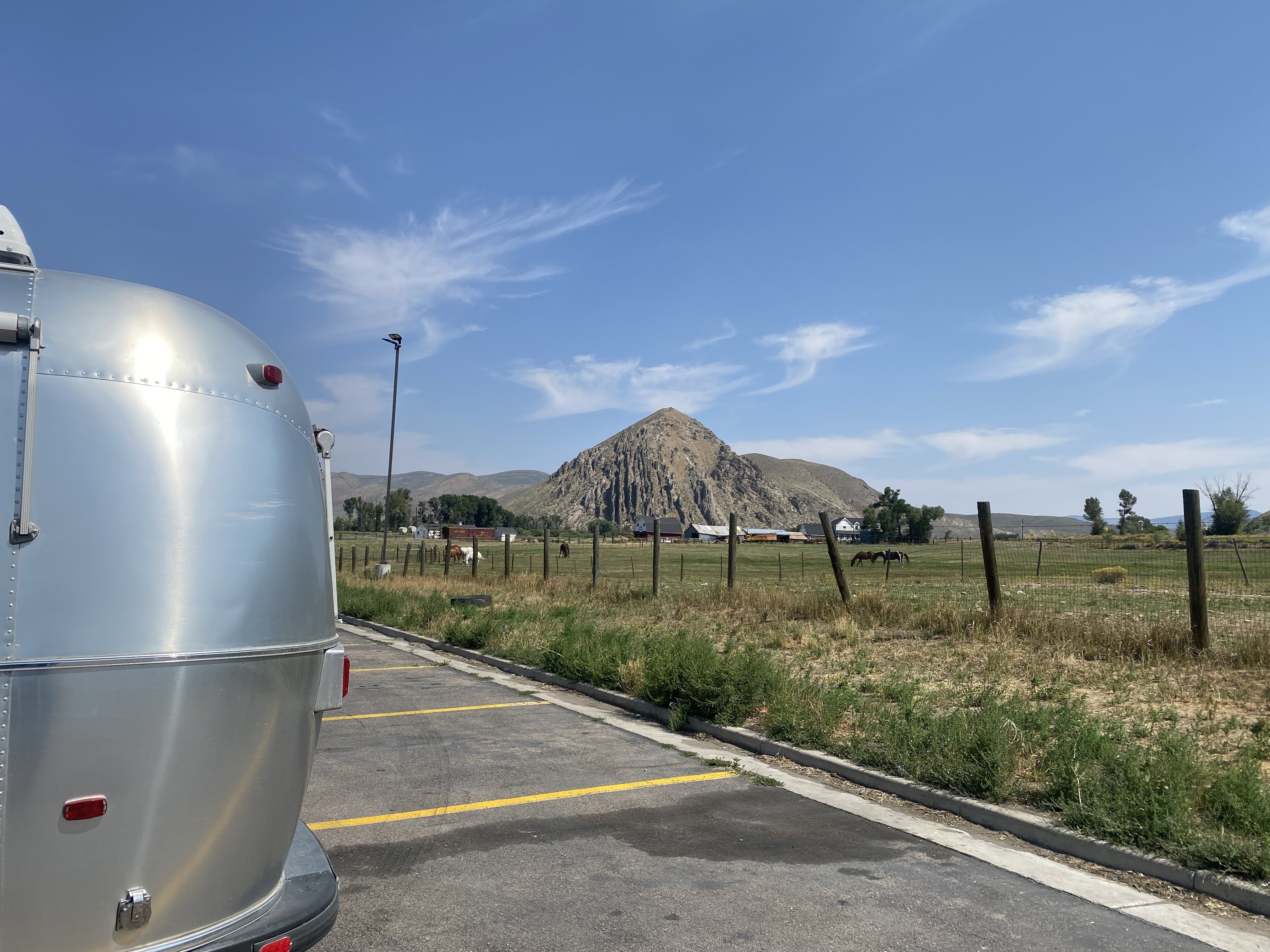
More Wyoming landscape…
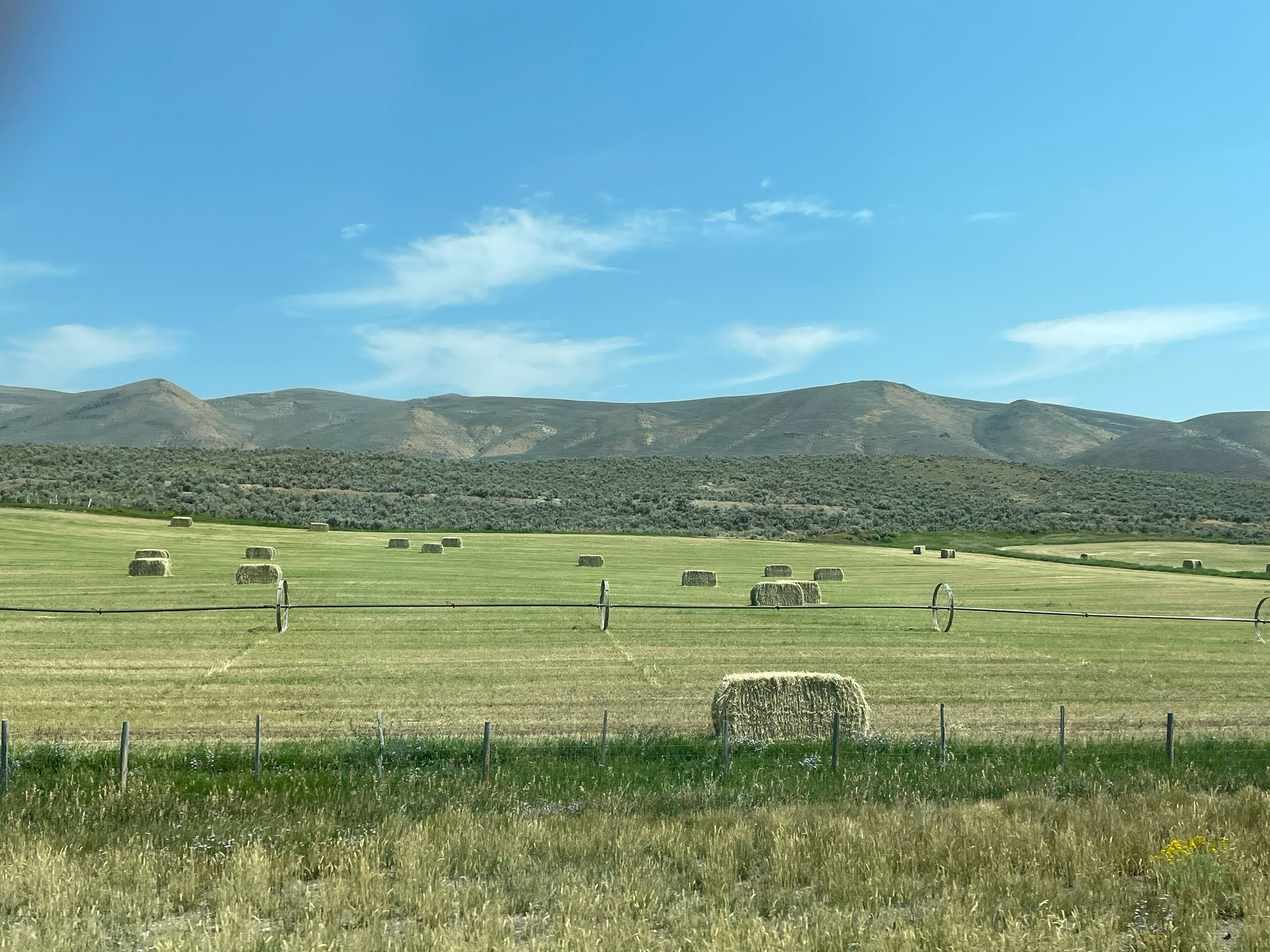
And then we entered Idaho!

We parked the Villa at the RV park, and headed over to the National Oregon/California Trail Center…
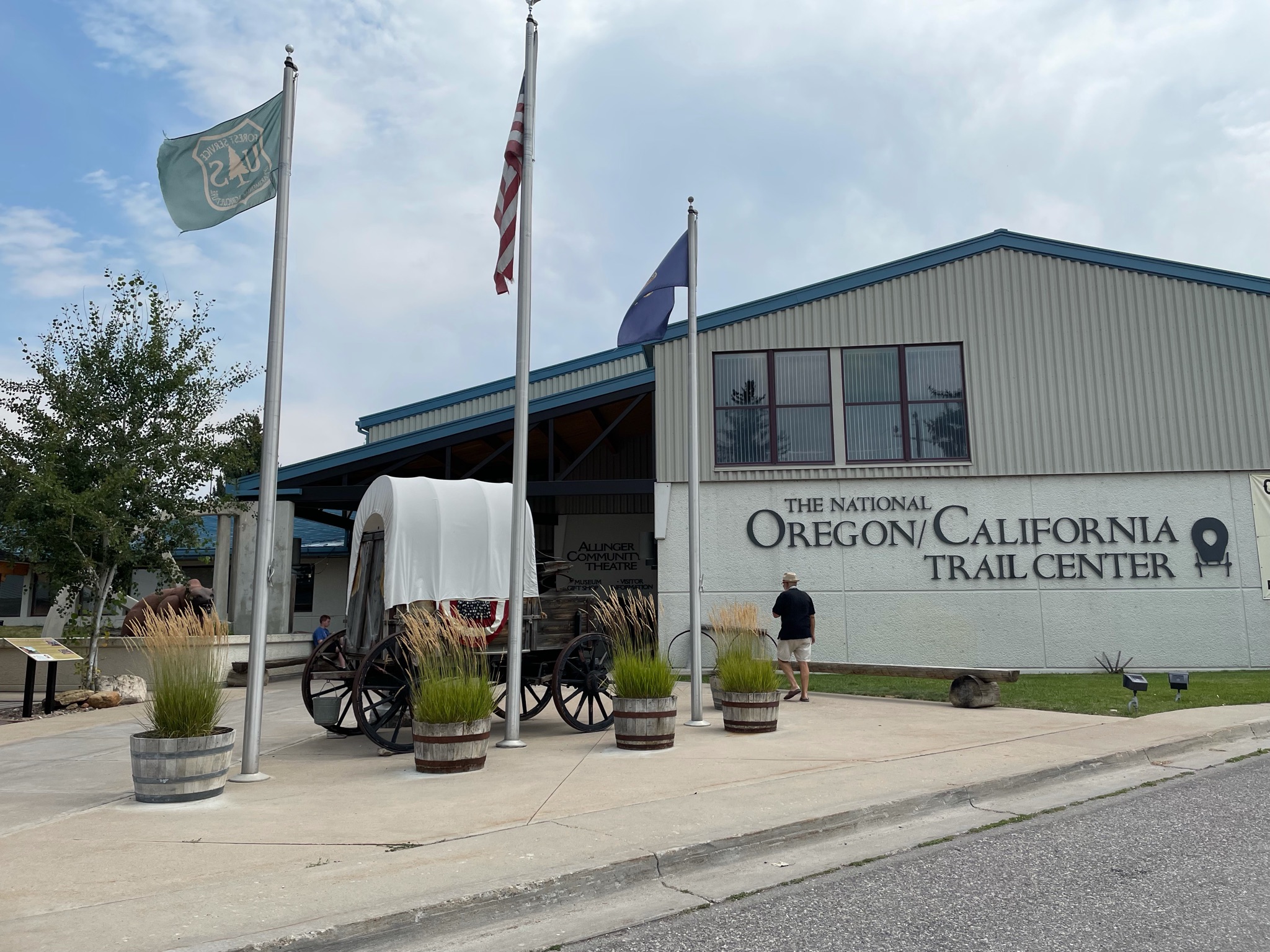
We had a guided tour of the exhibits depicting life on the trails, from getting prepared and buying provisions to actual travel down the trails…

There was an entire gallery of artworks prepared by a local husband and wife team…
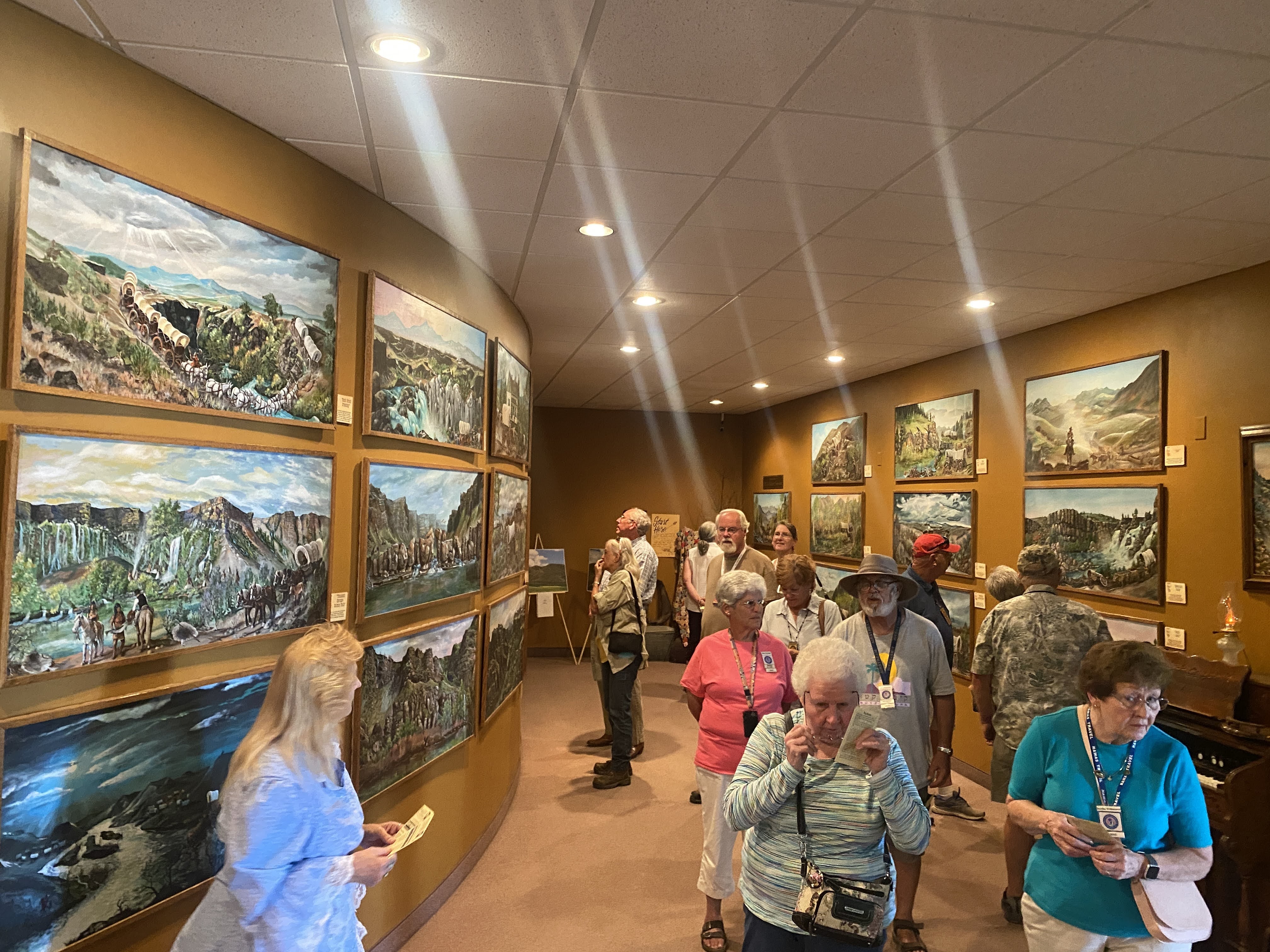
We heard descriptions of the wagon, and contents (1,200 – 1,500 lbs. of food), and life on the trails…
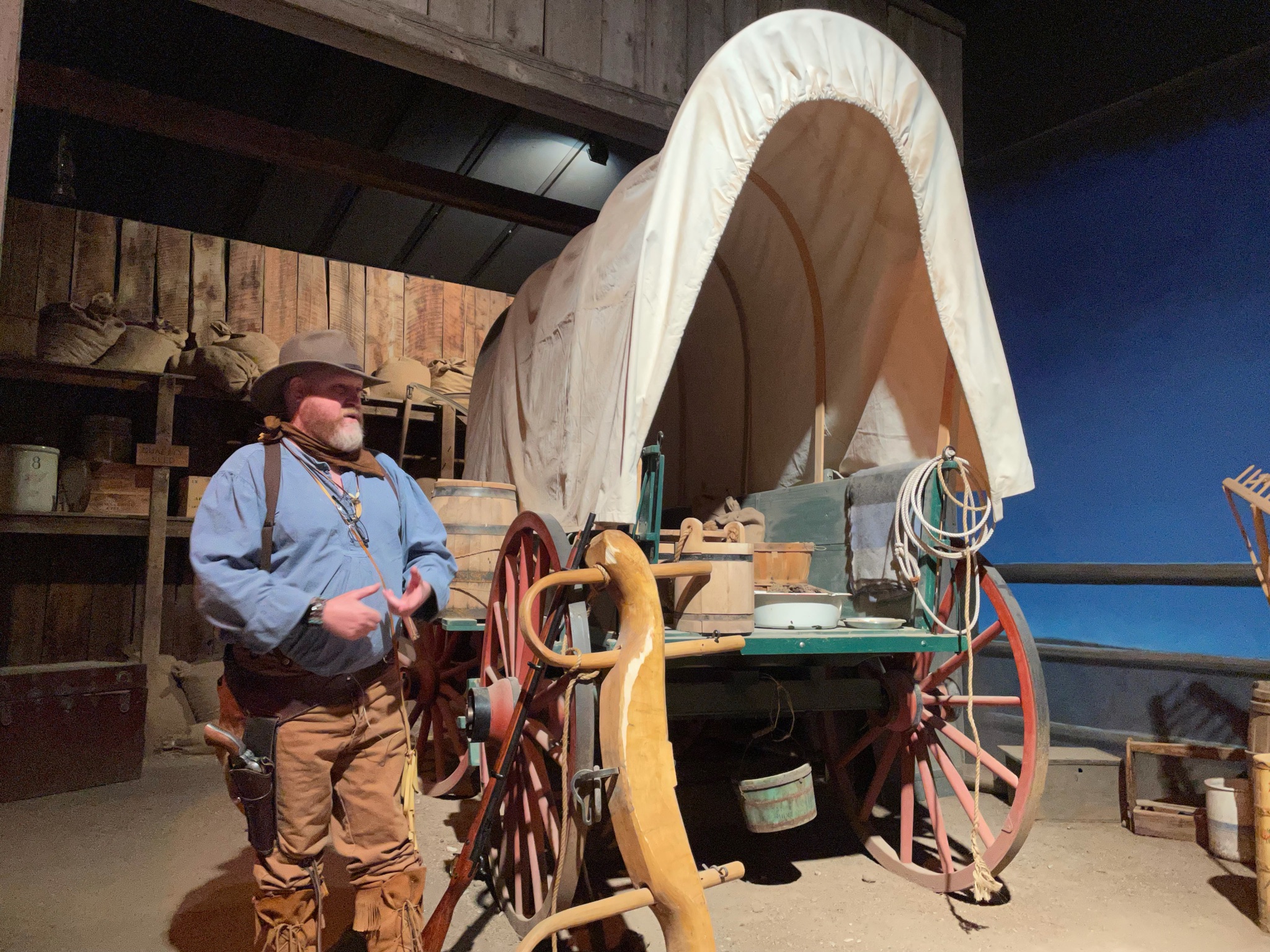
We saw a typical supply store where anything you wanted could be purchased…

Then we heard some tall tails after we spent a few minutes inside a simulated wagon ride…

After the museum we headed south to Utah for dinner… We soon found ourselves on the shores of Bear Lake.

Bear Lake is a natural freshwater lake on the Idaho–Utah border. About 109 square miles in size, it is split about equally between the two states. The lake has been called the “Caribbean of the Rockies” for its unique turquoise-blue color, which is due to the refraction of calcium carbonate (limestone) deposits suspended in the lake. Limestone! I told you I would mention it again! Its water properties have led to the evolution of several unique species of fauna that occur only within the lake. Bear Lake is over 250,000 years old. It was formed by fault subsidence that continues today, slowly deepening the lake along the eastern side. In 1911 the majority of the flow of the Bear River was diverted into Bear Lake via Mud Lake and a canal from Stewart Dam, ending 11,000 years of separation between the lake and that river system.

Today the lake is a popular destination for tourists and sports enthusiasts, and the surrounding valley has gained a reputation for having high-quality raspberries.

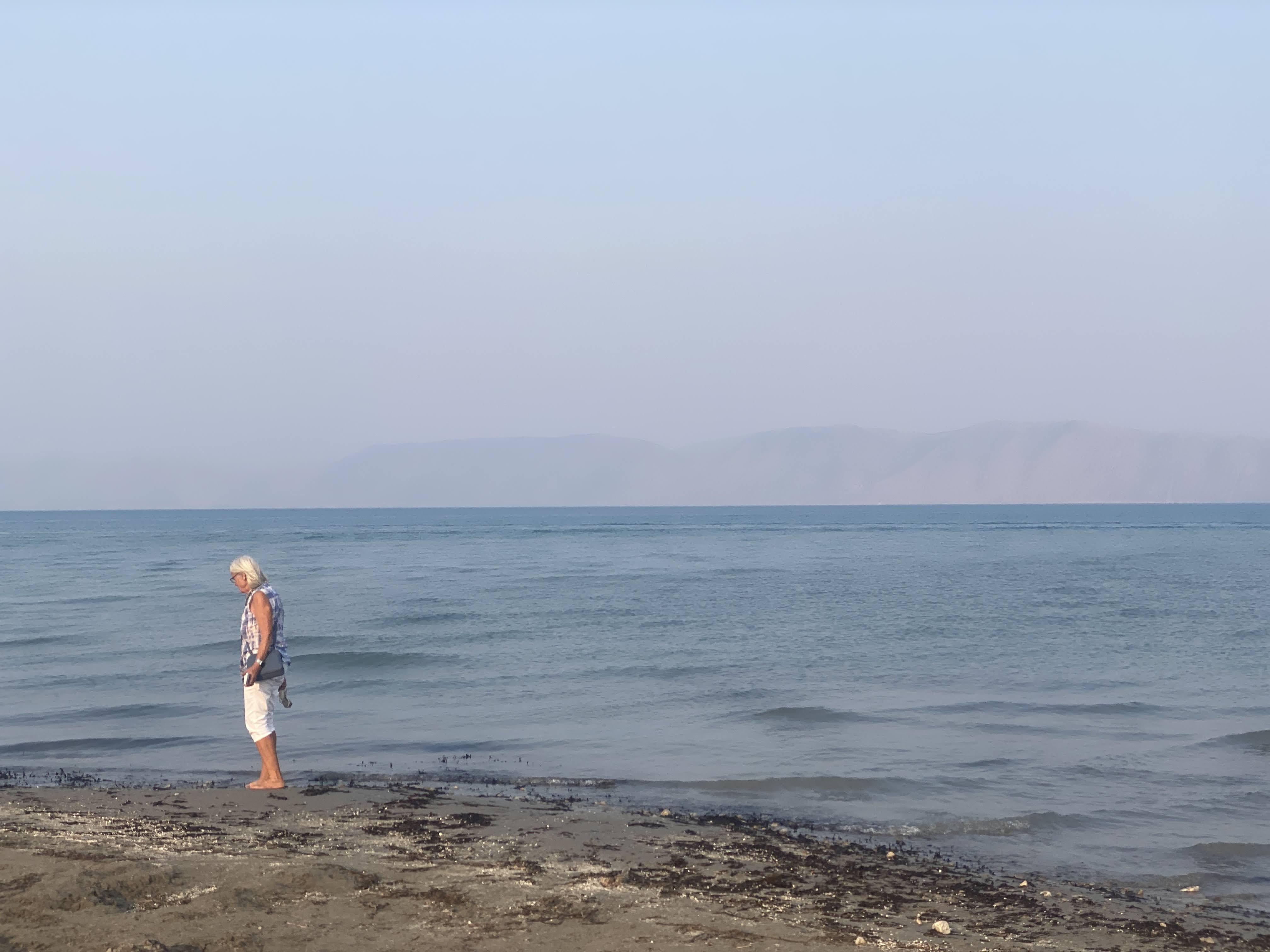
Unfortunately, due to smoke from fires in Oregon, the air is very hazy, obscuring the mountains across the lake…

On our way to Bear lake we passed a marvelous Mormon Tabernacle in the town of Paris, ID.

We entered Utah…

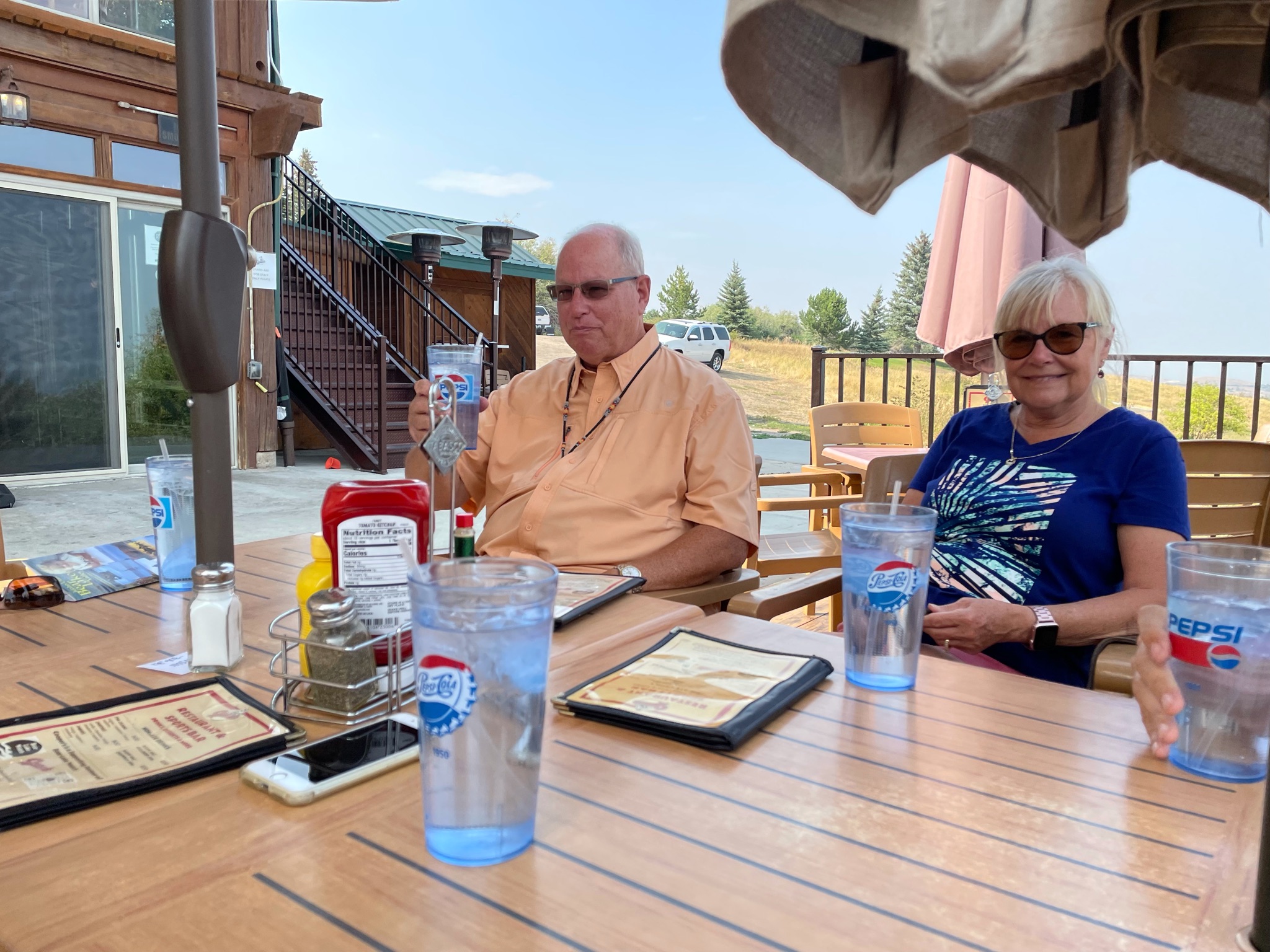
We stopped for a little refreshment before dinner at Coopers, a restaurant at a golf course in Fish Haven, ID
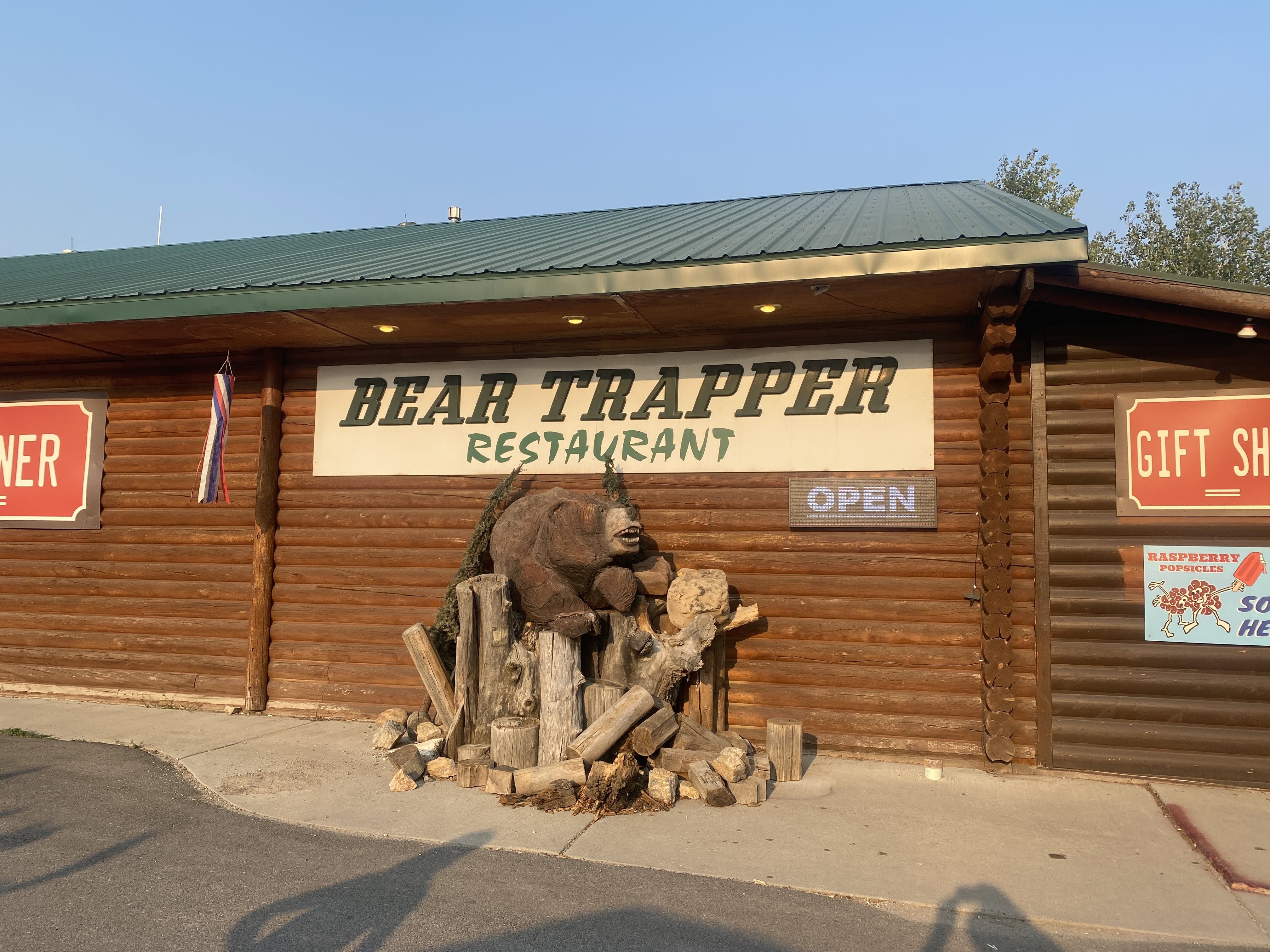
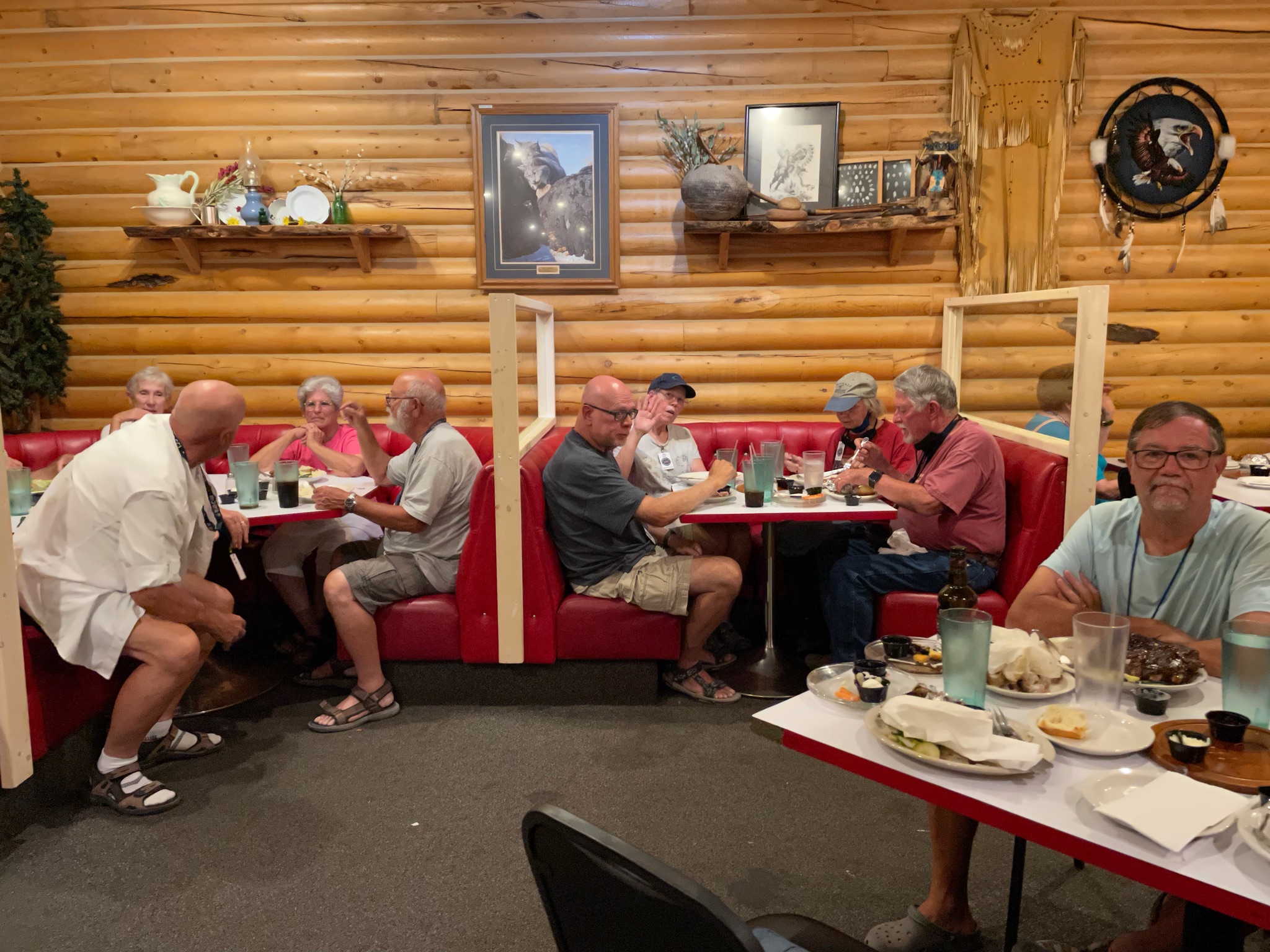
At the appointer hour we arrived at the Bear Trapper, in Garden City, UT…
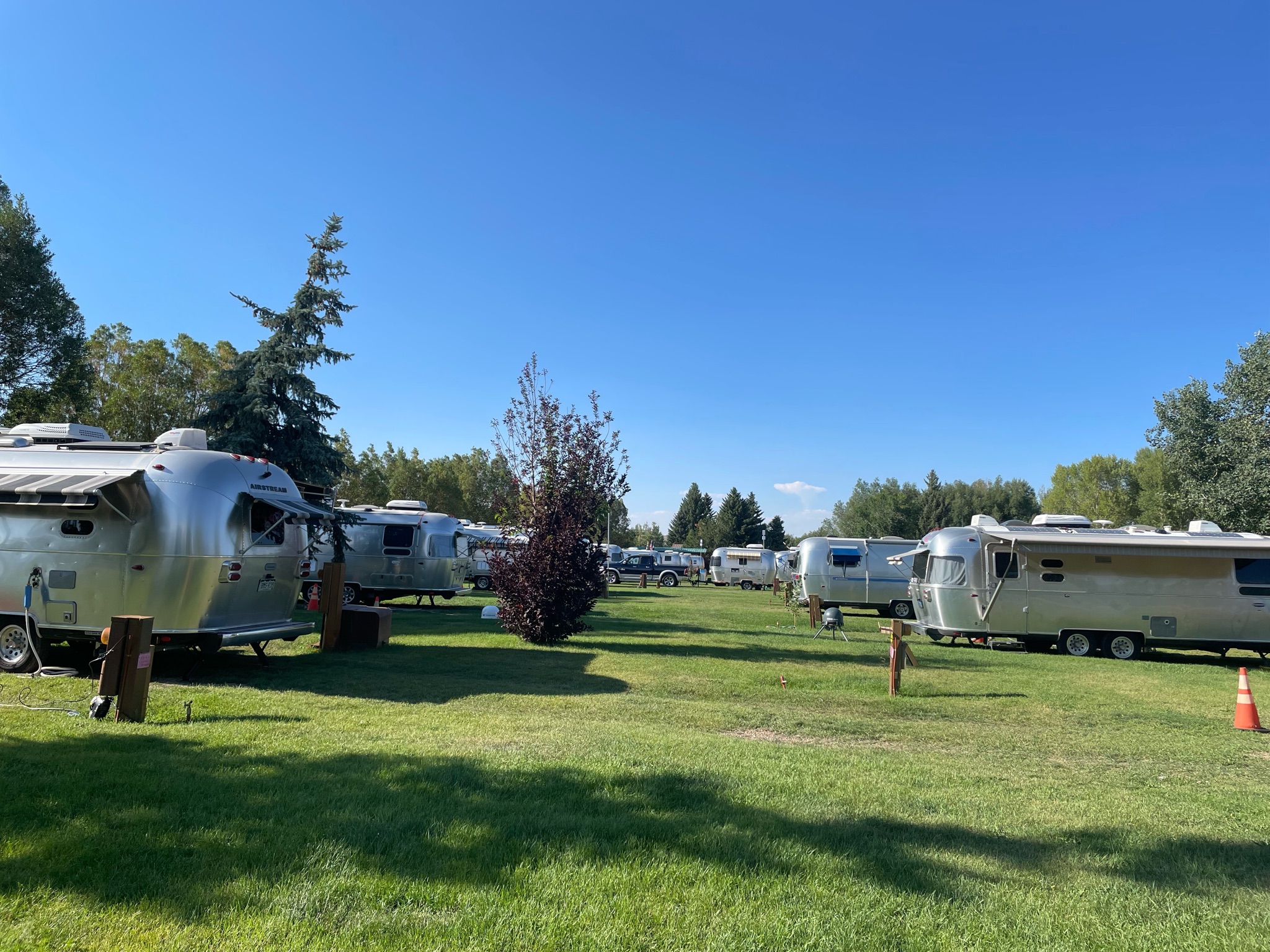
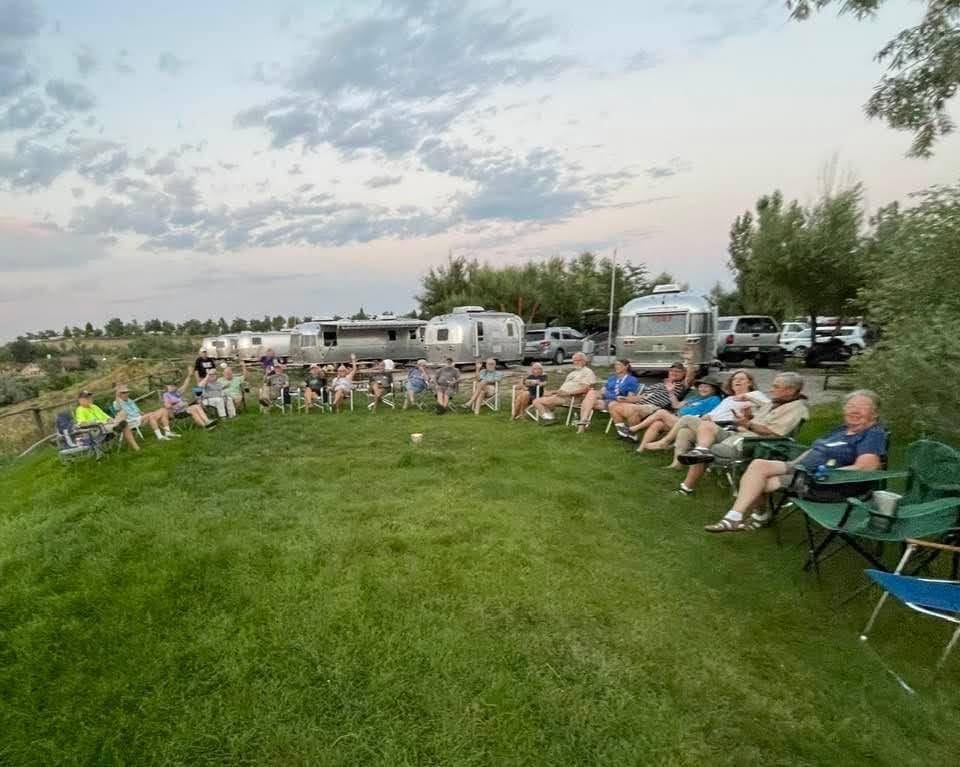
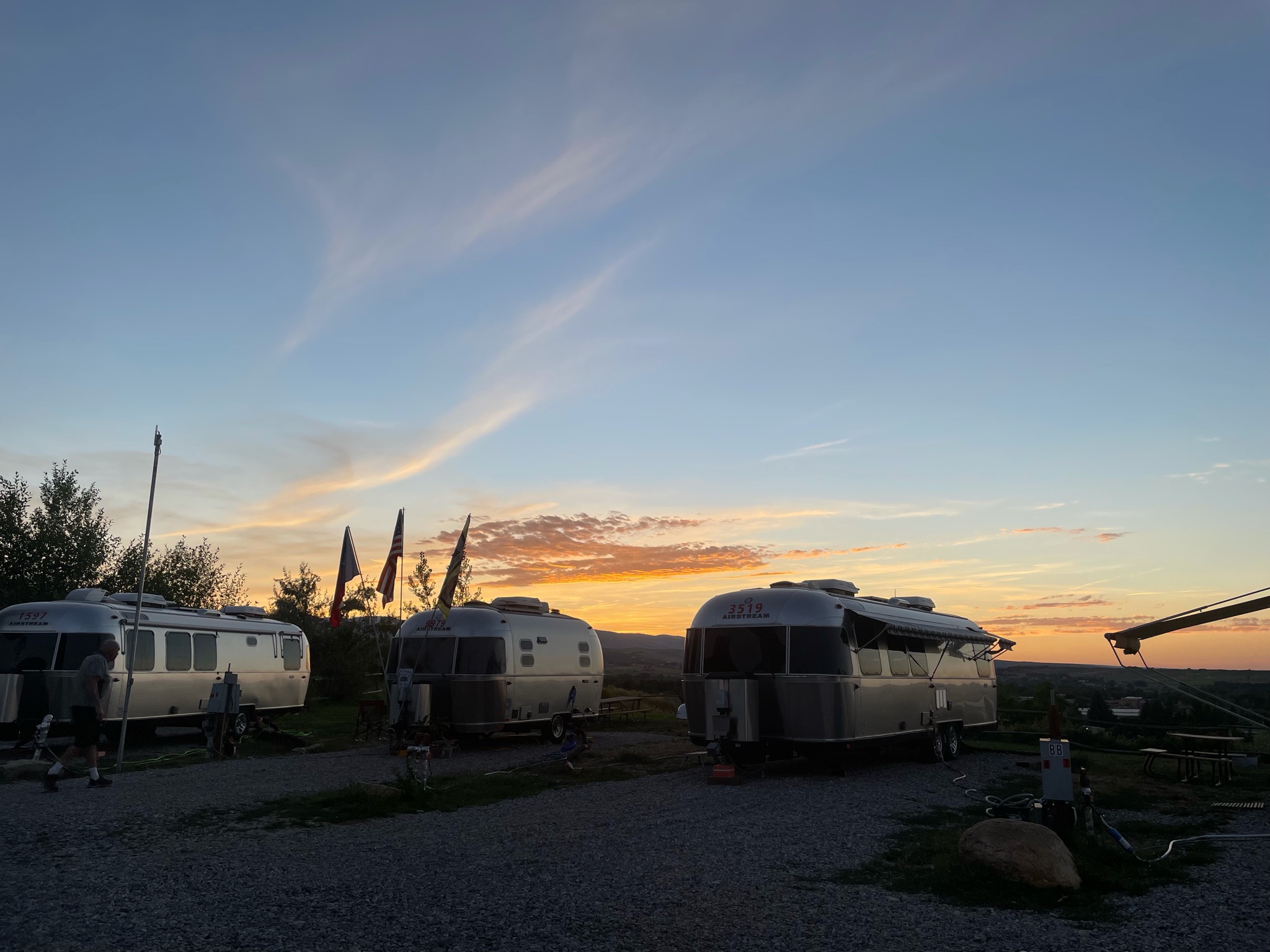
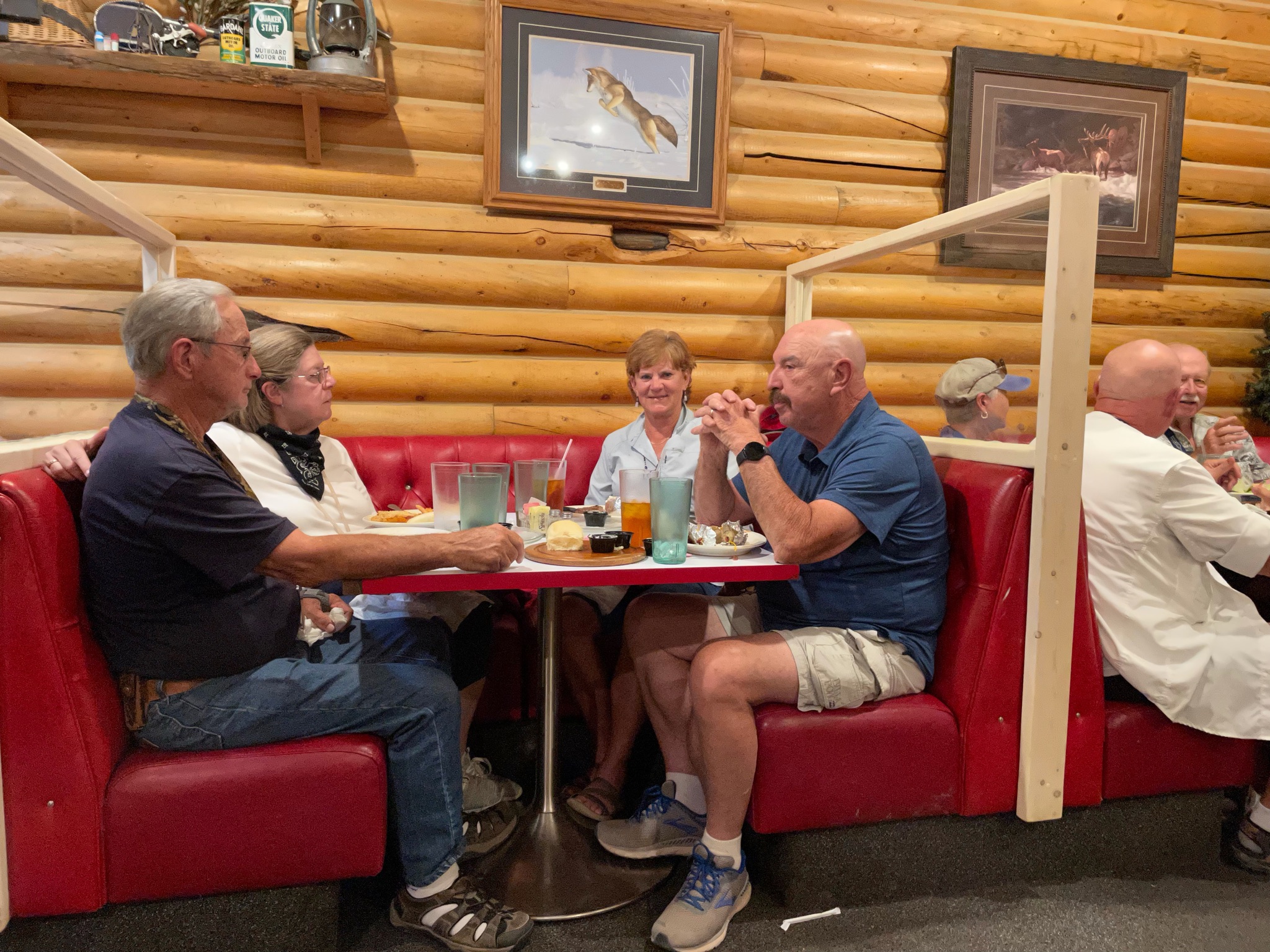
All the Airstreamers are here!
After dinner Lynda and I walked down to the shore of the lake.

Garden City is a vacation area tourist place, much like the coast of Maine, Cape Cod, and the Wisconsin Dells. Lots of ice cream and fast food places that are absolutely overrun with tourists out for a good time. The traffic was terrible…

Boaters are everywhere…

And late on a Saturday afternoon in August the line to bring your boat trailer in to take your boat out of the water was hours long…

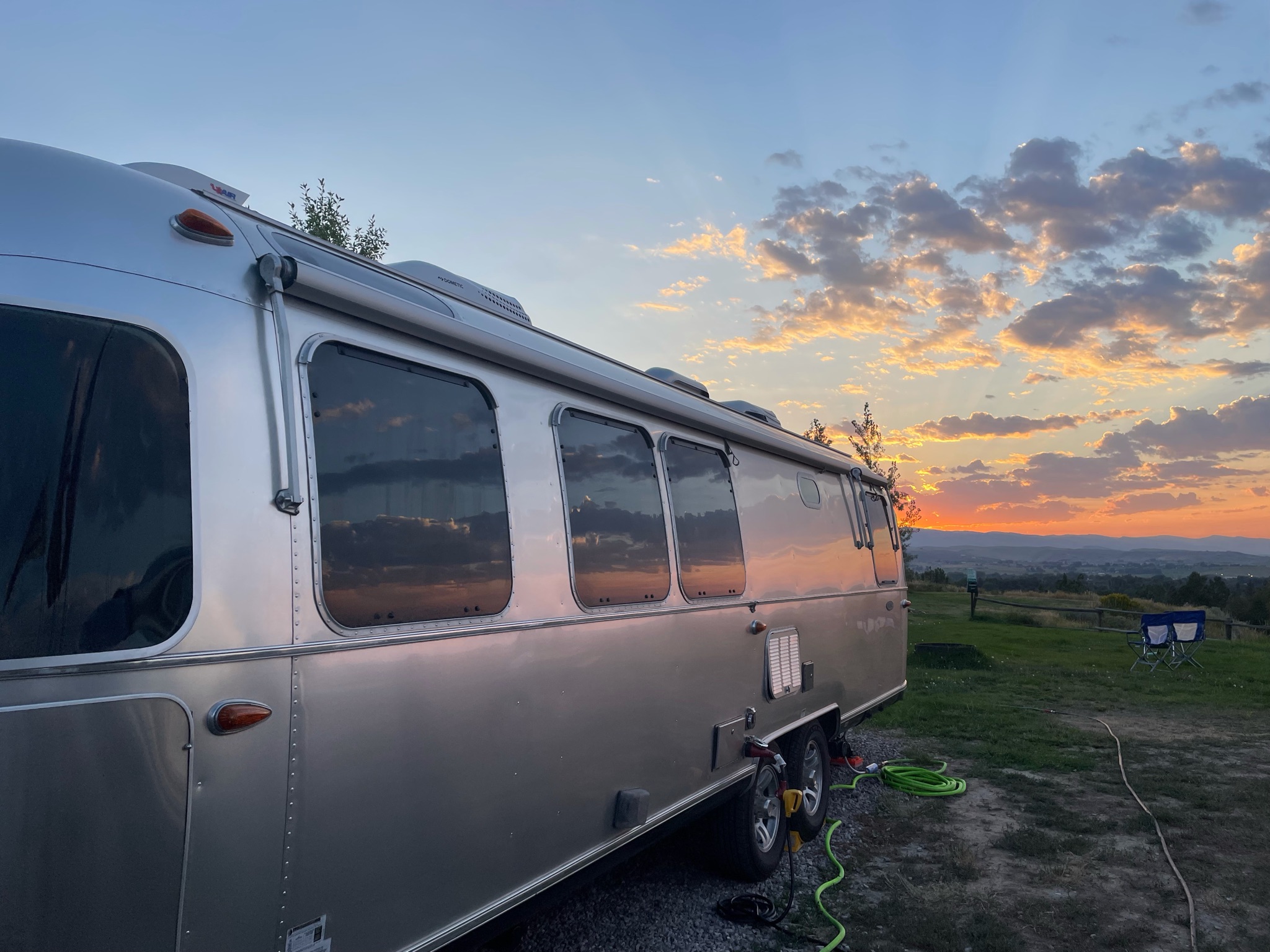
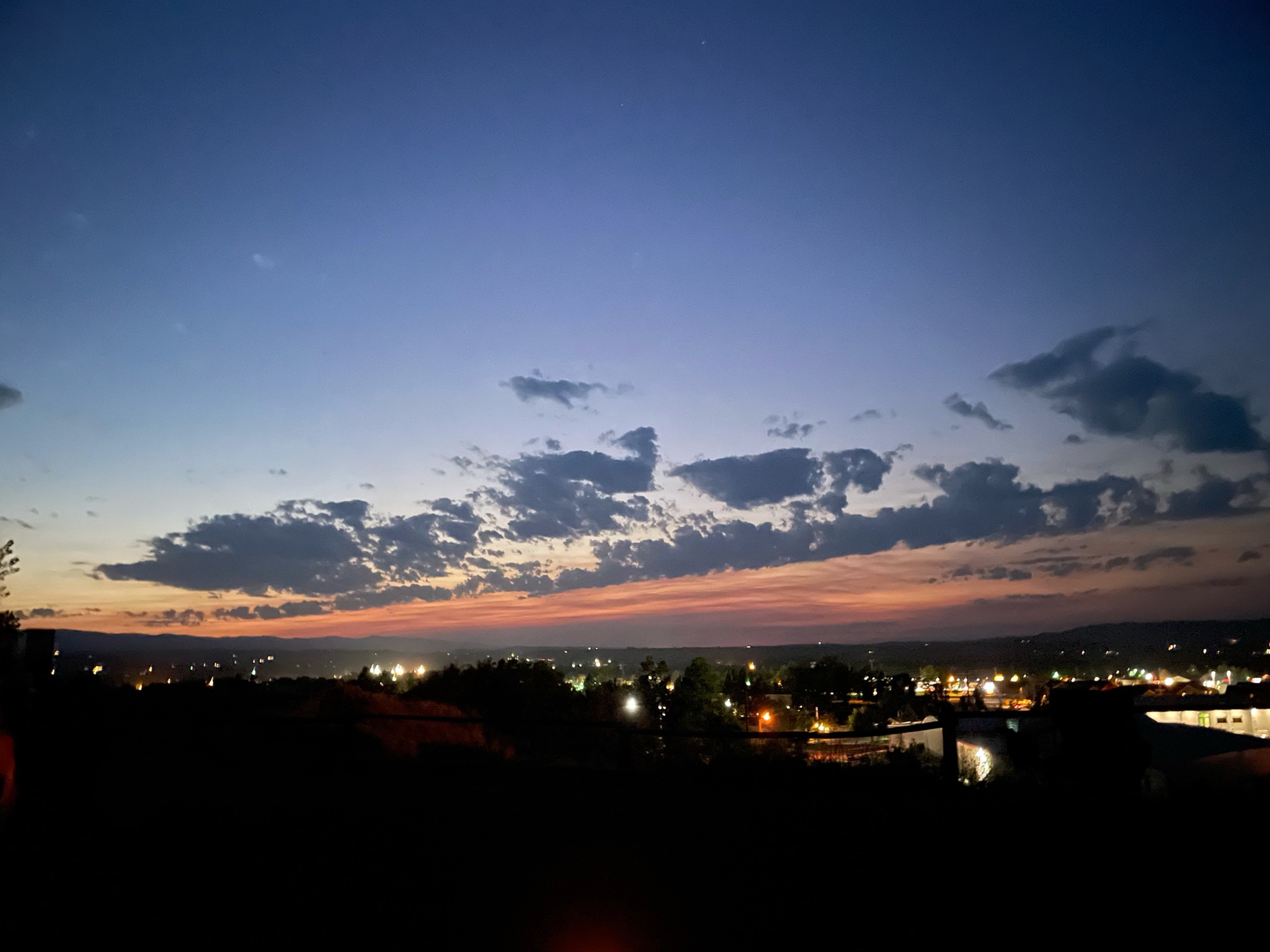
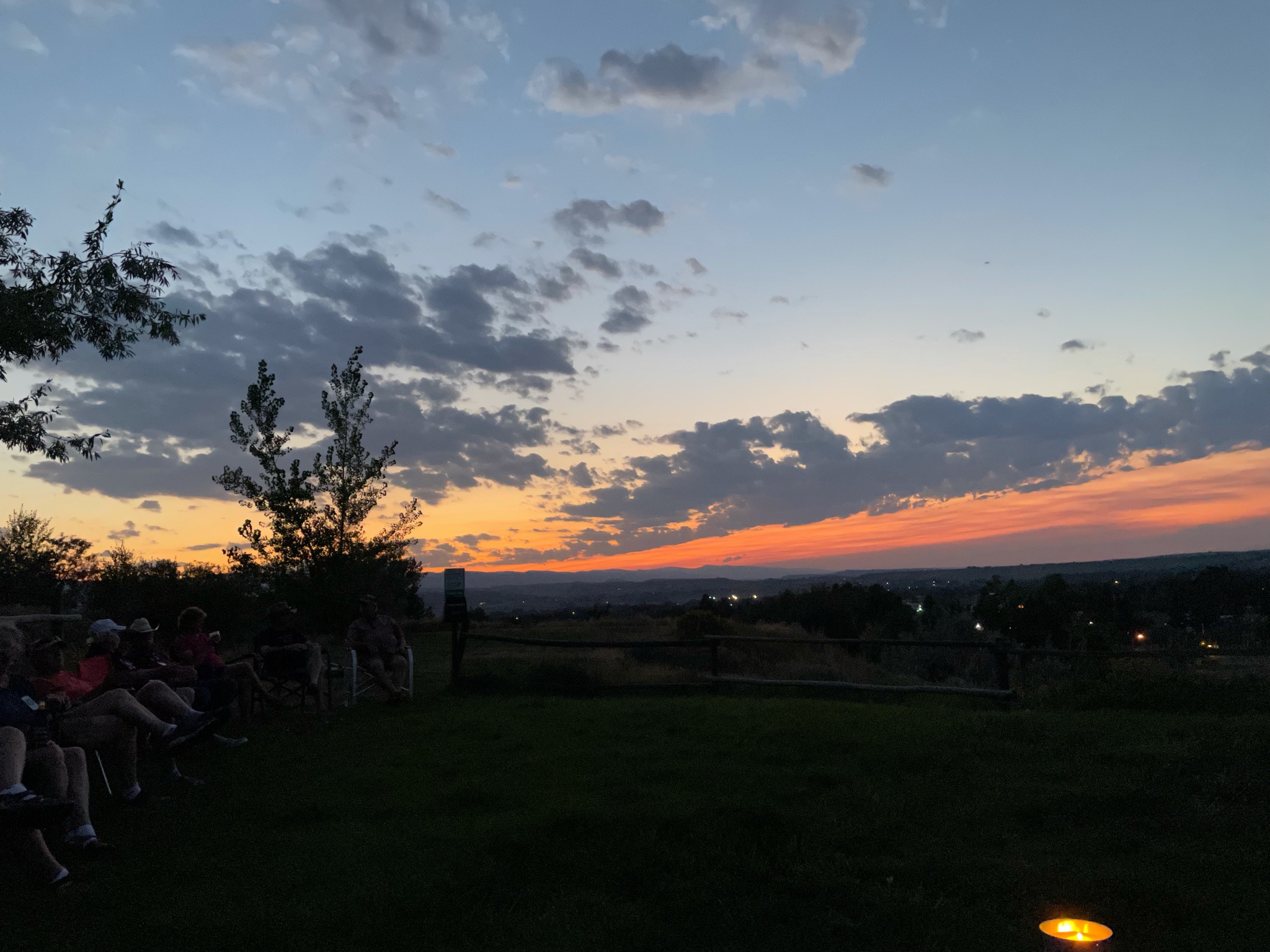
We returned to the Villa in time to see the sun set into the smoke…

An enjoyable time was had by all…

2021-08-13 – The Oregon Trail caravan … Day 16 – Traveling from Lander, WY to Fort Bridger, WY

We move on again, just like the wagons on the Oregon Trail…

We traveled across many miles of Wyoming landscape…

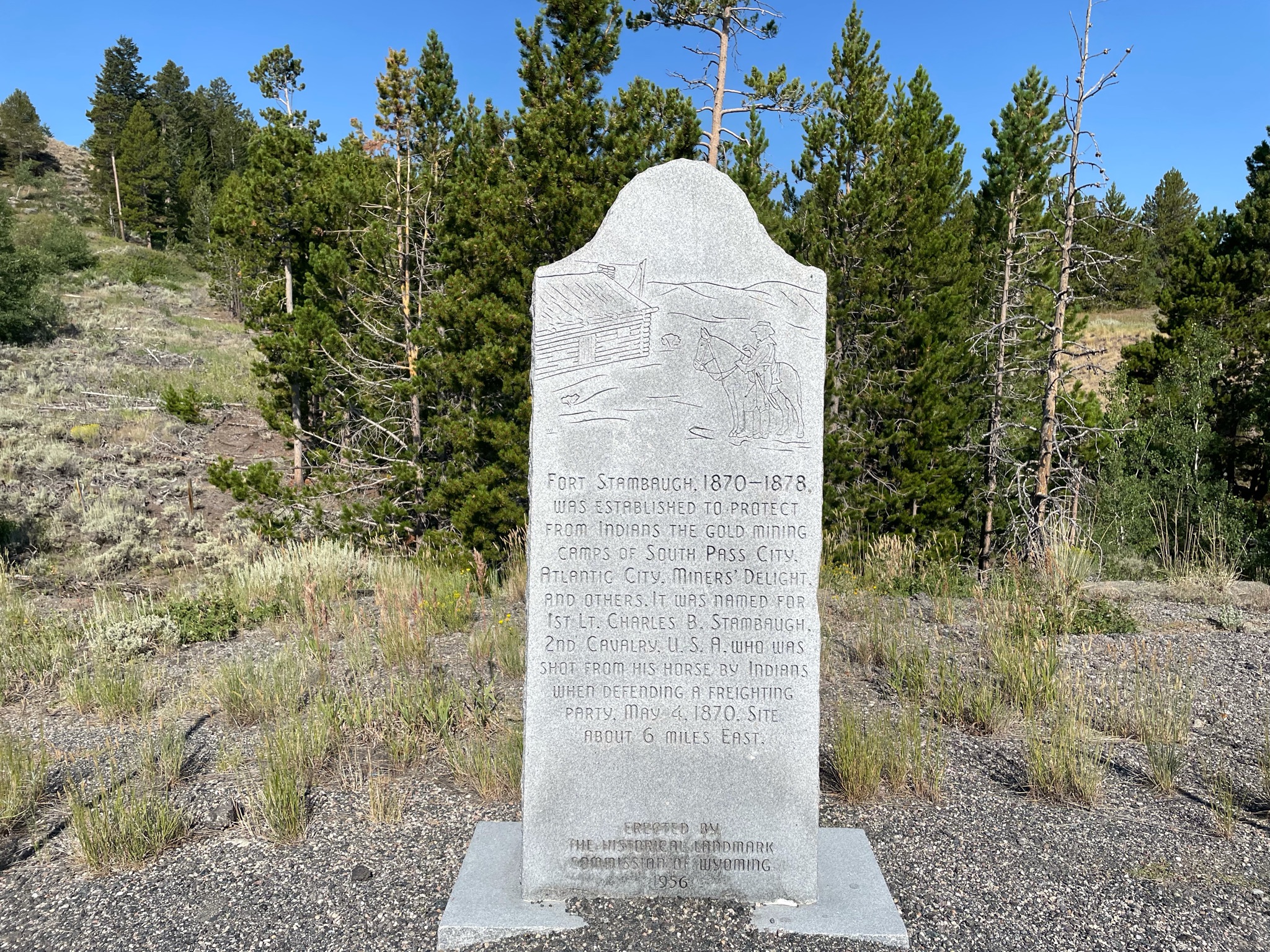
We are driving through “South Pass”. This is where most of the emigrants passed through the Rocky Mountains. The “pass” is about 35miles wide, and it crosses the Continental Divide at about 7,412 feet elevation, the lowest pass in this area of the Rockies…

So it’s all downhill from here…

The terrain changes continuously…

The terrain changes continuously…

The terrain changes continuously…

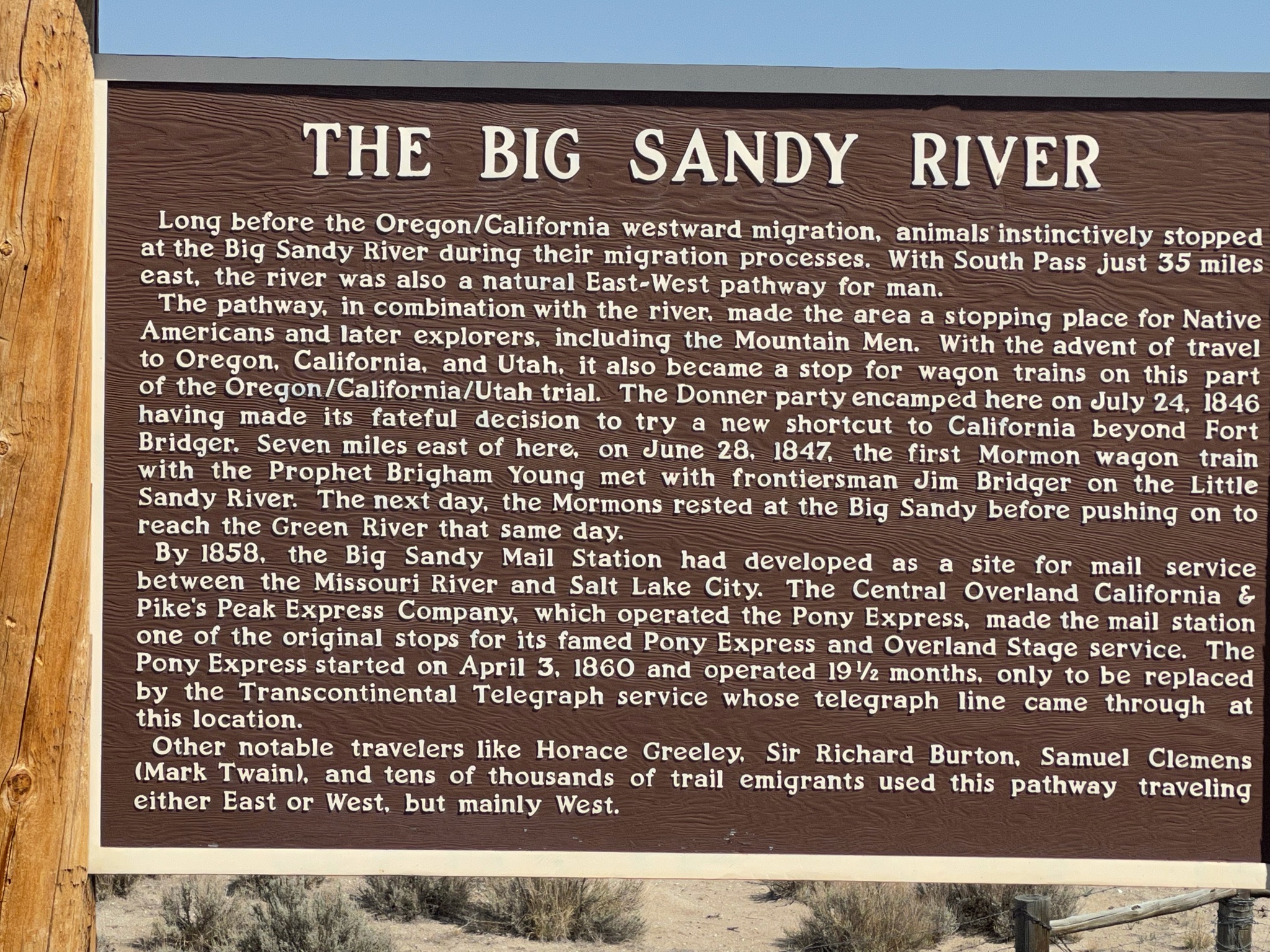
We crossed the Big Sandy River…

And we crossed the Little Sandy River…

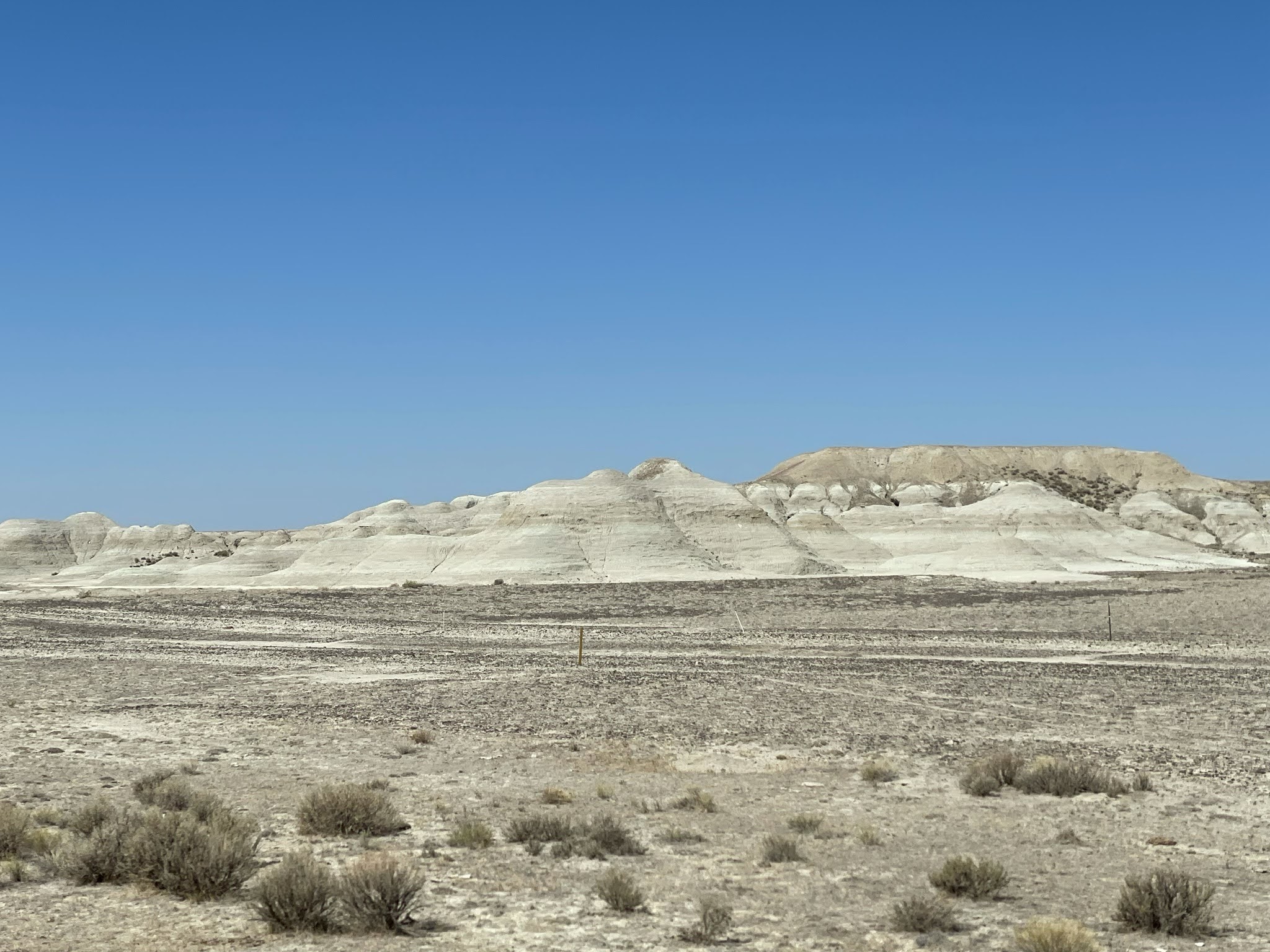
And the terrain continues to change…

We stopped for lunch at Little America. There are hundreds of billboards on each direction of the freeway advertizing this place. Wall Drug, it isn’t. But it is a large gas station, a motel, and a restaurant…

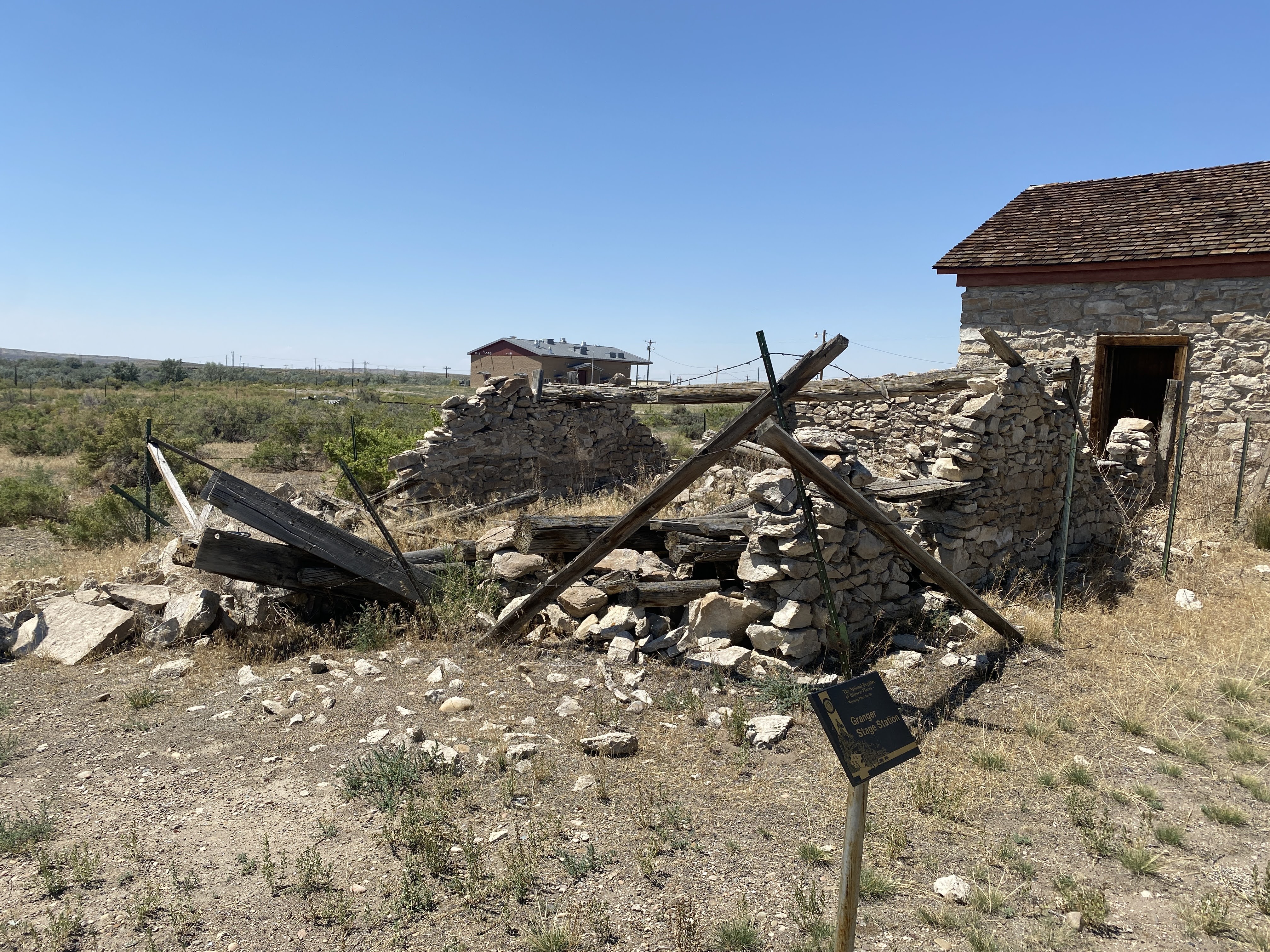
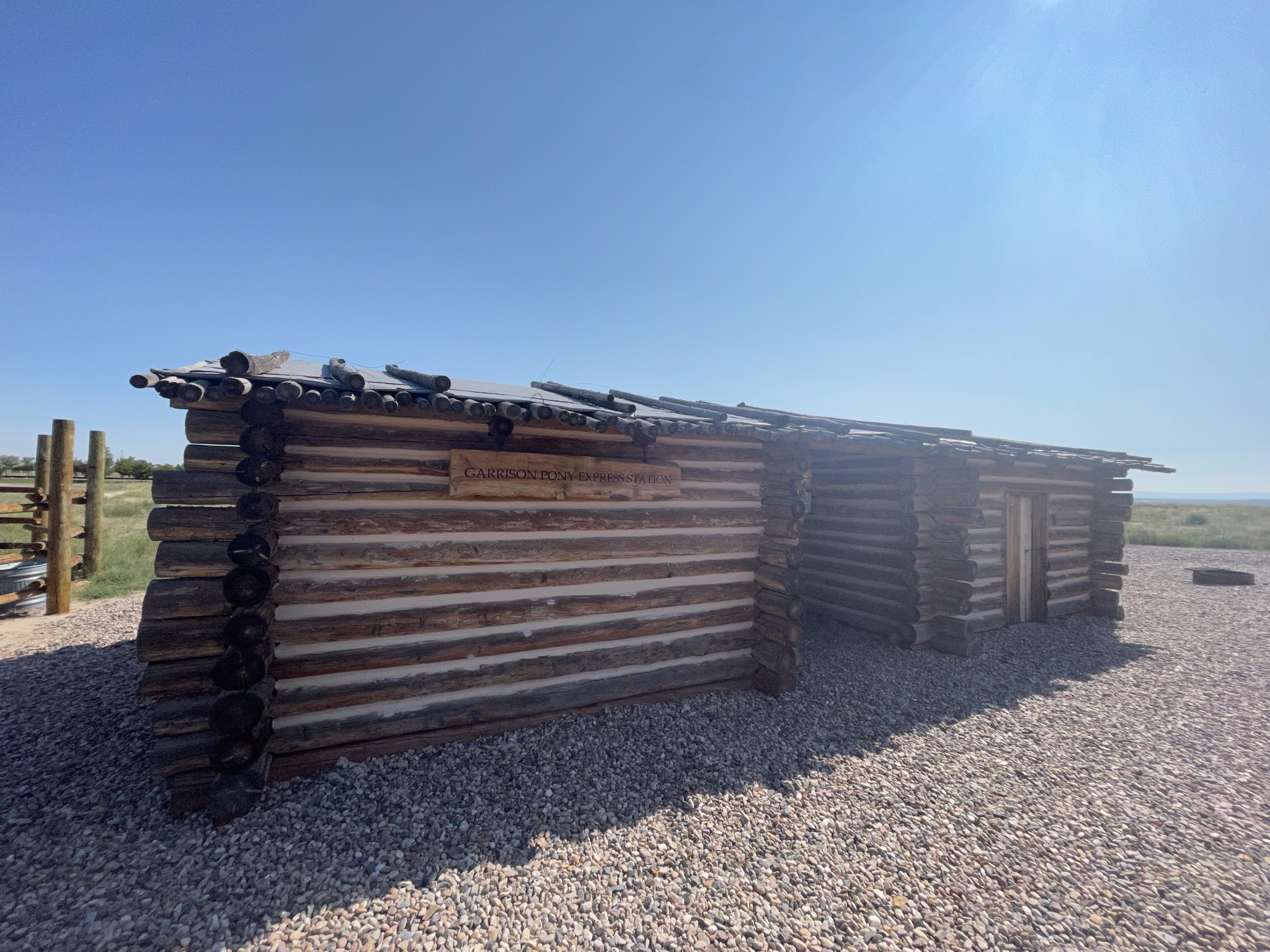
We made a slight detour to the town of Granger to see the old stagecoach station and Pony Express station…

The stage station is in pretty good shape…

The Pony Express station not so much…

We continued on. The terrain is still changing…

We arrived at the RV Park.

Next to the RV Park is Fort Bridger State Historic Site

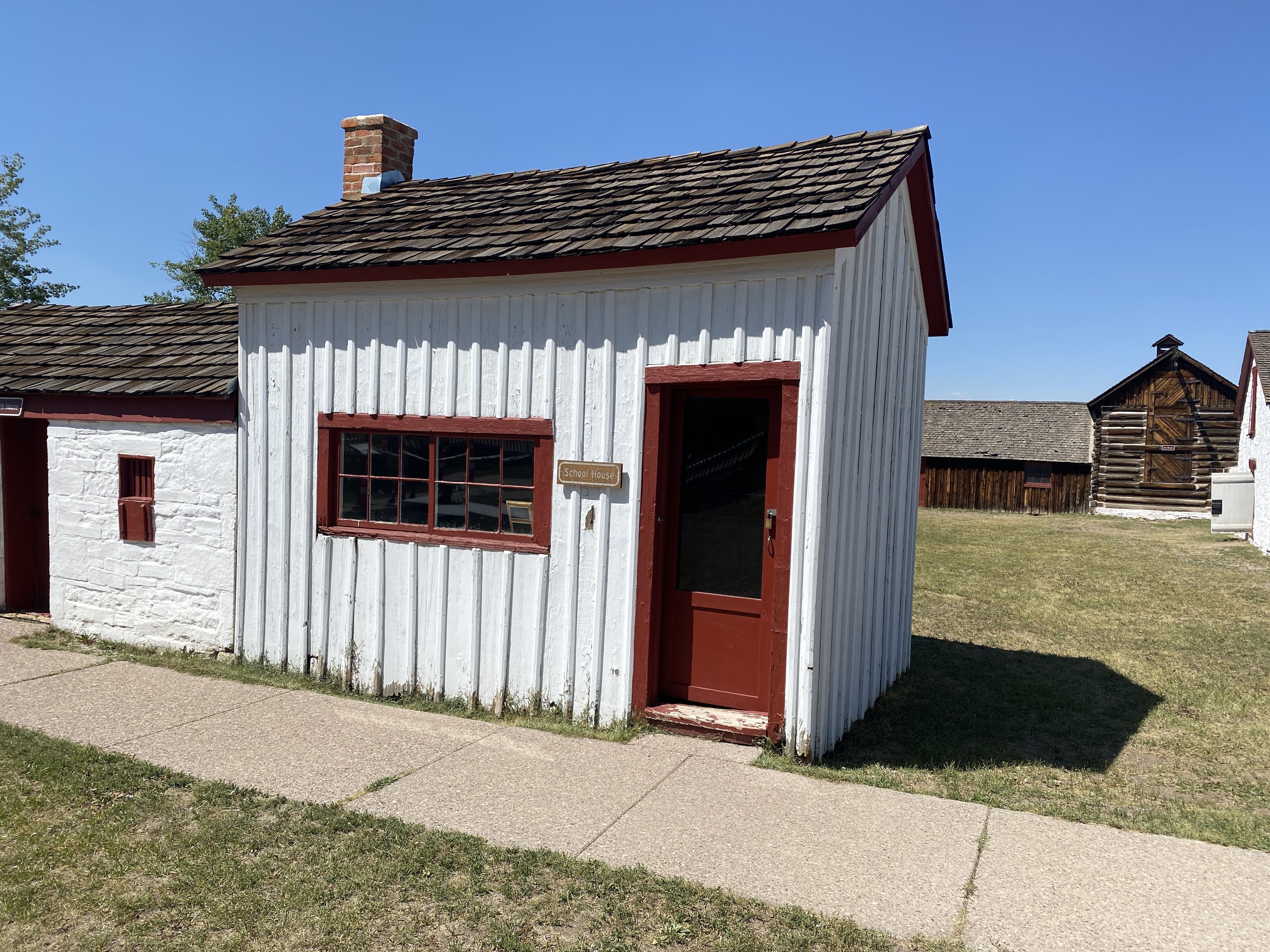
Again, I’m not a big fan of forts, but this did have some interesting things… The first schoolhouse in Wyoming!

The small building on the end is the first schoolhouse…

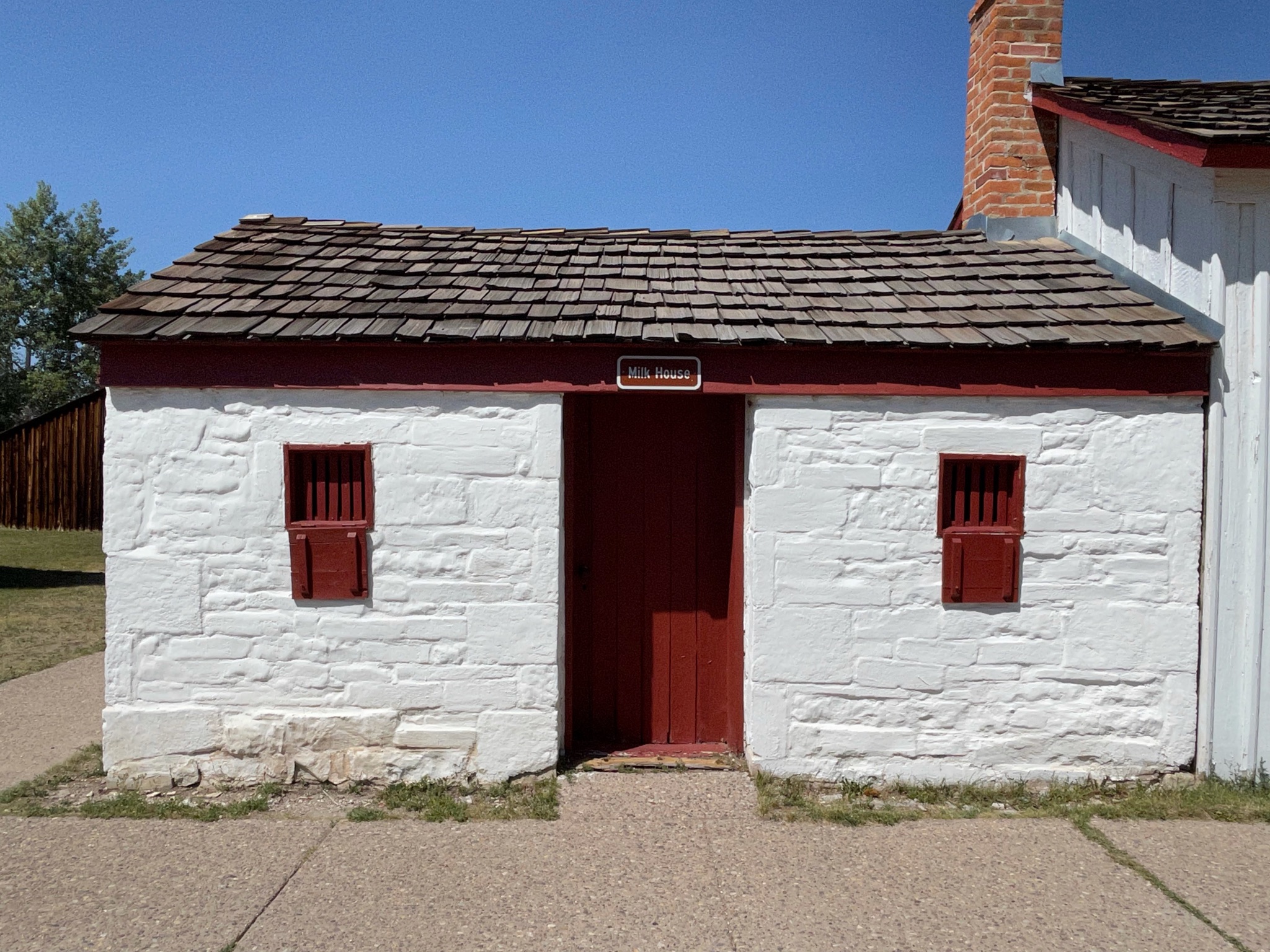
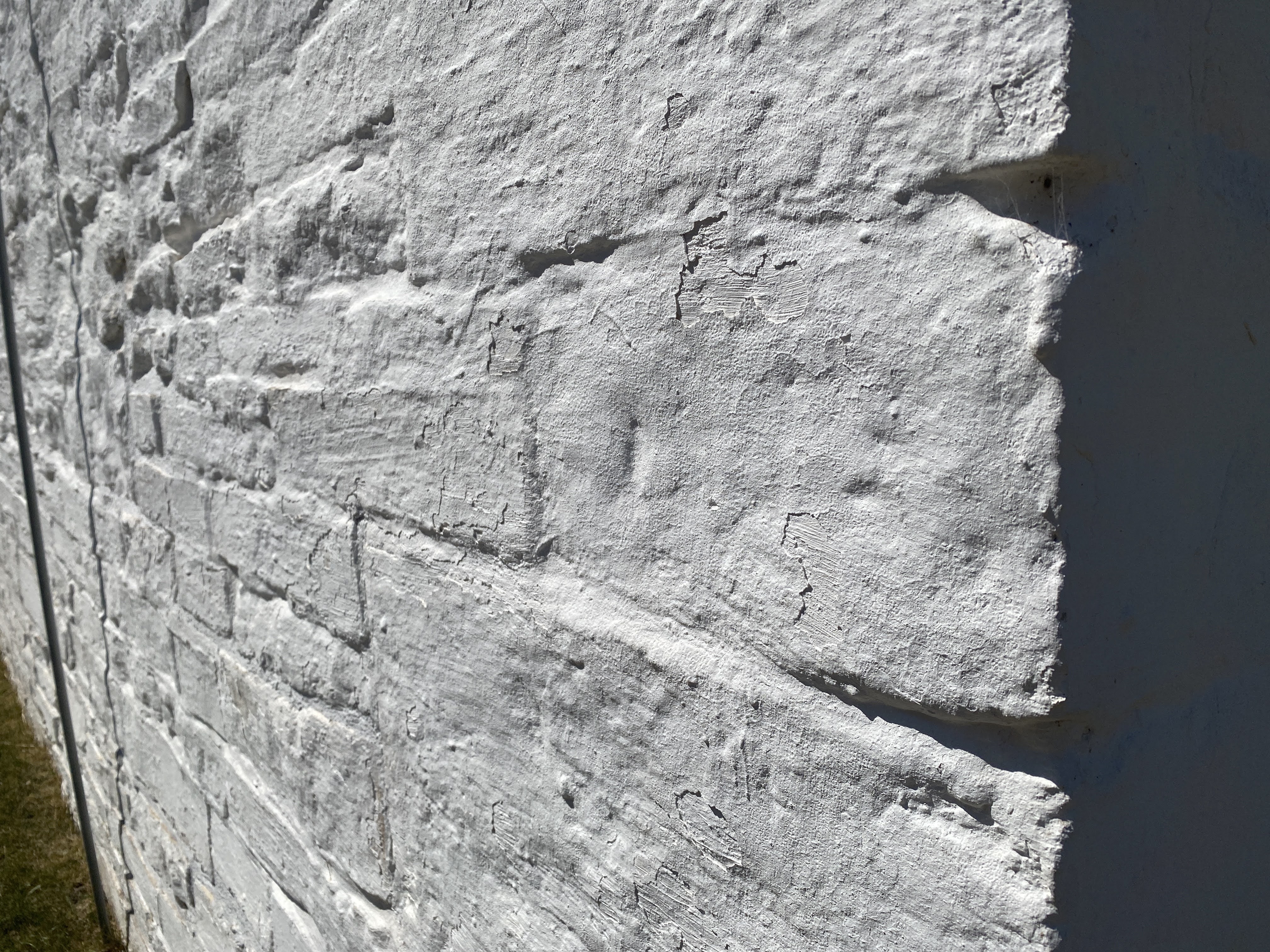
I particularly enjoyed the whitewashed hand cut limestone walls…

These stone buildings are original to the the mid 1800s…

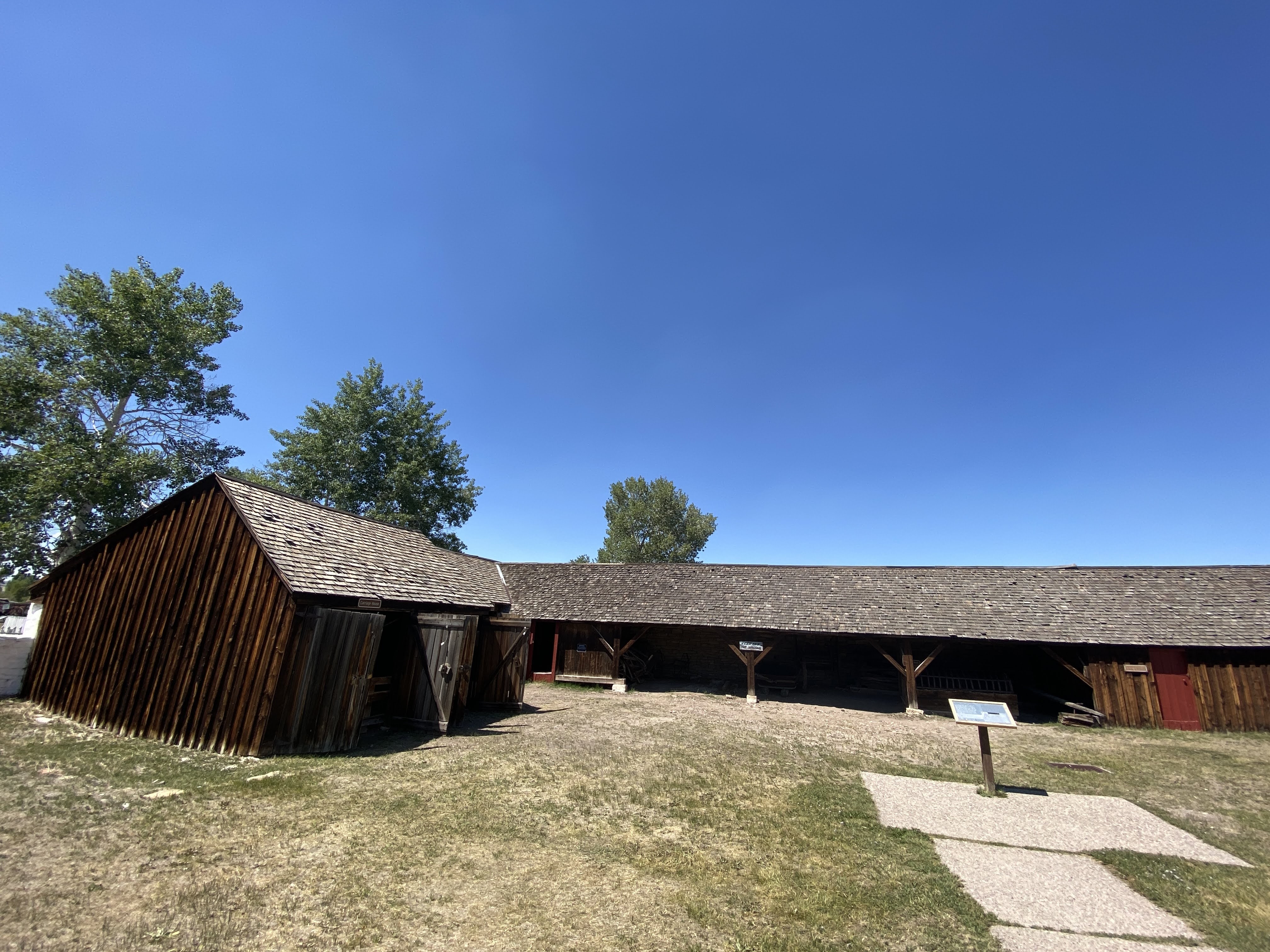
The wooden buildings are not original… Wood is such a terrible building material…

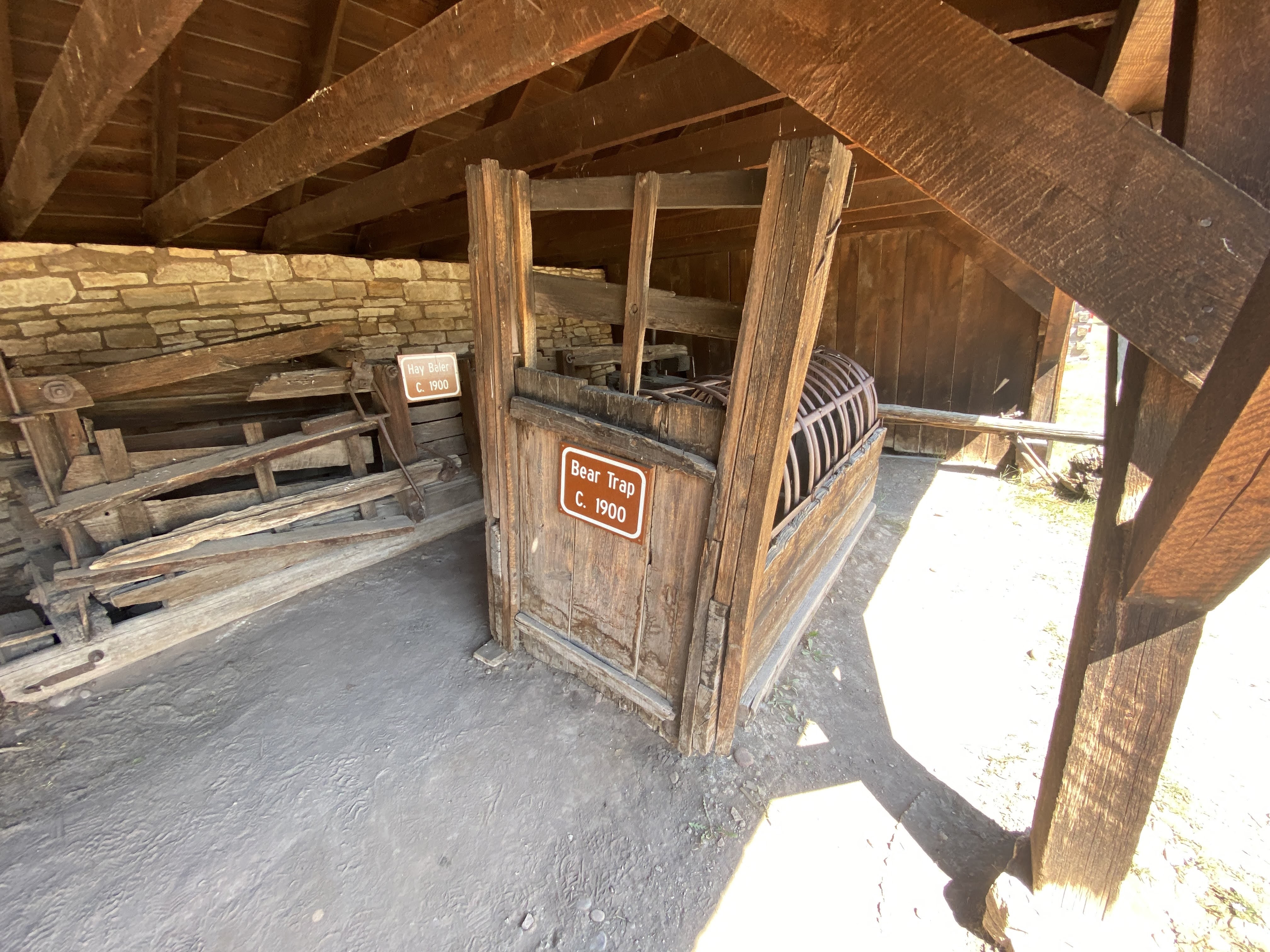
We enjoyed seeing the bear trap…

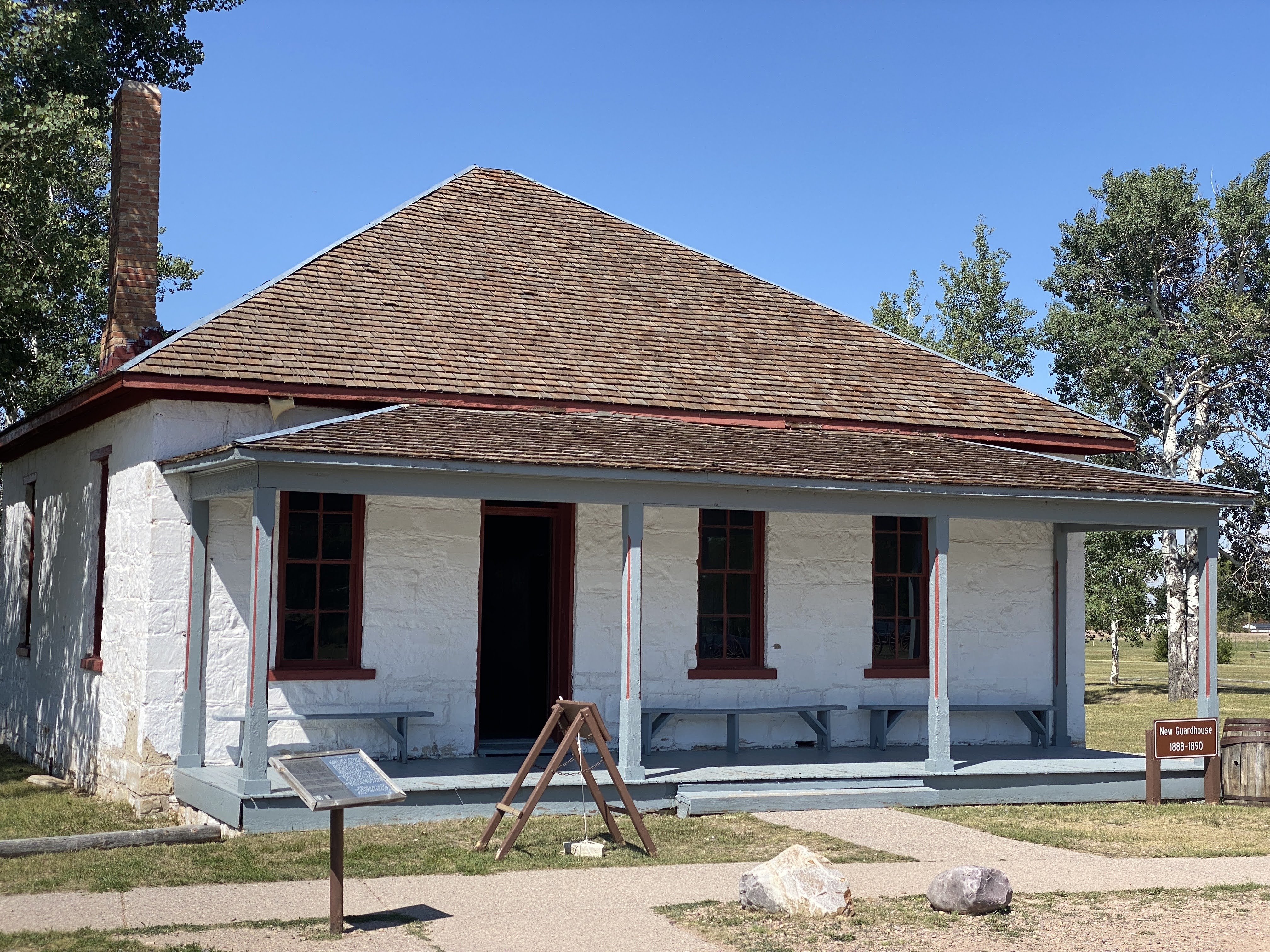
This is the guardhouse, complete with an office and the jail cells…

The main building is now the museum…

Here is a detail of the limestone walls…

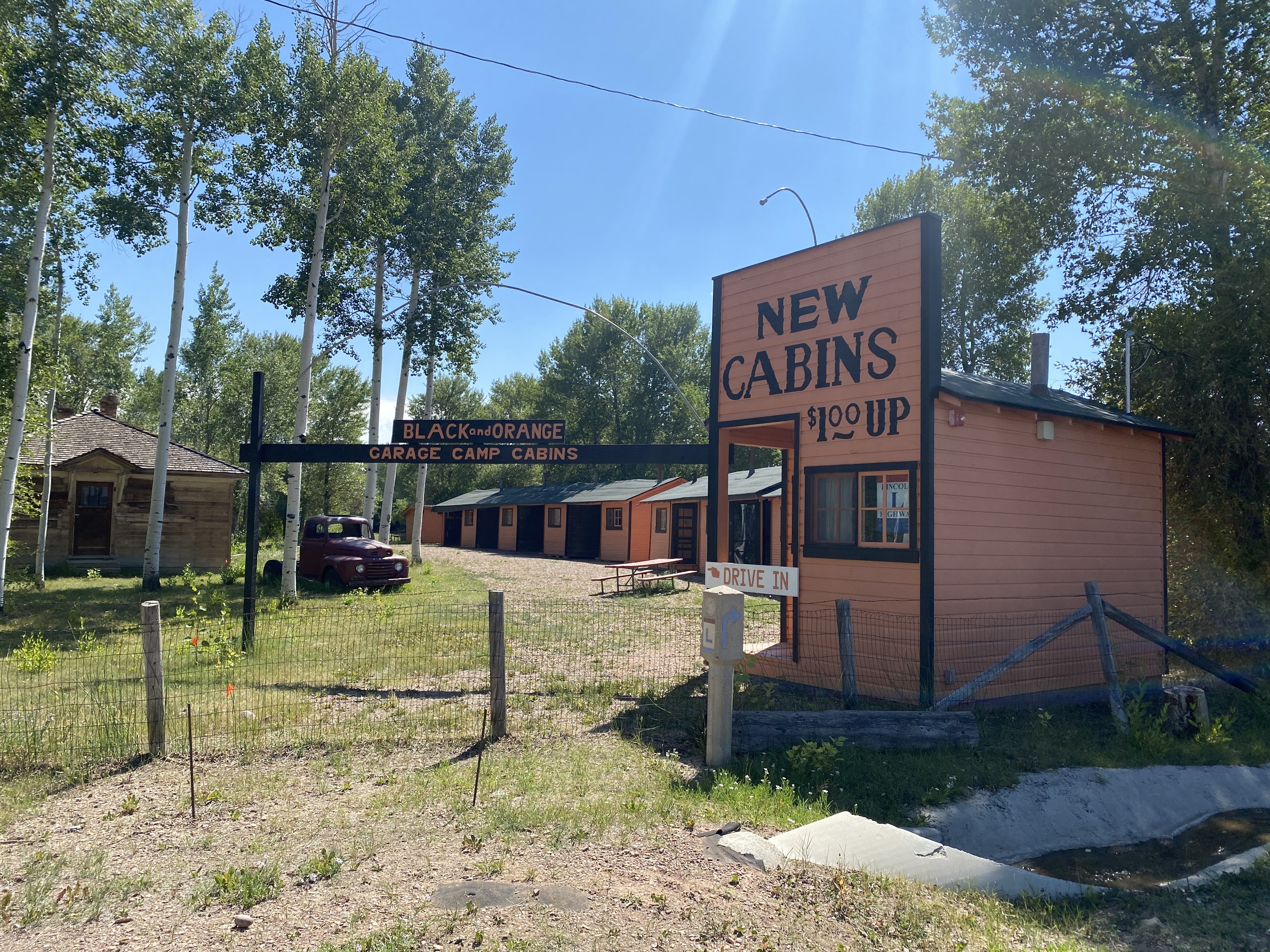
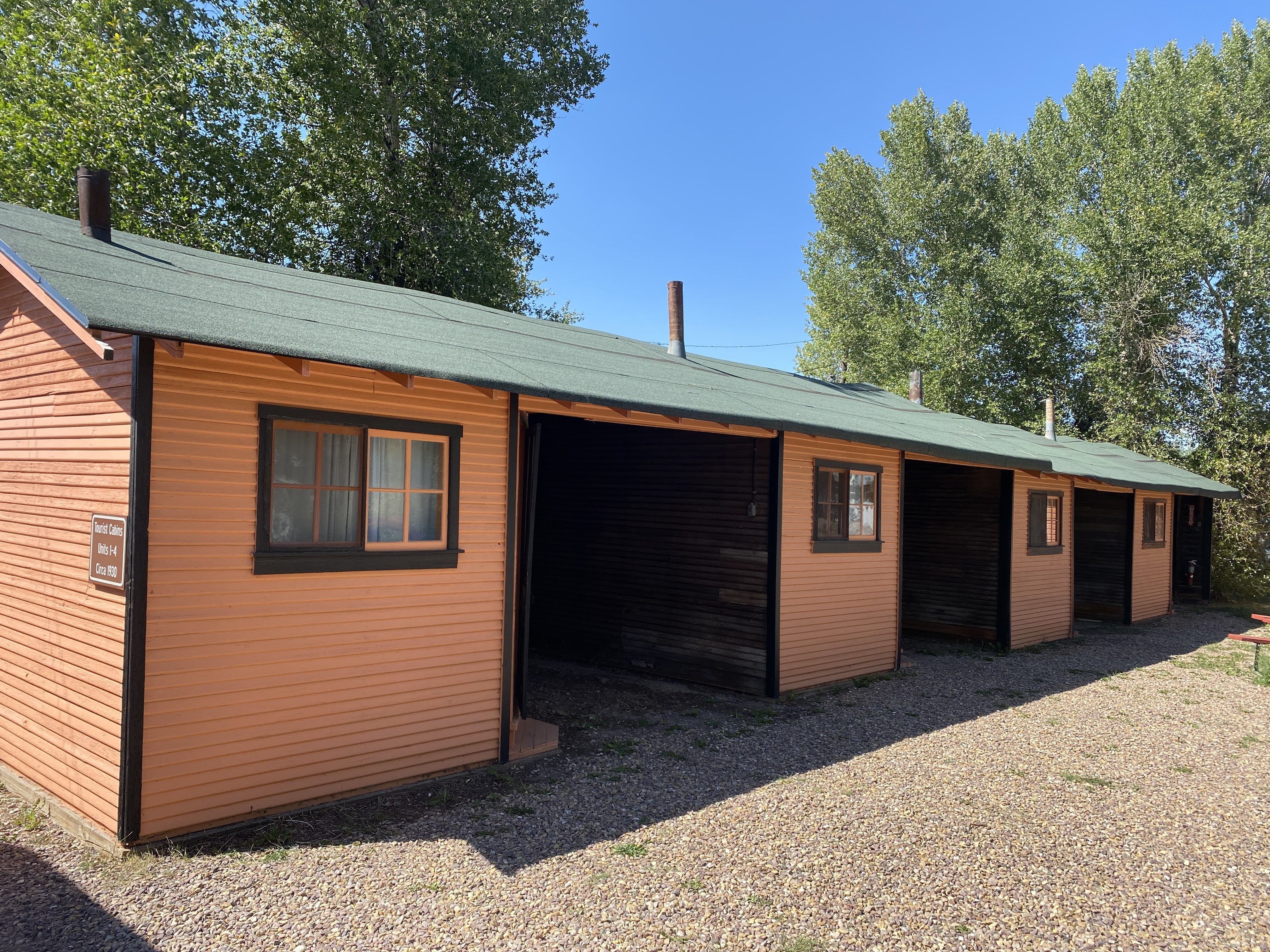
What I WAS interested was the roadside cabins… This is a restored example of typical roadside cabins that were all along the Lincoln Highway, offering motorists a place to spend the night…

The Lincoln Highway is one of the earliest transcontinental highway routes for automobiles across the United States of America. Conceived in 1912 by Indiana entrepreneur Carl G. Fisher, and formally dedicated October 31, 1913, the Lincoln Highway ran coast-to-coast from Times Square in New York City west to Lincoln Park in San Francisco, originally through 13 states.

The first officially recorded length of the entire Lincoln Highway in 1913 was 3,389 miles. Over the years, the road was improved and numerous realignments were made, and by 1924 the highway had been shortened to 3,142 miles.

The name of the Lincoln Highway was changed in 1926, as it became part of U.S. Route 30 from Pennsylvania to Wyoming. We on the Oregon Trail caravan have been following the route of US 30 for most of our trip…

Note that each cabin had a carport. Not only did this give you a parking space, but there were no common walls between rooms…

Note that this is not a “motel”. The first motel was the Motel Inn (originally known as the Milestone Mo-Tel), located in San Luis Obispo, California, was the first motel in the world. It opened on December 12, 1925, and closed in 1991. The building is now the administrative building of the Apple Farm Inn hotel next door. I lived just down the street from the Motel Inn whilst I was a college student in San Luis Obispo…

We returned to the Villa and happy hours ensued.

An enjoyable time was had by all…

2021-08-12 – The Oregon Trail caravan … Day 15 – Lander, WY

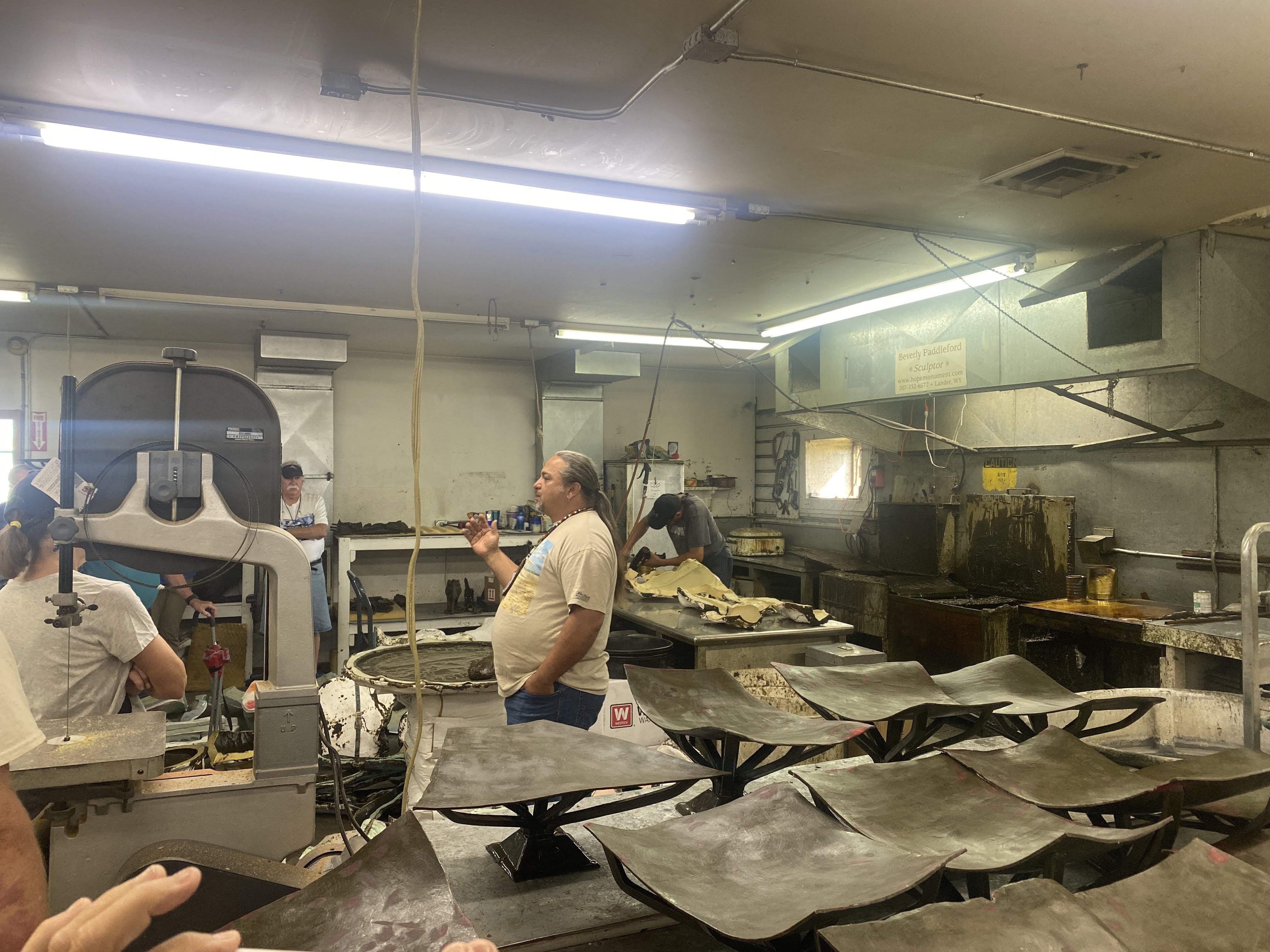
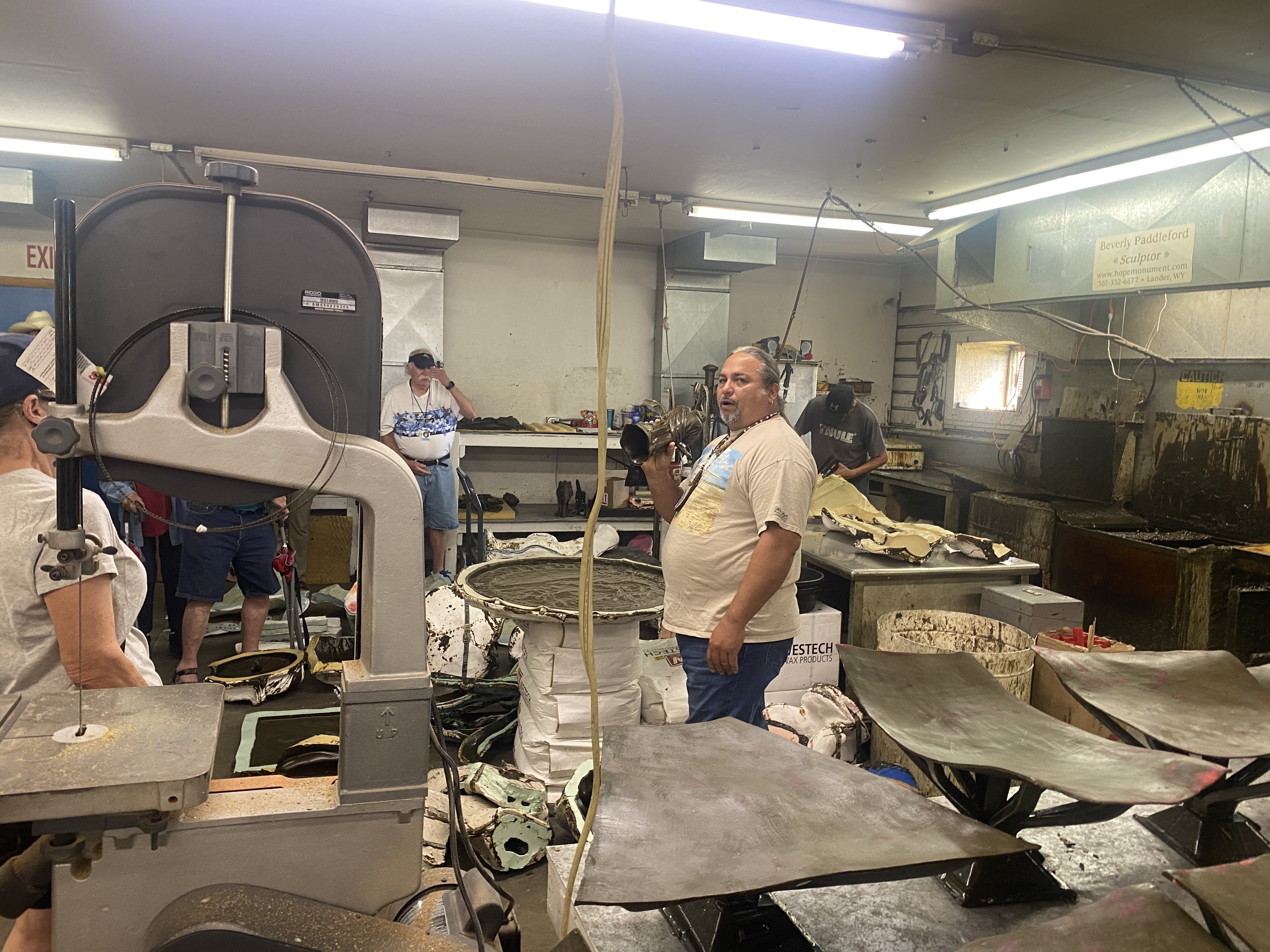
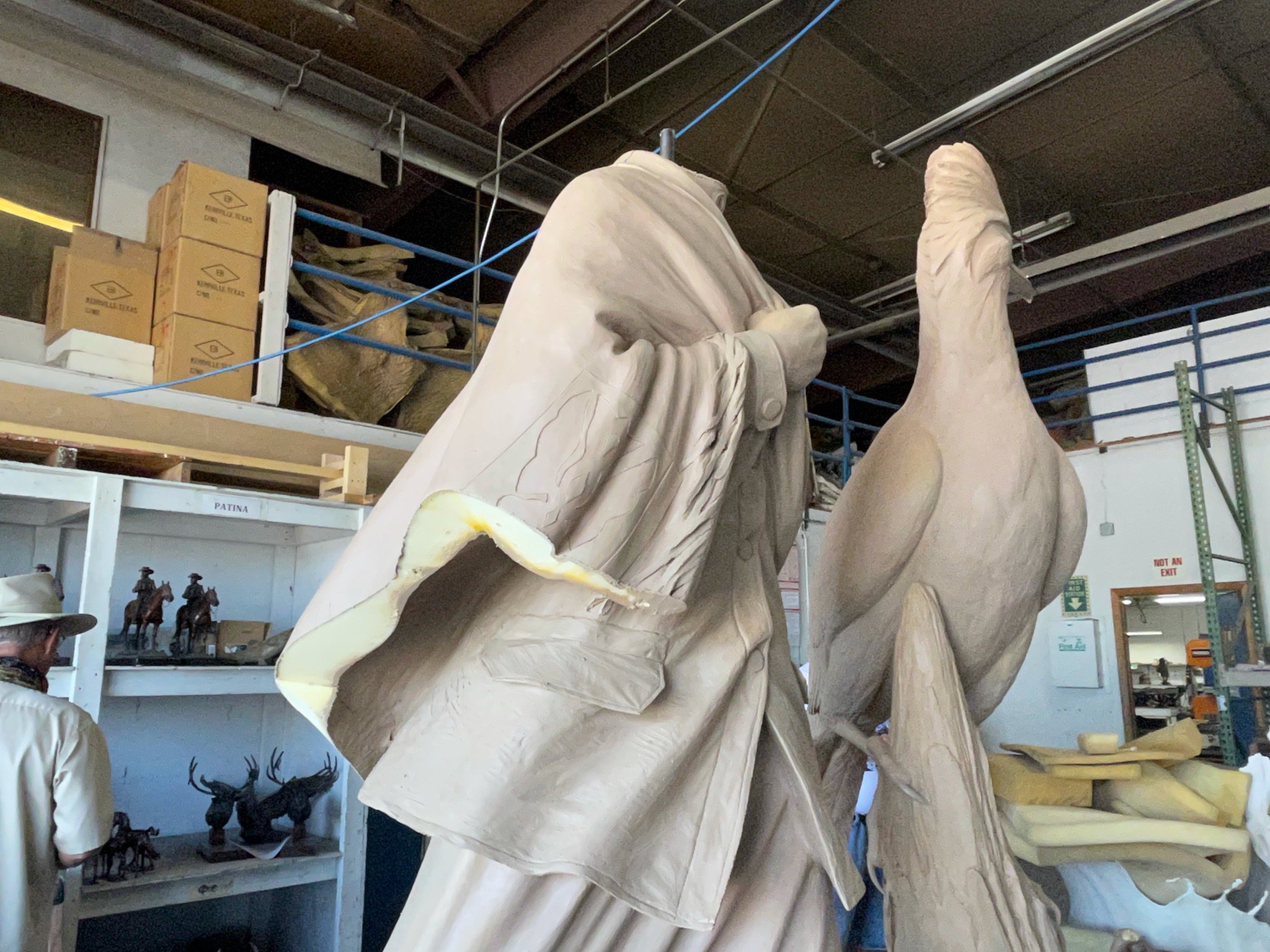
We had a big variety of tours and sights today. We started at the Eagle Bronze Foundry and Gallery…

We were given an extensive tour of the foundry, with all the steps and processes explained, from the artist’s concept in a small model, which is scanned into a special 6d computer model, to full size mockups, to sectioning the mockups to 30″ x 30″ sections, adding clay and wax, and casting the bronze at 2100 degrees… It is an amazingly complex process…

Examples of foam and latex molds…

The sand castings, with the wax melted out, ready to cast the bronze…

Completed castings being reassembling into the finished monument…

Coloring, adding patina, and finishing…

It was fascinating tour! It is an amazingly complex process…!

And then we moved on. We went to Sinks Canyon State Park. This is the site of the “vanishing river”…

The river flows through these rocks, into a shallow cave, and the water disappears… This is called “The Sink”…

We found that the water falls through cracks and fissures underground, until about two hours later it reappears in a pond about a quarter mile away…

As we walked we marveled at these shear rock canyon walls…

We found the pond (The Rise). It was peaceful and serene…

One other thing that flows underground and comes up in this pond are Rainbow Trout!

These trout are 16-24 inches long!

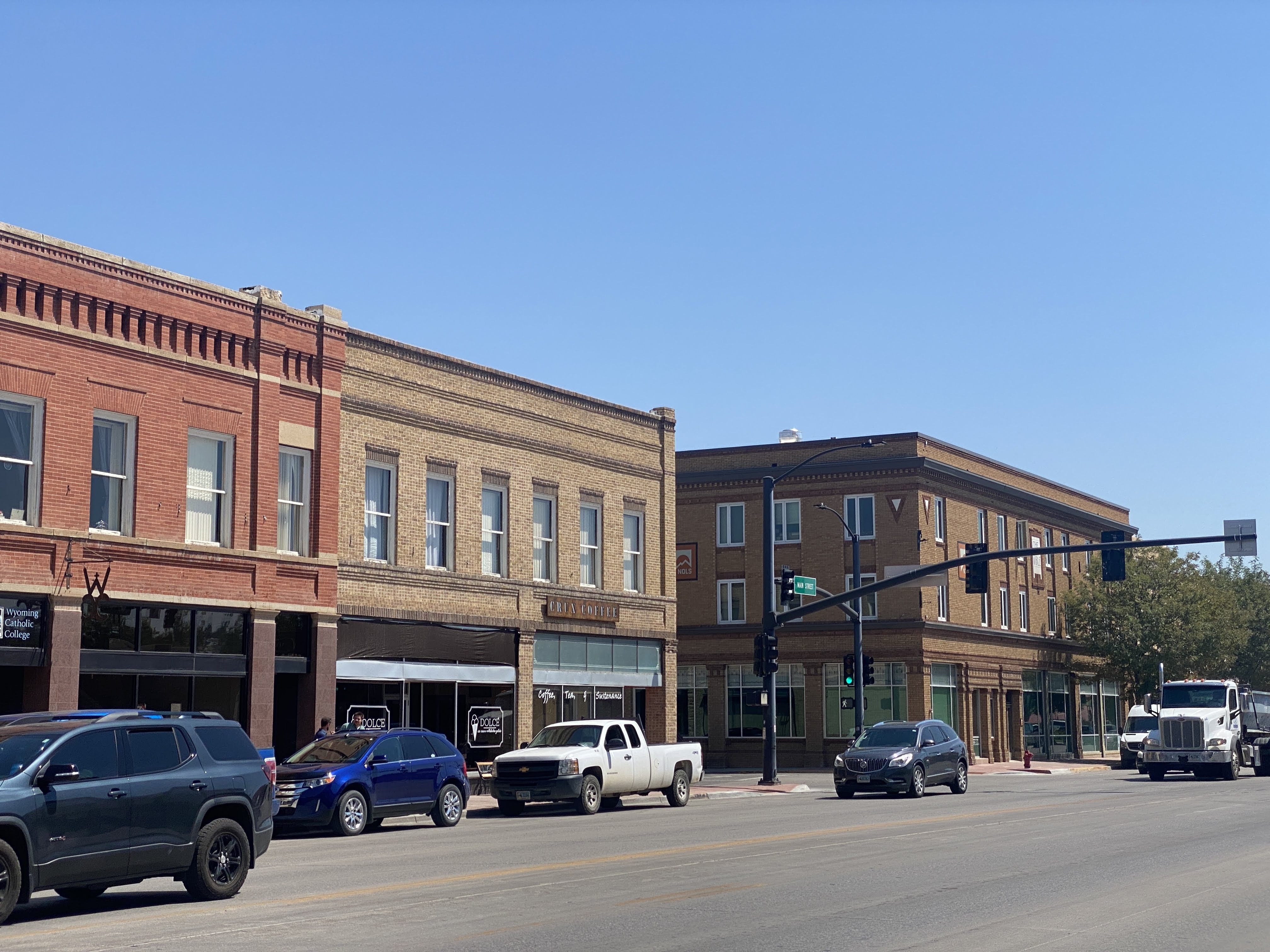
Since no fishing was allowed we drove back to downtown Lander. It is a typical small downtown, struggling to stay viable…

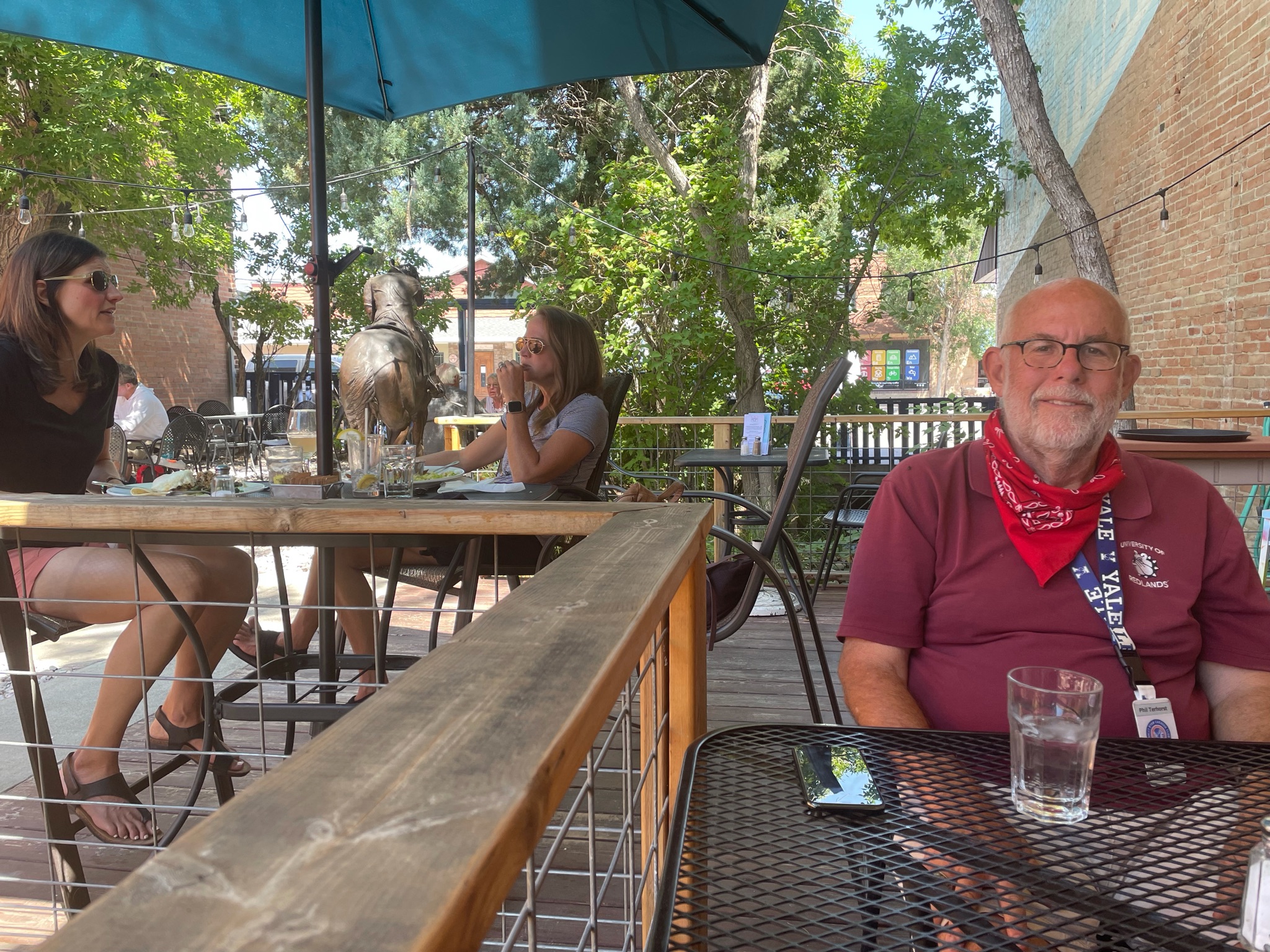
We had lunch at Middle Fork, a nice little restaurant downtown. It was barely not too hot to sit outside…

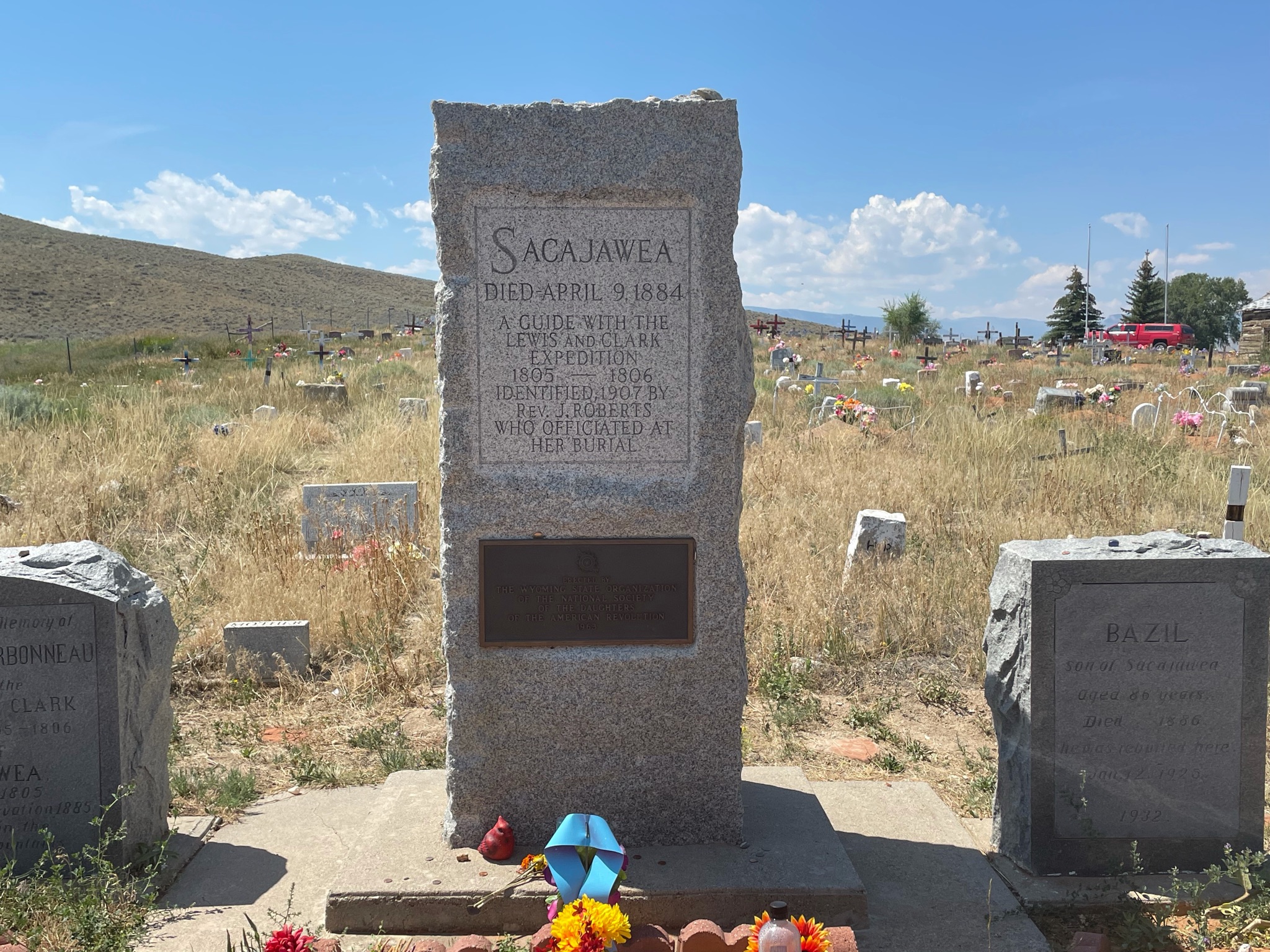
After lunch we drove a few miles north to the Sacajawea Cemetery…

Sacagawea (/ˌsækədʒəˈwiːə/ or /səˌkɑːɡəˈweɪə/; also spelled Sakakawea or Sacajawea; May c. 1788 – December 20, 1812 or April 9, 1884) was a Lemhi Shoshone woman who, at age 16, helped the Lewis and Clark Expedition in achieving their chartered mission objectives by exploring the Louisiana Territory. Sacagawea traveled with the expedition thousands of miles from North Dakota to the Pacific Ocean, helping to establish cultural contacts with Native American populations and contributing to the expedition’s knowledge of natural history in different regions.

Note that there is uncertainty as to when she died. She was either 24 or 95. Accordingly, there are two burial sites to be found… This one in Wyoming, and another in South Dakota. You pick…

We drove back to the VIlla. Lots of nice countryside here…

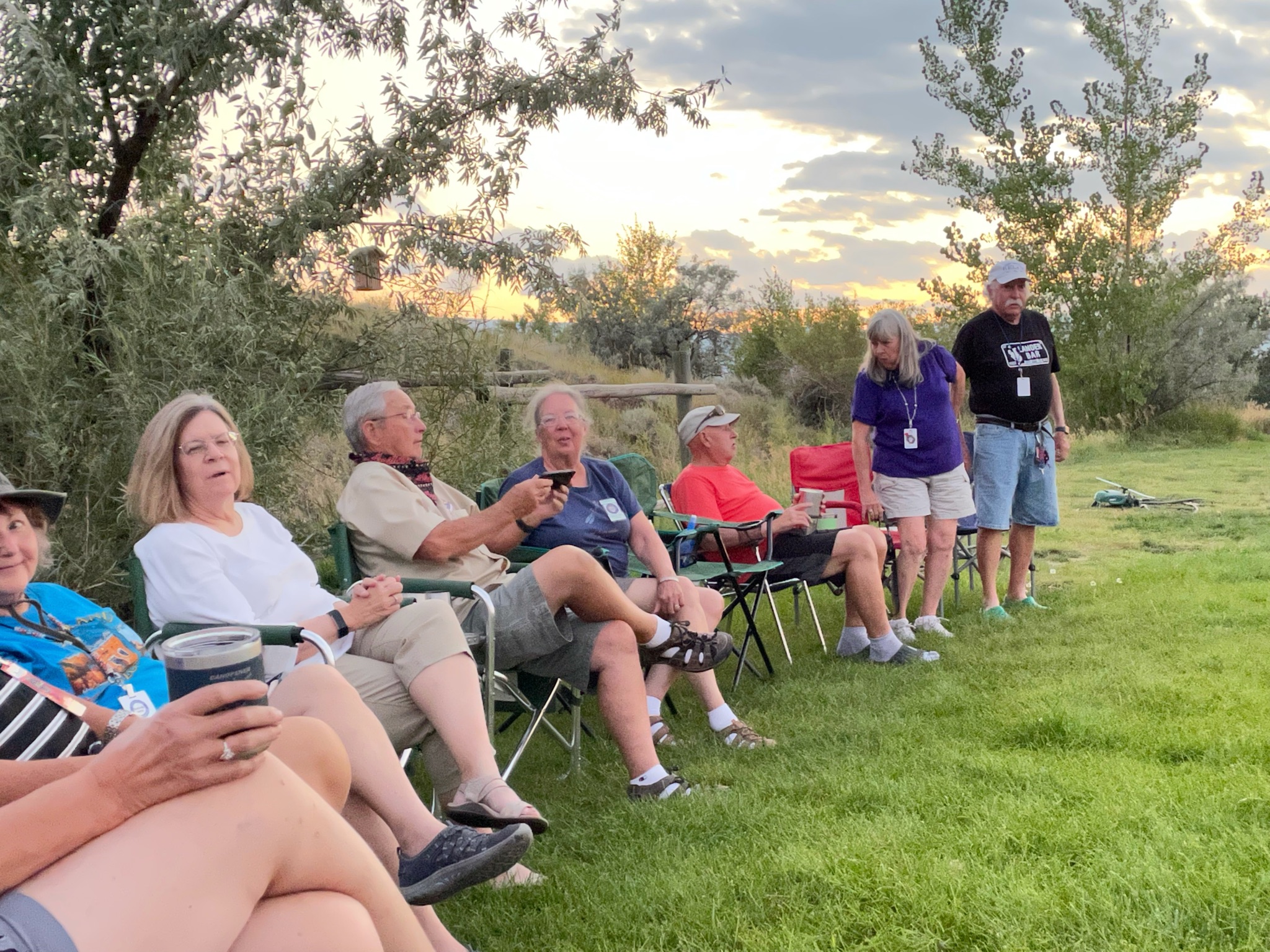
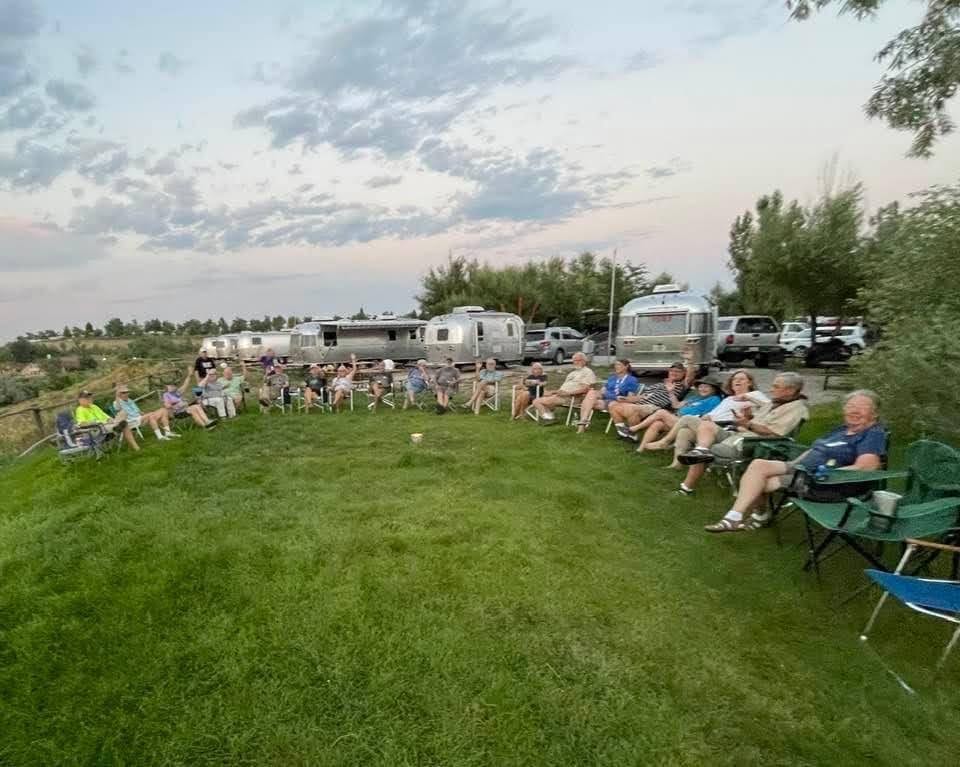
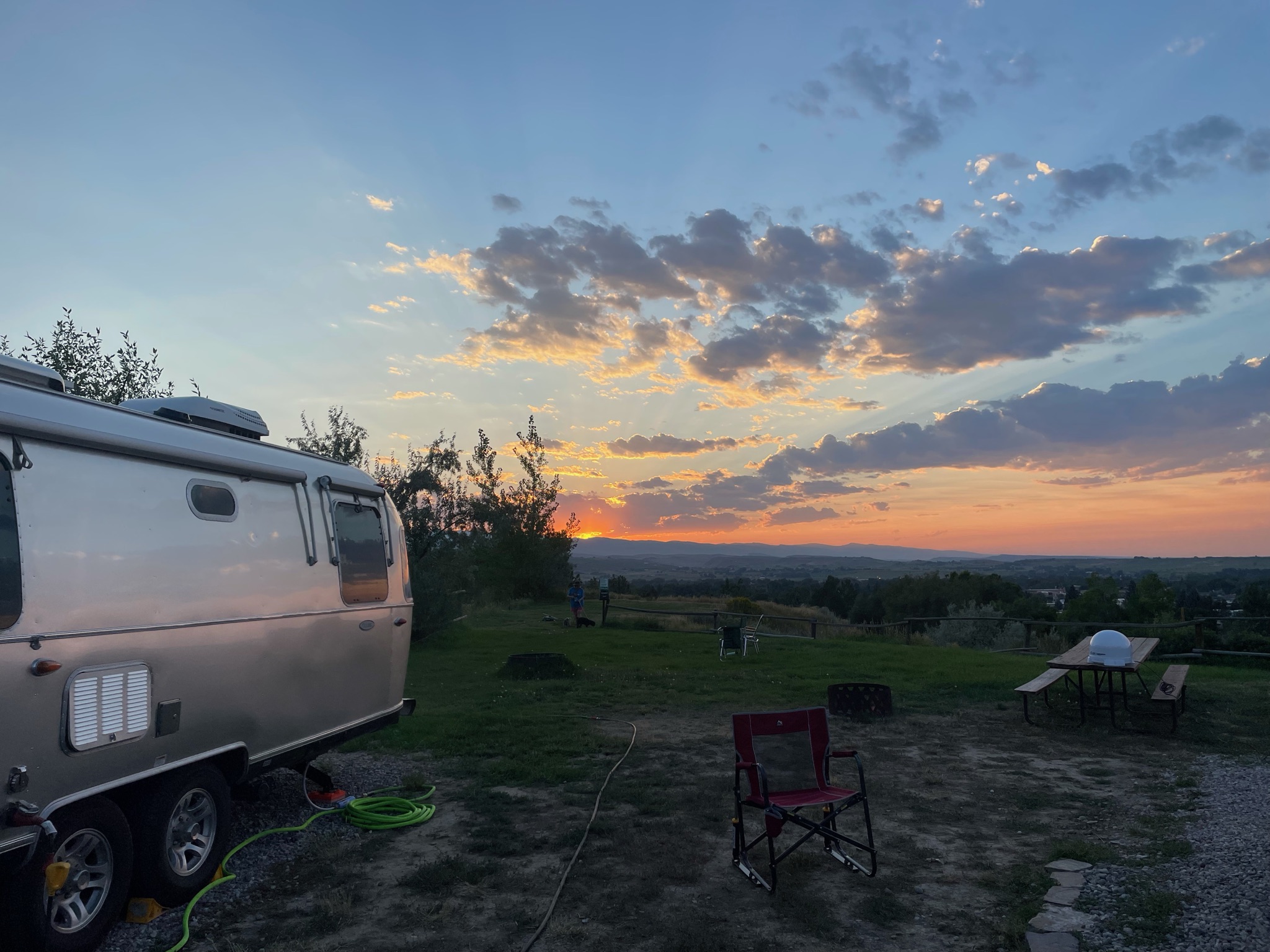
This evening we joined many other Airstreamers for Happy Hours while we watched the sunset…

And an enjoyable time was had by all…

2021-08-11 – The Oregon Trail caravan … Day 14 – Evansville, WY to Lander, WY

We move along today to see some unique sites along the Oregon Trail…

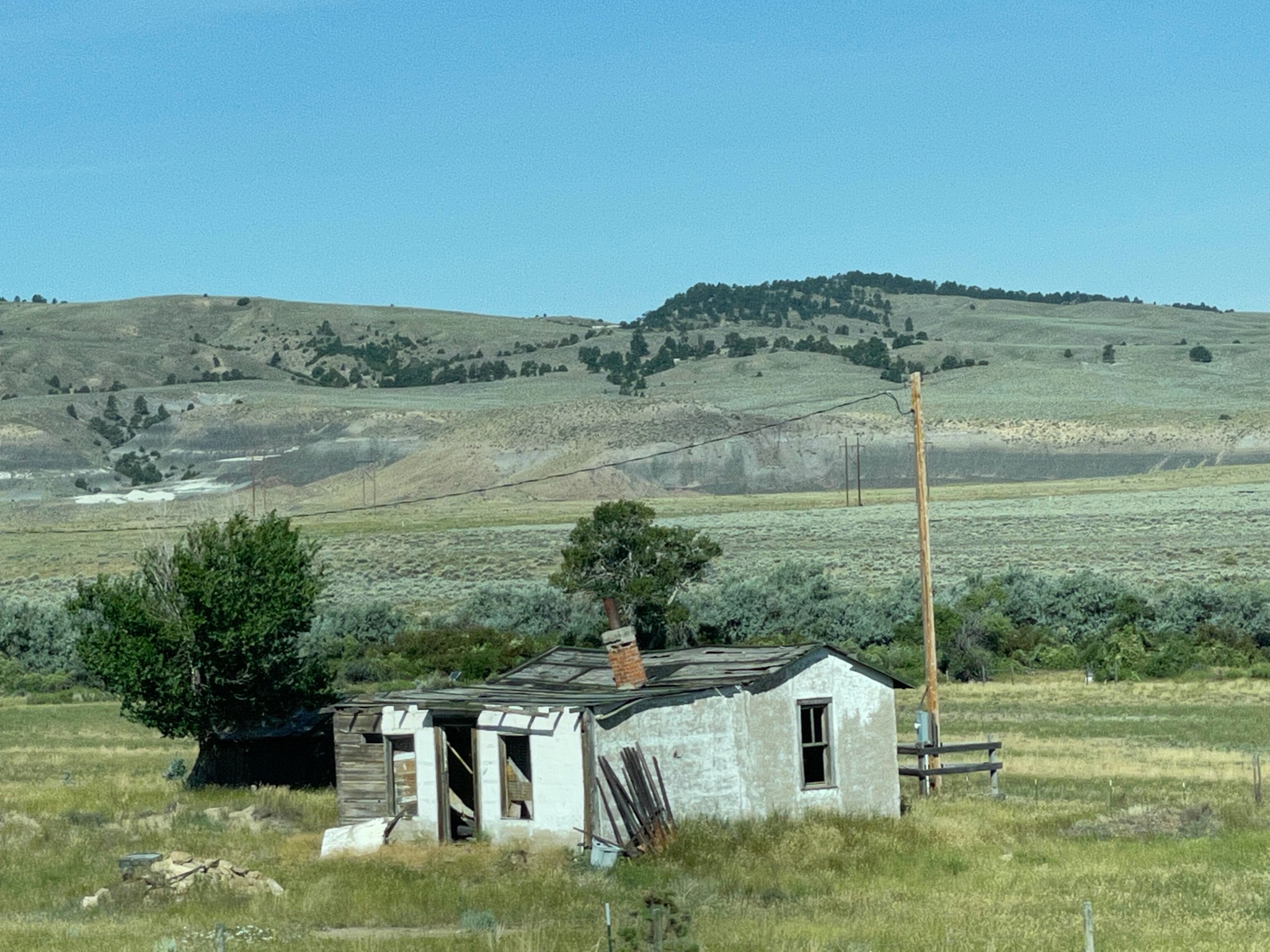
But first we pass some rural, tranquil neighborhoods…

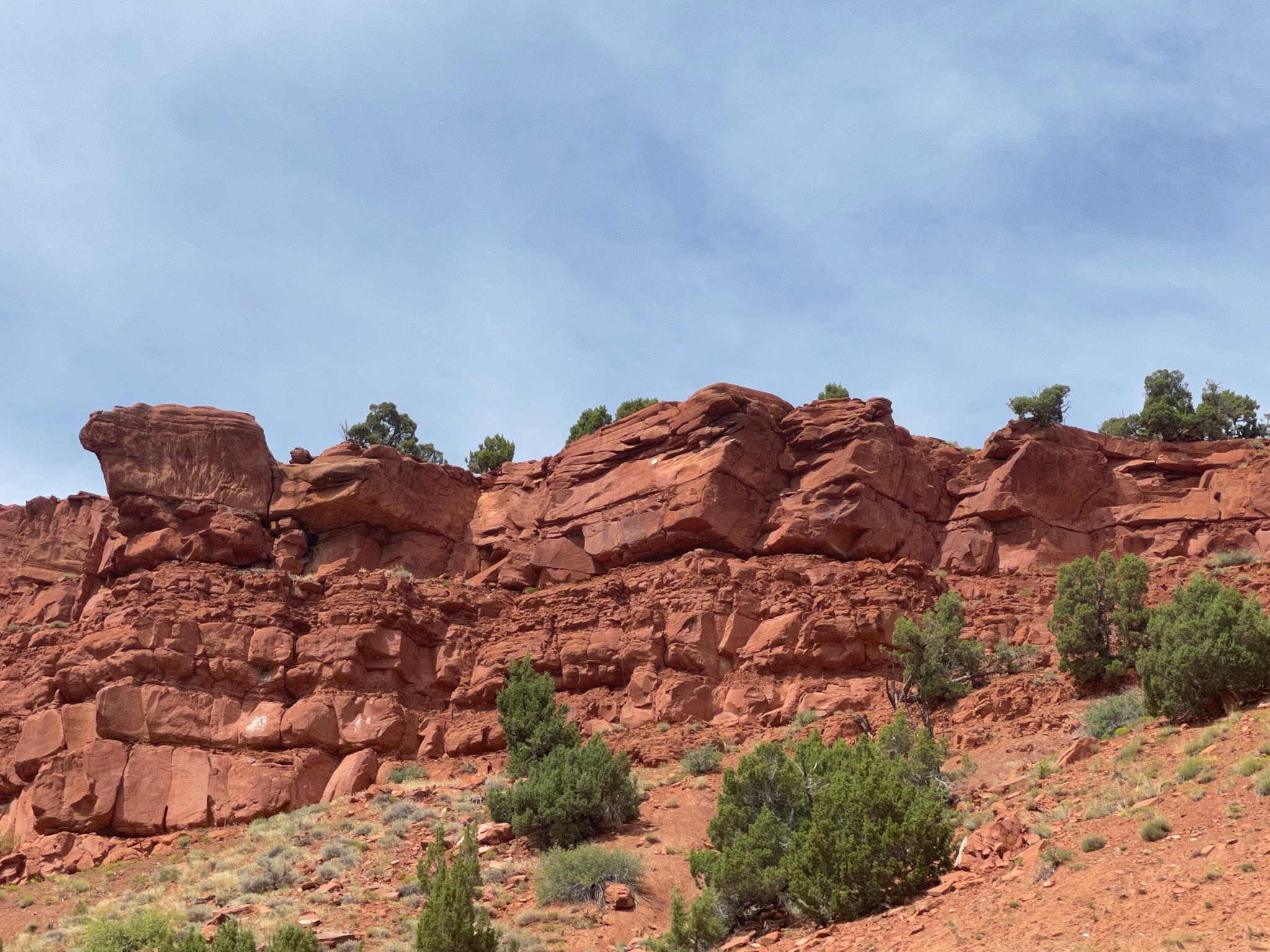
We saw some red bluffs; most emigrant diarists mentioned them along the way…

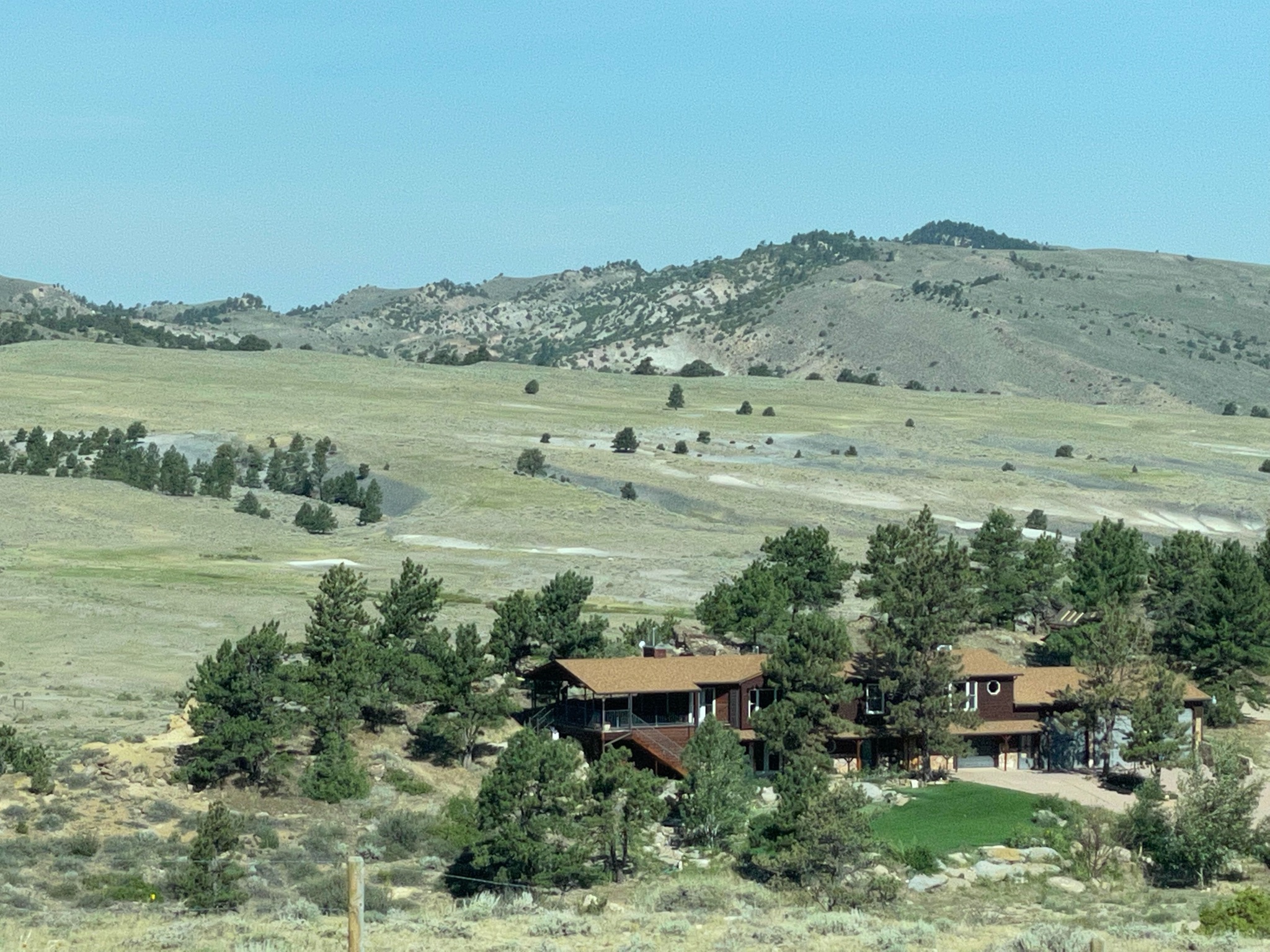
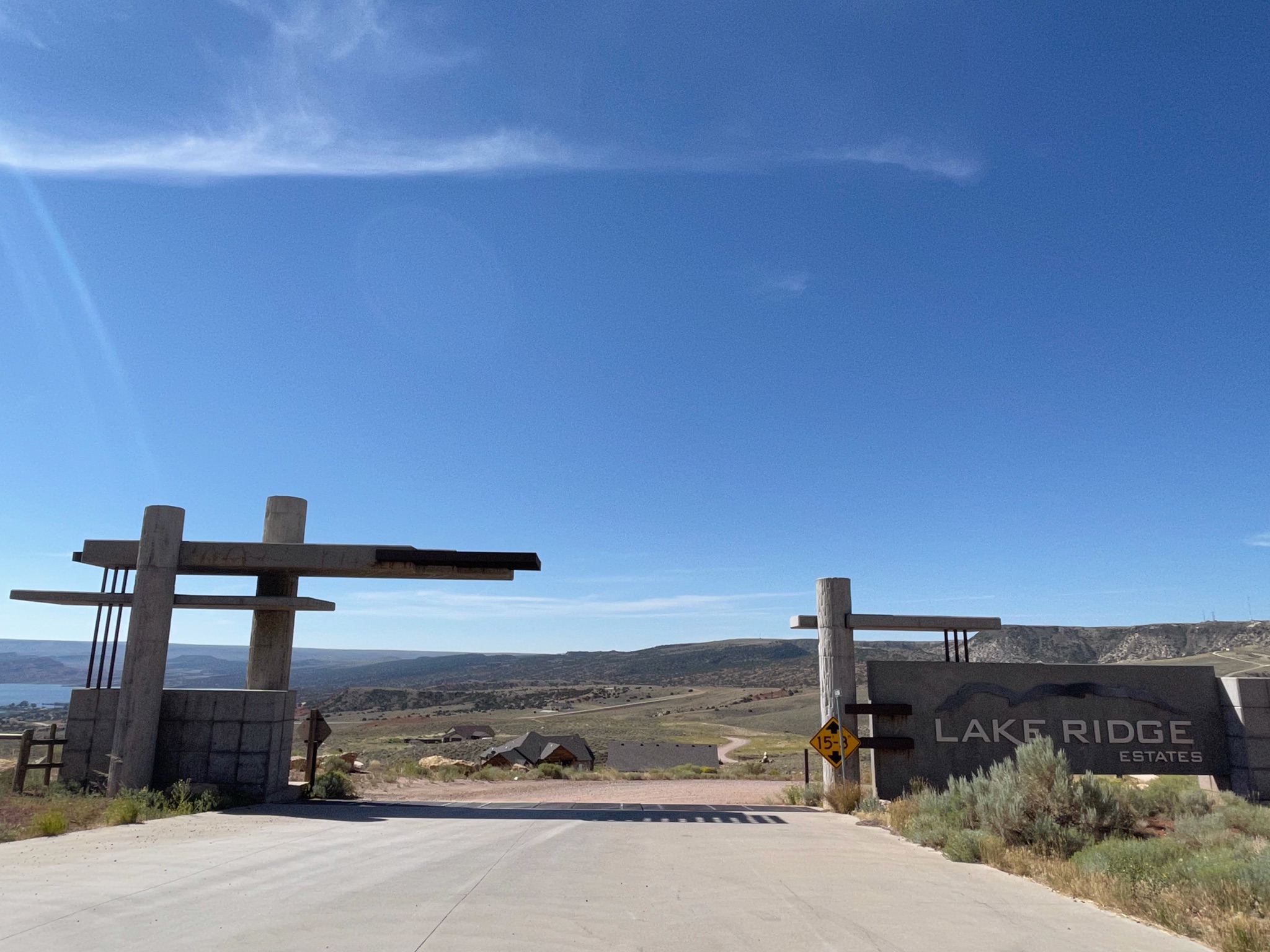
We stopped at a pull-out to look at the Pathfinder Reservoir. We also found this lovely estate development. Homesites 7-20 acres, from $11,000 per acre. Bargain!

Here is the non-gated entry…

Here is the Pathfinder Reservoir

Here is the Villa…

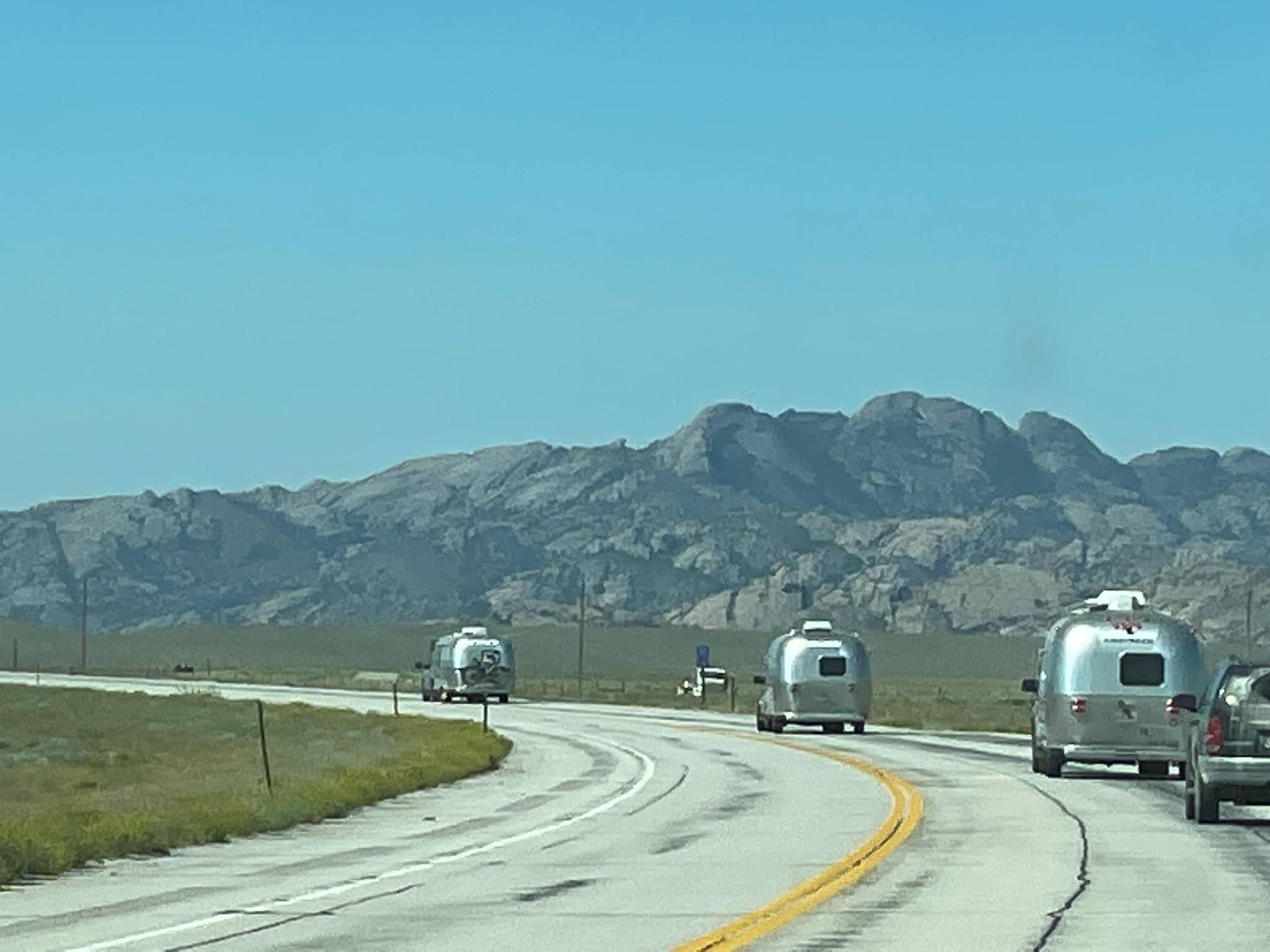
As we were leaving the pull-out three other Airstreams came by. About a mile down the road we had a construction zone, with very slow traffic, allowing us to get some good pictures…

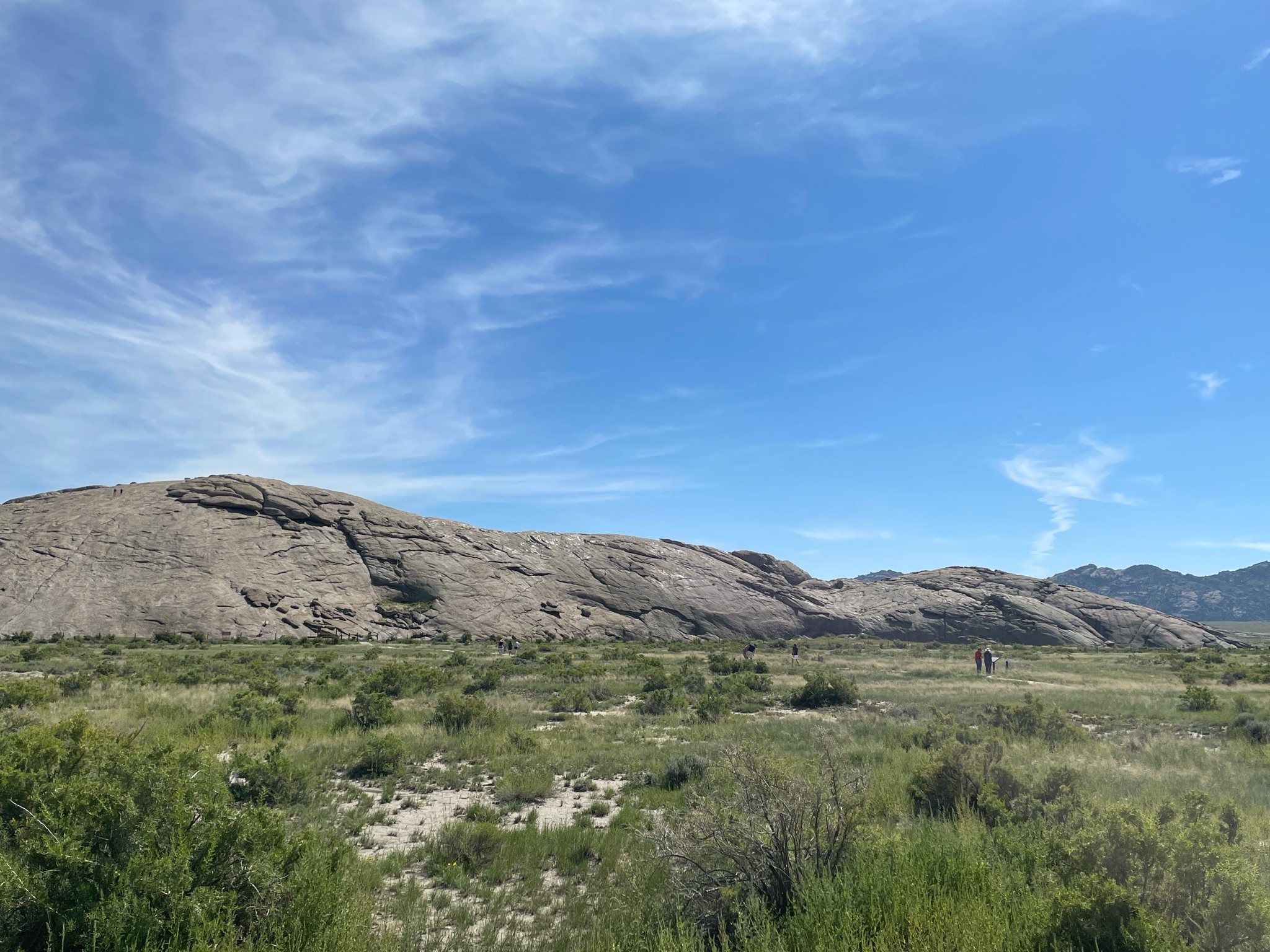
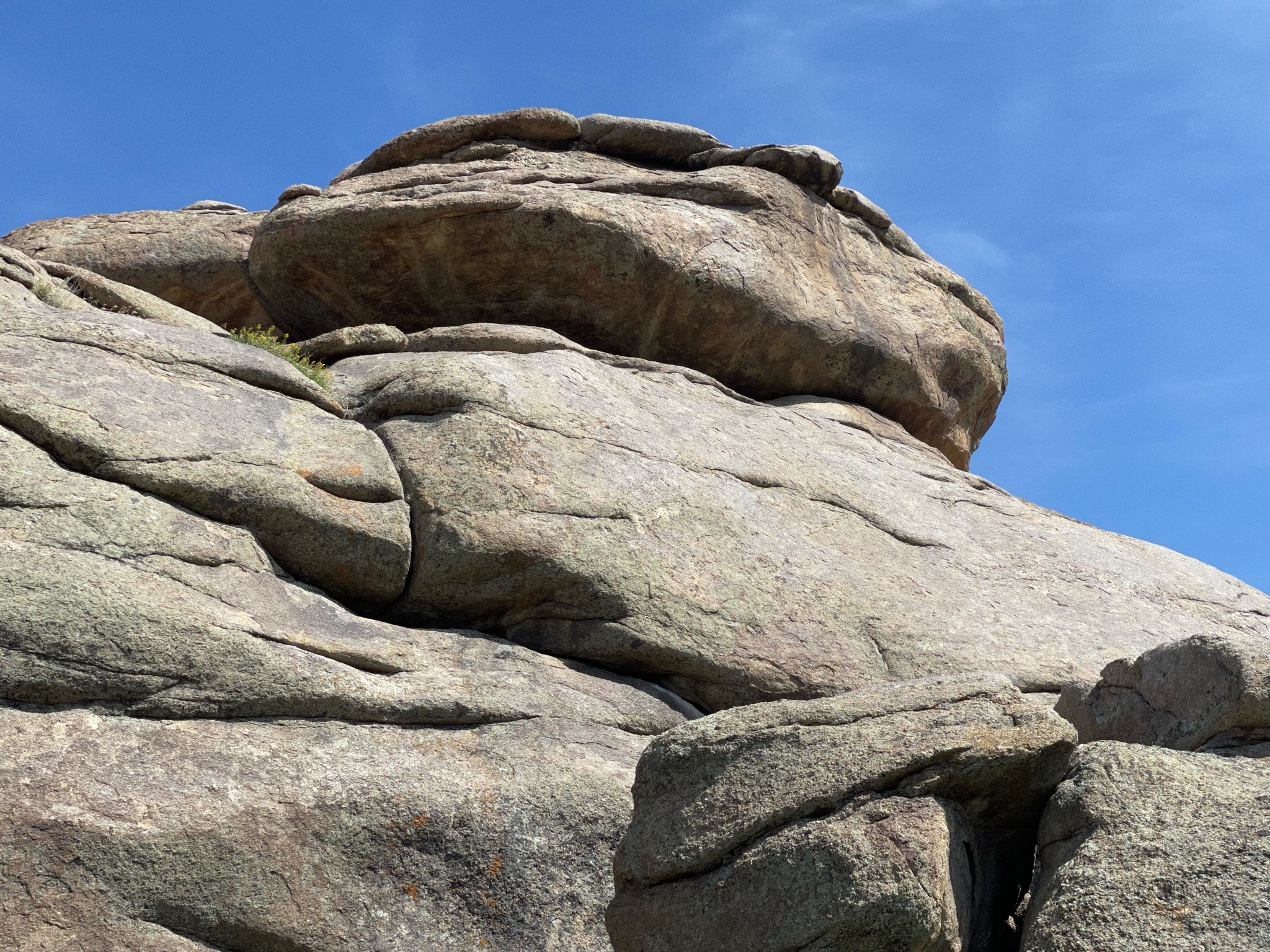
Our main stop for the day is Independence Rock. A big ol’ rock in the middle of the prairie… Of course we stopped to take a look…

The significance of the rock has many facets. First of all, walking 20 miles per day across the endless prairie was very monotonous. Anything unusual caught the emigrants’ attention. This big rock certainly is unusual. Also, the emigrants’ goal was always to reach Independence Rock by Independence Day – July 4. It was important for the emigrants to celebrate the 4th, and this area gave the emigrants space, water, and game to rest for a day or two. Importantly, Independence Rock is just about one half way between Independence, MO, where most of the emigrants set off to Oregon City, OR. Finally, many of the emigrants painted, scratched, or chiseled their names into the rock. Historians have been all over the rock to collect the various signatures and to correlate them with known emigrants and their diaries…

We walked around and onto the rock looking for names. No one we know… Most of the painted or scratched names have been worn away by the weather…

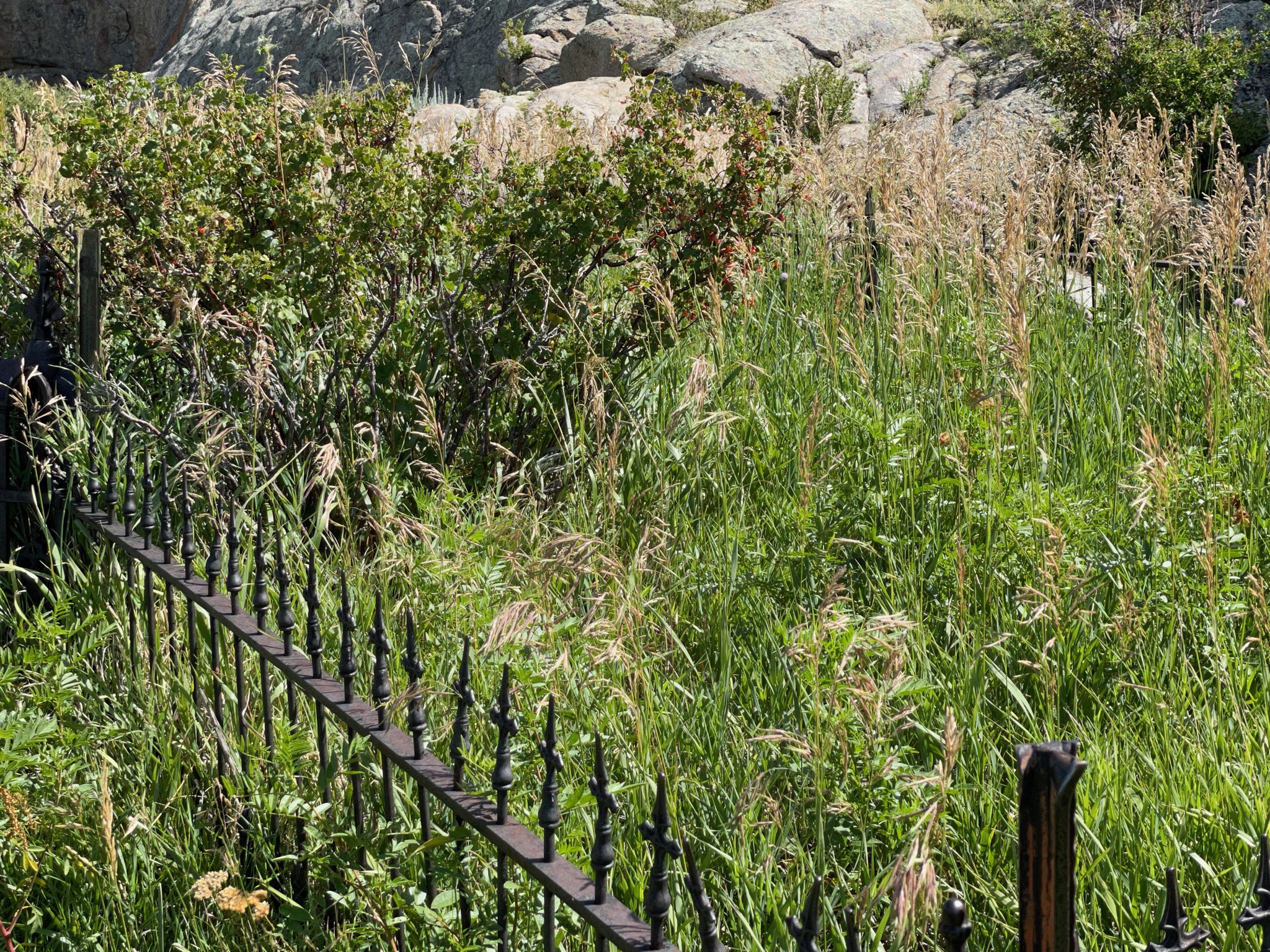
There is a grave here, fenced off…

“Look! Over there!”

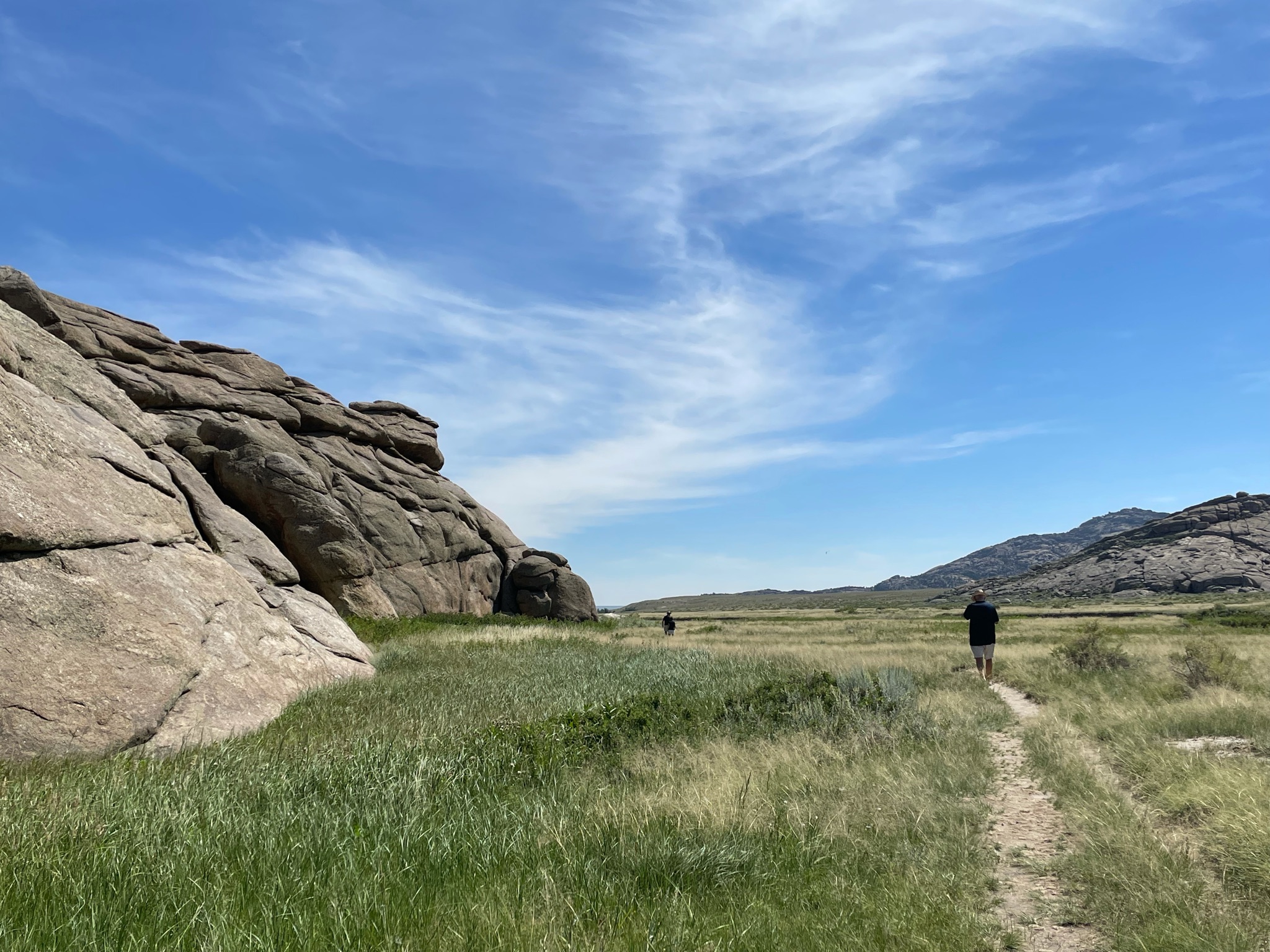
We walked ALL AROUND the rock…

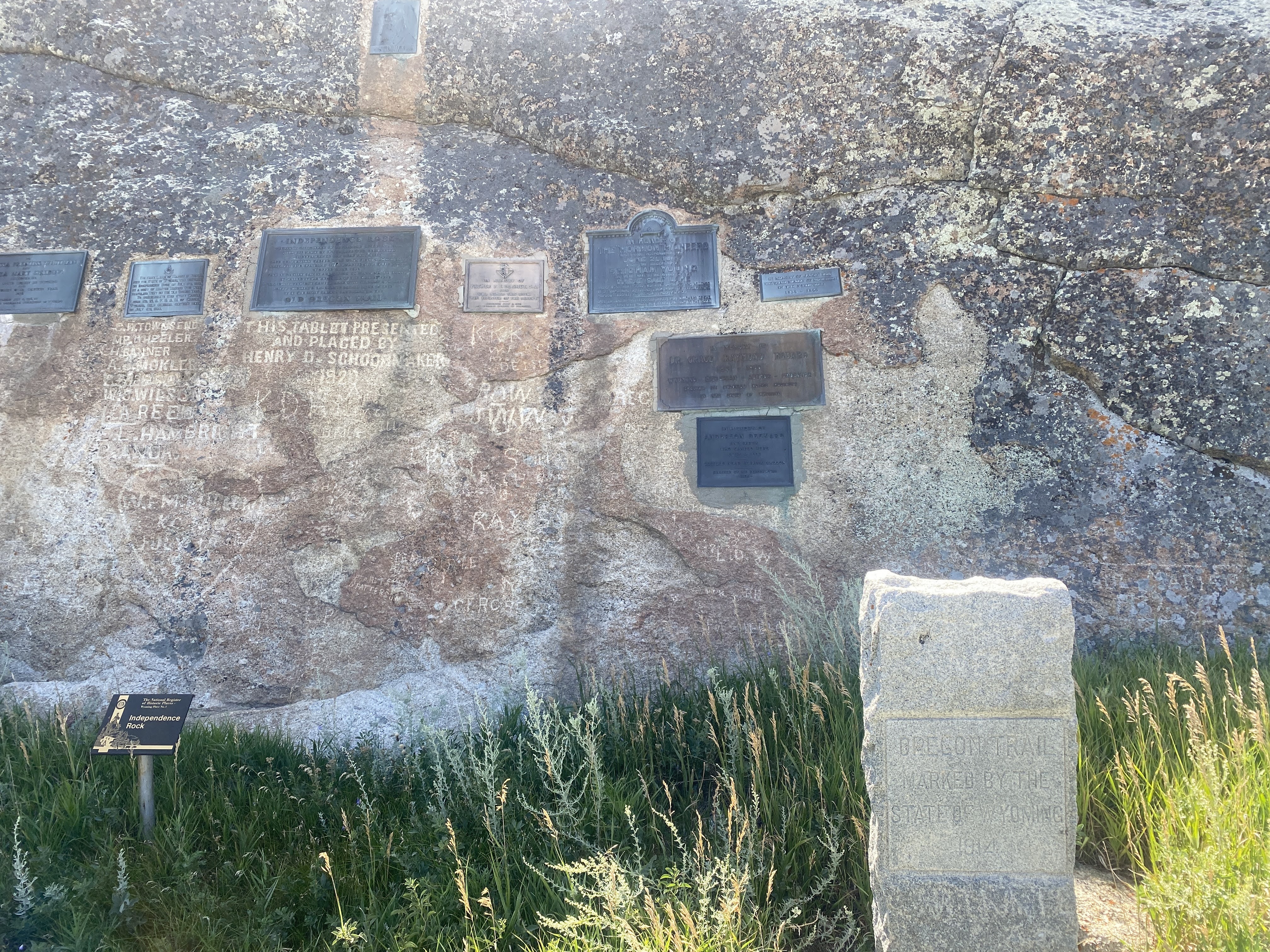
On the opposite side of the rock are various placques placed by various historic societies and donors. There have been several Boy Scouts of America “Camporees” here over the years, so BSA also has many placques…

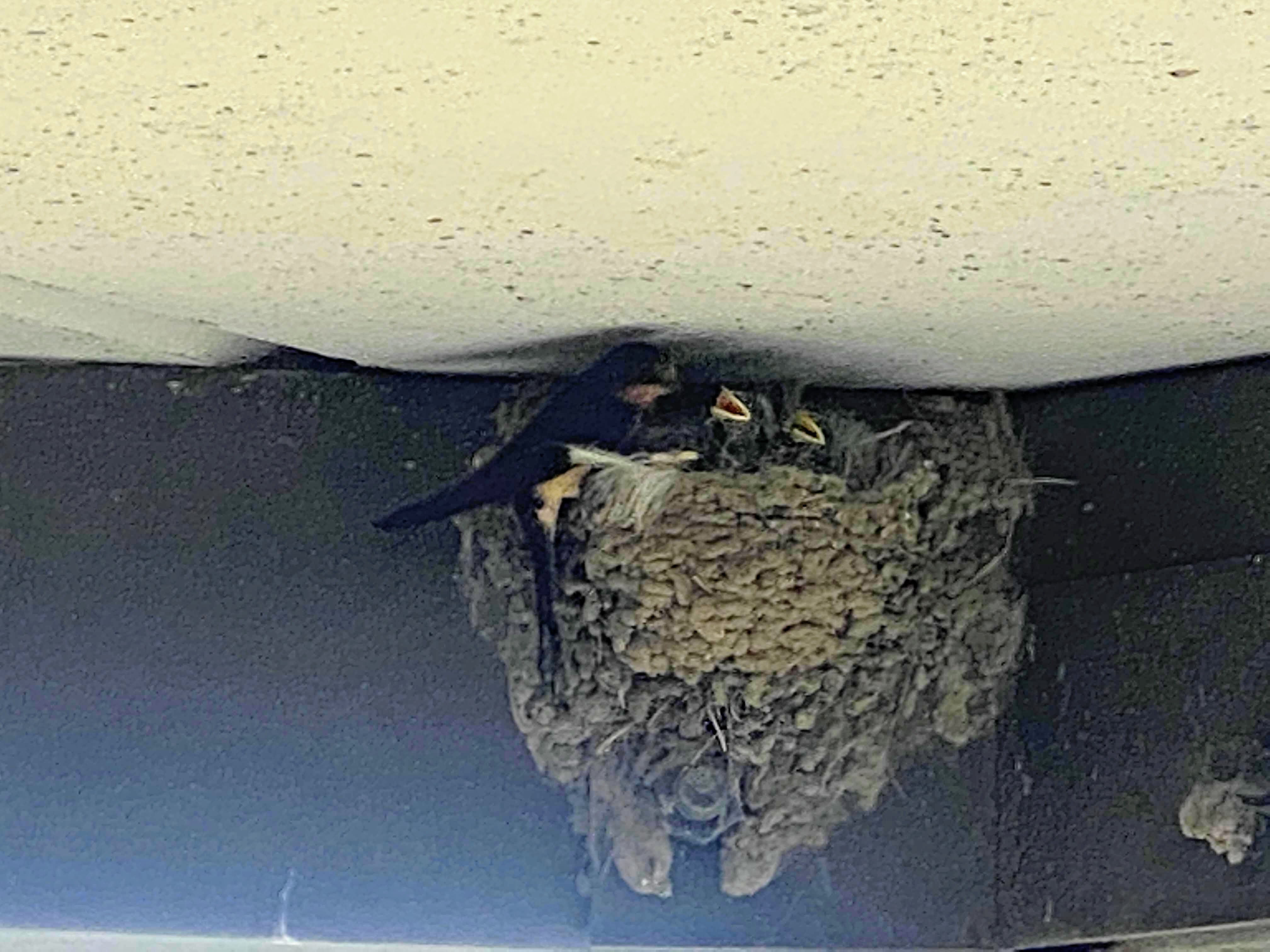
After enjoying the rock we walked back to the entrance. We stopped to watch these birds in a mud nest under the eaves of the visitors center…

We returned to the Villa and drove about four miles down the road to Martin’s Cove. This is an historic site ownered and leased by the Mormon Church. The site commemorates the caravans of Mormons heading to the Great Salt Lake Valley. They could not afford covered wagons so they used hand carts to carry their worldly possessions. They endured many hardships, and up to as many as 25% of them died along the trails.

One feature of the site is the Devil’s Gate – a gap in the rock that allowed the wagons and handcarts through these mountains…

There is also a reproduction of an early fort that the Mormons used to protect themselves from the extreme cold. Portions of the fort were burned to keep the people warm…

And so we traveled on. Another landmark helping the emigrants find their way is the Split Rock. The trail turned here as it approaches the Rocky Mountains to the west. Split Rock pointed the travelers to the South Pass, the easiest way through the Rockies…

About 15 miles further we stopped to see… the back side of Split Rock…

And we are on the road. We caught up to a convoy of seven other Airstreams for our last leg into the town of Lander, WY…

More red rock bluffs…

And we are all in, connected, and paid for…

We had a little Happy Hours and enjoyed a light supper. An enjoyable time was had by all…

2021-08-09 & 10 – The Oregon Trail caravan … Days 12 and 13 – Evansville and Casper, WY

Short stories today. I woke up Monday with a sore throat; Lynda has had a cold since Saturday. We stayed in all day…

We did manage to get outside and walk a bit around the RV park, but it is constantly hot and dusty and windy…

We were feeling well enough to get out about 4:00 and join the club at a very good steak house nearby. After a few Old Fashioneds at the bar, and an appetizer of steak tartare, we joined the others for prime rib and cheesecake…

We returned to the Villa and turned in early…

Tuesday we felt a bit better (or at least Lynda did…) We headed out at 10:00 am to see the National Historic Trails Interpretive Center in Casper…

It is located on a bluff adjacent to the Overland Trails – the trails used by the emigrants to Oregon, the 49ers going to California, and the Mormons going to the Great Salt Lake valley…

Before we had left the campground this morning our leaders asked that the ladies wear their Oregon Trail bonnets and dresses… As you might guess, we are non-participants in activities such as this…

We walked toward the museum building…

The building itself reflects a lot of imagery…

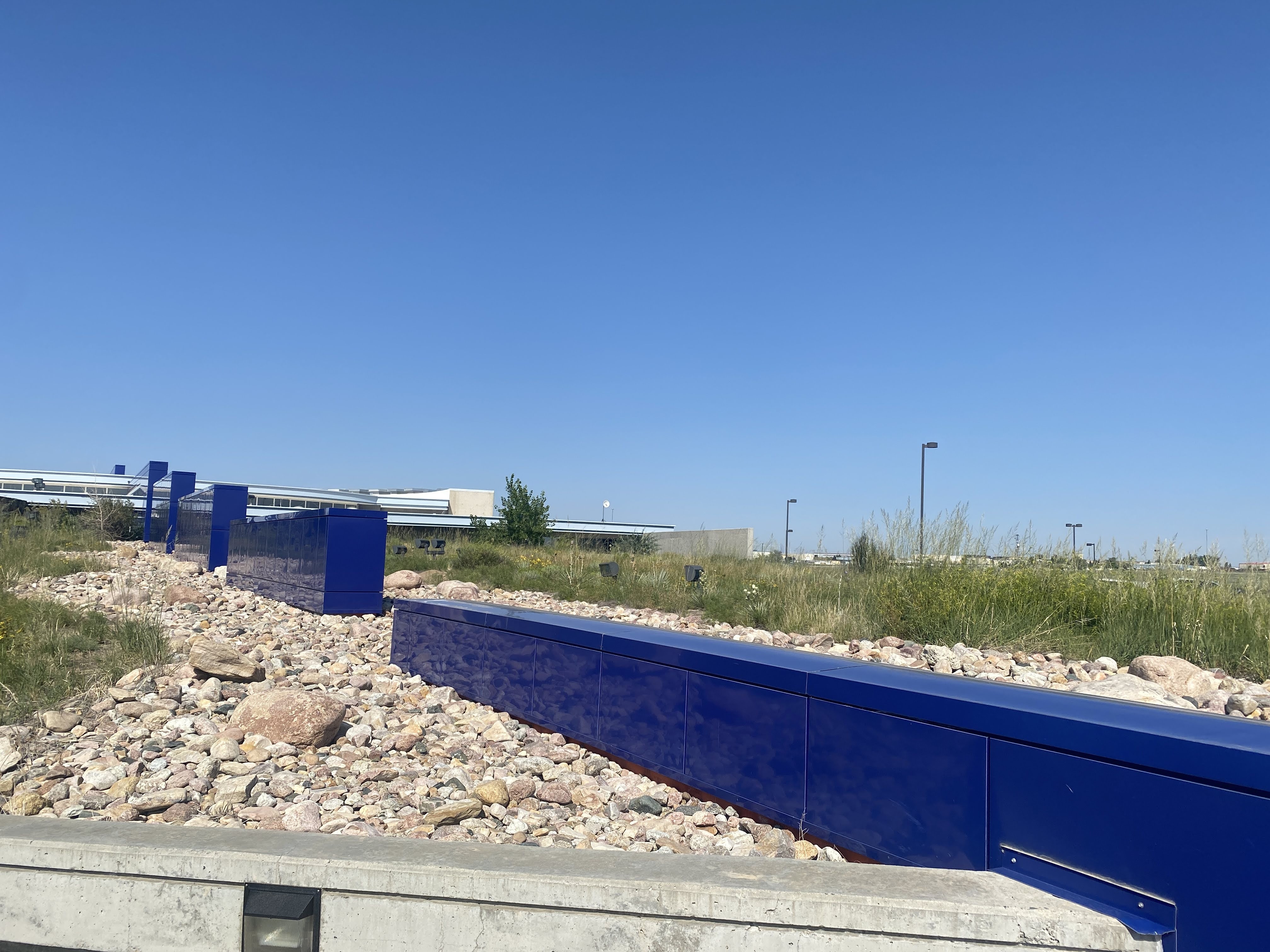
The blue wall segments represent the continuous westward trek by the pioneers and the emigrants, always up hill. Missouri is at about 2,000′ elevation, and the continental Divide is at roughly 7,000′ where the trails crossed it…

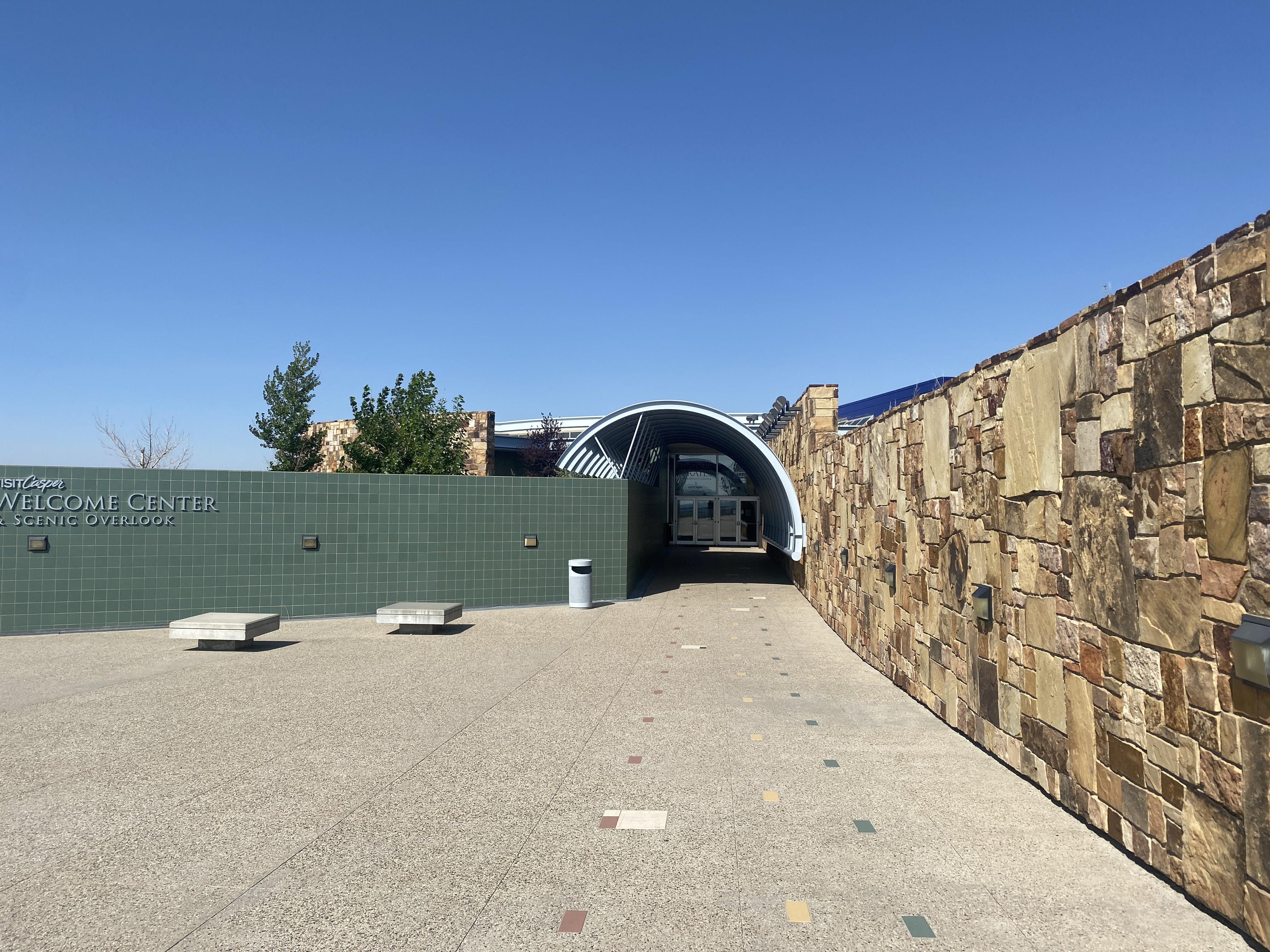
The stone wall is all native sandstone, and the green wall represents the sagebrush that was the emigrants constant companion on the prairie.

The arch portal, of course, represents the hoops and canvas of the covered wagons…

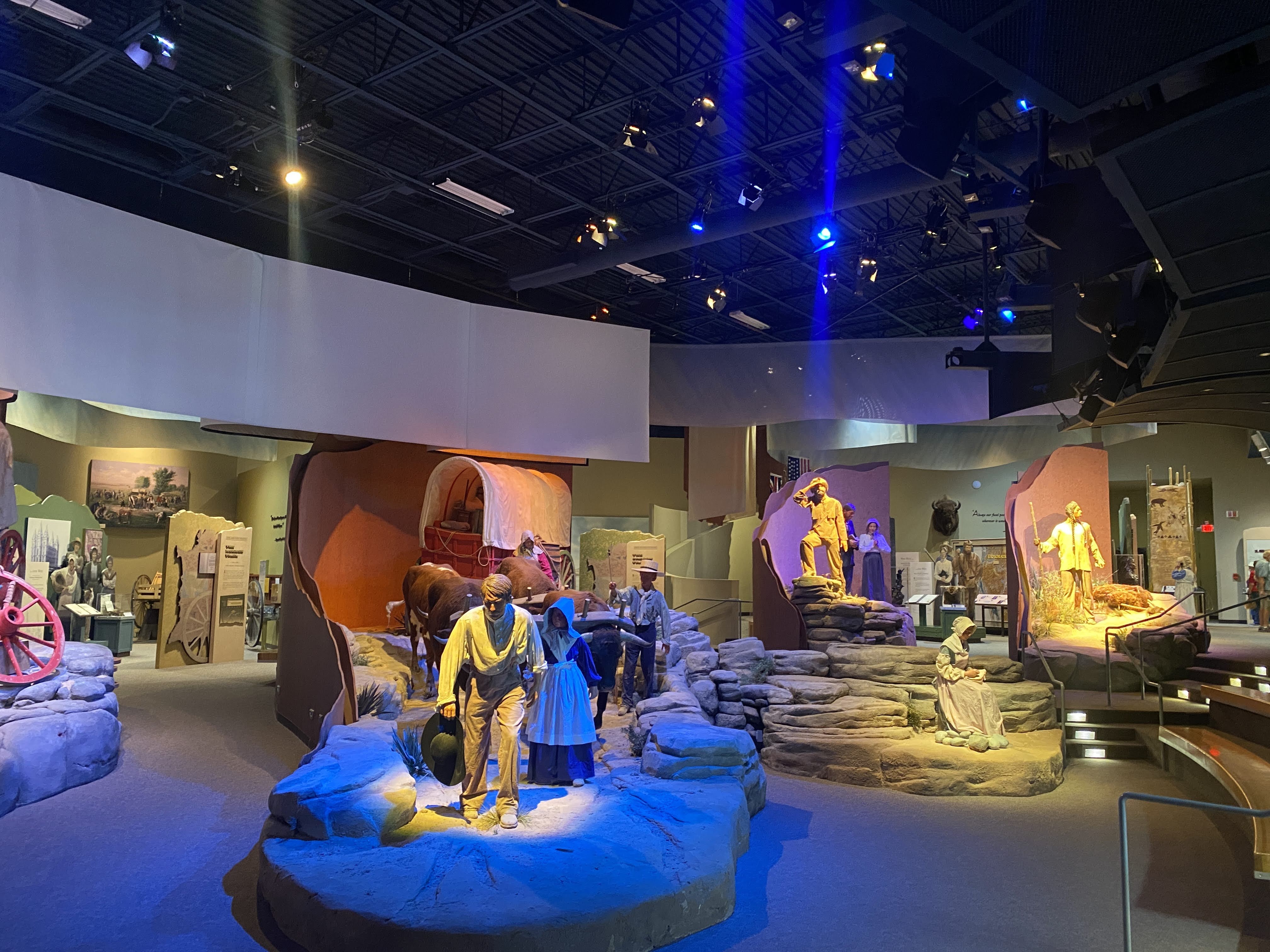
Inside we watch a short film about the emigrants. The lifesize displays added to the realism of the film…

Some of the Mormon emigrants could not afford oxen or mules, so they carried their possessions for 1,500 miles using handcarts. Lynda gave it a try!

One of the more interesting tidbits of the radical changes the emigrants brought to this region is in addition to all the other self-inflicted damage that I have reported on – loss of food and habitat for Indians, Pony Express ended by the transcontinental telegraph, wagon trains ended by the railroad, small towns ended by the Interstate Highways…

As the 350,000 emigrants passed through here on the trails small settlements sprang up to service the needs of the emigrants. When the trains ended the wagon travel, the rails took a different route again, this time to be more convenient to the coal deposits of southern Wyoming. These settlements slowly vanished…

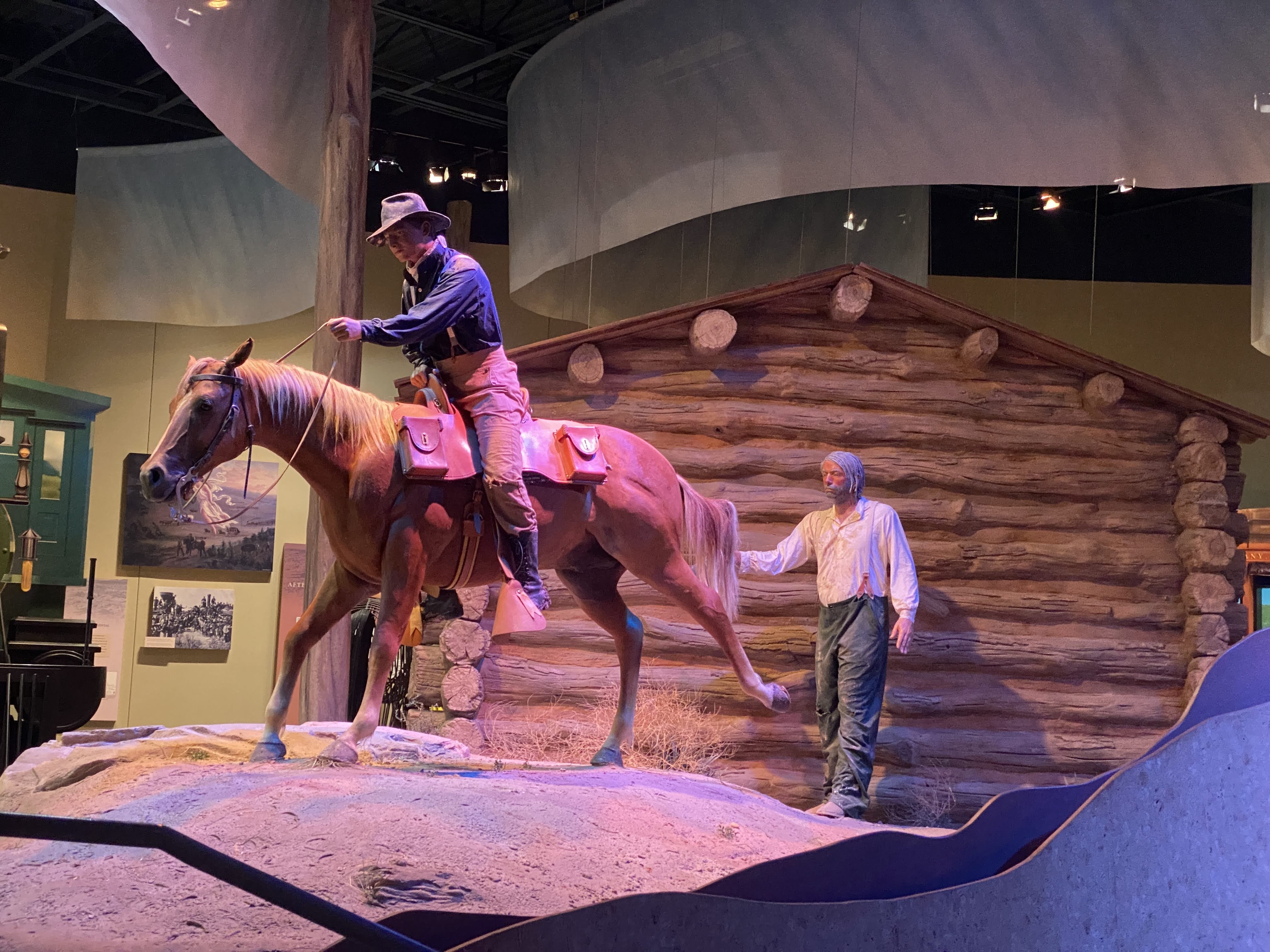
Outside the Museum is a reproduction of a typical Pony Express station. There is a small stable and a small office for the station master. The station master lived here alone; and he was alone – he was visited by only four Pony Express riders per week. Otherwise he was free to fend for himself. When the Pony Express ended, most of these stations were retrofitted to be relay stations for the telegraph… Adaptive Reuse!

We returned to the Villa. I took a nap… Then we had a modest Happy Hours. We walked around the RV park in the evening…

An enjoyable time was had by all

2021-08-08 – The Oregon Trail caravan … Day 11 – Gering, NE to Evansville, WY

We are leaving Nebraska today, traveling to Casper, WY (actually Evansville…).

But before I talk about today, here is a picture of all of us at Scott’s Bluff yesterday…

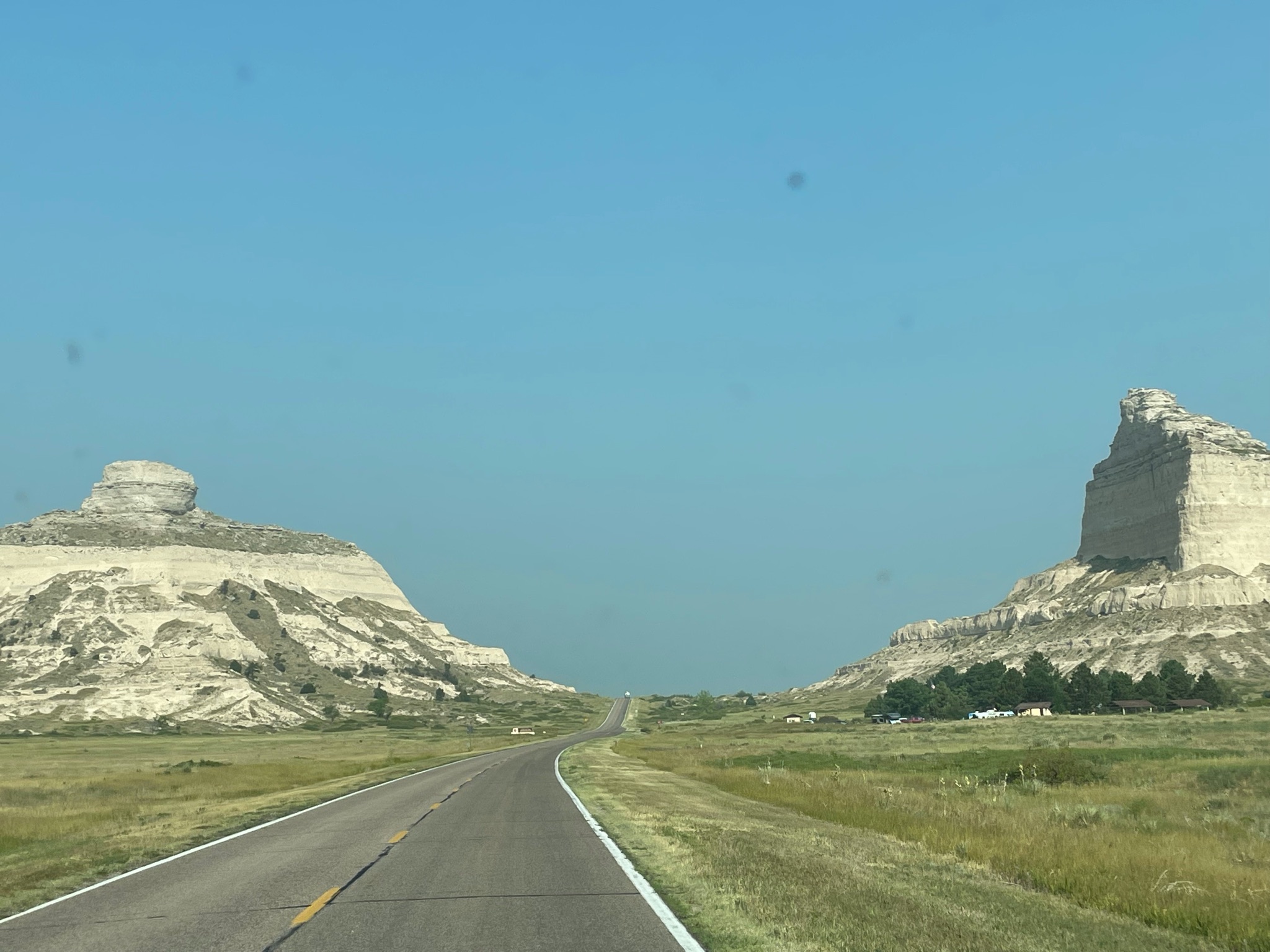
We drove through the Robidoux Pass, between the major cliffs at Scott’s Bluff. We will be following the the Oregon Trail for much of our trip today…

Beyond we see Nebraska countryside once again…

As we move west, closer to Wyoming, the terrain changes…

We entered Wyoming and found the town of Fort Laramie. Surprise! There is a fort here! As we headed for the fort we crossed over the North Platte River (for about the 8th time today…). Adjacent to the modern bridge we crossed is the old iron bridge built by the Army in the mid-1800s…

As we approached the fort we encountered three of our friends as they were leaving…

The visitors center had several well developed displays telling the history of the fort. It was originally a trading post, until the US Army bought it in 1849. By 1849, as California-bound 49ers joined the Oregon Trail emigrants the trickle of wagons across the plains had become a flood. The fort provided protection in addition to becoming a major supply post, the first since Fort Kearney, 600 miles to the east…

As the emigrants passed through the area they brought destruction… Annually, 10,000 wagons, 50,000 people, and 75,000 head of animals passed through here. The people and cattle killed and/or chased away the game, depriving the Indians of their food supply. Livestock trampled the grass across a two mile wide swath of land. The wagon wheels scarred the land; these scars are still visible over 150 years later. (As we will see at our next stop…)

Peace with the Indians was spotty at best. Treaties were made, treaties were broken. The Platte River Ferry incident and the Grattan Fight brought peace to an end. For 25 years the Northern Plains Indian Wars raged. By 1860, as the emigrant traffic slowed (with the introduction of stagecoach travel, and then train travel) the fort transformed from a rest stop for emigrants into a base of military operations against the Northern Plains tribes…

Through the 1860s the fort stood as a vital link between the east and west. 500,000 people now lived west of the Rocky Mountains. In 1860 the Pony Express came through, followed by the transcontinental telegraph. When the Civil War began, troops were withdrawn from the fort. The small crews left behind had to scramble with maintaining the hundreds of miles of telegraph lines. As the Indian wars rages, Indians attacked the fort, telegraph lines, stagecoach travel, and the wagon trains. The Fort Laramie Treaties of 1868 held the promise of peace on the plains. It was short lived…

The beginning of the end was Col. Custer and his defeat by Sitting Bull at Little Bighorn in 1876. This so enraged the army (and the federal government) that they set out on a mission of retaliation. This culminated at Wounded Knee in 1890, with the slaughter of between 150-300 Lakota Indians by the US Army. It ended any organized resistance by the Indians to living on reservations.

Fort Laramie in the 1880s was a “golden era”, as a false sense of of permanence prevailed. New buildings were built, old buildings were improved, and an active scene prevailed among the officers and the local citizens. In the mid 1880 a railroad nearby brought all the amenities of Victorian life to the fort.

In 1886 a new, larger railhead was built at the adjacent Fort Robinson. It made Fort Laramie superfluous. In 1889, the fort was closed and abandoned. In 1890, the land and buildings were sold at a public auction. Also in 1890, Wyoming was declared a state and the Indians were all on reservations. In 1890, the Superintendent of the Census declared that the American frontier had ceased to exist.

In 1937 a group of local residents of the town of Fort Laramie finally prevailed on the state of Wyoming to purchase 214 acres of old fort property, and preservation and restoration of the fort was begun.

I’m not a fan of forts and old buildings like this. We saw the fort, we learned the history, and we traveled on… It was a god thing that we were leaving now… In a few minutes the parking lot looked like this:

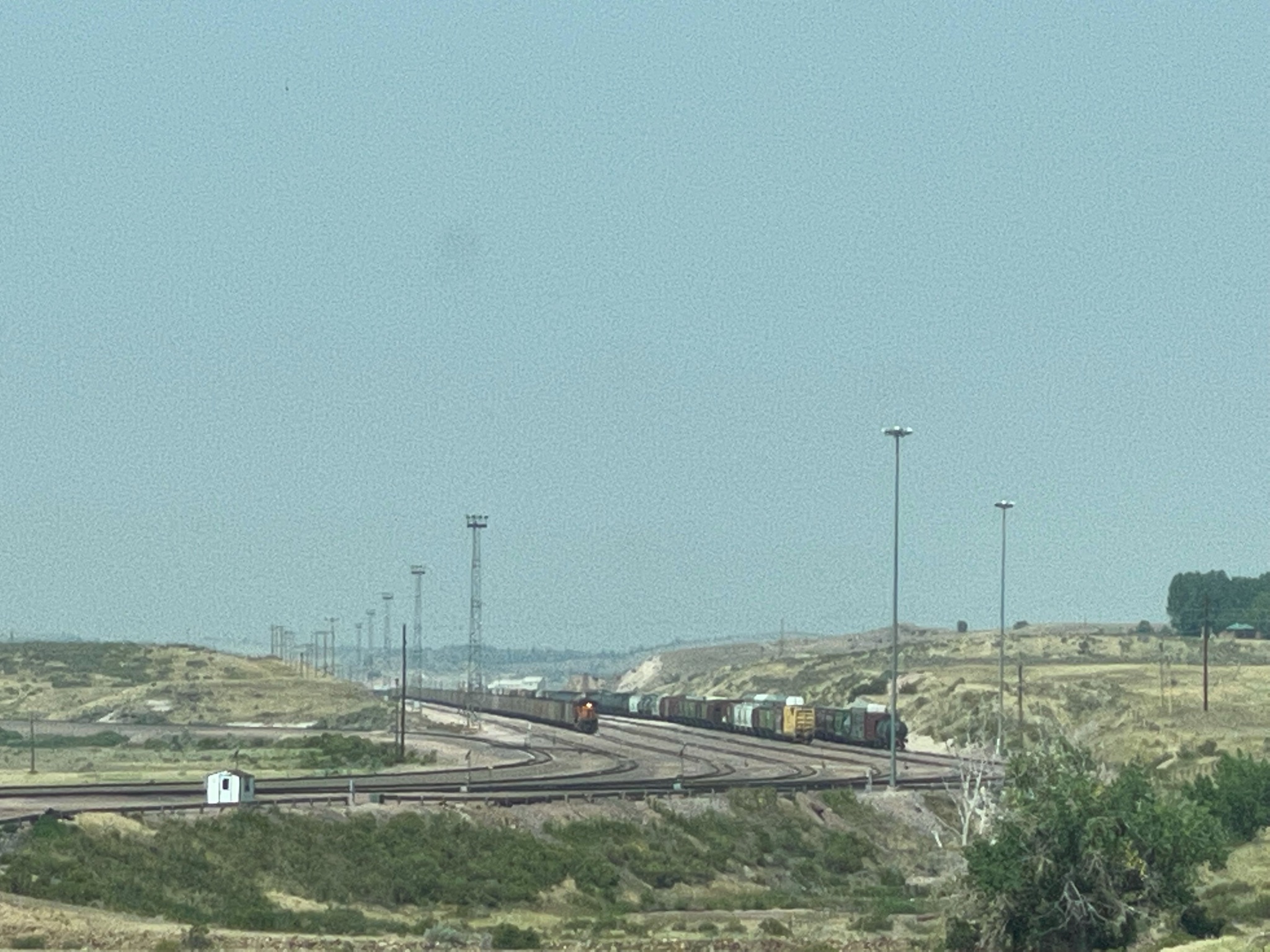
So we hurried on… About ten miles down the road we came to the town of Guernsey, with its giant rail yard. All these train cars are filled with coal, heading into Nebraska to fuel the 15 giant power plants there…

We crossed the North Platte River, again…

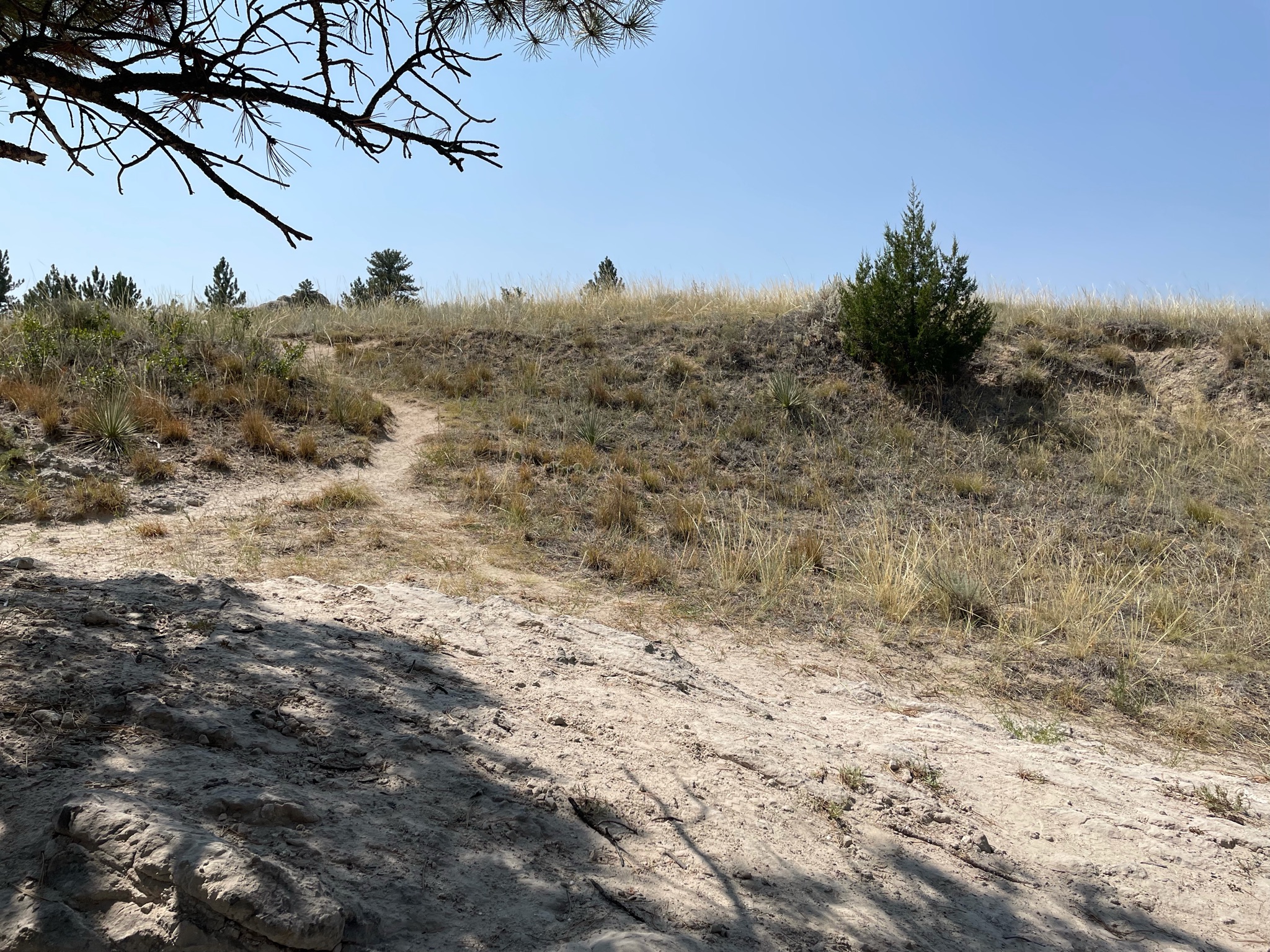
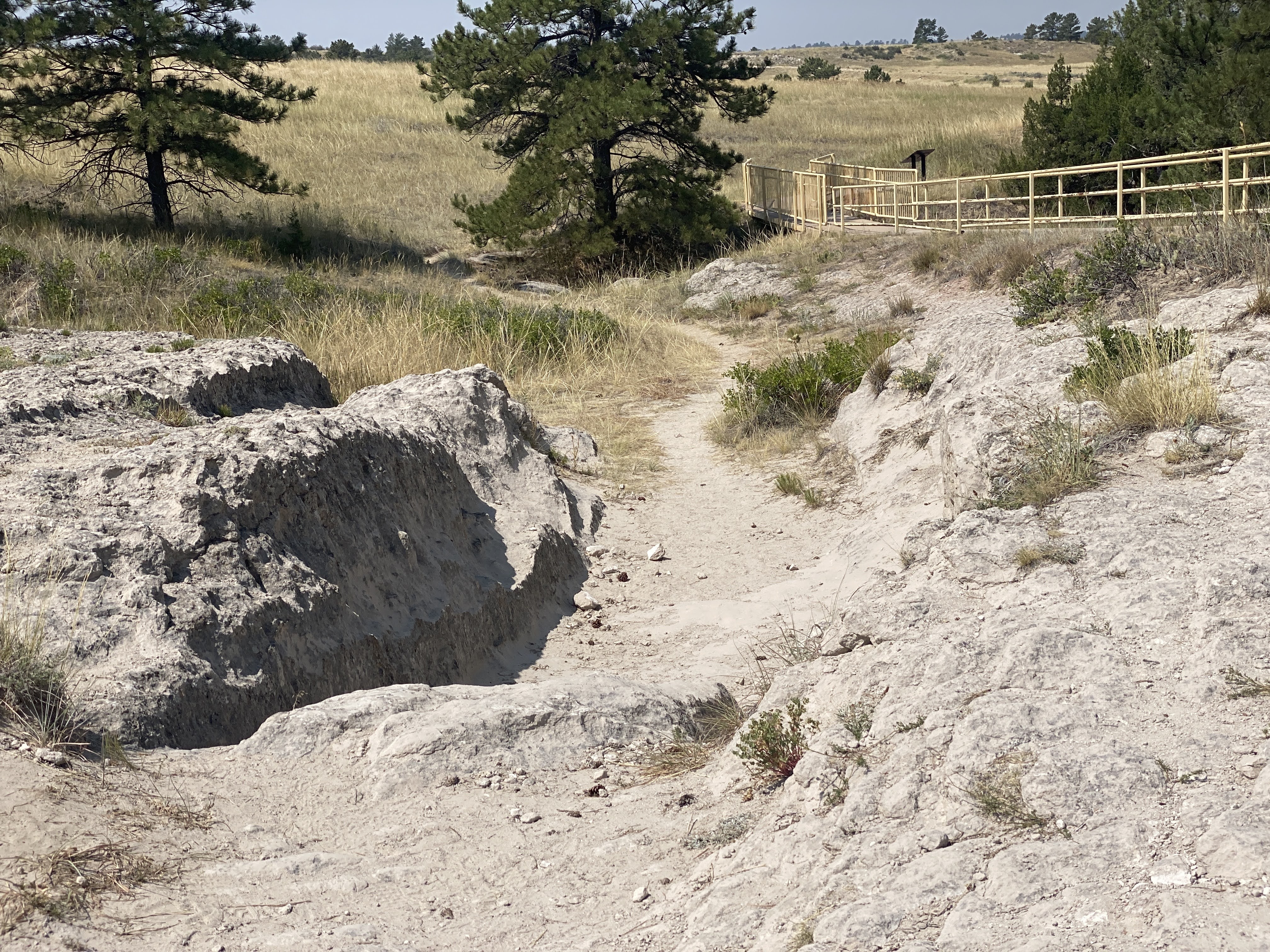
We found the ruts we are looking for…

These runts, worn into the sandstone, are impressive…

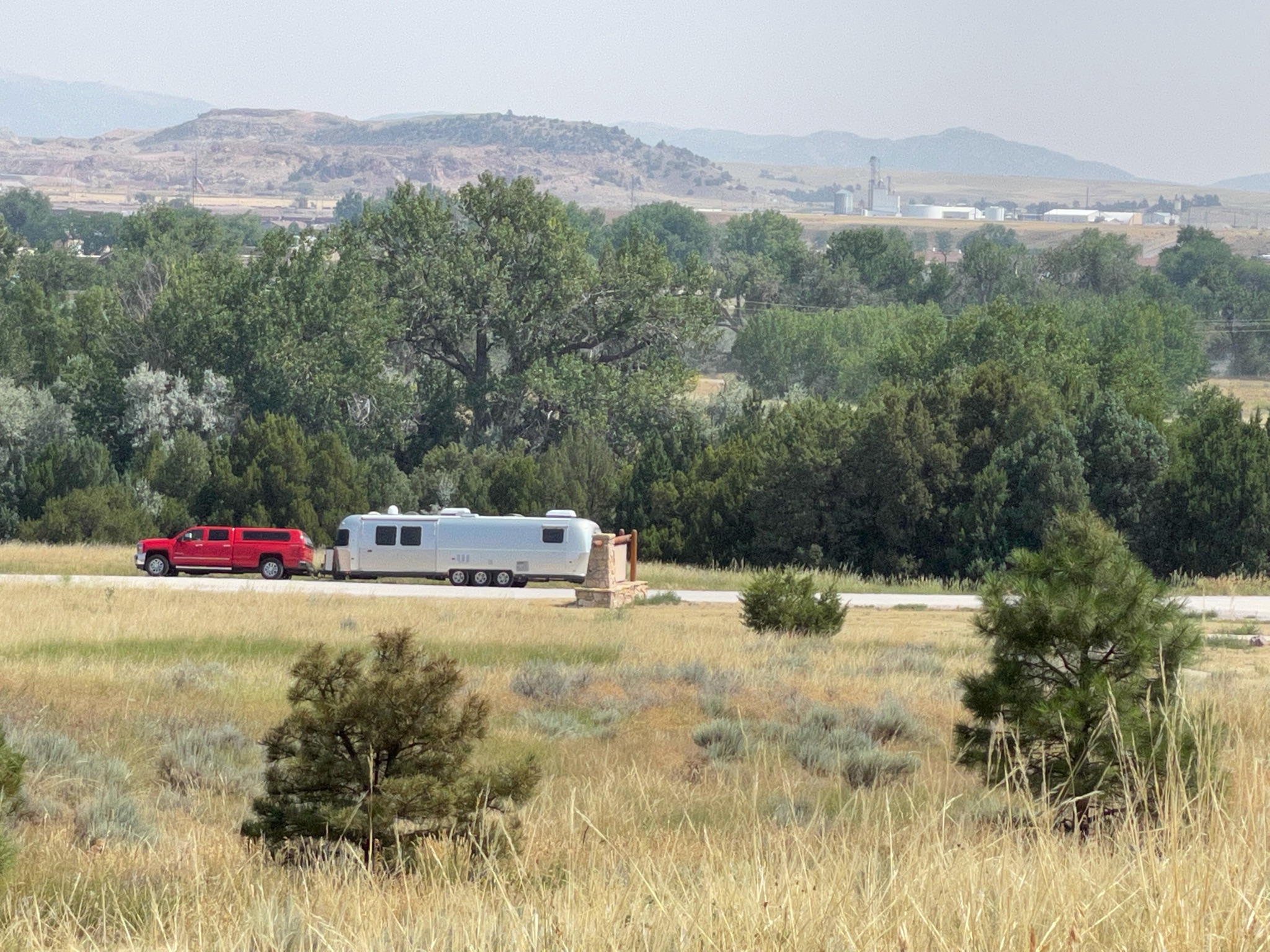
As we returned from the ruts and trails we found the Villa in the distance…

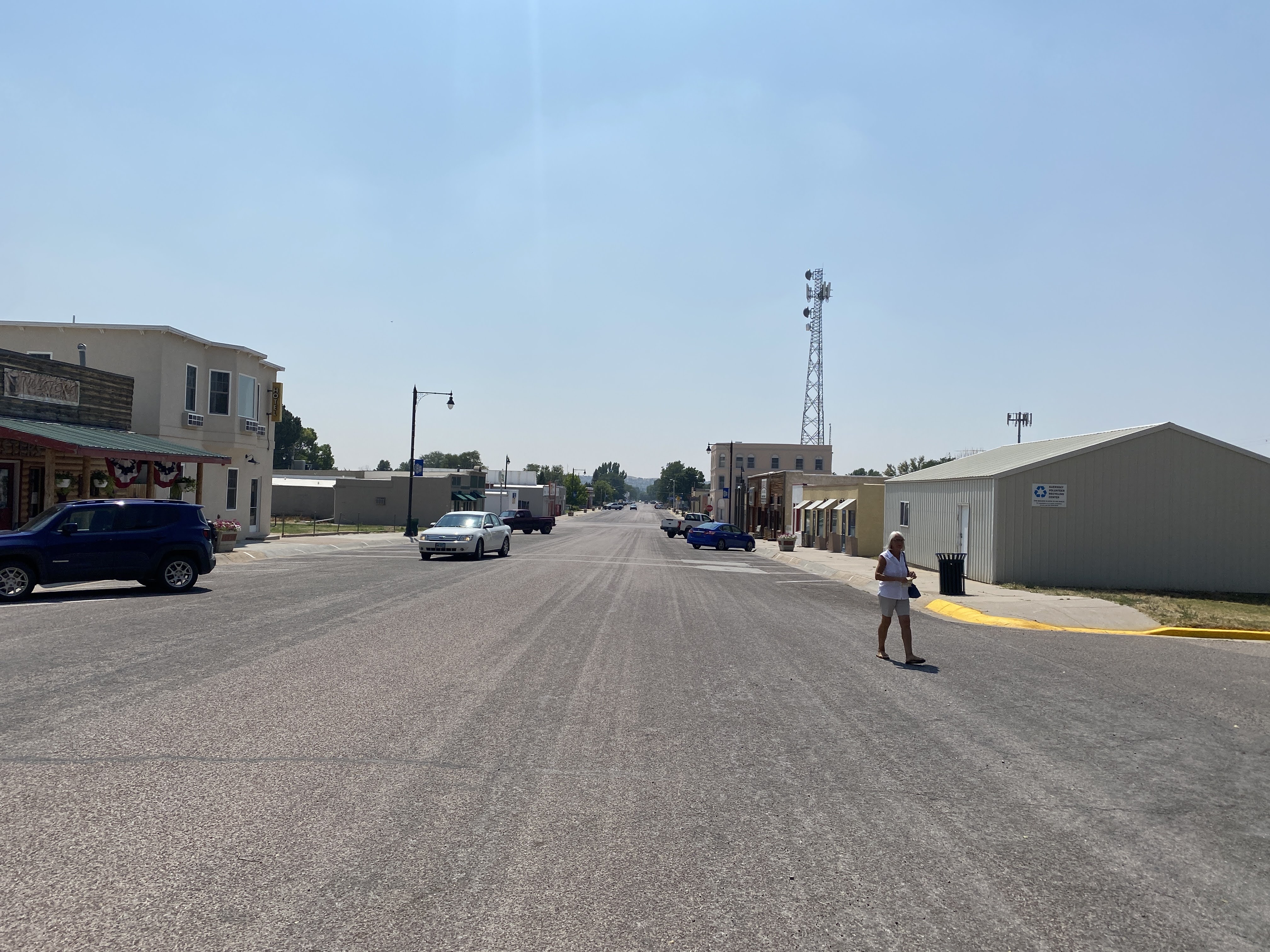
We drove the short distance back to the town of Guernsey. We stopped at the Twisted Eatery for lunch…

Nothing fancy here. No avant garde food. Just well made, simple food. We enjoyed our sandwiches! And we traveled on…

We arrived at our campsite in Evansville, adjacent to Casper… Lots of gravel, and a small patch of plastic grass at each site…

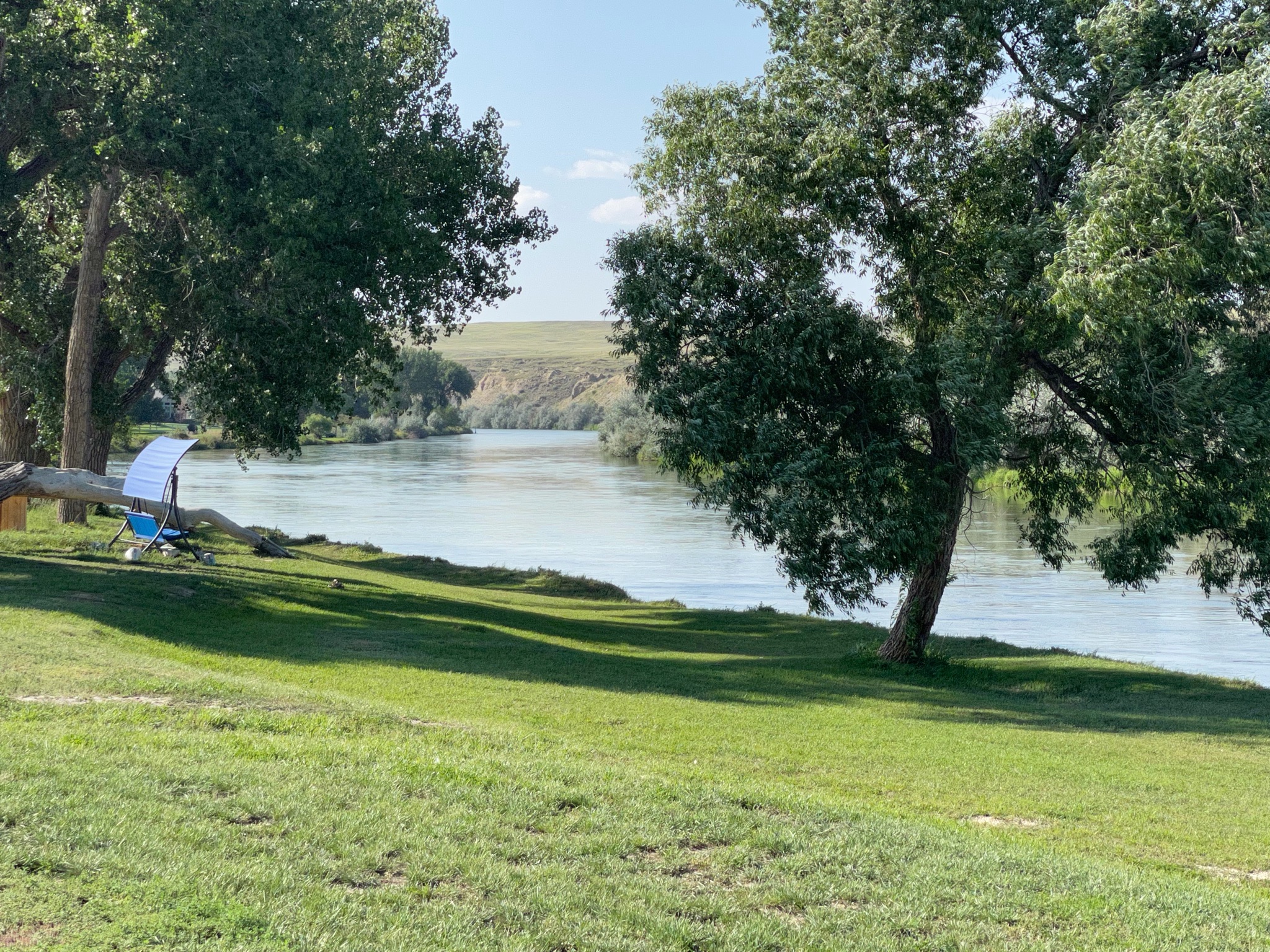
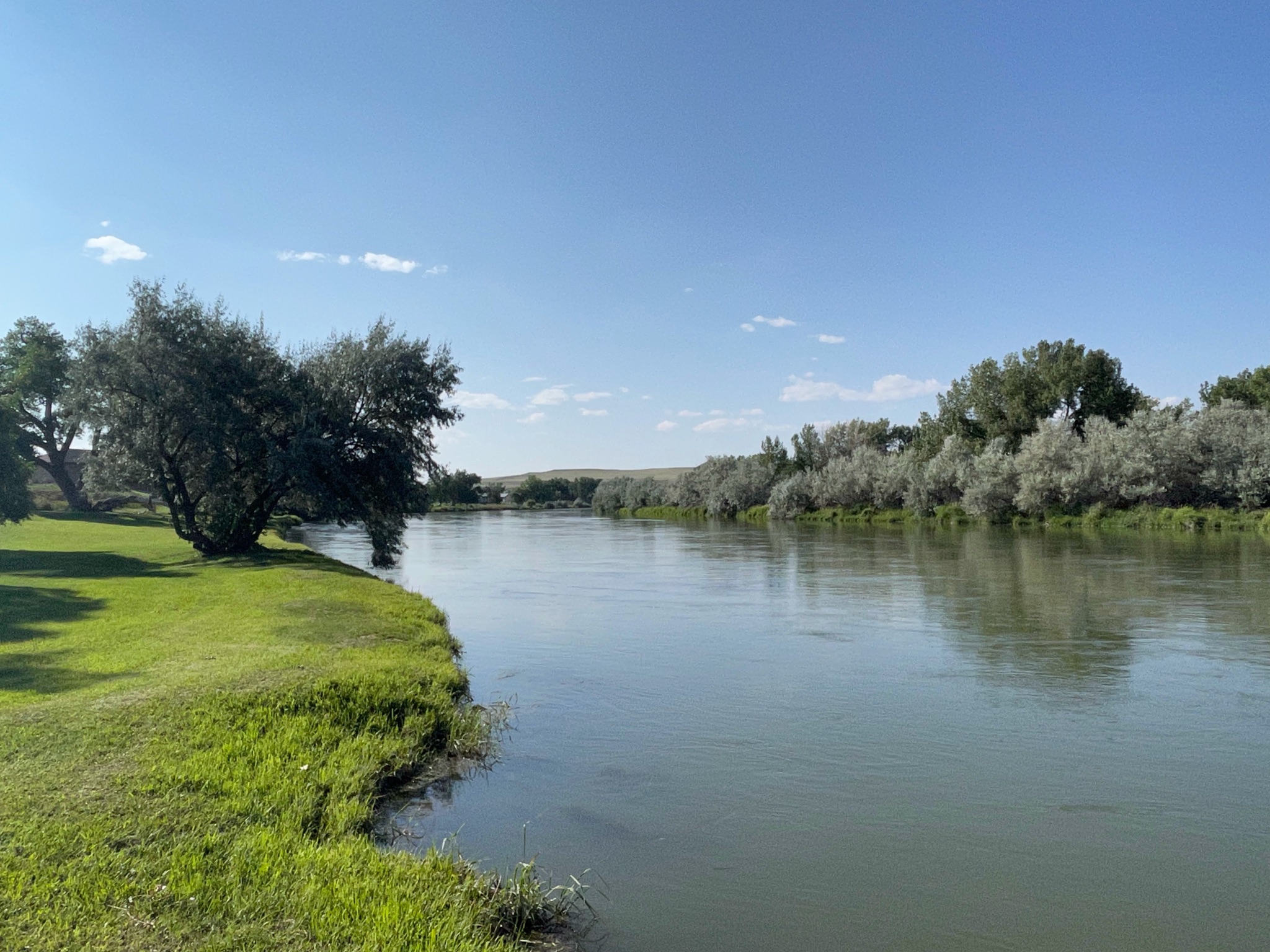
Happy hours were enjoyed. It is hot and windy this afternoon and evening. We enjoyed our view of the North Platt River…

An enjoyable time was had by all…

2021-08-07 – The Oregon Trail caravan … Day 10 – Gering, NE

We slept fitfully all night because there was a very strong windstorm blowing outside… but the morning dawned nicely.

We rode along with another Airstream couple from Jerusalem… We headed towards Scott’s Bluff National Monument…

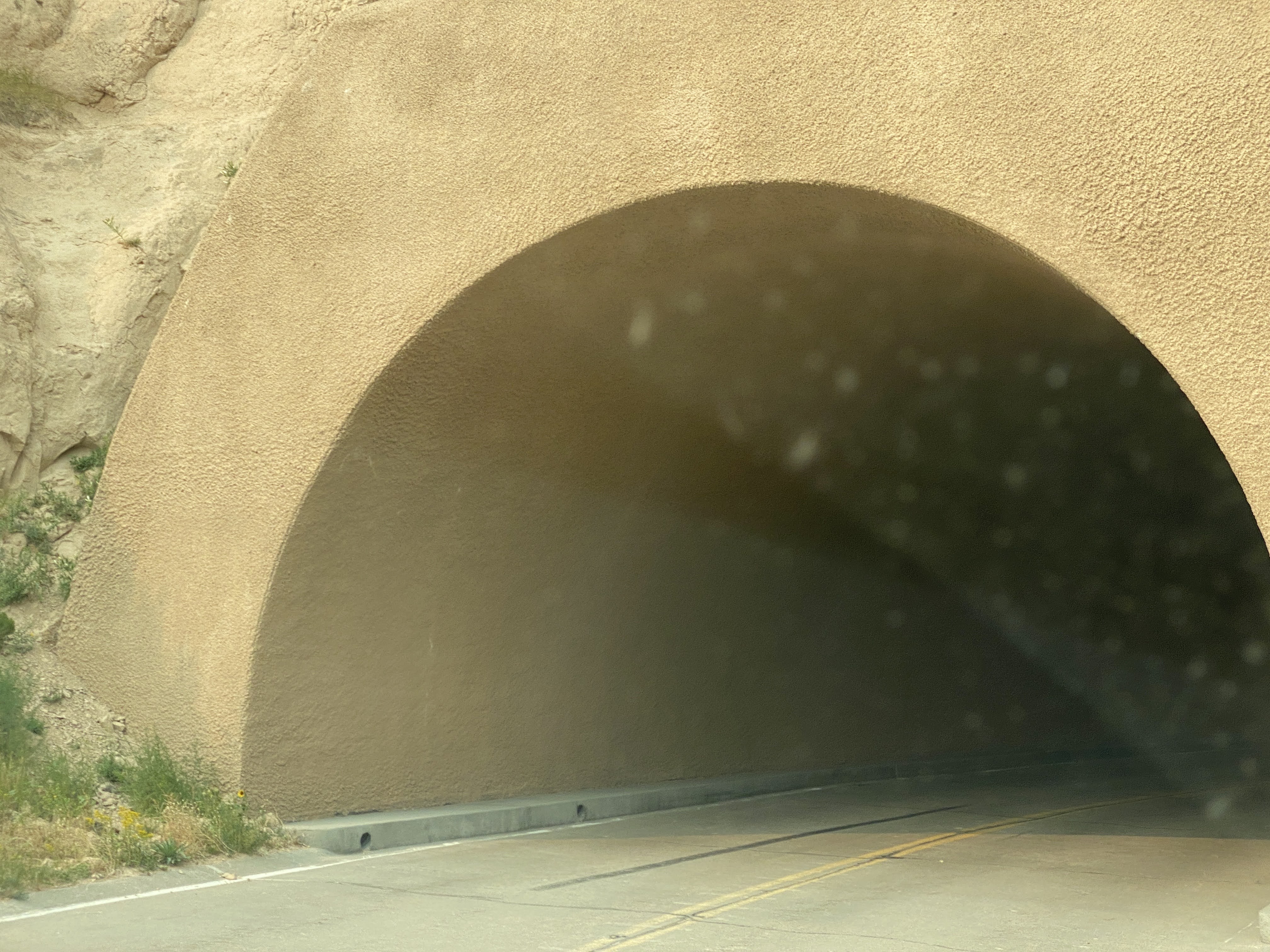
In the 1930s the Park Service, with the help of the CCC, constructed this road to the top of the bluff, including three tunnels…

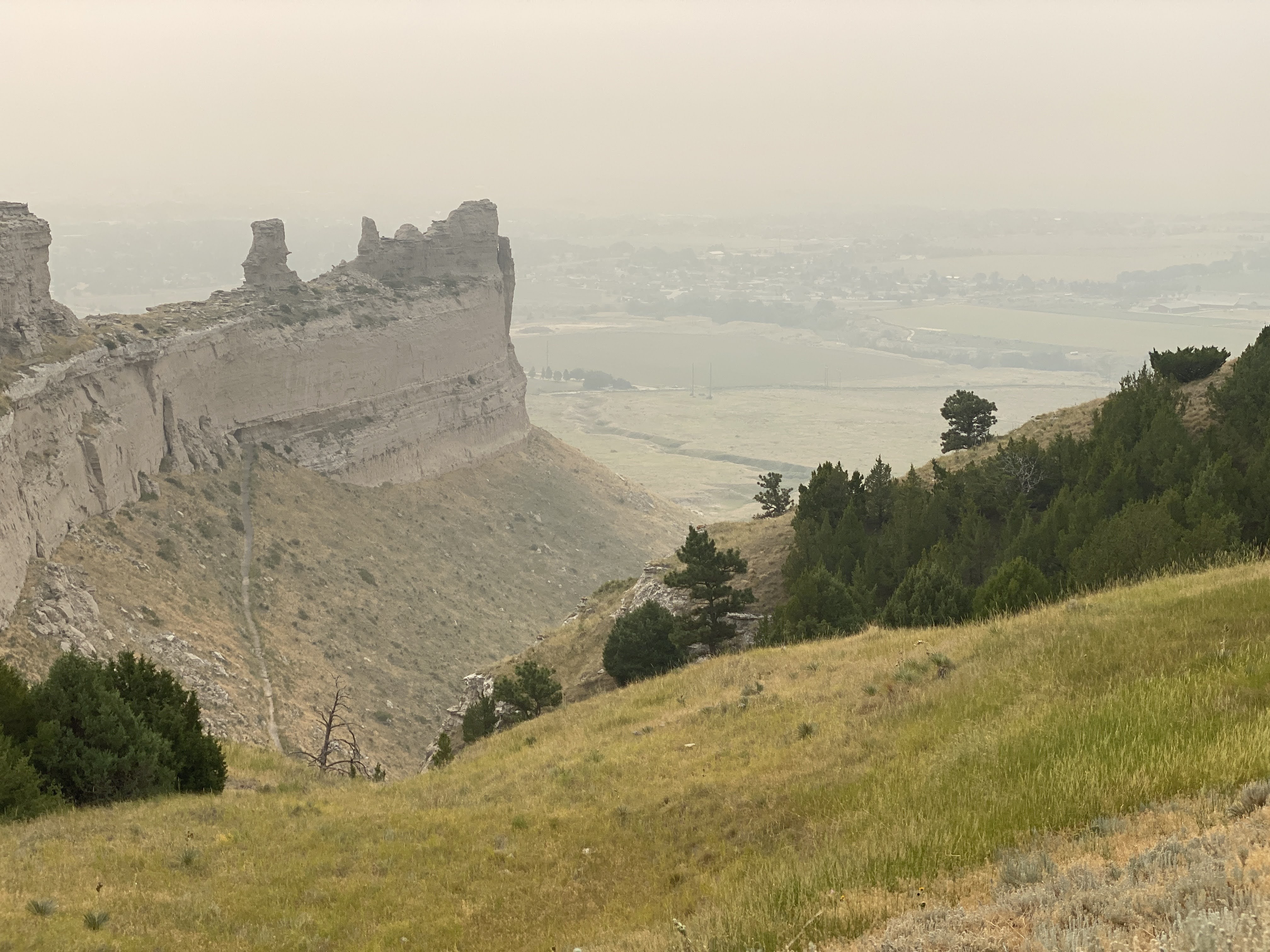
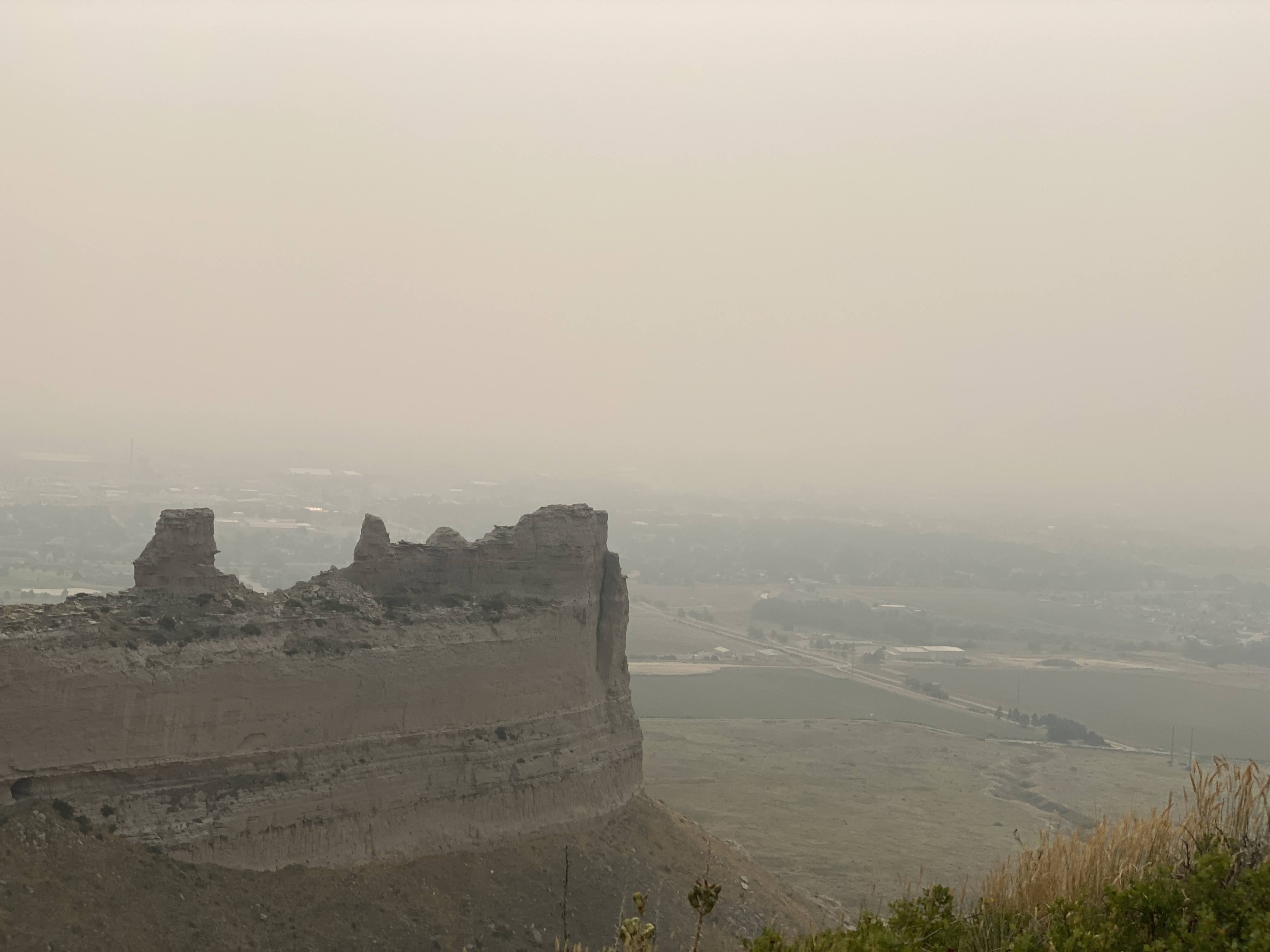
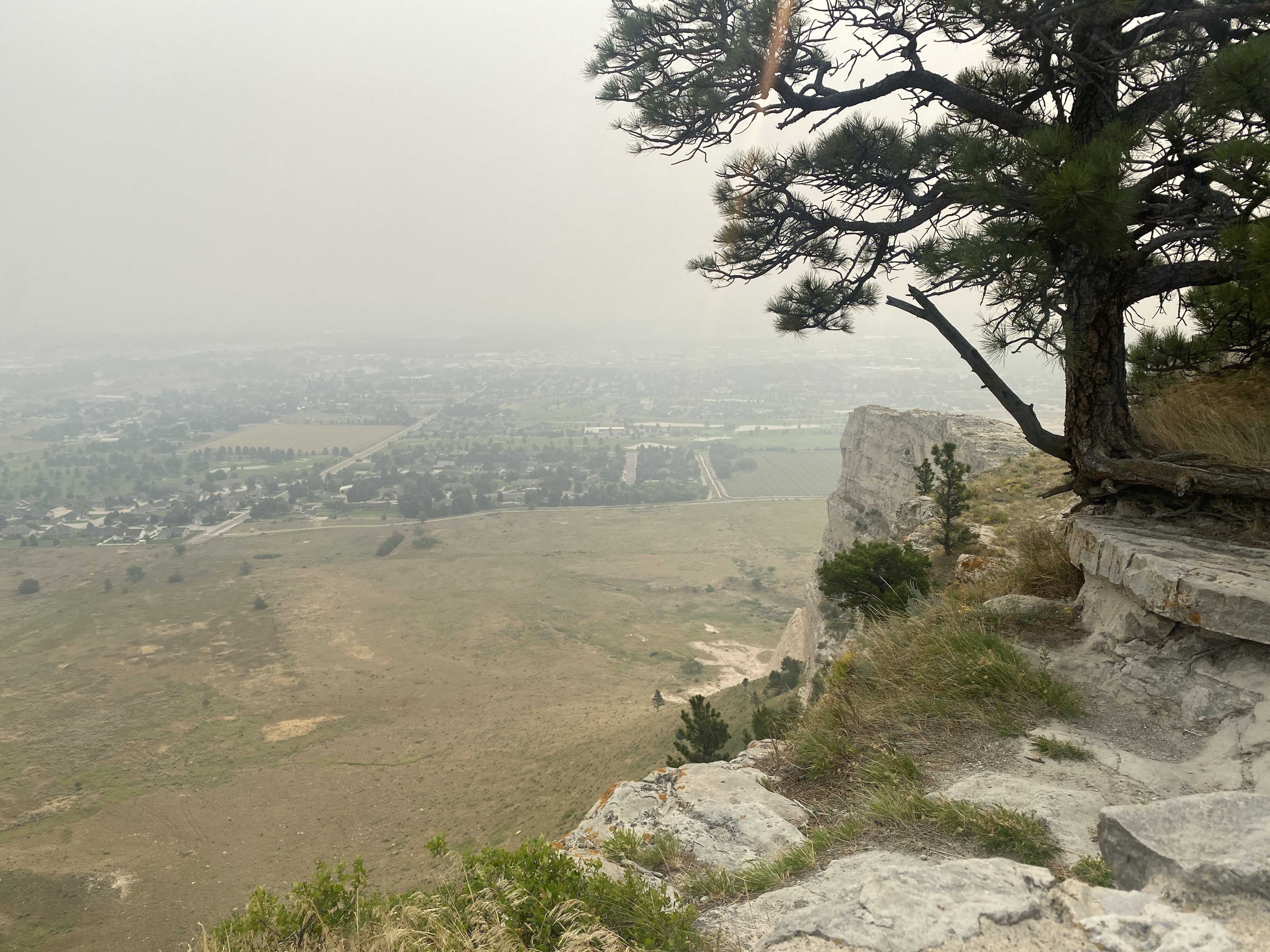
The views from 800′ above the valley floor must be spectacular. Unfortunately, we have smoke-filled skies from the Canadian fires.

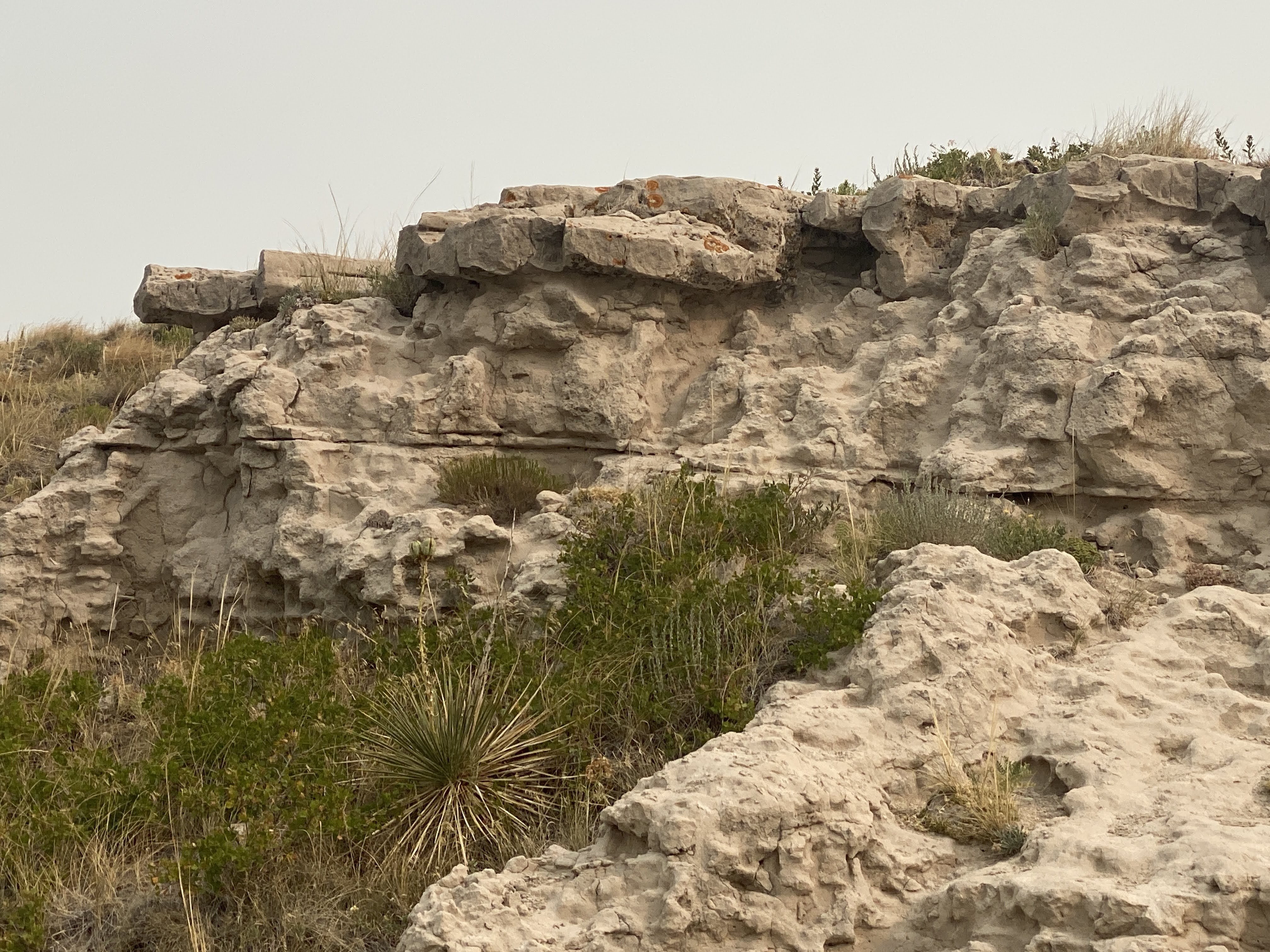
A close-up look at the bluff shows the layers: on top, the limestone cap, then alternating layers of sandstone, volcanic ash, and clay… The entire area around here used to be plains at the same elevation of Scott’s Bluff. However, most of it lacked the limestone cap, so over a few million years it has all eroded away to todays configuration…

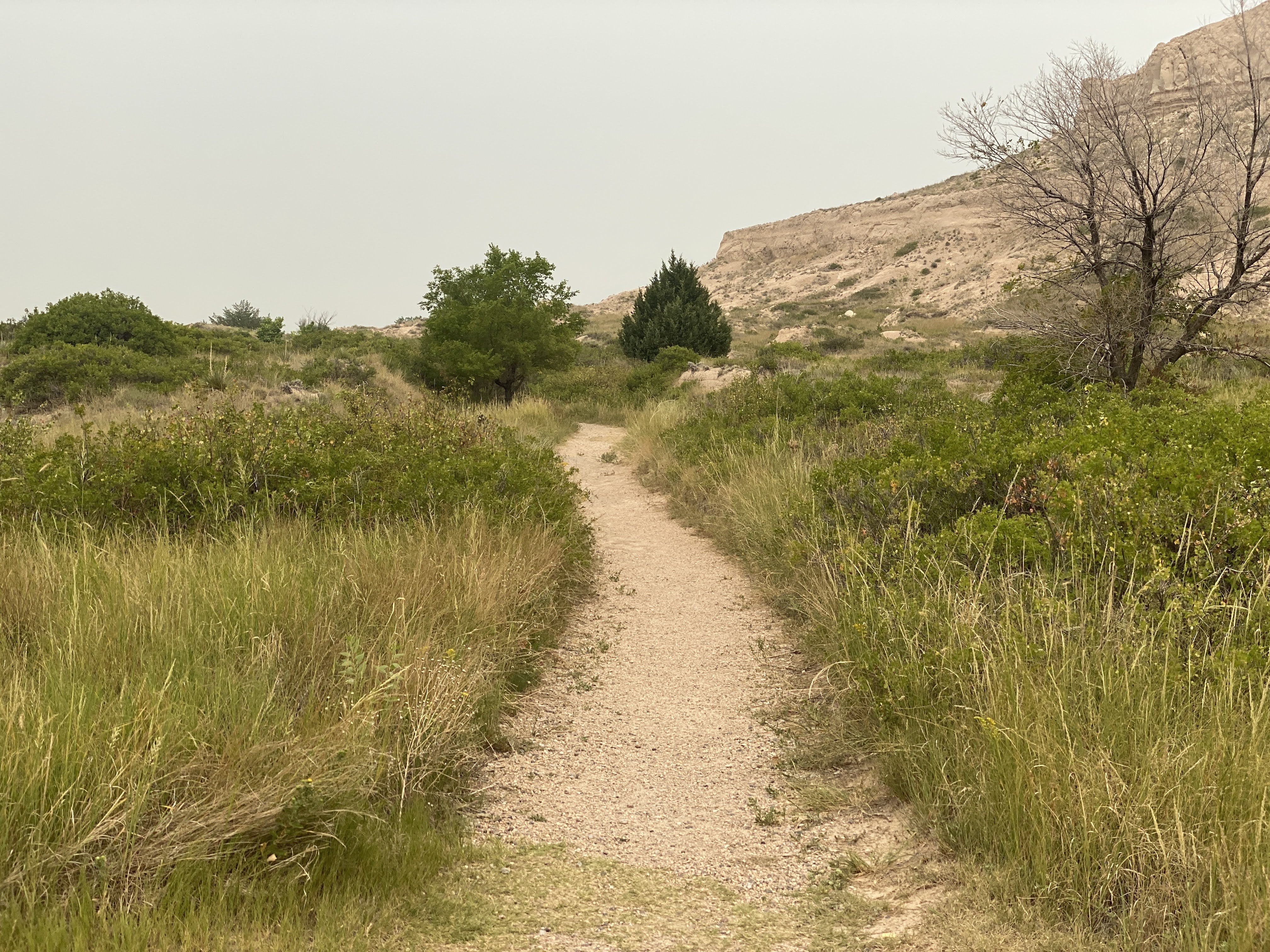
We walked along the paths trying to see different views. Still smoke all around…

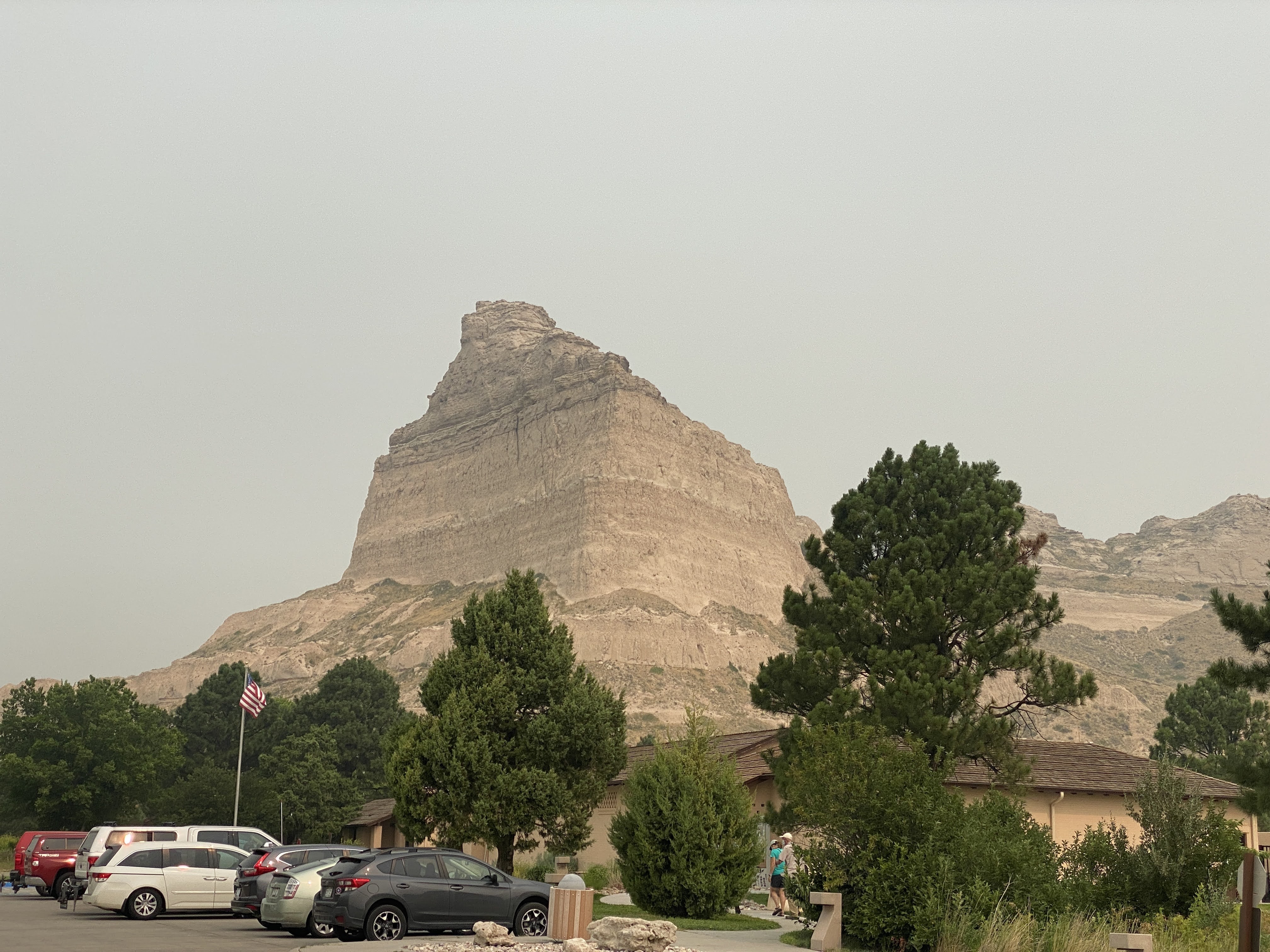
Back down at the Visitors Center we looked at the exhibits. We looked at the bluffs from below…

Then we walked along the real, authentic Oregon Trail…

Next stop was the famous landmark: Chimney Rock…

There was a very nice visitor center…

One of the exhibits showed the Oregon Trail through Nebraska. Note Chimney Rock to the left… (We leave Nebraska tomorrow…)

Behind the Visitors Center is the official view of Chimney Rock:

Chimney Rock is similar composition as Scott’s Bluff, with the exception that there is no limestone cap. Therefore, Chimney Rock is eroding much faster than Scott’s Bluff, and it will soon melt into the surrounding plains…

We returned to the Villa, had a leisurely afternoon… tomorrow we head for Wyoming!

An enjoyable time was had by all…

2021-08-06 – The Oregon Trail caravan … Day 9 – Ogallala, NE to Gering, NE

Another travel day…but not too far. Only 125 miles. We are camping in Gering, NE, tonight, adjacent to the Scott’s Bluff National Monument and the city of Scottsbluff.

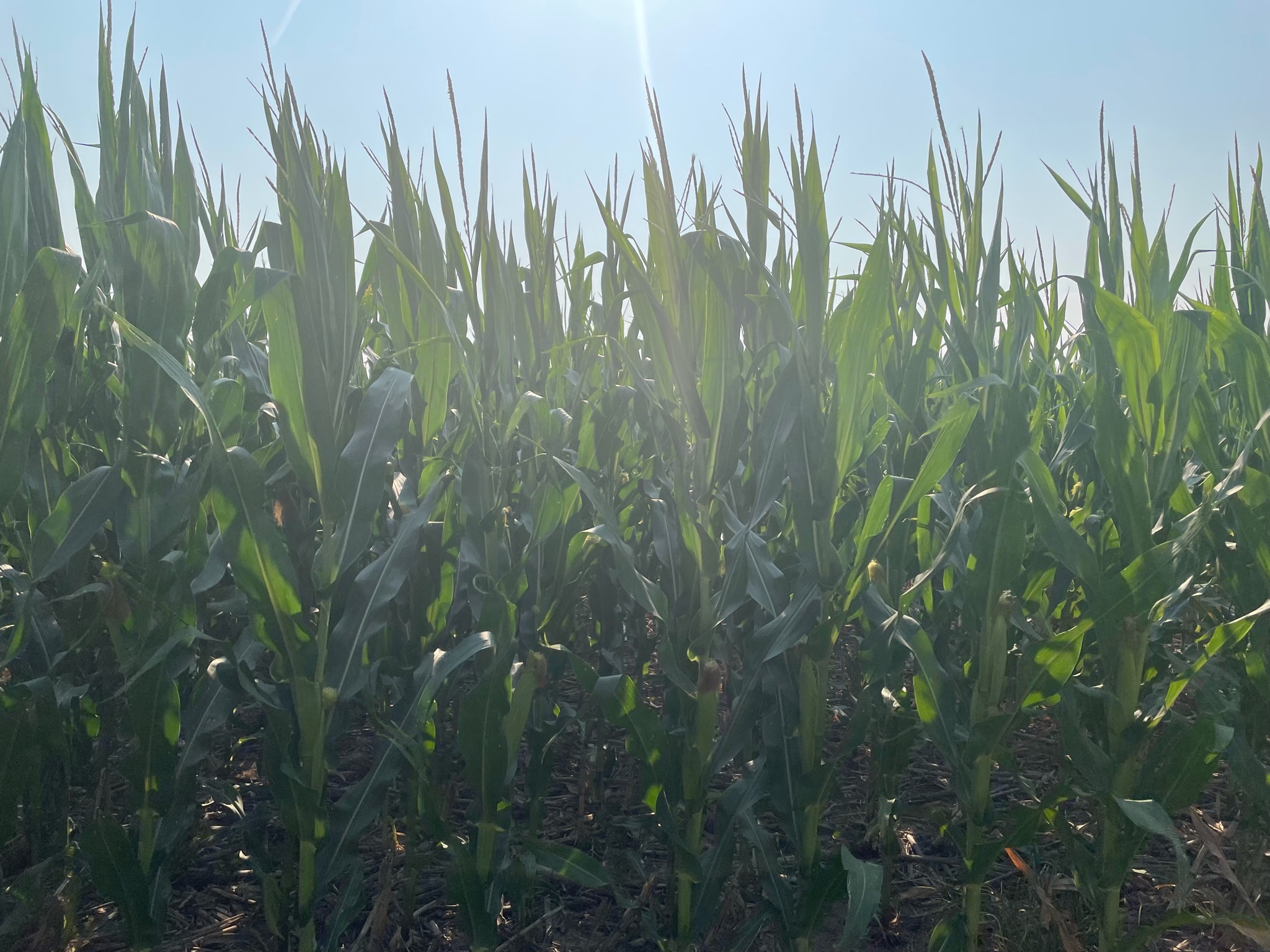
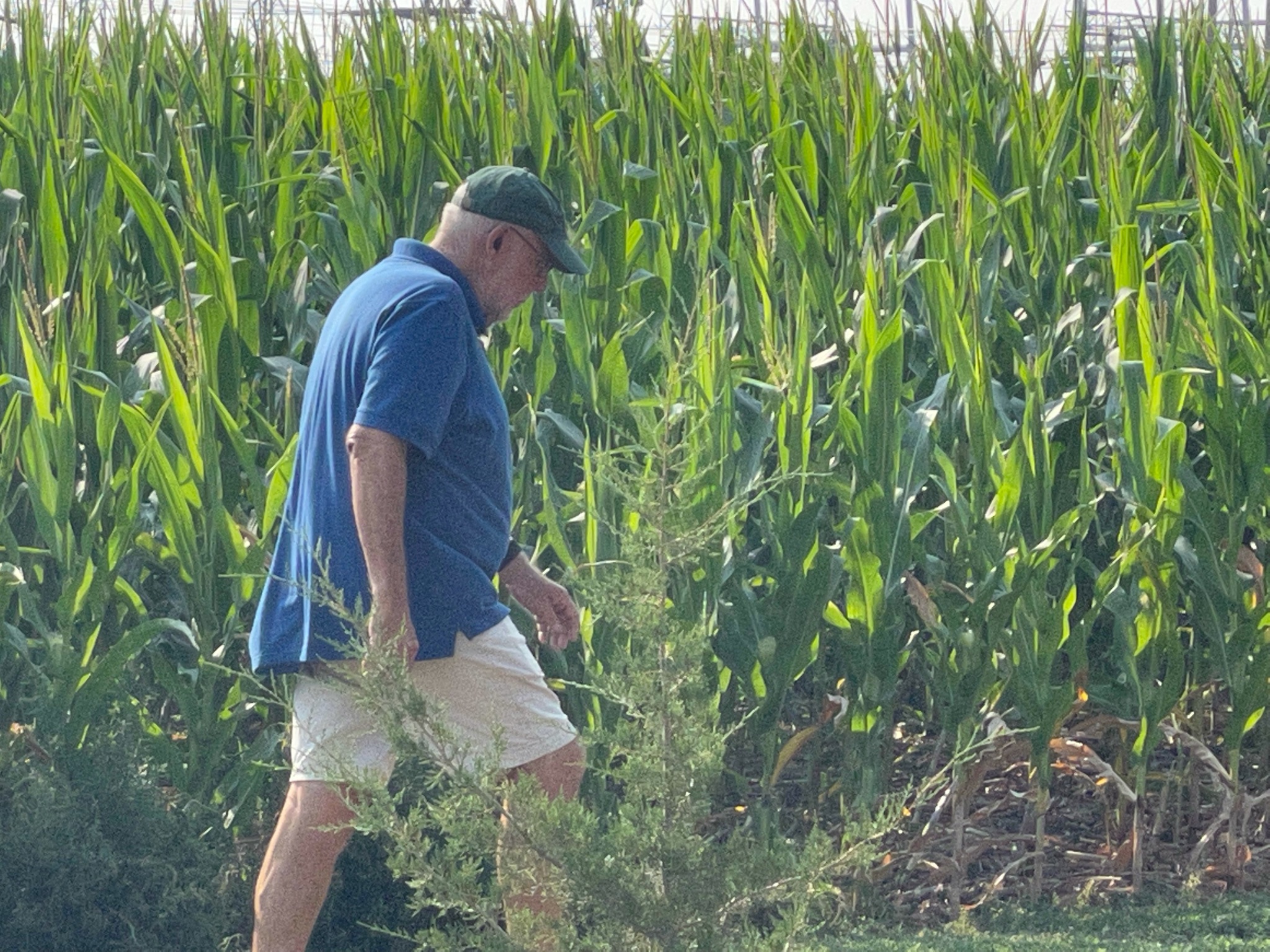
We started the day looking at corn. We;ve seen hundreds of cornfields in the past two weeks, but we had never looked at it up close…

We set out at about 9:45. We retraced some of the route from yesterday’s trip to Ash Hollow. We did see, for the first time on this trip, rectangular hay bales. These are not like the hay bales of my youth on the dairy – they are about the size of 8 of those old bales…

We crossed the North Platte River for the umpteenth time…

This image has an empty alt attribute; its file name is img_2209x.jpg

As we neared the town of Gering we could see some of the bluffs in the distance…

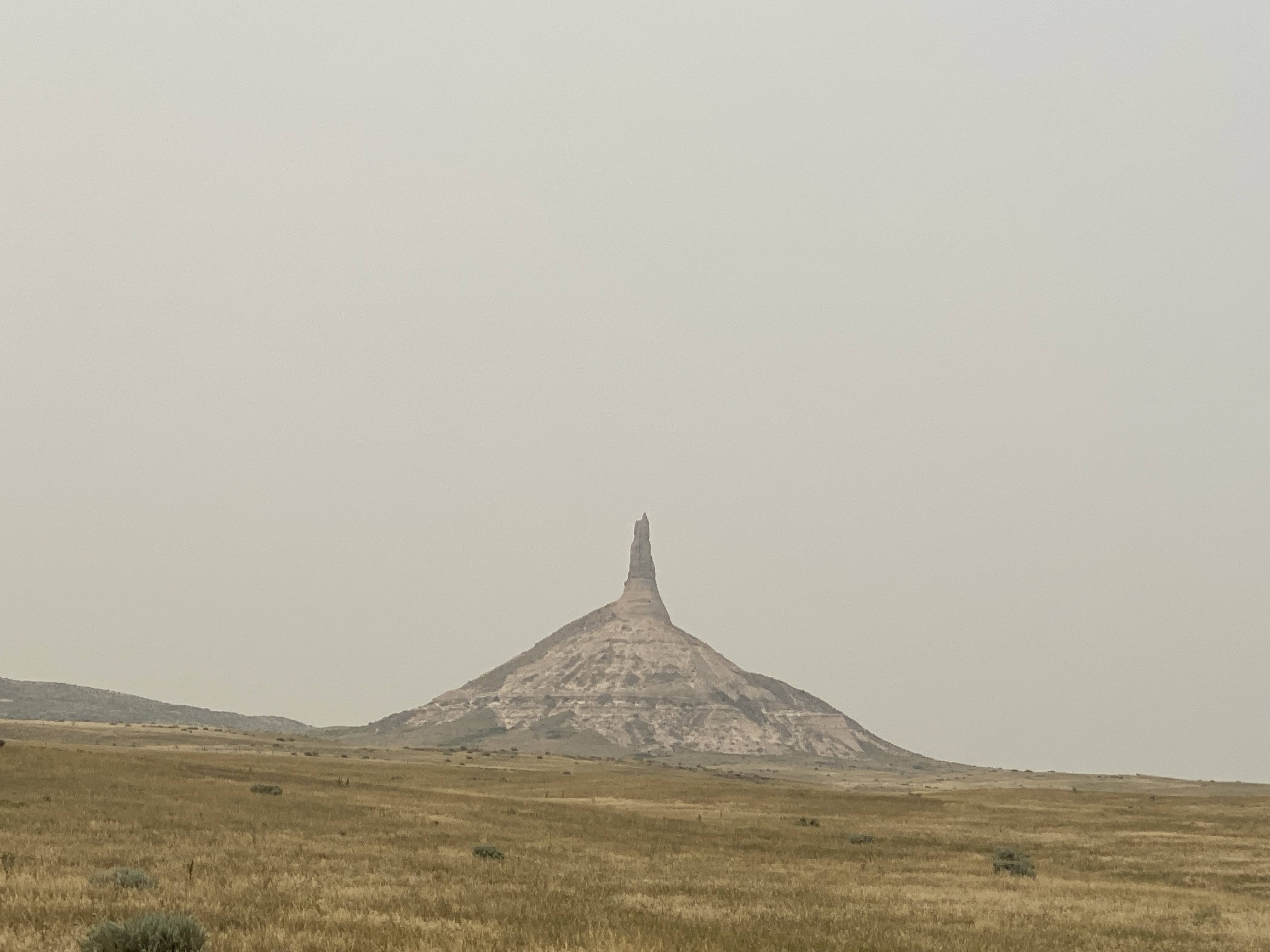
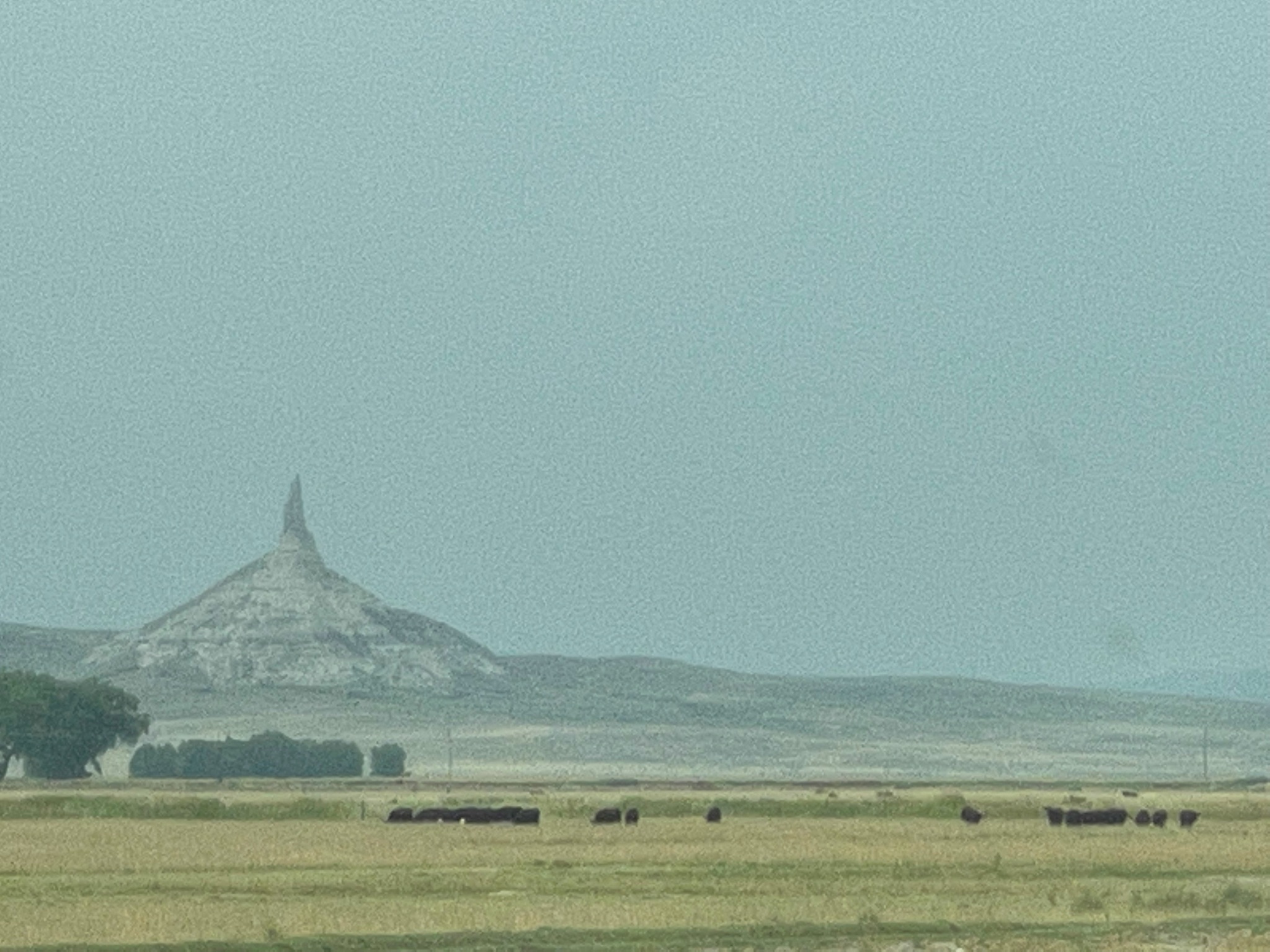
We could even see Chimney Rock, the famous landmark that all Oregon Trail emigrants mentioned in their diaries…

The reason for the terrible picture is that the skies are overcast with smoke from the Canadian fires (or, as they call them in Canada, fires..).

We turned off towards the town of Scottsbluff. We parked the Villa and found a good restaurant for lunch: The Tangles Tumbleweed.

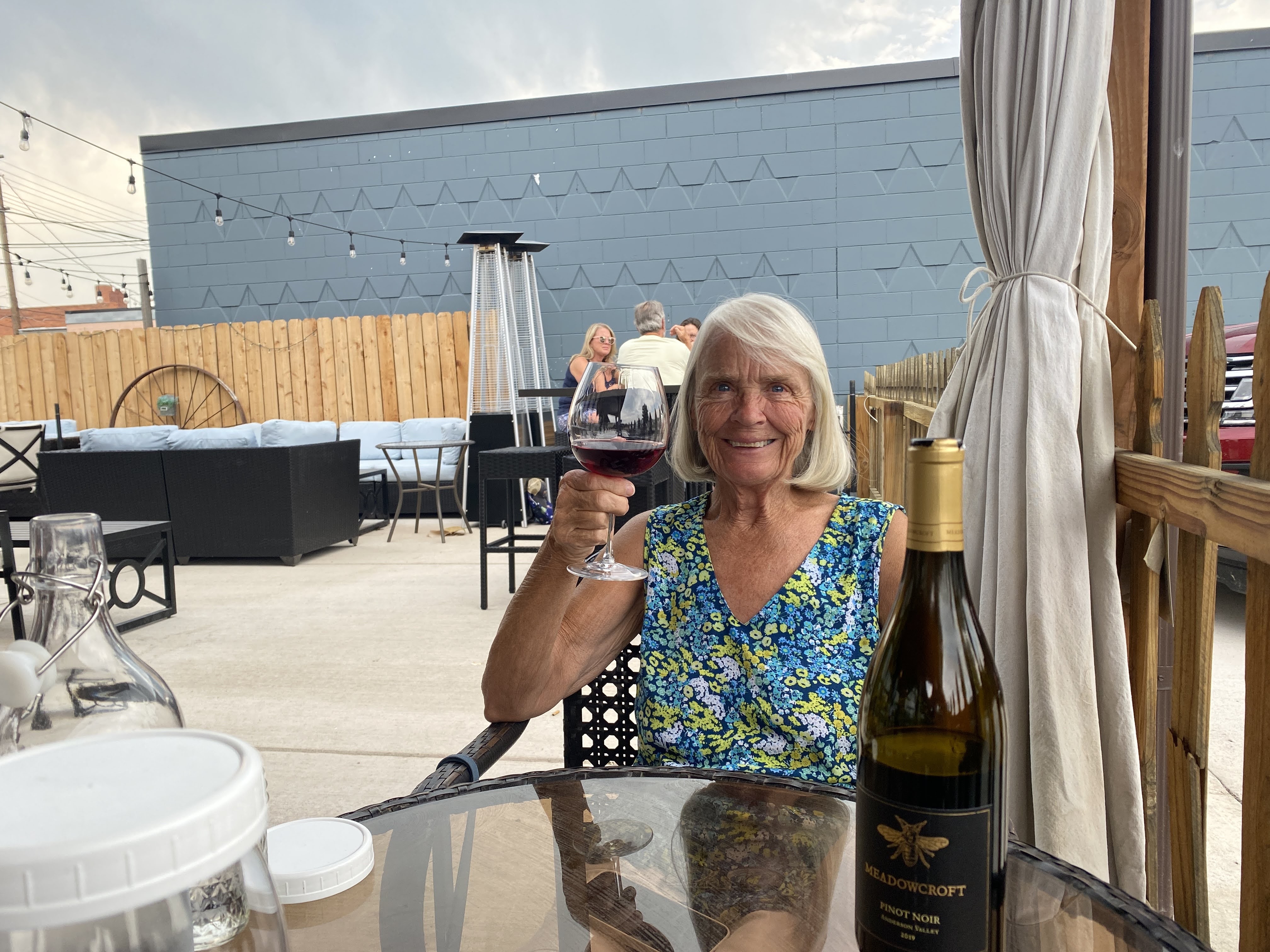
We ordered a bottle of Russian River Valley Pinot Noir, and Lynda was happy…

We enjoyed bacon wrapped dates stuffed with bleu cheese, and also duck wonton with a berry compote. Excellent food – we wished we could have ordered more. We have been surprised twice now in Nebraska with being able to find great lunch restaurants…

We headed towards the RV Park. We can see Scott’s Bluff to the west, still overcast with haze and smoke…

We parked the Villa and we are now all hooked up…

The RV Park has very large sites and lots of grass…

We settled down inside and started to think about happy hour when the wind started to blow. Hard. I went out to put down the awnings and I was caught in a deluge… We were hit with a huge thunderstorm! However, an hour later it had passed.

We were joined by another Airstream couple for Happy Hours. He brought a Vodka Gimlet for me to try. Tasty!

Our guests left, and we had a light supper. An enjoyable time was had by all…

2021-08-05 – The Oregon Trail caravan … Day 8 – Ogallala, NE

We awoke to a cool morning for the first time on this trip. Hot days can be handled better when it cools off at night…

Today we have an excursion to Ash Hollow State Historic Park, with a side trip along the way to “Windlass Hill”. As usual, we formed a pickup truck caravan and drove the 30 miles to Windlass Hill.

Windlass Hill was the location where the pioneers left the flat plains and traveled down to Ash Hollow, adjacent to the North Platte River. This route cut off about two weeks off the trip to Oregon. From 1835 to 1960 about 350,000 covered wagons passed through here, mostly in the months of May and June. If they were any later than very early July it would be unlikely they could make it through the Rocky Mountains before winter closed all the passes…

The name, Windlass Hill, is mostly apocryphal. There was no windlass here. (Maybe there should have been…) Due to the steepness of the grade, the wagons could easily travel at speeds that were not good for them or the livestock pulling the wagons. They were slowed by locking the wheels, which prevented the wheels from turning and increased friction. However, the “trail” down the hill was a 25 degree slope and the height was over 300′. Since the ground here is Nebraska Sandhill, today we don’t see “ruts”, but “swales”. As the wagon wheels tore into the grass and sand ruts were made; however, over time, with rain and erosion, today these areas have become “swales”. These swales are visible today.

We parked our trucks and walked over to listen to the Ranger tell us what we were seeing…

Here is what some of the smaller swales look like today…

There was a paved trail that we could walk up the 300′ to the top…

The official marker…

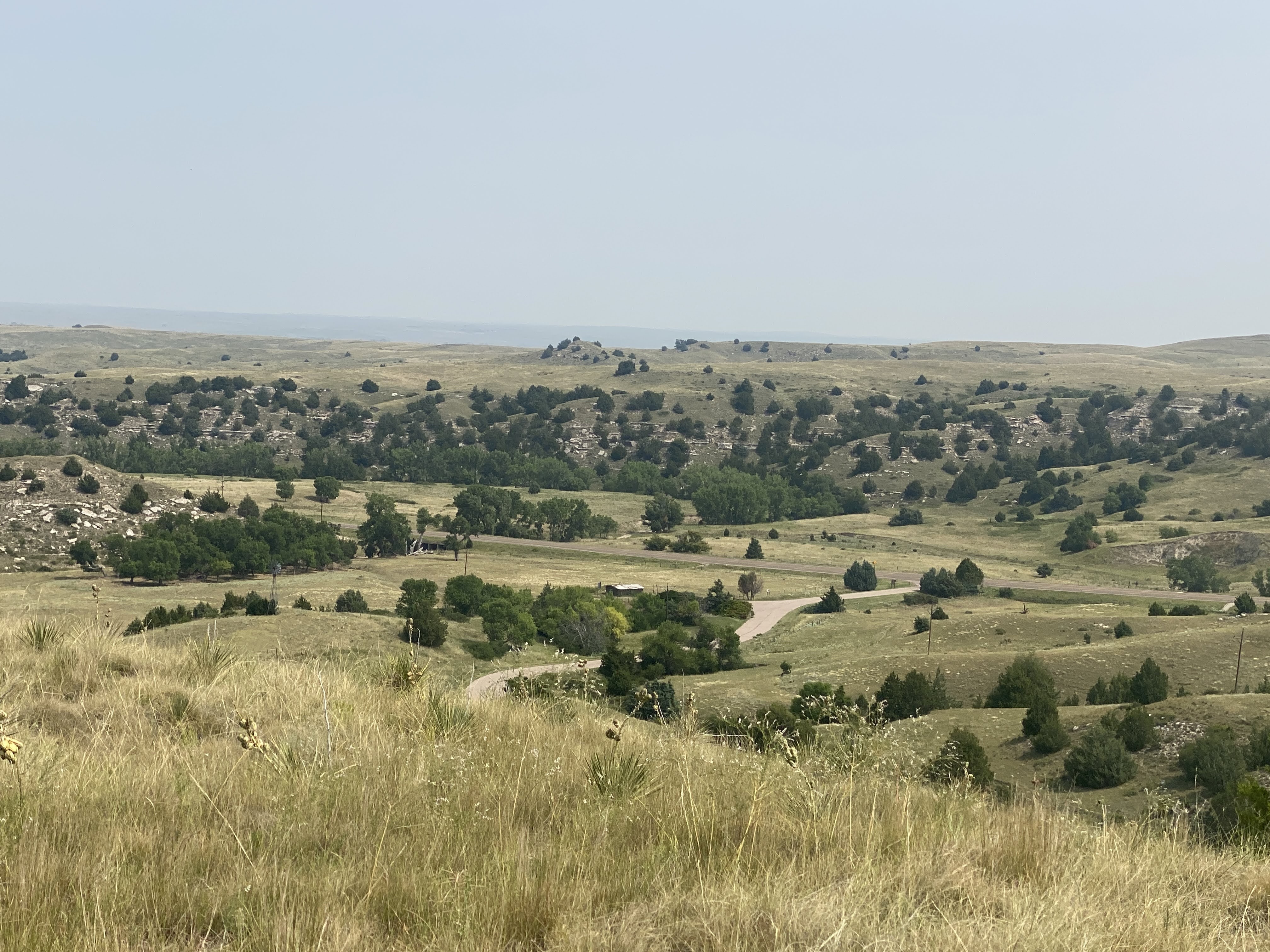
The view down towards Ash Hollow, and our parked trucks…

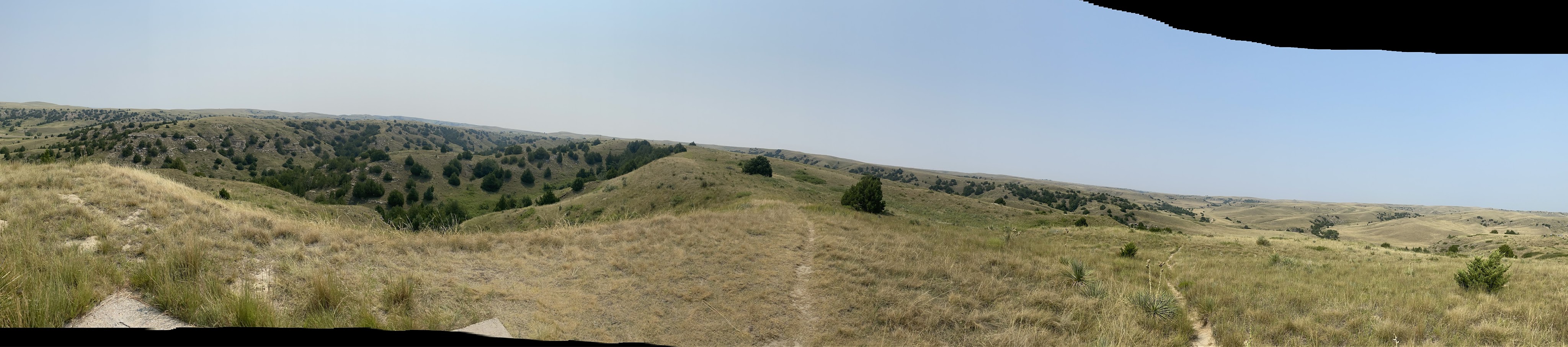
A panoramic photo from the top of Windlass Hill…

This is what the pioneers saw from the top. Remember, though, there were no trees in 1950, and the river was visible. This was the first good camping spot that they had seen for weeks. This entire valley was crowded with covered wagons; they stayed 2-3 days, collecting water, game, maybe some buffalo chips…

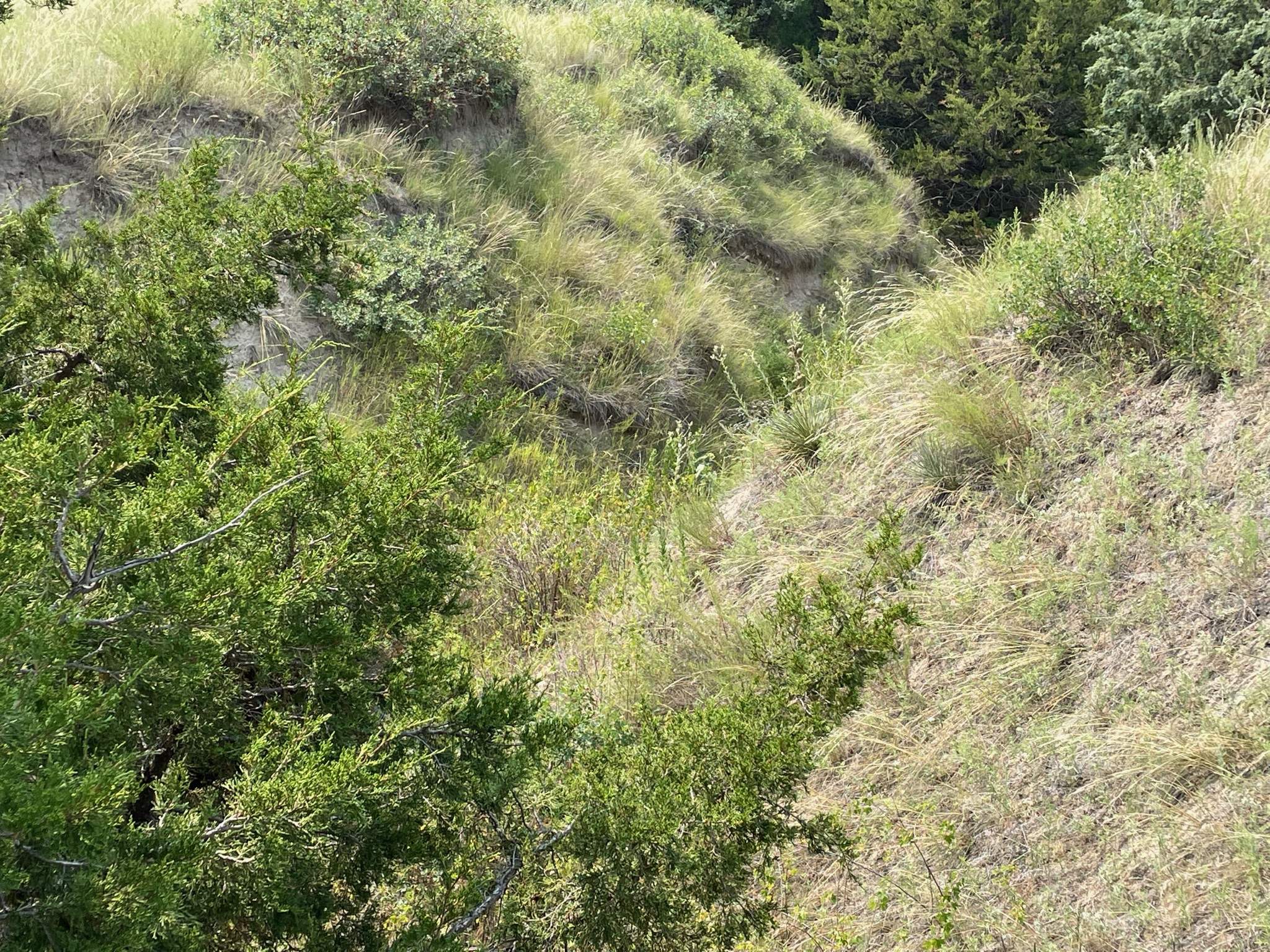
Here you can see more dramatically how the swales have now eroded into full blown ravines…

As different paths down the hill became more eroded and unpassable the pioneers found new routes. These exhibits in the Ash Hollow Visitor Center show the several routes…

After our brief time in the Visitors Center we traveled on around the park. This is a stone school house. It was built in the late 1800s to replace a sod schoolhouse. It was in use into the early 1900s…

We drove down to this valley to hear more information from the ranger…

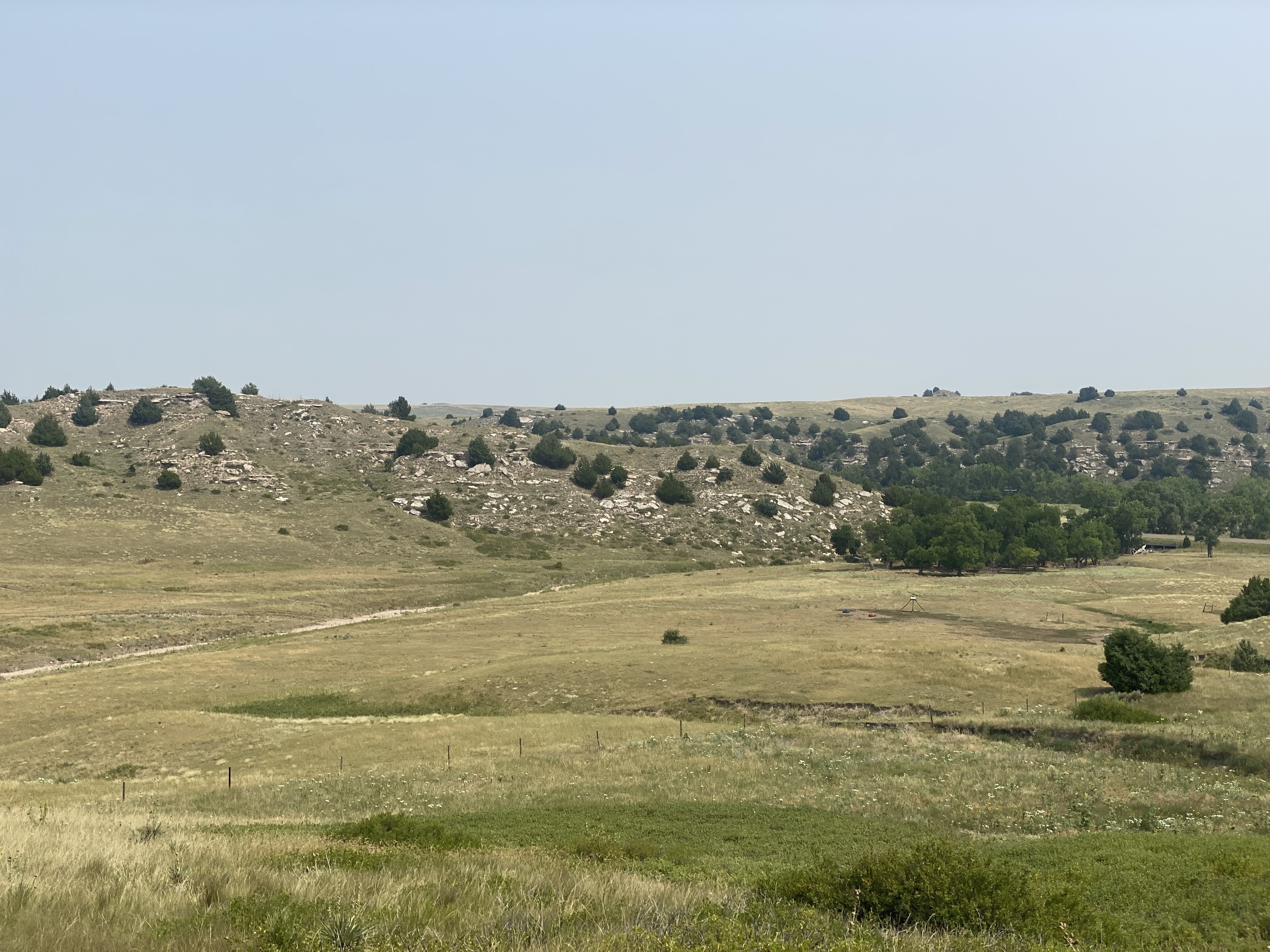
From this valley we can see the sandstone and shale in the hills above.

The pond beyond was part of a series of springs that, in the winter and spring, form a stream that flows down to the North Platte River… This valley would be crowded with covered wagons in the spring…

That was all for the Ash Hollow excursion. We returned to the Villa and had a little lunch. At 5:00 we drove the short distance into Ogallala to visit the Petrified Wood Museum. We saw many interesting specimens of petrified wood and other mineral formations. Dinner was catered by Ole’s Big Game Steakhouse and Lounge in nearby Paxton. I don’t think we ate any big game, but the food was reasonably good…

We had a driver meeting after dinner. Tomorrow we move about 130 miles to Gering, NE, a short distance from Scottsbluff, another landmark on the Oregon Trail. We returned to the Villa. We shared a bottle of wine with caravan friends…

And an enjoyable time was had by all…

Blog at WordPress.com.

Up ↑