Search

Adventures in the Villa

Category

Architecture

2019-05-03 – Airstream Caravan Travels – Springtime in Kentucky; Moving On – Day #9

Today we move from Bardstown to Lexington.  In the rain…  We began with a drivers meeting.  In the rain…

img_2435img_2436

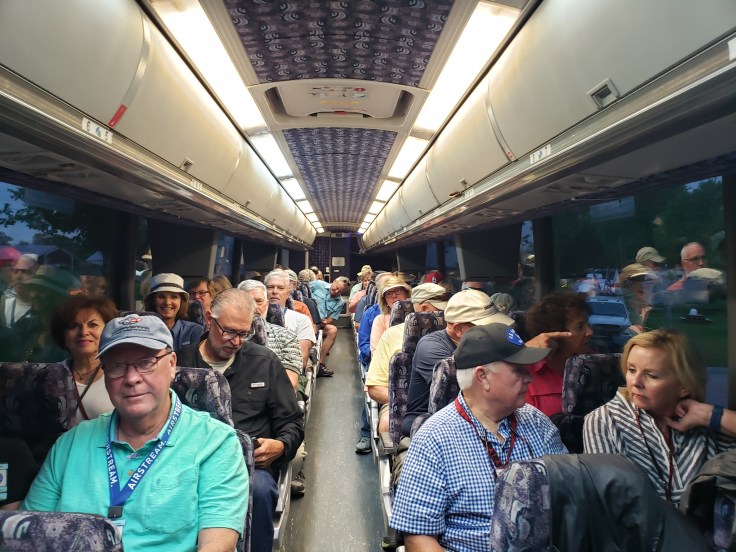
We hitched up in the rain and we drove in the rain.  We even stopped along the way in the rain…

img_2437

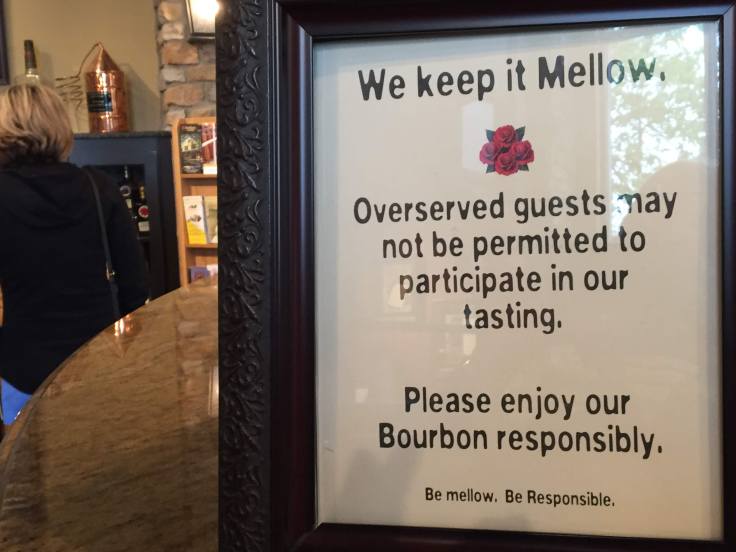
We appreciated their attitude…

img_8356

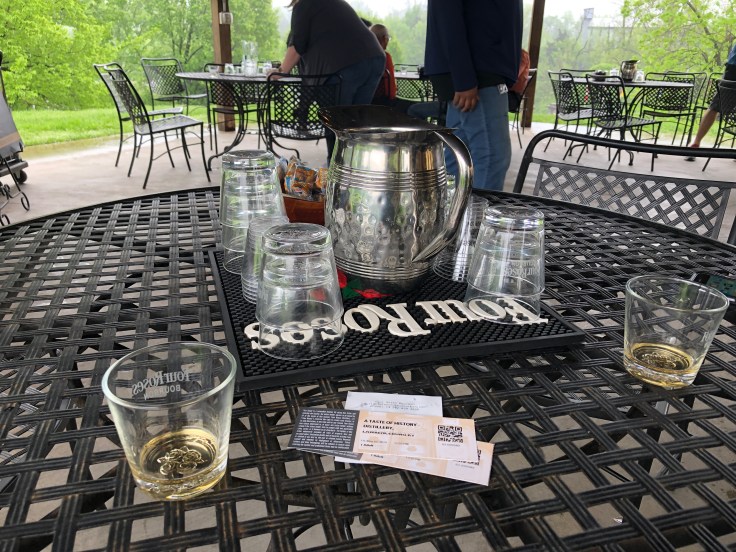
We were able to do a tasting on the outside gazebo.  Did I mention it was raining?

img_8357img_2438img_2439

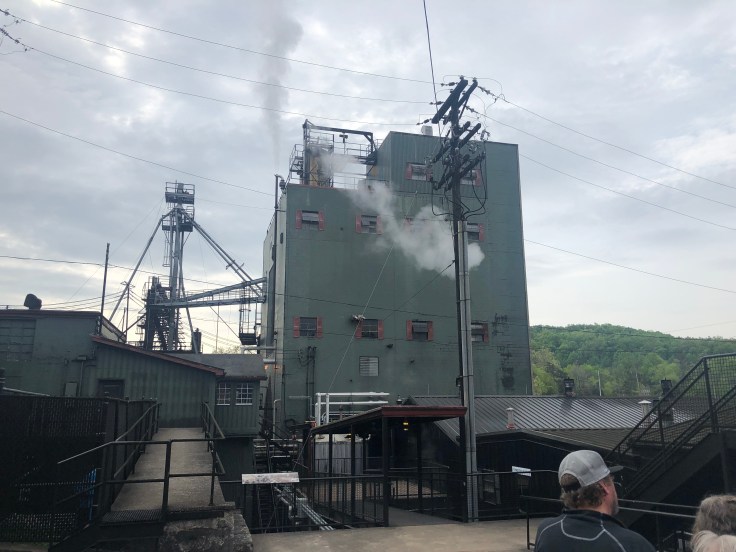
It was very interesting.  I doubt that I had ever tasted much Four Roses, but I had read a little about their process, so we were eager to find out what it was all about…

Our tasting guide told us about the history of Four Roses;  she told us that the founder was Paul Jones, Jr.  The brand name was trademarked in 1888 by Jones, who claimed it had been produced and sold as early as the 1860s.  The Lawrenceburg, Kentucky, distillery was built in 1910 in Spanish Mission-style architecture, where we are today, and is listed on the National Register of Historic Places.

The brand was purchased by Seagram in 1943.  It was the top selling brand of bourbon in the United States in the 1930s, 1940s and early 1950s.  Around the end of the 1950s, with the rising popularity of gin and vodka, Seagram decided to discontinue the sale of Four Roses Bourbon within the United States.  Four Roses Kentucky Straight Bourbon marketing was shifted to Europe and Asia, which were rapidly growing markets at the time.  In these markets it quickly became the top selling bourbon.  In the United States, during this period, the Four Roses name was used on a blended whiskey, made mostly of neutral grain spirits and commonly seen as a sub-par “rotgut” brand.  Four Roses continued to be unavailable as a straight bourbon in the US market for more than forty years until the brand ownership changed in 2002 after Seagram was purchased by Vivendi, who then sold most of their brands to Diageo, which sold the Four Roses brand to Kirin, who discontinued the sale of the “rotgut” blended whiskey; Kirin reintroduced  Four Roses Kentucky Straight Bourbon Whiskey to the US market.  And here we are today.

Four Roses uses two different mash bills, using about 60% corn and up to 35% rye, a very high percentage.  They also ferment the mash separately using five different yeasts; each yeast gives off a different aroma and flavor – spicy, herbal, floral, and fruity.  So they end up with barrels containing 10 different bourbons.  Another thing that Four Roses does differently than the other distilleries is how they age their barrels of whiskey:  Their barrel houses are one story only, 6 barrels high.  (Other distilleries have 7 story barrel houses, with each story having three barrels high; So the difference is between 6 barrels tall and 21 barrels tall.  Four Roses claims they get better, more consistent aging using this configuration…

Their main product, Kentucky Straight Bourbon, uses all 10 recipes;  we tasted it and were not very impressed, but it wasn’t bad.

We then tasted the Small Batch Bourbon; it uses four of the recipes blended to get their particular taste profile.  It was quite good, with a nice sweet nose and a smooth finish.

The third taste we had was their premium bottling, Small Batch Select, which uses six of the recipes.  Maybe it was us, or the rain, or whatever, but it did not impress us at all.

They also make a single barrel bourbon, which we did not taste…

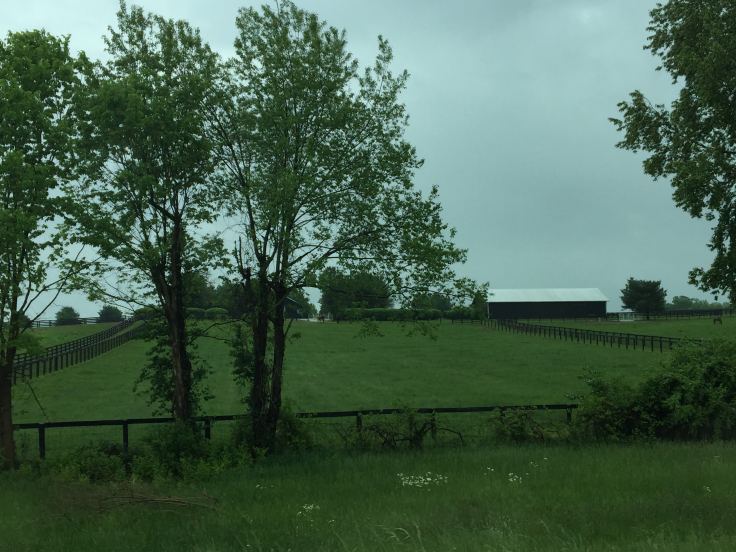
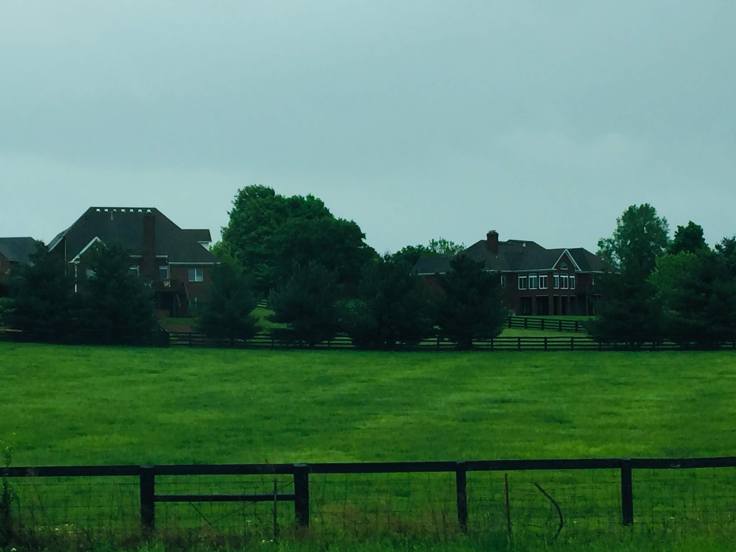
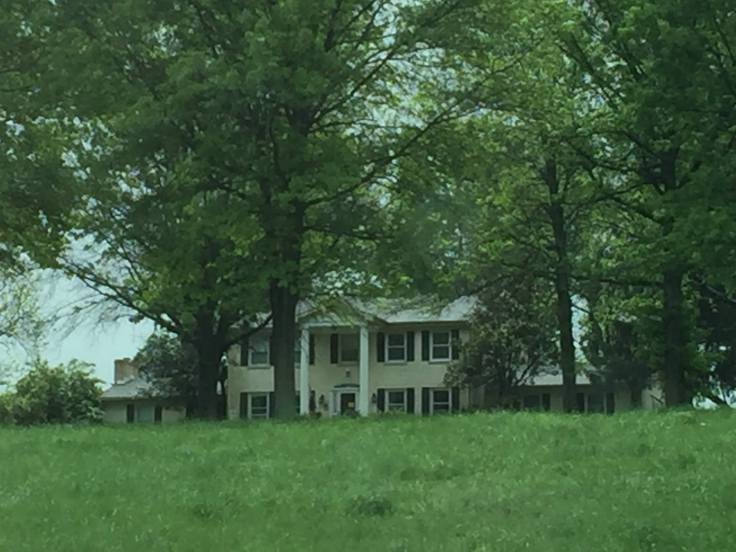
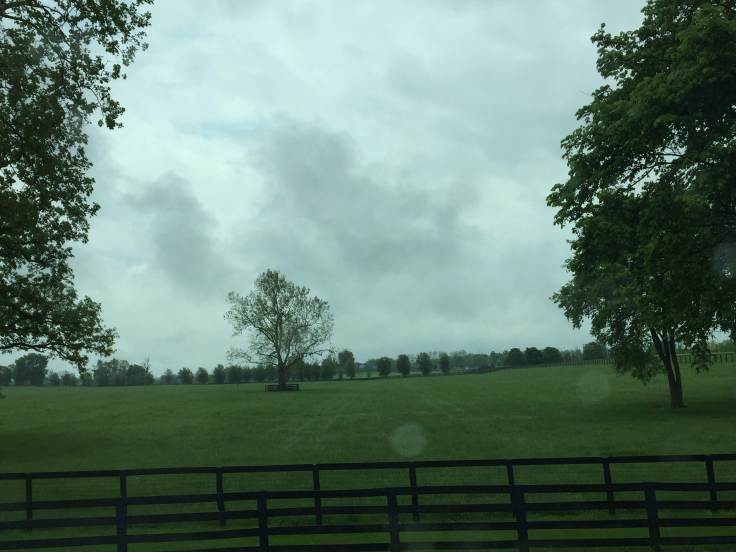
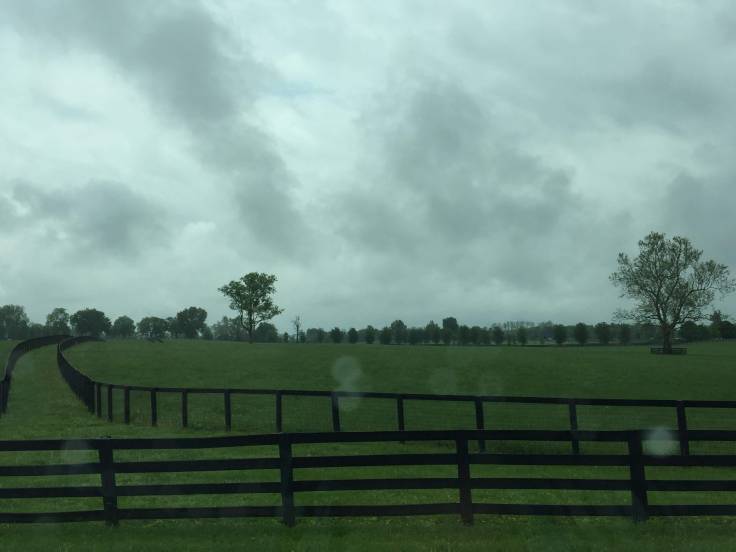
So we learned a lot and we continued our journey… We are now in the Lexington area, all green horse pastures, trees, and stately houses – Kentucky Bluegrass!

img_8361img_8362img_8367img_8369img_8370img_8371

Our campground is at the Kentucky Horse Park, a huge complex with a huge museum, displays, and everything horse.  We will tour here is a few days…

GRP_0356

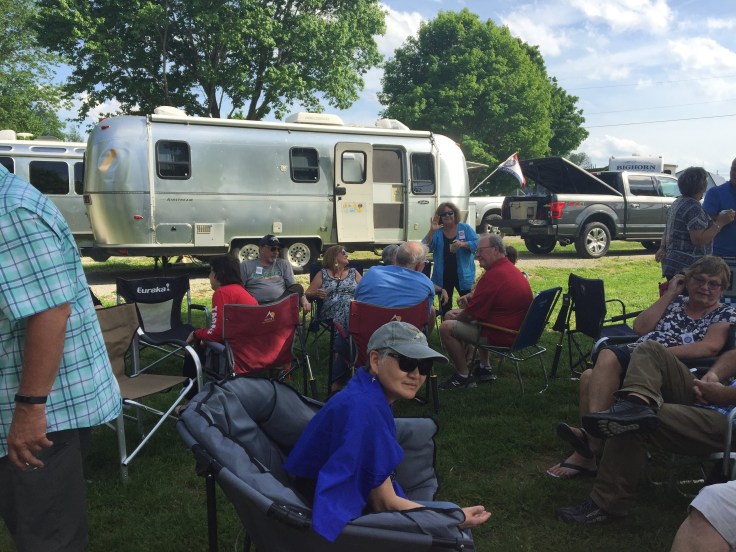
The caravaners were busy at work setting up their Airstreams.  It finally stopped raining…

img_8372img_2446

img_2449

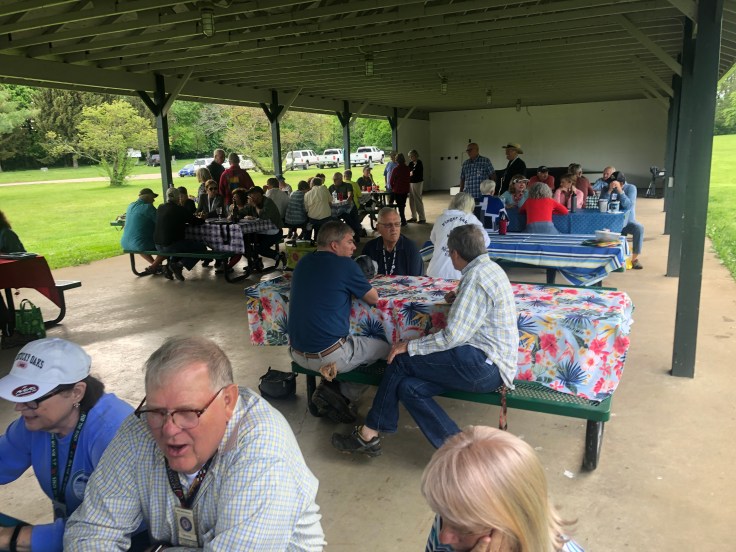
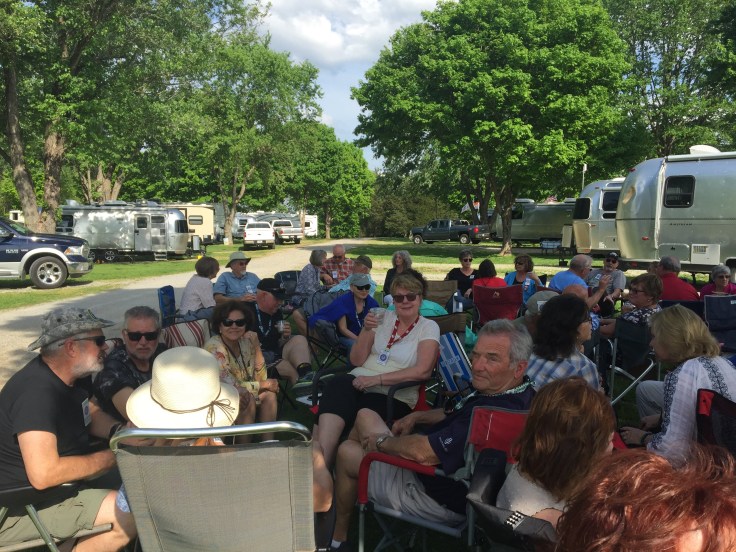
Also joining us at this campground, and at our Kentucky Derby party tomorrow, is the local Kentucky Airstream Club.  They joined us for a pizza dinner in the Pavilion…

img_2445img_2444

We walked the park a little bit.  Lynda did some Laundry and I attended to some computer business.  We were tired, and turned in early…

And an enjoyable time was had by all…

2019-05-02 – Airstream Caravan Travels – Springtime in Kentucky; Louisville and their Slugger! – Day #8

Once again we boarded the bus…

GRP_026220190501_065357

Soon we found ourselves in Louisville.

img_2427

Our first stop is at the Louisville Slugger factory.  But first, we once again attempted a group photo…

img_2393

And a selfie..

img_2391

And the final shot:

GRP_0277

The giant bat does dominate the skyline in this historic section on downtown Louisville…

img_2397

Inside we reviewed the current major league standings; how ’bout them Dodgers!

img_2398

The Louisville Slugger is made by Hillerich &  and Bradsby & Co.  They used to make butter churns, but they found that making bats is a more profitable business…

They have many bats that have been used in MLB games;  Lynda tried out the bats of current Dodgers Cory Bellinger and Justin Turner…  She also took a photo with Jackie Robinson…

img_8314img_2405img_2401img_2402

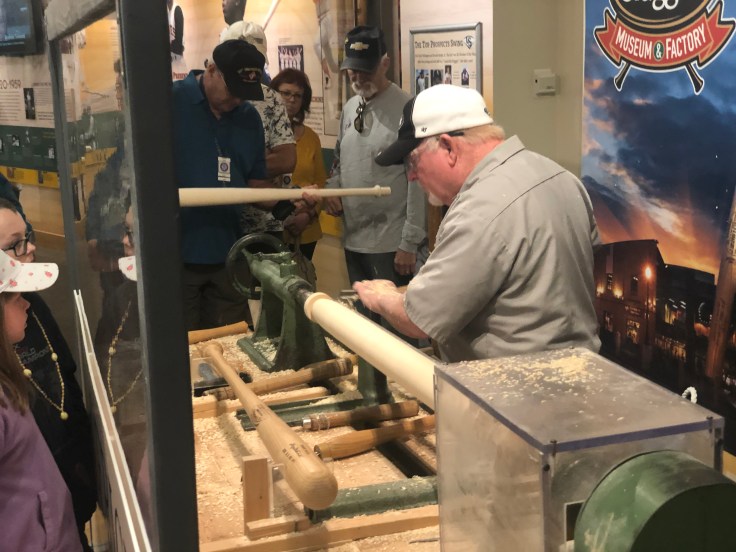
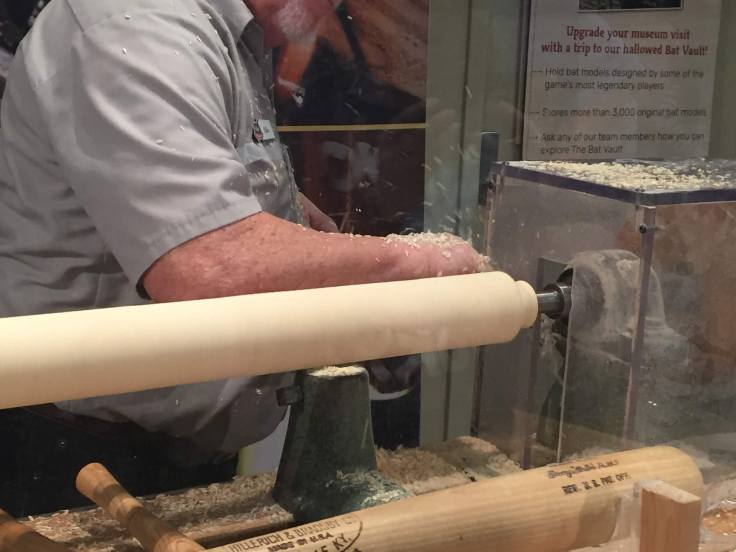
We watched a master bat maker working at his lathe making a bat.  It takes him about 30 minutes to make a bat, using the model bat as a template and hand-measuring every aspect of the new bat with a set of calipers to make sure it is an exact replica…

img_2407img_8315

(By the way, it takes 30 seconds for the CNC controlled lathes in the factory to make a bat, which is an exact replica of the specs that are programmed into the computer…)

The museum even has bats in its belfry…

img_2408

We enjoyed the tour (sorry, no photos…).

They use trees from western New York and eastern Pennsylvania; their trees are in sustainable forests, and most trees selected for bat-making are about 65 years old.  Bats are made mostly of maple, but also birch and ash.  They maintain 3,000 different bat designs.  Pros usually order 80-100 bats per player per season, to the tune of about $80 each.  Retail bats, and bats made for minor league baseball are cheaper…

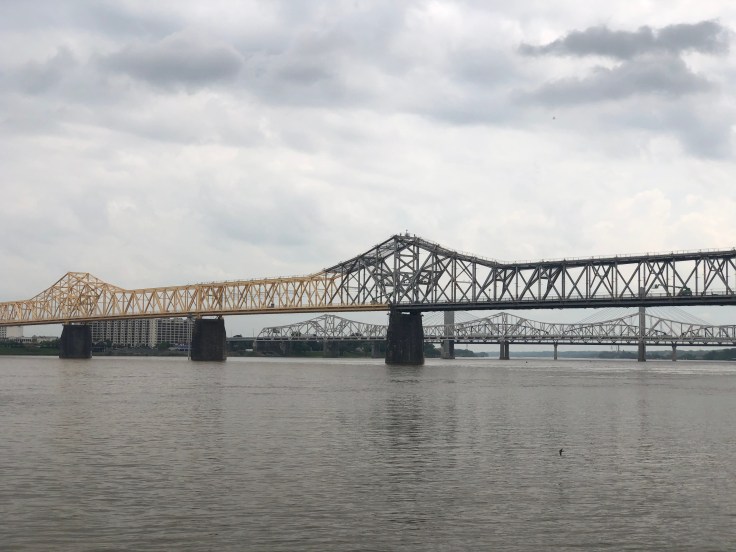
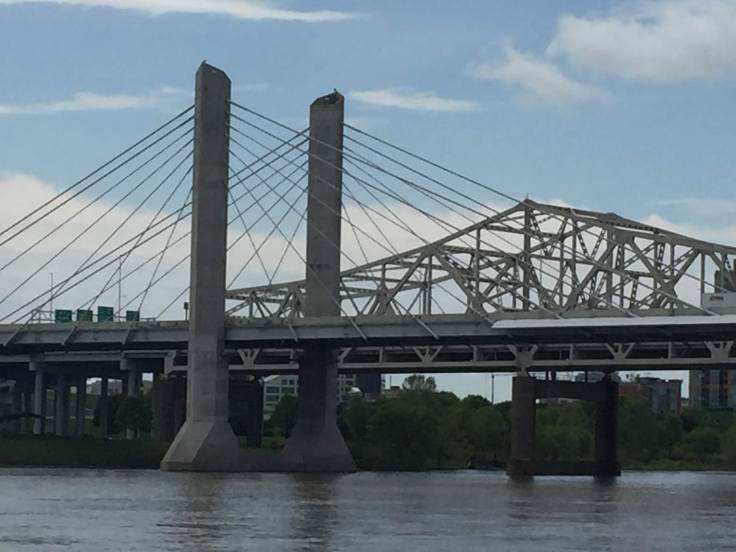
Next on our agenda today is a river cruise up the Ohio River; Indiana is across the river at this point.

img_2416img_2417

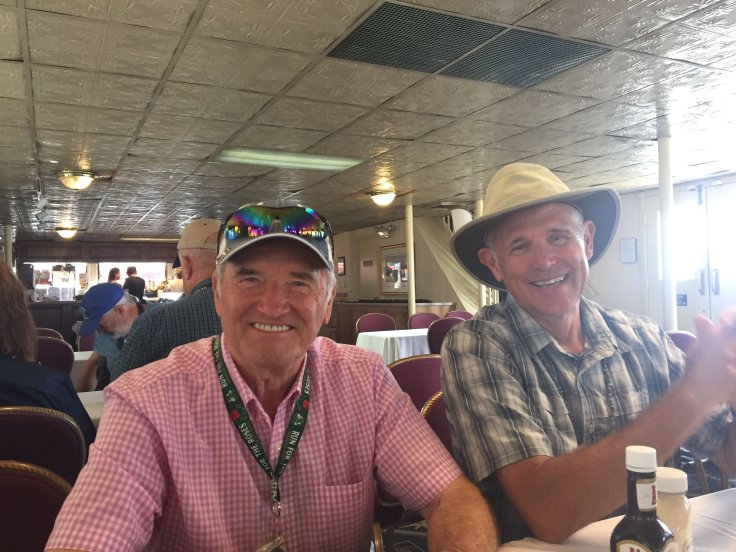
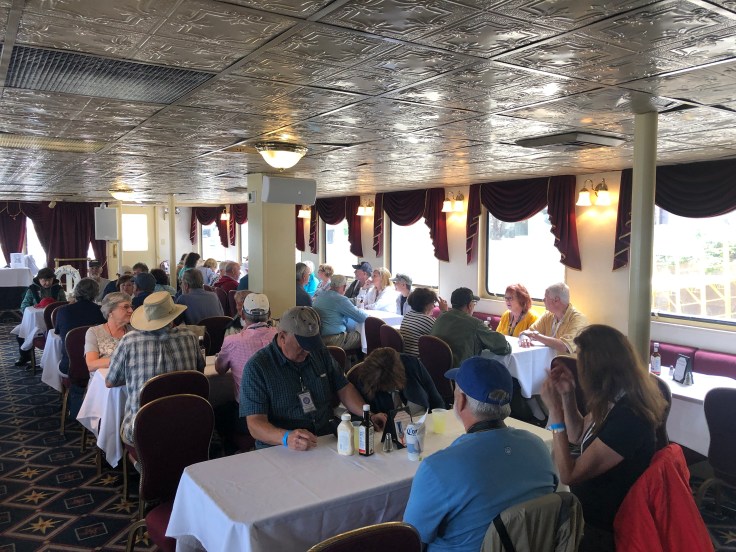
We assembled for the lunch buffet on the lower, enclosed deck, out of the rain…

img_8324img_2418img_2419

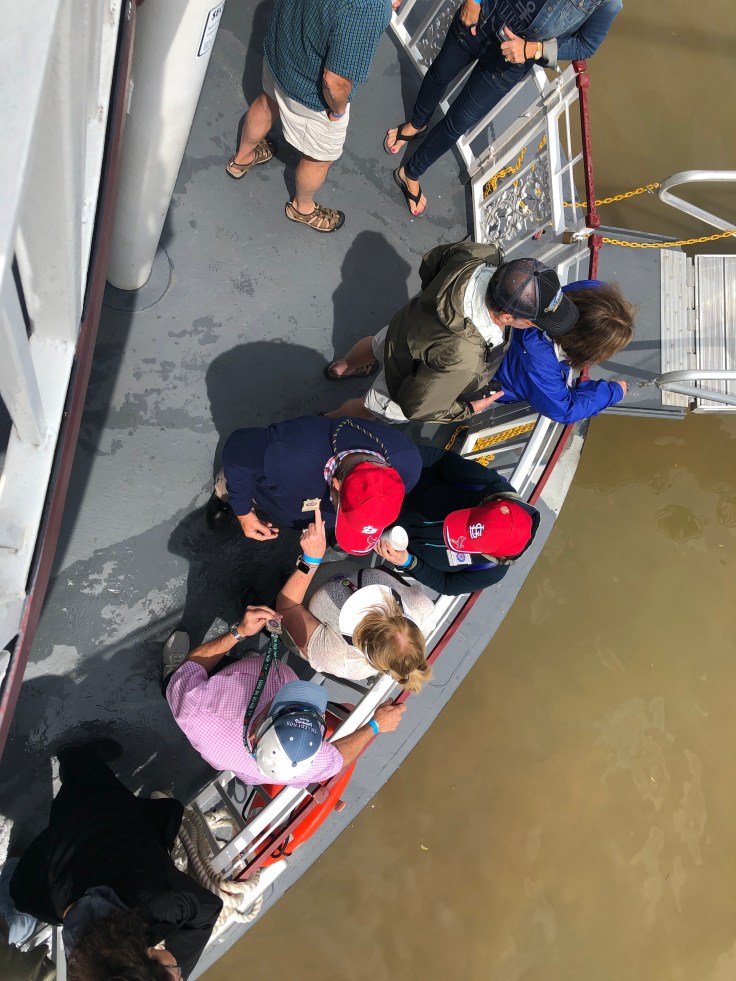
Once underway the rain slowed and we could walk around the boat and see the sights…

img_2423img_8332

The water is quite high this time of the year…

img_8333img_8334img_2424img_8343img_8345img_8348img_8349img_8351

It was a nice boat ride.  Who doesn’t like boat rides?

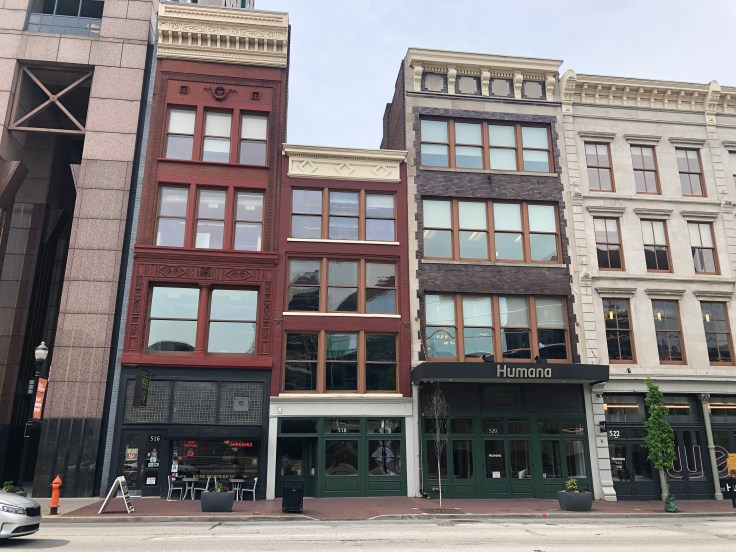
Next we walked around downtown Louisville.  We are in the historic downtown, adjacent to the main financial district…  Lots of historical storefronts…

img_8305img_8306img_8307img_2415

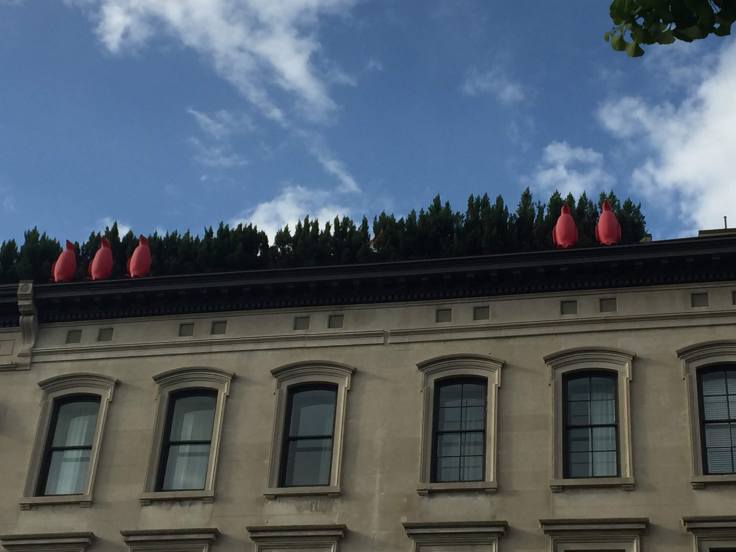
Here is an area where the old buildings have been torn down, but the facades have been saved.  We also saw this with new, modern buildings built behind the historic facades.  Very nice!

img_2409img_2410img_2411img_2412

There are some Bourbon tasting rooms here, but we didn’t have time…

img_2429img_2430

We spent about an hour in the Frazier Museum…

We returned on the bus, and once again turned in early…

And an enjoyable time was had by all…

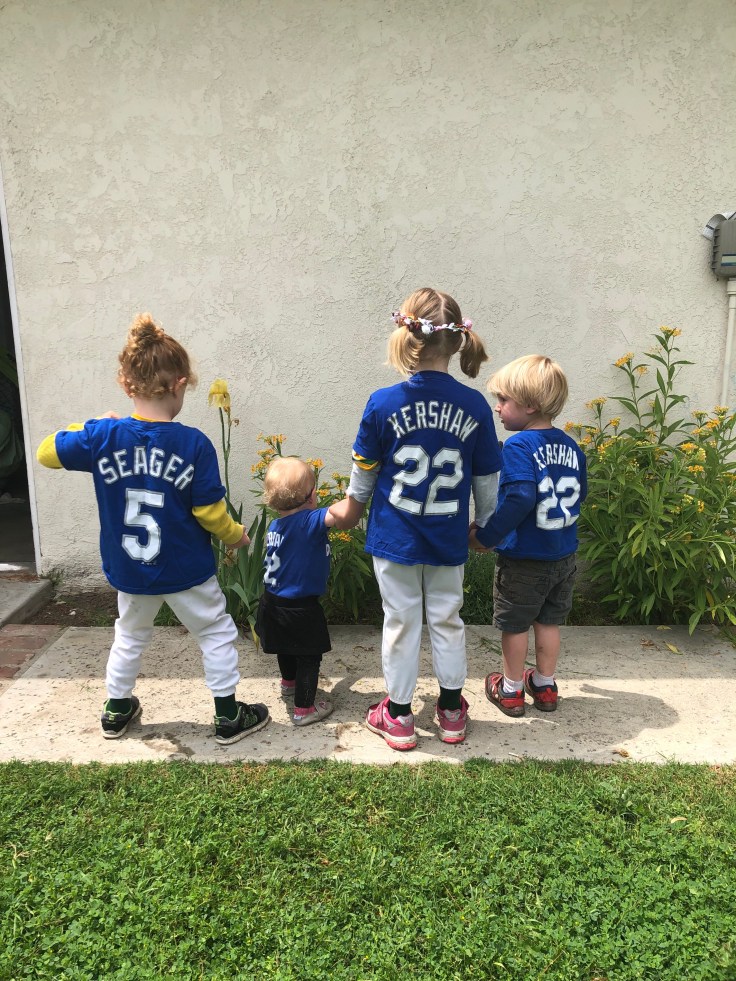
And in the spirit of all things baseball, I present the McAnoy children…

img_0238img_0236

2019-04-30 – Airstream Caravan Travels – Springtime in Kentucky; Bardstown, KY; My Old Kentucky Home and Bourbon – Day #6

This morning we left early for our appointment at Jim Beam for our tour.

img_2313

Again the tour was pretty typical.  Jim Beam is arguable the largest producer of bourbon in the world and is distributed all over the world.  Their brands include not only Jim Beam, but Knob Creek, Basil Hayden’s, Baker’s, and Booker’s… It is a huge industrial plant, all controlled by computers and other machines.  Once the fermented mash is pumped into the still it takes about 90 seconds for one barrel of whiskey to be produced.  Also, we learned that Jim Beam and their other bourbons are about 70% corn, plus rye and malted barley.  (Remember, Makers Mark uses wheat in lieu of rye…)

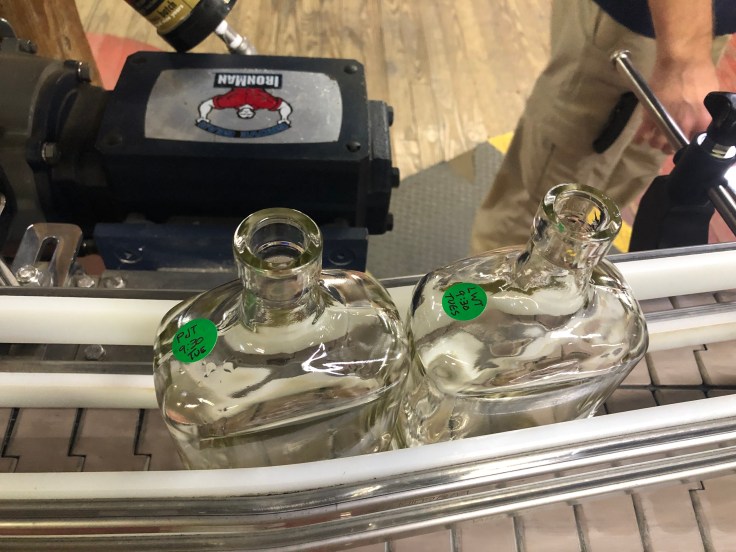
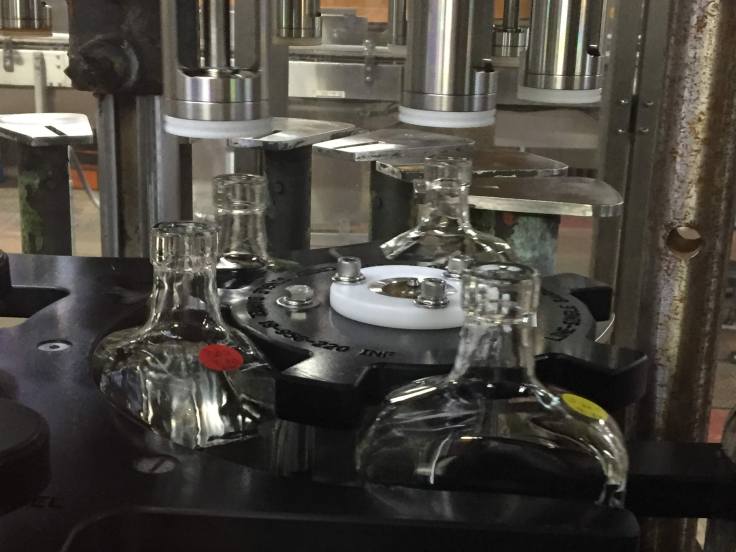
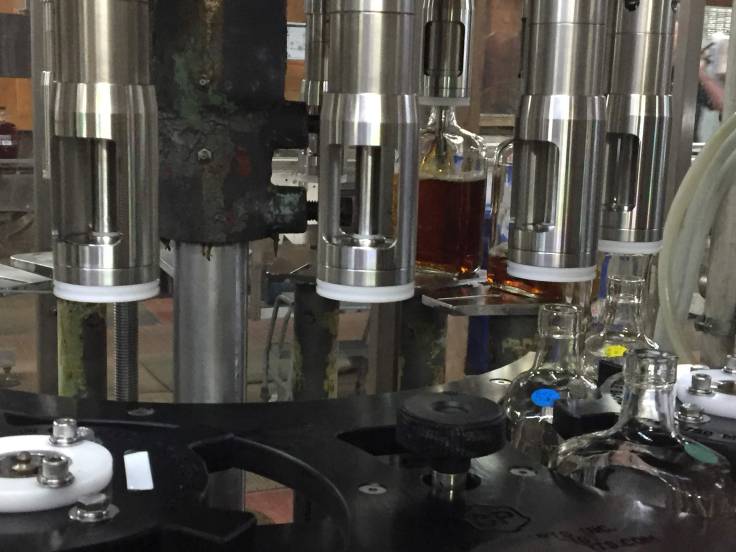
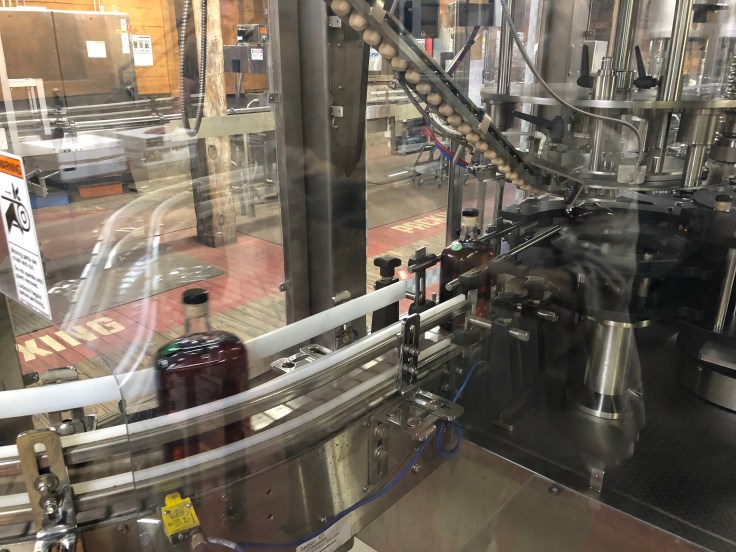
One VERY fun thing we did is fill our own bottle of Knob Creek Single Barrel Bourbon.  We started by rinsing a bottle (with Knob Creek Single Barrel Bourbon), then putting our initials on the bottle, and setting the bottle on the bottling line…

img_8198img_2314img_2315img_8199img_8200img_8201img_8203img_8204img_8205img_8206img_2323img_8208img_2324img_2325img_2331img_2332

The final product:

img_2345

We dipped the bottle into the wax (twice) then once again just enough to allow us to put our thumbprint on our bottle…!

img_2346

This was a unique experience for us!

We asked why the barrel Houses are black.  The tour guide denied that the barrel houses have mold.  She claimed they were painted black out of tradition, but they also have them in all colors… Also, they do not rotate barrels like Makers Mark does – they select 1,000 barrels from various locations in the barrel house to blend and bottle…

img_2334

At the tasting our guide selected for us the Single Barrel Knob Creek and Jim Beam Black.  Lynda selected Baker’s and I selected the Jim Beam Devil’s Cut for our third choice.

As most of you know, Angels’ Share is the term distillers use for the bourbon that evaporates from the barrels while they are aging.  After 5-6 years a 53 gallon barrel will contain only 35 gallons (at best) of bourbon; the rest has evaporated and is called Angels’ Share.  But the bourbon also soaks into the barrel staves; to make Devil’s Cut they empty out the barrel, add distilled water, and put the barrel in a shaker for several hours.  The water, after absorbing the bourbon from the wood, is added back to the bourbon to reach the final proof.  It was excellent! Very rich and smooth!

We also learned what makes their super-premium bourbons special:

Basil Hayden’s has a high percentage of rye and a unique aging process; Baker’s is aged at least 7 years; and Booker’s, always my favorite, is always made at barrel strength (about 115 proof); what sets it apart is that the barrels are taken from special areas (on the 5th and 6th floors) of select barrel houses, where the aging is known to be extra special…

img_8213img_8214img_8215

This was Booker Noe’s house; he was the last of the family to live on the property…

img_2335

Next on the day’s agenda was a visit to “My Old Kentucky Home”.  It is actually called Federal Hill, and it was the home of three generations of the Rowan family from 1795 to 1922.

img_8217img_2339

The grounds are beautiful.  No interior photos were allowed…

img_8218img_8221

Worse house tour ever.  The house was very grand and elegant, similar to plantation houses we saw in Louisiana, but the colors and patterns of wallpaper and carpets were from the Victorian period and they hurt my eyes… We heard almost nothing about features of the house, but just an hour’s worth of family history and gossip.  Sorry, not my thing.

The park is named “My Old Kentucky Home” after the song of the same title by Stephen Foster, who was a close friend of the Rowan family.  It is the Kentucky State Song and is sung at ALL civic events in Kentucky, including sports games, political rallies, and, of course, the Kentucky Derby.  Everyone in Kentucky LOVES this song.

Ironically, the song is NOT about the joys and beauty of Kentucky; the song tells of the hardships of slaves, and all about the difficult lives they had, and heartbreak of being sold to an unknown owner.  It was used by abolitionists like Frederick Douglas in their anti-slavery work.  It seems odd that most Kentuckians seem to think it is all about the loveliness of their state, when it is telling the dark history of the state and our country…

We escaped as quickly as we could, and drove to Heaven Hill Distillery, named after Mr. Heavenhill, who owned some adjacent land that once held a distillery before prohibition.

img_2340

Never heard of Heaven Hill?  Maybe you have heard of some of their brands:

img_2341

Larceny, Elijah Craig, Evan Williams, McKenna, Rittenhouse…???

Heaven Hill is the largest independent, family owned distillery in the country.  ALL other large distilleries are owned by the multi-national holding companies like Brown-Forman, Constellation Brands, Diageo, Fortune Brands (Suntory), etc.  Heaven Hill is still owned by the descendants of its founders, the five Shapiro brothers.  Interestingly, Earl Beam, of the Jim Beam family, was the first master distiller, and there have been MANY Beam family members in important positions at Heaven Hill over the years.

We saw a short film about the distillery; apparently they buy up small brands from around the country and make re-make them in their own image.  Many of the brands I’ve never heard of; many are regional brands of very small production…

We tasted three of their bourbons, plus one rye whiskey.  Nothing spectacular, and we didn’t buy any.  We did learn more about the different processes in making different whiskeys…

I’ve concluded that the mash bill, which grains are used, and what percentages are used, have little effect on the final taste of the bourbon.  Ninety percent of the flavor comes from the barrel.  In my tasting experiences this week all the taste and nuance comes from the aging process and the selection of the various barrels that have aged differently.  We will test this theory further when we visit Buffalo Trace next week; stay tuned…

After we were done tasting we hurried back to the campground, where our leaders were pouring Mint Juleps using Buffalo Trace, which the distillery had provided to us.

Mint Juleps gave way to our 4th round of GAMS…

img_8229img_8228img_8230img_8227img_8224

And an enjoyable time was had by all…

2019-04-26 – Airstream Caravan Travels – Springtime in Kentucky; Corvette Museum in Bowling Green, KY – Day #2

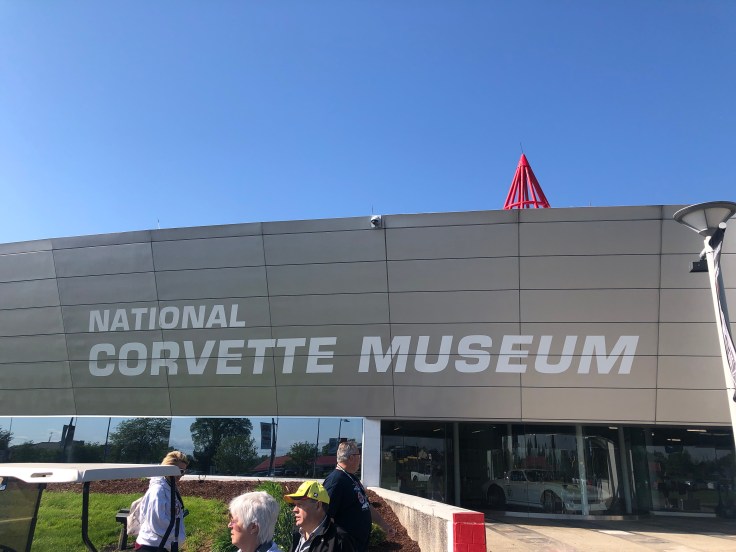
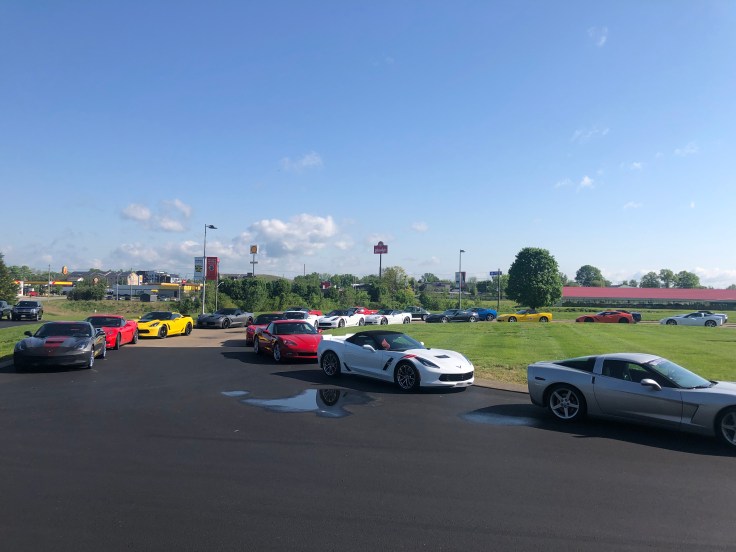
After raining all night we awoke to a lovely morning.  We carpooled to the National Corvette Museum.  Not only were we Airstreamers doing this tour today, but it was the 25th anniversary of the museum and hundreds of Corvette owners were coming to gather as well…

img_2194img_2193img_2195img_2196img_2211img_2210

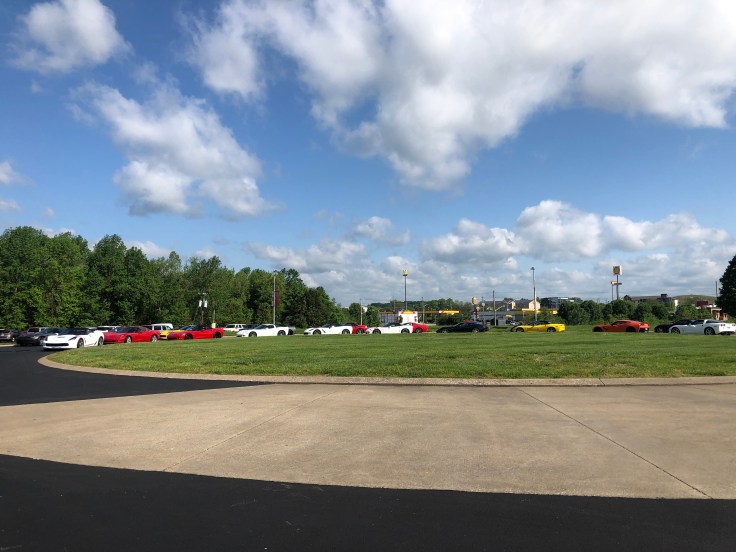
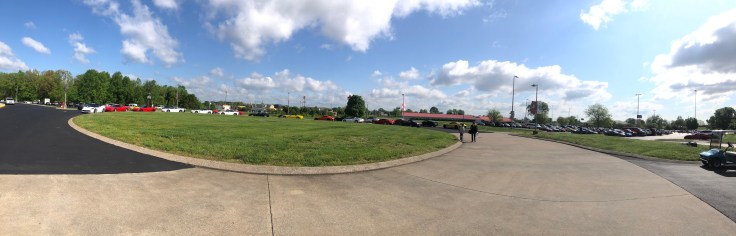
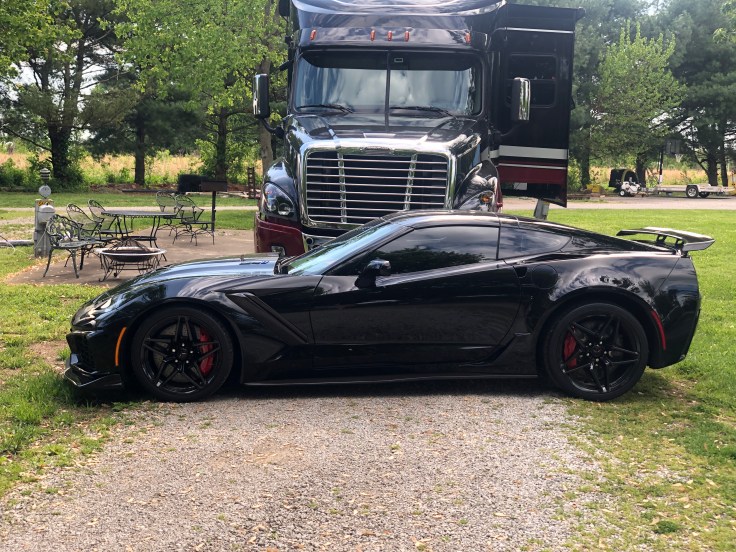
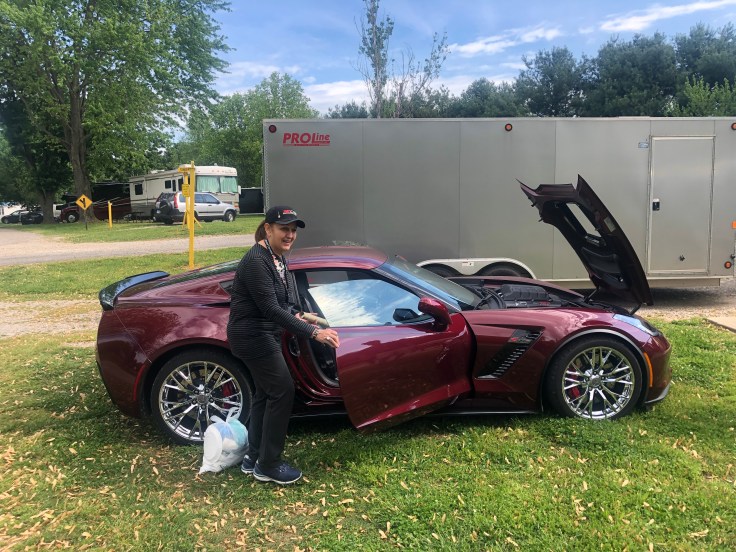
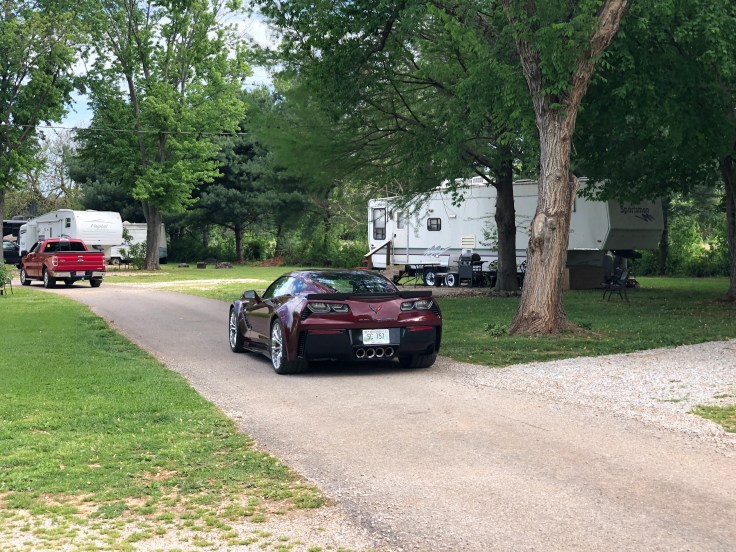
Even our campground was not immune to this invasion of Corvettes…

img_2230img_2231img_2232img_2260

The museum is located only a quarter mile from the Bowling Green Assembly Plant, where Corvettes have been made since 1981.  Unfortunately, the plant is closed for re-tooling; rumor has it that the newest model Corvette will be revealed at this event this weekend…

(Spoiler Alert:  Yes, the new C-8 Corvette, with a mid-engine configuration, was revealed at the Museum on 4/27/19!)

This yellow structure is called the “Skydome”.  It contains a large exhibit hall inside, as an addition to the main museum.  More about the Skydome later…

img_2212

We gathered in front of the museum for a group photo, then went inside for a tour.

img_2197

The exhibits started with a display of a 1953 Corvette, showing its innovative framework and chassis design.  Note how light the structural framework is.  These cars were clearly designed for performance, not for safety…

img_2198img_2201

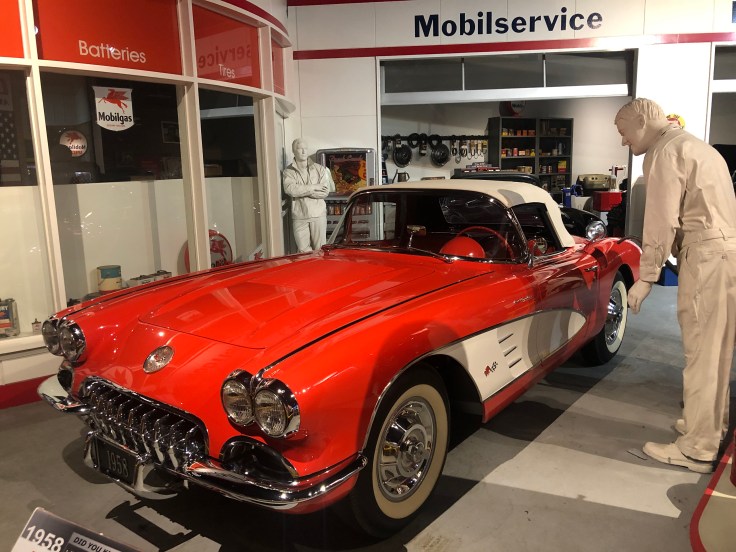
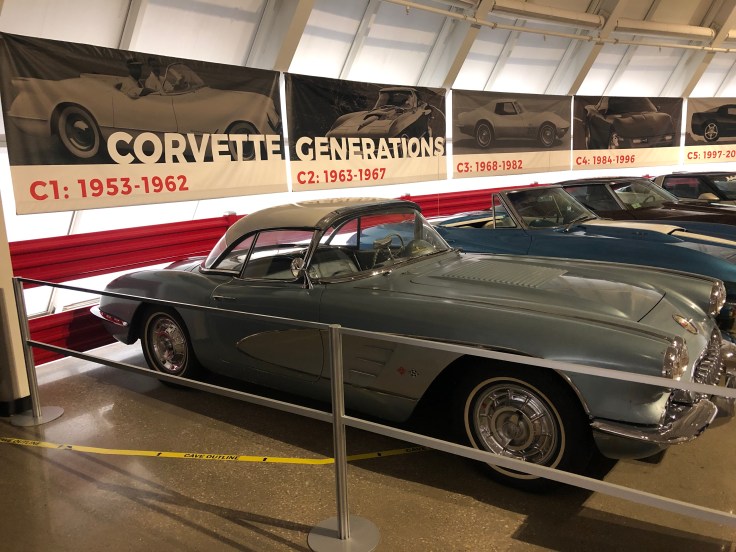
We proceeded through the exhibits, seeing the Corvette design evolve.  The first years were difficult, and very few cars sold in 1953-1955, but the 1956 model caught on and sales sky-rocketed.  However, they have never reached the 1,000,000 cars per year that were originally envisioned…

The 1956 – 1962 years (Model C-2, as the aficionados call it) are my favorite Corvettes…

img_2202img_2208

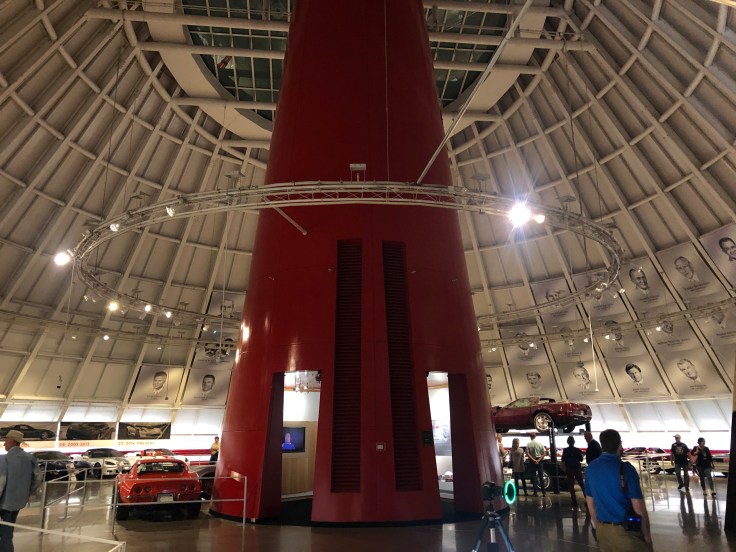
This is the interior of the Skydome:

img_2209

A particularly interesting exhibit centers around an event that happened a few years ago…

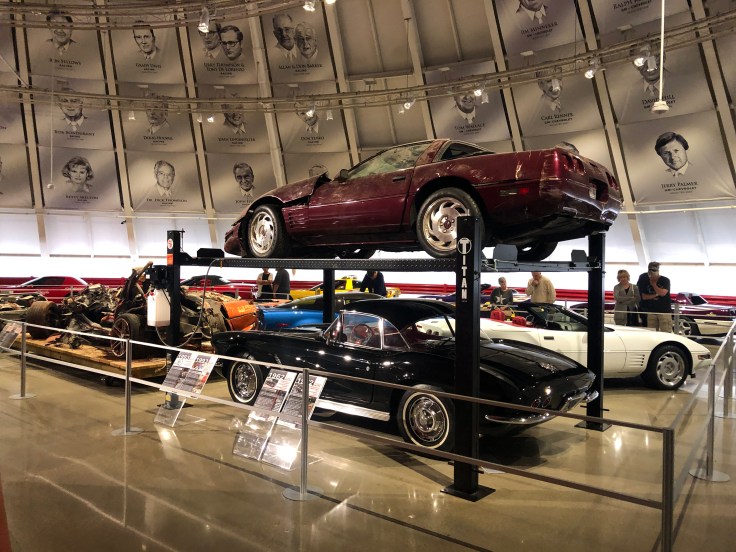
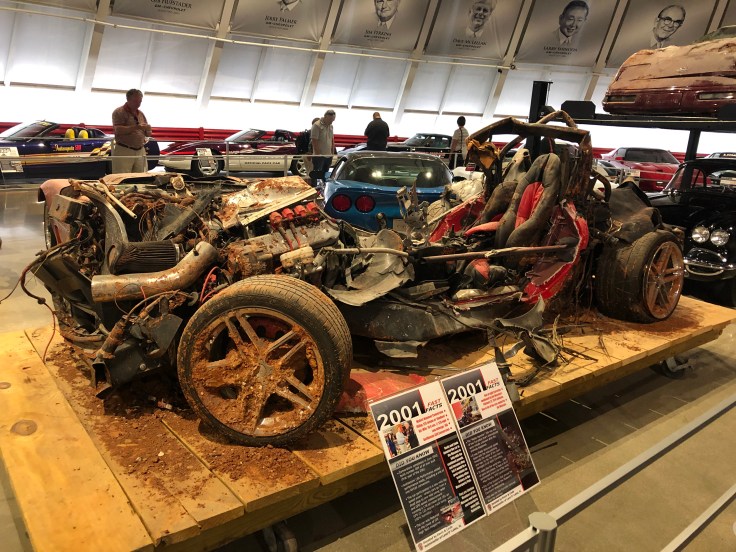
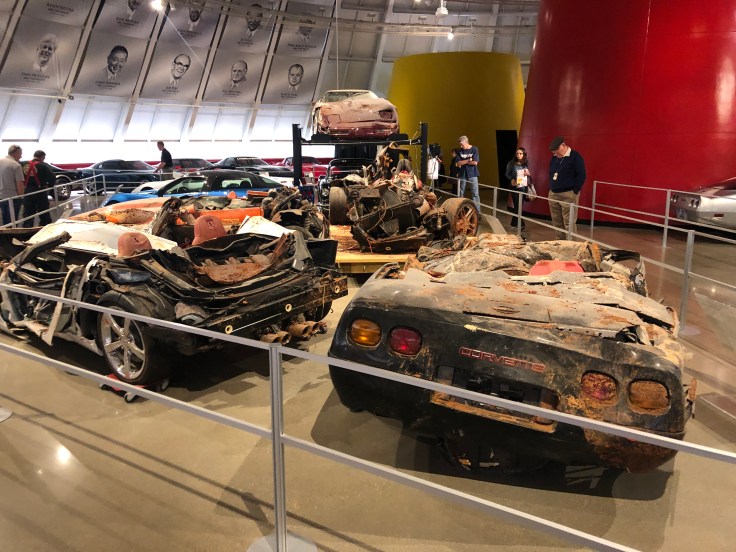
On February 12, 2014, a sinkhole (40-foot-wide and 25-foot-deep) opened under the floor of the Skydome area of the museum.  Video from the museum’s security camera shows the collapse occurring at 5:38 AM local time.  Since this did not occur during visiting hours no one was injured although much of the Skydome area concrete floor collapsed.  Eight rare and one-of-a-kind Corvettes, portions of the display stands and rails, large concrete floor slabs, boulders, and dirt fell into the sinkhole, causing serious damage to all eight of the Corvettes.  The Corvettes involved had an estimated value of a million dollars.  The remaining 20 cars in the Skydome were immediately removed from that area.  All eight of the Corvettes were recovered from the sinkhole.

Exploration in the sinkhole discovered a cave passage 80 feet below the Skydome floor and that this previously unknown cave had an unstable area in its roof that collapsed.  Apparently, when the museum was built, a large storm water retention basin was dug adjacent to the Skydome, which altered the flow of ground water under the museum.  This change in geologic activity contributed to the cave collapse.

The Skydome reopened after repairs were completed on September 3, 2015.  The eight Corvettes are displayed in their original location at the time of the collapse, although only three of them have been repaired/restored.  The other five were deemed too damaged to be repaired, so they are displayed is their “as found” condition…  It is a remarkable thing to see!

img_2207img_2203img_2206img_2205img_2204

We continued to look at the displayed until lunch happened…

img_8052

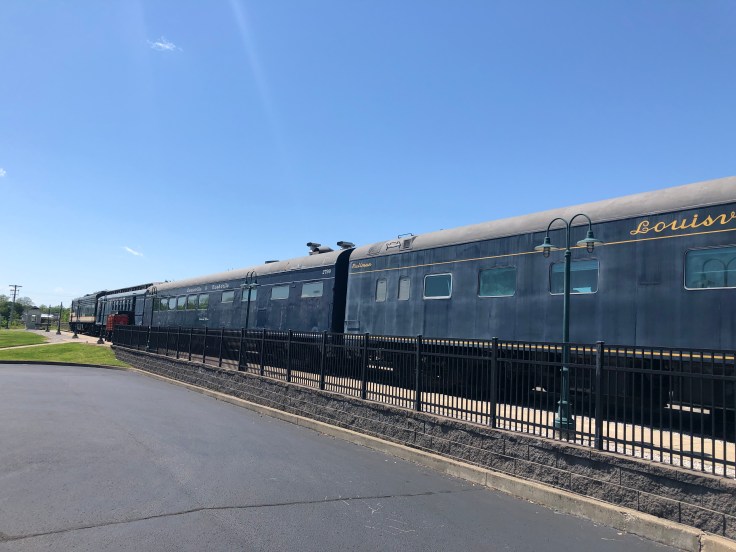
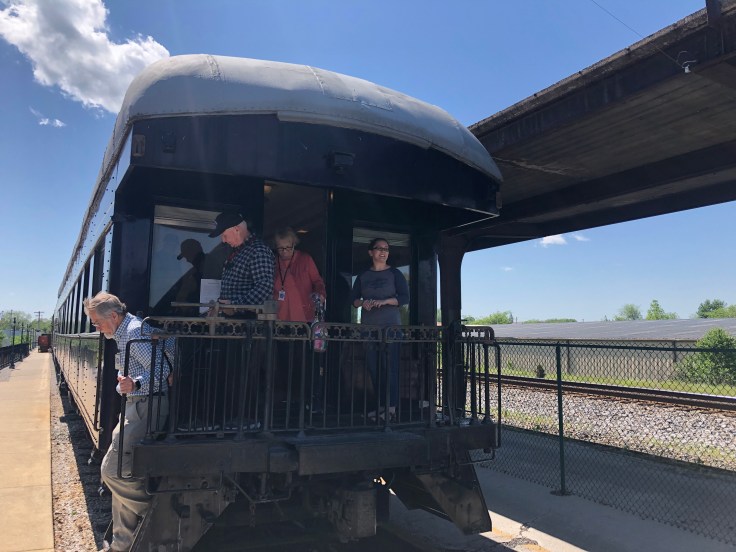
After lunch we visited the Historic Rail Park, located at the historic L & N train depot…

img_2215img_2214img_2216

It was great fun…

There were model railroad exhibits that little kids really love…

img_8053

img_2217

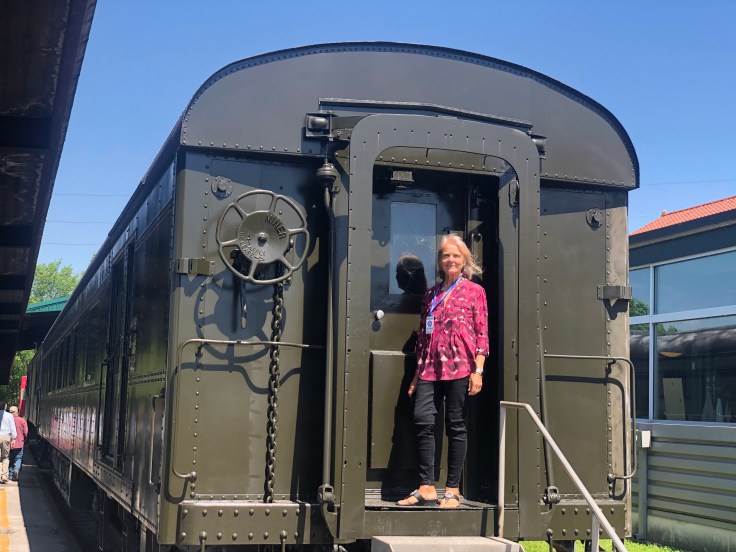
There were historic exhibits inside the museum; but the best part was the train!

img_2226img_2218img_2221

We were able to go through all the cars…

First was the engine (with the engines and generators removed…). We also could go into the cockpit and sit in the engineer’s seat.  No steering wheel!

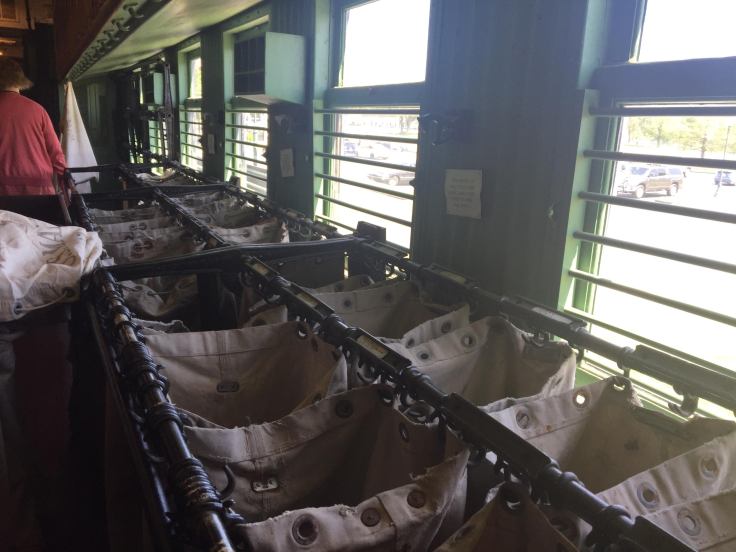
This is the Post Office car…

img_8062img_8063

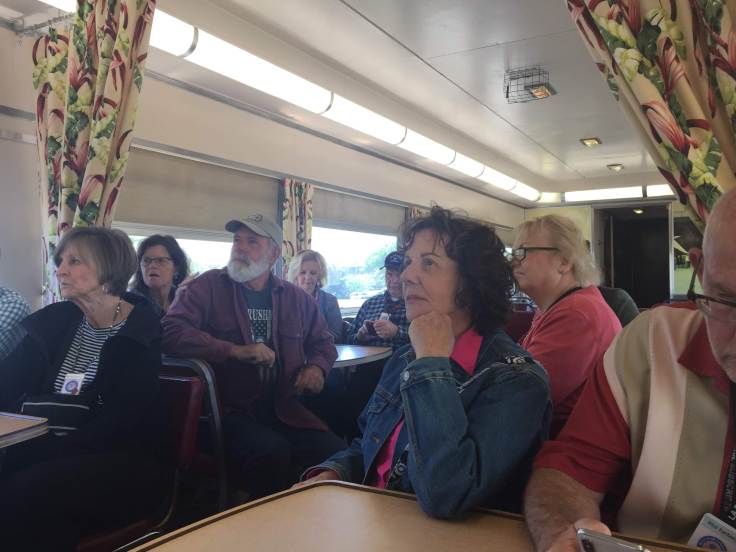
The dining car…

img_8065

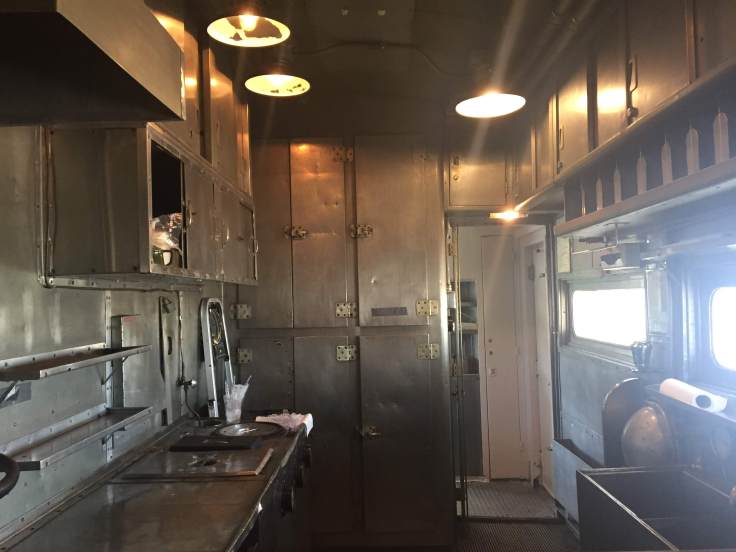
The kitchen…

img_8067img_8068img_8069

We saw a 3rd class Pullman sleeping berths, the 2nd class “roomettes”, and the private bedrooms in 1st class.  Finally we saw the private car of the L & N president, with two bedrooms, two bathrooms, a dining room and a parlor, plus observation platform at the rear.  This car was used by Herbert Hoover during his presidential campaign.

We also saw cars that are not on display; a caboose…

img_8072

And a hospital car, used to transport injured troops from WWII and the Korean conflict…

img_2224

We returned to the Villa in time to prepare for the first GAM – Get Acquainted Meeting.  As luck would have it, we already knew these four couples…

img_2228img_2229

And an enjoyable time was had by all…

2019-04-23 – Airstream Caravan Travels – Traveling from Huntsville to Florence to Tuscumbia, AL, and Frank Lloyd Wright…

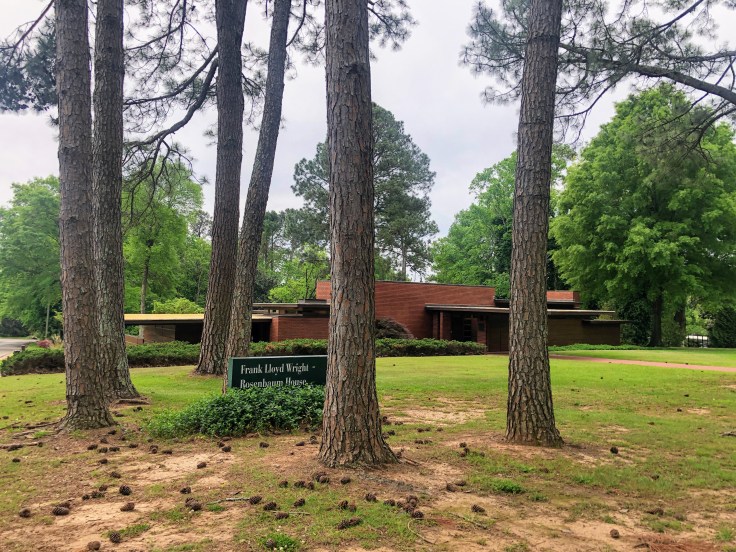
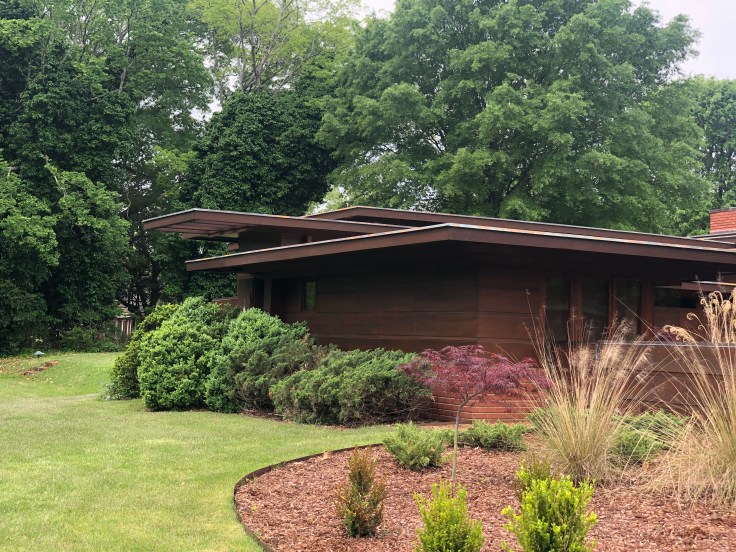
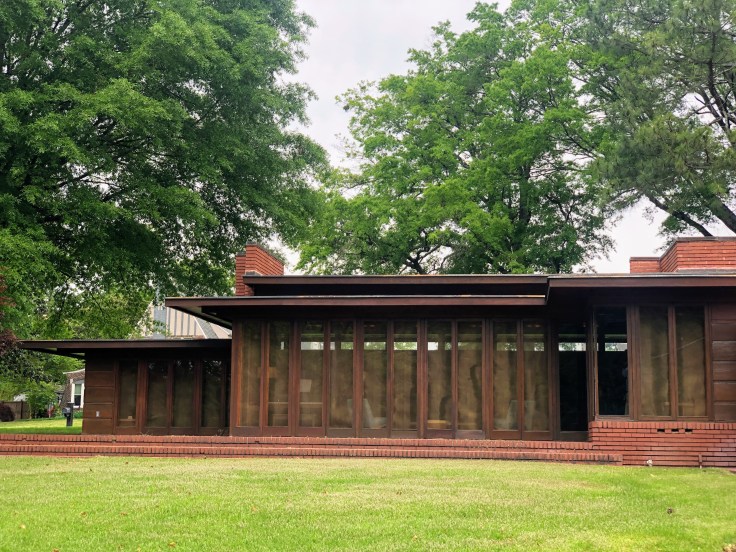
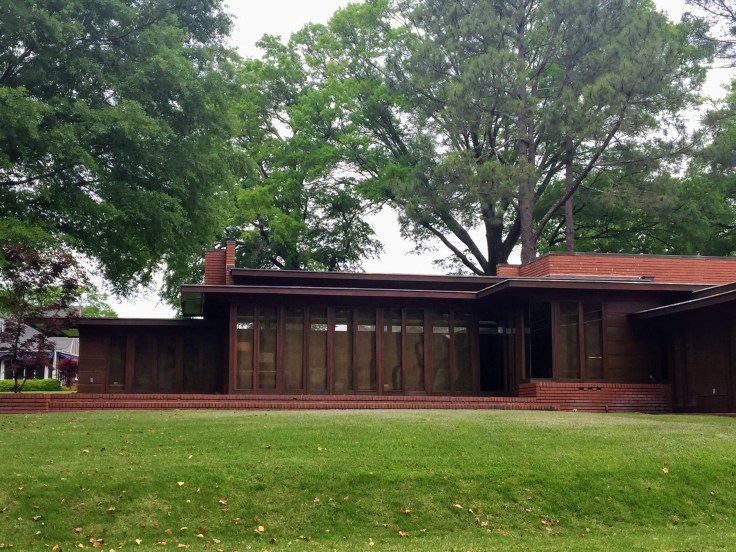
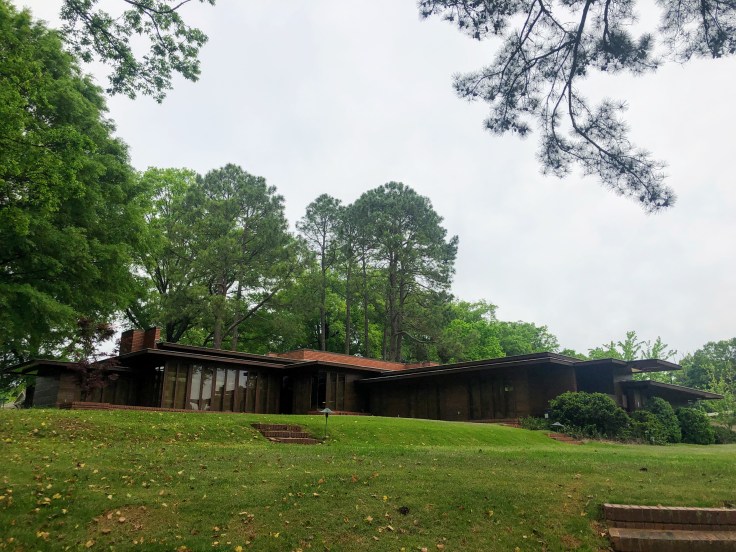
We pulled out of the RV park at the Space and Rocket Center in Huntsville and drove to Florence, AL.  We are here to see the Rosenbaum House, designed by Frank Lloyd Wright (FLlW)…

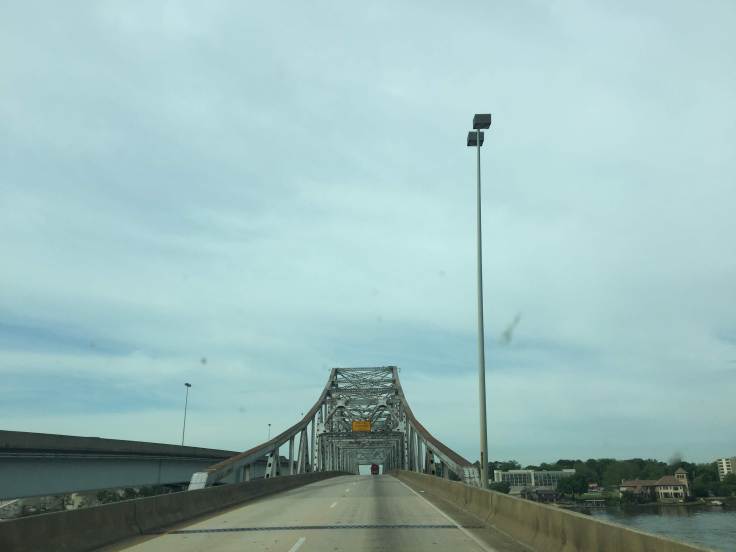
First, another bridge; I think this is the one millionth time we have crossed the Tennessee River…img_8002img_8005

We arrived in Florence and parked the Villa in the office complex across the street from the house, where the Visitor Center is…

img_2146

We walked across the street for our tour to begin…

img_2147

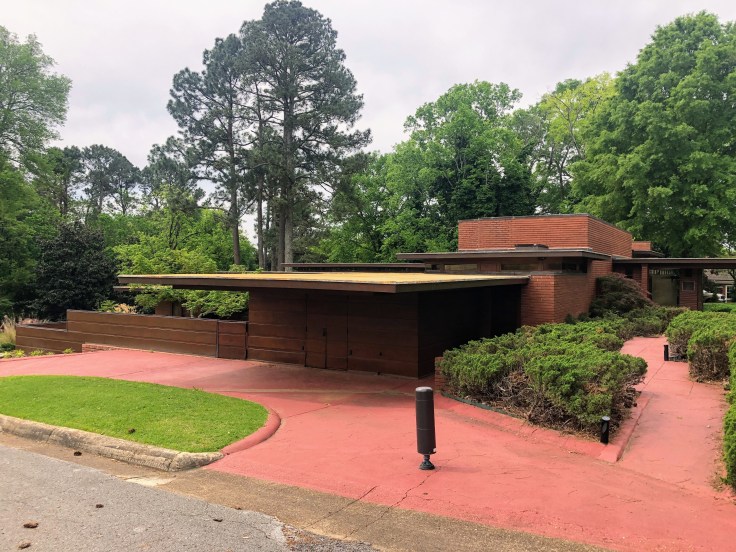
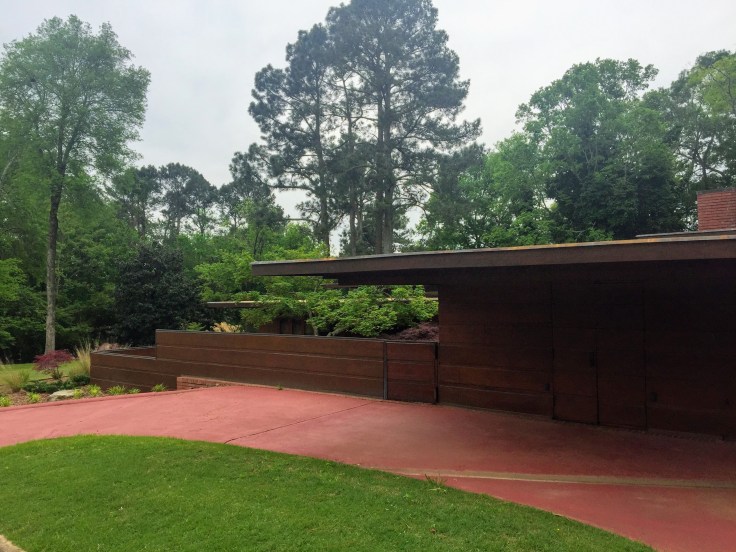
The cantilevered carport roof…

img_2148

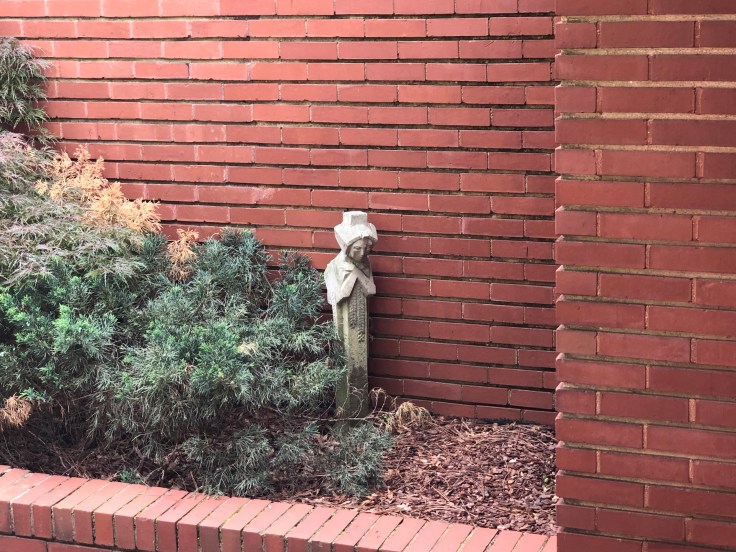
They have the same “sprite” in their front yard that I have in mine…

Rosenbaum House:

img_2150

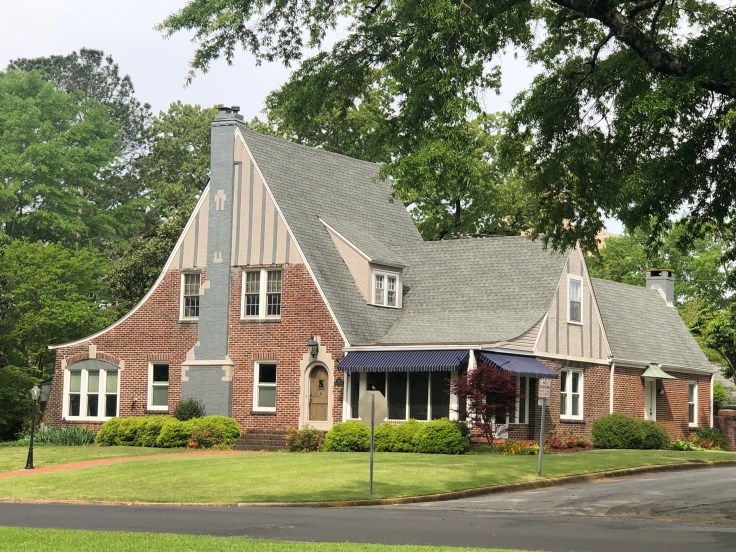
Terhorst House:

Sprite

These Sprites are 1/2 size reproductions of similar Sprites (hundreds of them) originally designed and built for the FLlW-designed Midway Gardens complex in Chicago.  Midway Gardens was a restaurant, beer-hall and event venue complex; the business failed after prohibition was voted in, and the complex was demolished; all the ruble, including hundreds of Sprites, was bulldozed into Lake Michigan as land-fill…

We were greeted by our tour guide, and we heard the history of the house…

img_2149

The owner of this house across the street gifted this lot to his son, along with some of the money to build the house.

img_2151

The son and his wife had three sons at the time, and this was the perfect place to raise a family; the lot (at that time) had a fine view of the Tennessee River, but the trees have now grown up to obscure it…

Frank Lloyd Wright was hired for $1,100 to design the house. It was 1,500 sq. ft., and it included three bedrooms and two bathrooms, Living Room, Dining area with built-in table for five, Study, and a tiny “Workroom” – what we would call a kitchen, if we could conceive of such a tiny space being a kitchen.

The house is a classic “Usonian”, a concept named by FLlW to designate the houses that were simple in design, and suited to middle class Americans.

Usonian houses were characterized by their lack of attics and basements, radiant heat in the exposed concrete floors, and simple wood detailing that can be beautiful yet economical due to the ability to be made by machine.  The houses all had tiny “Workrooms”…

The house was built and the family moved in.  They soon found the house a bit cramped, especially when a fourth child arrived.  So they hired FLlW to design an 1,100 s.f. addition, containing a guest room and bath, a new, much larger “Workroom”, a Laundry-Service room, and a large Playroom-Dormitory for the four boys.  Somehow they still managed to get along with the Dining Room table for five…

FLlW designed many pieces of furniture that are still in the house – simple, beautiful, and elegant, using simple materials like plywood.  As usual, the chairs were impractical and uncomfortable, but they are beautiful, and that’s all that matters.  (A chair similar to these from another house recently sold at auction for $35,000!)

The house was sold to the City of Florence in the late 1990s for $75,000; the City spent several years and over $600,000 restoring the house, which was opened to the public in 2002.

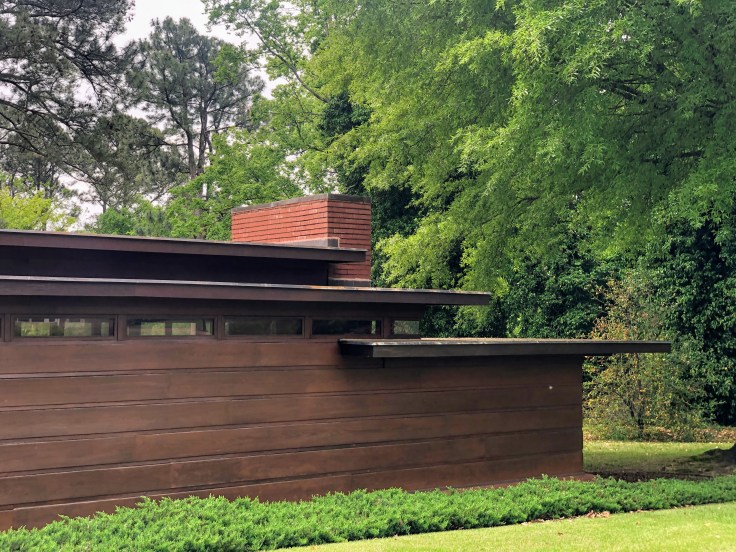
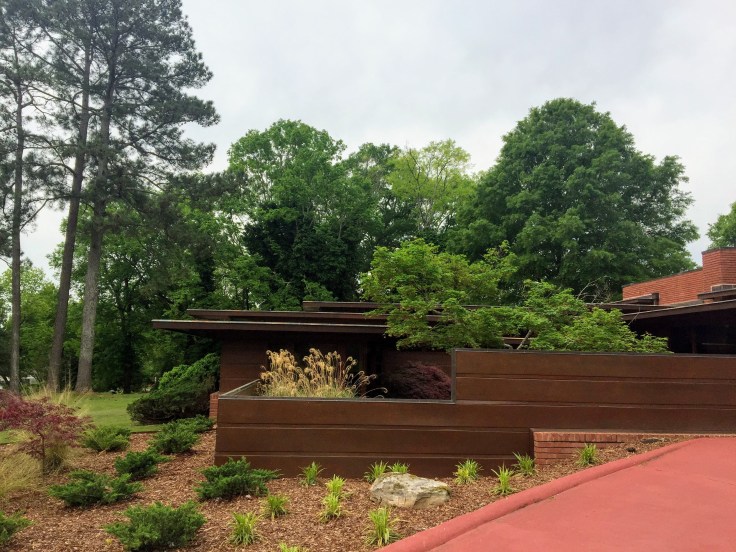
The walls of the house, inside and out, are board and batten, using cypress wood from Louisiana swamps, and pine battens.  (We saw cypress trees growing out of the water on our swamp tour…)  Cypress is extremely resistant to wood rot and termites – it is an excellent building material!  Unfortunately, the walls also contain battens of pine; when the house was sold to the City it was found to be infested with termites.  When the termites had destroyed the pine they settled into all the books… But the cypress wood is still intact!

img_2153img_2154img_2155img_8007img_2156img_2157

The board and batten walls; on the interior side all shelving, tables, and doors have horizontal lines that match the battens…

img_2158

The second cantilevered carport…

img_2159img_8008img_2160

This tiny balcony in the center of the photo below is off the Master Bedroom…

img_2161

The Living Room and Study have these beautiful French doors opening onto the terrace…  You can see through the house to the narrow clerestory windows on the opposite side of the room…

img_2162img_2163img_8013img_2164img_8015img_8017img_8024img_8025img_8026

We thoroughly enjoyed touring this house.  It is beautifully restored and maintained, and we were able to see all the rooms, with all the furniture, as if the family were still living there.  Furniture not designed by FLlW is mostly designed by Rae and Charles Eames…

After our tour we walked into downtown Florence and walked the four blocks of Court St.  Upon the recommendations of the Rosenbaum staff we had a lovely lunch at Odette…

img_2169img_8018img_2170img_8019img_2172img_8022

After lunch we walked back to the Rosenbaum house where we had left the Villa.  We drove to Tuscumbia, about five miles away, and parked at Heritage Acres RV Park.

This is a very basic, all gravel place, with no trees – good for satellite TV reception.  Full hook-ups including cable are all very good.  We wanted to refill one of our propane tanks, but when I went to take it off the Villa I found that it had been locked using a cable and a padlock.  Could I find the combination to the lock?  After tearing apart the trailer and the truck I finally found it, 1 1/2 hours later.

Well-deserved Happy Hours ensued, and an enjoyable time was had by all…

2019-04-21 – Airstream Caravan Travels – Easter Sunday and moving from Asheville, NC to Chattanooga, TN

We had a leisurely morning.  It was cold!  41 degrees!  We had a little hitching up to do; at about 9:30 we pulled out of the RV park and drove 5 miles into downtown Asheville.  We parked at the Visitor Center (it was closed), and walked towards the First Presbyterian Church.  It is Easter!

img_2105

By the time we were approaching the church we noted that we were over one hour early.  And we were cold!  So we stopped into Mayfel’s for brunch.  The Crab Cakes Benedict was great!

img_2104img_7918

Brunch over, we walked the 3 short blocks to church.  We were none too early.  This is not a “five minute church”.  We always worry when we attend a church as we are traveling that we are sitting in someone’s favorite seat!

FPC Asheville 1FPC Asheville 2

We didn’t take these photos while we were there – I stole them off the internet…

This was a lovely, VERY traditional Easter Service; organ, orchestra, choir, and the singing of the Hallelujah Chorus at the end.  We were invited to join the choir to sing!  (Not just us – everyone was invited…).  It was very nice…

We slipped out after the final singing and walked back to the Villa.  We pointed the truck west and we were off.  Quite a late start for us, but the weather was beautiful, and we had no reason to arrive at our destination (Chattanooga, TN) at any particular time…

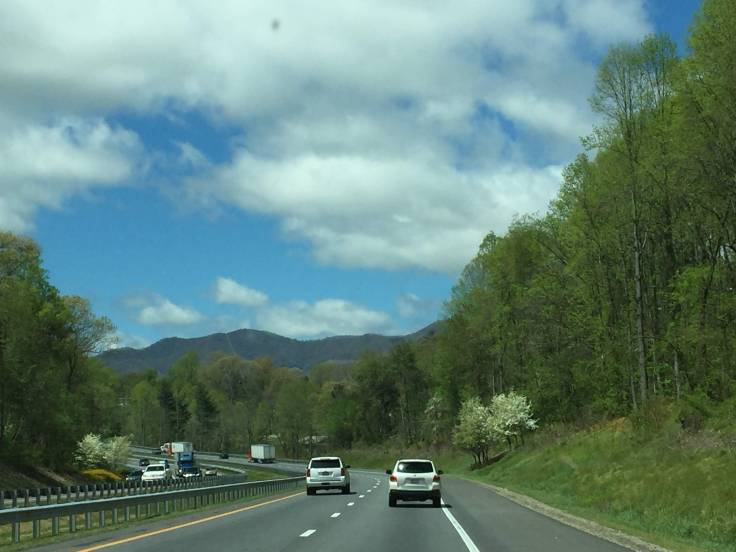
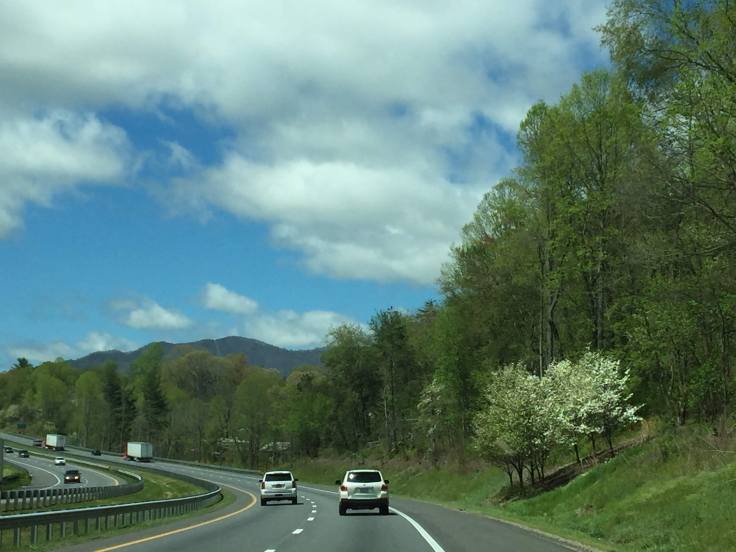
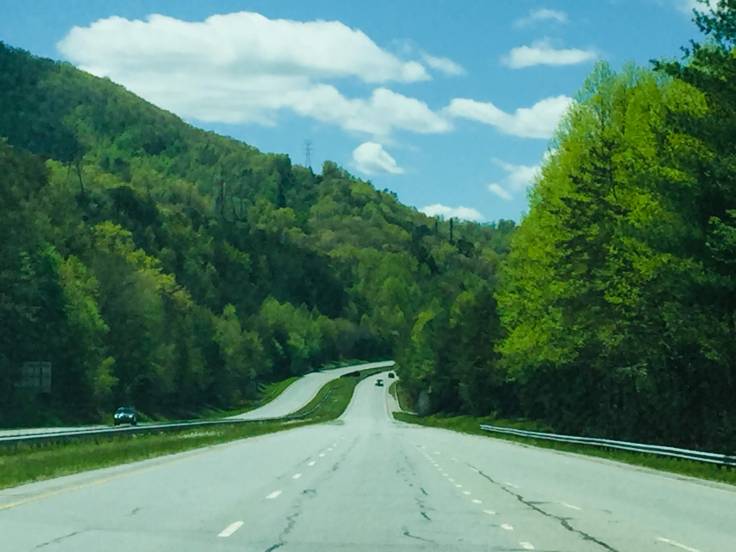
The freeway out of Asheville; different than all the other southern states we have seen…

img_7919img_7920img_7924img_7925

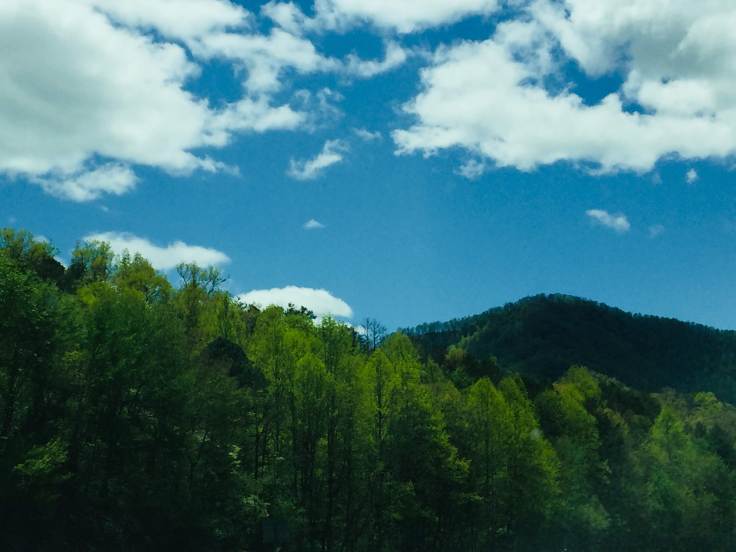
It was great to see blue sky again!

img_7926img_7927img_7928

We pulled off the 40 Interstate to the 74.  No trucks!  It was a beautiful freeway for awhile…

img_7929

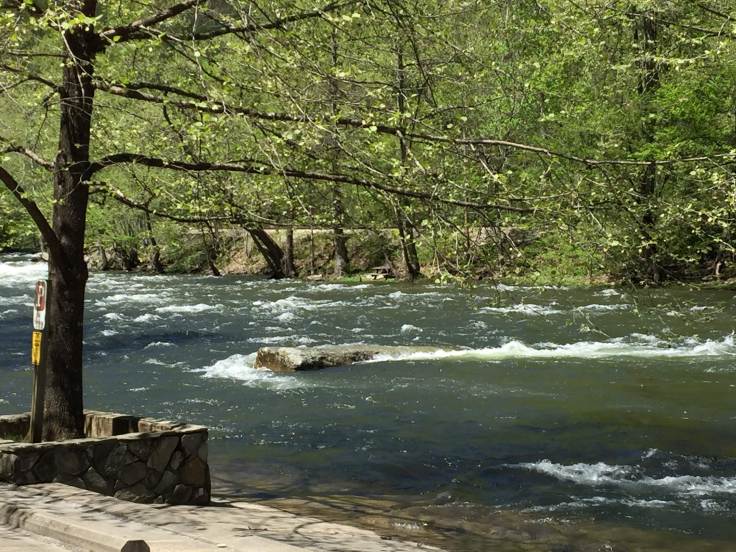
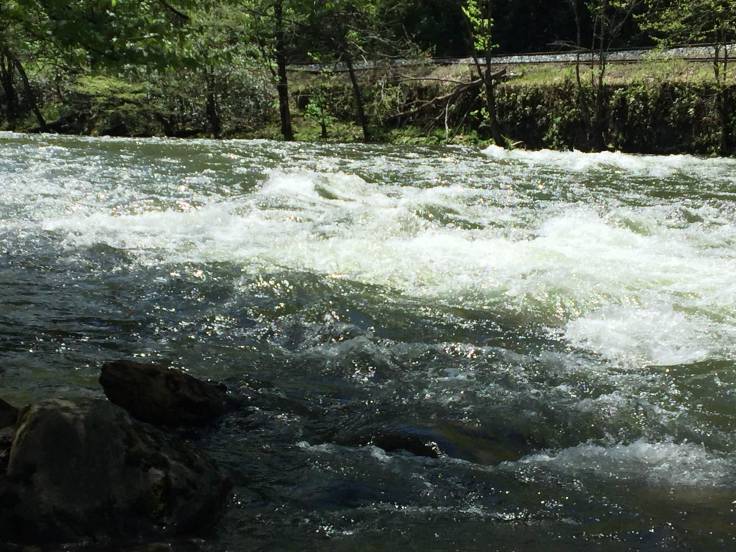
And then we entered the Nantahala Gorge… Two lane road, sharp turns, and a raging river!

img_7930img_7931img_7932img_7933img_7934img_7935

We stopped to take it all in…

img_7937

Eventually we reached Murphy, NC, where we stopped to do a little grocery shopping…

img_2106

Soon we were in Tennessee…

img_7939

The small roads continued, with views of rivers and lakes…

img_7946img_7953img_7955img_7958img_7964img_7965img_7967img_7968

We reached Chattanooga and the Raccoon Mountain RV Park at about 6:00…

img_7969

The park is in a canyon, with views of mountains all around…

img_2109img_2110

Time to affix the sticker for the new state!

img_2107

Happy hours and dinner ensued, and an enjoyable time was had by all…

2019-04-20 – Airstream Caravan Travels – Asheville, NC and Biltmore!

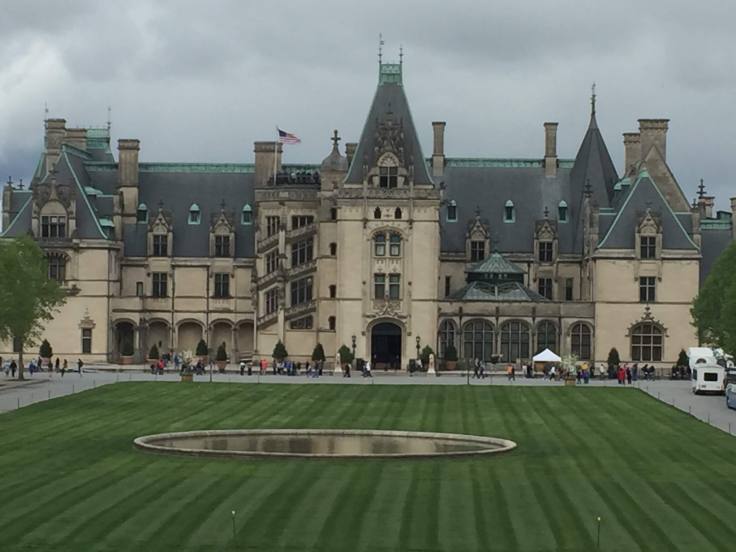
Today we went to see the Biltmore Estate, right here in Asheville.  We arrived, parked, and walked about 1/2 mile to the see grand vista over the front lawn:
img_7904

This is the largest privately owned house in America.  Yes, it is still owned by the Vanderbilt family, the 5th generation since George Washington Vanderbilt II had the house built between 1889 and 1895.  The house is a Châteauesque-style mansion, and it measures over 178,000 sq. ft.  It is one of the finest examples of mansions of the “Gilded Age”.

We walked down the lane adjacent to the lawn, then stood in line in the biting cold while we waited to be admitted at the appointed hour.  At least we had something interesting to look at…

img_2076img_2078img_2079

In the 1880s, at the height of the Gilded Age, Vanderbilt began to make regular visits to the Asheville area. He loved the scenery and climate so much that he decided to build his own summer house in the area, which he called his “little mountain escape”.  His older brothers and sisters had built luxurious summer houses in places such as Newport, Rhode Island, and Hyde Park, New York.   (See my blogs from the summer of 2017…)  Their father, William Vanderbilt, had died unexpectedly young, so his massive fortune was inherited by his many children while they were in their 30s; they all went on a building spree, spending all this money.  But George Vanderbilt did not get along with many of his siblings, and he was considered a black sheep of the family, so he had no desire to build his house near theirs.  Vanderbilt bought almost 700 parcels of land, including over 50 farms and at least five cemeteries; a portion of the estate was once the community of Shiloh.  A total of 125,000 acres were assembled.  Archives show that much of the land was in very poor condition, and the farmers and other landowners were glad to sell.

Vanderbilt hired Richard Morris Hunt to design the mansion, with Frederick Law Olmstead hired to design the grounds.  Olmstead turned the 8,000 acres directly around the mansion into luxurious parks, woods, meadows, and gardens.  The rest of the land was made into commercial lumber forests.

Construction of the house began in 1889. In order to facilitate such a large project, a woodworking factory and brick kiln, which produced 32,000 bricks a day, were built onsite, and a three-mile railroad spur was constructed to bring materials to the building site.  A separate village (Biltmore Village) was built to house many of the workers and their families and to attend to their daily needs.  A trade school (Biltmore Estate Industries) was opened to train the local youths in making hand-crafted wares.  Biltmore Dairy was built to provide milk, butter and other foods to the newly formed community.  Construction on the main house required the labor of about 1,000 workers, including 60 stone masons.  Vanderbilt went on extensive trips overseas along with Hunt to purchase decor as construction on the house was in progress. He returned to North Carolina with thousands of furnishings for his newly built home including tapestries, carpets, paintings and prints, linens, and decorative objects, all dating between the 15th century and the late 19th century.

George Vanderbilt opened his opulent estate on Christmas Eve of 1895 to invited family and friends from across the country who were encouraged to enjoy leisure and country pursuits.  George married Edith Stuyvesant Dresser in 1898 in Paris, France; their only child, Cornelia Stuyvesant Vanderbilt, was born at Biltmore in 1900, and grew up at the estate.

The appointed hour arrived; we were allowed into the house.  They have an excellent audio tour which allowed us explore at our own pace.  Also interesting is the way the tour has been “curated”.  The audio tour makes it seem like the butler has greeted us in the entry hall, and he is going to escort us through the house, introducing us to other house-guests and servants  and showing us the many features of the house.  We are all here for one of the famous house parties, and the gala banquet is tonight.

All the rooms are populated with manikins with clothing recreated to match period photos of the Vanderbilt family. (Yawn)

The house and the family have an interesting history:

The family occupied the house from 1895 and into the early 20th century, living their lavish lifestyle.  Then, in 1914, to combat the impact of the newly imposed income taxes, and the fact that the estate was getting harder to manage economically, Vanderbilt initiated the sale of 87,000 acres to the federal government.  Before the sale was finalized, Vanderbilt unexpectedly died (of complications from an emergency  appendectomy); his widow completed the sale and that property became the nucleus of the Pisgah National Forest.  Still overwhelmed with running such a large estate, Edith Vanderbilt began consolidating her interests and sold several separate businesses that had been established when the house was built: Biltmore Estate Industries in 1917 and Biltmore Village in 1921.  Edith intermittently occupied the house, living in an apartment carved out of the former Bachelors’ Wing, until the marriage of her daughter to John Francis Amherst Cecil in April 1924.  The Cecils went on to have two sons who were also born in the house.

In an attempt to bolster the estate’s financial situation during the Great Depression, Cornelia and her husband opened Biltmore to the public in March, 1930, at the request of the City of Asheville, which hoped the attraction would revitalize the area with tourism.  

After the divorce of the Cecils in 1934, Cornelia left the estate never to return; however, John Cecil maintained his residence in the Bachelors’ Wing until his death in 1954. Their eldest son, George Henry Vanderbilt Cecil, occupied rooms in the wing until 1956. At that point Biltmore House ceased to be a family residence and continued to be operated as a historic house museum.

Their younger son William A. V. Cecil, Sr. returned to the estate in the late 1950s and joined his brother to manage the estate (which was in financial trouble) and make it a profitable and self-sustaining enterprise like his grandfather envisioned.  He eventually inherited the estate upon the death of his mother, Cornelia, in 1976, while his brother, George, inherited the then more profitable Biltmore Dairy, which was split off into Biltmore Farms.  In 1995, while celebrating the 100th anniversary of the estate, Cecil turned over control of the company to his son, William A. V. Cecil, Jr.  After the death of William A. V. Cecil in October 2017 and his wife Mimi Cecil in November, their daughter Dini Pickering began serving as board chair and their son Bill Cecil is CEO.  The Biltmore Company is still privately held.

Today, the estate property is 4,300 acres.  The property is run as an “amusement park” for tourists who love gilded age estates.  There is a hotel and an inn, restaurants, a winery,  several gift shops, a nursery, and every other thing that tourists love.  (No roller coaster.  yet…)  The main house and the views are well protected, but it is clear that they want you to come and stay a week and spend lots of money along the way…

Biltmore has 250 rooms in the house, including 35 bedrooms for family and guests, 43 bathrooms, 65 fireplaces, 75 servant bedrooms, three kitchens, and 19th-century novelties such as electric elevators, forced-air heating and cooling, centrally controlled clocks, fire alarms, and a call-bell system.  The principal rooms of the house are located on the ground floor.  The largest room in the house is the Entry Hall.  (Just like my 1905 house in Redlands…)

img_2082

(My center table is smaller, with fewer flowers…)

The Winter Garden always seemed like a strange place to me, but I’ve never spent a winter in Asheville, NC.  The skylight is marvelous:

img_2080

The Banquet Hall measures 42 feet wide and 72 feet long, with a 70-foot-high barrel-vaulted ceiling. The table can seat 64 guests, overlooking the triple fireplace that spans one end of the hall. On the opposite end of the hall, on the upper level, is an organ gallery that houses a 1916 Skinner pipe organ.

img_2095img_7910img_2096img_7908img_2098

To the left of the entrance hall is the 90-foot-long Tapestry Gallery, which leads to the Library, featuring three 16th-century tapestries. This room serves little function except as a place to showcase the three tapestries.  We did hear on the tour that the family took tea here in the afternoons…

img_7907-1

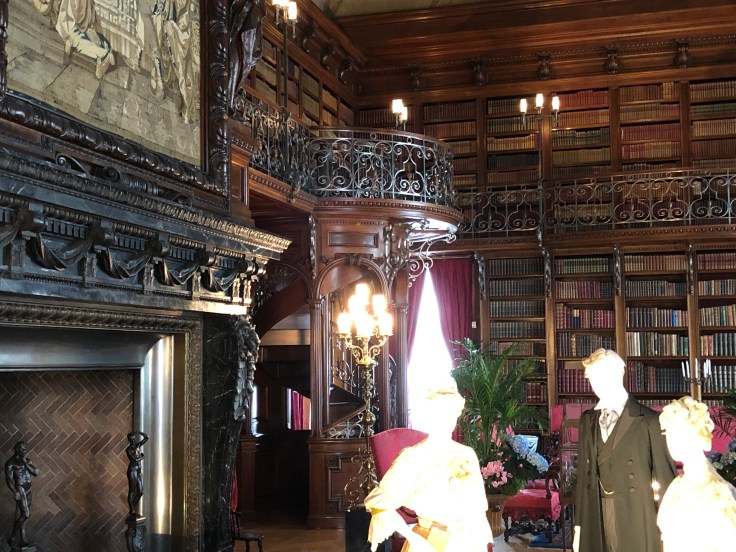
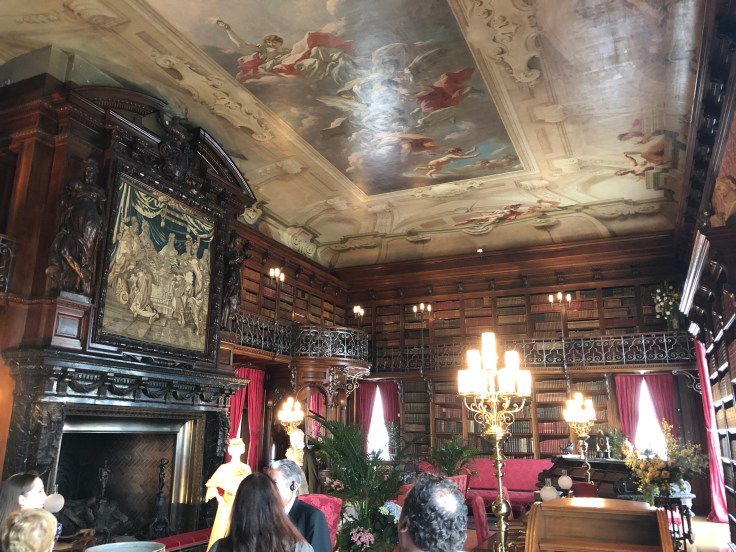
The two-story Library contains over 10,000 volumes in eight languages, reflecting George Vanderbilt’s broad interests in classic literature as well as art, history, architecture, and gardening.  The second-floor balcony is accessed by an ornate walnut spiral staircase, and the balcony includes a passage behind the fireplace.
img_2083img_2084img_2085img_2086

The second floor of the house is accessed by the cantilevered Grand Staircase of 107 steps spiraling around a four-story, wrought-iron chandelier holding 72 light bulbs.  The Second Floor Living Hall is an extension of the grand staircase as a formal hall and portrait gallery.  Located nearby in the south tower is George Vanderbilt’s gilded bedroom with furniture designed by Hunt.  His bedroom connects to his wife’s Louis XV-style, oval-shaped bedroom in the north tower through a Jacobean carved oak paneled sitting room with an intricate ceiling.

The remainder of the second floor contains various elaborate bedroom suites for family and close family friends and other honored guests.

The third floor has many guest rooms for couples, families, and single women, each given names that describe the furnishing or artist with which they were decorated.  The rooms all have connecting doors so that they can be configured into suites as needed…

The fourth floor has more than 20 bedrooms that were inhabited by housemaids, laundresses, and other female servants.  Also included on the fourth floor is an Observatory with a circular staircase that leads to a wrought iron balcony with doorways to the rooftop where Vanderbilt could view his estate.  Male servants were not housed here, however, but instead resided in 40+ bedrooms above the stable complex.

The guest rooms for bachelors were on the second and third floors on the opposite end of the house, adjacent to the service courtyard and stables complex.  It contains the Billiard Room, which is equipped with both a custom-made pool table and a carom table (table without pockets).  The room was mainly frequented by men, but ladies were welcome to enter as well.  Secret door panels on either side of the fireplace led to the private quarters of the Bachelors’ Wing, where female guests and staff members were not allowed.  The wing includes the Smoking Room, which was fashionable for country houses, and the Gun Room, which held mounted trophies and displayed George Vanderbilt’s gun collection.

The basement level featured activity rooms including an indoor 70,000-gallon heated swimming pool with underwater lighting, a bowling alley, and a gymnasium with once state-of-the-art fitness equipment.  The service hub of the house is also found in the basement; it contains the main kitchen, pastry kitchen, rotisserie kitchen, several walk-in pantries, walk-in refrigerators, the servants’ dining hall, laundry rooms and additional bedrooms for staff.  The sub-basement contains the heating and air conditioning systems, giant water heaters, and massive storage rooms.

So after two hours of fun we returned to the truck… We did get to drive through the entrance court and the formal gates…

img_2099

Unfortunately, due to the severe rains, a few of the estate roads were closed, and their signs pointing us to the exit were faulty.  But after driving around in circles for 45 minutes we made our way out.  The views along the way were pure North Carolina:

img_7913img_7914img_7917

I had been to Biltmore many years ago, on a tour given via the AIA convention.  We had the regular tour, then a special tour just for us architects, where we saw the attic and roof structure, the servants rooms, several un-restored guest rooms, the bachelor quest quarters, and even the sub-basement.  After the tours we were given free access to return to any of these spaces for the rest of the day.  It was marvelous…

None of the gaudy details and goo-gaas impress me (that’s why I am not posting hundreds of photos of every room…); what interests me the most is the incredibly complicated program that Hunt and Vanderbilt worked out.  Remember, Vanderbilt was not even married when the house was designed and built.  The complexity of the separate areas for family and guests, male and female servants, separate circulation hallways and stairs so that the servants could move about the house relatively inconspicuously – all this is so very complicated in a house of this size.  I love this stuff!

The plantation Big Houses were nice to look at, but they were only 3, 6, or 8 rooms to a floor, with no bathrooms, no servants quarters, no kitchens, no mechanical systems – just simple boxes.  The complexity of  a great house like Biltmore, with 250 rooms and multiple stairs and circulation spaces… Wow!  It was great fun to see…

We returned to the Villa in the rain, and had a relaxing afternoon and evening.

And an enjoyable time was had by all…

2019-04-18 – Airstream Caravan Travels – Columbia, SC…

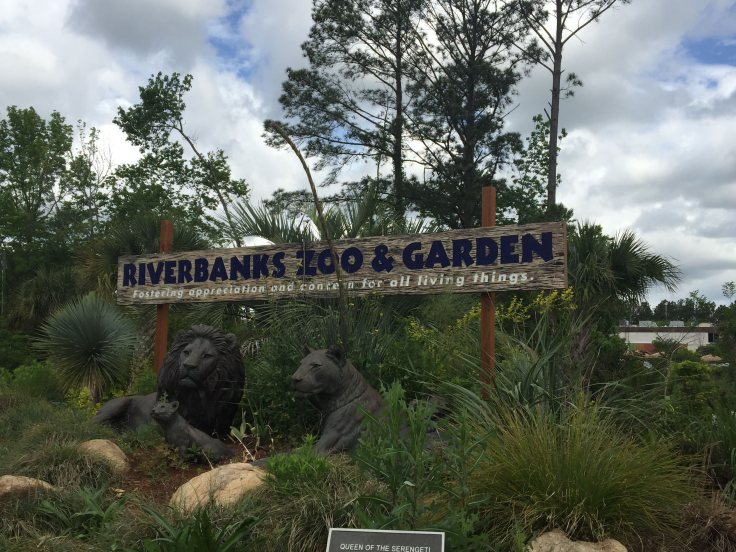
This morning we met the VanZanens at the zoo… And you know how much I love zoos!

img_2046img_7876img_2045img_7870

Just a reminder:  Flamingos have nothing to do with Airstreams!  There is no connection, no tradition, no reason to wear flamingo-emblazoned clothing, no reason to install flamingos around your Airstream!

img_7872img_7873

Feeding the giraffe!

img_7875

After the zoo we went to downtown Columbia…

First Presbyterian Church:

img_2050img_2049img_2048img_2047

The church is surrounded by  a cemetery, dating back to the early 19th century.  Woodrow Wilson’s parents are buried here, as is the wife and four children of a man who went back to Connecticut in 1855 because he was a northerner and was unhappy with the political climate in South Carolina.  There are also numerous political figures, ministers, and church families.  Very interesting!

We then walked to the capitol building; great story on the plaque about the construction and destruction… Note that one of the broken columns from the capitol was used as a confederate memorial in the Presbyterian church cemetery…

img_2053img_2055

Lynda and Maria with George Washington…

img_2054

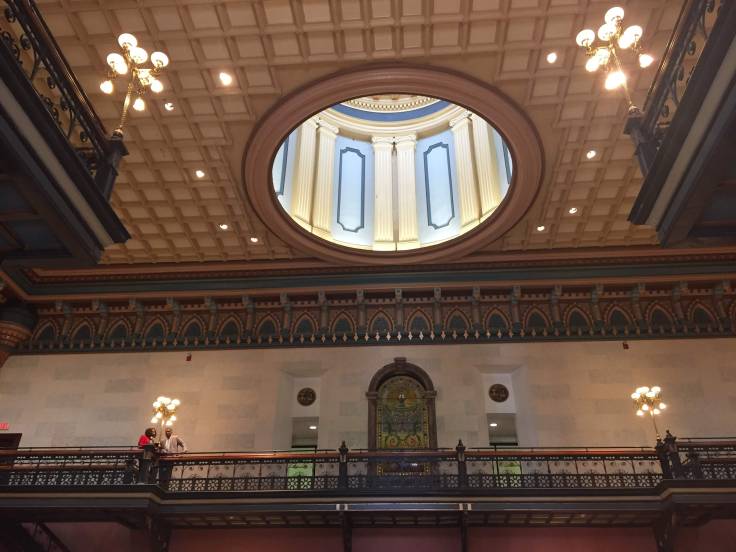
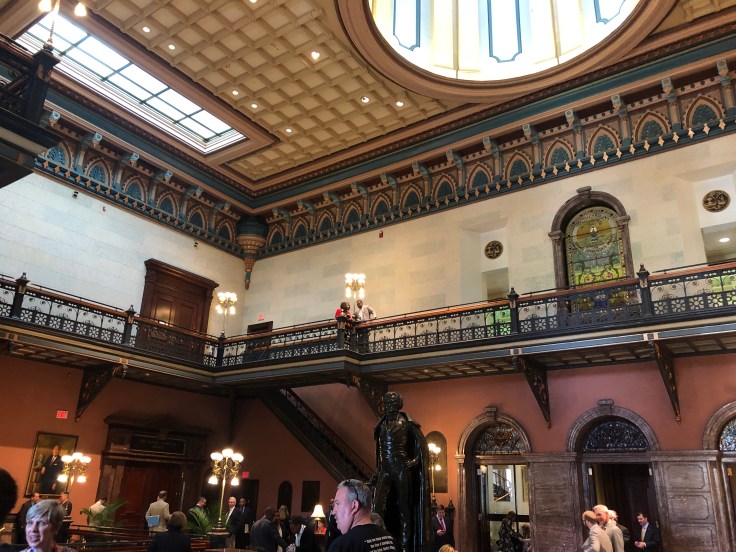
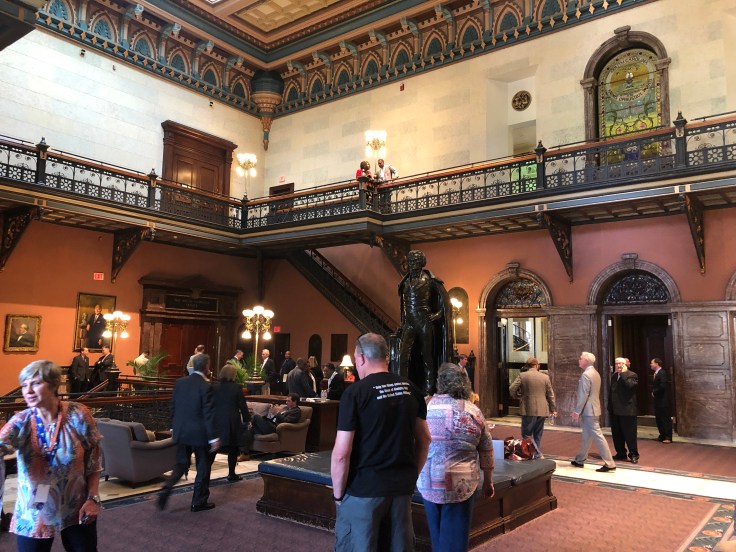
Inside the main lobby, looking up at the rotunda…

img_2056img_2057

Legislative chambers of the SC House of Representatives… when we arrived into the lobby it was packed with men and women in suits; the House had just adjourned; the Senate was still in session…

img_7879img_7880img_2058img_2059

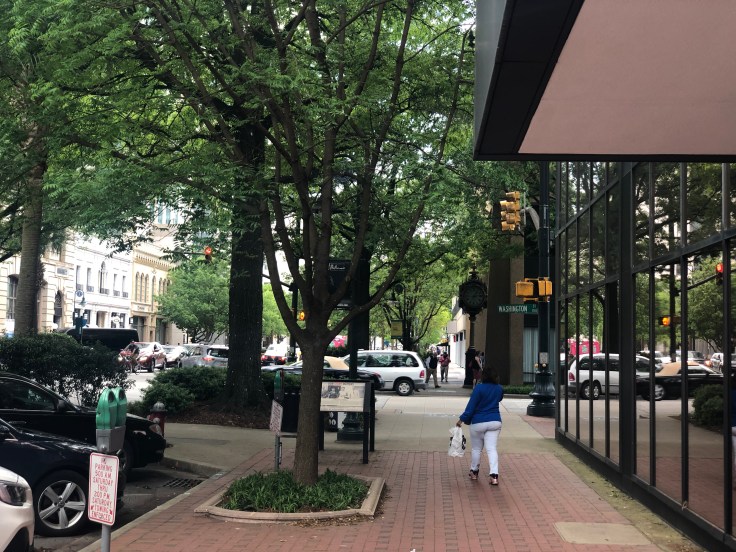
We exited through the main portico and continued walking through downtown…

img_2060

Soon lunch happened at the Blue Marlin; very nice!  It is located in the old train station…

img_7881img_7882img_2061img_2062img_2063

After enjoying the streets of downtown we drove a short ways to a river-walk; we walked about 1/2 mile down, then back up along the river…

img_2065img_7888

We reconvened at Brent’s house and enjoyed happy hours; more family time…

img_7891img_7890

We returned to the Villa; an enjoyable time was had by all…

2019-04-14 – Airstream Caravan Travels – Tallahassee, FL, and Frank Lloyd Wright

All night long I heard and saw tornado warnings on the weather channel; storms were coming in from the west.  We were up at 6:00 am to hitch up and go; then ambulances and fire trucks rolled in, blocking all traffic lanes in the RV park.  Apparently there was some minor medical issue 3-4 trailers down the row…  But by the time we were ready to go they had all left, and we rolled out at 7:00 am.  We saw lots of lightning as we drove north 15 miles, then, as we turned east we started to get some light rain.  But no tornadoes, no hazardous wind (despite the large flashing signs warning us about hazardous winds…), and the rain soon stopped.  We heard of terrible storms in Michigan and Texas and Alabama, but I think the storm had petered out by the time it got to Florida…

We arrived safely in Tallahassee and set up in a nice RV park.  We walked around and found another Airstream – and found out that it was another couple that we knew from an earlier caravan, and who will be going on the Kentucky caravan with us!  Small world!

img_7822

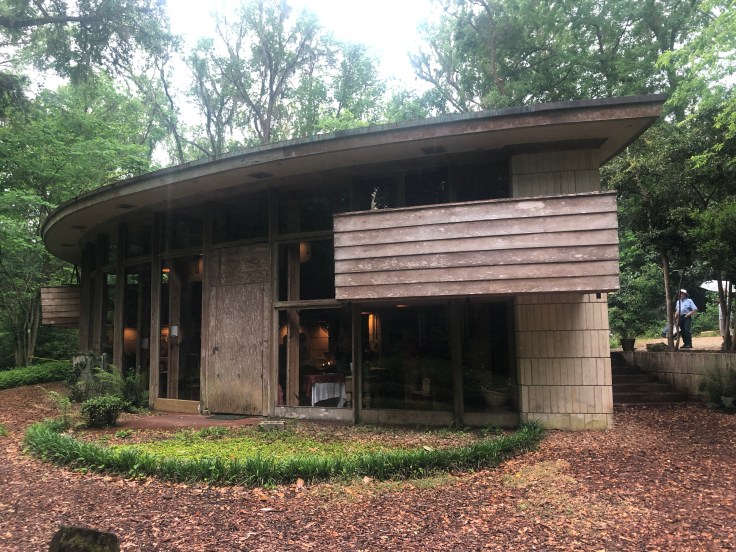
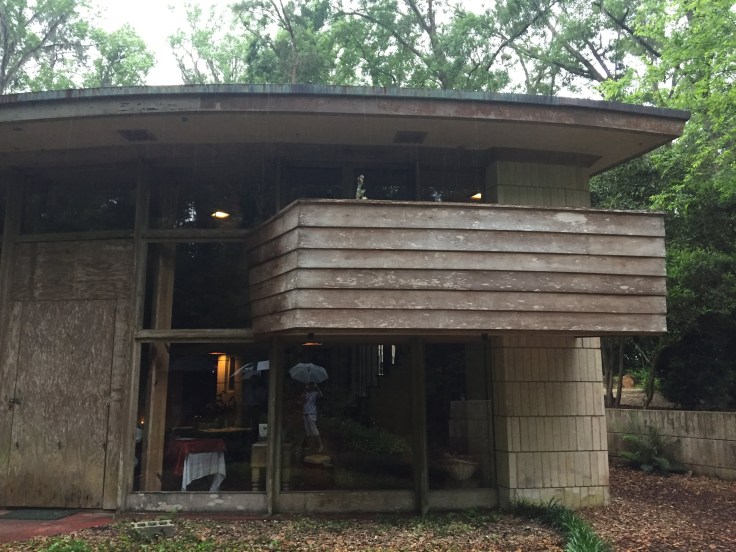
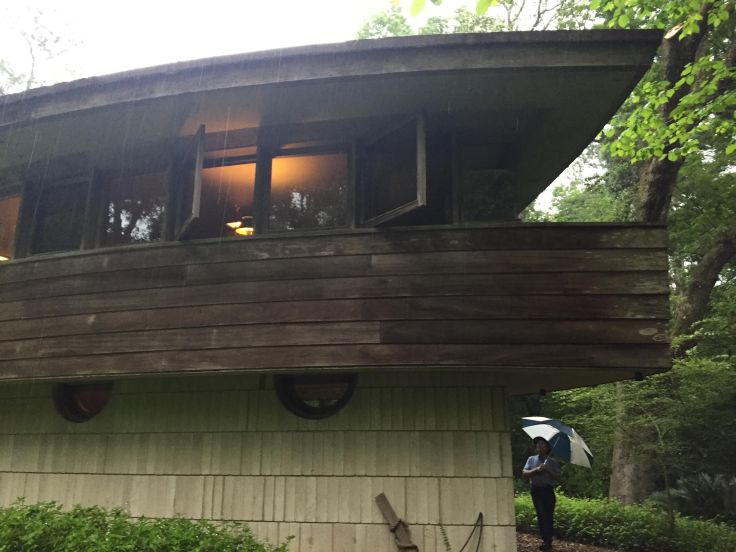
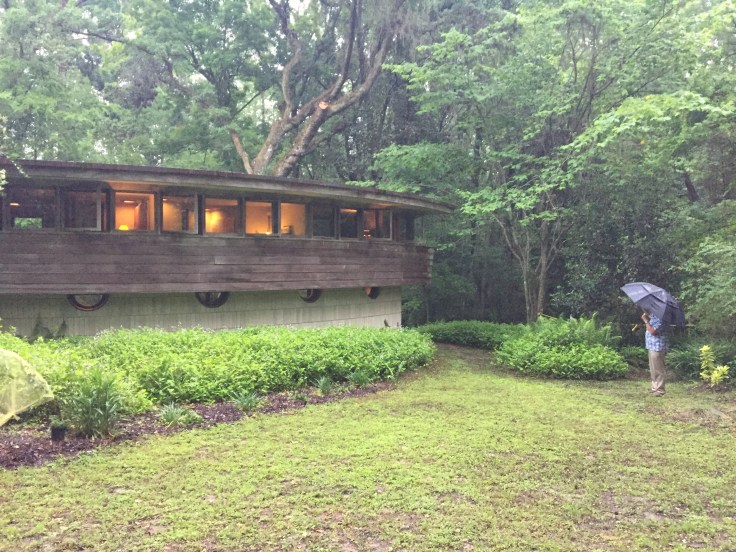
We had an appointment at 2:00 pm to see the Spring House, the only Frank Lloyd Wright house built in Florida.  We had light rain as we approached, but the house itself was delightful.

img_1974img_7826img_1976img_7828img_7829

Obviously it is in need of repair and restoration… The daughter of the original owner, who grew up in the house, still lives here; she is trying to raise funds on behalf of a foundation (www.preservespringhouse.org) so that they can buy the house, restore it, and open it for philanthropic events…

We met Byrd, the current owner, and heard the story of the house.  Her parents, Mr. and Mrs Lewis, saw an article by Frank Lloyd Wright in a magazine about houses having “souls”, and they were impressed.  They had a chance to meet FLlW in 1952 and they said, “We have a lot of children (4) and not much money; can you design a house for us?”  At the time FLlW was 84 years old and was still excited about his “Usonian” houses for people of modest means, so he agreed.  After a 2 1/2 years the Lewises had found this five acre property with a stream running into a lake.  The house was designed and eventually built, with all the usual FLlW drama, even though he never visited the house…

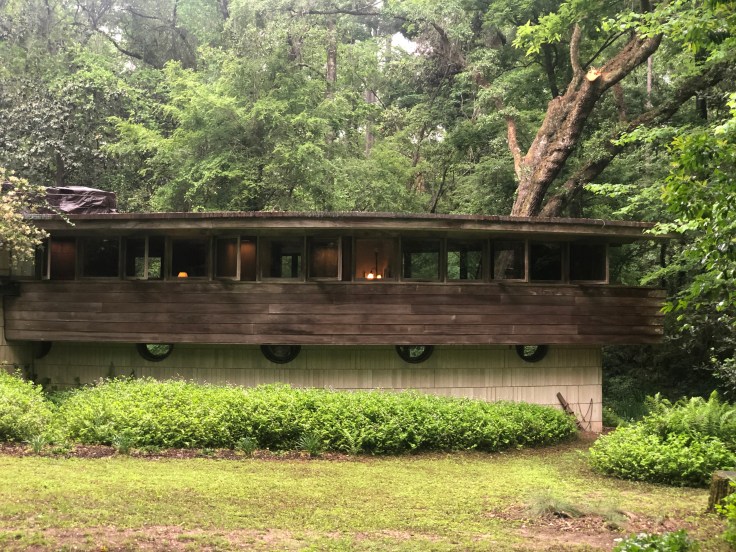
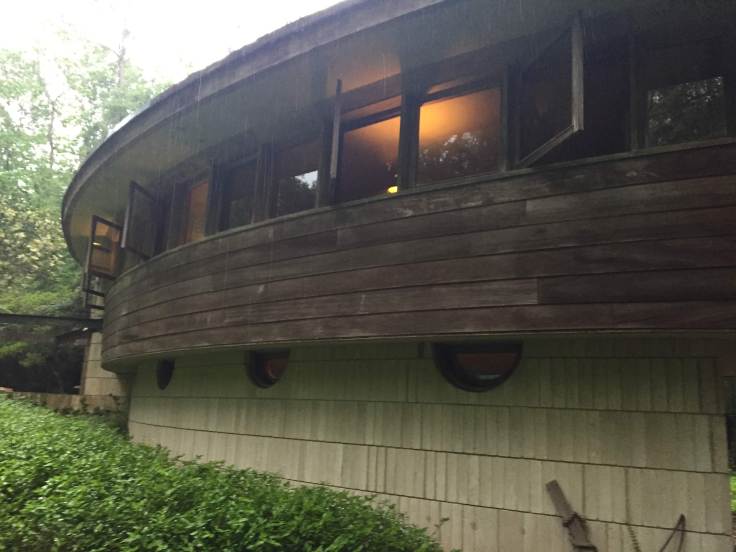
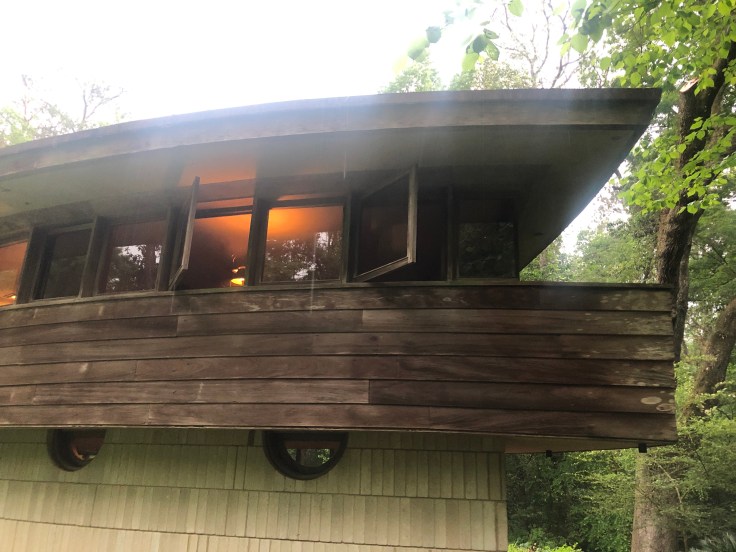
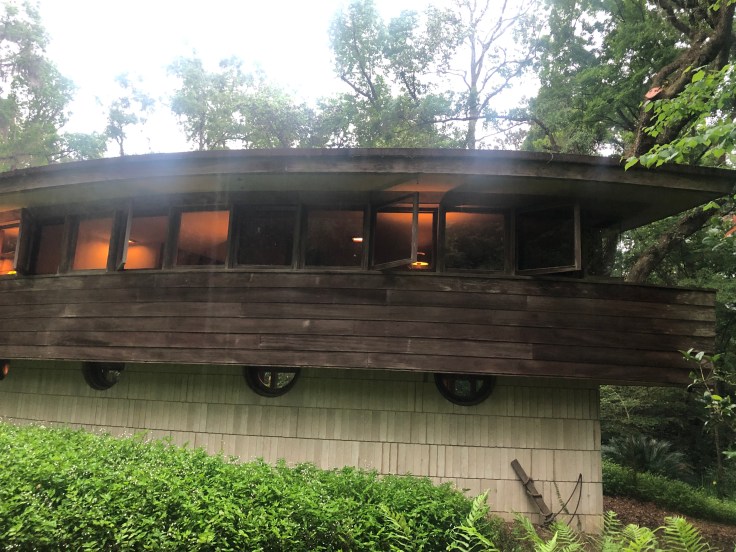
The house is boat shaped, and it has three curved walls, the two exterior walls being convex, and the interior balcony being concave.  The ends are pointed.  There is a huge two-story tall curved wall of glass facing the forest; all the major rooms in the house face this wall of glass and have a continuous view of the wall of trees a few feet away from the house.  Spectacular!  Unfortunately, interior photos are not allowed…

img_1978img_1979img_7830img_7831img_7832img_1980

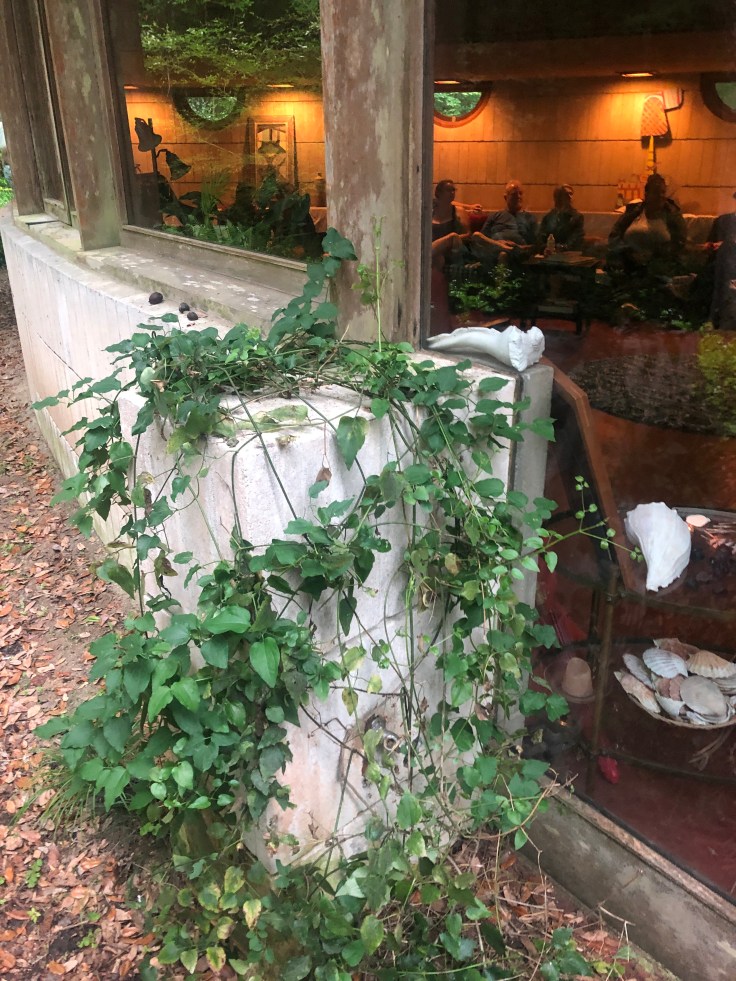
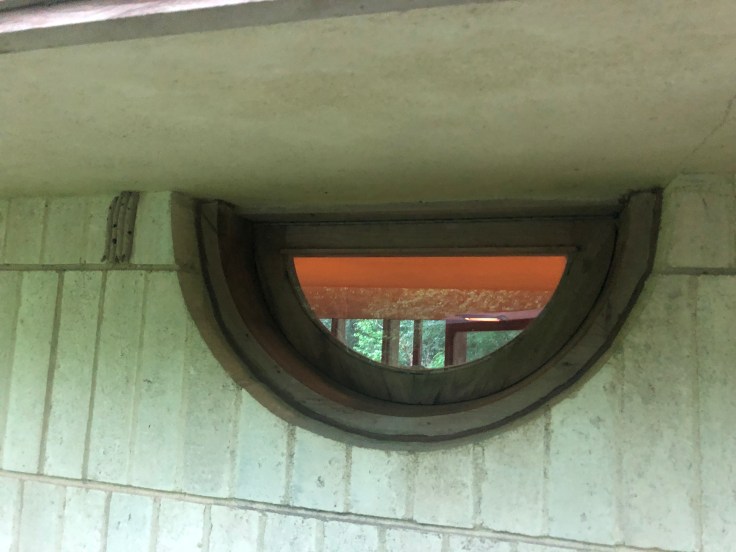
The little windows resemble half-portholes…

img_7833

The ship lap siding runs through the glass…

img_1981img_7834img_7835img_1982img_1983img_7836img_1985

So between talking to Byrd, the other docents, and other visitors, we spent a delightful two hours.

We then traveled to the home of the WBCCI Caravan Director, Jay Thompson, and his wife, Elna.  They were leaders of the Southwest Caravan that we did last year.  We had a nice time catching up, drinking wine, and batting around ideas about how the caravan experience can be improved…

We returned to the Villa about 6:30 and enjoyed a bottle of wine and some pasta…

img_1988

And an enjoyable time was had by all…

Blog at WordPress.com.

Up ↑