Search

Adventures in the Villa

Category

Architecture

2018-09-01 – WBCCI 2018 Southwest Adventure Caravan – Day 14 – Mesa Verde National Park

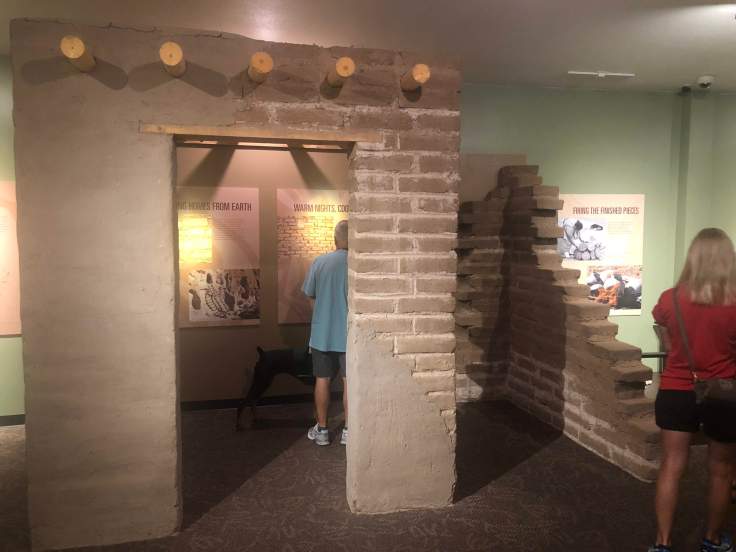
Today we spent more time exploring Mesa Verde… We started at the Chapin Mesa Museum, adjacent to the park headquarters.  The museum had the usual exhibits about the flora and fauna of the park, plus some history and archaeological data.  And a Gift Shop…  Most interesting were miniature dioramas, or models, of the typical pueblo life during the various periods of occupancy, from 650 to 1300.  These beautiful models were built by the CCC (Civilian Conservation Corps) during the 1930s…

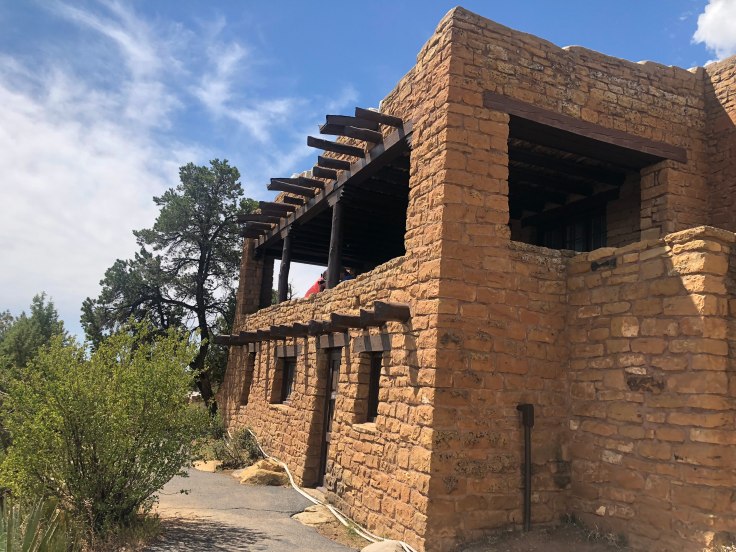
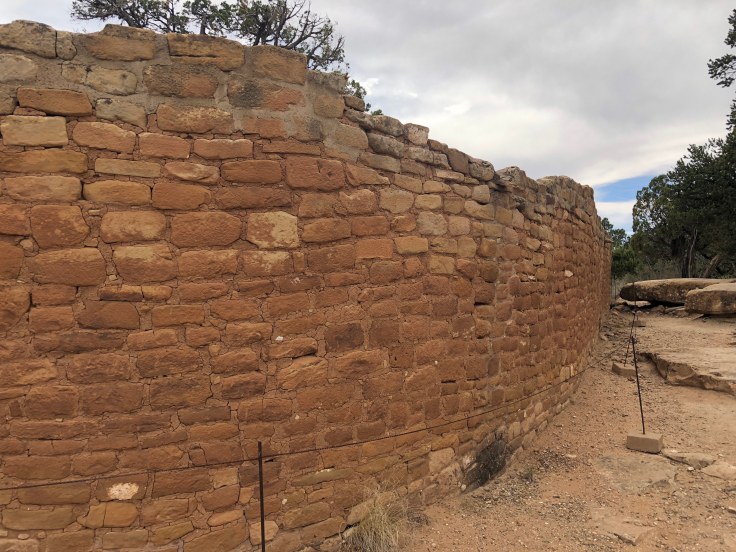
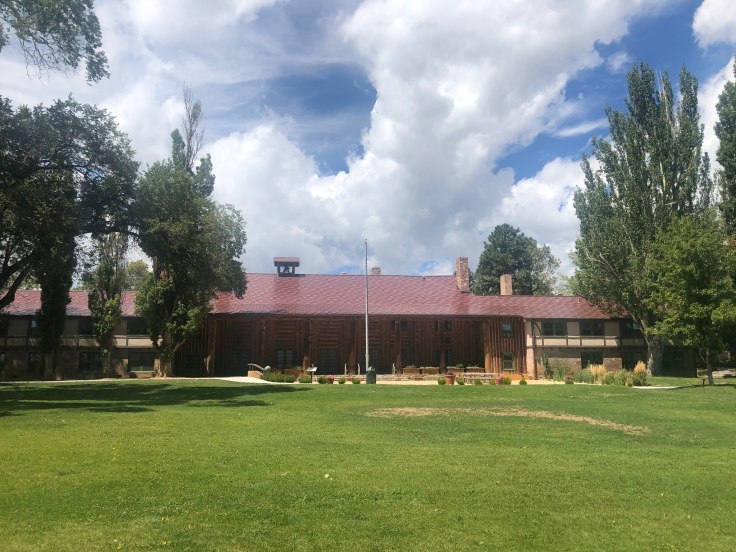
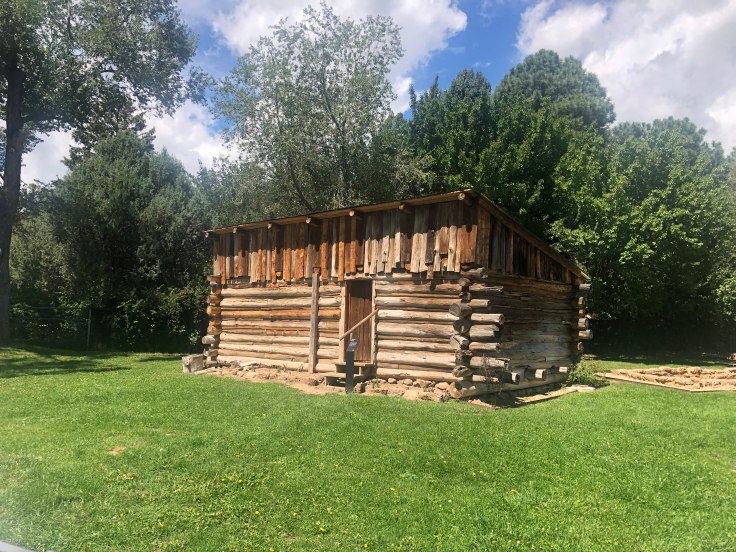
What interested me more were the buildings at the museum and the park headquarters.  The scale and massing was lovely, and the buildings were clustered as if they composed a small village… They were built with volcanic stone blocks, left un-plastered…

img_6997img_7001img_7002img_7003img_7039img_7040img_7041img_7042img_7043

img_7046

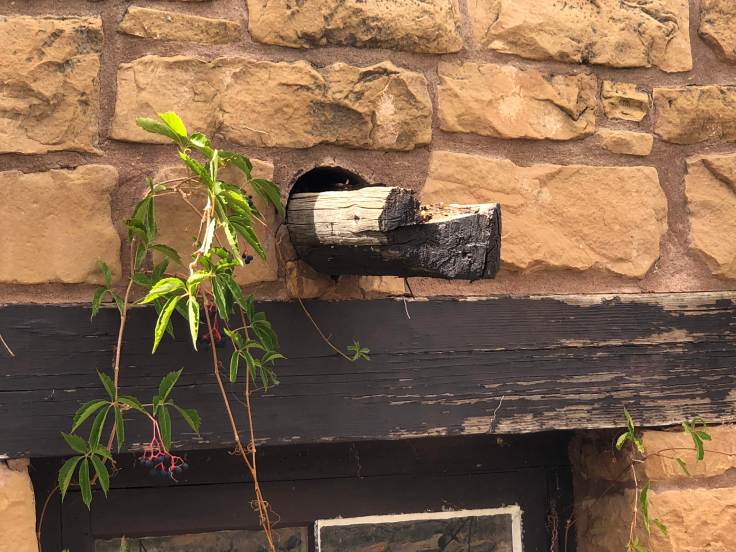
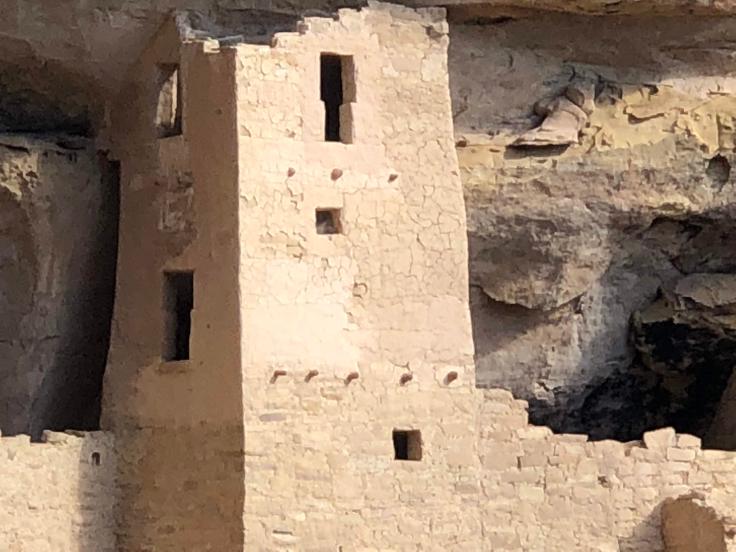
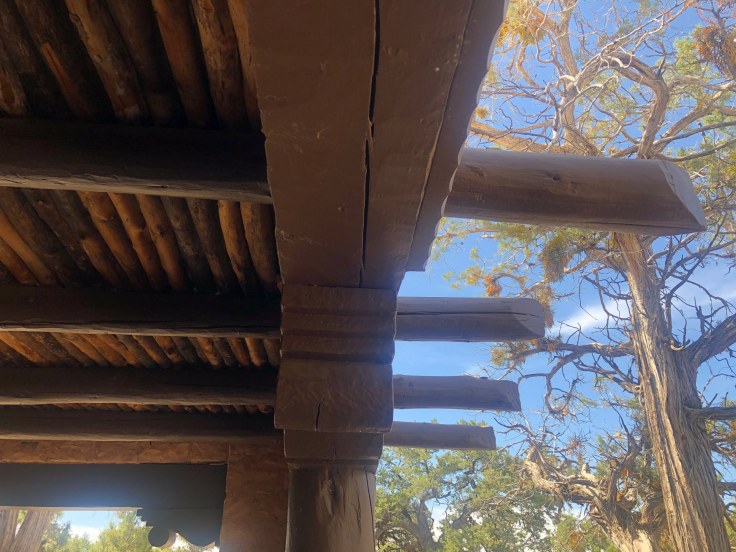
Did you notice the vigas?  They are done very well.  And they are real!
img_6999

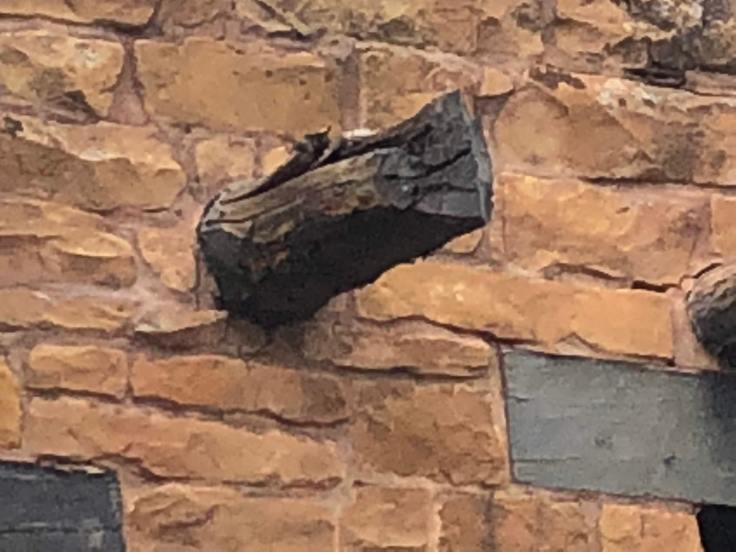
They are not simply stuck onto the exterior as decoration.  They form the structure for the floor or roof above, and they extend through the wall as part of the structural connection.  Another thing: they are Juniper.  Juniper is naturally rot and disease-resistant.  While the vigas in the park buildings are 85-90 years old, the vigas in the Pueblo are 500 years old, and very few of them show any evidence of rot…

Except for these…
img_7047

img_7038img_6998

Still, not bad for 85-90 years.  Today’s tract houses in Santa Fe use Douglas Fir or Southern Pine for their fake vigas, and they show rot beginning in year one…!

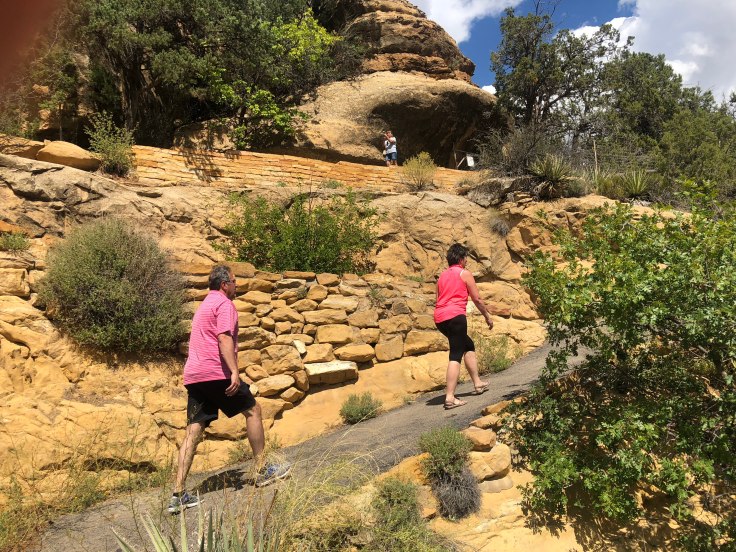
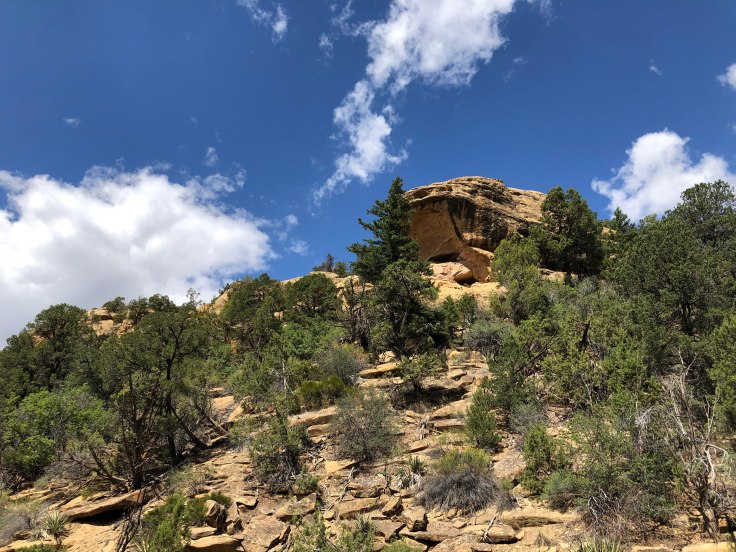
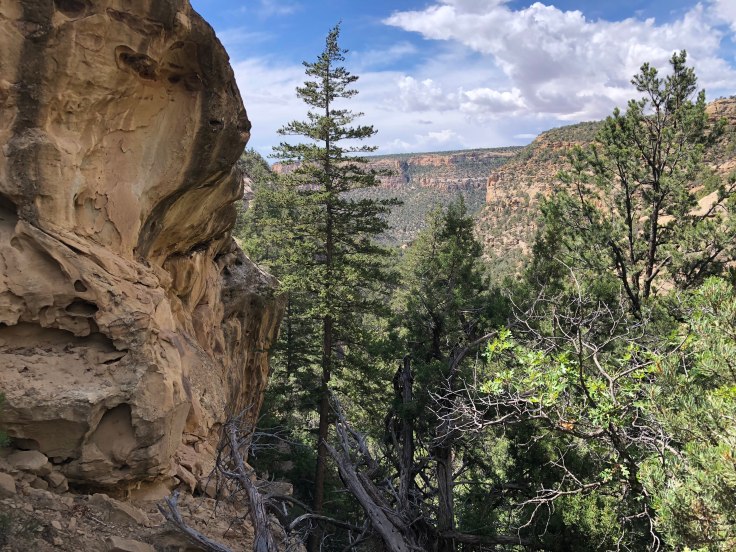
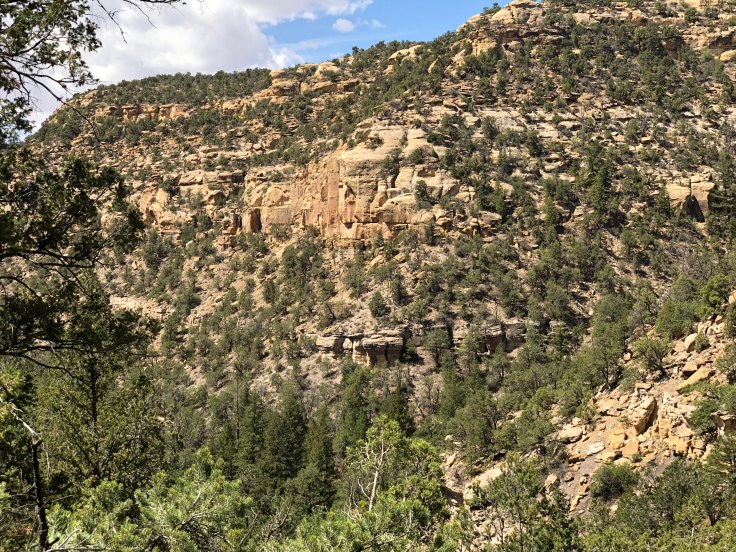
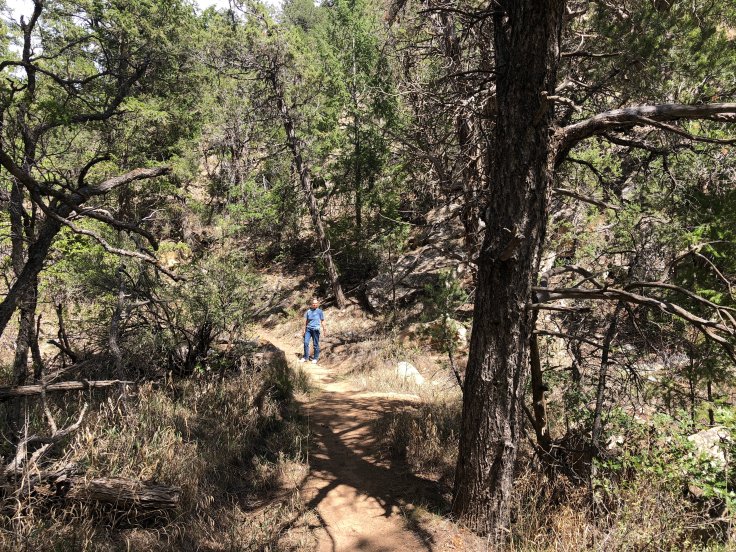
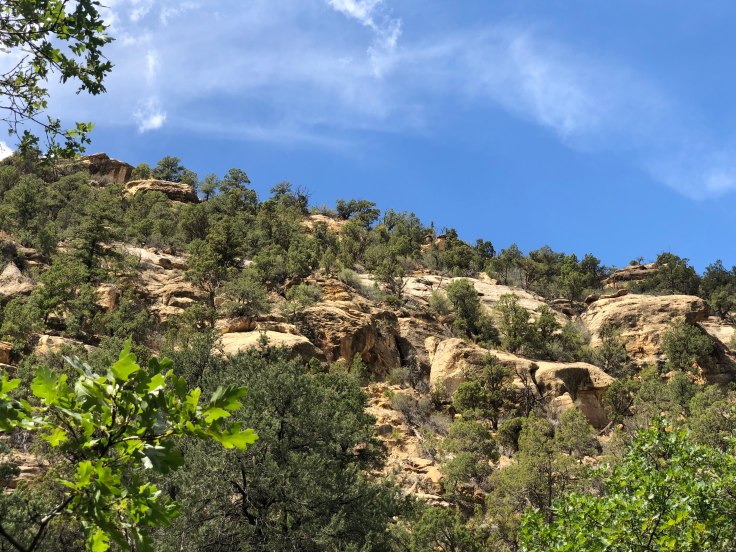
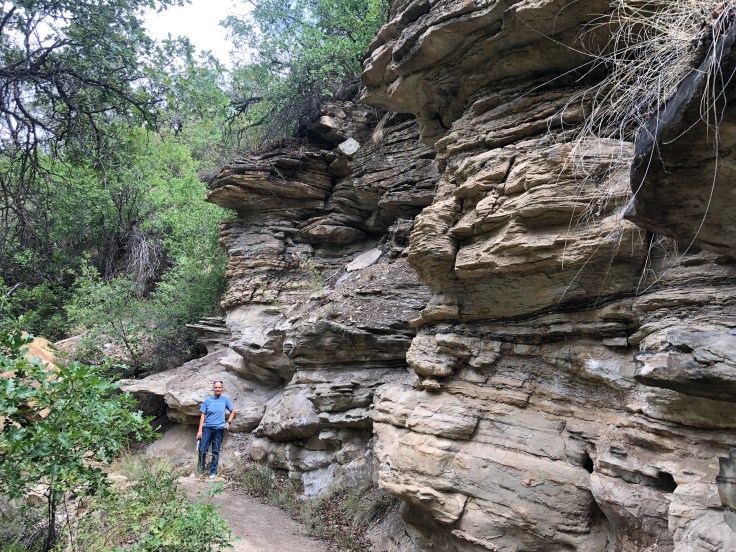
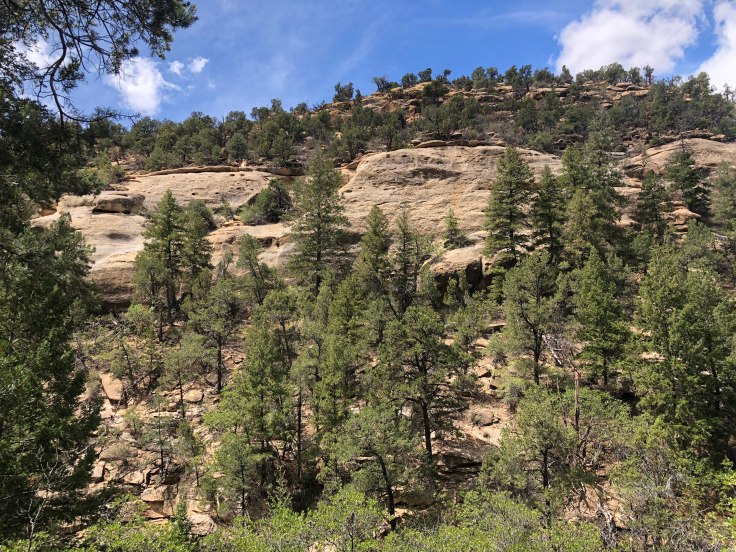
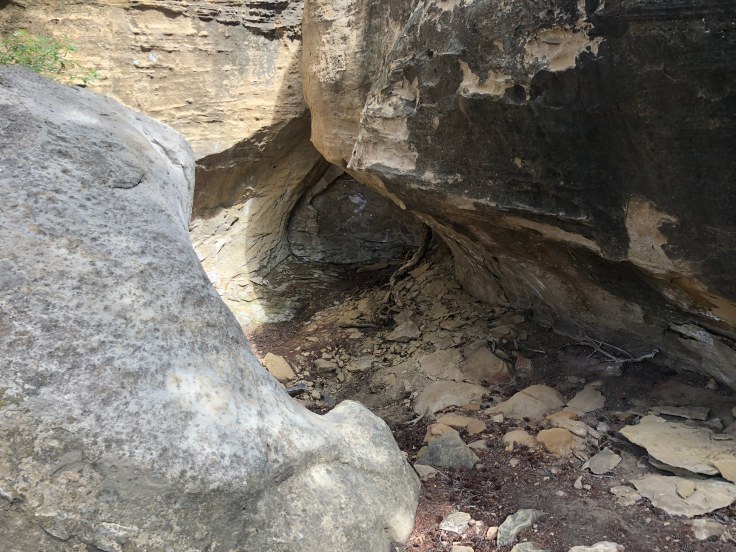
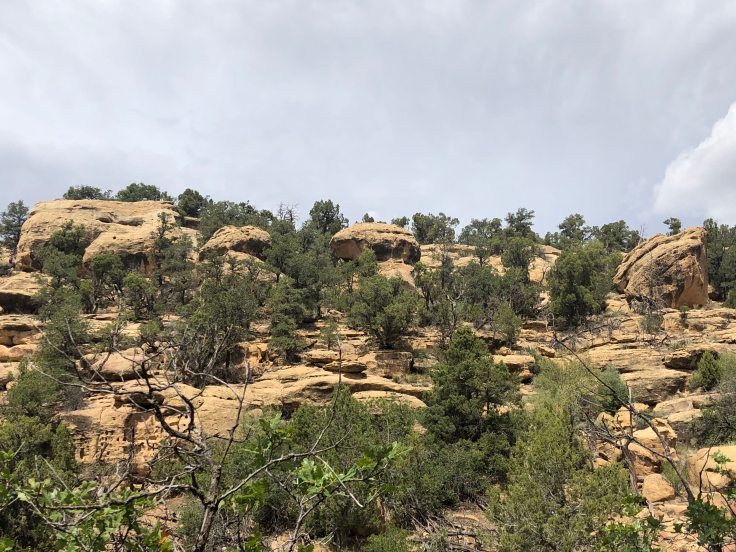
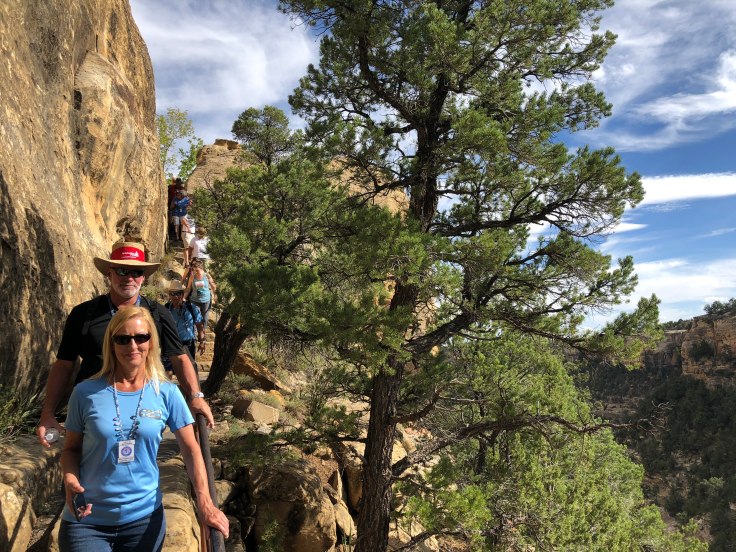
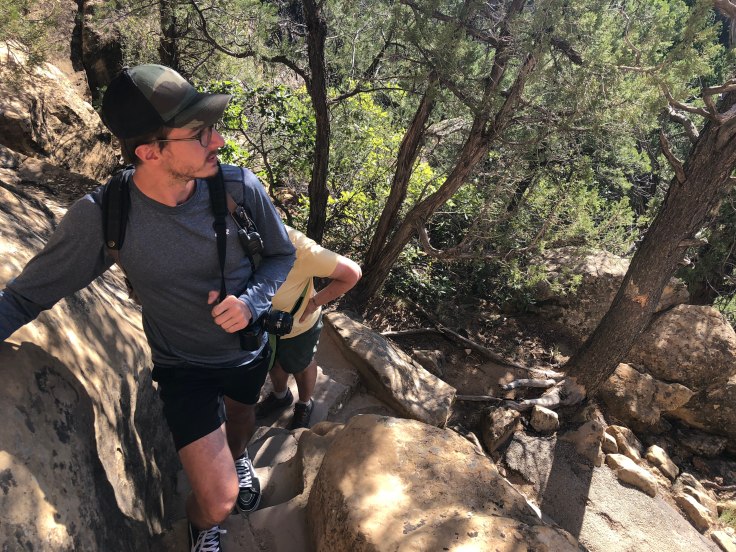
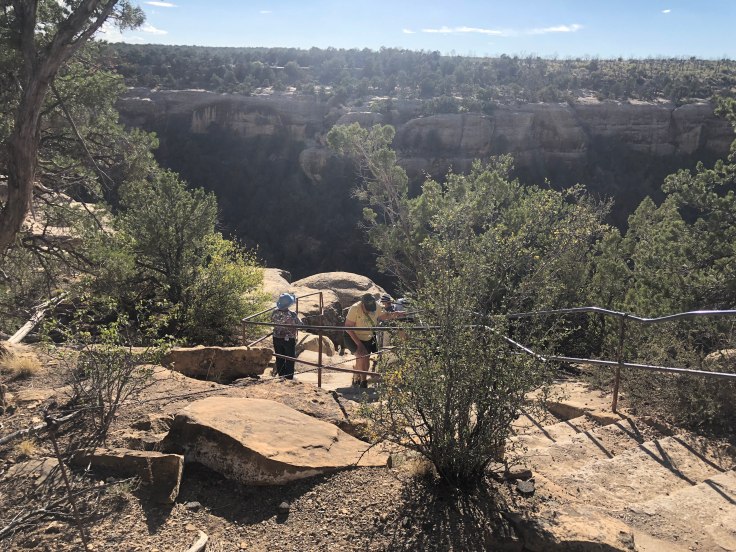
After the museum we set out on a “hike”  We are not generally hikers – we are walkers.  This was a well-marked trail.  It descends into Spruce Canyon, and goes down, and down, and down… About 586 vertical feet.  The loop is almost 3 miles.  But we were up to it.  Being in the canyon is a little surreal, seeing the bushes, trees, rocks, and other feats of nature…
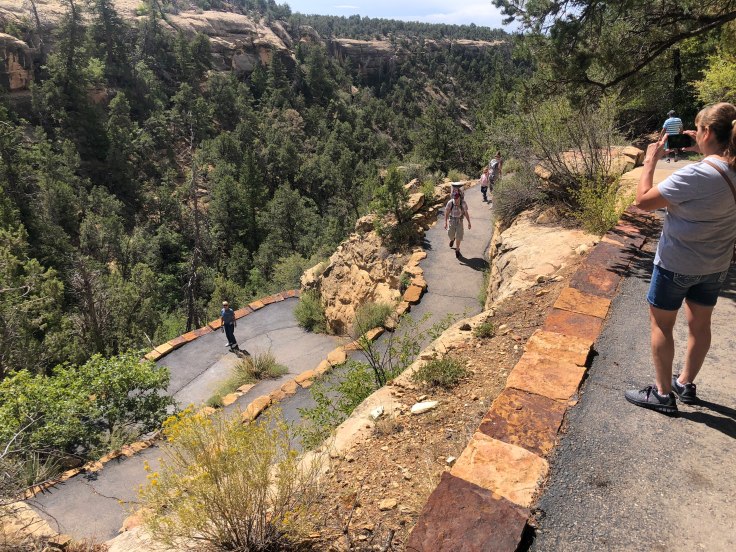
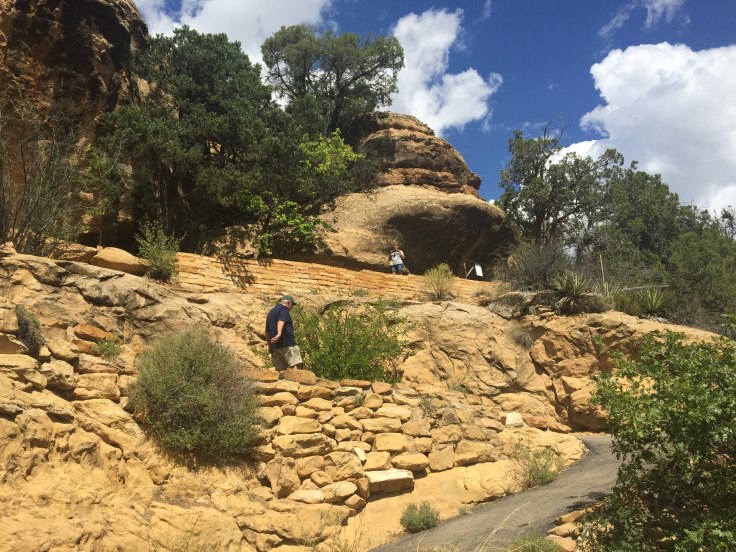
img_7013img_4806img_7014img_7016img_4808img_7018img_7020img_4811img_7022img_7024img_7026img_7027img_7028img_7031img_7033img_7034img_7036

We did discover this gruesome evidence of wildlife…

img_7030

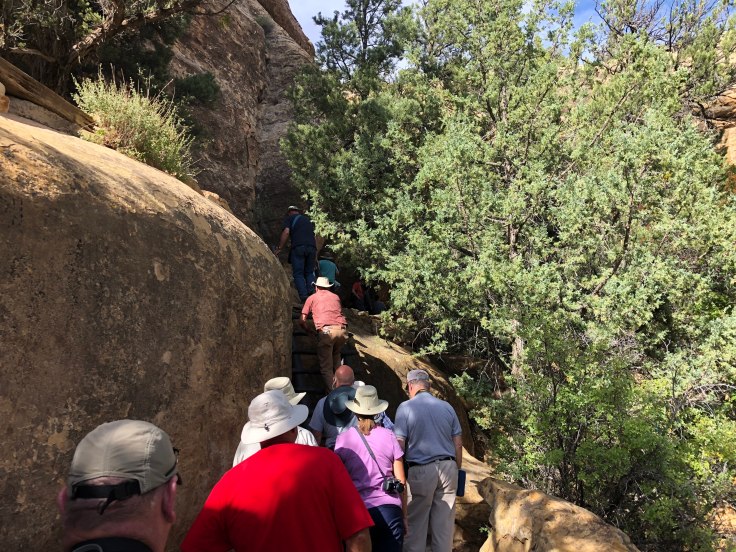
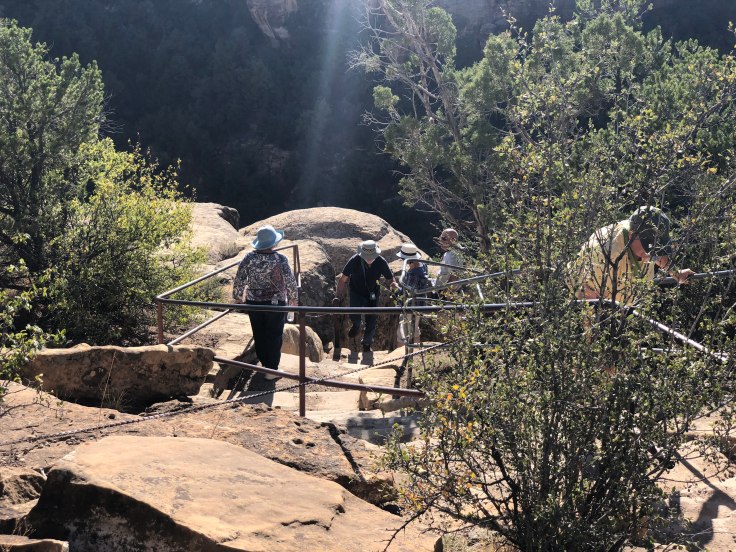
Of course, after we walked down we had to walk up again.  While the descent was gradual, the ascent was very short and steep… And we made it!
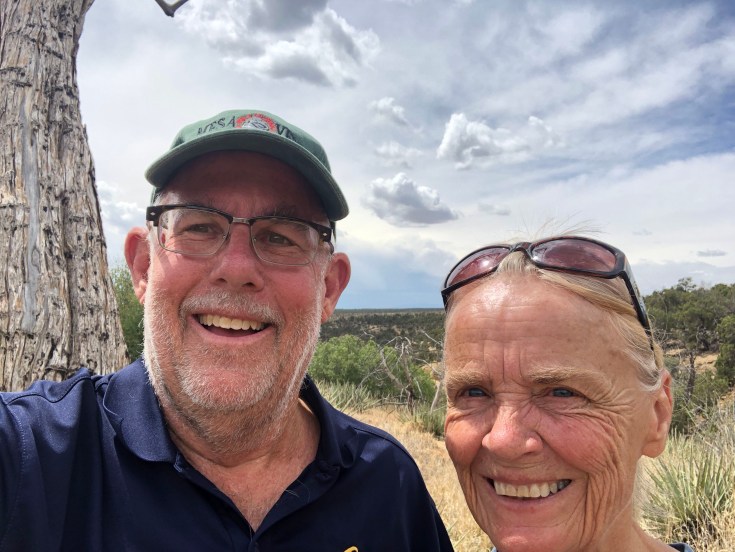
img_7037

Walking back to the truck we heard thunder all the way.  But there was no rain…

We again admired some of the park buildings… This is the original 1930s restroom building:

img_70441

Nice proportions, authentic wood lintel, posts, and capitals, excellent stonework…

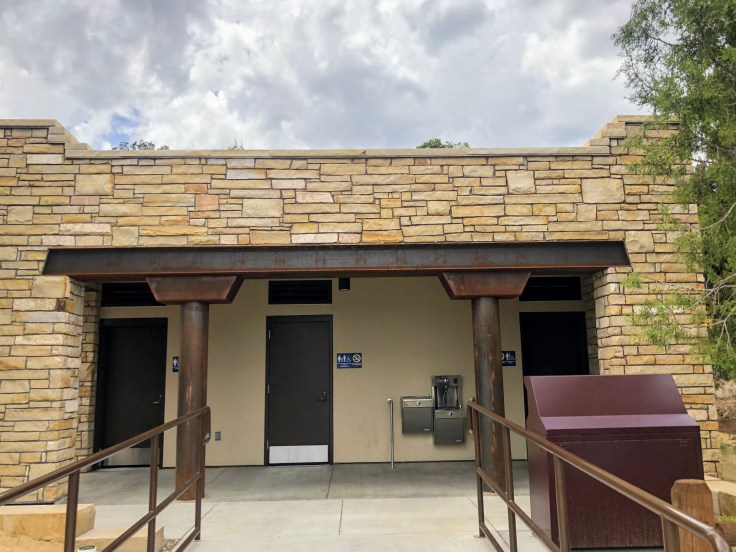
Next door they built a new restroom building containing facilities accessible to the disabled…
img_70451

Nice proportions, excellent stonework… Nicely proportioned lintels, posts and capitals, but note:  They are steel!  Clearly, this building pays homage to the historical architecture, but it uses modern materials when duplicating the historic materials would compromise the integrity of a modern building.  Well done, Architect, whoever you are…!

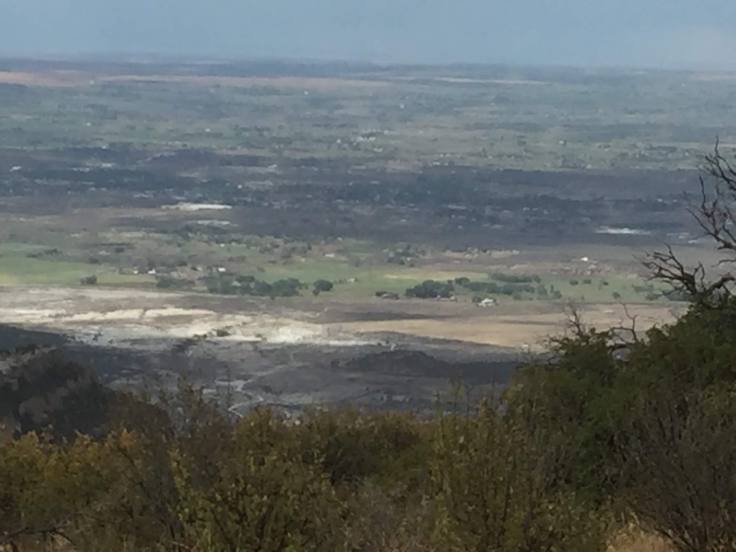
As we approached our next destination in the truck it started to rain… We stopped at Park Point, the highest point in the park, at 8,572 feet elevation.  This is about 700 feet above the campground…
img_4819

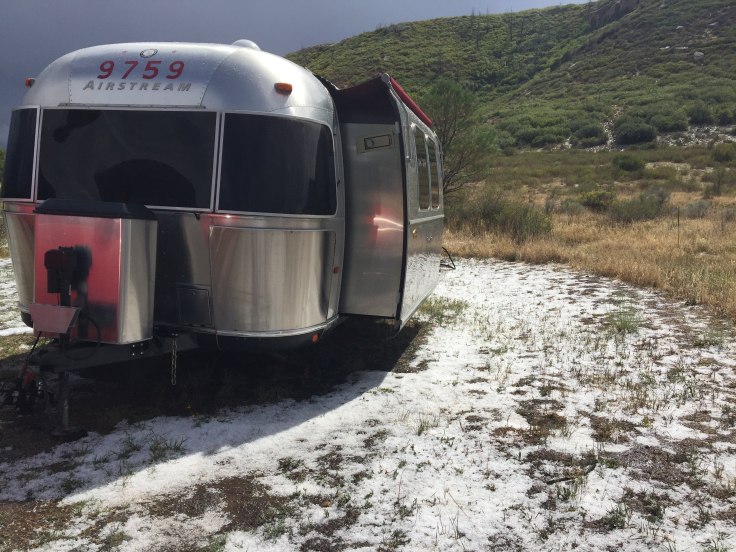
It was lightly raining, but we couldn’t help but notice this white gravel on the ground.  Upon closer inspection, we discovered it was hail!

img_7054img_4826

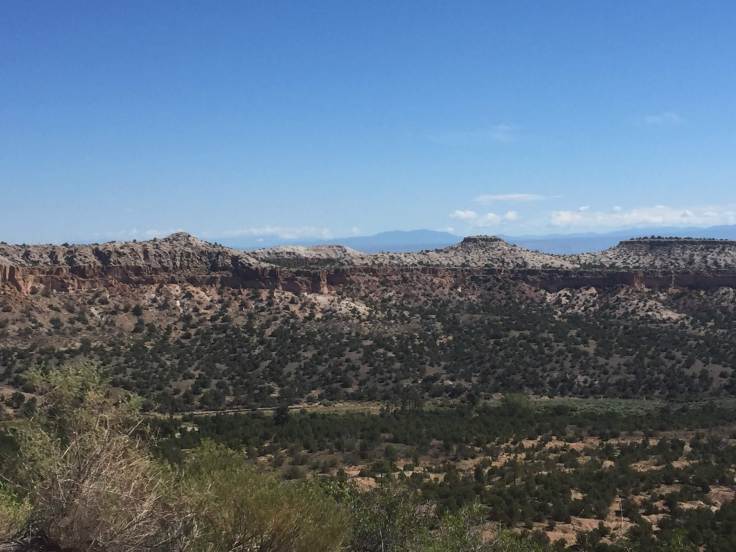
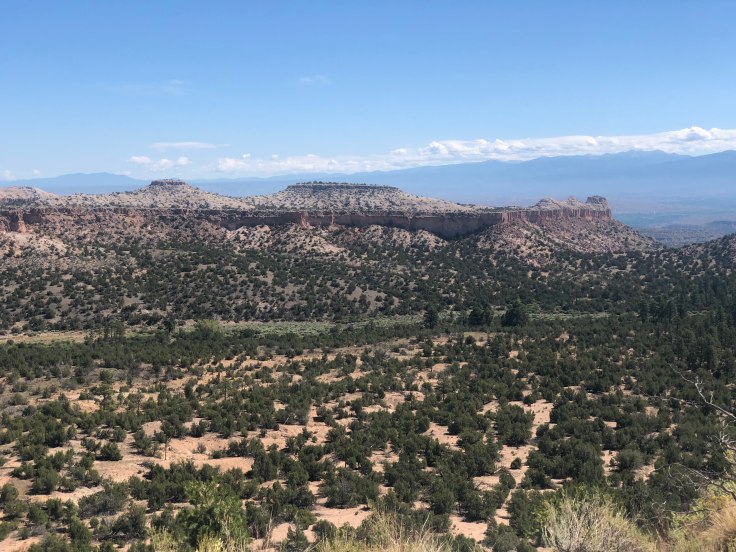
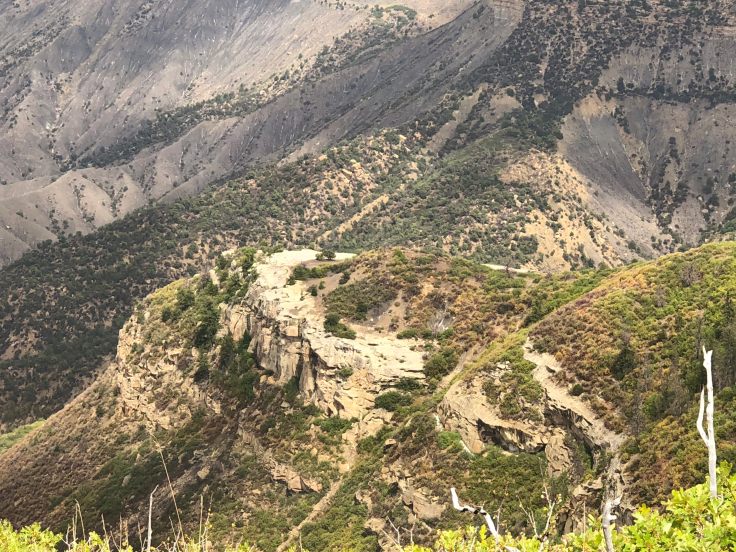
Views are amazing, in all directions…
img_7059

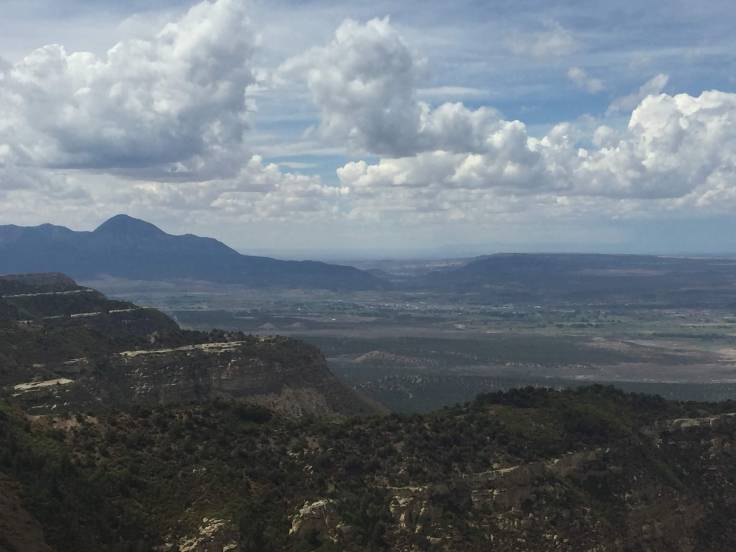
We could see all the way to Utah, Arizona, and New Mexico, plus, of course, Colorado…
img_4828img_7062

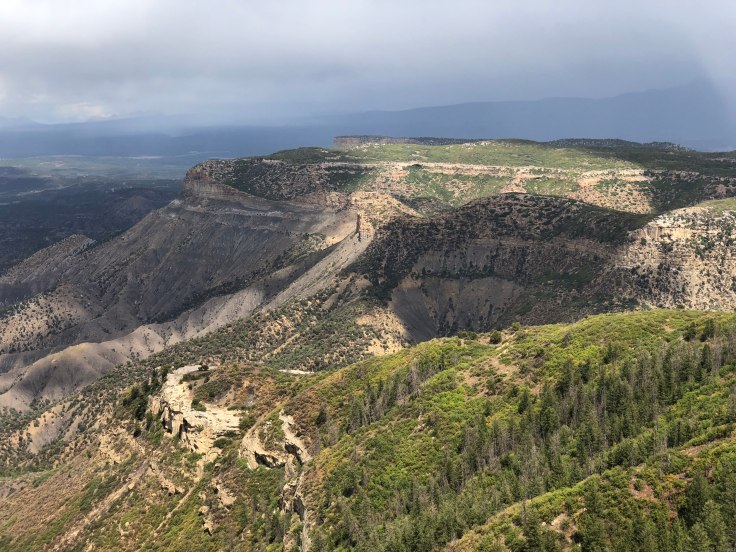
This is “The Sleeping Ute”, a mountaintop in Utah that is supposed to resemble a sleeping Indian…

img_7063img_7066img_7069

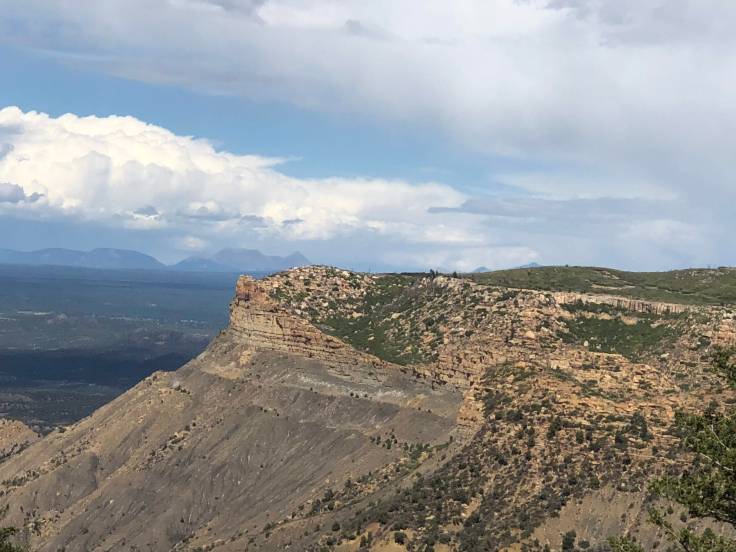
This is “Knife Edge mountain, which is our next stop…
img_7070img_7072img_4831

Our next view overlook is called “Knife Edge”…

img_7074img_7075img_4833

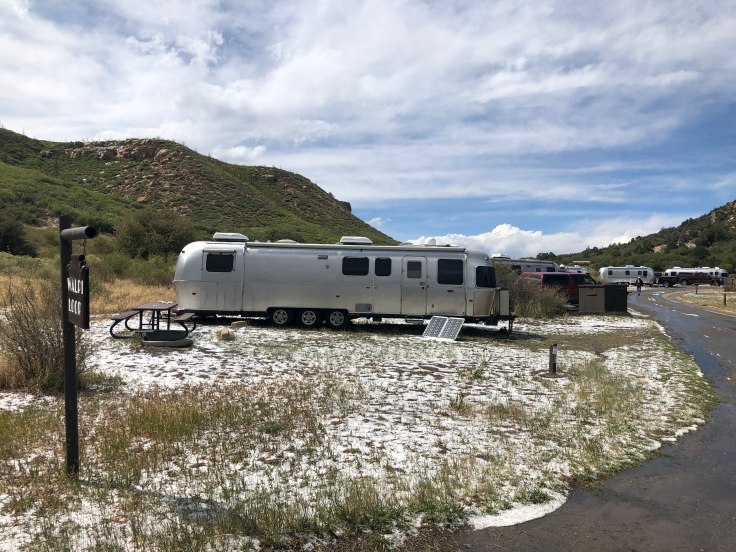
So we then headed back to The Villa… And we were in for a surprise:  It had hailed at the campground, too!
img_7076img_4834img_4837

The hail was small – no damage to The Villa.  It lasted about an hour on the ground…  Later that evening we had another “Fandango” to meet other caravaners.  We were hosts, so we had 8 people inside the Villa…

And an enjoyable time was had by all…
2018-08-31 – WBCCI 2018 Southwest Adventure Caravan – Day 13 – Traveling to Mesa Verde National Park

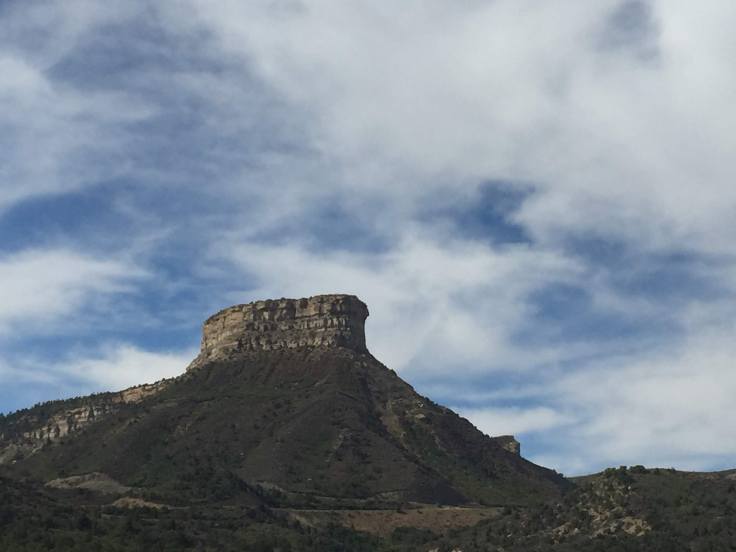
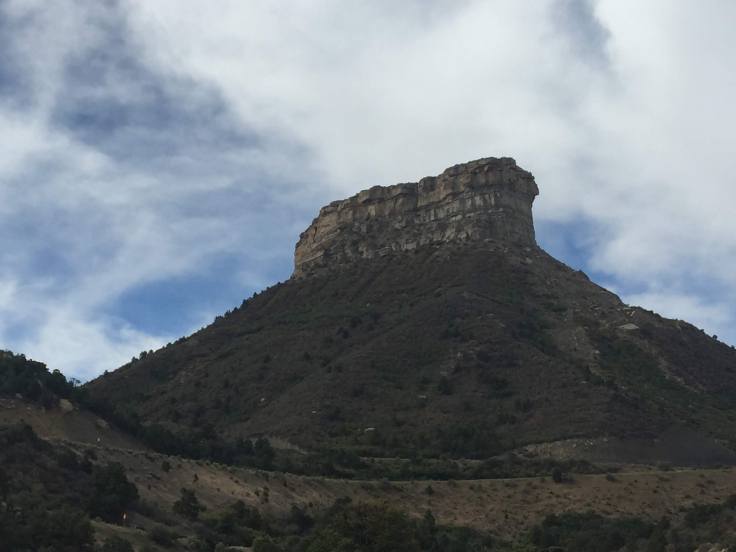
We pulled out of Durango and drove to Mesa Verde National Park, so designated in 1906, one of the very first fourteen National Parks, back before Park Service was created in 1917;  Mesa Verde was designated to “preserve the works of man,” the first national park of its kind.  The other first National Parks were all created to preserve natural wonders…

It was a short drive – only 35 miles – but that is the horizontal distance.  We also climbed up over 1,000 feet vertically, as the campground was at the top of this mesa…! (Not the top of the rock, just to the mesa behind it…

img_4729img_4730img_6887

We are “dry camping” here – no water, sewer, or electrical hook-ups.  Thus, there was a plethora of solar panels and generators present around all the Airstreams…

We had little set-up to do, and we soon set out for a 5 hour bus tour of the Mesa Verde Park.

We saw some splendid scenery – the bus tour drove us around the mesa-top and we saw many archaeological remains.  Native peoples – the Ancients, or Indians, or Puebloans (pick your terms – I’ll call them Indians, as the locals prefer to be called…) – settled in this area about AD650 and continued to live here until the early 1300s, when they all moved, over about a 20 year period, to Taos, Sante Fe, and the other 17 Pueblos in New Mexico along the Rio Grande River.  No one knows for sure why they left, but the obvious reason was to find more fertile land with a reliable water source.

We saw several various structures used by the Indians across the centuries… And I have thousands of photos to prove it…

img_6902img_4739img_4741img_6910img_6926img_6932

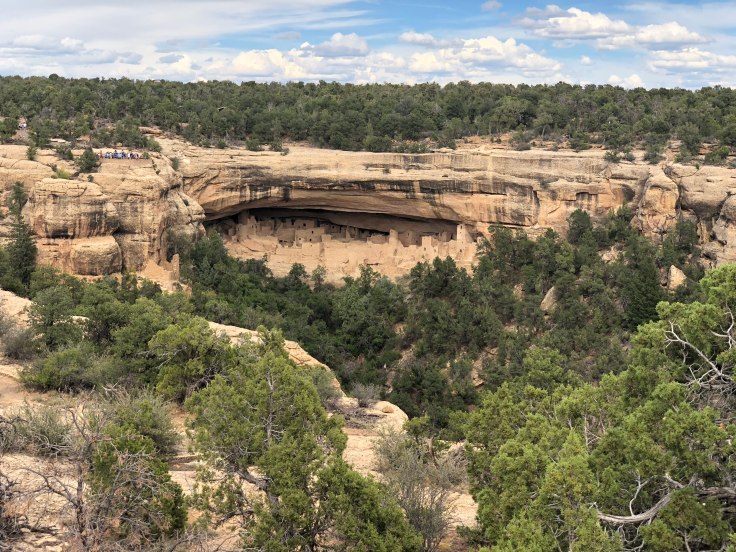
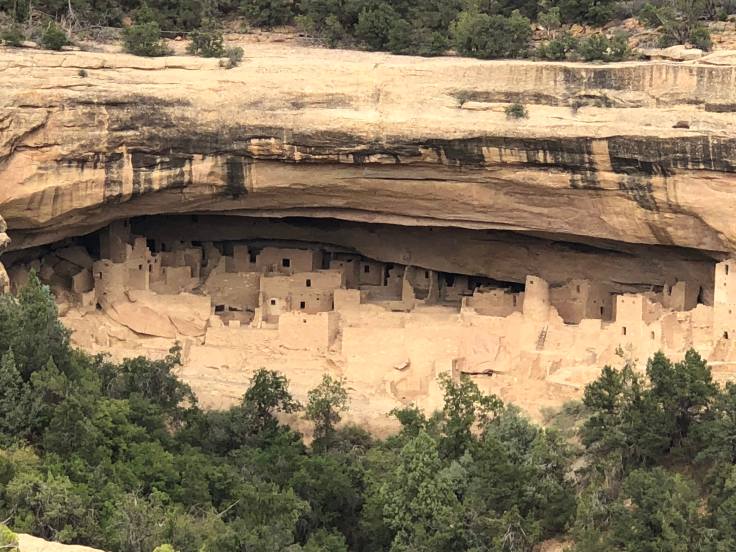
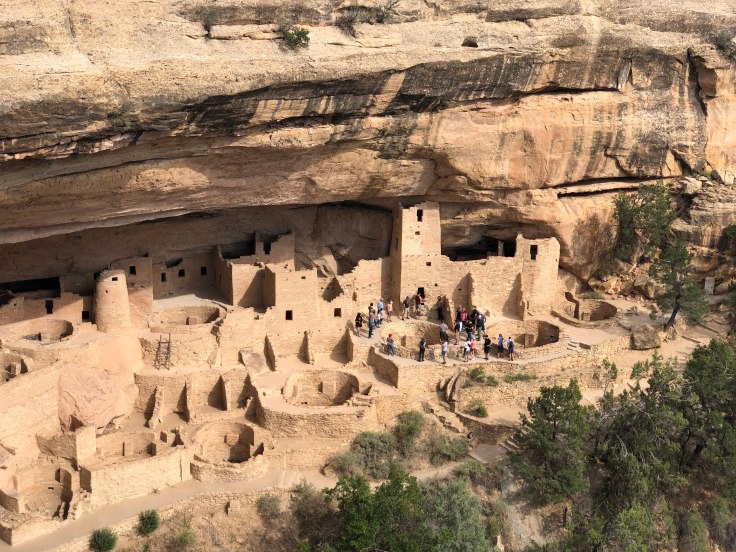
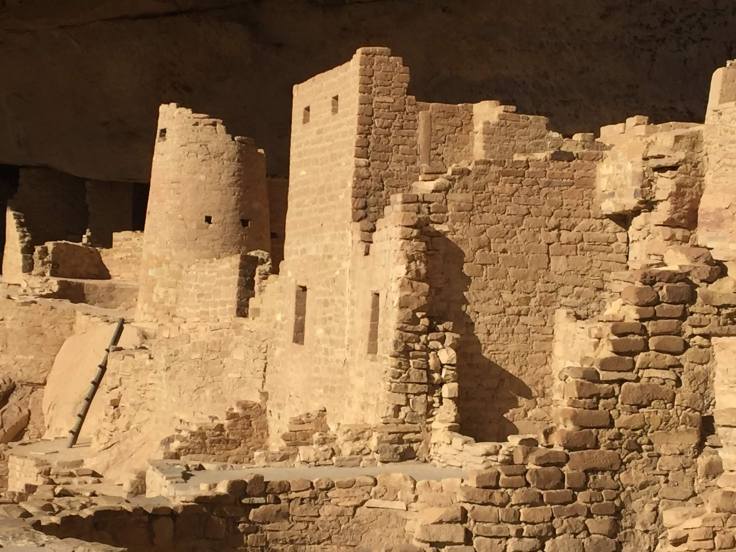
We saw some cliff dwellings from a distance.  But the pay-off for the day was seeing the Cliff Palace, the largest, and best preserved, of the cliff dwellings.

img_6936img_6935

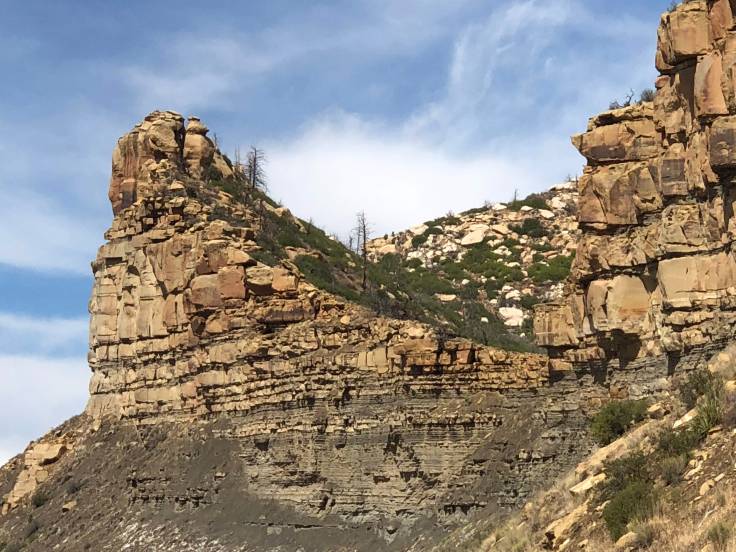
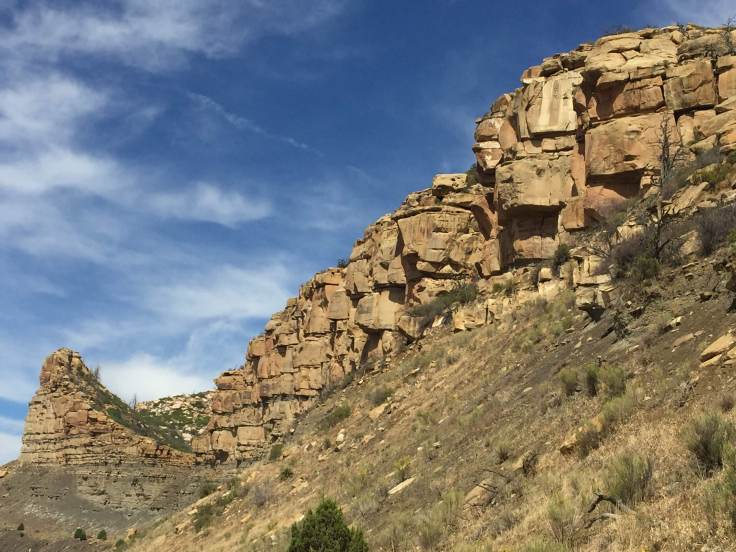
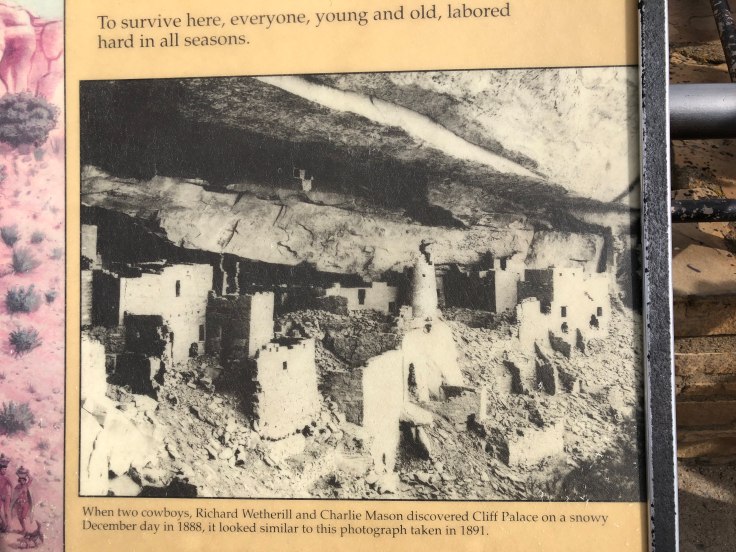
On December 18th, 1888, two cowboys, Richard Wetherill and his brother-in-law Charlie Mason, were riding across the mesa top looking for stray cattle. At the edge of the pinyon and juniper forest they came upon a vast canyon.  It looked like this…

img_6952

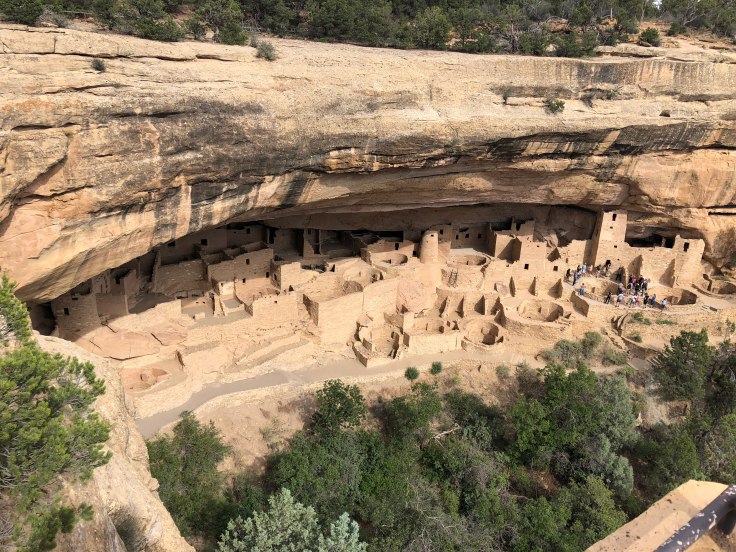
Today, it has been restored and reassembled where possible.  Basically, they put back up the blocks that had fallen, and they stabilized the ruins.

We assembled for the tour at a platform that offered a closer view…

img_6950img_6947img_6948

We were able to get even closer by descending from the mesa about 150 vertical feet into the canyon, climbing down stone steps built by the National Park Service.  (Indians used ladders and hand- and foot-holds and climbed up the face of the canyon…)

img_6953img_6954img_6955img_6956

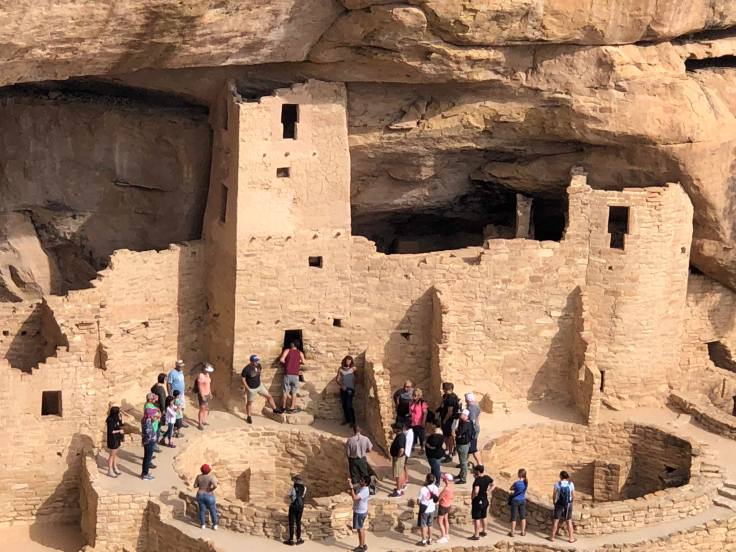
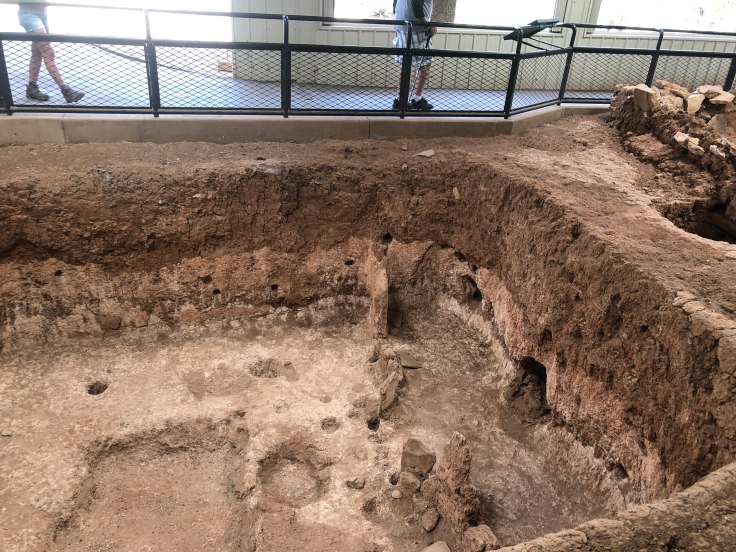
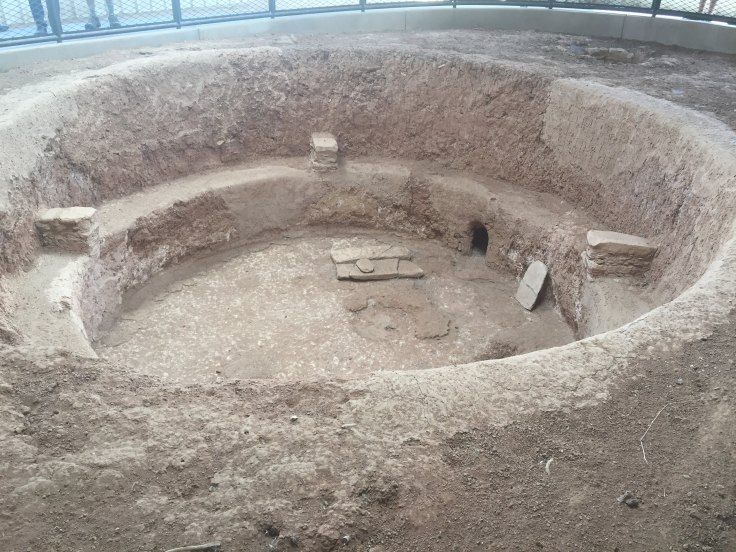
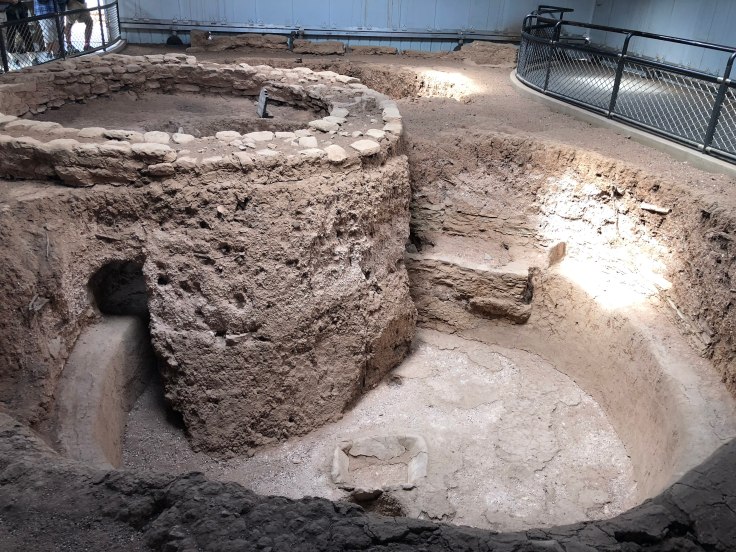
Once we were at the level of the pueblo, we heard a ranger talk about the history and give us archaeological information.  There are 150 rooms, including 19 kivas, or subterranean dwellings with religious significance.  The 150 rooms extend back into the cliff over 90 feet…

img_6959

We proceeded to walk along the base and see the pueblo up close…

img_6969img_6968img_4785img_4794img_4796img_4799

Yes – even here there are vigas… more on the vigas tomorrow…

img_6974

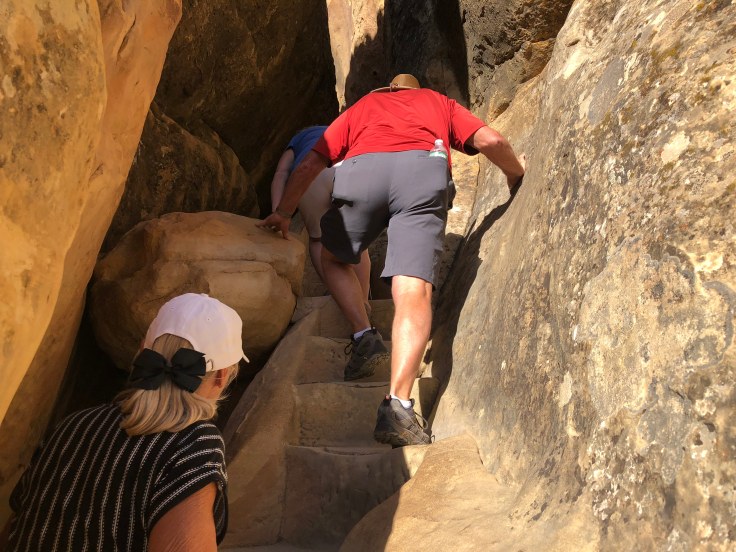
After our final ranger talk, we had to get back up to the mesa again, up 150 feet!  We started out on steps, then had to climb three ladders…

img_6981img_6980img_6982img_6984img_6986img_6989

Finally we reached the top…

img_6990img_6992

Back at the Villa, we had some visitors…

img_4801img_4802img_4803img_4804

We returned to the campground, had dinner, and went to bed before it got dark, so we didn’t have to use out batteries… (This dry camping is relatively new to us…)

And an enjoyable time was had by all…
2018-08-30 – WBCCI 2018 Southwest Adventure Caravan – Day 12 – Durango, CO

Quiet day in Durango… Blogging, laundry, walking around the RV Park… This is about as exciting as it gets…

We rode into town in the late afternoon with another caravan couple.  They wanted to walk the town a bit and we wanted to try out an olde timey saloon.

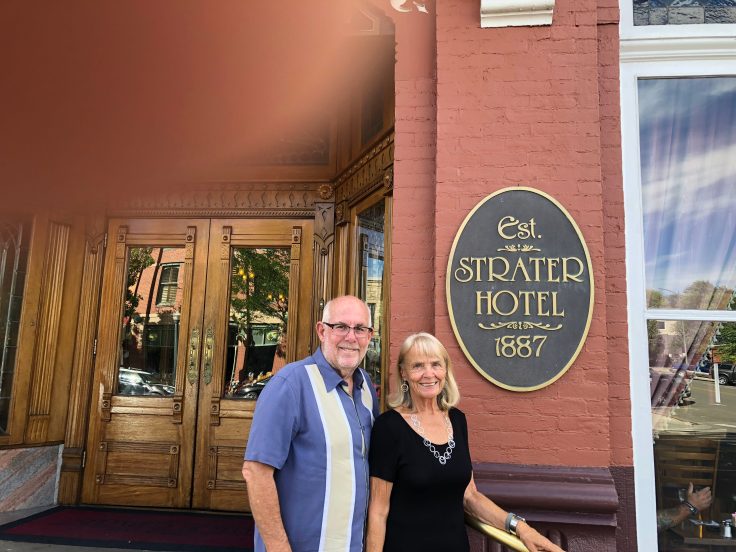
We went to the Strater Hotel, founded 1887.  We were told that in the early days one of their draws was their fresh food – rare in mining communities.  This was accomplished by raising cows and chickens in the lot behind the hotel…

img_6882

The saloon was great – all ugly Victorian decor (I know – that’s redundant…).  But the waitress was great and the drinks were good.  We even tried an appetizer of smoked dates wrapped in bacon with a drizzle of honey… Marvelous!  Just what we wanted.

img_6884

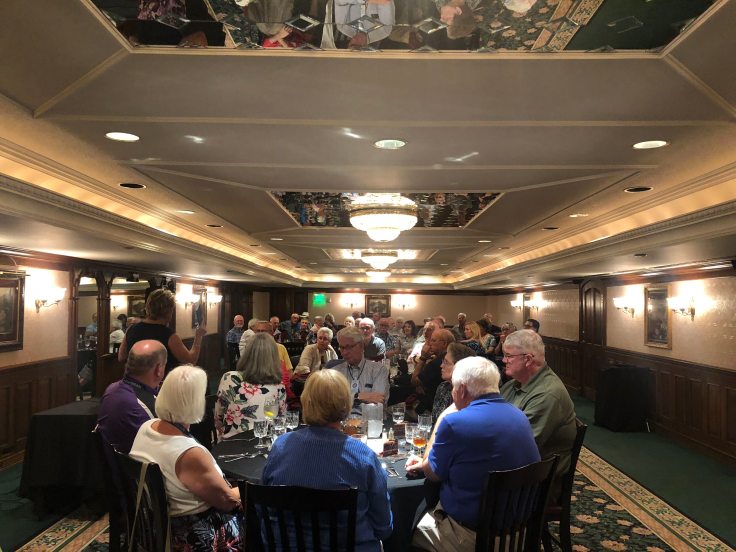
At the appointed hour we joined the other caravaners for dinner in the hotel – this was the real reason we chose this place.

img_6885

The food was good, the wine was acceptable and the service was great… This hotel has been in the same family for over four generations.  However, the fifth generation has decided they no longer want to be in the hotel business, so the hotel is for sale…  It will be the end of an era…

So, as is my tradition on short days, I will include some pictures of our perfect and great Grandchildren…

This is Evelyn, 6 1/2 months old…

img_5255

This is Roisin – what you can see of her, learning to hang around…

img_52501

And this is Roisin again, 5 1/2 years old, reading to Evelyn whilst Mom puts the boys to bed…

img_6886

And the boys:

img_5281

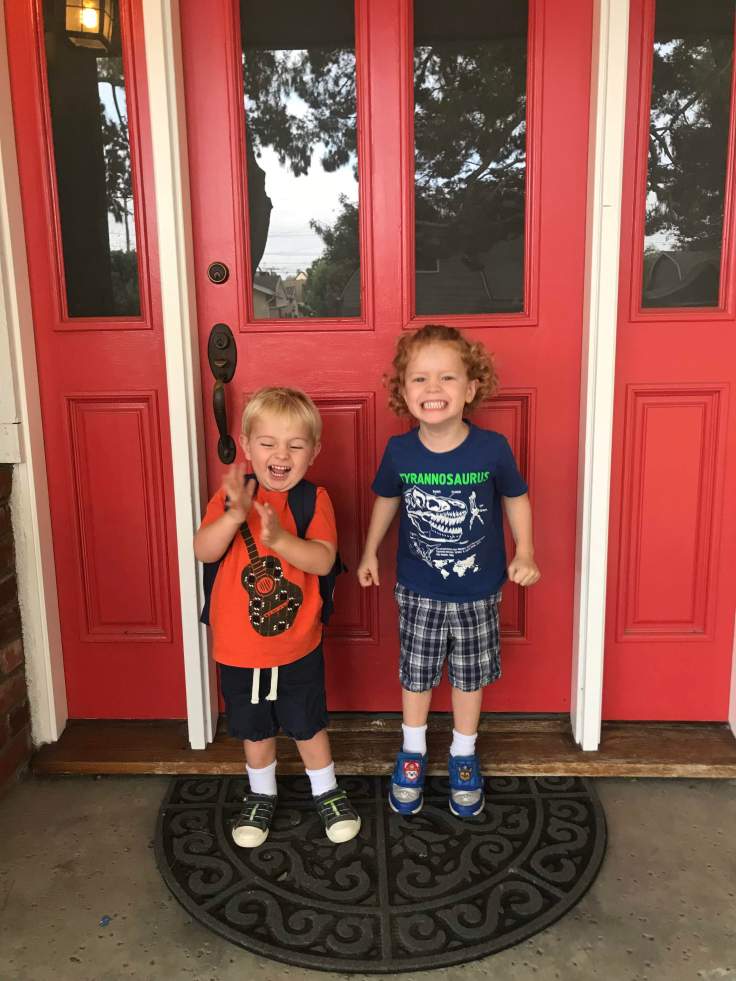
George is almost 3 and Ian is 4 1/2… First day at the new preschool…!

And an enjoyable time was had by all…


2018-08-28 – WBCCI 2018 Southwest Adventure Caravan – Day 10 – Durango

We had a free day in Durango.  We took it easy and caught up on a few chores…

We drove into Durango, about 6 miles away.  We checked out the location of the train depot and parking – tomorrow we will be riding the Durango and Silverton Narrow Gauge Rail Road to Silverton, about 45 miles (driving distance) north of here….

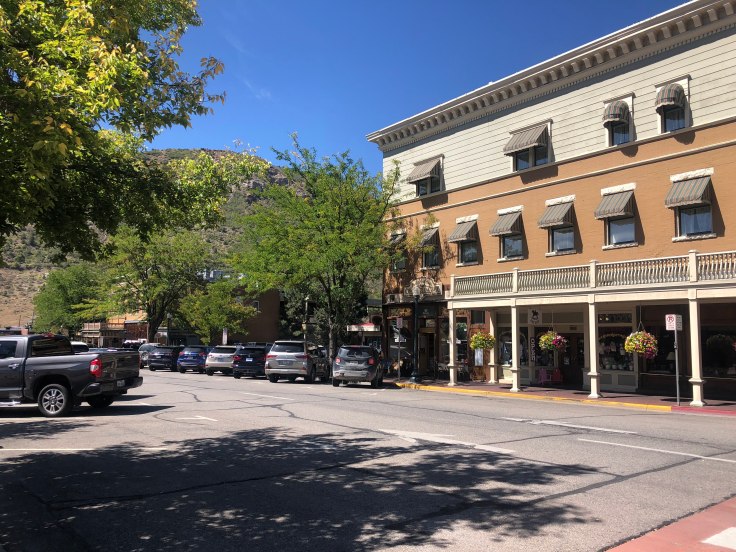
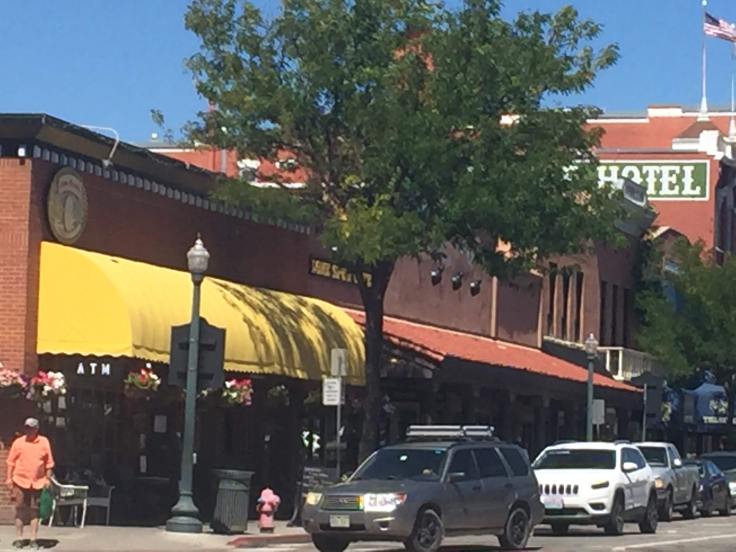
After being satisfied that we could find the depot tomorrow morning at 7:00 am, we walked up and down Main Avenue…

img_6743img_6744img_4644img_4645img_4647img_4648img_4649

For lunch we stopped in at Ken and Sue’s Restaurant.  Very nice contemporary cuisine – what we most often like.  I had fabulous angel hair pasta with shrimp and sun dried tomatoes and Lynda had a very innovative pot pie.. We shared a nice bottle of Russian River Valley Pinot Noir…

Back at the RV Park, we relaxed and did nothing.  At 5:00 we had another Fandango, where we enjoyed happy hours and met two more Airstream couples.

img_4650

We turned in early; we need to be ready to go in the morning at 6:30 am…

And an enjoyable time was had by all…
2018-08-26 – WBCCI 2018 Southwest Adventure Caravan – Day 8 – Los Alamos

Another free day in Pojoaque.  We had a relaxing morning, then headed out to see Los Alamos.

img_6704

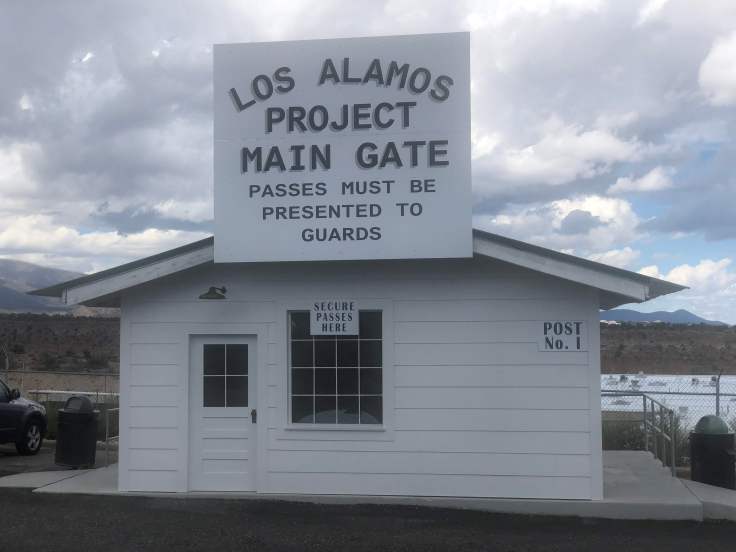
As most of you know, Los Alamos was the site of the Manhattan Project during World War II, and it continues to be a large research center even today.

In 1942, when FDR decided to consolidate all nuclear research into one, top-secret location, there was no Los Alamos.  There was an exclusive boys boarding “prep” school, The Ranch School, plus a dozen or so homesteaders who farmed these mesas in the summer.  The US government instituted eminent domain proceedings and gave the residents about two months to vacate the premises, with an insistence that the reasons for leaving must be kept secret.  It’s hard to understand what it must have been like to abruptly close a school, and be unable to tell anyone why…

What drew the leaders of the Manhattan Project to this location was the infrastructure of the school itself, which included water supply, electricity, and buildings. Another reason was the geography and the remote location.

Los Alamos is located approximately 35 miles to the northwest of Santa Fe.  The elevation is about 7,320 feet, and total land area is 11.14 square miles, most of which was already owned by the Federal government.

Los Alamos is located on flat mesa tops separated by steep canyons.

img_4609img_6694img_6693img_4608img_6692img_6691

This relative inaccessibility was a key reason for its selection – to help protect the secret activities of the Manhattan Project.

Everything was top secret.  There were no radio broadcasts – the “radio” signals were hard-wired to each house…  Everyone shared the same address – Post Office Box 1663, Santa Fe, NM.  No one could tell their friends and relatives where they were and what they were doing.  It is all very hard for us today to understand what this must have been like…

Today, Los Alamos is a lovely little town.  All the research laboratories have been moved to an adjacent mesa.  Some of the original buildings, mostly from the Ranch School days, still exist, plus some houses used by some of the most prominent members of the community.

This is “The Lodge”, the Ranch School’s Dining Hall.  The newer wings were added after WWII…

img_6700

This is a cabin, originally used by the Ranch School founder, Ashley Pond.  It was moved to this site.  It was originally in a remote location, and was used for some early research activities…

img_6698

One of the houses used by scientist Bethe has been restored…

img_6696

The Guest House was used by prominent visitors.  Today it is the Museum…

img_6701

The Ranch School was founded by Ashley Pond in 1917.  The boys of the school built this small lake, and named it Ashley Pond… All the original research labs were built around the pond.  It is the centerpiece of a city park today…

img_6702

Los Alamos now has a proper Post Office.  Residents no longer need to share one P.O. Box in Santa Fe…

img_6703

We returned to Pojoaque; we had another Fandango, and at 8:00 pm we had a Drivers Meeting to review tomorrow’s drive as we move to Durango, CO, high in the Rocky Mountains

img_6717

And an enjoyable time was had by all…


2018-08-25 – WBCCI 2018 Southwest Adventure Caravan – Day 7 – Taos

img_6664img_4566img_4567

img_4568

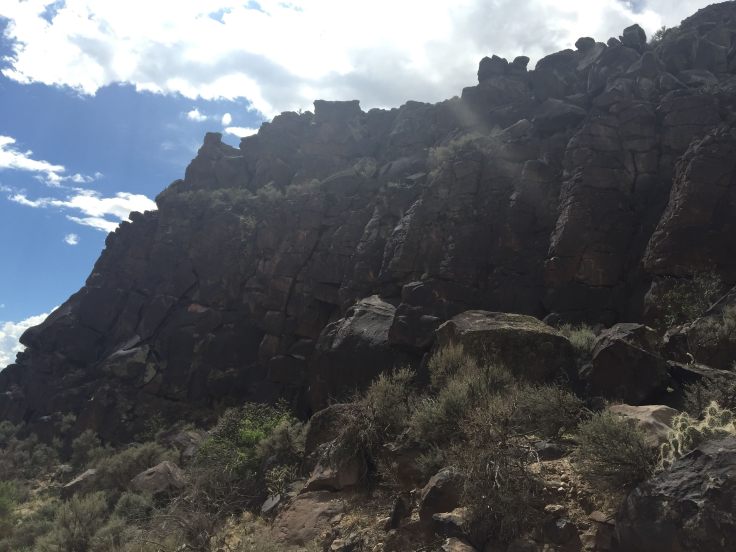
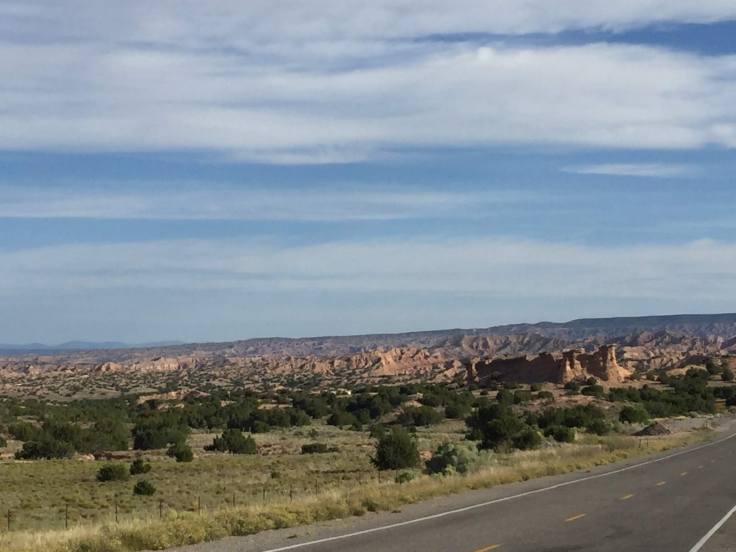
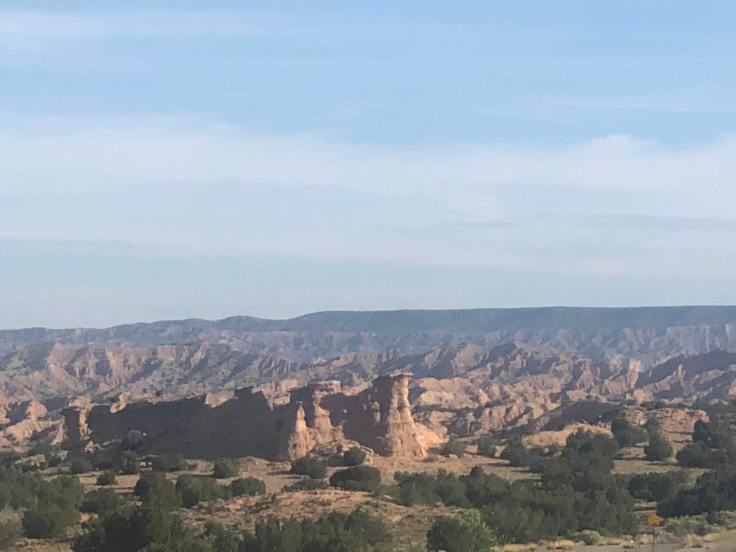
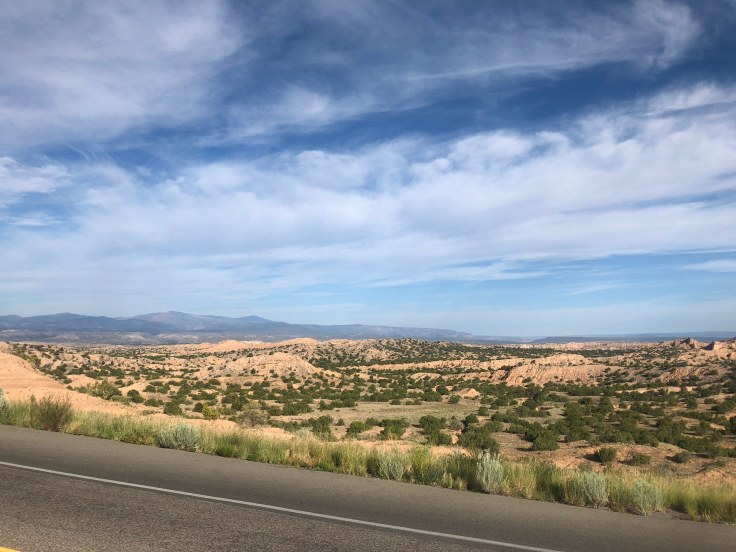
Today we traveled to Taos, about 45 miles (1 1/2+ hour drive…).  As usual, the landscape around here is stunning…

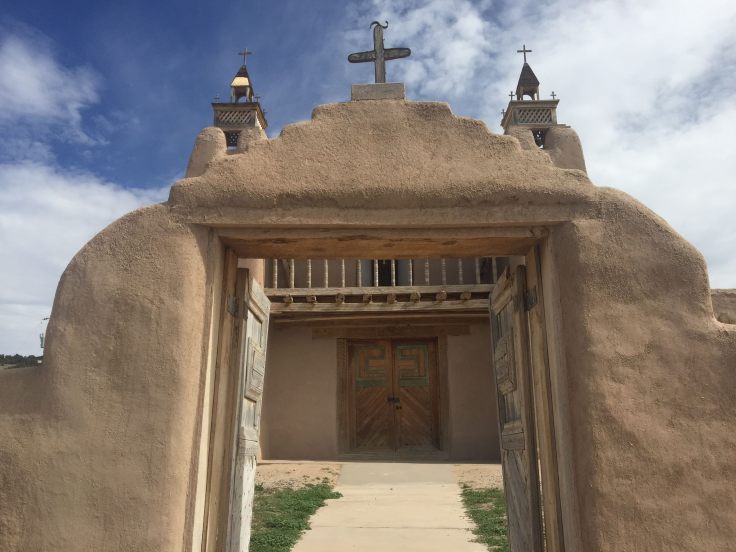
Along the way we stopped at several small towns and villages to see some of the local color…

img_4569img_4571

img_4572

In Taos we enjoyed another unique lunch at Lambert’s…

img_6668

We looked around Kit Carson’s house…

img_45741img_45751

Kit Carson was born in the early 1800s and spent most of his life exploring the wild west, enduring many dangers and surviving them all.  He died in Taos at the age of 59 of a burst aneurysm…

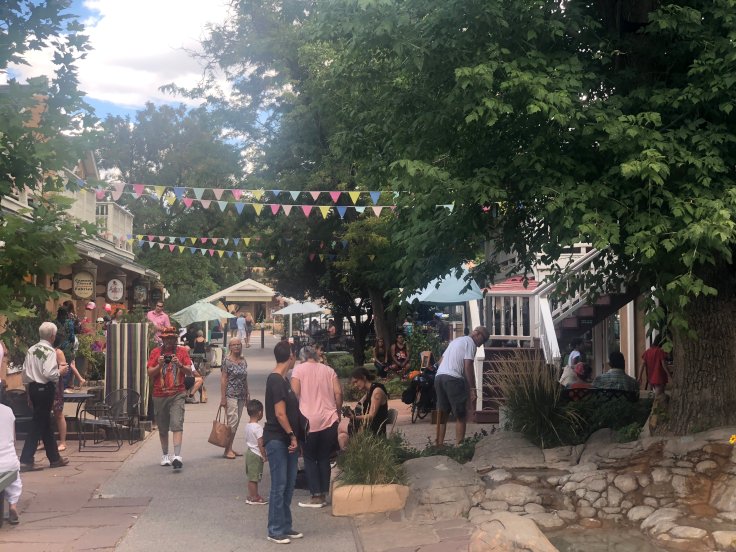
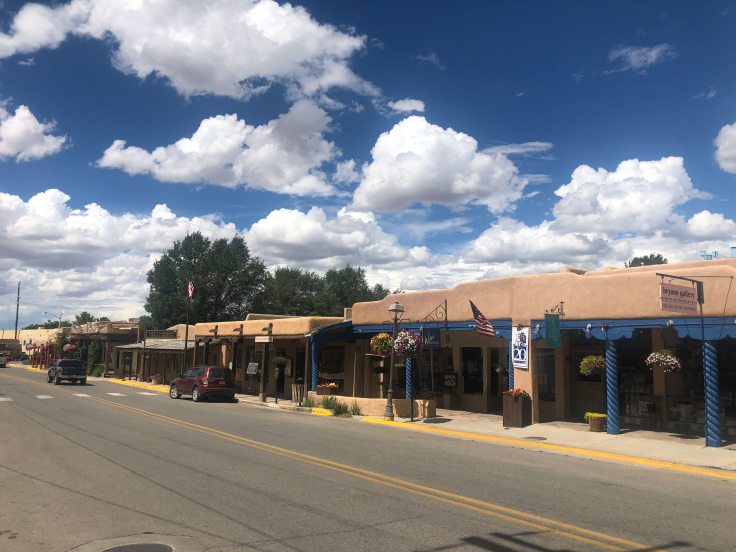
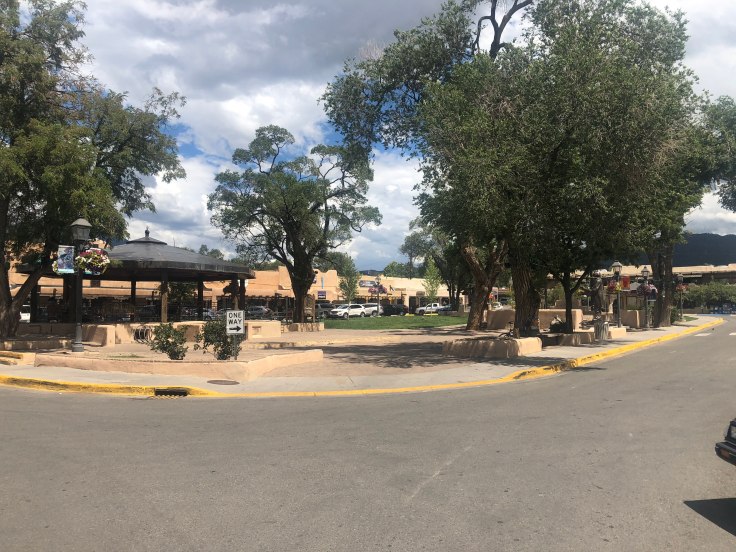
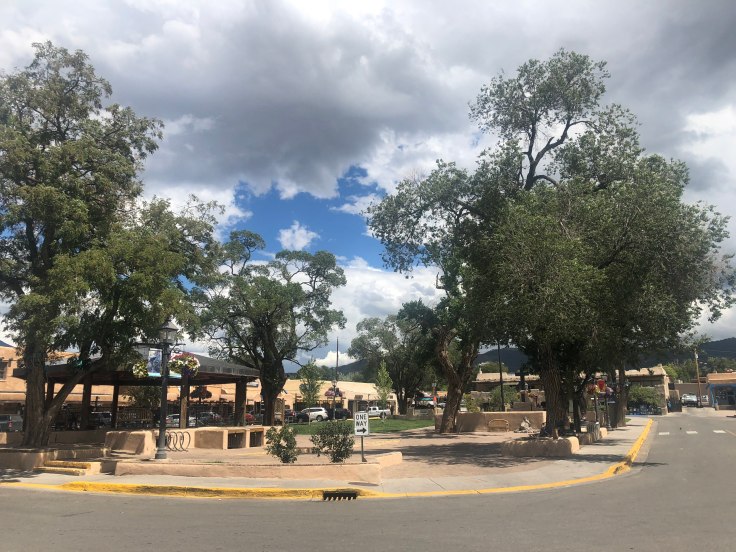
Taos has many nice shopping streets, but on a much smaller scale than Santa Fe…

img_6673

img_6671

img_6680img_6674img_6675

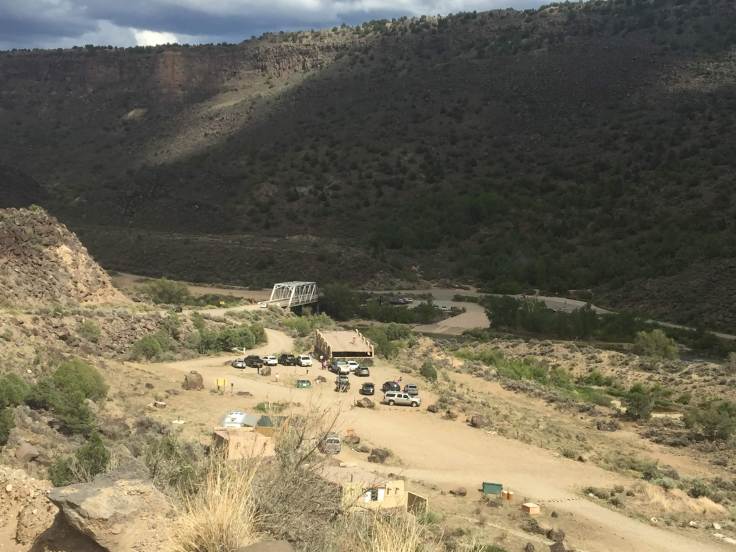
After enjoying all that we could, we headed back to Pojoaque, taking a detour to see the Rio Grande Gorge Bridge…

img_6682img_6685img_6687

The Rio Grande Gorge Bridge, locally known as the “Gorge Bridge”,  is a steel deck arch bridge across the Rio Grande Gorge 10 miles northwest of Taos. Roughly 565’ above the Rio Grande, it is the seventh highest bridge in the United States.

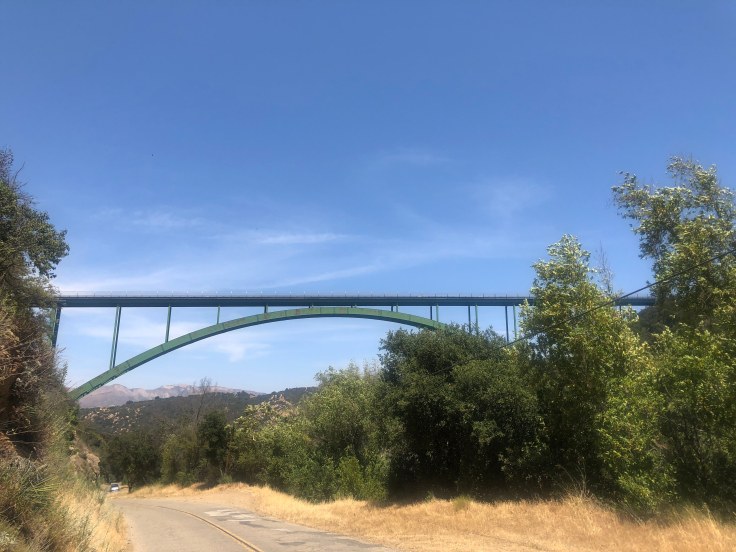
Those of you who have followed my blog for a while recall that we recently visited the Cold Springs Canyon Bridge, near Santa Barbara…

img_6200

While the Rio Grande bridge is taller, the span of the Cold Springs bridge is longer… It is also more fun to walk under a bridge like this than to walk over it…

The road back to the main highway turned out to be a little more adventurous than we had expected…

img_6688img_4595img_4598img_4599

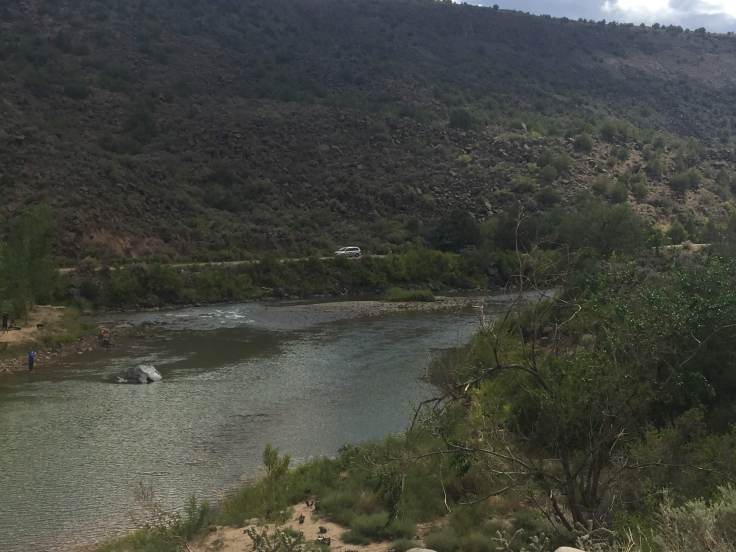
The drive along the “Low Road to Taos” is quite beautiful.  The river is well used by rafters, tubers, campers, and people like us, just enjoying the scenery…

img_4600img_4597

img_6689img_4605

We had an uneventful drive back to Pojoaque.  An enjoyable time was had by all…


2018-08-24 – WBCCI 2018 Southwest Adventure Caravan – Day 6 – Chimaya and Santa Fe

We began the day with a short drive to Chimayo and the Church of the Dirt…

img_4541img_6648

Legend has it that the dirt beneath the chapel has healing powers.  The Community that has grown up around this church is quite ancient, and a little ramshackle…

img_4539img_6637img_6646img_6649

There is much lovely art…

img_4542img_4543img_4547img_4548img_4552img_4551

And the countryside is beautiful…

img_4534img_6633img_6634img_6636img_45351

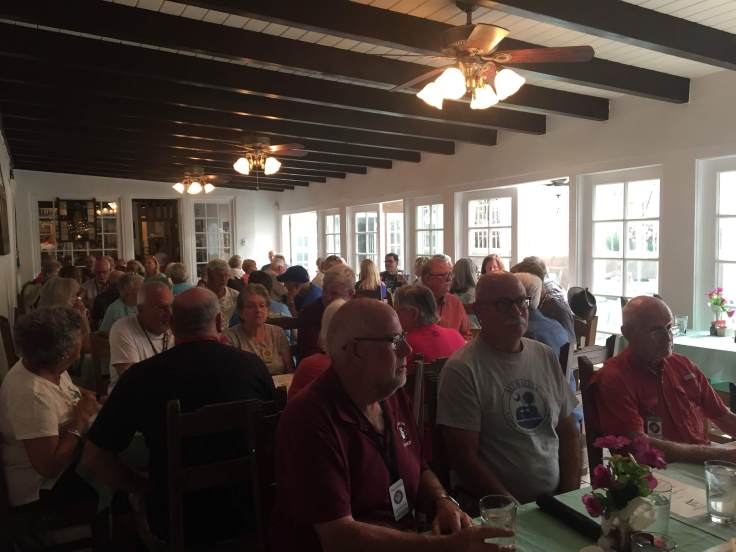
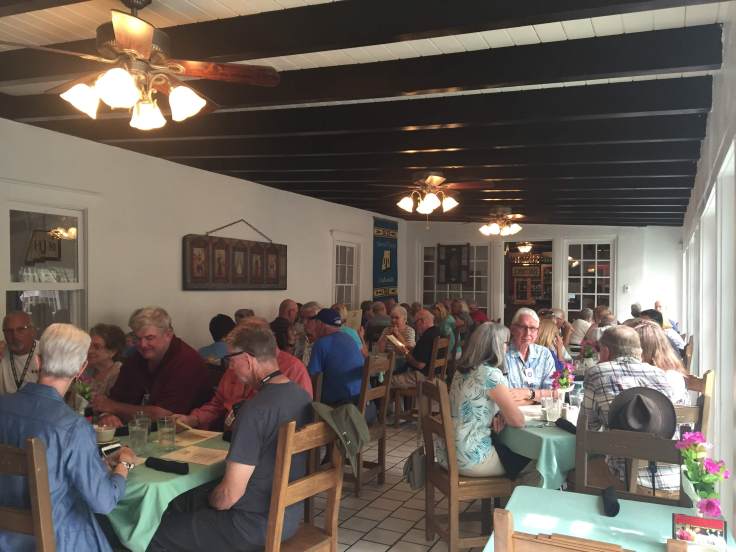
We joined the other Caravaners for lunch at Rancho de Chimayo Restaurante, a highly rated “destination” restaurant, even in this remote part of the world…

img_6652img_4557img_4559

As we left the restaurant after lunch, we beheld a a sight familiar to all caravaners…

img_6653

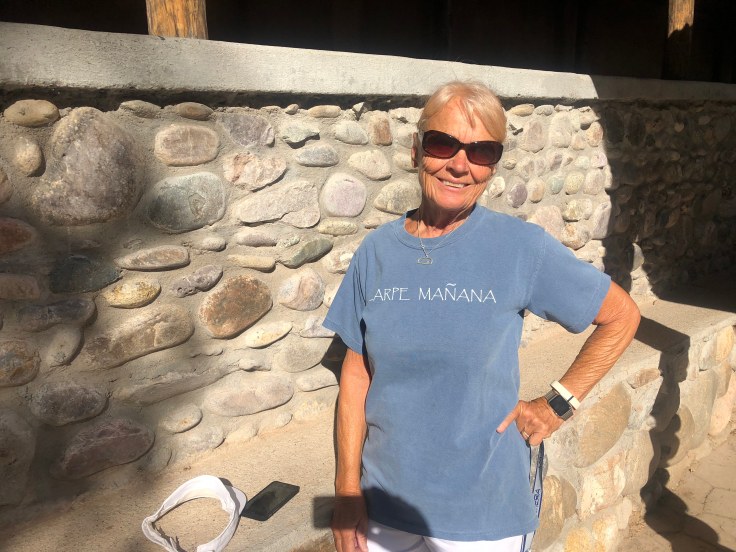
After lunch Lynda and I returned to Santa Fe to do some serious shopping.  As we shopped Lynda was stopped by several people who commented on her new shirt:

img_6644

(If you can’t quite read it, it says, “Carpe Manana”…)

We bought Lynda some “cute” earrings…

img_6690

And, if you are wondering, the turquoise is not “natural”, we did not get a certificate of authenticity, they are not signed by the artist, and they were not made by local Indians.  But you must admit they are cute…!

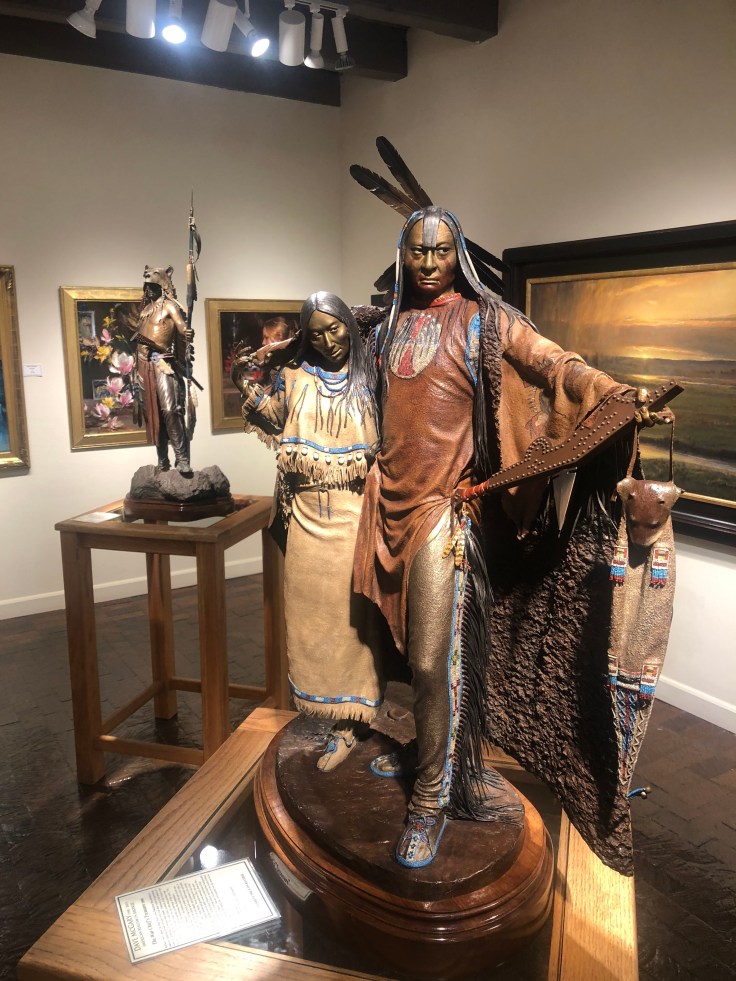
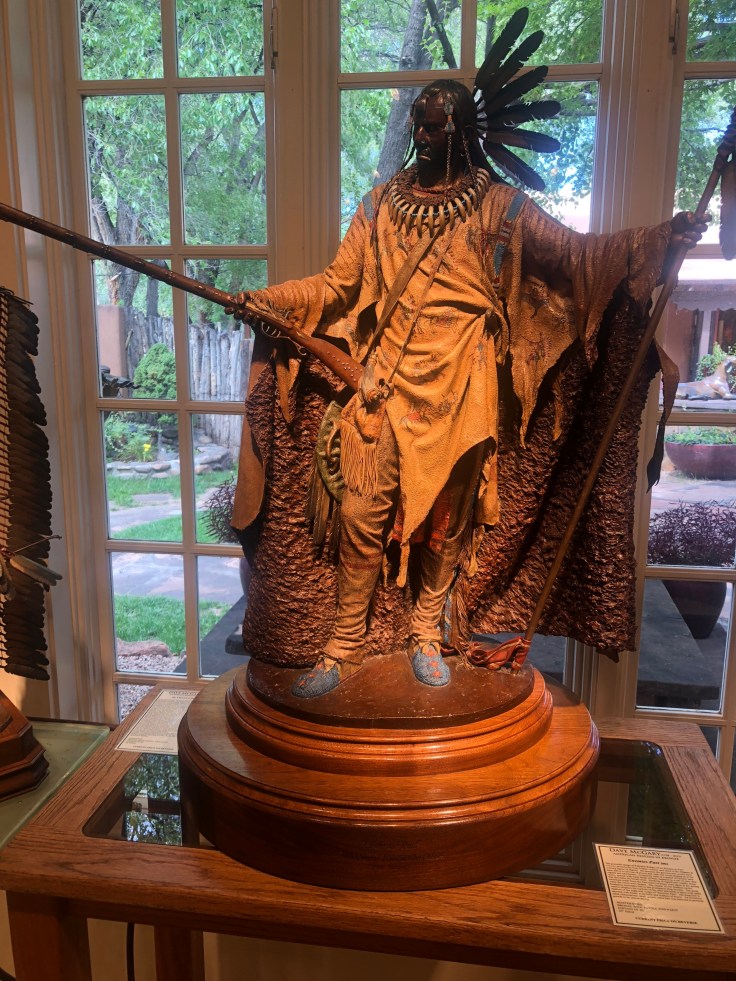
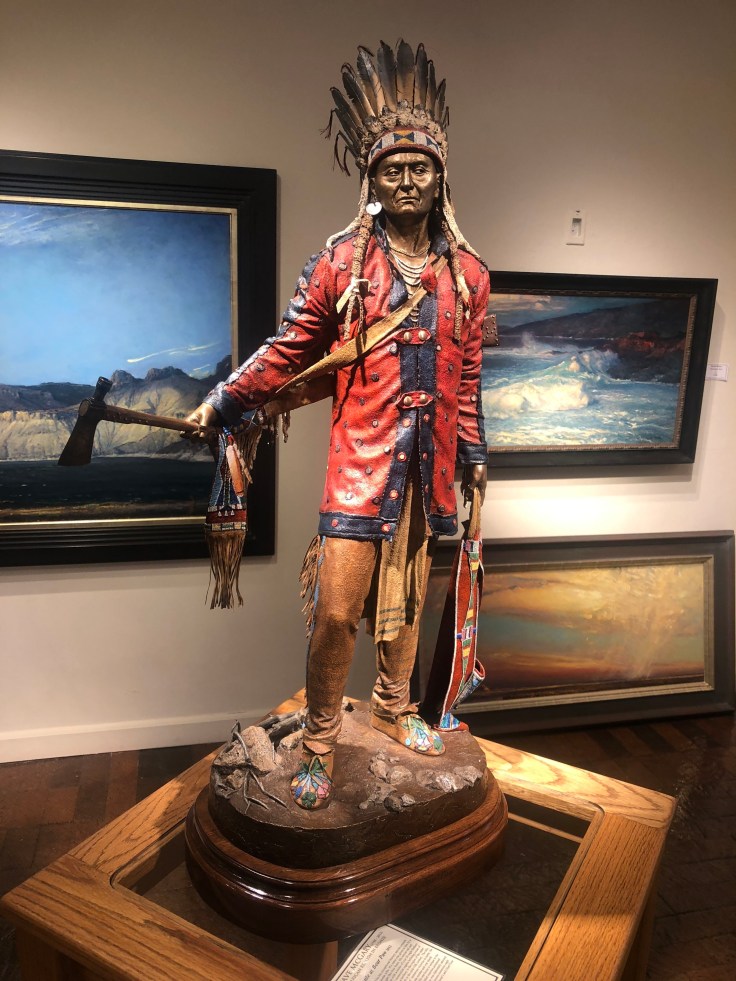
We also checked out the Meyer Art Gallery.  They are the local representative of the sculptor Dave McGary.  His specialty is sculpting bronze Indians…

img_6657img_6656img_6655

These are “miniatures”, about 36″ – 48″ tall.  He also does “life-size” statues, at 120% life size, in which the Indians are about 7′ tall, with the headdress, spear, etc., making the whole sculpture over 8′ tall…

Back in the olden days, when I was working, I did a custom house, for a German client, in Palm Desert.  He had one life size Indian in the house, in a space custom designed for the statue, another life size on a rotating turntable in the back yard, and a miniature in a niche inside the house.  These are really spectacular pieces of art.  It was nice to see some of them again…

We returned to the RV “Resort”…

img_4612

And an enjoyable time was had by all…
2018-08-23 – WBCCI 2018 Southwest Adventure Caravan – Day 5 – Santa Fe

We traveled as a group to Santa Fe today.  Besides some detours on the highway and some miscommunication on where we were to meet, we all finally boarded a tourist trolley to get oriented in and around Santa Fe.

img_4508

We had an interesting guide/driver who told us of the history of Santa Fe and showed us the various neighborhoods and significant buildings around the town.  After about 1 1/2 hours we were let off to explore the city on our own.

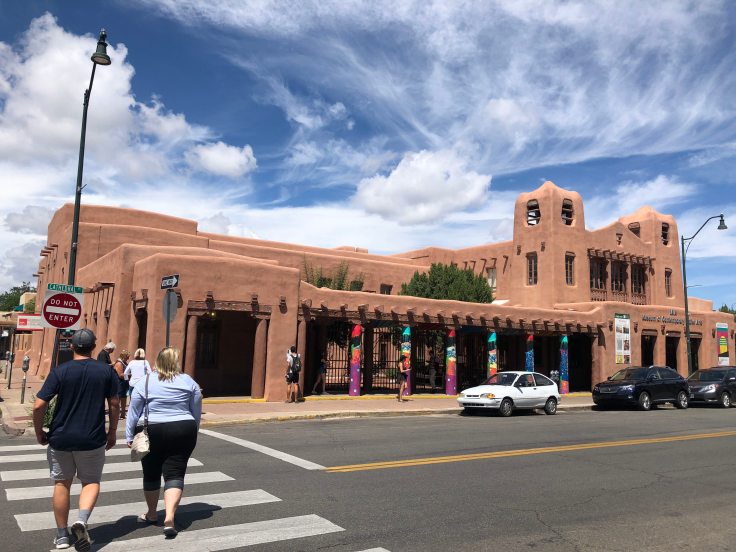
As usual, I was most interested in the architecture.  Everyone knows “Santa Fe Style”, right?

The regional architecture from which the “Santa Fe Style” draws its inspiration is primarily found in Pueblos of New Mexico and other southwestern States.  In the 1890s, architect A. C. Schweinfurth incorporated Pueblo features into a number of his buildings in California.  Mary Elizabeth Jane Colter’s Hopi House (1904) in Grand Canyon National Park drew heavily on the Pueblo style. The Pueblo Revival style made its first appearance in New Mexico in 1908 at the University of New Mexico in Albuquerque, where UNM president William G. Tight adopted the style for a number of building projects during his tenure. 

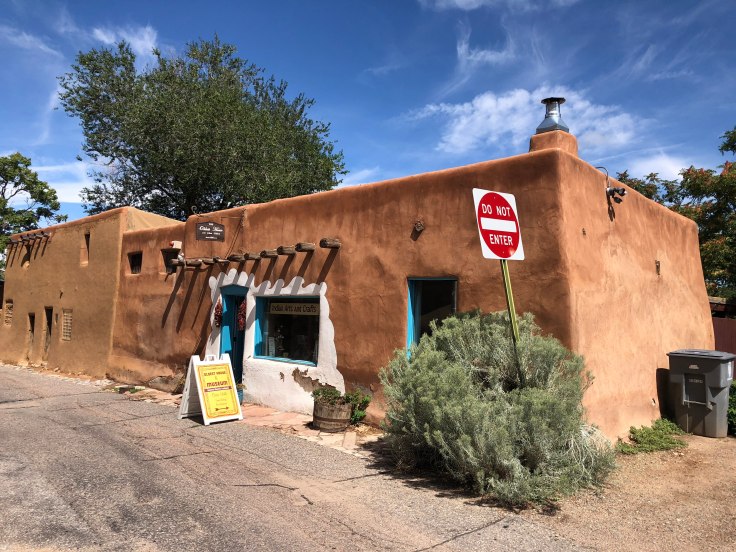
At the time, Santa Fe looked like Anytown USA, with French, Italian, Victorian, Bungalow, and Carpenter Gothic buildings, mixed in with New Mexican Territorial styles common throughout the State.  In an attempt to attract tourists and the railroad, the city fathers remodeled all of the prominent downtown buildings to resemble what would be known as the Santa Fe Style.  In 1957, a committee drafted Santa Fe “H” Historical District Ordinance No. 1957-18, commonly known as the Historical Zoning Ordinance.  This ordinance mandated the use of the “Old Santa Fe Style,” which encompassed “so-called Pueblo, Pueblo-Spanish or Spanish-Indian and Territorial styles,” on all new buildings in central Santa Fe.  To be exact, the ordinance require all buildings be earthy brown, include rounded edges, room-block massing, and protruding vigas.  This ordinance remains in effect, meaning the Pueblo style continues to predominate.  The point to remember is that the Santa Fe Style is not something indigenous to Santa Fe, but something made up (by Anglos, not Mexicans or Indians or Spanish) to attract tourists.

So here we have it:  Vigas, Brown, block massing, rounded edges…

img_6577

Even giant buildings follow this style, which is more suited to small buildings…

img_6555

Even parking garages follow the style…

img_6618

The Territorial style shows brick cornices and a little more exposed wood, but otherwise is quite similar…

img_6562img_6563

I like regional architecture as much as the next guy, and I have commented on how well the architecture here addresses the harsh sun.  My only pet peeve is the religious-like adherence to arbitrary rules, despite all evidence that the rule should be modified or abolished.  Nothing exemplifies this idea better than the vigas.

As I showed in my earlier blog, authentic vigas are extensions of roof beams, projecting through the adobe walls…

img_65351

Today, vigas are rarely structural, but are only decoration tacked on to an exterior stucco wall.  There is one problem:  In this dry, hot climate, exposed wood rots:

img_6610

This has led to attempts to protect the wood with sheet metal – hardly an elegant solution…

img_65751

On the other hand, not ALL buildings have vigas, and they look just fine to me…

img_6601img_6602

Certainly historic buildings need to be accurately restored.  If the wood rots, replace it with wood.  But if you must have vigas, even fake vigas, why not use steel or some other weather resistant material?

One reason why new buildings, or additions to existing buildings, in Santa Fe’s historic district should sometimes employ modern materials, and even a few tastefully contemporary design elements: A century from now, 2018 construction should be distinguishable from that of earlier times. And if the architecture is exceptional, it also may be prized alongside the old.  It shouldn’t mimic the old so perfectly that you can’t see the evolution of the style.  As soon as everything looks the same and you can’t date it, it’s dead. It’s the vocabulary that’s important, not the material or the technique.

More reasons why the wood vigas, protruding through the exterior wall, is a bad idea:  they break the thermal envelope of the building, allowing cool air to escape in the summer and warm air to escape in the winter. They also break the waterproofing envelope, allowing moisture into the building, creating the potential for mold and other water-related issues…

So enough of my rant about Santa Fe style.  We actually had a very good time in Santa Fe…

We saw the country’s oldest house, built in 1646…

img_6603img_4521

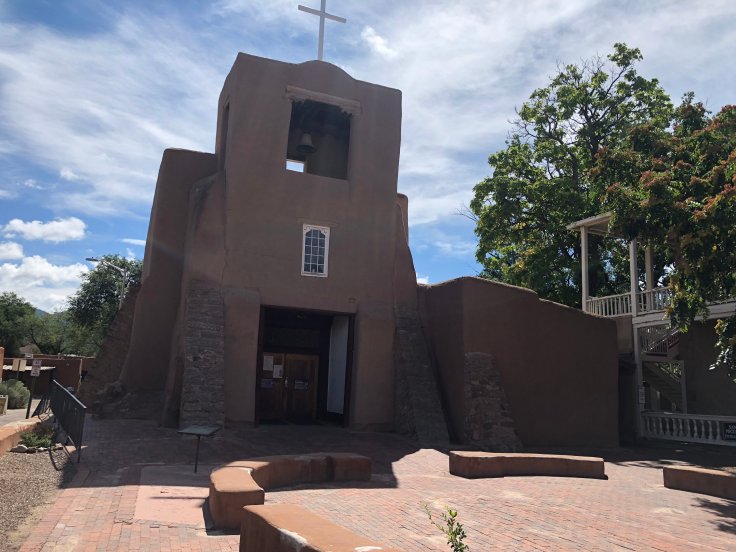
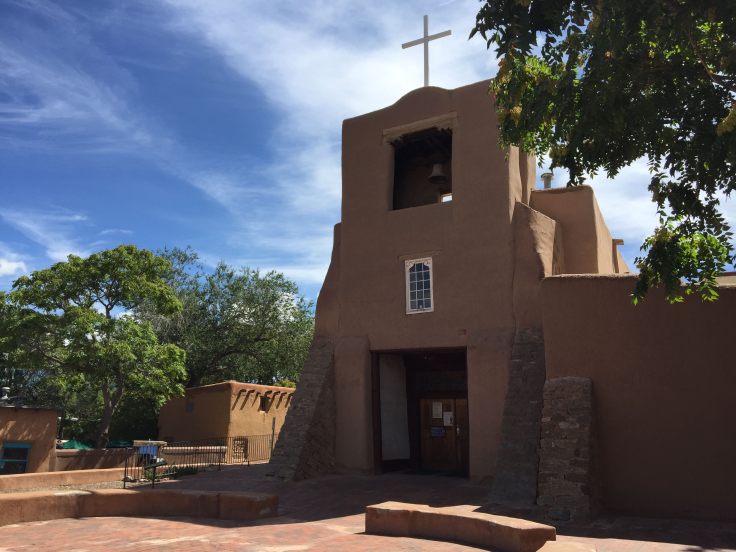
And we saw the country’s oldest church, built in 1610…

img_6609img_4522img_4523

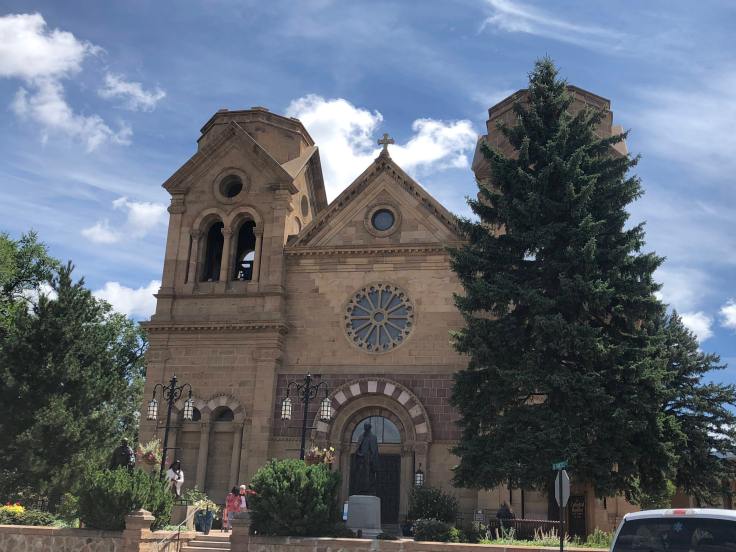
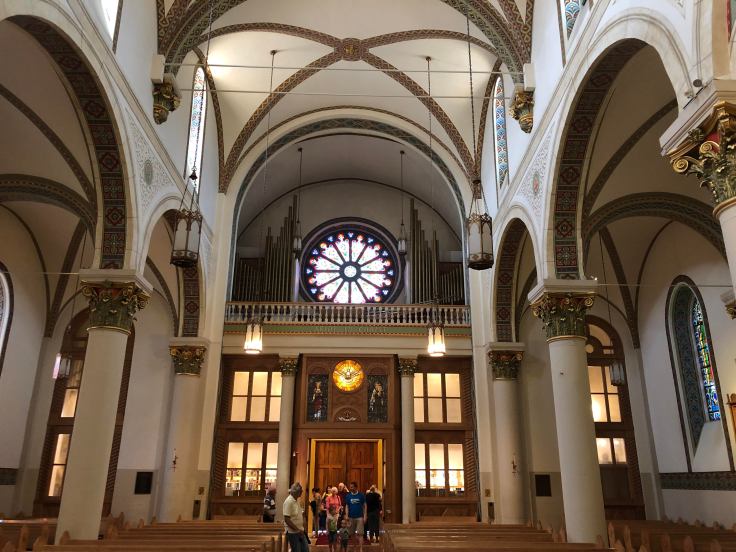
We saw the Cathedral Basilica of St. Francis of Assisi… The interesting story here is that while the church was under construction they ran out of money.  Bankers in the Jewish community loaned them the money to complete the construction.  After many more years of struggling and being unable to pay on the loan, the Jewish bankers forgave the loan as a gift to the church.  This is memorialized in the top arch stone over the main doors with the Hebrew scrip and the triangle.  Also, the doors have 20 panels in bas relief telling the history of Santa Fe…

img_6611img_6614img_4531img_6617img_4526

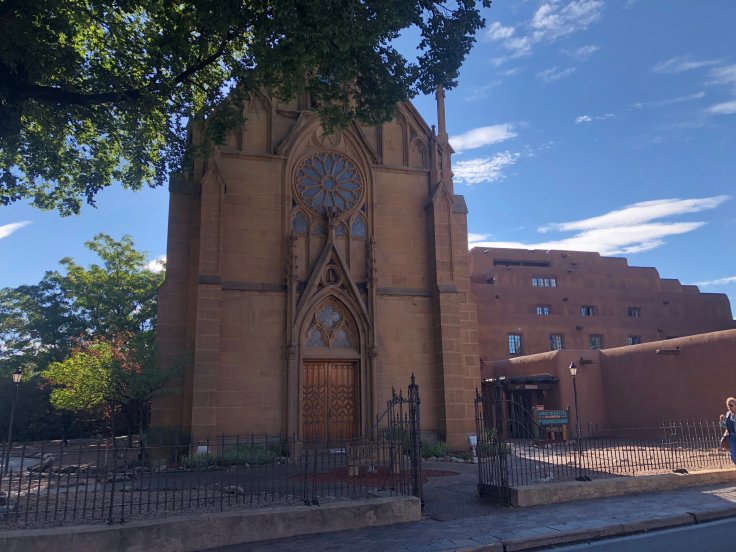
We saw the Loretto Chapel…

img_6552

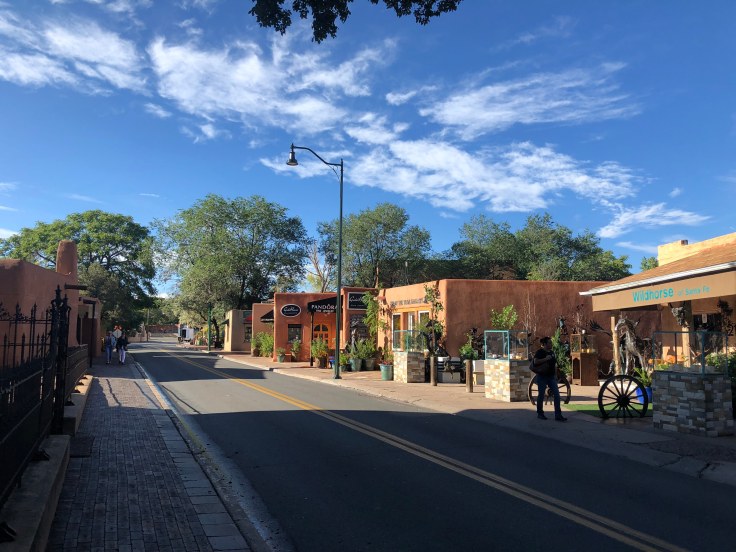
And we saw the quaint shopping and gallery district on Canyon Rd…

img_6551

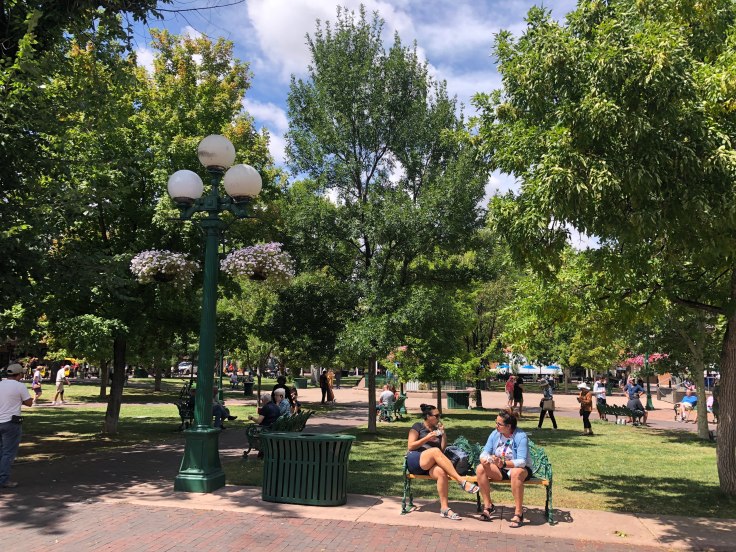
We spent some time shopping in the blocks around the plaza…

img_6622img_6619

We learned that the New Mexico flag has a circle representing the sun and the Indian’s cultural belief in the circle of life.  The four groups of four rays symbolize the four cardinal directions, the four seasons of the year, the four times of the day and four stages of life…
img_6573

And we had time for lunch at The Shed…

img_6625

After more window shopping we returned to the RV “Resort” in Pojoaque…

img_6632img_6628

We enjoyed another Fandango”, meeting new Airstream friends.  And an enjoyable time was had by all…
 

2018-08-22 – WBCCI 2018 Southwest Adventure Caravan – Day 4 – Moving to Santa Fe

This morning we found that there had been a little rain overnight…

Today is a travel day, so we started by doing a little laundry, cleaning up, and hitching up The Villa.  We pulled out of the RV park about 9:30.  Today’s travel is to the Pueblo of Pojoaque, just north of Santa Fe.  It is only about 85 miles from Albuquerque… An easy drive…

We stopped alongside the freeway after about an hour to stretch our legs and to keep our Apple watches happy…

img_6542

Since we could not check into the next RV park until after noon, we took a detour to chase down the two Frank Lloyd Wright houses in New Mexico…

A few miles north of Pecos is the Alfred Friedman House, “Fir Tree” (1945).  The good news is that we found it easily; the bad news is that it is not visible from the street and it is a private residence, not open to the public…

We respected their privacy and did not pull The Villa up their driveway…

We turned around at the next wide spot in the road, getting mud all over The Villa.  We headed into Sante Fe and looked for the “Pottery House”, 1984.  Obviously, this was built long after FLLW’s death; he did the design in the early 1950s; the lot and the plans were purchased by a builder, who modified and enlarged the house.  It may or may not be a “real” Frank Lloyd Wright house – but we’ll never know.  We could not find it.

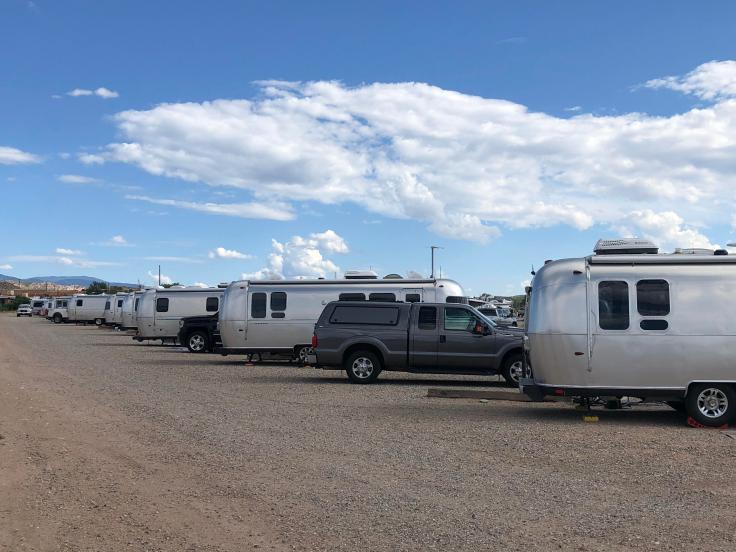
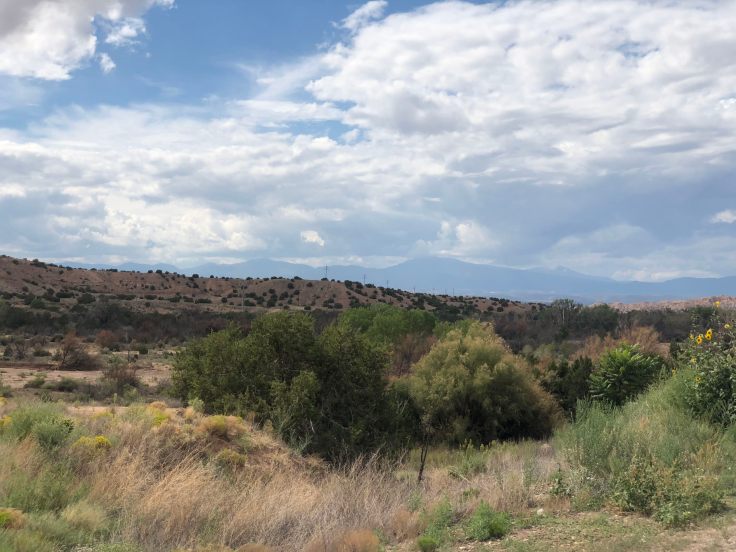
So on we went, to the RV park in Pojoaque.  We set up (in the rain…) and walked around.  It is very sparse and bleak in the RV park, but the surrounding high desert is quite pretty…

img_6544img_6545

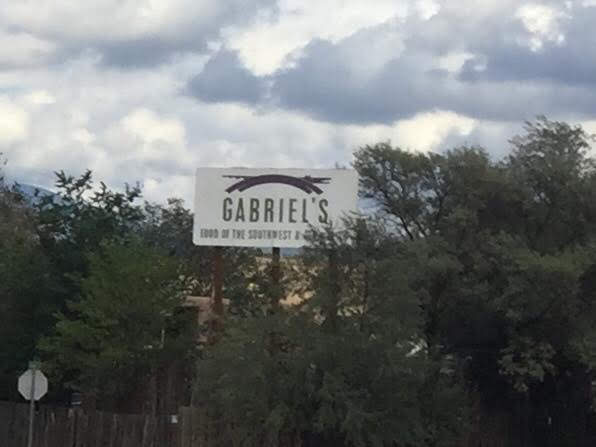
Tonight we enjoyed a dinner with the caravaners at Gabriel’s, a very nice New Mexican restaurant near by; we rode along with caravan neighbors from Houston…

img_6631

img_6546img_6549

We returned to The Villa, and enjoyed a lovely sunset…

img_6550

An enjoyable time was had by all…

Blog at WordPress.com.

Up ↑