Search

Adventures in the Villa

Category

Arizona

2018-09-19 – WBCCI 2018 Southwest Adventure Caravan – Day 32 – Zion National Park adjacent

Slow, quiet day today.  We need one of these every now and then…

We slept in, caught up on the blog, and read the newspaper; we walked around a bit…
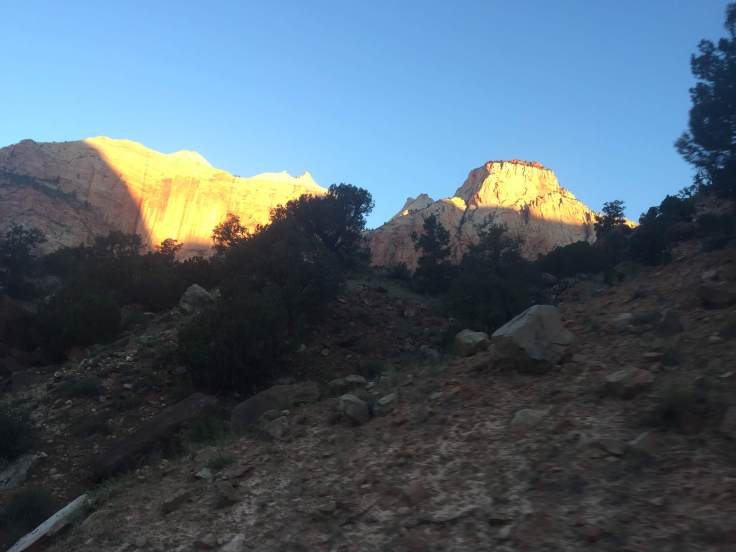
img_8075

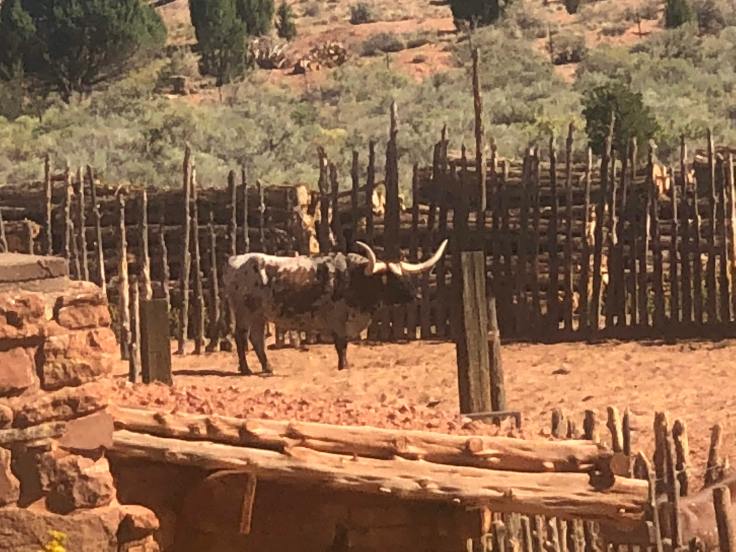
We did walk across the street to the Pipe Springs National Monument… It is an historic site documenting the life and times of the Mormons in this area.  The irony is that these 40 acres are in the middle of the Kaibab Paiute Reservation…

The Indians, of course, have been in this area forever.

The water of Pipe Spring has made it possible for plants, animals, and people to live in this dry desert region.  Ancestral Puebloans and Kaibab Paiute Indians gathered grass seeds, hunted animals, and raised crops near the springs for at least 1,000 years.  The land at that time was rich is grasses, not desert sand as it is today…

In the 1860s Mormon pioneers from St. George, Utah, led by James M. Whitmore brought cattle to the area, and a large cattle ranching operation was established.  In 1866 the Apache, Navajo and Paiute tribes of the region joined the Utes for the Black Hawk War, and they raided Pipe Spring and killed Mr. Whitmore and his ranch foreman.  The  ranch was later purchased by Brigham Young for The Church of Jesus Christ of Latter-day Saints (Mormon Church), and a fort was built over the top of Pipe Spring.  The LDS Bishop of nearby Grafton, Utah, Anson Perry Winsor, was hired to operate the ranch and maintain the fort, soon called “Winsor Castle”. This isolated outpost served as a way station for people traveling across the Arizona Strip, that part of Arizona separated from the rest of the state by the Grand Canyon.

The main function of the ranch was to accept tithes from the local Mormons, in the form of cows, chickens, etc.  The ranch fed the animals, and milked the cows and made cheese, and shipped it all off on weekly trips to St. George, Utah.

The Pipe Spring area also served as a refuge for polygamist wives during the 1880s and 1890s. The LDS Church lost ownership of the property through penalties involved in the federal Edmunds-Tucker (Anti-Polygamy) Act of 1887.

In the mean time, overgrazing from as many as 100,000 cattle decimated the grasslands; the topsoil soon blew away, and the land was left with the desert sand and sagebrush we see today.  There are attempts in the area, through better grazing practices, to bring back the grasslands.

As the Mormons took over the ranch lands, the local Indians were deprived of their main water source, and times were hard on the Paiute.  However, they continued to live in the area and by 1907 the Kaibab Paiute Indian Reservation was established, surrounding the privately owned Pipe Spring ranch. In 1923, the Pipe Spring ranch was purchased and set aside as a national monument to be a memorial to western pioneer life.

The Winsor Castle has been restored, as well as several smaller cabins.  The tours are very informative, and “living history” is on view in the form of a lady demonstrating the use of a spinning wheel, and a blacksmith using a primitive forge.

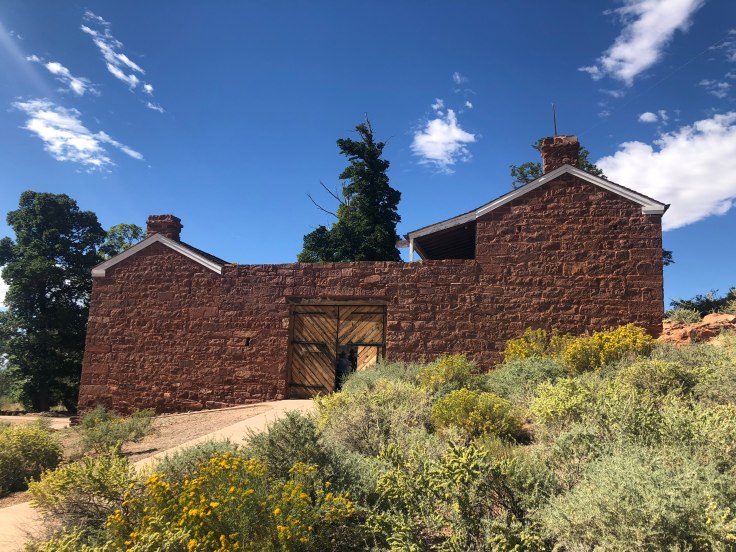
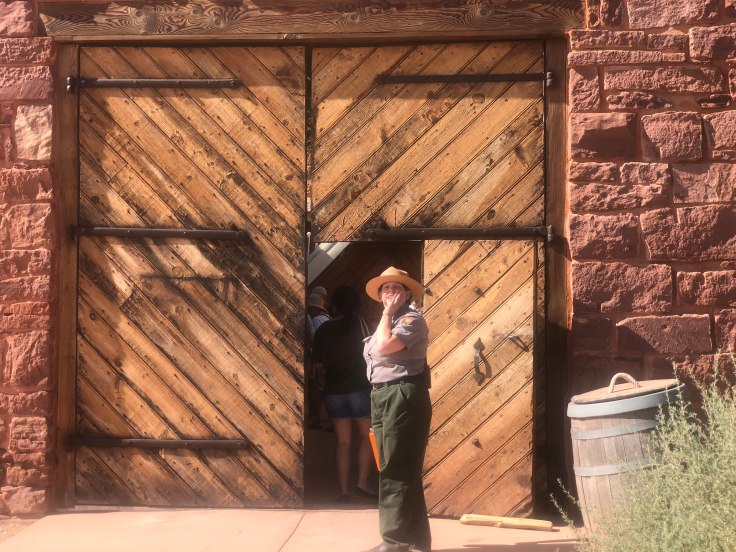
This is Winsor Castle… We were met at the entrance by the NPS tour guide…

img_8089img_8088img_8079

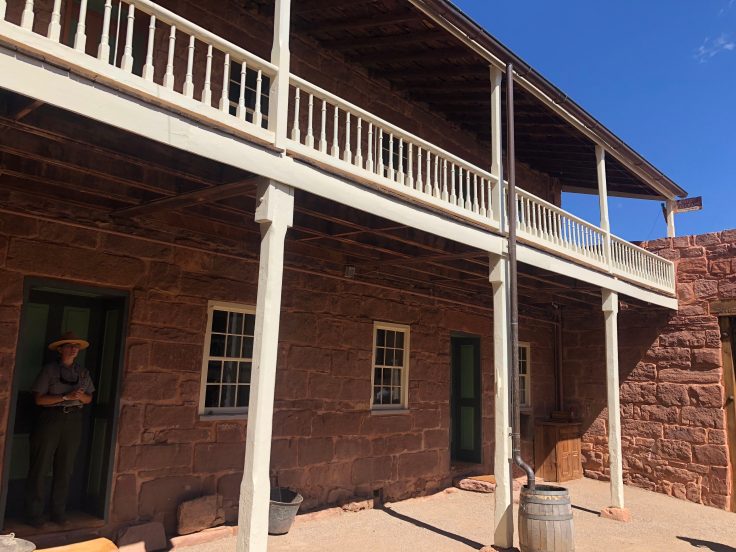
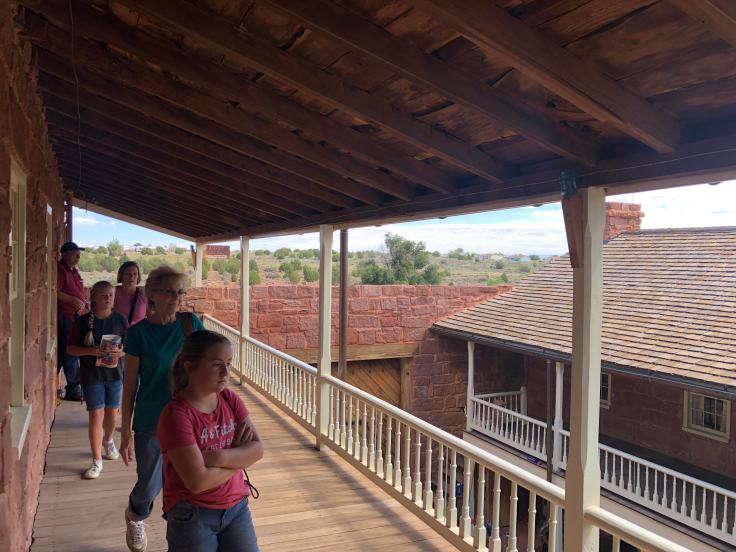
The interior of the castle are typical of a well-made outpost such as this…

img_5514img_8093img_8094img_8096img_8097

This is the entrance to the Spring Room.  The spring water ran through here, keeping the room at about 55 degrees (perfect for wine, but these were Mormons living here…).

img_8098

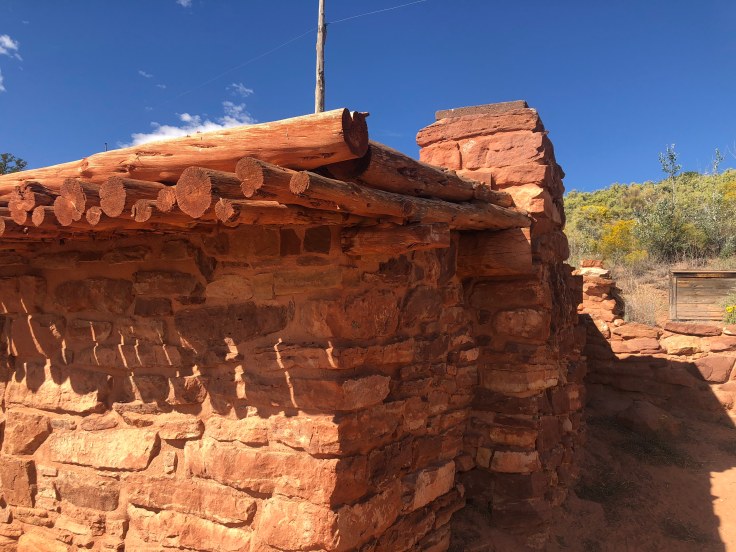
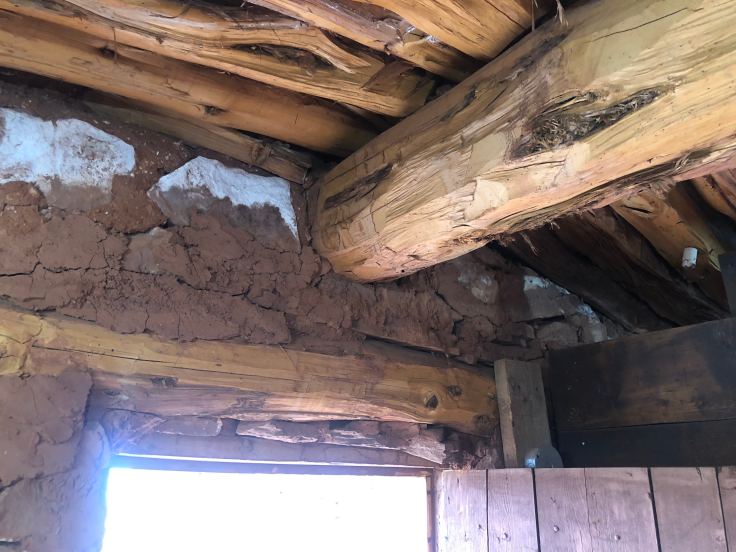
We saw some of the out-buildings and cabins for visitors… Interesting earthen roof…

img_8083img_8086img_8087img_8084

We watched the spinning wheel lady doing her thing…

img_5505img_5504

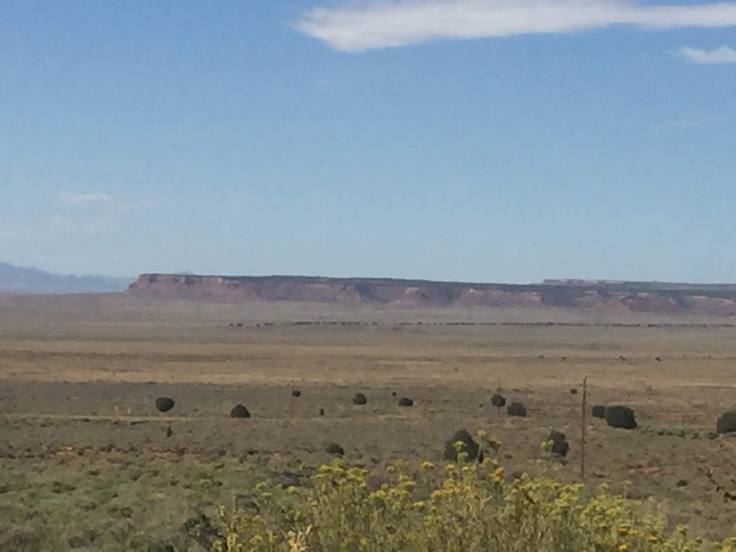
The view of the area known as the Arizona Strip… More on this tomorrow…
img_5501

After a few hours we walked back to the RV Park and relaxed and did laundry…

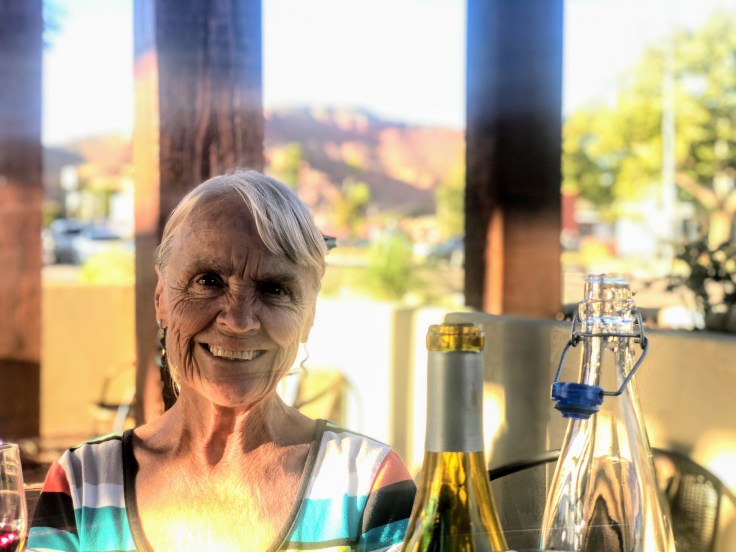
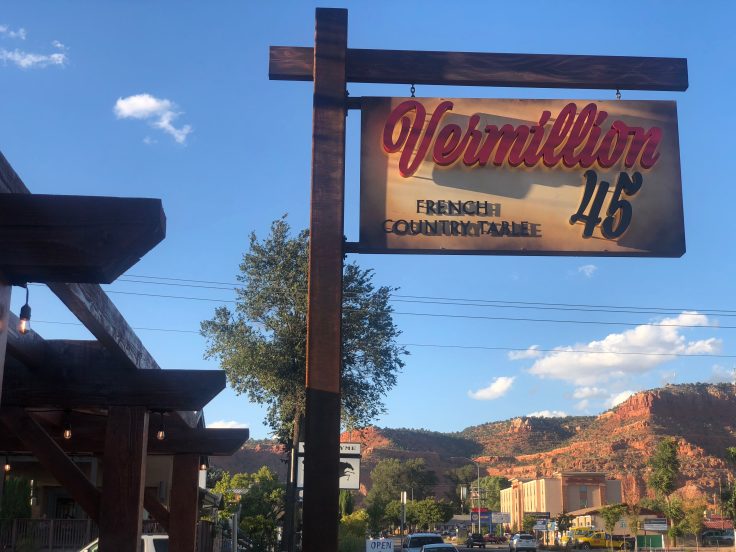
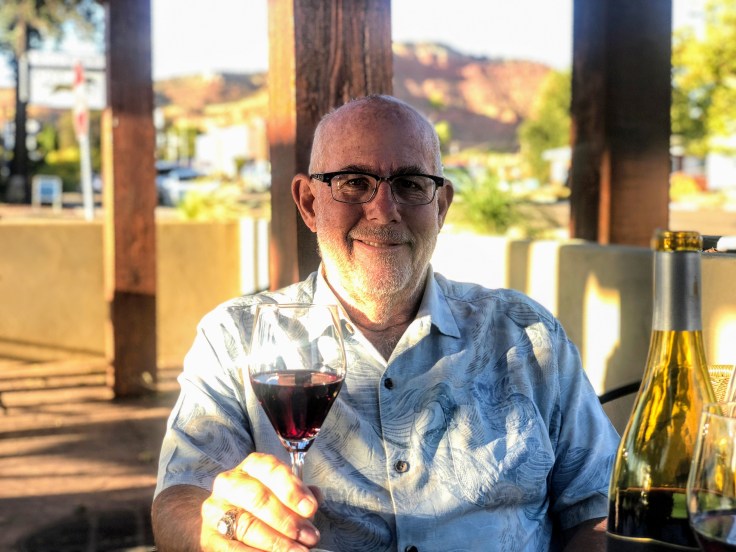
We drove to Kanab for dinner at a very nice, and very busy, French Restaurant.  It has only been open for 6 weeks.  We wished we could have spoken with the proprietor and learn more, but as I said, it was packed – on a Wednesday evening…!
img_8108img_8105img_8101

And an enjoyable time was had by all…

2018-09-18 – WBCCI 2018 Southwest Adventure Caravan – Day 31 – Zion National Park

Today we explored Zion National Park…

img_5496

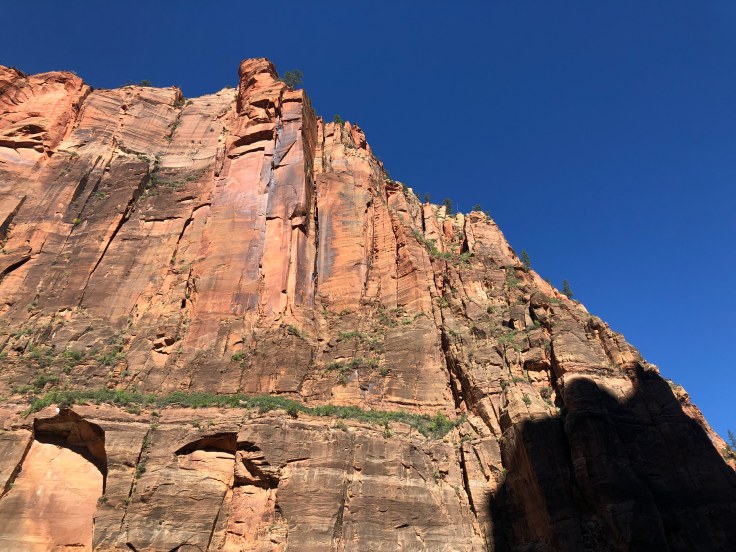
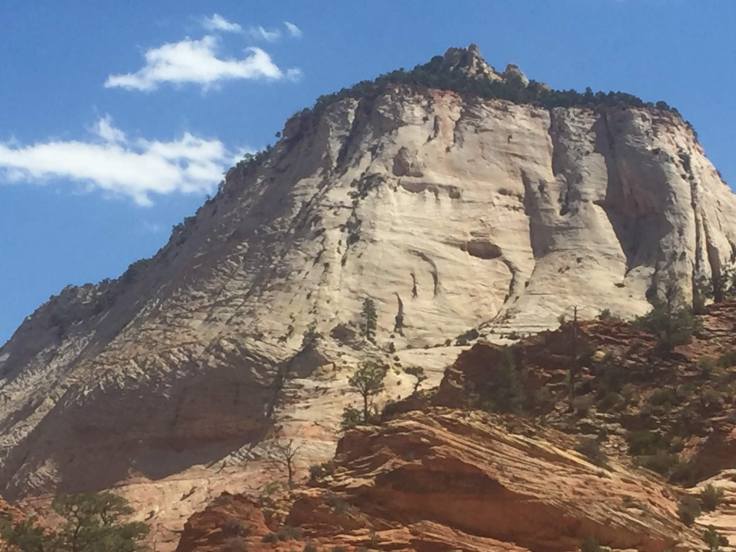
Yes, more rocks… But different rocks, and different colored rocks…

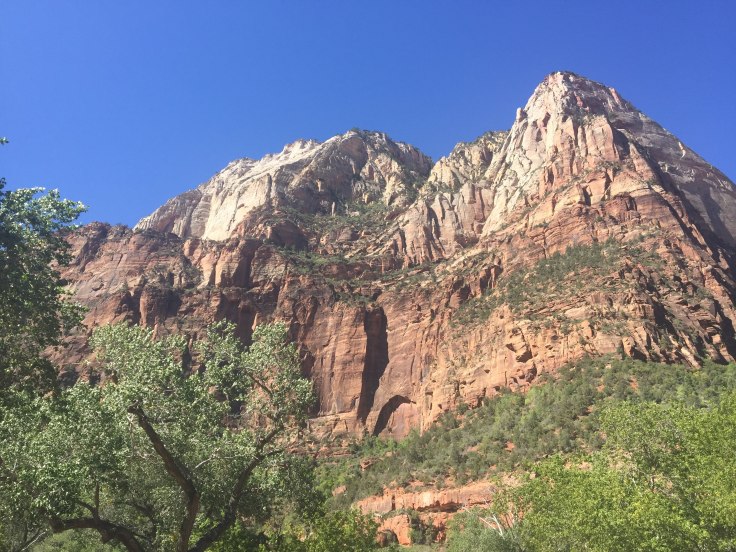
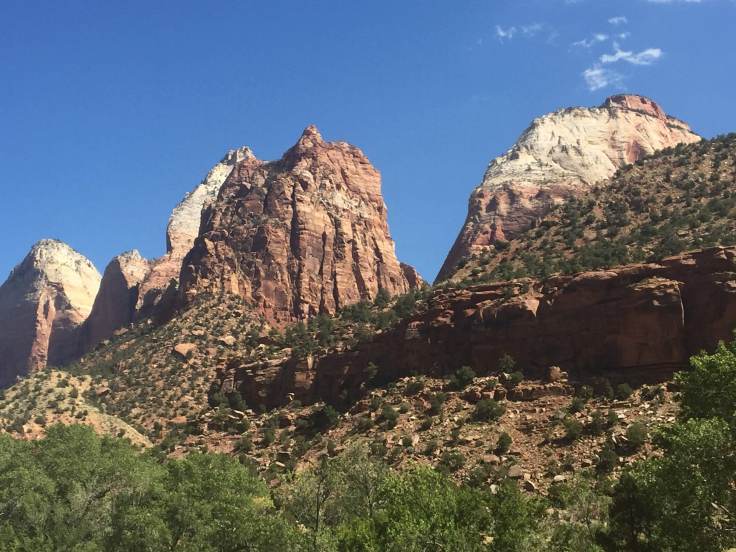
Zion National Park is an national park located in Southwestern Utah near the city of Springdale.  A prominent feature of the 229-square-mile park is Zion Canyon, which stretches 15 miles long and spans up to half a mile deep.  It cuts through the reddish and tan-colored Navajo Sandstone by the North Fork of the Virgin River.  The lowest point in the park is 3,666 ft at Coalpits Wash and the highest peak is 8,726 ft at Horse Ranch Mountain.  Located at the junction of the Colorado Plateau, Great Basin, and Mojave Desert regions, the park has a unique geography and a variety of life zones that allow for unusual plant and animal diversity.

Zion National Park includes mountains, canyons, buttes, mesas, monoliths, rivers, slot canyons, and natural arches.  Human habitation of the area started about 8,000 years ago with small family groups of Native Americans;  however, these Indians moved away by 1300 and were replaced by other Southern Paiute subtribes.  Mormons came into the area in 1858 and settled there in the early 1860s.  In 1909, President William Howard Taft named the area Mukuntuweap National Monument in order to protect the canyon.  In 1918, the acting director of the newly created National Park Service, Horace Albright, drafted a proposal to enlarge the existing monument and change the park’s name to Zion National Monument, a name used by the Mormons.  According to historian Hal Rothman: “The name change played to a prevalent bias of the time.  Many believed that Spanish and Indian names would deter visitors who, if they could not pronounce the name of a place, might not bother to visit it.  The new name, Zion, had greater appeal to an ethnocentric audience.”  On November 20, 1919, the United States Congress established the monument as Zion National Park, and it was signed by President Woodrow Wilson.  The Kolob section was proclaimed a separate Zion National Monument in 1937, but was incorporated into the park in 1956.

We left the RV park at just before 6:00 am, Utah time… Wow! It is really dark out here!

Light finally came just as we arrived at Zion, just after 7:00 am.

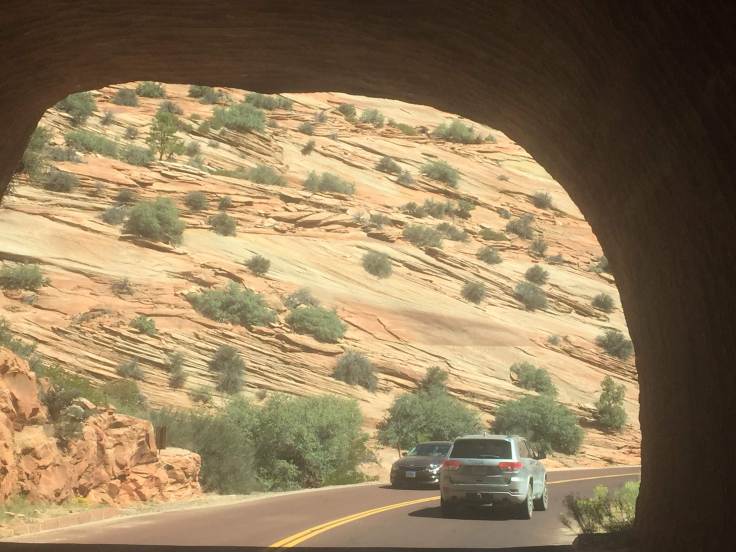
The entrance station was still closed.  We entered the tunnel (1.1 mile long, took 3 years to complete in the 1930s…) and emerged to the sun rising over the valley below…

img_5413

Maybe I should have cleaned my windshield…

img_5415img_5418img_5421img_5422img_5424

As we drove through the almost deserted park we recalled that we had been told that Zion is the 3rd most visited national park in the USA, yet it is one of the smaller parks.  We were arriving early precisely to avoid these expected crowds.

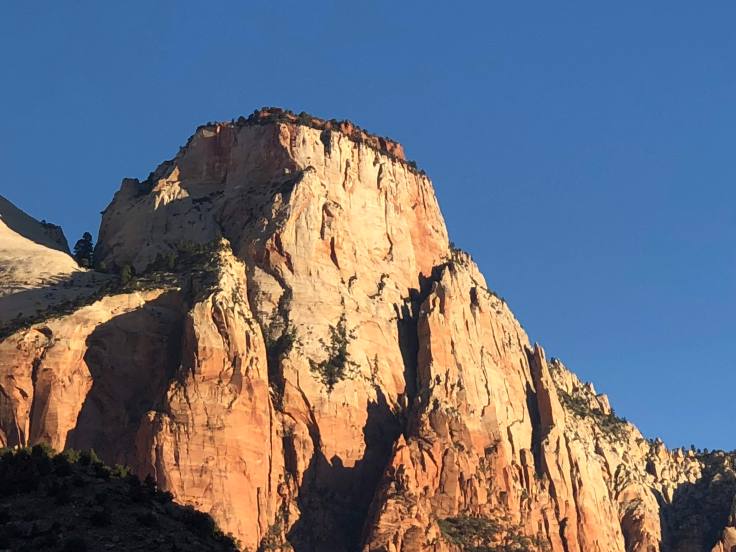
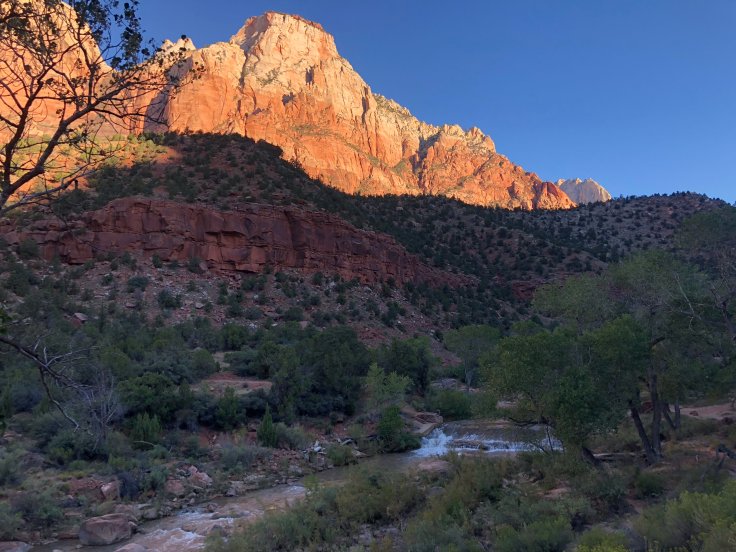
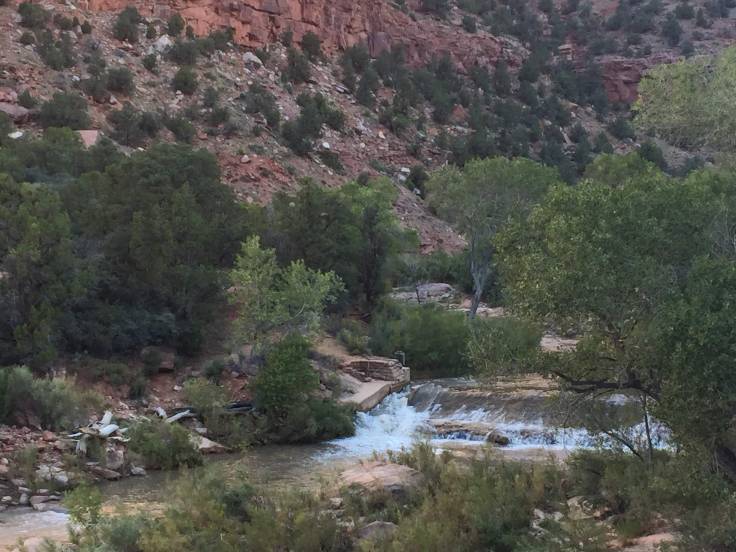
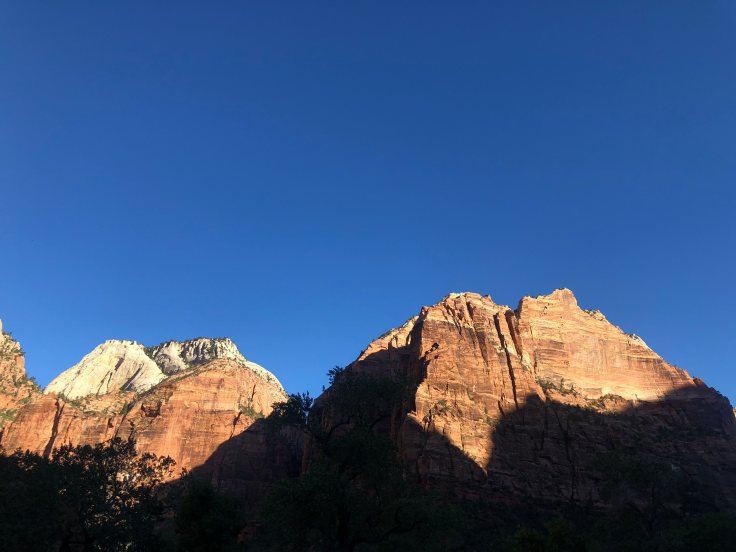
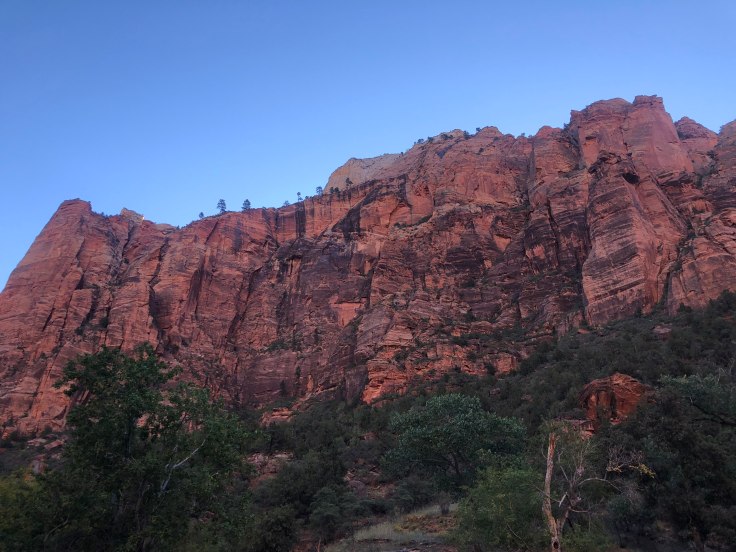
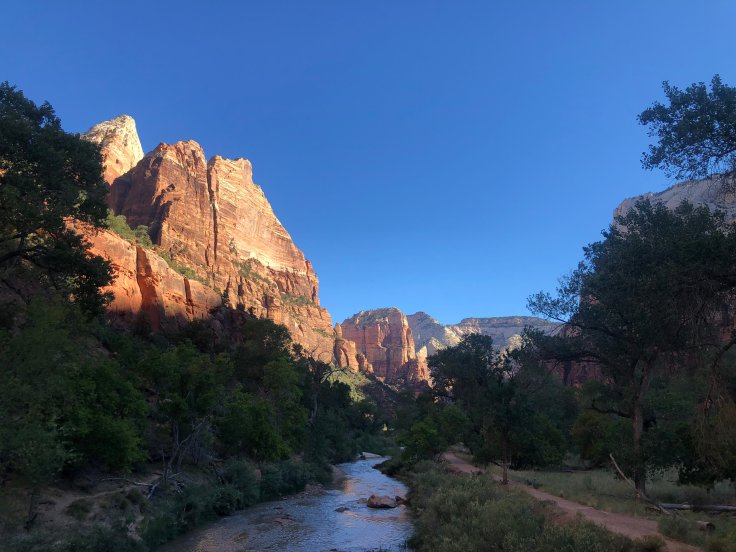
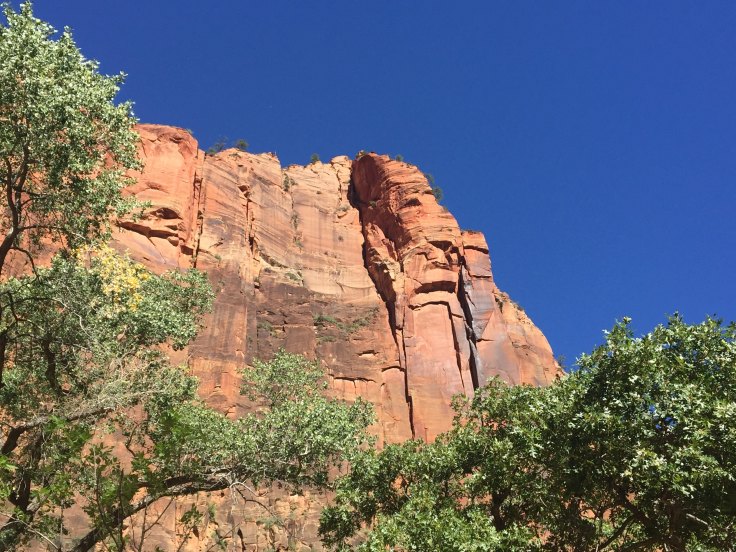
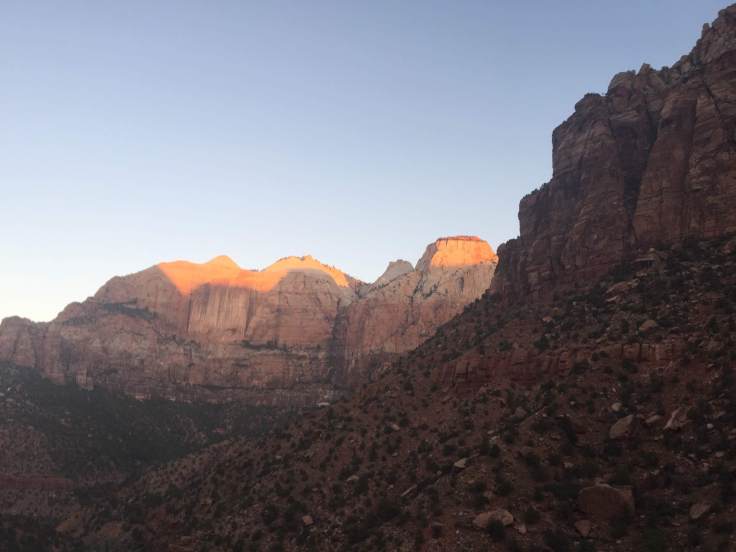
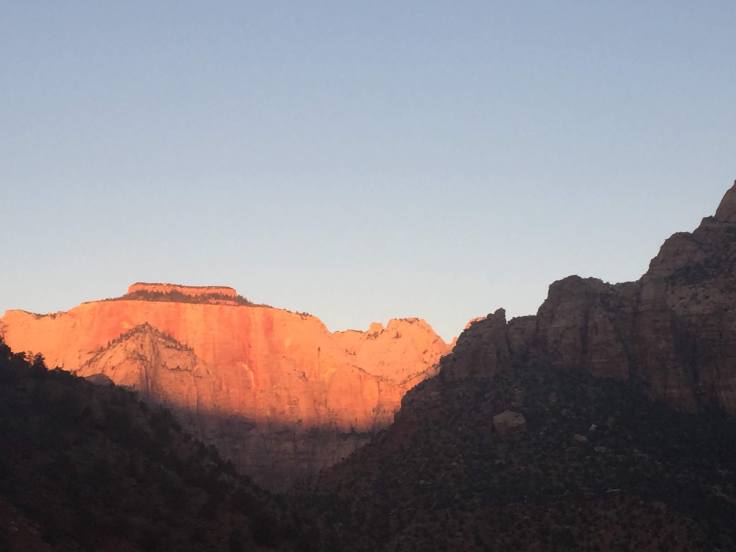
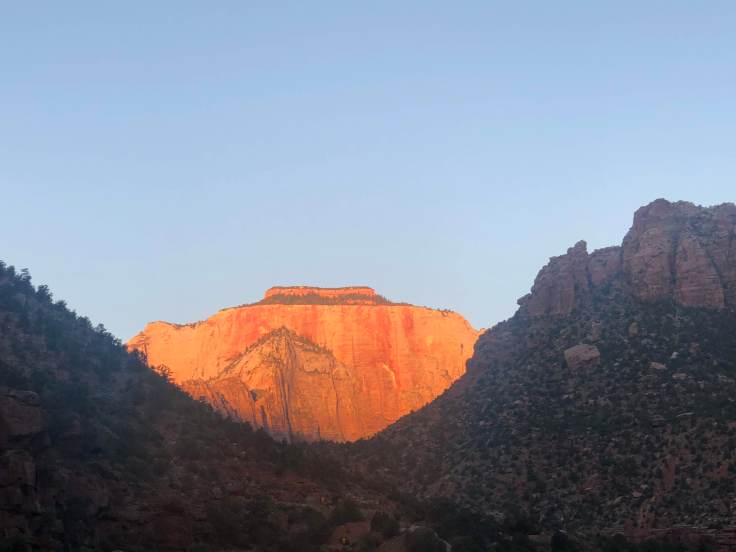
As we drove to the visitor center we found many interesting sights as the rising sun began to hit the higher peaks…

img_8018img_8019img_5429img_8021img_8023img_8025img_8026img_8027

We arrived at the visitors center (which was not yet open) and parked.  We then walked the Pa’rus Trail, along the Virgin River for about 1 1/2 miles…

img_8029img_5431

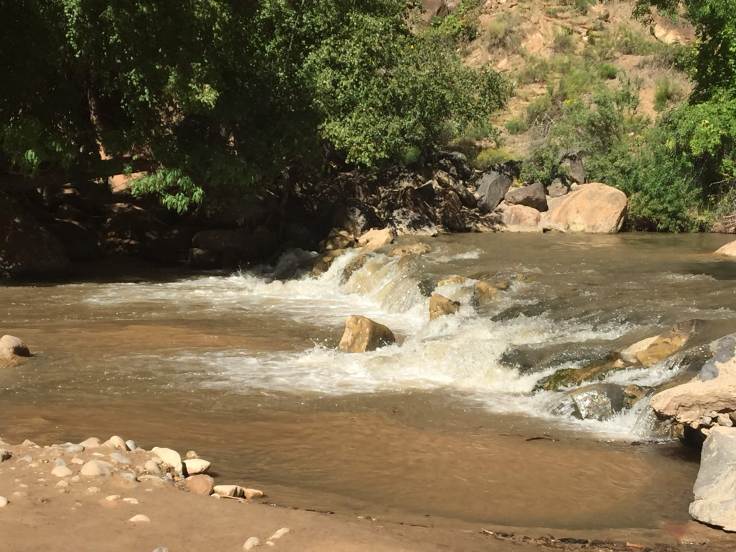
Lynda went off-road to get a picture of the rapids…

img_8031img_5433

The sun continued to reveal move sights…

img_8032img_8033img_5434img_8034img_5435img_8035img_8036

We arrived at Canyon Junction, where we caught the shuttle to the Lodge…

img_8037img_5438

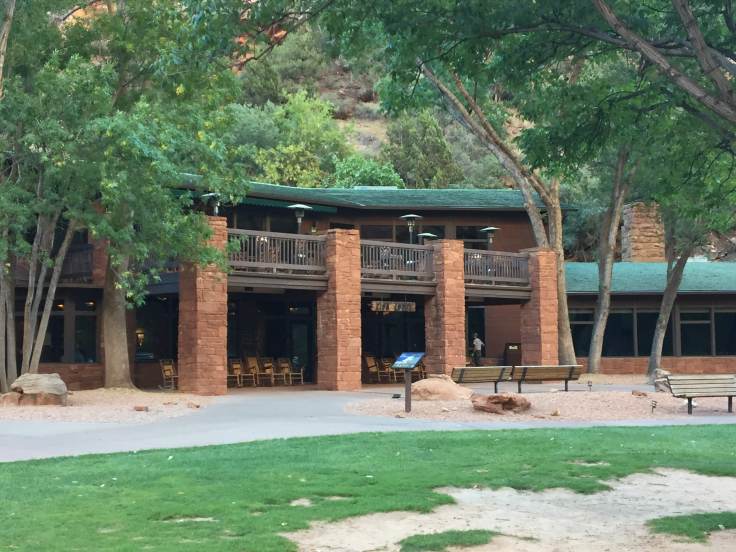
We had a nice late breakfast in the second floor dining room, then set out to walk the Lower Emerald Pool Trail… Only one mile, round trip…

img_8039img_5439img_8040img_8042img_5440img_5441img_8043img_8044img_8046

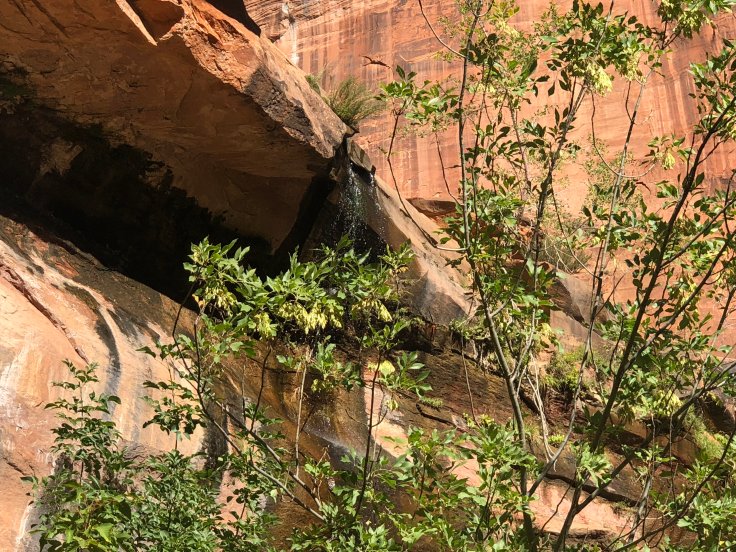
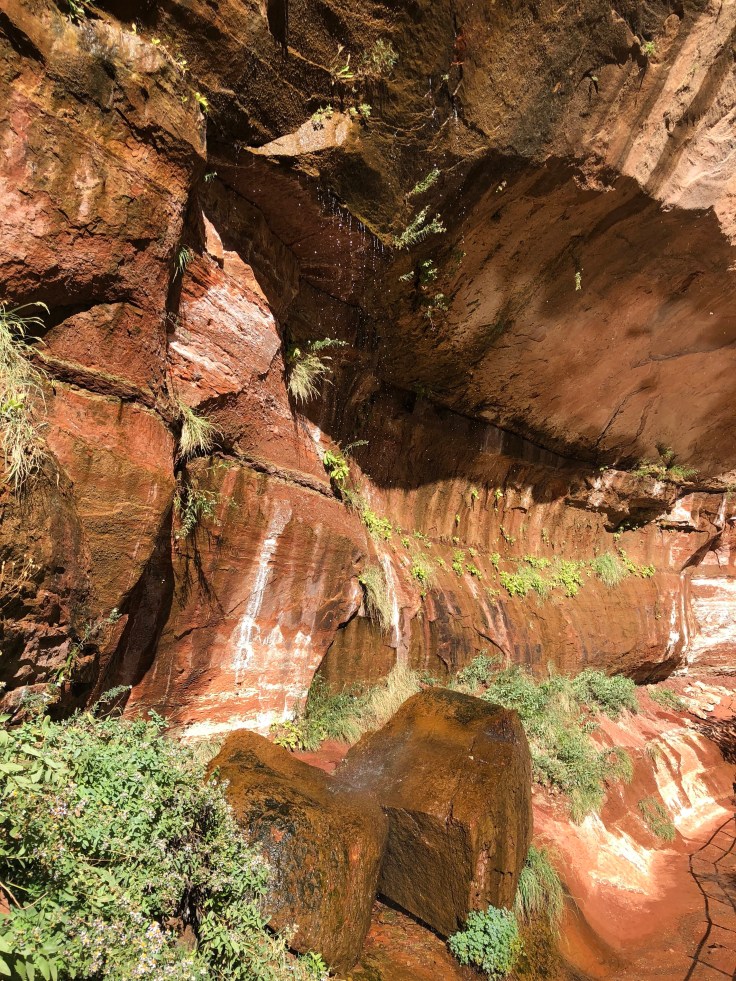
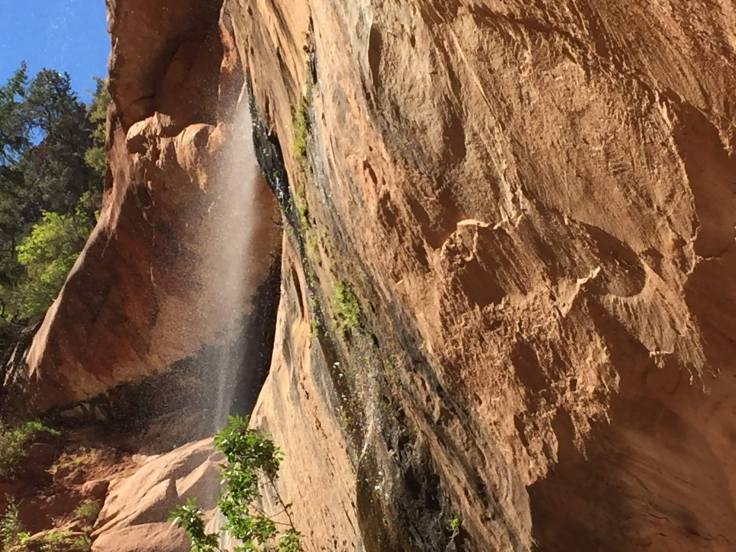
Finally we arrived at the “waterfall”… More of a “wet wall”…

img_8047img_8048

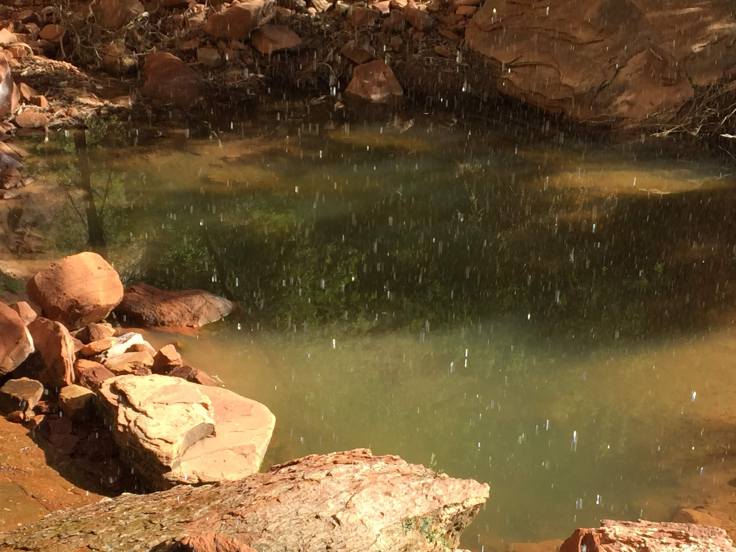
The pool was a little bit emerald…

img_8049img_8050

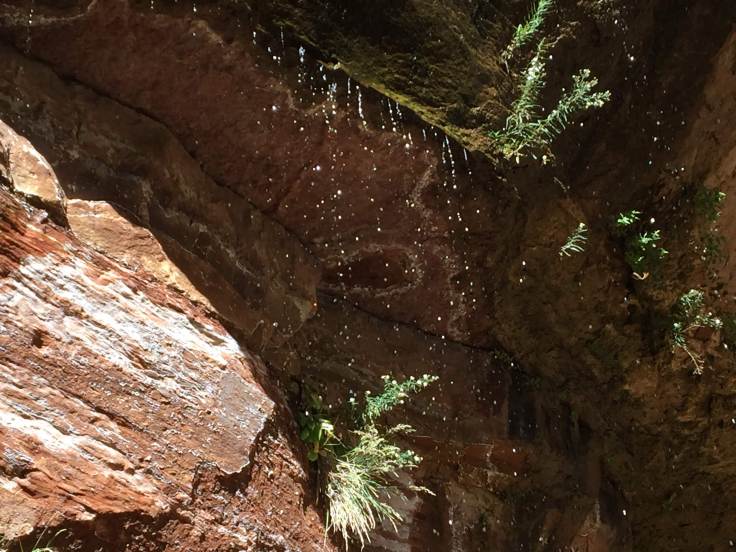
Now we see falling water…

img_5445img_8052img_5447img_8055img_5449

Falling into the Emerald Pool…

img_5446img_5448img_5451img_5454

We back-tracked to the lodge and caught the shuttle to Temple of Sinawava… They tried to explain which rocks looked like a temple, but I didn’t see it…

img_5458

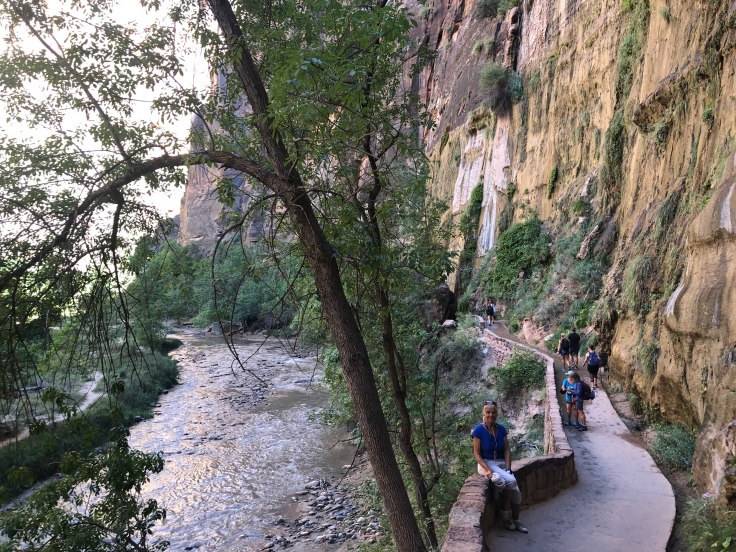
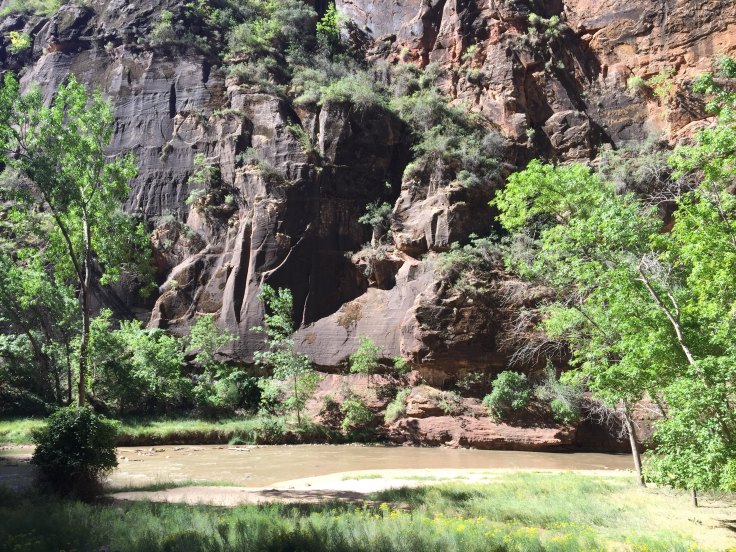
We are following the Virgin River, once again, about two miles round trip.  At the top of the canyon is “The Narrows”.  In the mean time, we see the flora and fauna…

img_5459img_8058img_5460img_8060img_8061img_8062img_8063img_5461img_8064img_8066img_8067img_5465img_5466img_5467

If you squint, and imagine it 100 times as big, it almost looks like a bear… Lynda says she wants to see a bear…

img_8068

Finally we reach the end of the trail.  No, this is not a throng of Mormons being baptized… This is where “The Narrows” begins.  To see the narrows up close, where the canyon walls are only 20′ apart, you need to hike upstream through the water for about a mile… We didn’t…

img_5471img_8069img_8070

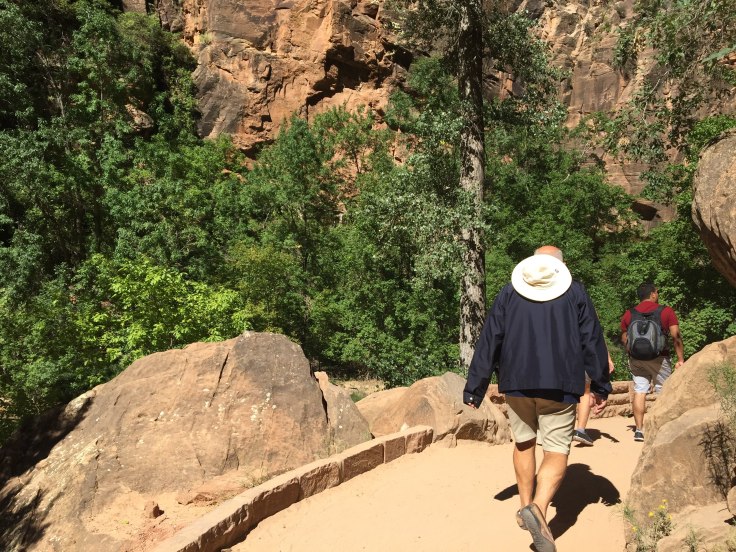
We were not about to walk in the river, so we returned along the path, seeing the canyon from the other direction…

img_5474img_8072

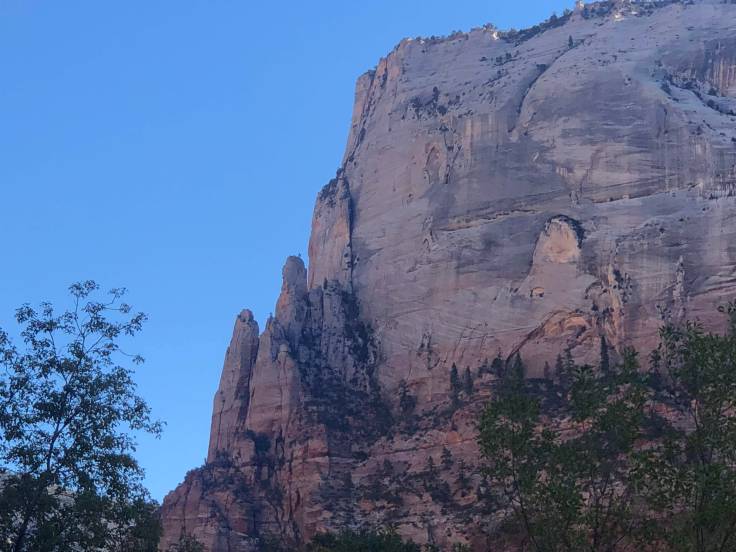
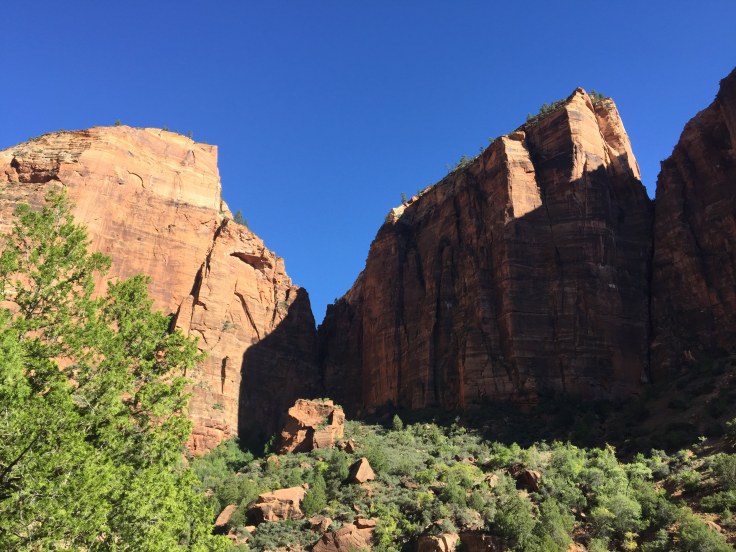
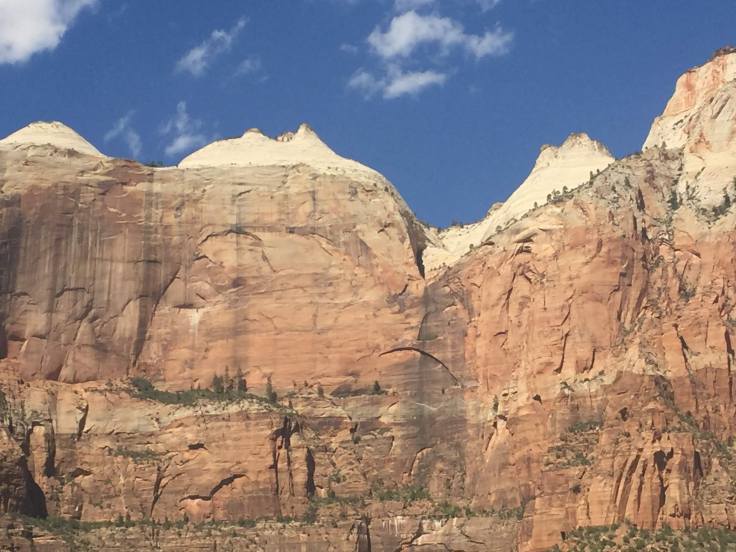
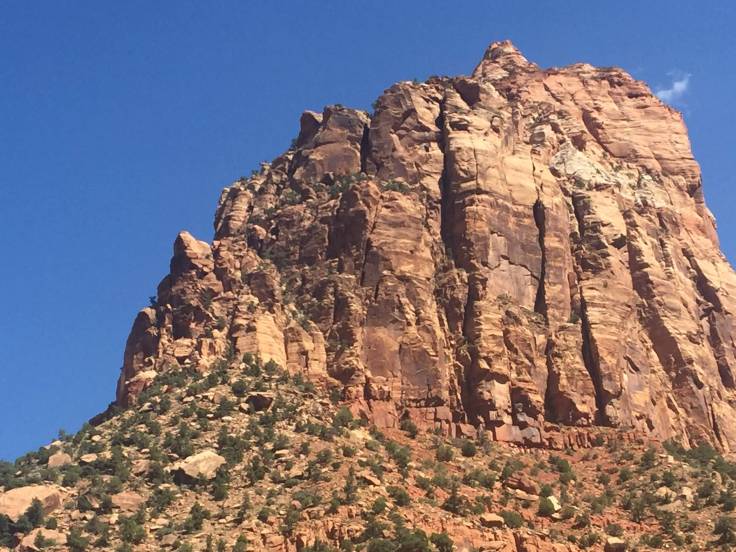
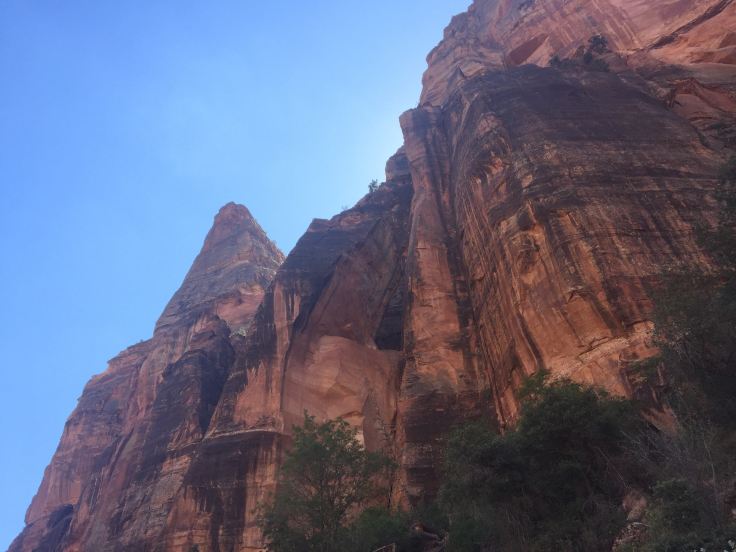
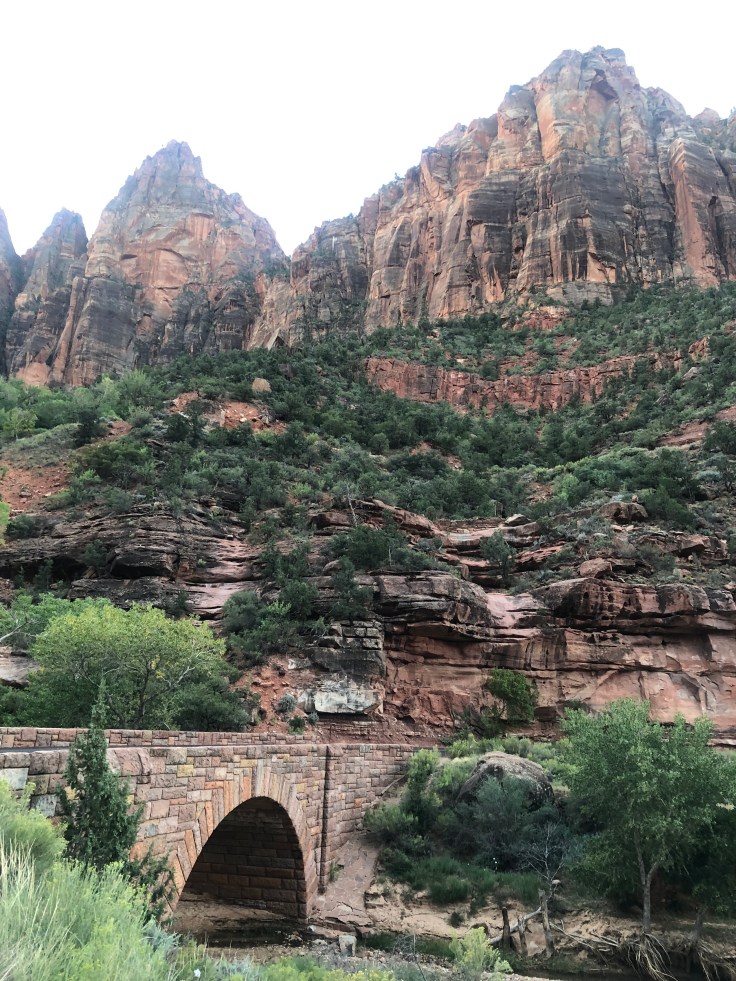
At the trail head we caught the shuttle back to the visitors center, and thus to the Big Red Truck.  As we headed out of the park we saw the sights that we missed by arriving when it was still dark…

img_5475img_5476img_5479img_5480img_5481img_5482img_5483 We emerged from the tunnel… and we were on our way…

img_5484img_5488img_5493

We returned to Kanab, where we enjoyed a late lunch at the Wild Thyme Cafe.  We returned to The Villa, where the AC was running strong (it is 93 degrees today…), took a nap, and had Happy Hours…

And an enjoyable time was had by all…

2018-09-17 – WBCCI 2018 Southwest Adventure Caravan – Day 30 – Traveling to Fredonia, AZ, near Zion National Park

Today we traveled to Zion National Park.  Except, not exactly… We are camping 13 miles outside Fredonia, AZ, at the Kaibab Paiute Band Tribal RV Park.  The RV park is across the street from the Pipe Springs National Monument, and is about 50 miles from Zion…

I took this picture because… Not Rocks!

img_5383

It was an easy drive.  After about 1 1/2 hours we arrived at the town of Kanab, UT, a nice little town…

We stopped for lunch at the Rocking V Cafe… Interesting place in this very remote town…

img_8011img_5385

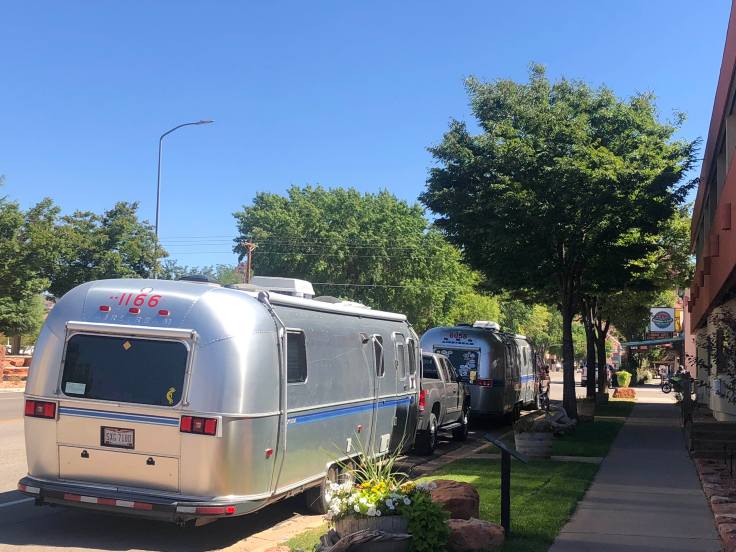
Other Airstreamers were in town, too, having lunch, shopping for groceries…

img_8013

We also shopped for groceries – finally found half-&-half.  The last four grocery stores didn’t have any… What’s up with Southern Utah and their lack of half-&-half?

As we left the grocery store and headed to the RV park, we noticed a strange thing:  It is 1:34 pm, and we will arrive at our destination, 20 miles away, at 1:06 pm…

img_8014

Obviously we are in Utah, and our destination is in Arizona.  They are in the same time zone, but Arizona does not believe in Daylight Saving Time…  However, as we approached the RV park, rather than changing the actual time to Arizona time, it changed the destination time to Utah time!  Apparently the RV Park is quite close to cellular towers in Utah.  Our Apple devices and our computer similarly kept switching back and forth such that we never able to know what time it was… To avoid the confusion we set a real clock on Utah time, and the Caravan all agreed that we would operate on Utah time… Of course, Zion is on Utah time…

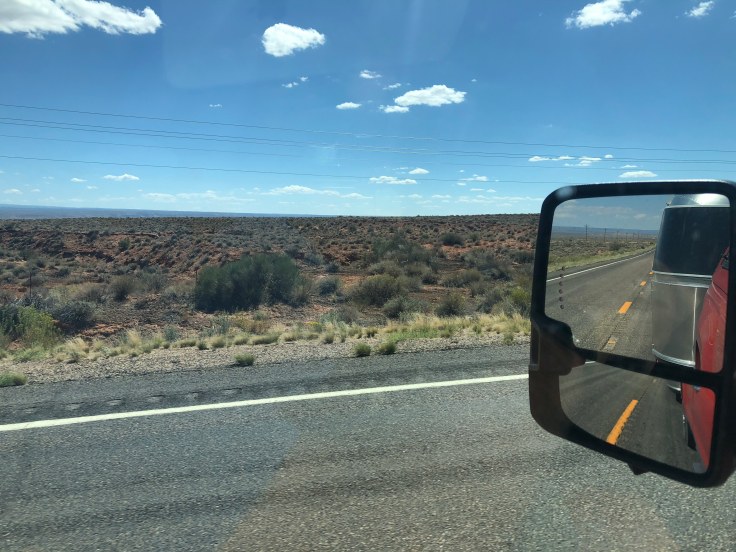
As we approached the RV park, this was the landscape surrounding us… Arizona looks a lot like Wyoming around here…

img_8015

Zion National Park is an national park located in Southwestern Utah near the city of Springdale.  A prominent feature of the 229-square-mile park is Zion Canyon, which stretches 15 miles long and spans up to half a mile deep.  It cuts through the reddish and tan-colored Navajo Sandstone by the North Fork of the Virgin River.  The lowest point in the park is 3,666 ft at Coalpits Wash and the highest peak is 8,726 ft at Horse Ranch Mountain.  Located at the junction of the Colorado Plateau, Great Basin, and Mojave Desert regions, the park has a unique geography and a variety of life zones that allow for unusual plant and animal diversity.

Zion National Park includes mountains, canyons, buttes, mesas, monoliths, rivers, slot canyons, and natural arches.  Human habitation of the area started about 8,000 years ago with small family groups of Native Americans;  however, these Indians moved away by 1300 and were replaced by other Southern Paiute subtribes.  Mormons came into the area in 1858 and settled there in the early 1860s.  In 1909, President William Howard Taft named the area Mukuntuweap National Monument in order to protect the canyon.  In 1918, the acting director of the newly created National Park Service, Horace Albright, drafted a proposal to enlarge the existing monument and change the park’s name to Zion National Monument, a name used by the Mormons.  According to historian Hal Rothman: “The name change played to a prevalent bias of the time.  Many believed that Spanish and Indian names would deter visitors who, if they could not pronounce the name of a place, might not bother to visit it.  The new name, Zion, had greater appeal to an ethnocentric audience.”  On November 20, 1919, the United States Congress established the monument as Zion National Park, and it was signed by President Woodrow Wilson.  The Kolob section was proclaimed a separate Zion National Monument in 1937, but was incorporated into the park in 1956.  

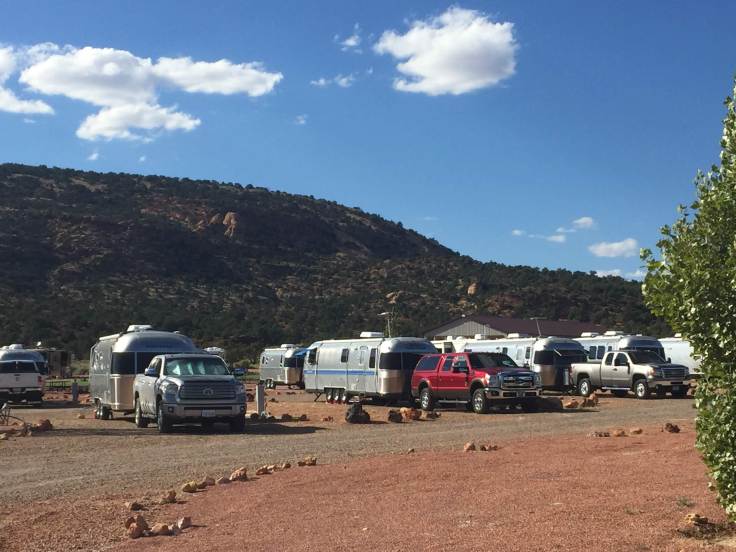
We parked The Villa and set up camp… As did all the others…

img_5389img_8016

As we settled in at the RV park we learned that one of the Caravaner couples, who live in coastal North Carolina, had learned that their property (not their house) had sustained damage due to debris and flooding from Hurricane Florence, so they decided to leave the caravan and return home… We held an impromptu gathering to wish them well…

img_5390img_5393img_5391

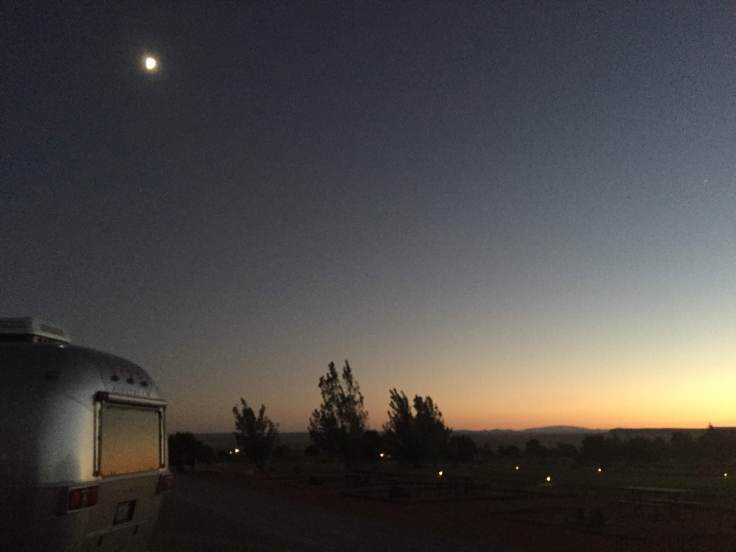
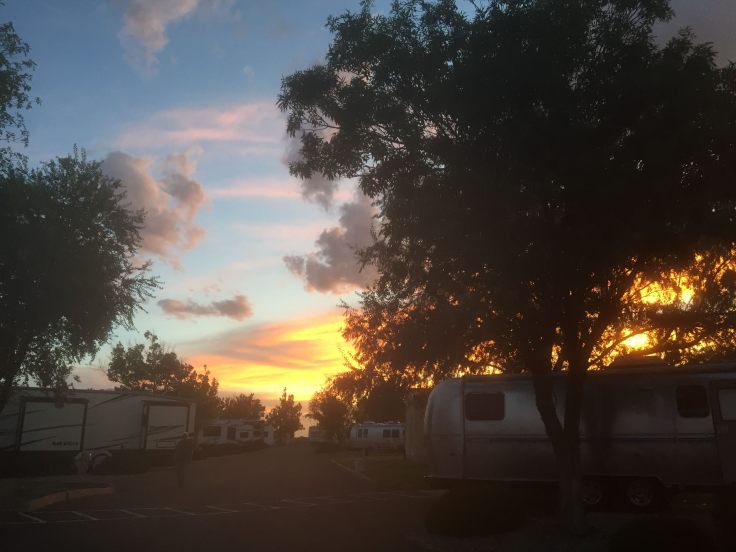
After the gathering, as we headed back to The Villa.  The sunset was striking…

img_5407


Another momentous event occurred 39 years ago today … Our daughter, Erin, was born… She celebrated today by letting her not-quite-three-year-old capture her on film:

img_8073

I think he has caught her essence…


And an enjoyable time was had by all…

2018-09-16 – WBCCI 2018 Southwest Adventure Caravan – Day 29 – Bryce Canyon National Park

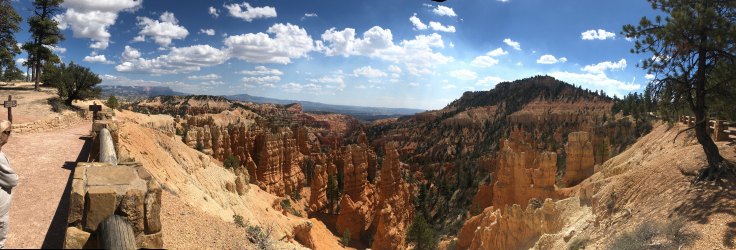
This is our last day in Bryce.  We took advantage of the free time and drove through the park on our own…

We visited the Natural Bridge, at elevation 8,627’…

img_7977

img_5367

Of course, as we know, this is not a bridge at all, but an arch…

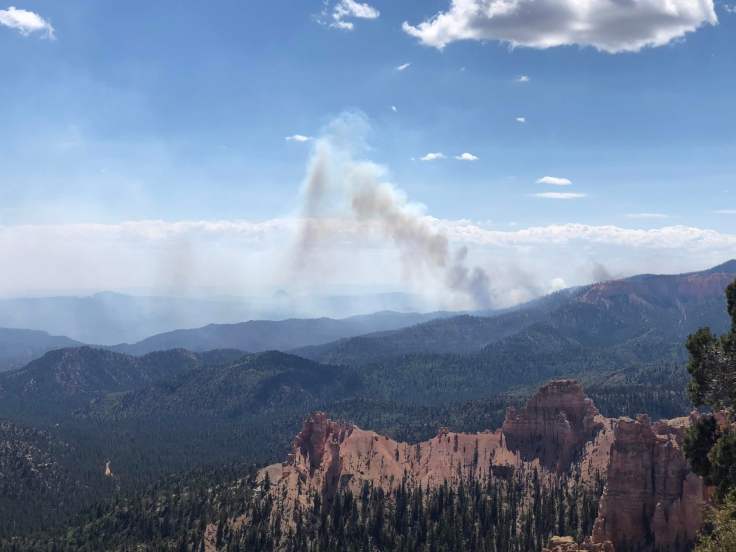
We would have gone on further to see other sights, but the road was closed due to a controlled burn in the park…

img_7980

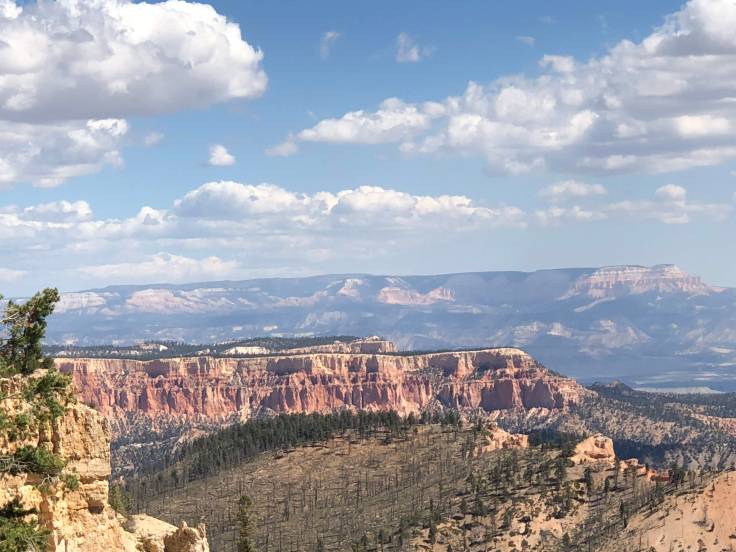
We visited the Farview Overlook, at elevation 8,819’…

img_7983img_5369img_7982img_7984img_7988img_7991

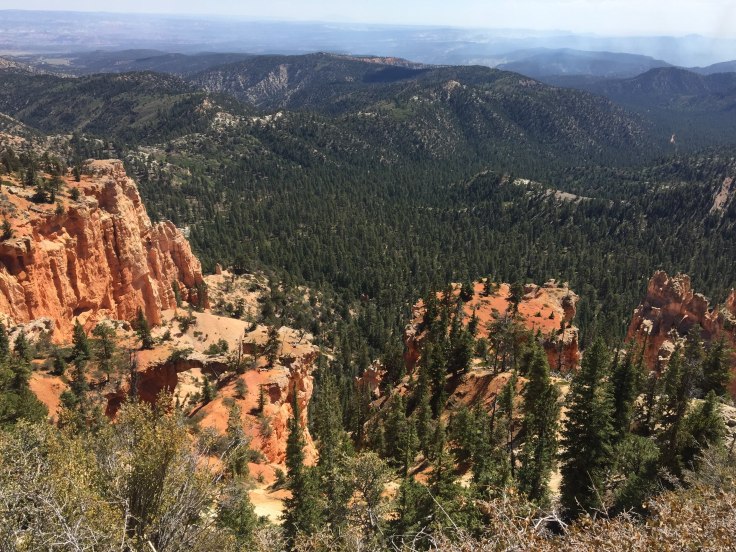
We visited the Swamp Canyon overlook…

img_5374img_5375

We visited Fairyland Canyon, at elevation 7,758’…

img_7994

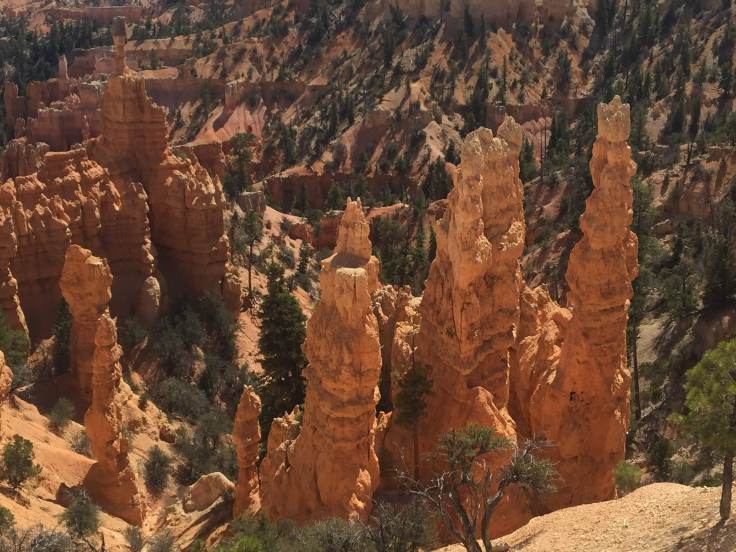
We saw marvelous rock formations that looked like they were copying something from Disney…

img_7995img_7996img_7998img_7999img_5378

We had a shared dessert of assorted pies, then we had our usual Drivers Meeting to review our move tomorrow to Fredonia, AZ, staging area for our visit to Zion National Park and Pipe Springs National Monument…

img_8004img_8005

And an enjoyable time was had by all…

2018-09-05 – WBCCI 2018 Southwest Adventure Caravan – Day 18 – Monument Valley

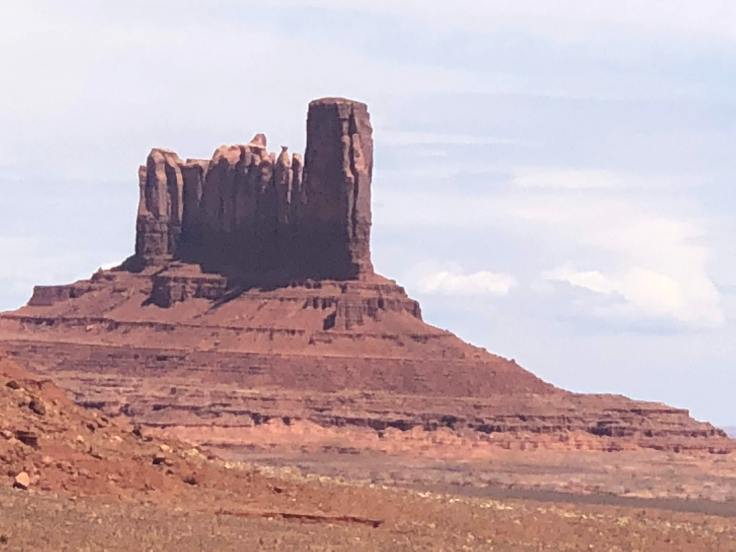
Monument Valley (Navajo: Tsé Biiʼ Ndzisgaii, meaning valley of the rocks) is a region of the Colorado Plateau characterized by a cluster of vast sandstone buttes, the largest reaching 1,000 ft above the valley floor.  It is located on the Arizona–Utah border , near the Four Corners area. The valley lies within the territory of the Navajo Nation Reservation.

We traveled today with Jay and Elna, Caravan Leaders, to Gouldings, in Monument Valley.  Harry Goulding established a trading post here in the 1920s, which has grown to include a Lodge, Restaurant, RV Park, and of course, a Gift Shop…

img_7233img_7230img_7234

In the 1930s, in an effort to generate income for the Indians, Harry contacted Hollywood movie folk and arranged for the studios to shoot movies in Monument Valley.  There is a stage set of a cabin supposedly used by John Wayne in John Ford’s production of “She Wore a Yellow Ribbon”…

img_7236img_7235

Even this fake cabin had authentic construction…

img_7237

Other buildings at Gouldings are not so lovely…

img_7238

Monument Valley has been featured in many movies and TV shows since the 1930s. In the words of media critic Keith Phipps, “its five square miles have defined what decades of moviegoers think of when they imagine the American West.”

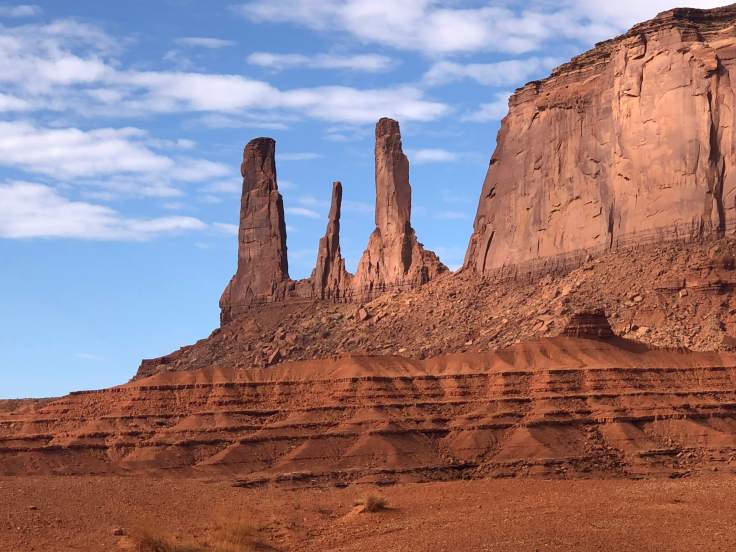
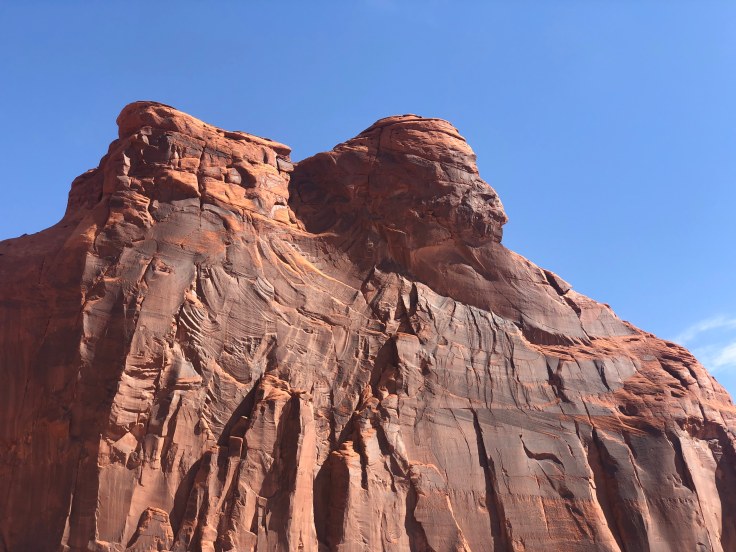
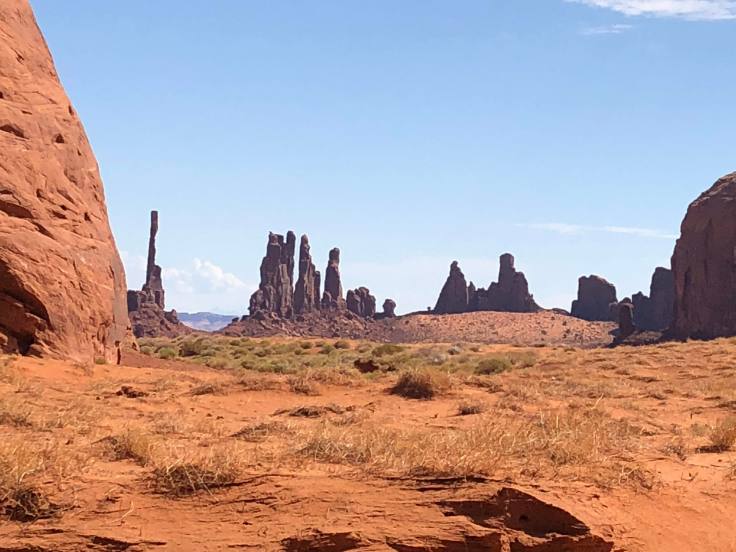
And it is stunning…

img_7257

We saw the right mitten (above) and the left mitten (below)

img_7347

We saw the castle…

img_7355

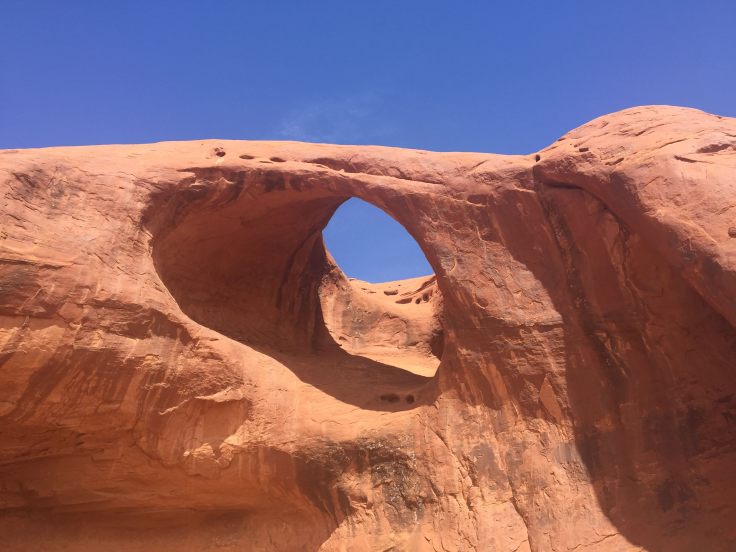
And we saw some arches… (Arches differ from Bridges in that arches are formed by erosion by wind and the freeze-thaw cycle, while bridges have (or have had) flowing water beneath them, and the primary method of erosion was from this water…)

img_4969

We were all herded into three touring trucks to see the sights…

img_7330

img_7273img_7262

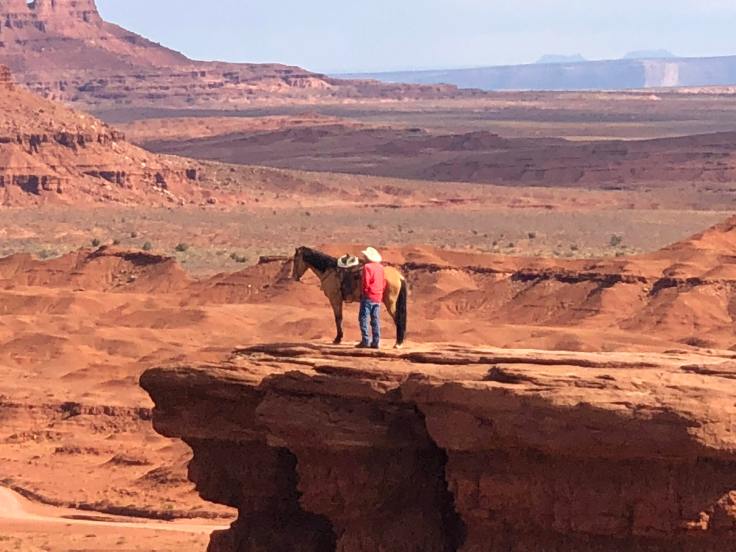
After some driving along rutted, gravel roads, and seeing marvelous sites, we arrived at John Ford’s Point.  John Ford like to ride his horse around here while shooting movies…  (This is not John Ford…)

img_7276

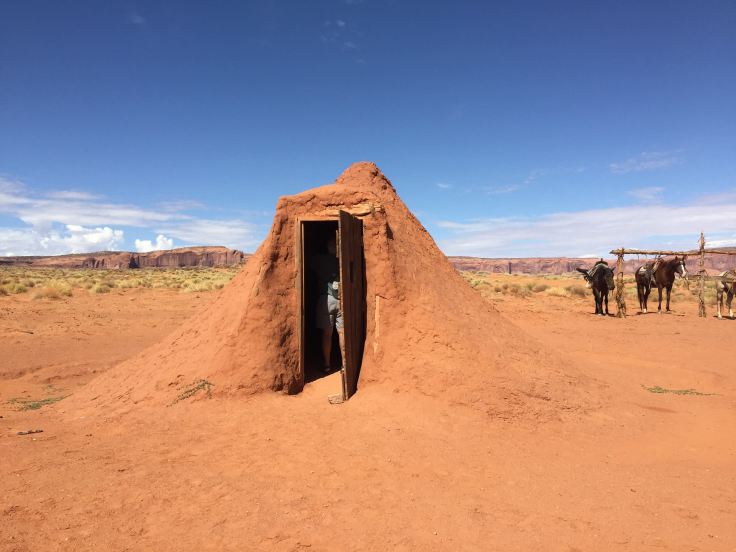
At one of our stops we saw authentic hogans, homes of the Navajo.  About 30 families live in these traditional homes deep in the valley, using traditional methods of living, with no running water or electricity.  They don’t even have cable TV!  These hogans that we saw were for display purposes and for demonstrations…

img_4958img_4960

This is a sweat lodge…

img_7311

These hogans had beautifully constructed wood roofs to support the earthen exterior covering…

img_7310img_7312

We saw more impressive structures…

img_7290img_7282img_7298img_7314

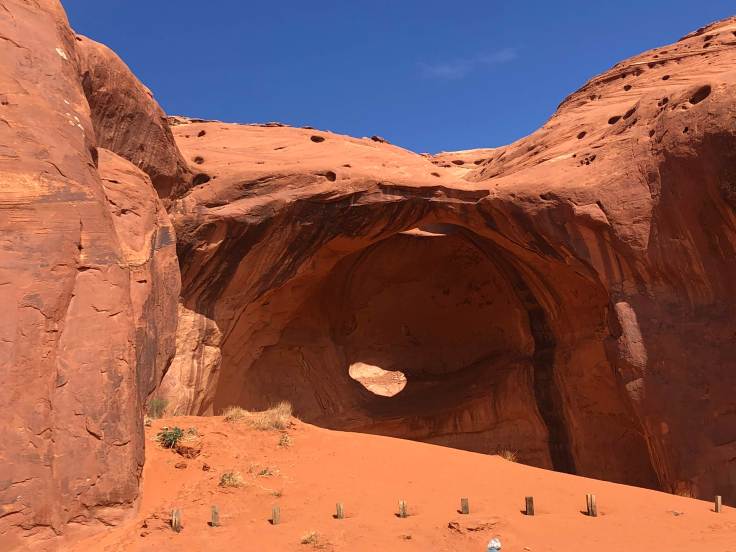
Then we reached the arches…

img_7316img_7320img_4966img_49691img_4970

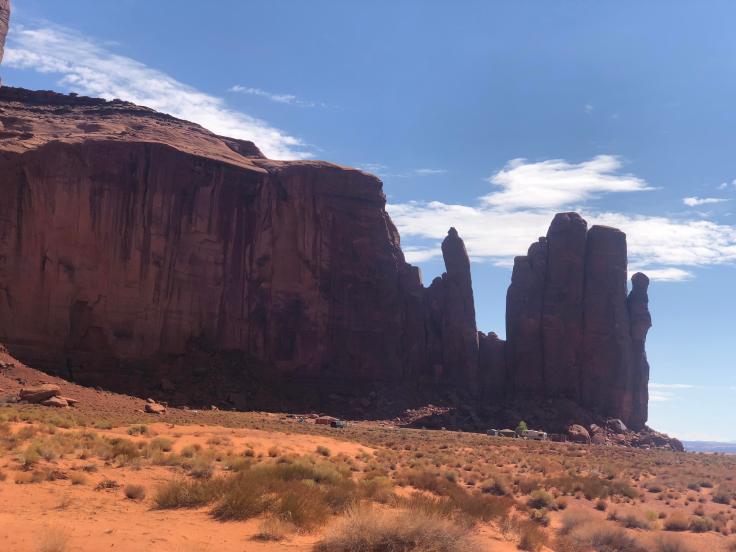
This place is very awe-inspiring.  Everywhere you look you see these marvelous structures…

We returned to Gouldings, had a nice lunch in the restaurant there, and then headed back to The Villa… We had a Drivers Meeting to discuss the route of our travels tomorrow, then we had dinner and a quiet evening in The Villa…

And an enjoyable time was had by all…


And an enjoyable time was had by all…

2018-09-03 – WBCCI 2018 Southwest Adventure Caravan – Day 16 – Traveling from Mesa Verde to Utah…

Travel Day.  The Villa is on the move…!

Early mornings, the deer come to visit…

img_4854img_4856

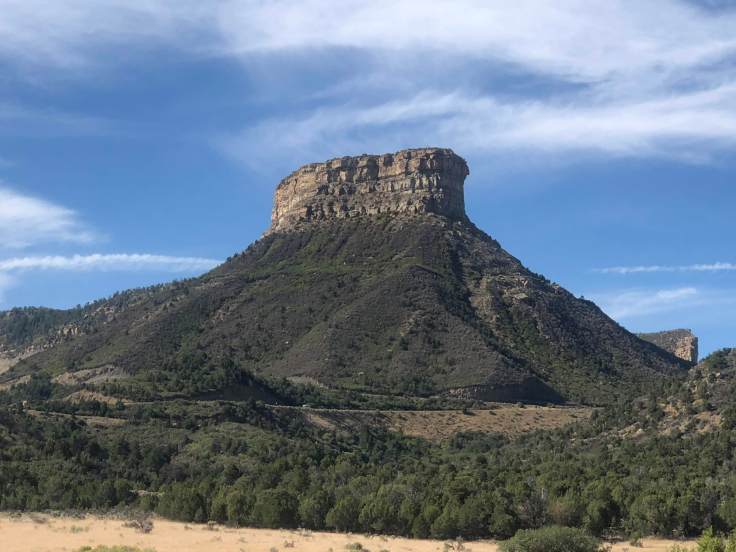
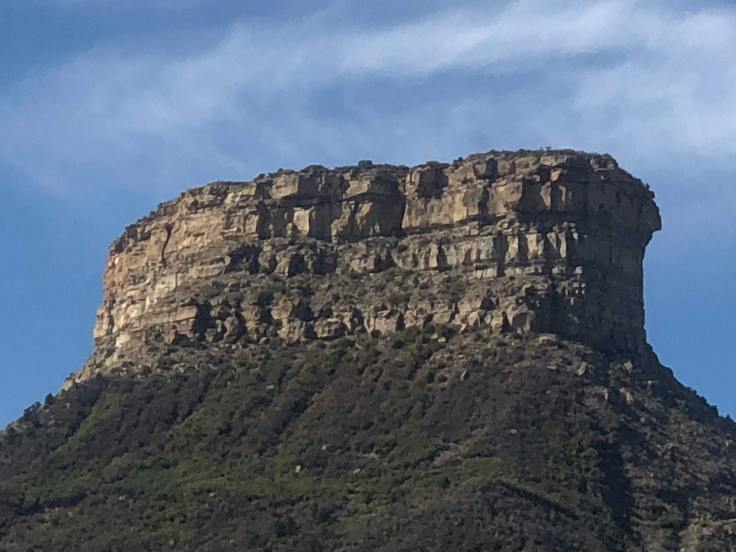
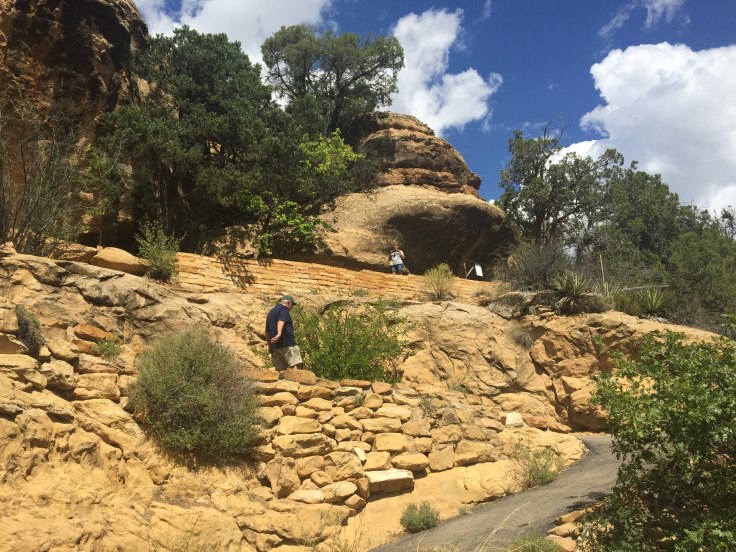
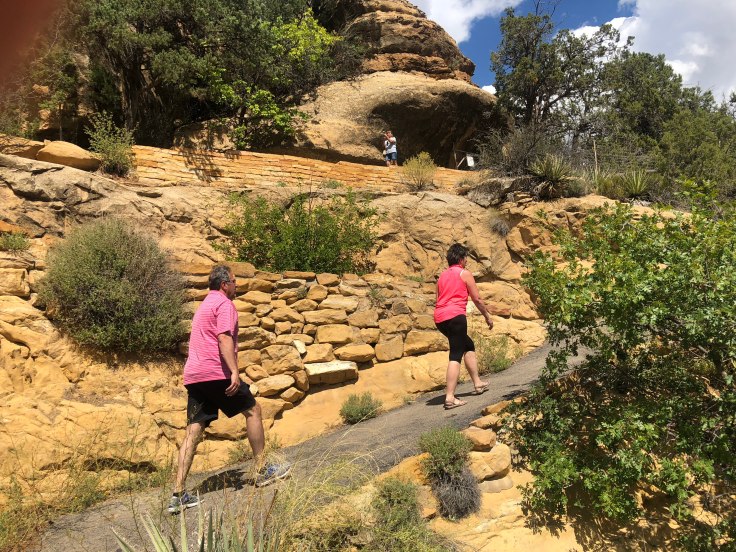
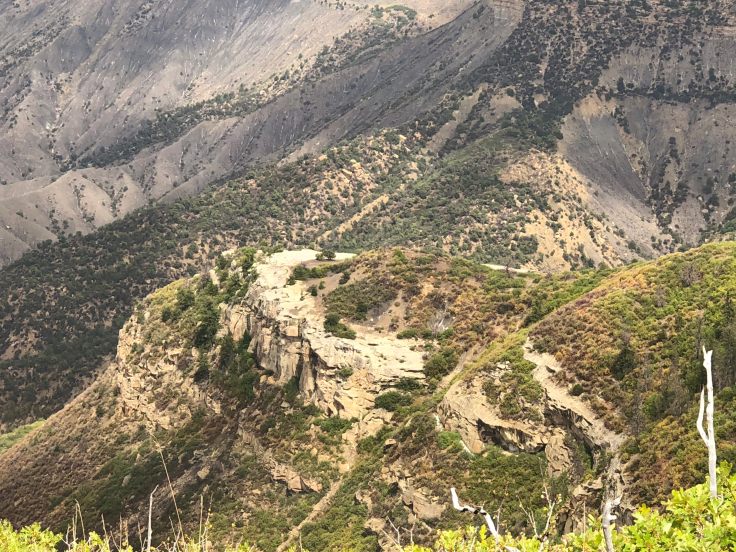
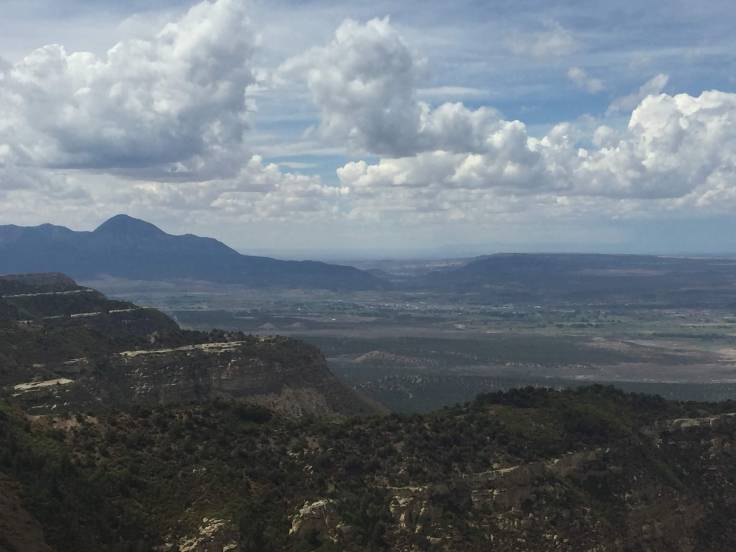
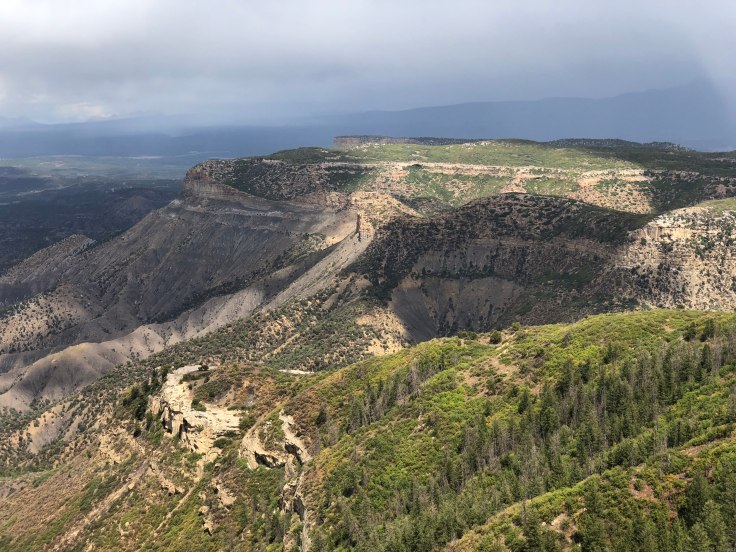
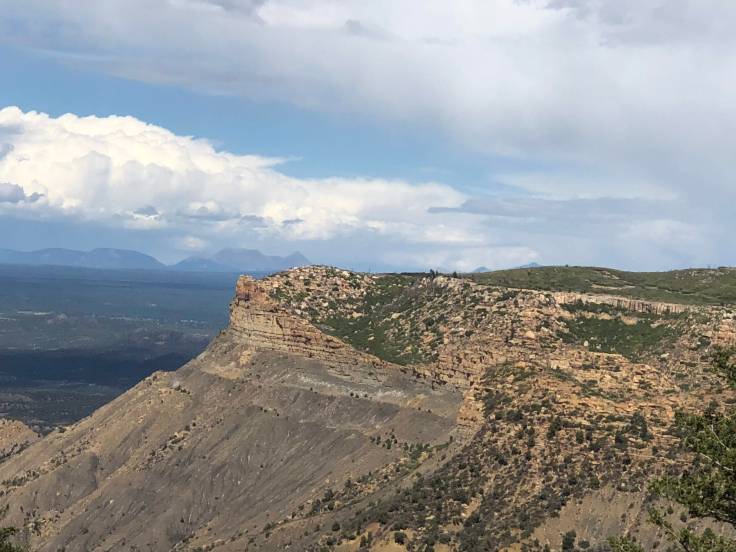
This is the hill we hiked to yesterday… The photos we took were from the top of the rock…

img_7116img_7117

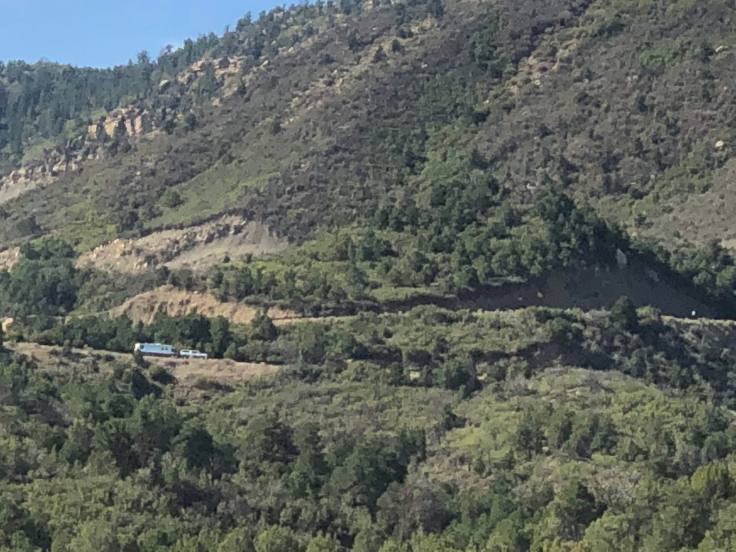
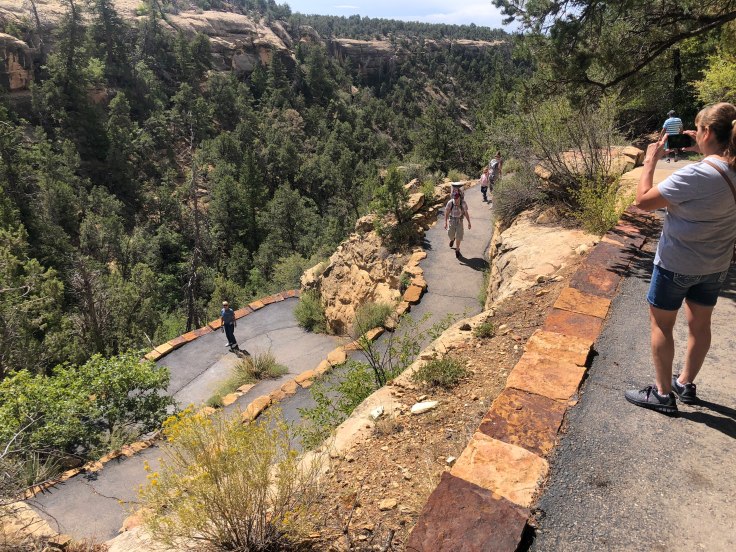
The switchback roads we saw from the top are here – we drove down the road this morning on our way out of the park…

img_7118

img_7119

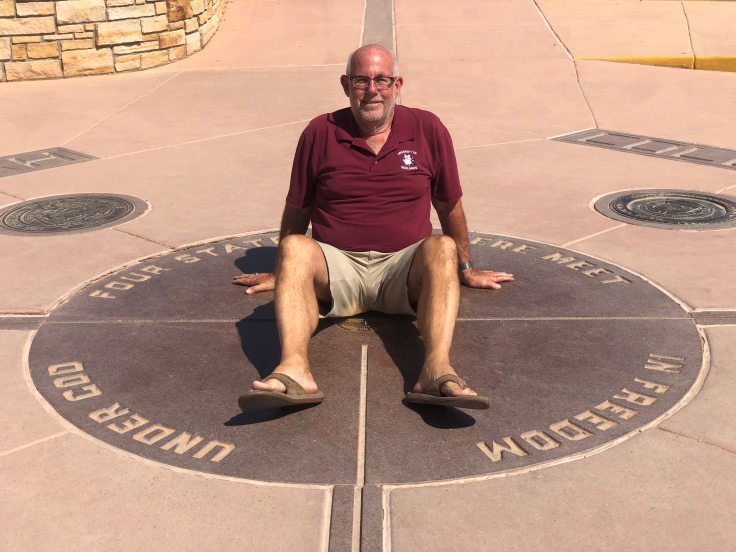
We stopped at the Four Corners Monument: Utah, Arizona, New Mexico, Colorado…

img_7123img_7125img_7128

A few other members of the caravan were there, too…

img_7120

We continued on, driving through New Mexico and Colorado, until we finally found Utah…


img_4861

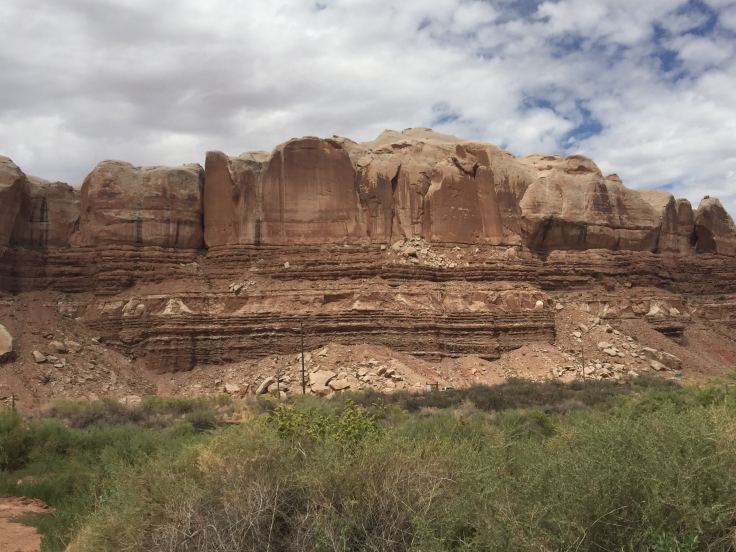
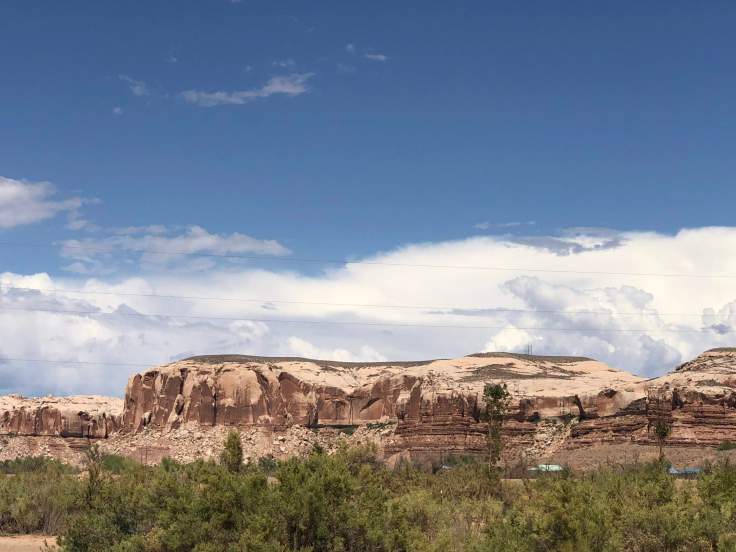
We saw more buttes and mesas and bluffs…

img_4862img_4863

img_7130

Our campground is in the small town of Bluff.  Pretty non-descript, but we had water and power.  It will be our jumping off point for Goosenecks Park, Muley Point, the Moki Dugway, Natural Bridges, Valley of the Gods, and Monument Valley.

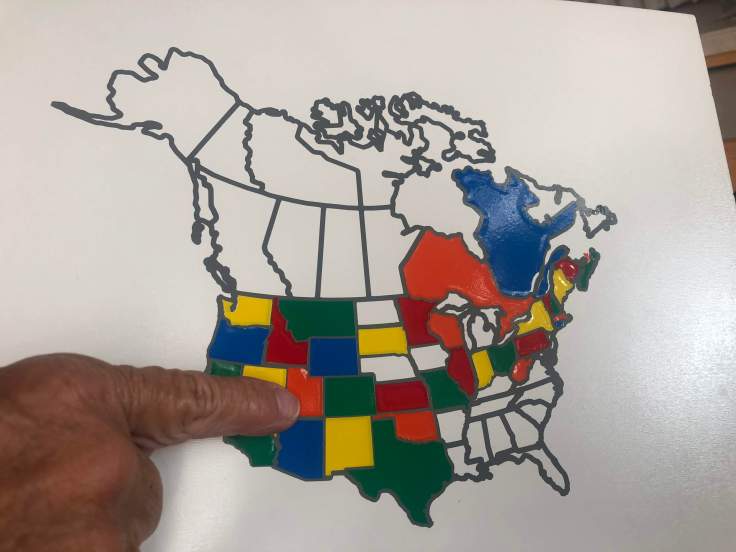
We also were able to add the 30th State sticker to our maps…

img_7132

We had a quiet evening in…

And no Travel Day would be complete without pictures of the grandchildren…

img_5275

George on the right, Ian next to him; the others are their 3rd cousins…

img_4843

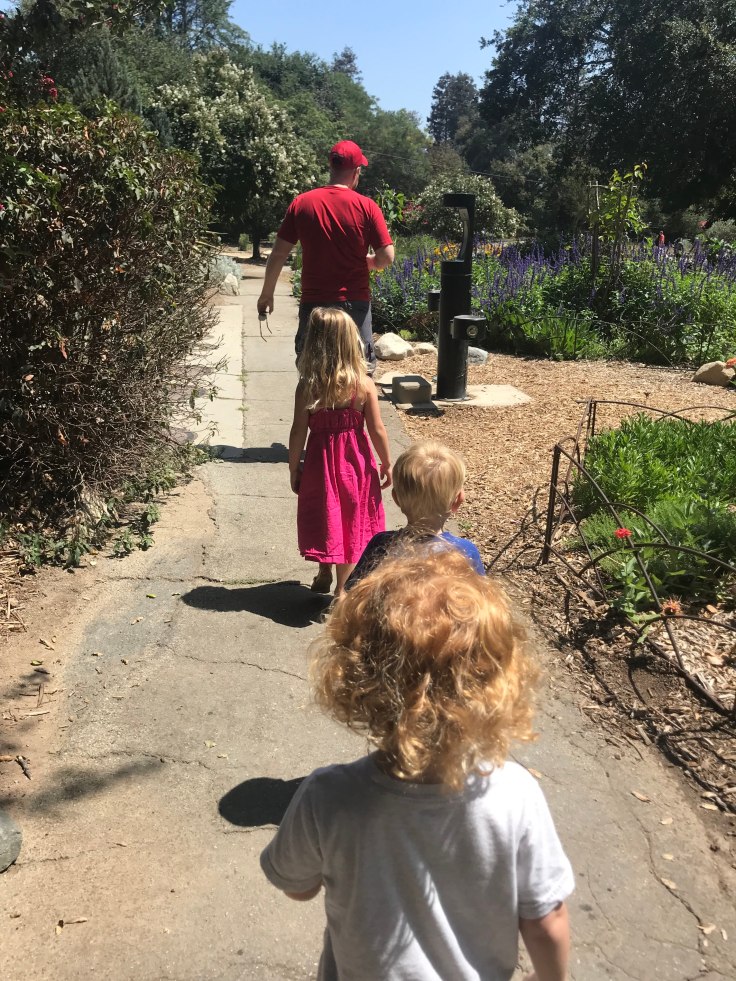
The family out for a walk…

img_5262

Ian, George and Roisin (L-R)

img_5258

And an enjoyable time was had by all…
2018-09-01 – WBCCI 2018 Southwest Adventure Caravan – Day 14 – Mesa Verde National Park

Today we spent more time exploring Mesa Verde… We started at the Chapin Mesa Museum, adjacent to the park headquarters.  The museum had the usual exhibits about the flora and fauna of the park, plus some history and archaeological data.  And a Gift Shop…  Most interesting were miniature dioramas, or models, of the typical pueblo life during the various periods of occupancy, from 650 to 1300.  These beautiful models were built by the CCC (Civilian Conservation Corps) during the 1930s…

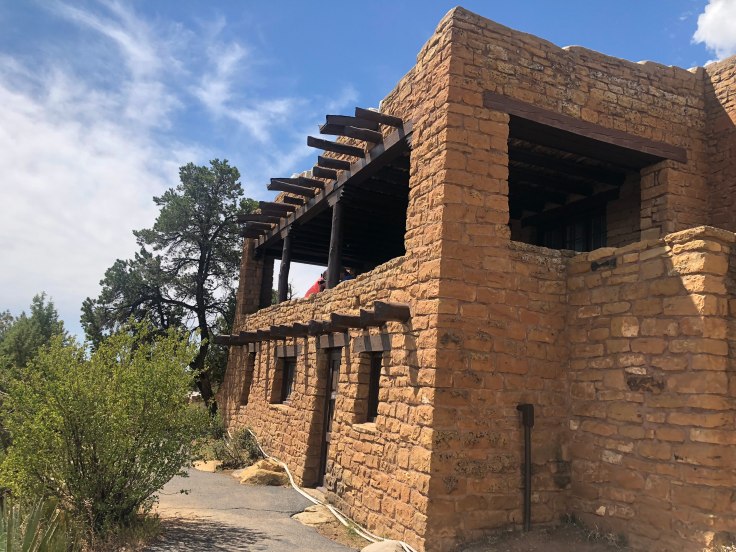
What interested me more were the buildings at the museum and the park headquarters.  The scale and massing was lovely, and the buildings were clustered as if they composed a small village… They were built with volcanic stone blocks, left un-plastered…

img_6997img_7001img_7002img_7003img_7039img_7040img_7041img_7042img_7043

img_7046

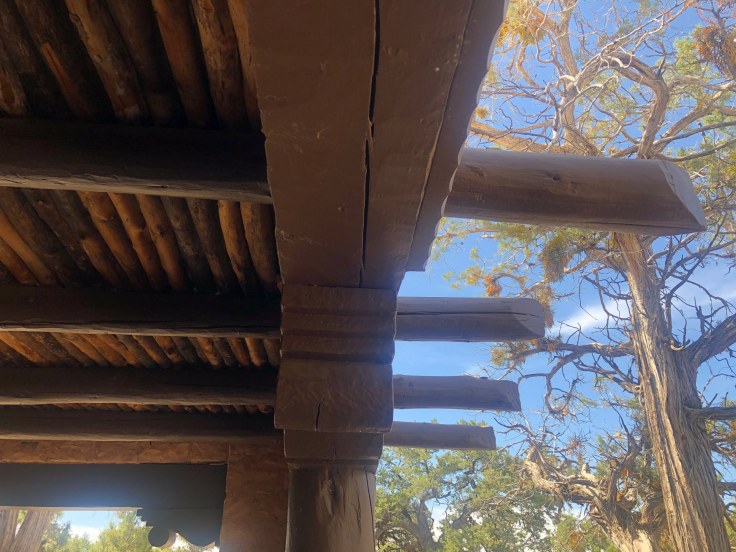
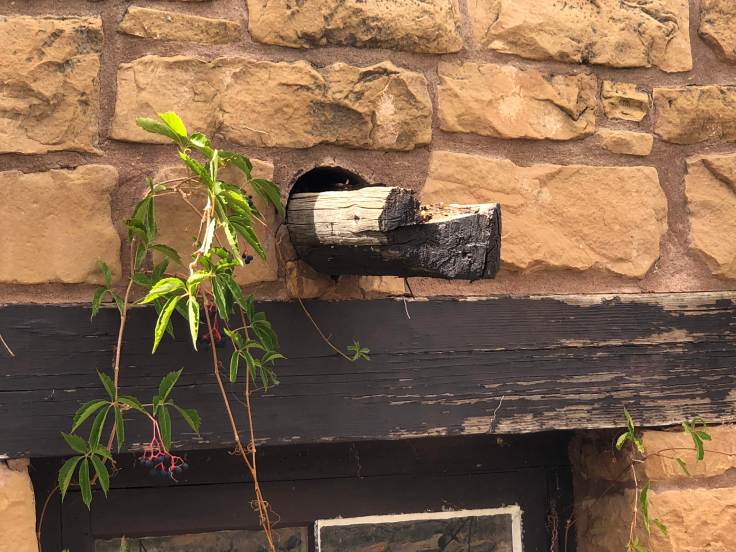
Did you notice the vigas?  They are done very well.  And they are real!

img_6999

They are not simply stuck onto the exterior as decoration.  They form the structure for the floor or roof above, and they extend through the wall as part of the structural connection.  Another thing: they are Juniper.  Juniper is naturally rot and disease-resistant.  While the vigas in the park buildings are 85-90 years old, the vigas in the Pueblo are 500 years old, and very few of them show any evidence of rot…

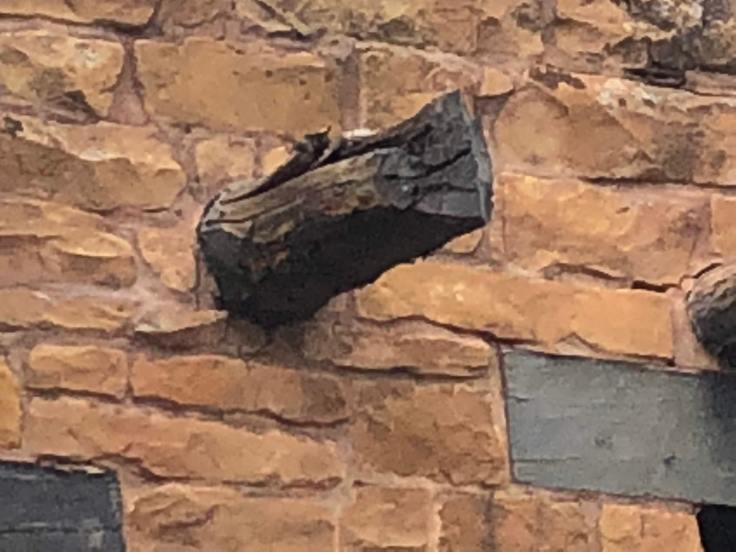
Except for these…

img_7047

img_7038img_6998

Still, not bad for 85-90 years.  Today’s tract houses in Santa Fe use Douglas Fir or Southern Pine for their fake vigas, and they show rot beginning in year one…!

After the museum we set out on a “hike”  We are not generally hikers – we are walkers.  This was a well-marked trail.  It descends into Spruce Canyon, and goes down, and down, and down… About 586 vertical feet.  The loop is almost 3 miles.  But we were up to it.  Being in the canyon is a little surreal, seeing the bushes, trees, rocks, and other feats of nature…

img_7013img_4806img_7014img_7016img_4808img_7018img_7020img_4811img_7022img_7024img_7026img_7027img_7028img_7031img_7033img_7034img_7036

We did discover this gruesome evidence of wildlife…

img_7030

Of course, after we walked down we had to walk up again.  While the descent was gradual, the ascent was very short and steep… And we made it!

img_7037

Walking back to the truck we heard thunder all the way.  But there was no rain…

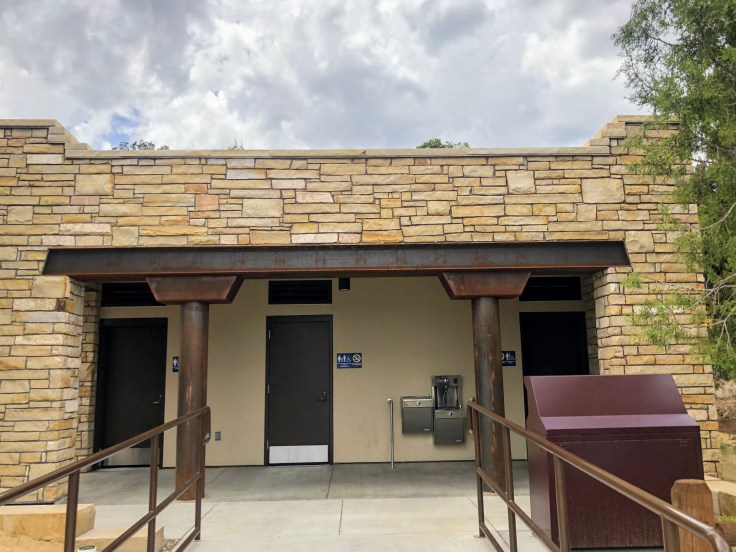
We again admired some of the park buildings… This is the original 1930s restroom building:

img_70441

Nice proportions, authentic wood lintel, posts, and capitals, excellent stonework…

Next door they built a new restroom building containing facilities accessible to the disabled…

img_70451

Nice proportions, excellent stonework… Nicely proportioned lintels, posts and capitals, but note:  They are steel!  Clearly, this building pays homage to the historical architecture, but it uses modern materials when duplicating the historic materials would compromise the integrity of a modern building.  Well done, Architect, whoever you are…!

As we approached our next destination in the truck it started to rain… We stopped at Park Point, the highest point in the park, at 8,572 feet elevation.  This is about 700 feet above the campground…

img_4819

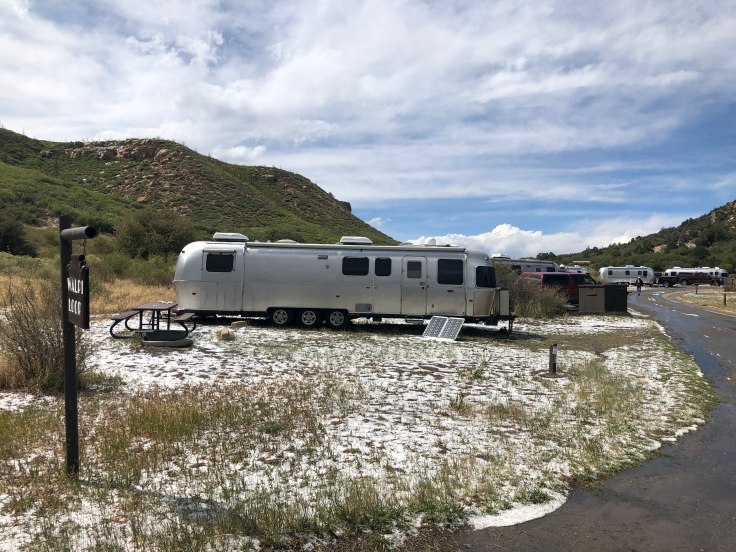
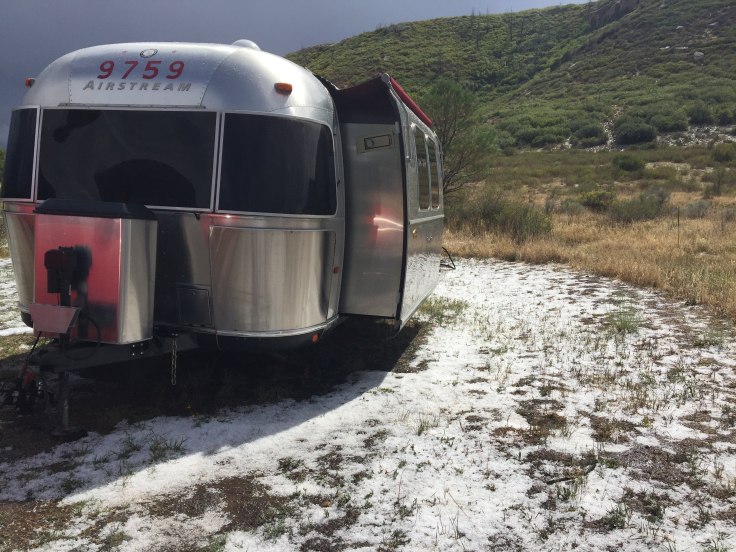
It was lightly raining, but we couldn’t help but notice this white gravel on the ground.  Upon closer inspection, we discovered it was hail!

img_7054img_4826

Views are amazing, in all directions…

img_7059

We could see all the way to Utah, Arizona, and New Mexico, plus, of course, Colorado…

img_4828img_7062

This is “The Sleeping Ute”, a mountaintop in Utah that is supposed to resemble a sleeping Indian…

img_7063img_7066img_7069

This is “Knife Edge mountain, which is our next stop…

img_7070img_7072img_4831

Our next view overlook is called “Knife Edge”…

img_7074img_7075img_4833

So we then headed back to The Villa… And we were in for a surprise:  It had hailed at the campground, too!

img_7076img_4834img_4837

The hail was small – no damage to The Villa.  It lasted about an hour on the ground…  Later that evening we had another “Fandango” to meet other caravaners.  We were hosts, so we had 8 people inside the Villa…

And an enjoyable time was had by all…
2018-08-18 – Traveling East – Day 3 – Gallop and Albuquerque

We pulled out of Williams, AZ, this morning at about 7:30.  We are headed to Albuquerque today to meet up with other Airstreamers.  The caravan officially starts tomorrow, but we wanted to arrive one day early. (Many caravaners arrive several days ahead of the official start…)

The drive was uneventful across the rest of Arizona.  We are in the mountains of Flagstaff, Winslow, and Winona, with elevations from 5,000 ft. to a maximum of 7,275 ft.  The countryside was beautiful – so much more green than it was last year when we came through here in June…

The good news!  Many of the worst roads that we experienced last year have been repaired, or were being repaired as we detoured past the construction zones.

As we approached Gallop, NM, we saw billboard after billboard advertising the El Rancho Hotel .  Since we wanted to stop for lunch, we pulled off onto another remnant of Route 66 and drove through Downtown Gallop.  Our GPS led us to the hotel; it has obviously seen better days…

img_6513

We soon realized that we had come in through the rear… The front looks a little better…

img_6517

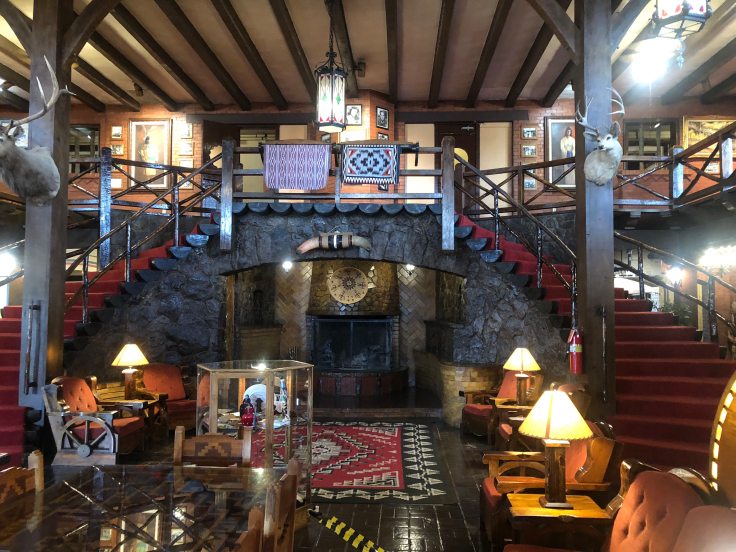
The hotel was built in the 1930s, and for the next 20 years was heavily used by the Hollywood film industry as headquarters for various movies being filmed in the rugged areas around here.  The lobby was very “old west”…

img_6515img_6516

We had lunch in the restaurant… Not quite the same scenic view as yesterday…

img_6514

It was a fascinating place.  We peeked into the bar and also the “49er Room” – a night club type of space that must have been really  hopping in the olden days of the 1950s.

After lunch, as we walked back towards The Villa, it started to rain.  For the next 2 hours or so it continued to rain, with some extremely heavy thunder and lightning showers and amazing cross-winds blowing across the freeway.  A trailer traveling ahead of us was being blown all over the road, but The Villa held firm – sort of like an anchor.

The rain stopped, the skies cleared, and we pulled into American RV Park in Albuquerque.  We beheld a wondrous sight:

img_6519

We parked The Villa and set up – we are here for 4 nights…

img_6518

We had a little Happy Hours and met a few of the other caravaners.  We also received our Drivers Manual, so we now know where we are going to be for the next 51 days.  We watched the sun set…

img_4488img_4487

And an enjoyable time was had by all…


2018-08-17 – Traveling East – Day 2 – The Grand Canyon

Exciting day ahead!  We are in Williams, AZ, and we are boarding the train bound for the Grand Canyon!  I’m not sure if I’m more excited about the Grand Canyon, or about the train trip…!  (Full disclosure:  I saw the Grand Canyon in 1961 when I was 10 years old… I was not impressed with a big hole in the ground…  On the other hand, Lynda has not seen it, so this will be a first for her…)

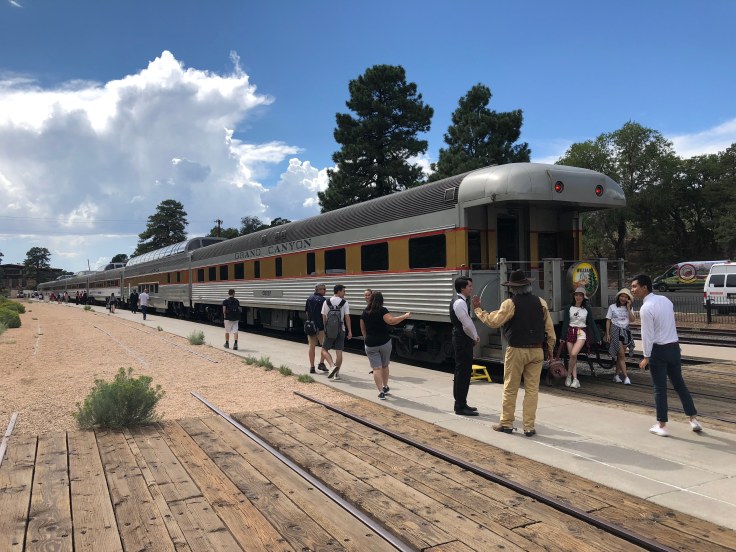
The day began with a corny “wild west” shootout…

img_6399

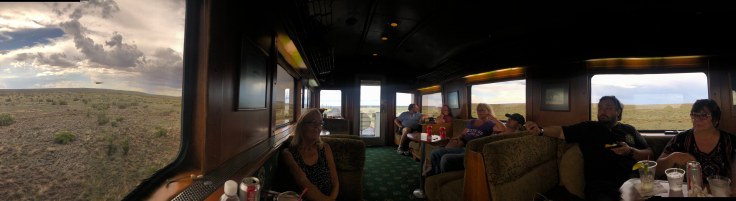
Then we boarded the train; we were seated in the full-length dome car.  We thoroughly enjoyed the panorama view of the beautiful countryside…

img_6400

What’s better than a train ride!

img_6409

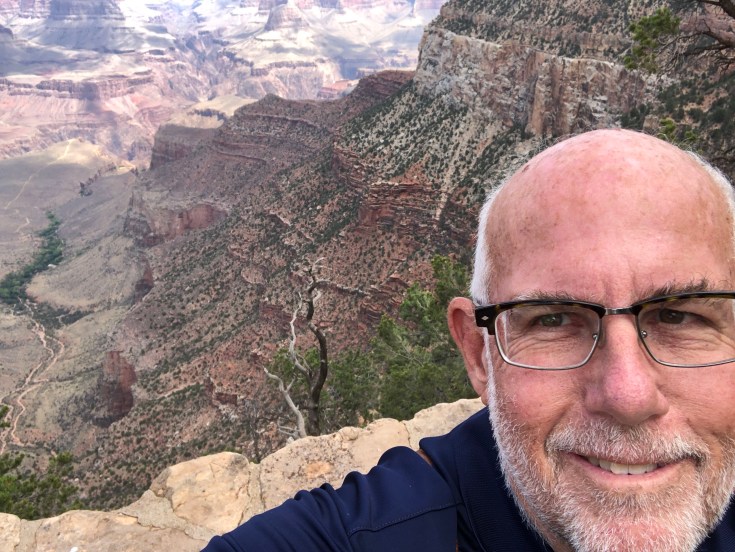
We arrived at the Grand Canyon.  Yep – it’s still a big hole in the ground…

img_6478img_6475img_6470

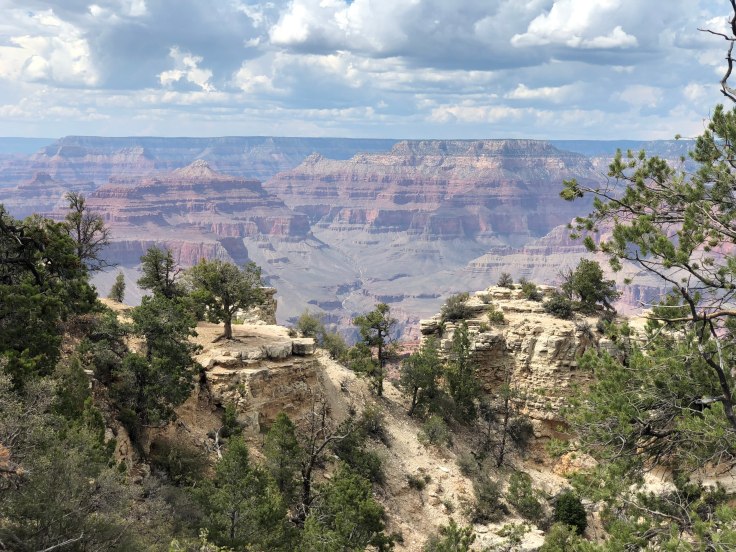
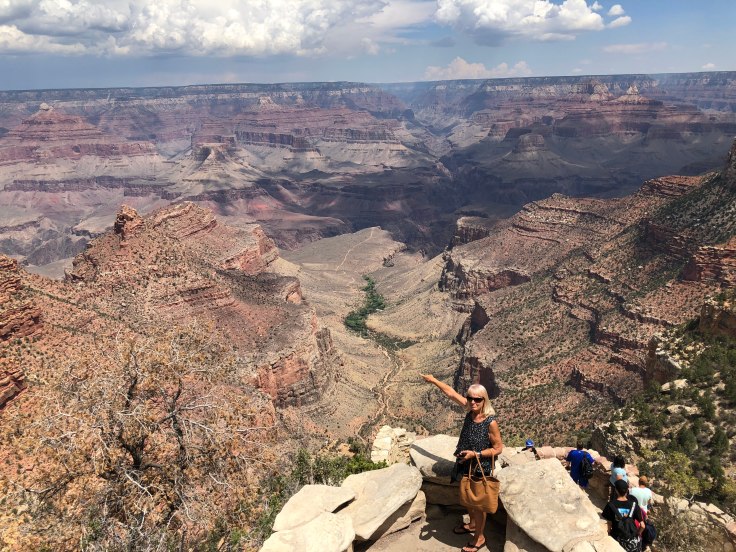
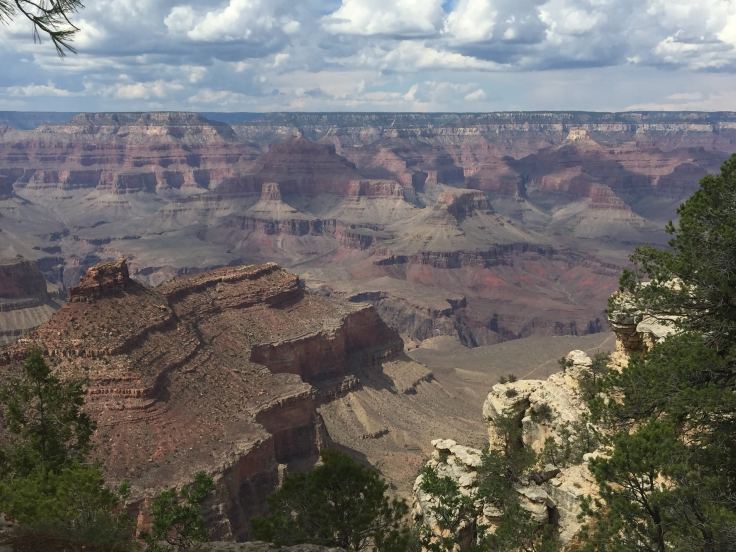
We did enjoy the various rock formations…

img_6455img_6456

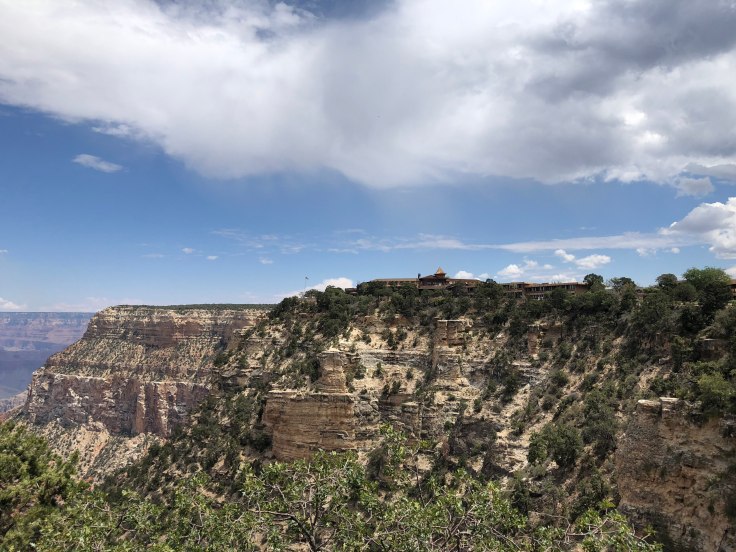
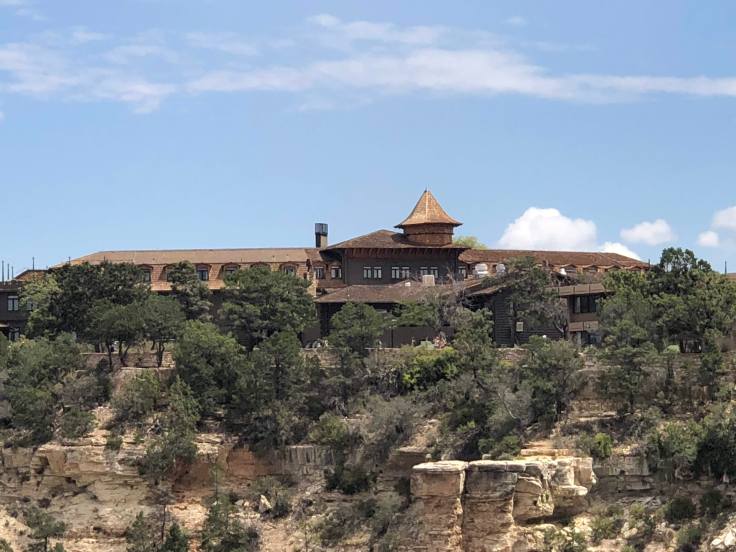
And the buildings are certainly worth looking at… Above is the El Tovar Hotel…

img_6436

And this (above) is one of the many gift shops, and it is also a great place to take photos…

img_6450img_64521

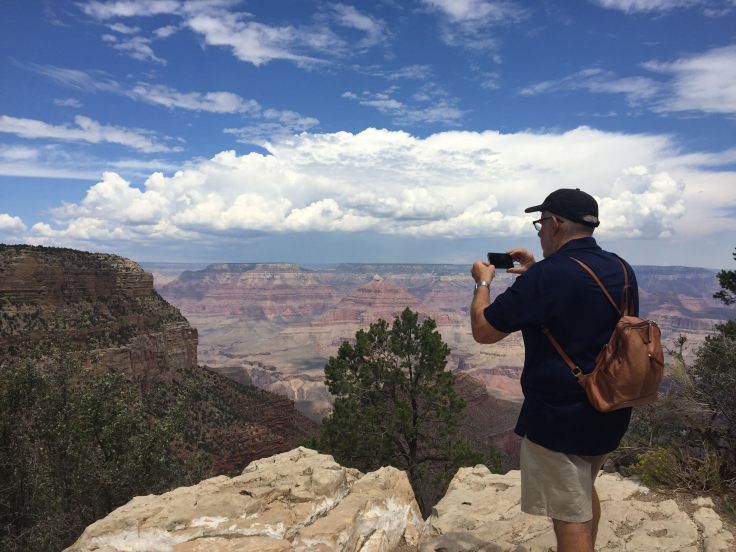
We even tool pictures of the picture takers…

img_4470img_6429

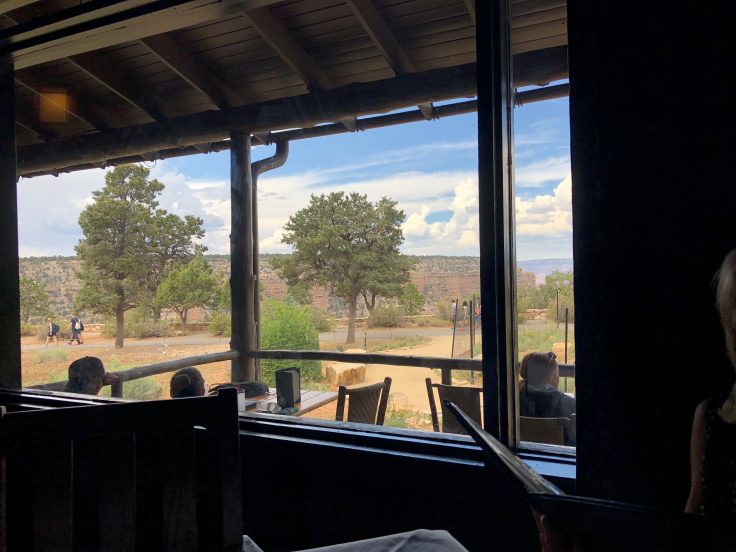
We had lunch at the El Tovar Hotel, with a lovely scenic view…

img_6457img_4475

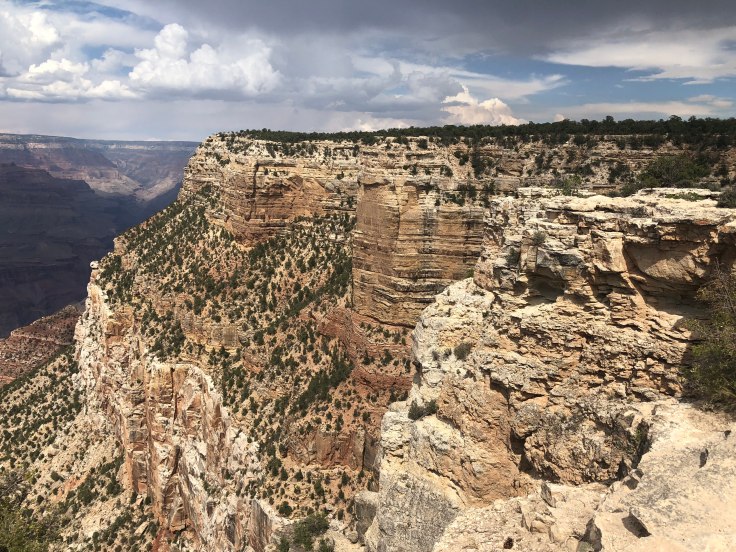
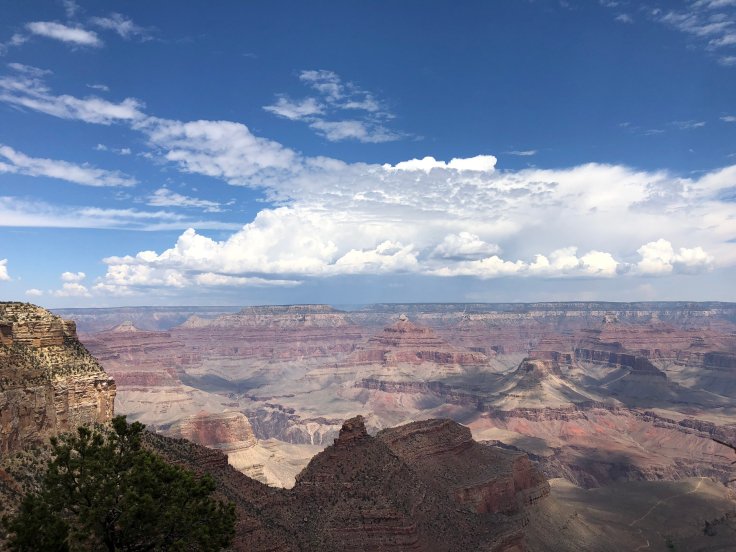
After lunch we walked and looked at more rocks…

img_4478img_4477img_6430

And then, just like that, it was time for the return trip on the train…

img_6479

This time we were seated in the parlor car, at the very end of the train; it even had the outdoor viewing platform.

img_4479

Riding backwards was a great pleasure – watching 270 degrees or a panorama of the mountain landscape…

img_6489

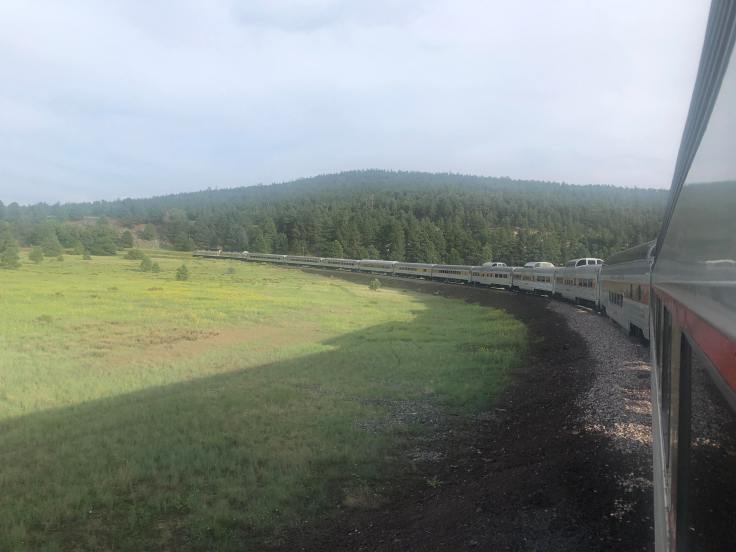
Also, from the observation platform we could get a good shot of the entire train…

img_6497

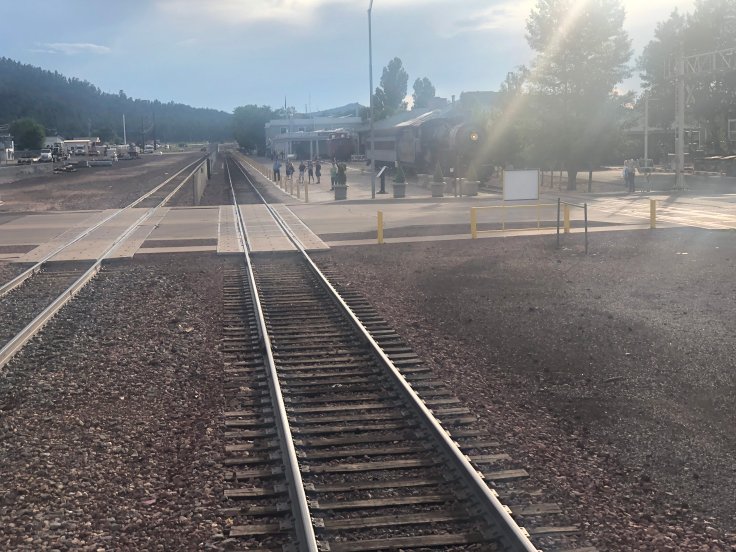
As we approached the station in Williams the train made a “Y” turn so that we could back into the station.  Standing on the open air observation platform was a lot of fun – we could watch the conductor step off the train and throw the switch, then we proceeded to back into the station…

img_6500

So we returned to the Villa and enjoyed Happy Hours.  We turned in early, because tomorrow is another long travel day…

And an enjoyable time was had by all…


Blog at WordPress.com.

Up ↑