Search

Adventures in the Villa

Category

California

2021-04-18 – Scouting The California Architecture Food and Wine caravan…

Lodi to Forestville and Beyond

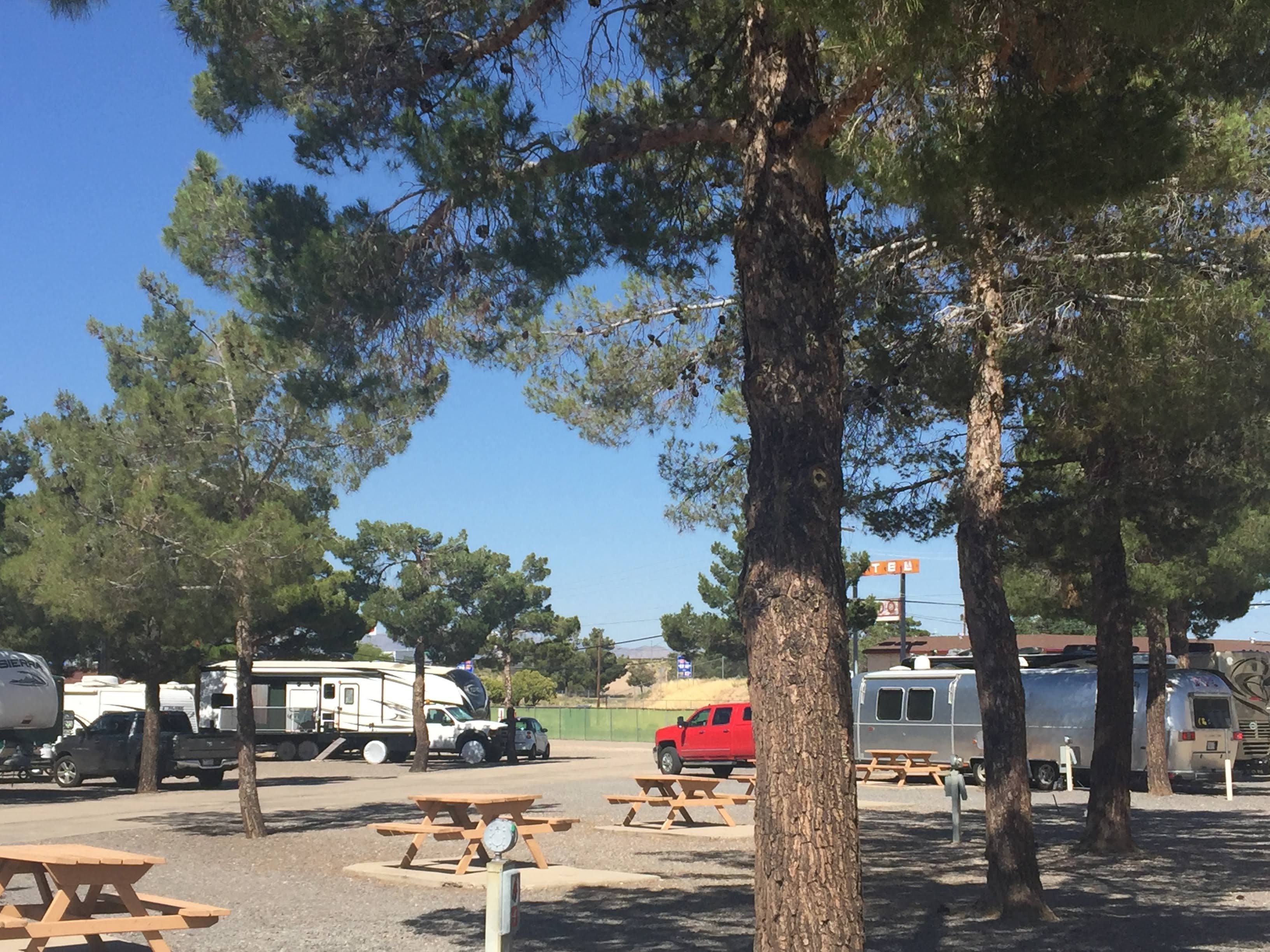
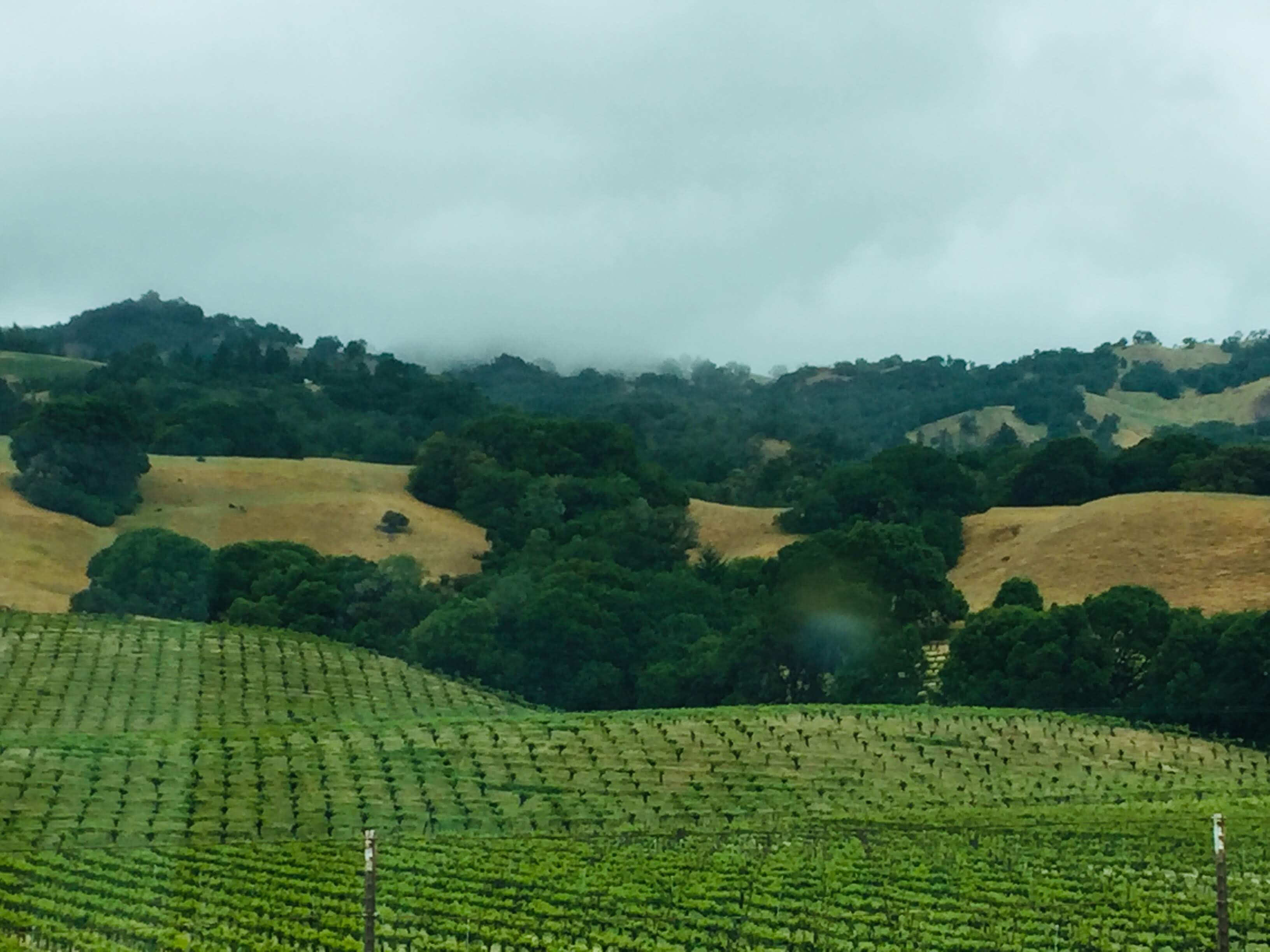
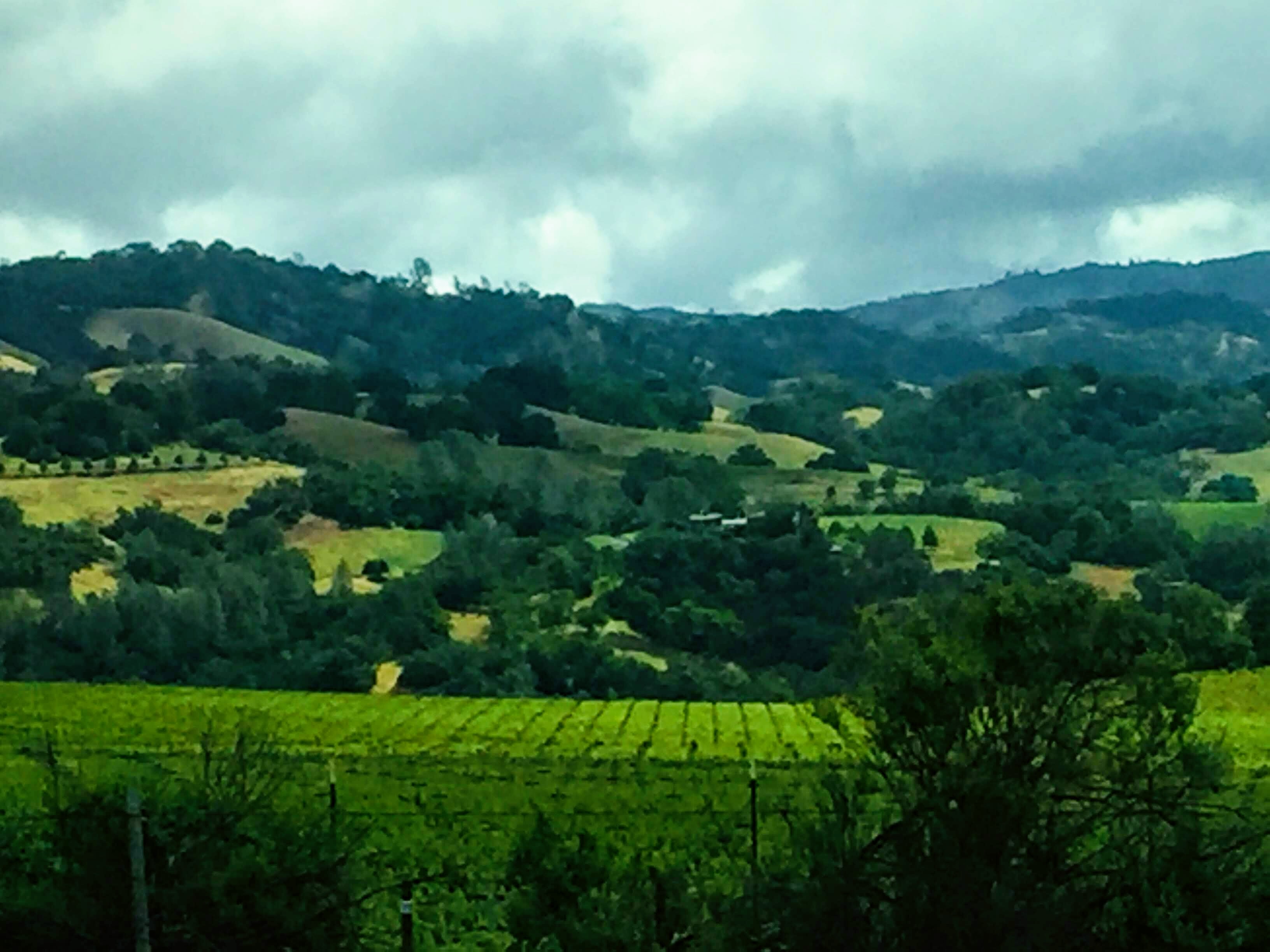
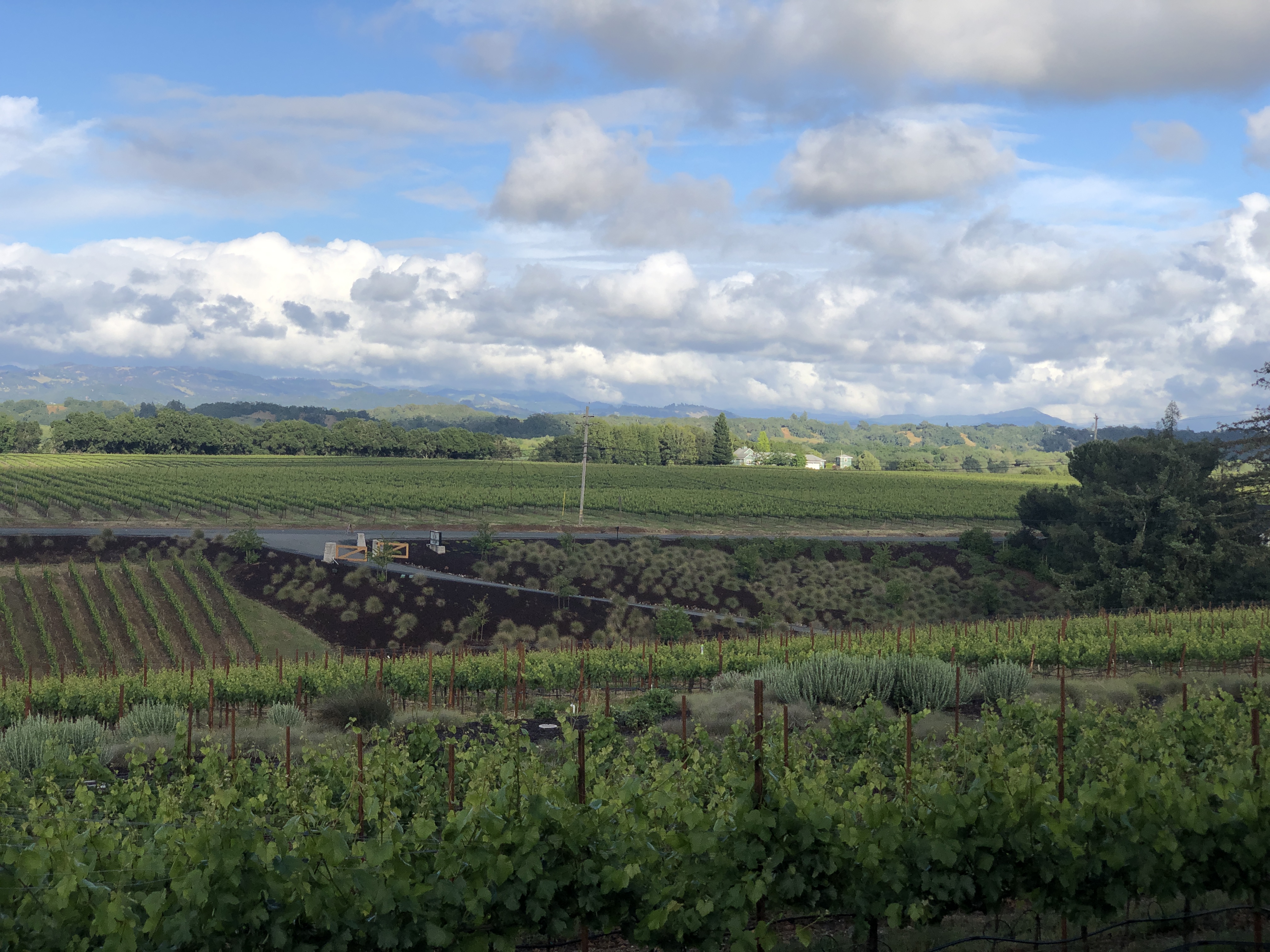
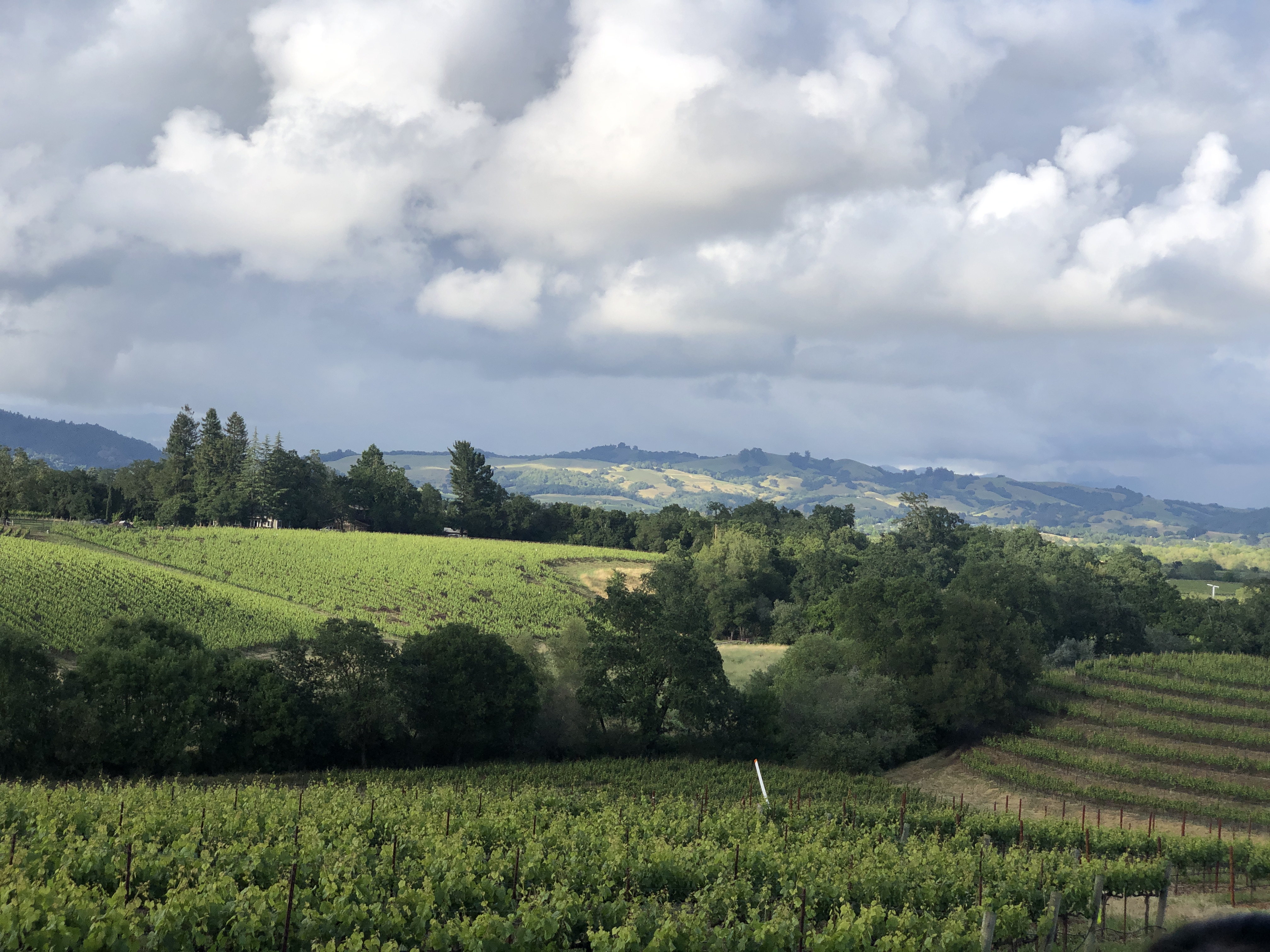
Sunday morning we left the Van Ruiten Winery as the sun was rising. Again, we drove east for about two hours to finally reach Forestville, a very small town along the Russian River in Sonoma County. The countryside is beautiful at this time of day. We easily found the Riverbend RV Resort. We had arranged early check-in, so we were in our spot, unhitched, and set up in no time.

We then headed back south to Petaluma, where we looked at the Petaluma KOA to see if it was a better fit for the caravan than Riverbend. It is a very large KOA, with varied sites and many amenities.

Then we were off again, setting the GPS to the town of Olema. Olema is in the heart of the Point Reyes National Seashore and Tomales Bay State Park. Point Reyes National Seashore is a vast expanse of protected coastline in Marin County. Beaches here include Wildcat Beach, with the cliffside Alamere Falls. On a rocky headland, the 1870 Point Reyes Lighthouse is a viewpoint for migrating gray whales. The Phillip Burton Wilderness features extensive trails through grassland, firs and pine forest, and up to the peak of Mount Wittenberg.

Tomales Bay State Park is approximately 2,000 acres, divided between two areas, one on the west side of Tomales Bay and the other on the east side. The main area, on the west, is part of the Point Reyes peninsula, and is adjacent to Point Reyes National Seashore. 

Tule elk once inhabited the grasslands of the Point Reyes peninsula and the Olema Valley, as well as other grasslands within Marin County. They were the dominant grazers on these lands until their local extirpation (local extinction) in the 1850s. State and Federal legislation in the early 1970s authorized the California Department of Fish and Game, in cooperation with U.S. Fish and Wildlife Service and the National Park Service, to reintroduce the extirpated Tule elk to Tomales Point.

Eleven tan-colored male elk standing with the ocean in the background.

Point Reyes National Seashore remains the only National Park unit where Tule elk can be found. The majestic animals you see as you travel through the park embody the restoration of the dominant native herbivore to the California coastal ecosystem. They shape the landscape around them as they did for centuries before they were extirpated by humans. They symbolize the conservation of native species and ecosystem processes, one of the primary missions of the National Park Service.

We didn’t see any elk today, but we remember seeing them when we passed through here in 1977. Today we proceeded north along Highway 1, which hugs the eastern shore of the bay. The shoreline is dotted with a few small ramshackle houses and restaurants, located at the water’s edge. Thanks to the California Coastal Commission, enacted in 1972, this shoreline has remained virtually unchanged and undeveloped. Without the Coastal Commission we suppose this area would be lined with hotels and McMansions, and the bay itself would be totally obstructed, much like we see in places in Florida today…

We stopped at Tony’s Seafood for a light lunch. Oysters are a specialty all along the bay.

We continues north, enjoying the scenic drive. We passed through the tiny hamlets of Marshall, Nick’s Cove, and, well, Hamlet.

We returned to the Villa for a brief break, then we drove north to the town of Healdsburg.

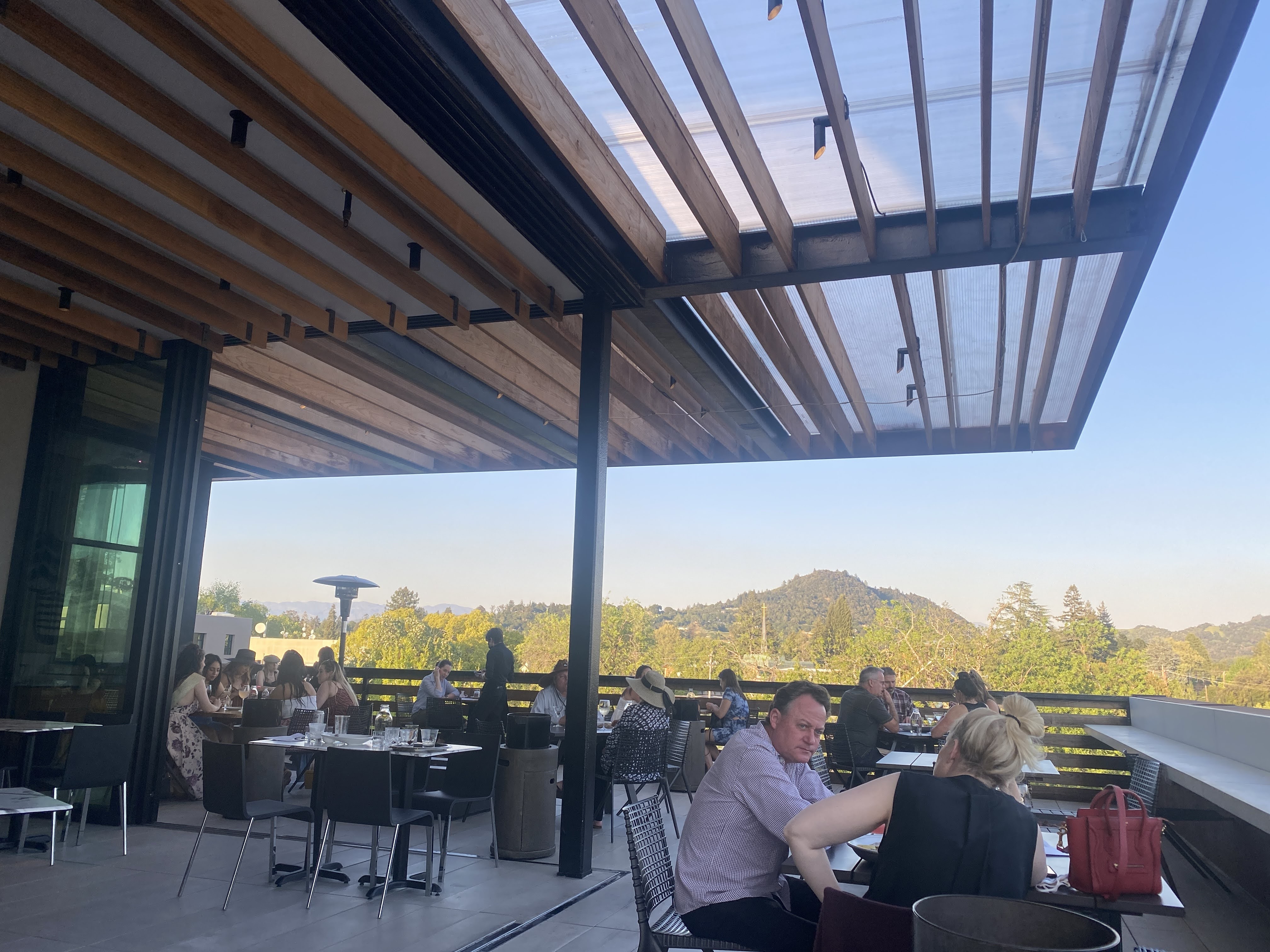
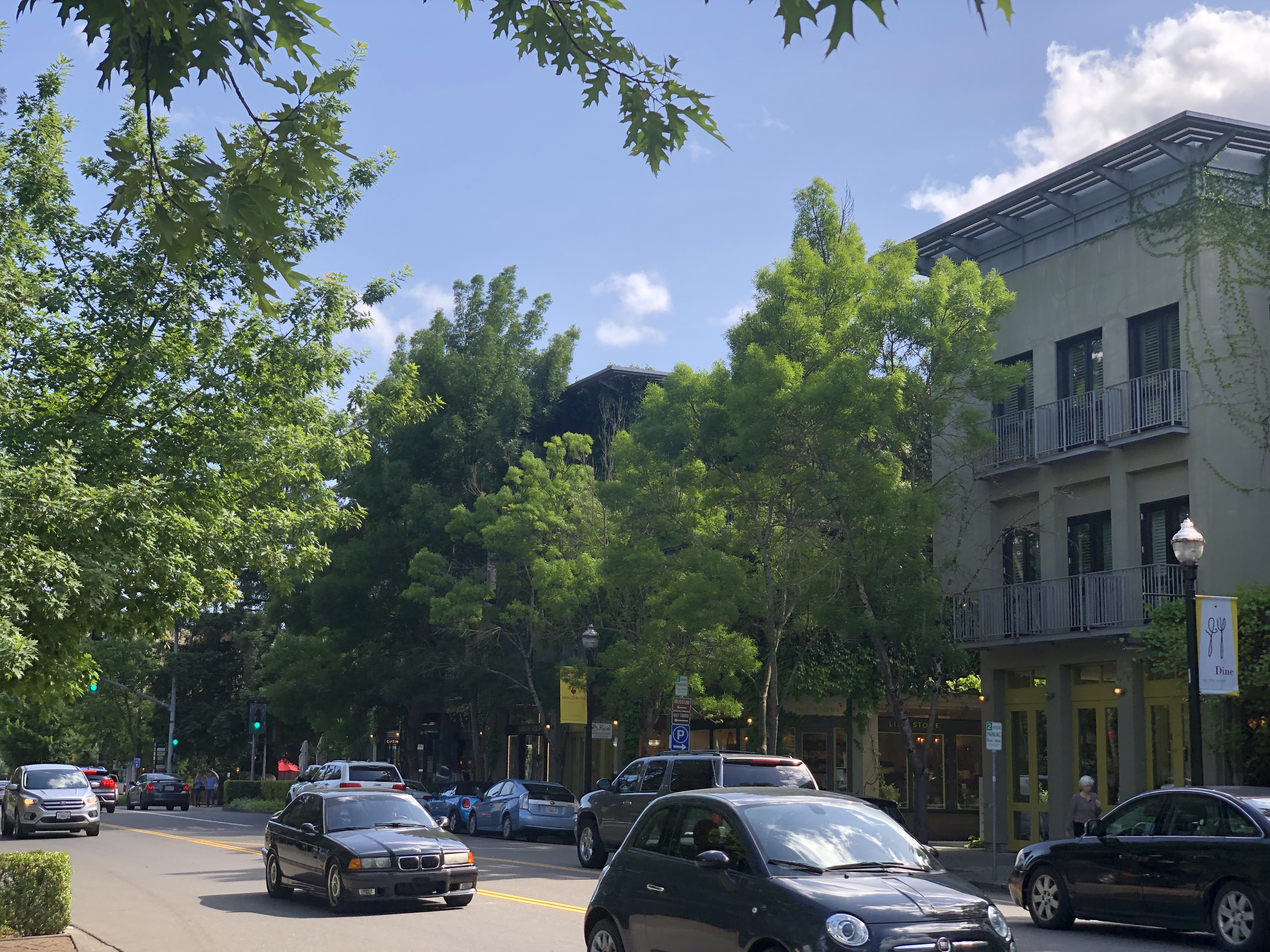
We checked out a few restaurants, settling on Rooftop. There was a short wait, so we walked around the delightful downtown area. After receiving a test message that our table was ready we quickly returned.

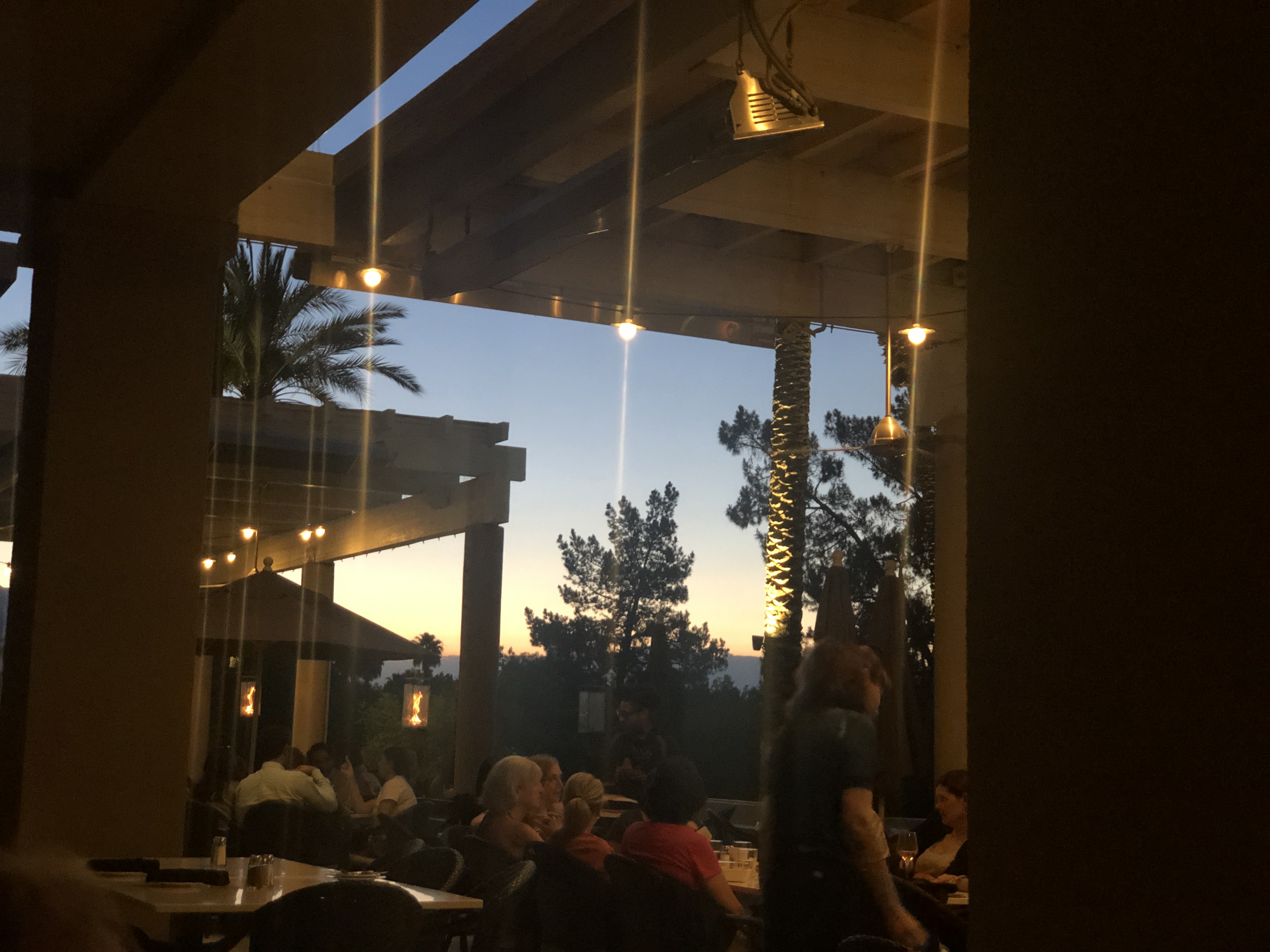
Rooftop is located atop a small hotel. The exterior deck is wonderful…

The food was great. The menu is short, but it listed very innovative and creative food. After a leisurely meal we returned to the Villa; an enjoyable time was had by all.

2021-04-17 – Scouting the California AFW Caravan…

Saturday, April 17: Redlands to Lodi

We left Redlands at the crack of dawn. We have a long day of driving ahead of us We are driving to Lodi….

Update: We last posted in July of 2019; we had returned home from our 2019 caravans and were spending the week at San Clemente State Beach with family and friends, many of whom we had not seen in many months. But as we anticipated staying close to home we were less energized to be blogging every little local trip we were taking. We were scheduled for four caravans in 2020, and we were saving our blogging energy until then. And Covid happened…

We were camping with the Airstream Club at Pechanga in Temecula on my birthday weekend of March 8, 2020, when news of widespread Covid hit. On March 11 I did my stint as a docent at the Hollyhock House, traveling back and forth via train. I saw one person wearing a mask – about average. That night the NBA cancelled its season, and things were beginning to be shutdown left and right. On Friday, March 13, we had invited new friends from the neighborhood to dinner. They were all still working as school administrators; 15 minutes before dinner was to start they called to cancel, saying that they were being required to work all night to figure out what to do about schools being closed. Luckily we had other friends nearby who had not started dinner who agreed to come by and help us eat all the food that Lynda had already prepared… Tuesday, March17, I did my last session volunteering at a homeless shelter; it, too, was closing. And the rest is history…

All four of our 2020 caravans were cancelled. We didn’t take out the Airstream for over three months – a record! We hunkered down, spending our stimulus checks on ordering food for take out and delivery to keep our local restaurants afloat. Finally, in June, with all the state parks still closed, we spent 4 days in Temecula, at the Pechanga RV Resort. (Indians don’t have to listen to Governor Newsom…) The park was nearly empty and we had a lovely time just relaxing and walking on different streets for a change. We did this two more times before the state parks re-opened. We spent a week at San Clemente in August. And so the year dragged on. The Airstream Club had a few camp-outs as usual, but different because lack of potlucks and group dinners.

With the surge in Covid in December we forwent our annual New Years trip to Palm Desert. The winter progressed much the same.

So today we start a one week “scouting” trip in preparation of the caravan we will be leading next year. More on that later…

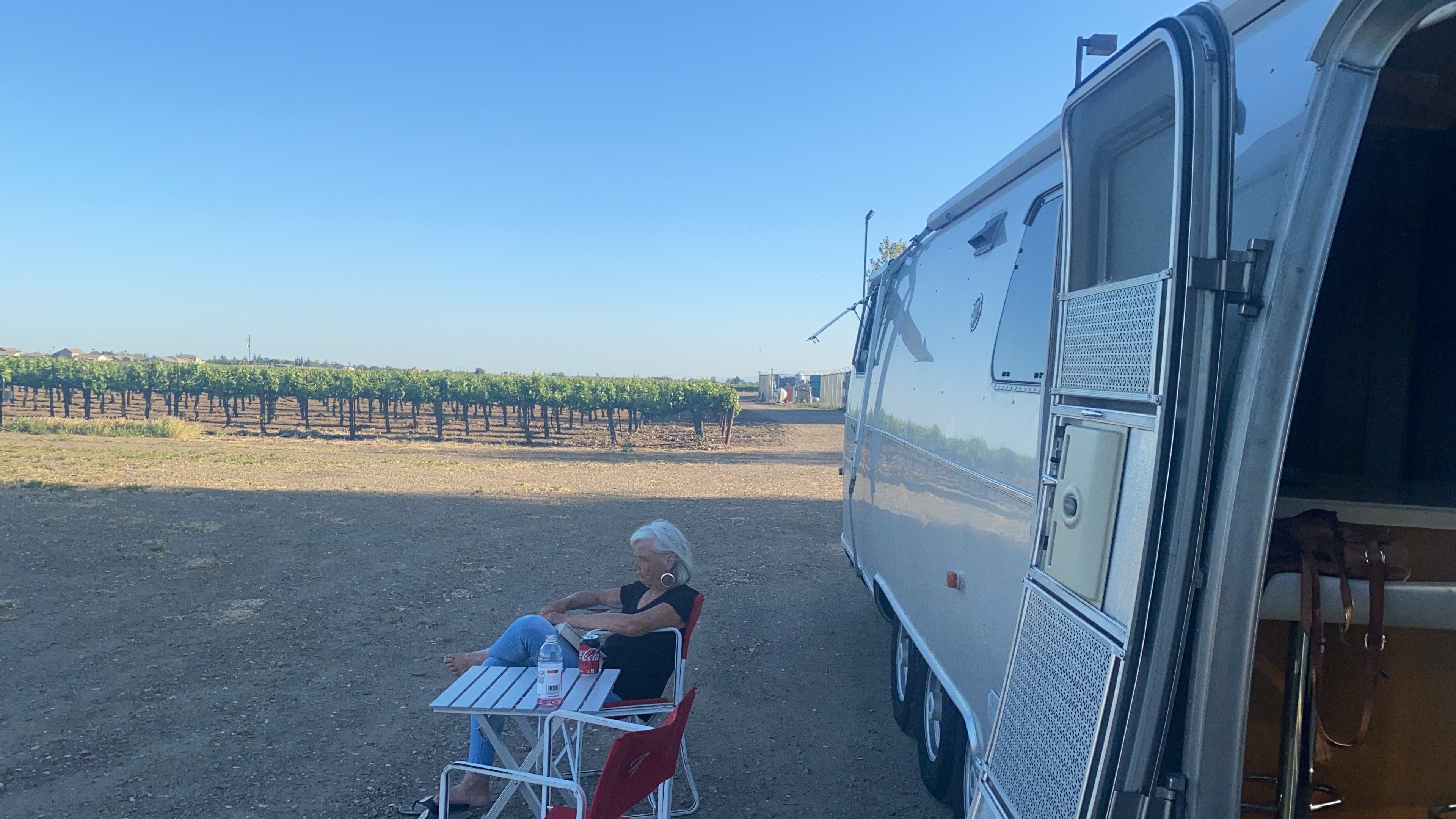
We left at about 5:15, as the sun was breaking in the east. Luckily, we drove west, towards Los Angeles and north over “The Grapevine”. After a brief breakfast stop outside Arvin, we continued north up the 5. Long boring drive; but it was fun to be on the road again after so long. We refueled in Lodi and easily found out campsite for the night – Van Ruiten Family Wines, vineyards, an outdoor tasting area, and “free” overnight parking…

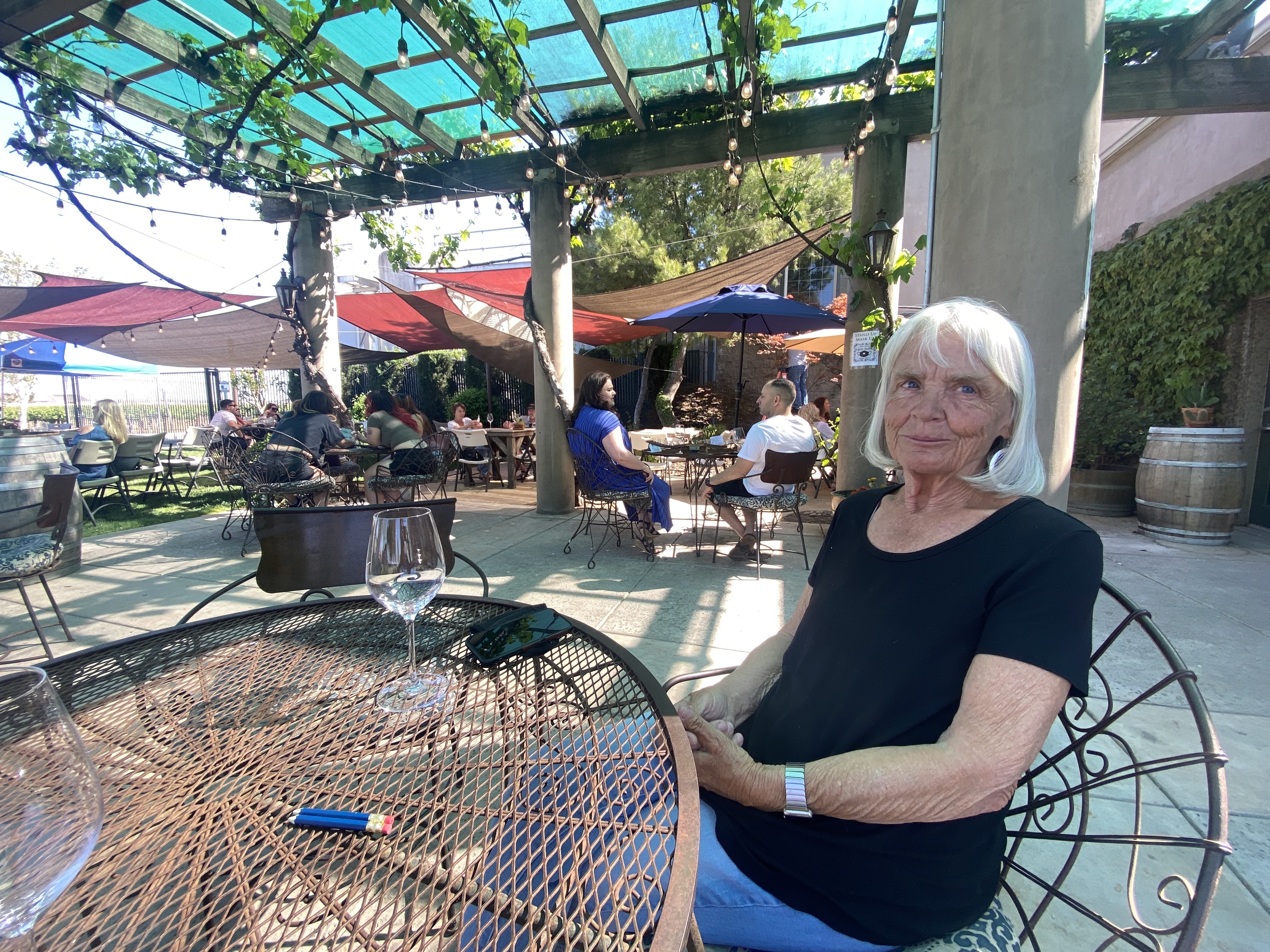
We found a table in the tasting area and enjoyed sample of 10 wines, plus cheese and crackers.

After a lovely time here, much of it spent talking to a couple from Ventura who were also camping overnight, we retired to the Villa. An enjoyable time was had by all…

2019-06-06 thru 2019-06-11 – Traveling West – Liberal, KS and then Home…

This morning we pulled out of the RV park in Liberal, KS, and pointed the Villa southwest.  In about three minutes we were in the far western part of the Oklahoma panhandle; about 90 minutes later we were in the far western part of the Texas panhandle; by noon we were in New Mexico…

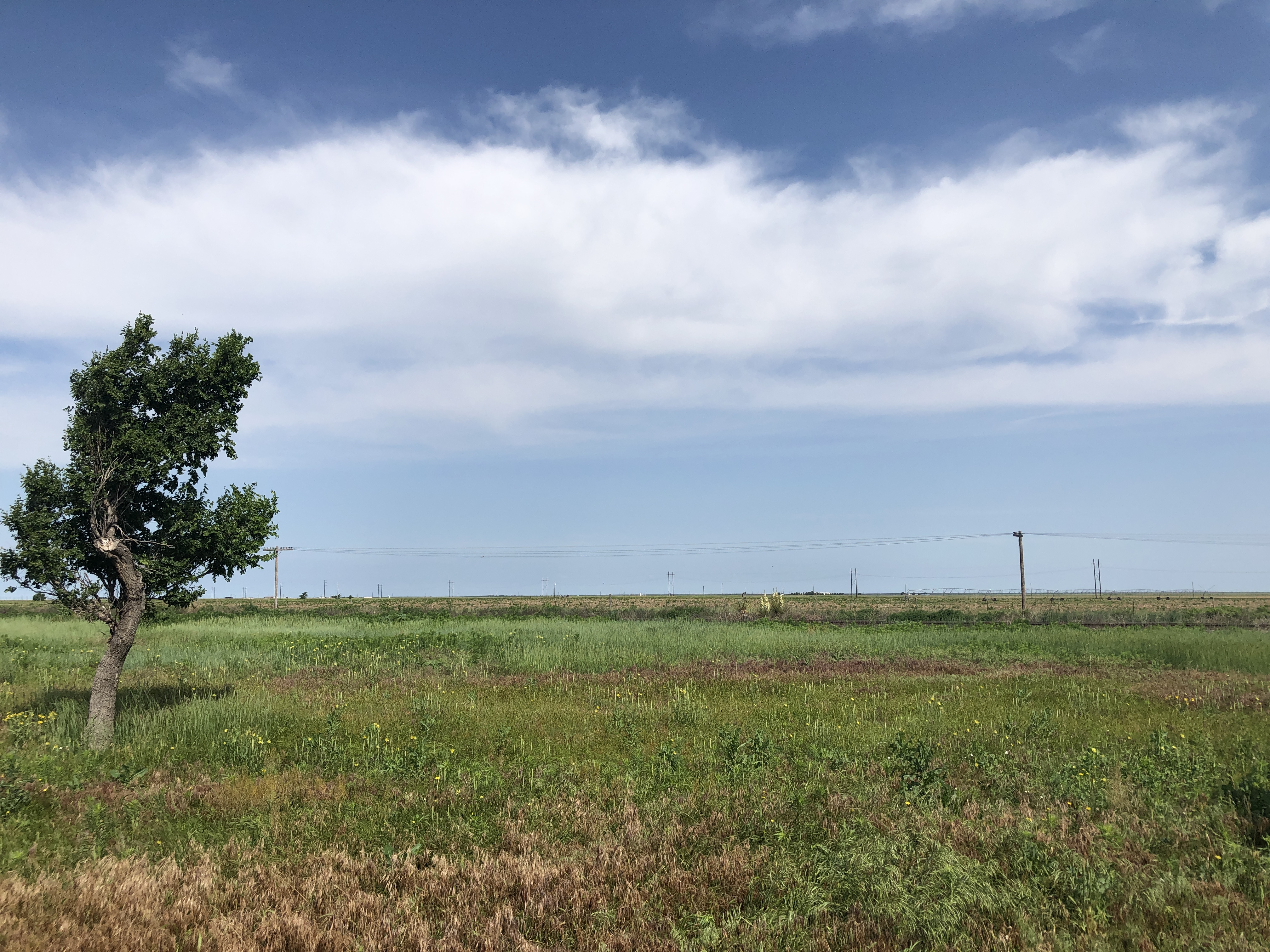
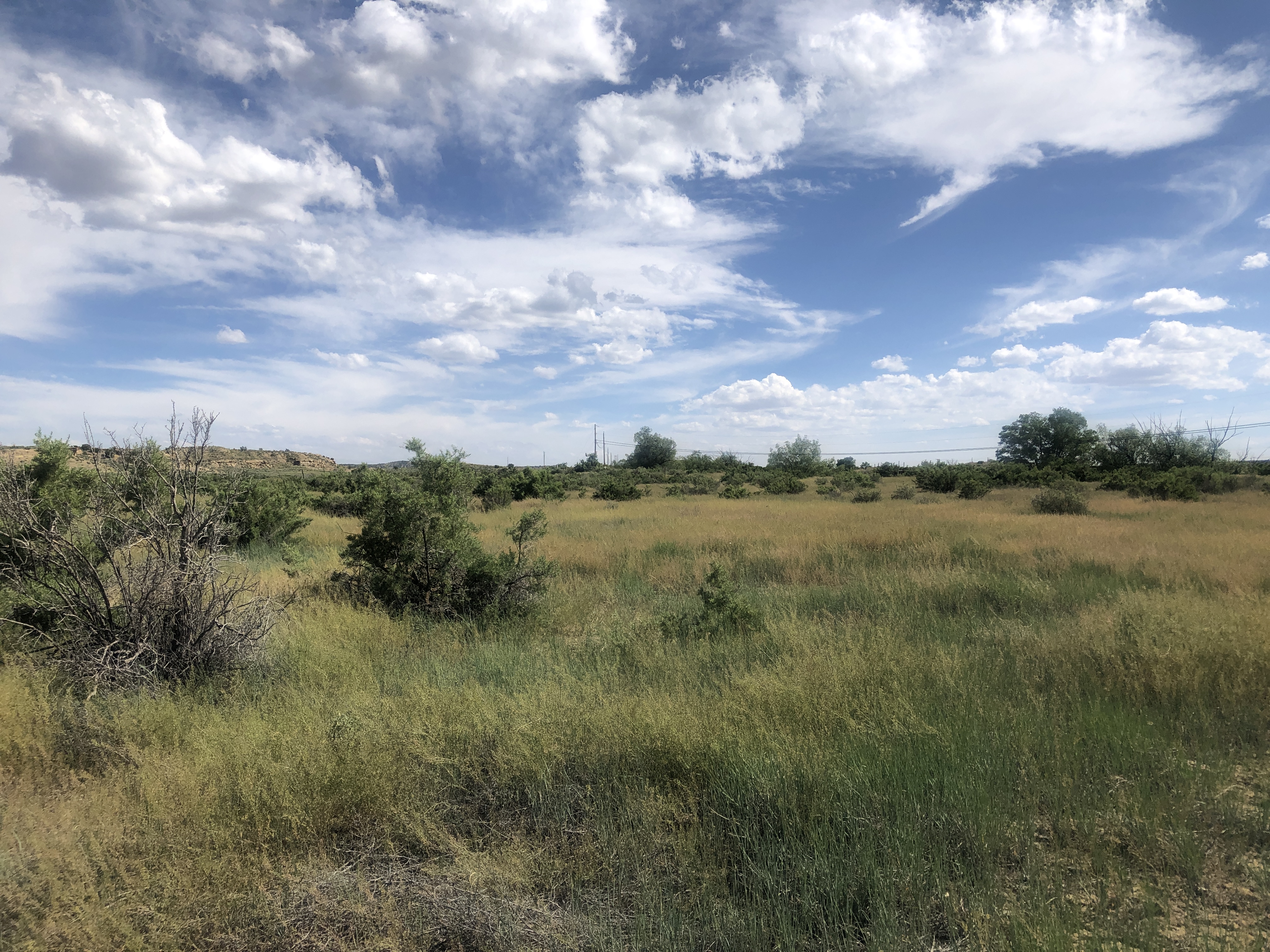
These parts of Oklahoma and Texas look remarkably like Kansas…

img_9233img_9240img_3333

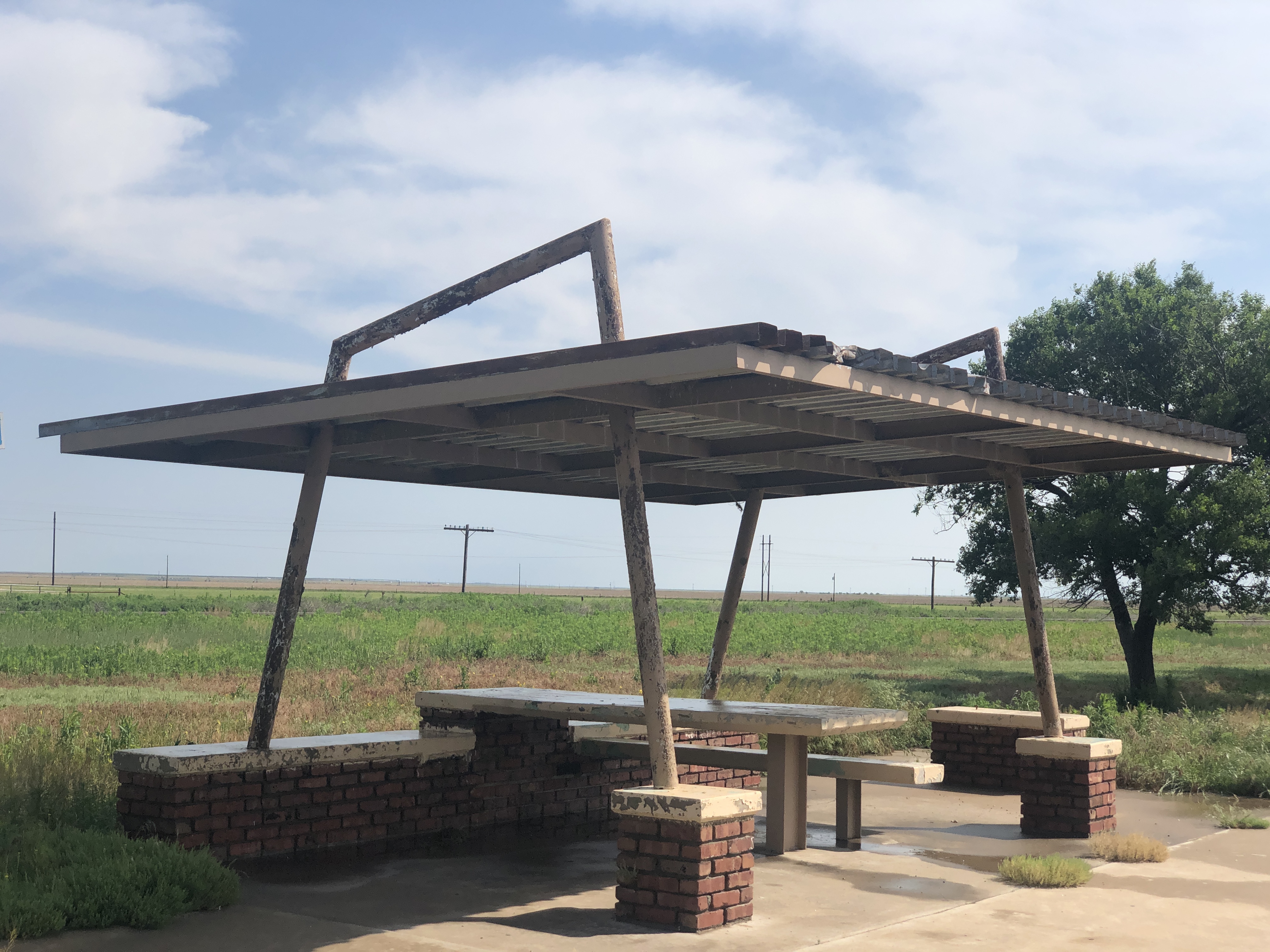
At one rest stop there were these nice little picnic shelters… Mid Century Modern!… Nice, but a little beat up…

img_3332img_3331

All day yesterday and all day today, until we entered New Mexico, we followed the railroad tracks.  About every ten miles we came to a small town dominated by these giant grain elevators or silos…

img_9239

The further we drove west the smaller and more distressed the towns were… Not being farming folk, we could not tell exactly what these facilities do, but we assume it is related to grain storage, food processing, feed production, or something like that…

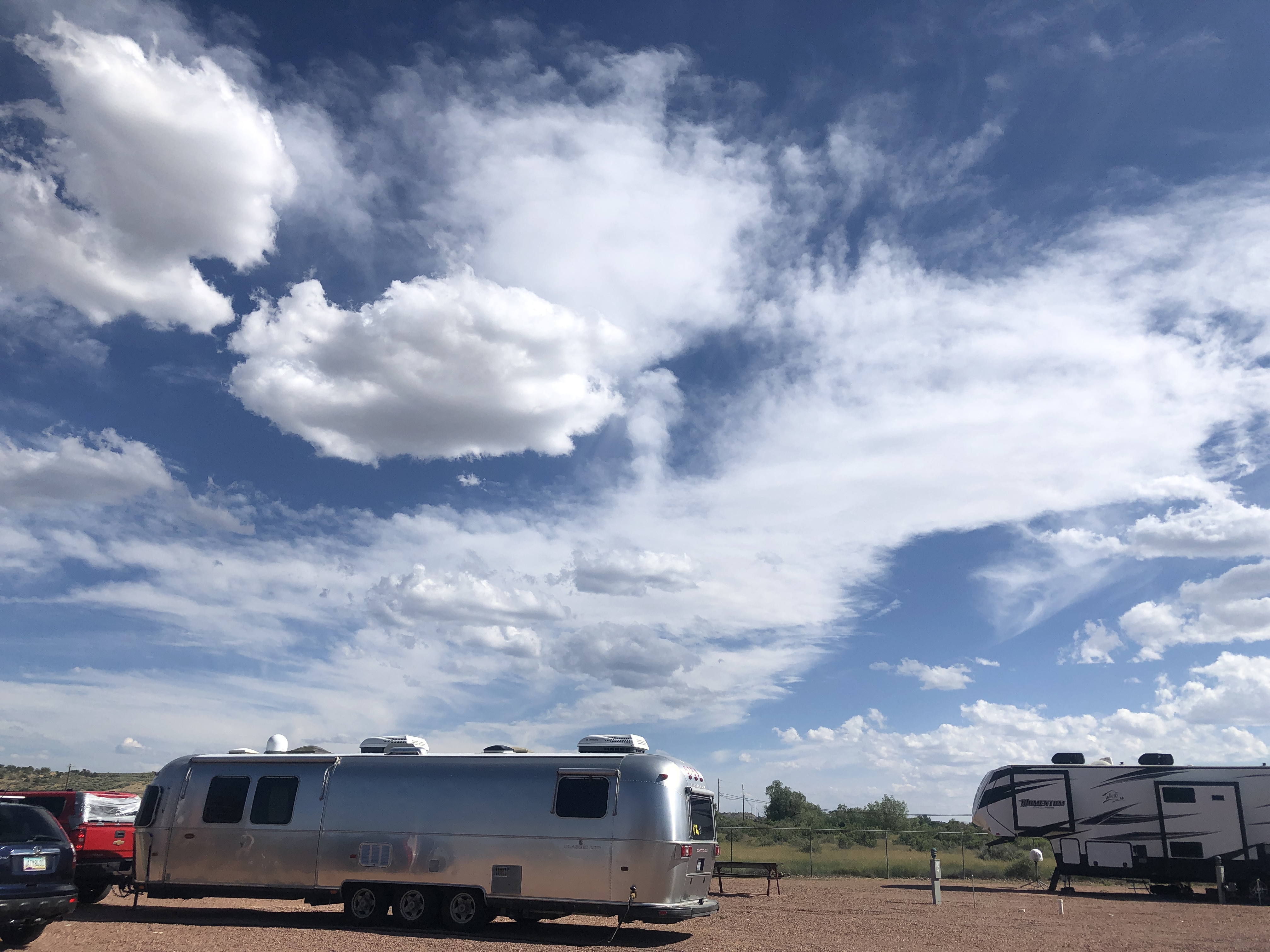
By mid day we were at our campground in Tucumcari, NM.

img_3336

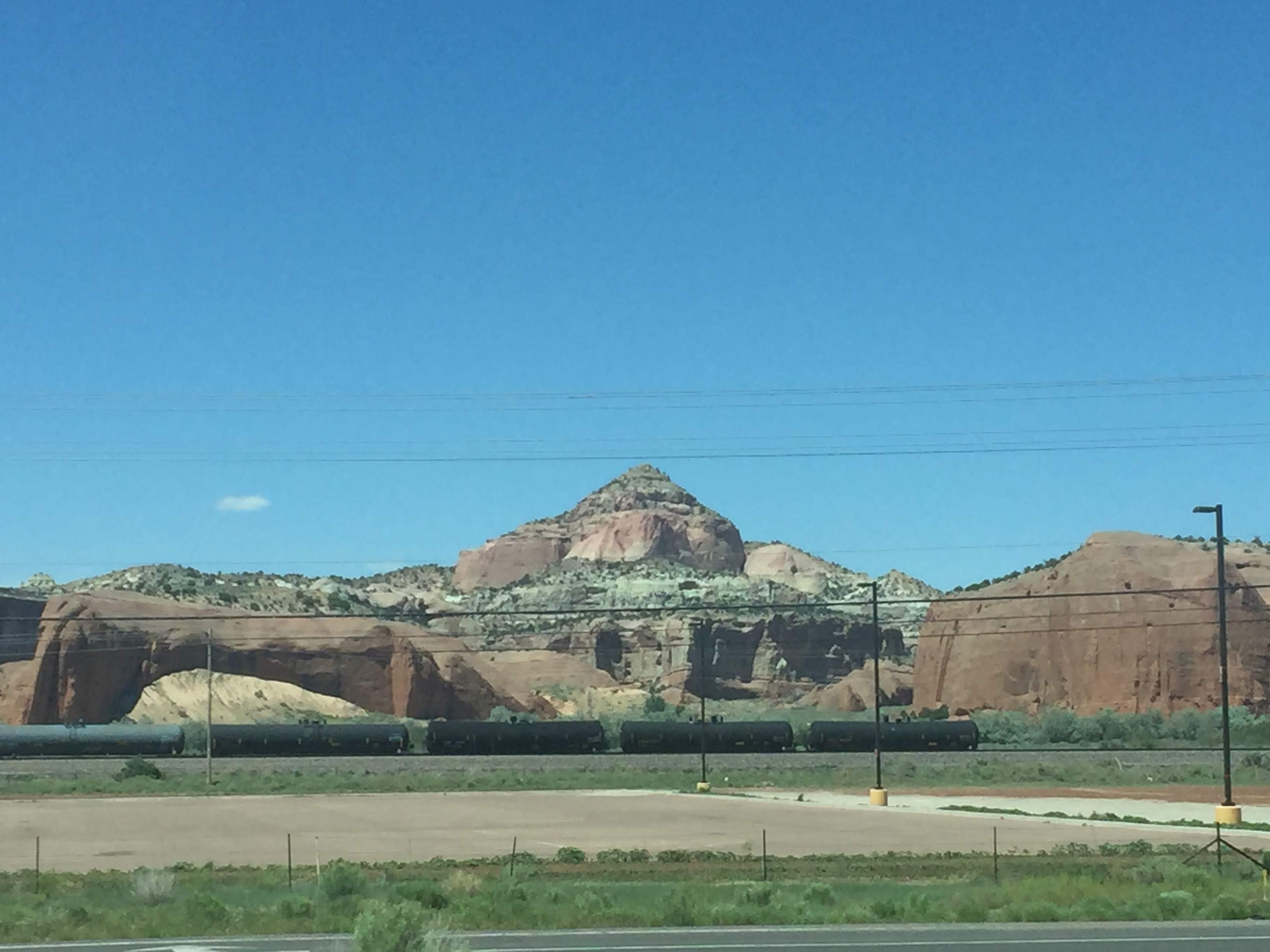
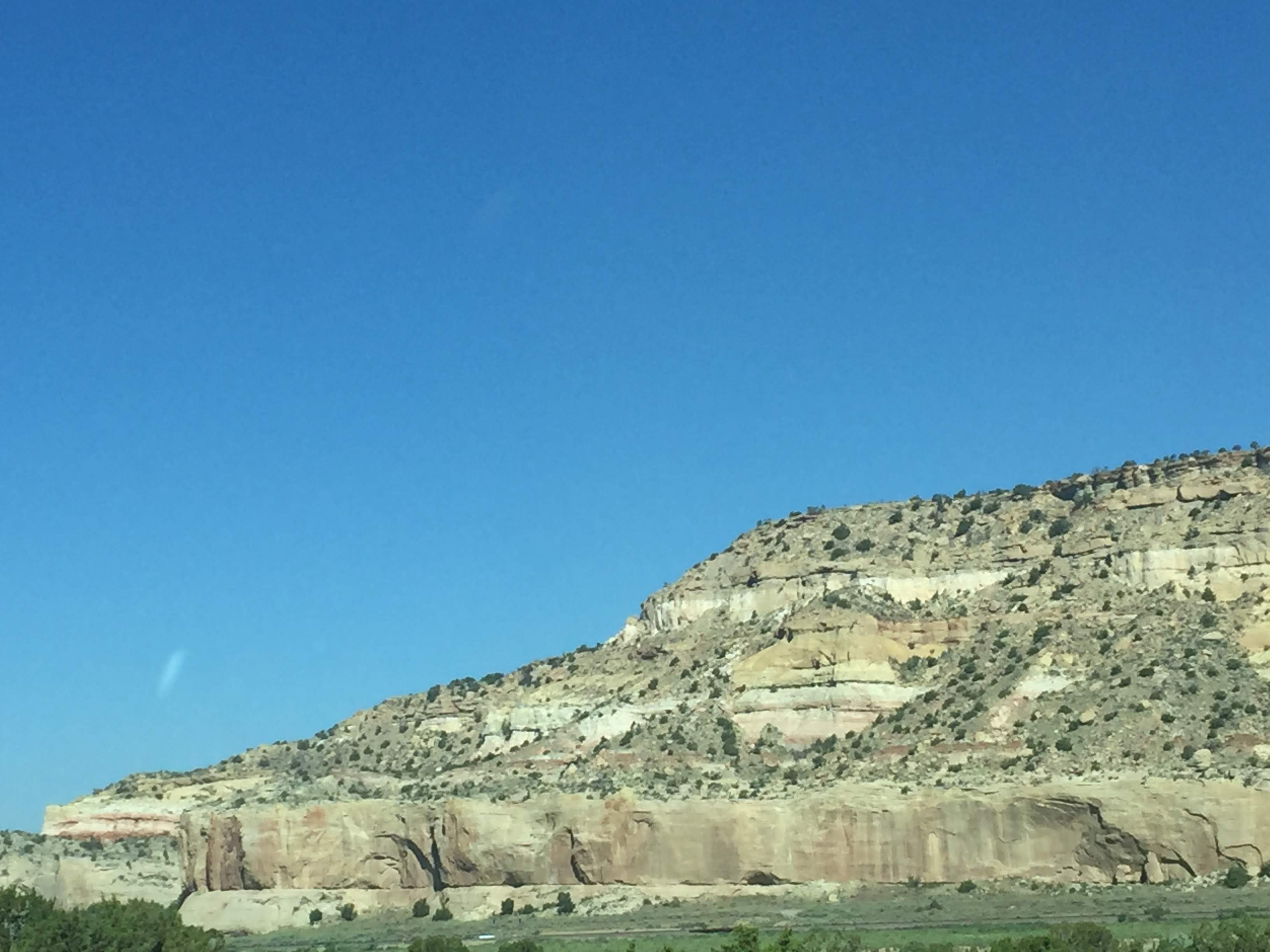
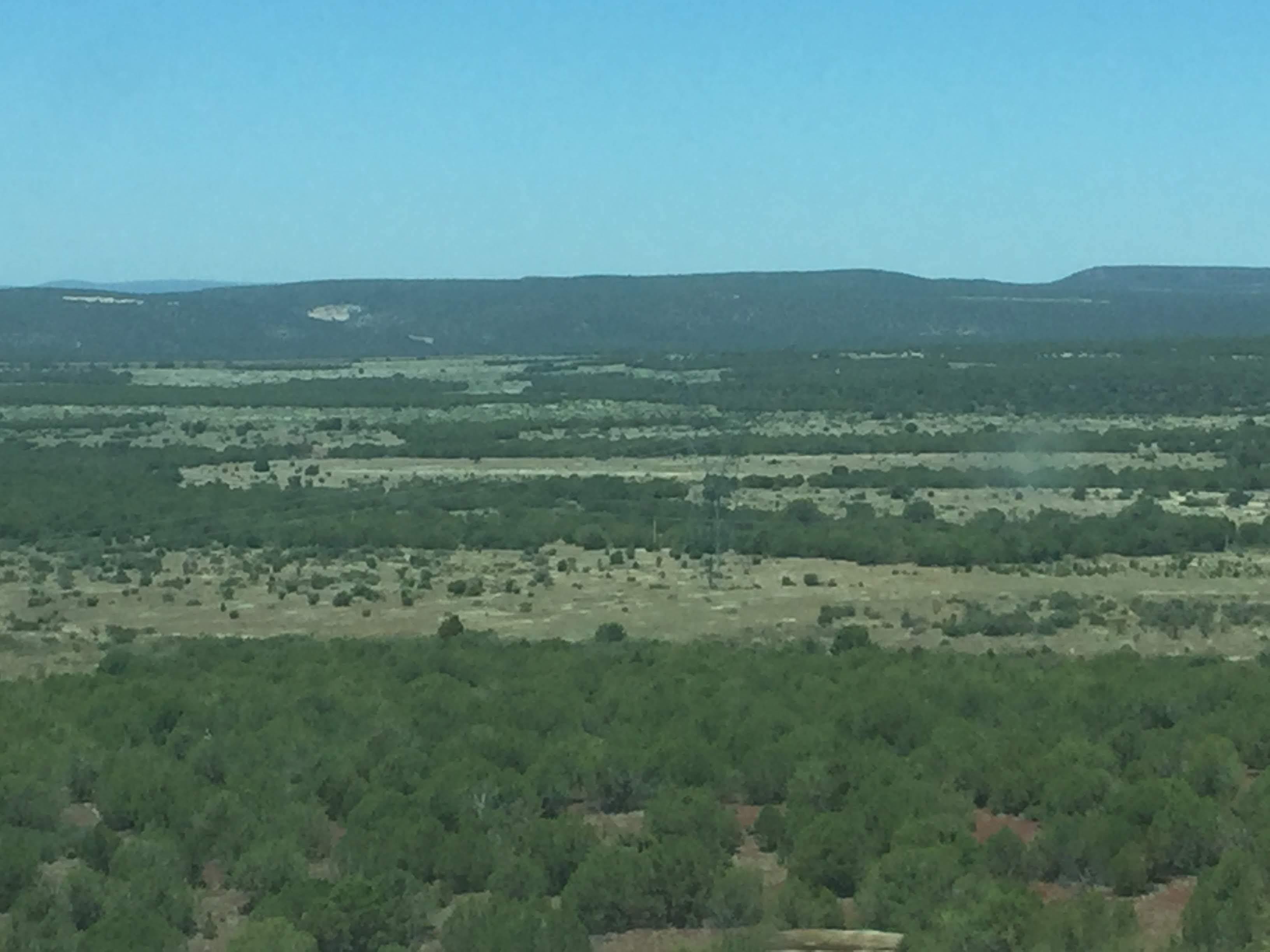
And, for the record, New Mexico does not look anything like Texas, Oklahoma, or Kansas:

img_3335

Happy Hours and a light supper ensued in the Villa; tomorrow we head towards Gallup, NM.

Friday morning dawned nice and cool, but the heat will be arriving soon.  We pointed the Villa west, towards Albuquerque and beyond…

The drive was uneventful, as expected…

New Mexico looks like this…

img_3339img_3340img_9245

At one rest stop we found this Scenic Historic Marker:

img_9246img_3342

We weren’t sure what it meant… east and west looked pretty much the same to us.  Yes, western New Mexico does has more hills.  We rose to almost 7,000′ elevation before dropping down to 5280′ elevation in Albuquerque…

img_9248img_9251

Then we went uphill again to 7,275′ elevation at the Continental Divide…

img_9252img_9255

We eventually arrived in Gallup, NM, at about 6,500′ elevation…

img_3343img_3345img_3346

The sky was beautiful, the sun was hot, but the winds made the 89 degree temperature bearable.  By early evening we were able to turn off the AC, and by sunrise tomorrow it is supposed to be 48 degrees…

Happy Hours and a light supper ensued in the Villa; tomorrow we head towards Kingman, AZ.

Saturday morning dawned nice and cool, but the heat will be arriving soon.  We pointed the Villa west, towards Winslow, Flagstaff, Williams, and Kingman…

The drive was uneventful, as expected…

Arizona looks like this…

img_9259img_9256img_9258img_9265img_9266img_9267

We drove for about six hours, taking time for rest stops, fuel, and lunch… We finally pulled into Kingman, AZ by mid-afternoon…

img_9269

Interesting note is that we stayed here almost exactly two years ago as our first stop after leaving Irvine on our 4 1/2 month trip, the day after Lynda retired…

Happy Hours and a light supper ensued in the Villa; tomorrow we head towards Palm Desert, CA.

Sunday morning dawned nice and cool, but the heat will be arriving soon.  We pointed the Villa west, towards the California border…

The drive was uneventful, as expected…

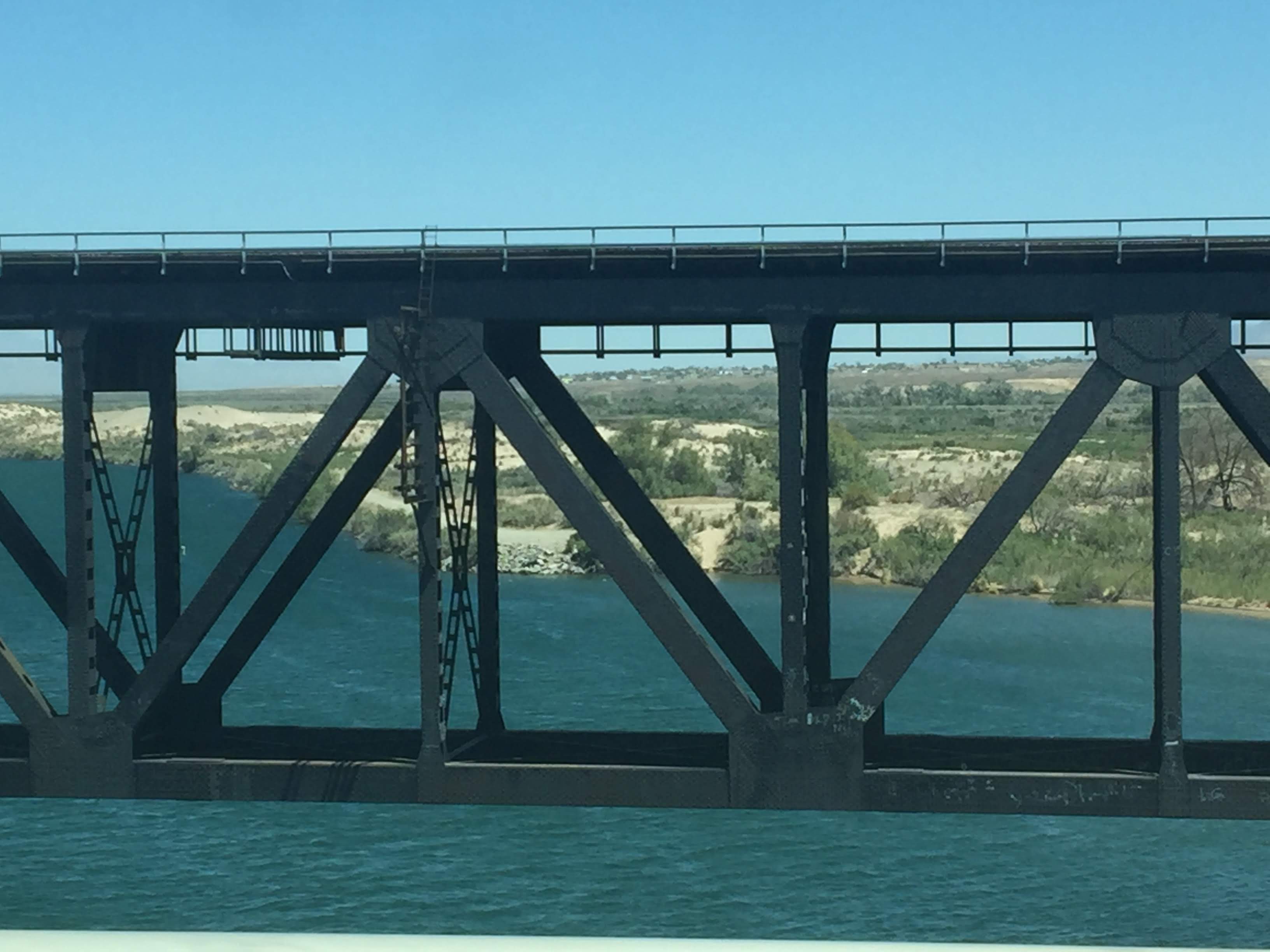
We crossed over the Colorado River…

img_9275

And we entered California!

img_9282

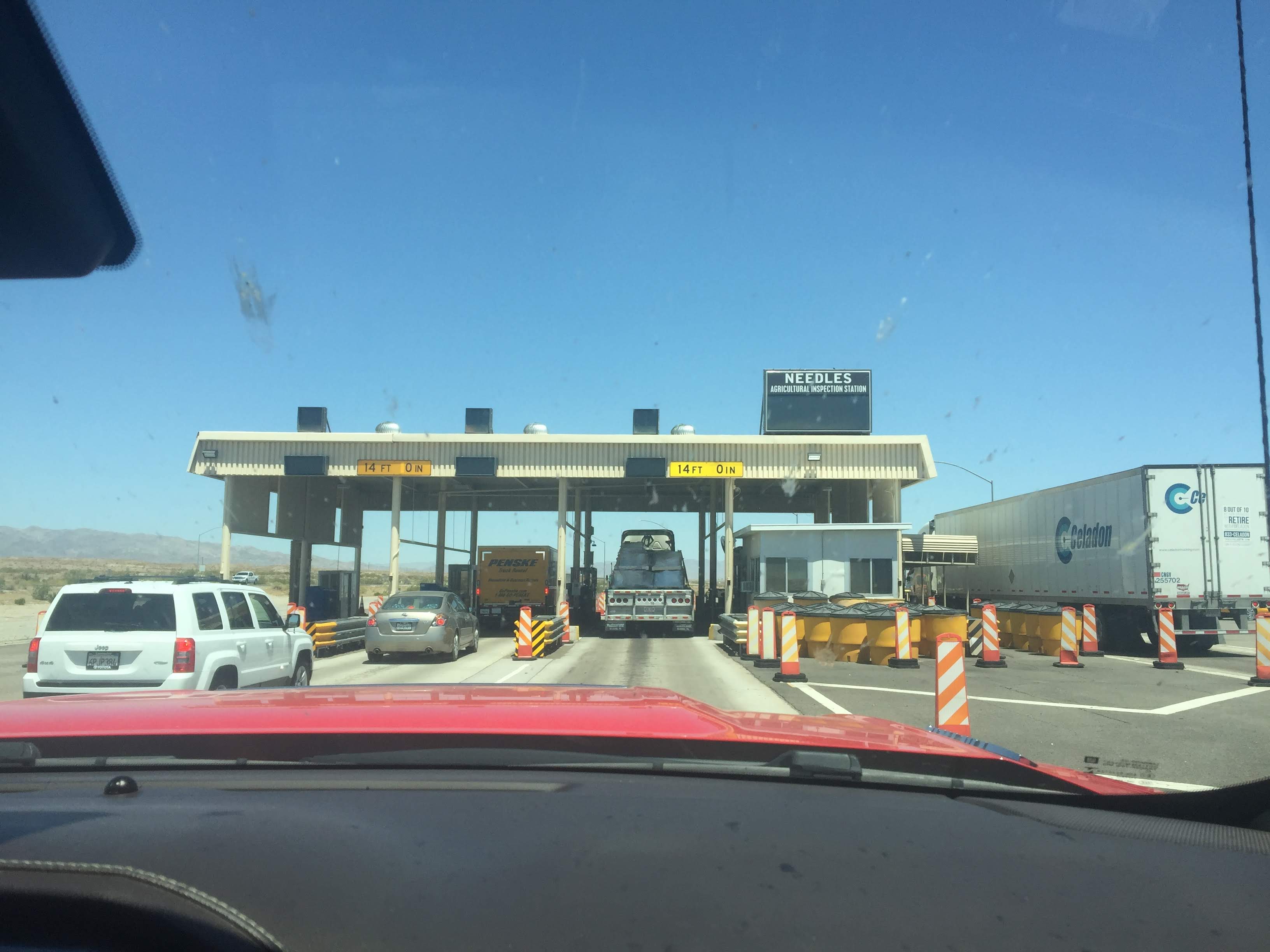
We were met by some attentive uniformed people who asked us where we’d been, and if we were bringing in any firewood…

img_9286

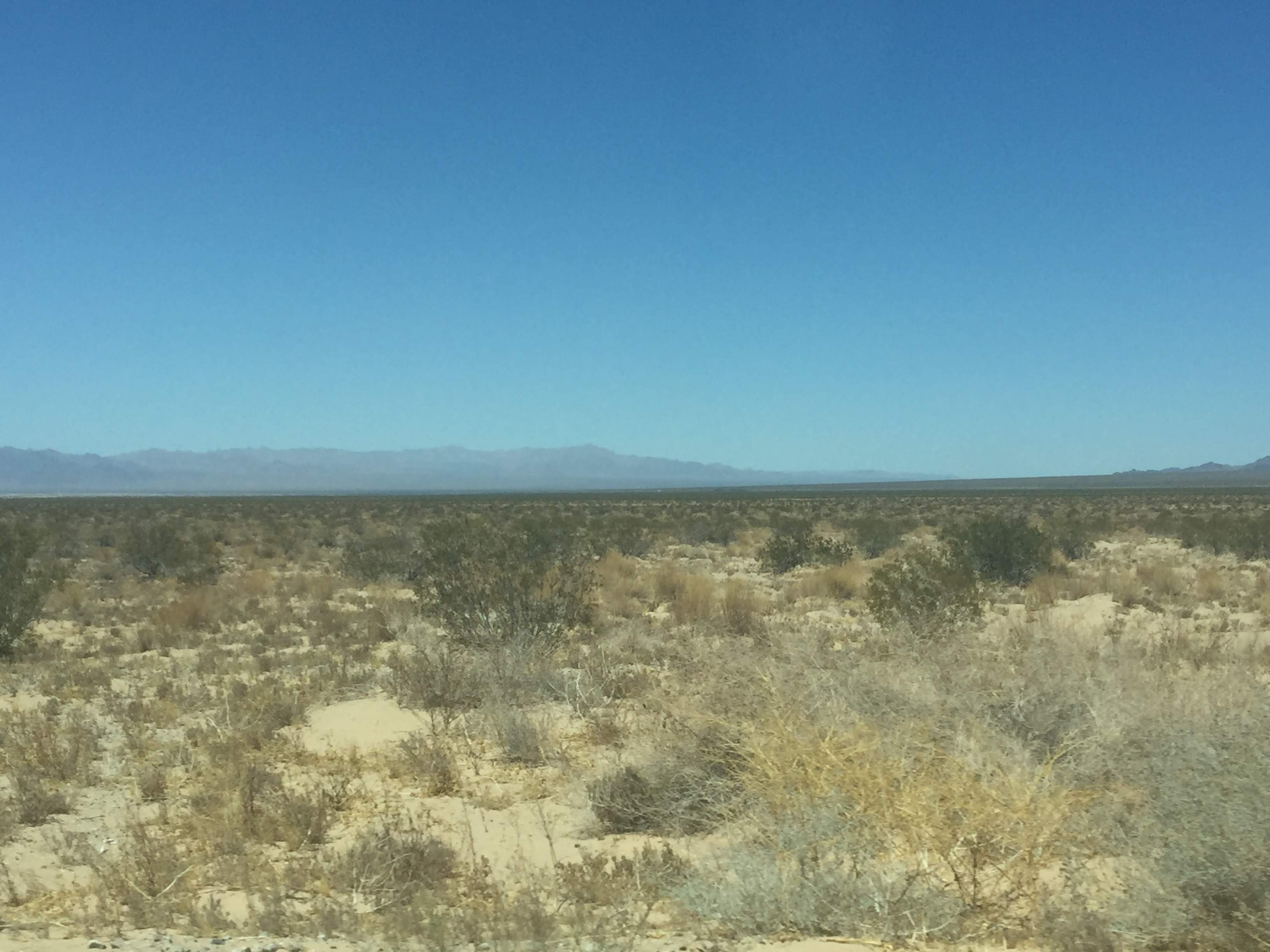
The California Desert looks like this…

img_9284img_9287img_9289

For those of you who insist on calling places like eastern Oregon a “desert”, please stop!  Rivers, grass with cattle grazing, and green leafy trees do not make a desert!  See photo above for what a desert looks like!

We moved on to Palm Desert, where they have succeeded in making the desert green:

img_9295img_9296

We spent the afternoon and evening with like-minded friends, sharing happy hours and dinner.  Early Monday morning we drove the final hour…

img_3356

We arrived home in Redlands; an enjoyable time was had by all…

Tally:

Miles driven: 8,379

Days traveling and camping on our own:  40 days

Days on the Cajun Country Caravan:  16 days

Days on the Springtime in Kentucky Caravan:  22 days

Total days living in the Villa: 78 days

Total number of Airstreams seen along the road:  211

Number of nights in the Villa over the past 24 months:  375 days  (51%)

And one last photo of our girls…

img_0729

2019-05-30 – Traveling West – Memphis, TN

Today was a day of contrasts…

First the silly:

img_3030

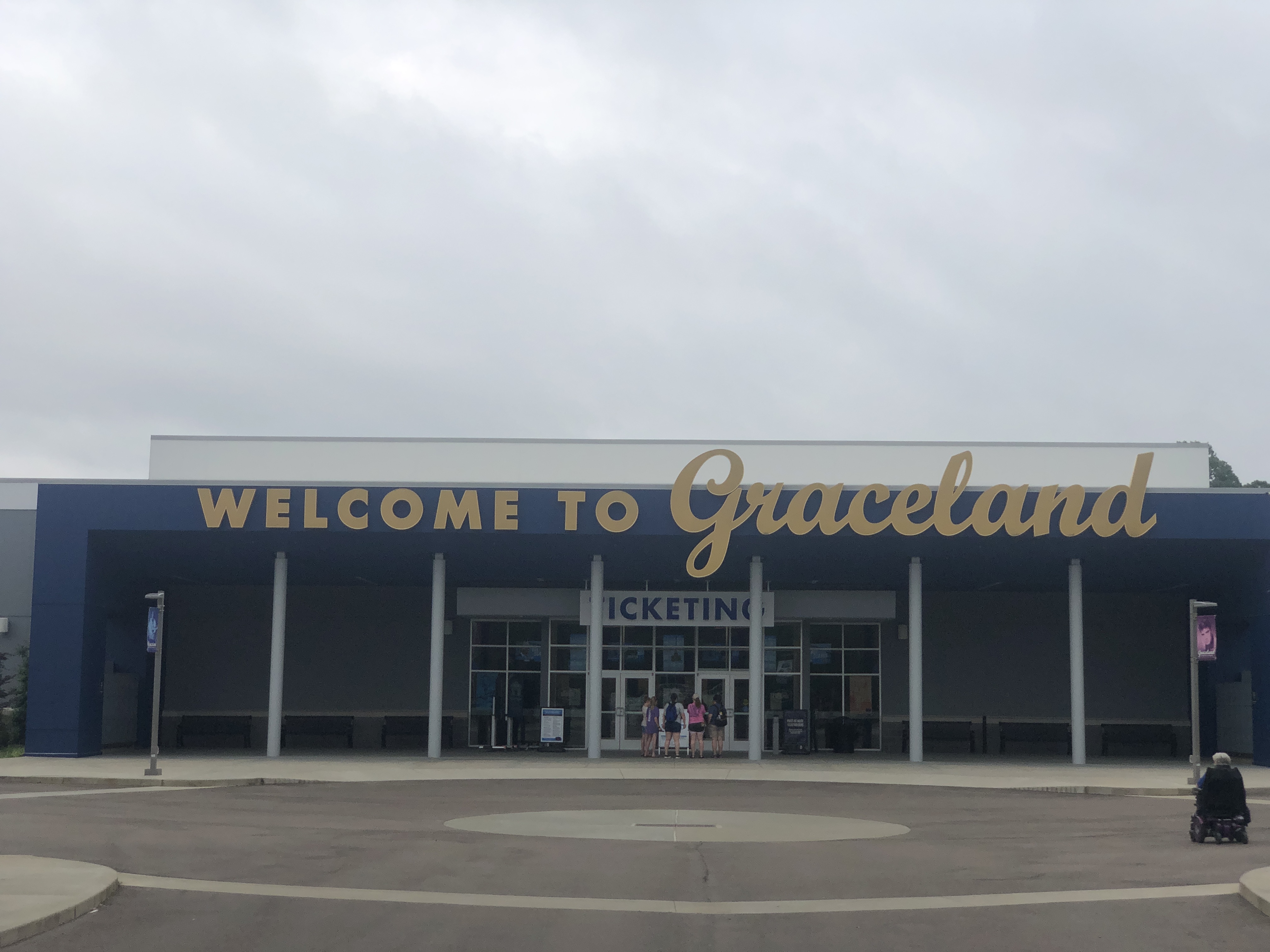
The RV park is right next to the Graceland Visitors Center, so we sort of had to visit… Of course, I never miss an opportunity to visit an interesting house, and this one certainly qualifies…

img_3060

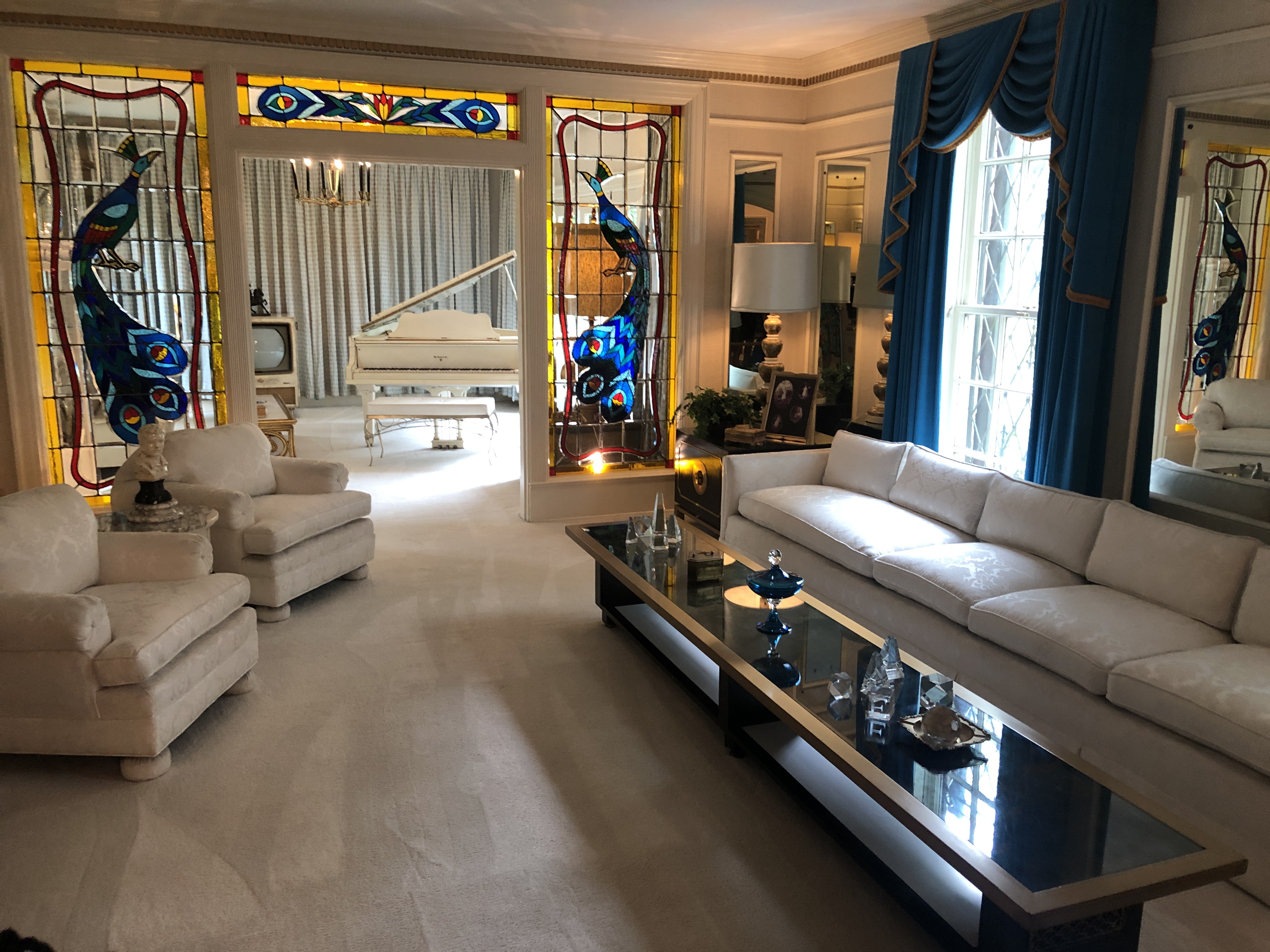
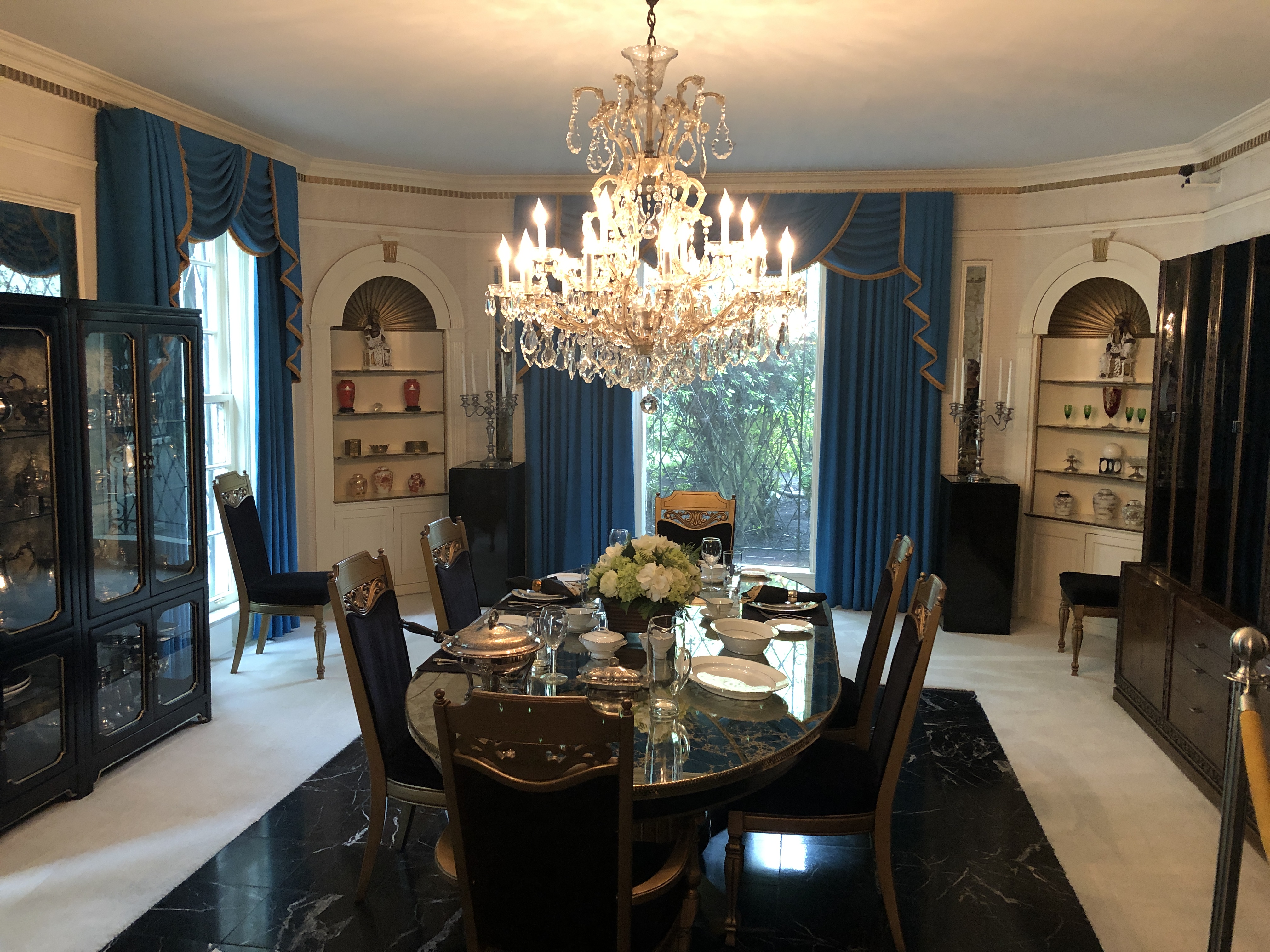
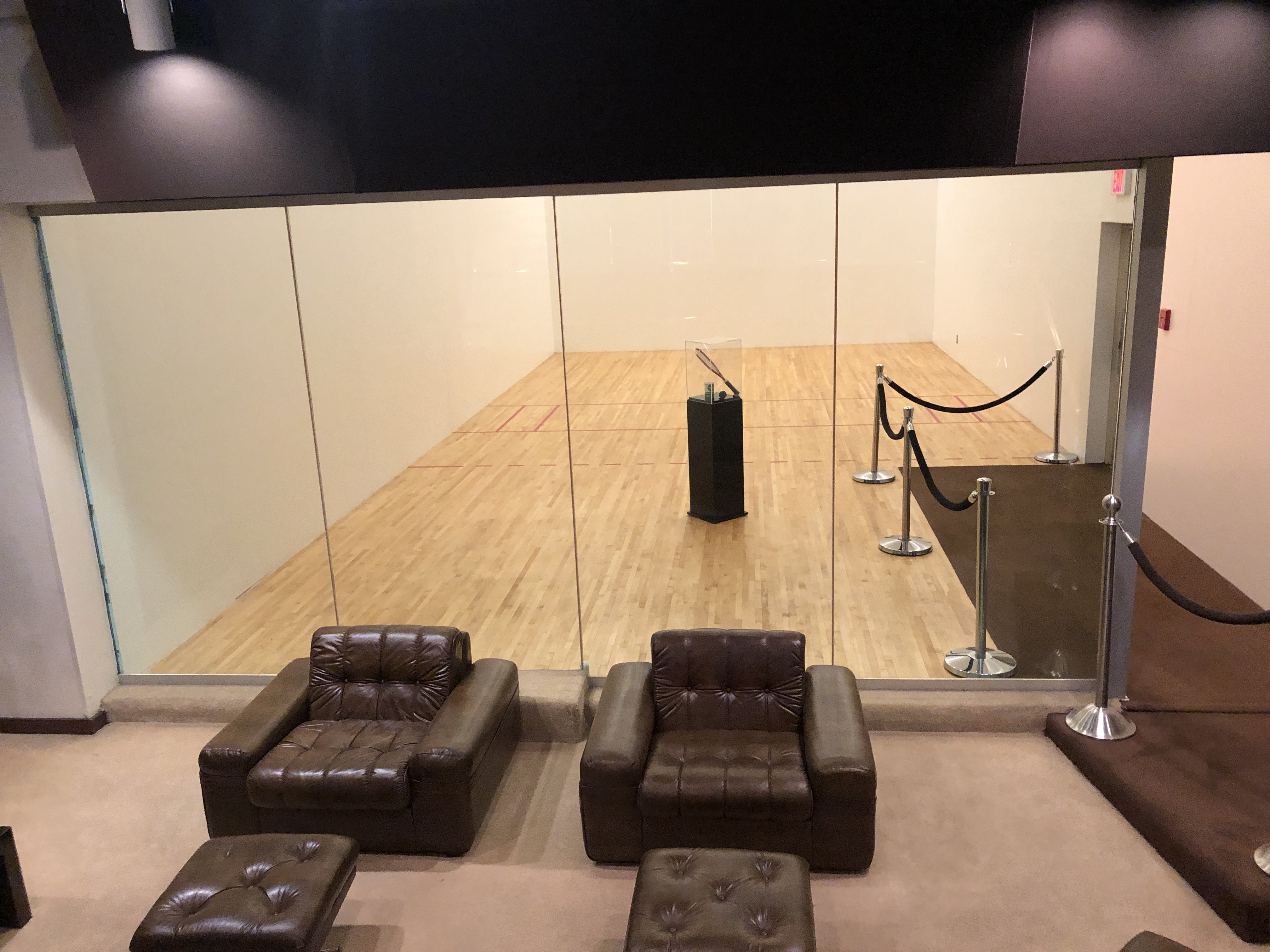
We toured the first floor of the house, and visited the basement recreation room.  Elvis bought the house in 1957 and lived here for 20 years until his death in 1977.  Every room was outrageously decorated in the latest 1960s and 1970s style.  I won’t insult your eyes to show many pictures…

The 15′ long sofa in the Living was impressive…

img_3036

Dining Room has china remarkingly similar to our own…

img_3038

The kitchen is total 1970s…

img_3039

The “Media Room” has the latest in TVs…

img_3040

The record collection!

img_3042

The racquetball court!

img_3053

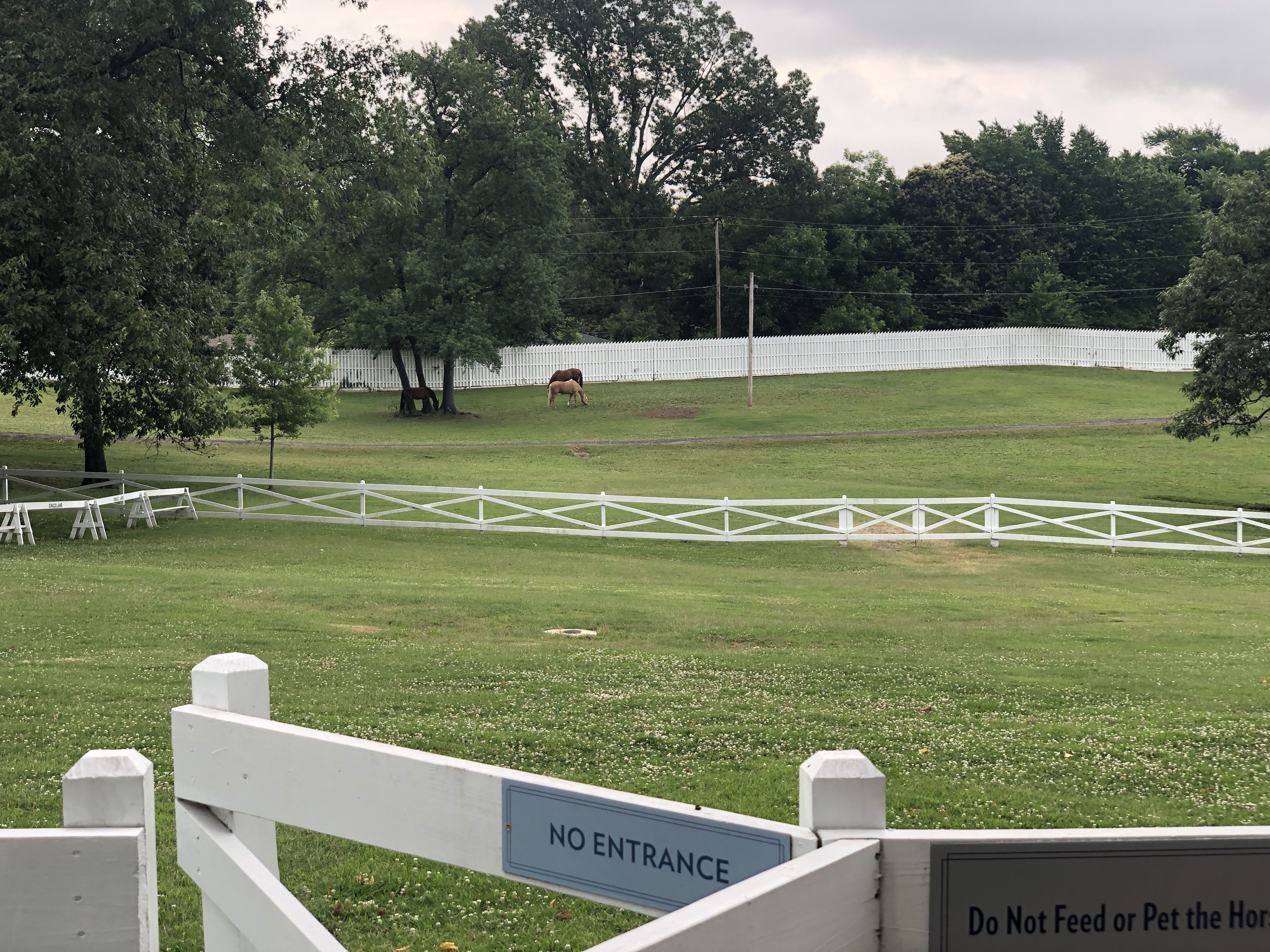
The property is quite beautiful… over 13 acres…

img_3049img_3048

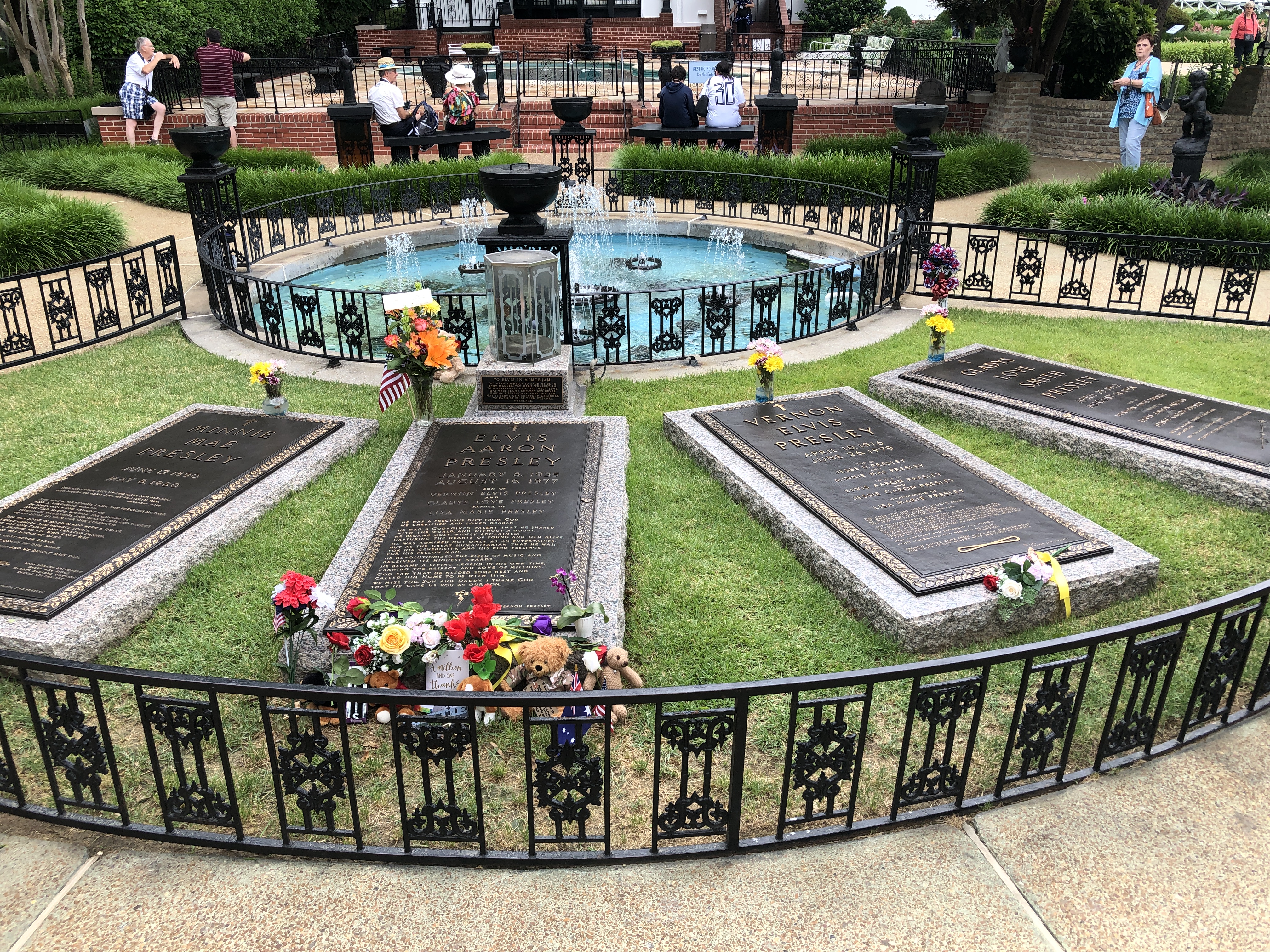
The grave site of Elvis, his mother and father, and his grandmother…

img_3059

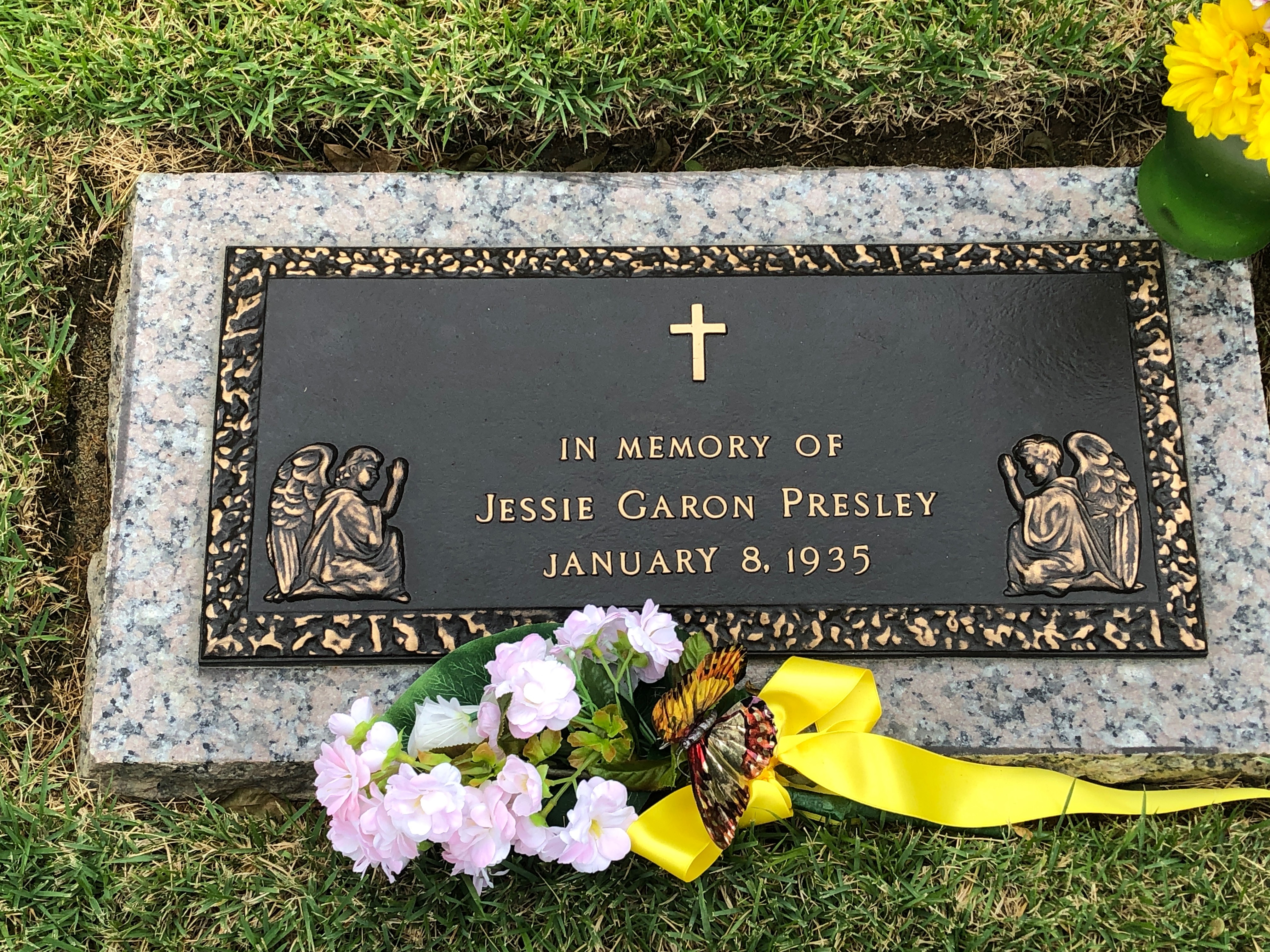
Something I had not known:  Elvis had a twin brother who was still-born…

img_3057

Not sure what this guy is doing on the roof…

img_3052

We left the house tour and returned to the Visitors Center and walked through the exhibits… The only interesting area that I liked were all of Elvis’ cars… Continental Mark II, two Mercedes 600 limousines, MGA, a few Cadillacs, and more…

No photos though…

We returned to the Villa, and caught an Uber into an area just a few blocks south of Downtown…


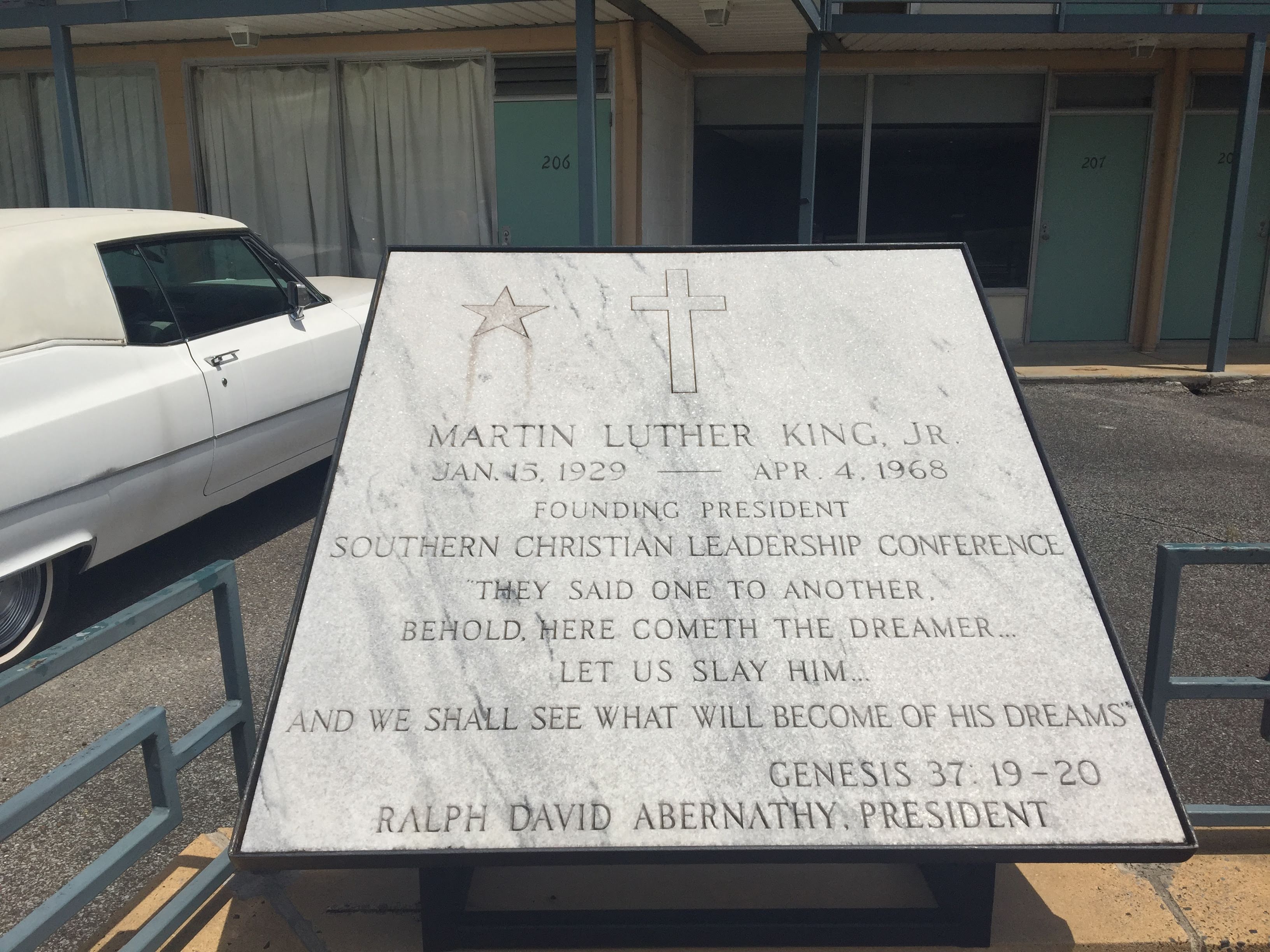
We were unprepared for this…

img_9020img_3062

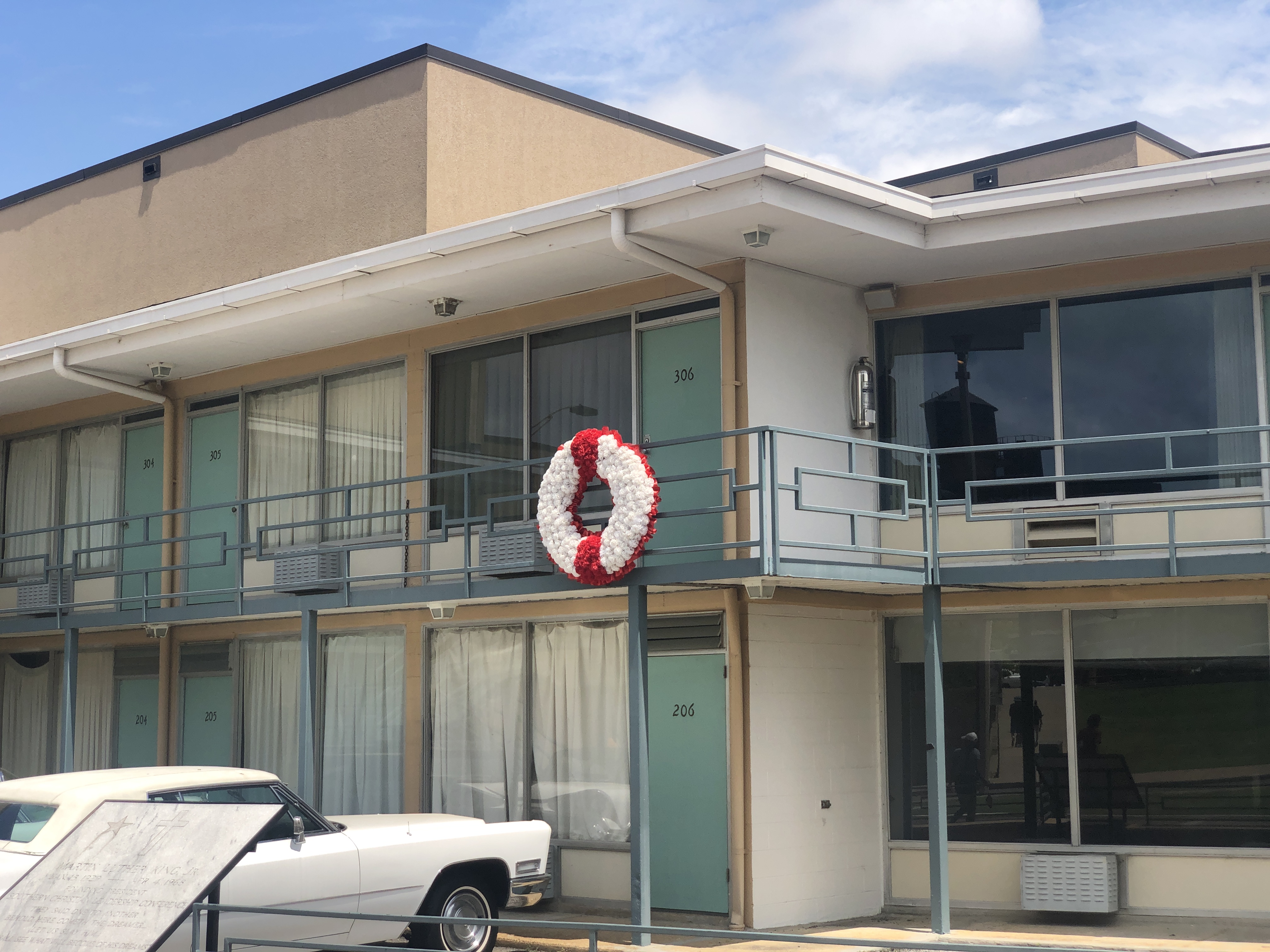
Those of you who are my age (or older) know what this is…

img_9022

The Lorraine Motel went into bankruptcy a few years later, but was purchased by a local non-profit in 1982.  Today it is the site of the National Civil Rights Museum…

img_9024

The museum was very sobering.  Starting with the history of slavery, then moving on through the eras of the build-up to the Civil War, the war itself, Reconstruction, and the Jim Crow era.  It clearly outlined how the 13th amendment ended slavery, the 14th amendment granted citizenship to all former slaves, and the 15th amendment guaranteed the right to vote for all citizens.  That was 1870.  Except that in 1877 the Reconstruction era ended and the Federal troops left the south.  One by one the southern states all ignored the US Constitution and rewrote their state constitutions and laws to take away these rights and to mandate racial segregation.

Apparently no one in the Federal government cared, nor did the Supreme Court…

In 1896 the Supreme Court (nine old white men) ignored the amendments and, in Plessy v. Ferguson, they gave the green light to “separate but equal”… Jim Crow was now the law in the south…

The museum continued through the world wars, and finally Brown vs Board of Education, in 1954.  The case for integrated education and the elimination of “separate but equal” (which was always unequal) was heard before the court in 1952, but a highly divided court couldn’t make a ruling.  Finally, with Earl Warren newly sworn in as Chief Justice, Warren wrangled the other justices into a unanimous decision and the Supreme Court (nine old white men) said that “separate but equal” was unconstitutional.

Again, the southern states refused; in 1955 the court mandated that that they all comply.  It took Federal troops at the University of Mississippi to enroll James Meredith in 1962, it until 1963 that the University of Alabama admitted its first black students, and the State of Mississippi finally eliminated their “colored” schools in 1970.

The museum continued with the Freedom Riders, and Woolworth lunch counter sit-ins, the Montgomery bus boycott and Rosa Parks.  And the Children’s crusade. And the KKK.  And the church bombings.  And the lynchings… As I said, it was a very sobering exhibit.

The museum ends with visitors walking past and viewing the room where Martin Luther King was staying when he was shot…

(As good as the museum was, it dealt strictly with African Americans in the south.  There was no mention of discrimination of against Chinese in California, or of segregated schools in Massachusetts…)

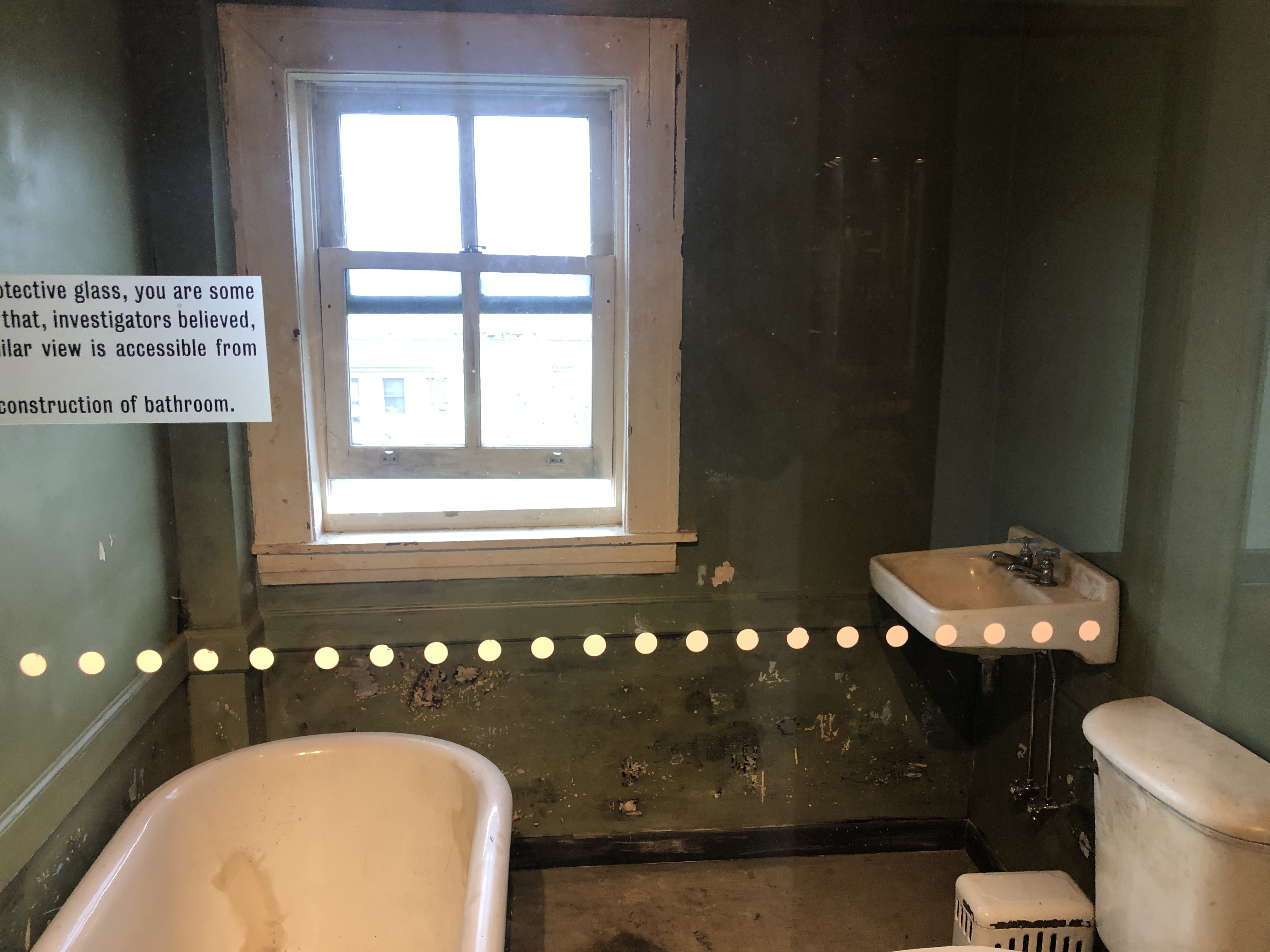
We then walked across the street to see where James Earl Ray fired the single shot that killed Dr. King; the boarding house is the brick building beyond… The entrance tunnel leads to the basement; we went to the top floor…

img_3067-1

The bathroom window where the shots were fired…

img_3069-1

The view of room 306 in the motel…

img_3068-1

The exhibits in the boarding house are all about the search for Ray.  Even though there were FBI agents watching Dr. King along with 11 Memphis city police at the fire station across the street, Ray escaped.  He wasn’t captured until six weeks later, in London.

I had read an extensive book many years ago on James Earl Ray, and his six weeks on the run, and all the conspiracy theories…  We didn’t need to spend much time here…

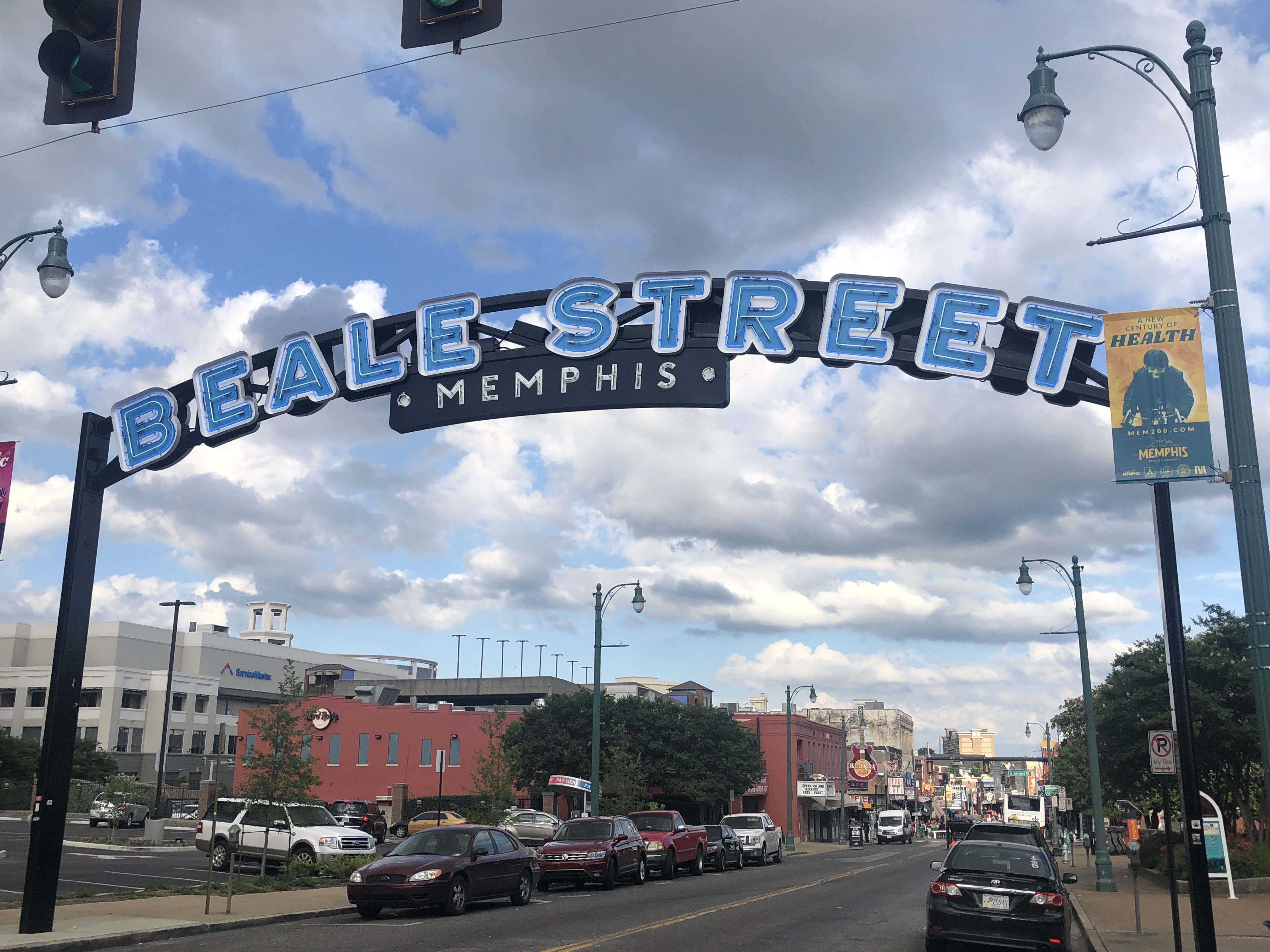
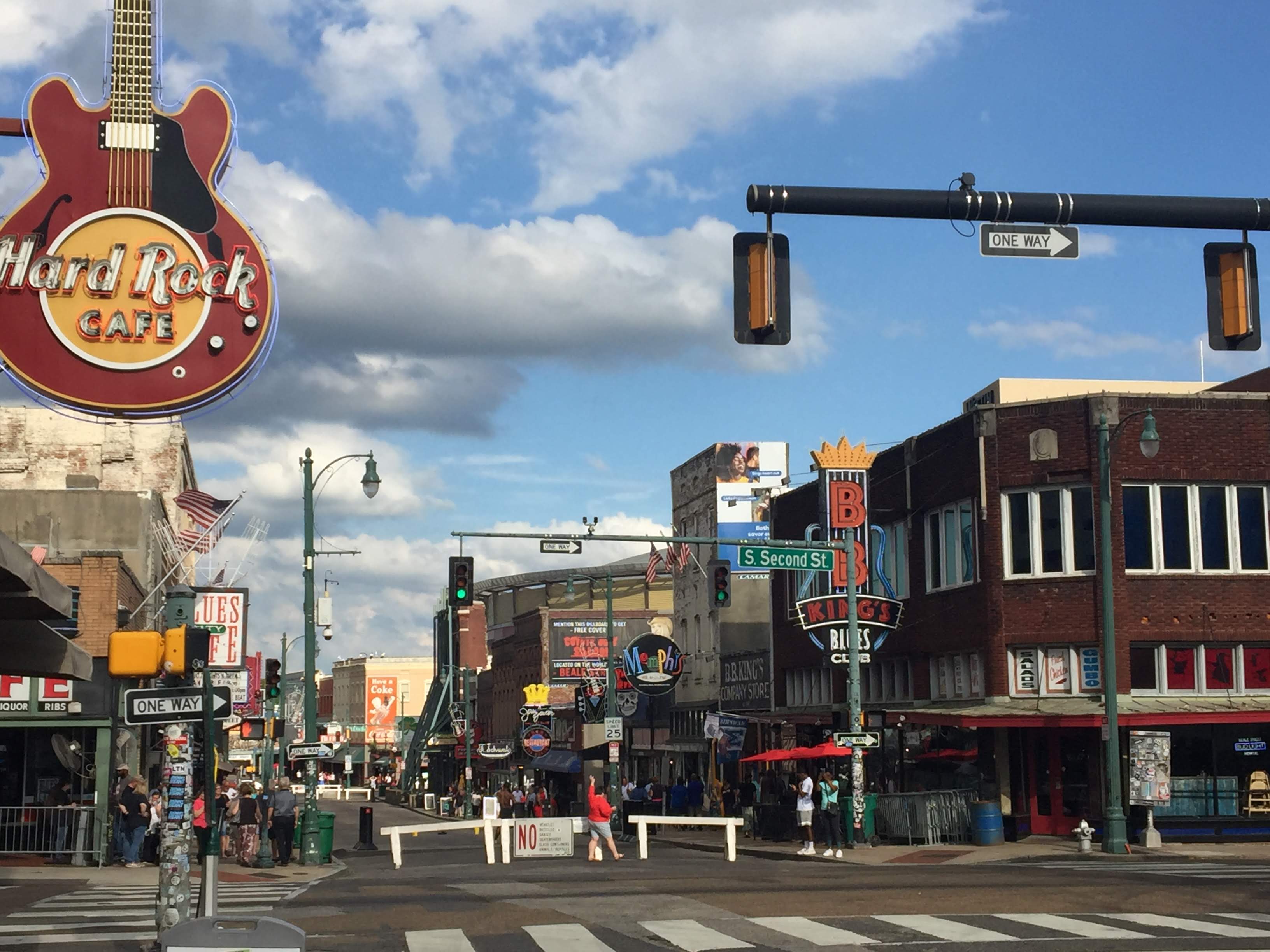
But now it was late afternoon… We walked to downtown Memphis, about five blocks away…

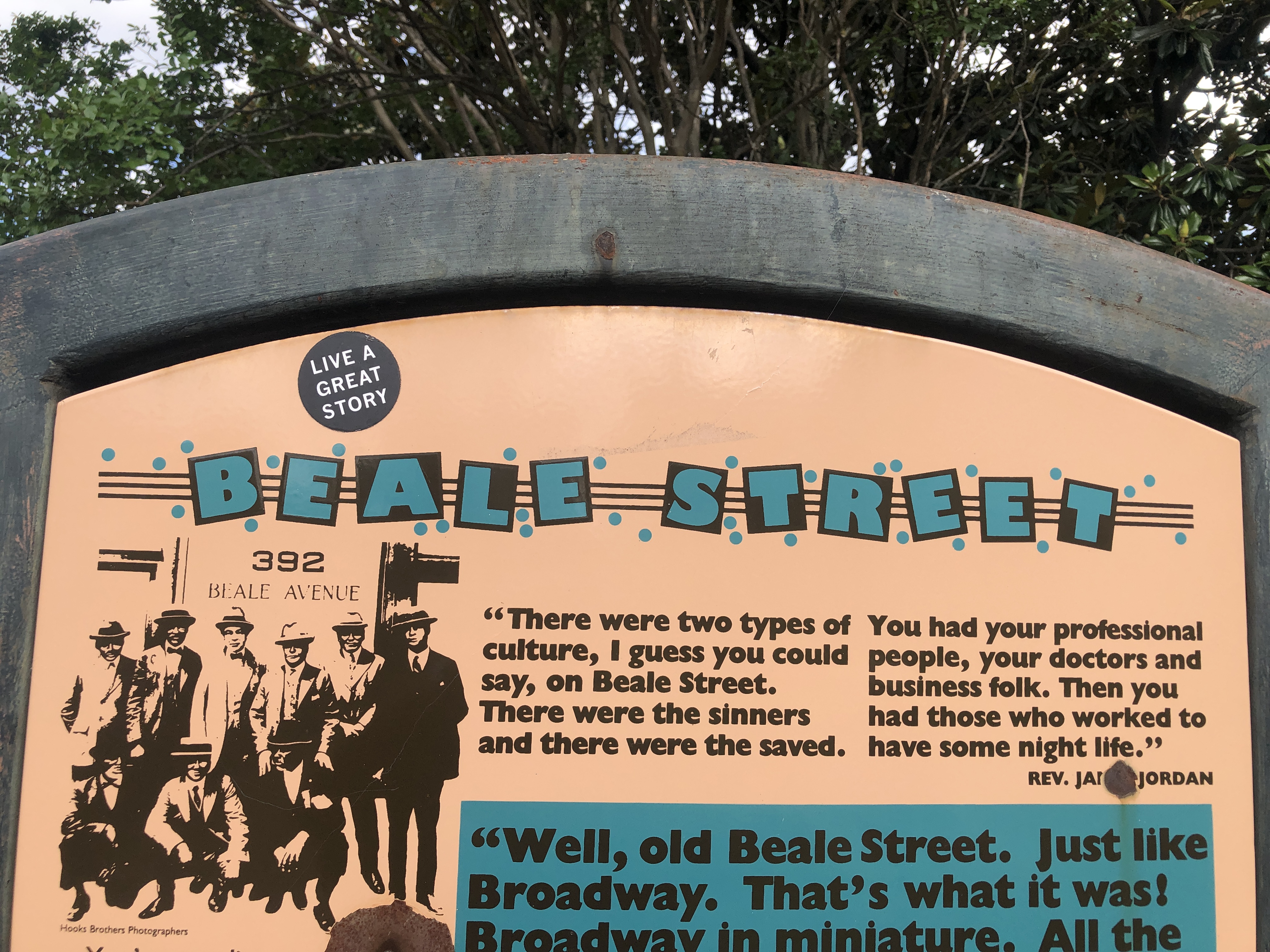
We found Beale Street; home of the Blues…

img_3076img_3071img_3072img_9025img_3070

We found the ballpark, but didn’t stick around for the game…

img_3074img_3073

We had a drink at the Corner Bar at the Peabody Hotel…

img_3077

And we had dinner at Cafe Society, a nice French Bistro…

img_9026

We returned to the Villa, and an enjoyable time was had by all…


2019-05-29 – Traveling West – Nashville and Memphis, TN

Yesterday we flew back from Redlands to Nashville.  We Ubered back to the Villa in Franklin, KY… It was still there…

img_2854-1img_2853-1

Our host invited us to his patio where we shared a few bottles of wine…

img_8869-1

This morning we waved, “goodbye” and headed south, towards Nashville.  We were going to visit Hermitage, the plantation home of Andrew Jackson, the 7th president of the US… The house was built in the early 19th century, like most plantation houses… It is set in 1,100 acres of “park” land, although in Jackson’s day it was a working plantation, earning Jackson his money via cotton through the the hard work of slaves…

img_2954img_2957img_2959img_2960img_2961img_2964img_2962img_2965

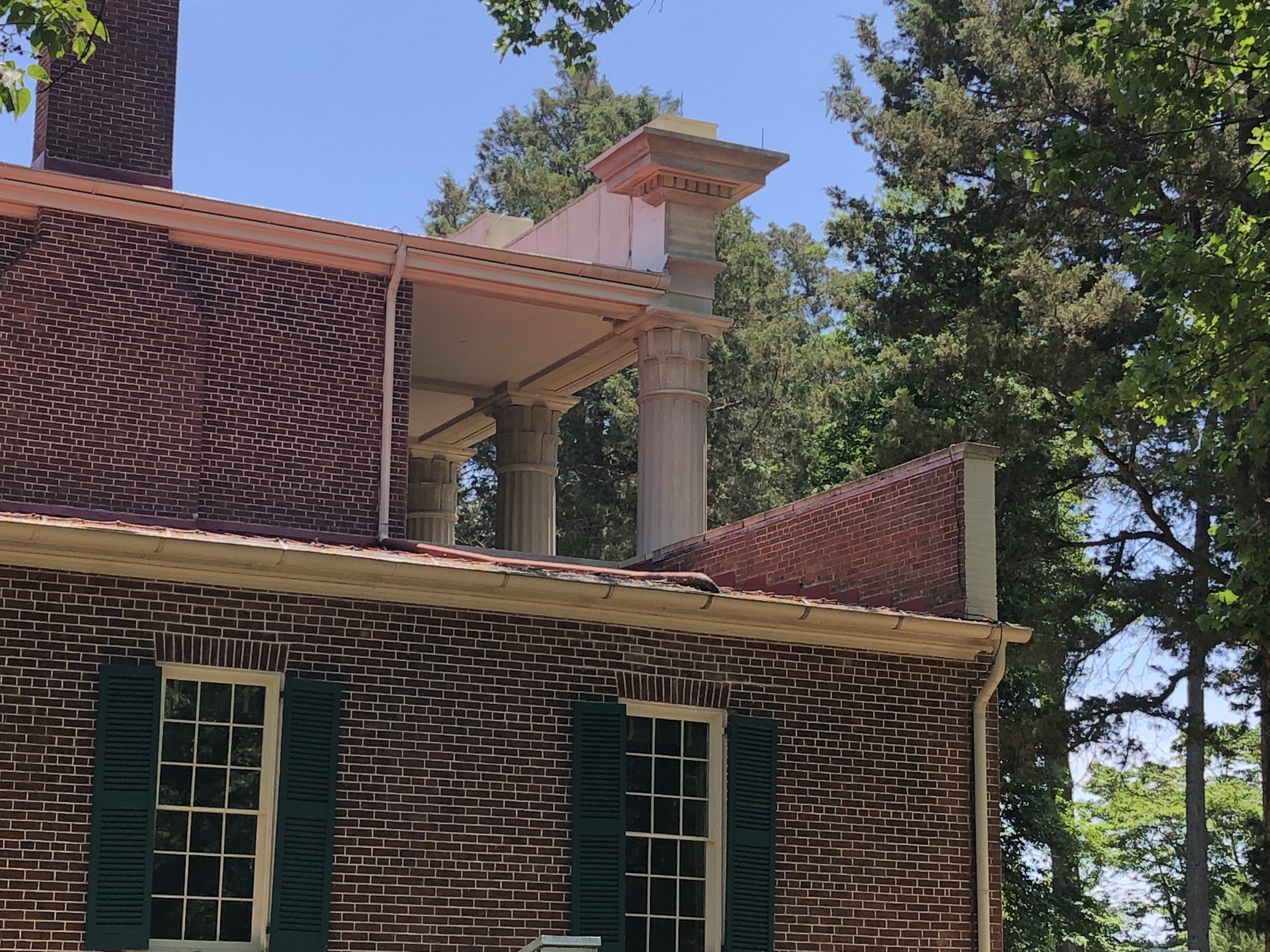
As lovely as it is, the mansion was originally built as a simple house, but it burned down in its early years.  The house was rebuilt, but after Jackson became president, he had the house enlarged again and remodeled to its current Greek Revival form… thus these awkward “false fronts”…

img_2966img_2967img_3021

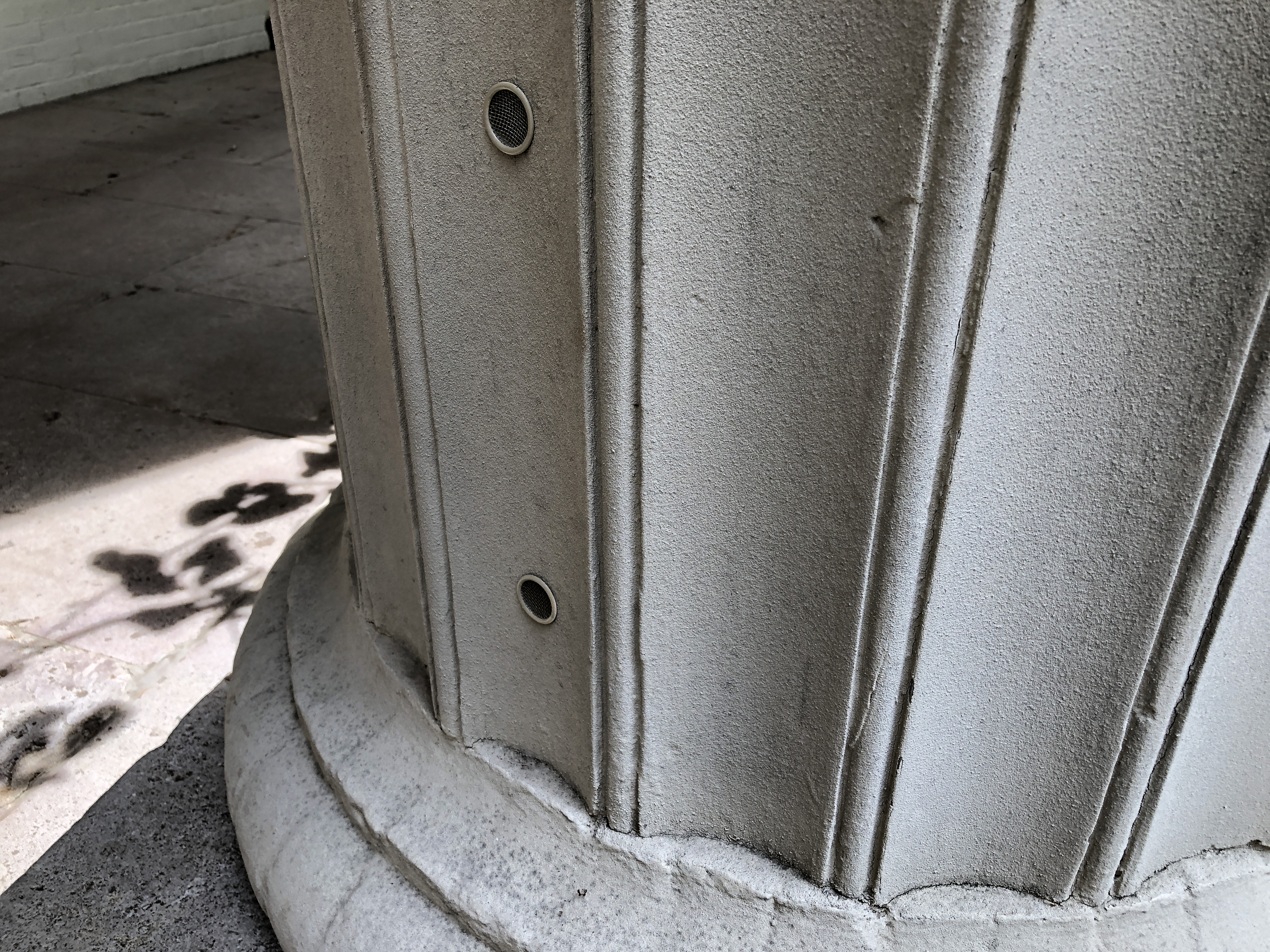
As was common at the time, economy often was a big feature; these “stone” columns are actually wood, with a faux-finish added to resemble stone.  At least they now have internal ventilation to reduce the likelihood of rot, mold, and wood deterioration…

img_2968

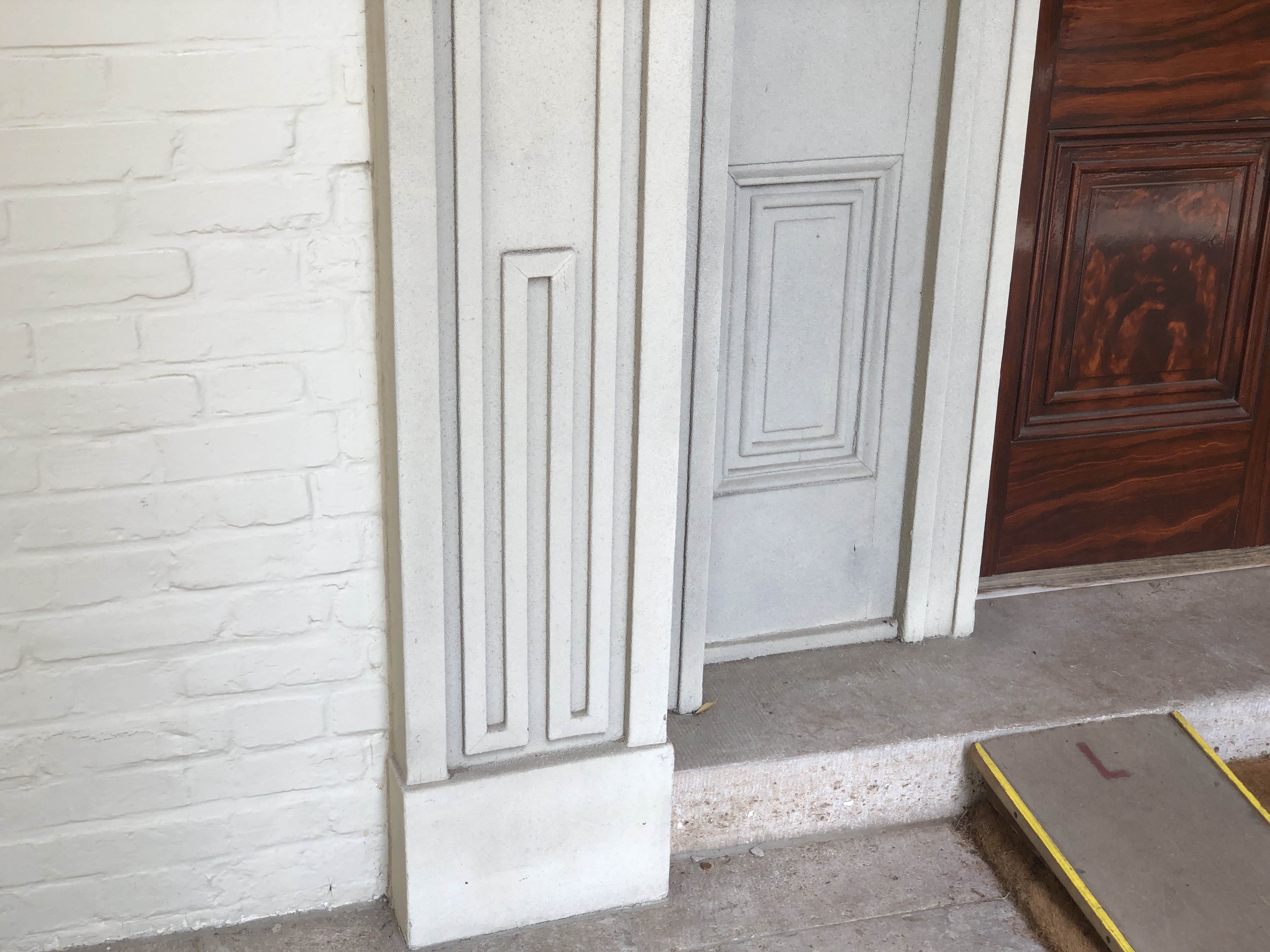
The trim around the doors was also wood with faux-finish…

img_2969img_2970

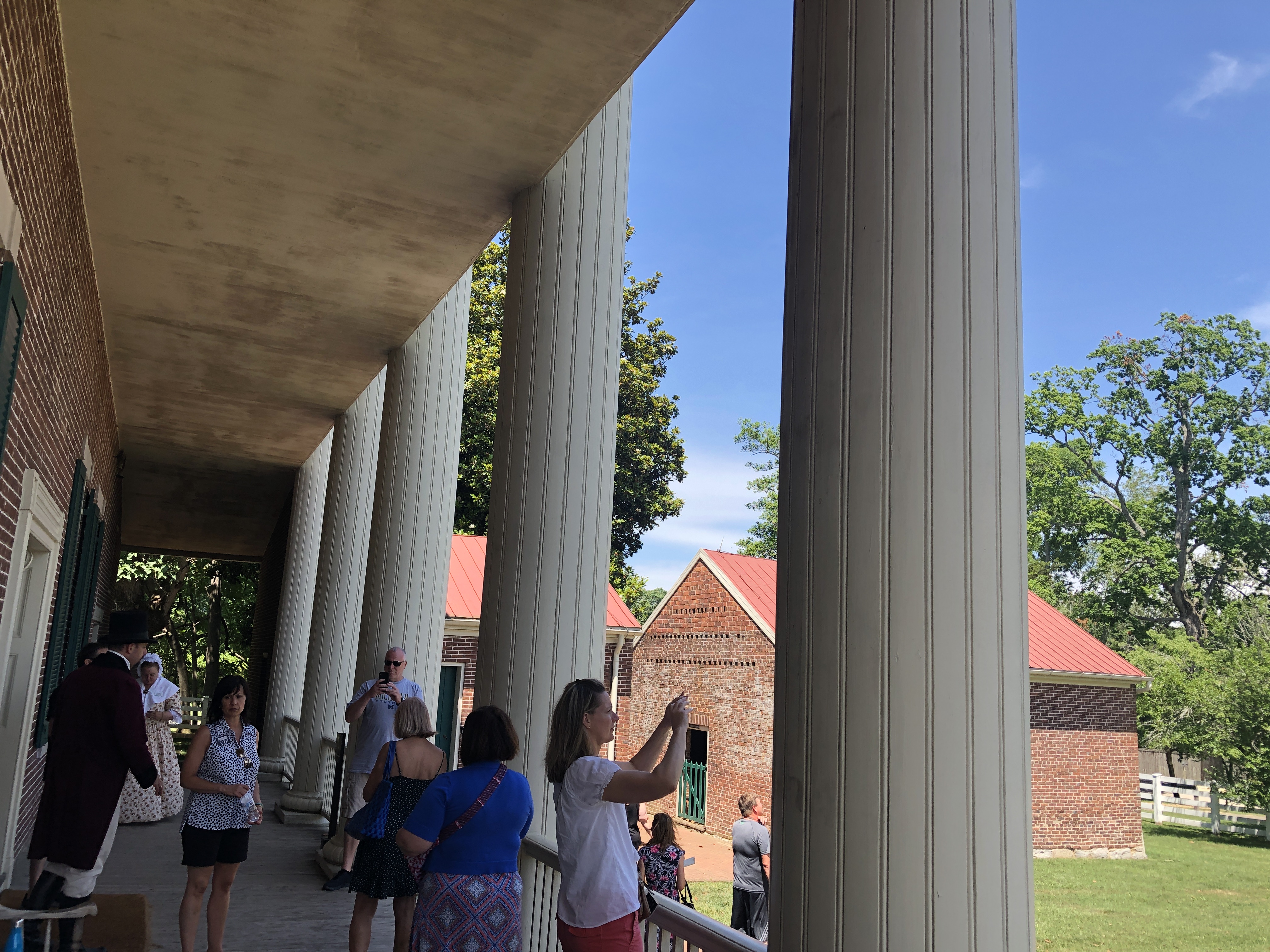
At the rear of the house the columns are allowed to look like wood…

img_2996img_2995

Hermitage had an interesting museum telling of the life and times of Andrew Jackson… Some interesting facts, firsts, and lasts…

  • He fought in the Revolutionary War (as a messenger, at age 13).  He was captured and spent time as a Prisoner of War (the only President to have been a POW…)
  • He fought in the War of 1812, and is known for his leadership in the Battle of New Orleans, the final defeat for the British in the war…
  • He was an orphan with no surviving siblings by the age of 20…
  • Both South Carolina and North Carolina claim his birthplace location is in their state…
  • He was the first Representative to Congress from Tennessee; he also was a Senator from Tennessee… He also became a Tennessee Supreme Court Judge…
  • He was the last President to have personally known all prior Presidents (Washington, J. Adams, Jefferson, Madison, Monroe, and J.Q. Adams)…
  • He was the first President who was not from the American aristocracy; all prior Presidents were born either in Virginia or Massachusetts…
  • He was the only President whose parents were born outside the country…
  • His wife was a bigamist and adulteress; she died just before Jackson’s inauguration; he never remarried…
  • He adopted two Native American children and raised them as his own; he also raised at least 8 foster children.  He was also the leader of the harsh and brutal removal and relocation of the Native Americans that lead to the “trail of tears”.
  • He was an unapologetic slave holder, and he did not free any of his slaves; all records do show that he treated his slaves relatively “fairly”, he kept slave families together, and he allowed them to cultivate their own gardens for their own use…
  • Jackson faced the threat of secession by South Carolina over “nullification”; South Carolina opposed the “Tariff of Abominations” and refused to comply; the crisis was defused when the tariff was amended, and Jackson threatened the use of military force if South Carolina attempted to secede.  (You would have thought that South Carolina would have learned its lesson that nullification and secession was frowned upon by the Union…)
  •  Jackson became the only president to completely pay off the national debt, in 1835…
  • In 1806 Jackson fought a duel with Charles Dickinson, whom he shot and killed..

The house tour was very interesting.  It is a fairly typical plantation “big house” in that it has a central hall with two rooms on either side, on both floors.  One unique feature of this house is that two ground floor rooms were bedrooms and there is a secondary hallway between the bedrooms leading from the central hall to a side door.  The house was enlarged when Jackson was president to add a large Dining Room on one side and two offices on the side of the bedrooms.  A back stair was also added at the side door.

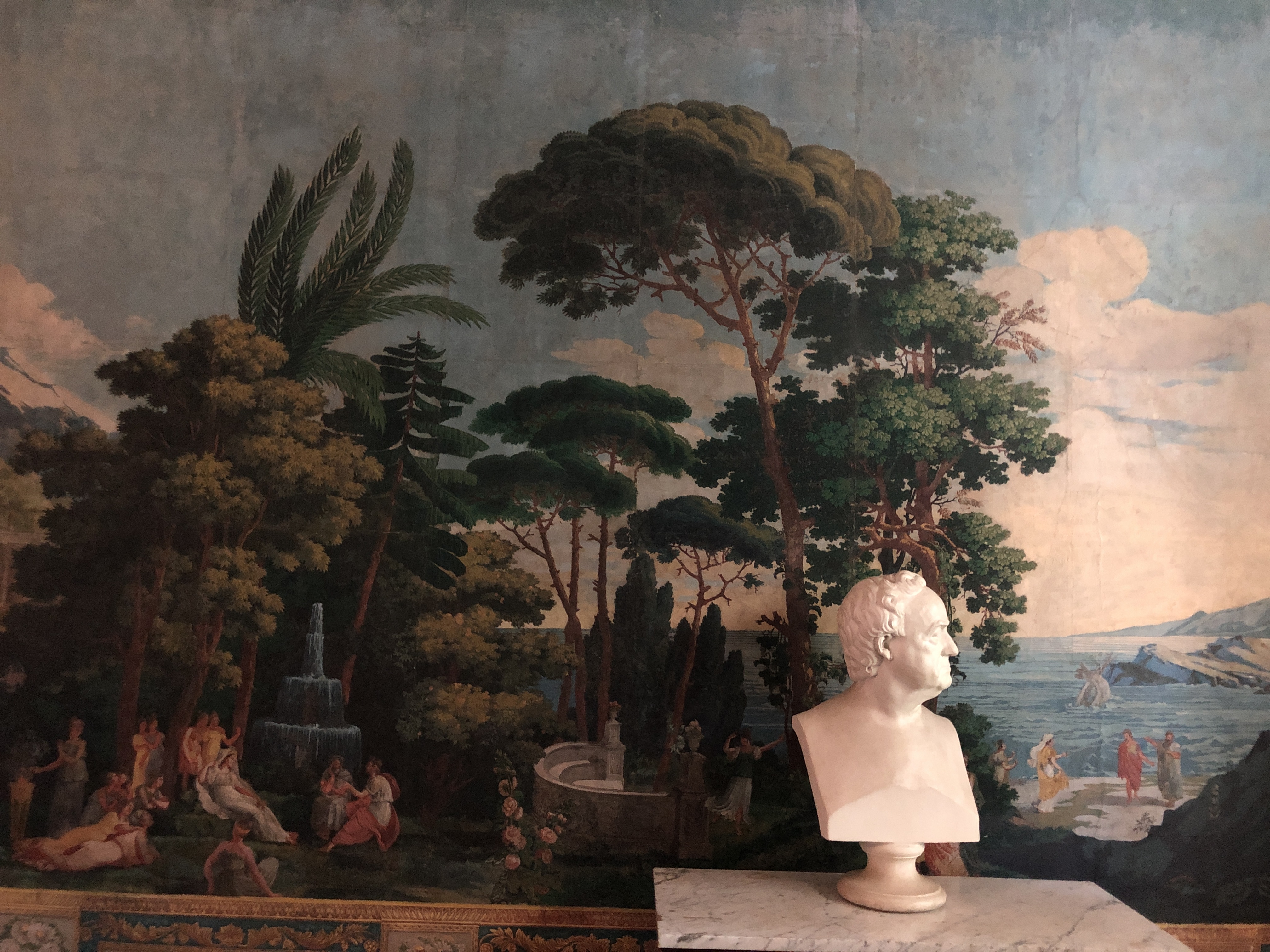
The main central hall has this spectacular wallpaper:

img_2977img_2978img_8974img_2985

(Have you ever heard me rave about wallpaper???)

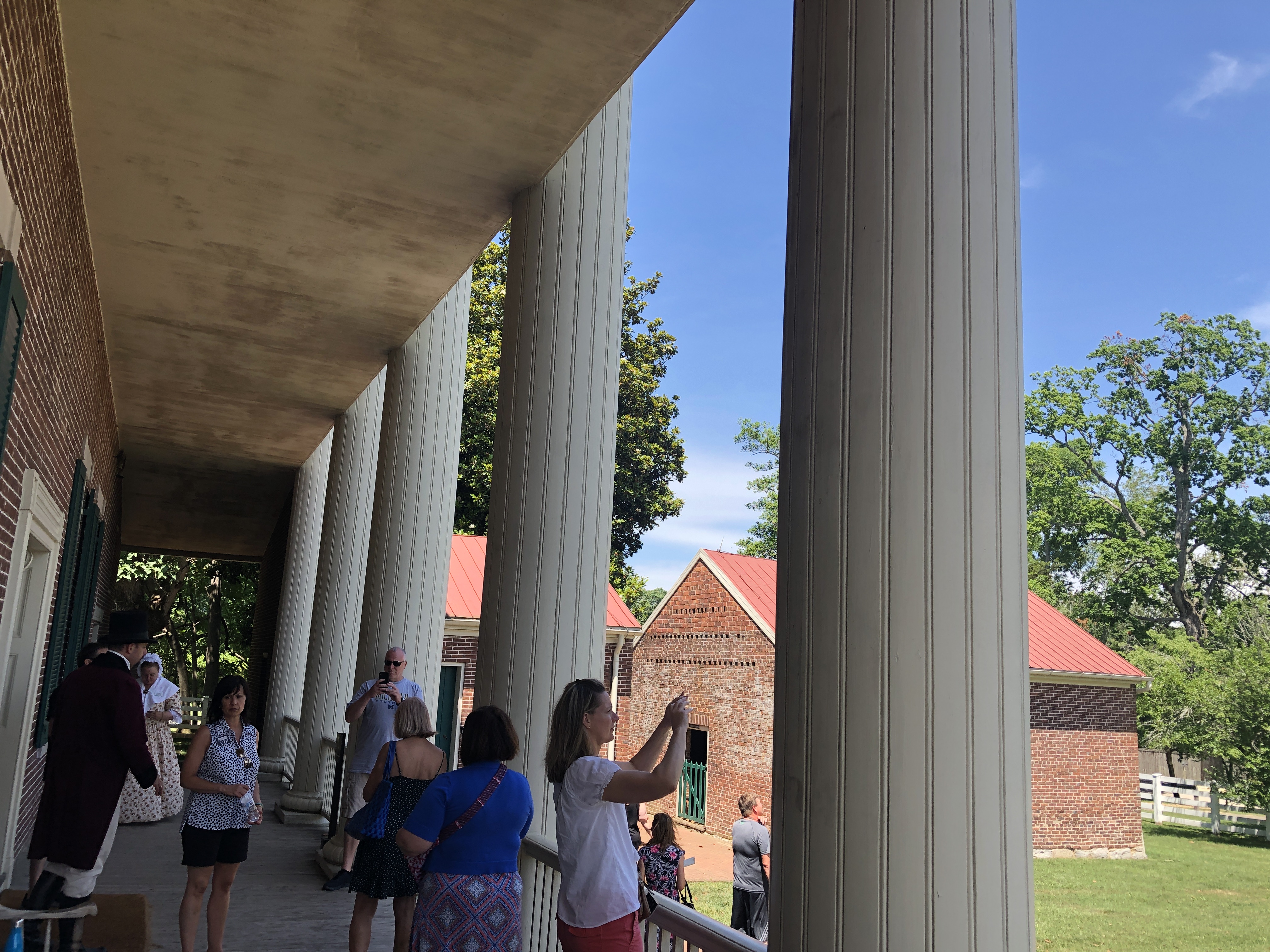
We were able to enjoy the balcony at the front of the house, which was a social space for family and guests…

img_8981img_2989

(Hint:  That is not the ocean out there…)

We also saw the back porch, which was a work area for the slaves; this nice grassy yard was a dirt yard for pigs and chickens in Jackson’s day…

img_2996-1img_2997

An interesting note about the tours at Hermitage…

img_8991

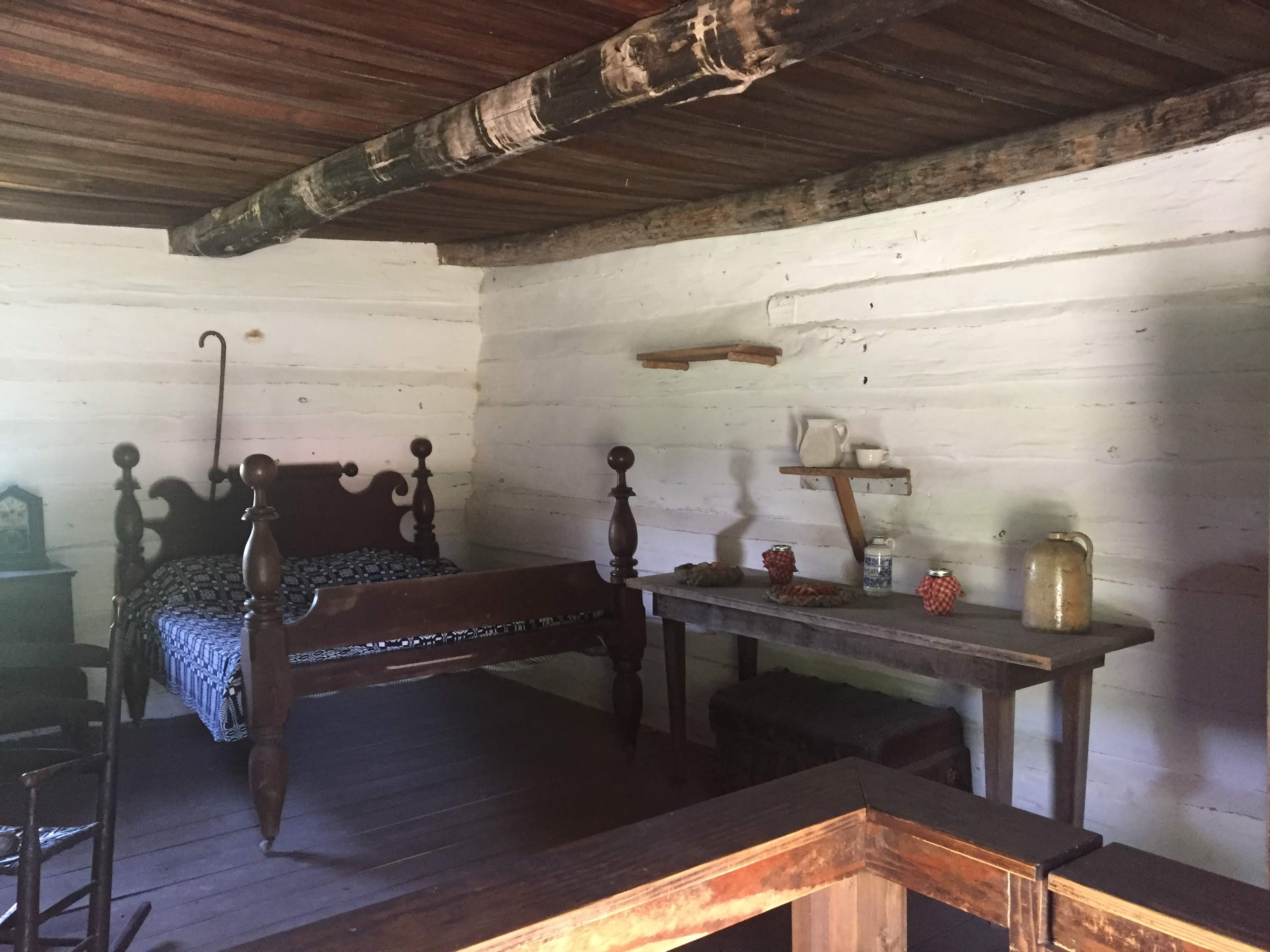
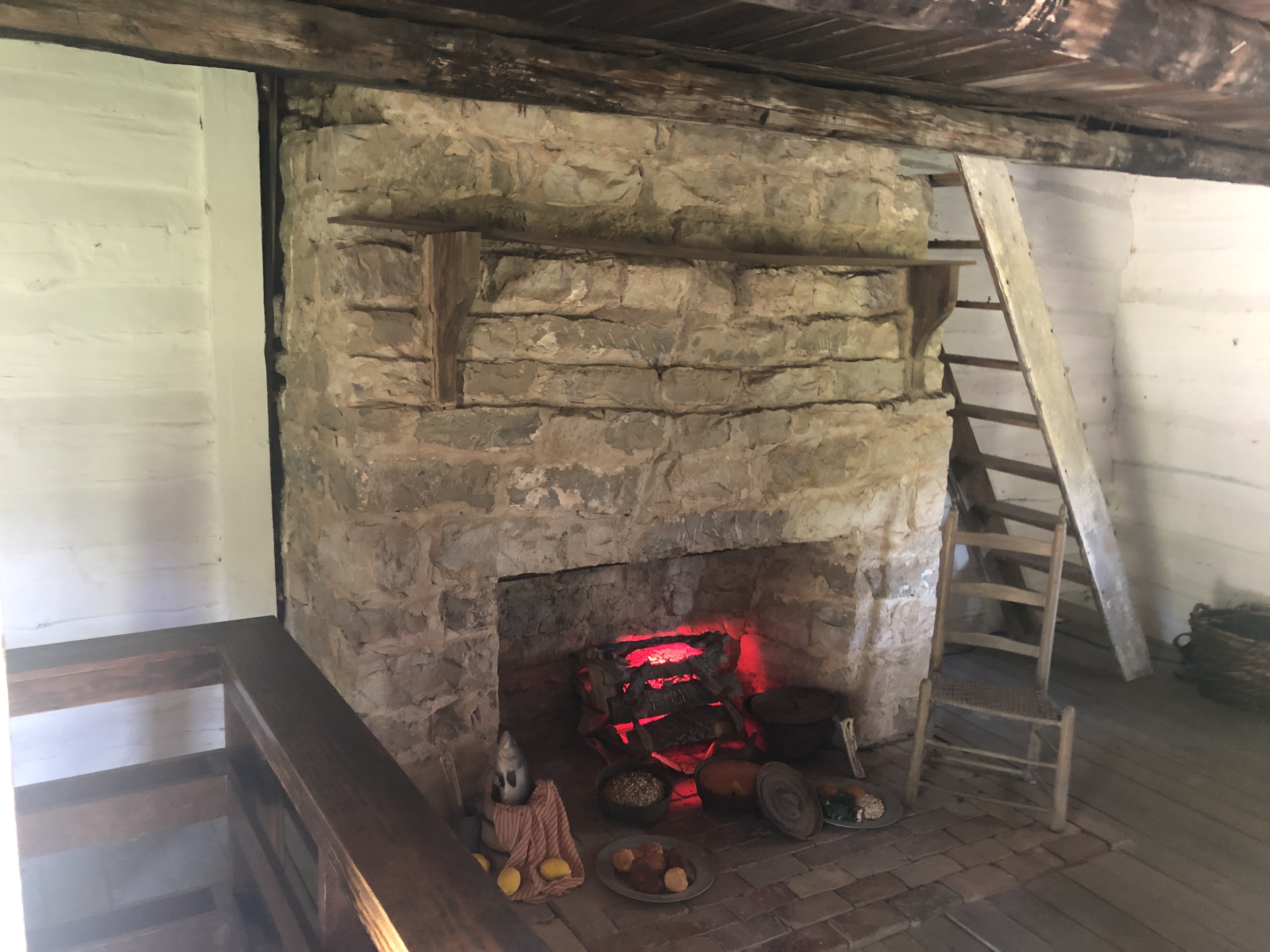
“Uncle” Alfred was a slave, who lived almost his entire life at Hermitage.  This is his cabin:

img_3013img_8993img_3016

Alfred was in charge of horses, one of Jackson’s interests. (He raised race horses, even while President)…  As such, Alfred held a place of honor among the slaves, and he is the only slave buried in the family graveyard, which contains the remains of four generations of Jacksons…

After Jackson’s death in 1845 his adopted son, Andrew Jackson, Jr., let the plantation become dilapidated.  In 1858 he sold the plantation to the Tennessee government to repay debts.  The family was allowed to remain living in the big house.

In 1889 the Ladies’ Hermitage Society was formed to maintain Hermitage and to offer tours.  Some of the 3rd and 4th generations of the Jacksons were still living upstairs when tours of the downstairs began being offered.  Who was one of the first tour guides?  Alfred, the longtime slave!  Alfred lived to the age of 98, dying in 1901; he was a slave during Jackson’s presidency, was emancipated the Civil War, was a guide for tourists curious about this house, and still lived in his former slave cabin…

It was an enjoyable tour, but it was very hot.  We were happy to start our drive to Memphis…

We arrived in Memphis about 5:00, really late compared with our normal scheduling… We did find a neat little place for dinner:

img_9004

Uncle Lou’s was featured on the Food Network, and a version of Uncle Lou’s Fried Chicken is served at Playground, in Santa Ana, CA…

We returned to the Villa, turned on the AC, and turned in early…

And an enjoyable time was had by all…

2019-05-25 to 2019-05-27 – Memorial Day Weekend

We returned from Indian Wells on Saturday mid day.  I visited my mother in Artesia, and had nice Happy Hours on the front porch back in Redlands.  While we were Airstreaming over the past 2 1/2 months we have several new neighbors.  We chatted briefly with them and we hope to get better acquainted upon our return in Mid-June…

We received several nice photos from our grandchildren’s visit to Griffith Park and the remnants of the old LA Zoo…

img_3022img_3023img_3024img_3025

img_2953

Sunday we enjoyed church at The River CRC, we had a relaxing afternoon, then we had a very enjoyable evening dining out with Rodger and Cyndi, neighbors who often help our son while we are away… walking the dog, picking him up when he falls, and cleaning up broken glass… The only down side was that it was raining, so we were unable to walk to the restaurant…

On Monday, Memorial Day, we were visited by The Thundering Herd.  The weather cooperated to the point that we could hang out in the back yard on the deck… (The deck was finished in October, but it has been too cold to use it until today…)

Lynda took the kids for a walk…

img_0782

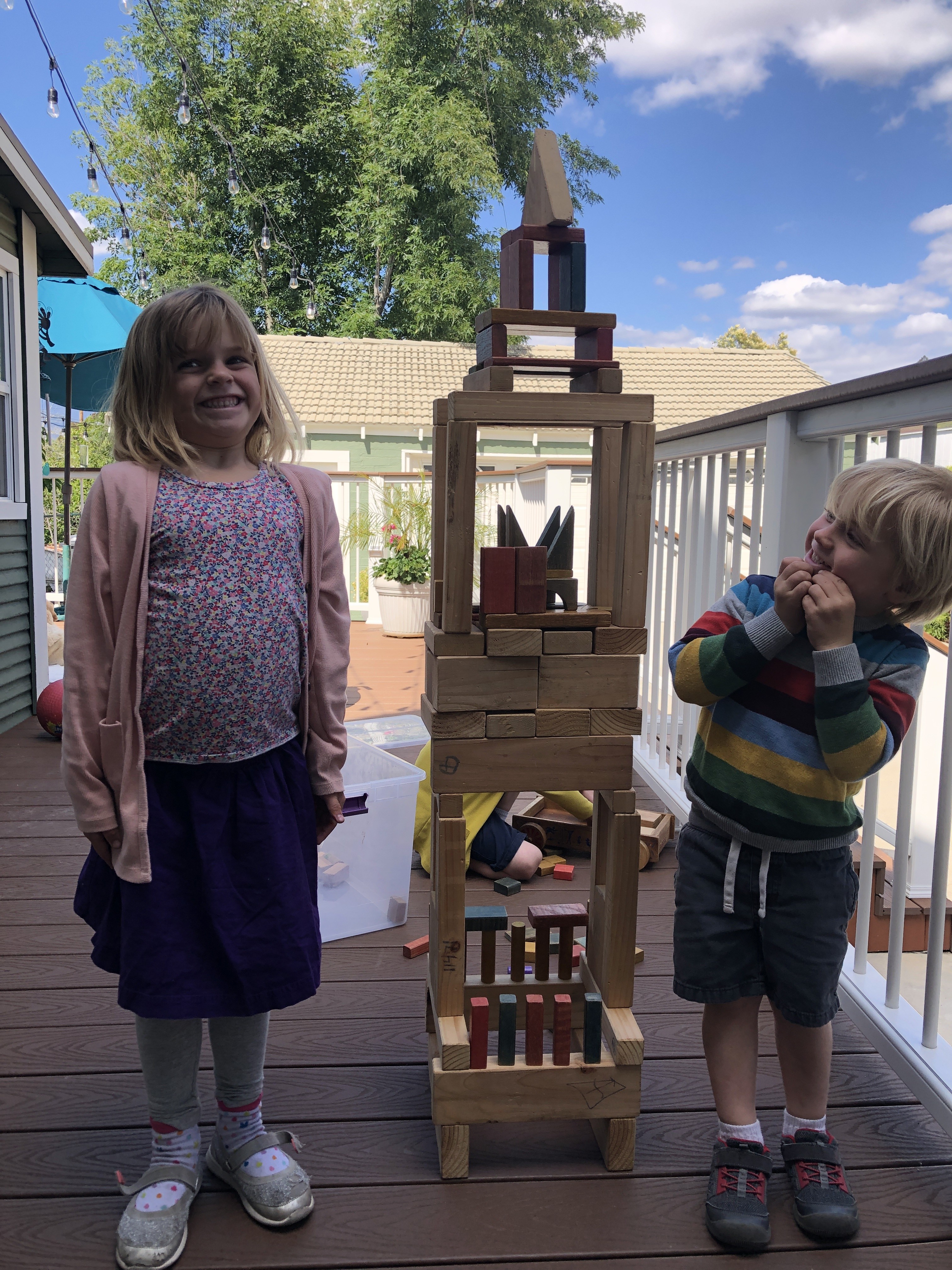
The kids built a tower with blocks, with only a little help from me…

img_2951

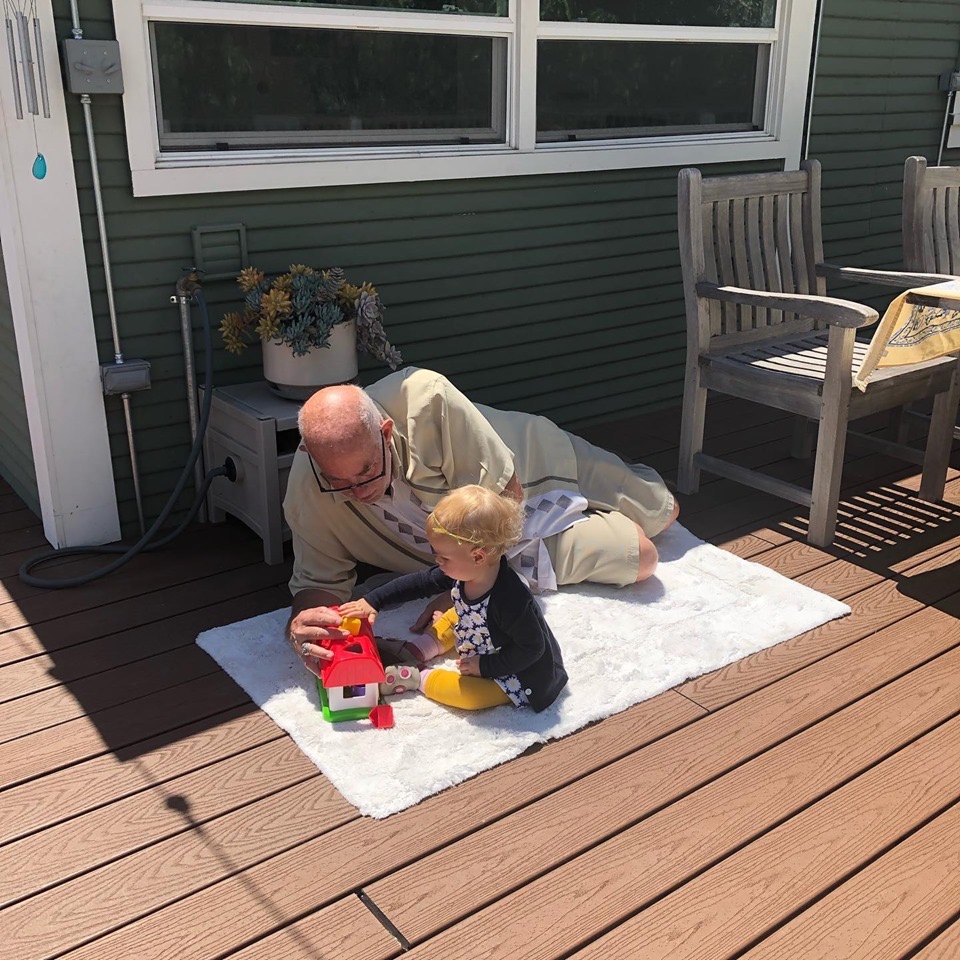
I was able to get reacquainted with the lovely Evelyn…

img_3026

By early evening they piled into the car and headed home.  We cleaned up the house and prepared to fly tomorrow…

And an enjoyable time was had by all…

2019-05-21 to 2019-05–25 – The Desert Trip – Indian Wells, CA

Our annual trip to Indian Wells, CA, near Palm Springs, began on Tuesday morning… Indian Wells is a one hour drive from Redlands.  For 5 days we sat by the pools, walked through the resort, and had breakfast, lunch, happy hours, and dinner in all the hotel’s dining venues…

img_8927img_2933img_2935img_2936img_2938img_2939

It was freezing cold all week, until Friday.  Most days were in the high 60s.  On Friday it reached the high 80s, so we could finally enjoy happy hours and dinner outdoors…

img_2946img_2947

After dinner we enjoyed a nice stroll around the resort…

img_8953img_2948

Saturday morning, as the resort filled up with families for the holiday weekend, we headed back to Redlands…

And an enjoyable time was had by all…

2019-05-17 to 2019-05-20 – The Wedding Trip – Healdsburg, CA

We rose at 4:30 am, locked up the Villa, and we drove the rental car to Nashville…

We had an effortless check-in; 6 hours later, or so, we were in another rented car and we were driving north from Oakland to Healdsburg, CA…

img_8870img_8872

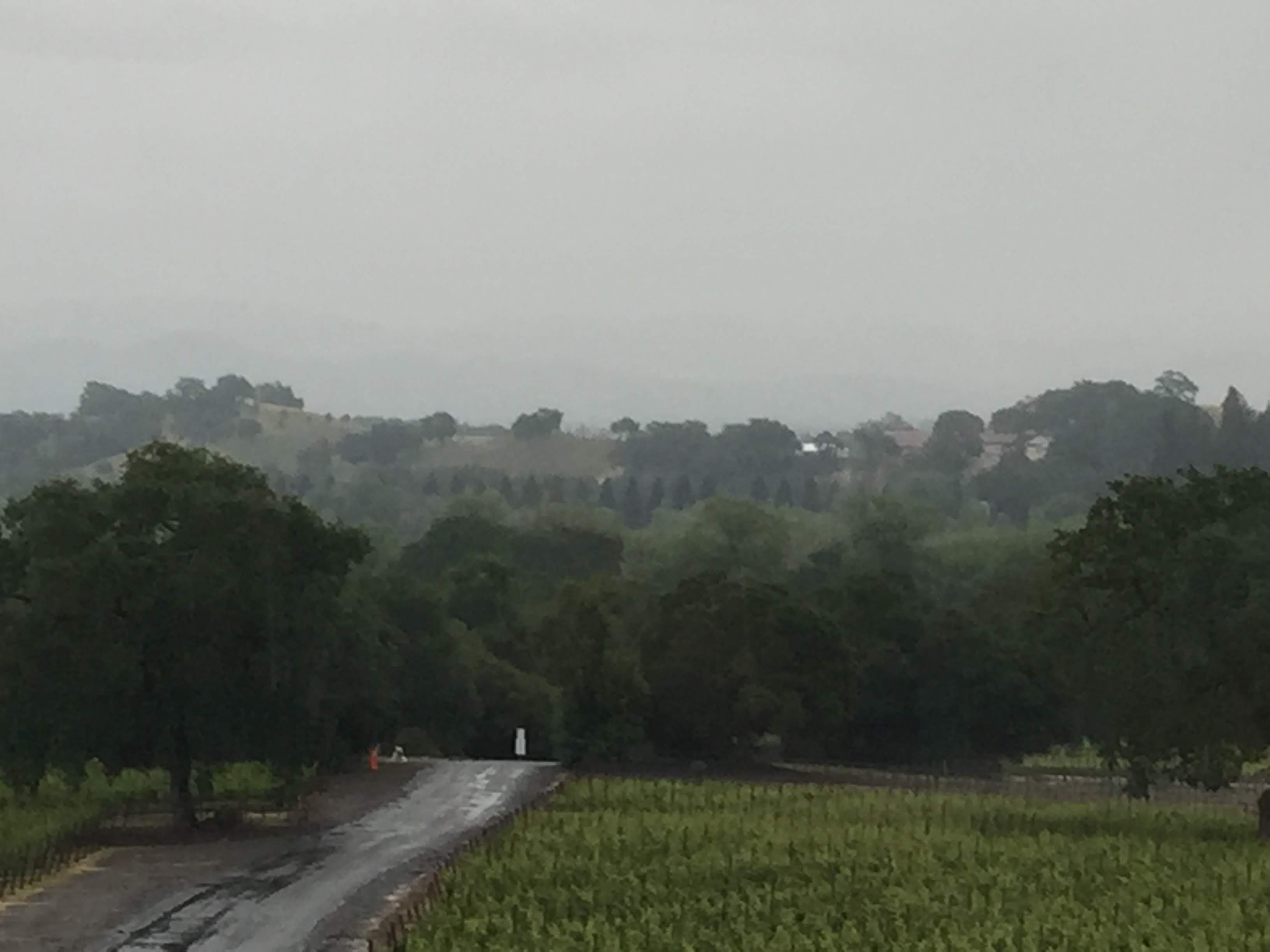
California hills are a different color of green than Kentucky… in another two weeks or so this green grass will be golden brown, setting off even more the beauty of the oak trees…

img_8879

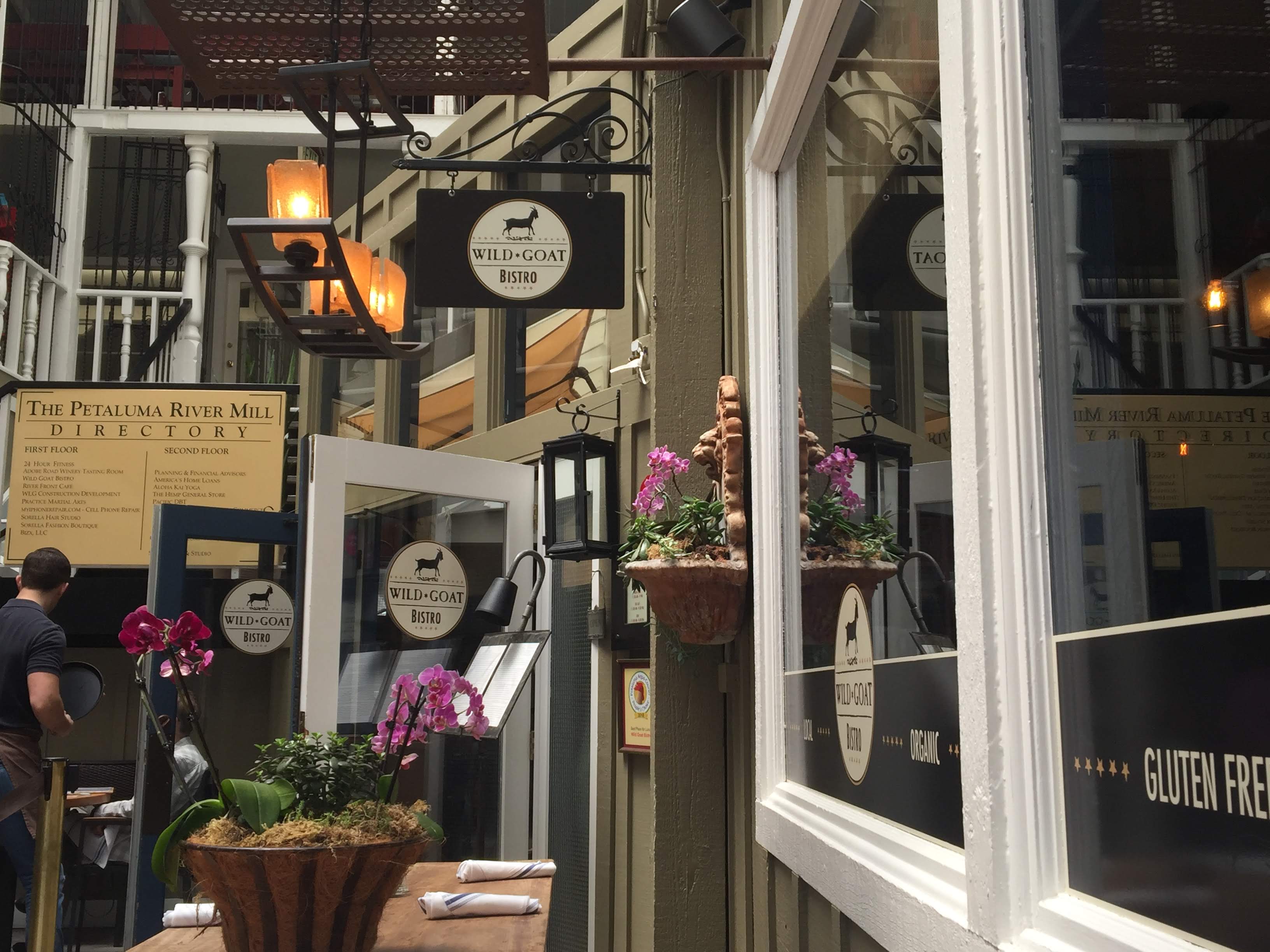
We stopped for lunch at the Wild Goat Bistro in Petaluma…

img_8885

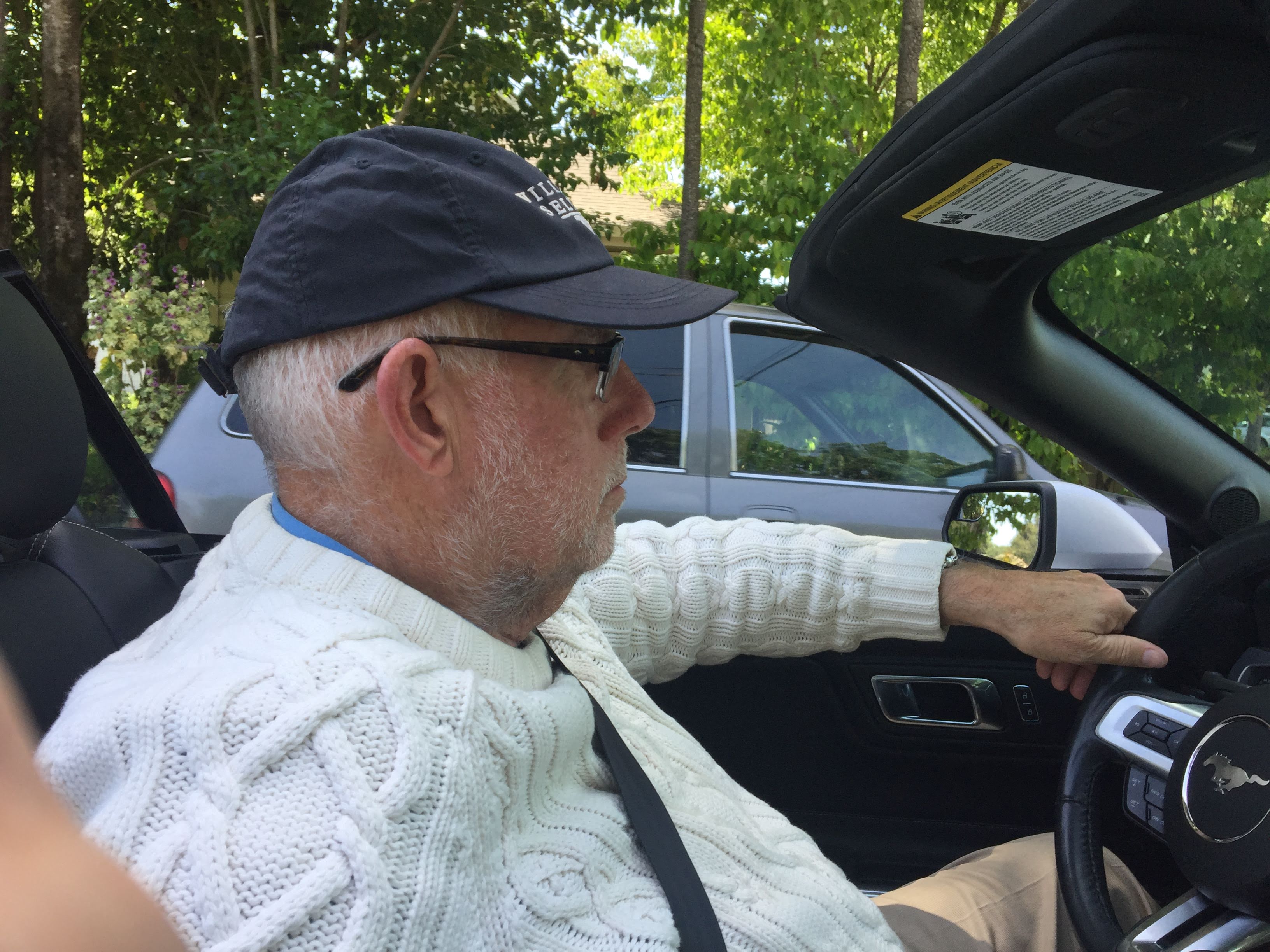
Then we put down the top and cruised back roads into Healdsburg…

img_8886img_8887

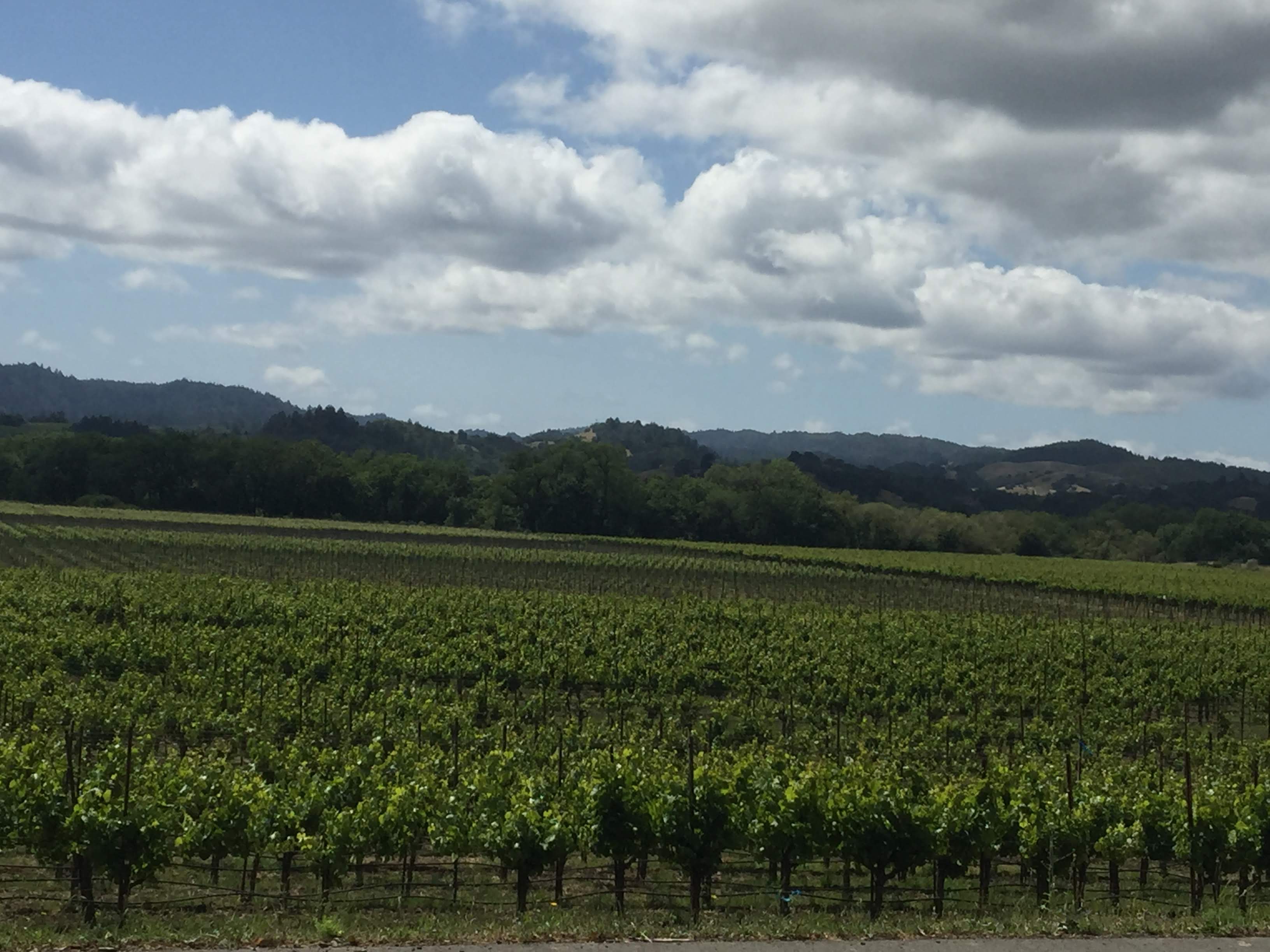
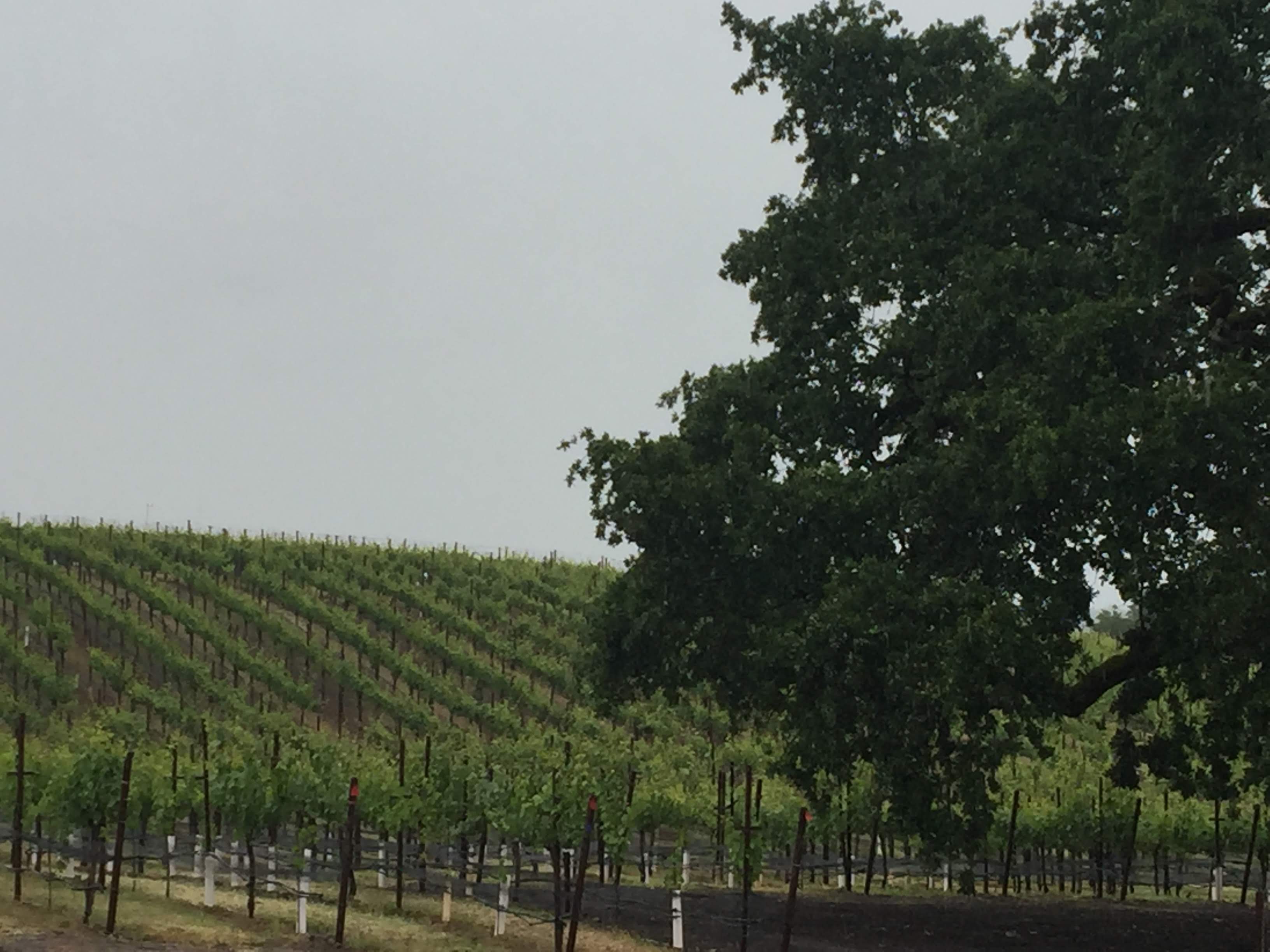
Vineyards are always so picturesque…

img_8891

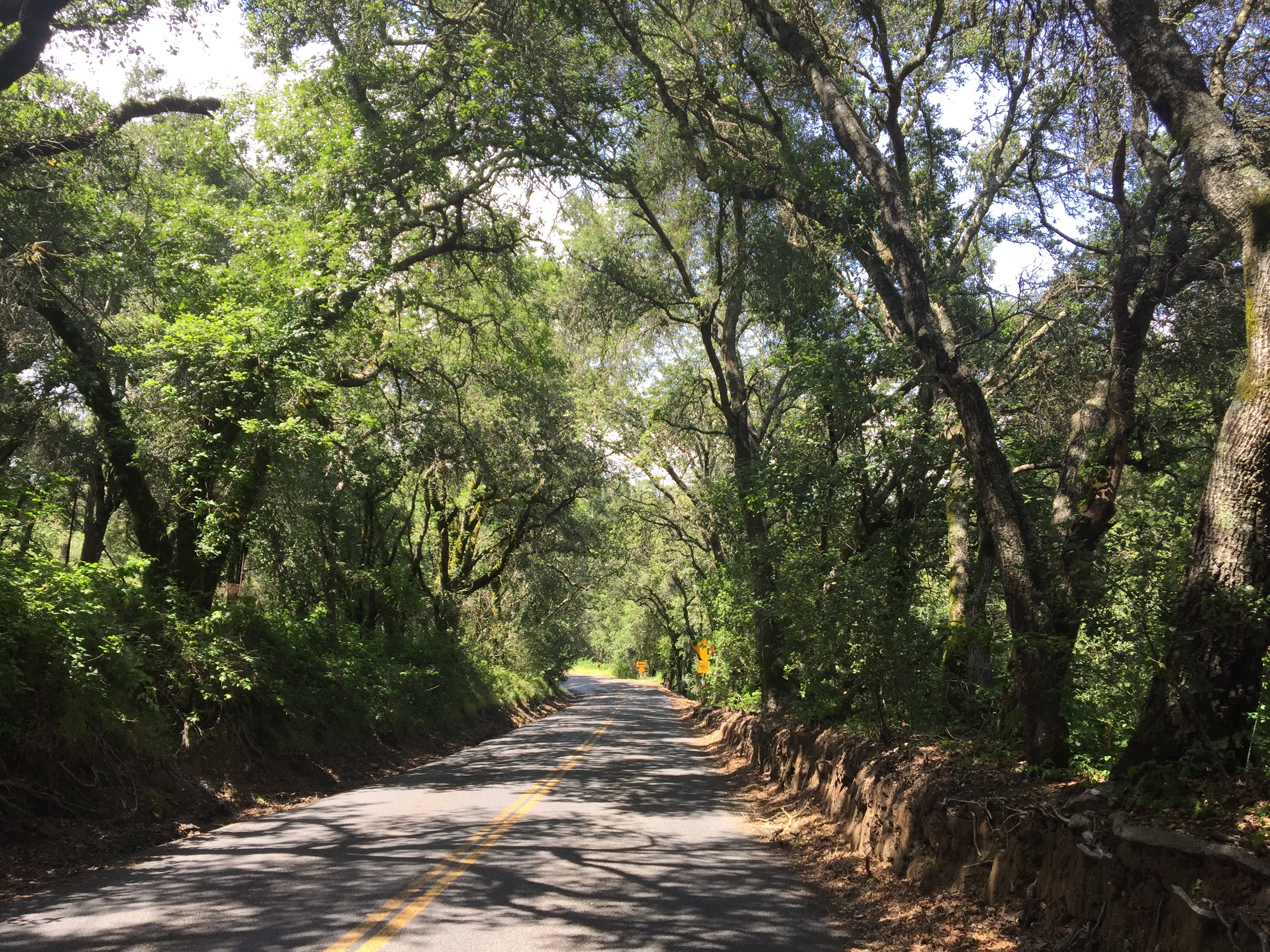
The back roads are delightful!

img_8892img_8893

The town of Healdsburg is dripping with charm…

img_2855img_2856

We checked in to our B&B, walked the neighborhood for a while, and met old California friends for dinner…

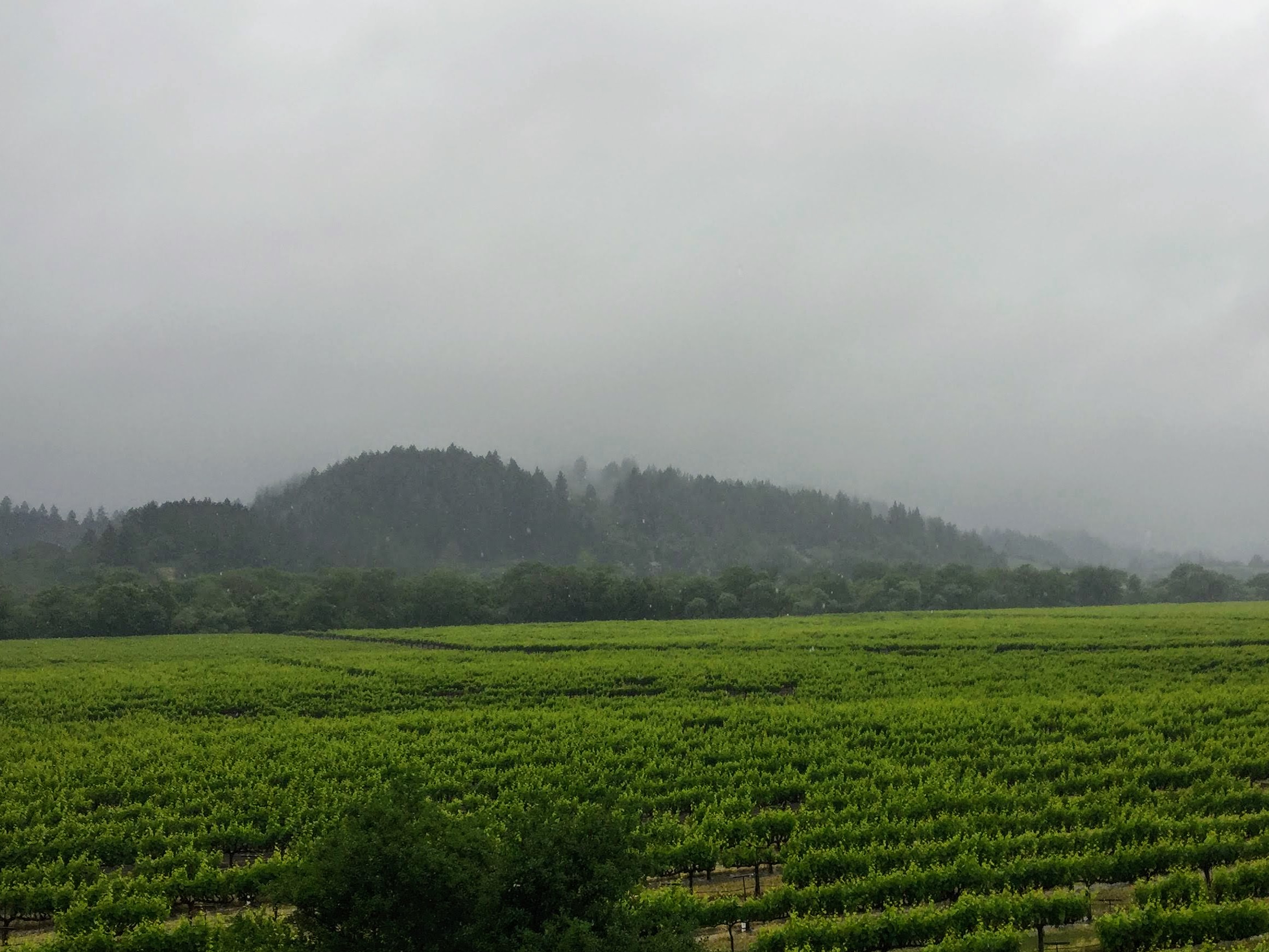
On Saturday we joined 10 other California friends for a day of wine tasting… The top was definitely up as we drove through the rain to Williams Selyem Winery for our first stop…

img_8897

img_8902

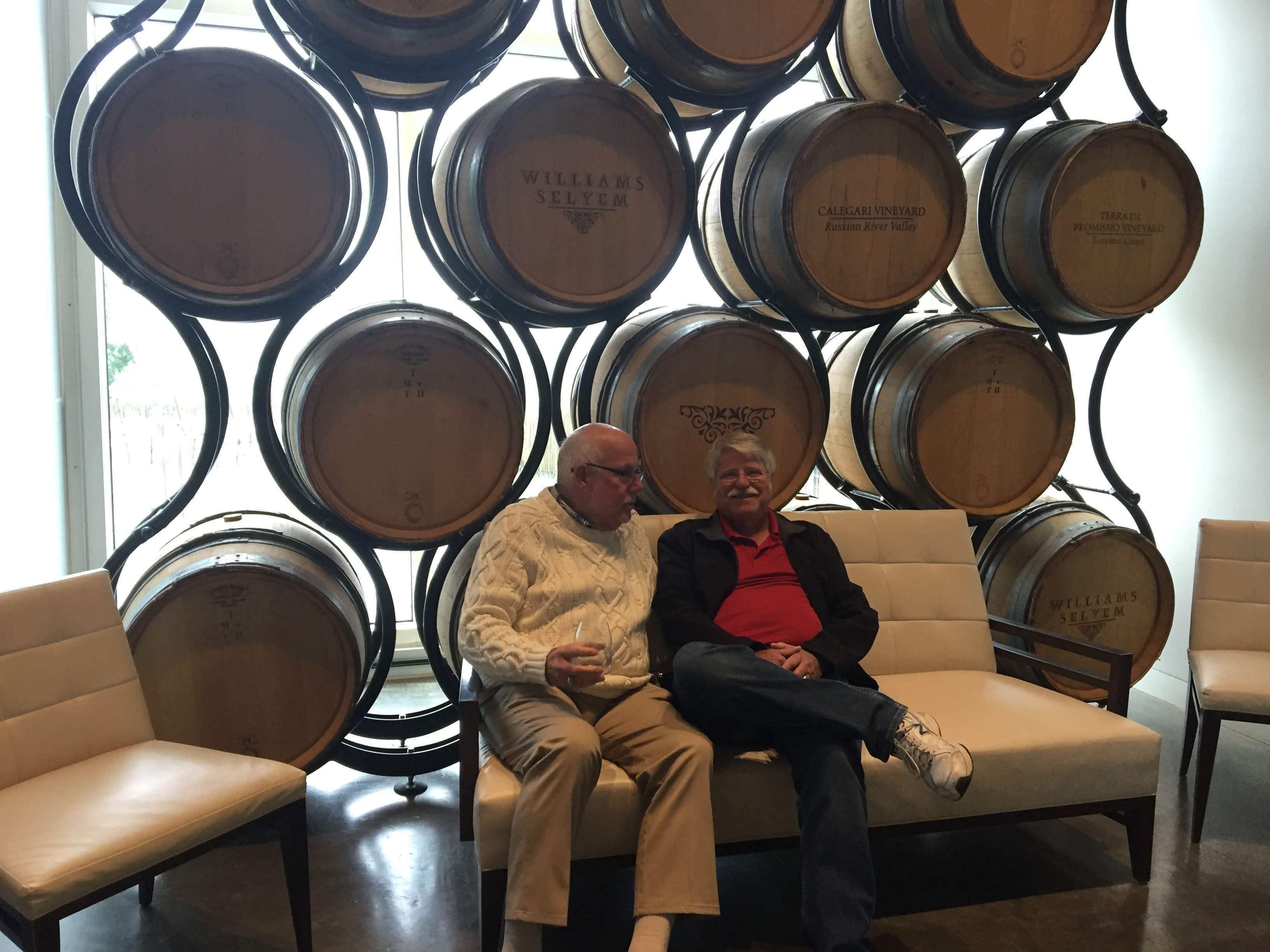
We hurried in to the “Tasting Palace”… We waited for our tour to begin…

img_8900

Out tasting was in this private room atop the winery…

img_8898

We enjoyed the hospitality of the winery staff, tasted many wines, bought a few bottles, and we drove again, in the rain, to Land of Promise…

img_2868img_2867

Land of Promise doesn’t have a tasting palace, or a winery, or a tasting room.  We were invited into the owners’ house, and we sat at their dining room table while they poured glasses of wine for us… The hosts were delightful and charming, and they shared their story about their journey to this Promised Land…

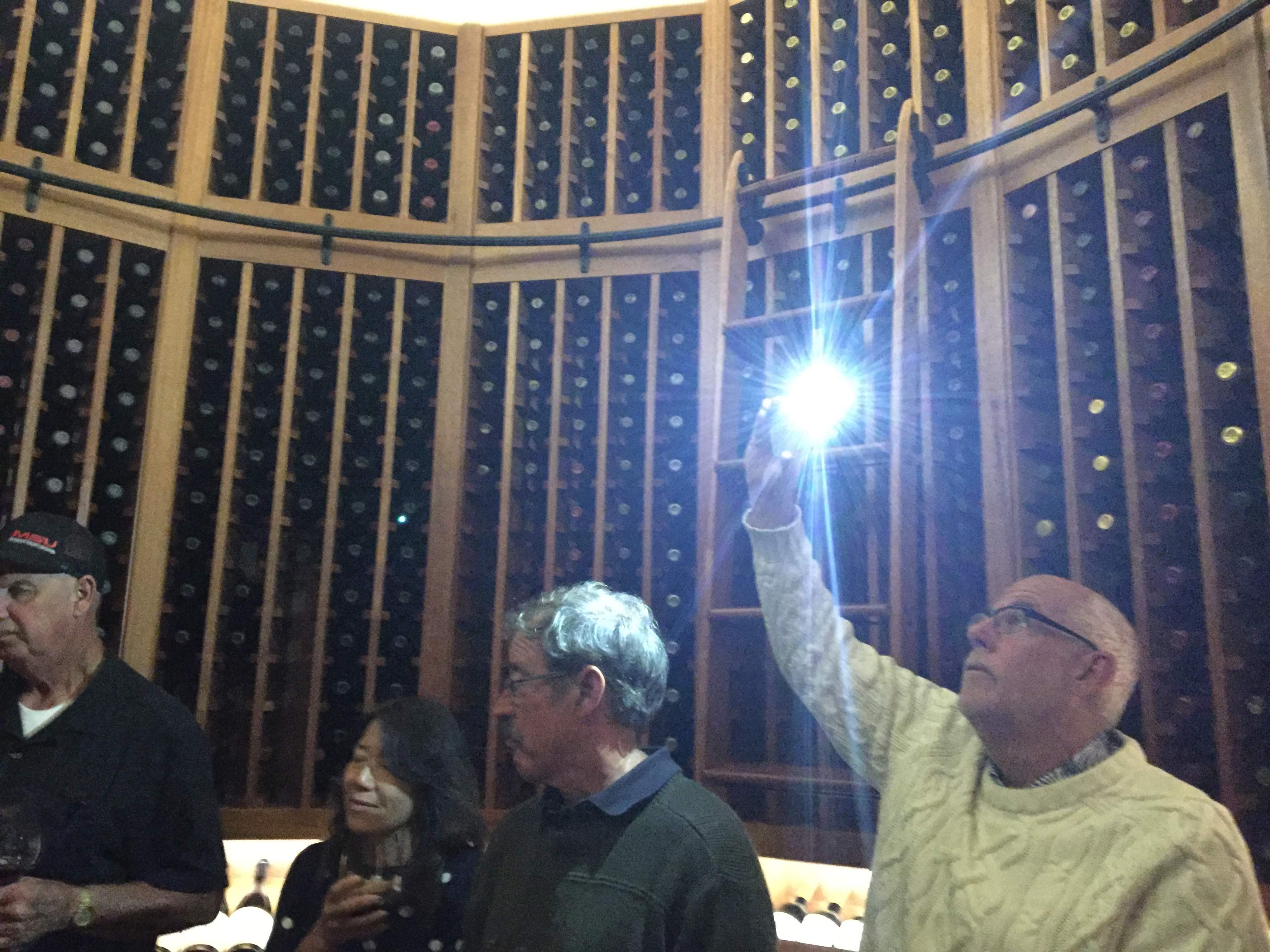
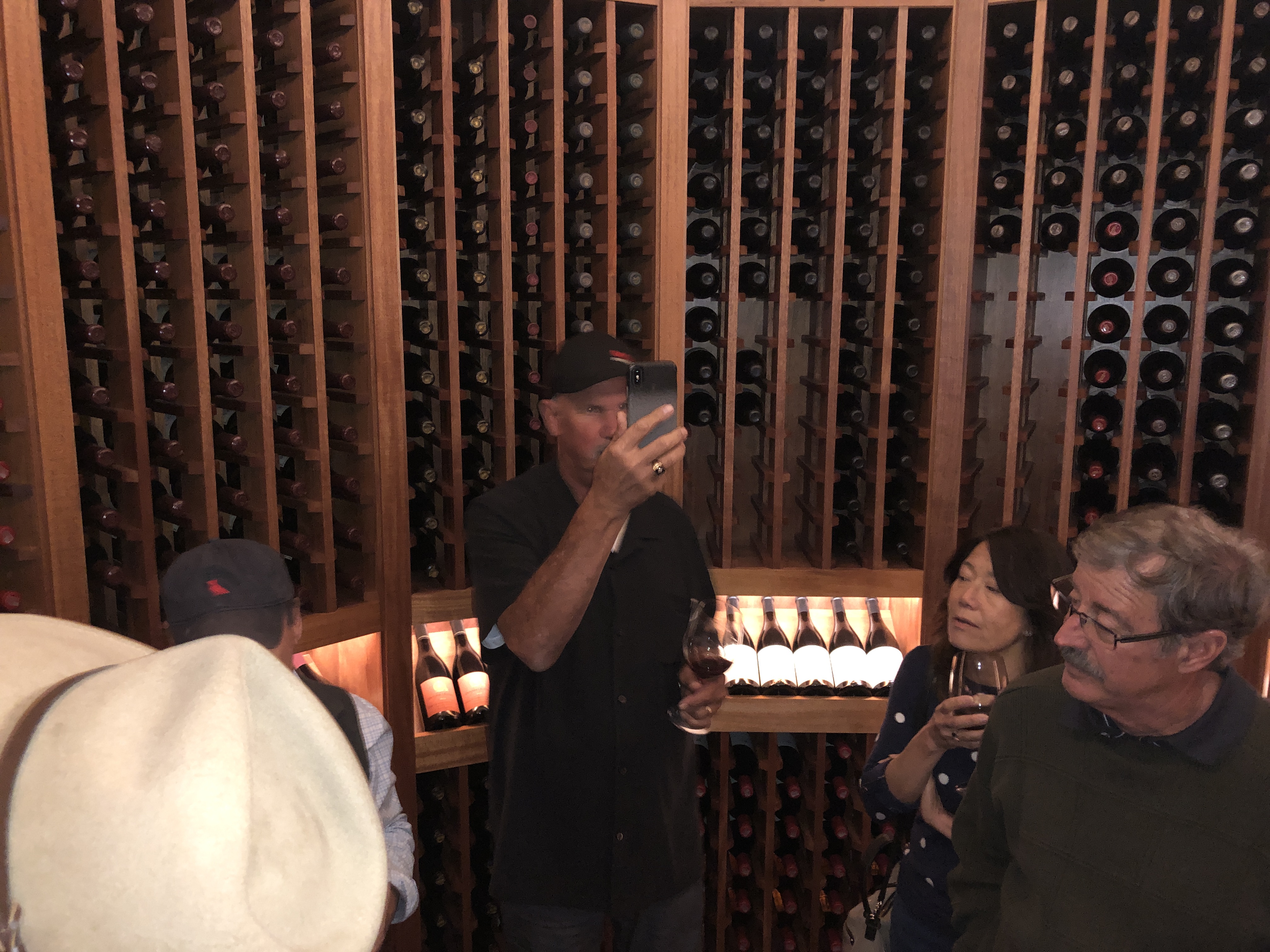
They showed us into their wine cellar, and we tripped over each other trying to get photos…

img_8906

img_8907

img_2862

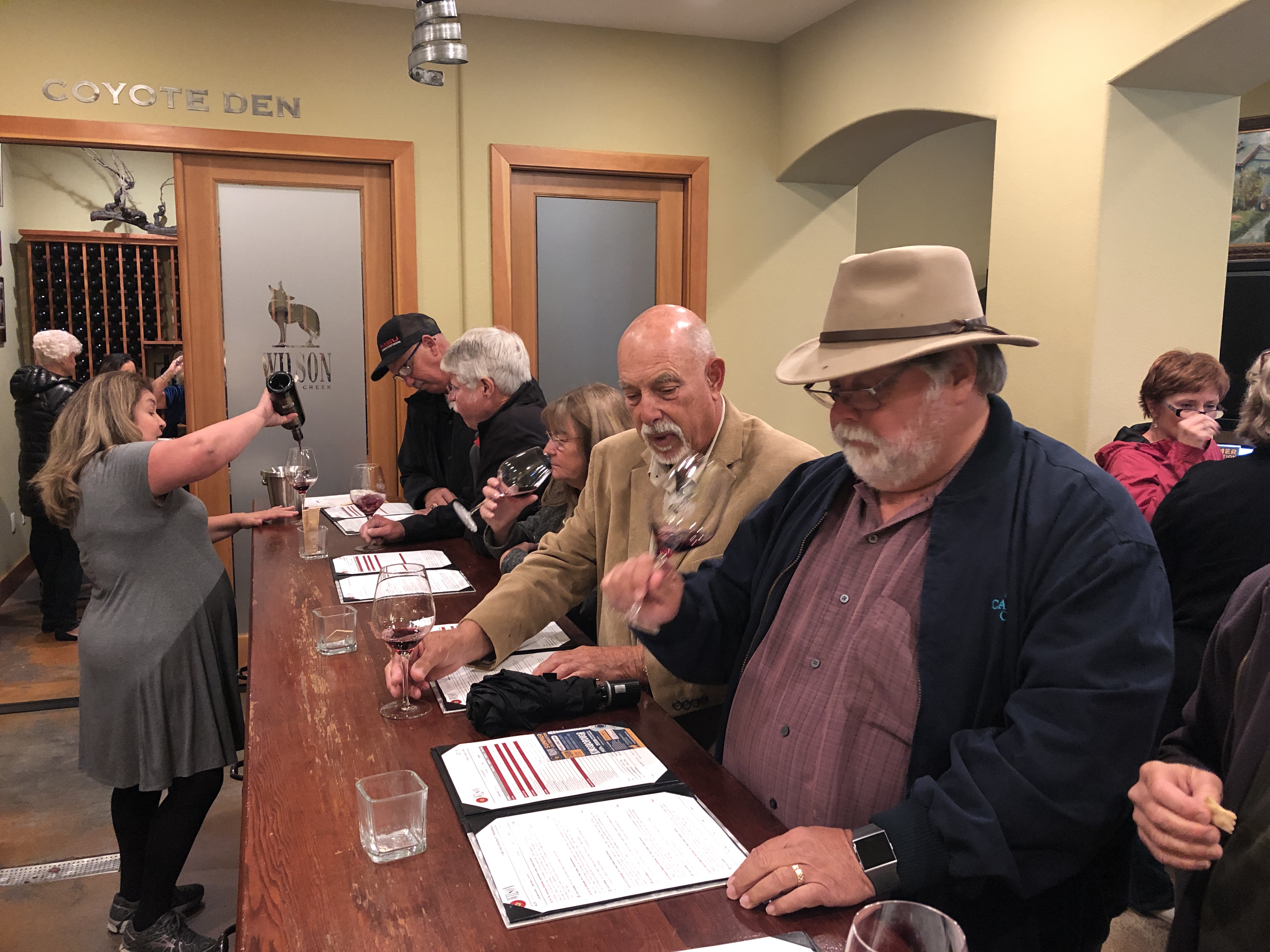
We drove again in the rain to Wilson Artisan Wines…

img_8912img_8913img_2873img_2872

We enjoyed a semi-private tasting area and enjoyed a variety of wines.

Saturday evening the parents of the bride hosted dinner for the Like-minded Friends at a local gourmet burger joint… A lovely time was had by all…

img_8917

Sunday morning Lynda and I headed out for a drive to Anderson Valley, hoping to find a little dry spell where we could put down the top.  No luck.  The rain continued…

img_8921img_8918img_8923

We returned to the B&B and prepared for the wedding, held at the MacRostie Winery.  The rain was beginning to stop…

img_2882img_2883

The wedding went off without a hitch, at least after the bride and her father got untangled from her dress…

img_2884

Before the reception I was able to catch Lynda in her wedding finery…

img_2887

The rain stopped and the setting sun lit up the eastern side of the valley…

img_2892img_2893

The reception was in the large tasting area of the winery…

img_2894img_2896

The hills continued being beautiful…

img_2921img_2926img_2924img_2922

And the sun finally set…

img_2928img_2931

The reception moved to a cocktail lounge in Healdsburg, then we walked back to the B&B…

Monday morning we flew from Oakland to Ontario, and we Ubered home to Redlands.  The trip was uneventful, except that the TSA in Oakland confiscated our lovely parting gifts from the wedding – very nice cork screws.  I hadn’t even taken them out of the goody bag… The good news?  I have others…

On returning home I found out what had been delivered to the house and placed in the wine room during the past 2 months that we have been gone…

img_2932

I had my work cut out for me today…

And an enjoyable time was had by all…

2019-05-15 – Airstream Caravan Travels – Springtime in Kentucky; Shaker Village and Danville, KY – Day #21

Today was our last day of sightseeing on the caravan… It’s all over all too soon…!

We drove about one hour northwest to the town of Danville, KY.  It has been around for a while… On December 4, 1787, the Virginia Legislature established Danville as a town in Kentucky County, Virginia.  Danville became a part of the Commonwealth of Kentucky when the county of Kentucky was carved out of western Virginia to became a state in 1792.

The town boasts being the site of the signing of the Kentucky Constitution.  We saw many old buildings located in the central town square…

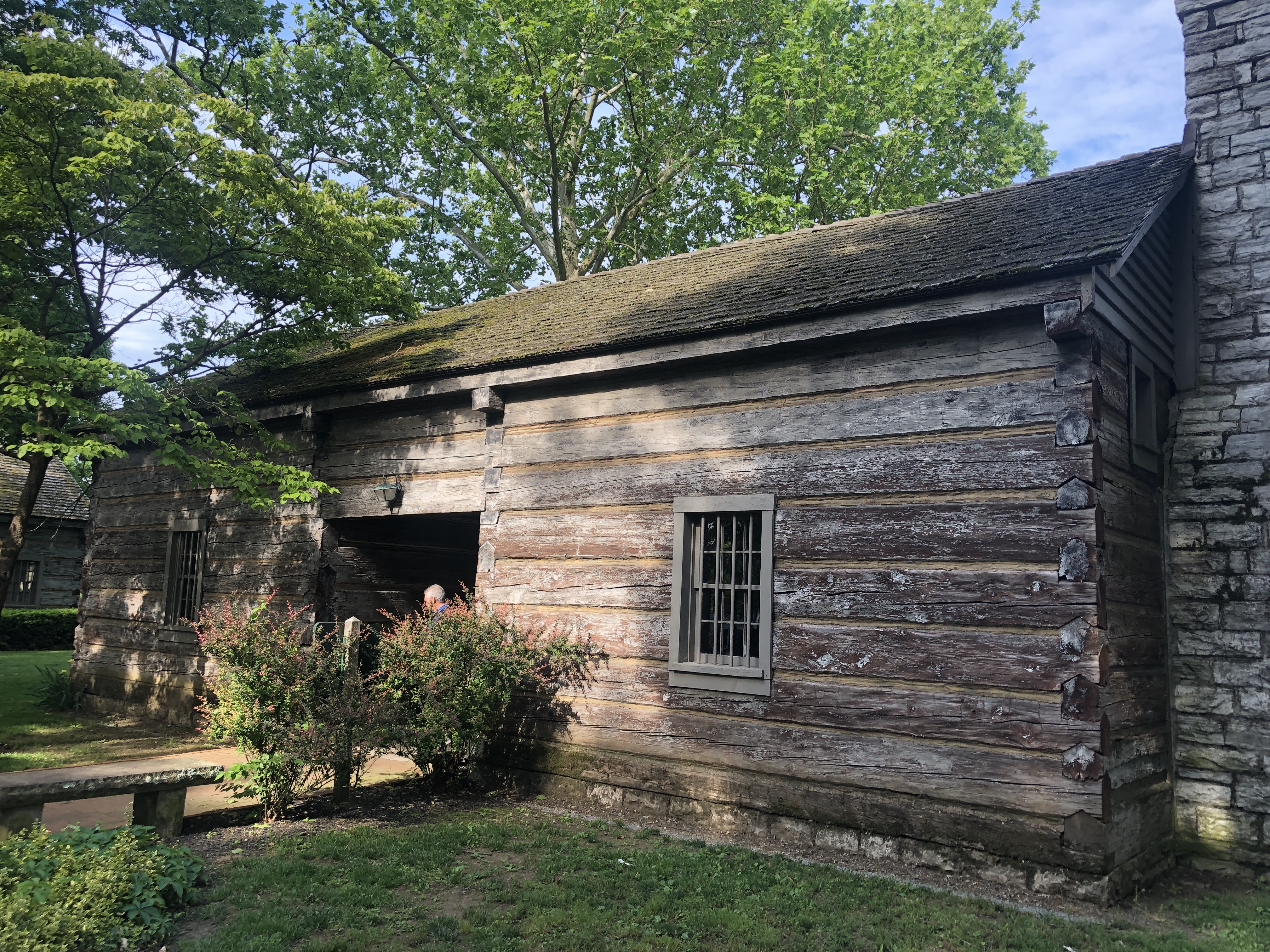
The original Post Office is the first west of the Alleghenies, opened in 1792.
img_2807-1

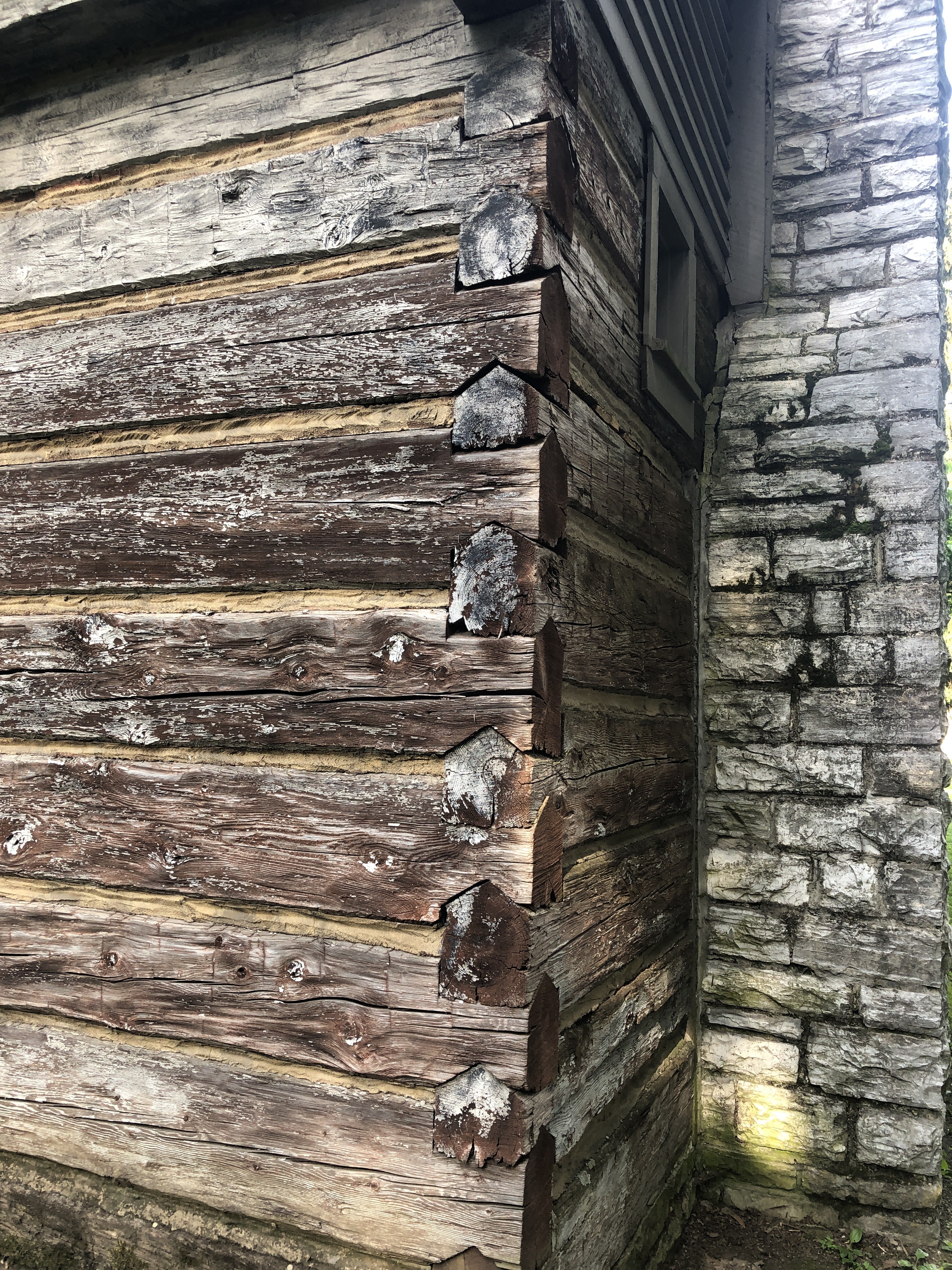
I found the hewn logs to be unique – I have never seen joints like this before…
img_2808

There was also a jail and the courthouse… plus a memorial to all the Kentucky Governors…

But the real reason to come here is to learn about the achievements of Dr. Ephraim McDowell…

Ephraim McDowell (November 11, 1771 – June 25, 1830) was an American physician and pioneer surgeon.

McDowell was born in Rockbridge County, Virginia, the ninth child of Samuel and Mary McDowell.  His father, Samuel, was appointed land commissioner and moved his family to Danville, Kentucky.  There, he presided over ten conventions that resulted in the drafting of the Kentucky Constitution.

In 1802, Ephraim McDowell married Sarah Shelby, daughter of Isaac Shelby, war hero and twice governor of Kentucky.  They had nine children, but only one son and four daughters survived into adulthood.

On December 13, 1809, McDowell was called to see Jane Todd Crawford in Green County, Kentucky, 60 miles from Danville.  Her physicians thought that Mrs. Crawford was beyond term pregnant.  McDowell diagnosed an ovarian tumor.  Crawford begged him to keep her from a slow and painful death.  He then described her condition and that an operation for cure had never been performed.  He said that the best surgeons in the world thought it impossible.  Crawford said she understood and wanted to proceed.  McDowell told her he would remove the tumor if she would travel to his home in Danville.  She agreed and rode the sixty miles on horseback.

On Christmas morning, 1809, McDowell began his operation.  The surgery was performed without benefit of anesthetic or antisepsis, neither of which was then known to the medical profession.  The tumor McDowell removed weighed 22.5 pounds.  He determined that it would be difficult to remove completely, so he tied a ligature around the fallopian tube near the uterus and cut open the tumor.  He described the tumor as the ovarium and fimbrious part of the fallopian tube very much enlarged.  The whole procedure took 25 minutes.  Crawford made an uncomplicated recovery.  She returned to her home in Green County 25 days after the operation and lived another 32 years (outliving Dr. McDowell…).  This was the first successful removal of an ovarian tumor in the world.

All previous attempts at abdominal exploration before 1809 had resulted in peritonitus and death.  Descriptions of McDowell include phrases like “neat and clean” or “scrupulously clean.”  He was not only neat, but meticulous.  In his report on the operation, he described the removal of blood from the peritoneal cavity and bathing the intestines with warm water.

McDowell did not publish a description of his procedure until 1817, after he had performed two more such operations.  This was widely criticized in the English surgical literature.  There is evidence that he performed at least twelve operations for ovarian pathology.  (None of these patients is alive today…)

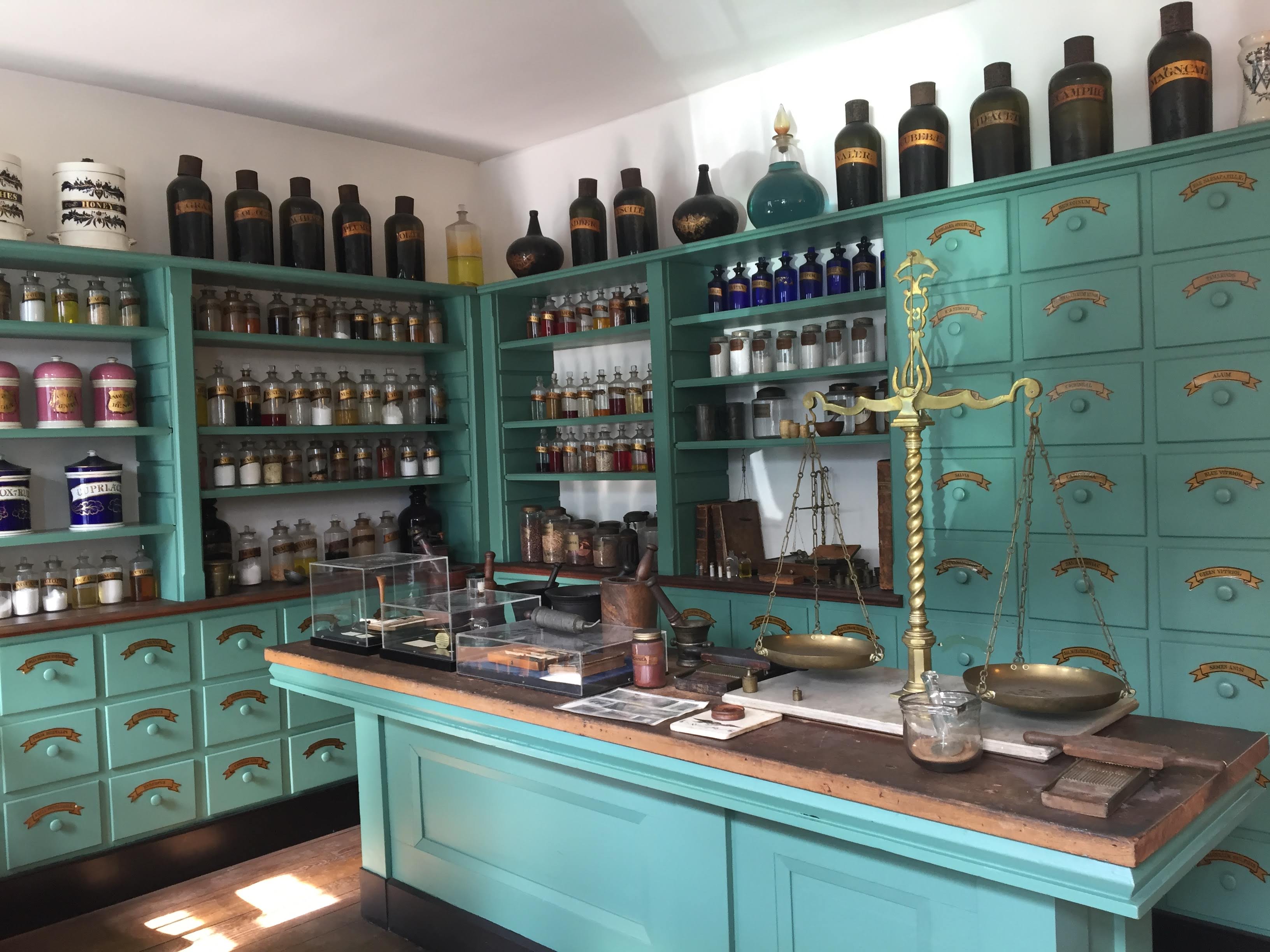
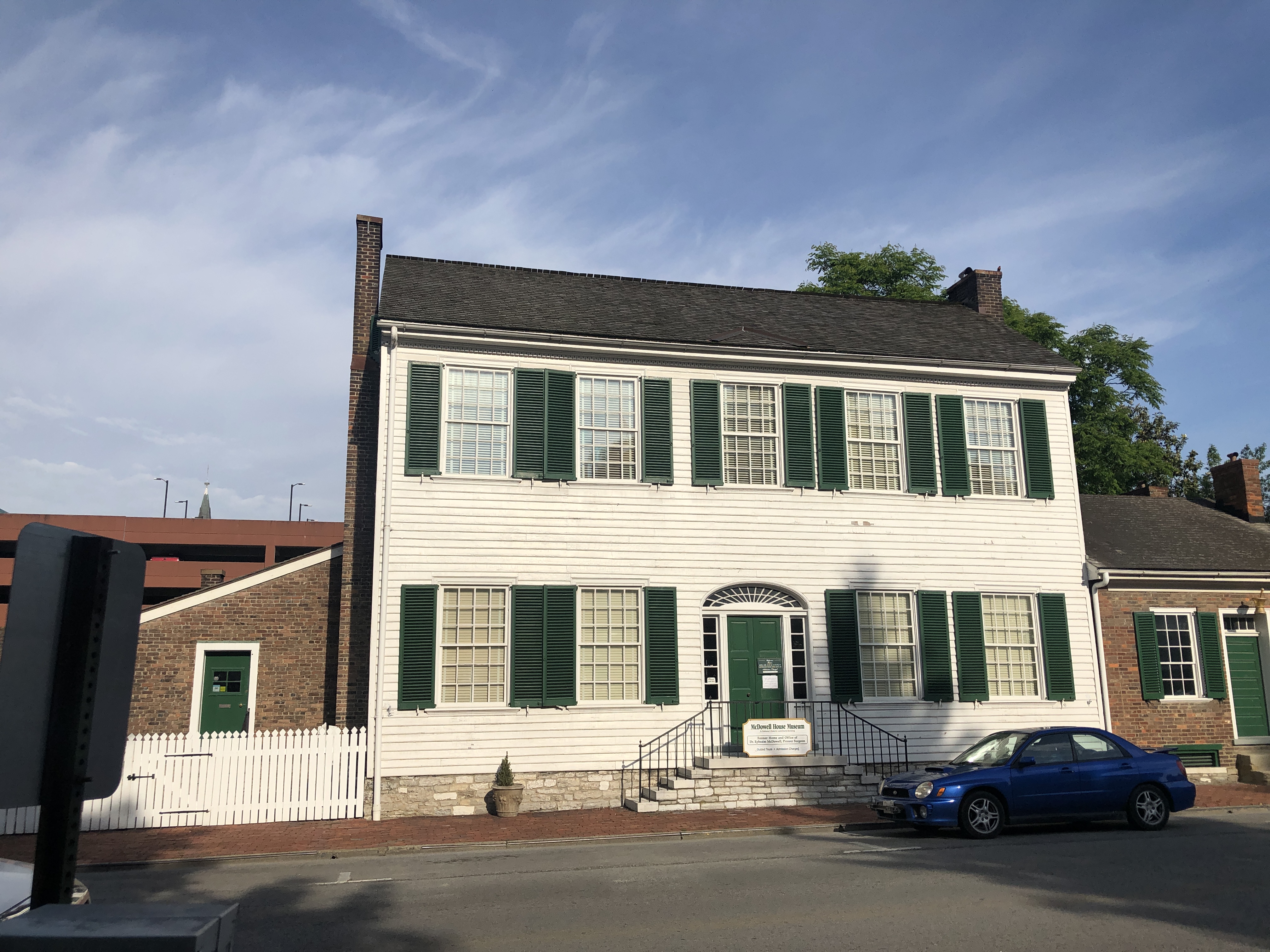
So we visited Dr. McDowell’s house and office and pharmacy…

The house is pretty typical for the late 18th and early 19th century, at least for wealthy, well-connected professionals living in a thriving city…
img_2797

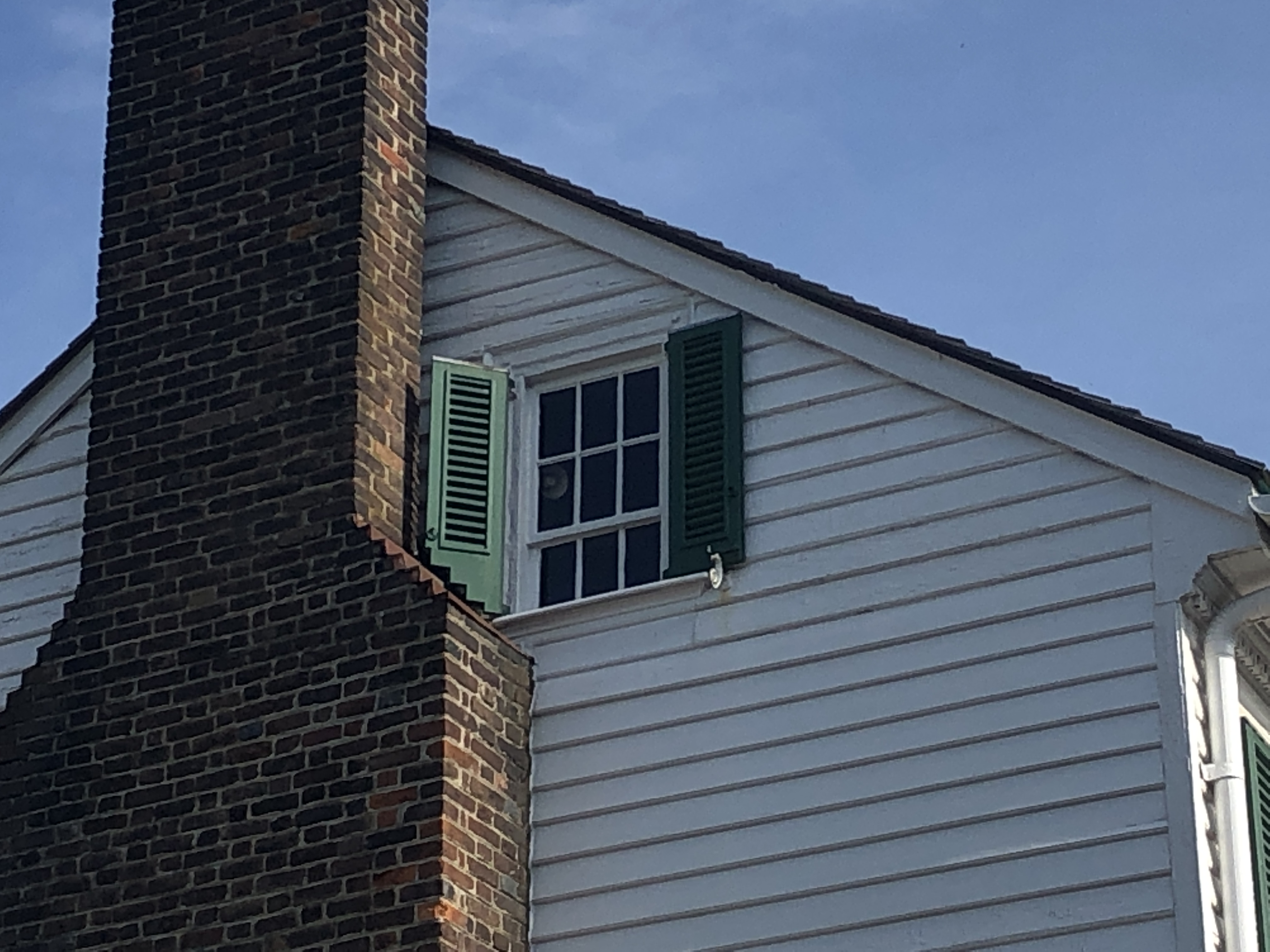
I particularly liked the custom shutter at the attic window…
img_2814

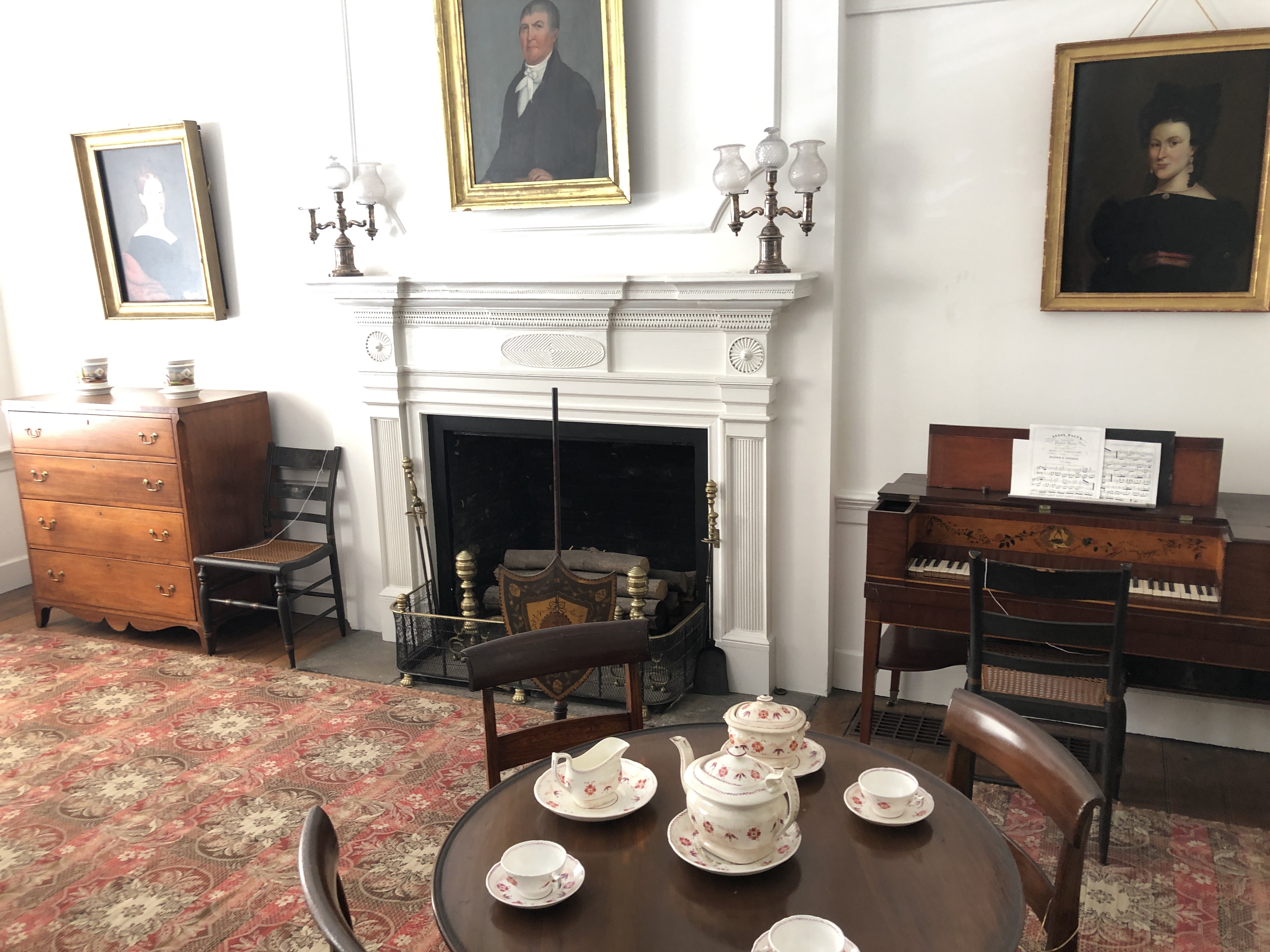
The Living Room…

img_2819

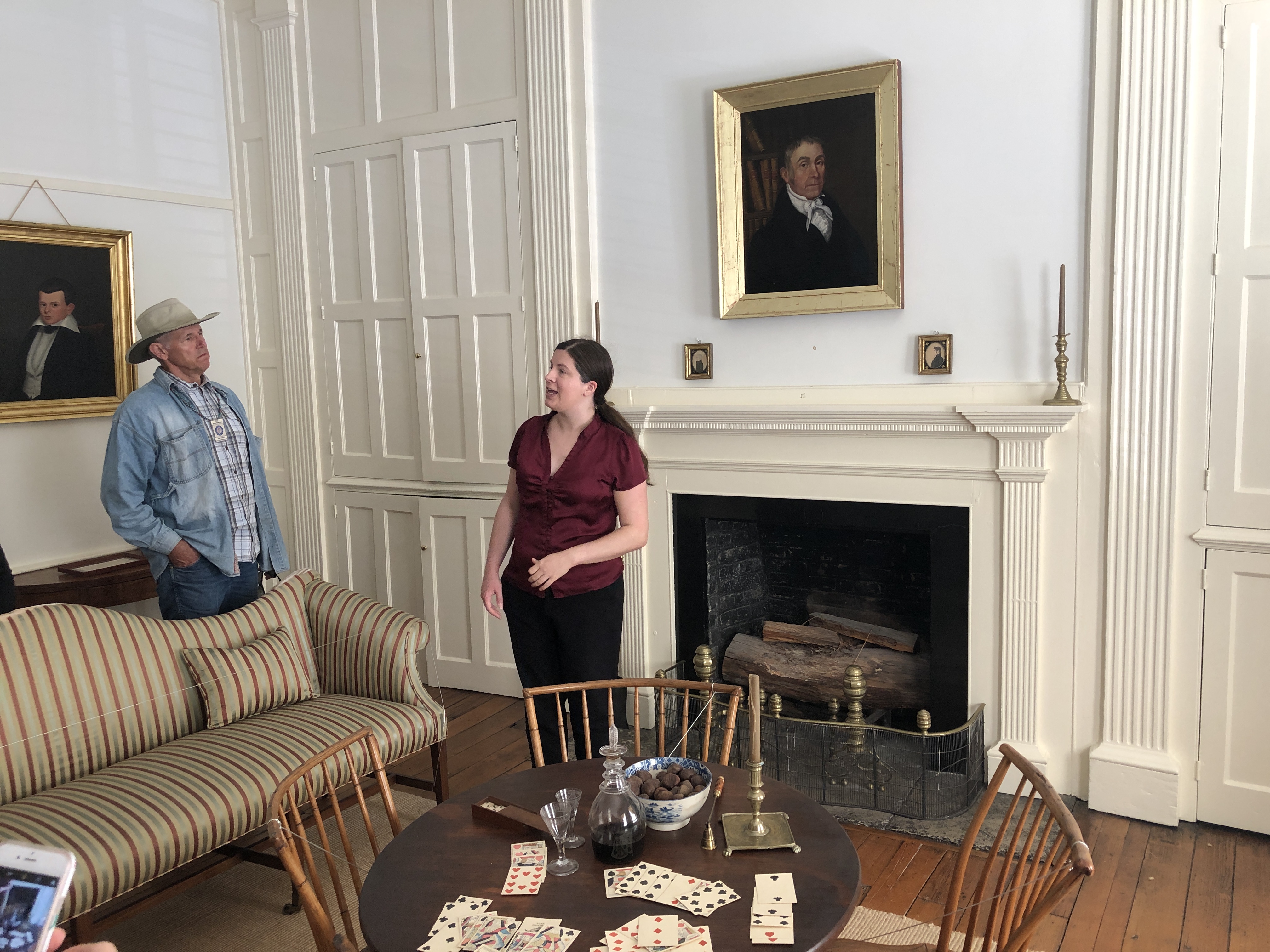
The Study and Men’s Lounge…

img_2818

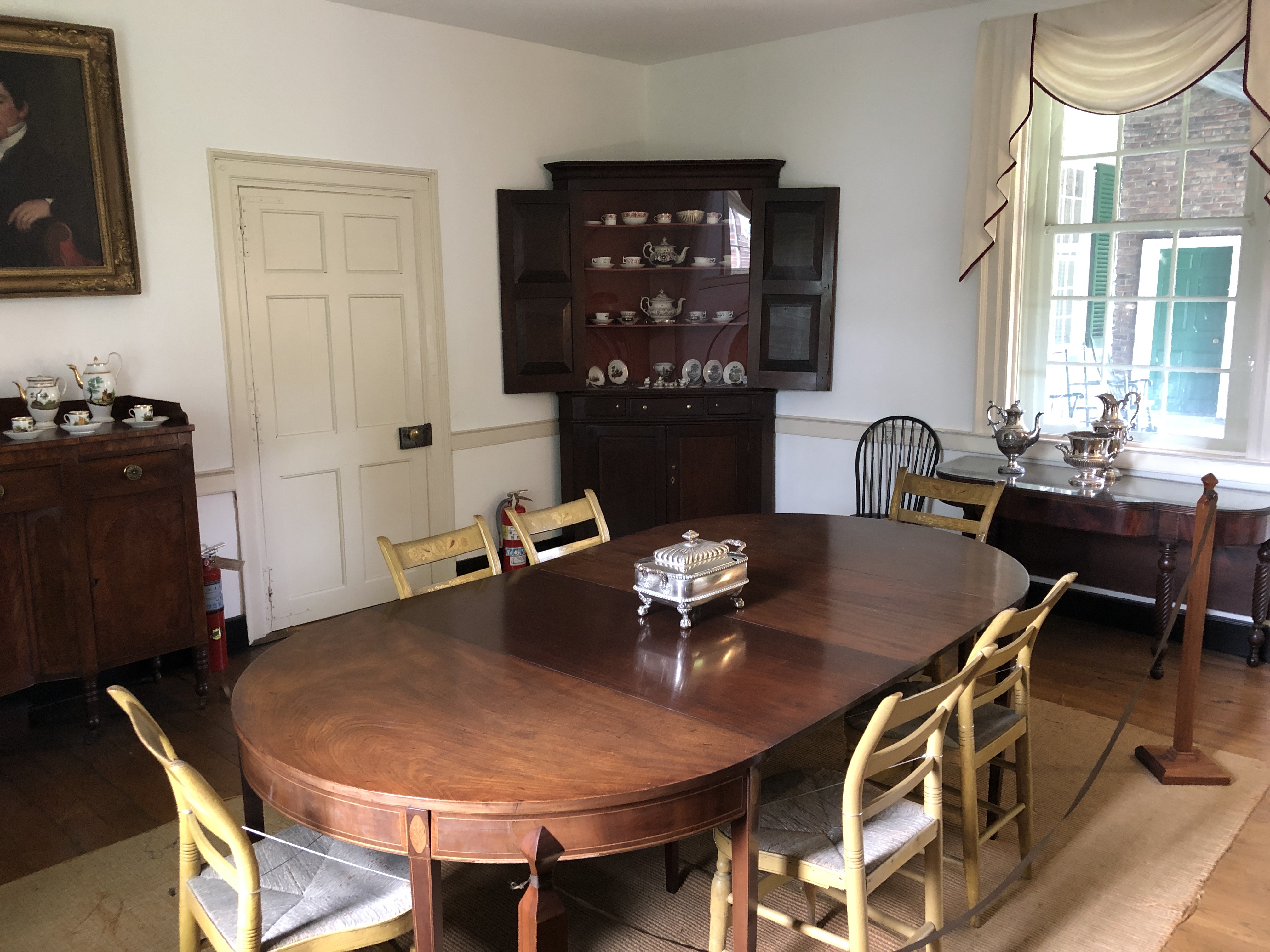
The Dining Room…

img_2825

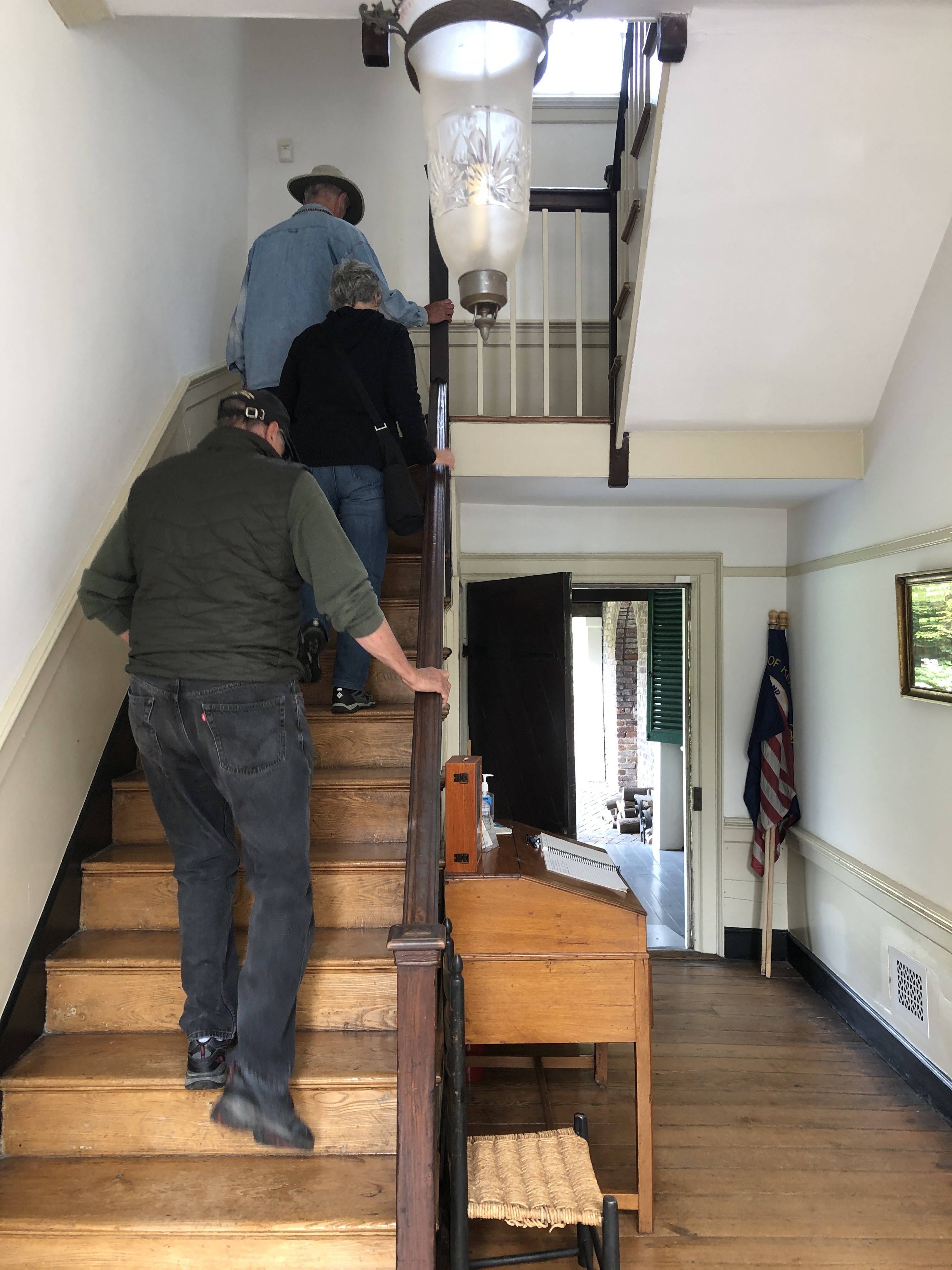
Climbing the stairs…

img_2821

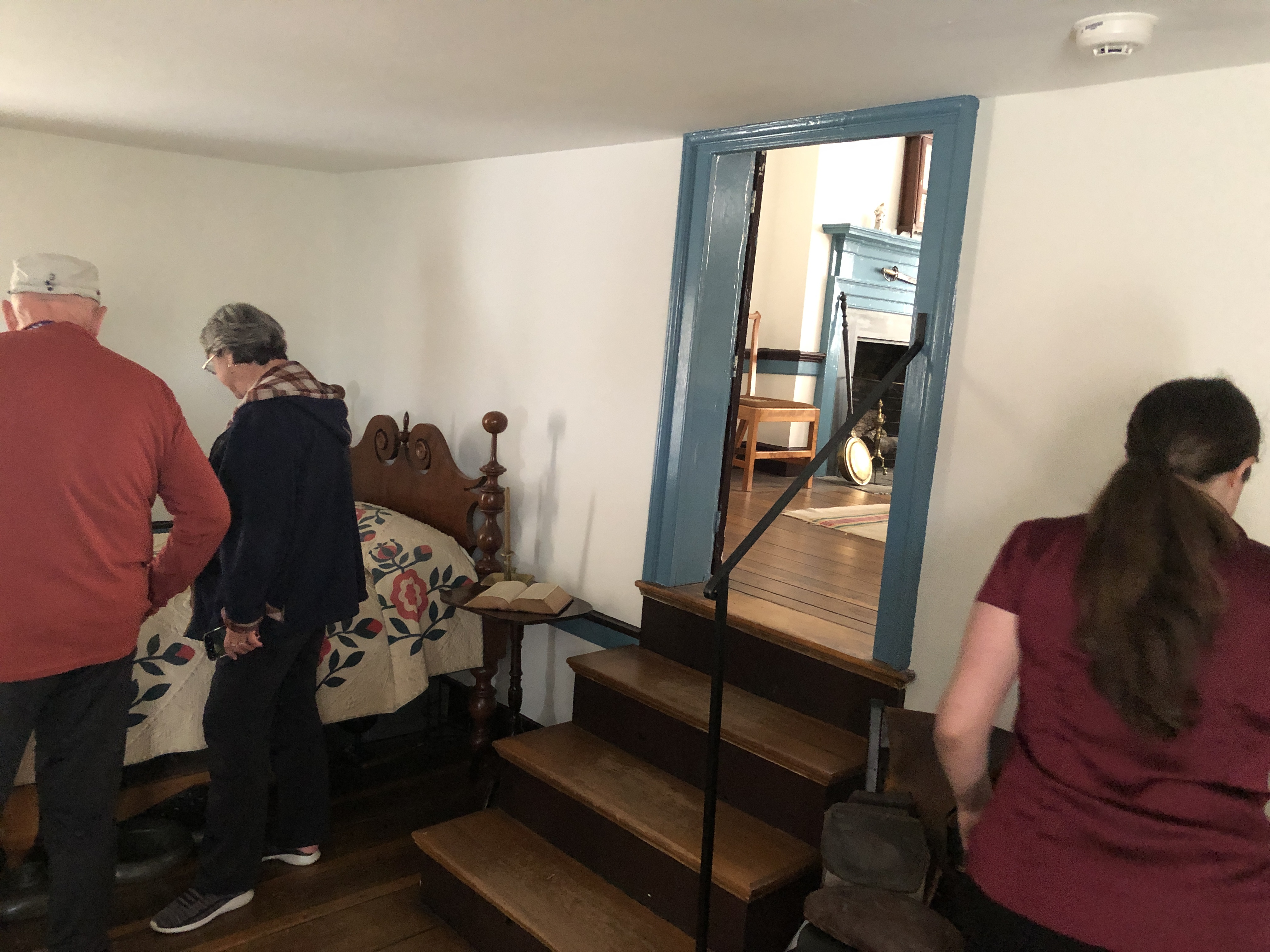
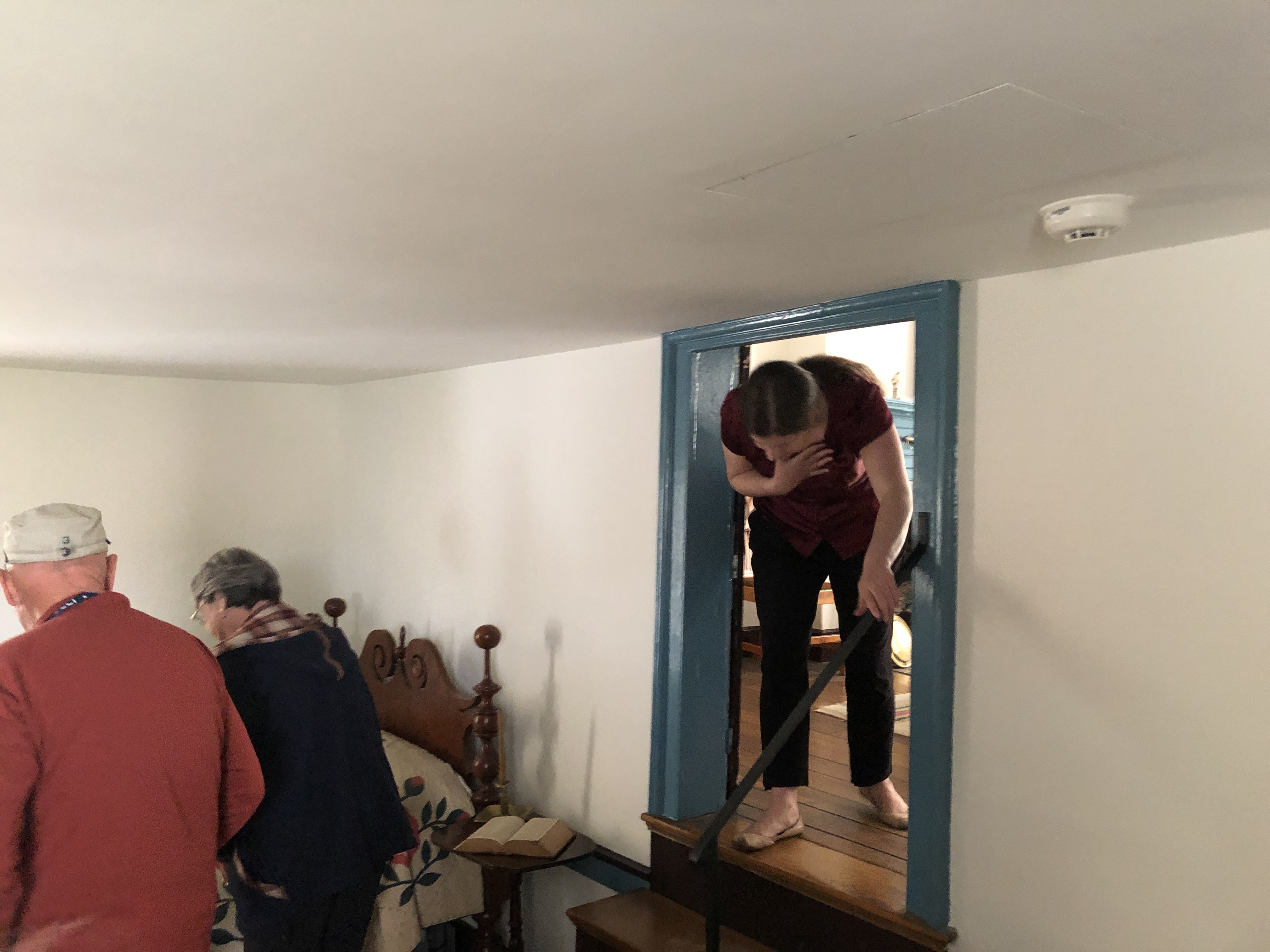
A unique doorway between bedrooms…

img_2824img_2822

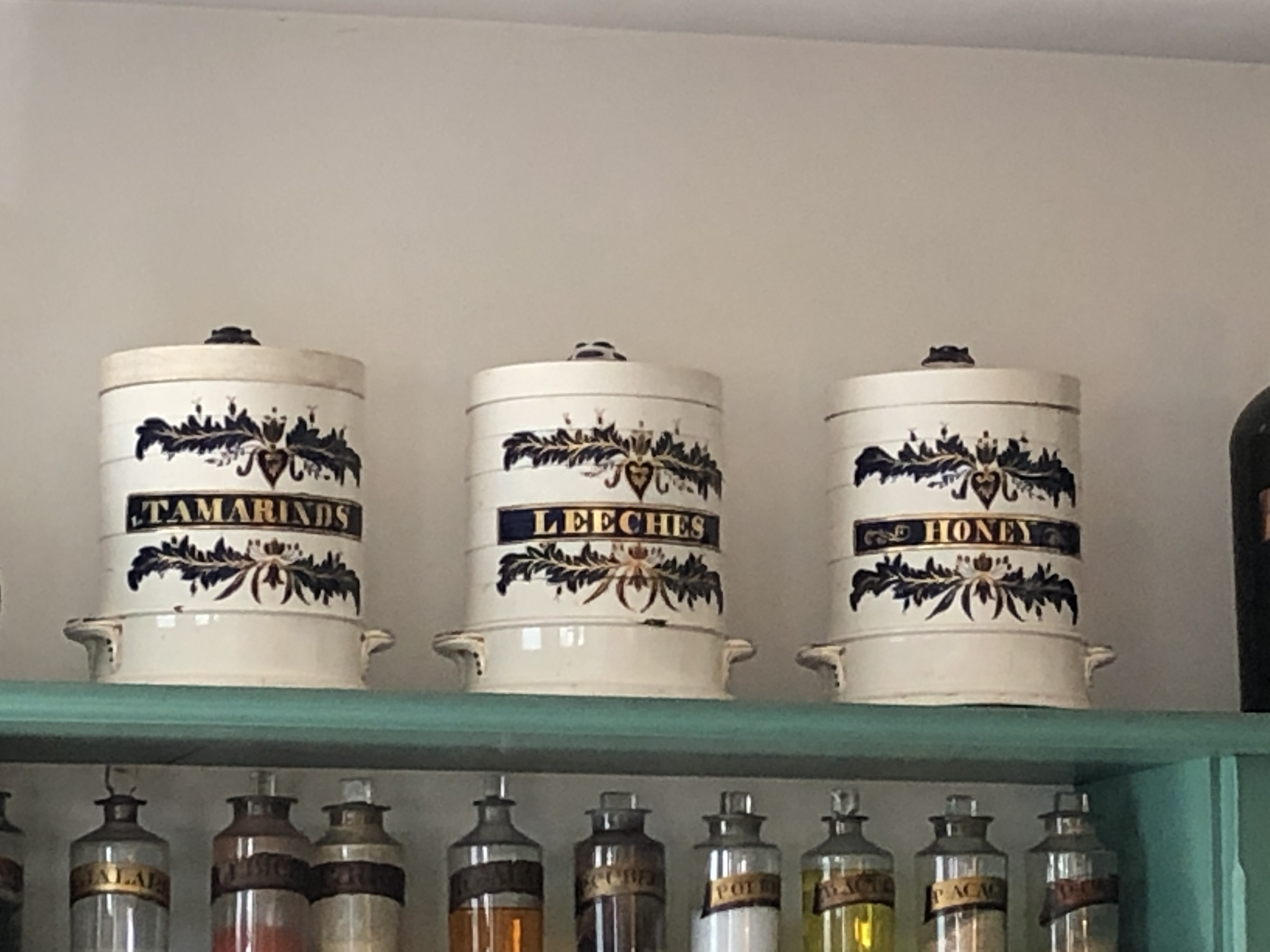
The Pharmacy…

img_8822

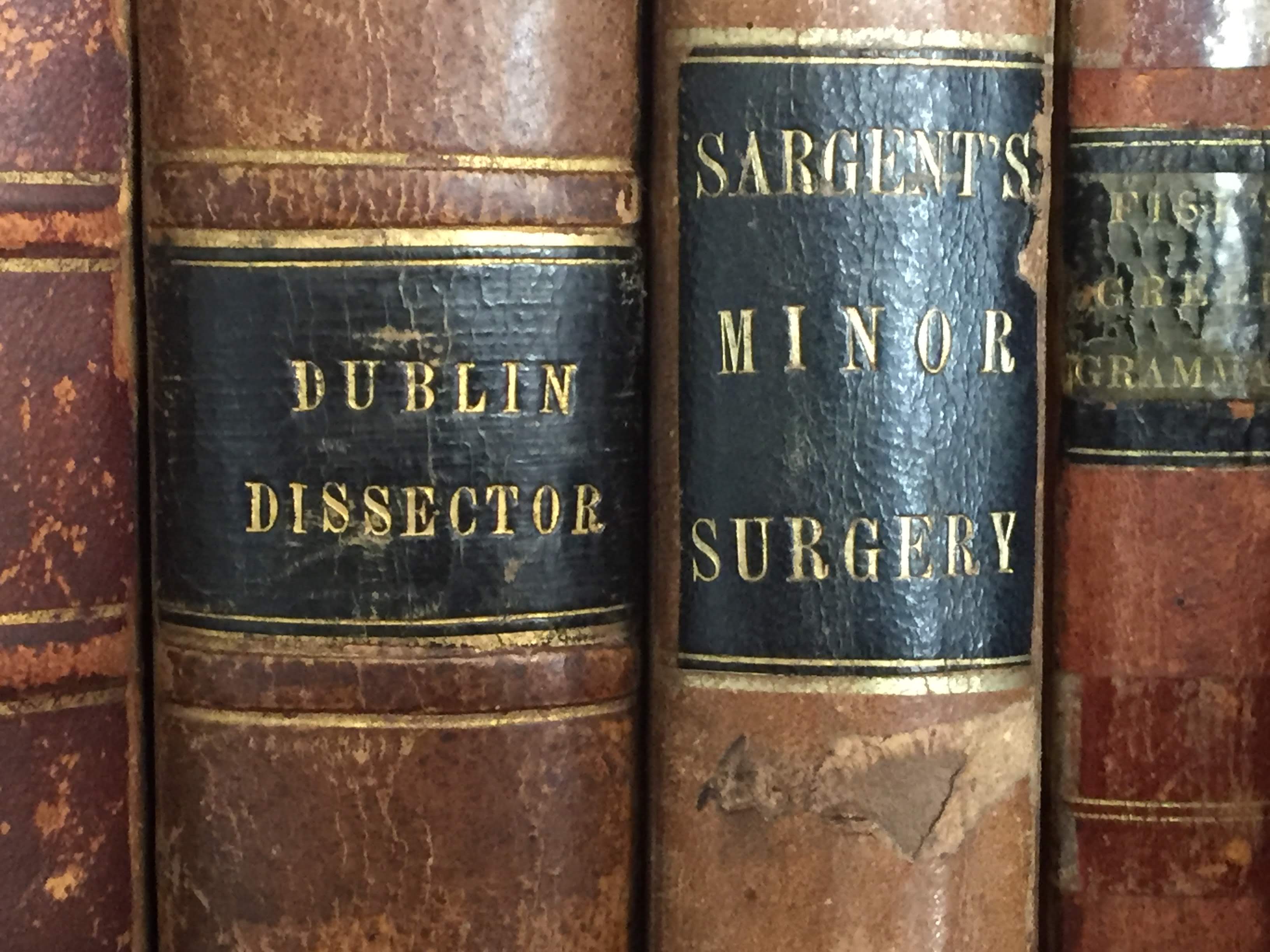
Medical books…

img_8829

A good supply of leeches is conveniently on hand…
img_2815

It was an interesting look at the medical profession of 200 years ago…

One hundred years later, in 1910, Abraham Flexner wrote The Flexner Report; it is the most important event in the history of American and Canadian medical education.  It was a commentary on the condition of medical education in the early 1900s and gave rise to modern medical education.

Abraham Flexner was not a doctor but was a secondary school teacher and principal for 19 years in Louisville, Kentucky.  Flexner then took graduate work at Harvard and the University of Berlin and joined the research staff of the Carnegie Foundation for the Advancement of Teaching.  For the Carnegie Foundation, Flexner researched, wrote and in 1910 published a report entitled “Medical Education in the United States and Canada.” It is known today as the Flexner Report.

The Flexner Report triggered much-needed reforms in the standards, organization, and curriculum of North American medical schools.  At the time of the Report, many medical schools were proprietary schools operated more for profit than for education.  Flexner criticized these schools as a loose and lax apprenticeship system that lacked defined standards or goals beyond the generation of financial gain.  In their stead Flexner proposed medical schools in the German tradition of strong biomedical sciences together with hands-on clinical training.  The Flexner Report caused many medical schools to close down and most of the remaining schools were reformed to conform to the Flexnerian model.

How did this reform take place?

Abraham Flexner’s brother, Simon, became the first director of Laboratories at The Rockefeller Institute (now Rockefeller University), in 1901.  The Institute was founded by John D. Rockefeller.  Greatly elevating the prestige of American science and medicine, it was America’s first biomedical institute, like France’s Pasteur Institute (1888) and Germany’s Robert Koch Institute (1891).

As the first director of laboratories, Simon Flexner supervised the development of research capacity at the Institute, whose staff made major discoveries in basic research and medicine.  While a student at Johns Hopkins University, Flexner had studied under the Institute’s first scientific director, William H. Welch, first dean of Hopkins’ medical school and known as the dean of American medicine.

These developments lead John D. Rockefeller and his son, “Junior”, to finance the reform and re-invention of medical schools in America.  Any medical school that agreed to follow the rigorous model set by Johns Hopkins would receive funding from the Rockefellers… We owe this philanthropy for the status of today’s medical schools…

Had enough medical talk?

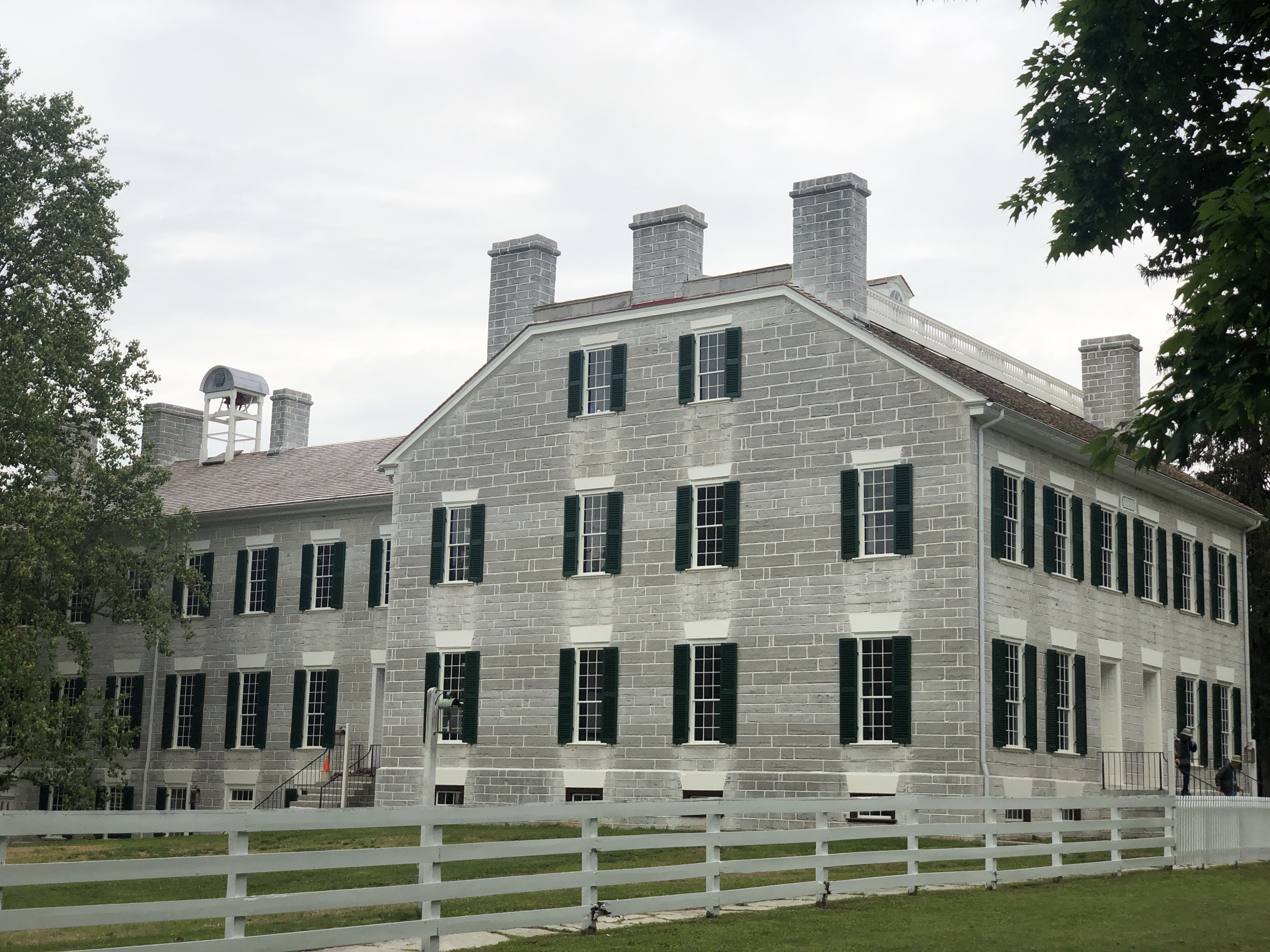
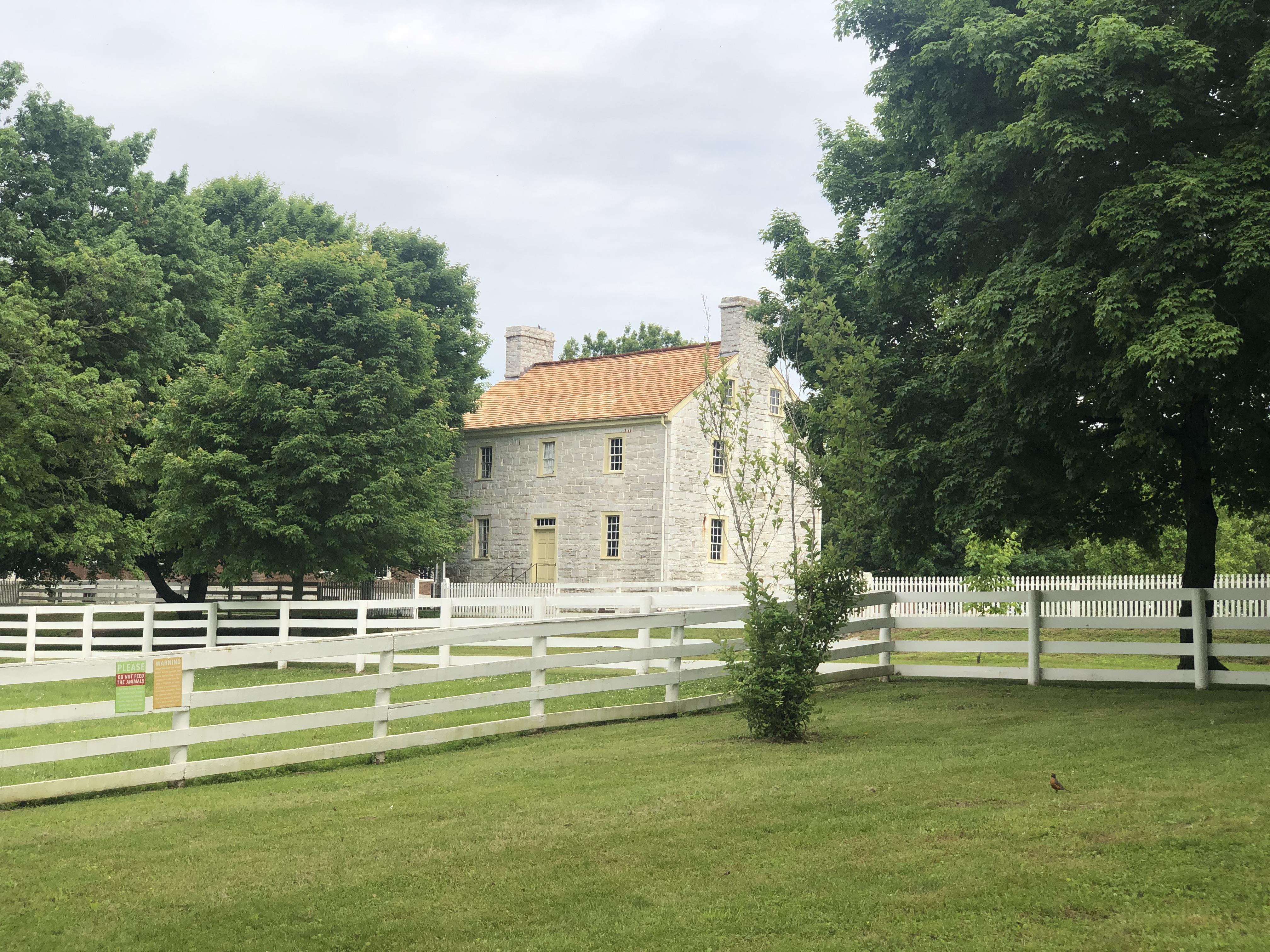
After Danville we drove a few miles north to The Shaker Village at Pleasant Hill.  It is a beautifully preserved and restored village of over 200 buildings on 3,000 acres.
img_2827img_8831img_8832img_2828img_2829img_2830

Of course, we started with lunch…

img_2832img_2833img_2834

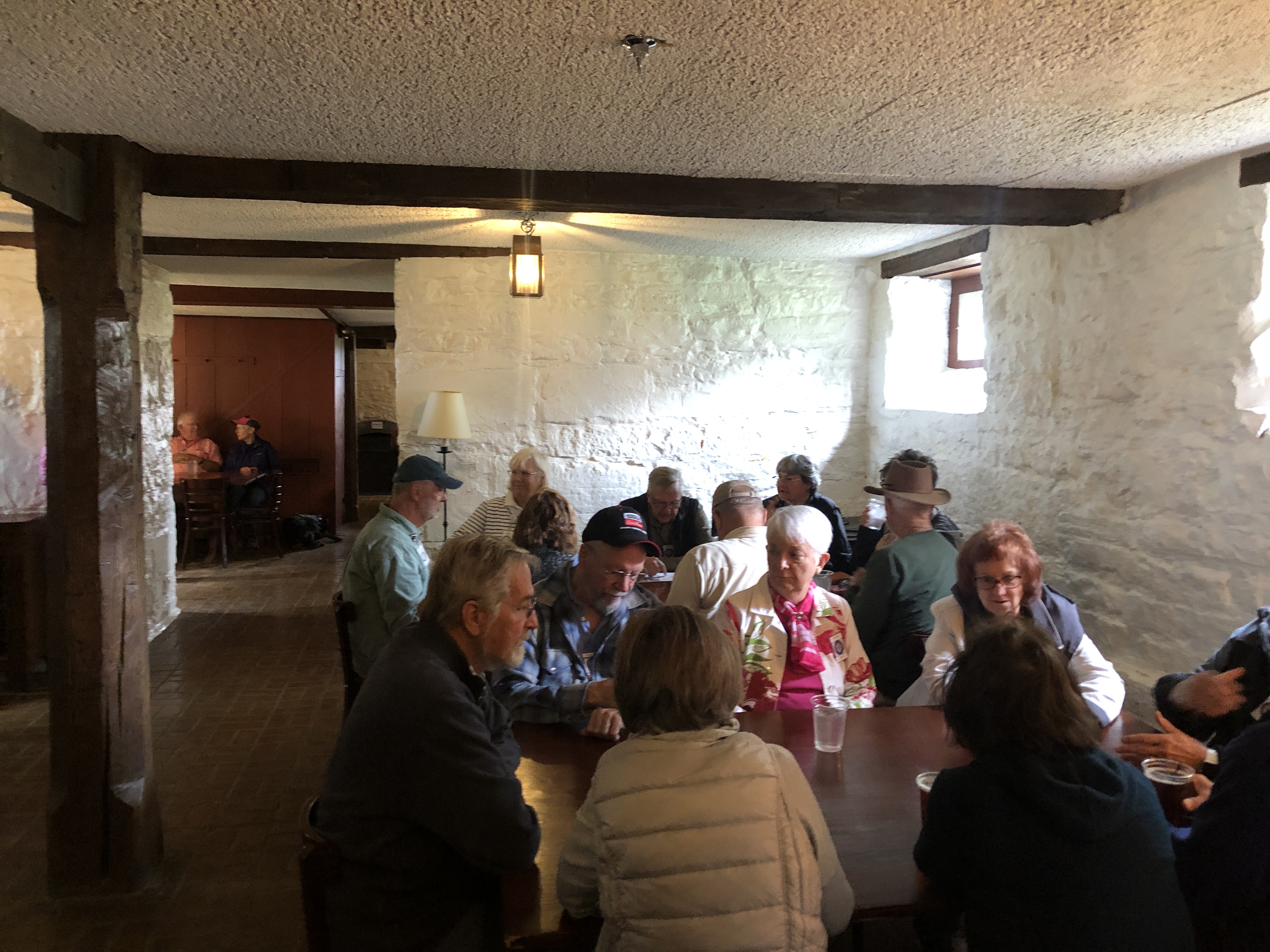
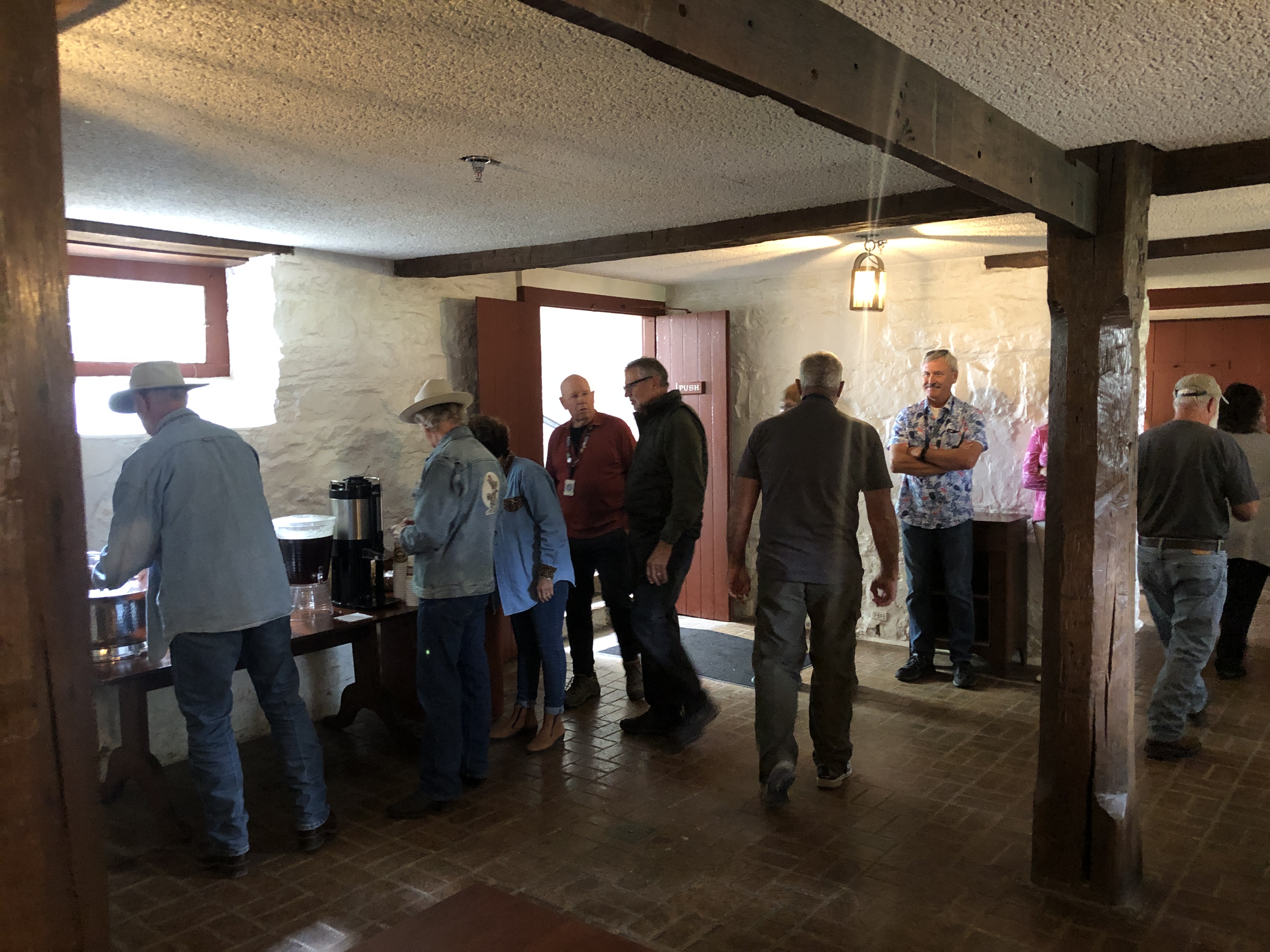
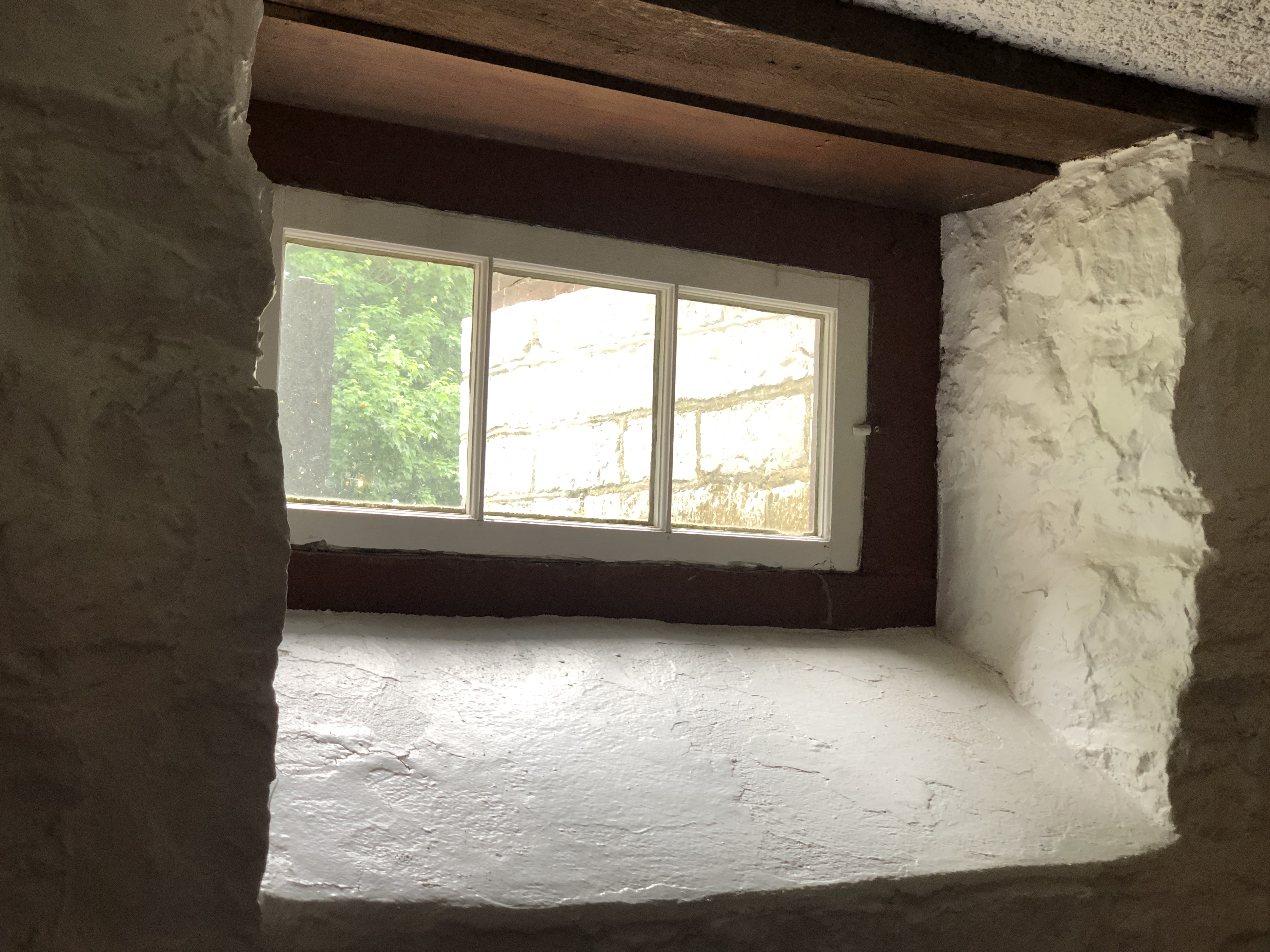
Our lunch was in the basement of this 200 year old building… Beautiful stonework…
img_2836

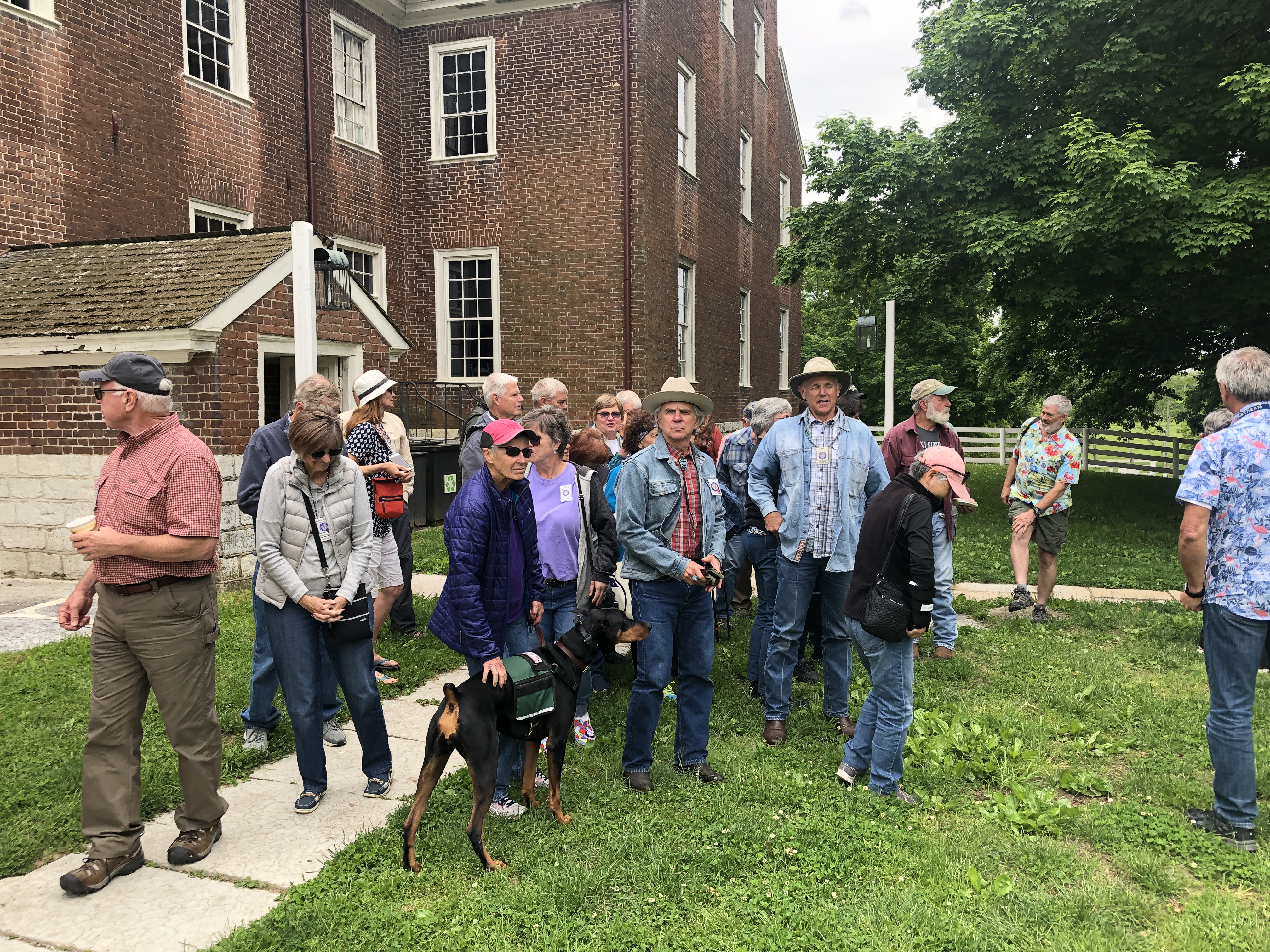
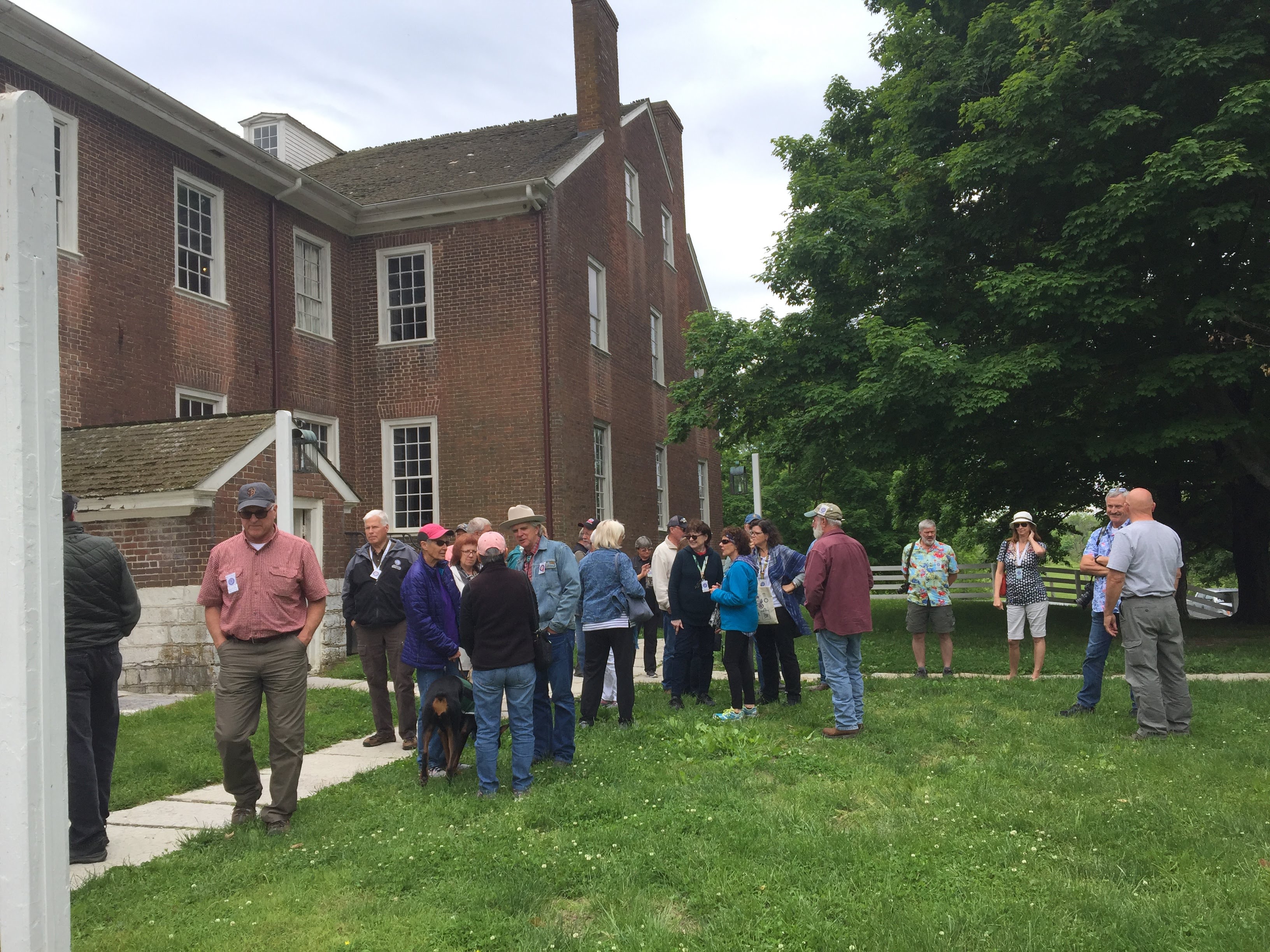
After lunch we took a group photo and were given a tour of the buildings; we heard about the history of Shakers in general, and this property in particular…
img_2838img_8839

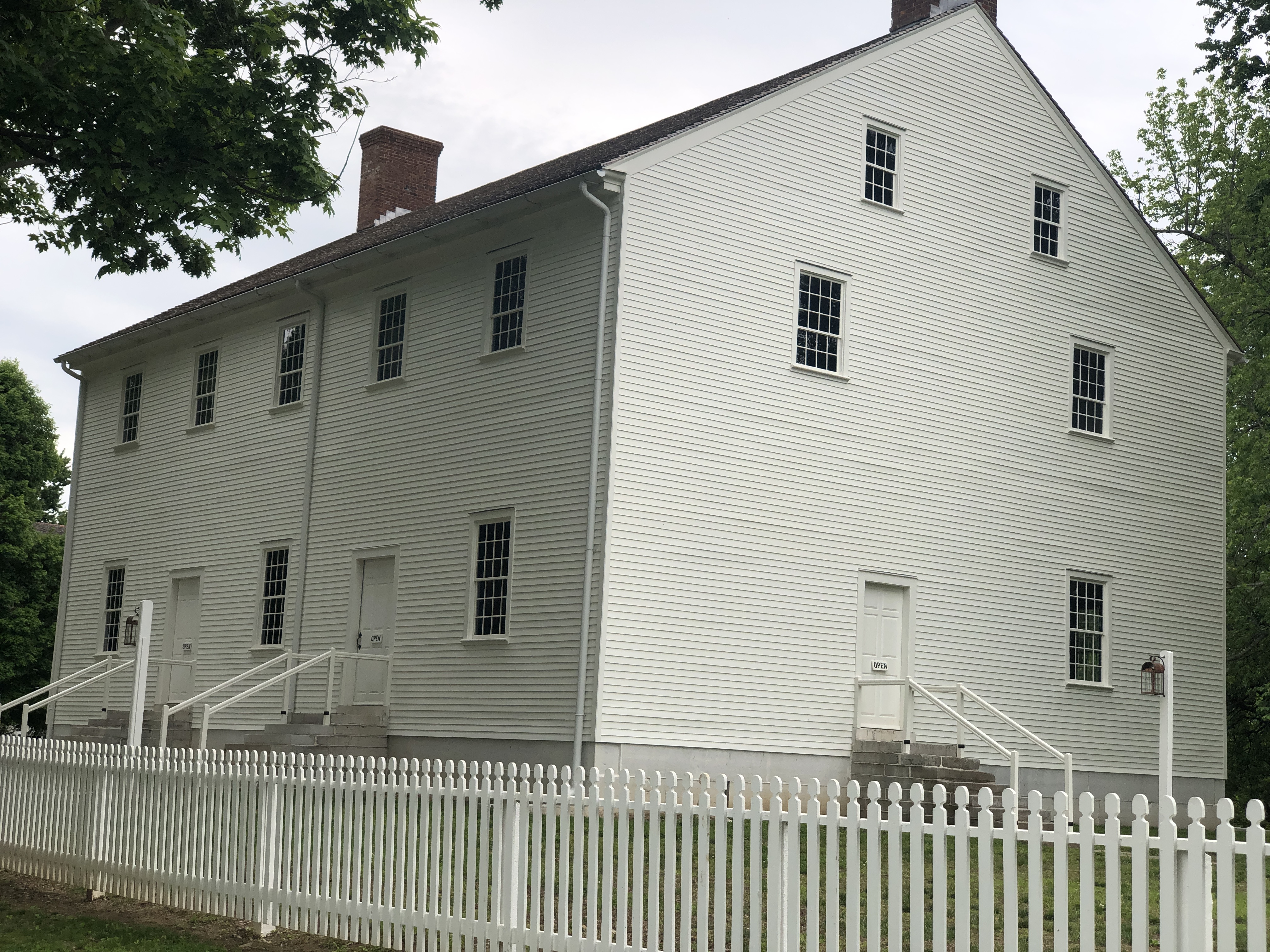
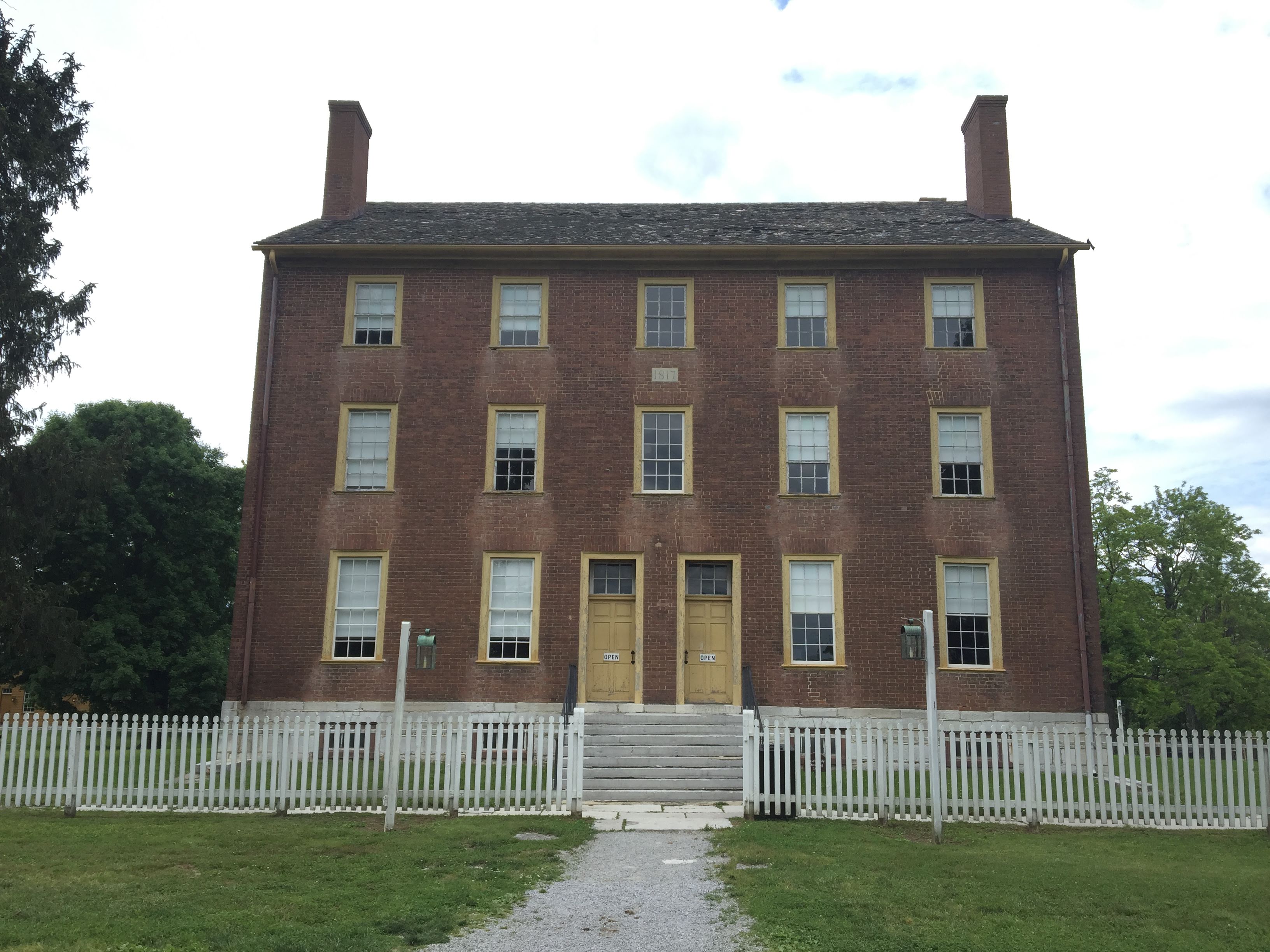
Notice the entry doors on these buildings:
img_8856

img_2841img_2840

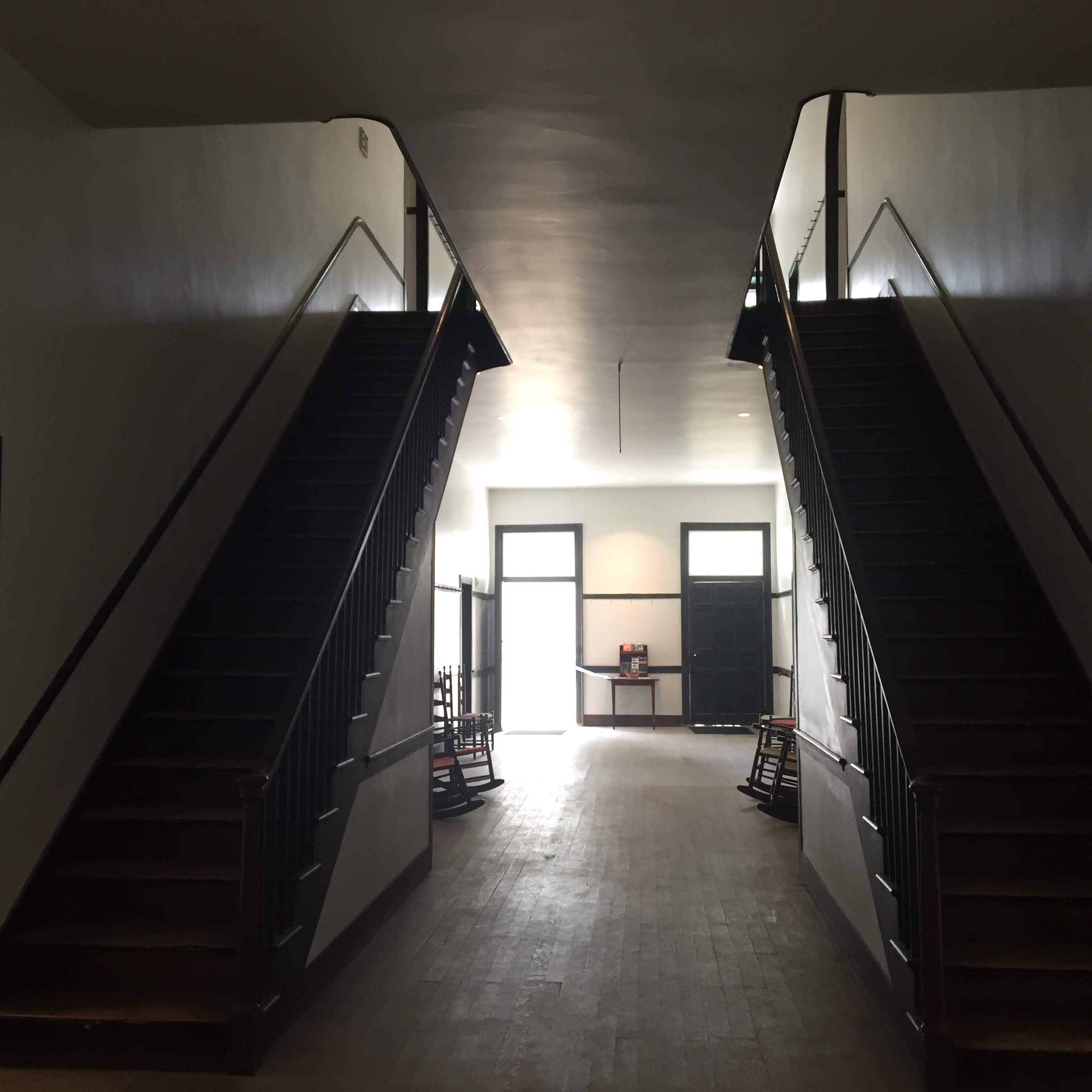
There are two entry doors – one for men and one for women.  Inside the entry hall you see two stairways – one for men and one for women.
img_8847img_2843

Shakers were celibate.  Men and women were considered equals and they lived in the same buildings, but on separate sides.  By having wide hallways, and separate doors and stairways, it would eliminate the possibility of inadvertent touching…

Shakers were Christian post-millennialists; they believed that the second coming of Christ had already occurred in the form of their founder, Ann Lee.  Therefore, they were living in the thousand year reign of Christ, and their job was to create heaven here on earth.

At one time, the Shaker Village at Pleasant Hill had 500 residents, all living communally, having given over all their worldly assets to the village… There were 15 or so Shaker Villages around the country…

The last Shaker here died in 1922.  I wonder if, in her last years, “Maybe we didn’t get this thing quite right…”

The land had been sold, in exchange for a life estate for the remaining few residents.  Forty years after that last resident died the community bought back the land, and today the village is run as a tourist attraction…

We returned to the Villa, and spent the remainder of the afternoon packing and otherwise preparing for our airline flight to California day after tomorrow…

And an enjoyable time was had by all…
Blog at WordPress.com.

Up ↑