Search

Adventures in the Villa

Category

Caravans

2019-04-28 – Airstream Caravan Travels – Springtime in Kentucky; Traveling from Bowling Green to Bardstown, KY; Jim Beam! – Day #4

Time to move on… The caravan moves to Bardstown, KY, the center of Bourbon production in Kentucky…

But first, we attended services at the Christ United Methodist Church in Bowling Green…

36027123_2404156506265021_2634874324841922560_o

(I didn’t take this photo – I stole it off the internet…)

It was a remarkable little church and the services was excellent – lots of singing by EVERYONE!  ABout 130 people by my estimate.  Old People, young people, everyone!  Olde time hymns, plus the Gloria Patri and the Doxology… It felt good to sing!

And then we moved on.

We hitched up the Villa and headed to Bardstown, KY.  We are staying at the White Acres RV park.

We set up easily and quickly, then we drove about 1/2 hour away to check out the Jim Beam Distillery.

img_8137img_8140img_2267

Unfortunately, tours were sold out for the day; we made a reservation for Tuesday.

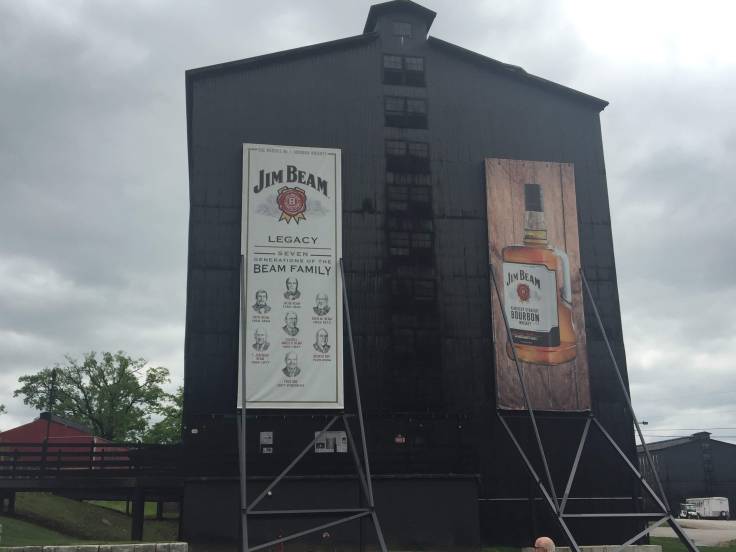
We walked around a bit and learned something about the Beam family; here is the family tree of Master Distillers for the past 150 years of so…

img_2264

Booker Noe was not a direct descendant, but was a nephew of T. Jeremiah Beam; his son, Fred Noe is the current leader.  Jim Beam is now owned by Beam Suntory, which is owned by Fortune Brands, an Multi-national holding company that owns many brands of wine, beer, and spirits.

We did do a tasting of three premium versions of Jim Beam Bourbons…

Jim Beam Bonded – 100 Proof Bourbon:  Just OK

Jim Beam Black – Extra Aged Bourbon:  Not bad; nice and toasty, smooth

Jim Beam Double Oak – Aged in a second new oak barrel after 3-5 years in the first new oak barrel:  Pretty good.  Very smooth…

Jim Beam also makes Knob Creek, Bakers, Basil Hayden’s, and, of course, Bookers.  We will have a chance to taste these after our tour on Tuesday…

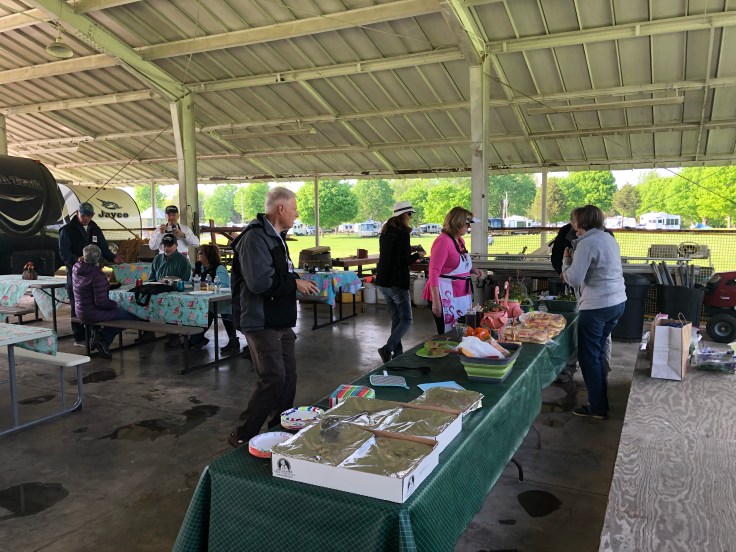
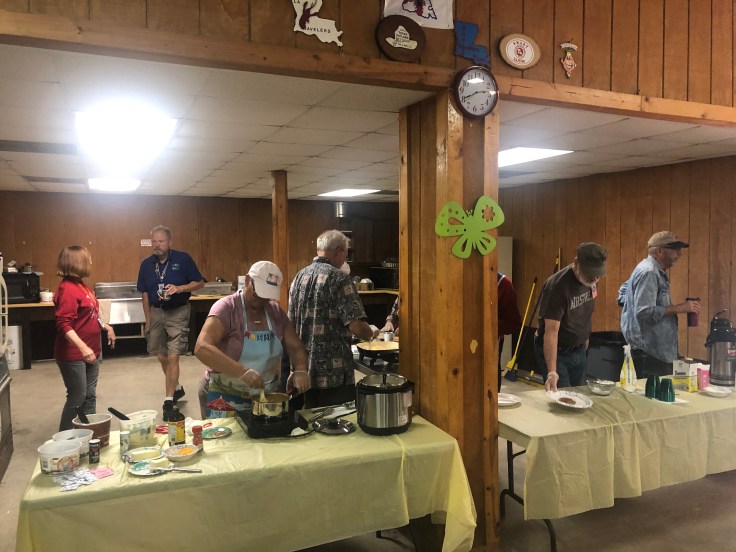
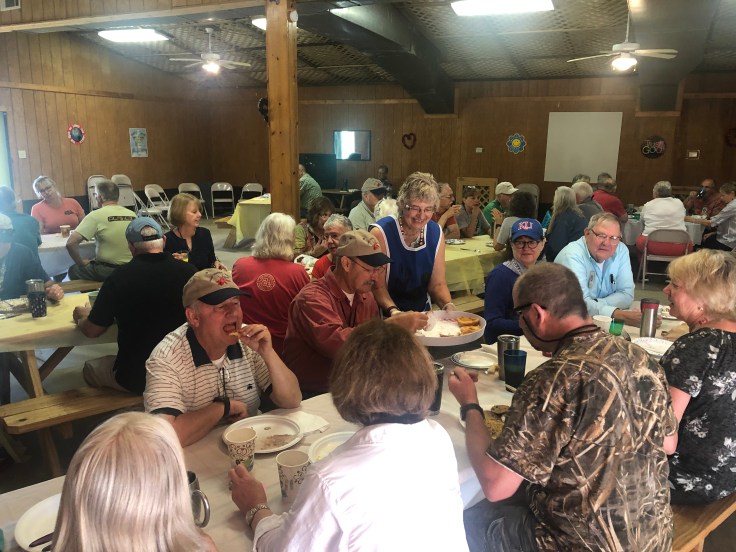
We returned to the campground and enjoyed a dinner prepared and organized by a team of fellow caravaners…

img_2270img_2271img_2272img_2273img_2274

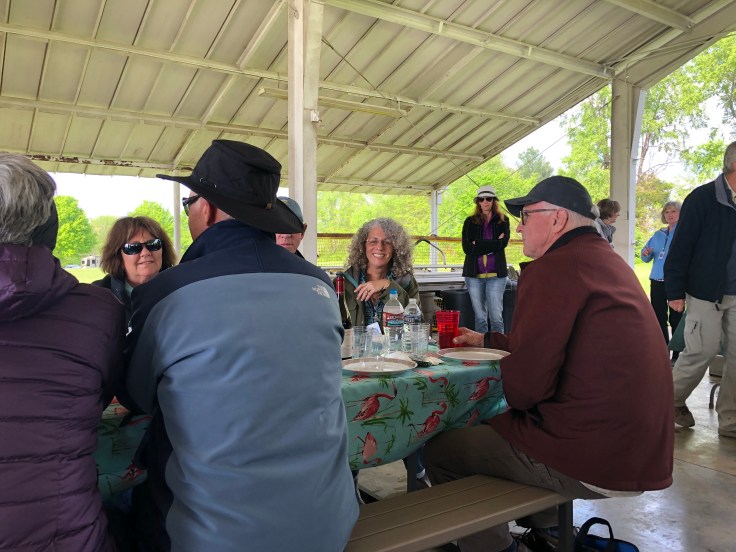
And an enjoyable time was had by all…

2019-04-27 – Airstream Caravan Travels – Springtime in Kentucky; Dairy Farm Tour in Bowling Green, KY – Day #3

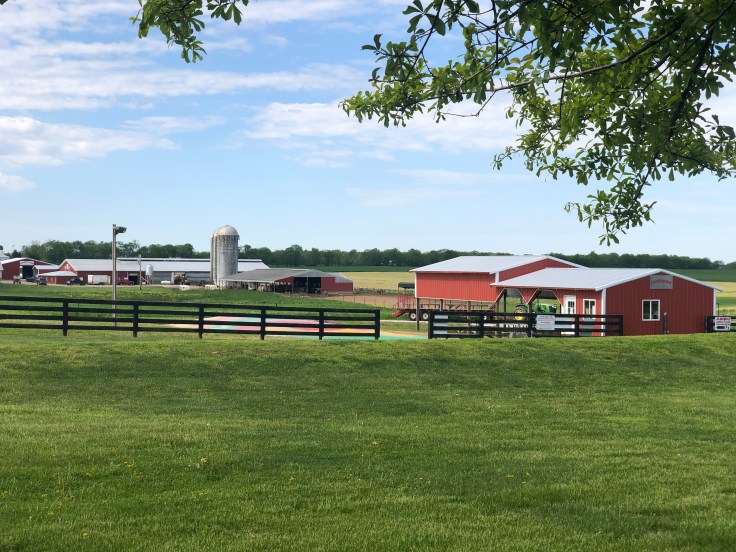
The caravan set out today to tour a dairy farm.  But not just any dairy farm!  We visited the Chaney’s Dairy Barn just south of Bowling Green.  It was not like any dairy I had ever seen before, and I have seen one or two…

img_2233img_2234img_2235

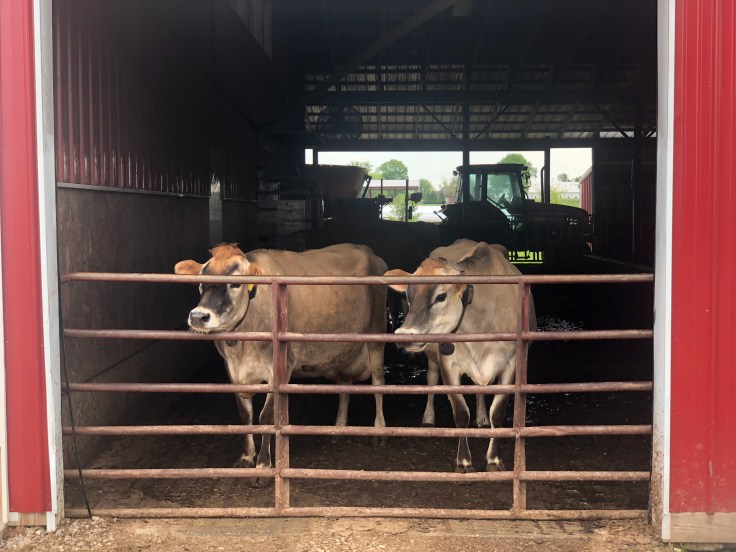
The Chaney family has owned this land since 1886, and they started a dairy here in 1940.  They have exclusively Jersey cows – the light brown ones…

img_2252

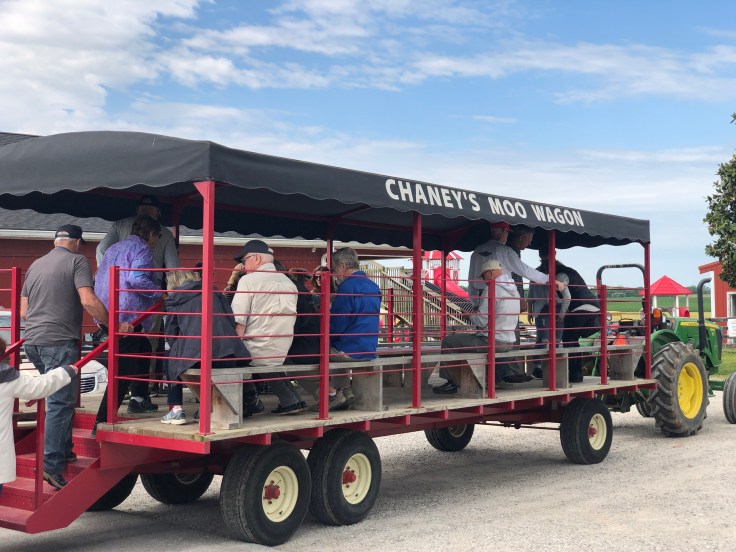
We started the tour at the gift shop – cafe – ice cream parlor; we boarded the farm wagon for the trip to the barn…

img_2236

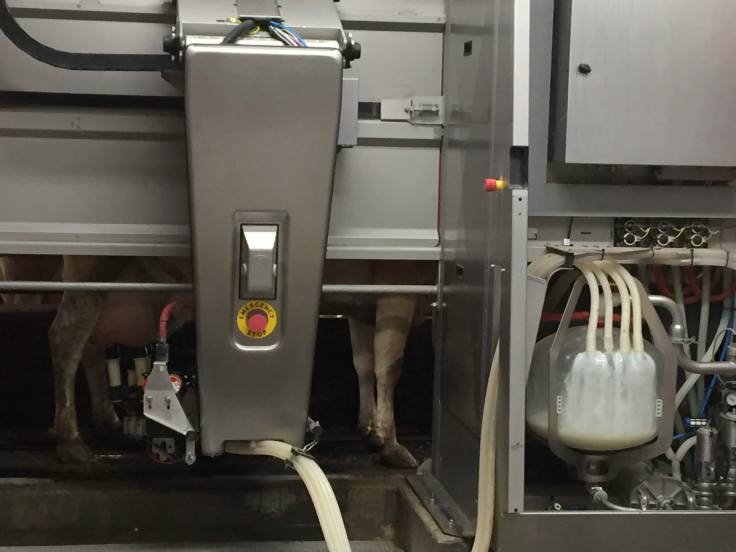
I was shocked to learn that they are currently milking 60 cows (out of a total herd of about 120 or so…).  They have about 55 acres of land.  Wow!  I thought all dairies milked hundreds if not thousands of cows!  The next thing we learned is that they have no milkers – no people wrangling the cows into the barn, no one attaching the milking machines, no one.  They have one herdsman, who is in charge of all the cows, and one robotic milking machine, made by Lely in the Netherlands… The herdsman is the niece of the farm’s owners…

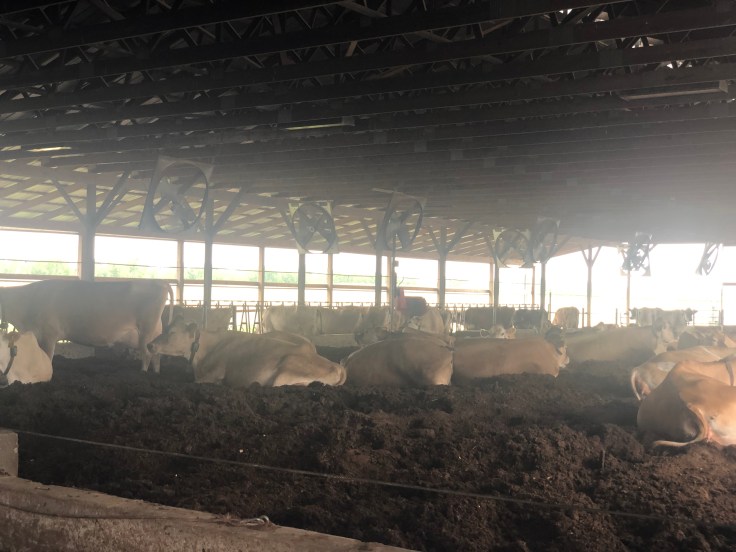
The cows spend all their time hanging out in a comfortable barn…

img_2253img_8082

When they feel the “urge” to get milked they wander over to the robotic milking machine and get milked!

img_8086

The next cow in line is waiting patiently…

img_2241

When the milking is complete she moves on…

img_2245

During the five-six minutes it takes to complete the cleaning and milking process the cow is weighed, the milk production is analyzed, and the herdsman gets lots of data to ensure the cows are healthy and happy…

They even have automated back-scratching machines and a “Rumba”-like robot which sweeps the feed lane and pushes the feed up closer to where the cows are eating… Amazing!

Then the real story comes out.  The cows and the milk don’t pay the bills here.  Like many dairies, they barely break even on the milk and often lose money.  That is why many small family dairies are closing down and selling out.  The Chaney family figured out a way to keep the family farm, and its inherent lifestyle:  Us!

Yes, Agri-tourism is a big thing here.  By offering tours, plus the cafe, playground, gift shop, ice cream, and other related things the family can make a living and keep the farm.  The next generation is starting to establish the ability to process their milk themselves, so that they can sell their own cheese, ice cream, and, yes, milk.

The Chaney family were delightful people and they really have a passion for these cows.  It was a fun tour!

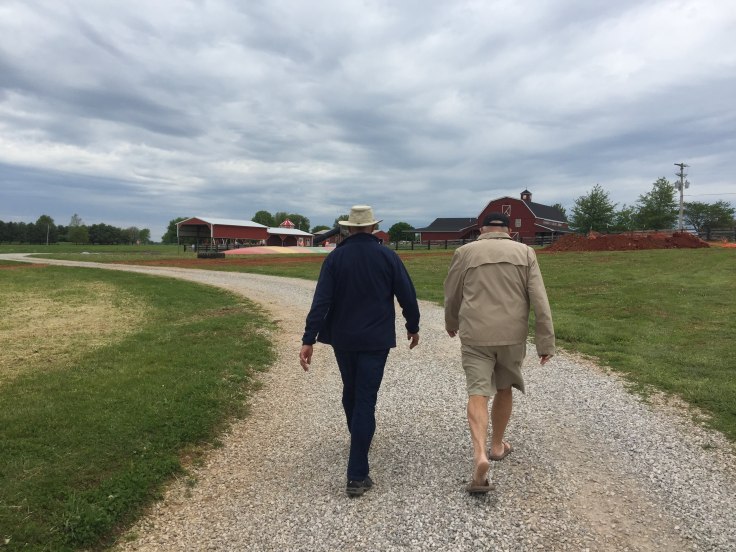
Rather than ride the wagon back to the cafe, we walked…

img_8087

We did, of course, have lunch and some ice cream…

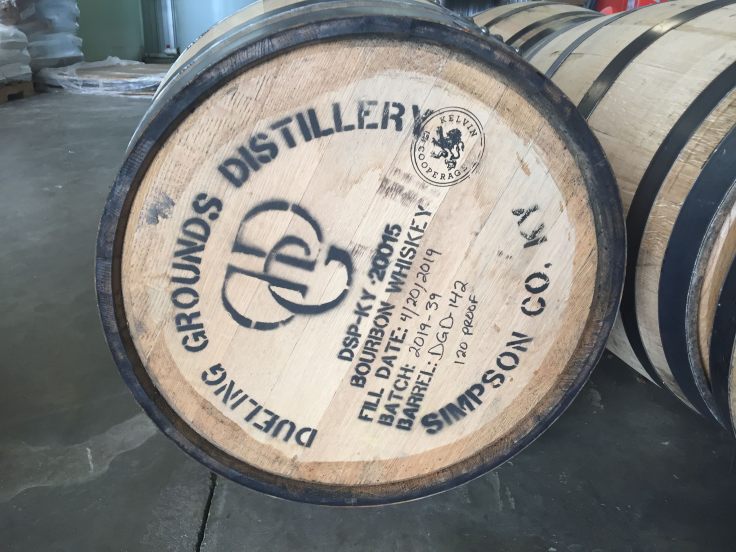
And then we moved on.  The only distillery in Bowling Green closed up shop and moved to Nashville a few months ago, so a few of us drove about 10 miles south to Franklin, KY, to the Dueling Grounds Distillery.  So named because several famous duels took place near here on the Linkumpinch Dueling Field in 1826.

img_8107img_8099

Tennessee Representative Sam Houston gravely wounded General William A. White, a veteran of the Battle of New Orleans, in a pistol duel.  In a convoluted turn of events, White was the stand-in for Nashville Postmaster John P. Erwin.  Patronage politics were at the root of this affair of honor.  Andrew Jackson of Tennessee had promoted another candidate for Nashville postmaster against Erwin.  Jackson encouraged Houston to thwart Erwin’s appointment.  Houston wrote to President John Quincy Adams, that Erwin “is not a man of fair and upright moral character.”  He also attacked Erwin in a speech on the House Floor.  When Houston returned to Tennessee after the 19th Congress (1825–1827), Erwin dispatched Colonel John Smith T., a professional duelist, to deliver a challenge to Houston for besmirching Erwin’s character.  That challenge was rejected, but General White then proceeded to challenge Houston directly, who reluctantly accepted.  Houston was tried for attempted murder, but was acquitted on the grounds of self-defense…

Anyway, this is as good a reason as any to name your distillery “Dueling Grounds” and to name your Bourbon, “Linkumpinch”.

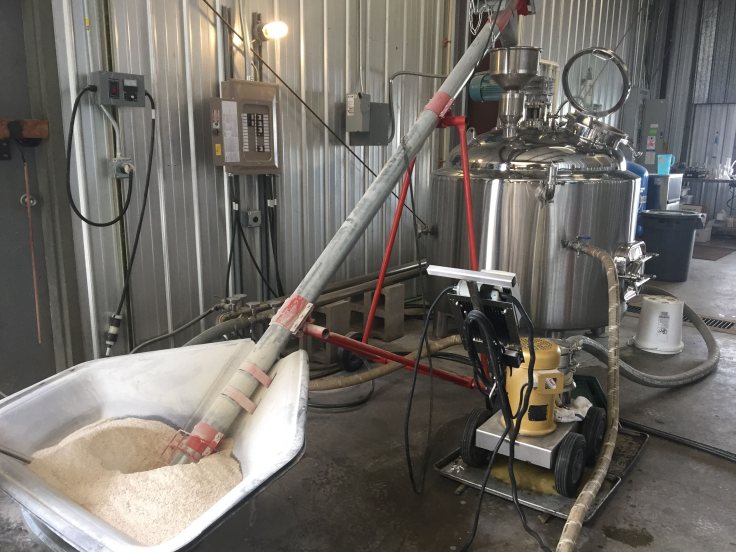
We had a great tour!  Unlike Jack Daniel’s, where the process is controlled by computers and two guys sitting in a control booth, these guys at Dueling Grounds really make the Bourbon!   We saw them adding corn, then wheat, then malted barley to the mash cooker, we saw them punch down the fermenting mash, we saw them transferring the fermented liquid to the still, and we saw their manual bottling line.  (Their barrels are stored off-site in a borrowed facility…)

Adding wheat to the mash cooker…

img_8104

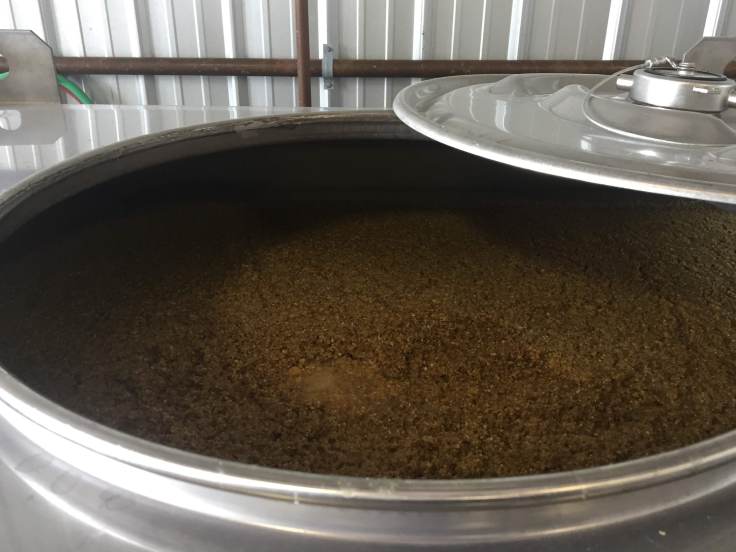
The fermenting mash…

img_8095

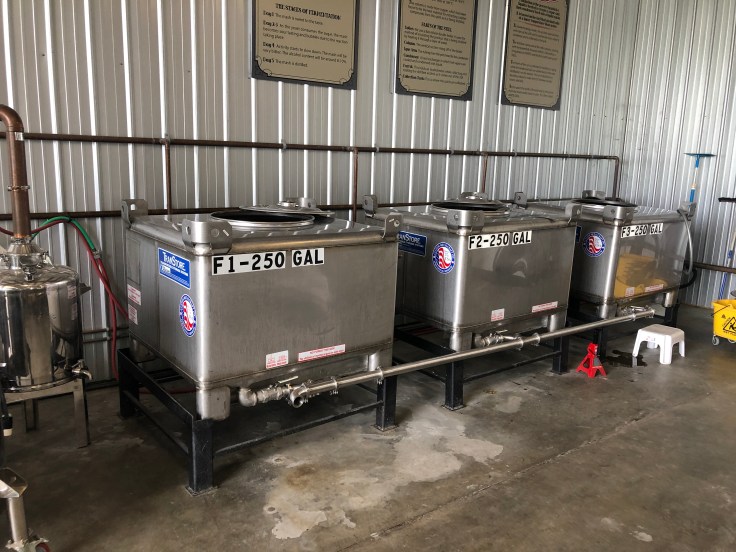
The three fermenters…

img_2258

The still.  Clear ethyl alcohol drips out of the still like a weak stream of water from a small faucet.  (At Jack Daniel’s, it pours from their 90′ tall stills like water shooting out of a fire hose!)  They distill the whiskey here twice, to clarify and purify it, and to increase the alcohol content.

img_2259

They have a very small production – three 250 gallon fermenters each produce about 50 gallons of clear whiskey.

The clear whiskey is placed in new charred oak barrels and aged a minimum of two years.  Since this distillery is quite young, their current Bourbon has been aged just two years.  They have plans to age some barrels 5, 7, and 12 years…

Most of the flavor in Bourbon is imparted by the barrel.  The clear whiskey (“White Lightning”) is not very pleasant to drink.

Tour over, we returned to the tasting room…

img_8106

We tasted their whiskeys and some of their fruit liqueurs.  Purchases in hand, we headed back to the Villa…

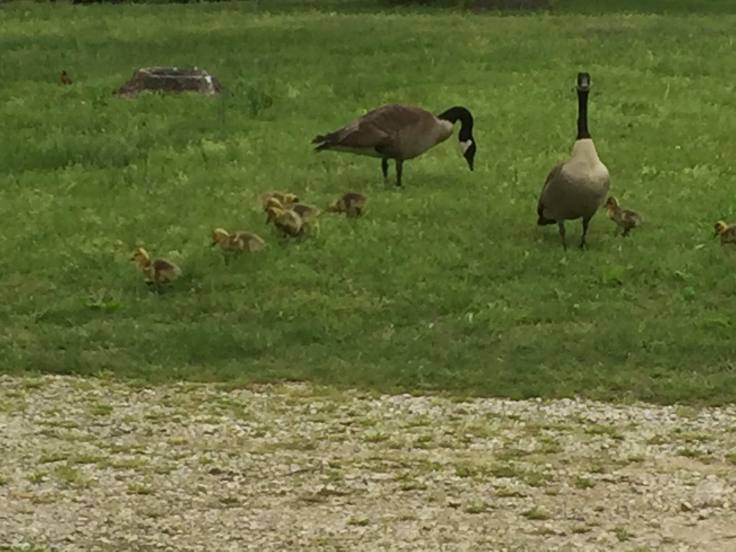
We were able to relax a bit in the afternoon, then we had another GAM.  Afterwards, we walked about the park.  We found baby Canada Geese…

img_8114img_8115

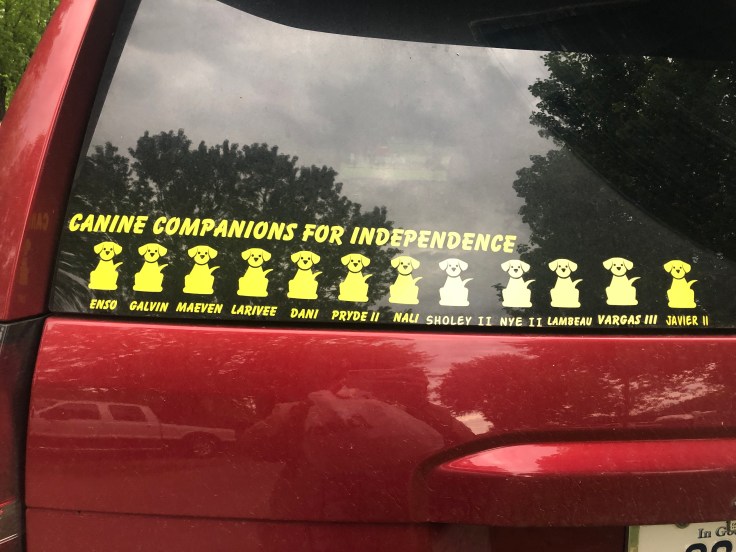
And we found a puppy raiser for CCI – Canine Companions for Independence…

img_2261

Our son has a Service Dog, professionally trained and certified by CCI, a great organization that provides service dogs to those who need them for free… This couple has raised 12 puppies, each for about 18 months, then has turned them over for professional training…

This evening we had another Drivers Meeting; we travel tomorrow to Bardstown, near Louisville, for various activities at Churchill Downs before the Kentucky Derby on Saturday…

img_2262img_2263

And an enjoyable time was had by all…

2019-04-26 – Airstream Caravan Travels – Springtime in Kentucky; Corvette Museum in Bowling Green, KY – Day #2

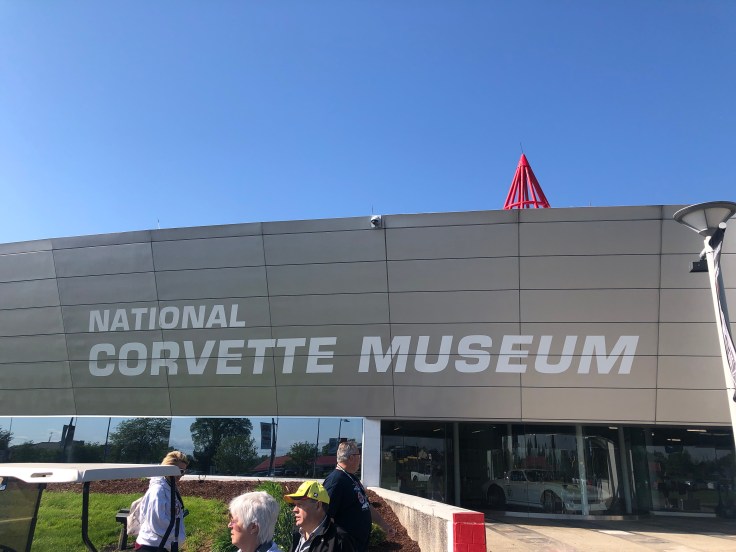
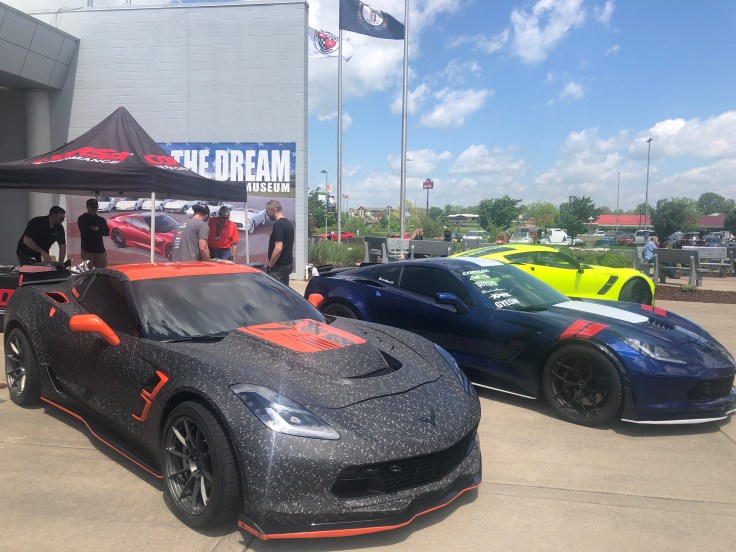
After raining all night we awoke to a lovely morning.  We carpooled to the National Corvette Museum.  Not only were we Airstreamers doing this tour today, but it was the 25th anniversary of the museum and hundreds of Corvette owners were coming to gather as well…

img_2194img_2193img_2195img_2196img_2211img_2210

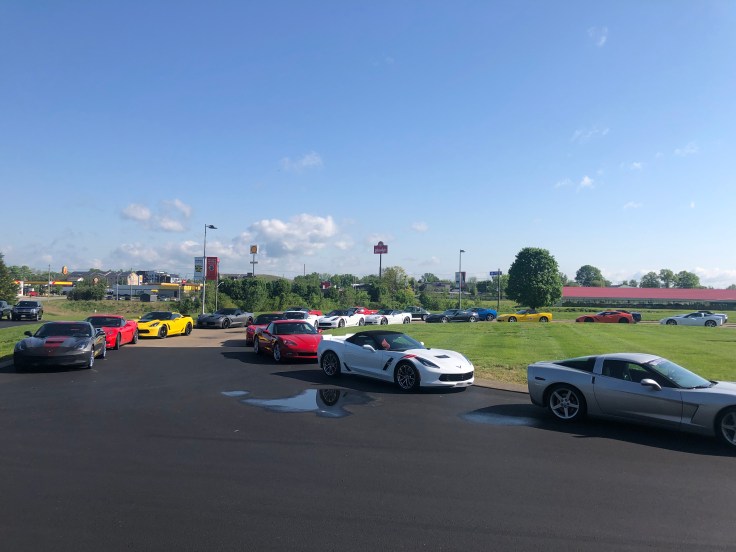
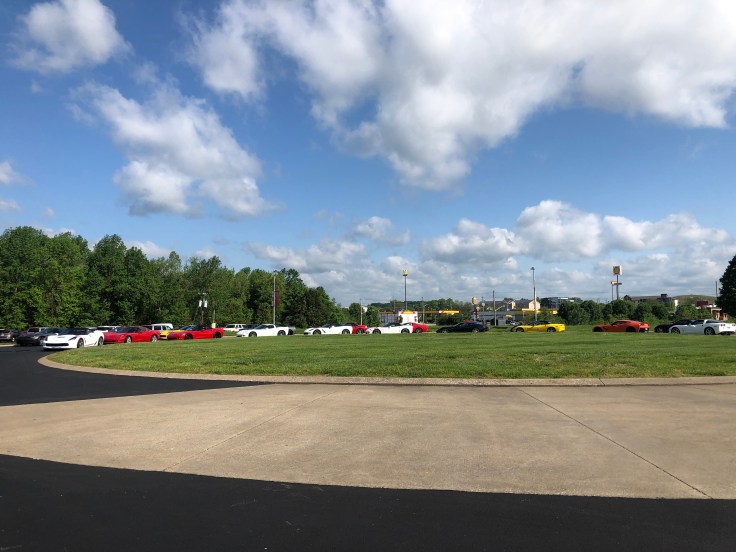
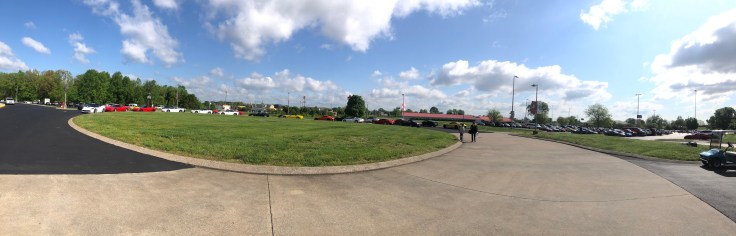
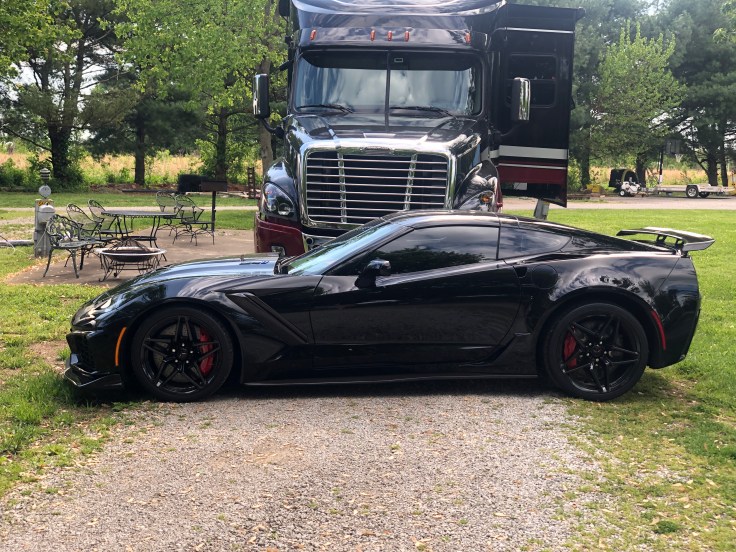
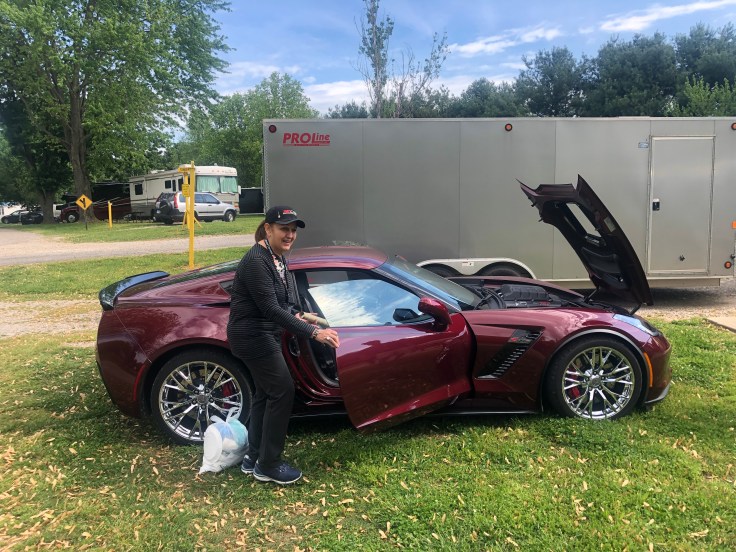
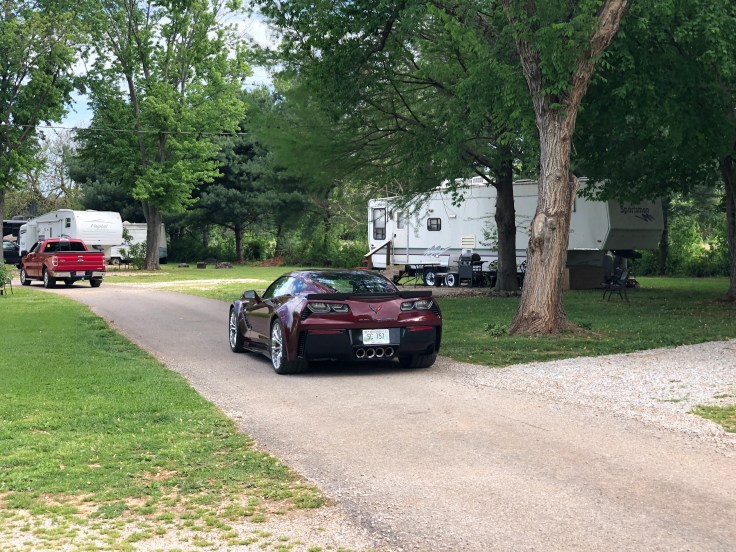
Even our campground was not immune to this invasion of Corvettes…

img_2230img_2231img_2232img_2260

The museum is located only a quarter mile from the Bowling Green Assembly Plant, where Corvettes have been made since 1981.  Unfortunately, the plant is closed for re-tooling; rumor has it that the newest model Corvette will be revealed at this event this weekend…

(Spoiler Alert:  Yes, the new C-8 Corvette, with a mid-engine configuration, was revealed at the Museum on 4/27/19!)

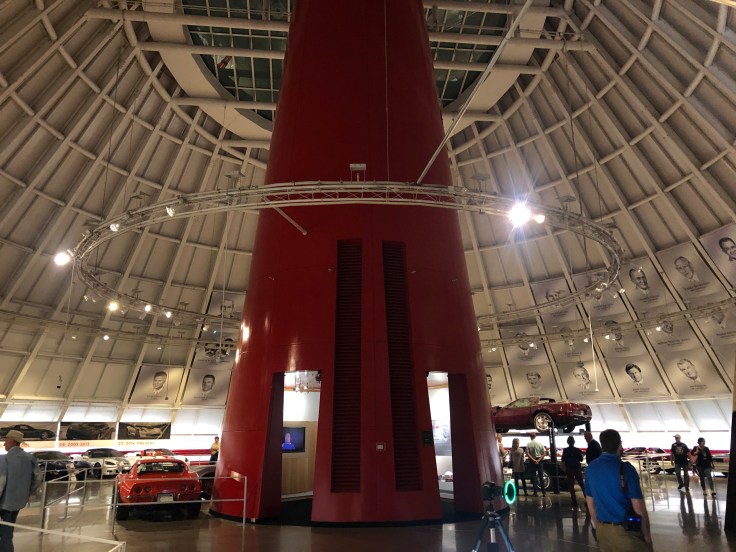
This yellow structure is called the “Skydome”.  It contains a large exhibit hall inside, as an addition to the main museum.  More about the Skydome later…

img_2212

We gathered in front of the museum for a group photo, then went inside for a tour.

img_2197

The exhibits started with a display of a 1953 Corvette, showing its innovative framework and chassis design.  Note how light the structural framework is.  These cars were clearly designed for performance, not for safety…

img_2198img_2201

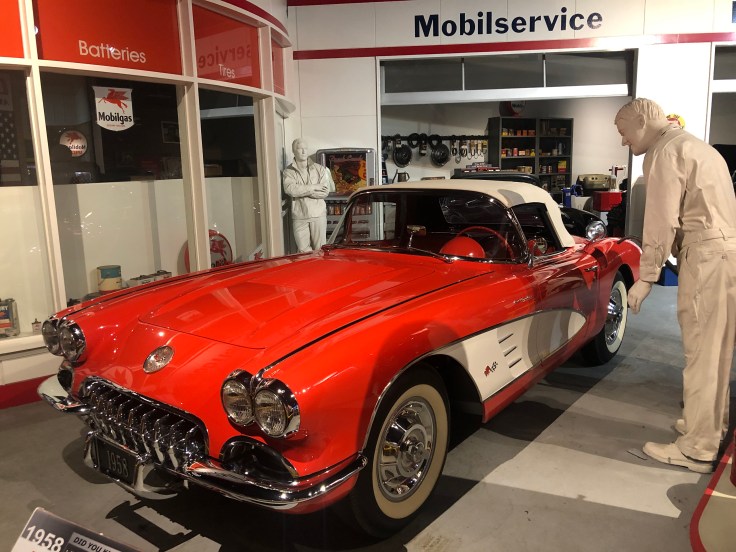
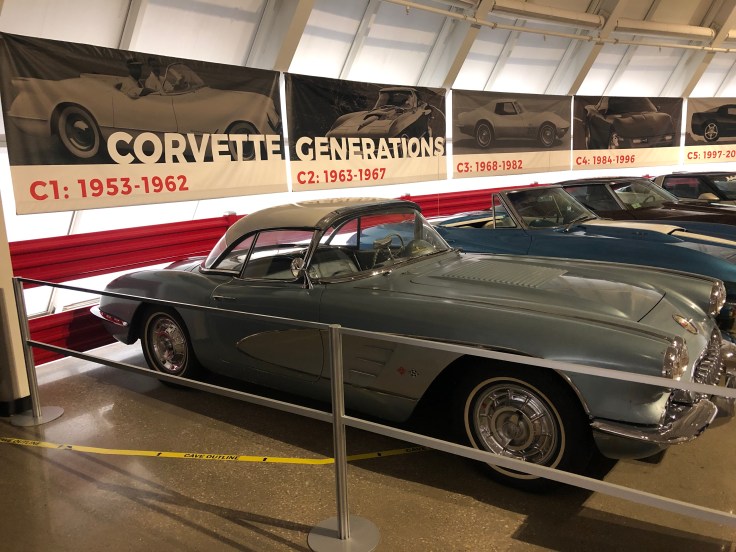
We proceeded through the exhibits, seeing the Corvette design evolve.  The first years were difficult, and very few cars sold in 1953-1955, but the 1956 model caught on and sales sky-rocketed.  However, they have never reached the 1,000,000 cars per year that were originally envisioned…

The 1956 – 1962 years (Model C-2, as the aficionados call it) are my favorite Corvettes…

img_2202img_2208

This is the interior of the Skydome:

img_2209

A particularly interesting exhibit centers around an event that happened a few years ago…

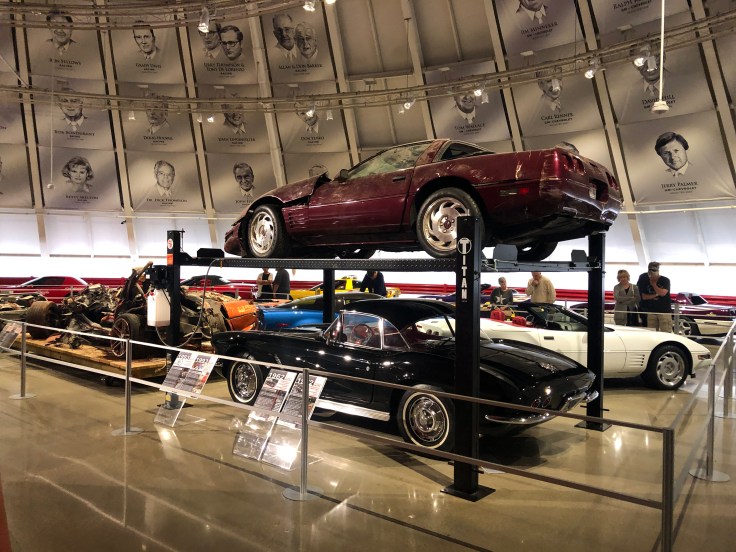
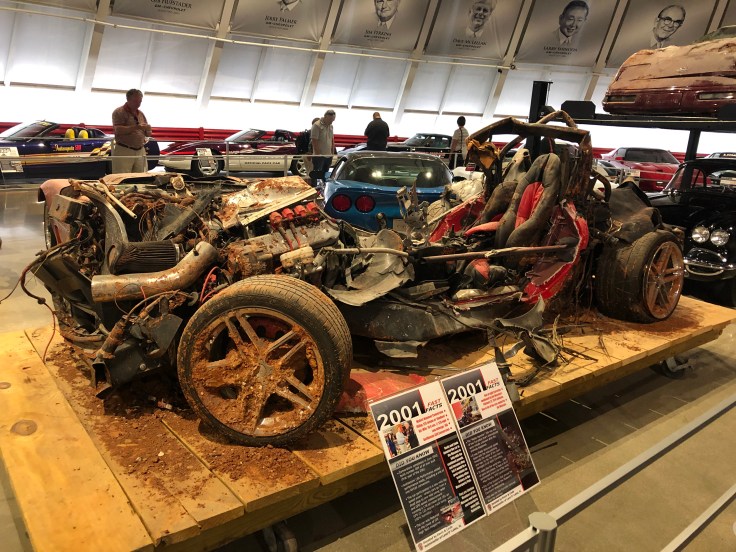
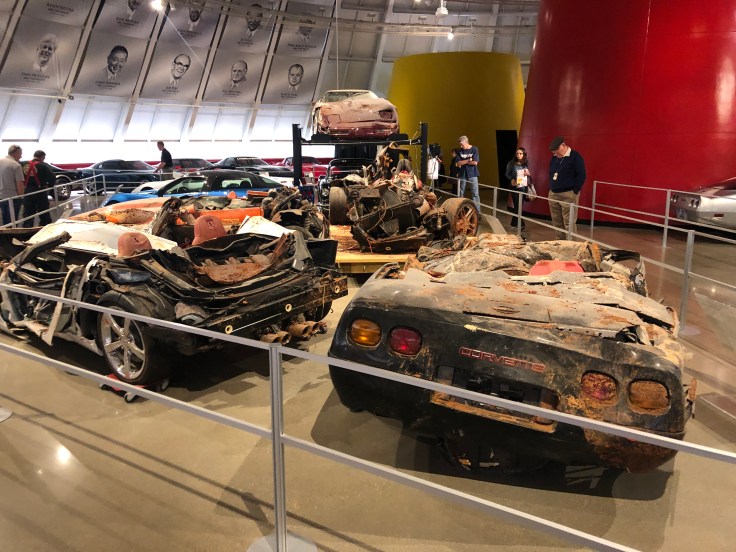
On February 12, 2014, a sinkhole (40-foot-wide and 25-foot-deep) opened under the floor of the Skydome area of the museum.  Video from the museum’s security camera shows the collapse occurring at 5:38 AM local time.  Since this did not occur during visiting hours no one was injured although much of the Skydome area concrete floor collapsed.  Eight rare and one-of-a-kind Corvettes, portions of the display stands and rails, large concrete floor slabs, boulders, and dirt fell into the sinkhole, causing serious damage to all eight of the Corvettes.  The Corvettes involved had an estimated value of a million dollars.  The remaining 20 cars in the Skydome were immediately removed from that area.  All eight of the Corvettes were recovered from the sinkhole.

Exploration in the sinkhole discovered a cave passage 80 feet below the Skydome floor and that this previously unknown cave had an unstable area in its roof that collapsed.  Apparently, when the museum was built, a large storm water retention basin was dug adjacent to the Skydome, which altered the flow of ground water under the museum.  This change in geologic activity contributed to the cave collapse.

The Skydome reopened after repairs were completed on September 3, 2015.  The eight Corvettes are displayed in their original location at the time of the collapse, although only three of them have been repaired/restored.  The other five were deemed too damaged to be repaired, so they are displayed is their “as found” condition…  It is a remarkable thing to see!

img_2207img_2203img_2206img_2205img_2204

We continued to look at the displayed until lunch happened…

img_8052

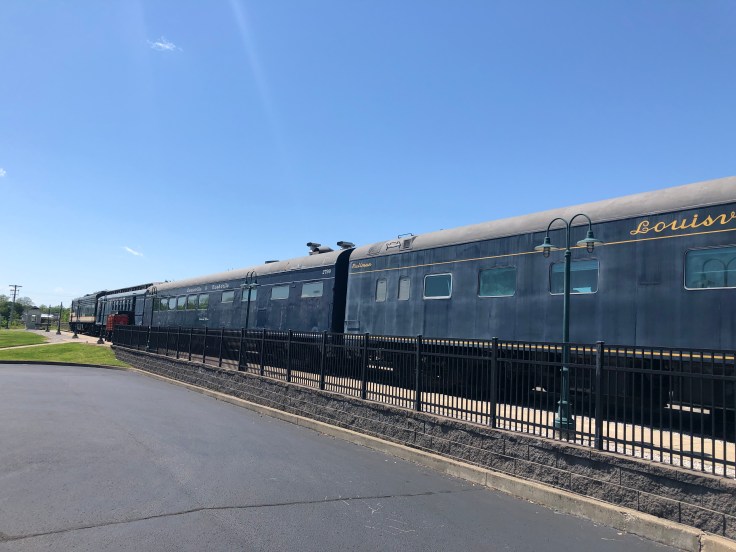
After lunch we visited the Historic Rail Park, located at the historic L & N train depot…

img_2215img_2214img_2216

It was great fun…

There were model railroad exhibits that little kids really love…

img_8053

img_2217

There were historic exhibits inside the museum; but the best part was the train!

img_2226img_2218img_2221

We were able to go through all the cars…

First was the engine (with the engines and generators removed…). We also could go into the cockpit and sit in the engineer’s seat.  No steering wheel!

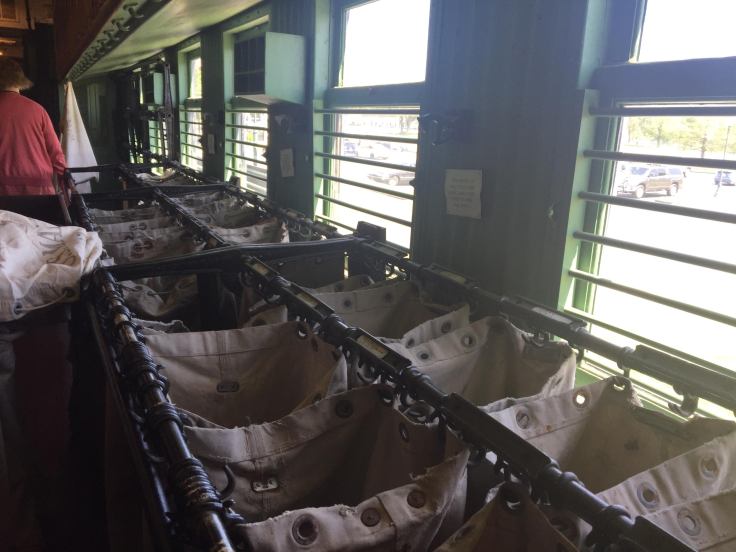
This is the Post Office car…

img_8062img_8063

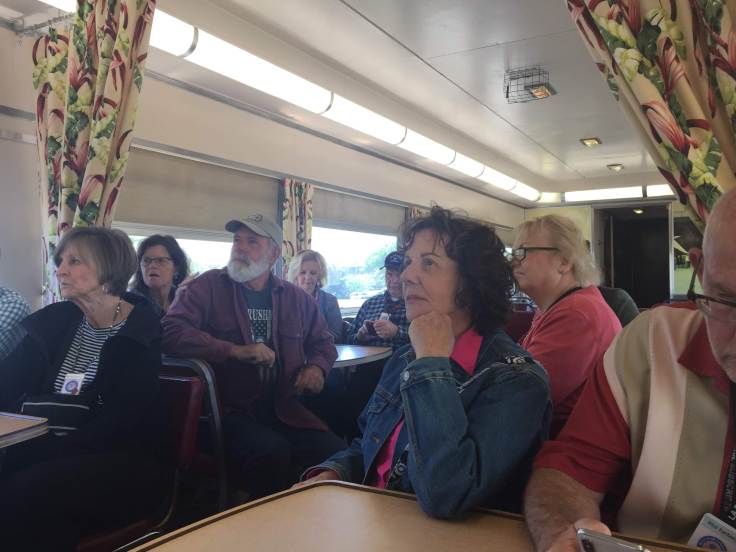
The dining car…

img_8065

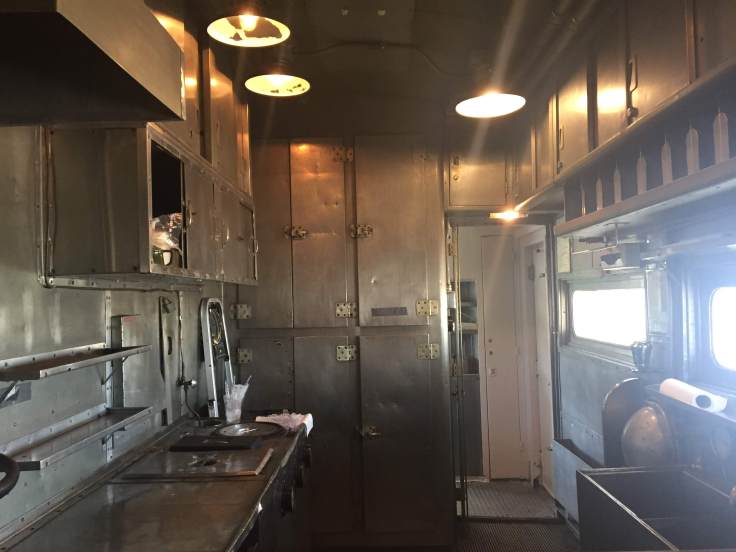
The kitchen…

img_8067img_8068img_8069

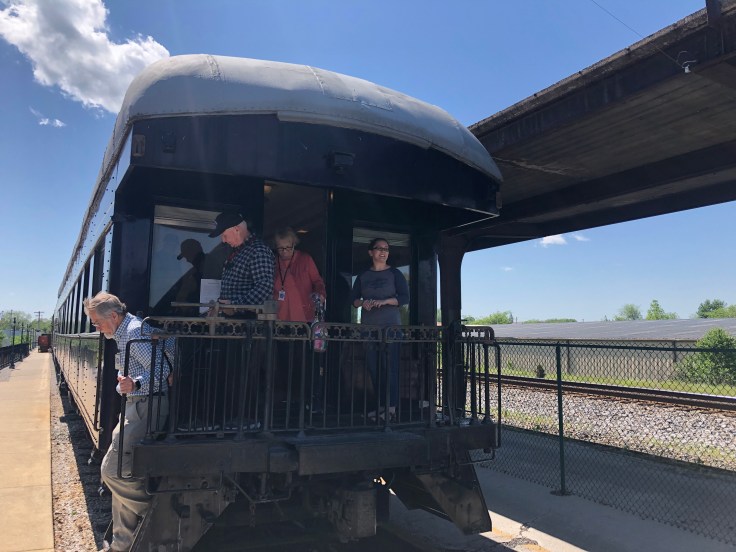
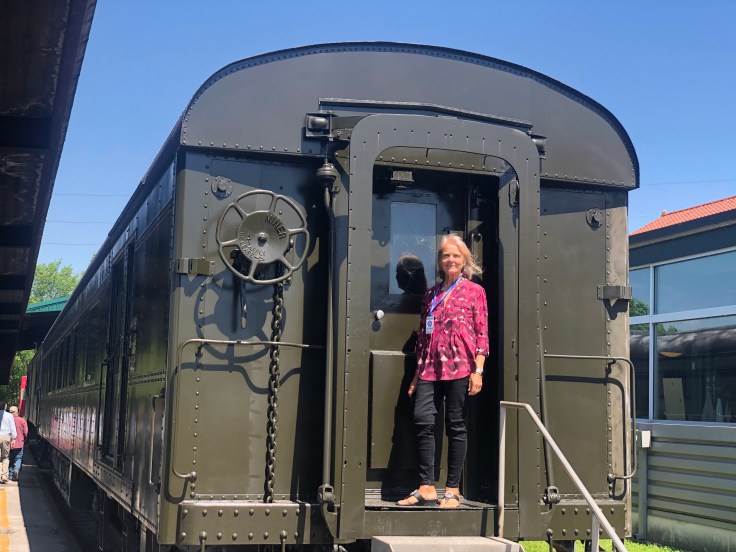
We saw a 3rd class Pullman sleeping berths, the 2nd class “roomettes”, and the private bedrooms in 1st class.  Finally we saw the private car of the L & N president, with two bedrooms, two bathrooms, a dining room and a parlor, plus observation platform at the rear.  This car was used by Herbert Hoover during his presidential campaign.

We also saw cars that are not on display; a caboose…

img_8072

And a hospital car, used to transport injured troops from WWII and the Korean conflict…

img_2224

We returned to the Villa in time to prepare for the first GAM – Get Acquainted Meeting.  As luck would have it, we already knew these four couples…

img_2228img_2229

And an enjoyable time was had by all…

2019-04-25 – Airstream Caravan Travels – Springtime in Kentucky; Bowling Green, KY – Day #1

Beautiful day in Kentucky!  The 2019 Springtime in Kentucky Caravan starts today!

img_8050

We spent the morning rearranging the supplies and tools in the truck, running errands, and buying groceries… I also spent quite a bit of time planning our return trip home in June…

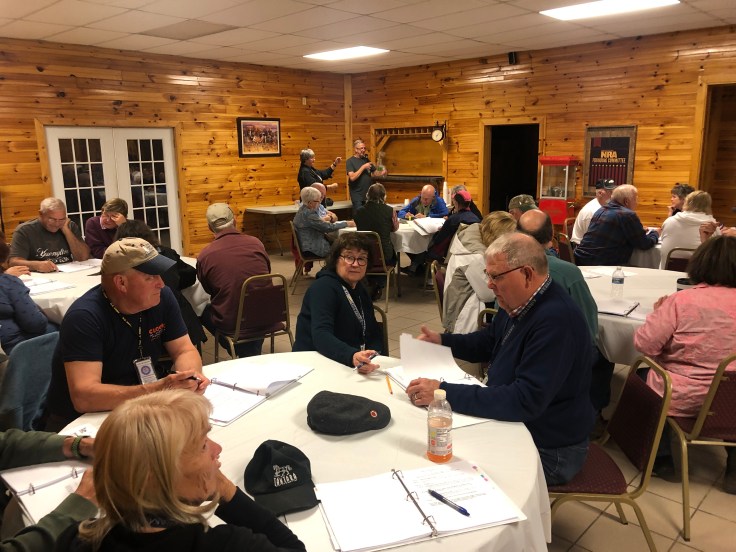
We turned in our emergency forms to our caravan leader, and we were given our “Drivers’ Manual” in exchange.  This is a three-ring binder containing all the information we will need for the next three weeks – schedule, driving directions, names and contact information about all the caravaners, financial data, GAMs, and caravan rules.  The first thing I normally do when I get the manual is enter all the contact information into my phone – we do a lot of text messaging on the caravan;  it is frustrating to get a text message and having to respond, “Who is this?”…

At 3:00 pm we all gathered for our first meeting.  We shared brief introductions – there are five couples from California, only one of which we have previously met.  Caravaners are from all over the country – Washington, New York, Florida, Texas, and everywhere in between.  (No one from Kentucky… However, the leader who was supposed to be here IS from Kentucky, but he has had health issues and needed time to recover, so we have a non-Kentuckian as our leader…)

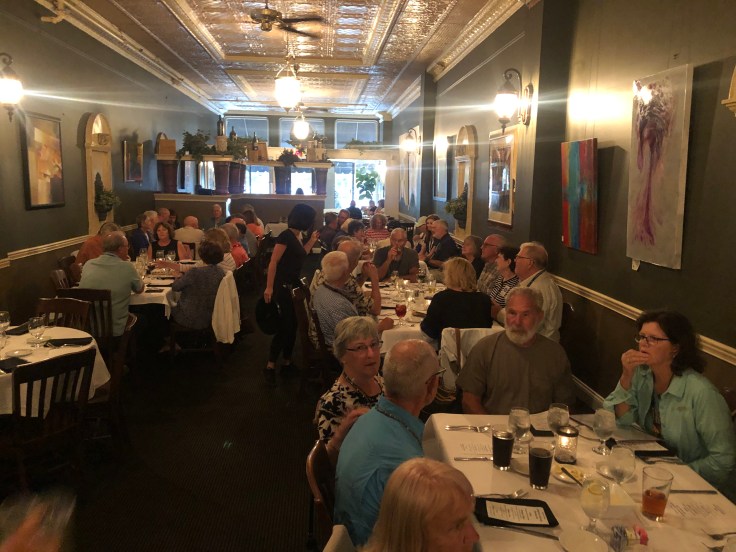
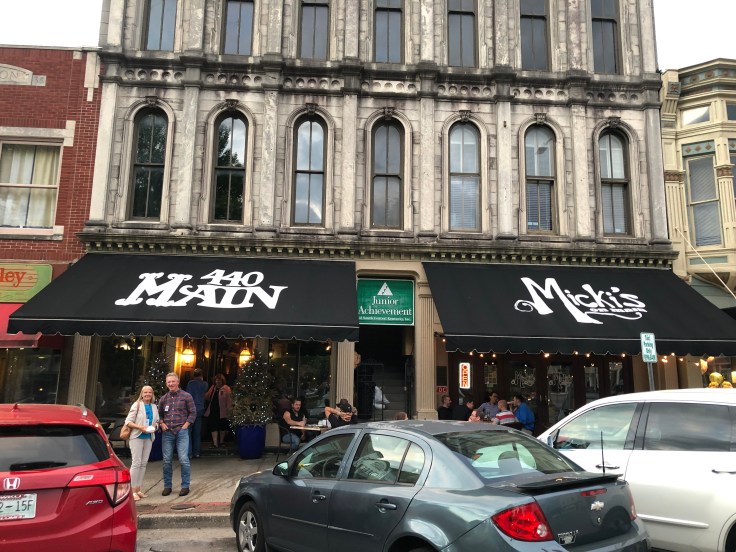
We were dismissed from our meeting in time for us all to carpool into downtown Bowling Green for dinner at 440 Main, one of Bowling Green’s best restaurants.  We arrived early enough to enjoy some adult beverages before dinner.

Soon we were all gathered for dinner.  The service was good, especially considering that the servers had to wrangle requests from 50 people at once.  And the food was excellent; I had salmon, Lynda had chicken.  Dessert was cheesecake with raspberry sauce.  I only had a bite or two, but it was excellent, too.

img_2190img_2191

After dinner we returned to the Villa.  It was starting to rain as we hurriedly walked to our campsite.  Ir continued to rain lightly all night long…

And an enjoyable time was had by all…

2019-04-24 – Airstream Caravan Travels – Traveling from Tuscumbia, AL, to Bowling Green, KY;

Today we check in to the RV Park where the Springtime in Kentucky caravan starts.  We are one day early, but we like to arrive before the crowds…

Last night we caught a nice sunset in the window of the Villa…

img_2185

We left Tuscumbia, AL and headed through the countryside to find the 65 north…  At about 11:30 we met up with two other caravaners at the Cracker Barrel in Franklin, TN…

img_8028

After lunch we traveled north into Kentucky!

img_8039

Lots of green in this neck of the woods!

img_8040img_8041

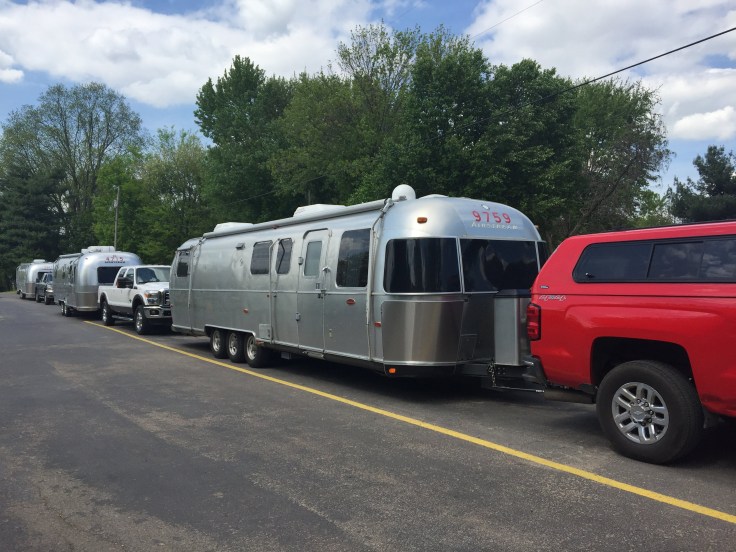
We pulled into the KOA in Bowling Green, KY, ready to check-in…

img_8044

We added another state sticker to our map… Number 39!

img_2186

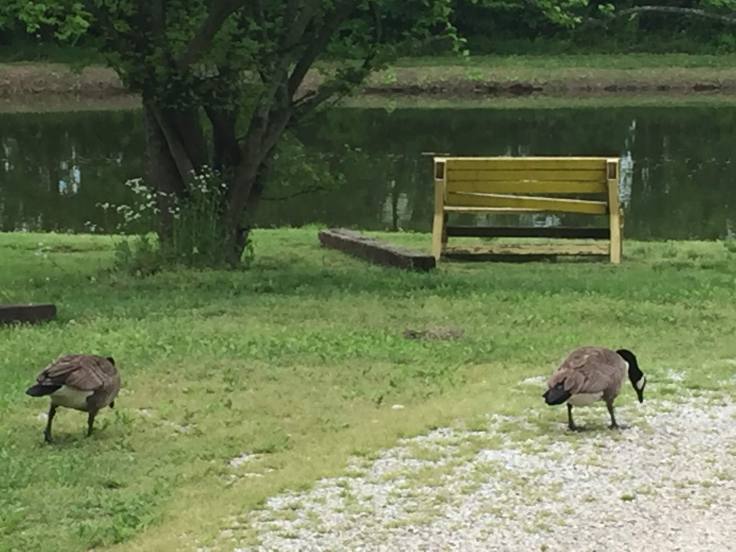
It’s a nice park, with a lake and a good supply of Canada Geese…

img_2187img_2188img_8046img_8047

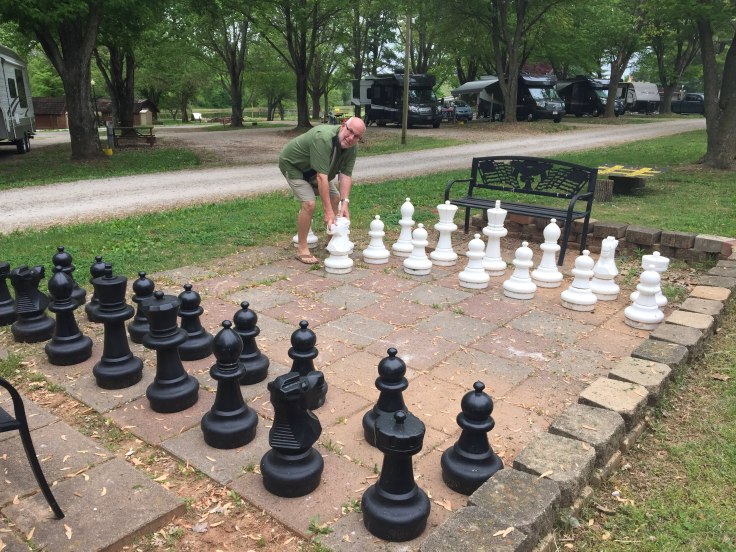
We played a little chess before Happy Hours…

img_8048

So Happy Hours happened – there are about 10 Airstreams here a day early…  And an enjoyable time was had by all…

2019-04-22 – Airstream Caravan Travels – Traveling from Chattanooga, TN to Lynchburg TN, and Jack Daniels, and on to Huntsville, AL…

We prepared to leave for traveling to Lynchburg, TN, this morning.  Then we realized that Lynchburg is in the Central Time Zone and we were still in Eastern time in Chattanooga.  So we had an extra hour to kill.  But we left relatively early, and had a nice drive across Tennessee.  (The highway even dipped south for a few miles into Georgia before it turned slightly north back into Tennessee…)

img_7970img_7973

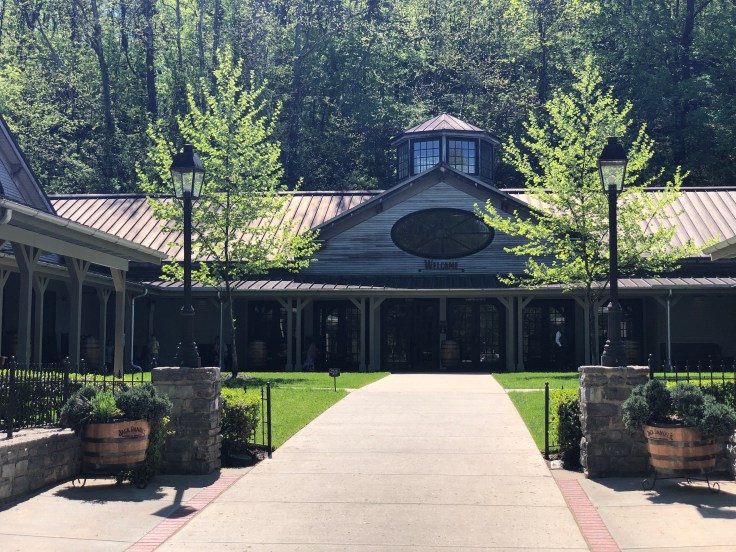
We soon arrived in Lynchburg, and …

img_2112img_2111img_2113

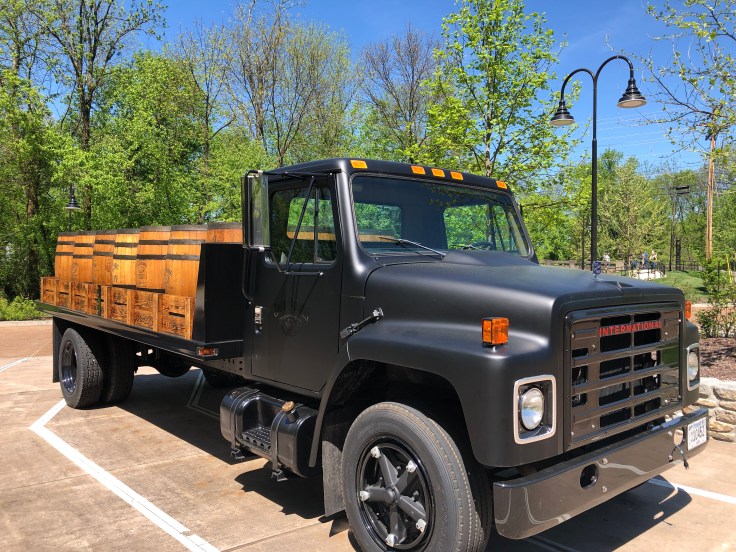
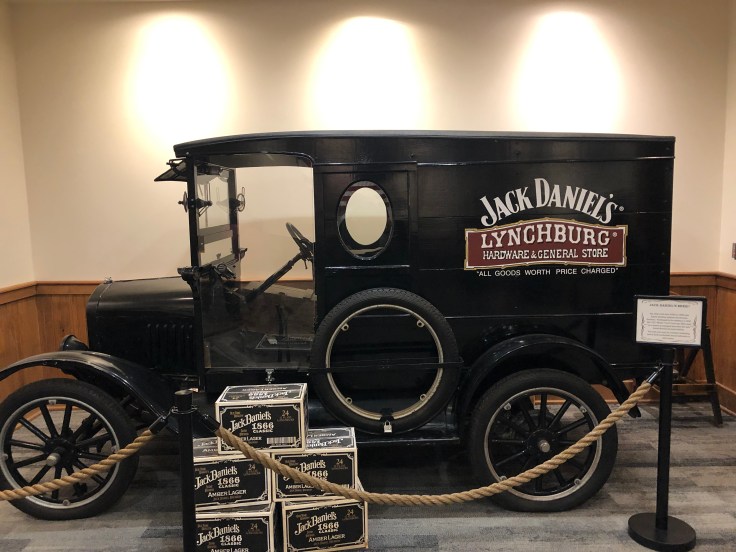
This is their fully restored antique truck, from all the way back in 1980…

img_2114img_7974img_2115img_2116img_7975

Signage on this truck shows Jack Daniel’s motto:  “All Goods Worth Price Charged.”

img_2117img_2118

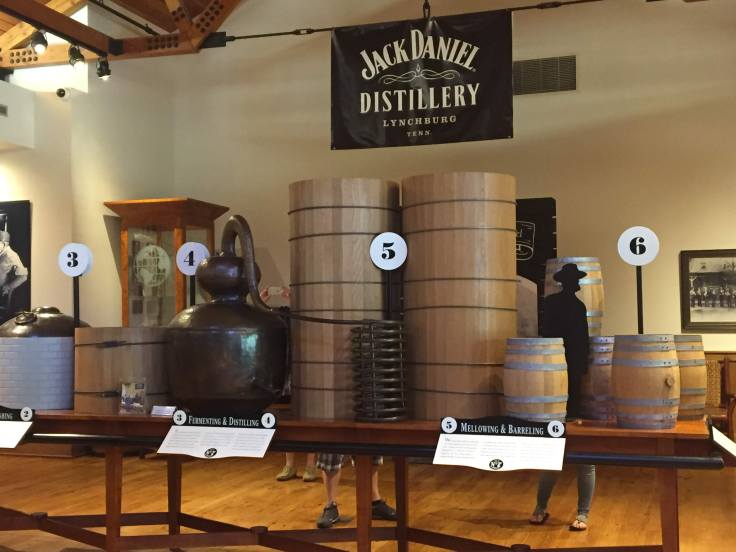
The tour began by hearing an explanation of what Jack Daniel’s Tennessee Whiskey is:

The law defines Tennessee Whiskey as: a spirit manufactured in Tennessee; made from grain that consists of at least 51% corn; distilled to no more than 160 proof (80% abv); filtered through maple charcoal prior to aging; aged in new charred oak barrels; placed in the barrel at no more than 125 proof (62.5% abv); and, bottled at not less than 80 proof (40% abv).

Except for the filtering through maple charcoal, this defines Bourbon.  In other words, Tennessee Whiskey is Bourbon filtered through maple charcoal.  Jack Daniels calls this process “Mellowing”.

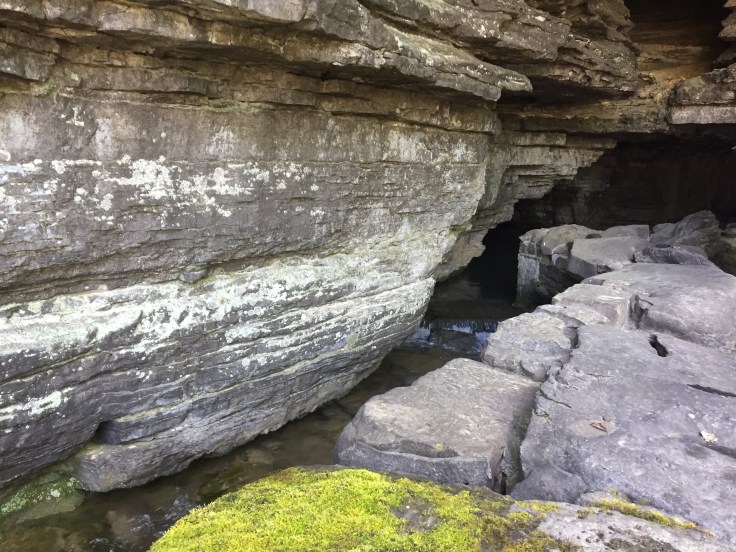
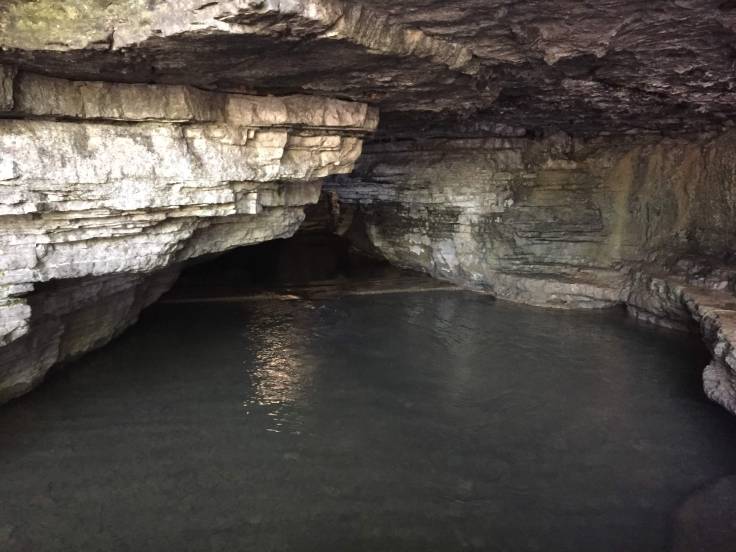
We started at the Rick House, where they burn the sugar maple; we moved on to the water source, deep inside this cave:

img_7977img_2119img_7979

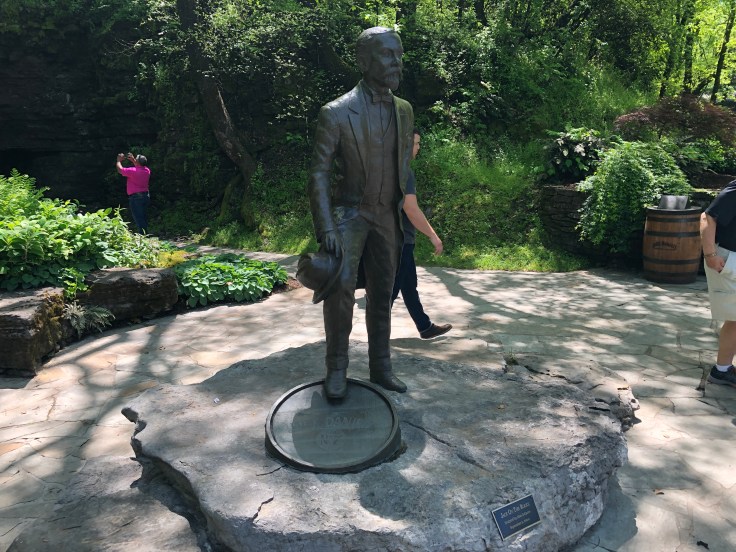
Here is a statue of Jack Daniel standing on a granite boulder; you know, Jack on the Rocks…

img_2121

This building was the headquarters office used by Jack Daniel’s up until 1958; it was here, in about 1905, that Jack kicked the company safe one morning, broke his toe, and died a few years later from gangrene, at the age of 61.

img_2123

The owners of the company in 1958 (four brothers who had inherited the business) sold the business to Brown-Foreman for $20,000,000.  It is still owned by Brown-Foreman today.  Brown-Foreman also owns Early Times, Old Forester, Woodford Reserve, Canadian Mist, GlenDronach, BenRiach, Glenglassaugh, Finlandia, Herradura, Korbel, and Chambord.

This is the Still House; it contains four giant 90′ tall stills, which produce the clear corn whiskey:

img_2124img_2125

The sour mash waste, after it is distilled, is piped over to this facility, where it is sold to local farmers as cattle feed; it still contains 6-8% alcohol.  Talk about contented cows!

img_2126

This is the Mellowing House, where the clear whiskey is dripped, drop by drop, over a 10′ tall stack of charcoal, a process called mellowing…

img_2127

The bottling lines are always my favorite part of these tours… This is a small line dedicated to their Single Barrel Whiskeys.  It dates from 1970 and seemed to me to be very non-automated – there is a lot of work done manually, like putting on labels, hanging tags around the neck, and putting the bottles into the cardboard boxes…

img_2128img_2131img_7983

Finally, the tour over, we head to the educational part of the tour:  the tasting.  This is strictly for educational purposes only, since drinking whiskey in this county is forbidden…

img_2132

We were given five sample with which to get educated.  It totaled about one ounce; we were told about how each type is made and what the differences are.  The funny thing was that both Lynda and I found the Rye to be terribly sweet, yet the “honey” version had very little taste at all.  Our guide checked it out and found that the two samples were switched!  It mattered little – we didn’t like either of them… I found that I liked Gentleman Jack, while Lynda preferred the original…

After the educational portion of the tour we walked through one of the old barrel rooms…

img_2133img_2134

After the tour we could return to the Visitor Center.  While you cannot buy whiskey in this county, you can buy souvenir bottles here.  The bottles were filled with some sort of brown liquid…

We walked 1/2 mile into downtown Lynchburg, and enjoyed lunch at Bottle House BBQ:

img_2142

img_2135

We returned to the Villa and drove to Huntsville, Alabama…

img_7989

They are building McMansions here, too…

img_2143img_2144

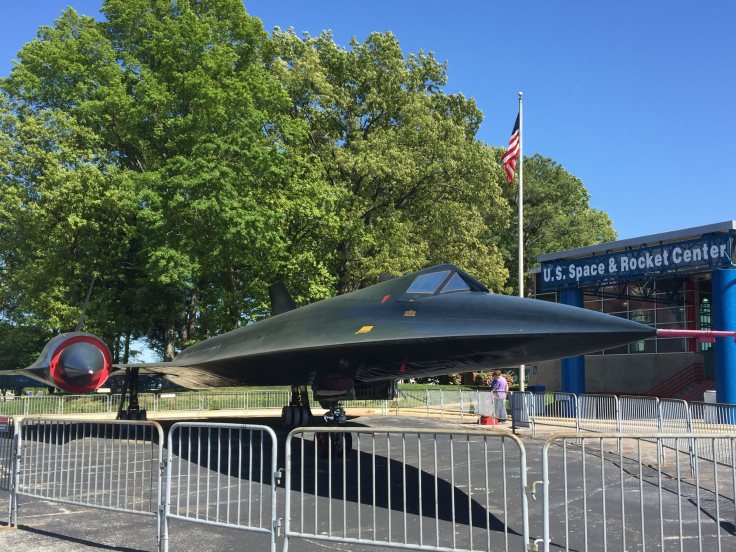
We parked at an RV park at NASA’s Space and Rocket Center in Huntsville…

img_7993img_7994img_7995

The RV park is very nice.  And cheap!  I wish we had RV parks in California like this for $20 per night…

img_2145

For dinner this night we met up with friends we met on the Nor’ by Nor’ East Caravan; they will also be joining us on the Kentucky caravan in a few days…

img_7998

Dinner was great!  Pork Belly appetizer and Crawfish Fritters, with a nice bottle of an Oregon Pinot Noir!

And an enjoyable time was had by all…

2019-04-11 – Airstream Caravan Travels – New Orleans, LA

We left Carencro at first light.  Not too many Airstreamers were up and about…

We drove east on the 10.  After about 20 minutes we stopped.  And stayed stopped, despite the sign…

img_1798

We were there for 1 1/2 hours…  Apparently there was an accident about three miles ahead on the causeway, so they simply closed the freeway…  So everyone in their cars was able to catch up on their Facebook posts…

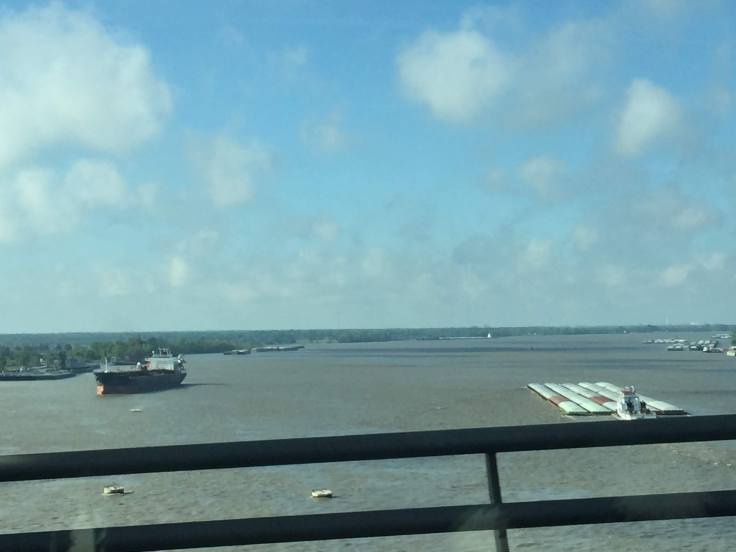
Eventually we were on our way.  We crossed the Mississippi river for the first time today…
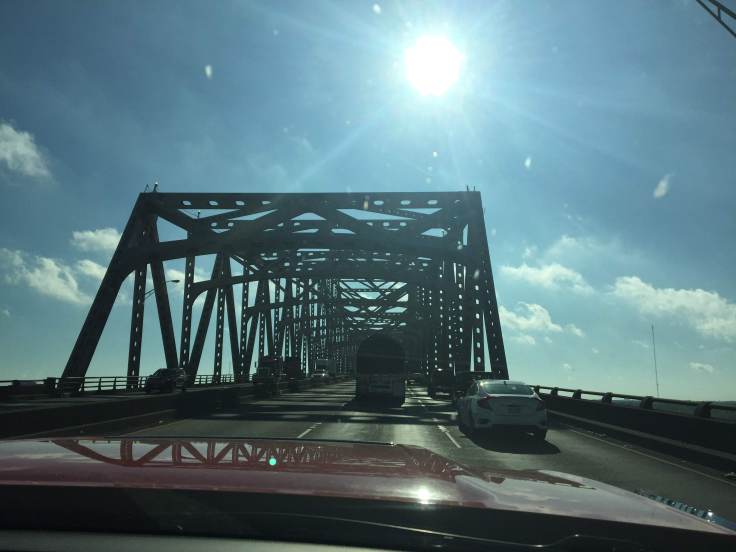
img_7675img_7681

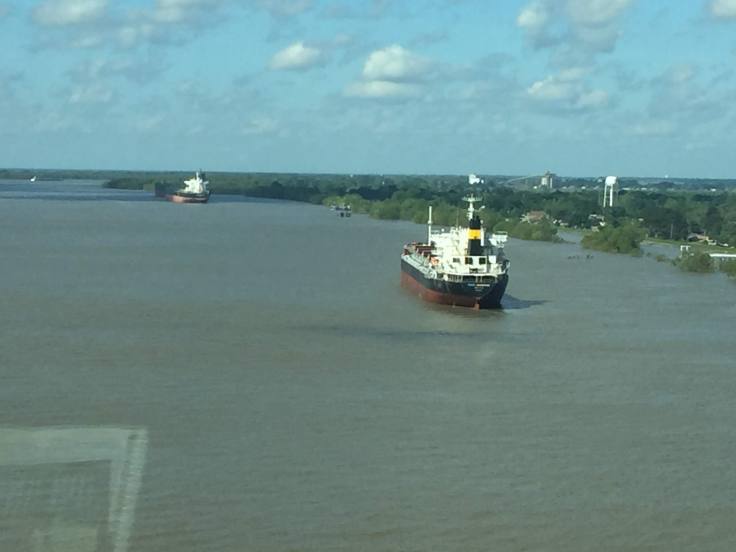
An hour later we crossed over the Mississippi for the second time today…

img_7683img_7690img_7691


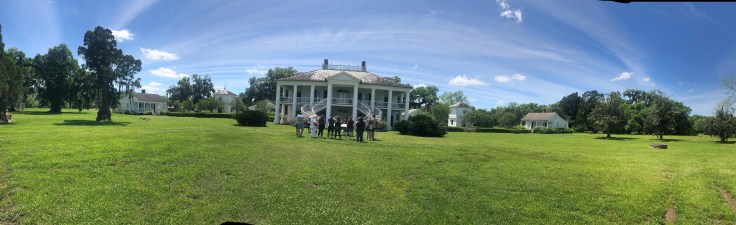
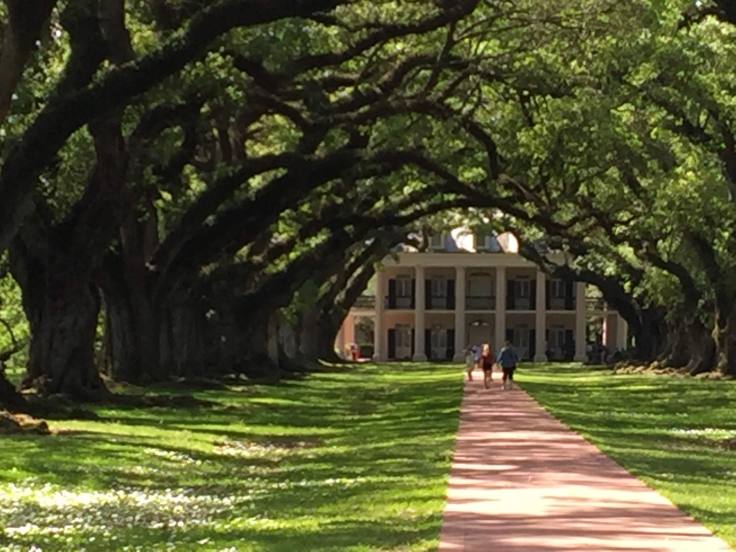
By about 10:15 we arrived at our first destination:  Oak Alley Plantation…
img_7706

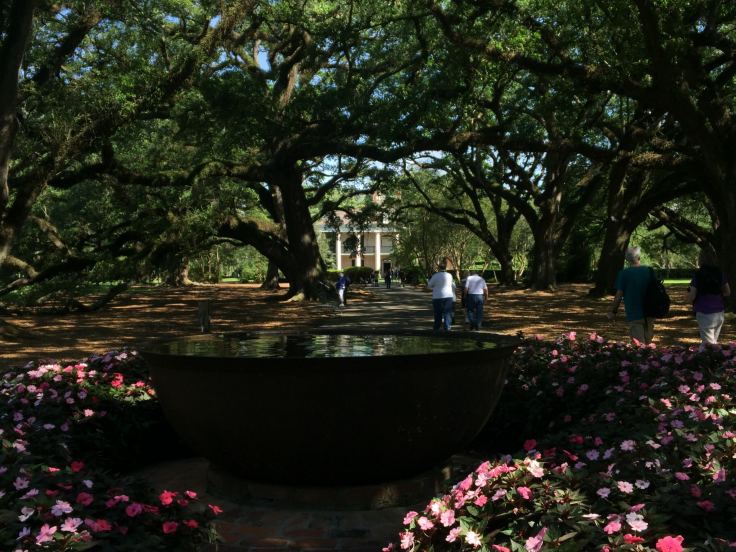
Oak Alley is one of the more famous “Big Houses” due to this lane of 200+ year old Live Oak trees… The interior tour did not disappoint.  (Unfortunately, no photos were allowed…)

The interiors of the Big House are quite grand – much more than I had anticipated.  If you recall, the governor’s mansion in Baton Rouge is modeled after Oak Alley, but we were told that the governor’s mansion was much grander.  I’m not so sure… Certainly the governor’s mansion is bigger – 25.000 s.f vs Oak Alley’s 7,000 s.f., but the ceilings are tall (12 1/2 feet) and the rooms are large – there are only eight rooms and a large central hallway.  We were impressed.

The house was built in the 1830s, similar to Shadows -on-the-Teche, but this is far more sophisticated and grand.  The original owner died young, in the 1840s; the difference is that the owner of Shadows built a modest house, where as the owner of Oak Alley built a very grand house, way beyond his means, with several hundred thousand dollars of debt.  Where as Shadows was maintained after the Civil war, and newly freed slaves were hired for cash wages, the war ruined Oak Alley and its owners.  After the war it was abandoned by the family and sold for taxes.  It was unsuccessfully operated as a farm and as a cattle and hog ranch.  It fell into disrepair until the 1920s, when it was bought by the Stewarts, a family from Texas; they restored the house and added indoor bathrooms and a kitchen.  The Stewarts lived in the house for many years, as a vacation home and later as a retirement home.  Upon Mrs. Stewart’s death in 1972 the house was deeded to the Oak Alley Foundation, which restored the house (removing bathrooms and kitchen); it was then opened them to the public.

After the interior tour walked the grounds…

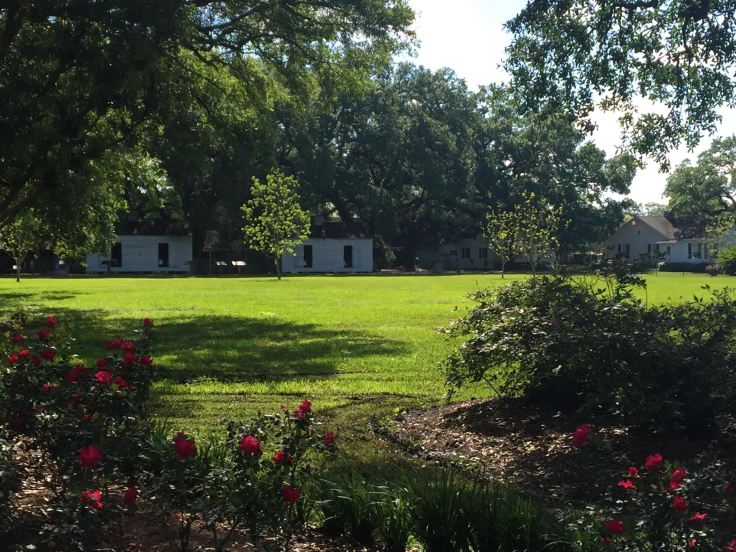
Slave quarters in the distance…
img_7692

Gardens…

img_7693img_7694

The Oak Alley…

img_1799img_7695img_7696

The rear of the house…

img_1800

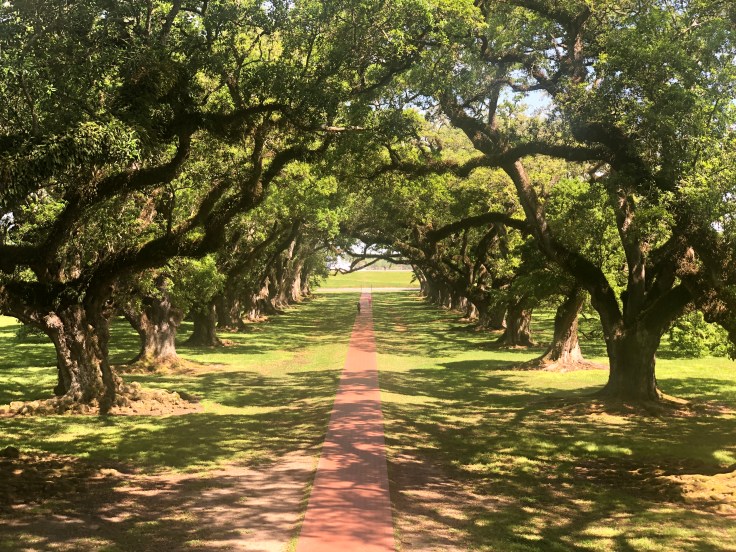
The oak alley, looking away from the house… The Mississippi River is just beyond the levee.  In the olden days the levee was much lower and the river could be seen from the uppers verandas of the house…
img_1807

The oak alley extended from the front and the rear of the house… At the rear are the slave quarters…
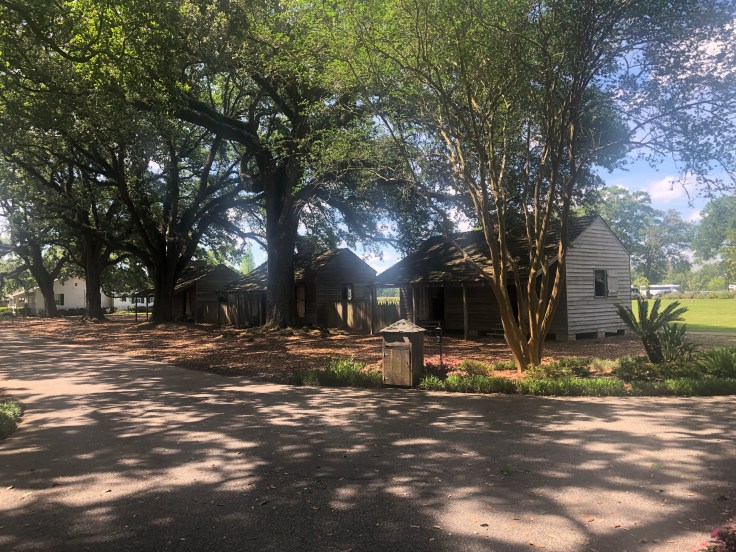
img_1818img_1819img_7708

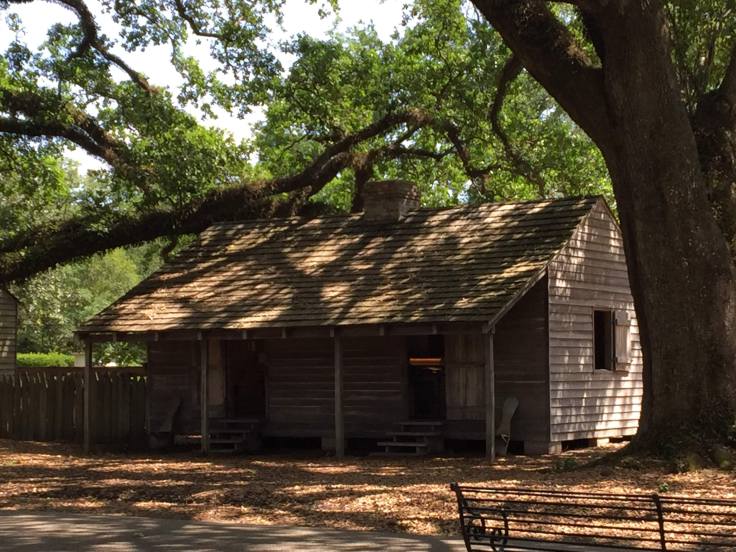
These are all double cabins, exactly as we saw at the Rural Life Museum.  They are reproductions.  The exhibits tell of the lives of the slaves, with very little sugar coating or white washing.  One cabin was filled with various shackles and other restraint devices…

The was even a slave chicken coup…
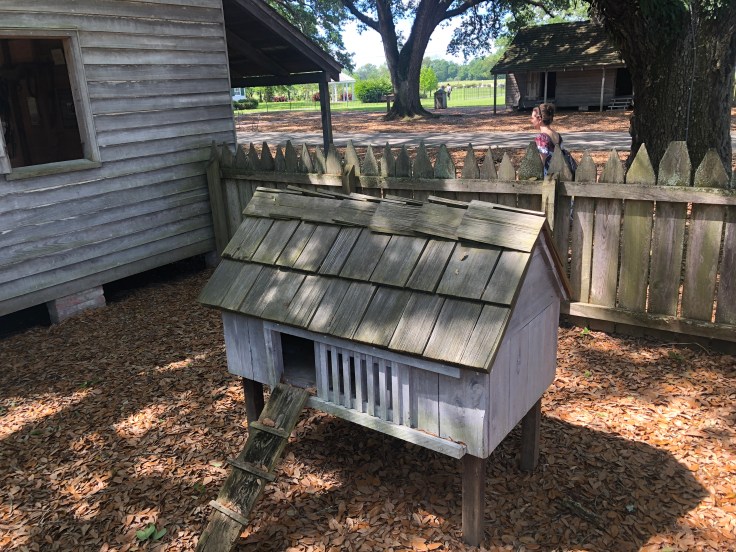
img_1820

A few interesting details…

The front door:
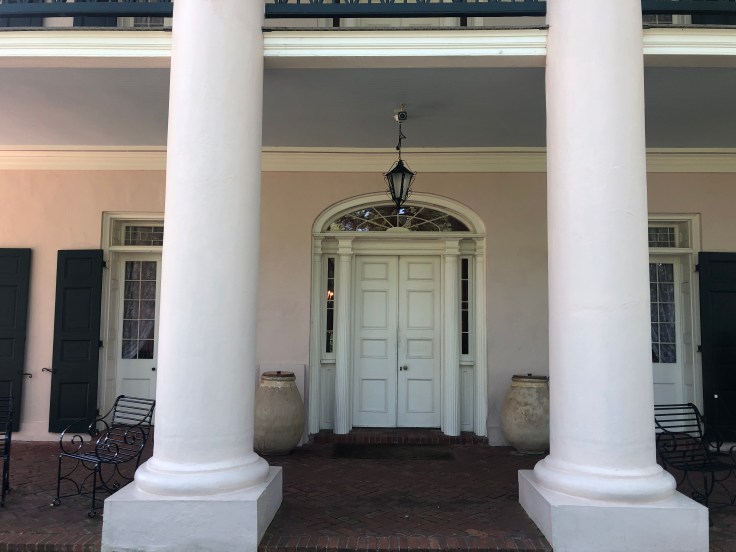
img_1804

The columns (as is the house) are solid brick, covered with plaster.  Sometimes historical accuracy gives way to modern technology…
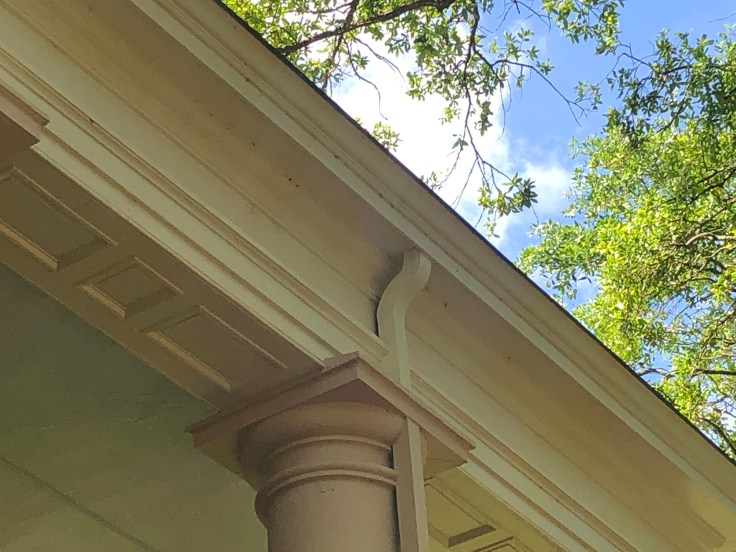
img_1805

This is an appropriate time to mention that these houses were made to look like Greek temples, which were built of stone.  Of course, the Greek temples were copies of Egyptian temples, which were built of wood…  So here we see plaster mimicking stone mimicking wood…

Most rooms have French doors:
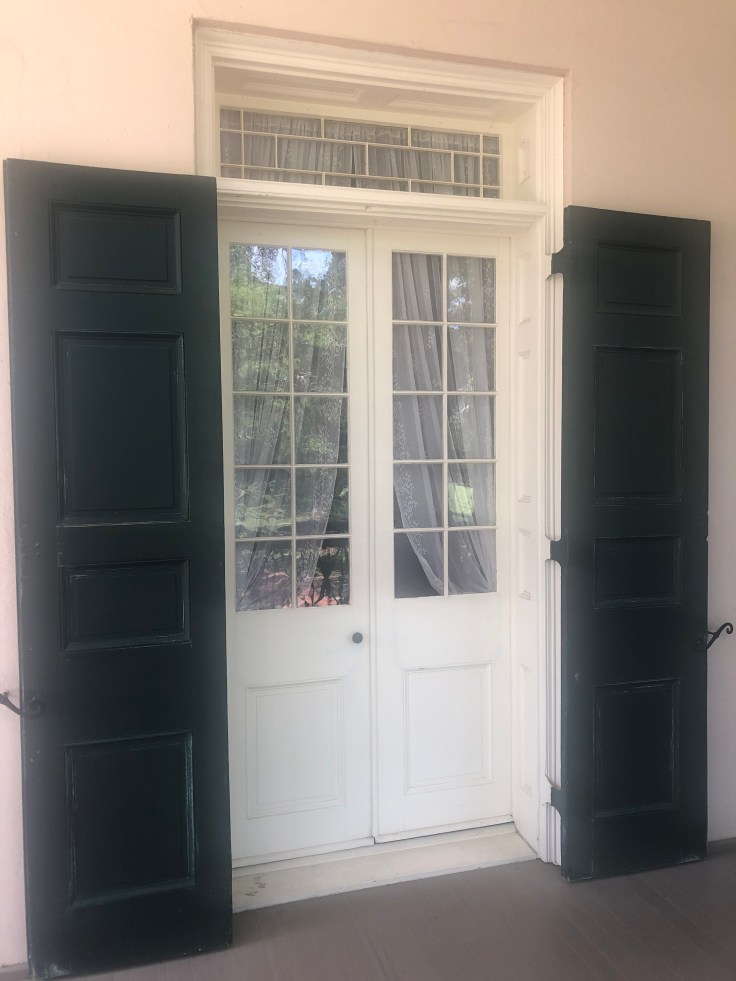
img_1809

Some rooms have windows to match the French doors…

img_1810

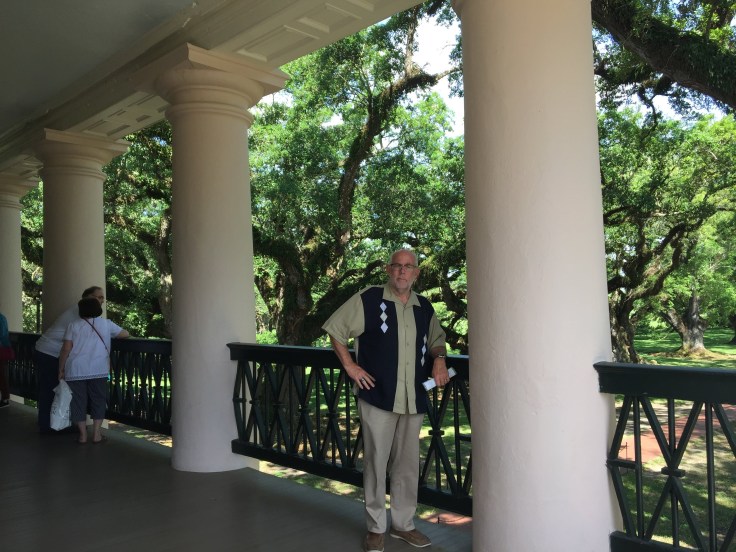
Typical tourist on the veranda…

img_7700

And so we moved on…

img_1821

Next stop is Evergreen…

img_1831

Evergreen was originally a simple one story three room house in the Creole style, raised up about six feet off the ground to ward against flooding.  It was built in the 1790s.

img_1827

In the 1830s the house was raised up so that three ground floor rooms could be added, and these stairs were added to give access to the main living quarters on the second floor.  In this way this house is very similar to Shadows.  Eventually the rear verandas were enclosed and additional rooms were added on the sides.

The entry door:

img_1834

Again, plaster and brick mimicking wood…

img_1835

The rear verandas were enclosed and exterior stairs became interior stairs.

img_1838

Gardens to the rear…

img_7717

The rear of the house…

img_1841

The kitchen in one of the dependencies…

img_7721

There are two VERY long oak alley’s here – one planted in the 1780s and one planted in the 1940s.  They are much longer than the alley at Oak Alley, but they are not centered on the Big House.

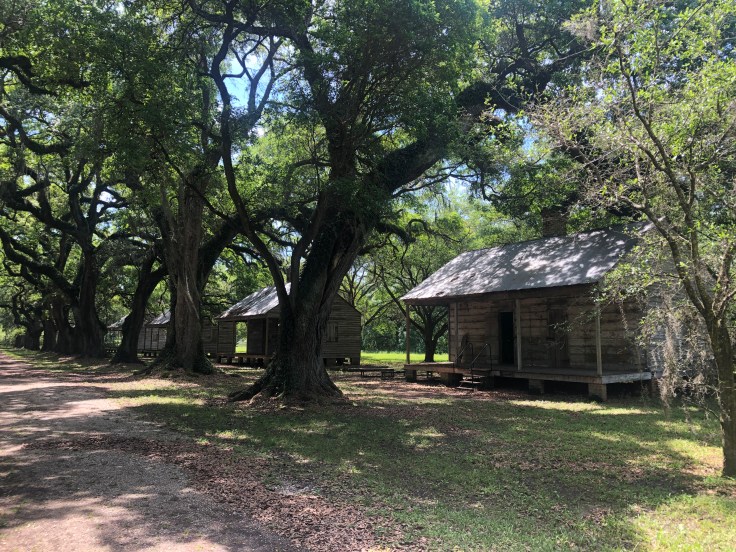
The interesting thing here is that these trees conceal the slave quarters…
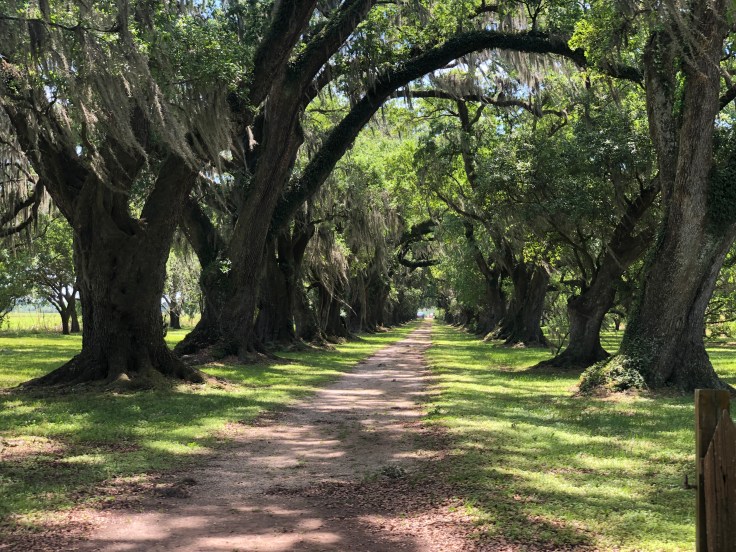
img_1844img_1848img_1849

These are the original slave quarters; after the war they were occupied by former slaves and hired workers until the 1940s…

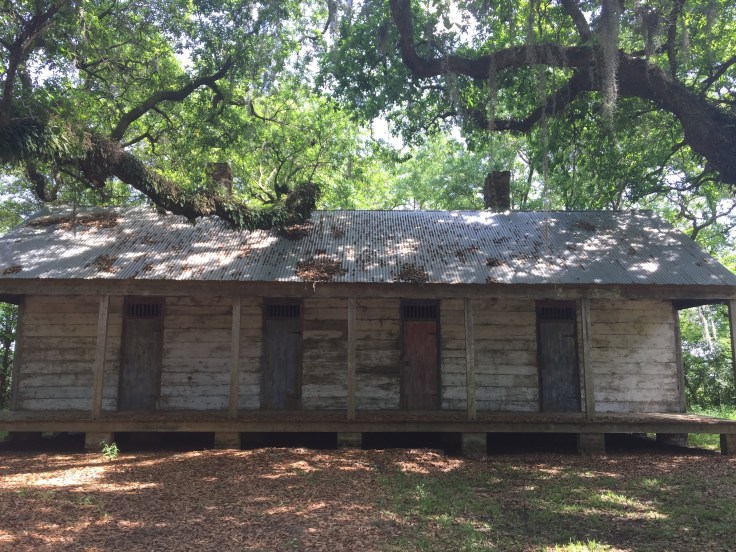
img_1851img_7724

Again, after the war the house was sold for taxes, and subsequently it was unsuccessfully operated as a farm.  Eventually the bank foreclosed and the Big House was boarded up.  However, the bank never noticed that more than 100 people were living on the property, both in the former slave quarters and in the various sharecropper houses further to the rear.  The people on the property let the house stay boarded up, but some of the former owners moved back in.  They let the grass grow un-attended and the place appeared to be abandoned.  But the people continued to farm the land and live in the many buildings.  In the mid 1930s the bank sold the property to a woman who had no idea that all these people were living here, but eventually they made a go of the farm.  This family still owns the property and it is still a working farm (although no one lives in the slave quarters, or the big house…).

This tour was less about the house and dependencies and the grounds than it was about pushing the agenda of the owners.  What we heard was that slavery was wonderful, slave owners were wonderful, slaves were happy and well taken care of, no slave-owner would ever mistreat a slave because it would hurt his investment and profits, and the slaves knew they would have to work somewhere, somehow, so they might as well be happy working as slaves.

Poppycock…

We moved on.  We crossed the Mississippi again:
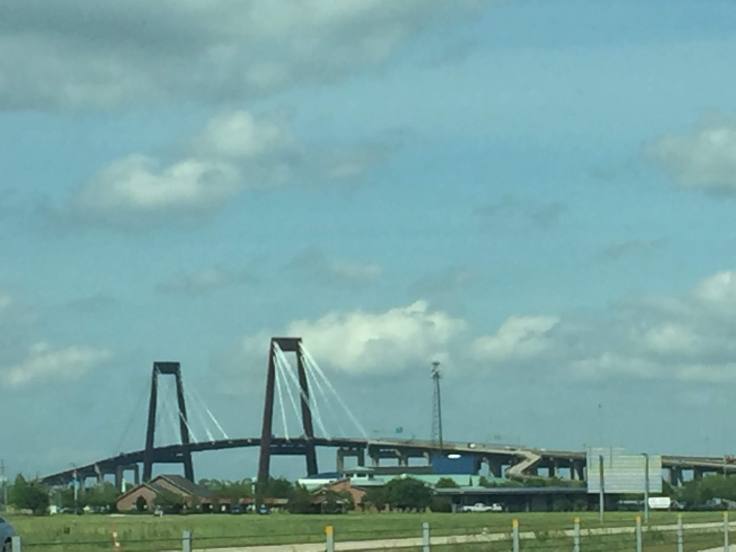
img_7725img_7726img_7729

Our third Big House today is called Destrehan.
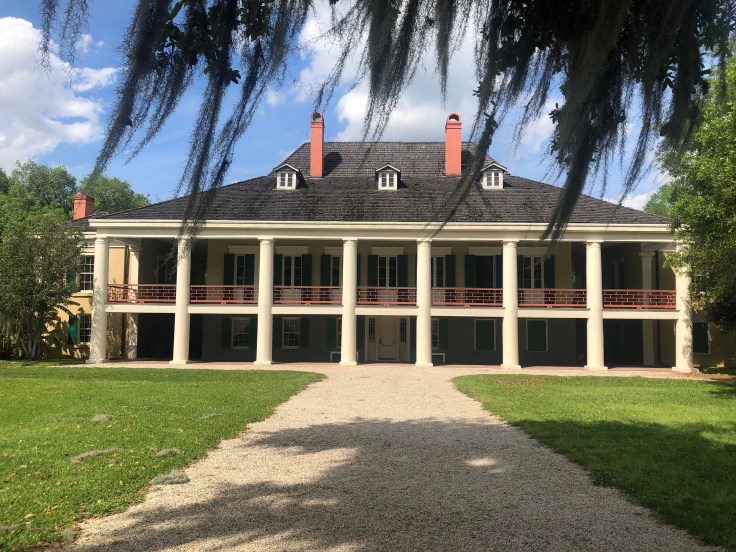
img_1856

Destrehan was also one of the oldest Big Houses, built in the late 1780s.  Originally it was a one story house build up above the ground similar to Evergreen, but after the river levees were raised they enclosed the ground level and enclosed the rear verandas.  During the Civil war the owner, who was a French citizen, abandoned the house and sailed for France to try to become the French ambassador to the Confederacy.  Obviously, that didn’t work out.  Federal troops took over the house in about 1863.  After the war they turned the house and grounds into a settlement house for freed slaves who had nowhere else to go.  The owner, upon returning from France, convinced the Feds that he had always been loyal to the North, so they gave him his plantation back.  The family continued to live in the house until 1916 or so, when the plantation was sold to an oil company.  An oil refinery was built and the house was used for offices and as a residence for the manager.  In the early 1960s the oil company torn down the refinery and abandoned the property.  The house was looted and ransacked by vagrants and squatters, and fell greatly into disrepair.  Finally a restoration society was formed and the house was restored.

This is the “warming Room, where the food was brought from the kitchen, plated, then delivered to the butler’s pantry before being delivered to the dining room.  I had never seen this arrangement before…

img_1860

When the rear verandas were enclosed they used this Egyptian motif for the door trim.  Note the tapered jamb casings…
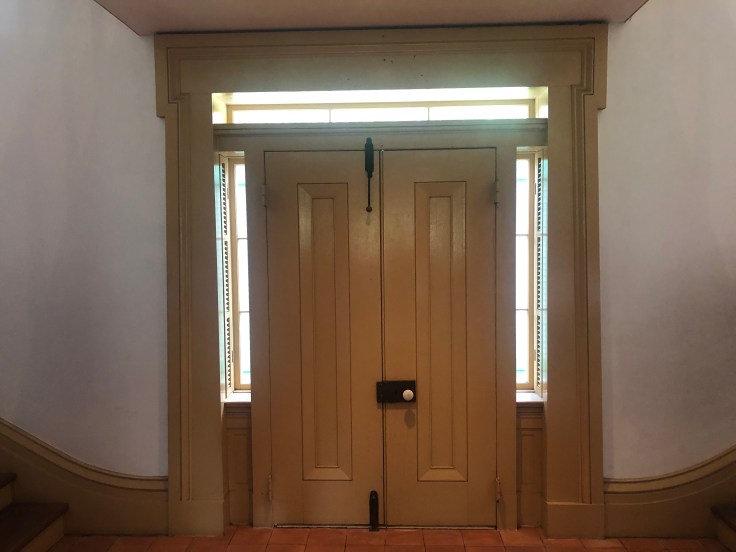
img_1861

The house originally had simple wood columns with corbels at the top.  Later, brick columns were built around the wood columns and a fascia was built to give the house its Greek revival facade.  But on the veranda you can still see the wood columns and their corbels… The wood columns still support the house today…

img_1863img_1862

The slave quarters are all reproductions, and they were originally not in this location directly behind the house…
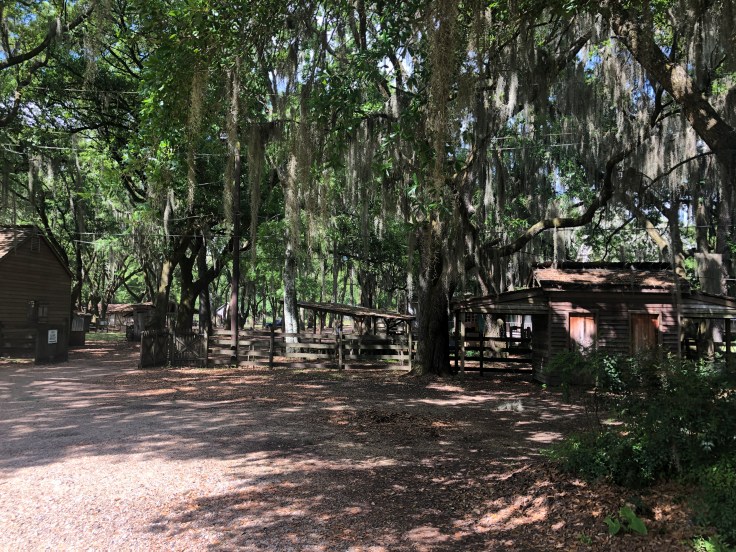
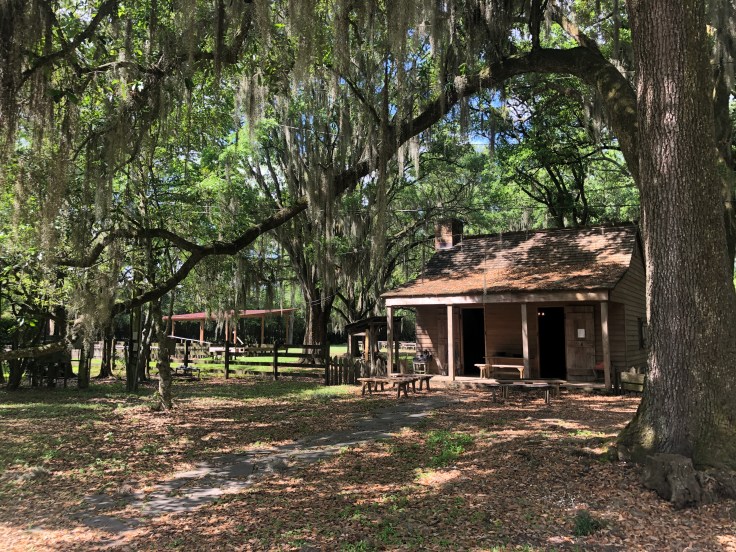
img_1857img_1858img_1859

I’ll save you from the more repetitive photos… after a while, all interior photos look alike…

The day was getting late.  We returned to the truck and the Villa and drove into New Orleans – the French Quarter…
img_7732

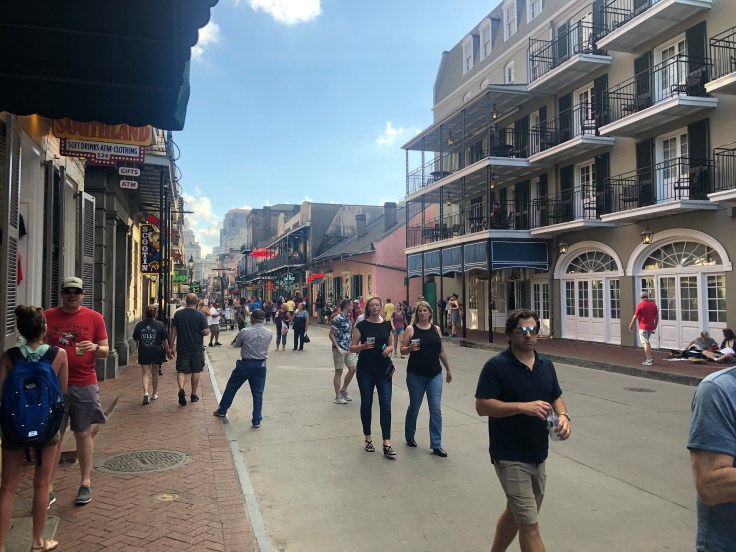
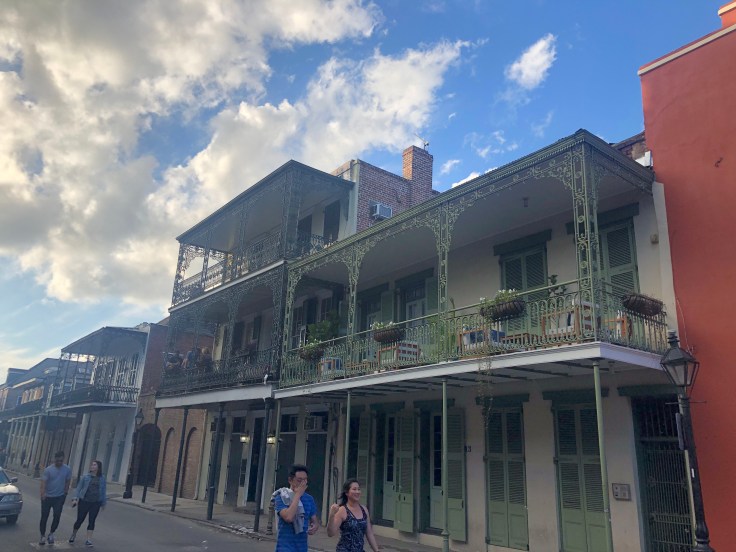
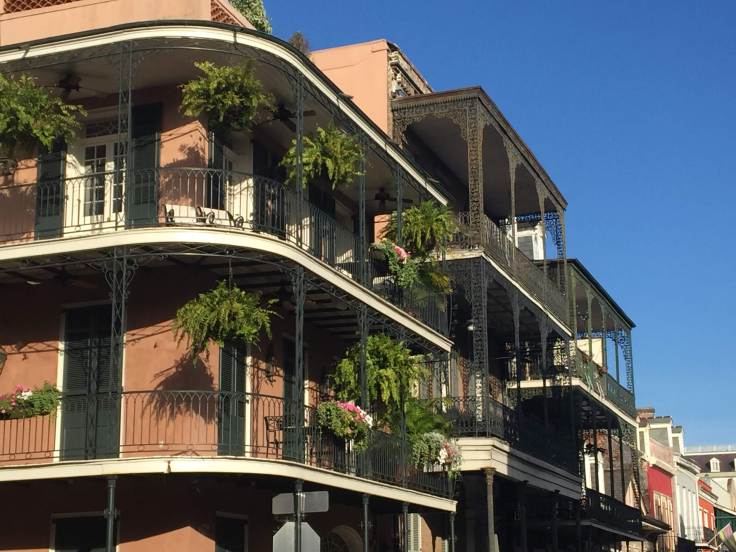
We parked the Villa in a parking lot at the Visitors Center and walked around a bit.  I think if the French ever saw New Orleans they would roll over in their graves… But some of the street scenes were interesting.

img_1866img_1868img_1869

img_1873

This streetcar was NOT named Desire…  These RR tracks run right along the waterfront.  Most enlightened cities today have removed RR tracks from their tourist oriented waterfronts…

img_1870

The Mississippi was still mighty…

img_7733

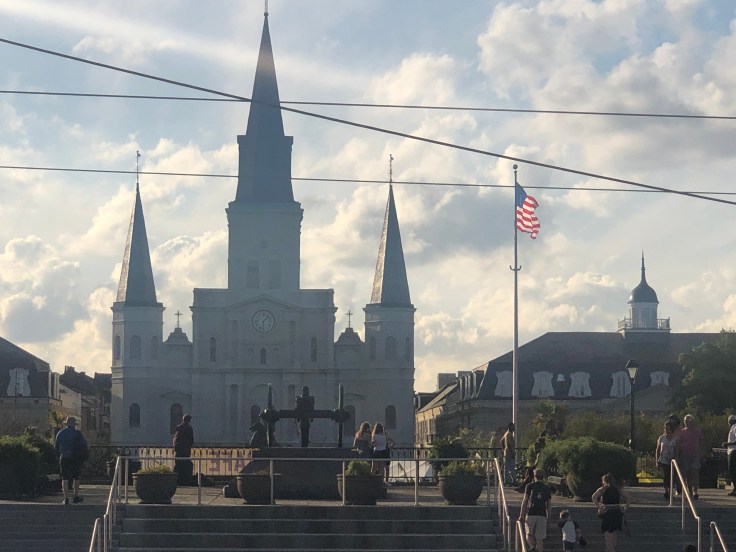
The massive basilica facing Jackson Park:  We’ll get a better picture tomorrow…
img_1872

We returned to the Villa, changed into our dress-up clothes, and walked to dinner at Meauxbar Bistro.

img_1968

I wish we had a place like this in Redlands.  Or any where in the IE, for that matter… Cozy neighborhood place, small bar, very French, but very contemporary menu and recipes…

img_1877img_1879

We each had two courses, which is more than either of us can comfortably eat, especially with a fine wine (Gigondas…)

Lynda ordered Pom Frites and Aioli, and their house special French Onion Grilled Cheese Sandwich, of which she could only eat one of the four pieces…

img_1880

I opted for two simple dishes – Escargot and Beef Tartare.  Both were fabulous and, since they were small appetizer courses, I could actually finish them…

We walked back to the parking lot, snuck into the Villa, and had a wonderful night’s sleep…

And an enjoyable time was had by all…

2019-04-10 – Airstream Cajun Country Caravan – Carencro and Lafayette, LA

Today was our last day of caravan activities… All we did was eat…

We began with breakfast in the meeting room, served by fellow caravaners.  Our local Airstream club always serves hearty breakfasts, which I always enjoy.  Eggs, bacon, sausage, pancakes, muffins, cinnamon rolls, casseroles, corned beef hash, yogurt, cereals, etc.  This was not one of those breakfasts…

img_1783

There were tiny silver dollar size blueberry pancakes.  Nice start.  Next we had what were reported to be beignets, but they were nothing like the beignets we’re familiar with.  As usual, they were covered with powdered sugar… But these were not puffy little balls – they were more like flat pancakes.  Maybe a regional thing…

Then… crawfish ettouffe, served over grits (a semi-edible combination of cornmeal and fiberglass…).  And ice cream on top.  I’m sorry.  Maybe the others enjoy food like this, but it is not part of my culture…

img_1784

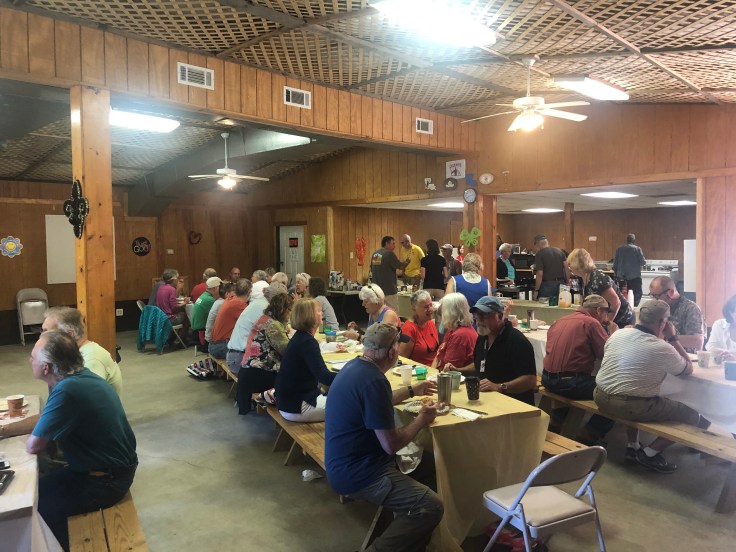
But it’s always fun hanging out with the group for a meal, even if we didn’t eat much…

img_1785img_1786

After breakfast we walked around the park again…

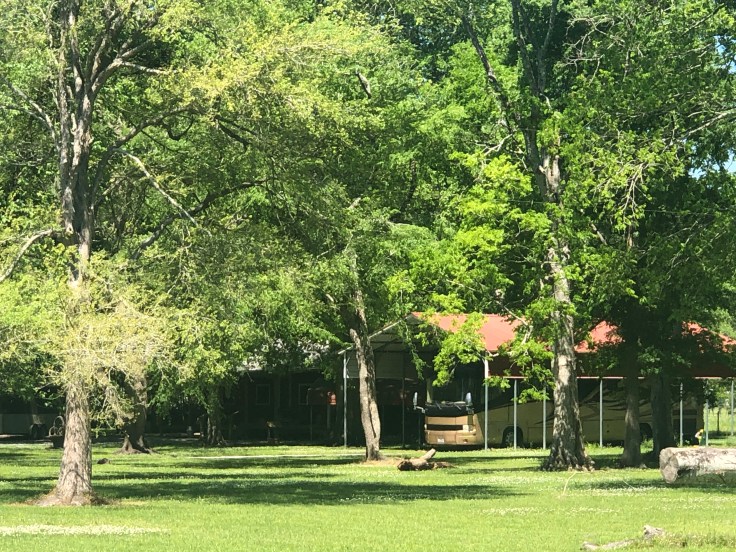
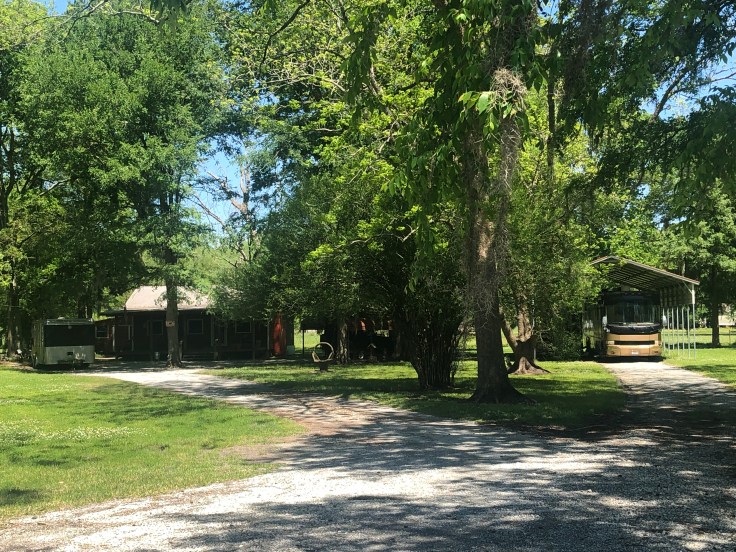
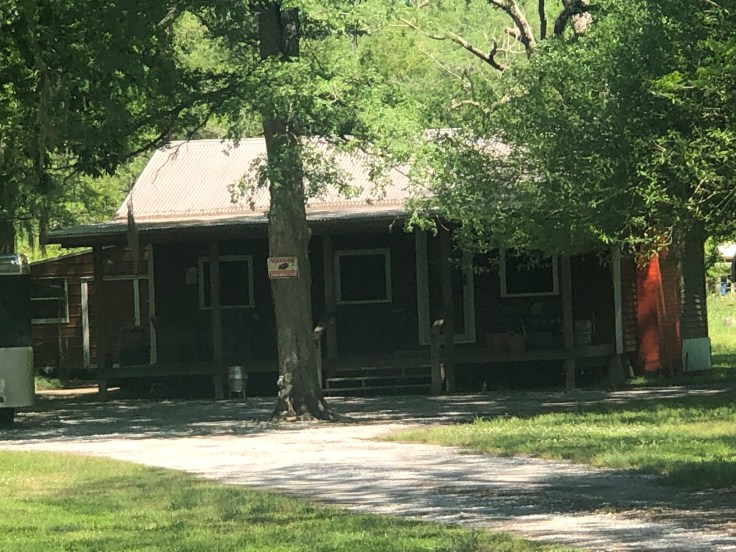
Adjacent to the campground there is a house with a motorhome in a lovely carport…

I’m sure the motorhome cost way more than the house…

img_1787img_1789img_1791

We prepared the Villa for travel.  Cleaned up, hitched up, slide-in, tanks emptied and filled.  Tonight is the final banquet, a long-standing tradition of these caravans.  Of course, in the not too distance past these were formal affairs, with dinner jackets and long formal dresses.  Thankfully, this is a thing of the past…

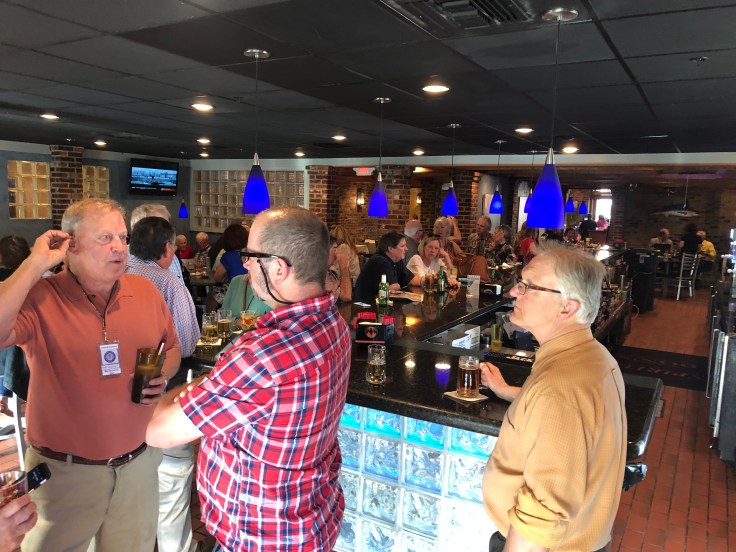
We gathered at an old Lafayette institution – Don’s Seafood and Steak house… We started with happy hour…

img_1792img_1793

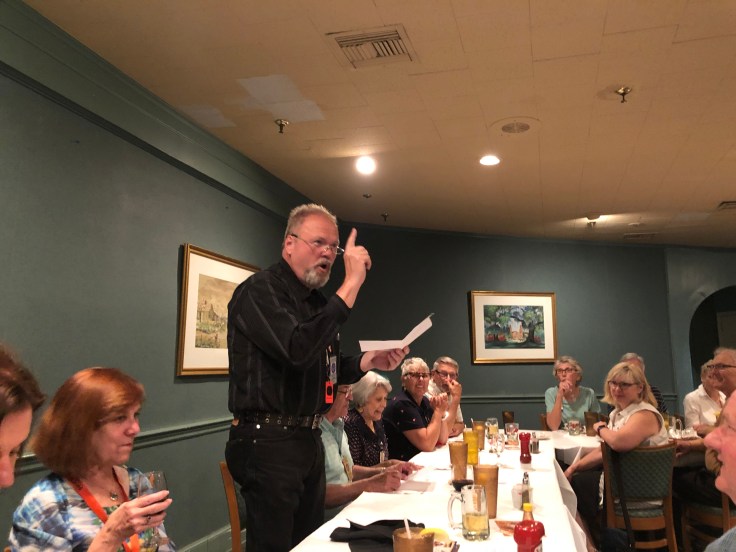
Then dinner and pronouncements…

img_1794

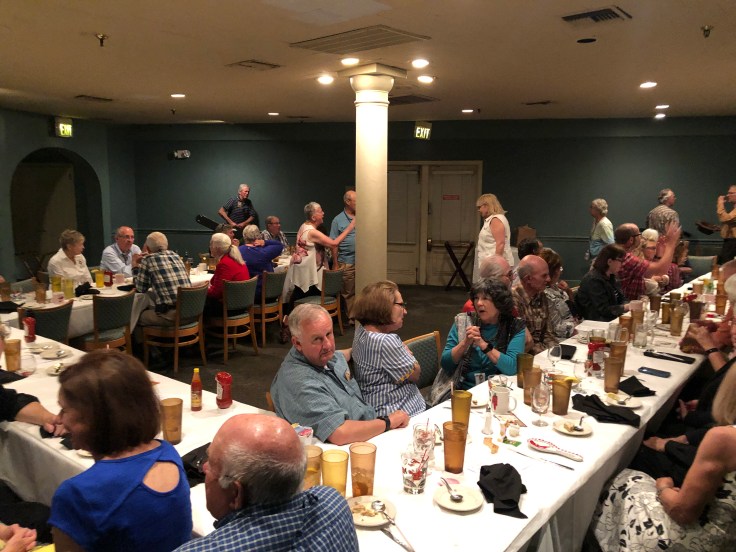
We were joined for the evening by a fellow Airstreamer, and a local Cajun himself.  Beaudreau is a common term for any Cajun, but this just happens to be his name. (Sorry – no picture)  He was the originator of this caravan and he lead it for many years.  He also told a few jokes about people named Beaudreau and Thibodeau… Ask me later if I remember them…

img_1795img_1796

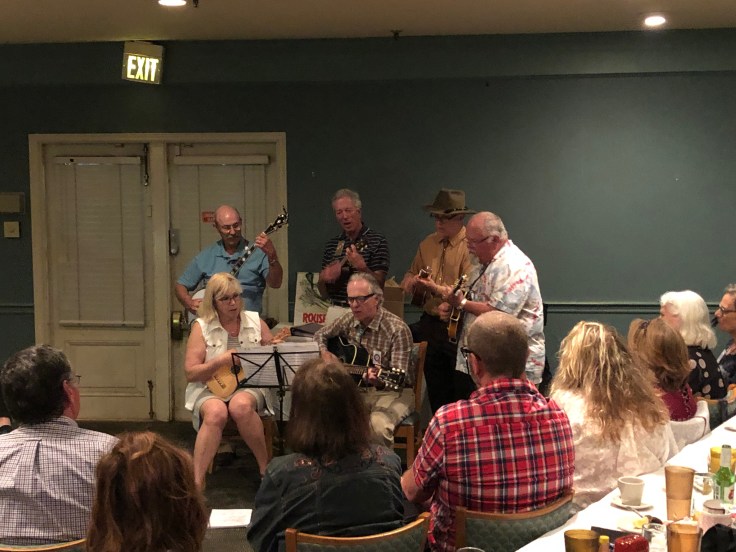
We were entertained by our own caravaners who had brought their instruments along…

img_1797

We bid our farewells to our new friends, some of which we will see again in two weeks in Kentucky…

And an enjoyable time was had by all…

2019-04-09 – Airstream Cajun Country Caravan – Carencro and Lafayette, LA

We began our day again with a nice walk around the perimeter of the campground… Yesterday I posted this field of colored weeds.  Today the horses were out standing in their field…

img_1698

The swamp is looking as swampy as ever…

img_1699

Today we have our last official caravan outing.  We carpooled out to central Lafayette to the Vermilionville Historic Center.

img_7645img_7646

This is the Vermilion River or Bayou.  The river has a reddish hue.  The town was originally named Vermilionville after the river; in the early 19th century the Catholic Church created a new parish in this area called Lafayette, so they renamed the town… This location is not the original city center – the Cathedral we saw  yesterday was at the original city center.  This land was originally one of the many plantations surrounding the city, and the buildings we saw were either moved here or they are re-creations of typical buildings of the era.  This place is very much like the Rural Life Museum that we saw in the first days of the caravan, so I will try not to repeat information here…

We spent about two hours walking the various buildings.  Again, the guide was really not interesting to me, mostly talking about the families, weaving, crocheting, and nonsense like that.  I wanted to know more about the architecture and construction techniques I was seeing, but she was clueless…

But the buildings are interesting in their own unique way…

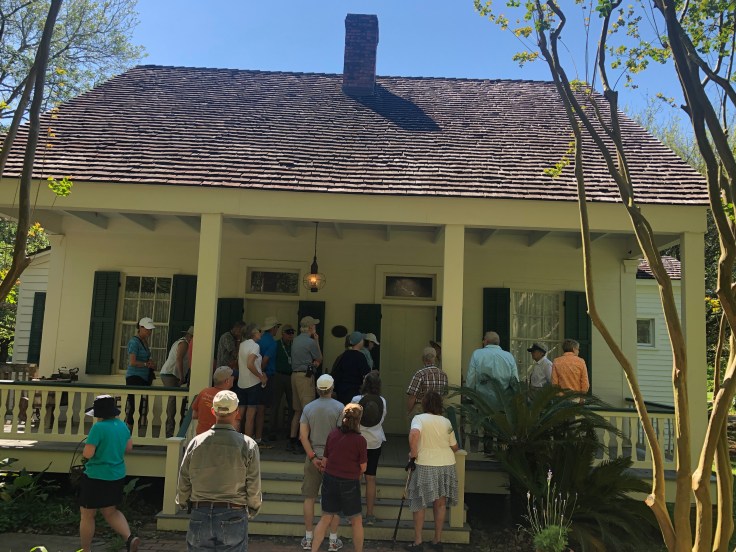
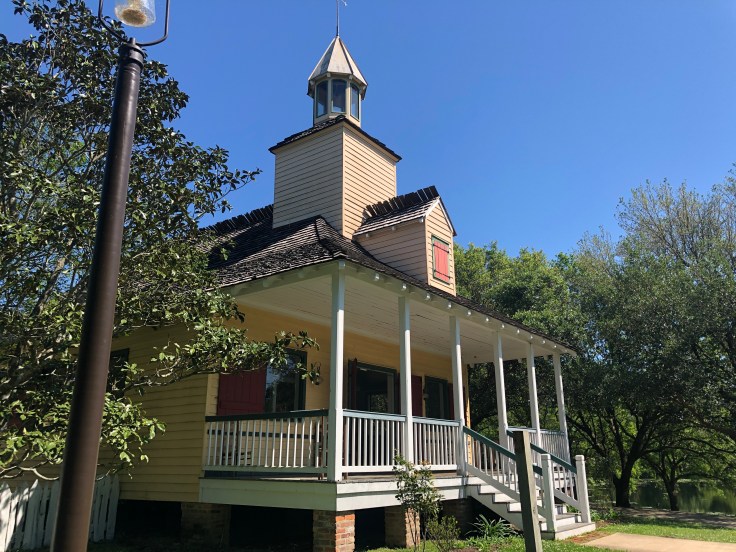
This is a large Acadian plantation or ranch home from the early 1800s .  It was very substantial, obviously owned by a prosperous land owner.

img_1705

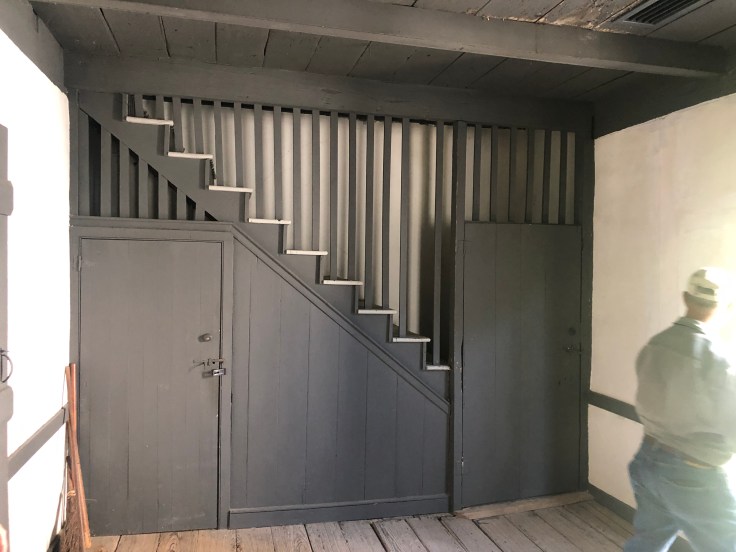
It did have an interior staircase…

img_1708

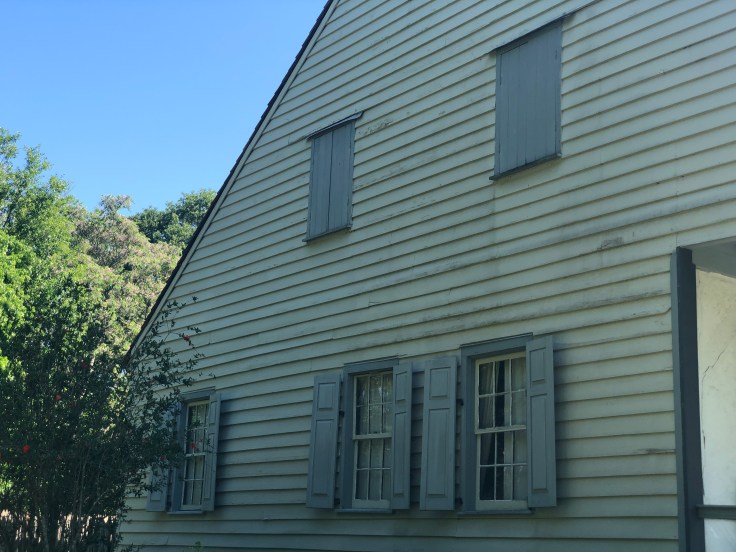
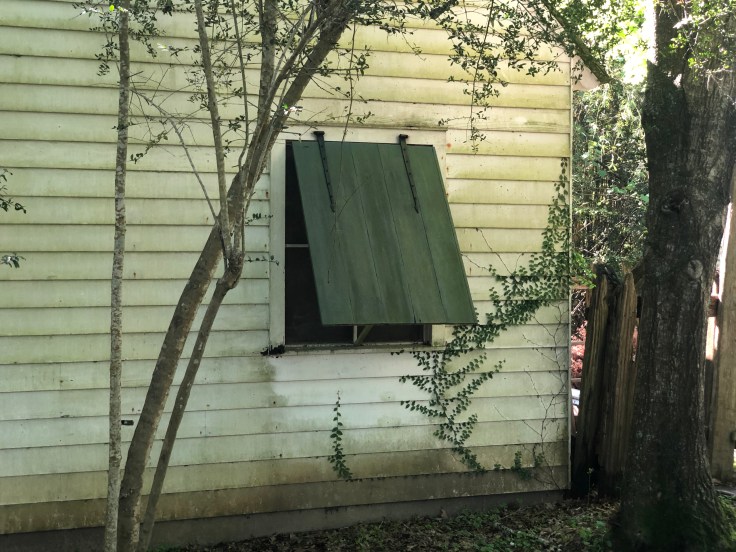
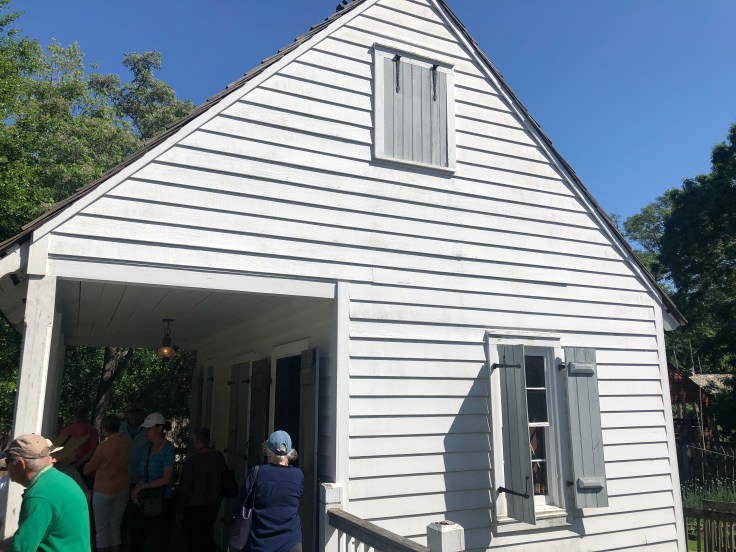
I immediately noticed the shutters.  Some are hinged like doors, and some are hinged at the top.  I asked if this was just a personal preference or was there a functional reason to use one or the other?  The guide was clueless – I don’t think she understood the question, maybe she never noticed that they were different, or maybe she didn’t know what shutters were… All the houses had different configurations:

img_1702img_1701img_1711img_1715

img_1770

As we walked amongst the houses several opinions and ideas were expressed, but as soon as we thought we had a good theory going the next house proved us wrong… I guess that just did whatever they wanted…

This next house is an urban house, built in central Lafayette in the 1880s, post-Civil War.  What was neat about this was that the original house is in tact, but they were also showing the additions, made in the 1920s, of a indoor kitchen and bathroom…

img_1720

Another interior stair…

img_1725

1920s bathroom:

(I have the same bathtub in my 1905 house…)

img_1728

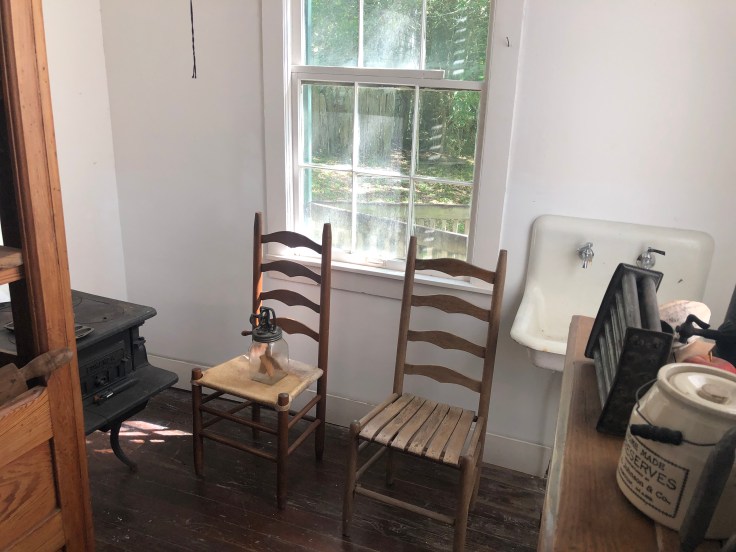
The kitchen:

img_1727

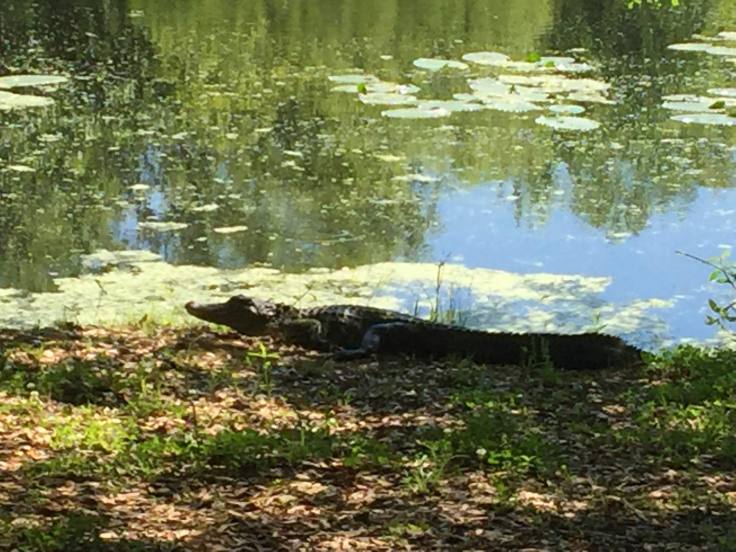
We strolled near the swamp.  Wait!  Is that a… an alligator!

img_7663img_7659img_7657

He seemed harmless enough.  Alligators are not naturally aggressive – he slinked away into the lake as we walked nearer.  (Crocodiles ARE very aggressive…!)

This is the church and the pastor’s house…

img_1730img_1733img_7654

This next house has an interesting floor plan, and it helps to explain some other features of these various houses we have seen on the caravan…

Note the layout here in this exhibit:

img_1739

The center front room is the “great Room” for living, dining, and entertaining.  To the right is a bedroom for the younger children; to the left is the room for the parents and infants.  Behind the parents’ bedroom is a bedroom with no door except into the parents’ room; this was for the older daughters.  Behind the children’s room is a bedroom with no door except a door directly onto the rear porch.  This was for the older boys.  All older boys had jobs, either on the plantation or ranch, or as an apprentice at a local tradesman’s place.  The boys slept here, but they often had their own schedules that might have been different than the family’s; also, they may have taken meals away from home.  Thus they needed their own entrance so that their comings and goings did not disturb the family…

Door to the older girls’ bedroom directly from the parents’ bedroom…

img_1742

Door to the older boys’ bedroom directly on the rear porch…

img_1744

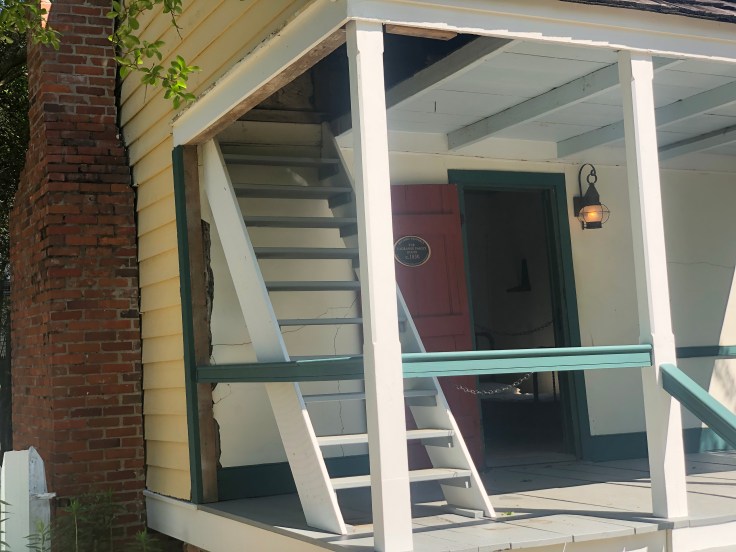
This concept also explains why these exterior stairs that we have been seeing also made sense – the older boys slept upstairs, but they had their own entrance…

img_1737

img_1778img_1768

One mystery solved, another mystery still unsolved…

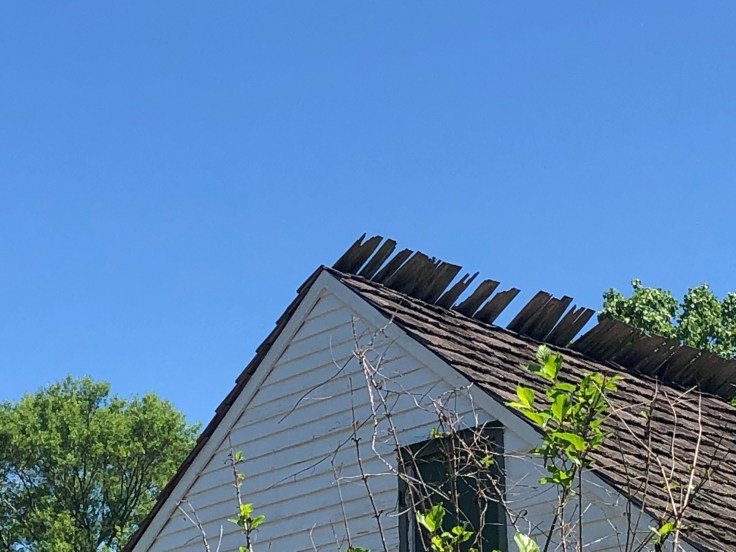
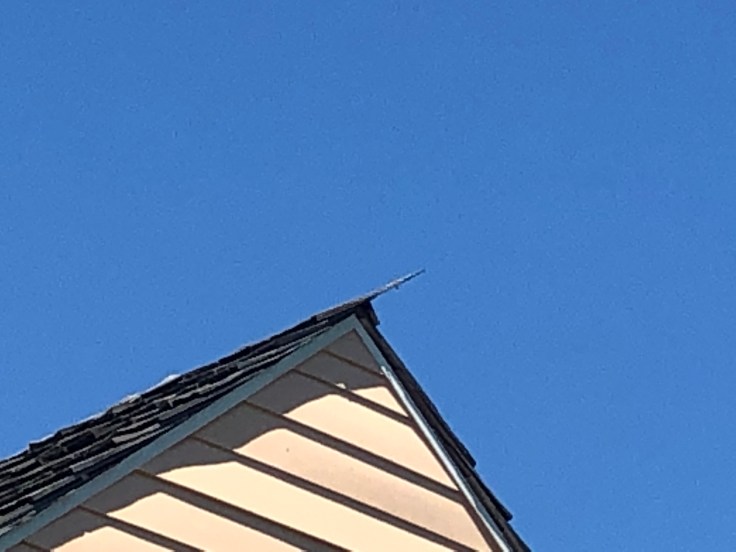
At the Rural Life Museum I had asked about these weird ridge shingles.  I asked here again, to no avail… Some houses have them, some don’t; they face all directions, so prevailing winds wouldn’t determine anything.  There was no consistency between Cajun, Creole, French, or Spanish influences…  I guess we’ll never know…

img_1756img_1757img_1758img_1759

This is the school house from the 1920s.  Note the Spanish Moss in the trees:

Also note:  It is not Spanish, nor is it Moss.  It is an air plant an (epiphyte), which takes its nutrition from the air.  It is not a parasite, and it does not harm the tree… Its proper name is tillandsia usneoides.  It is a bromeliad—a perennial herb in the pineapple family, and most bromeliads, including Spanish moss, are epiphytes.  So there you have it…

img_1763

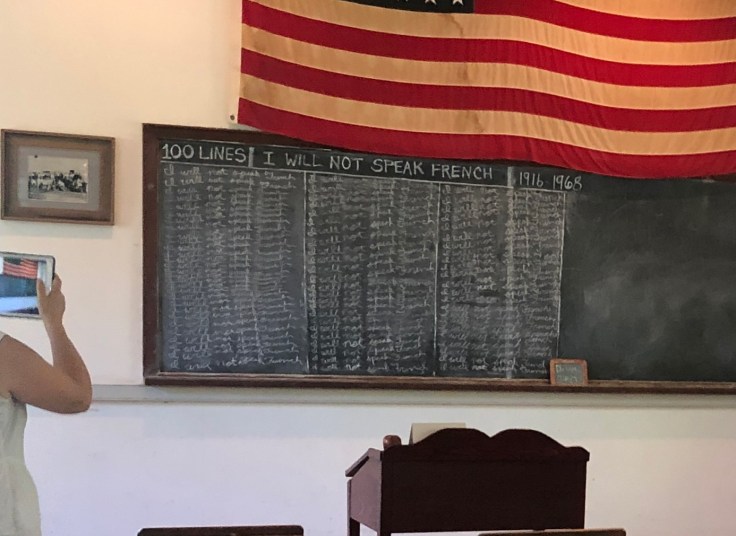
In 1916 Louisiana banned the speaking of French in the public schools.  Here we see on the blackboard that some student had to “write lines”.  They read, “I will not speak French”.

img_7664

img_1764

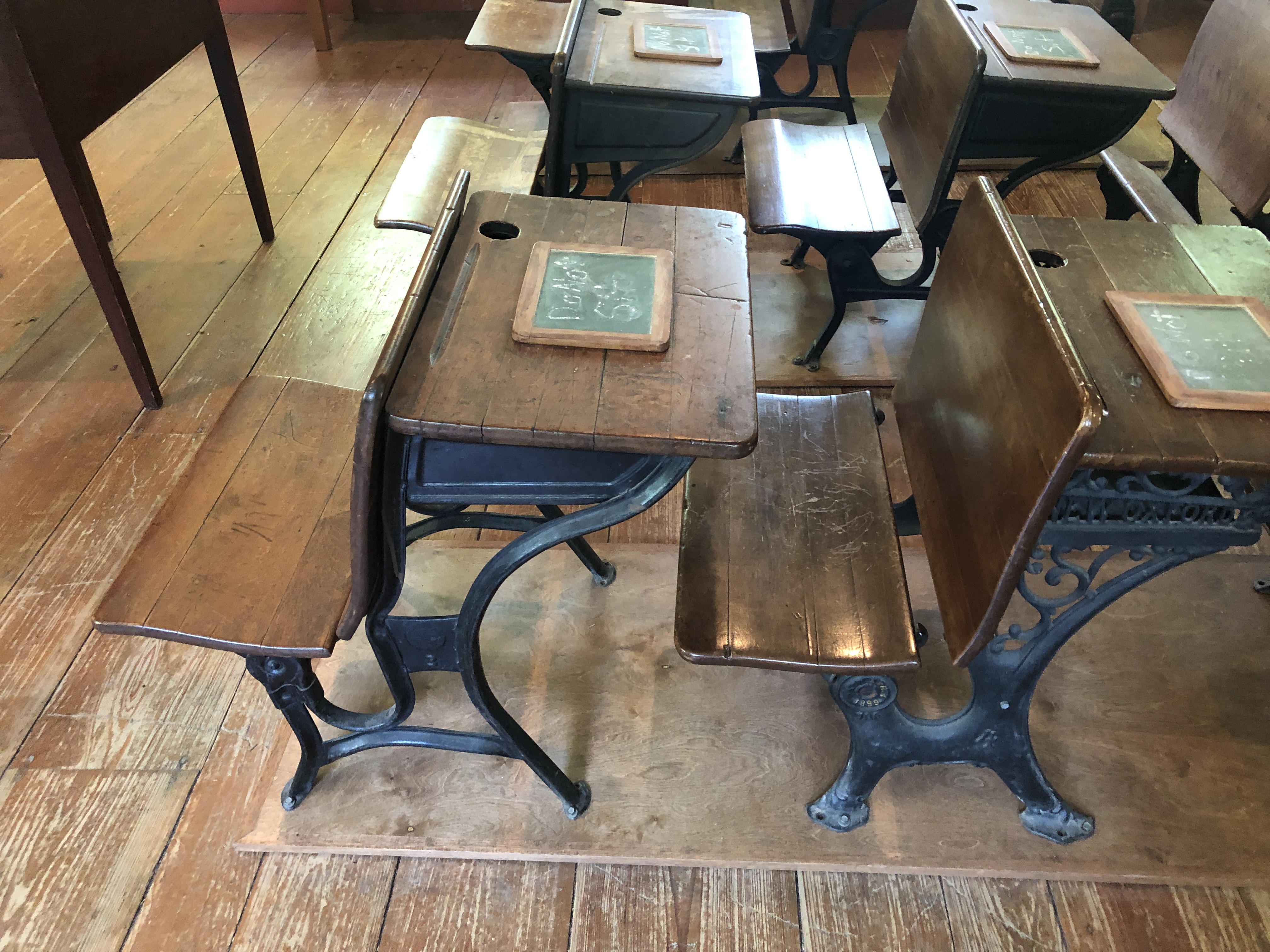
Not that I’m dating myself, but the two-room schoolhouse I attended in my early years had desks exactly like this…

img_1765

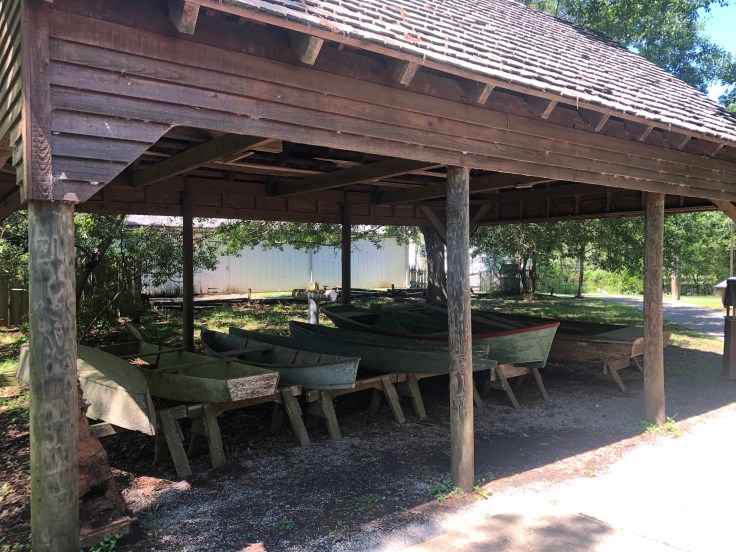
Some other utilitarian buildings:  The boat house:

img_1772

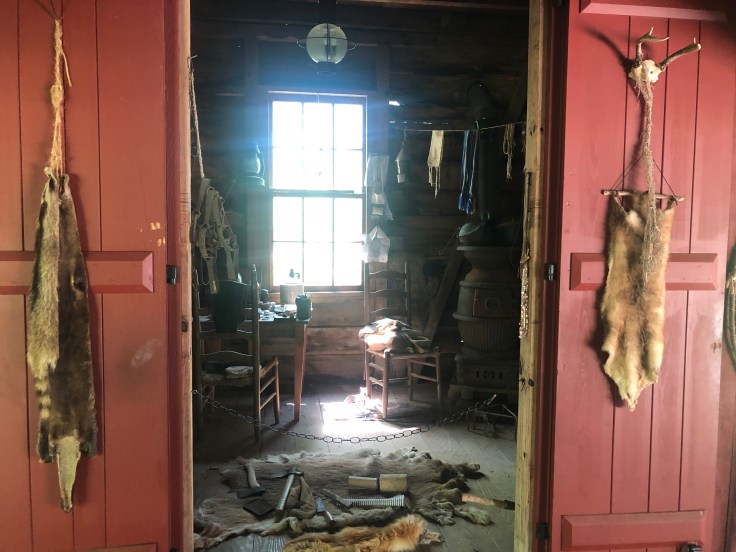
The trapper’s cabin:

img_1773img_1774img_1775

After over two hours of wandering amongst these great old buildings we enjoyed lunch in the museum’s cafe – Red Beans and Rice, Chicken Gumbo, and Shrimp Po-Boys.  Very good!

We returned to the truck, and Lynda found several Egrets nearby…

img_7672img_7673

We turned to the Villa.

That evening Lynda joined into the fun of Left-Right-Center…

img_1780img_1782

And an enjoyable time was had by all…
Blog at WordPress.com.

Up ↑