Search

Adventures in the Villa

Category

Caravans

2018-09-04 – WBCCI 2018 Southwest Adventure Caravan – Day 17 – Goosenecks State Park, Muley Point, Moki Dugway, and Natural Bridges National Park

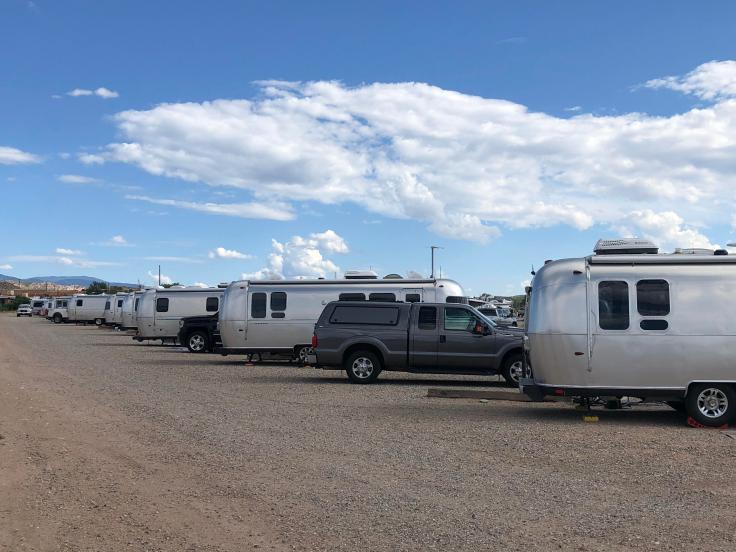
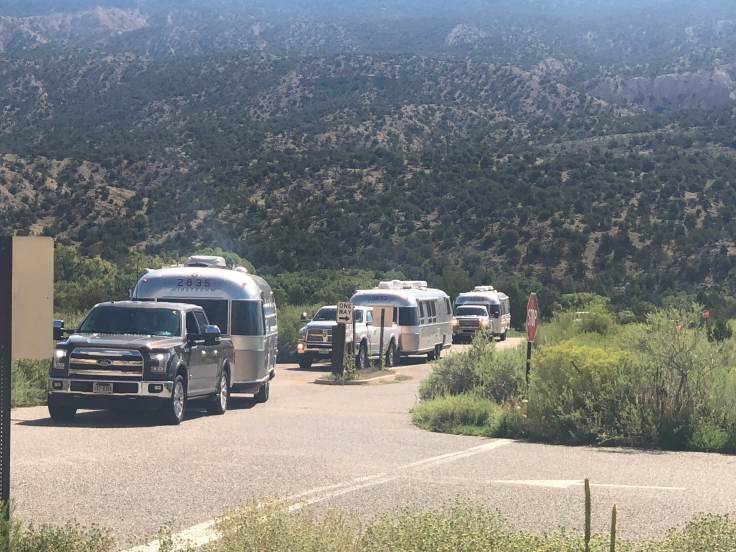
An exciting day exploring Southern Utah in a pickup caravan… We carpooled, but there were still 15 trucks in a row…

img_7229

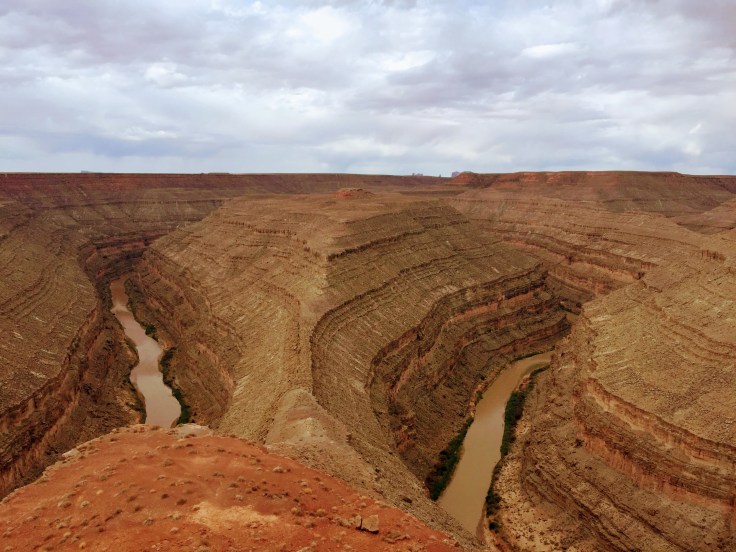
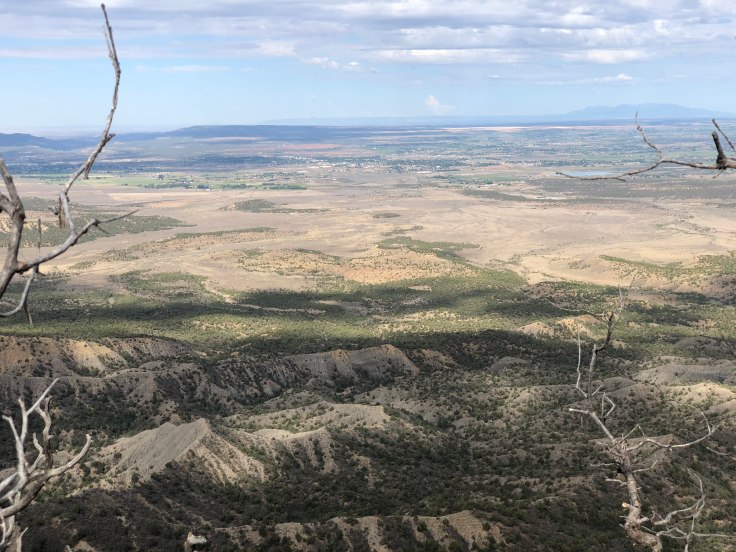
Our first stop was Goosenecks State Park, overlooking a deep meander of the San Juan River. The park is located near the southern border of the state, a short distance from Mexican Hat, Utah.

A “meander” or restrained meander, is a river that cuts its way through the many layers of various types of stone to form features such as this…


img_7140

What is fascinating to me is how this happened… This river wasn’t just flowing along the top of a mesa and over time carved its way down.  No, the water was always flowing at this level, meandering along a wide, flat plain.  It was the plain that was pushed up by volcanic pressures, and the river and gravity fought back, carving the many layers of stone.

img_7139img_48761img_4877

The river is about 1,000 feet below the mesa at this point…

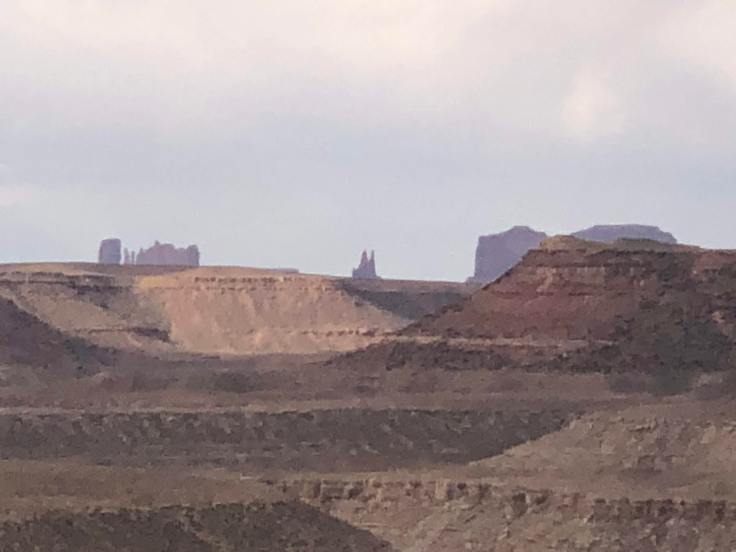
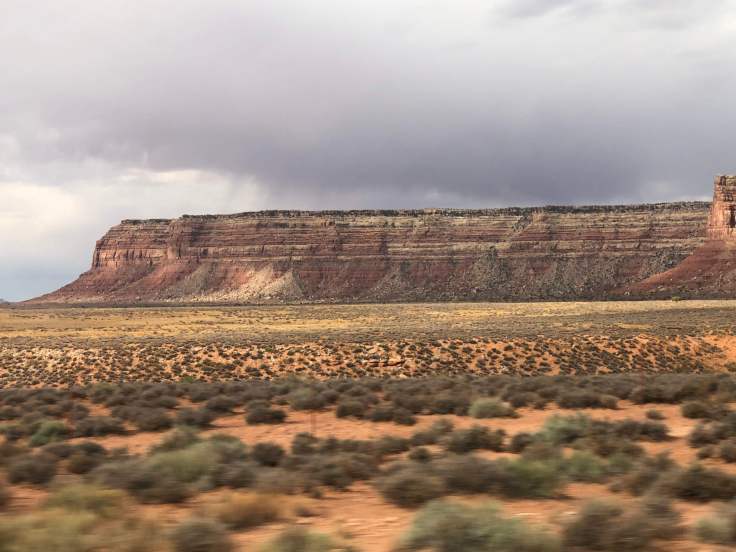
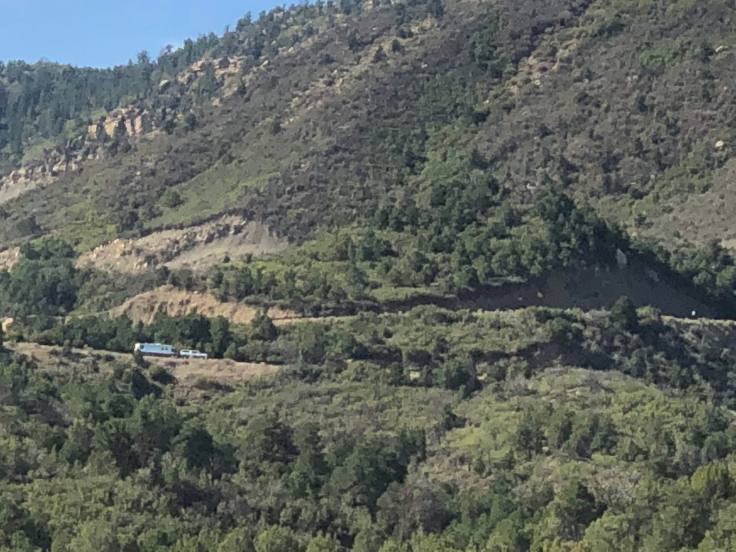
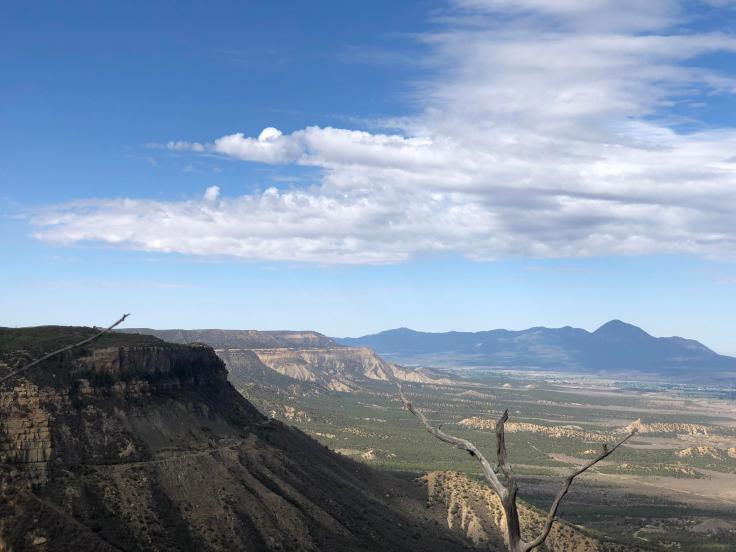
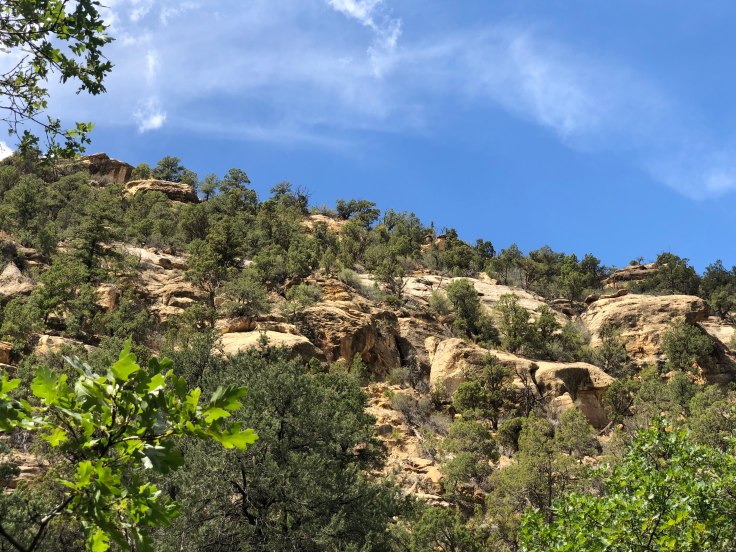
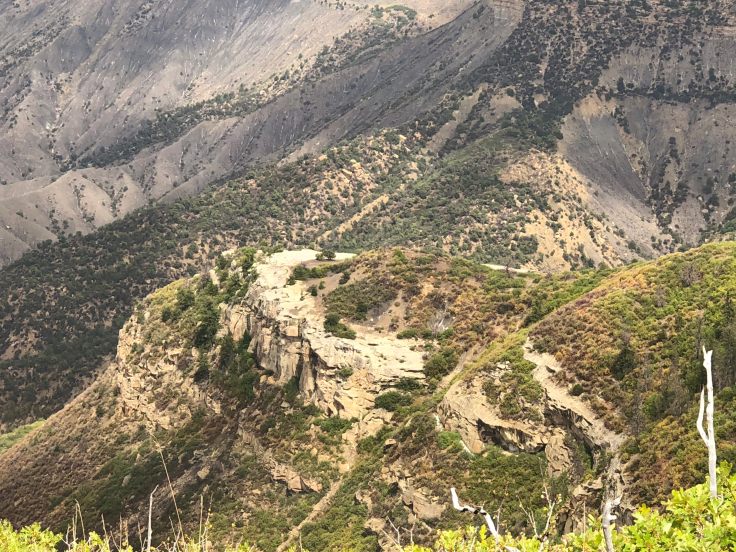
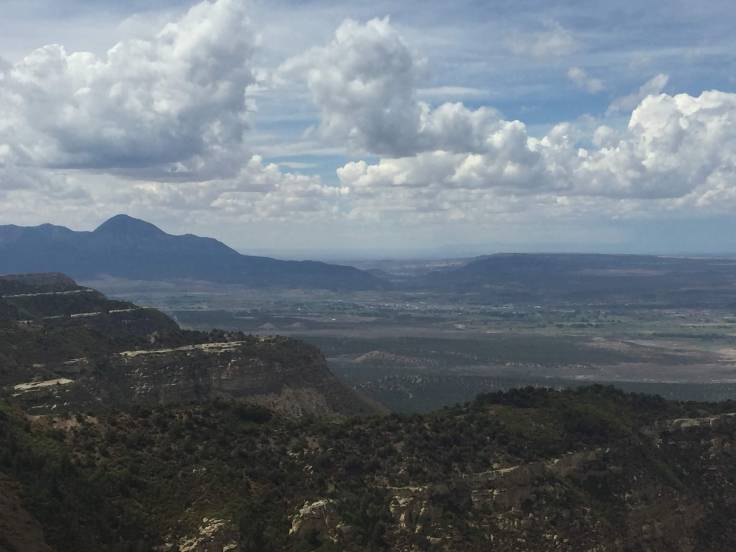
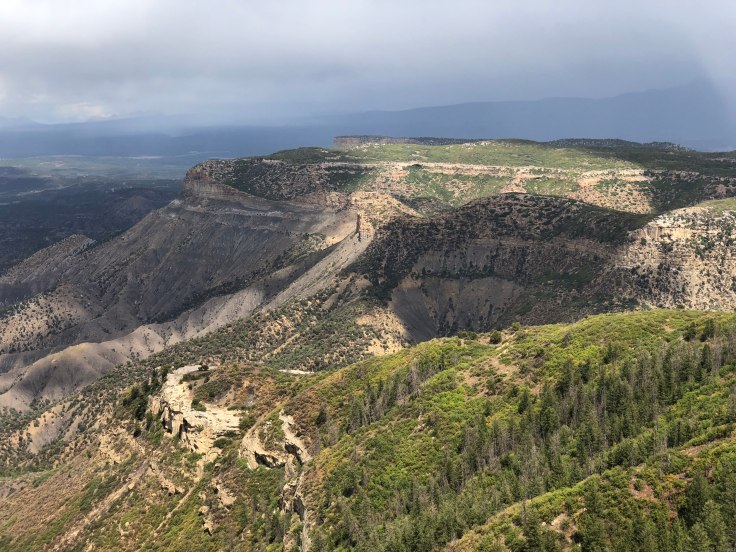
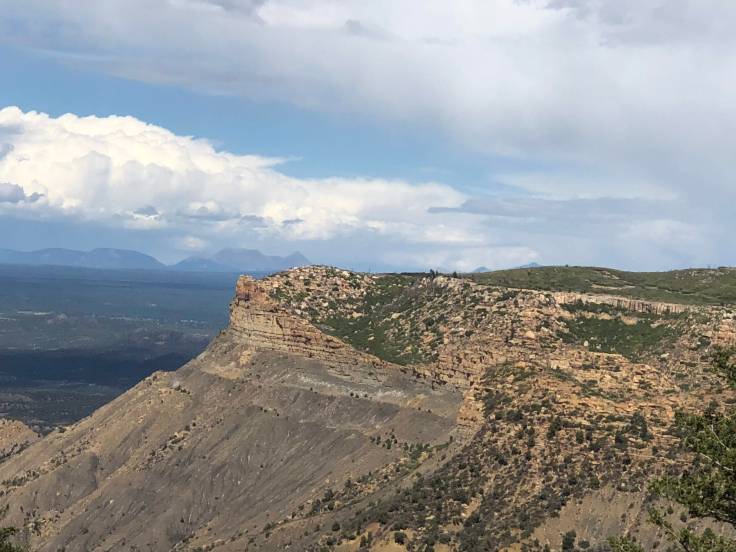
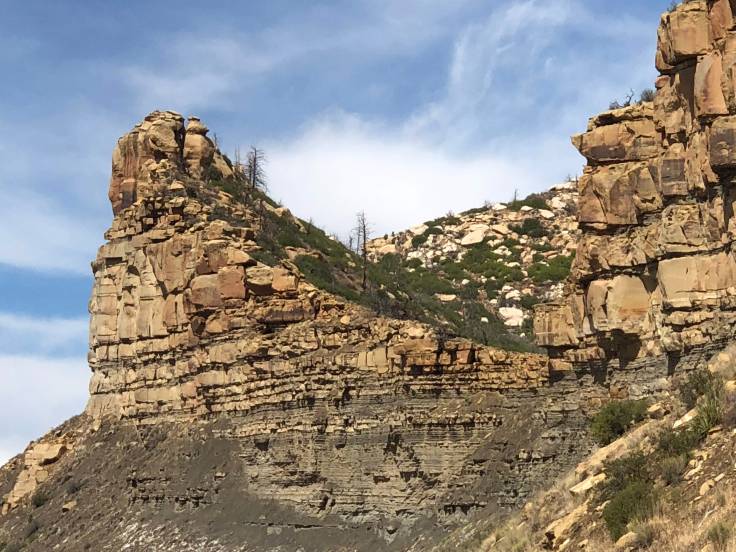
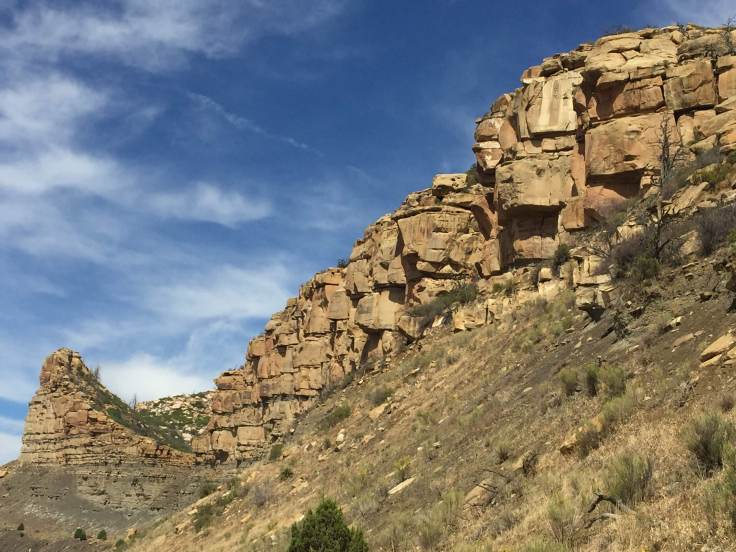
From here, we headed to the Moki Dugway, which is the access road to Muley Point.  In contrast to Goosenecks, where the river was 1,000 feet below us, Muley Point is 1,000 feet above us, and the Moki Dugway is the way to get up the “mountain”.  (Many of the caravaners are from places like Florida or Texas, so they are not familiar with real mountains…)  Along the way we saw more impressive sights…

img_7141img_7143img_4883

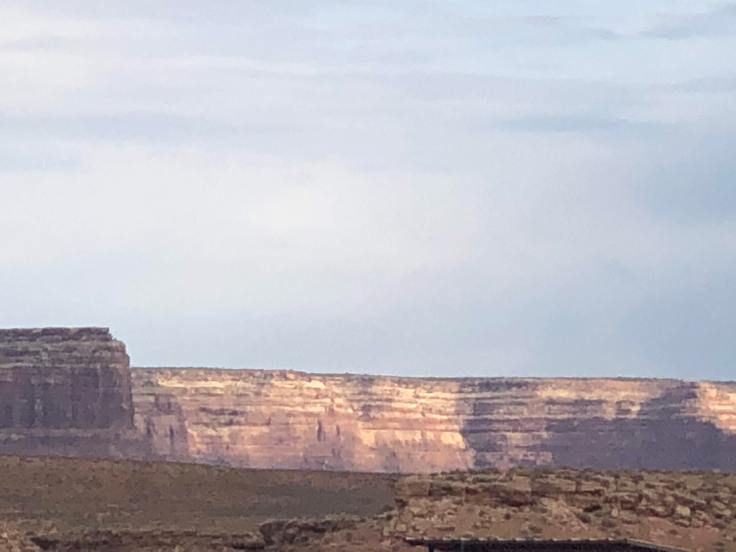
This is Muley Point, at the end of the mesa on the left…

img_7148

The Muki Dugway was the access road carved into the side of the plateau to be used for access to uranium mines many years ago.  Some found it frightening (there are no guardrails, it is very narrow and steep, and it is a gravel road…).

img_7156img_7161

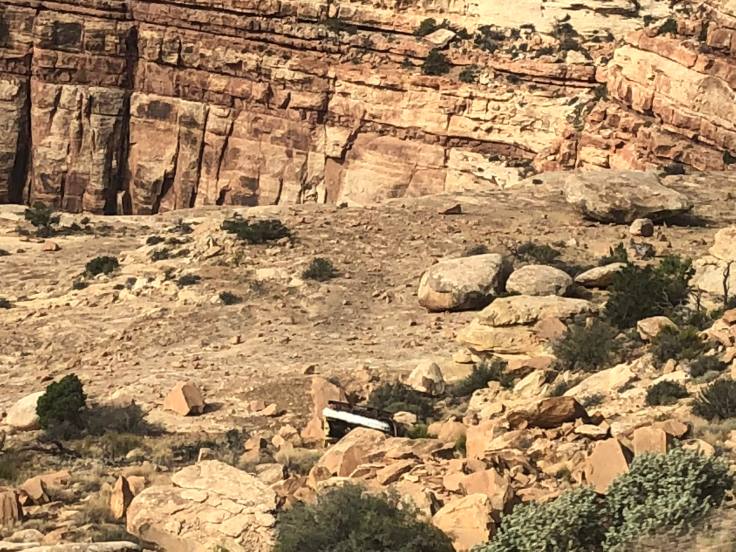
I thought that car down this steep embankment might have been one of the caravaners from last year, but I was informed that it was not…

img_7167

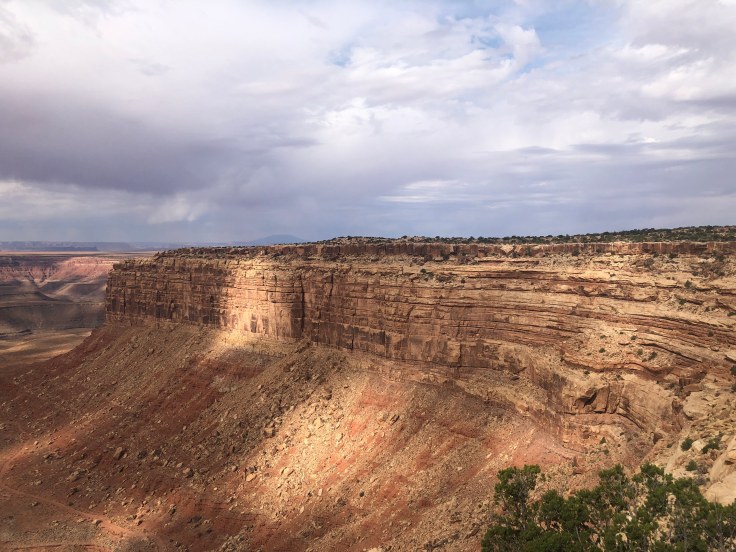
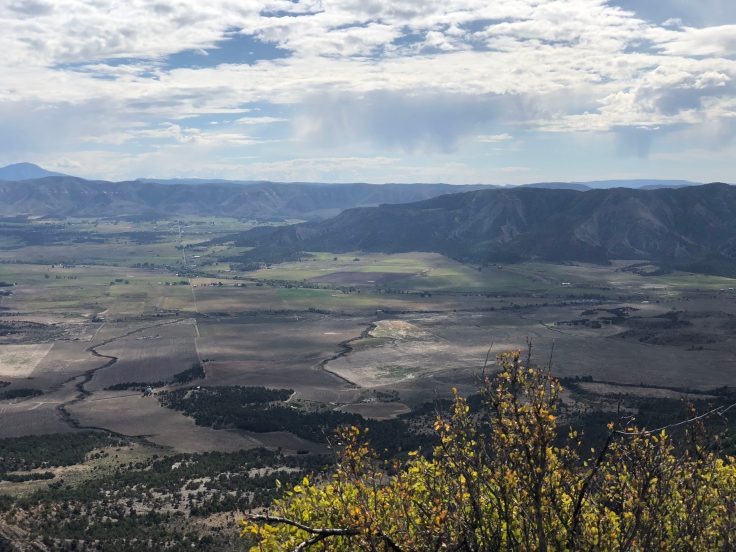
As we arrived at the top we were treated to more fabulous views…

img_7171

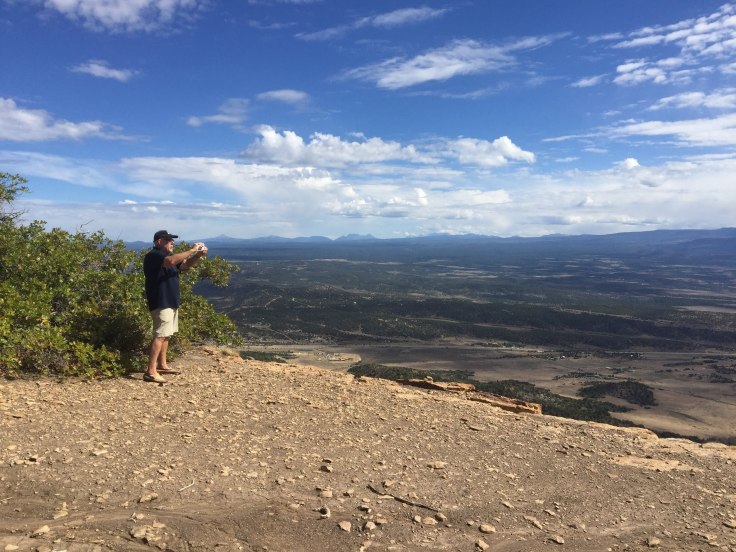
I even took a picture!

img_4889img_7177img_7178img_7185

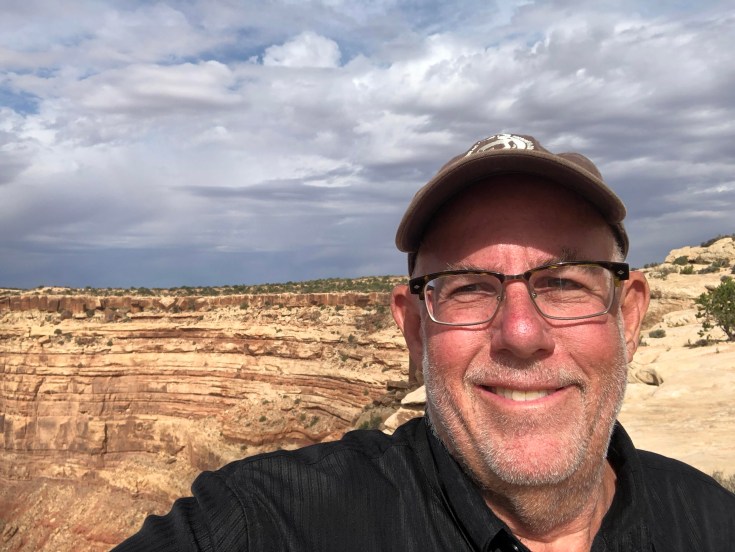
And a selfie…

img_7192

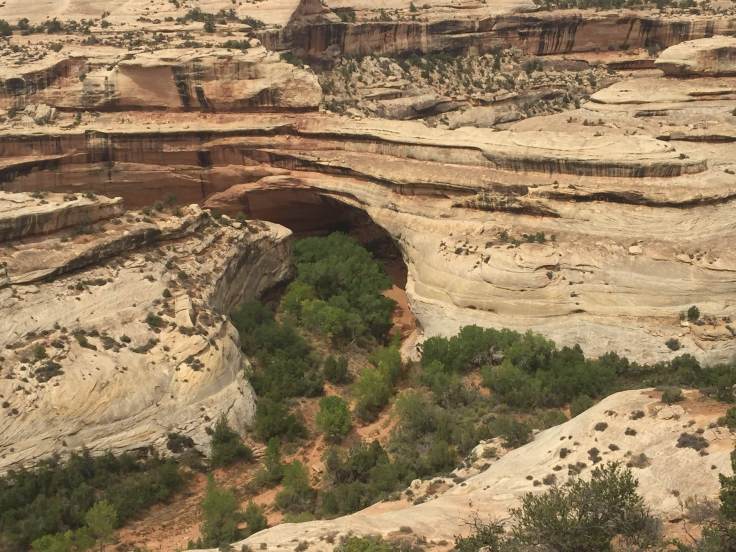
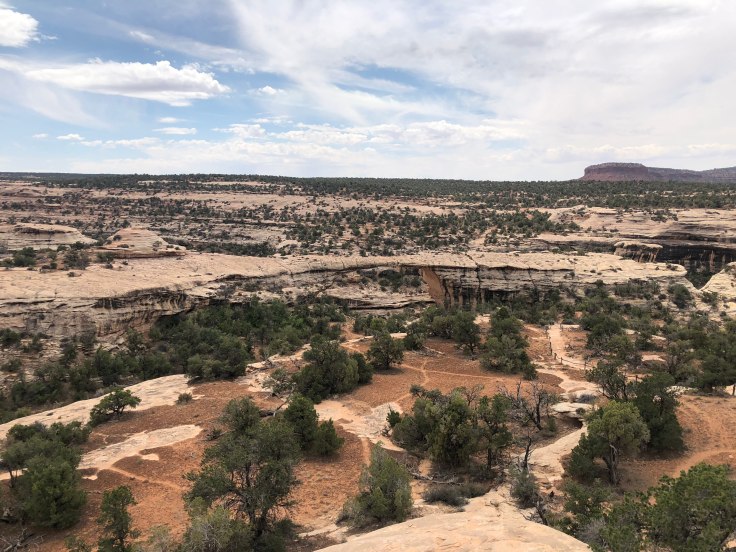
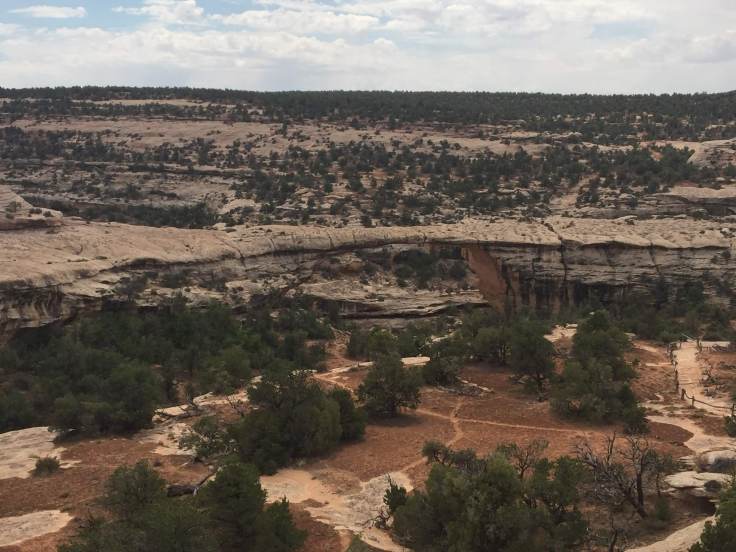
Our next stop today was at Natural Bridges National Park… where we saw natural bridges…

img_7200img_4909

Bridges have (or have had) flowing water beneath them, and the primary method of erosion was from this water…  On the other hand, arches differ from bridges in that arches are formed by erosion by wind and the freeze-thaw cycle.  We’ll see arches tomorrow…

img_7204img_7205img_4912img_4913

After a long day touring, we returned to The Villa.  We went to the Steakhouse adjacent to the campground and had steak for dinner (Porterhouse for 2…).  The restaurant was 90% caravaners – I’m sure the proprietor was happy we were staying next door…

We returned once again to The Villa to relax with a little TV.  I sat in my Eames chair as I usually do.  But what the chair did was not usual…

img_7206

Yes, the entire back collapsed off the base… I’ll have to stand up the rest of the trip… We loaded the pieces into the truck; we’ll have to take it to be repaired when we return.

So this evening an enjoyable time was not had by me…


2018-09-03 – WBCCI 2018 Southwest Adventure Caravan – Day 16 – Traveling from Mesa Verde to Utah…

Travel Day.  The Villa is on the move…!

Early mornings, the deer come to visit…

img_4854img_4856

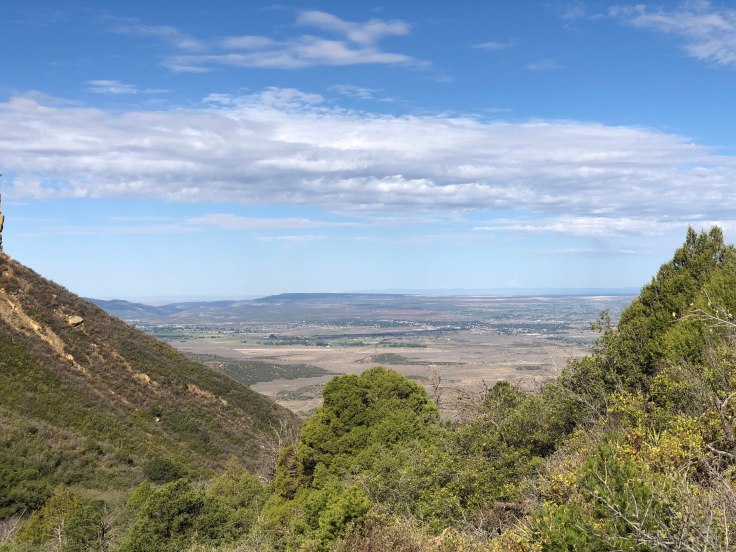
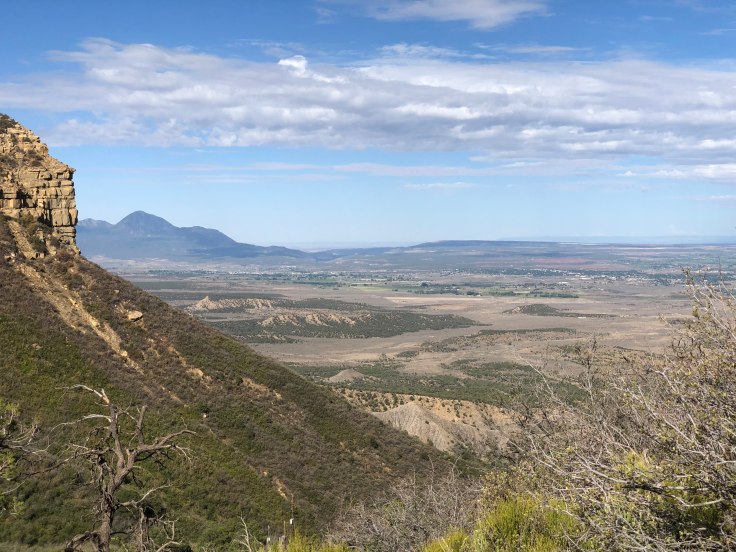
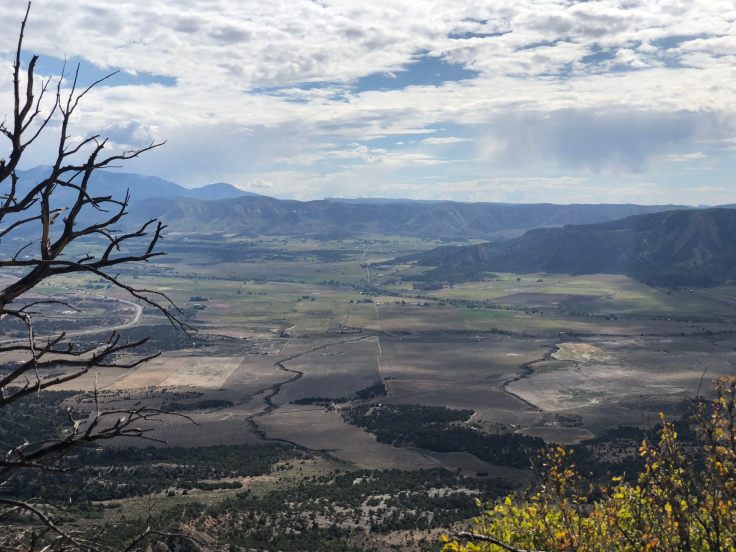
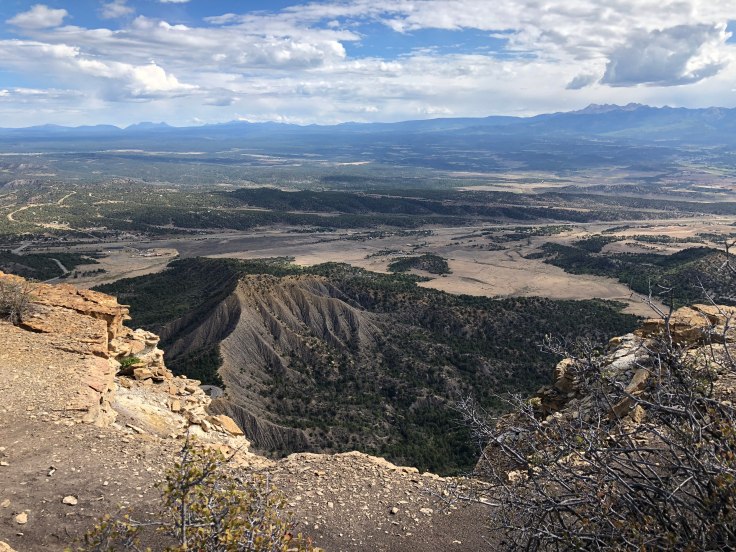
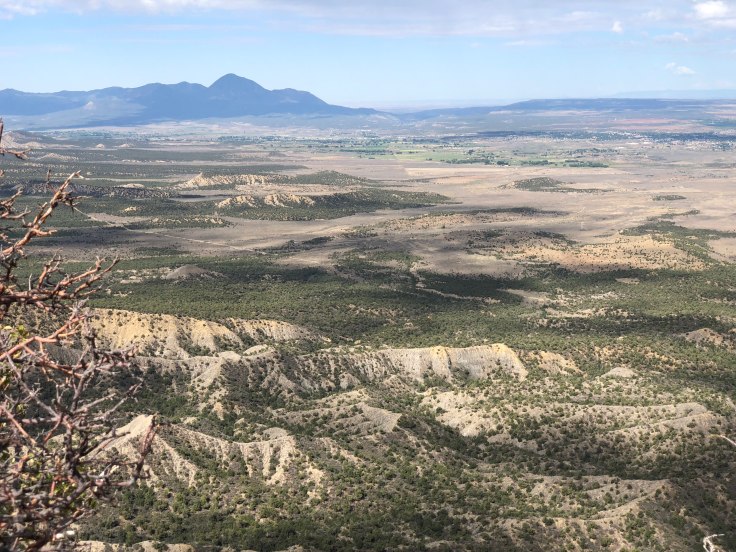
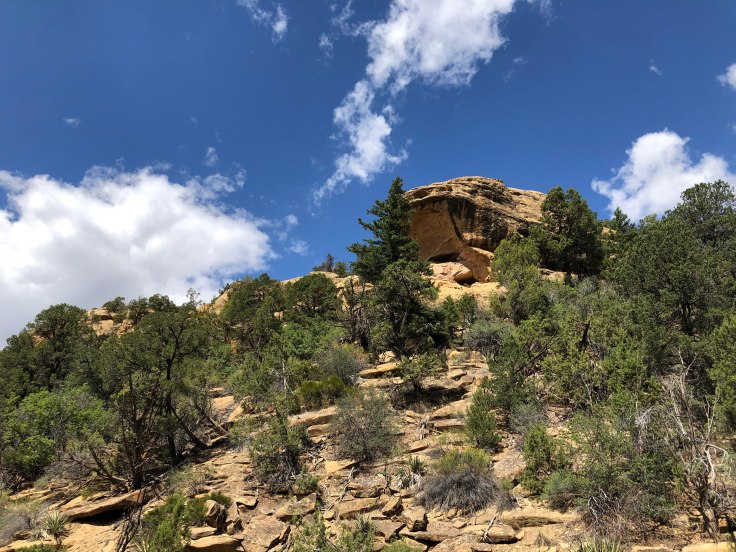
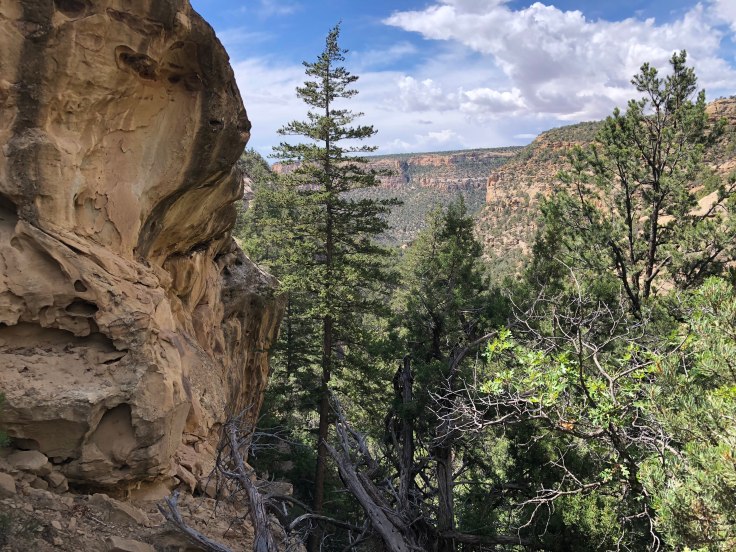
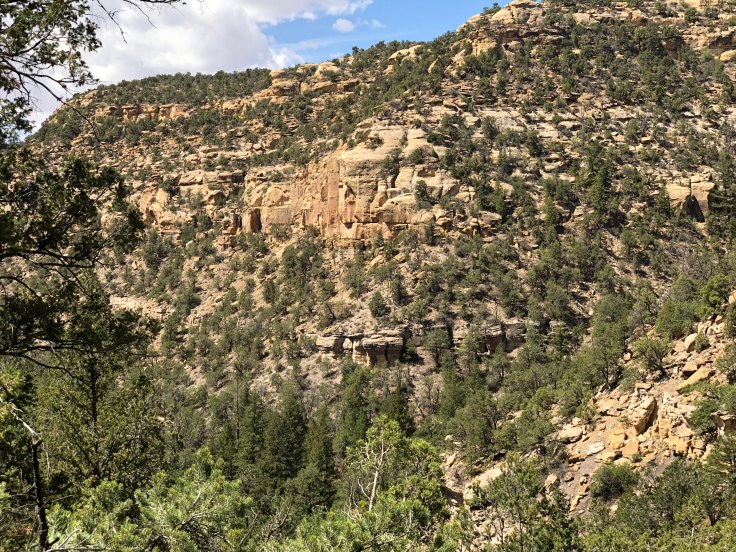
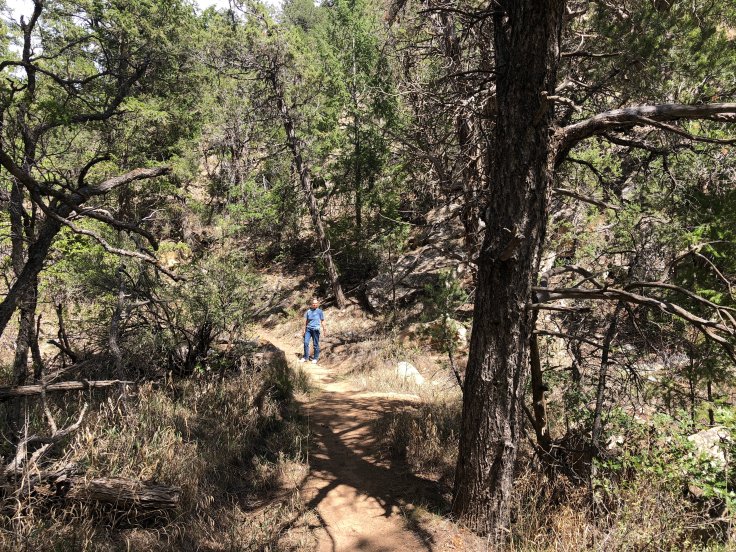
This is the hill we hiked to yesterday… The photos we took were from the top of the rock…

img_7116img_7117

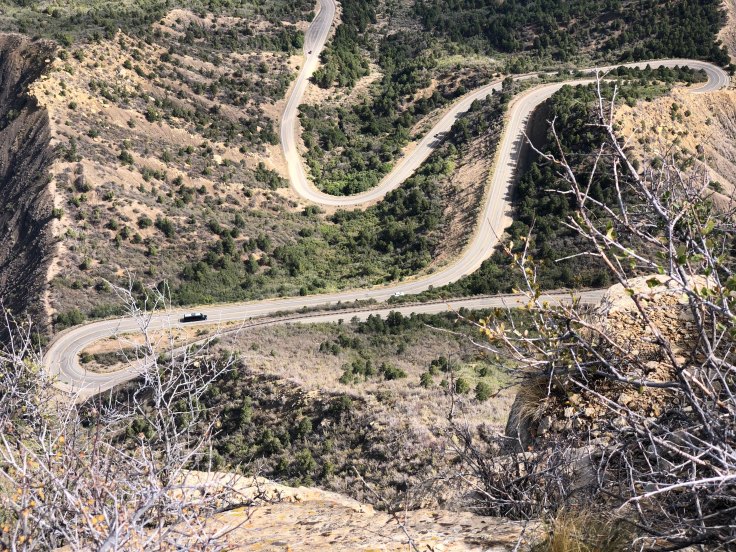
The switchback roads we saw from the top are here – we drove down the road this morning on our way out of the park…

img_7118

img_7119

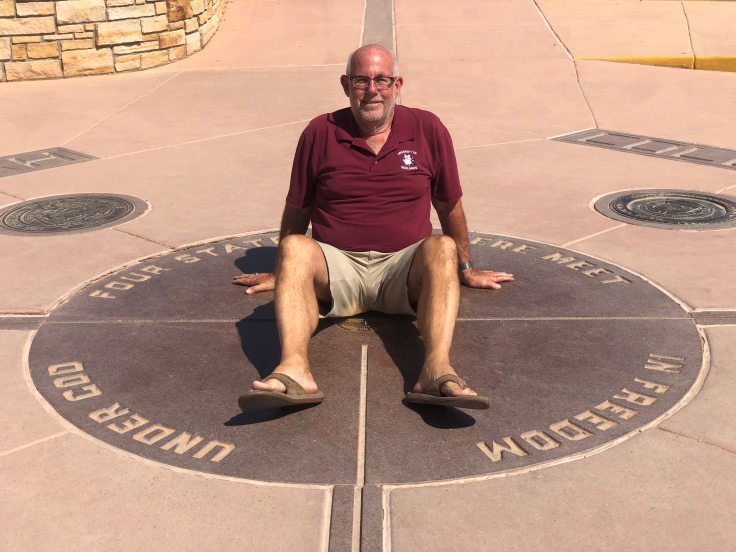
We stopped at the Four Corners Monument: Utah, Arizona, New Mexico, Colorado…

img_7123img_7125img_7128

A few other members of the caravan were there, too…

img_7120

We continued on, driving through New Mexico and Colorado, until we finally found Utah…


img_4861

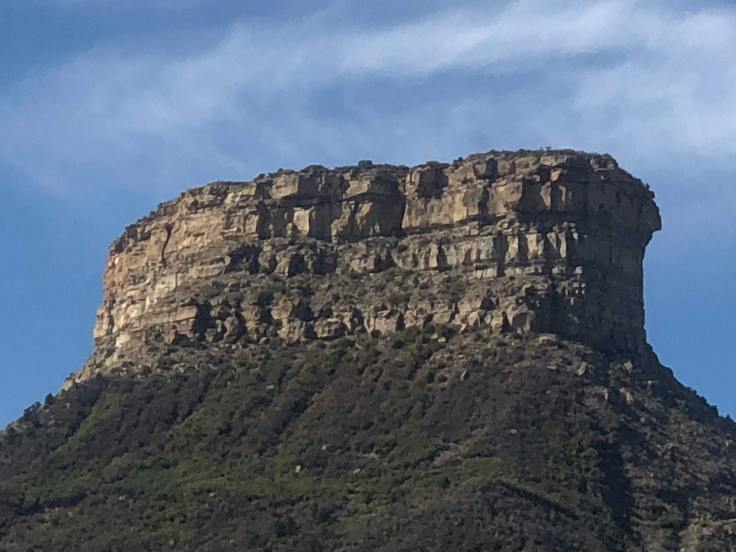
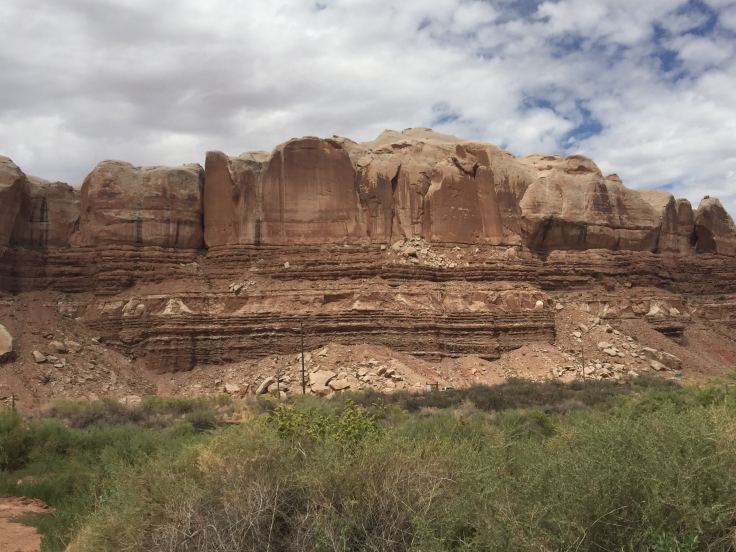
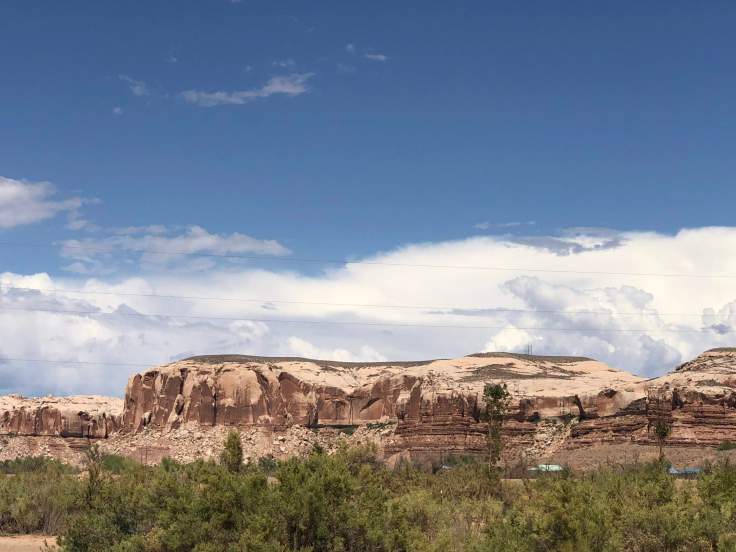
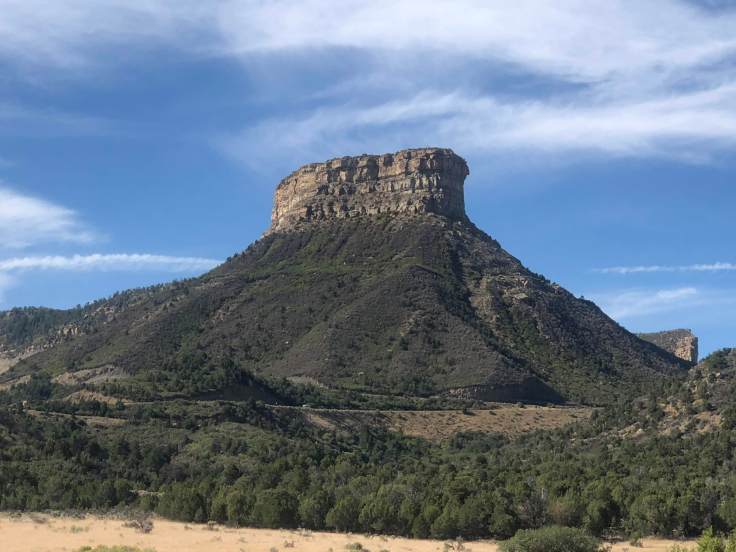
We saw more buttes and mesas and bluffs…

img_4862img_4863

img_7130

Our campground is in the small town of Bluff.  Pretty non-descript, but we had water and power.  It will be our jumping off point for Goosenecks Park, Muley Point, the Moki Dugway, Natural Bridges, Valley of the Gods, and Monument Valley.

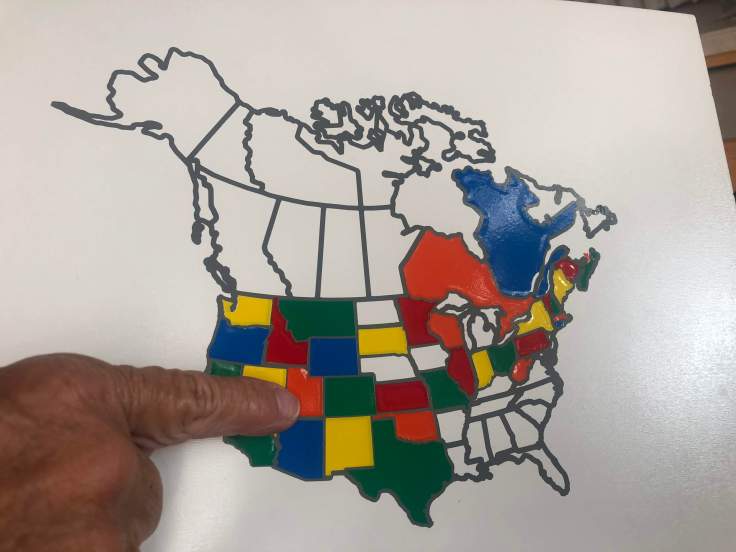
We also were able to add the 30th State sticker to our maps…

img_7132

We had a quiet evening in…

And no Travel Day would be complete without pictures of the grandchildren…

img_5275

George on the right, Ian next to him; the others are their 3rd cousins…

img_4843

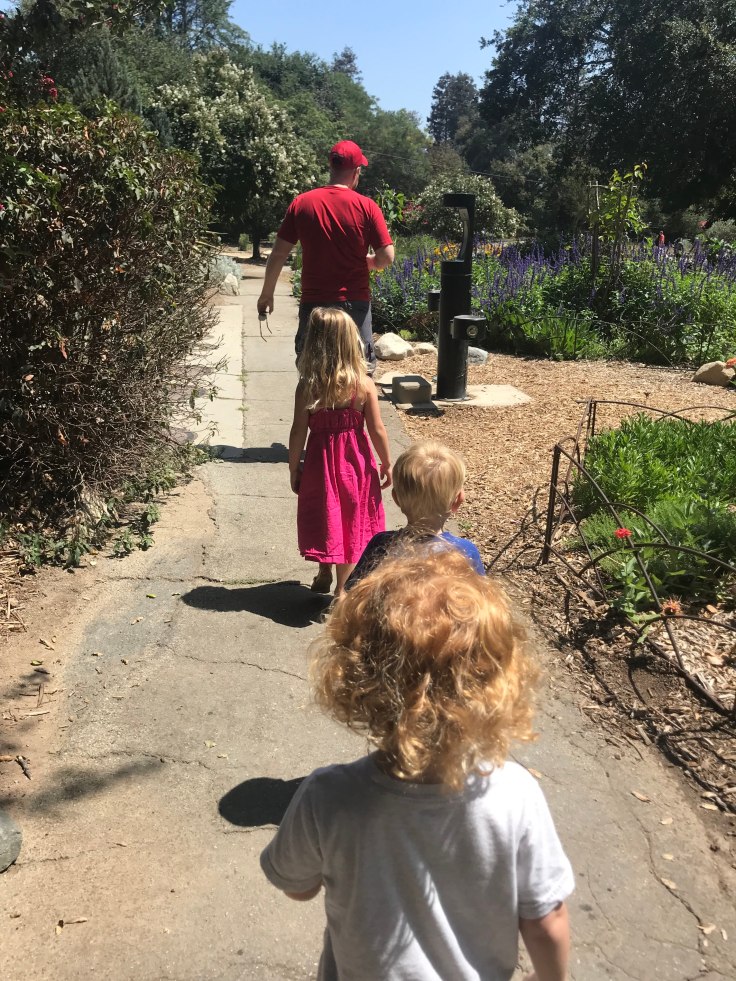
The family out for a walk…

img_5262

Ian, George and Roisin (L-R)

img_5258

And an enjoyable time was had by all…

2018-09-02 – WBCCI 2018 Southwest Adventure Caravan – Day 15 – Mesa Verde National Park

The gray skies blew away so we decided to go on another hike.  This time we started out just adjacent to the campground.  The route was called Point Lookout Trail, and it is 2.0 miles round trip, and we will climb up, then down, 400 vertical feet…

img_7079img_7081img_7083img_7087img_7088img_7089img_7090img_7091img_7093

This is the entrance road we drove to get to the campground yesteday…

img_7099img_4845img_7101img_4846img_7107img_7112img_4849img_7113img_7114

It was fun to watch the Airstreams getting small and smaller… But we were finally done and back to The Villa.

This evening we had a joint dinner at a nearby pavilion.

And an enjoyable time was had by all…

2018-09-01 – WBCCI 2018 Southwest Adventure Caravan – Day 14 – Mesa Verde National Park

Today we spent more time exploring Mesa Verde… We started at the Chapin Mesa Museum, adjacent to the park headquarters.  The museum had the usual exhibits about the flora and fauna of the park, plus some history and archaeological data.  And a Gift Shop…  Most interesting were miniature dioramas, or models, of the typical pueblo life during the various periods of occupancy, from 650 to 1300.  These beautiful models were built by the CCC (Civilian Conservation Corps) during the 1930s…

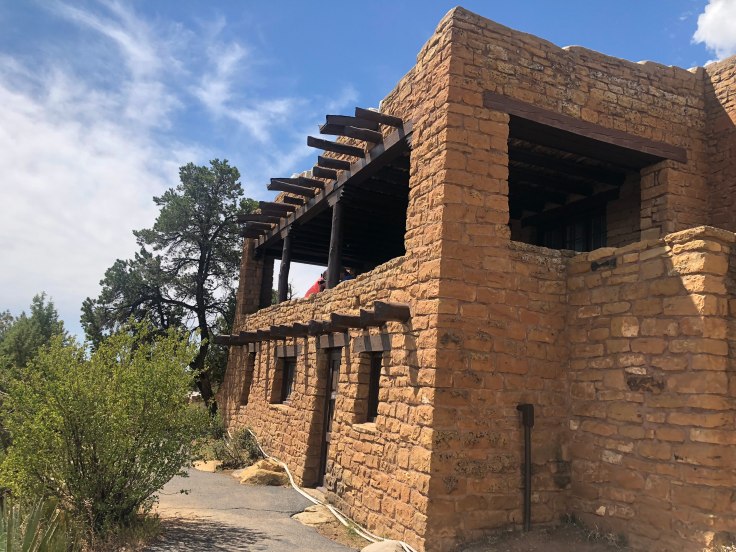
What interested me more were the buildings at the museum and the park headquarters.  The scale and massing was lovely, and the buildings were clustered as if they composed a small village… They were built with volcanic stone blocks, left un-plastered…

img_6997img_7001img_7002img_7003img_7039img_7040img_7041img_7042img_7043

img_7046

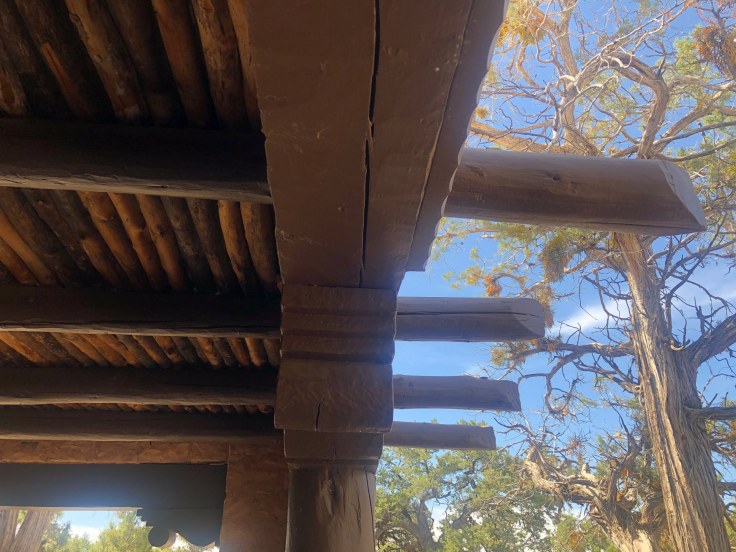
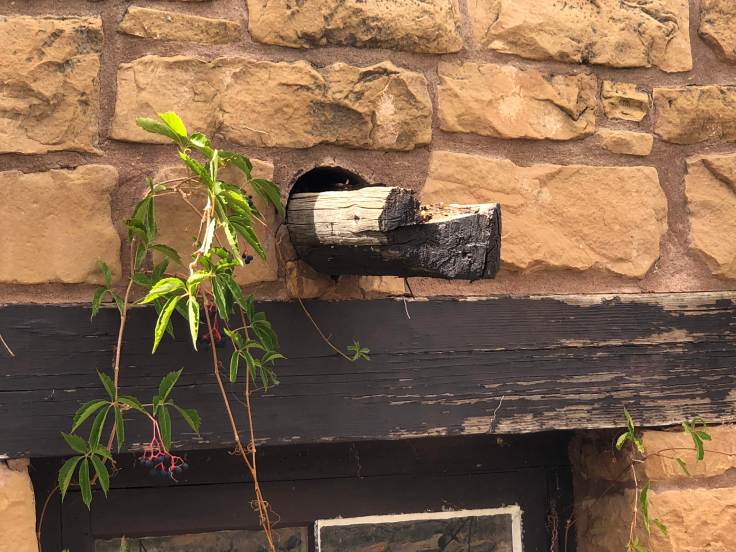
Did you notice the vigas?  They are done very well.  And they are real!

img_6999

They are not simply stuck onto the exterior as decoration.  They form the structure for the floor or roof above, and they extend through the wall as part of the structural connection.  Another thing: they are Juniper.  Juniper is naturally rot and disease-resistant.  While the vigas in the park buildings are 85-90 years old, the vigas in the Pueblo are 500 years old, and very few of them show any evidence of rot…

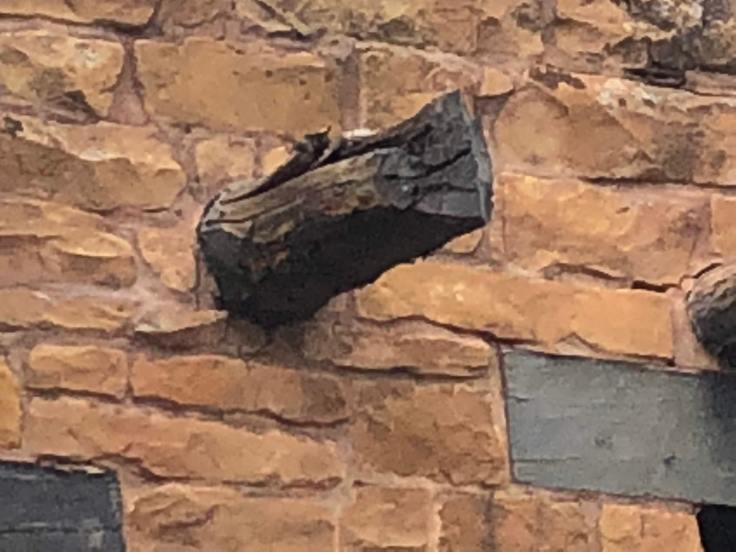
Except for these…

img_7047

img_7038img_6998

Still, not bad for 85-90 years.  Today’s tract houses in Santa Fe use Douglas Fir or Southern Pine for their fake vigas, and they show rot beginning in year one…!

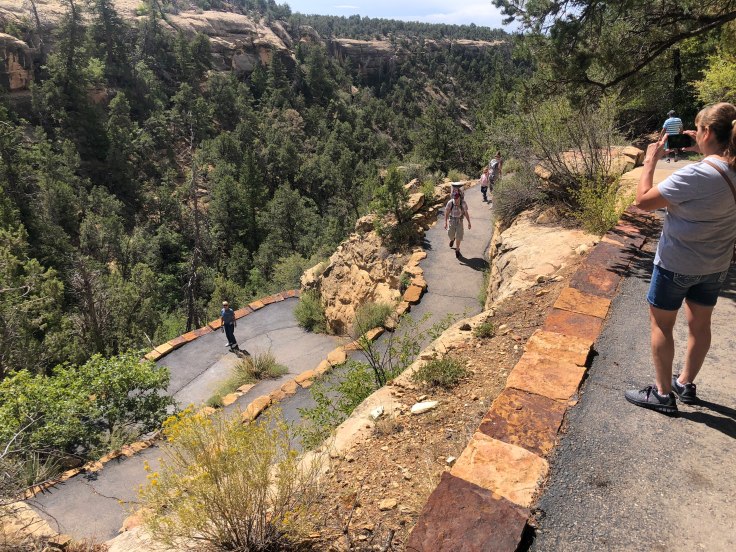
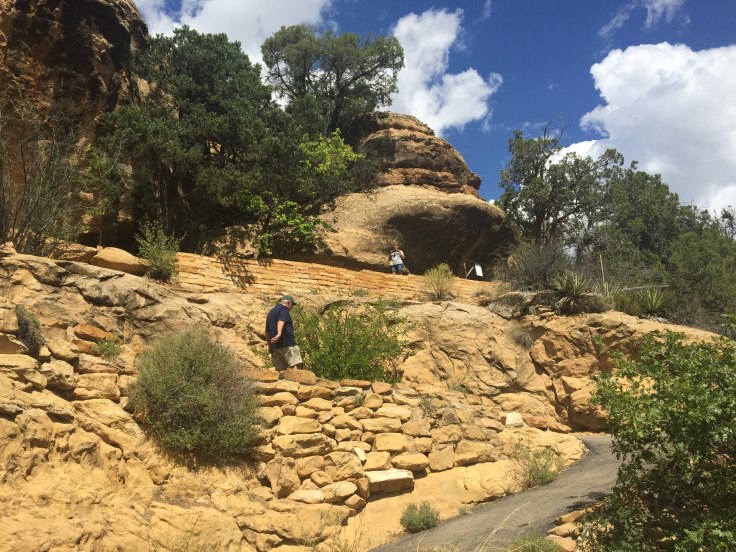
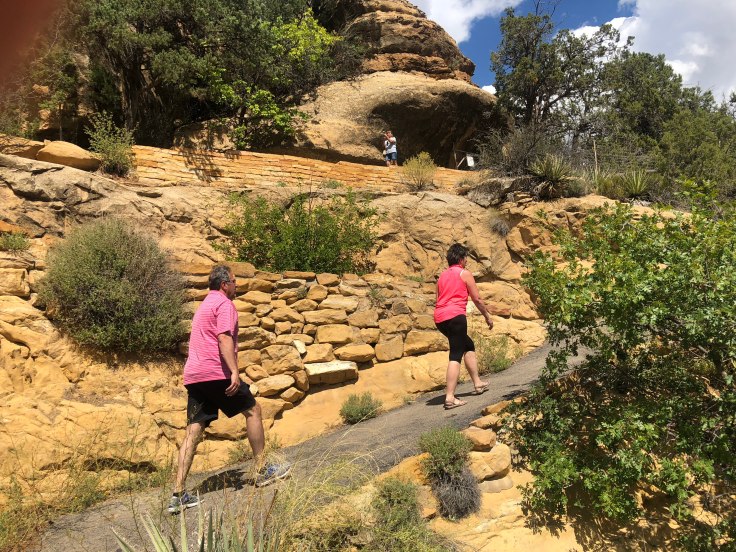
After the museum we set out on a “hike”  We are not generally hikers – we are walkers.  This was a well-marked trail.  It descends into Spruce Canyon, and goes down, and down, and down… About 586 vertical feet.  The loop is almost 3 miles.  But we were up to it.  Being in the canyon is a little surreal, seeing the bushes, trees, rocks, and other feats of nature…

img_7013img_4806img_7014img_7016img_4808img_7018img_7020img_4811img_7022img_7024img_7026img_7027img_7028img_7031img_7033img_7034img_7036

We did discover this gruesome evidence of wildlife…

img_7030

Of course, after we walked down we had to walk up again.  While the descent was gradual, the ascent was very short and steep… And we made it!

img_7037

Walking back to the truck we heard thunder all the way.  But there was no rain…

We again admired some of the park buildings… This is the original 1930s restroom building:

img_70441

Nice proportions, authentic wood lintel, posts, and capitals, excellent stonework…

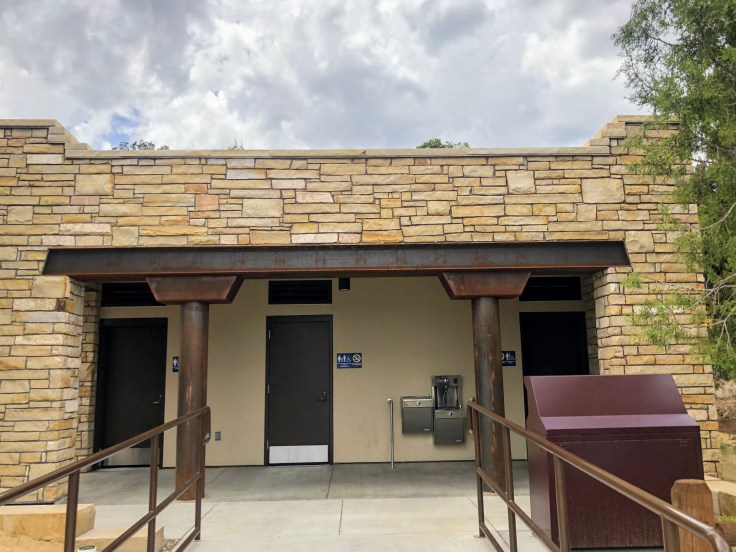
Next door they built a new restroom building containing facilities accessible to the disabled…

img_70451

Nice proportions, excellent stonework… Nicely proportioned lintels, posts and capitals, but note:  They are steel!  Clearly, this building pays homage to the historical architecture, but it uses modern materials when duplicating the historic materials would compromise the integrity of a modern building.  Well done, Architect, whoever you are…!

As we approached our next destination in the truck it started to rain… We stopped at Park Point, the highest point in the park, at 8,572 feet elevation.  This is about 700 feet above the campground…

img_4819

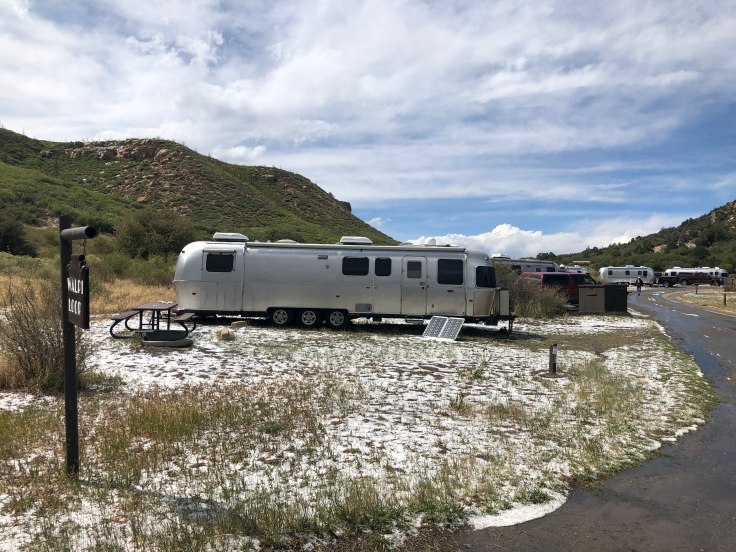
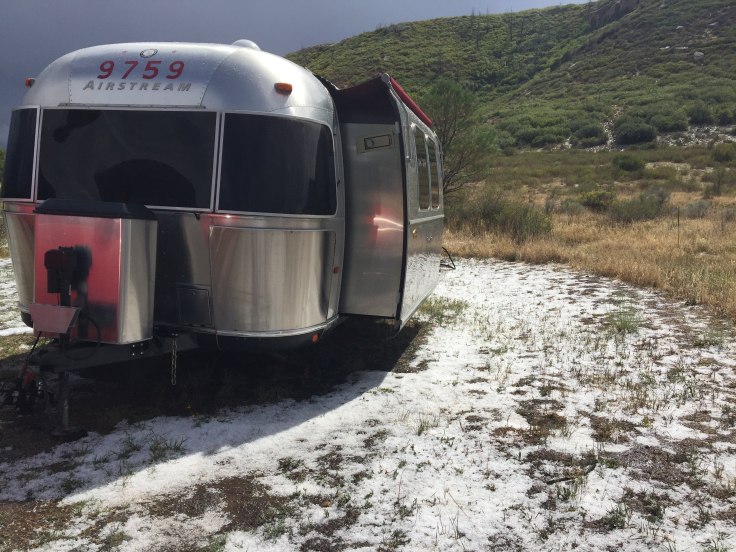
It was lightly raining, but we couldn’t help but notice this white gravel on the ground.  Upon closer inspection, we discovered it was hail!

img_7054img_4826

Views are amazing, in all directions…

img_7059

We could see all the way to Utah, Arizona, and New Mexico, plus, of course, Colorado…

img_4828img_7062

This is “The Sleeping Ute”, a mountaintop in Utah that is supposed to resemble a sleeping Indian…

img_7063img_7066img_7069

This is “Knife Edge mountain, which is our next stop…

img_7070img_7072img_4831

Our next view overlook is called “Knife Edge”…

img_7074img_7075img_4833

So we then headed back to The Villa… And we were in for a surprise:  It had hailed at the campground, too!

img_7076img_4834img_4837

The hail was small – no damage to The Villa.  It lasted about an hour on the ground…  Later that evening we had another “Fandango” to meet other caravaners.  We were hosts, so we had 8 people inside the Villa…

And an enjoyable time was had by all…

2018-08-31 – WBCCI 2018 Southwest Adventure Caravan – Day 13 – Traveling to Mesa Verde National Park

We pulled out of Durango and drove to Mesa Verde National Park, so designated in 1906, one of the very first fourteen National Parks, back before Park Service was created in 1917;  Mesa Verde was designated to “preserve the works of man,” the first national park of its kind.  The other first National Parks were all created to preserve natural wonders…

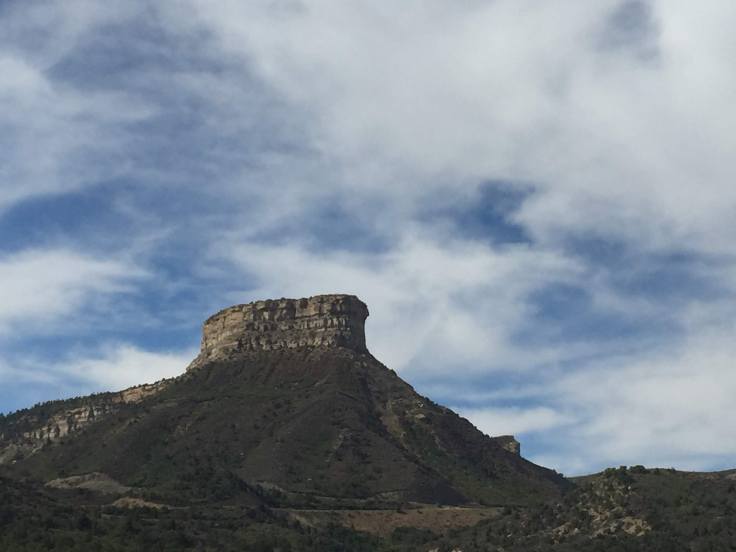
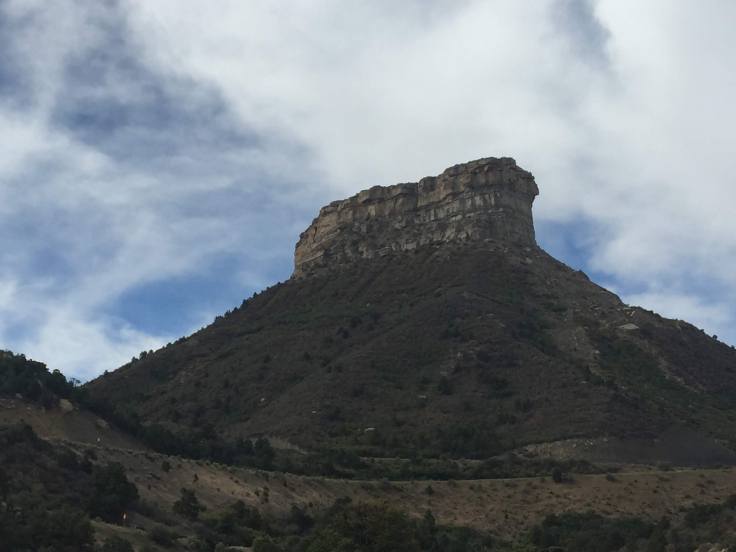
It was a short drive – only 35 miles – but that is the horizontal distance.  We also climbed up over 1,000 feet vertically, as the campground was at the top of this mesa…! (Not the top of the rock, just to the mesa behind it…

img_4729img_4730img_6887

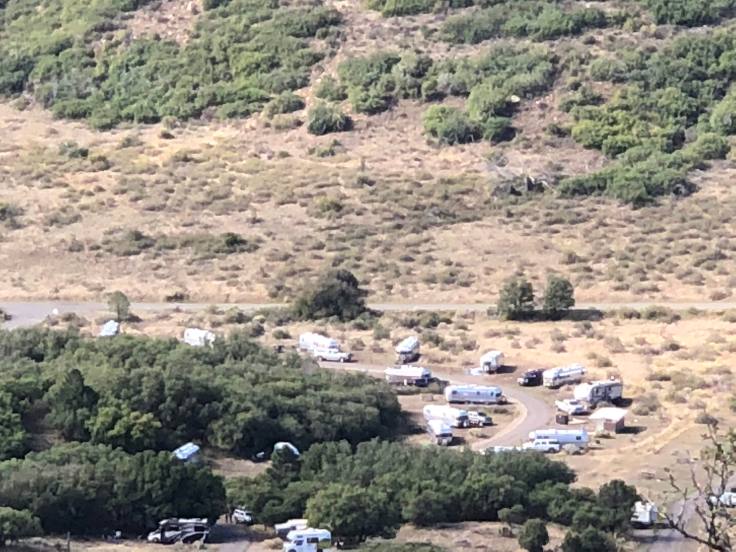
We are “dry camping” here – no water, sewer, or electrical hook-ups.  Thus, there was a plethora of solar panels and generators present around all the Airstreams…

We had little set-up to do, and we soon set out for a 5 hour bus tour of the Mesa Verde Park.

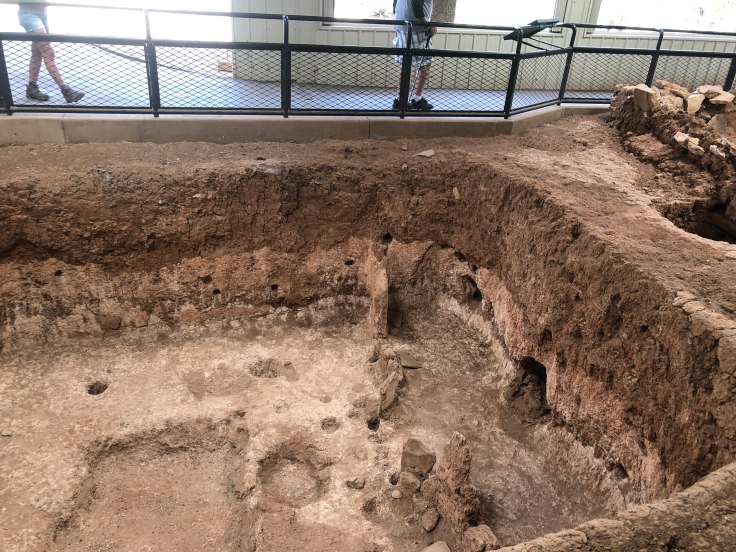
We saw some splendid scenery – the bus tour drove us around the mesa-top and we saw many archaeological remains.  Native peoples – the Ancients, or Indians, or Puebloans (pick your terms – I’ll call them Indians, as the locals prefer to be called…) – settled in this area about AD650 and continued to live here until the early 1300s, when they all moved, over about a 20 year period, to Taos, Sante Fe, and the other 17 Pueblos in New Mexico along the Rio Grande River.  No one knows for sure why they left, but the obvious reason was to find more fertile land with a reliable water source.

We saw several various structures used by the Indians across the centuries… And I have thousands of photos to prove it…

img_6902img_4739img_4741img_6910img_6926img_6932

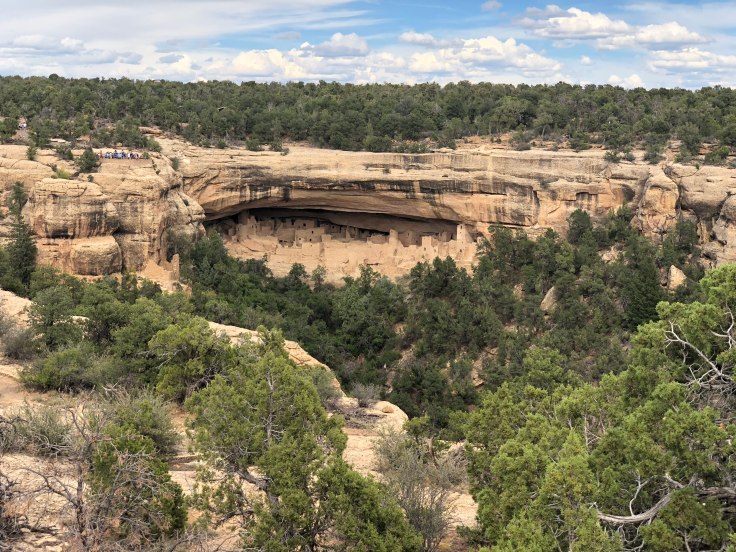
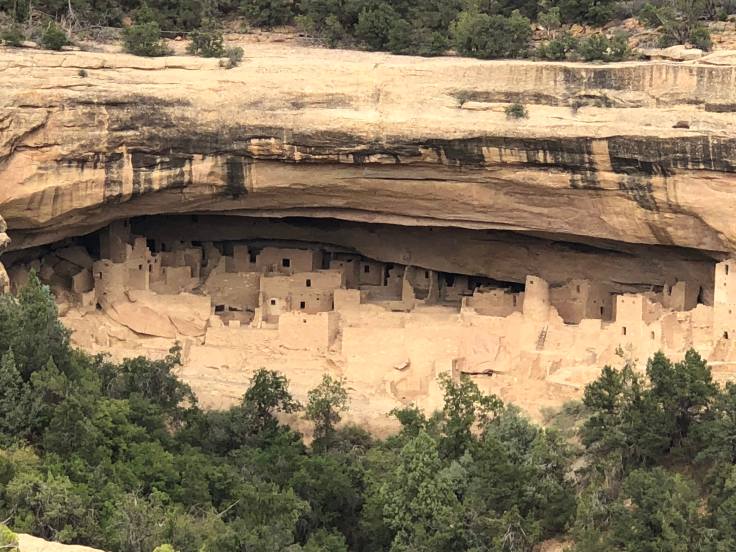
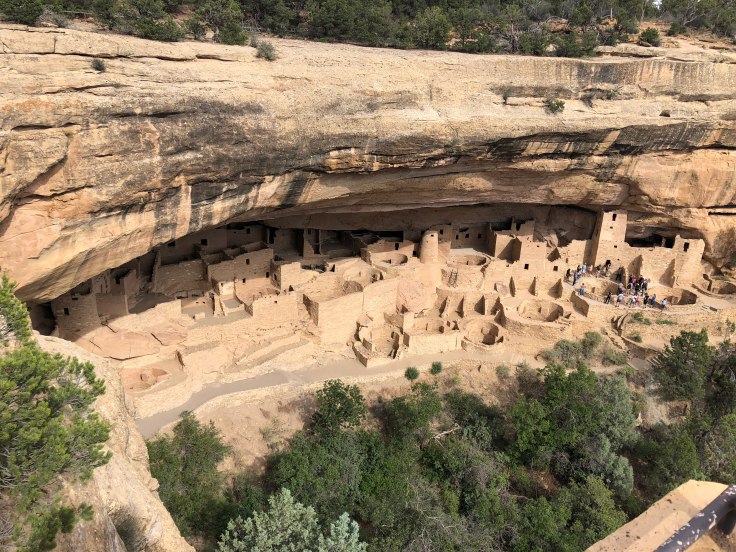
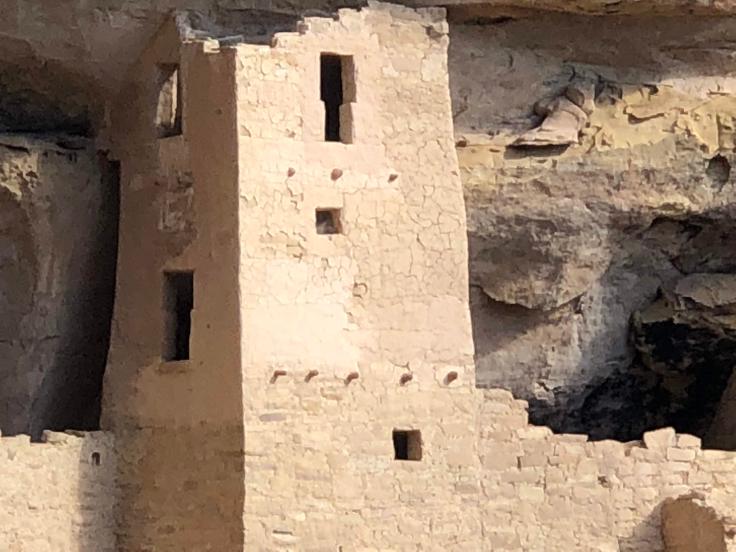
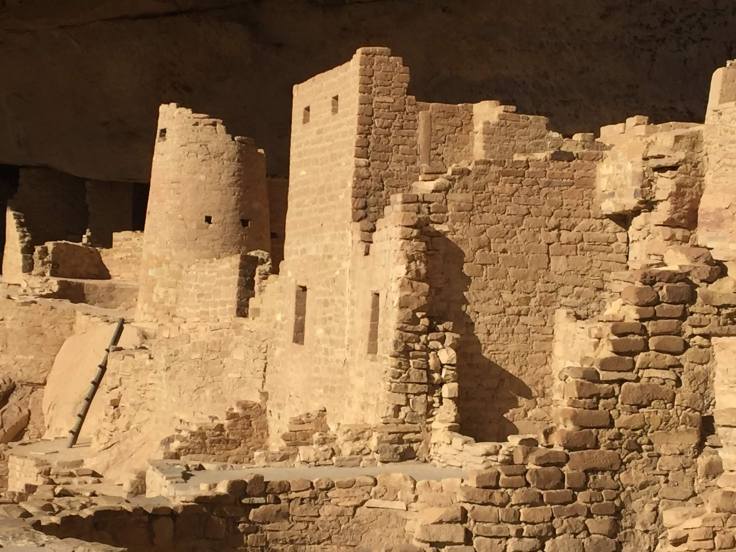
We saw some cliff dwellings from a distance.  But the pay-off for the day was seeing the Cliff Palace, the largest, and best preserved, of the cliff dwellings.

img_6936img_6935

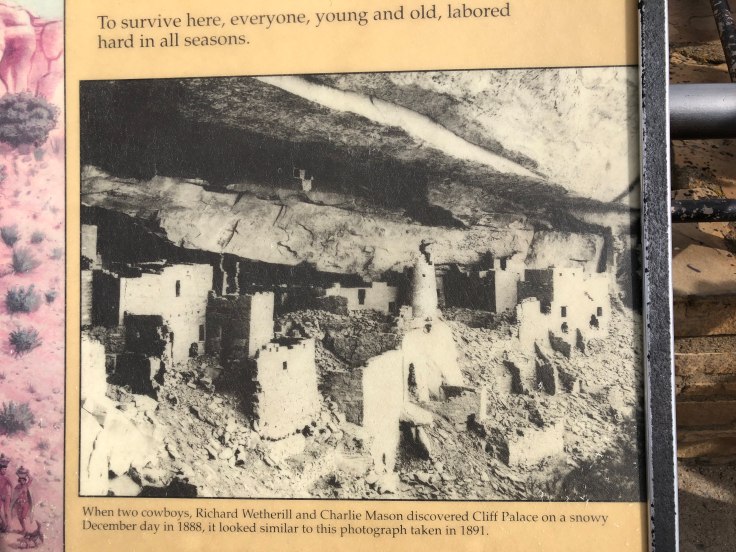
On December 18th, 1888, two cowboys, Richard Wetherill and his brother-in-law Charlie Mason, were riding across the mesa top looking for stray cattle. At the edge of the pinyon and juniper forest they came upon a vast canyon.  It looked like this…

img_6952

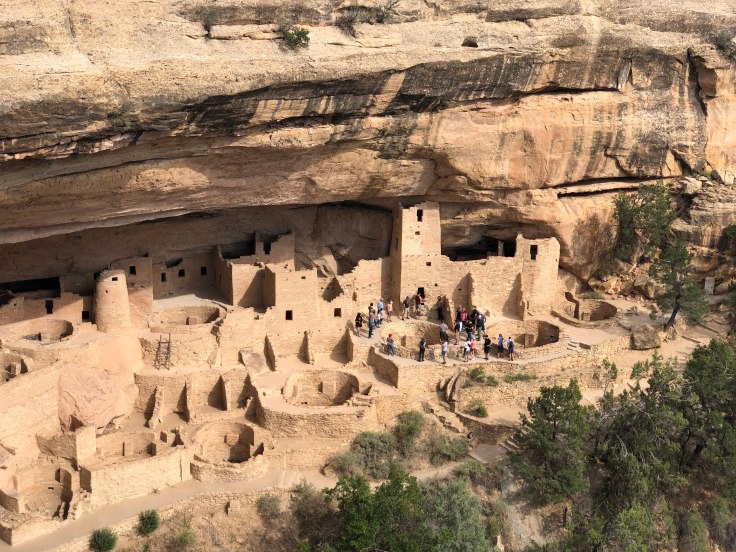
Today, it has been restored and reassembled where possible.  Basically, they put back up the blocks that had fallen, and they stabilized the ruins.

We assembled for the tour at a platform that offered a closer view…

img_6950img_6947img_6948

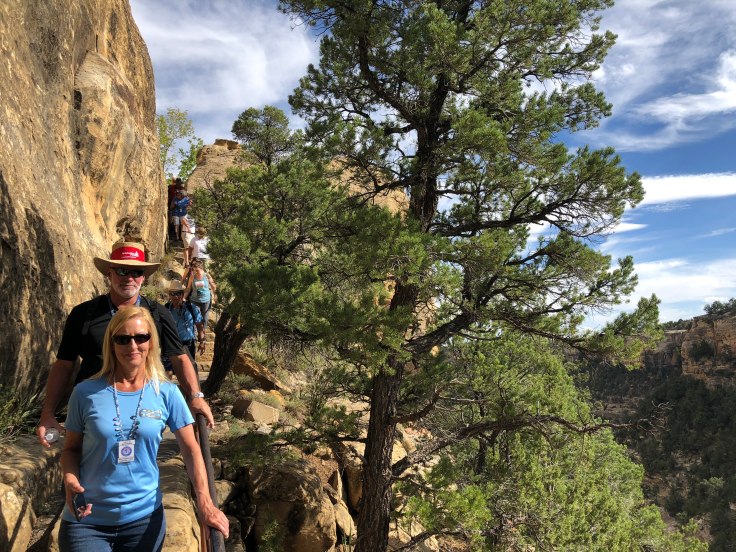
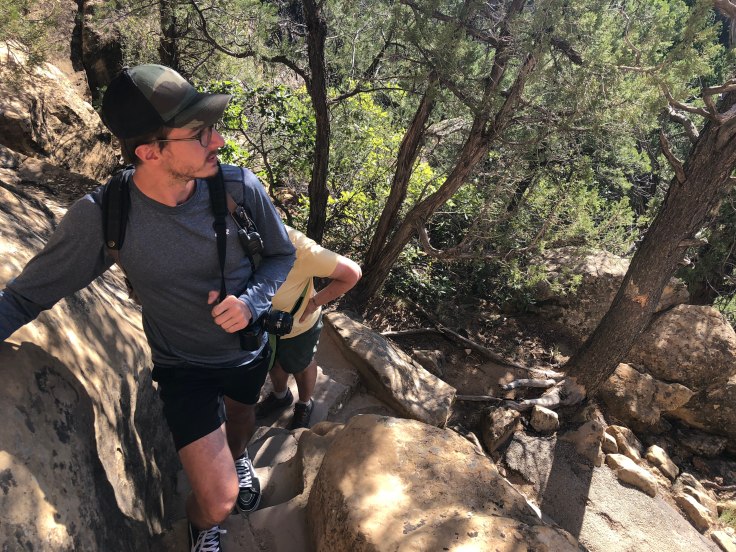
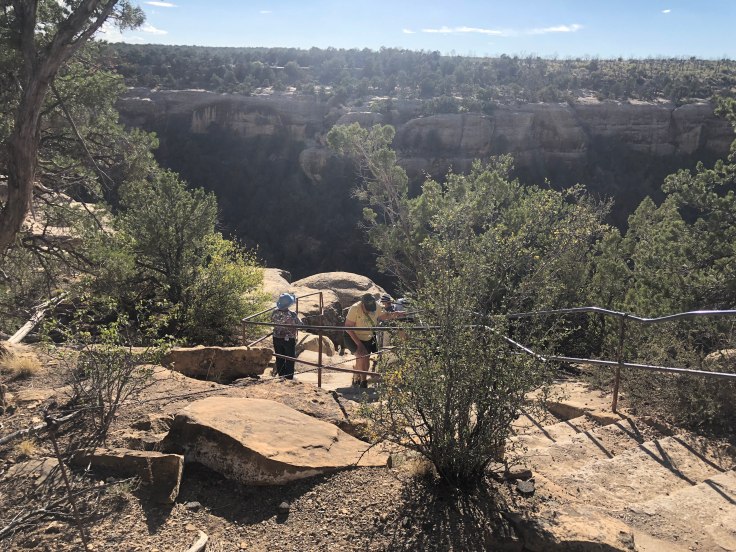
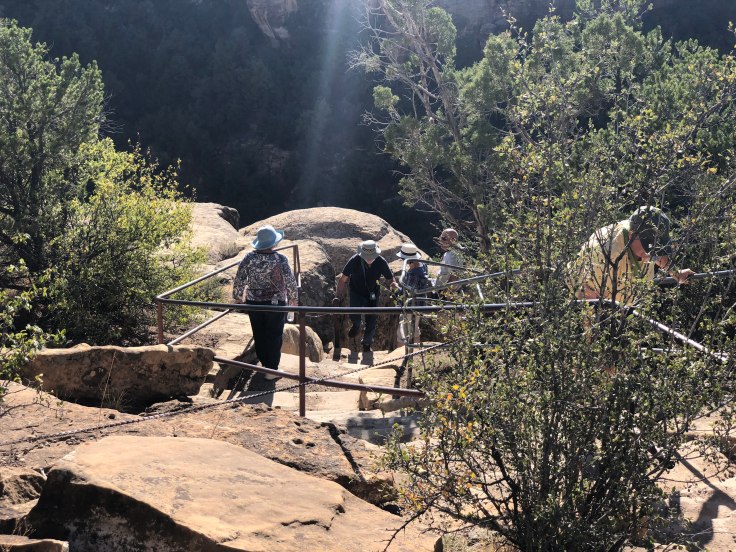
We were able to get even closer by descending from the mesa about 150 vertical feet into the canyon, climbing down stone steps built by the National Park Service.  (Indians used ladders and hand- and foot-holds and climbed up the face of the canyon…)

img_6953img_6954img_6955img_6956

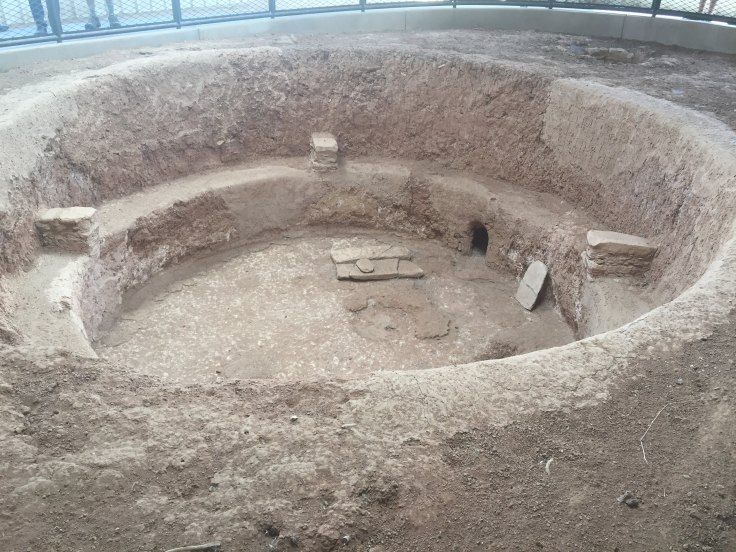
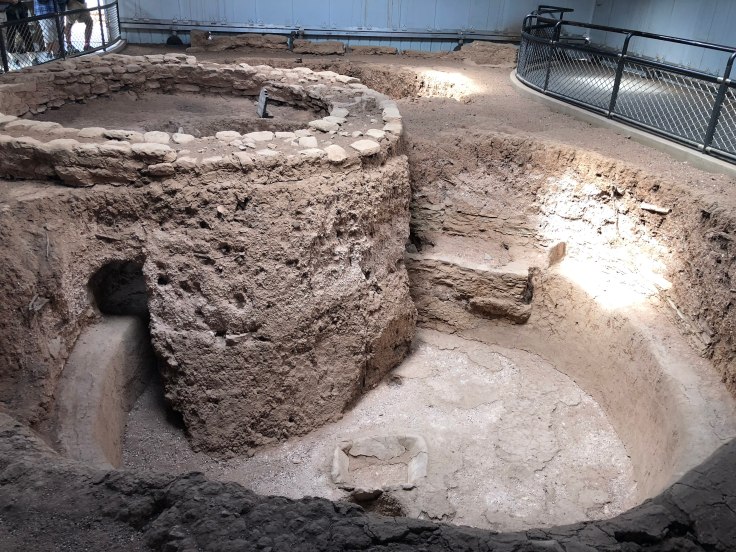
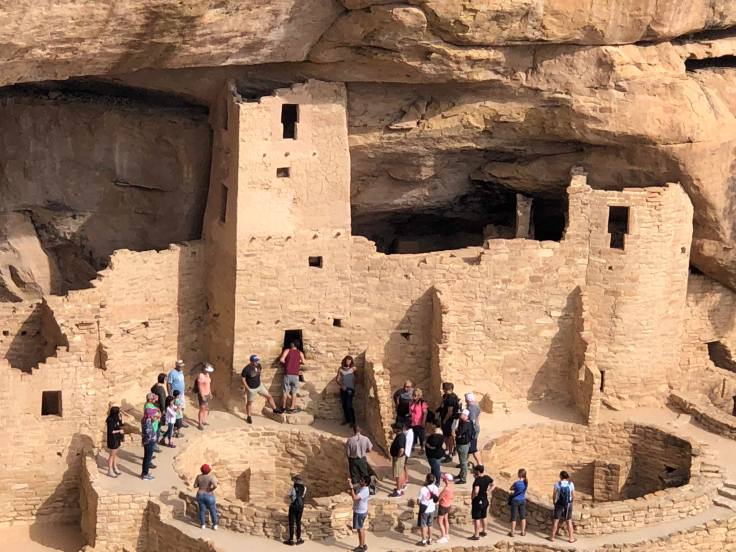
Once we were at the level of the pueblo, we heard a ranger talk about the history and give us archaeological information.  There are 150 rooms, including 19 kivas, or subterranean dwellings with religious significance.  The 150 rooms extend back into the cliff over 90 feet…

img_6959

We proceeded to walk along the base and see the pueblo up close…

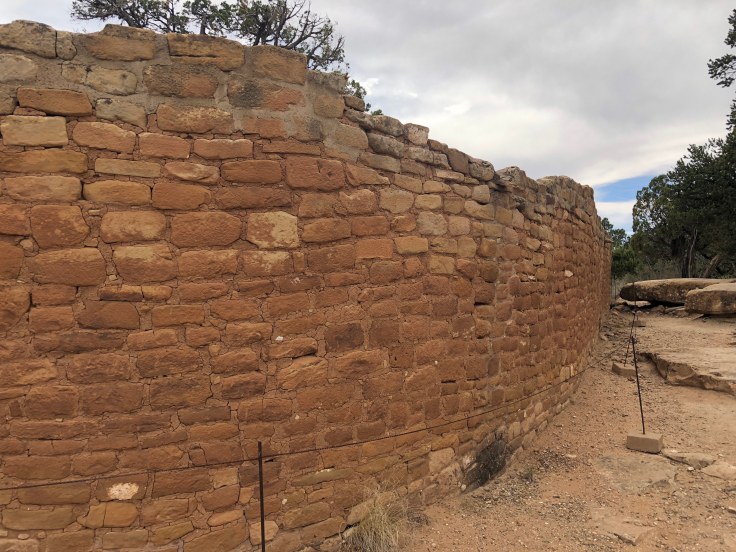
img_6969img_6968img_4785img_4794img_4796img_4799

Yes – even here there are vigas… more on the vigas tomorrow…

img_6974

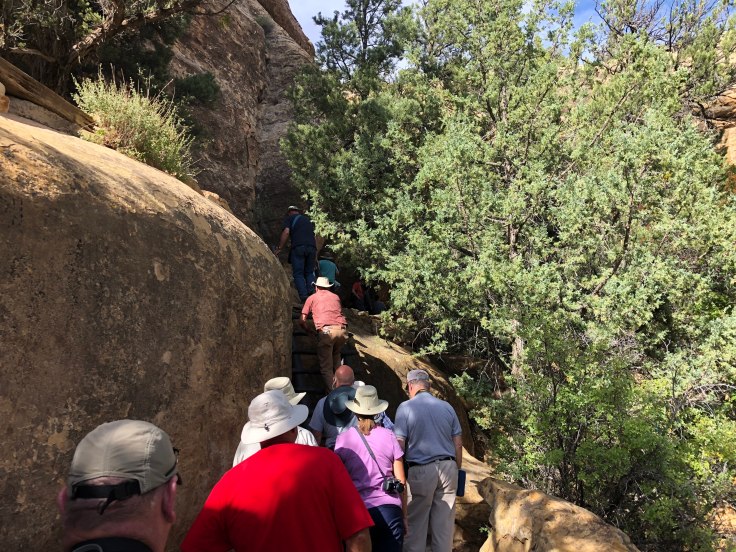
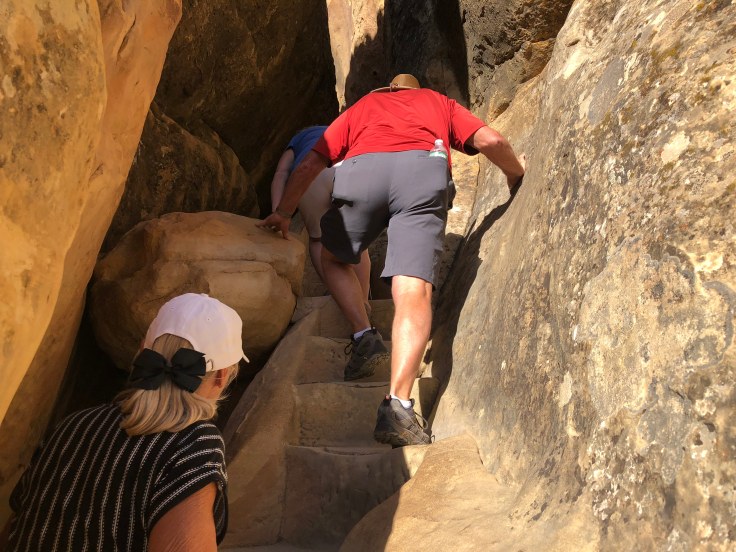
After our final ranger talk, we had to get back up to the mesa again, up 150 feet!  We started out on steps, then had to climb three ladders…

img_6981img_6980img_6982img_6984img_6986img_6989

Finally we reached the top…

img_6990img_6992

Back at the Villa, we had some visitors…

img_4801img_4802img_4803img_4804

We returned to the campground, had dinner, and went to bed before it got dark, so we didn’t have to use out batteries… (This dry camping is relatively new to us…)

And an enjoyable time was had by all…

2018-08-27 – WBCCI 2018 Southwest Adventure Caravan – Day 9 – Traveling to Durango, CO

We are on the move today!  We are driving about 200 miles to the northwest, to Durango, Colorado.  Along the way we are traveling through an ever-changing landscape.

We started out in the New Mexico desert…

img_46154img_46171img_46212img_46241

We stopped at the Echo Amphitheater, where marvelous echos can be heard…

img_46291

We pulled in, and we were the only people there…

img_4626

We were soon joined by other Airstreamers…

img_4633img_6731

img_67332

And they kept on coming…

img_6732

To make room for others, we soon moved on.  The landscape continued to change to  mountain forests…

img_6734img_6736

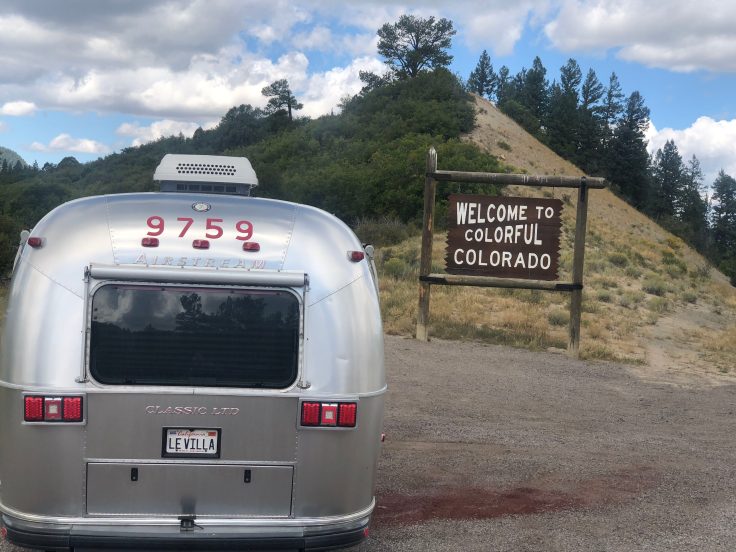
We soon entered Colorado…

img_6735

We had lunch at Kip’s Grill and Cantina, in Pagossa Springs.  Then we continued further inbto Colorado.  The mountains and forests continued to change…

img_4639img_4641

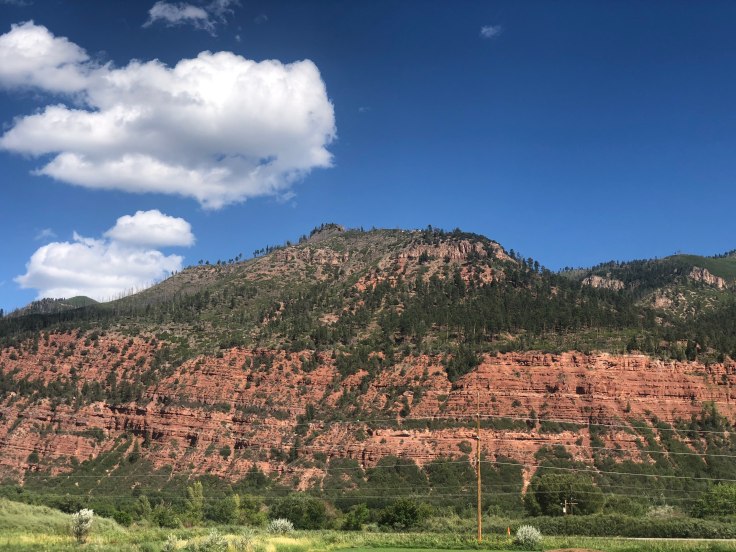
By the time we reached Durango the rocks were bright red…

img_6740img_6741

We added our Colorado sticker to our map… The Villa has been in 29 States so far…

img_6742

Happy hours ensued, and an enjoyable time was had by all…

2018-08-23 – WBCCI 2018 Southwest Adventure Caravan – Day 5 – Santa Fe

We traveled as a group to Santa Fe today.  Besides some detours on the highway and some miscommunication on where we were to meet, we all finally boarded a tourist trolley to get oriented in and around Santa Fe.

img_4508

We had an interesting guide/driver who told us of the history of Santa Fe and showed us the various neighborhoods and significant buildings around the town.  After about 1 1/2 hours we were let off to explore the city on our own.

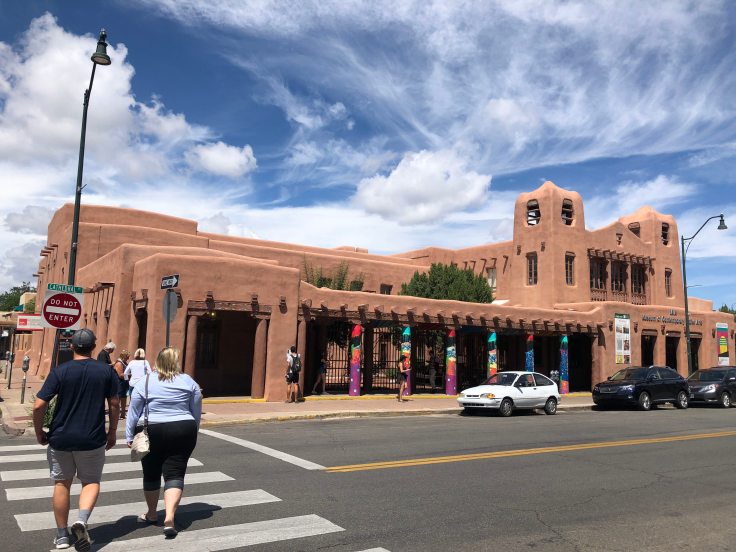
As usual, I was most interested in the architecture.  Everyone knows “Santa Fe Style”, right?

The regional architecture from which the “Santa Fe Style” draws its inspiration is primarily found in Pueblos of New Mexico and other southwestern States.  In the 1890s, architect A. C. Schweinfurth incorporated Pueblo features into a number of his buildings in California.  Mary Elizabeth Jane Colter’s Hopi House (1904) in Grand Canyon National Park drew heavily on the Pueblo style. The Pueblo Revival style made its first appearance in New Mexico in 1908 at the University of New Mexico in Albuquerque, where UNM president William G. Tight adopted the style for a number of building projects during his tenure. 

At the time, Santa Fe looked like Anytown USA, with French, Italian, Victorian, Bungalow, and Carpenter Gothic buildings, mixed in with New Mexican Territorial styles common throughout the State.  In an attempt to attract tourists and the railroad, the city fathers remodeled all of the prominent downtown buildings to resemble what would be known as the Santa Fe Style.  In 1957, a committee drafted Santa Fe “H” Historical District Ordinance No. 1957-18, commonly known as the Historical Zoning Ordinance.  This ordinance mandated the use of the “Old Santa Fe Style,” which encompassed “so-called Pueblo, Pueblo-Spanish or Spanish-Indian and Territorial styles,” on all new buildings in central Santa Fe.  To be exact, the ordinance require all buildings be earthy brown, include rounded edges, room-block massing, and protruding vigas.  This ordinance remains in effect, meaning the Pueblo style continues to predominate.  The point to remember is that the Santa Fe Style is not something indigenous to Santa Fe, but something made up (by Anglos, not Mexicans or Indians or Spanish) to attract tourists.

So here we have it:  Vigas, Brown, block massing, rounded edges…

img_6577

Even giant buildings follow this style, which is more suited to small buildings…

img_6555

Even parking garages follow the style…

img_6618

The Territorial style shows brick cornices and a little more exposed wood, but otherwise is quite similar…

img_6562img_6563

I like regional architecture as much as the next guy, and I have commented on how well the architecture here addresses the harsh sun.  My only pet peeve is the religious-like adherence to arbitrary rules, despite all evidence that the rule should be modified or abolished.  Nothing exemplifies this idea better than the vigas.

As I showed in my earlier blog, authentic vigas are extensions of roof beams, projecting through the adobe walls…
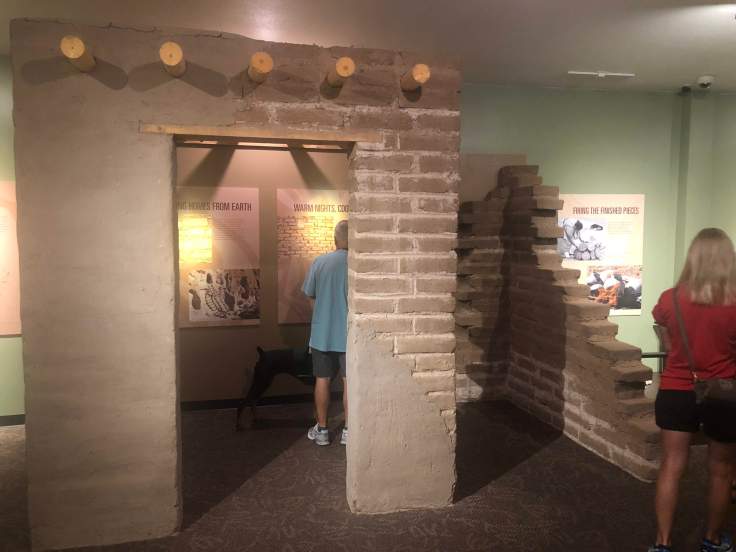
img_65351

Today, vigas are rarely structural, but are only decoration tacked on to an exterior stucco wall.  There is one problem:  In this dry, hot climate, exposed wood rots:

img_6610

This has led to attempts to protect the wood with sheet metal – hardly an elegant solution…

img_65751

On the other hand, not ALL buildings have vigas, and they look just fine to me…

img_6601img_6602

Certainly historic buildings need to be accurately restored.  If the wood rots, replace it with wood.  But if you must have vigas, even fake vigas, why not use steel or some other weather resistant material?

One reason why new buildings, or additions to existing buildings, in Santa Fe’s historic district should sometimes employ modern materials, and even a few tastefully contemporary design elements: A century from now, 2018 construction should be distinguishable from that of earlier times. And if the architecture is exceptional, it also may be prized alongside the old.  It shouldn’t mimic the old so perfectly that you can’t see the evolution of the style.  As soon as everything looks the same and you can’t date it, it’s dead. It’s the vocabulary that’s important, not the material or the technique.

More reasons why the wood vigas, protruding through the exterior wall, is a bad idea:  they break the thermal envelope of the building, allowing cool air to escape in the summer and warm air to escape in the winter. They also break the waterproofing envelope, allowing moisture into the building, creating the potential for mold and other water-related issues…

So enough of my rant about Santa Fe style.  We actually had a very good time in Santa Fe…

We saw the country’s oldest house, built in 1646…
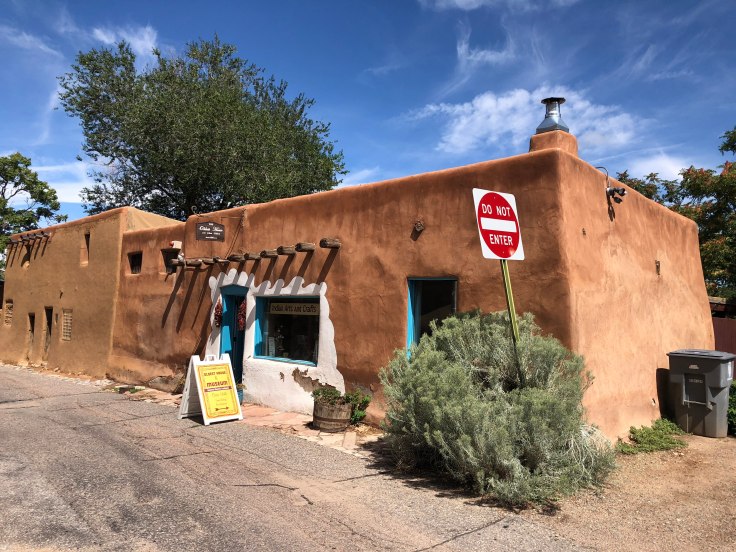
img_6603img_4521

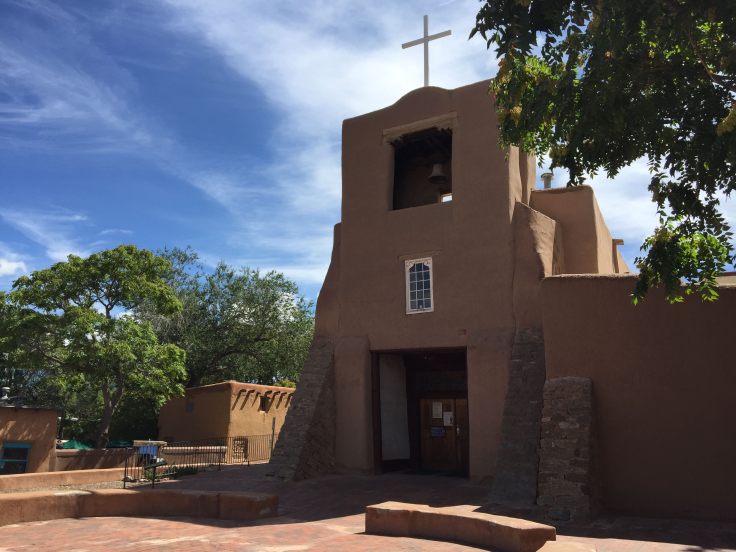
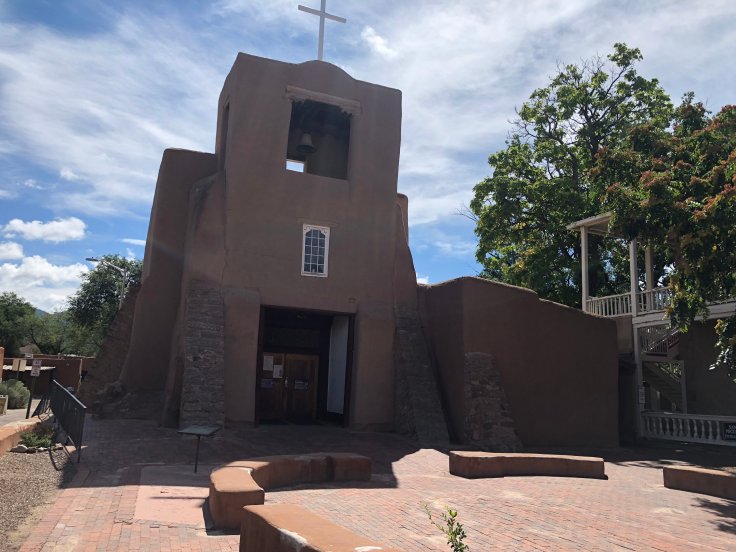
And we saw the country’s oldest church, built in 1610…
img_6609img_4522img_4523

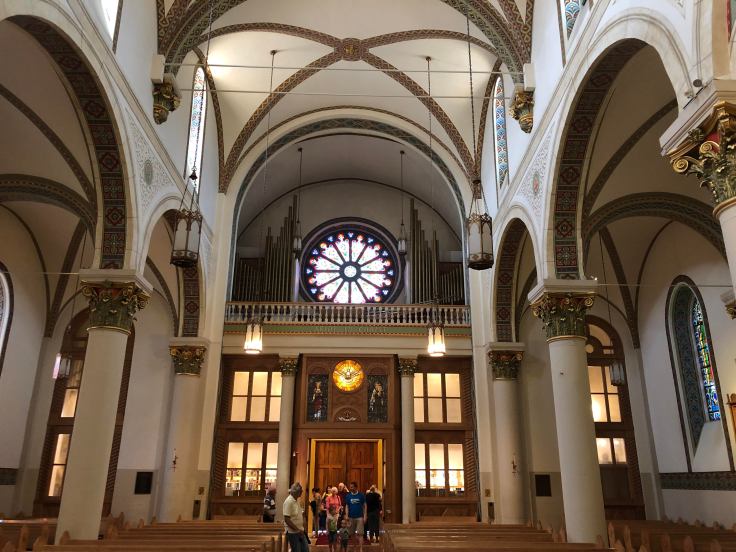
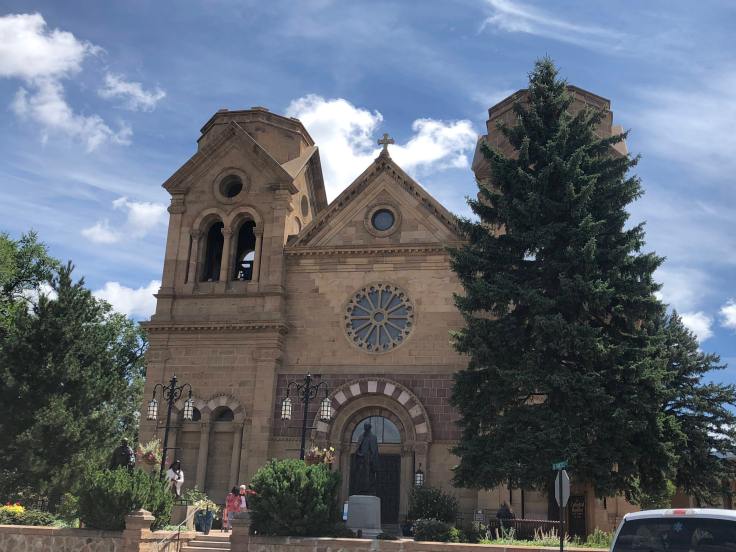
We saw the Cathedral Basilica of St. Francis of Assisi… The interesting story here is that while the church was under construction they ran out of money.  Bankers in the Jewish community loaned them the money to complete the construction.  After many more years of struggling and being unable to pay on the loan, the Jewish bankers forgave the loan as a gift to the church.  This is memorialized in the top arch stone over the main doors with the Hebrew scrip and the triangle.  Also, the doors have 20 panels in bas relief telling the history of Santa Fe…
img_6611img_6614img_4531img_6617img_4526

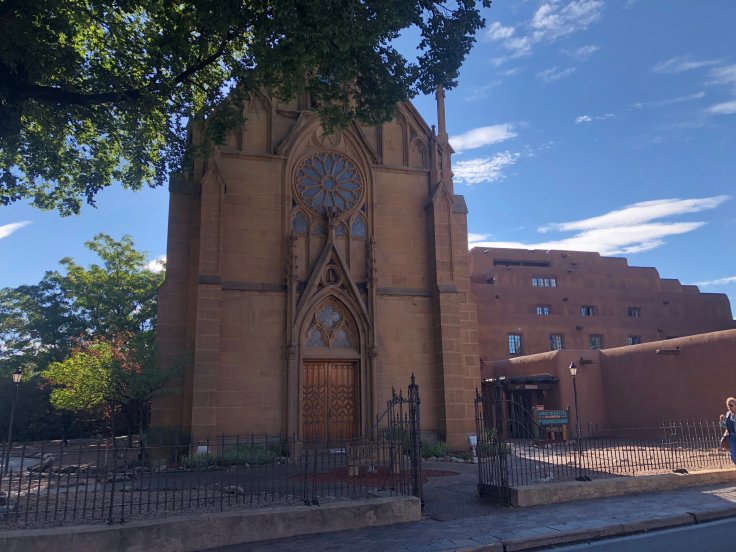
We saw the Loretto Chapel…

img_6552

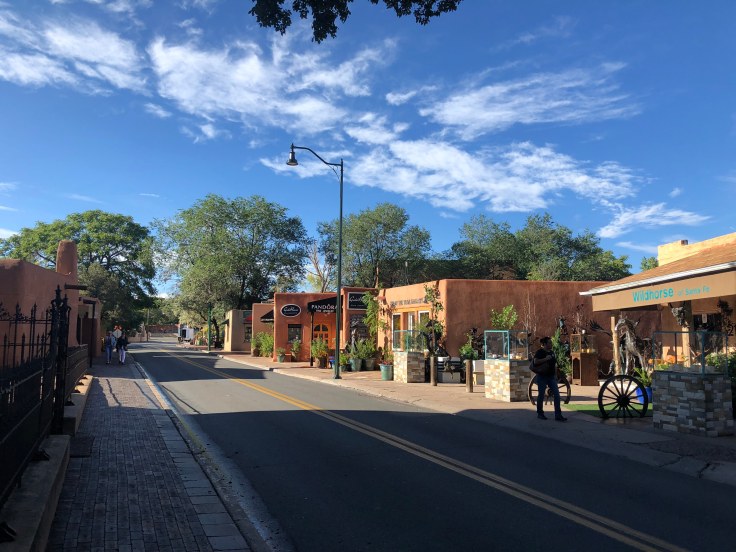
And we saw the quaint shopping and gallery district on Canyon Rd…
img_6551

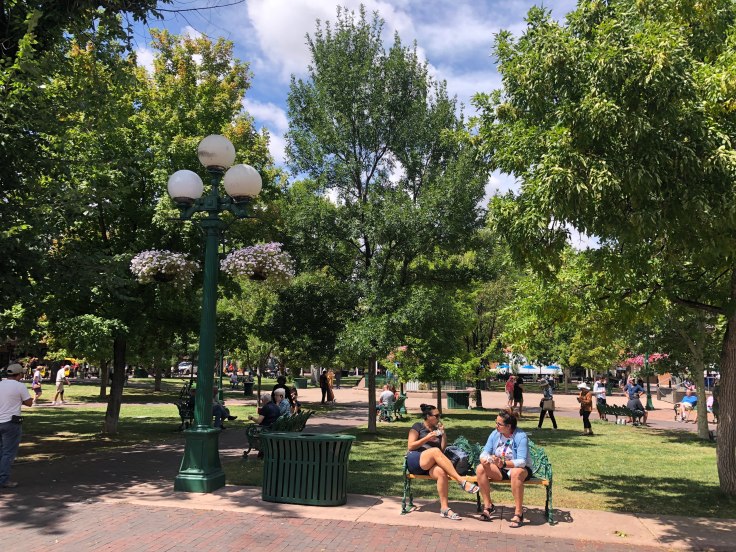
We spent some time shopping in the blocks around the plaza…
img_6622img_6619

We learned that the New Mexico flag has a circle representing the sun and the Indian’s cultural belief in the circle of life.  The four groups of four rays symbolize the four cardinal directions, the four seasons of the year, the four times of the day and four stages of life…
img_6573

And we had time for lunch at The Shed…

img_6625

After more window shopping we returned to the RV “Resort” in Pojoaque…

img_6632img_6628

We enjoyed another Fandango”, meeting new Airstream friends.  And an enjoyable time was had by all…


2018-06-15 – Mini Wine tasting Trip to Sonoma County

After cancelling a 2 month Airstream trip (Springtime in the Rockies Caravan plus travel to the Airstream International Rally (or convention) in Salem, Oregon), we were looking for an excuse to do other shorter excursions.  We had been toying with extending the return trip from Salem into another Wine Tasting Caravan along the California Coast. This all came to fruition when another opportunity arose: One of our favorite wineries,  J. Rochioli Vineyard & Winery, invited us to their “Single Vineyard Celebration”.  This is an annual event wherein they offer wine tasting of their best wines along with fabulous food by the famous chef, Charlie Palmer.  Since we were able to take the time, we jumped at the opportunity!

The winery is located in the Russian River Valley of western Sonoma County, California, about 70 miles north of San Francisco. We planned a quick trip north, two days of wine tasting, and a quick trip back home.

This being the first time we were leaving from our new home in Redlands, we relished the thought of being able to travel north without having to drive through the heart of Los Angeles.  I’m very comfortable driving in LA, but we have done it so often that we were happy to be able to drive where we have never, or rarely, driven before.

We left bright and early on Friday, June 15; we drove up and over Cajon Pass; at an elevation of 3,776′, it was the last obstacle of the 19 century pioneers and dust bowl refugees before they left the desert behind and descended into the beauty of Southern California. Today it is all modern freeway, and most autos handle it without a thought…

Out destination today was Lodi, made famous by Creedence Clearwater Revival:

Just about a year ago
I set out on the road
Seekin’ my fame and fortune
Lookin’ for a pot of gold
Thing got bad things got worse
I guess you will know the tune
Oh Lord, stuck in Lodi again

Apparently the author had never been to Lodi, but the town name fit the music, much like Williams, Arizona in another famous song ( and blog post) …

As I said, we drove over the Cajon Pass, then we headed west towards Palmdale and Lancaster, eventually reaching Bakersfield and continuing north along old Hwy 99, though the Central Valley,  one of the world’s most productive agricultural regions.  More than 230 crops are grown here. On less than 1 percent of the total farmland in the United States, the Central Valley produces 8 percent of the nation’s agricultural output.  Our stops were brief, mostly for fuel:

img_5932

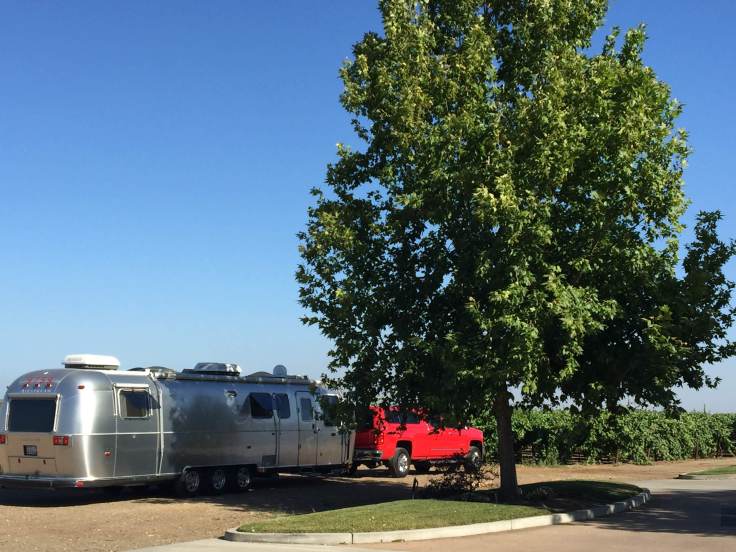
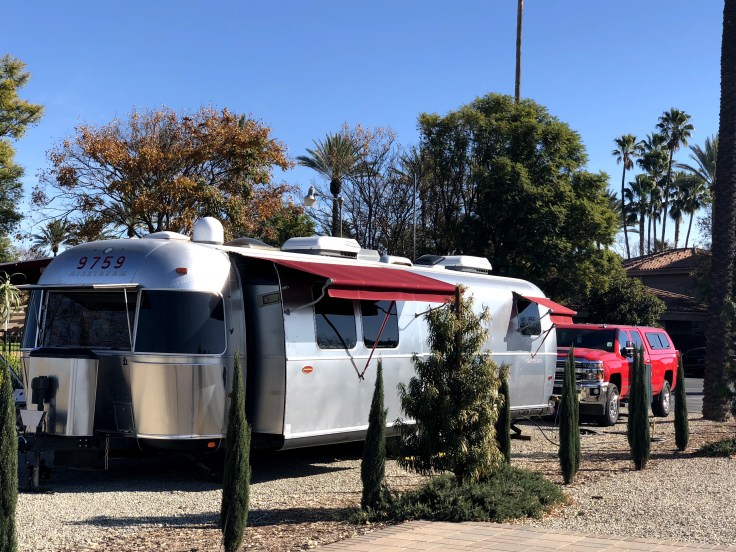
We arrived at our “camping spot” at just about 4:30.  This is later than normal for us, but, like I said, we were trying to make time.  We took advantage of our Harvest Host membership and parked in the vineyards of Van Ruiten Family Winery.  We did a little wine tasting, bought a little wine, checked Yelp for nearby restaurants, and hailed Uber for a short ride to dinner.

img_4135img_4140img_4142

After dinner we walked the 2.7 miles back to the Airstream and turned in for the night…

Saturday morning we were up, out, and about quite early.  After stopping at Starbucks for a quick fix we headed west on Hwy 12, through Rio Vista, Fairfield, Napa, and on into Sonoma County. Once we were in the Russian River Valley we easily found River Bend RV Resort:

img_5946

Luckily our site was vacant, and they let us check in early.  We quickly set up and checked out the park.  The RV sites and the Tenting sites leave something to be desired, but the river was beautiful!

img_4148img_5949

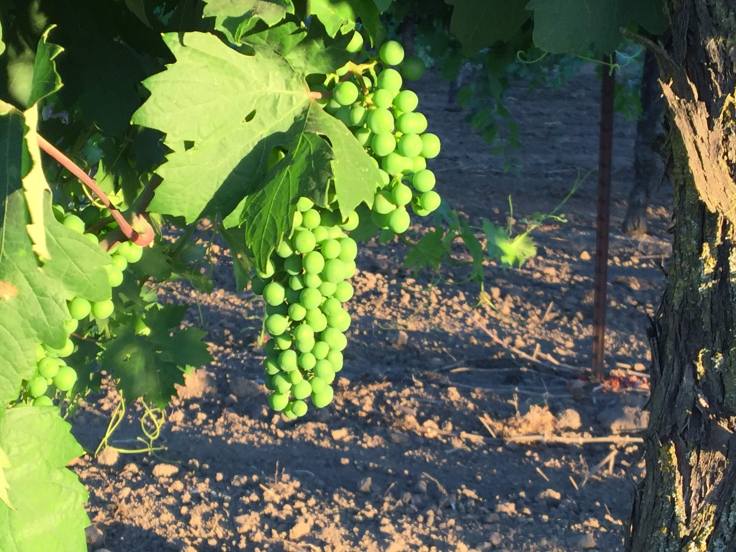
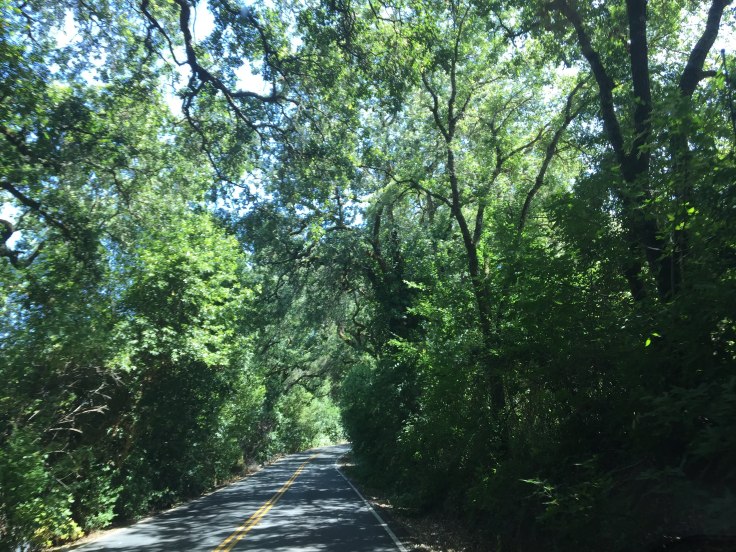
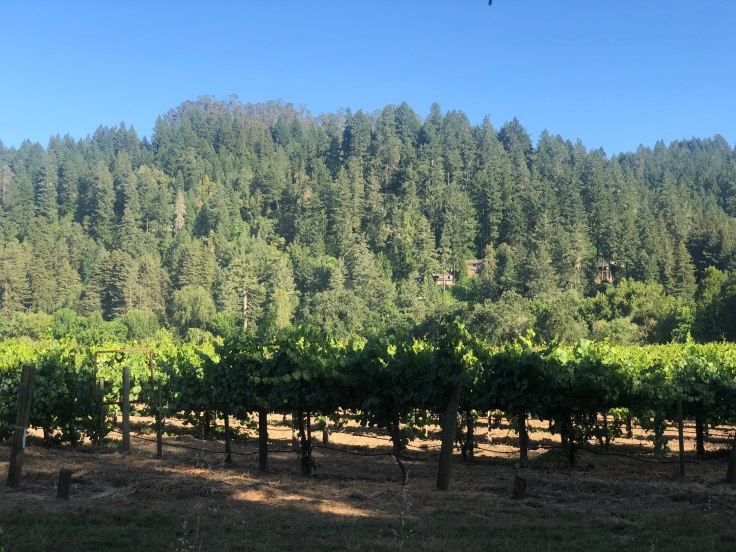
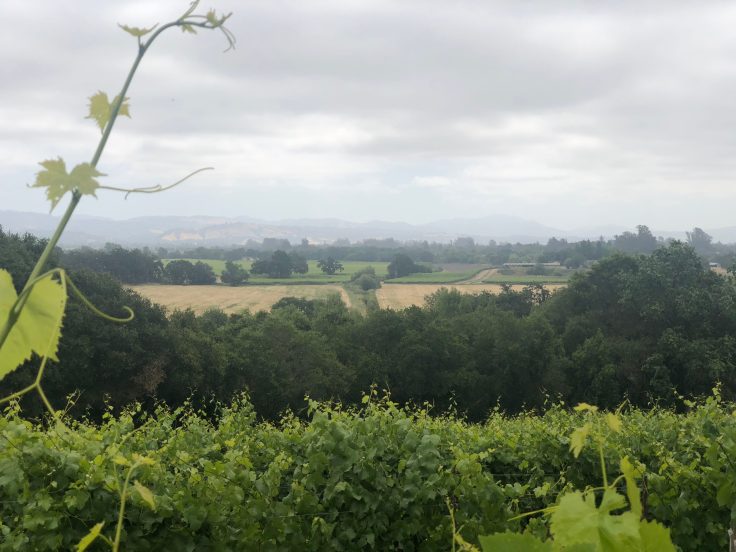
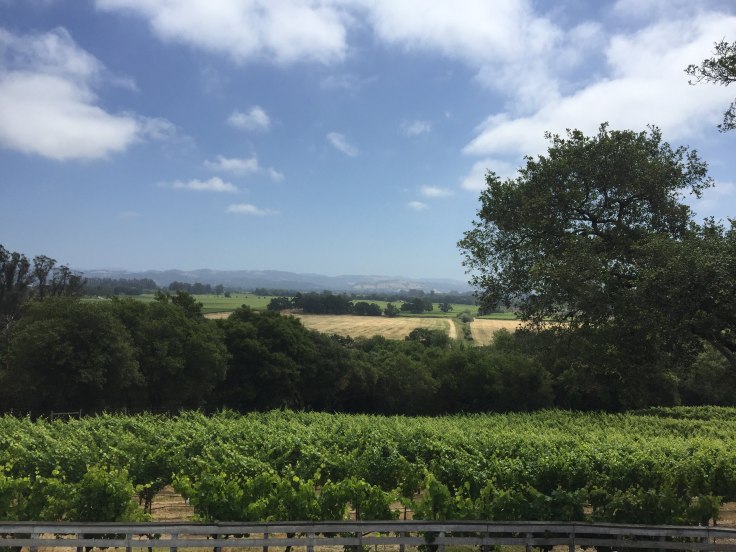
Today our big event is the Rochioli Single Vineyard Celebration!  We drove through the forest until the vineyards appeared.

img_4151img_4149img_5939img_5944

We were welcomed to the party with Rochioli Sparking Rose’, and then we heard chef Charlie Palmer explain some of the food offerings.  We made our way through the tasting room and into a large courtyard adjacent to the winery, where we found a table in the shade.

img_59351

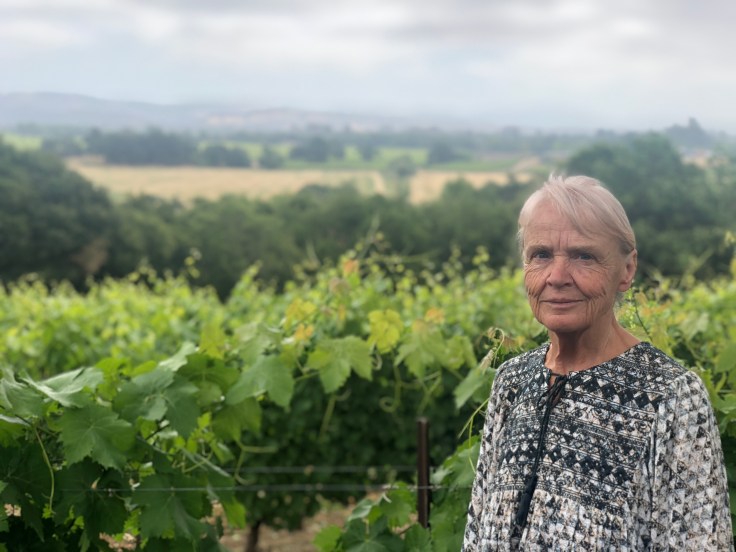
We spent the entire afternoon there, listening to the live band, meeting other Rochioli folks, and, of course, tasting many great wines and having some wonderful food!  Of course, the surroundings were great!

img_5936

On Sunday we set out to research tasting opportunities to share with others on the 2018 WBCCI Wine Tasting Caravan.  We visited Woodenhead – very rustic,, quiet, and simple.

img_5942img_59391img_4155

Then on to Williams Selyem… Not just a tasting room, or even a tasting salon, but a genuine tasting palace!  Very relaxed, personal, and spectacular wines…

img_5945

Next was MacRosties.  Very formal (they asked if we had reservations), with individual tables, servers, menus… all in a very nice room:

img_4159

Three very different experiences, all fun!

Monday was our return trip – reversing course through Sonoma, across the 12 to the 99, then down to Bakersfield for the night; Tuesday we were home.

And an enjoyable time was had by all…


2018-06-01 Catching up on Airstream Camping and Travels

So, between packing and moving and remodeling and unpacking (not all in that order…) and with more grandchildren to chase around, we have been sticking pretty close to home.  First, so that we could be in California for the blessed event (Evelyn) in March, we postponed our planned Cajun Country Caravan until next year.  Then, so that we could move and almost keep our sanity, we postponed the Springtime in the Rockies Caravan until next year.  However, we have been able to attend several local Unit rallies of the South Coast Airstream Club:

This is Hemet in January:

img_5200img_5199

This is Pechanga in February:

img_3970img_5266img_5268

And Camp Pendleton/Del Mar Beach in March:

img_5444

img_5445

And Chula Vista in April

img_5627

There were assorted camping trips to San Clemente and Crystal Cove:

img_5725img_5722img_4079img_5529

And that fairly well sums up our year so far…

Even with very busy lives, enjoyable times are being had by all…


Blog at WordPress.com.

Up ↑