Search

Adventures in the Villa

Category

Caravans

2021-08-19 – The Oregon Trail caravan … Day 22 – Traveling from Glenn’s Ferry, ID to Vale and Baker City, OR

Three Island Crossing State Park in Glenn’s Ferry is a beautiful park, with large grassy sites. But we must keep moving on. Today we reach Oregon!

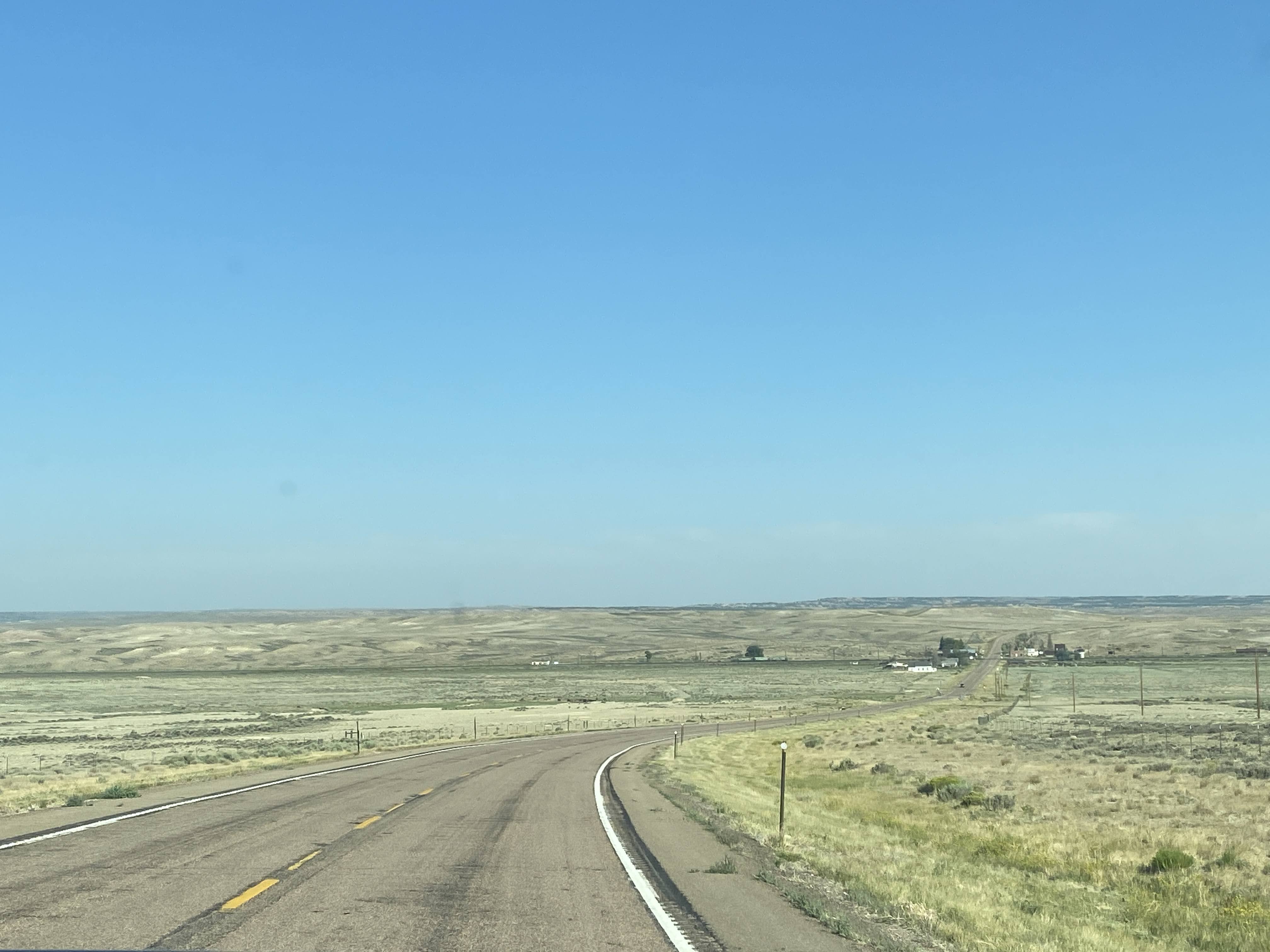
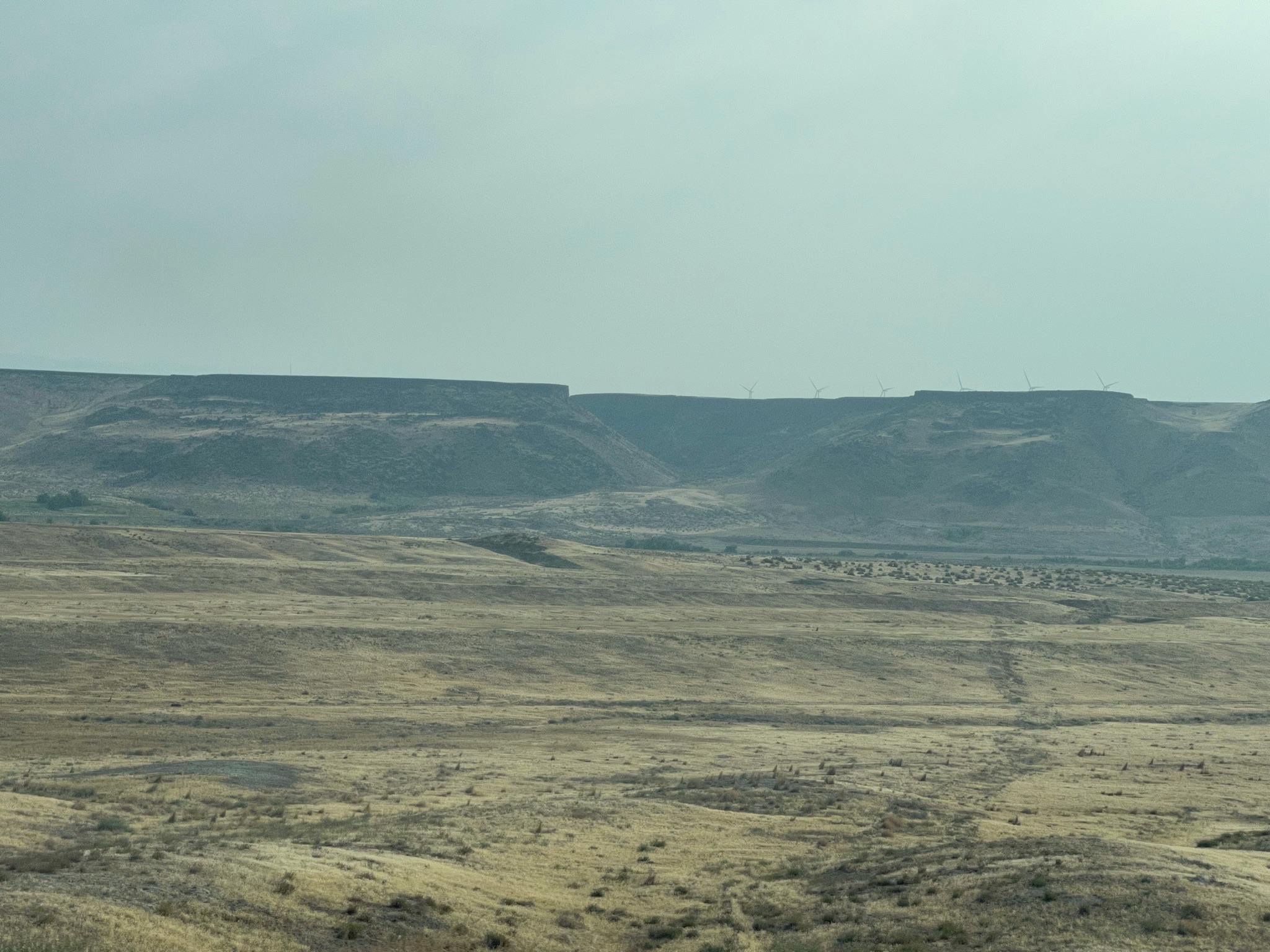
Eastern Oregon looks a lot like south western Idaho…
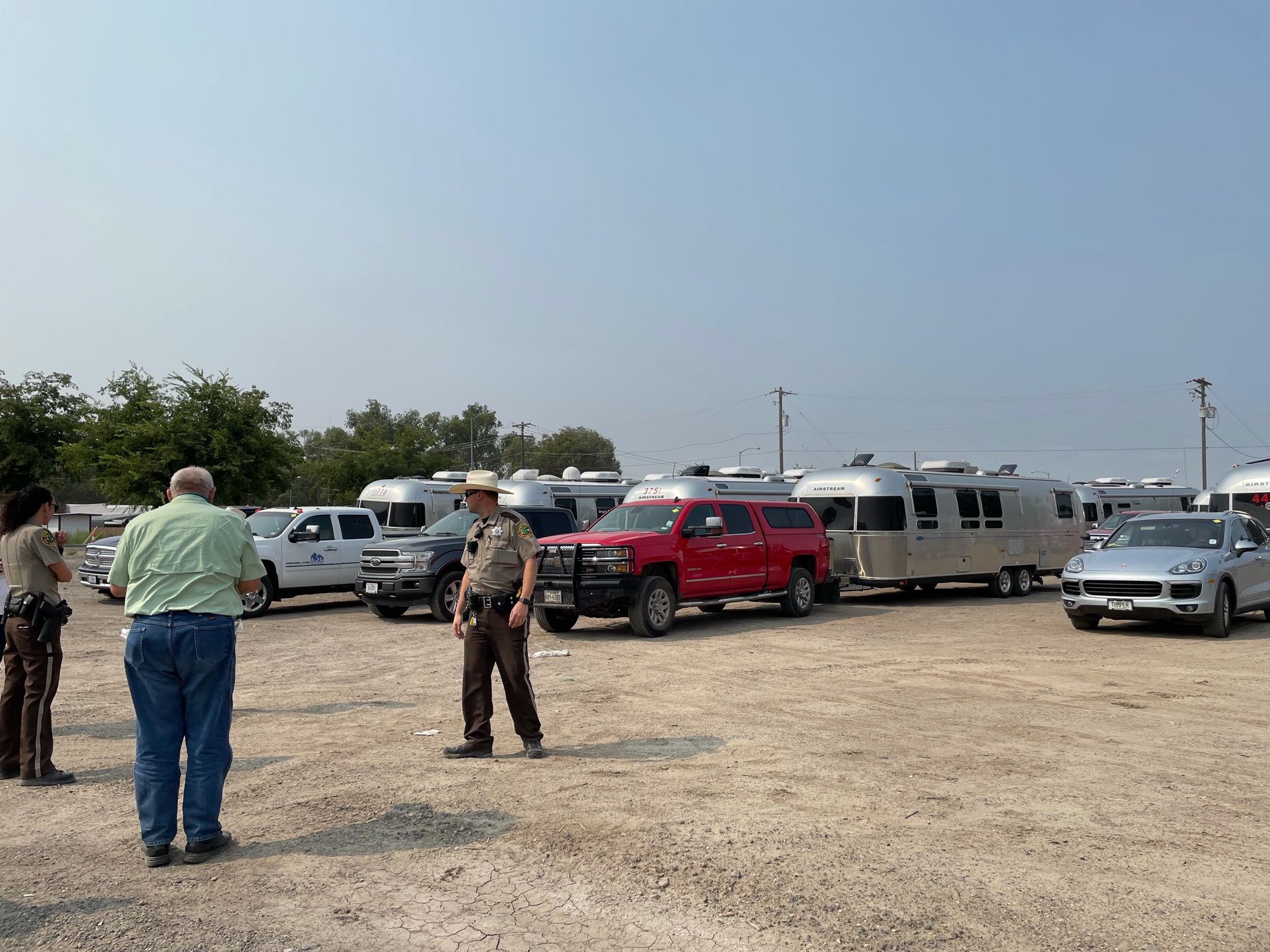
We are heading to Vale, OR, to rendezvous with all 20 Airstreams; then we will convoy into Vale with a police escort to assist crossing streets and staying together…

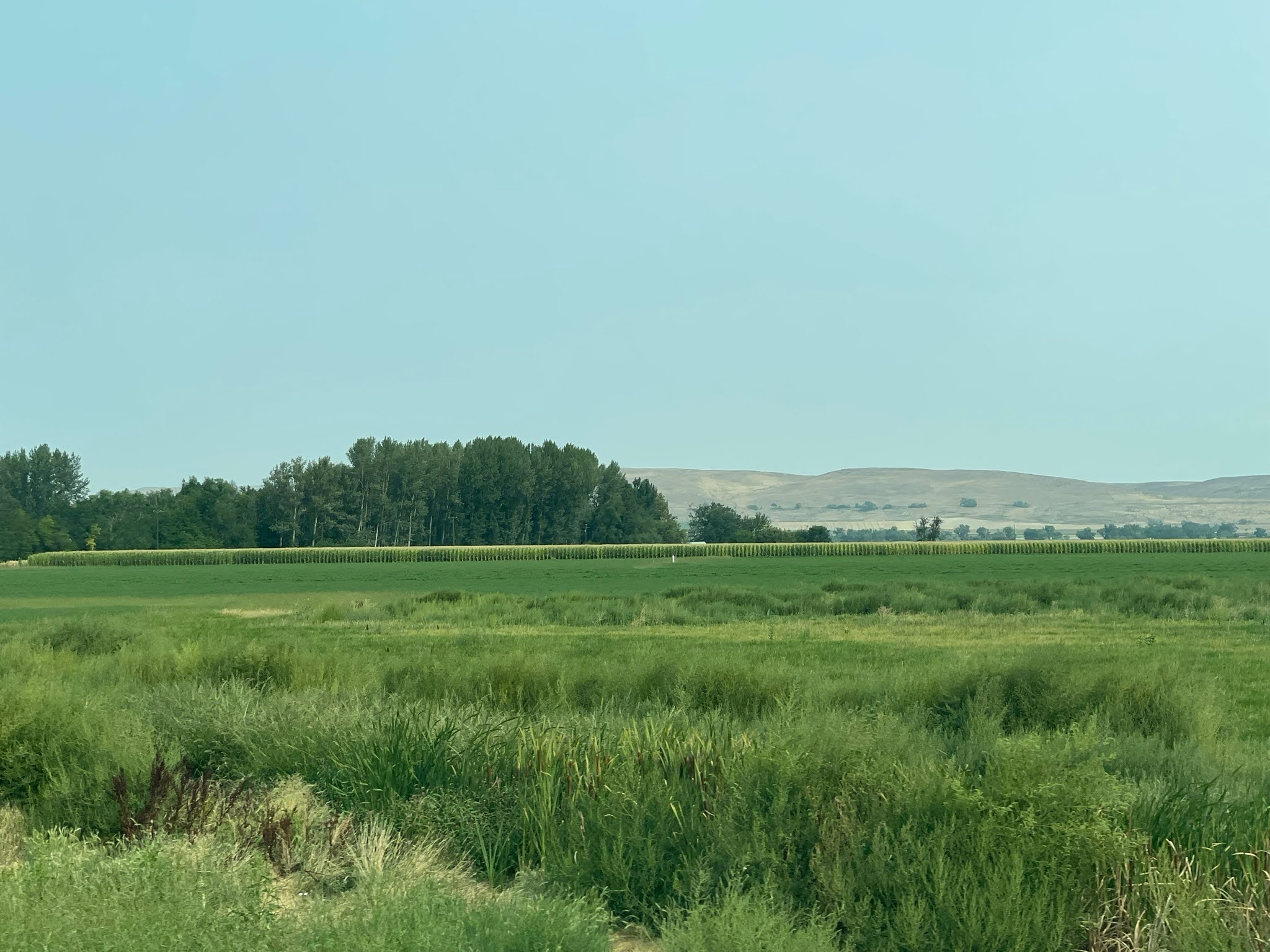
We passed through some very fertile farmland…

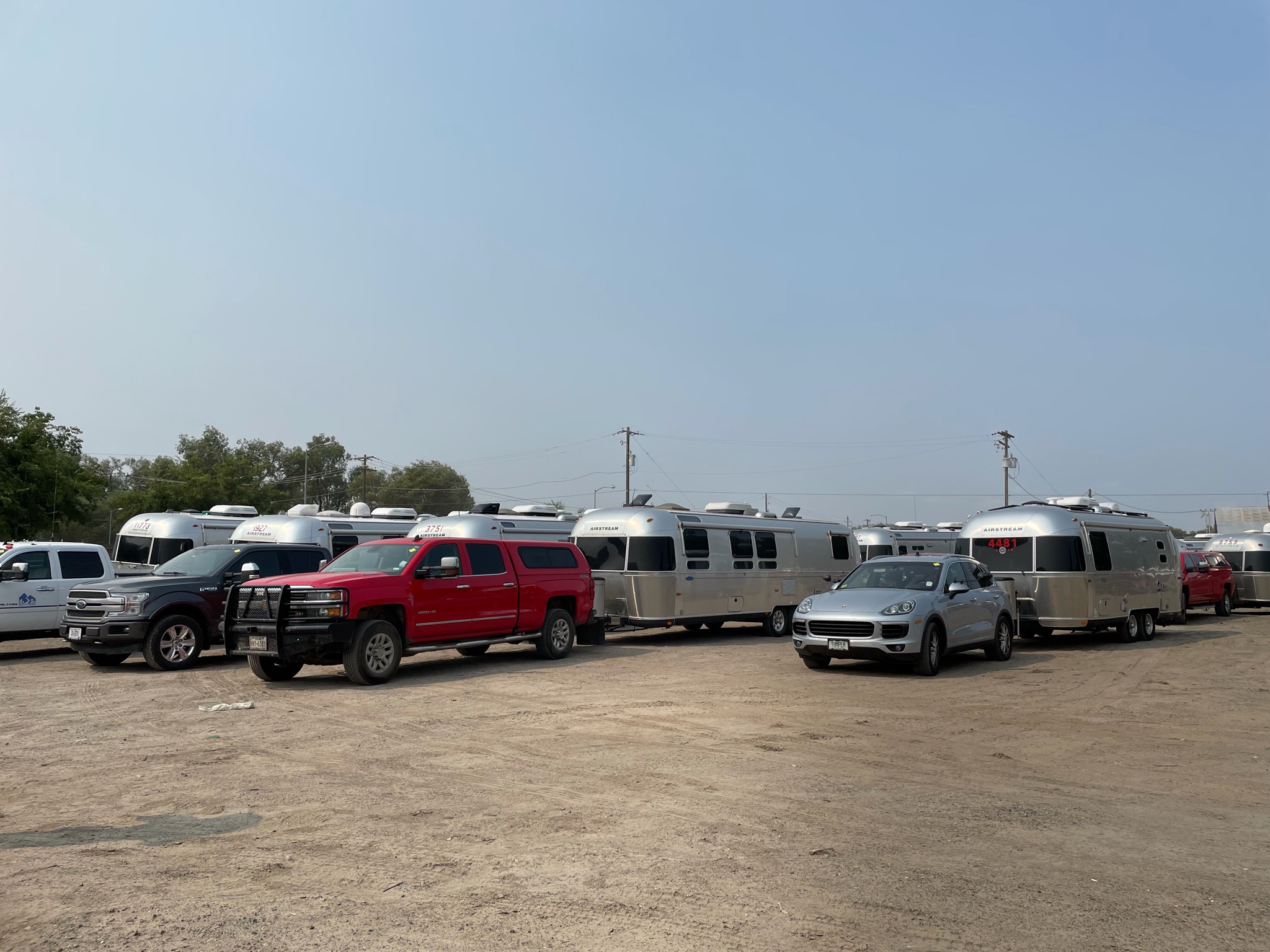
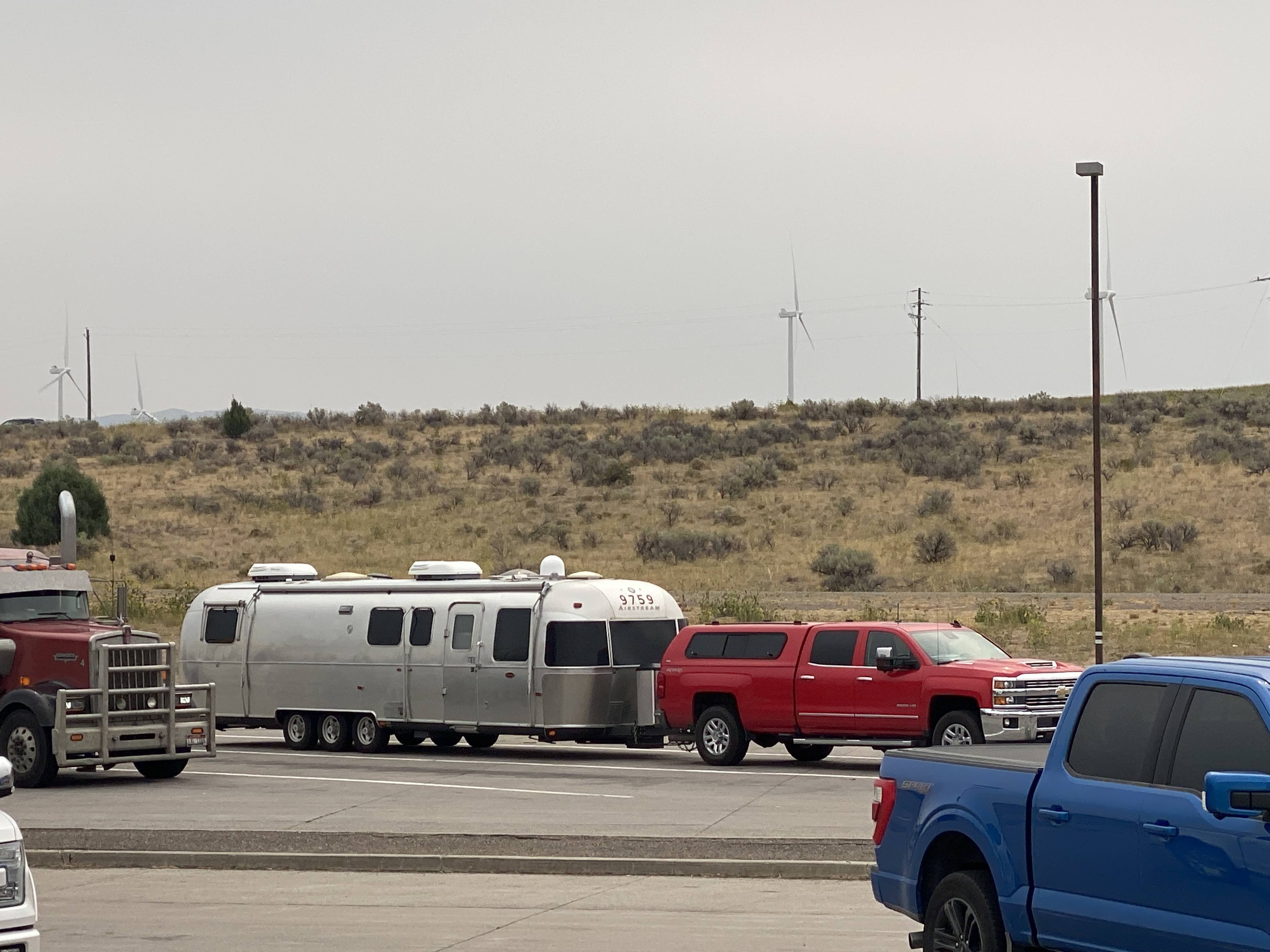
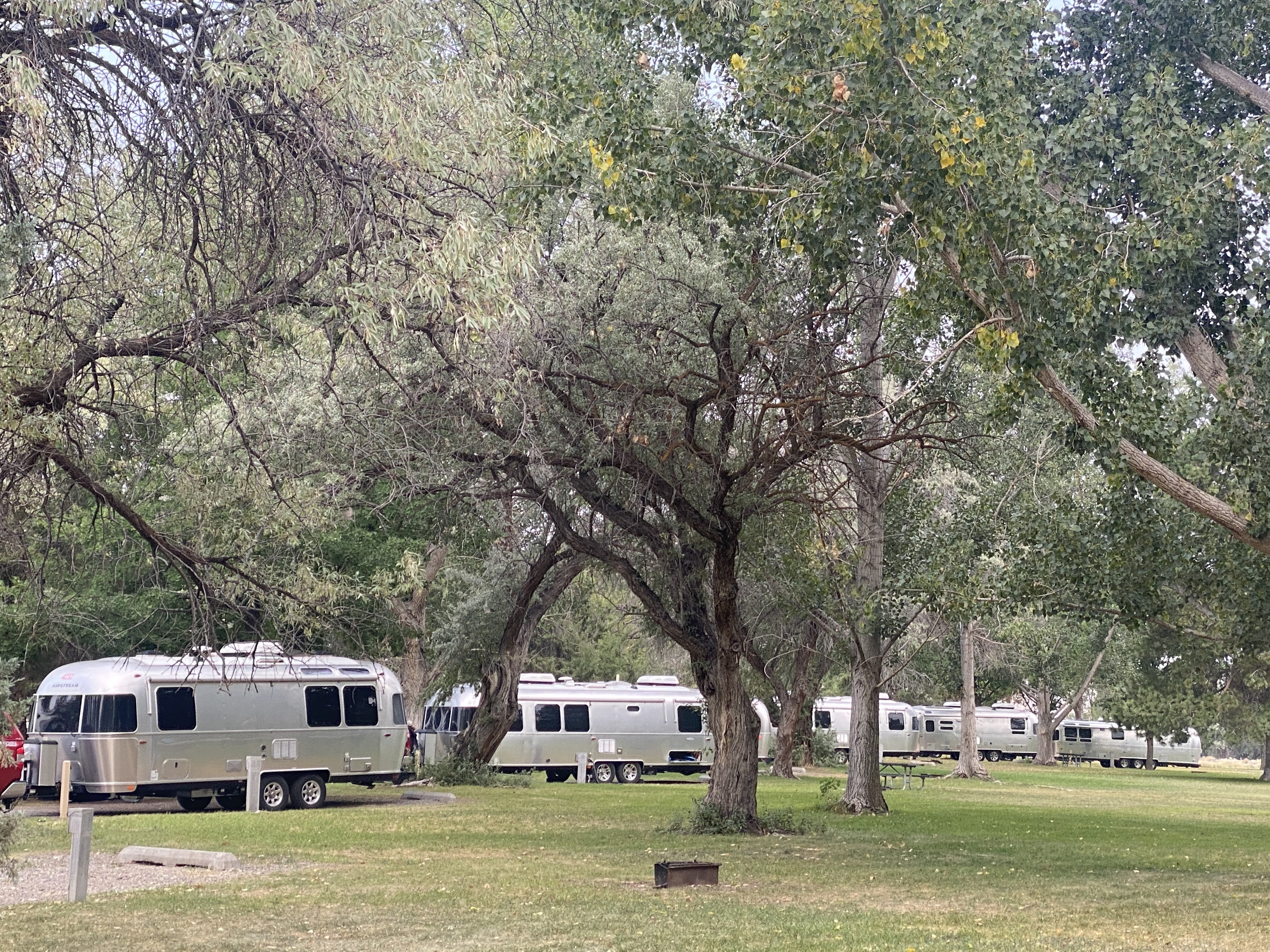
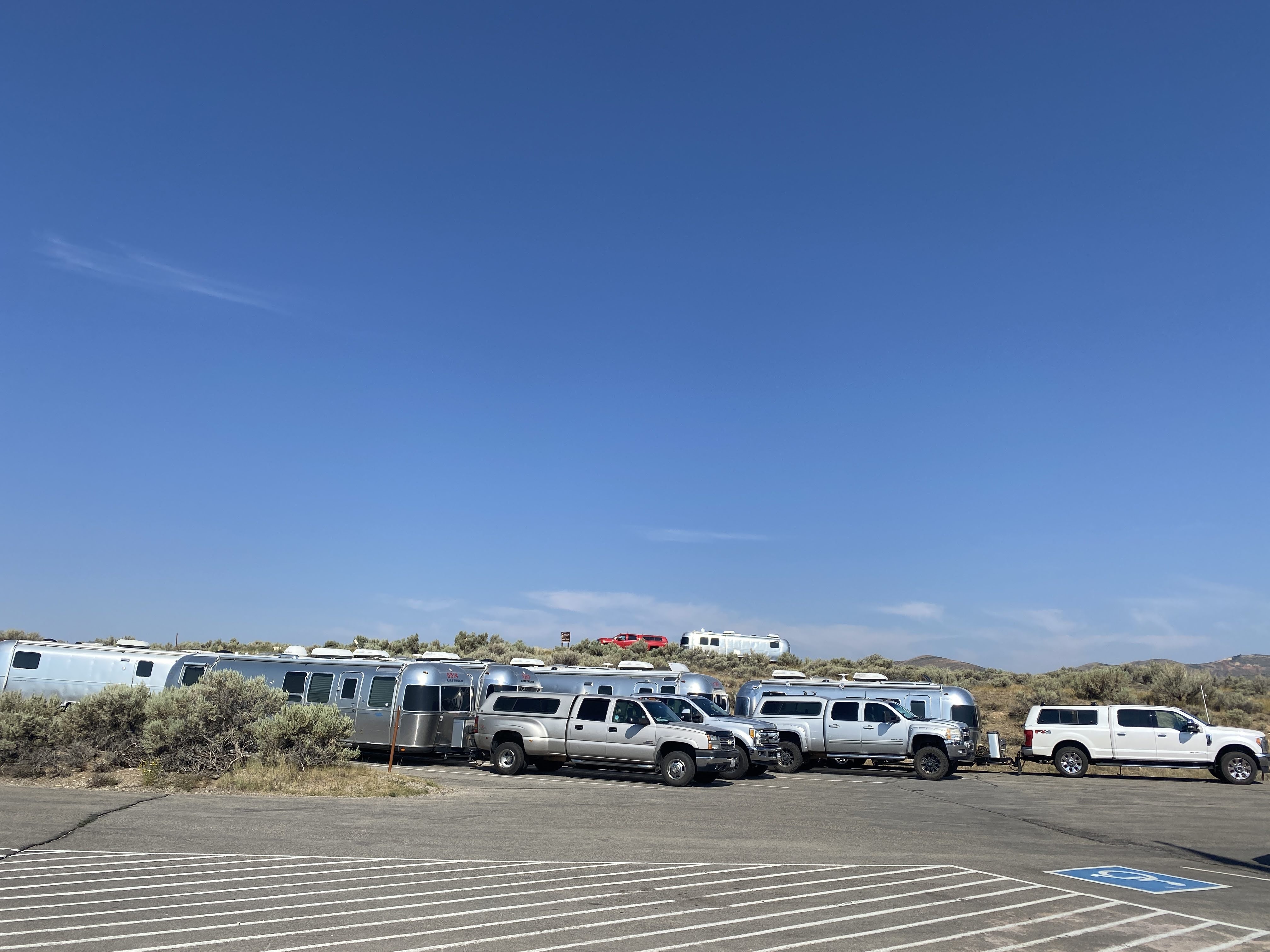
We all parked together in this small lot until we were all here…

Our police folk posed for pictures while we waited…
When we were ready we traveled the 2-3 miles through the town of Vale, and we parked in the Rodeo Grounds…

We were greeted by the Mayor of Vale, then we boarded a school bus to travel to our three historic sites…

Vale was the first stop in Oregon after the emigrants left Fort Boise… Here we see the ruts and swales along the trail…
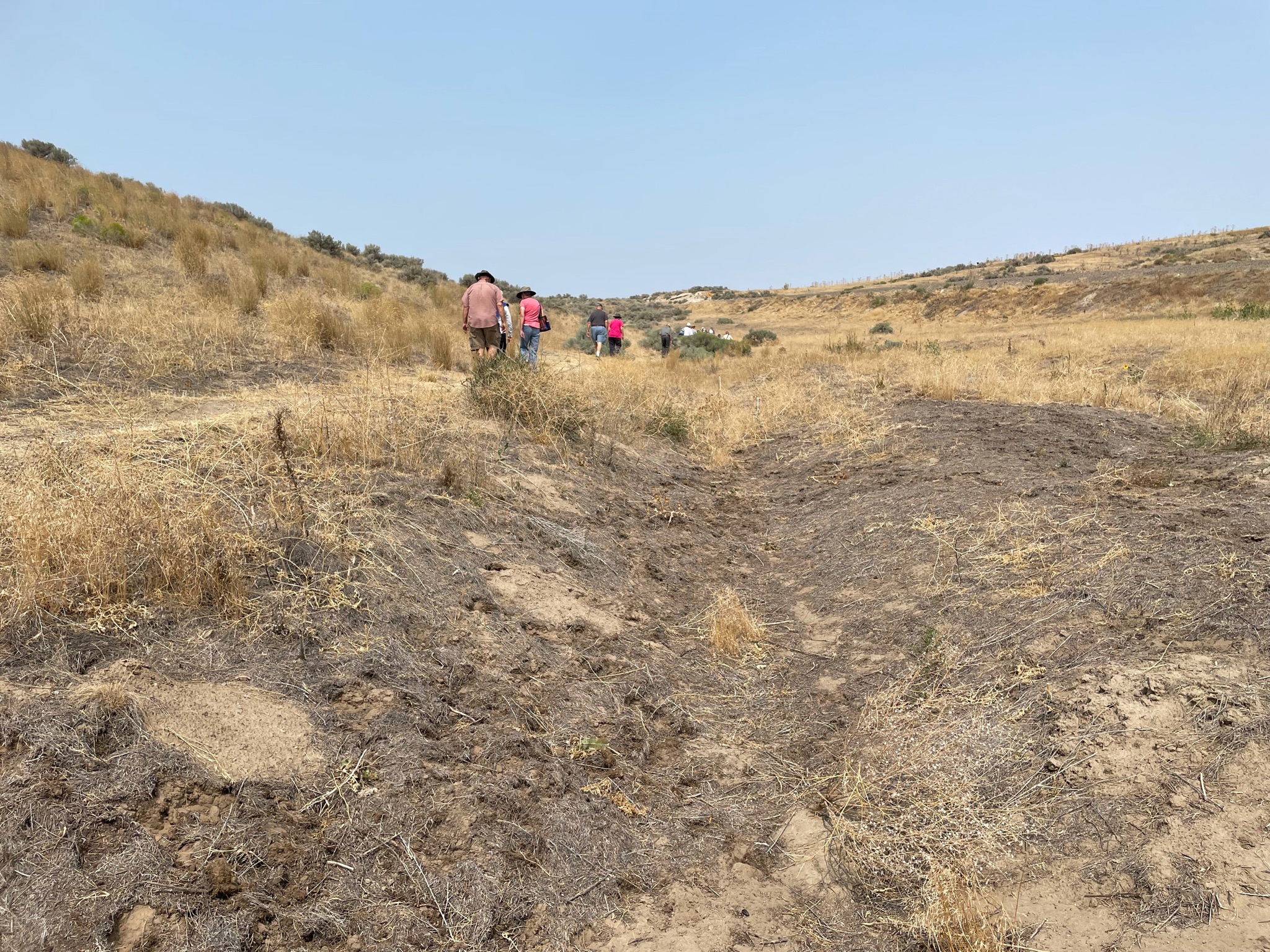
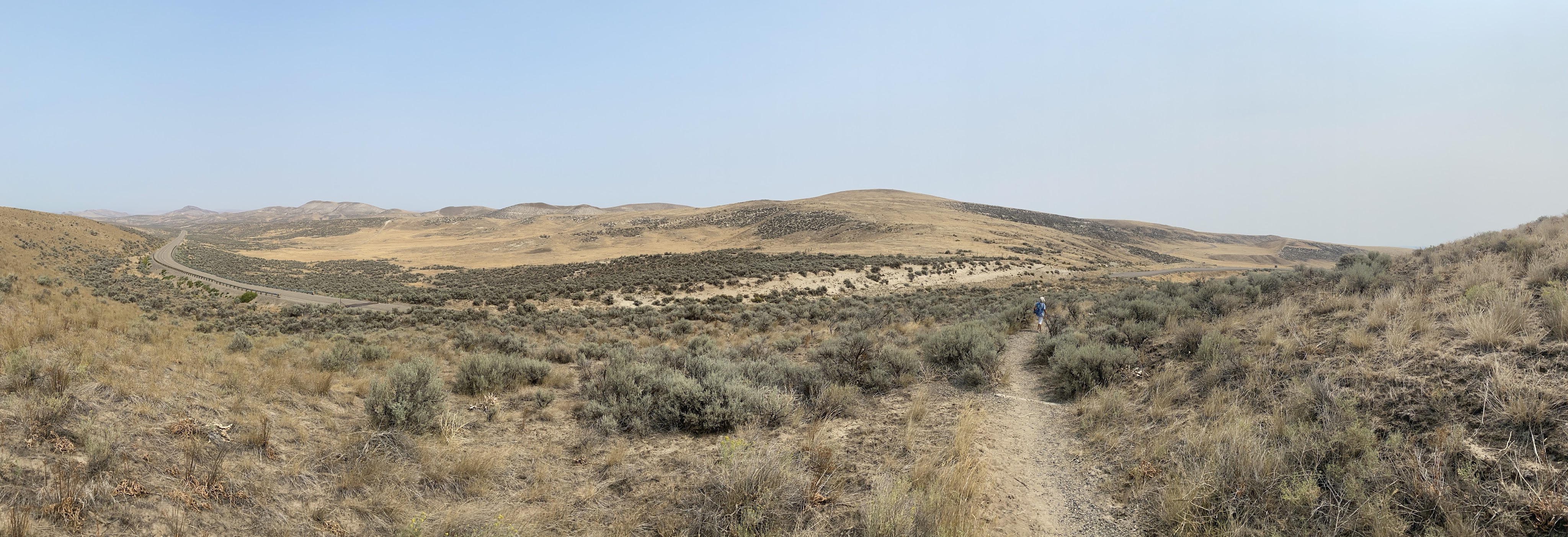
We climbed to the top of the hill where we could see the trail as it passed by here…

The paved highway basically follows the route of the trail through the Keeney Pass…

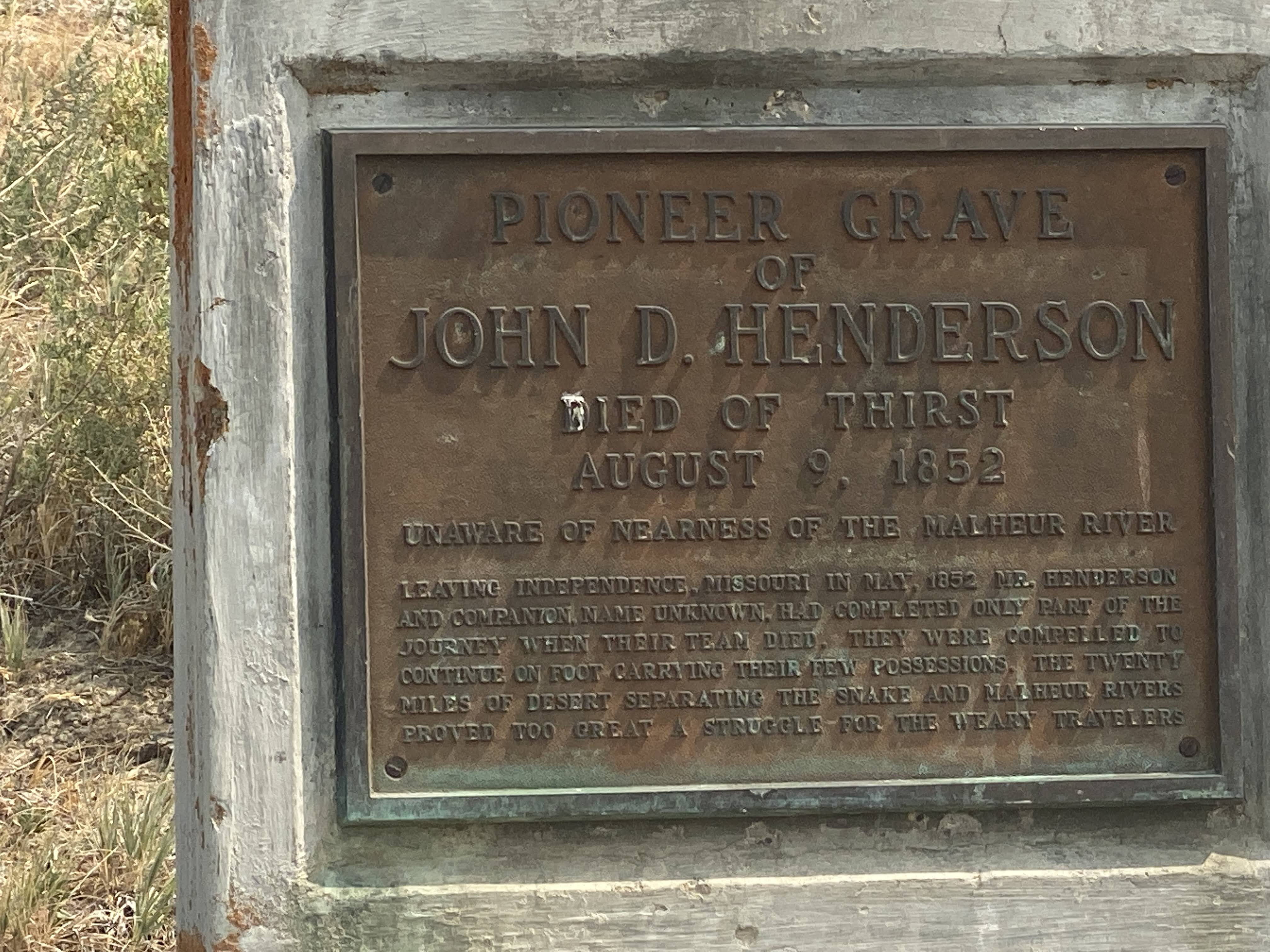
Next we moved to the gravesite of John Henderson…

The emigrants buried Henderson here and scratched his name on the rock…
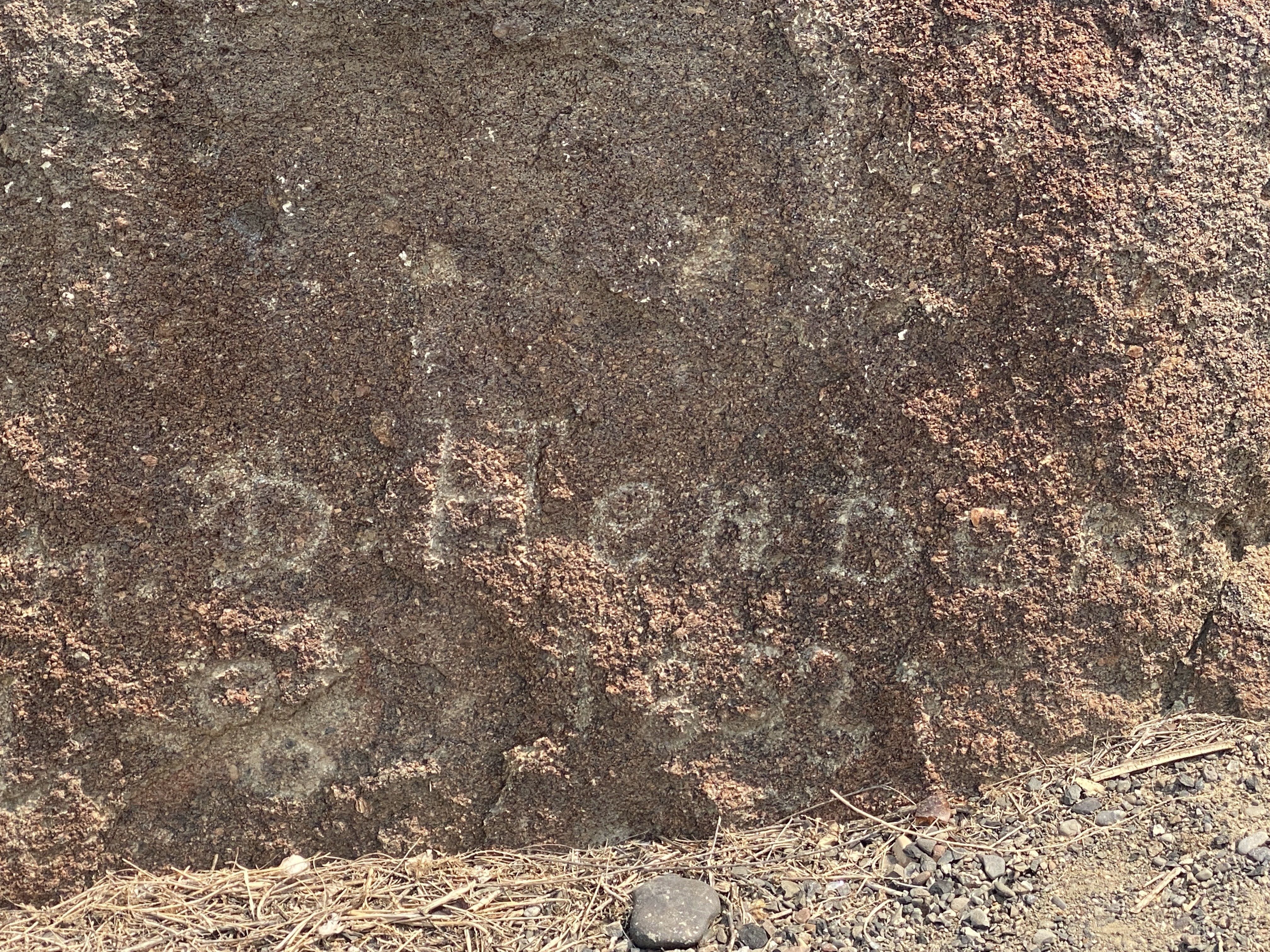
This last plaque was placed by locals, who based their description on an essay by a local schoolboy… No, he didn’t die of thirst… More likely was some disease…
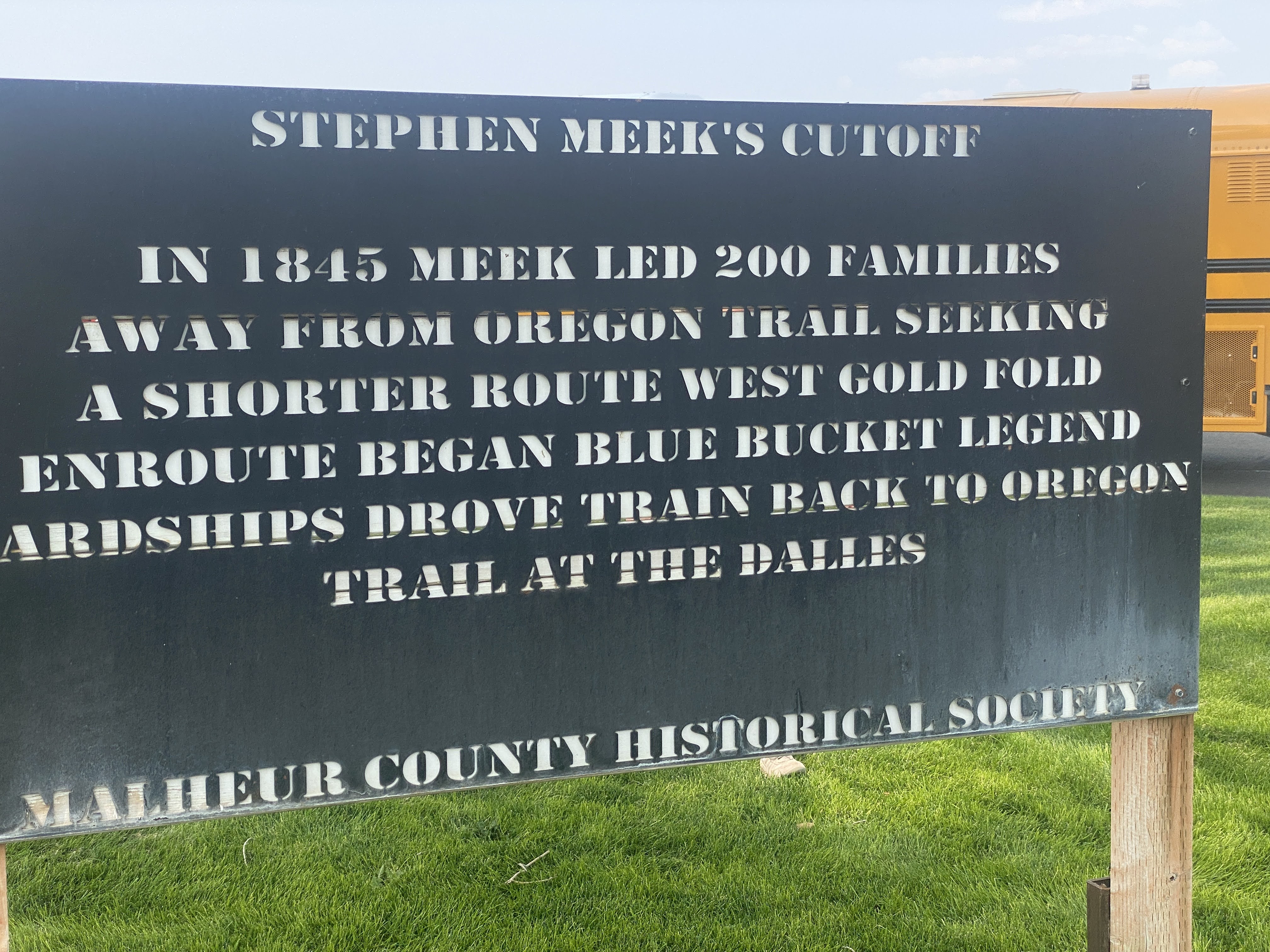
Also near here is the Meek’s Cutoff. Meeks thought he had found a shortcut; it turned out it wasn’t…
Vale was founded in 1864 by Jonathan Keeney. As you can read, he named the area Malheur, which means misfurtune…

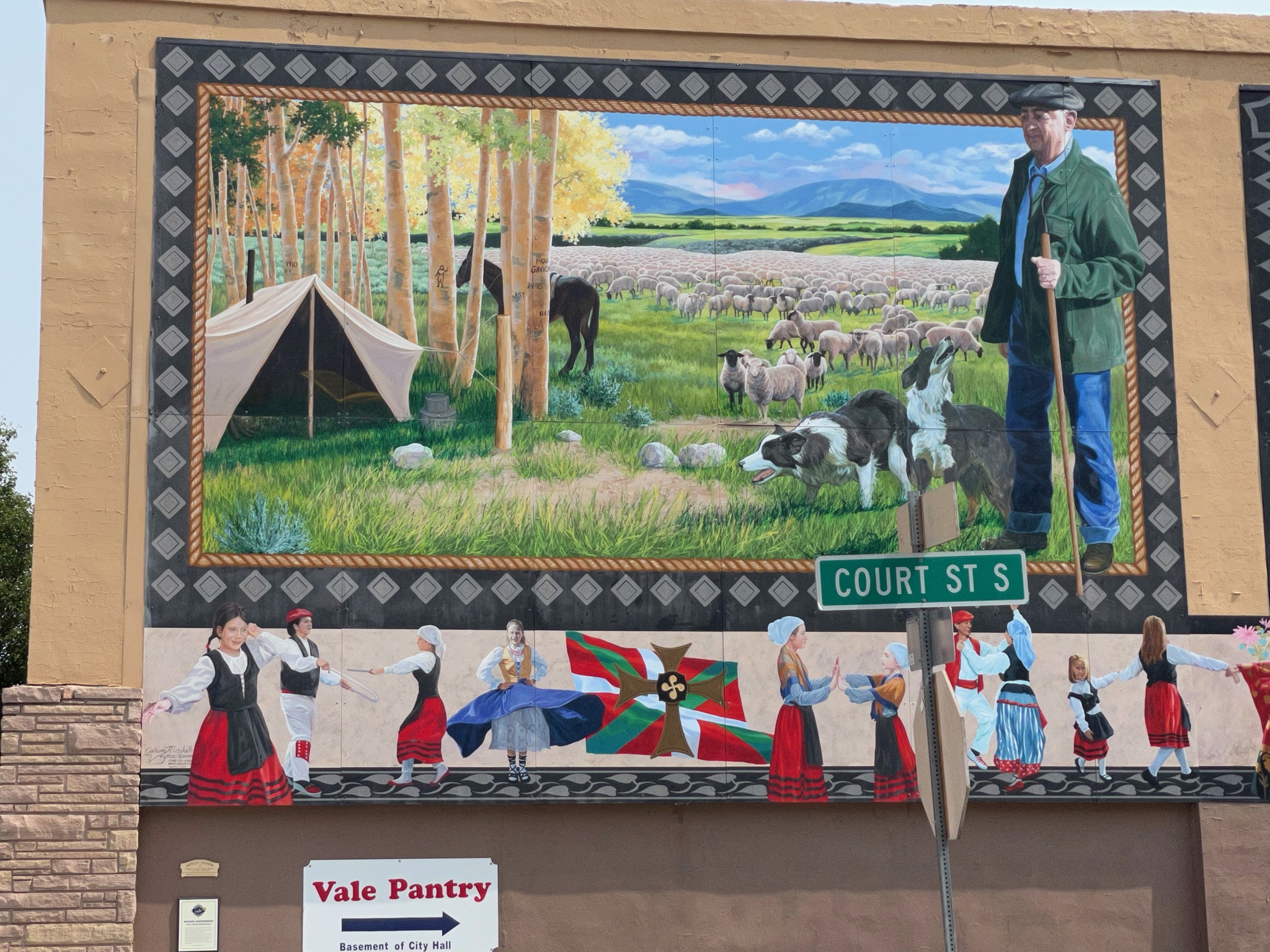
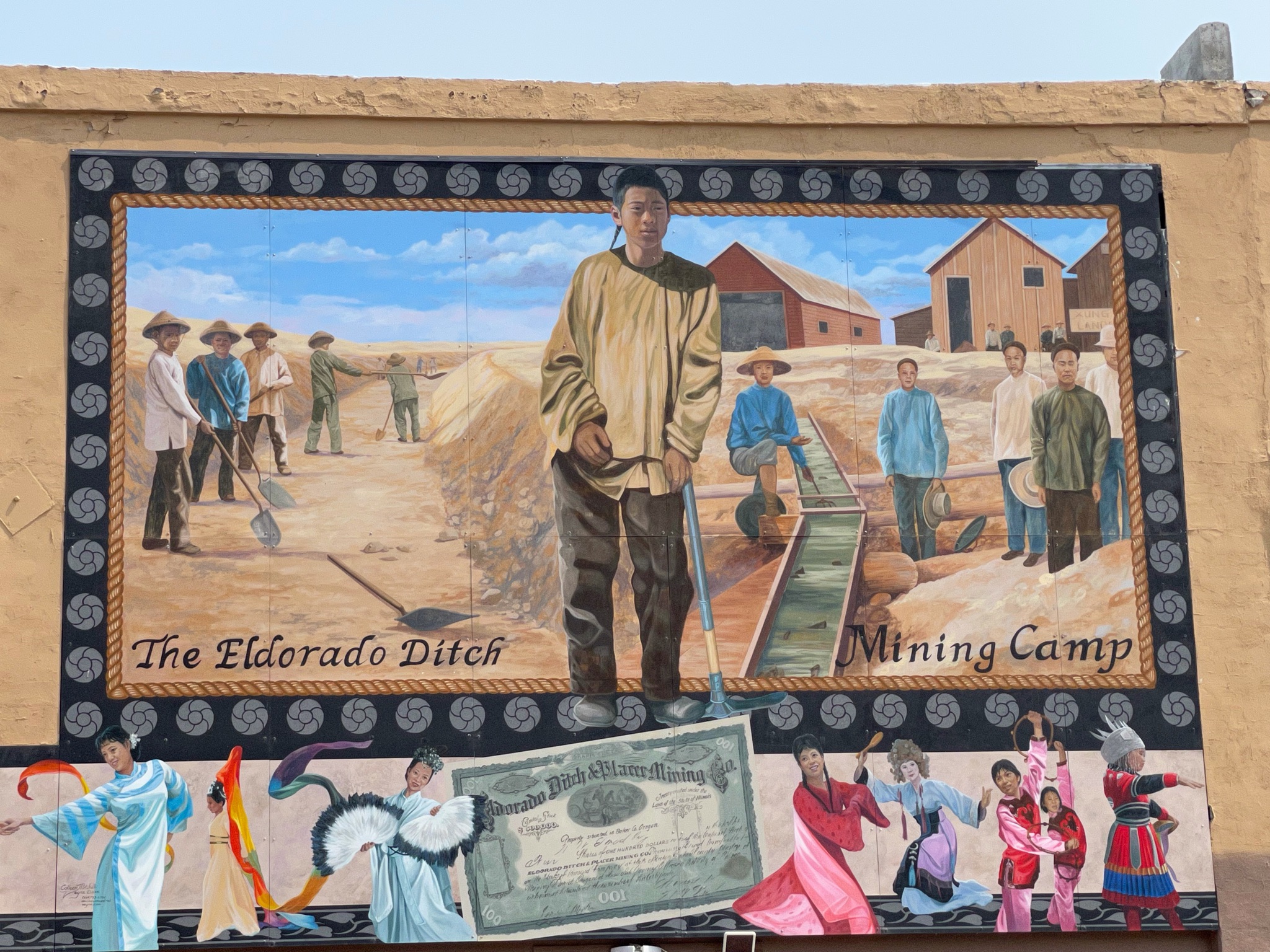
Vale is famous for their fine collection of more than 30 murals all around the downtown area…

We stopped in at Mal’s Diner for a mid-afternoon ice cream break…

And then we headed out for Baker City… We soon found the Snake river again…
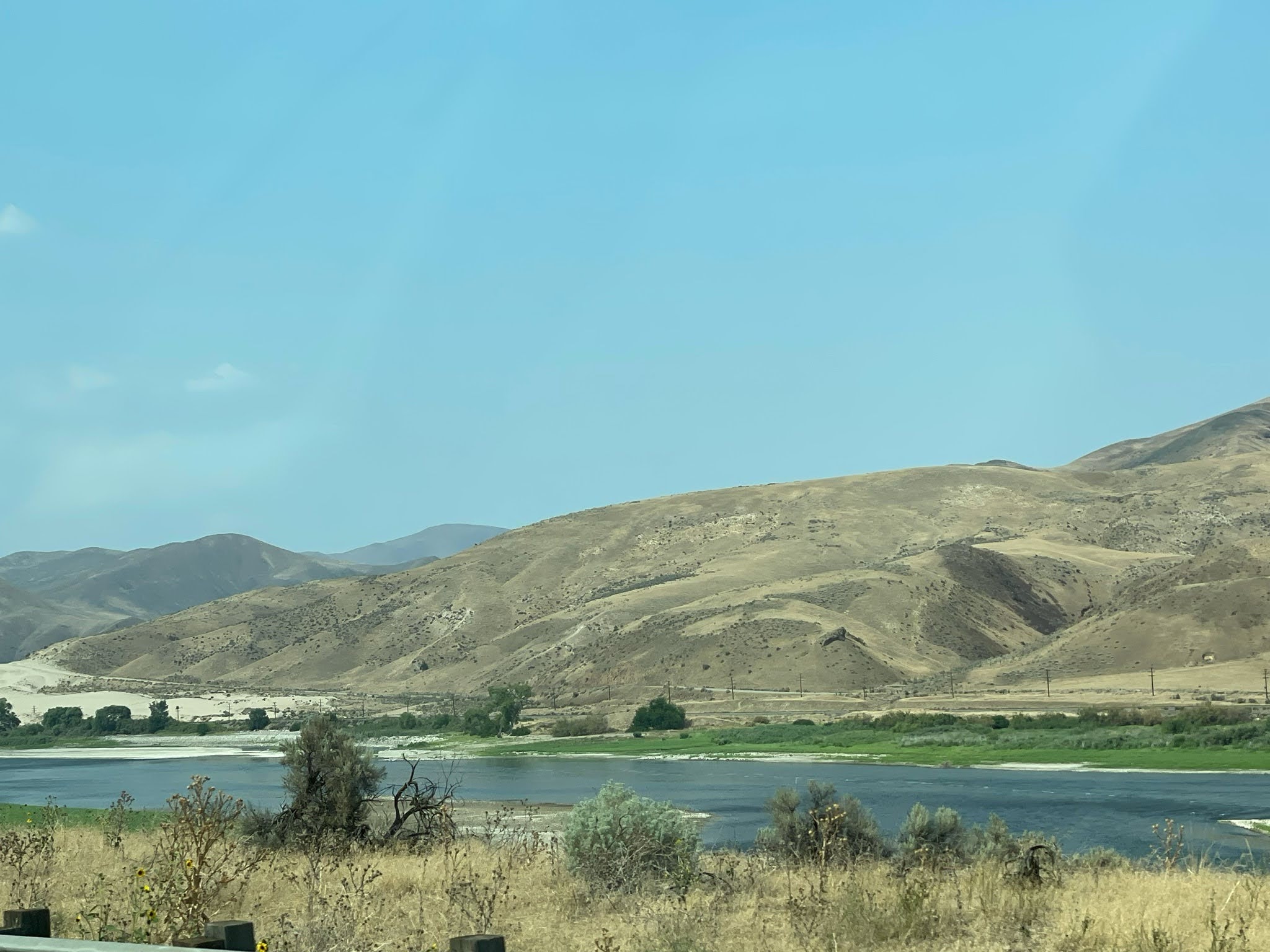
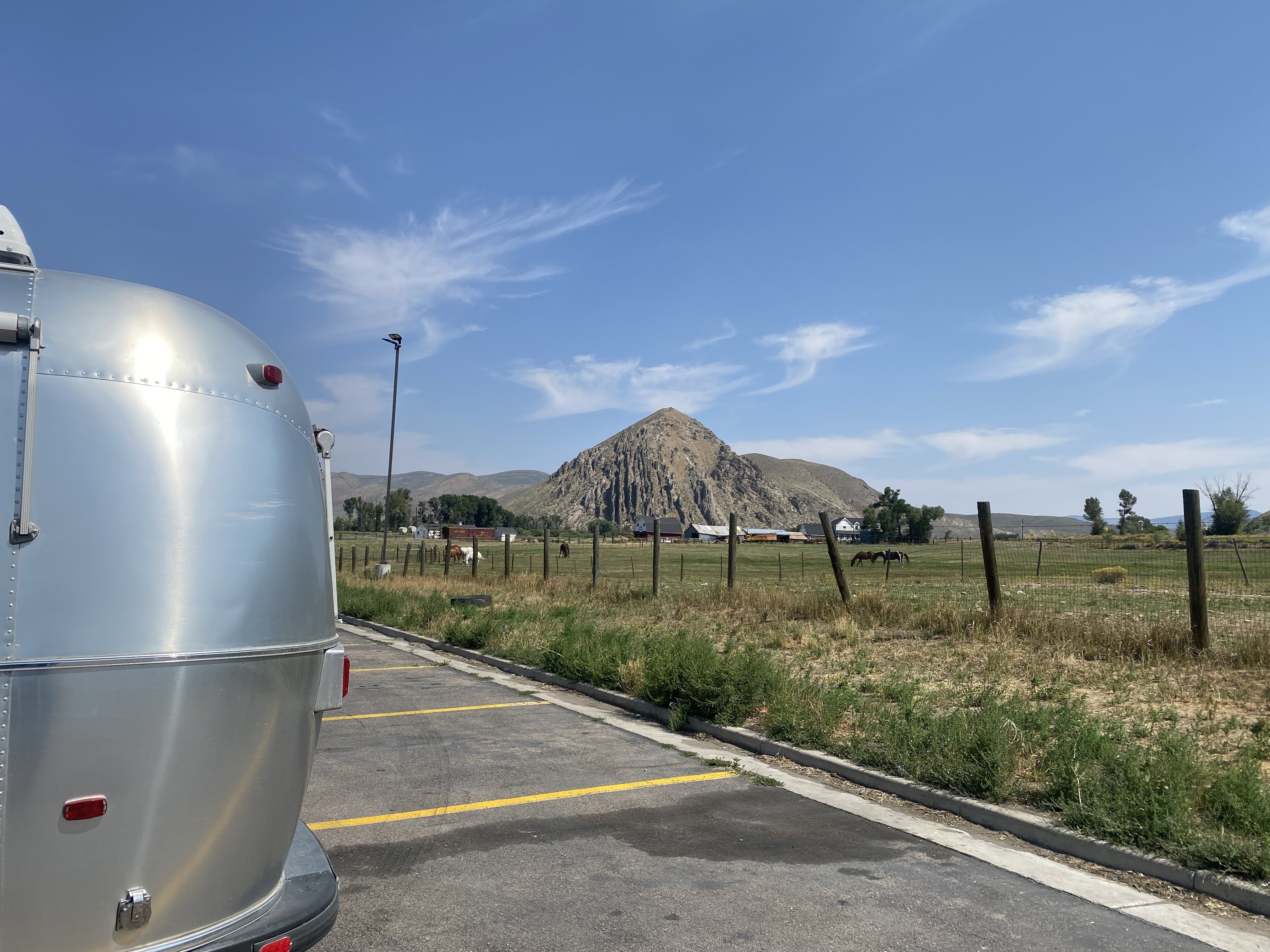
And we found cute little mountains…

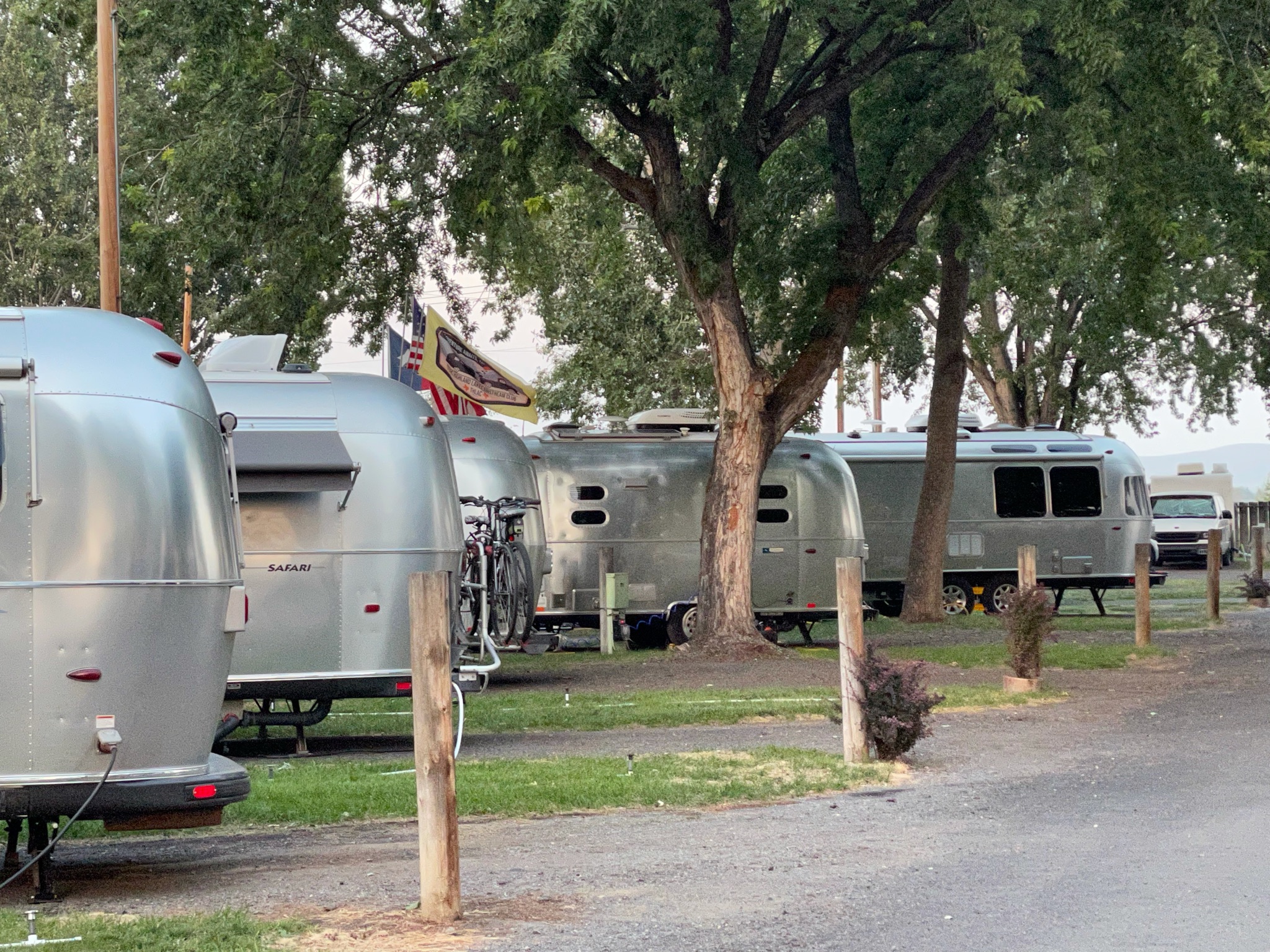
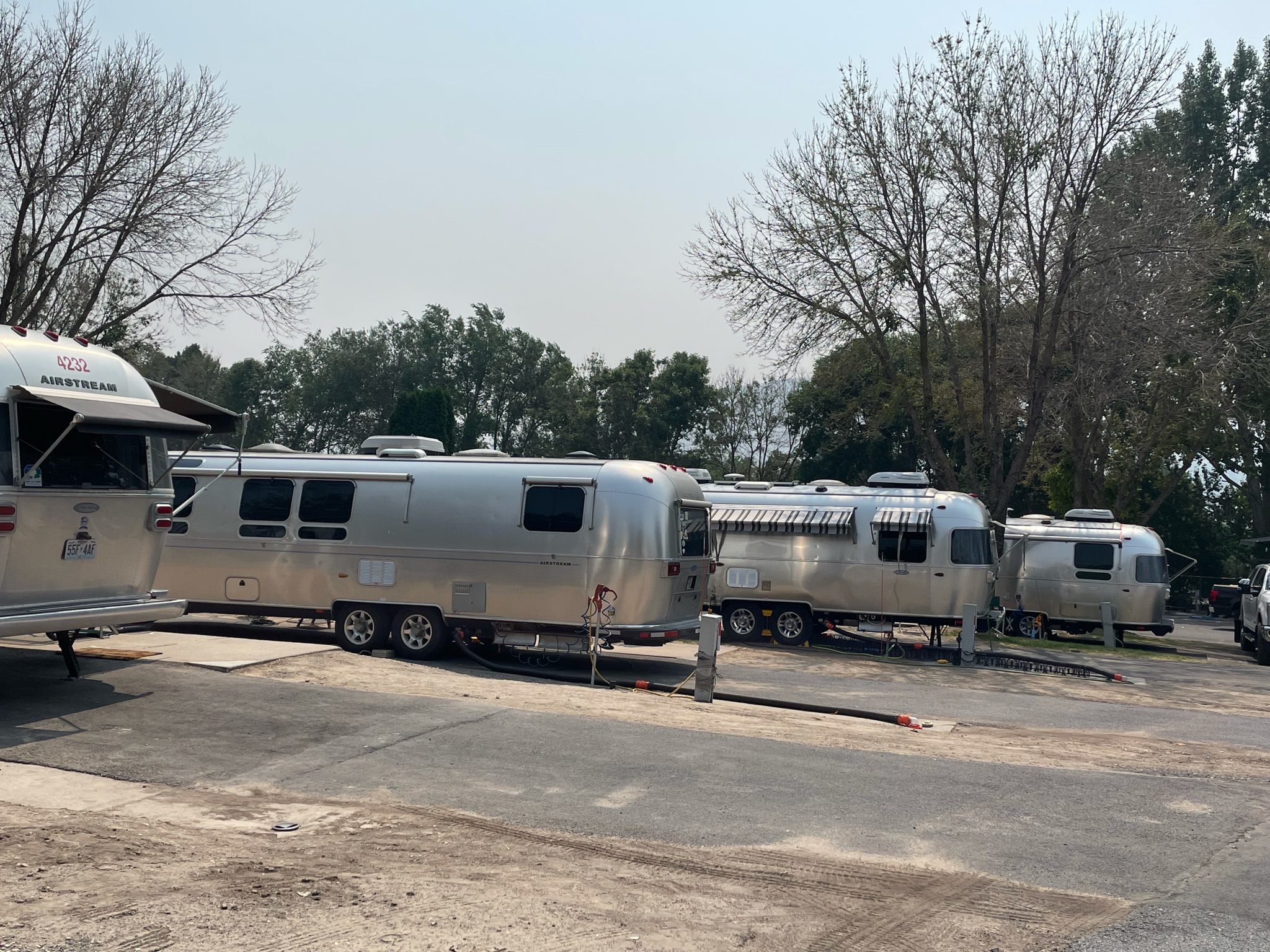
We arrived at the Mountain View RV park in Baker City…

The RV park buildings love their old west theme…

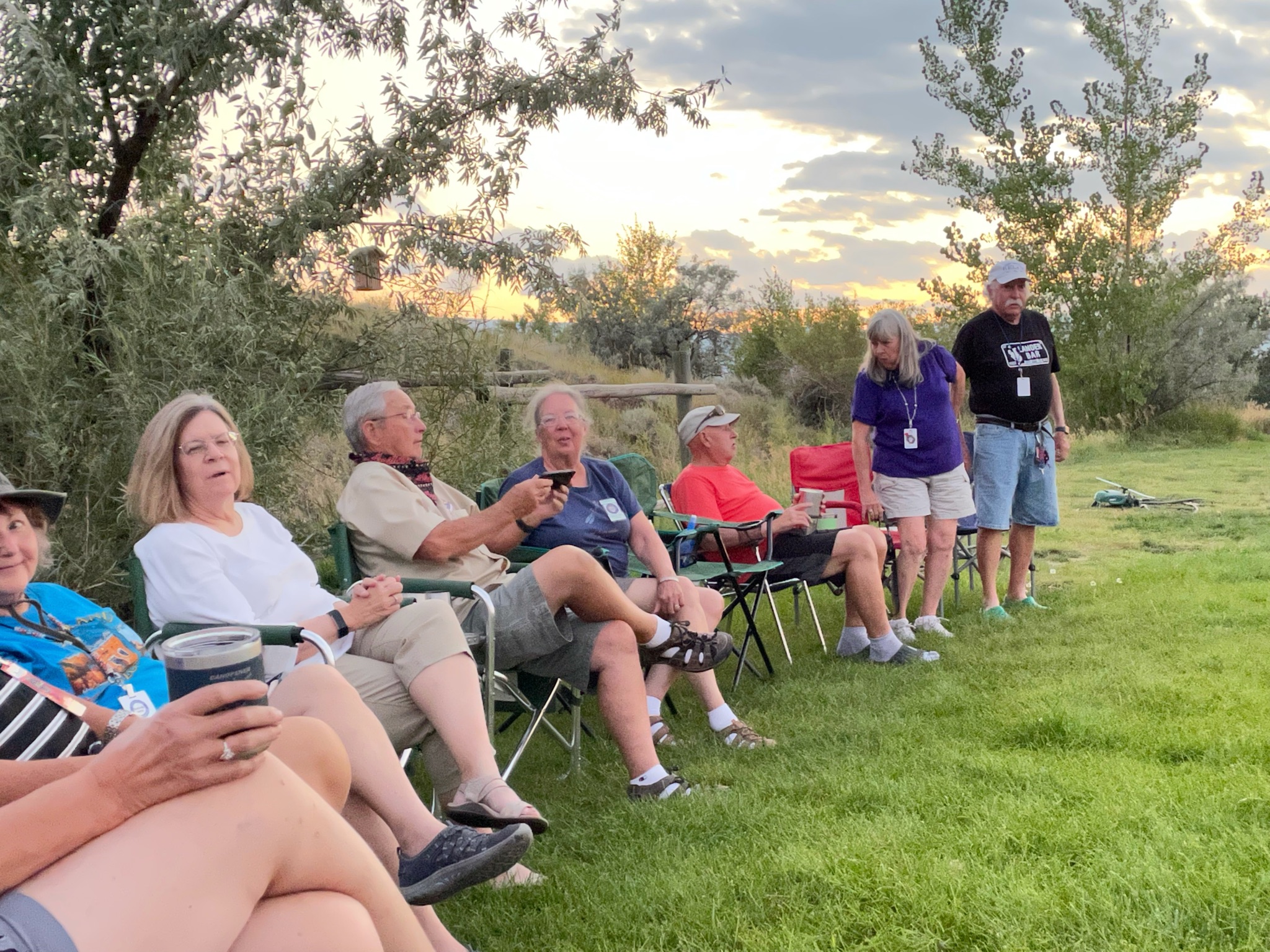
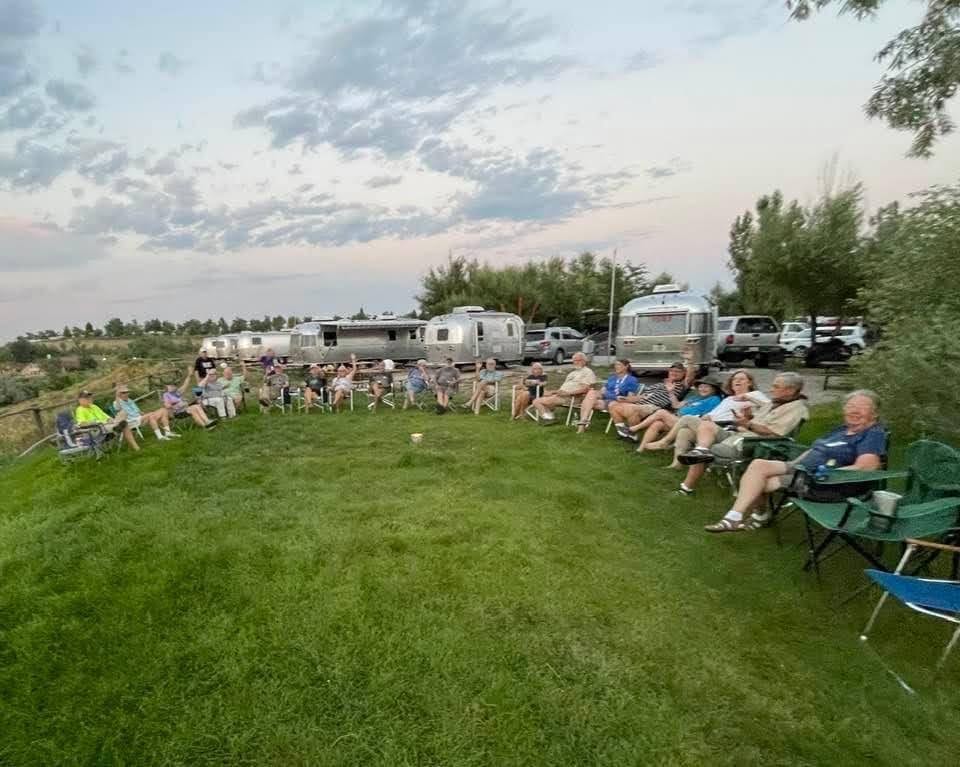
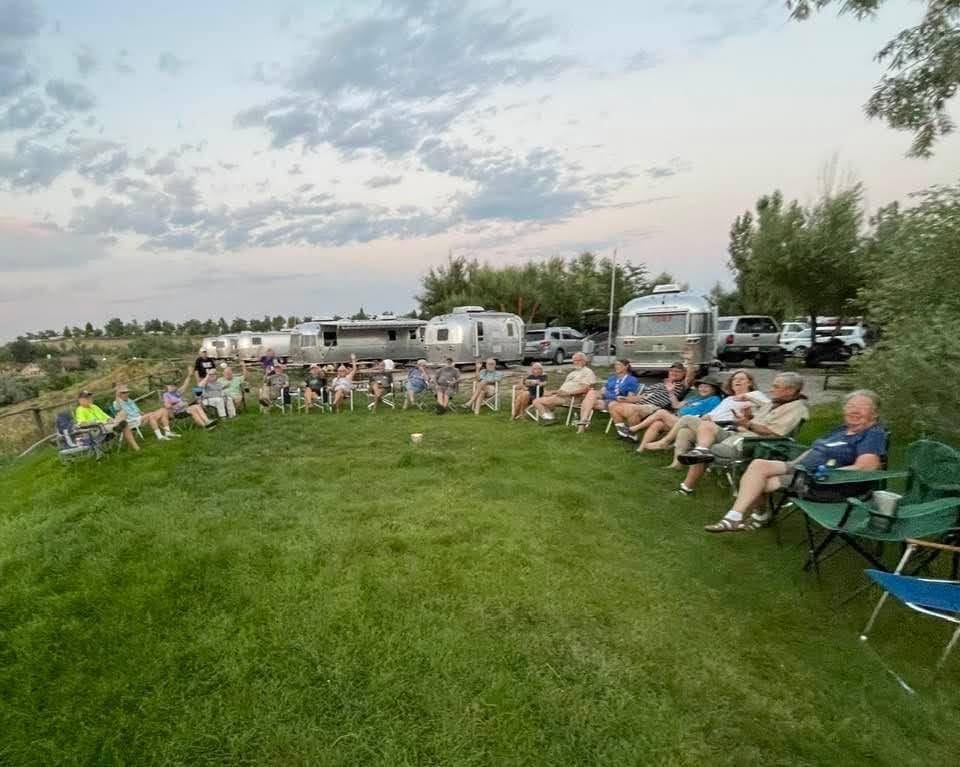
We had a lovely happy hours with several fellow Airstreamers…

An enjoyable time was had by all…

2021-08-18 – The Oregon Trail caravan … Day 21 – Traveling from Pocatello, ID to Glenn’s Ferry, ID

We were awakened in the wee early hours by booming thunder, flashing lightning, and pouring rain… We’re not in California any more…

However, by 8:00 the rain had mostly stopped and I was able to disconnect and hitch up without too much difficulty. At 9:00, Lynda and I showed up for our duties as assigned – we are part of the launch crew, or, as we typically call it on other caravans, we were to be de-parkers. As each Airstream leaves, we give a once-over look at their hitch, lights, vents, TV antennas, and we keep an eye our for any other unusual conditions…

Our duties were uneventful, and at 10:00 we returned to the Villa and finished up our hitching routine. We were on the road by 10:20.

We are heading to Glenn’s Ferry, ID.

The scenery along the way is fairly typical. Lots of potato farms…

We always stop every hour or two to stretch our legs…

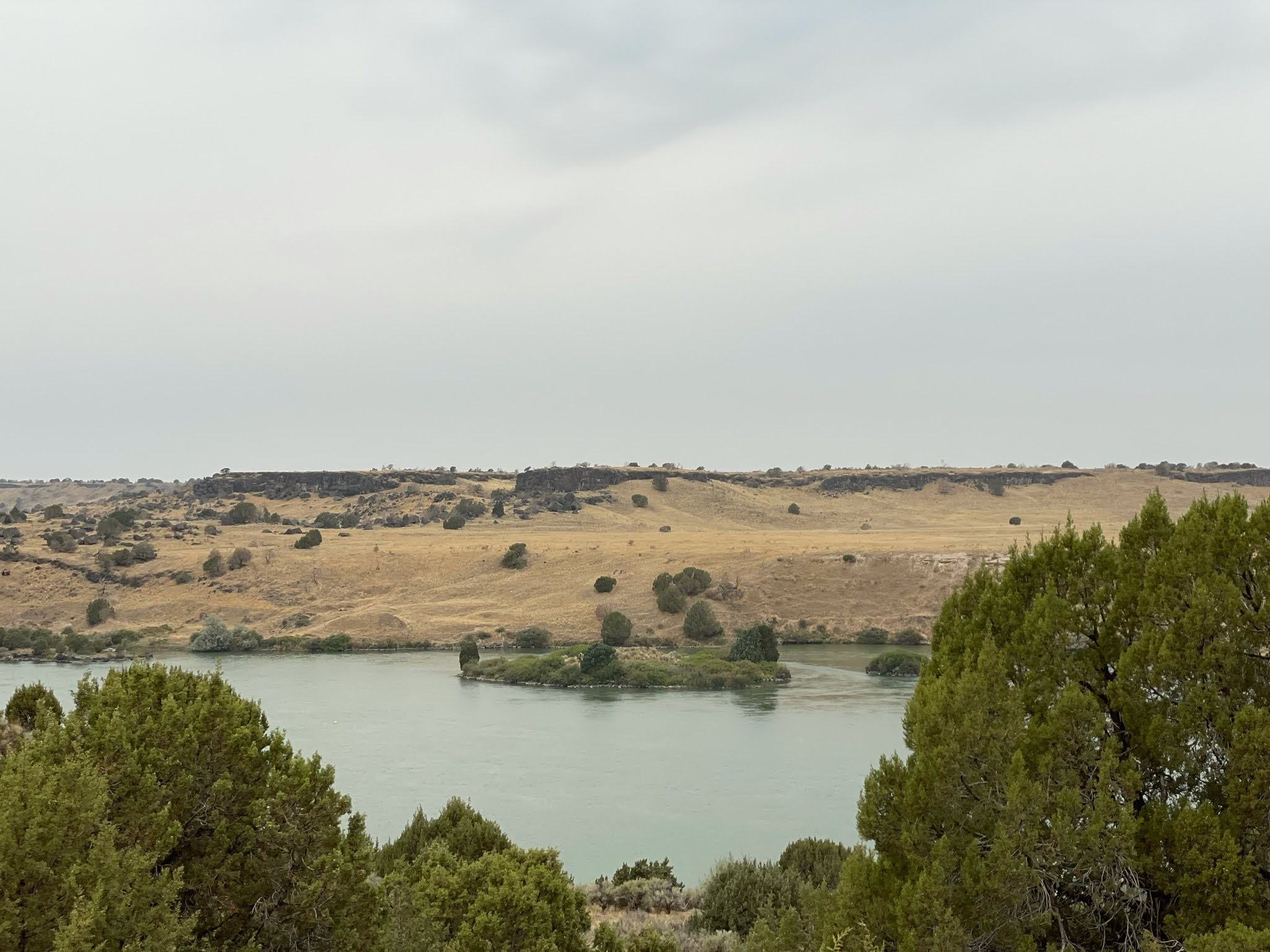
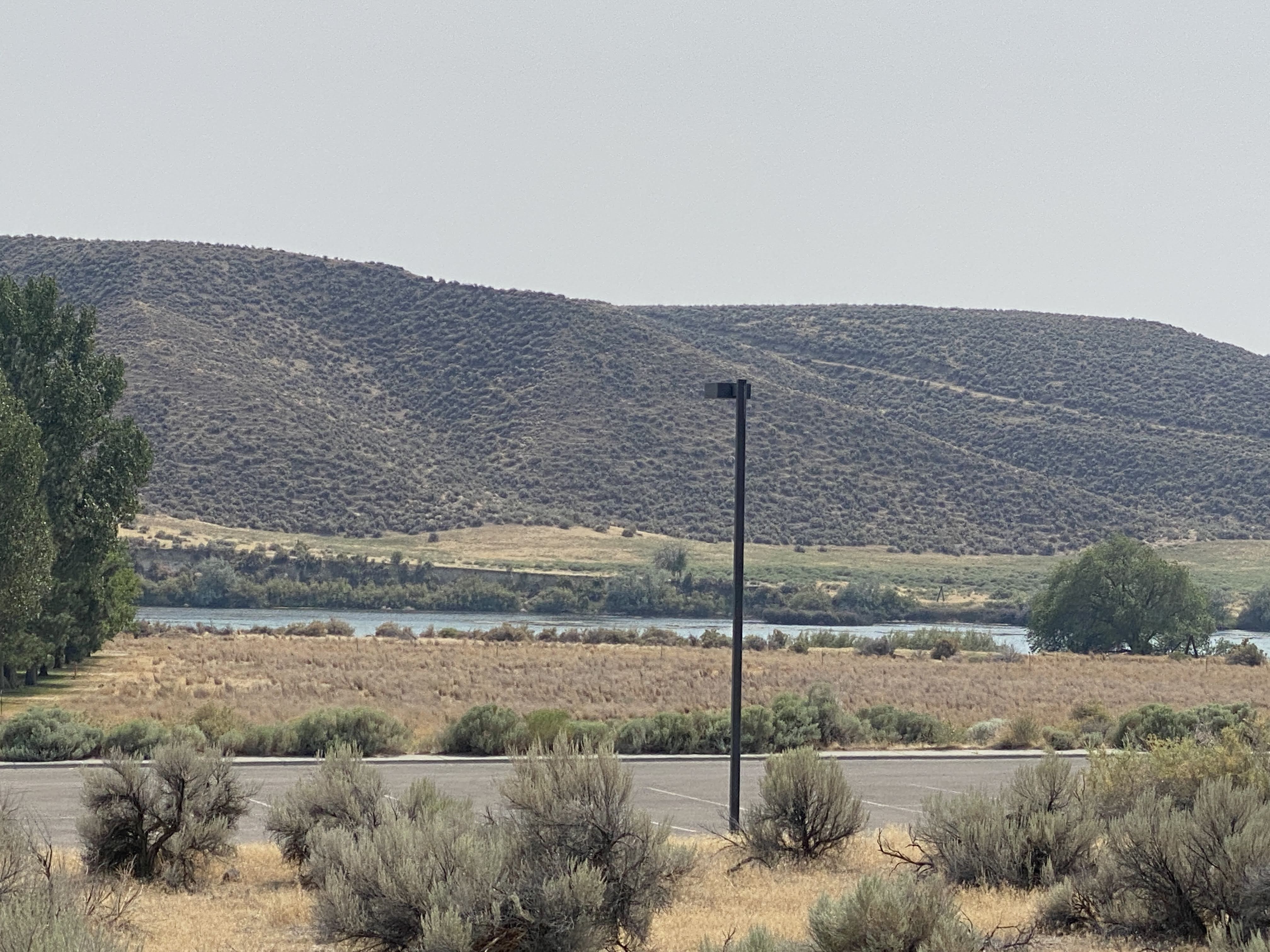
This particular rest stop had a path to take us to see the Snake River, an important feature along the Oregon Trail…

We are nearing the “Parting of the Ways”, where the Oregon-bound emigrants separated from the California-bound emigrants…

One of the reasons the Snake River is important is that it must be crossed several times; some crossings were easy, some were difficult and dangerous…

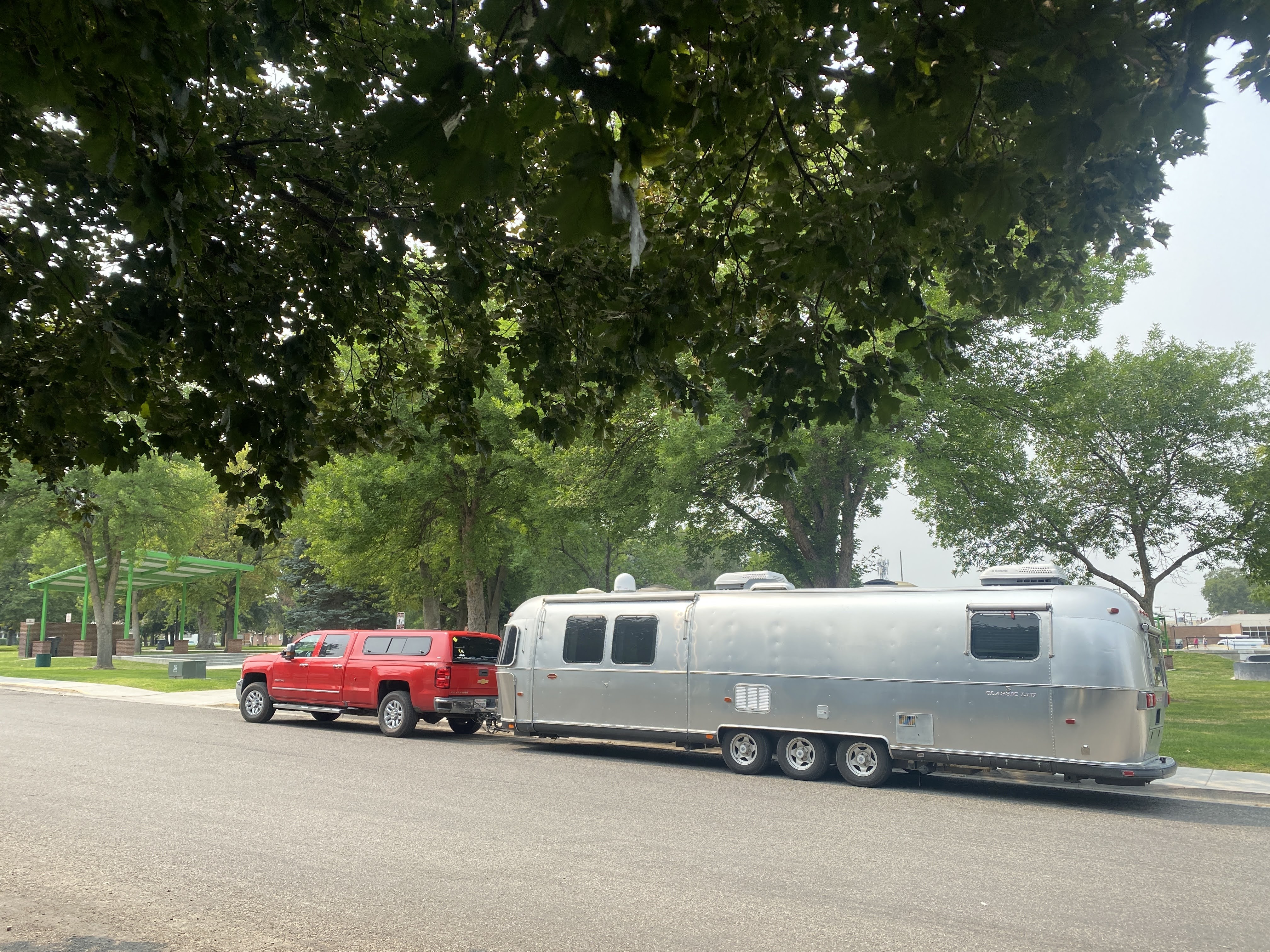
Around lunch time we pulled off at Jerome, ID. It was lunch time, and we know most small towns have a large city park at the center of town. We can park, walk around the town, and have lunch, either at a café in town or in the Airstream…

We found parking at the park…

After a relaxing lunch we were off again…

We arrived at the town of Glenn’s Ferry, and we parked for the night at the Three Island Crossing State Park. It is right on the banks of the Snake River.

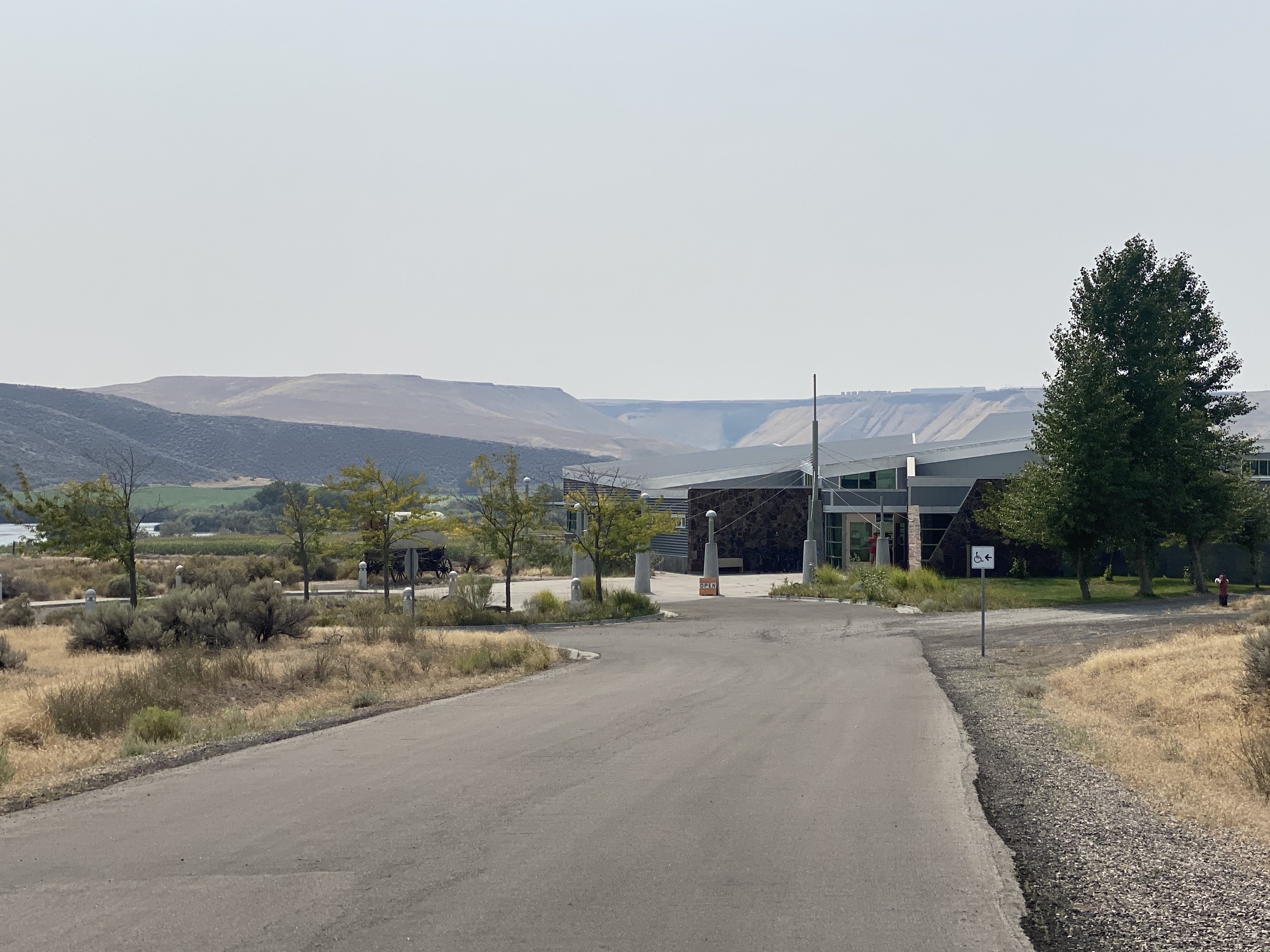
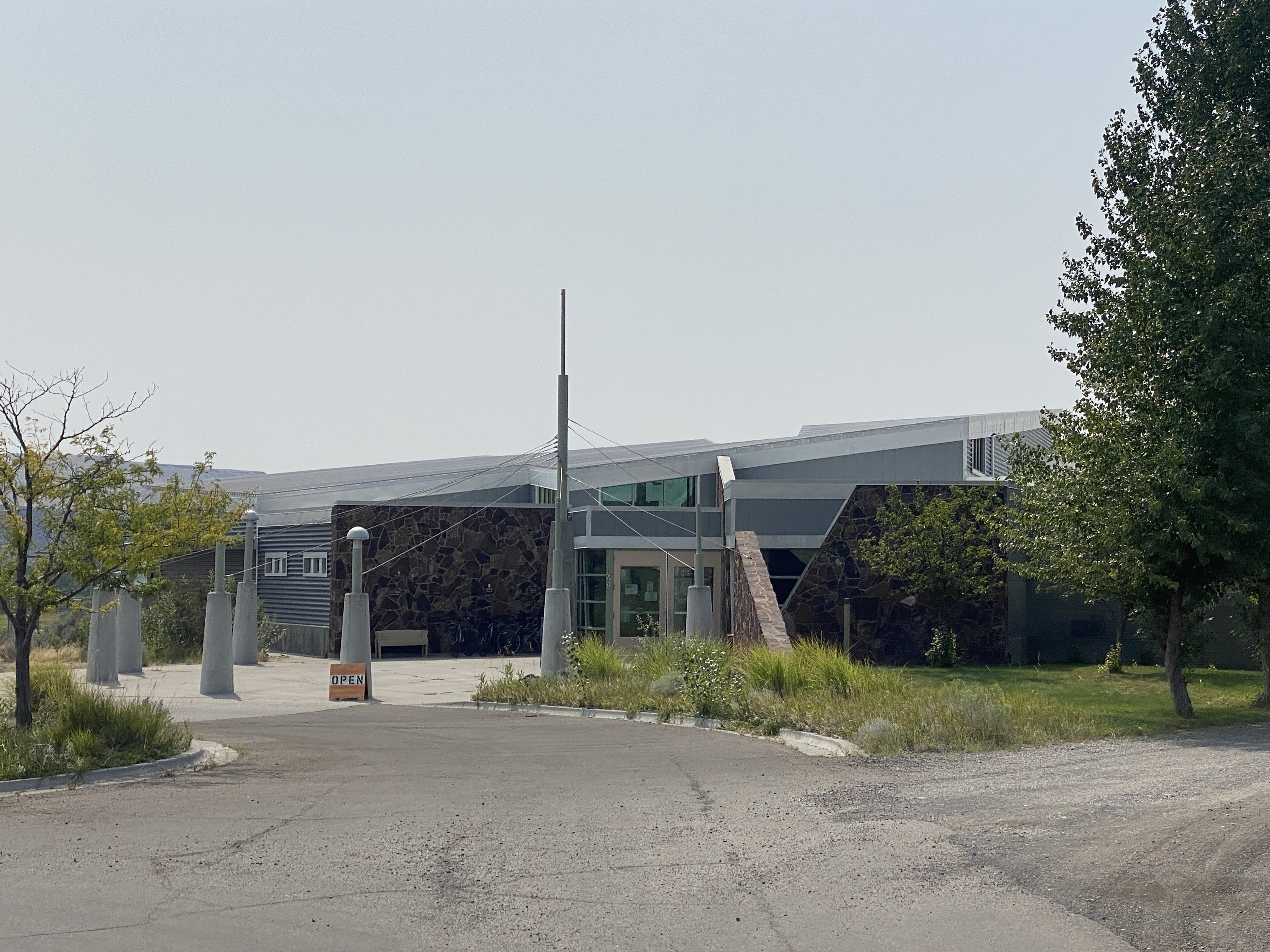
There is a nice Visitor’s Center… The Oregon Trail History and Education Center

It tells the story of Three Island Crossing…

The Snake RIver is wide here, and the current is deep and swift. But there are three islands at this one spot that allowed the wagons to cross in smaller bits, hopping from one island to the next. It was still a treacherous crossing, and many emigrants debated whether the crossing was worth it – only a few day’s travel down the river they would have to cross back. But if you cross here you have several days travel with ample grass, game, and water. Those who avoided the two crossings risked running short of all three…

And then came Gus Glenn…:

He knew that Three Mile Crossing was one of the most famous and treacherous river crossings on the Oregon Trail. Pioneers forded the Snake River at the Three Island Crossing until 1869. It was then that Glenn constructed a ferry about two miles upstream, primarily to expedite freight but also for emigrants. His boat, which could hold two wagons, cut nearly twenty miles from the former route. In 1871 the city of Glenn’s Ferry was established. Construction of the Oregon Short Line Railroad through the town in 1883 doomed the ferry business…

Here sits Glenn’s Ferry, a little worse for wear…

From down on the river bank we see a nice view of the Visitor’s Center…

Here is where the wagons exited the river, if they didn’t tip over whilst crossing…

Back at the Villa we enjoyed this beautiful state park…

The middle of August and the fall colors are turning in Idaho…

We had a lovely happy hours and a light supper at the Villa…

An enjoyable time was had by all…

2021-08-16 and 17 – The Oregon Trail caravan … Days 19 and 20 – Pocatello, ID

August 16, 2021

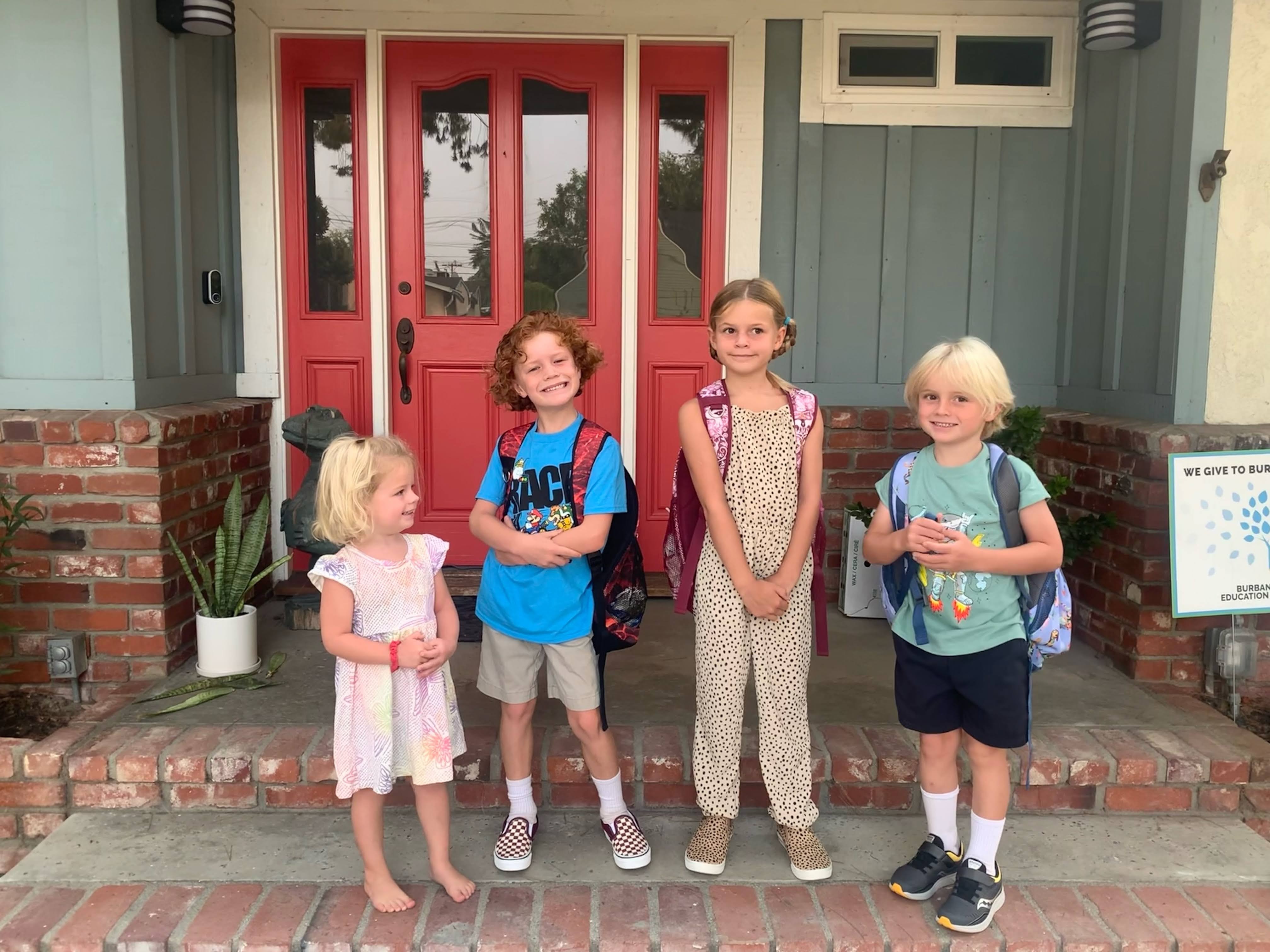
It is an exciting day for us today! Most of our grandchildren start school for the first time in 17 months…

3rd grade, 2nd grade, Kindergarten… While the 3-year-old looks on wistfully… (She starts Preschool next week…)

Or as they say in Burbank: “Primer Dia de Escuela! Kinder, Grado 2, Grado 3…”

But on to today’s activities:

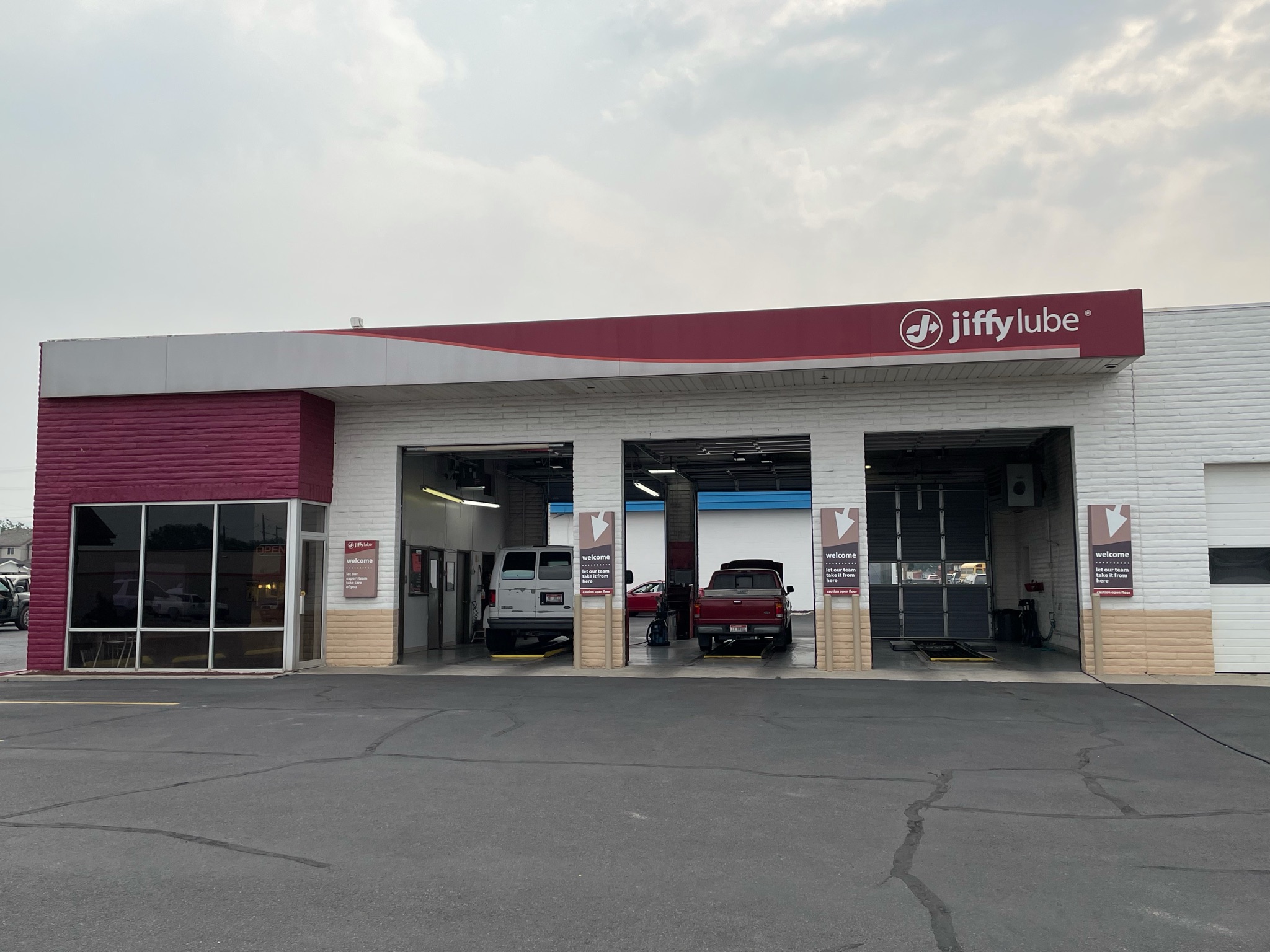
We took the truck in for an oil change… I tried to get an appointment for today a week ago, and I was told by the Chevy dealer and the GMC dealer that they were too busy. When I asked the GMC dealer, “What am I supposed to do?” he replied, “There’s a Jiffy-Lube right across the street!”…

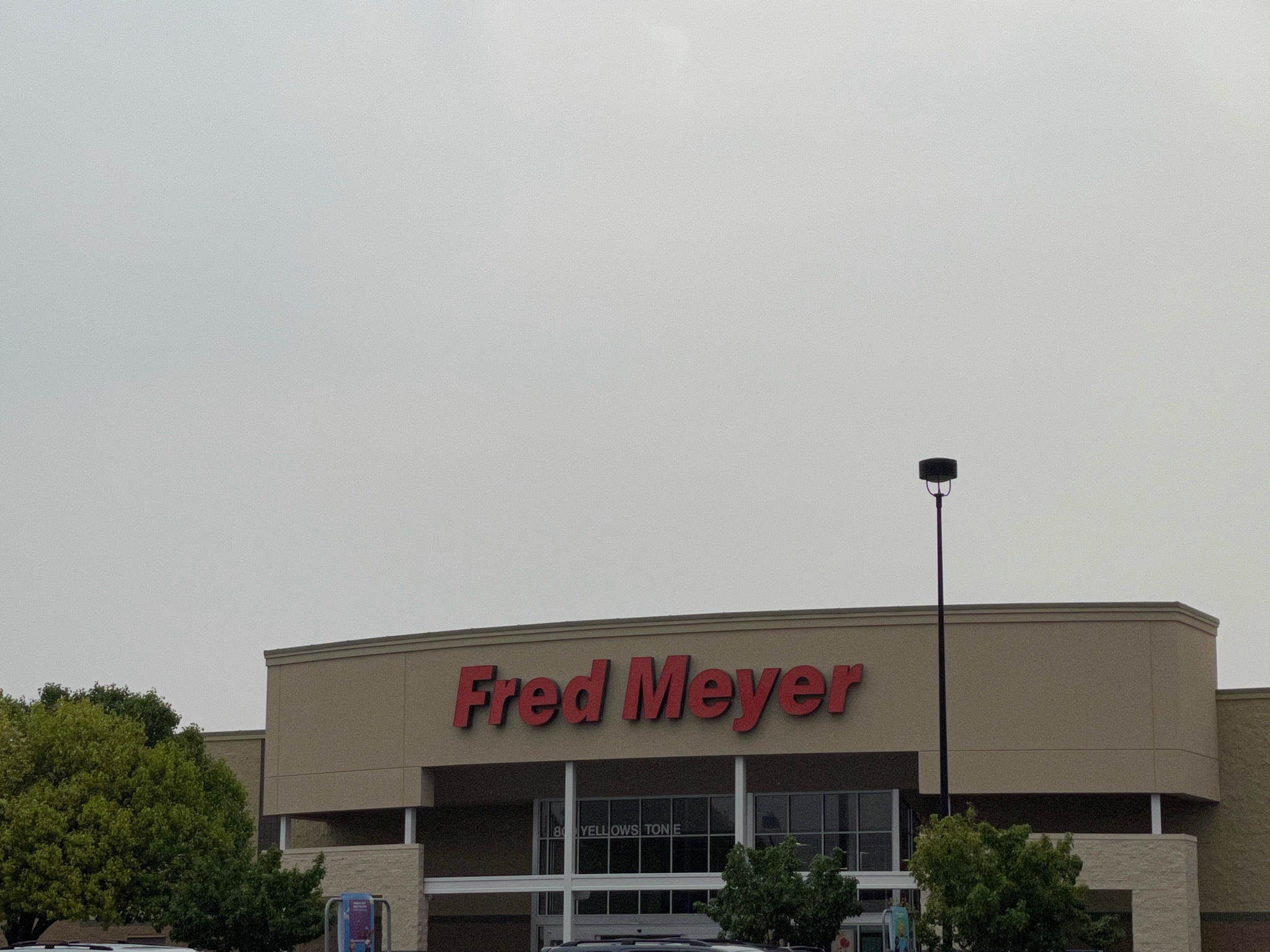
We stopped in at Fred Meyer to do some grocery shopping…

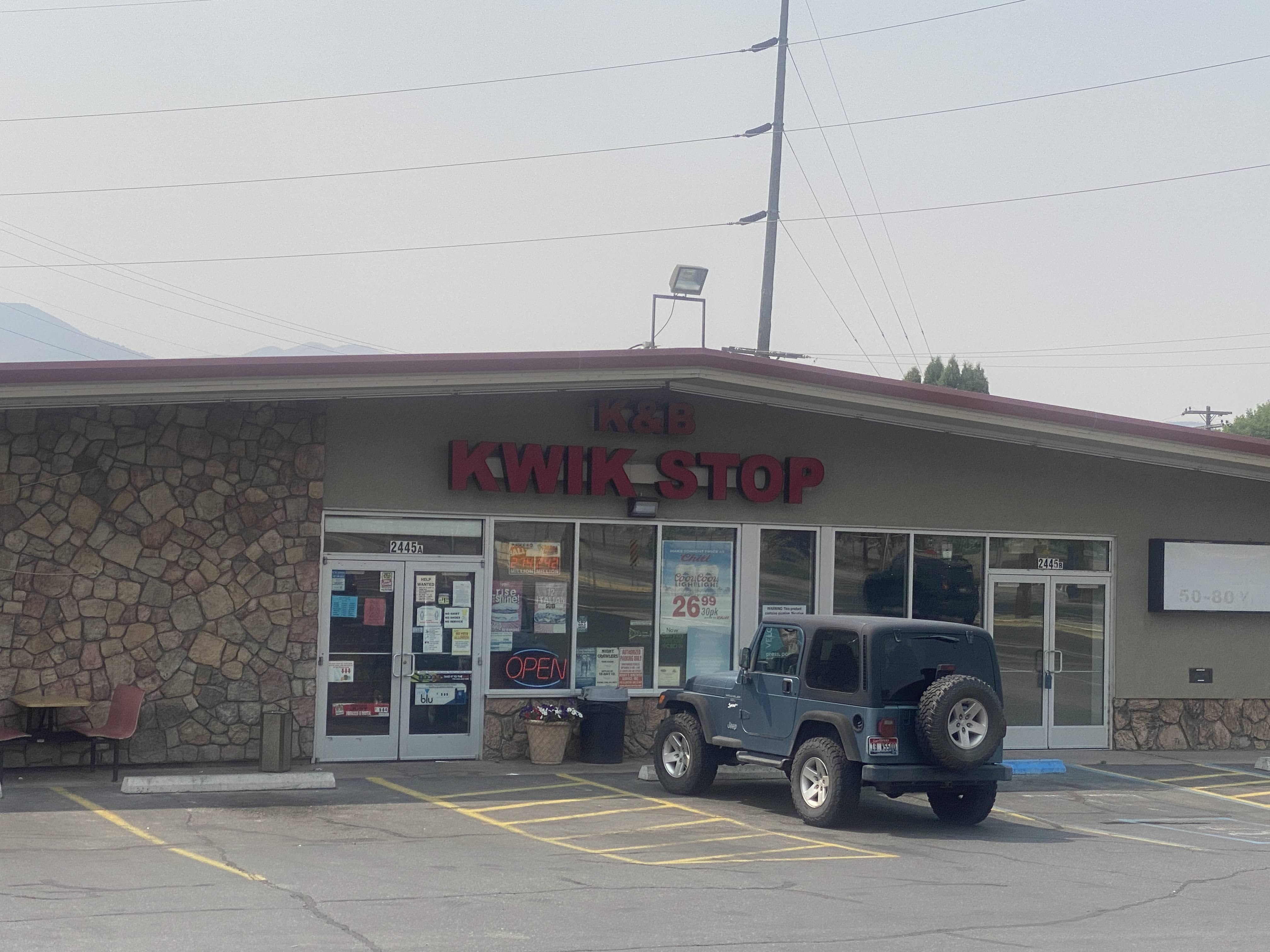
After we returned to the Villa Lynda remembered that she forgot one item, so she walked to the nearby Kwik Stop Market…

But they didn’t have what she needed, so she walked a bit further to the Albertson’s…

So after that exhausting round of activity we took it easy the rest of the afternoon. We enjoyed Happy Hours with friends, then we joined others for a post happy hours Happy Hour…

An enjoyable time was had by all…

August 17, 2021

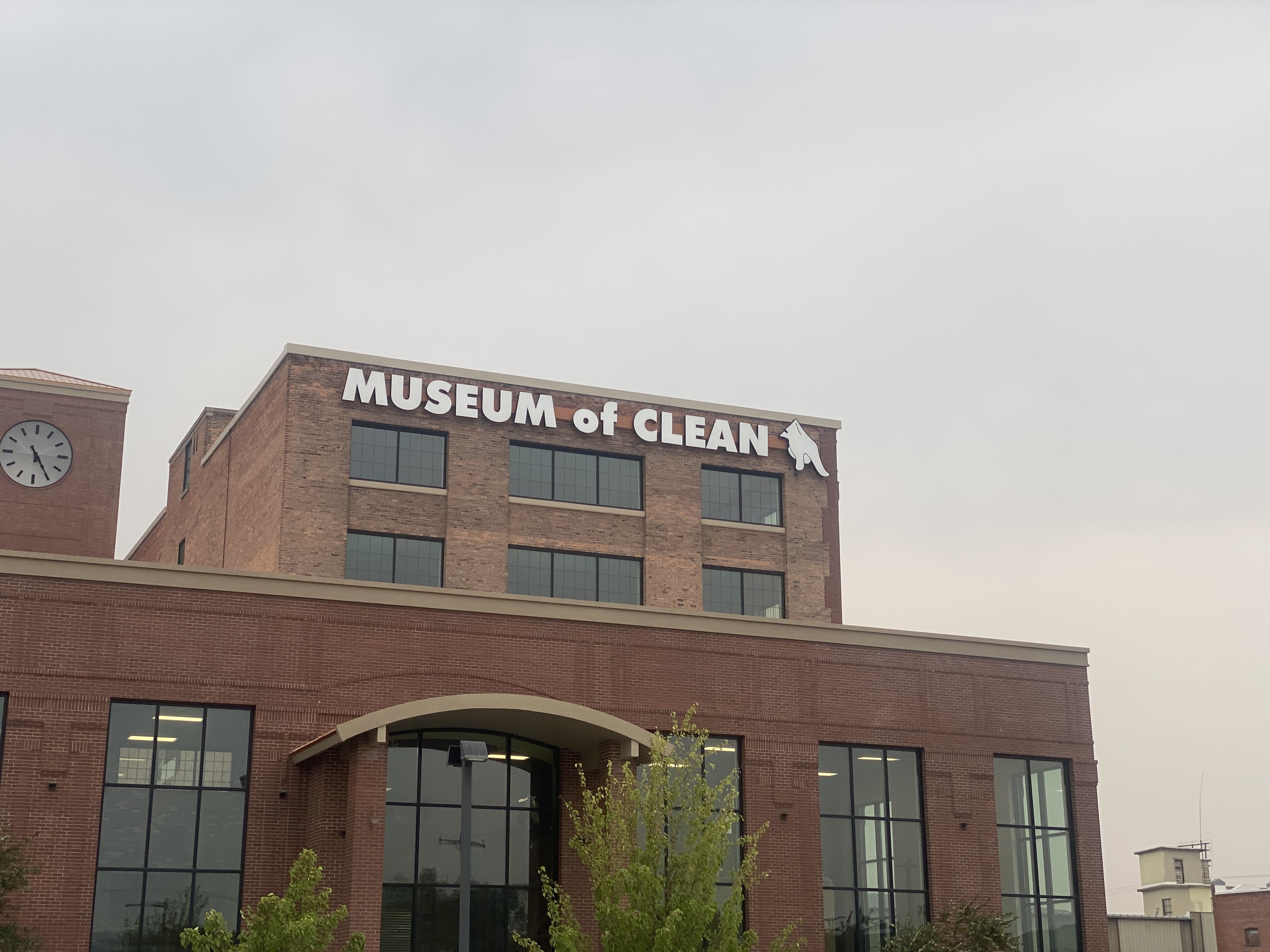
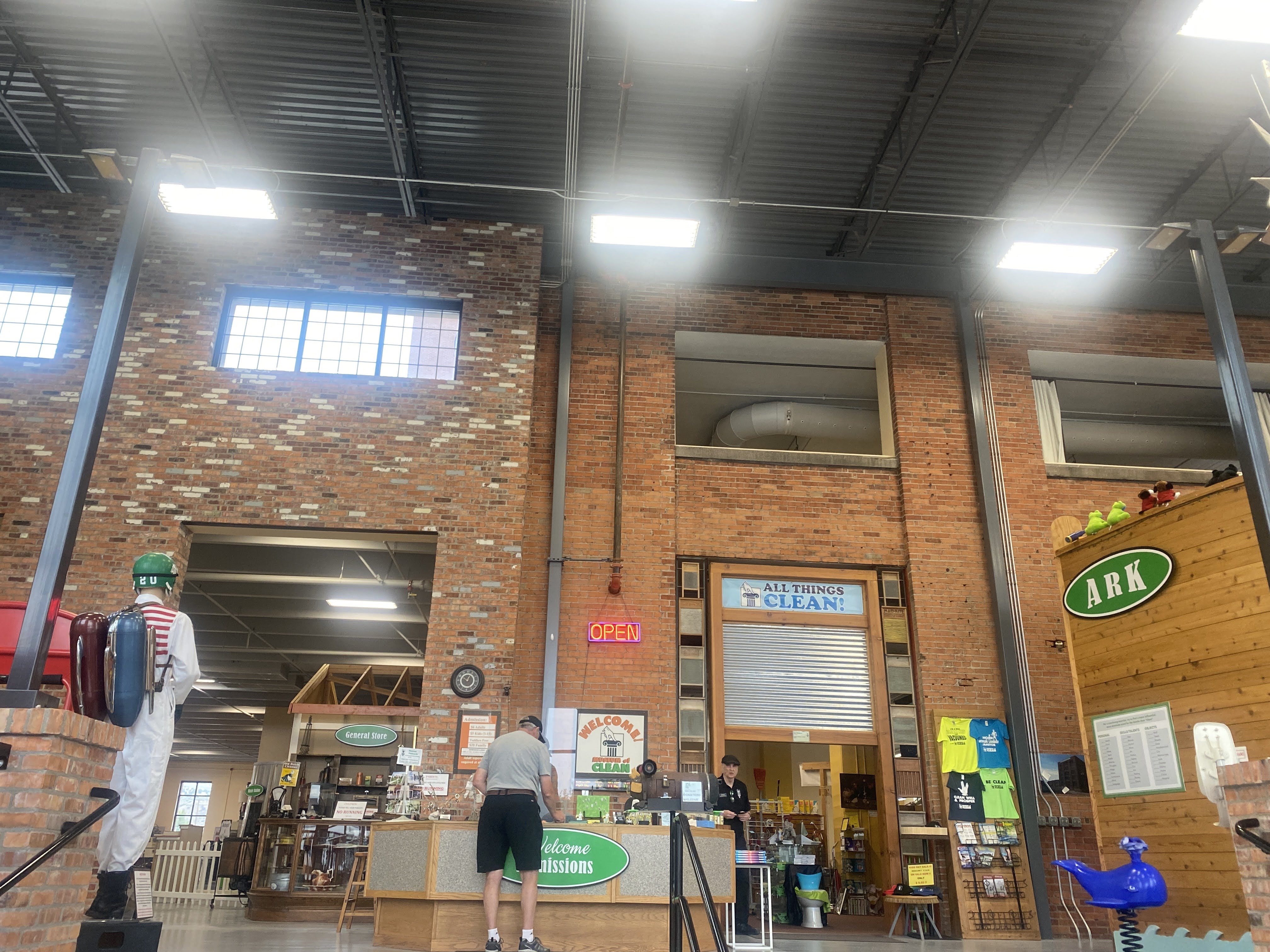
The caravaners toured the Museum of Clean this morning…

Donald Andrew Aslett (born 1935) is an American entrepreneur and author who specializes in cleaning and housekeeping products, services, and techniques. He co-founded Varsity House Cleaning Company, a house cleaning service, in 1957.

He is considered a cleaning expert and has written books about how to reduce the time spent cleaning by reducing clutter, selecting and organizing the efficient cleaning tools, and creating what he calls a self-cleaning house.

In 2011, he opened the Museum of Clean in Pocatello, Idaho, a six-story building with a theater, art gallery, and collection of 6,000 artifacts. The building is a restored warehouse in Pocatello’s historic warehouse district…

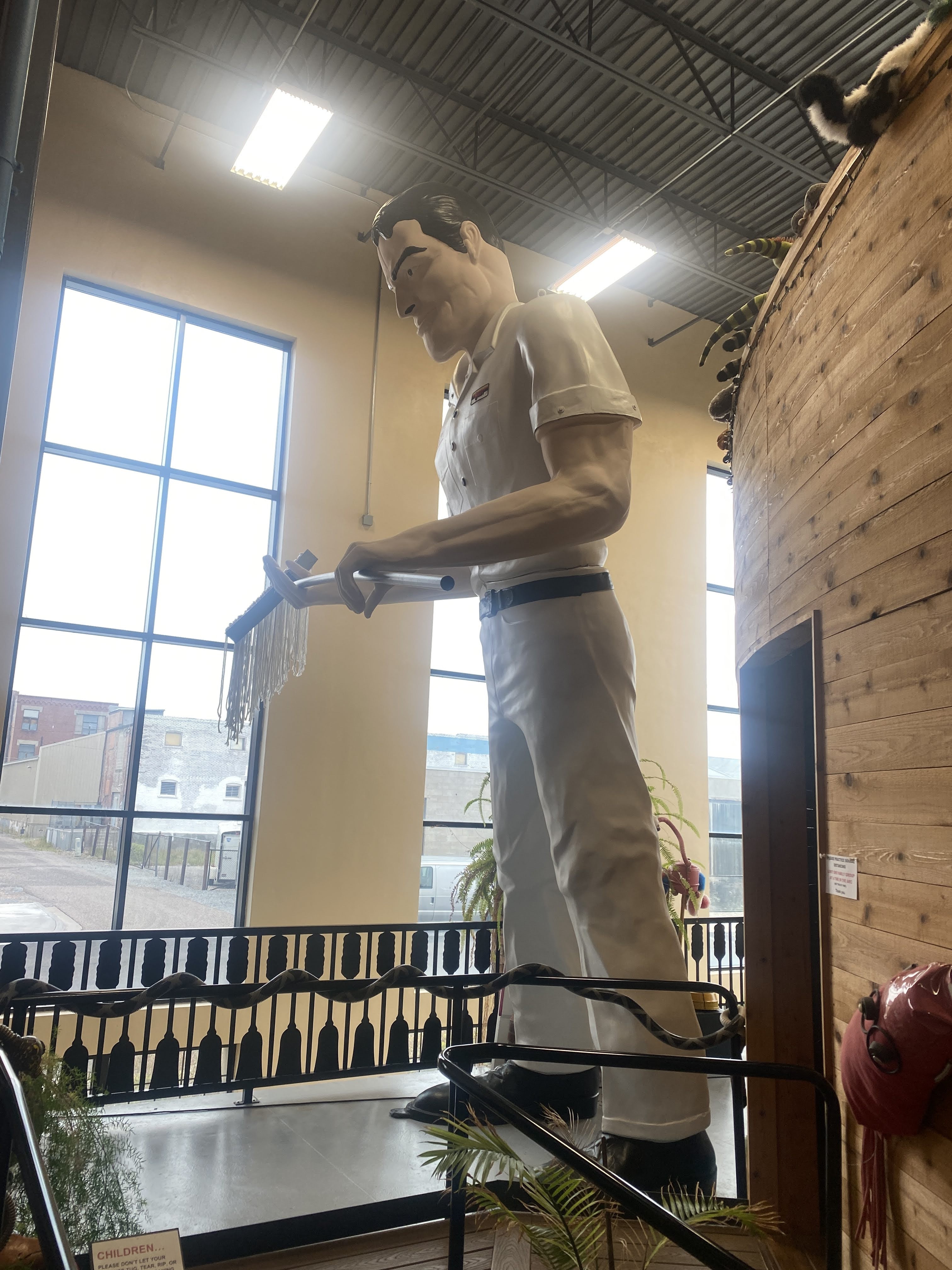
They do have the worlds Largest Janitor!

The musem has collections of vacuum cleaners, washing machines, and similar apparatus…

This display is close to home for us… In 1974 there was a winter storm that brought giant waves to San Onofre, at San Clemente, where we typically came 4-5 times per year. Hank “Crawdad” Wilson, a master surfer, who lived in nearby Dana Point, went to surf those giant waves. Unfortunately, his board was in the shop getting some Fiberglas work done. So he grabbed the closest thing in the shape of a surfboard – an ironing board!

He hit the waves and created a surfing legend that day…

(I have no idea what this has to do with clean…)

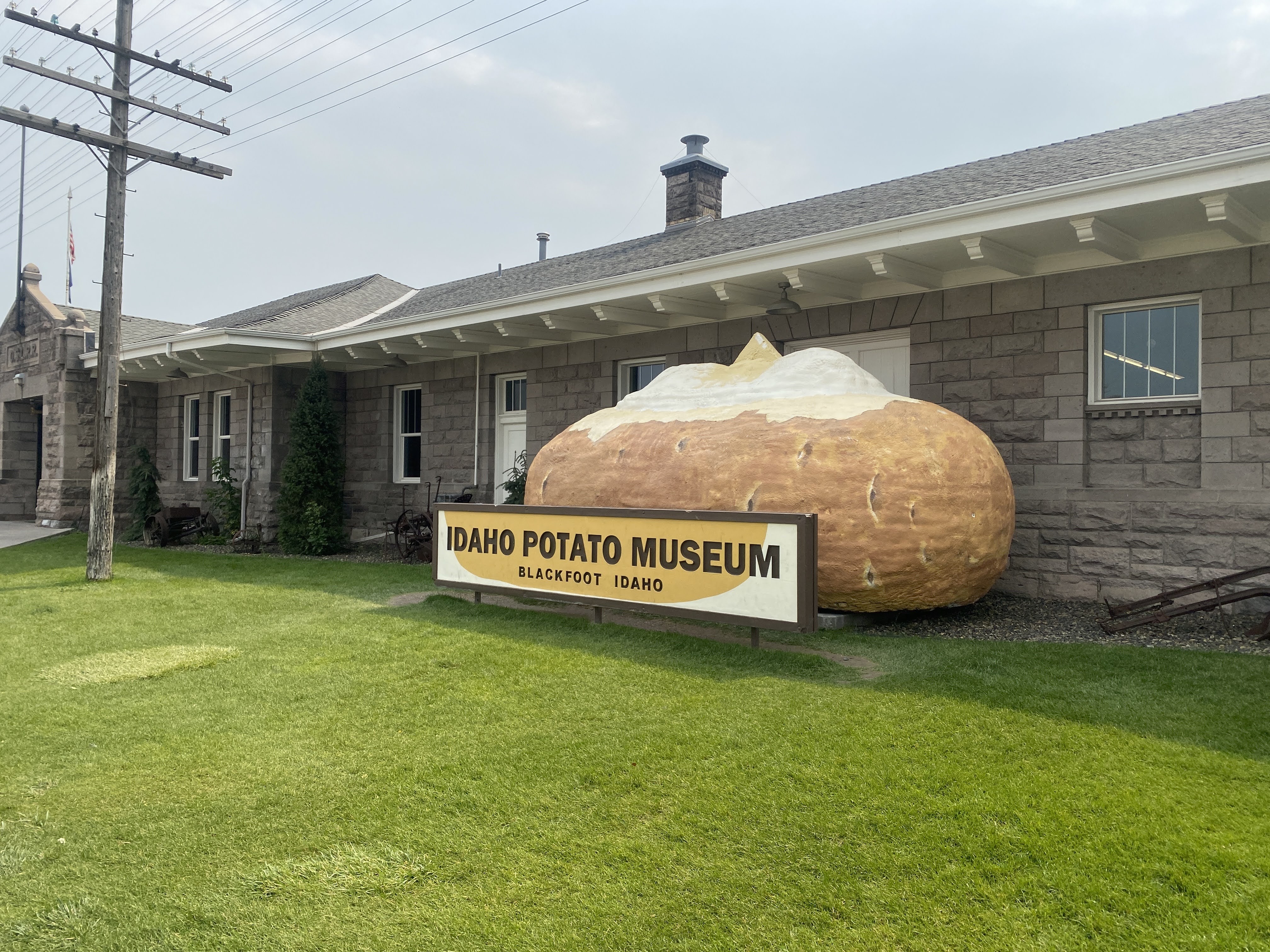
After the museum we headed north to Blackfoot, ID. To the old train depot…

Because, after all – we are in Idaho…

The potato museum was even more fun than the clean museum… We watched videos of potato harvest, we saw how McDonalds makes their French fries. There is also a potatoe, autographed by Dan Quail…!

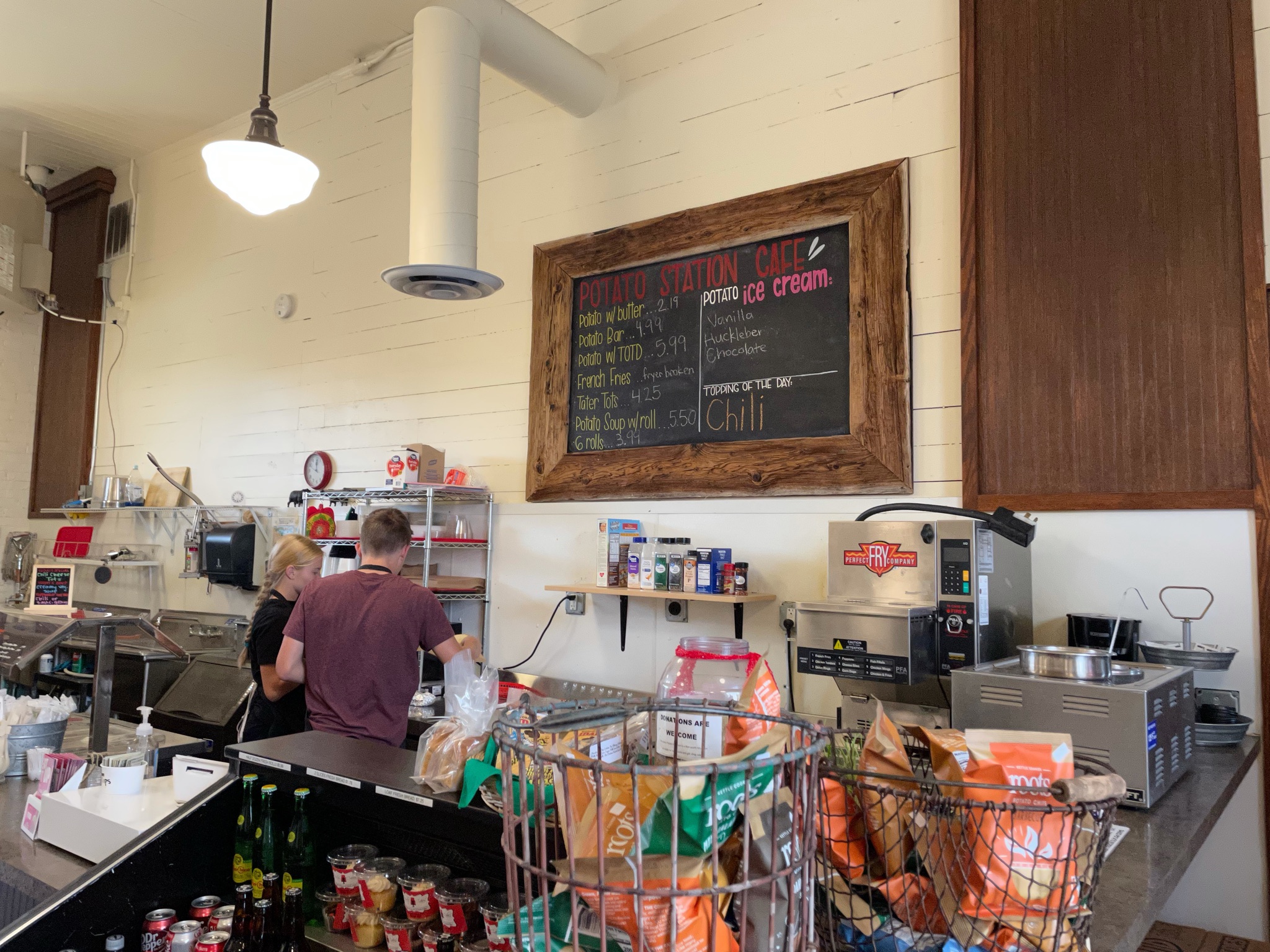
And it has a café! We shared a baked potato with a few toppings for lunch…

We returned to the Villa…

This evening we are having a group dinner – baked potatoes!

An enjoyable time was had by all…

2021-08-15 – The Oregon Trail caravan … Day 18 – Traveling from Montpelier, ID to Pocatello, ID

Our stay in Montpelier was also only for one night, so today we head to the big city: Pocatello, ID, home of Idaho State University… with Benny the Bengal…

Before we left the RV park in Montpelier we checked out some of their animals…

We headed down the road and found the town of Soda Springs, ID. It may look a little quiet, but this is Sunday afternoon, after all…

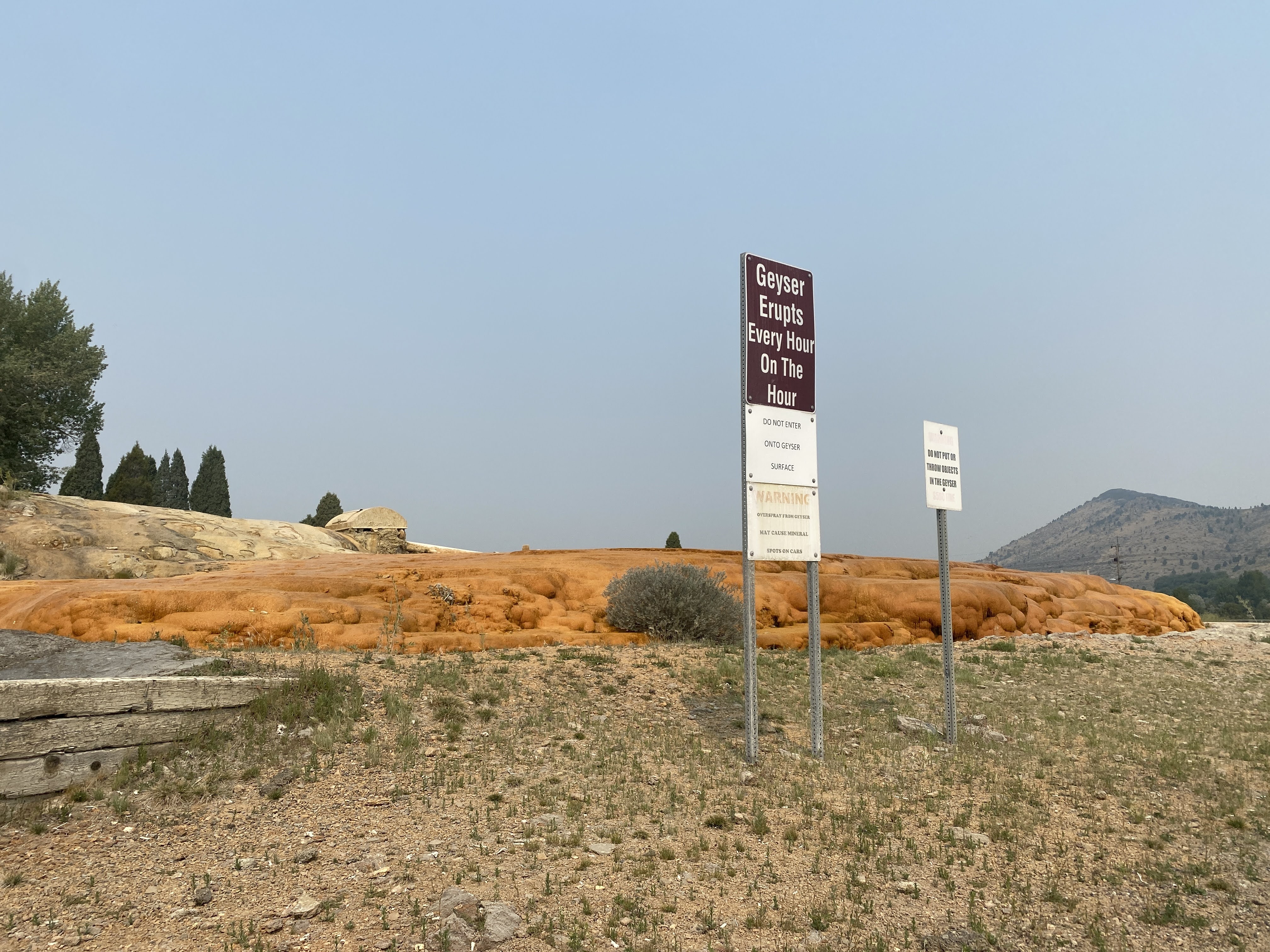
There is a “captive” geyser, and erupts every hour on the hour. But it is 1:30 and we didn’t want to wait…

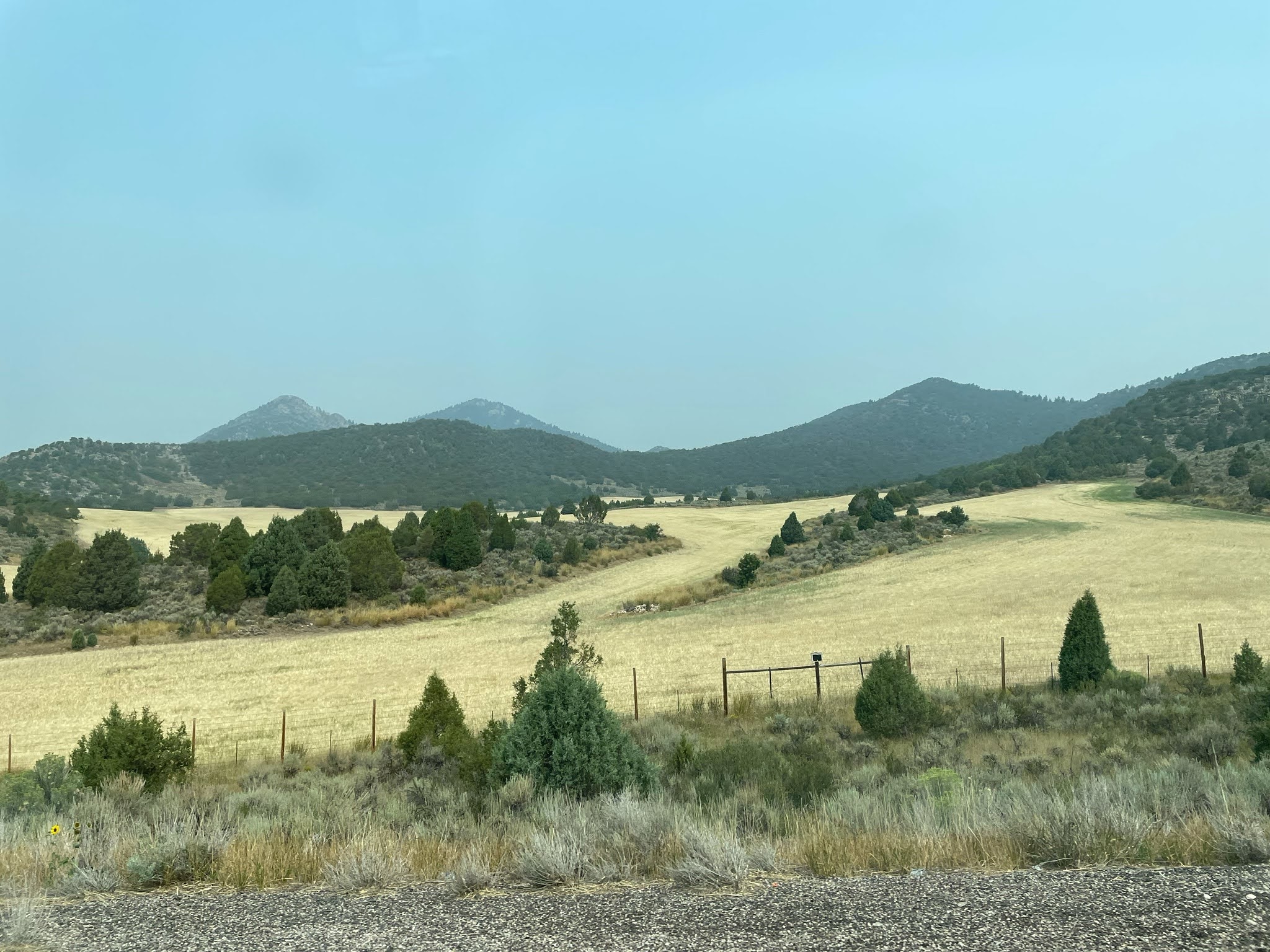
We drove on. Idaho looks a lot like Wyoming…

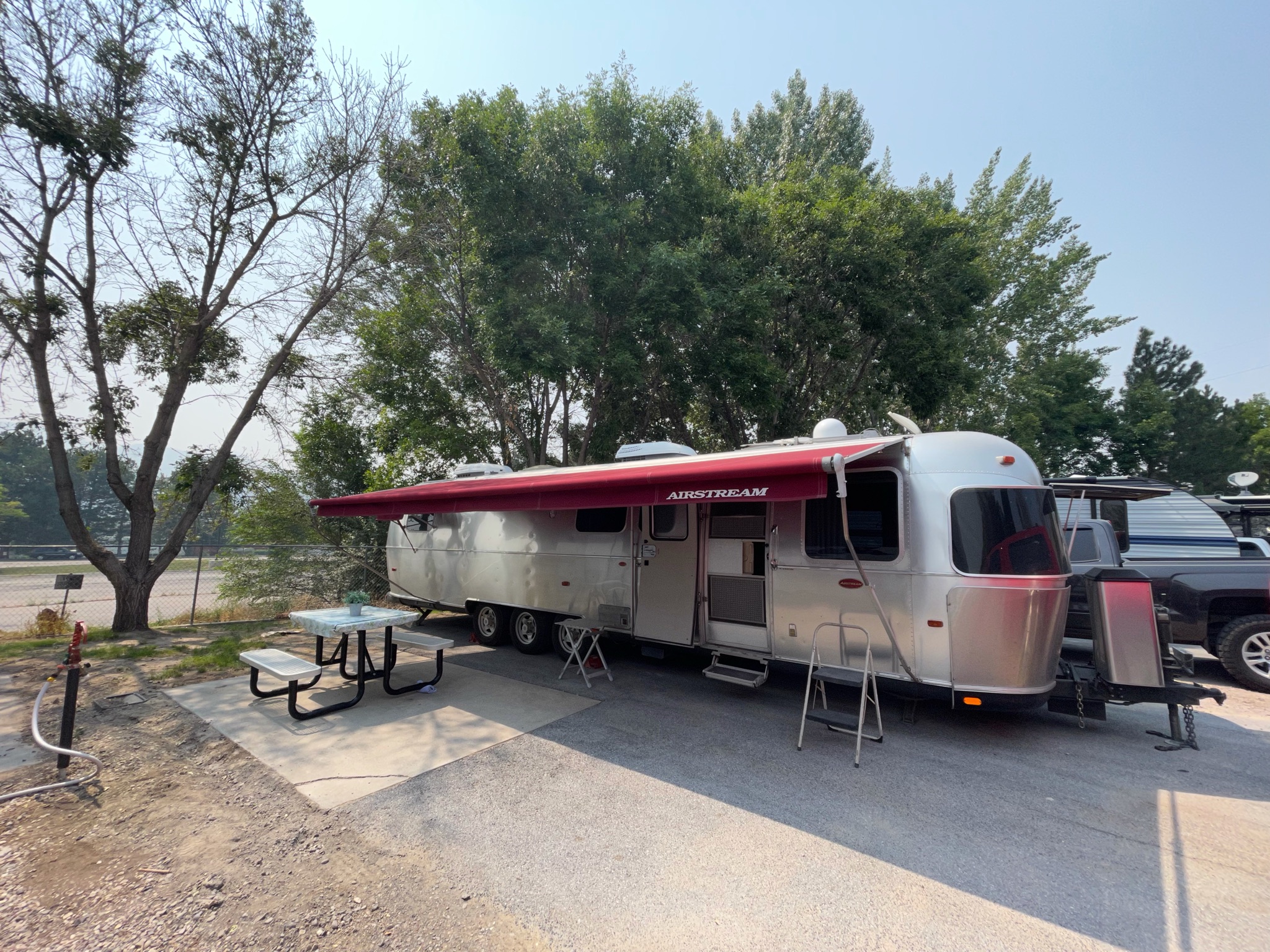
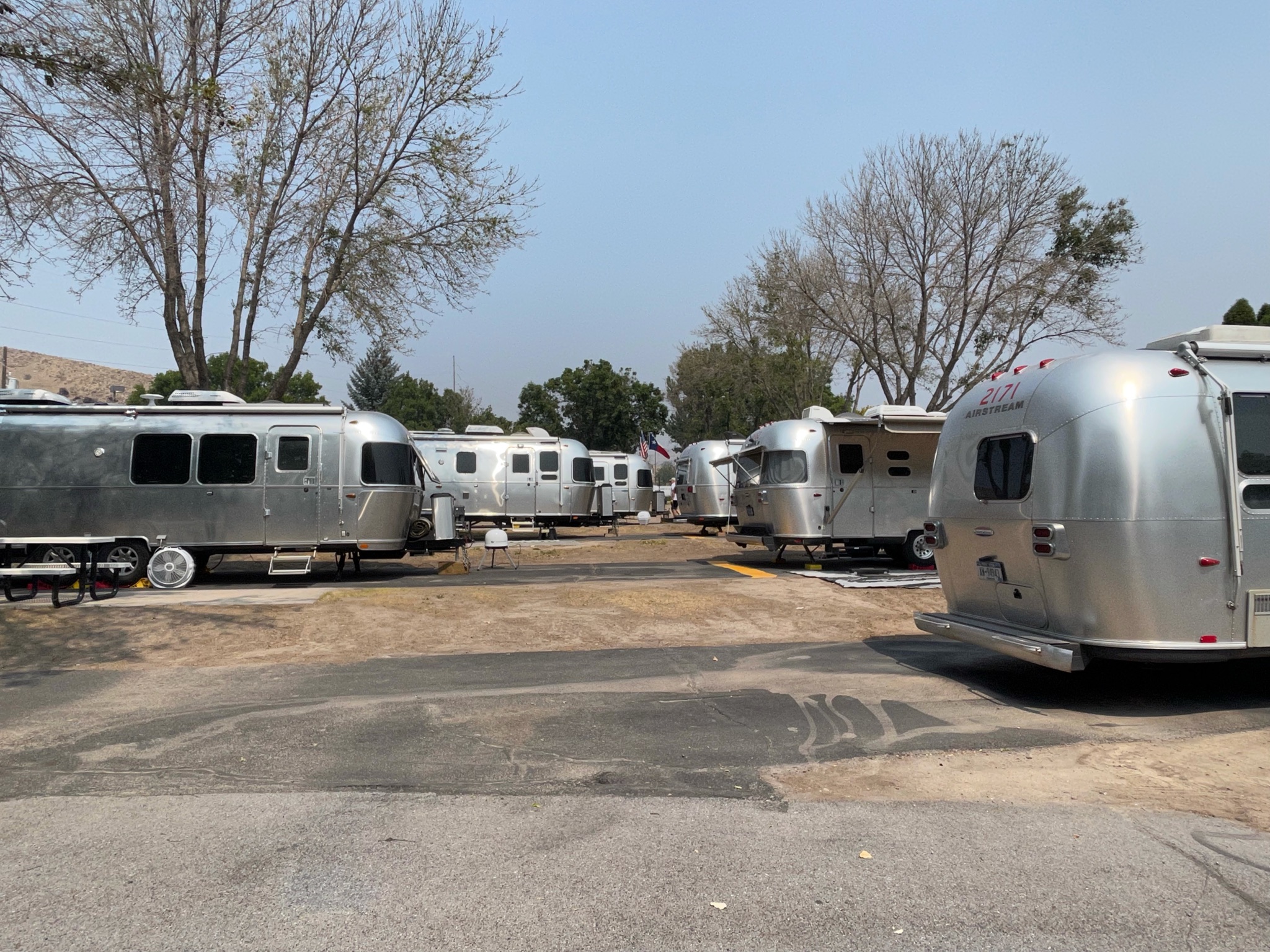
We checked into the RV park and we are now all set. We are here for three nights, so we have some time to rest and rewind. I looked at Yelp to find a good restaurant here in the big city. My search for French restaurants returned only Italian restaurants. My search for American (new) returned only American (Traditional). Nope. We’ll not be dining out in Pocatello…

But, of course, there is always Happy Hours. Another couple joined us and we were happy way into the night…

An enjoyable time was had by all…

2021-08-14 – The Oregon Trail caravan … Day 17 – Traveling Fort Bridger, WY to Montpelier, ID

We spent just one night at Fort Bridger, and we move today to Montpelier, Idaho. This will be a three state day: Lunch in Wyoming, Dinner in Utah, and sleep in Idaho.

We began again with the ever-changing Wyoming landscape…

We are headed to the Fossil Butte National Monument.

This image has an empty alt attribute; its file name is img_2674x.jpg

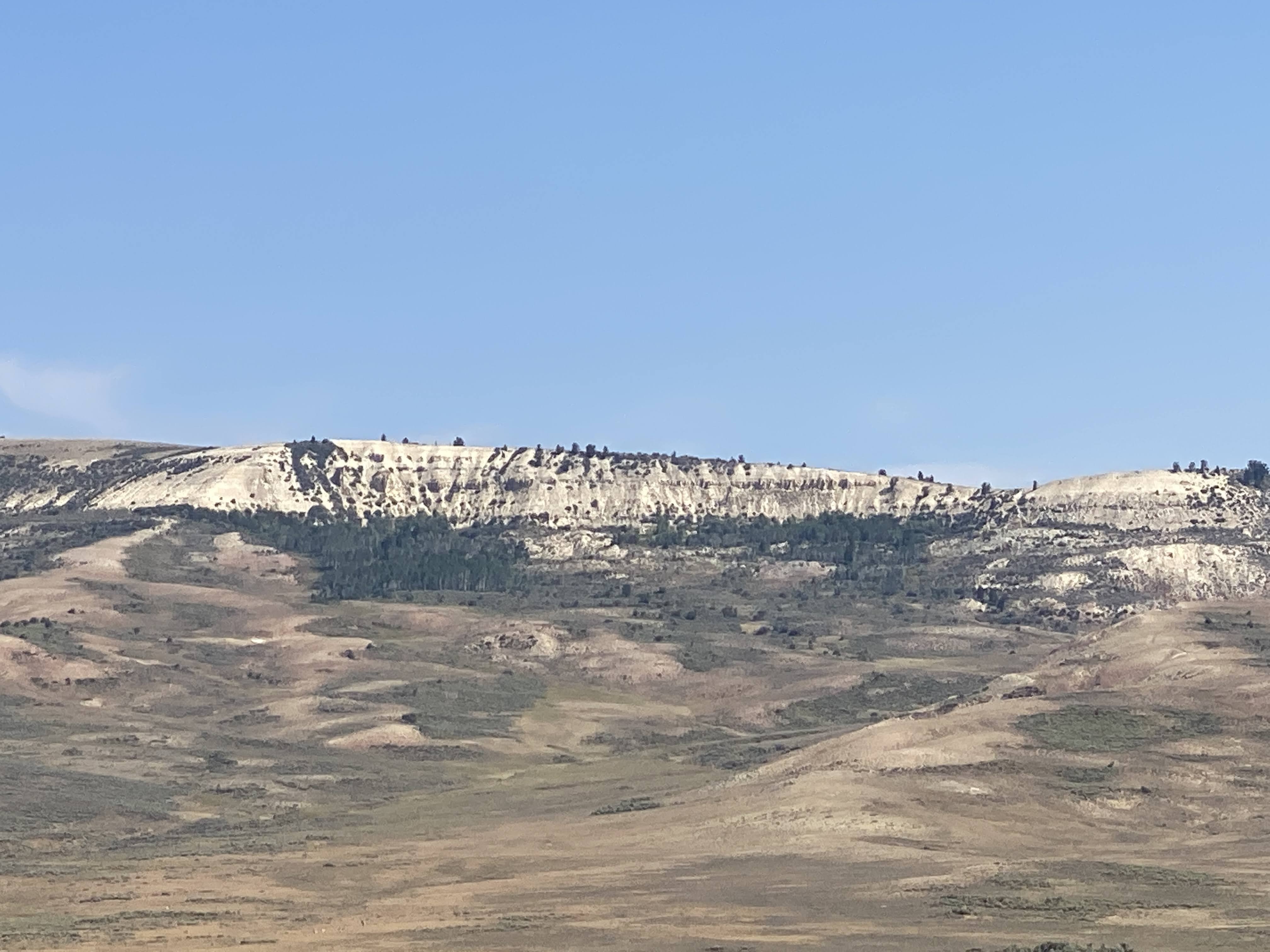
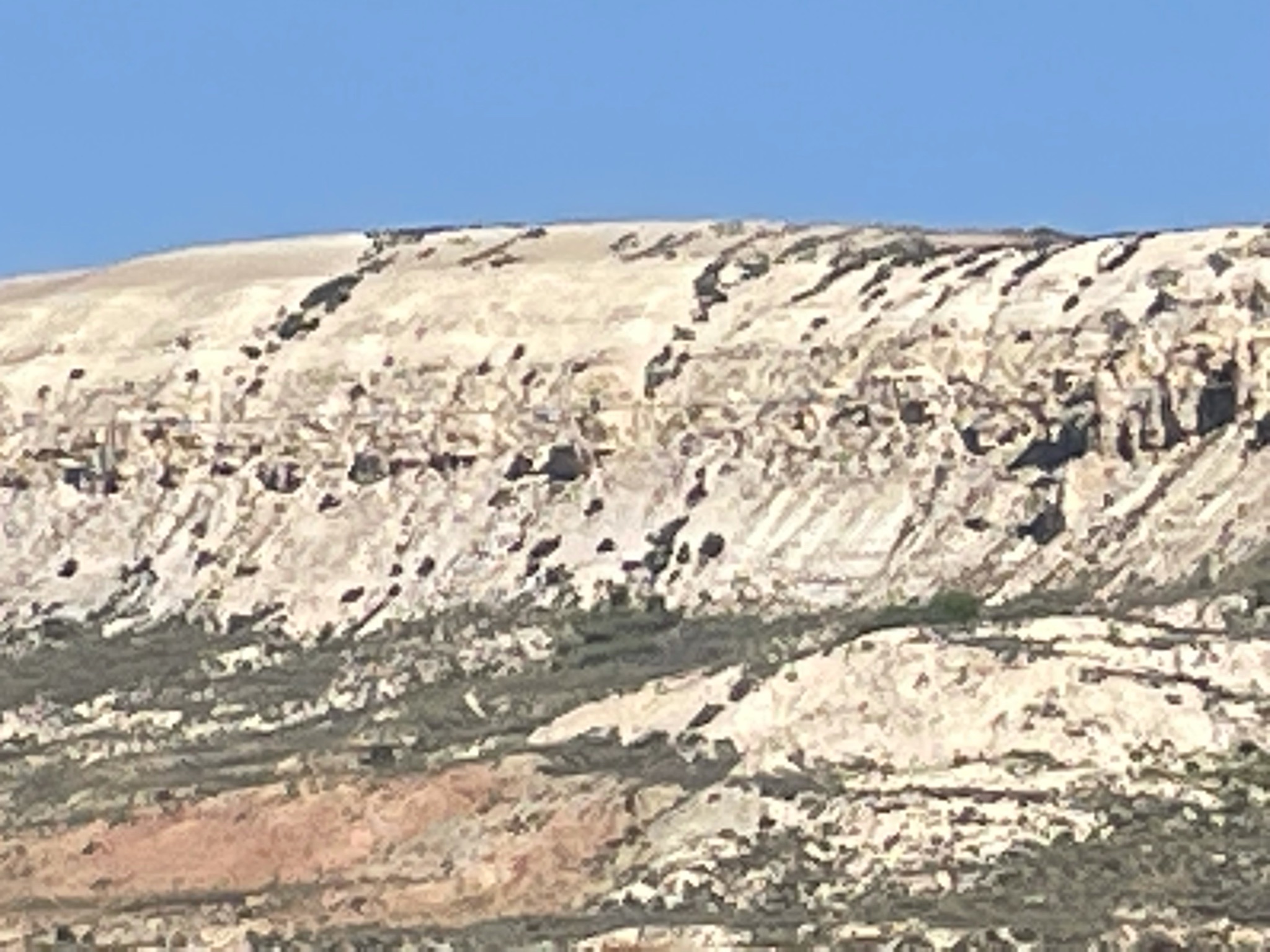
These bluffs are the shoreline of an ancient inland sea… The fossils we will be seeing are all sourced from here…

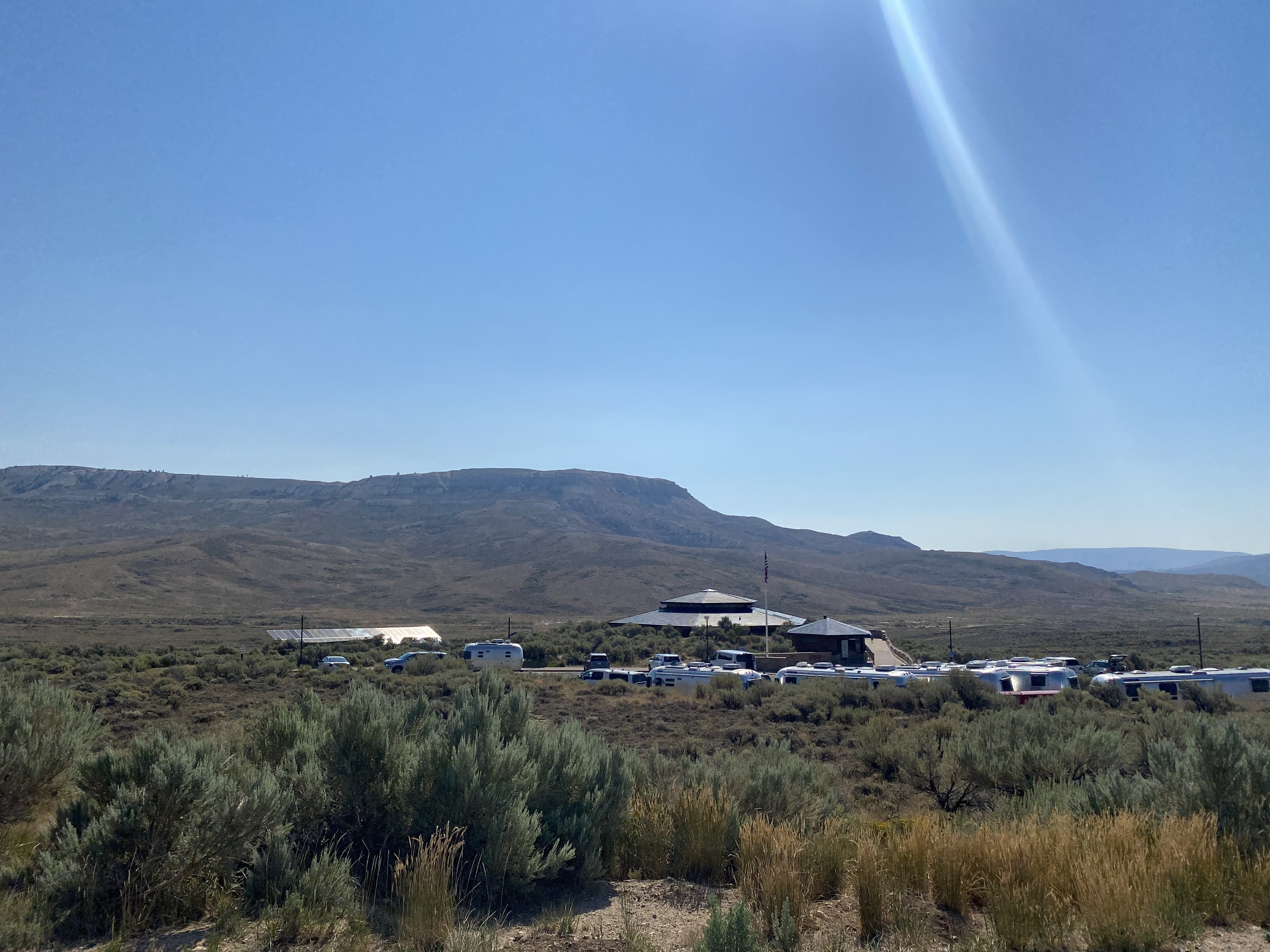
We proceeded to the Visitors Center

We were not the first to arrive…

Inside is a nice collection of fossils found nearby. There was also a good video showing how the fossils are found and extracted… Also, there was a man uncovering fossils as we watched…

We saw a crocodile…

A palm frond…

And a turtle…

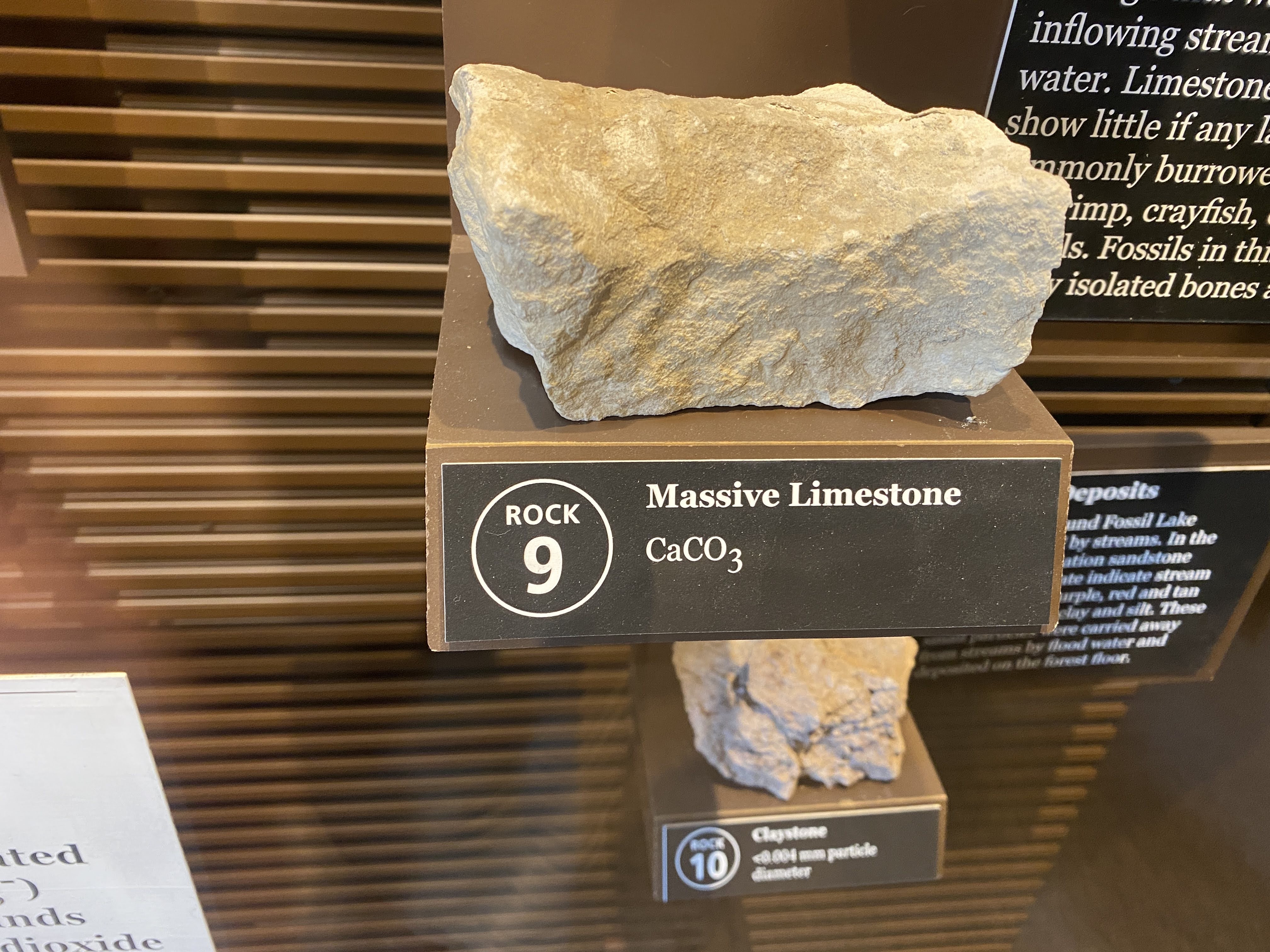
We discovered that many rocks contain lots of Carbon…

In fact, note the Calcium Carbonate shown here; you will see mention of it later in this blog…

More views of the bluffs…

We headed out and shortly found a fuel stop and an opportunity for lunch…

More Wyoming landscape…

And then we entered Idaho!

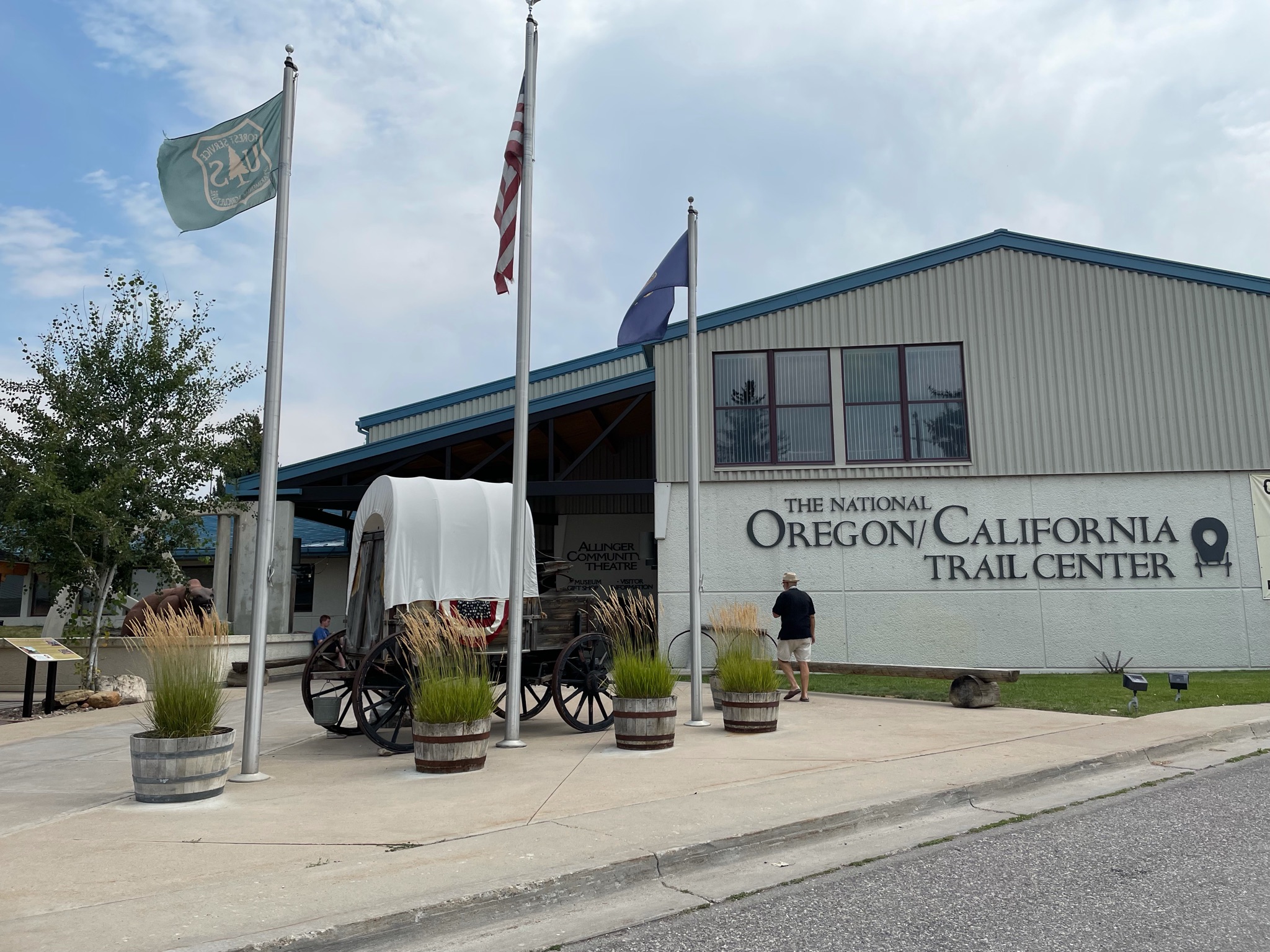
We parked the Villa at the RV park, and headed over to the National Oregon/California Trail Center…

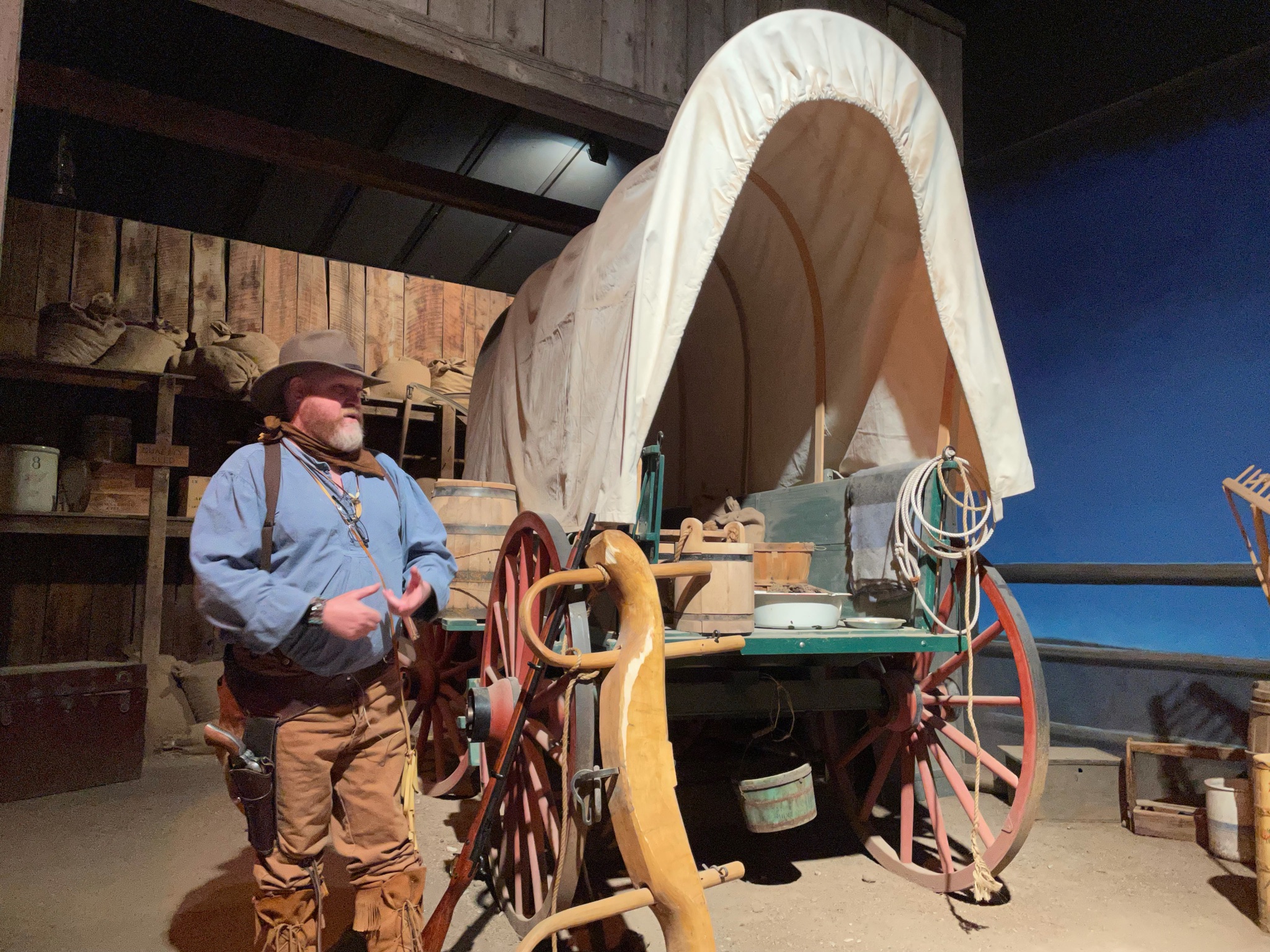
We had a guided tour of the exhibits depicting life on the trails, from getting prepared and buying provisions to actual travel down the trails…

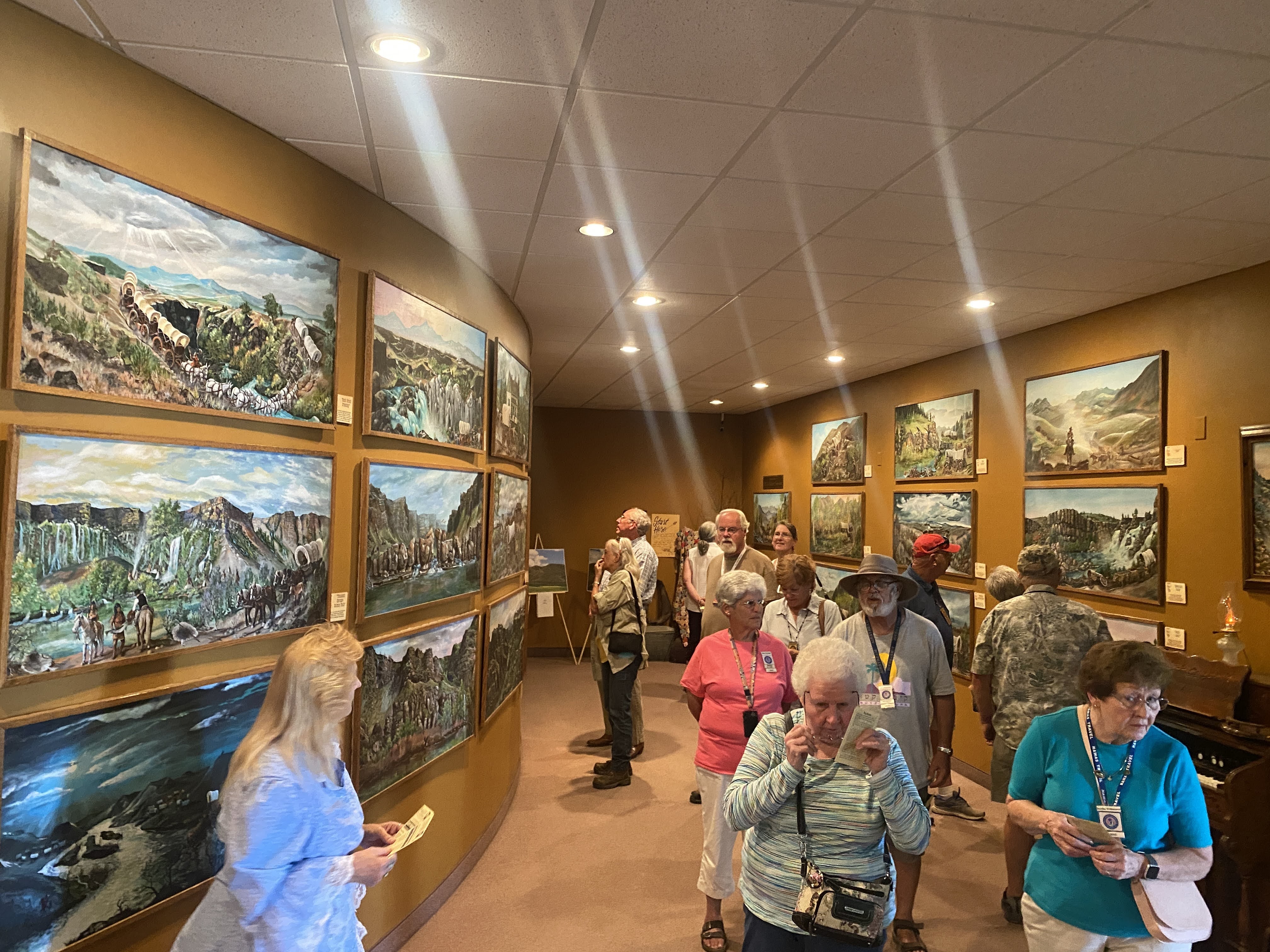
There was an entire gallery of artworks prepared by a local husband and wife team…

We heard descriptions of the wagon, and contents (1,200 – 1,500 lbs. of food), and life on the trails…

We saw a typical supply store where anything you wanted could be purchased…

Then we heard some tall tails after we spent a few minutes inside a simulated wagon ride…

After the museum we headed south to Utah for dinner… We soon found ourselves on the shores of Bear Lake.

Bear Lake is a natural freshwater lake on the Idaho–Utah border. About 109 square miles in size, it is split about equally between the two states. The lake has been called the “Caribbean of the Rockies” for its unique turquoise-blue color, which is due to the refraction of calcium carbonate (limestone) deposits suspended in the lake. Limestone! I told you I would mention it again! Its water properties have led to the evolution of several unique species of fauna that occur only within the lake. Bear Lake is over 250,000 years old. It was formed by fault subsidence that continues today, slowly deepening the lake along the eastern side. In 1911 the majority of the flow of the Bear River was diverted into Bear Lake via Mud Lake and a canal from Stewart Dam, ending 11,000 years of separation between the lake and that river system.

Today the lake is a popular destination for tourists and sports enthusiasts, and the surrounding valley has gained a reputation for having high-quality raspberries.

Unfortunately, due to smoke from fires in Oregon, the air is very hazy, obscuring the mountains across the lake…

On our way to Bear lake we passed a marvelous Mormon Tabernacle in the town of Paris, ID.

We entered Utah…

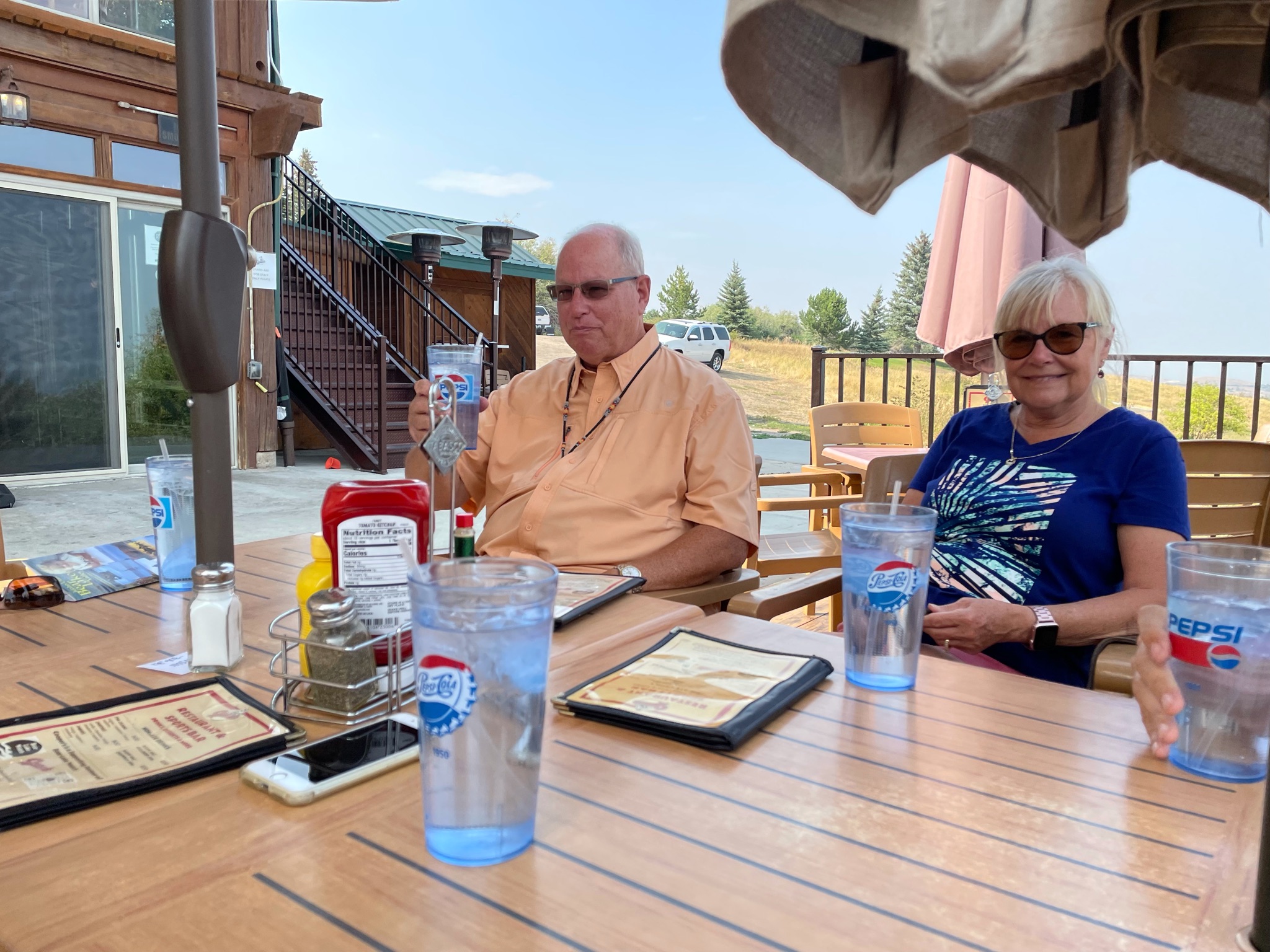
We stopped for a little refreshment before dinner at Coopers, a restaurant at a golf course in Fish Haven, ID

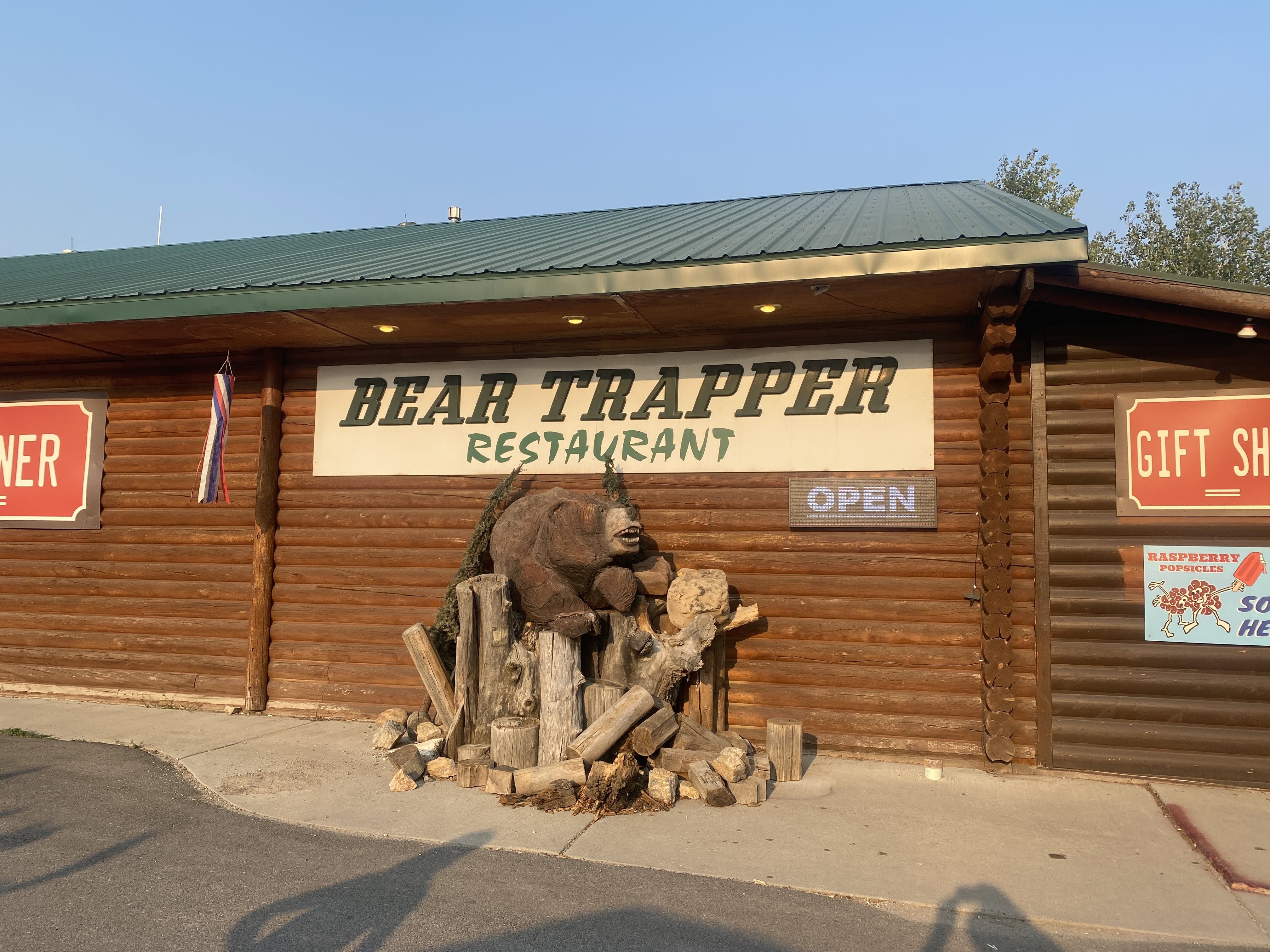
At the appointer hour we arrived at the Bear Trapper, in Garden City, UT…

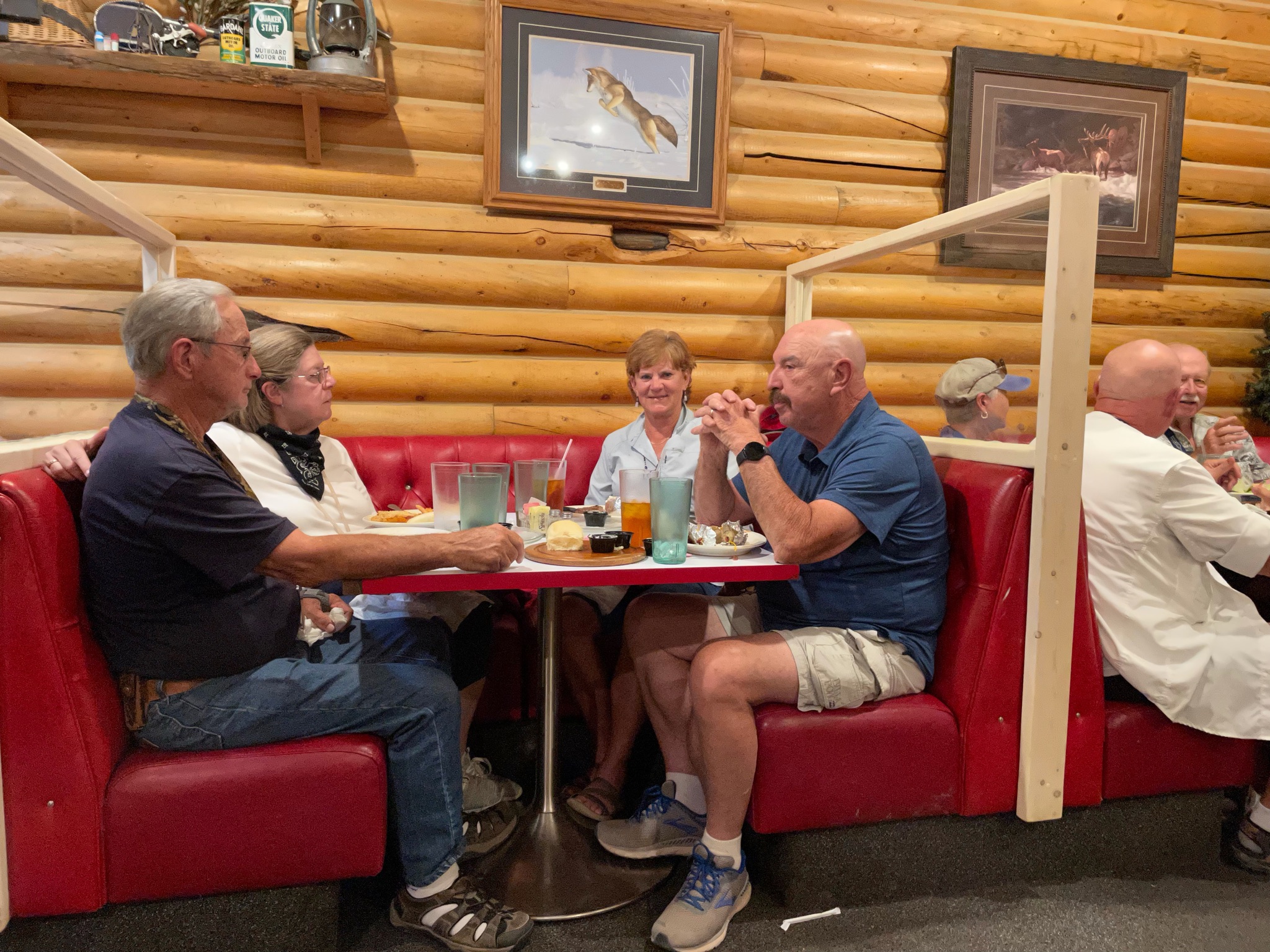
All the Airstreamers are here!

After dinner Lynda and I walked down to the shore of the lake.

Garden City is a vacation area tourist place, much like the coast of Maine, Cape Cod, and the Wisconsin Dells. Lots of ice cream and fast food places that are absolutely overrun with tourists out for a good time. The traffic was terrible…

Boaters are everywhere…

And late on a Saturday afternoon in August the line to bring your boat trailer in to take your boat out of the water was hours long…

We returned to the Villa in time to see the sun set into the smoke…

An enjoyable time was had by all…

2021-08-13 – The Oregon Trail caravan … Day 16 – Traveling from Lander, WY to Fort Bridger, WY

We move on again, just like the wagons on the Oregon Trail…

We traveled across many miles of Wyoming landscape…

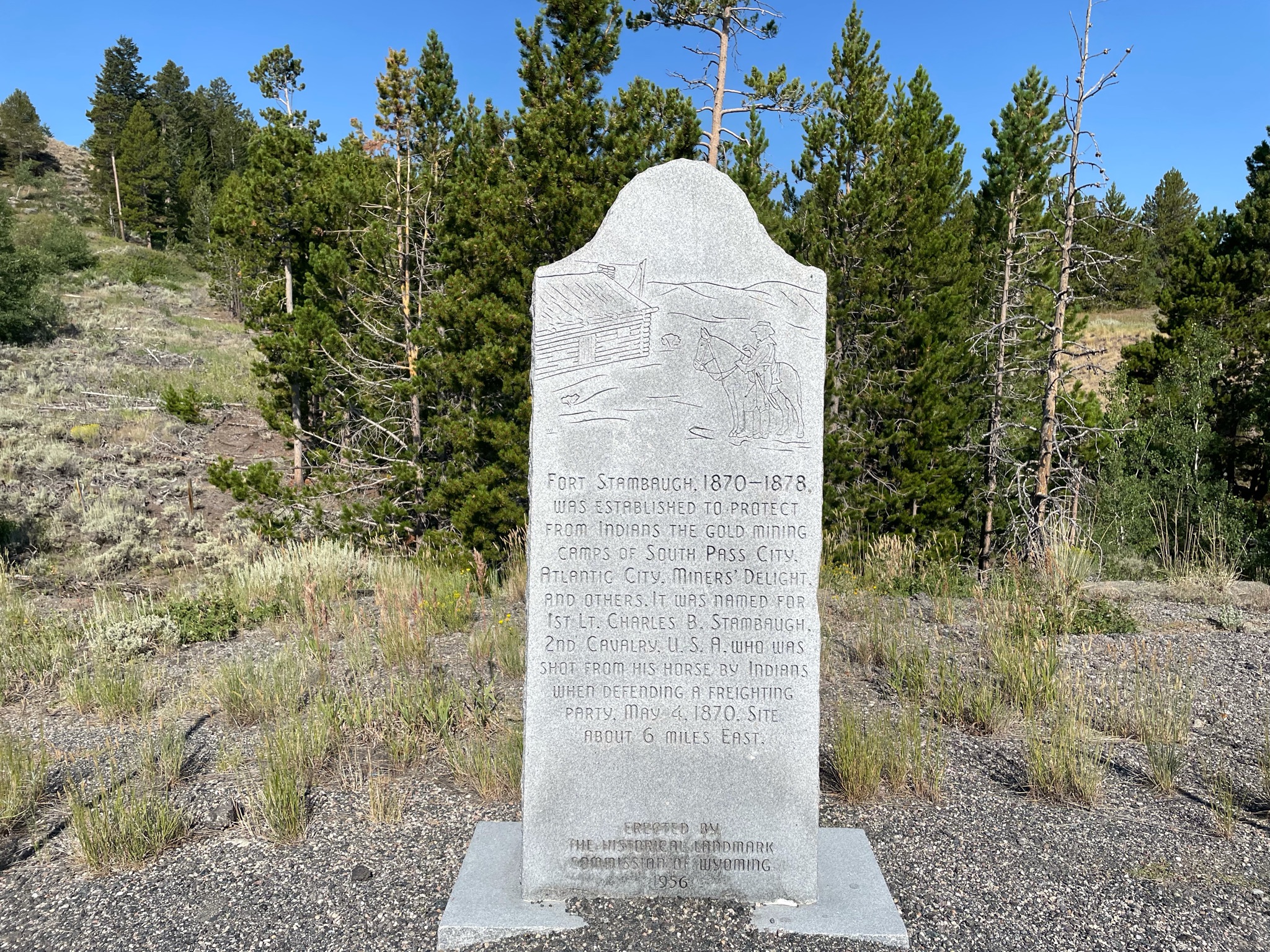
We are driving through “South Pass”. This is where most of the emigrants passed through the Rocky Mountains. The “pass” is about 35miles wide, and it crosses the Continental Divide at about 7,412 feet elevation, the lowest pass in this area of the Rockies…

So it’s all downhill from here…

The terrain changes continuously…

The terrain changes continuously…

The terrain changes continuously…

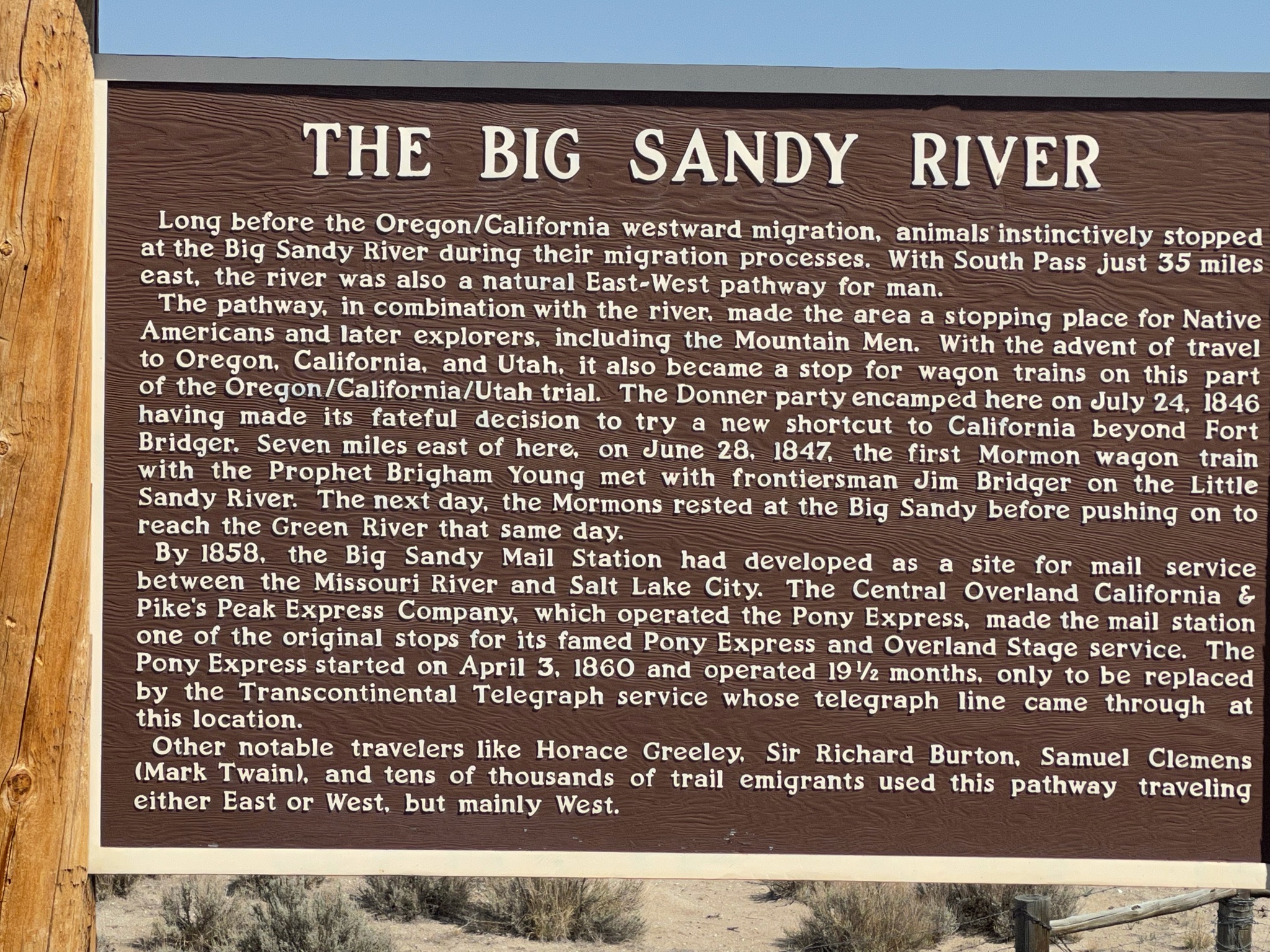
We crossed the Big Sandy River…

And we crossed the Little Sandy River…

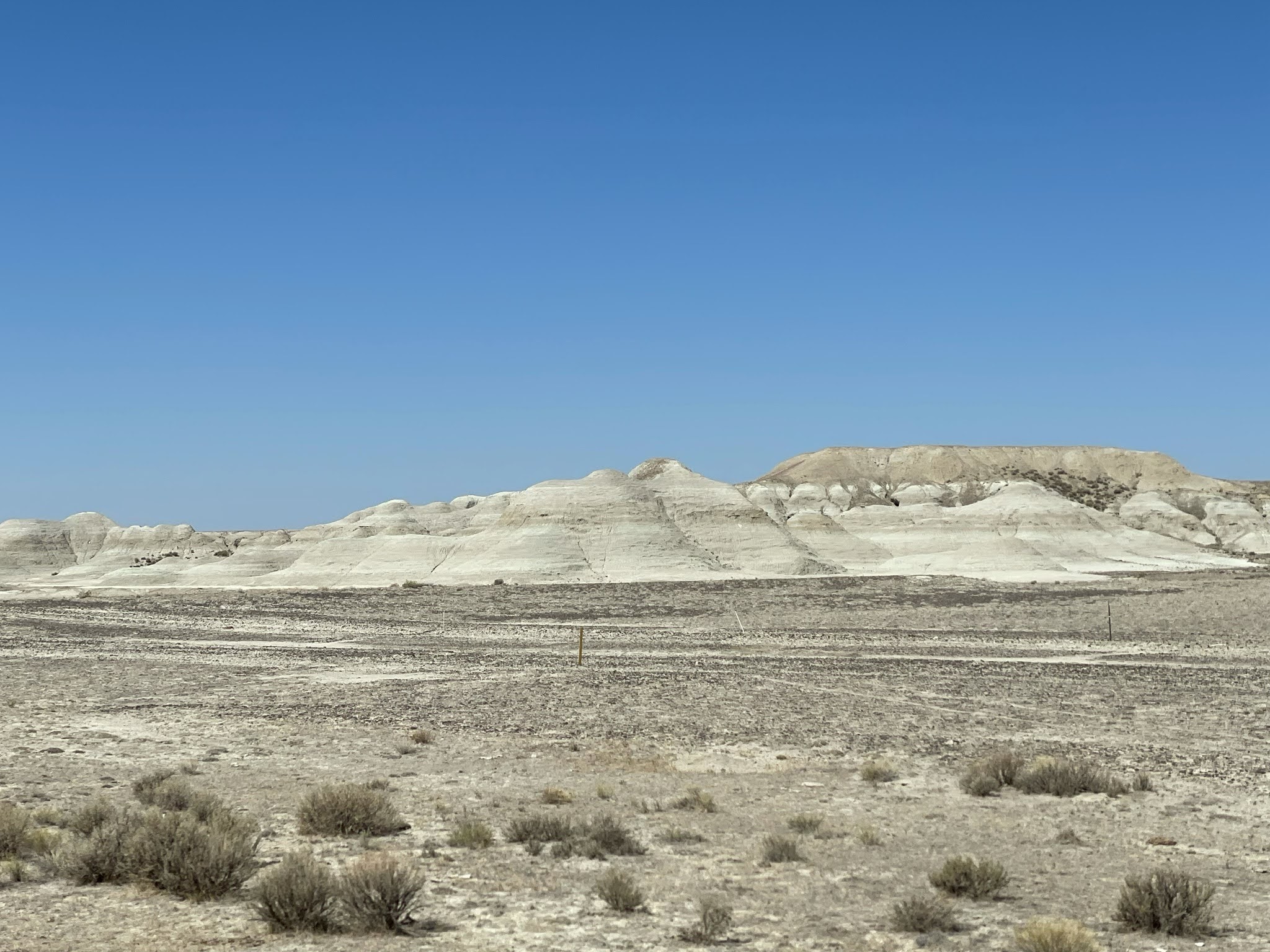
And the terrain continues to change…

We stopped for lunch at Little America. There are hundreds of billboards on each direction of the freeway advertizing this place. Wall Drug, it isn’t. But it is a large gas station, a motel, and a restaurant…

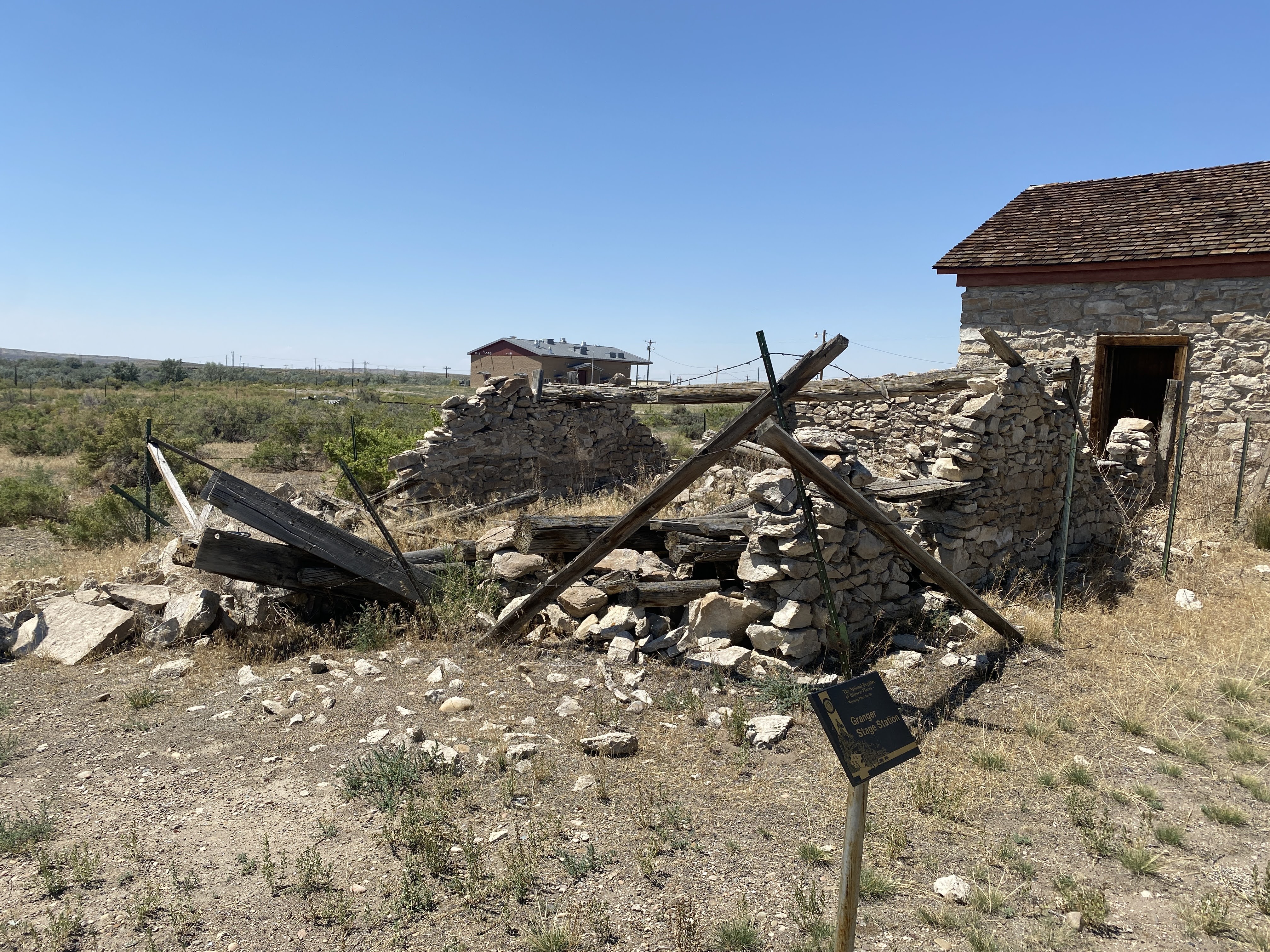
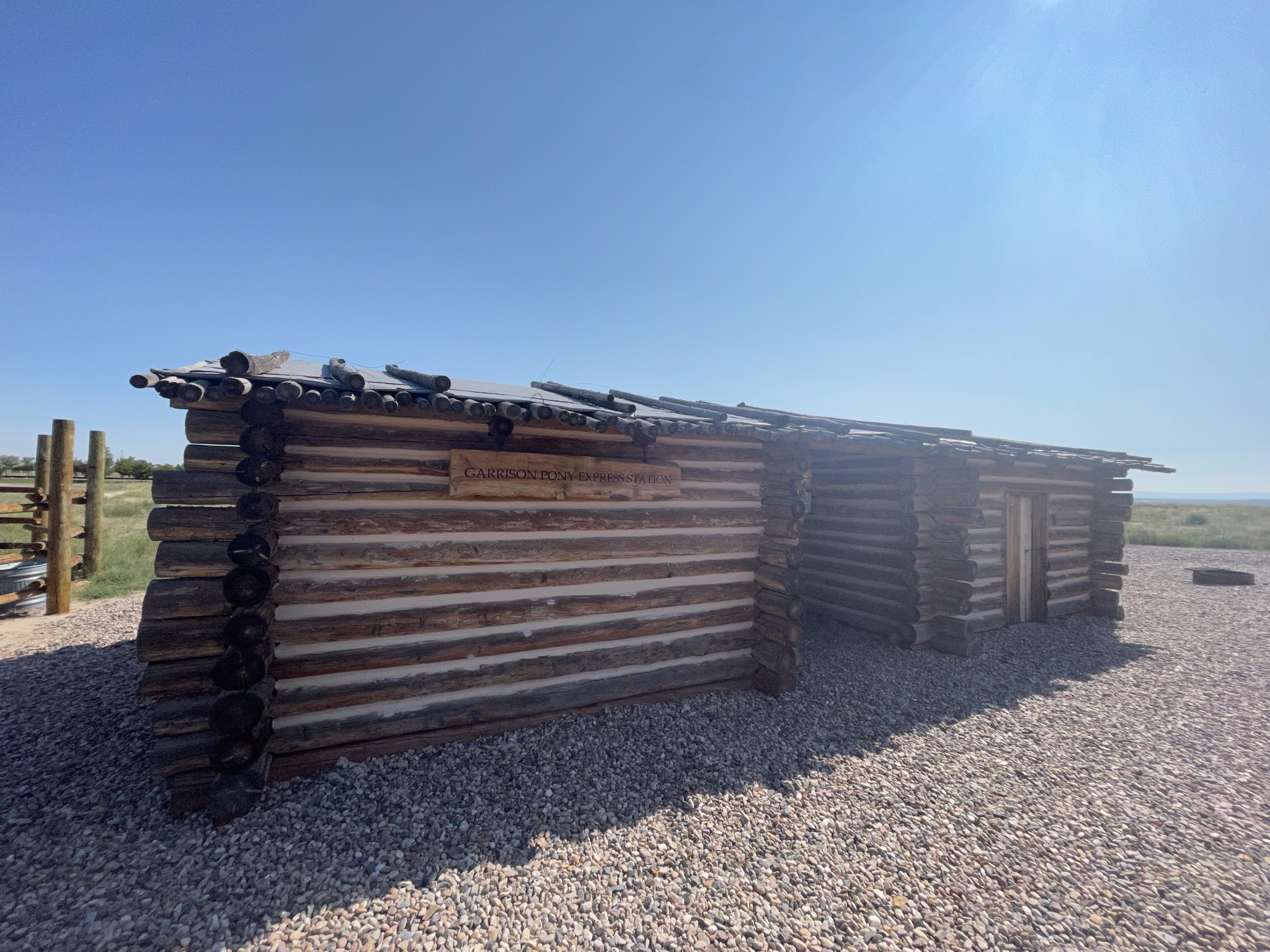
We made a slight detour to the town of Granger to see the old stagecoach station and Pony Express station…

The stage station is in pretty good shape…

The Pony Express station not so much…

We continued on. The terrain is still changing…

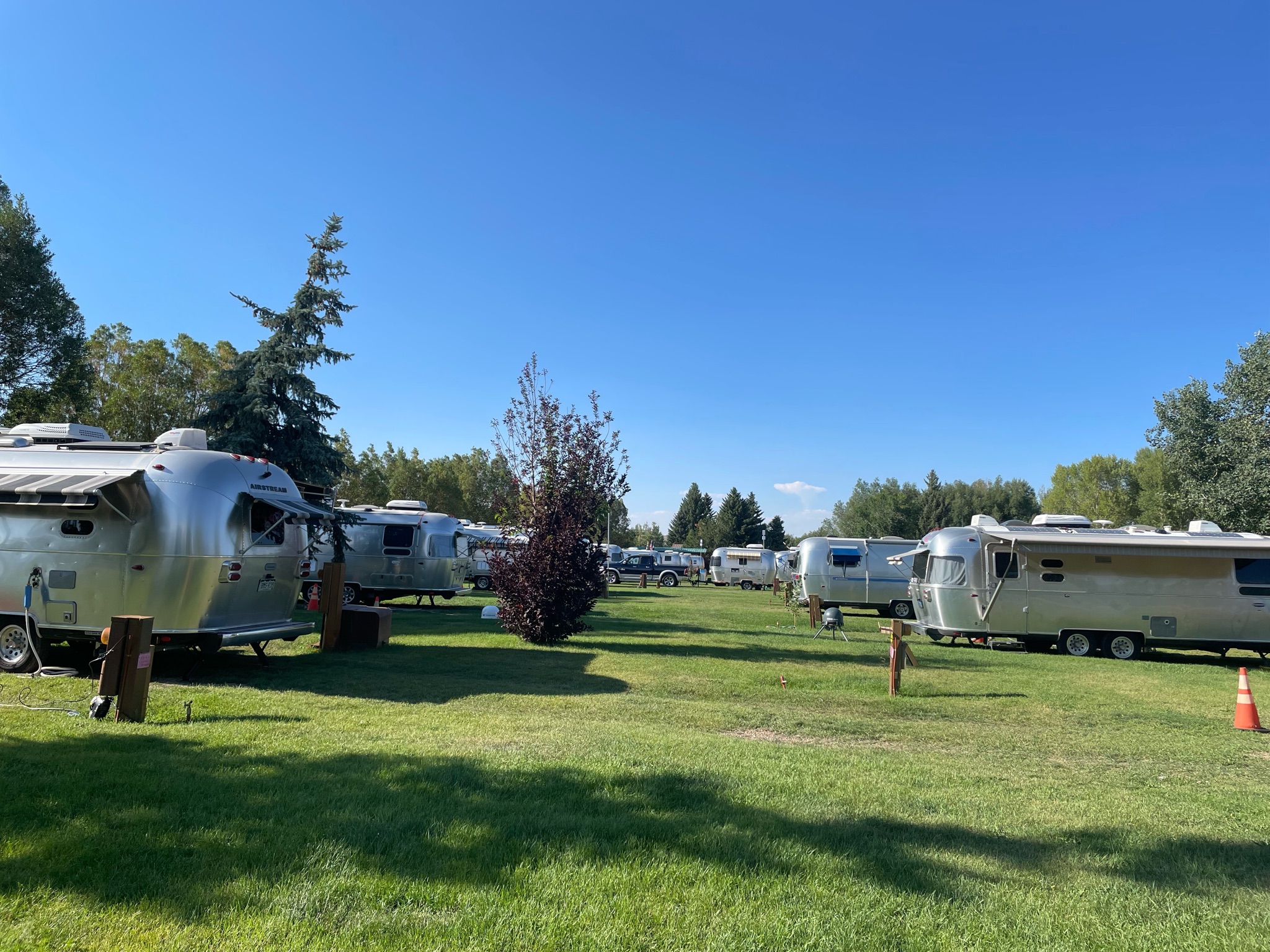
We arrived at the RV Park.

Next to the RV Park is Fort Bridger State Historic Site

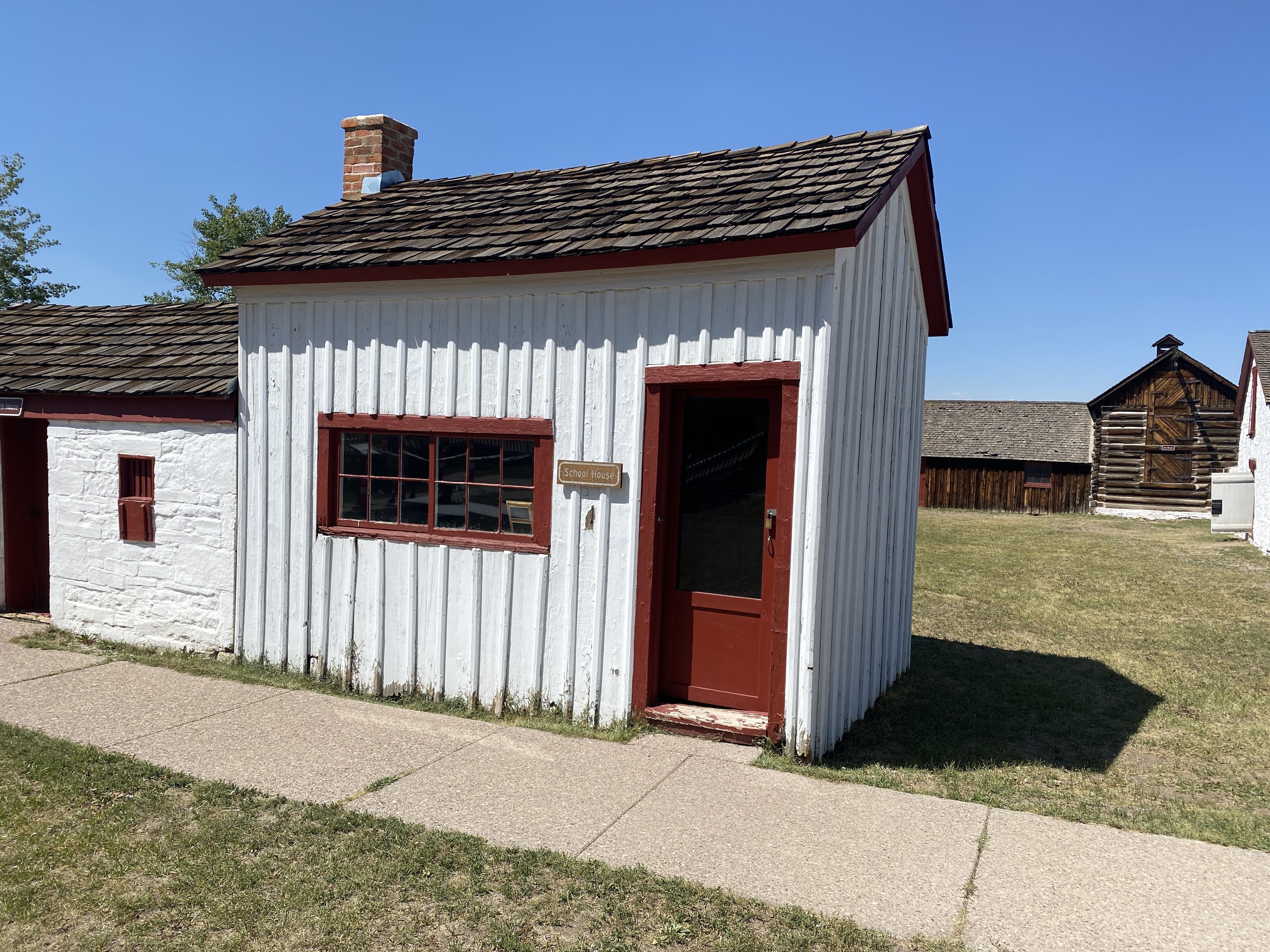
Again, I’m not a big fan of forts, but this did have some interesting things… The first schoolhouse in Wyoming!

The small building on the end is the first schoolhouse…

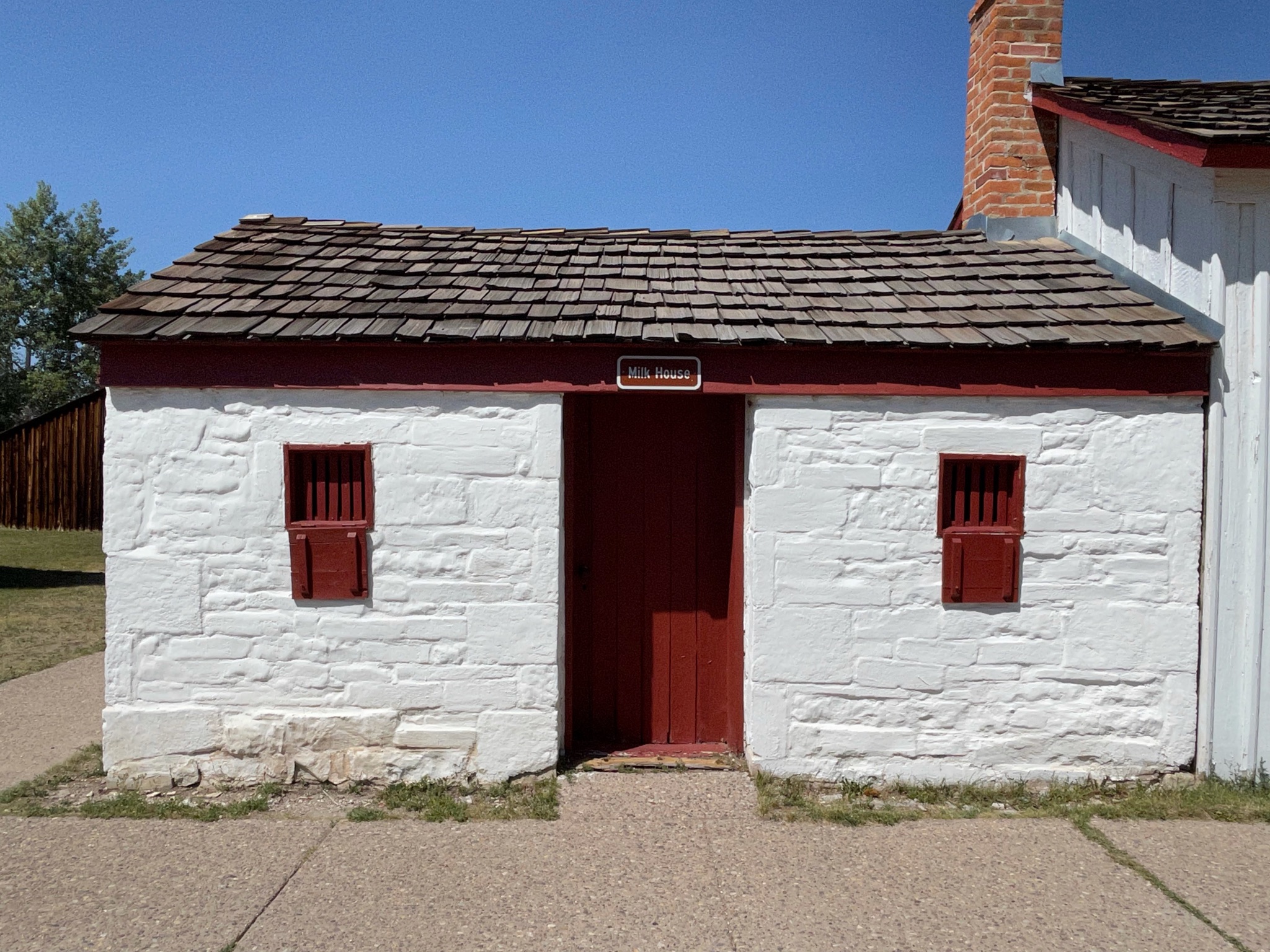
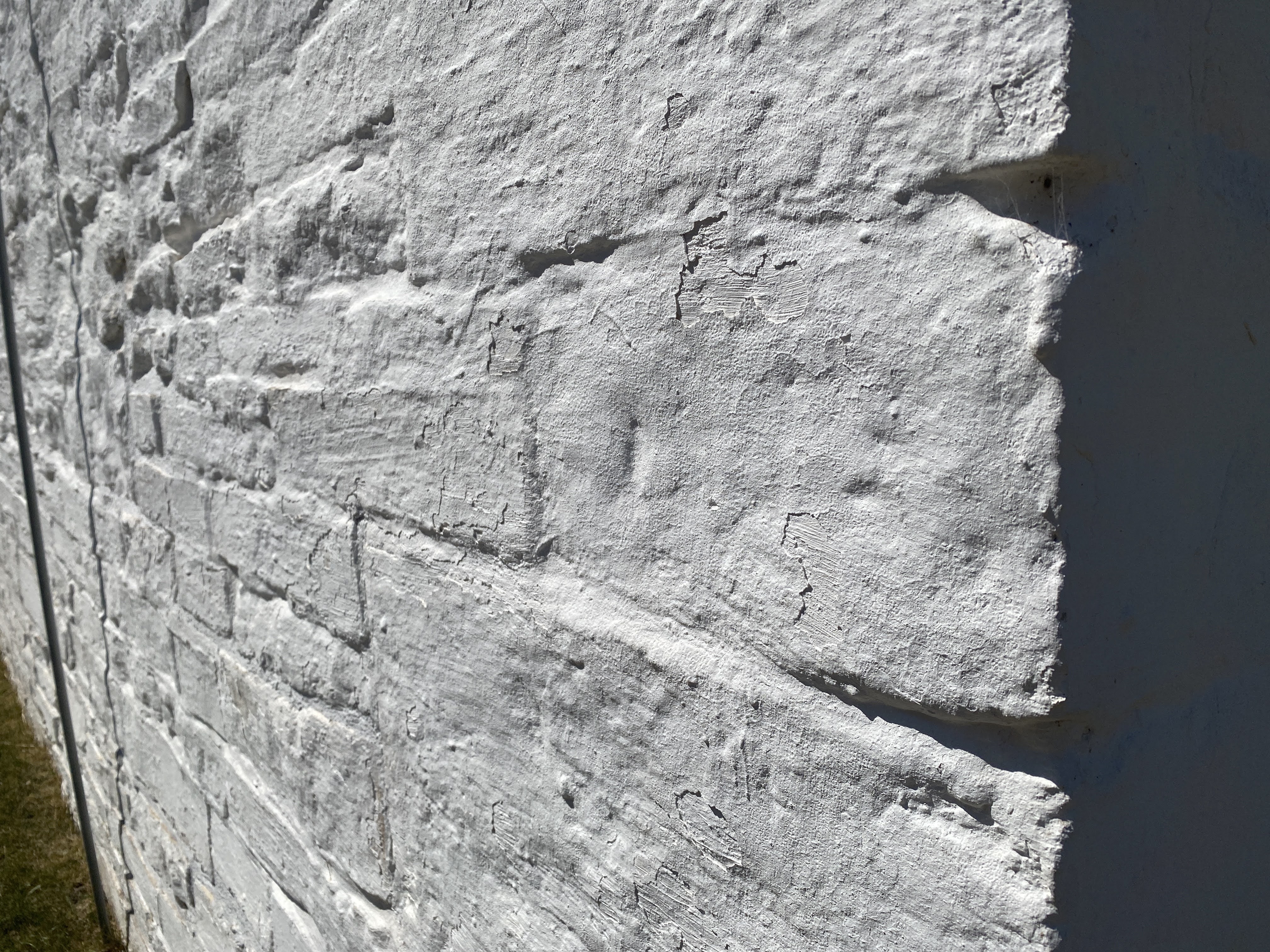
I particularly enjoyed the whitewashed hand cut limestone walls…

These stone buildings are original to the the mid 1800s…

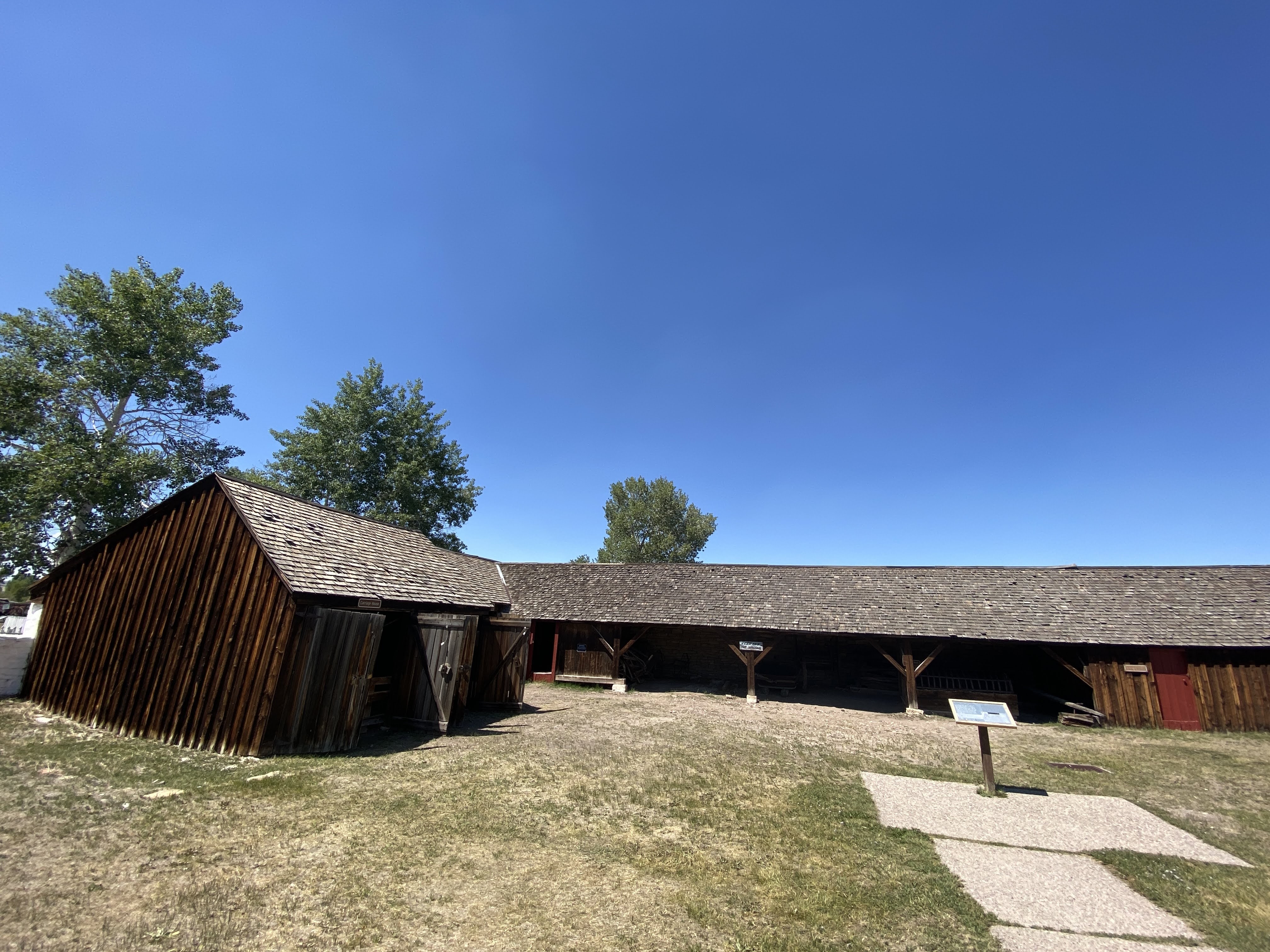
The wooden buildings are not original… Wood is such a terrible building material…

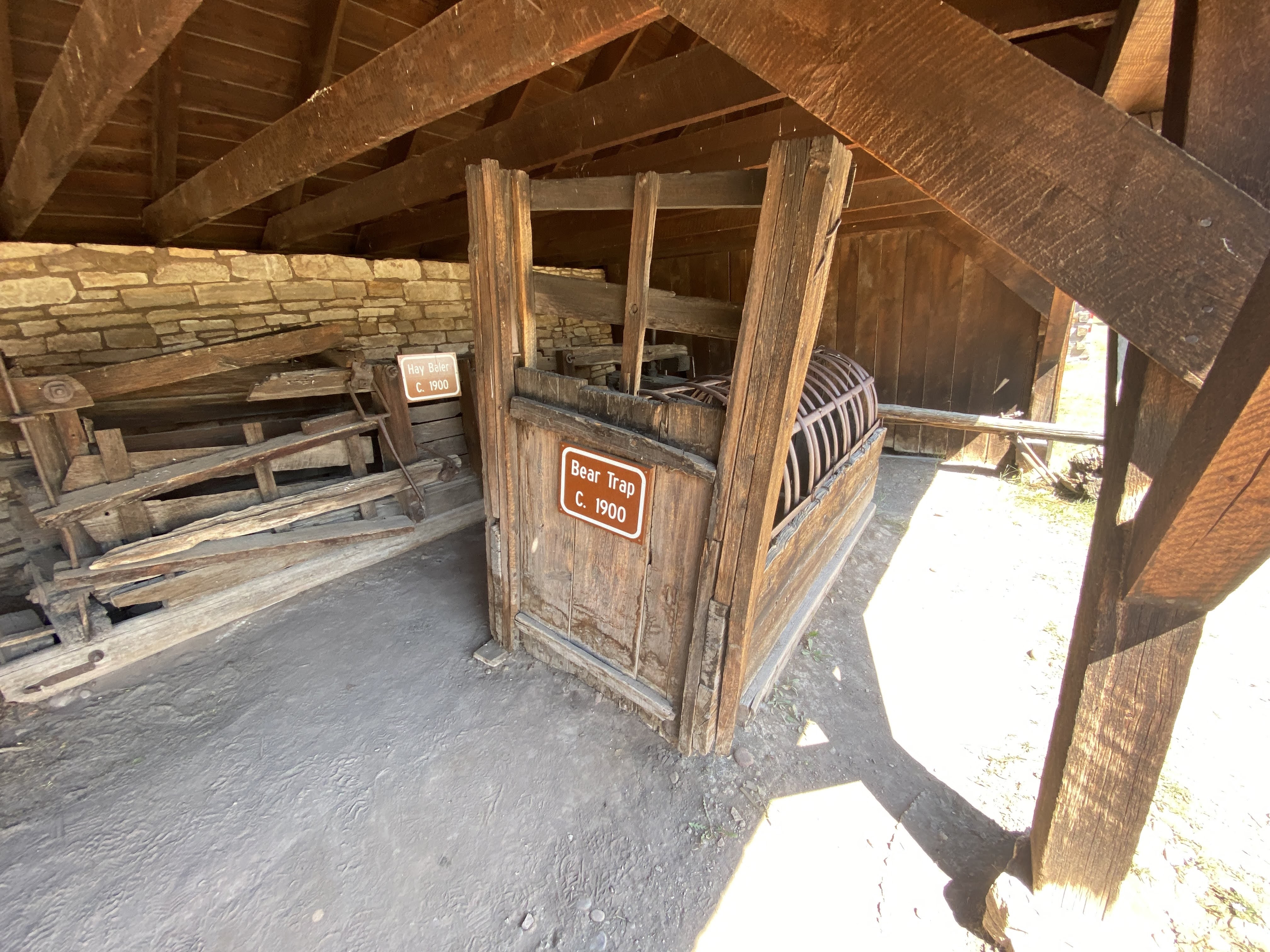
We enjoyed seeing the bear trap…

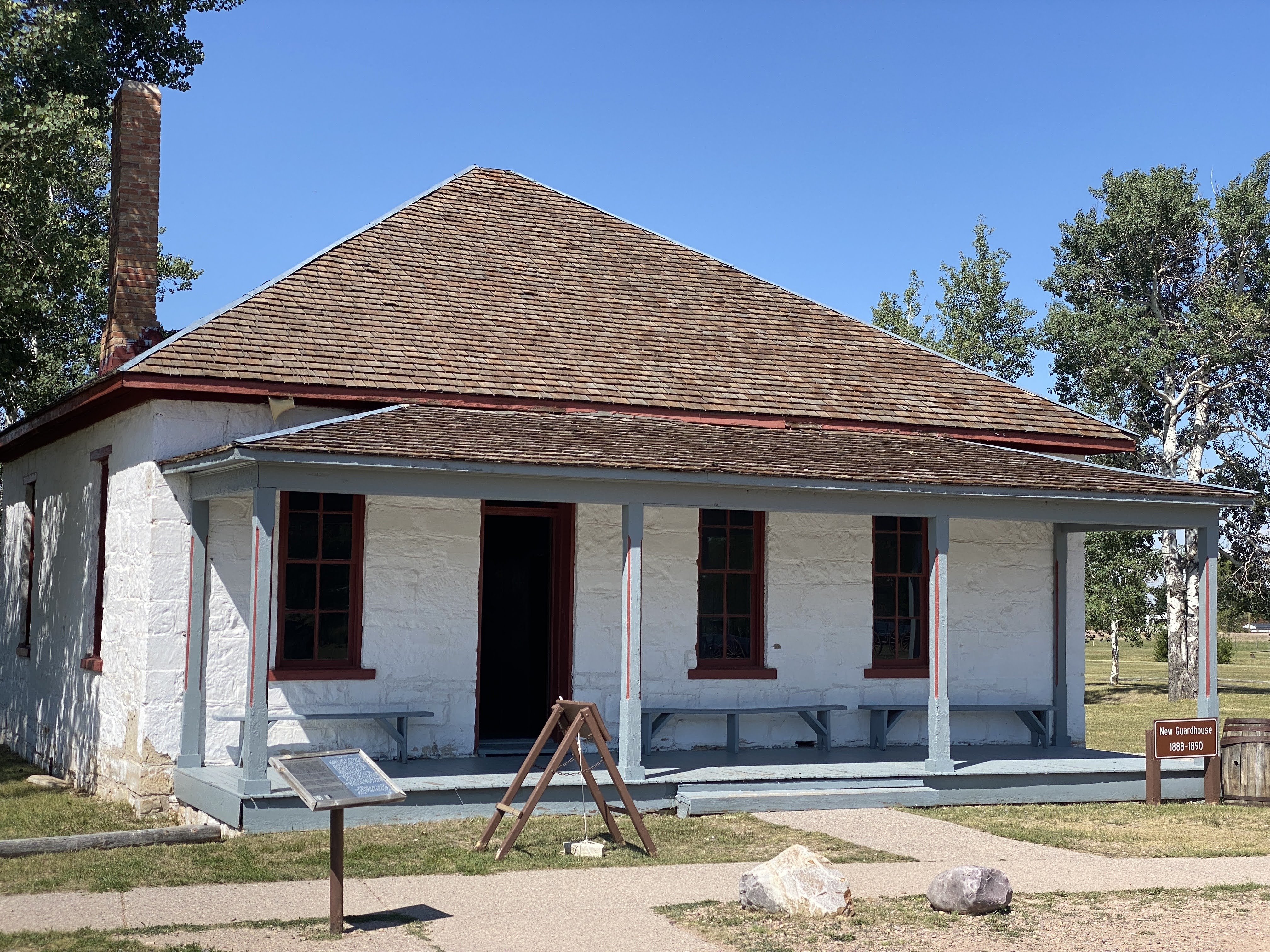
This is the guardhouse, complete with an office and the jail cells…

The main building is now the museum…

Here is a detail of the limestone walls…

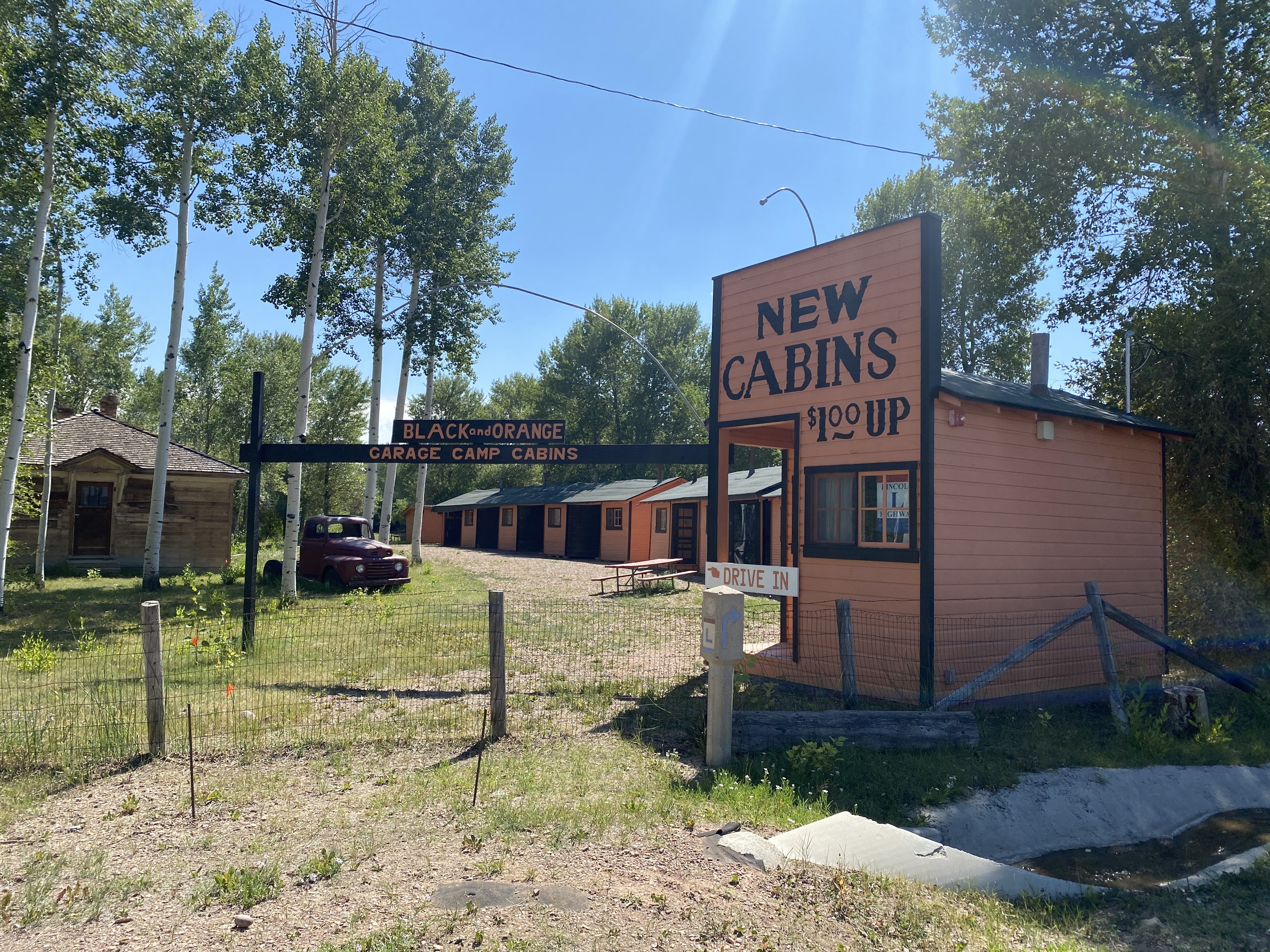
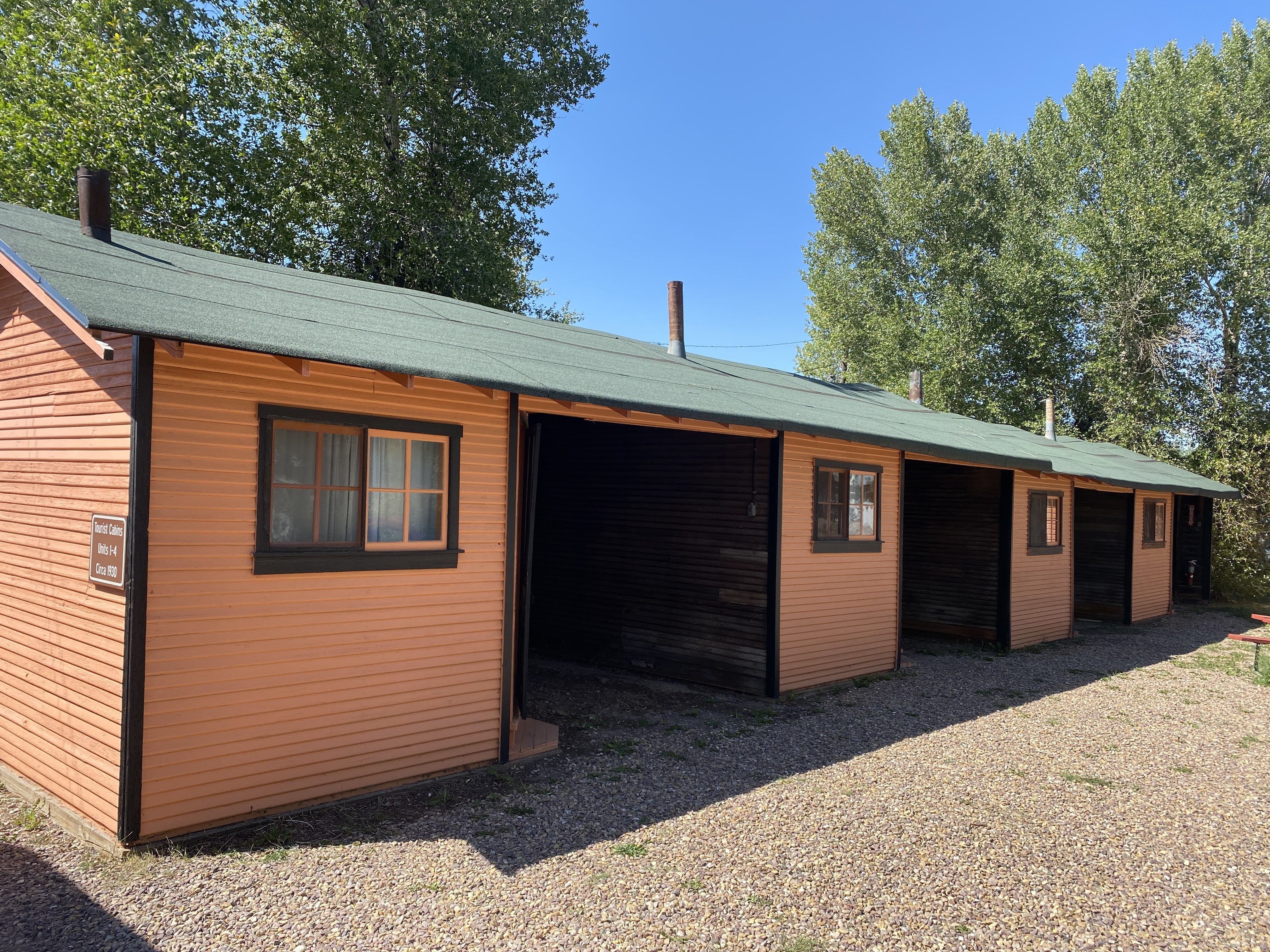
What I WAS interested was the roadside cabins… This is a restored example of typical roadside cabins that were all along the Lincoln Highway, offering motorists a place to spend the night…

The Lincoln Highway is one of the earliest transcontinental highway routes for automobiles across the United States of America. Conceived in 1912 by Indiana entrepreneur Carl G. Fisher, and formally dedicated October 31, 1913, the Lincoln Highway ran coast-to-coast from Times Square in New York City west to Lincoln Park in San Francisco, originally through 13 states.

The first officially recorded length of the entire Lincoln Highway in 1913 was 3,389 miles. Over the years, the road was improved and numerous realignments were made, and by 1924 the highway had been shortened to 3,142 miles.

The name of the Lincoln Highway was changed in 1926, as it became part of U.S. Route 30 from Pennsylvania to Wyoming. We on the Oregon Trail caravan have been following the route of US 30 for most of our trip…

Note that each cabin had a carport. Not only did this give you a parking space, but there were no common walls between rooms…

Note that this is not a “motel”. The first motel was the Motel Inn (originally known as the Milestone Mo-Tel), located in San Luis Obispo, California, was the first motel in the world. It opened on December 12, 1925, and closed in 1991. The building is now the administrative building of the Apple Farm Inn hotel next door. I lived just down the street from the Motel Inn whilst I was a college student in San Luis Obispo…

We returned to the Villa and happy hours ensued.

An enjoyable time was had by all…

2021-08-12 – The Oregon Trail caravan … Day 15 – Lander, WY

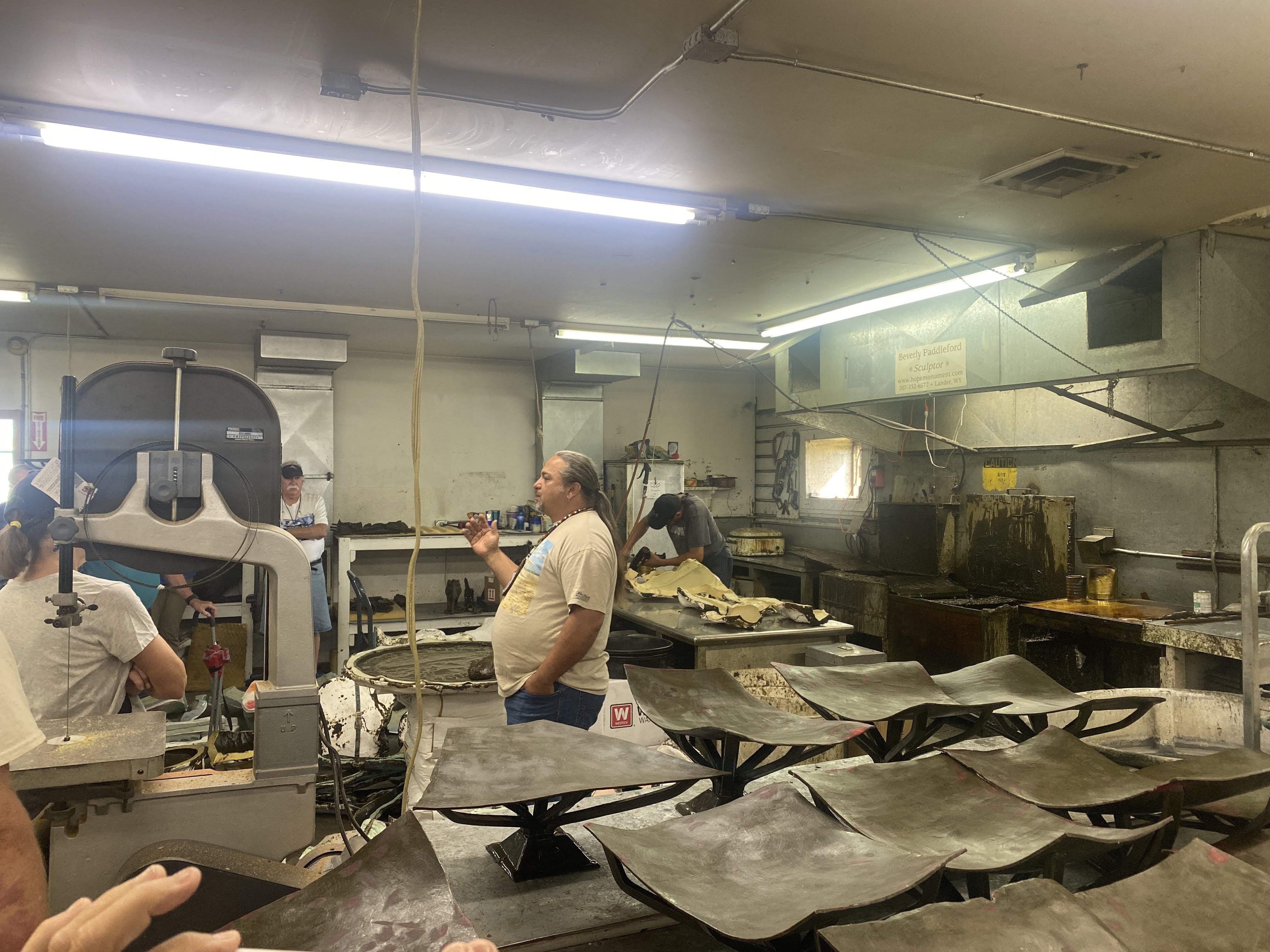
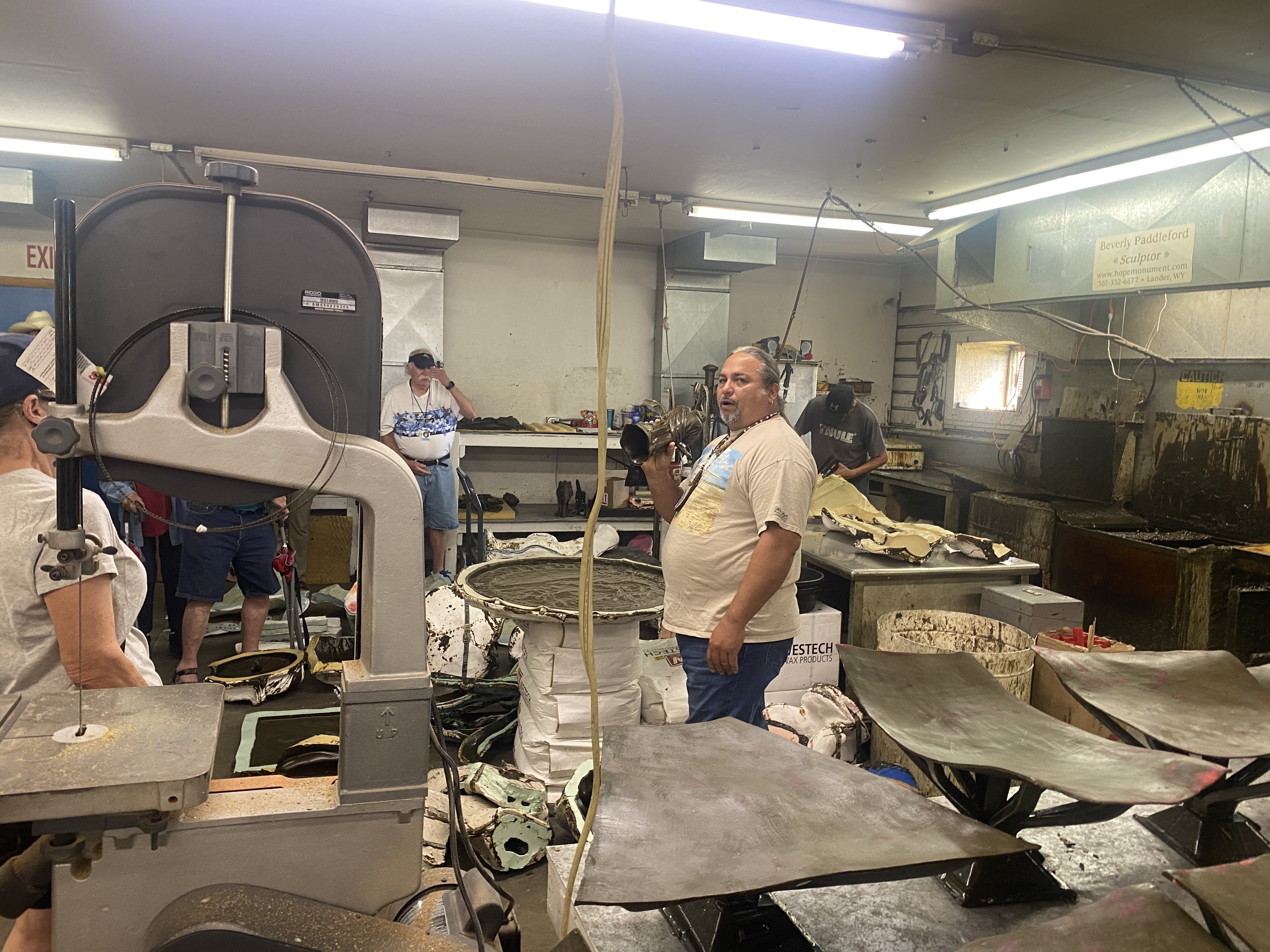
We had a big variety of tours and sights today. We started at the Eagle Bronze Foundry and Gallery…

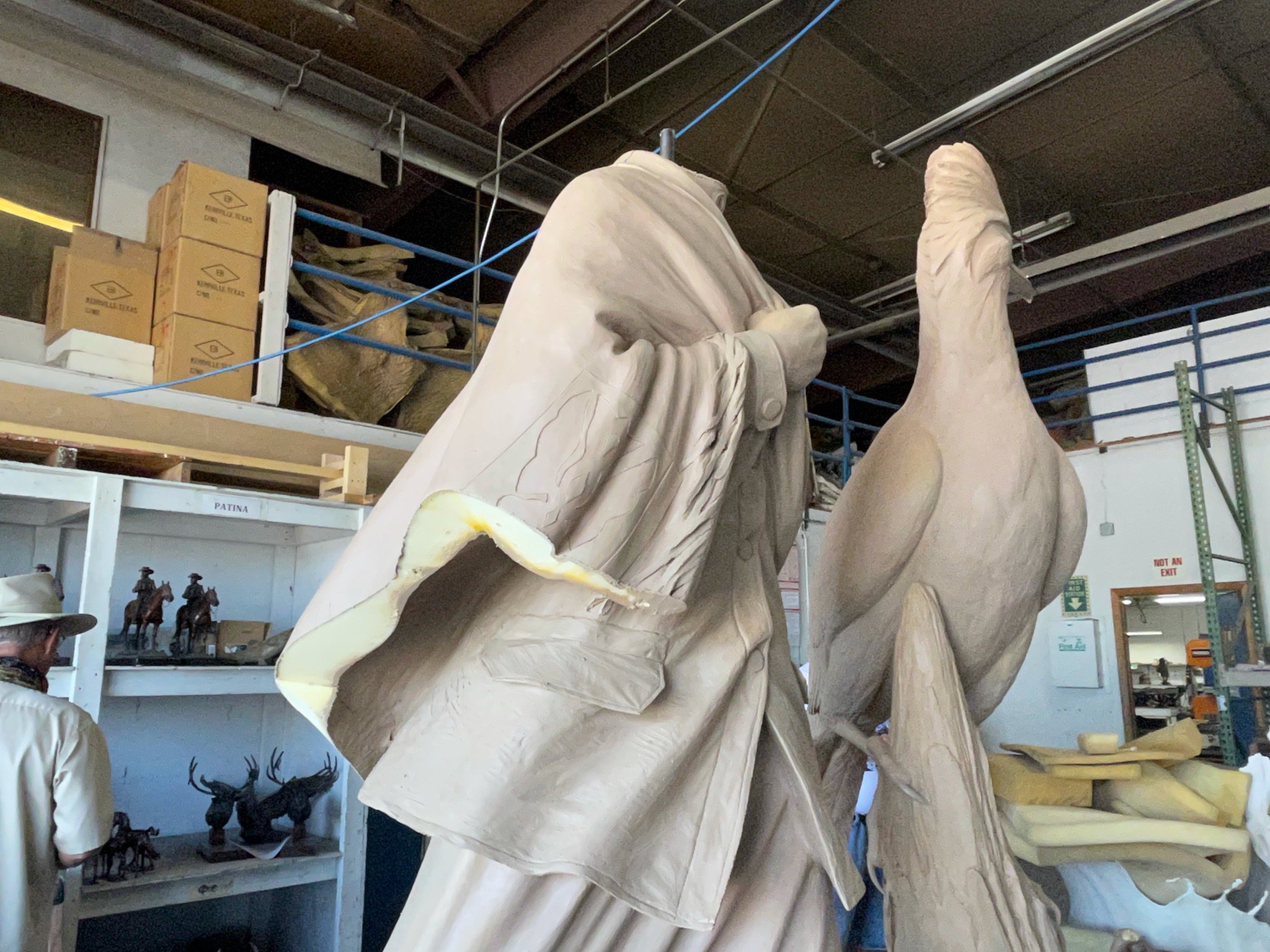
We were given an extensive tour of the foundry, with all the steps and processes explained, from the artist’s concept in a small model, which is scanned into a special 6d computer model, to full size mockups, to sectioning the mockups to 30″ x 30″ sections, adding clay and wax, and casting the bronze at 2100 degrees… It is an amazingly complex process…

Examples of foam and latex molds…

The sand castings, with the wax melted out, ready to cast the bronze…

Completed castings being reassembling into the finished monument…

Coloring, adding patina, and finishing…

It was fascinating tour! It is an amazingly complex process…!

And then we moved on. We went to Sinks Canyon State Park. This is the site of the “vanishing river”…

The river flows through these rocks, into a shallow cave, and the water disappears… This is called “The Sink”…

We found that the water falls through cracks and fissures underground, until about two hours later it reappears in a pond about a quarter mile away…

As we walked we marveled at these shear rock canyon walls…

We found the pond (The Rise). It was peaceful and serene…

One other thing that flows underground and comes up in this pond are Rainbow Trout!

These trout are 16-24 inches long!

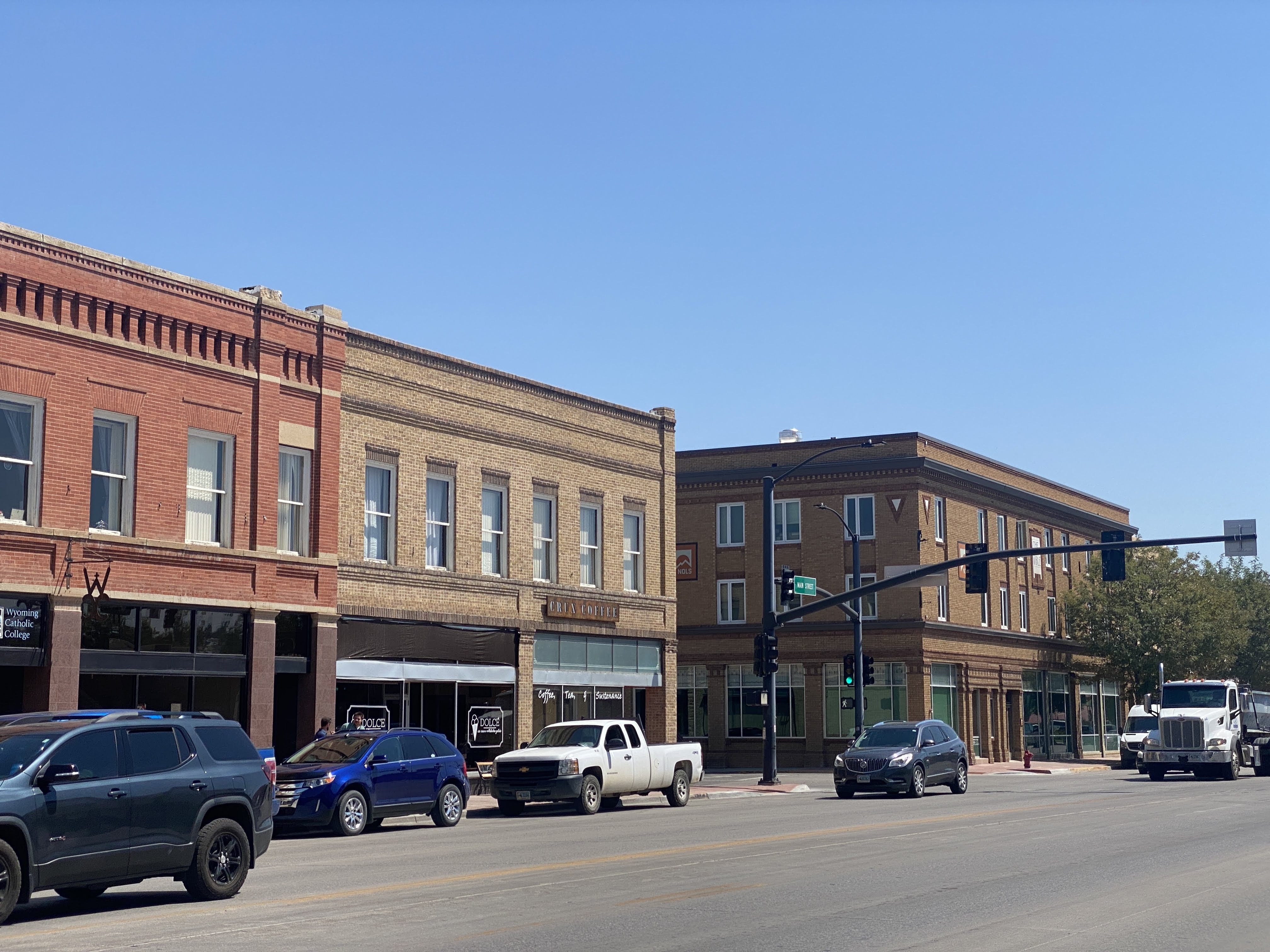
Since no fishing was allowed we drove back to downtown Lander. It is a typical small downtown, struggling to stay viable…

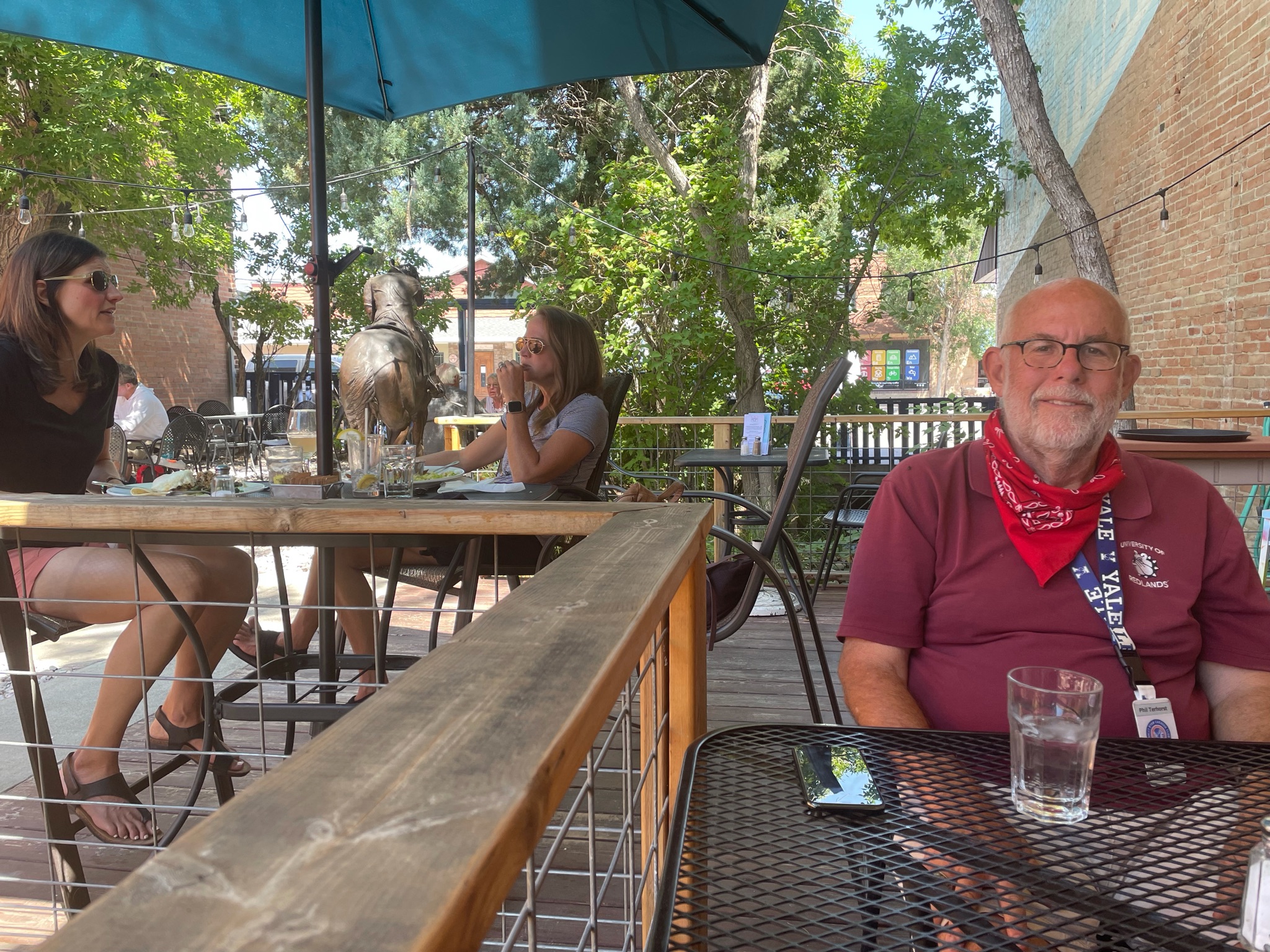
We had lunch at Middle Fork, a nice little restaurant downtown. It was barely not too hot to sit outside…

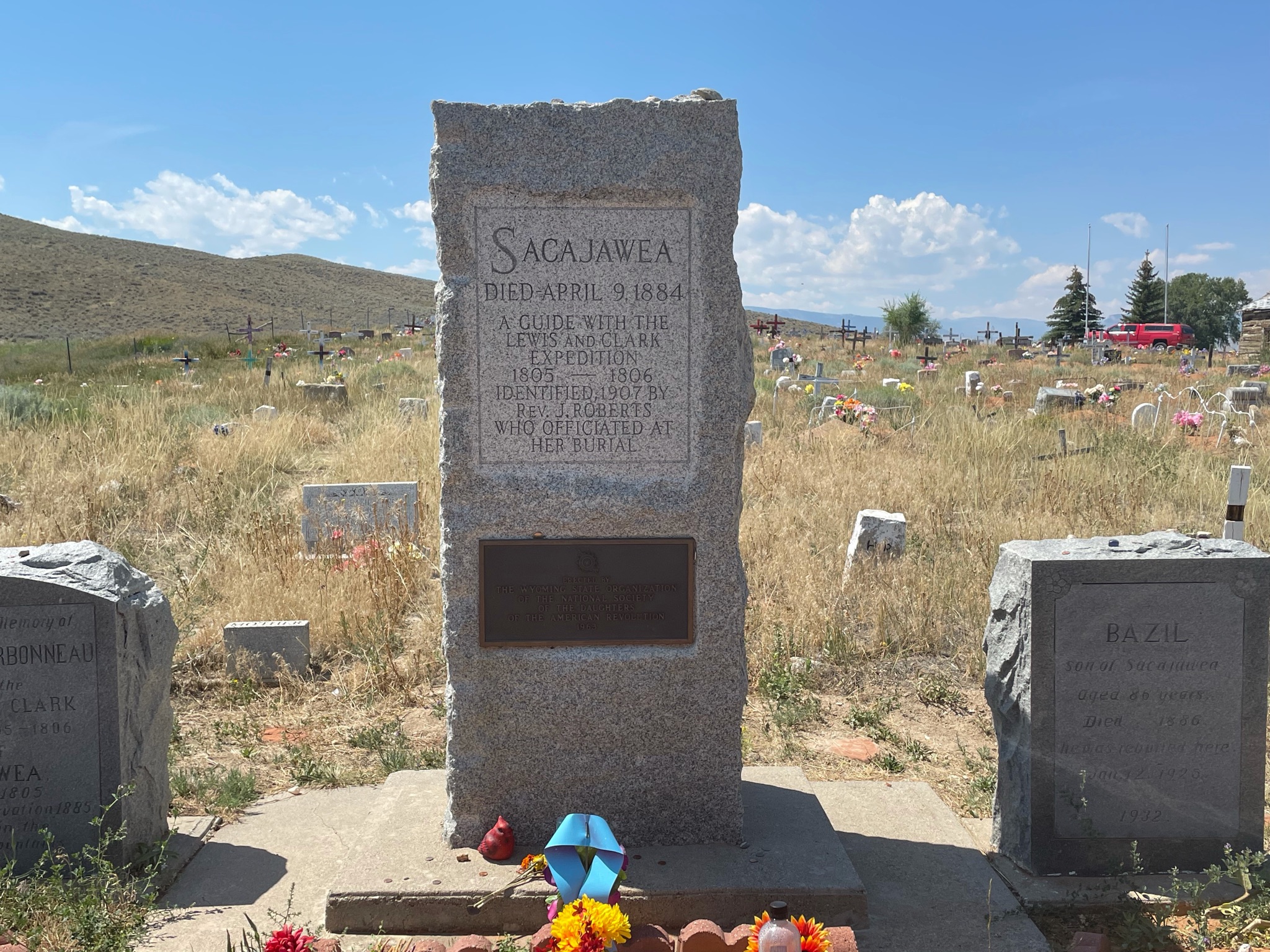
After lunch we drove a few miles north to the Sacajawea Cemetery…

Sacagawea (/ˌsækədʒəˈwiːə/ or /səˌkɑːɡəˈweɪə/; also spelled Sakakawea or Sacajawea; May c. 1788 – December 20, 1812 or April 9, 1884) was a Lemhi Shoshone woman who, at age 16, helped the Lewis and Clark Expedition in achieving their chartered mission objectives by exploring the Louisiana Territory. Sacagawea traveled with the expedition thousands of miles from North Dakota to the Pacific Ocean, helping to establish cultural contacts with Native American populations and contributing to the expedition’s knowledge of natural history in different regions.

Note that there is uncertainty as to when she died. She was either 24 or 95. Accordingly, there are two burial sites to be found… This one in Wyoming, and another in South Dakota. You pick…

We drove back to the VIlla. Lots of nice countryside here…

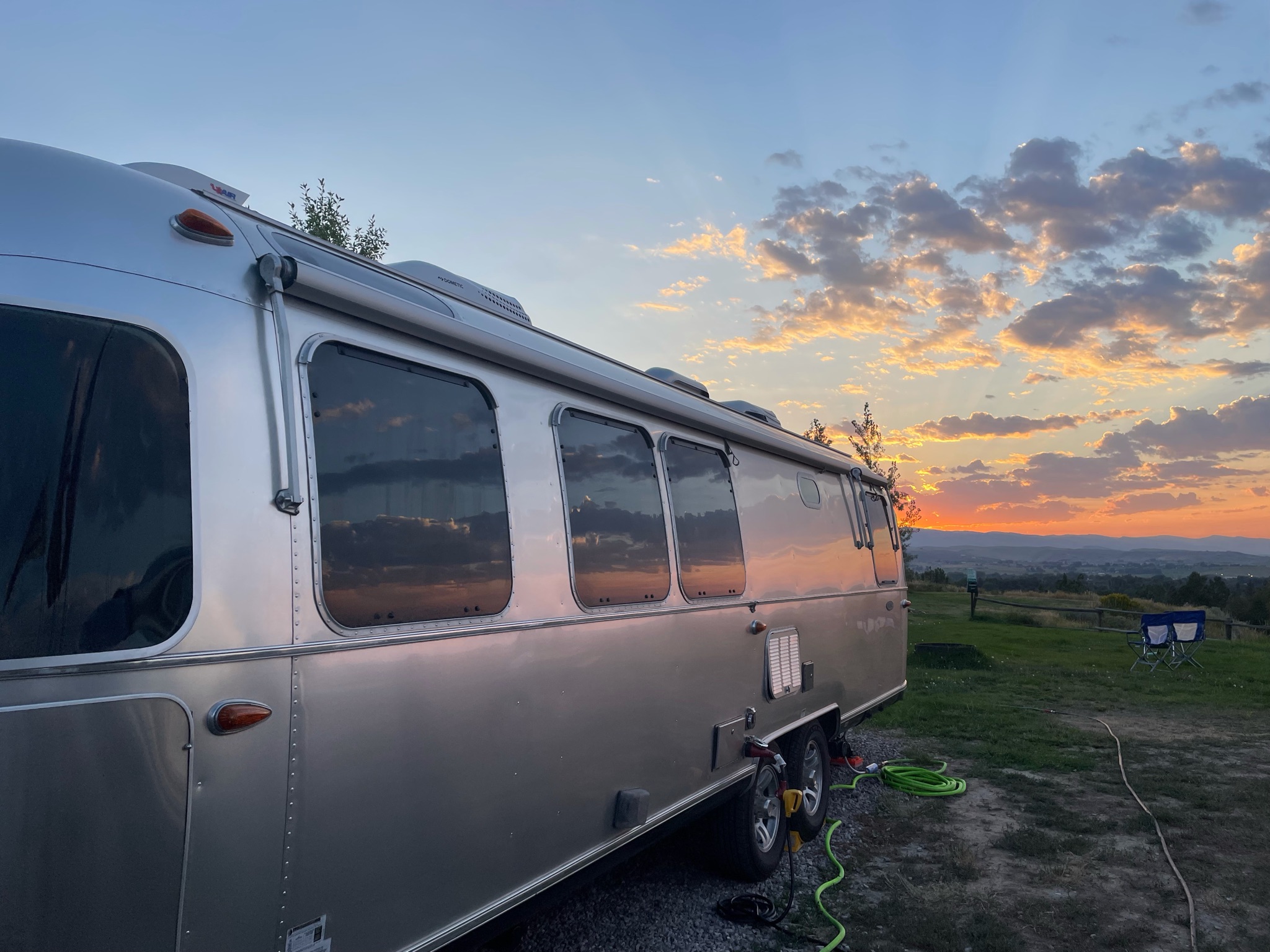
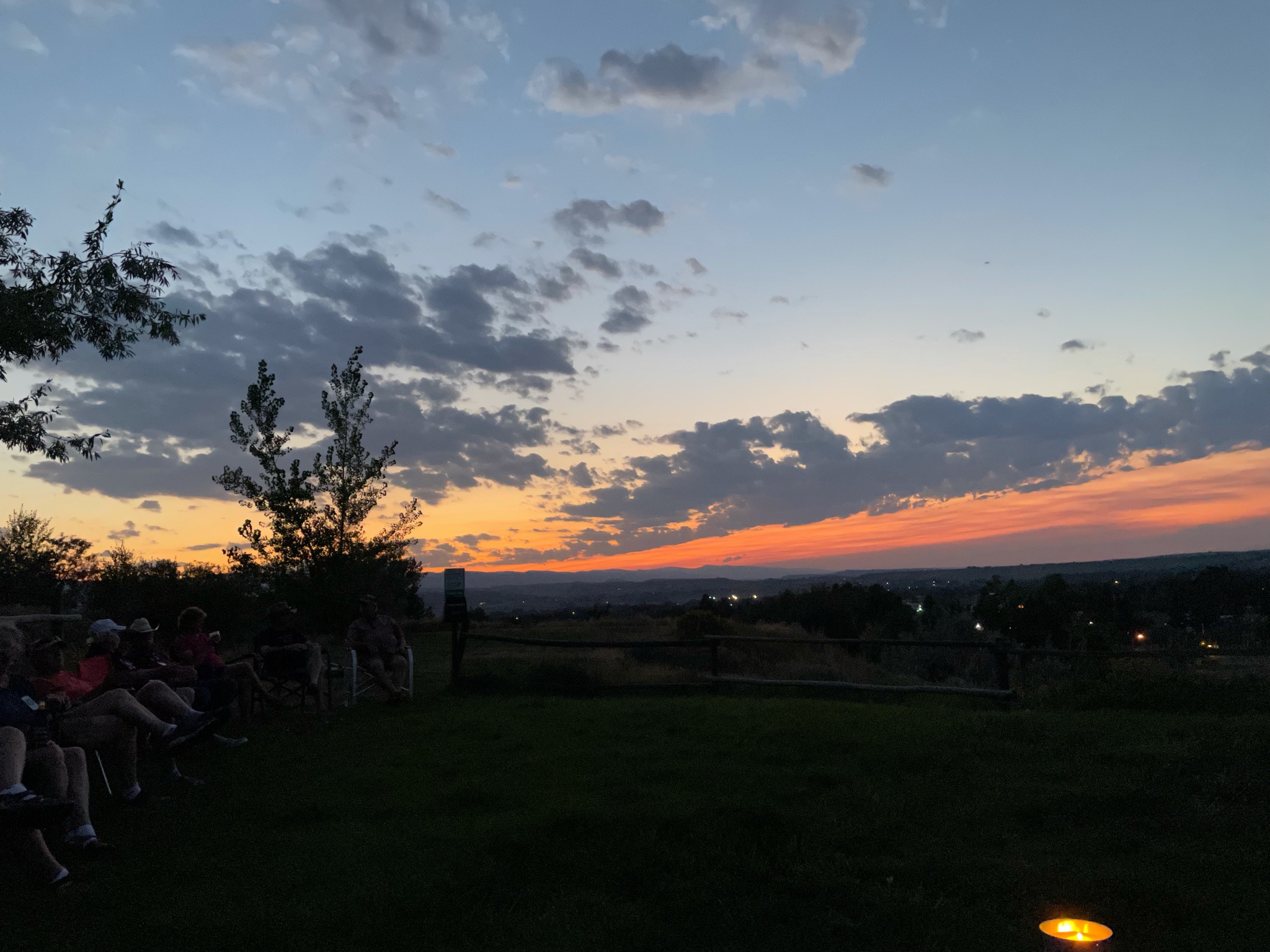
This evening we joined many other Airstreamers for Happy Hours while we watched the sunset…

And an enjoyable time was had by all…

2021-08-11 – The Oregon Trail caravan … Day 14 – Evansville, WY to Lander, WY

We move along today to see some unique sites along the Oregon Trail…

But first we pass some rural, tranquil neighborhoods…

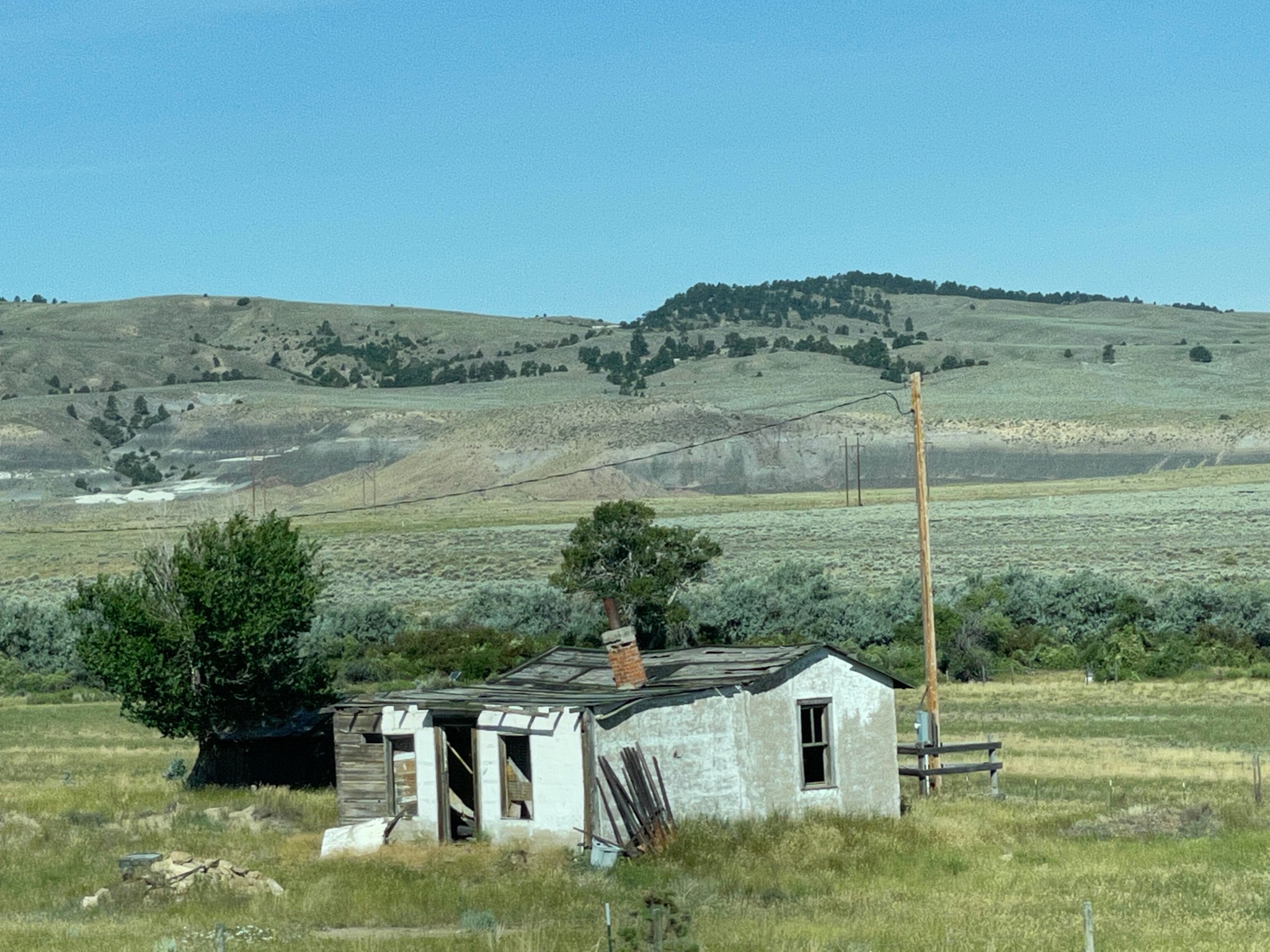
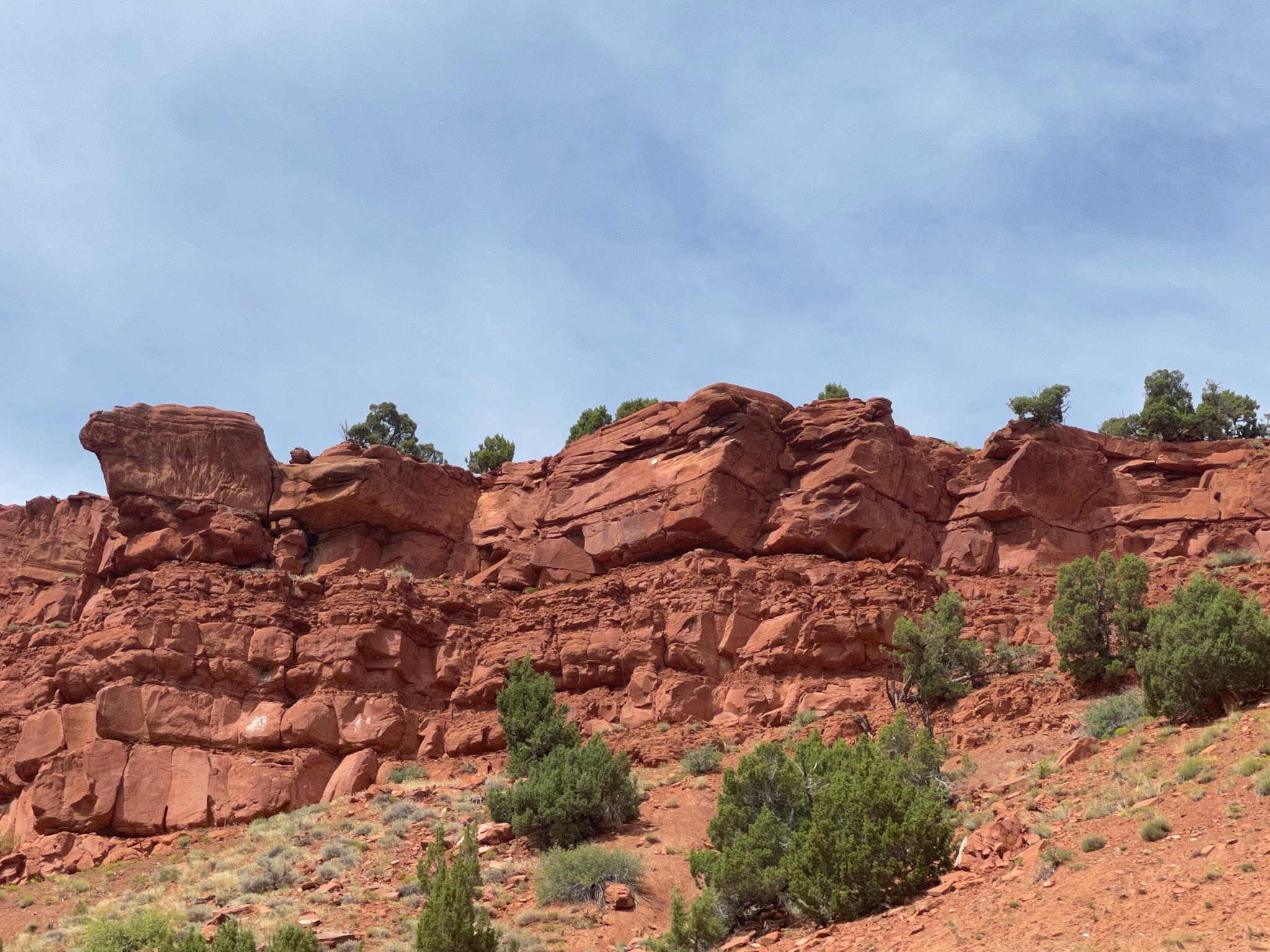
We saw some red bluffs; most emigrant diarists mentioned them along the way…

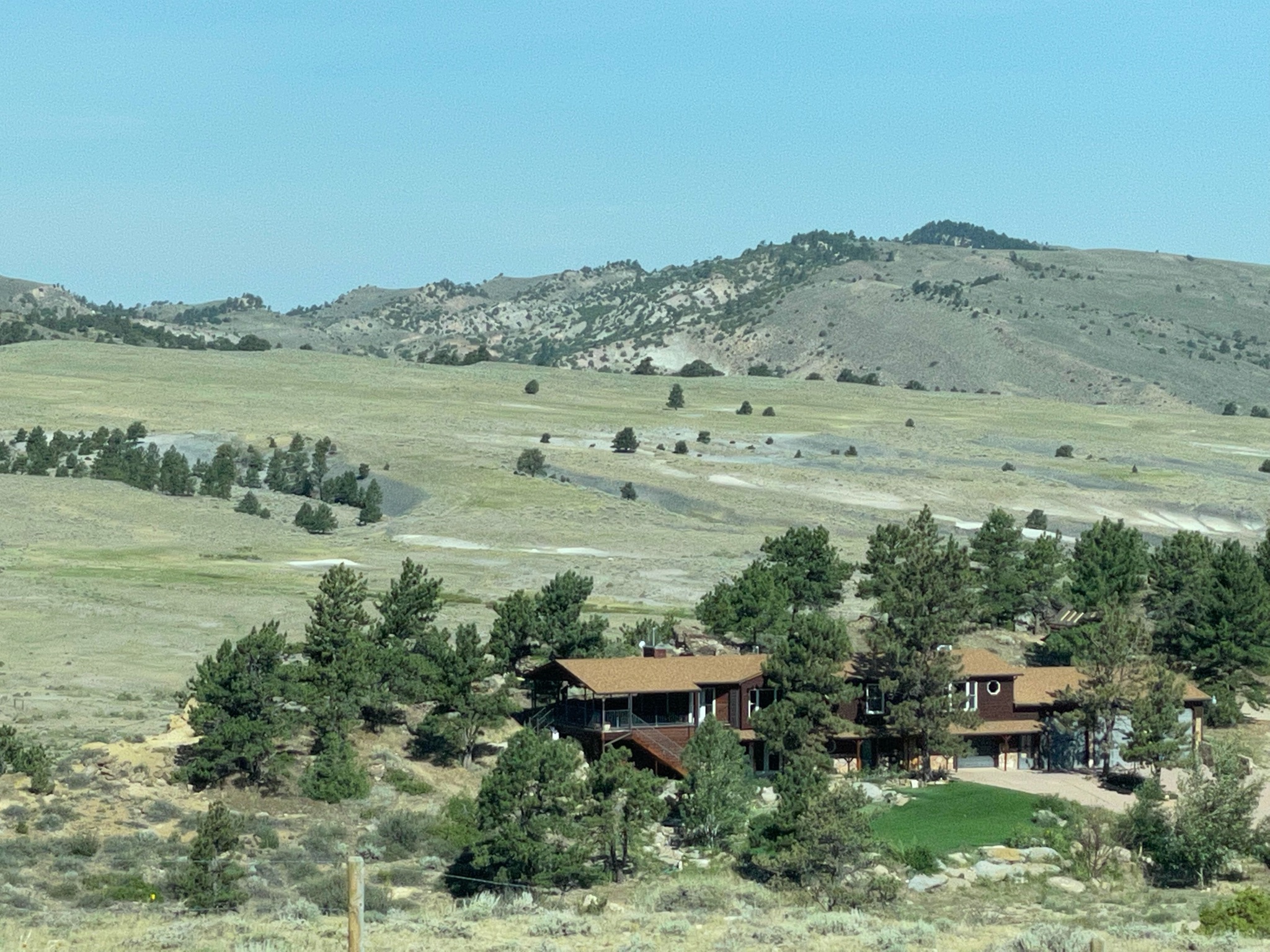
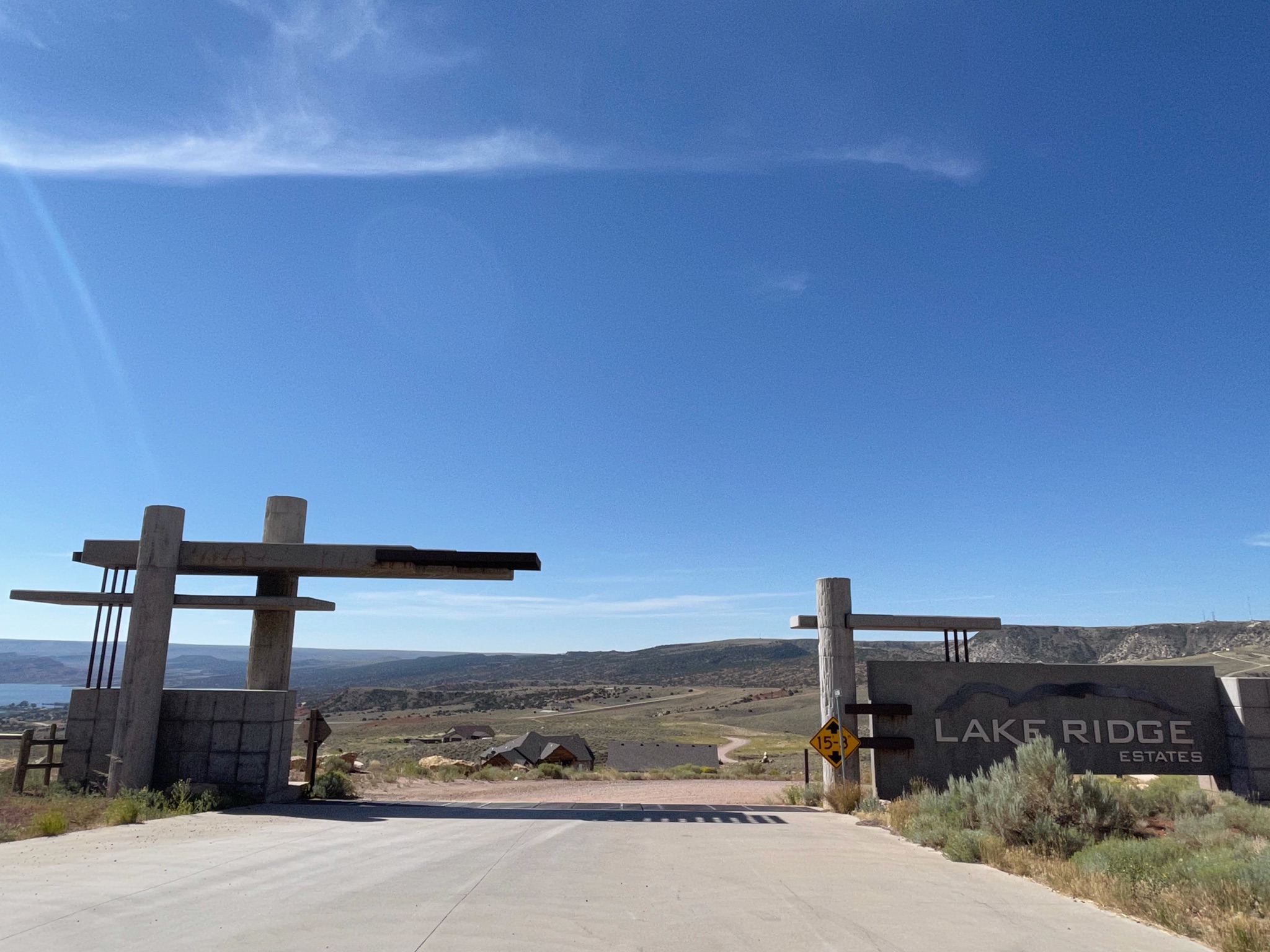
We stopped at a pull-out to look at the Pathfinder Reservoir. We also found this lovely estate development. Homesites 7-20 acres, from $11,000 per acre. Bargain!

Here is the non-gated entry…

Here is the Pathfinder Reservoir

Here is the Villa…

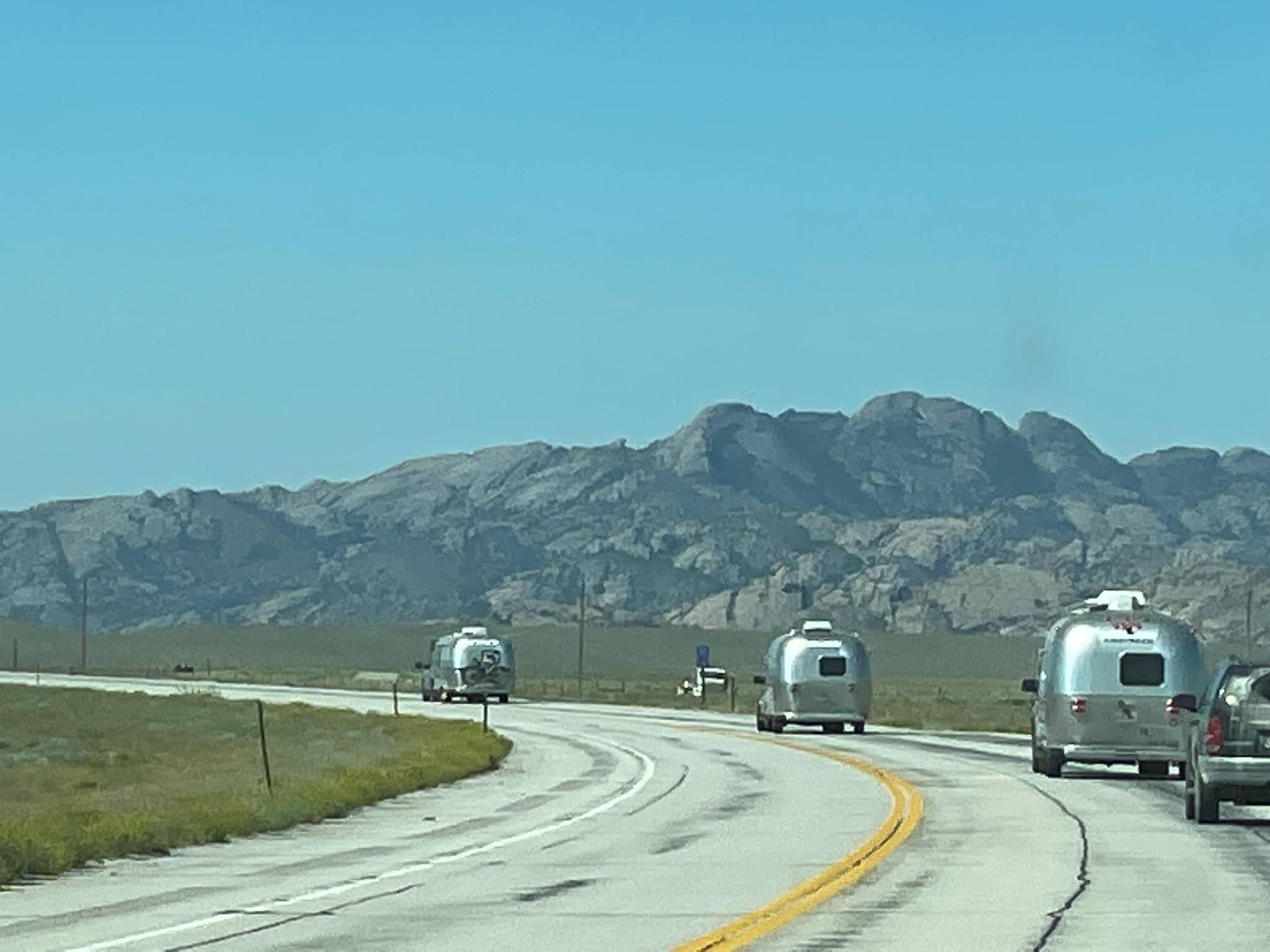
As we were leaving the pull-out three other Airstreams came by. About a mile down the road we had a construction zone, with very slow traffic, allowing us to get some good pictures…

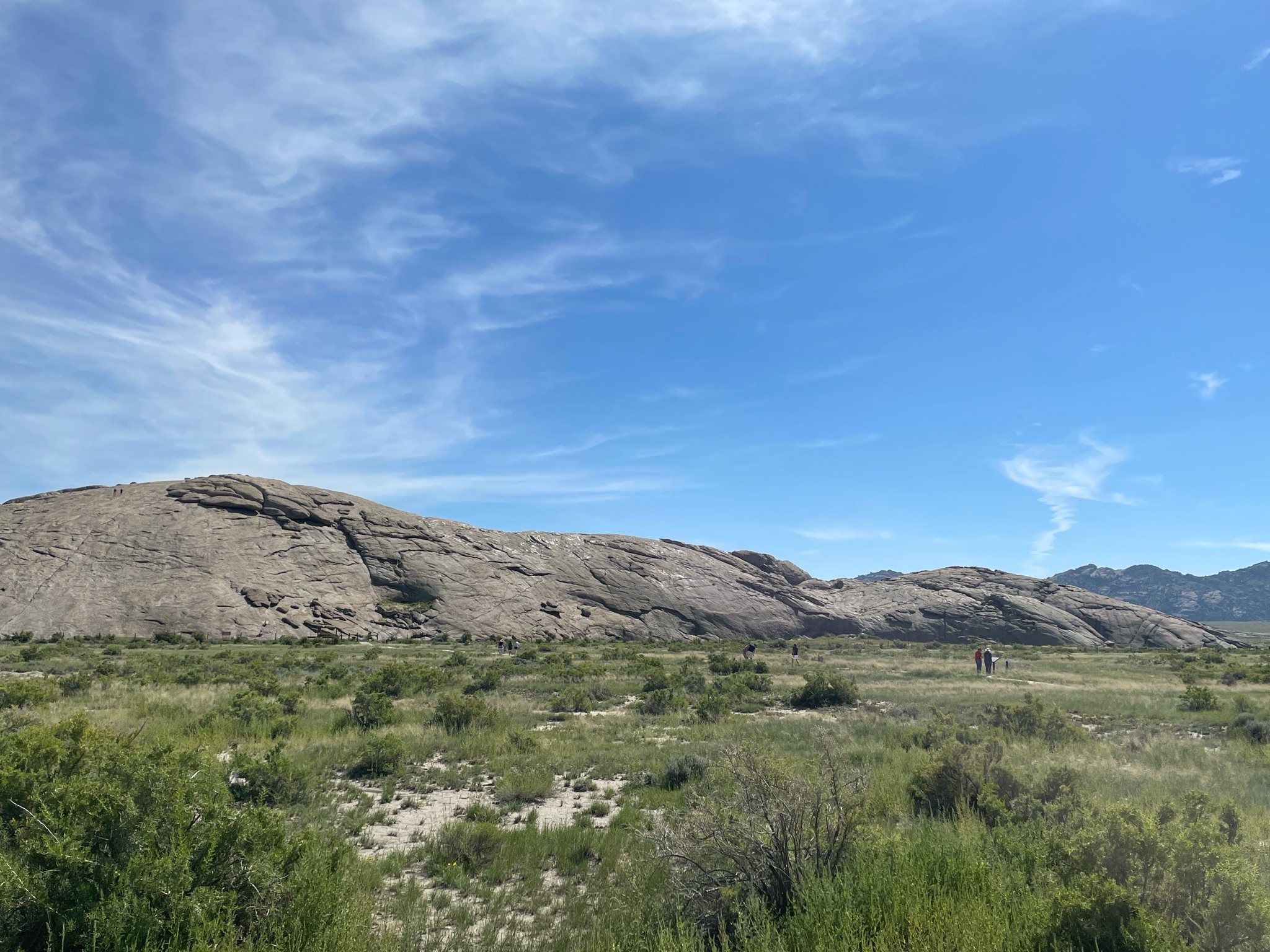
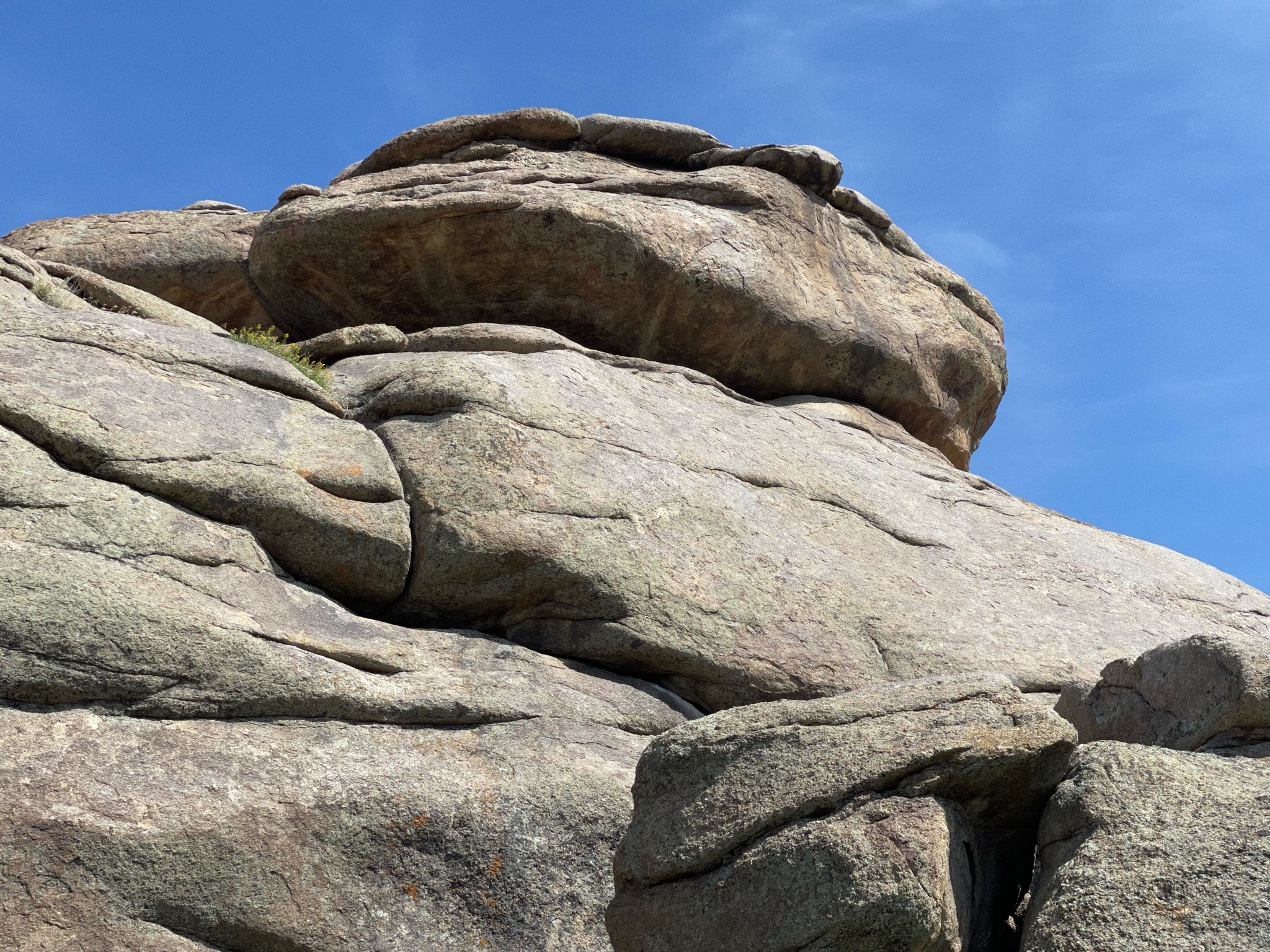
Our main stop for the day is Independence Rock. A big ol’ rock in the middle of the prairie… Of course we stopped to take a look…

The significance of the rock has many facets. First of all, walking 20 miles per day across the endless prairie was very monotonous. Anything unusual caught the emigrants’ attention. This big rock certainly is unusual. Also, the emigrants’ goal was always to reach Independence Rock by Independence Day – July 4. It was important for the emigrants to celebrate the 4th, and this area gave the emigrants space, water, and game to rest for a day or two. Importantly, Independence Rock is just about one half way between Independence, MO, where most of the emigrants set off to Oregon City, OR. Finally, many of the emigrants painted, scratched, or chiseled their names into the rock. Historians have been all over the rock to collect the various signatures and to correlate them with known emigrants and their diaries…

We walked around and onto the rock looking for names. No one we know… Most of the painted or scratched names have been worn away by the weather…

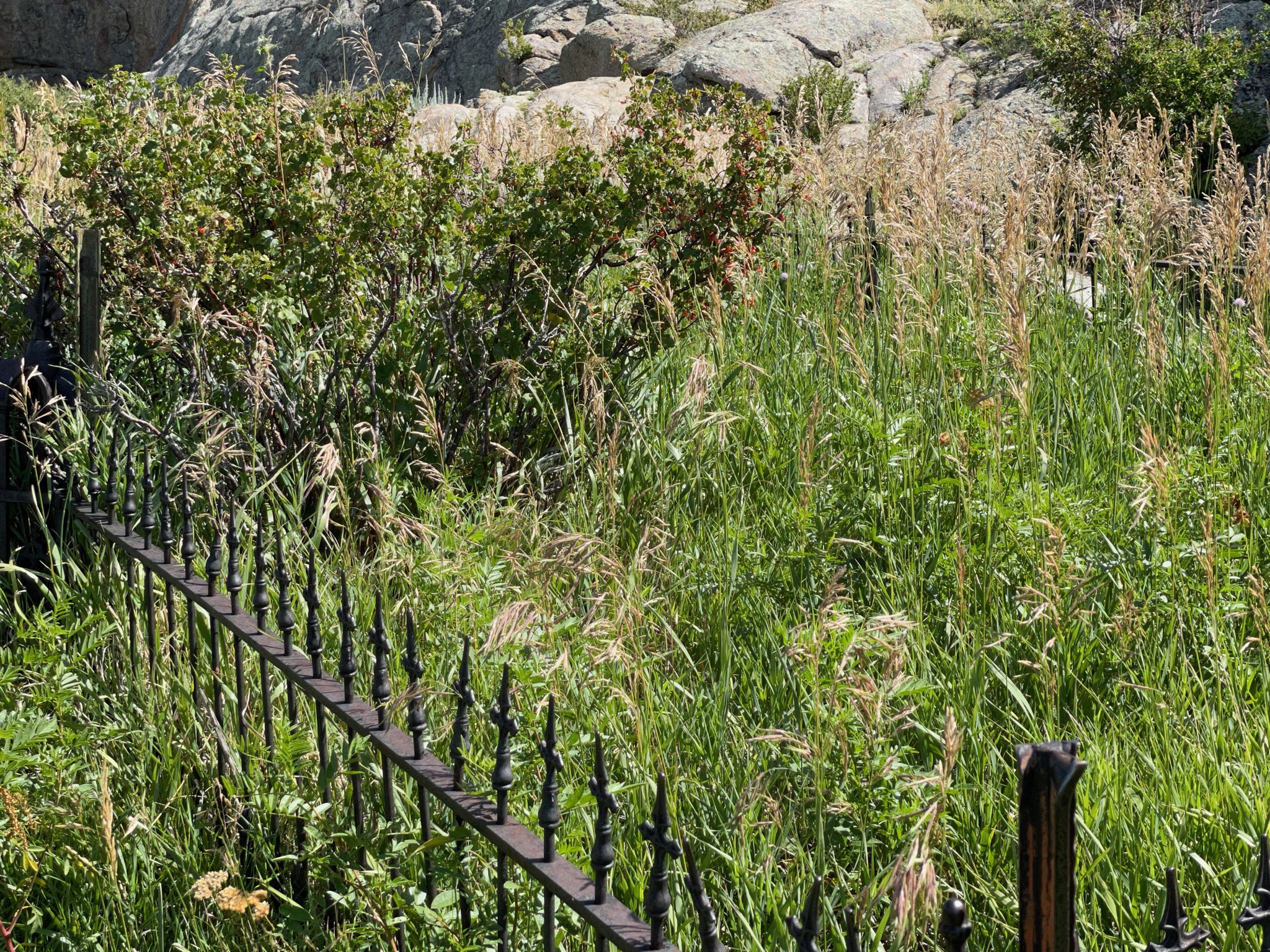
There is a grave here, fenced off…

“Look! Over there!”

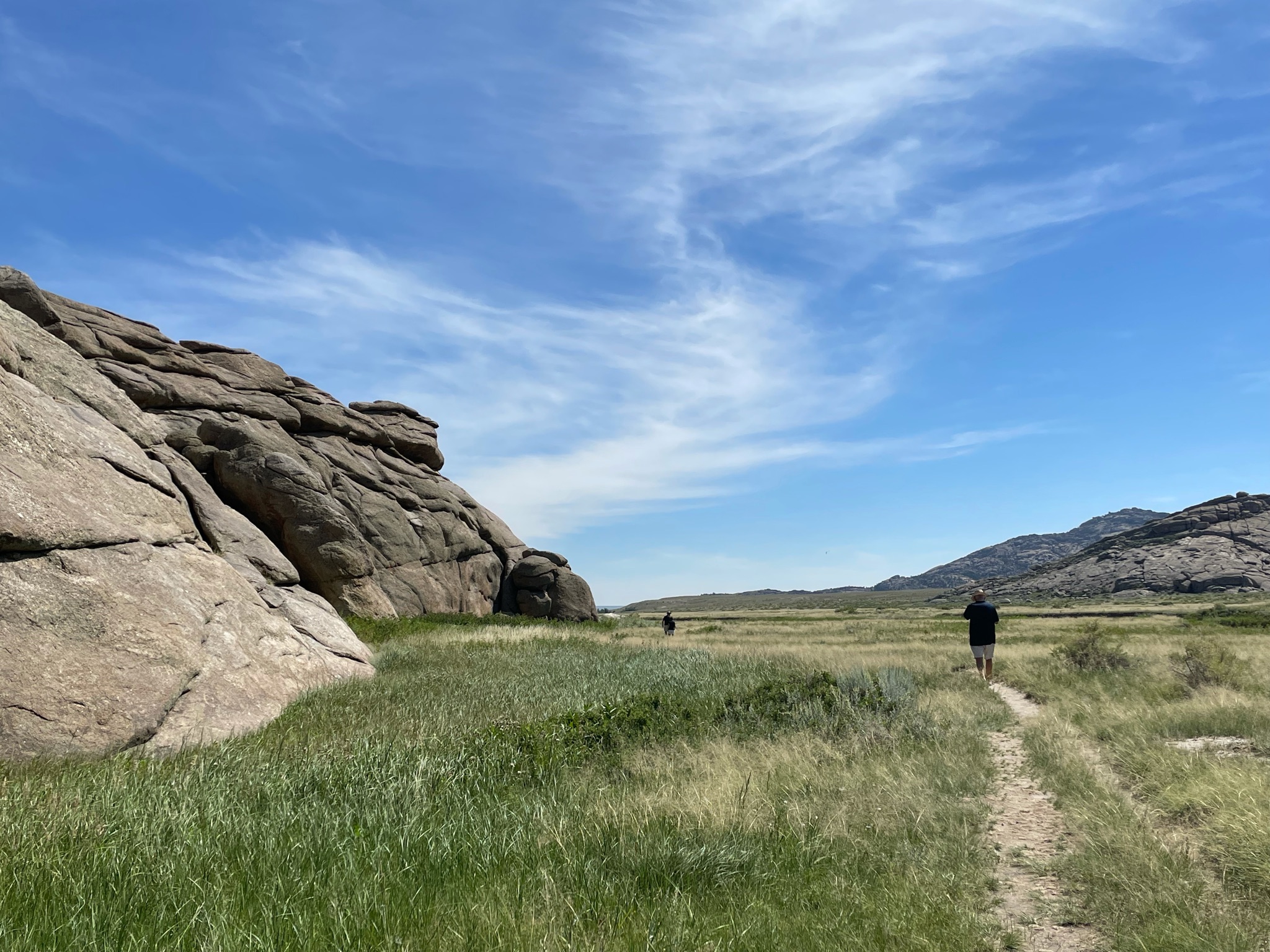
We walked ALL AROUND the rock…

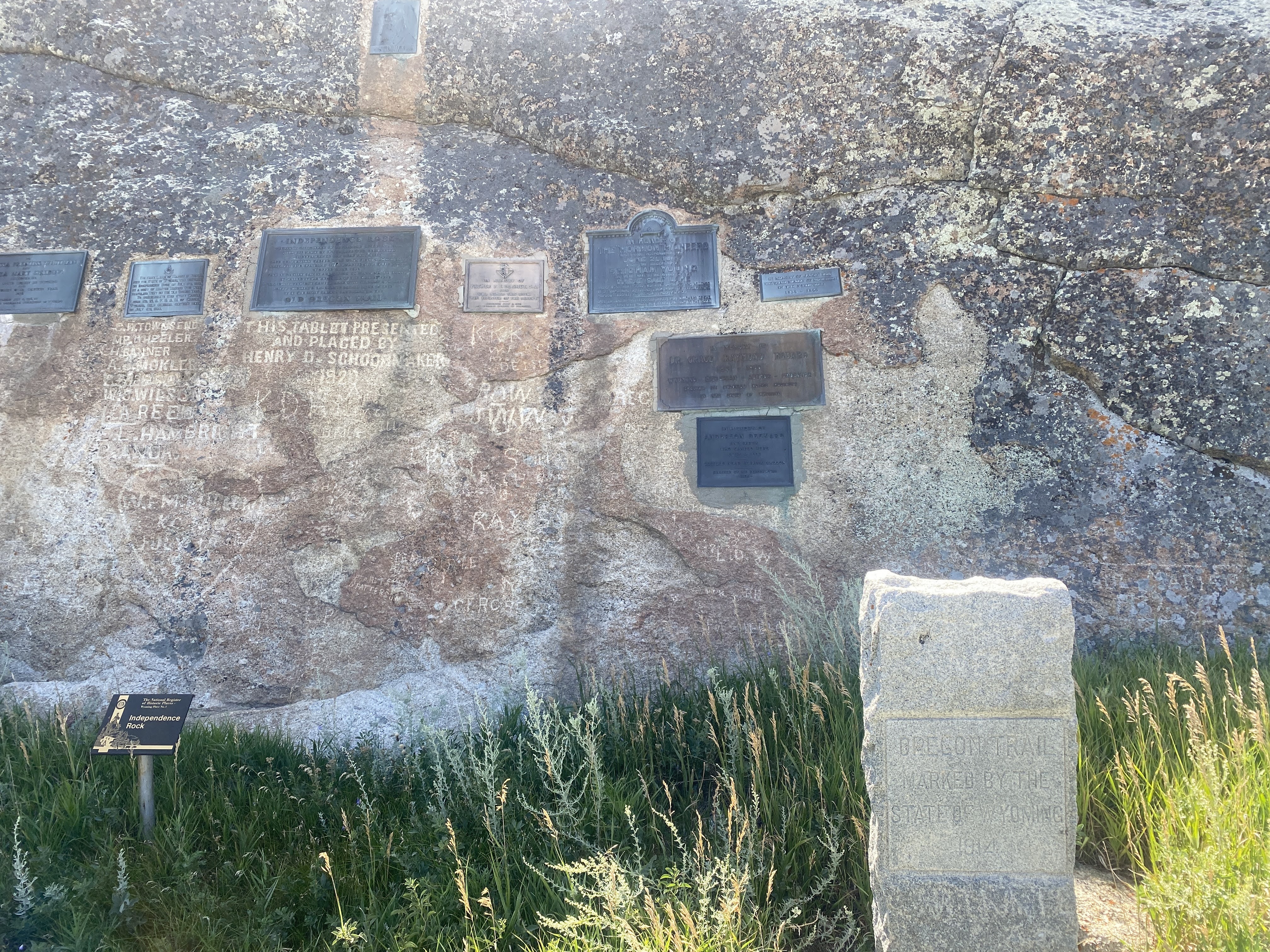
On the opposite side of the rock are various placques placed by various historic societies and donors. There have been several Boy Scouts of America “Camporees” here over the years, so BSA also has many placques…

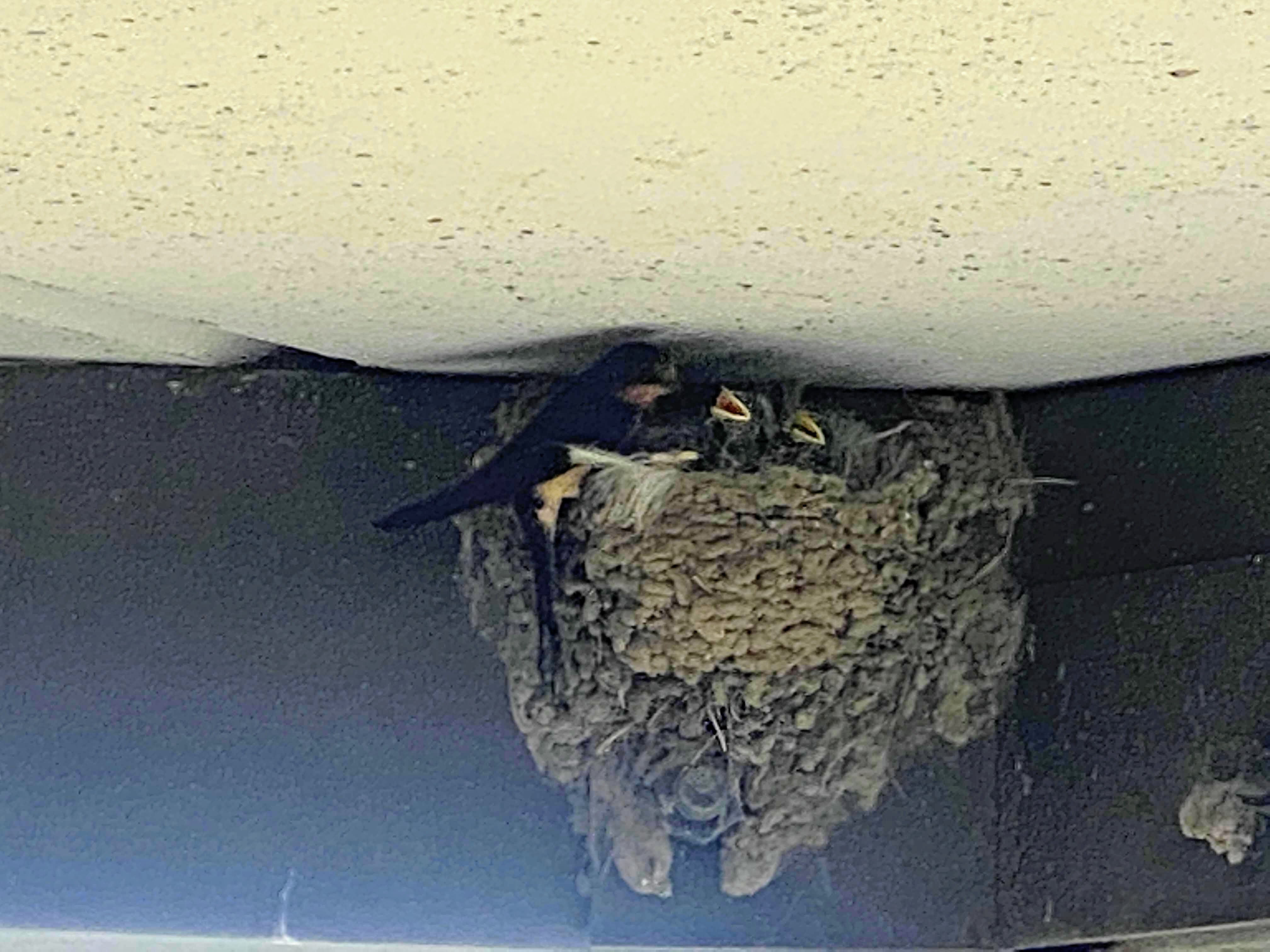
After enjoying the rock we walked back to the entrance. We stopped to watch these birds in a mud nest under the eaves of the visitors center…

We returned to the Villa and drove about four miles down the road to Martin’s Cove. This is an historic site ownered and leased by the Mormon Church. The site commemorates the caravans of Mormons heading to the Great Salt Lake Valley. They could not afford covered wagons so they used hand carts to carry their worldly possessions. They endured many hardships, and up to as many as 25% of them died along the trails.

One feature of the site is the Devil’s Gate – a gap in the rock that allowed the wagons and handcarts through these mountains…

There is also a reproduction of an early fort that the Mormons used to protect themselves from the extreme cold. Portions of the fort were burned to keep the people warm…

And so we traveled on. Another landmark helping the emigrants find their way is the Split Rock. The trail turned here as it approaches the Rocky Mountains to the west. Split Rock pointed the travelers to the South Pass, the easiest way through the Rockies…

About 15 miles further we stopped to see… the back side of Split Rock…

And we are on the road. We caught up to a convoy of seven other Airstreams for our last leg into the town of Lander, WY…

More red rock bluffs…

And we are all in, connected, and paid for…

We had a little Happy Hours and enjoyed a light supper. An enjoyable time was had by all…
2021-08-09 & 10 – The Oregon Trail caravan … Days 12 and 13 – Evansville and Casper, WY

Short stories today. I woke up Monday with a sore throat; Lynda has had a cold since Saturday. We stayed in all day…
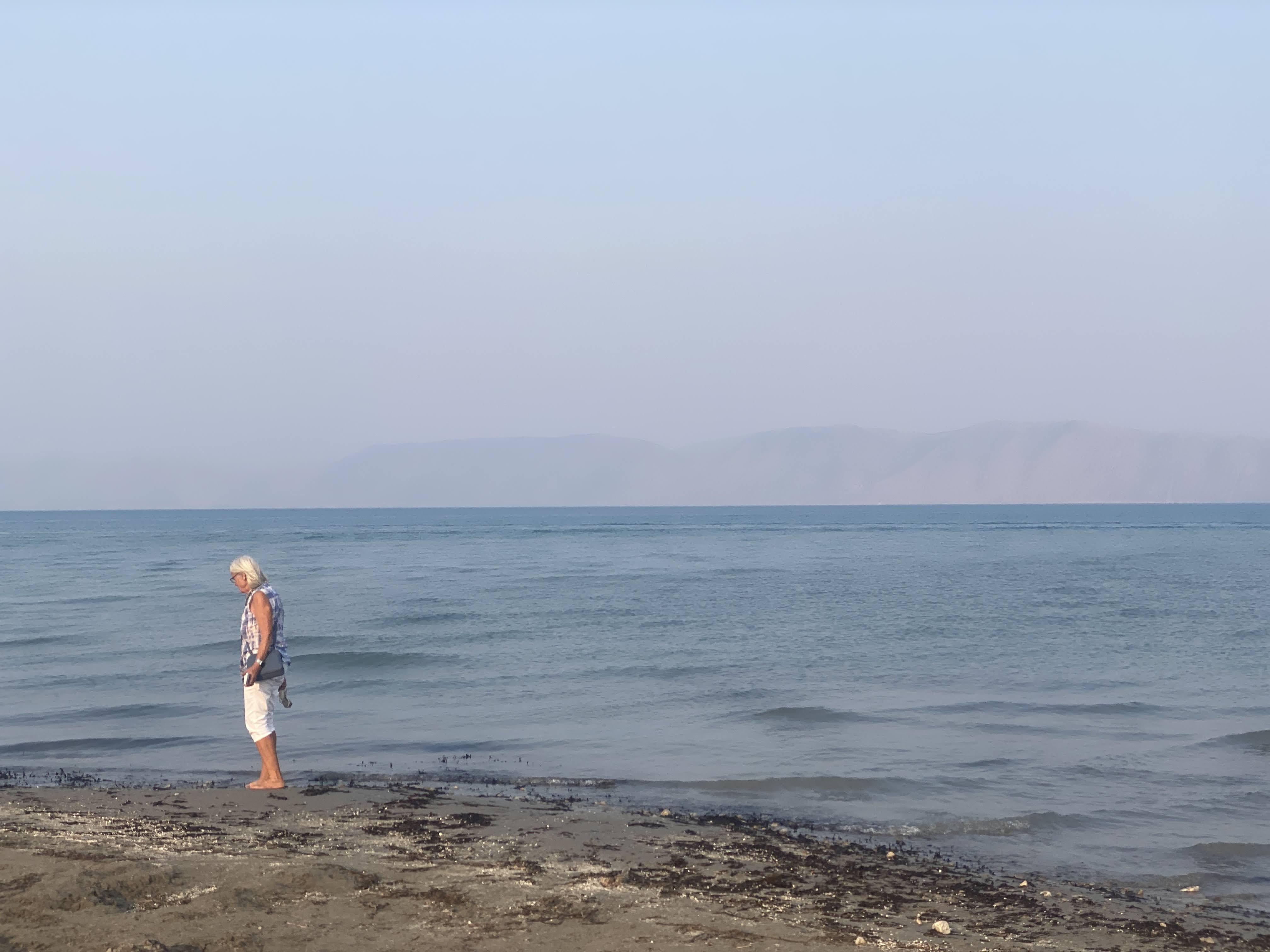
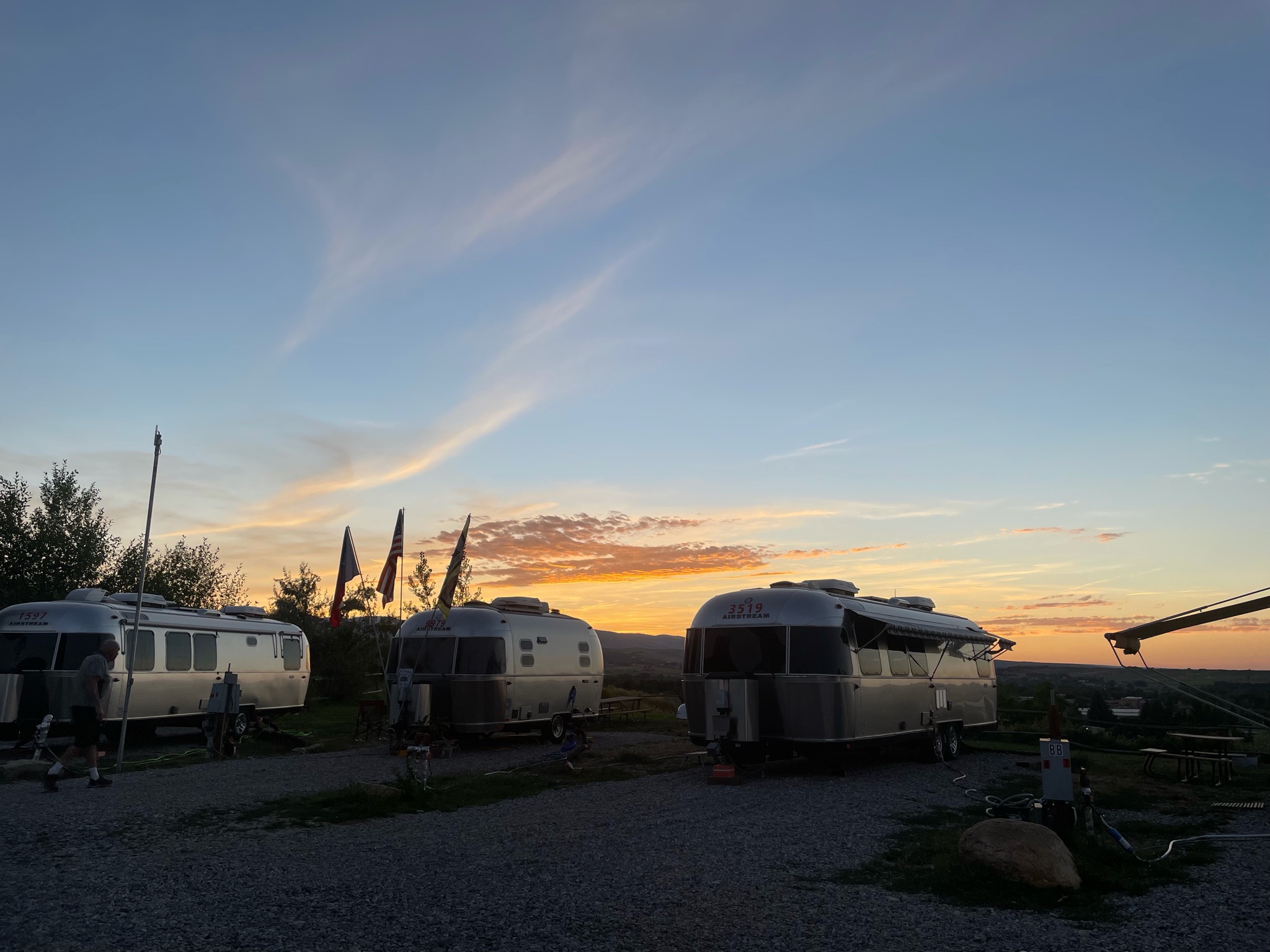
We did manage to get outside and walk a bit around the RV park, but it is constantly hot and dusty and windy…

We were feeling well enough to get out about 4:00 and join the club at a very good steak house nearby. After a few Old Fashioneds at the bar, and an appetizer of steak tartare, we joined the others for prime rib and cheesecake…

We returned to the Villa and turned in early…

Tuesday we felt a bit better (or at least Lynda did…) We headed out at 10:00 am to see the National Historic Trails Interpretive Center in Casper…

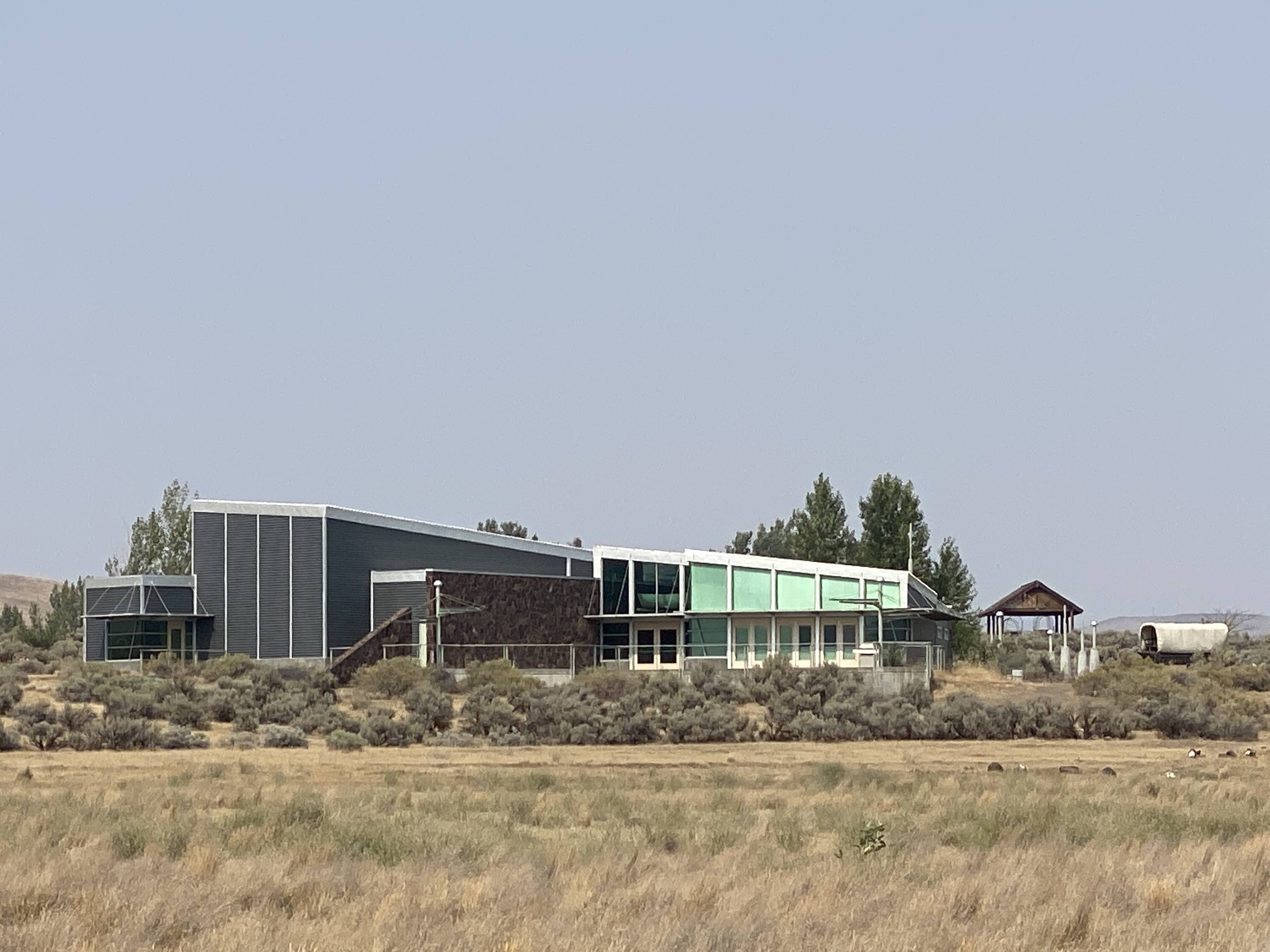
It is located on a bluff adjacent to the Overland Trails – the trails used by the emigrants to Oregon, the 49ers going to California, and the Mormons going to the Great Salt Lake valley…

Before we had left the campground this morning our leaders asked that the ladies wear their Oregon Trail bonnets and dresses… As you might guess, we are non-participants in activities such as this…

We walked toward the museum building…

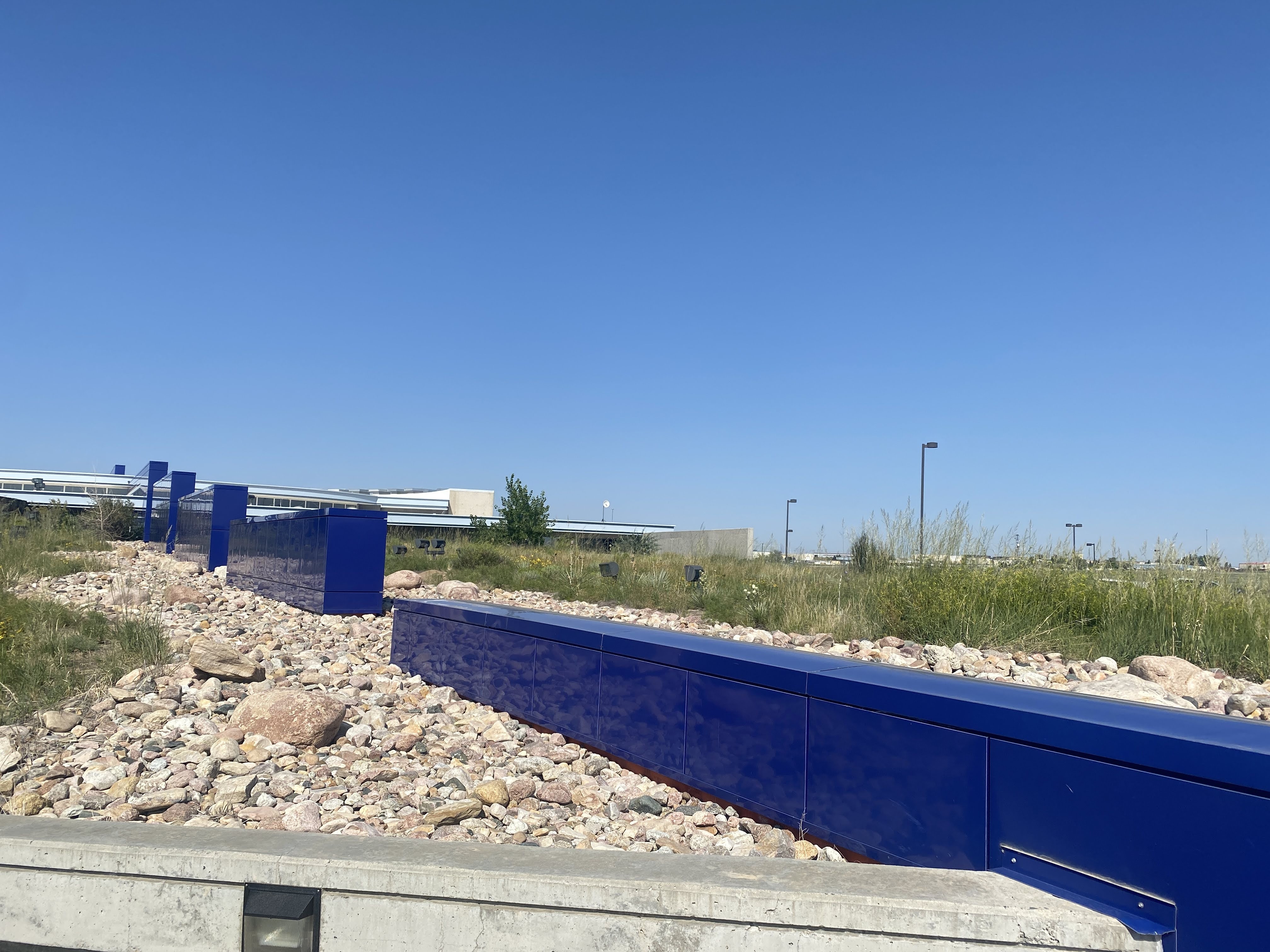
The building itself reflects a lot of imagery…

The blue wall segments represent the continuous westward trek by the pioneers and the emigrants, always up hill. Missouri is at about 2,000′ elevation, and the continental Divide is at roughly 7,000′ where the trails crossed it…

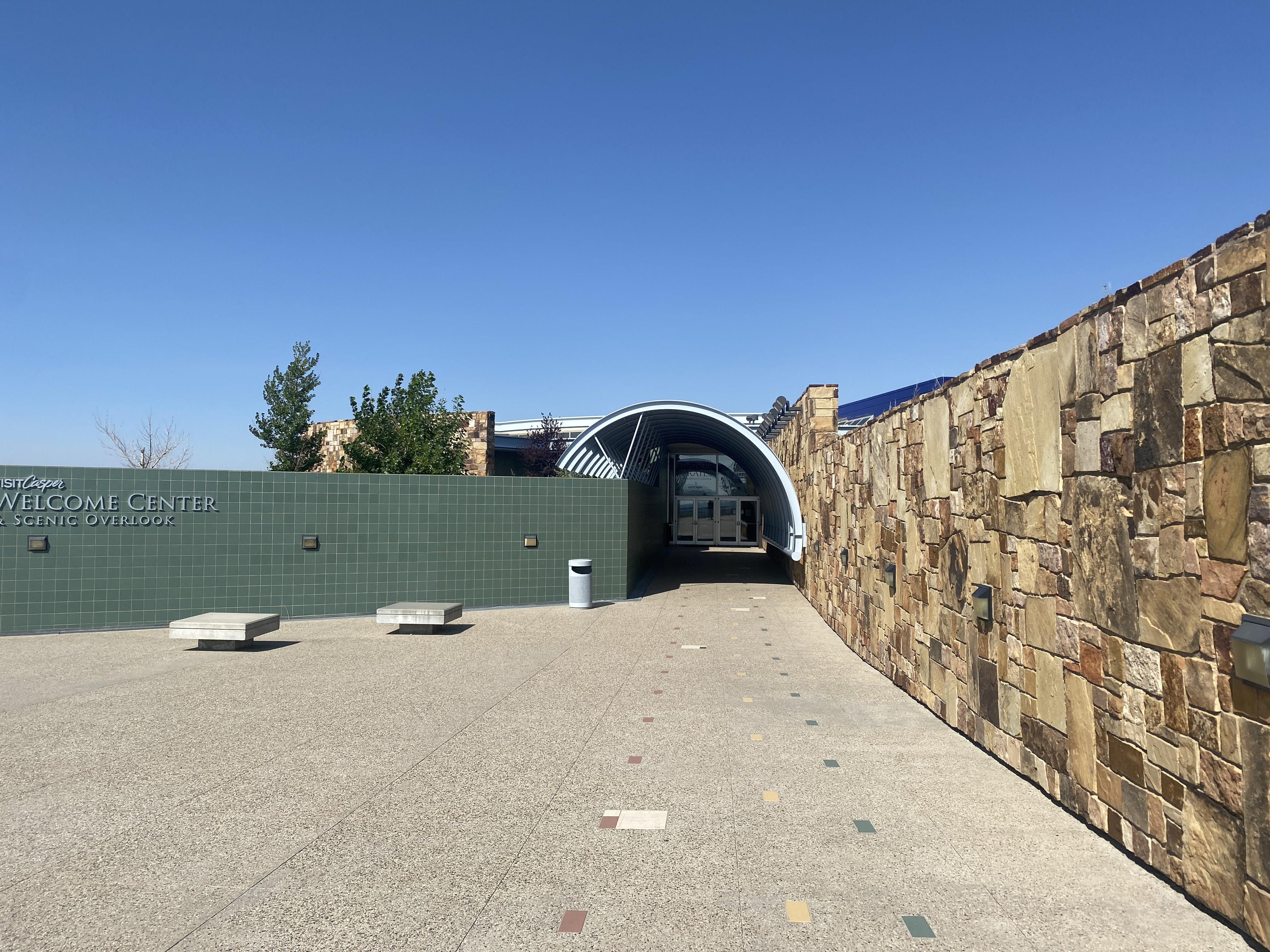
The stone wall is all native sandstone, and the green wall represents the sagebrush that was the emigrants constant companion on the prairie.

The arch portal, of course, represents the hoops and canvas of the covered wagons…

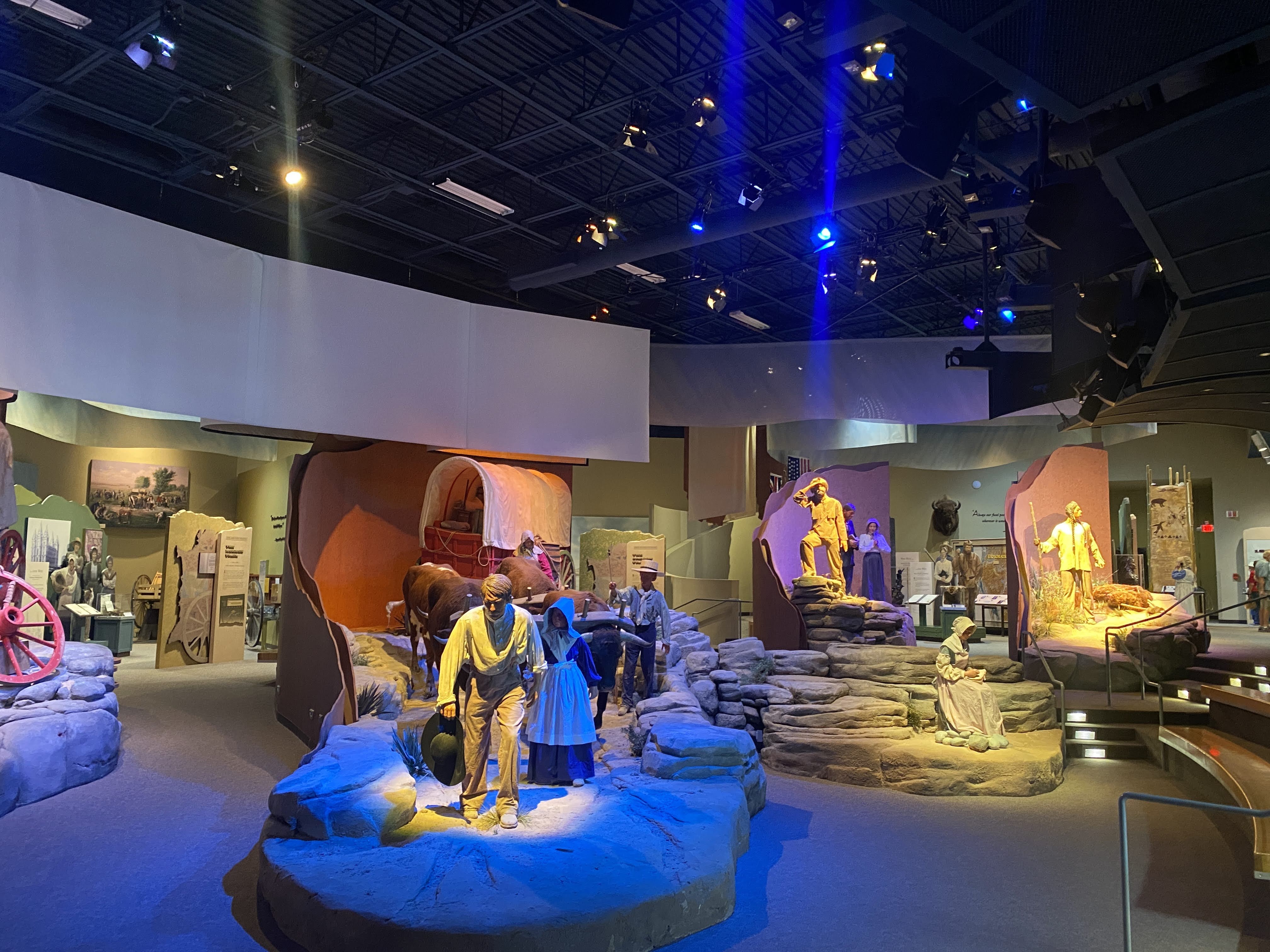
Inside we watch a short film about the emigrants. The lifesize displays added to the realism of the film…

Some of the Mormon emigrants could not afford oxen or mules, so they carried their possessions for 1,500 miles using handcarts. Lynda gave it a try!

One of the more interesting tidbits of the radical changes the emigrants brought to this region is in addition to all the other self-inflicted damage that I have reported on – loss of food and habitat for Indians, Pony Express ended by the transcontinental telegraph, wagon trains ended by the railroad, small towns ended by the Interstate Highways…

As the 350,000 emigrants passed through here on the trails small settlements sprang up to service the needs of the emigrants. When the trains ended the wagon travel, the rails took a different route again, this time to be more convenient to the coal deposits of southern Wyoming. These settlements slowly vanished…

Outside the Museum is a reproduction of a typical Pony Express station. There is a small stable and a small office for the station master. The station master lived here alone; and he was alone – he was visited by only four Pony Express riders per week. Otherwise he was free to fend for himself. When the Pony Express ended, most of these stations were retrofitted to be relay stations for the telegraph… Adaptive Reuse!

We returned to the Villa. I took a nap… Then we had a modest Happy Hours. We walked around the RV park in the evening…

An enjoyable time was had by all

Blog at WordPress.com.

Up ↑