Search

Adventures in the Villa

Category

Church

2017-08-01 Nor by Nor’east Caravan – Peggy’s Cove, Halifax, Tall Ships, and Four Tragedies…

Most of Nova Scotia is a large peninsula, attached to New Brunswick by a 12 mile wide isthmus. In addition, to the northeast is a huge island, Cape Breton Island. Halifax is on the South Shore of the peninsula; this is where we are going today.
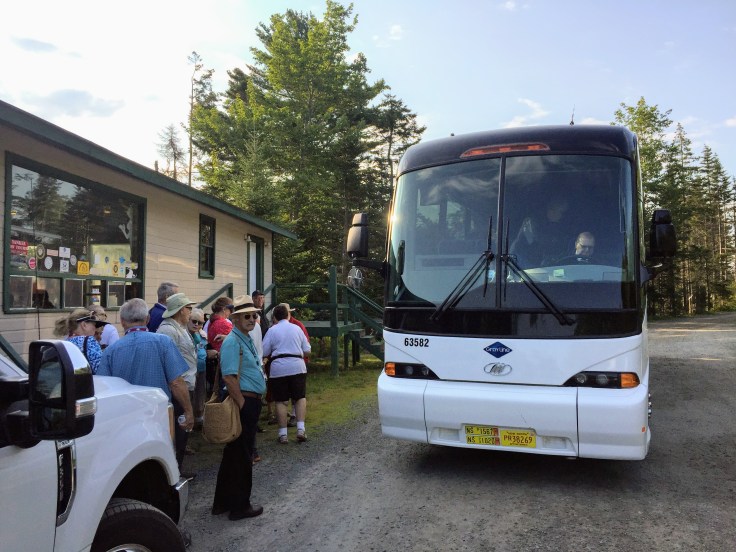
2017-08-01 Halifax Bus

The bus picked us up at the campground at 8:15 this morning. We had a very knowledgeable tour guide, a native of Halifax and a former school teacher.  Shortly we were cruising along St. Margaret’s Bay, a lovely bay on Nova Scotia’s South Shore, lined with picturesque coves.  Unfortunately, we were sitting on the wrong side of the bus, so we have no drive-by photos to show you…

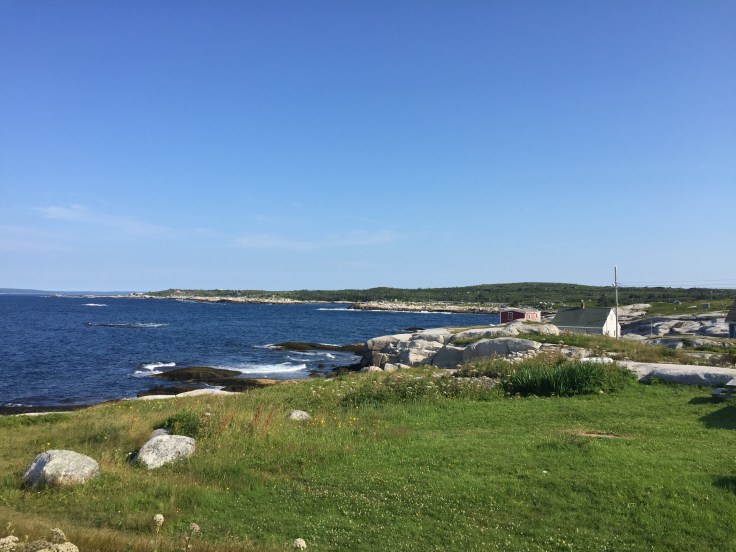
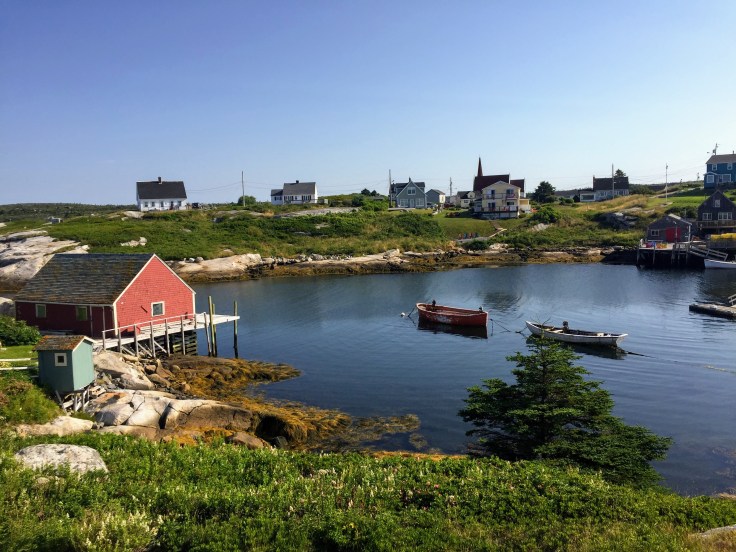
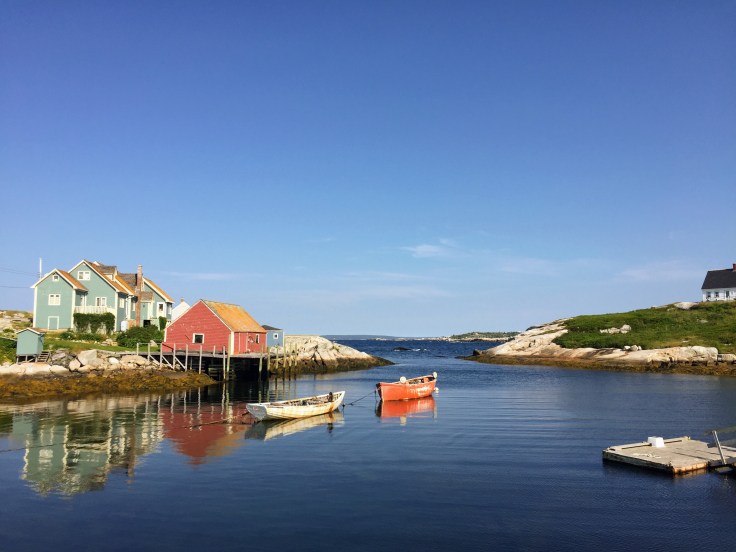
But then we arrived at Peggy’s Cove.  It has picturesque written all over it.  The hamlet of Peggy’s Cove is home to a few hearty lobster fishermen and the required number of down home artists. There are a few shops selling trinkets and puffin-watching boat tours, and a HUGE restaurant, packed on this morning with tourists having breakfast. Oh yes – there is also a lighthouse…

Our bus driver parked our huge bus amongst the other huge tour buses:

2017-08-01 Peggys Cove - Bus

We clamored over the rocks to see the lighthouse up close and personal.  It is a marvelous sight – perched out there on the open Atlantic, anchored into the rock…

2017-08-01 Peggys Cove 10

2017-08-01 Peggys Cove 13

2017-08-01 Peggys Cove 11

2017-08-01 Peggys Cove 01

Signs everywhere warn you to stay off the black rocks – they are submerged at high tide, and thus are wet and slimy and slippery.  So far two people have died this year slipping and falling into the water. Due to rough waves and cold water, rescue is virtually impossible…

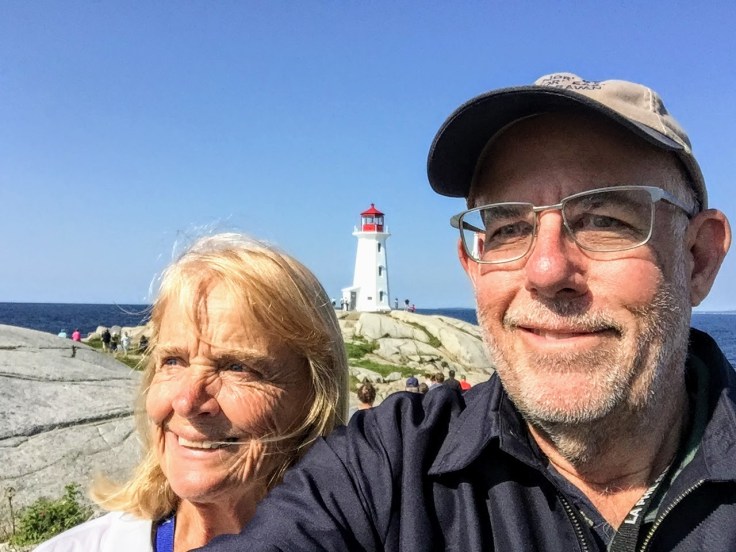
Here I am, safely on the white rocks:

2017-08-01 Peggys Cove 02

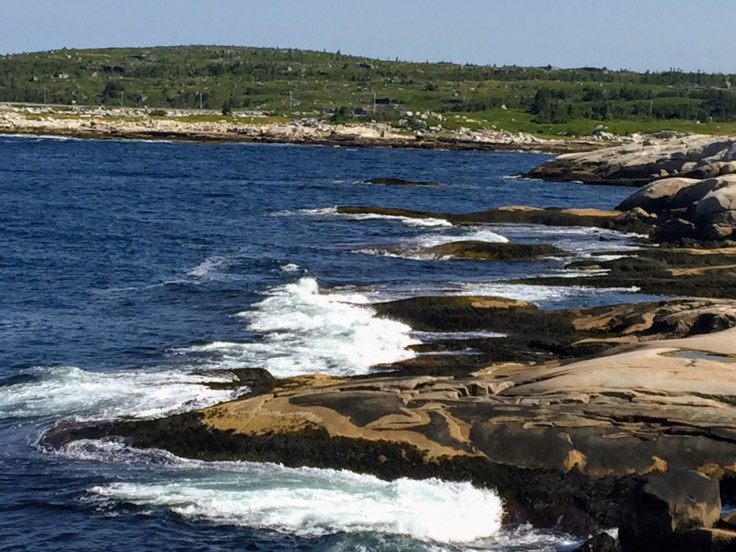
The rocky shore is a sight to behold:
2017-08-01 Peggys Cove 12

2017-08-01 Peggys Cove 09

We also walked through the town and found interesting sights:

2017-08-01 Peggys Cove 08

2017-08-01 Peggys Cove 07

2017-08-01 Peggys Cove 06

2017-08-01 Peggys Cove 05

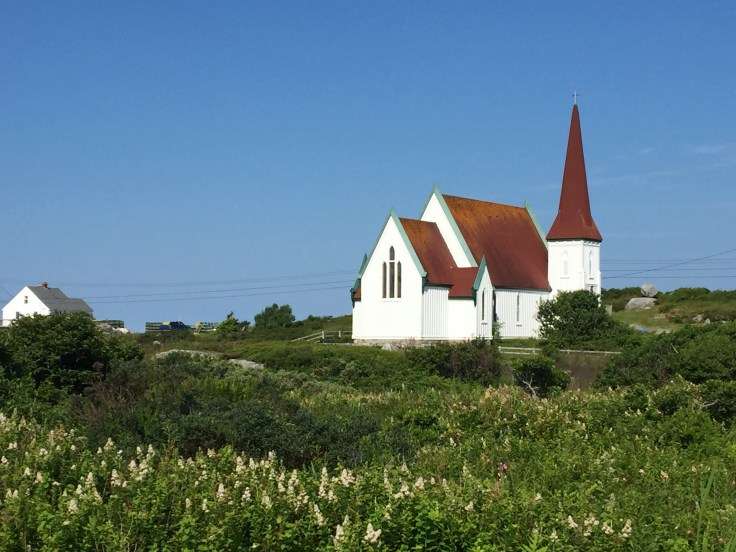
And, of course, the church:

2017-08-01 Peggys Cove - Church

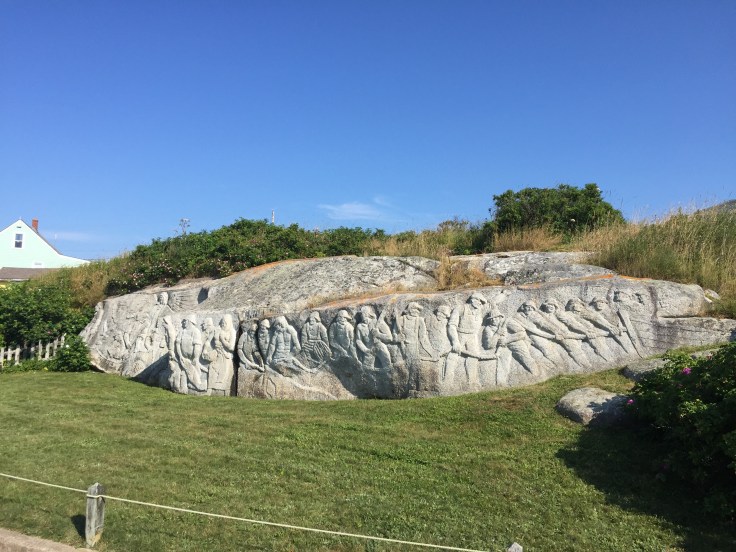
There is a Fishermen’s Memorial, carved by a long time local artist into a wall of solid granite in the side yard of his house:
2017-08-01 Peggys Cove - Fisherman Memorial 2

2017-08-01 Peggys Cove - Fisherman Memorial 1

One more selfie at the lighthouse:

2017-08-01 Peggys Cove 04


After 1 1/2 hour, our tour continued as we drove into Halifax. Along the way we heard of the history of the town, and about it’s renowned hospitality to those in need.  We arrived at the Maritime Museum, but we opted not to go in at this time; we walked down to the waterfront to see the Tall Ships parading about the harbor, under full sail.

2017-08-01 Halifax - Tall Ships 05

Halifax has a HUGE harbor – most of it is beyond what we see at this waterfront location. We found a restaurant for lunch and were blessed with a water-front table. As we ate our lunch we could see the ships sail by. They sailed out of the harbor, then back in, getting themselves arranged in some semblance of order, then they circled the harbor once again. On the final trip around, they headed out to sea; they are going to Louisbourg, NS, which is our next stop on this caravan.

They have a lot of construction going on here on the waterfront, so they built a temporary floating boardwalk to keep the waterfront path continuous.  It is a real challenge, especially when a big ship goes by, and its wake hits the floating boardwalk, then everyone sees another Tall Ship and rushes to one side… It feels like it is going to tip over:

2017-08-01 Halifax - Floating Boardwalk

Our lunch at Murphy’s:

2017-08-01 Halifax - Murphys - Lunch

And being photo-bombed by Kathy:

2017-08-01 Halifax - Murphys - Selfie

So after a pleasant lunch and more big sailboats that anyone can handle, we went back into town and toured the Maritime Museum, which was interesting… maybe they should have named it the Disaster Museum…?

Several disasters have impacted the hearts and souls of the residents of Halifax.  In addition to the requisite shipwrecks and fishermen who were lost at sea, in 1912 Halifax was the best port into which to bring both the survivors and the victims of the sinking of the Titanic.  Halifax was chosen because, being on the mainland, it has a direct railroad connection to the rest of North America. (Newfoundland was closer, but, because it is an island, logistics would be a problem…)

The doctors and other personnel devised a system of numbering the victims via toe-tags and keeping records of their statistics and personal effects that is still used today. Because of this, MOST of the victims have been identified; some research with DNA is going on today to identify the few remaining unknowns.  The most remarkable:

2017-08-01 Halifax - Titanic 3

Sidney Leslie Goodwin (9 September 1910 – 15 April 1912) was a 19-month-old English boy who died during the sinking of the RMS Titanic. His unidentified body was recovered by the ship Mackay-Bennett after the sinking, and for decades was referred to as The Unknown Child. His headstone read “Erected to the memory of an unknown child whose remains were recovered after the disaster to the Titanic April 15th 1912”.  Previously, the remains of two other children were tentatively identified, but these proved to be false.  In 2008, mitochondrial DNA testing by the Armed Forces lab revealed his identity. Baby Goodwin is the only member of his family whose body has been recovered and subsequently identified.

Where did we learn all this?  At the Fairview Cemetery, where 121 victims of the Titanic are buried:
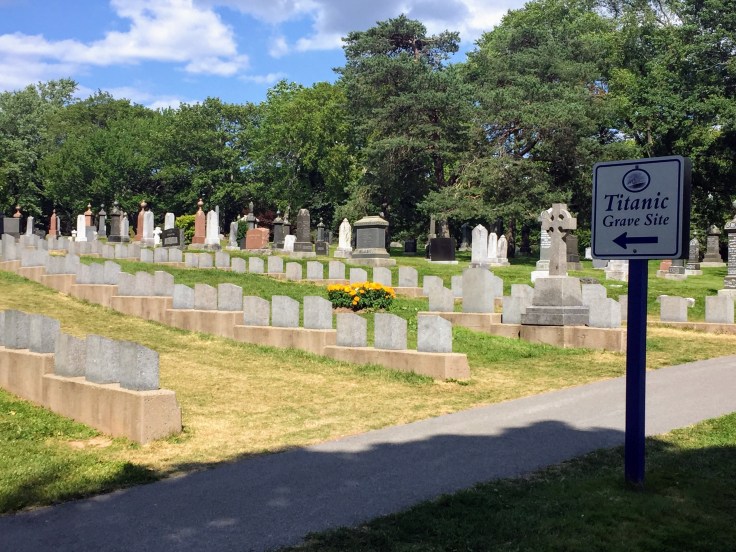
2017-08-01 Halifax - Titanic 1

2017-08-01 Halifax - Titanic 2

While many of the bodies were shipped home to their families, many were buried here. In addition to the grave of the “unknown child”, here is the grave of J. Dawson:
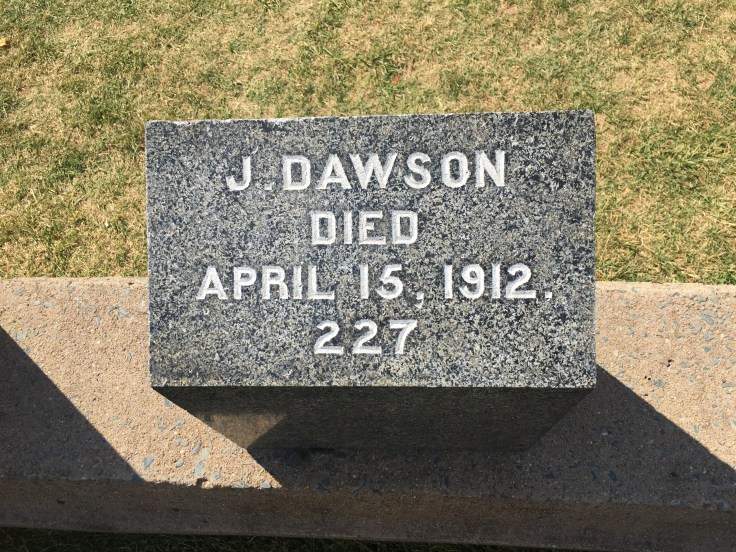
2017-08-01 Halifax - Titanic 4

No, this isn’t Jack Dawson from the Titanic movie – he is fictional.  This is Joseph Dawson, a crew member who worked below decks as a coal trimmer, about the most lowly shipboard job there is – raking the burning coal that provided the steam to power the engines…

Want more?

On the morning of 6 December 1917, the SS Mont-Blanc, a French cargo ship laden with high explosives, collided with the Norwegian vessel SS Imo in the Narrows, a strait connecting the upper Halifax Harbour to Bedford Basin.  It was a simple fender-bender, but fire broke out on board the French ship; the French crew immediately ran (and rowed) for cover, as the ship drifted towards the docks of Halifax.  The fire ignited her cargo, causing a large explosion that devastated the Richmond district of Halifax. Approximately 2,000 people were killed by blast, debris, fires and collapsed buildings, and an estimated 9,000 others were injured.  The blast was the largest man-made explosion prior to the development of nuclear weapons, releasing the equivalent energy of roughly 2.9 kilotons of TNT.  Many of the injured were blinded by shards of flying glass, moving with such force that the victims were unable to blink.  In addition to the blast, the air was now filled with oil, gunpowder residue, and other chemicals; if you were injured by flying glass or other cuts and abrasions, your wound was infused with this blueish melange; as a result, as the wound healed, the scars took on a blue tint. From then on, victims of the Halifax Explosion were easily identified by their “blue tattoos”…

Once again, the citizens of Halifax responded, caring for the wounded and identifying the dead, using systems devised for the Titanic.  Relief efforts began almost immediately, and hospitals quickly became full. Emergency shelters were erected, but an unexpected blizzard claimed many more lives, adding insult to injury… Many victims of the Halifax Explosion are buried in a mass grave at the Fairview Cemetery.

But wait! There’s more!

Swissair Flight 111 was a scheduled international passenger flight from New York City, to Geneva, Switzerland.  On September 2, 1998, the McDonnell Douglas MD-11 crashed into the Atlantic Ocean southwest of Halifax International Airport at the entrance to St. Margarets Bay, Nova Scotia. The crash site was five miles from shore, roughly equidistant from the tiny fishing and tourist communities of Peggys Cove and Bayswater.  All 229 passengers and crew aboard the MD-11 died.  The ground search and rescue operation was handled by teams from Halifax.  There is a memorial to Swissair Flight 111 near Peggy’s Cove. However, it is intended only for family members, so no parking facilities are provided for tour buses…

And, finally:

After the 911 attacks, the US halted all air traffic over the USA.  Inbound flights needed to land, and over 60 jets filled with passengers landed at Halifax airport.  12,000 passengers were now on the ground; this is over 3 1/2 percent of the population of Halifax.  As all the hotels and motels quickly filled, and as emergency shelters in high school gymnasiums were overwhelmed, Halifax residents opened their doors, inviting the “plane people” to stay in their homes.  Similar situations occurred all over Newfoundland and other parts of Eastern Canada, but we’re in Halifax, so we point out and appreciate their hospitality.

After a moving afternoon in the cemetery, toured the Public Gardens:

2017-08-01 Halifax - Public Gardens

Very formal, very symmetrical, and very Victorian…

We finally returned to campground; Happy Hours ensued and an enjoyable time was had by all.


2017-07-21 Nor by Nor’east Caravan – Maine – Penobscot Marine Museum, Searsport, and Lobster!

Friday again dawned with a mix of clouds and sun.  We convoyed to the nearby town of Searsport to see their Maritime Museum. It included several museum buildings, and we also were able to see the local Congregational Church. We toured the buildings, admired the art, and enjoyed learning about the maritime industry in this part of Maine.

The Congregational Church; this tiny church just raised funds to spend at least $30,000 per window to restore this stained glass:

2017-07-21 Searsport Congregational Church 01

The museum:

2017-07-21 Searsport Marine Museum 01

The town of Searsport, like most small towns in Main, has been in a depression for over 100 years due to the elimination of all the skilled labor industries that no longer exist; this house seems to be quite a bargain:


We then headed off to one of our favorite type of places: A lobster Pound; we found Young’s Lobster Pound, recommended by the staff at Searsport RV Park.

2017-07-21 Belfast Youngs Lobster 01

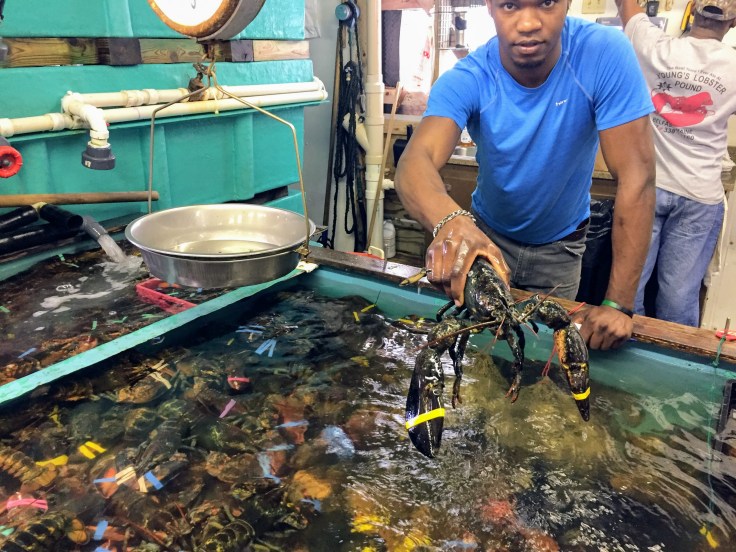
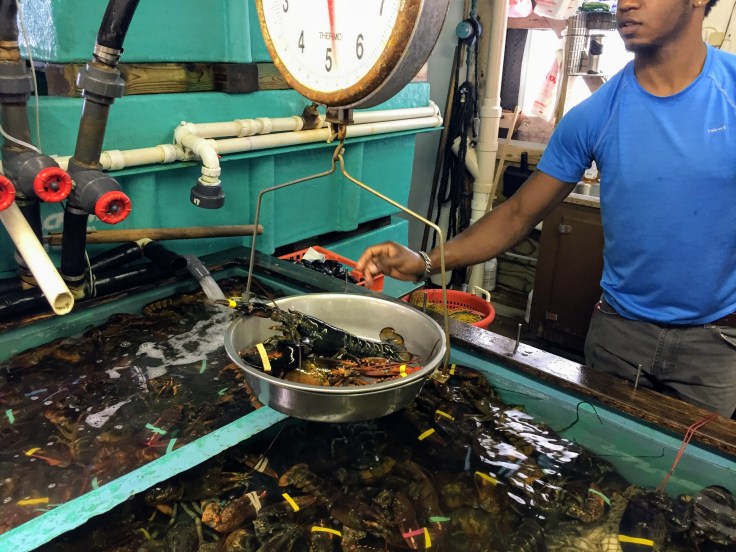
These places are usually located on a pier or wharf with access to the harbor. Lobsters are brought in by lobster boats and turned loose into the “pound” – an enclosed area of the sea, designed to contain the lobsters. Every hour or so, fresh, live lobsters are brought up to a tank in a shack on the wharf. These places don’t sell anything besides lobster, and maybe clams and/or mussels. You walk in, you tell them what size lobster you want, they pull them out of the pen, and throw them onto a scale.  If it looks good to you, they put them in a numbered bag and throw them into a pot of boiling water.  20 minutes later you pick up your lobster.

2017-07-21 Belfast Youngs Lobster 03

2017-07-21 Belfast Youngs Lobster 04


2017-07-21 Belfast Youngs Lobster 07


2017-07-21 Belfast Youngs Lobster 08

You bring your own wine, utensils, napkins, whatever you want, and sit on picnic tables on the wharf:

Lynda, waiting patiently:

2017-07-21 Belfast Youngs Lobster 05

The picnic tables; these “wood” planks are actually plastic, usually used for decking; they have a very high coefficient of thermal expansion:

2017-07-21 Belfast Youngs Lobster 06

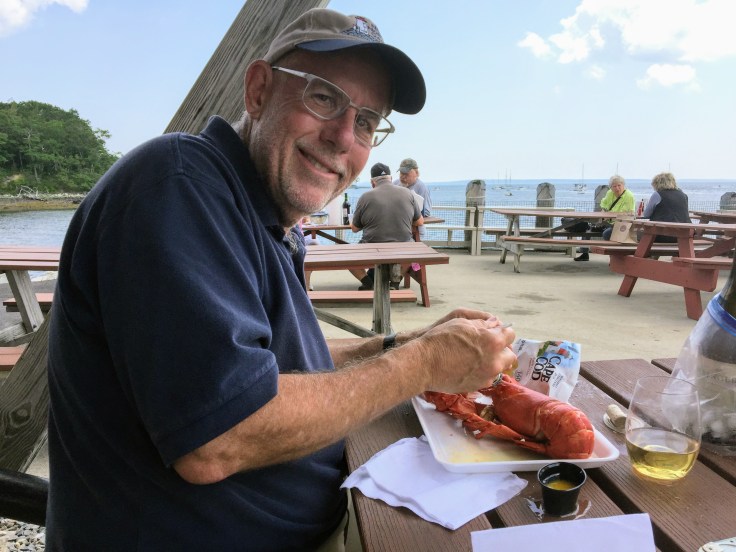
And, finally, the feast:

2017-07-21 Belfast Youngs Lobster 02

This is a truly Maine experience and if is really a lot of fun.  When we were here in 2004, the hardest thing about eating at a lobster pound was to defend your lobster from the mosquitoes – they would swarm down and literally lift your lobster off the plate; if you didn’t swat them away they would fly away with your lobster.  Not this day at this place; no mosquitoes, just a light breeze off the harbor and lots of sun.  It was a great meal in a great setting – something not really available anywhere else in the world.

After our lunch, we returned to the Villa, and finalized more plans for our return trip home.  That evening we had another GAM, and got to know 4 more couples on the caravan.  An enjoyable time was had by all…

2017-07-17 Nor by Nor’east Caravan – Boston, day 1

Knowing what traffic is like in Boston, we were grateful that the Caravan provided a nice Prevost bus to take us in to the heart of Boston:

2017-07-17 Boston Bus

Today we will have an opportunity to take a trolley tour to get oriented around Boston; after the trolley we can further explore areas as we wish…

From the bus we first saw the Boston Skyline:

2017-07-17 Boston - Skyline

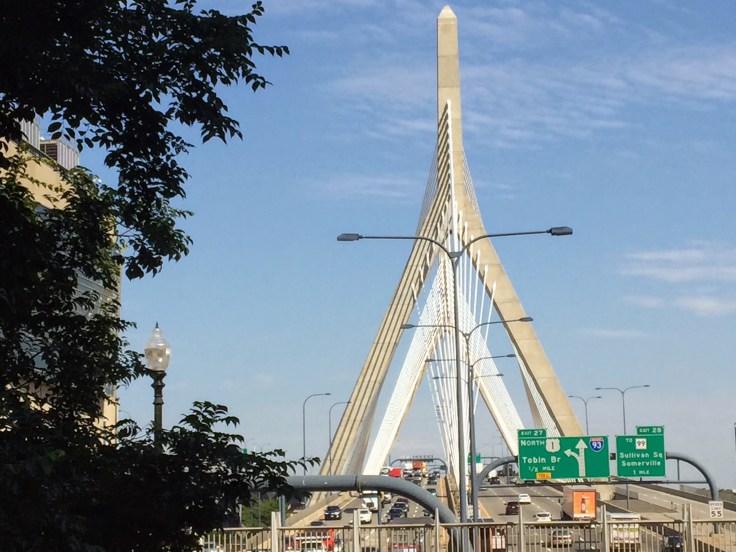
And then the Leonard P. Zakim Bunker Hill Memorial Bridge:

2017-07-17 Boston - Zakim Bridge 2

2017-07-17 Boston - Zakim Bridge 1

This is a cable-stayed bridge, not a suspension bridge.  The difference is that a cable-stayed bridge has one or more towers, from which cables directly support the bridge deck. A distinctive feature are the cables which run directly from the tower to the deck, normally forming a fan-like pattern or a series of parallel lines. This is in contrast to the modern suspension bridge, where the cables supporting the deck are suspended vertically from the main cable, anchored at both ends of the bridge and running between the towers. The cable-stayed bridge is optimal for spans longer than cantilever bridges and shorter than suspension bridges.

The lead designers were Theodore Zoli (from HNTB) and W. Denney Pate (from FIGG).  It has a striking, graceful appearance that is meant to echo the tower of the Bunker Hill Monument (more on this tomorrow), which is within view of the bridge, and the white cables evoke imagery of the rigging of the USS Constitution, docked nearby (more on this tomorrow).

The bus dropped us off at the waterfront; we boarded the trolley for a 90 minute tour of the historic and civic landmarks of Boston.  We were dropped back at the waterfront, leaving us the rest of the day to focus on our own interests.

Boston has nicely marked its sidewalks with a red stripe as a path they call the “Freedom Trail”.  So after our trolley tour we walked the trail and saw many famous sights, most related to the War for Independence.

You will recall the Longfellow poem I quoted when we visited Concord and Lexington:

Listen, my children, and you shall hear
Of the midnight ride of Paul Revere,
On the eighteenth of April, in Seventy-Five:
Hardly a man is now alive 
Who remembers that famous day and year.

It goes on to say:

He said to his friend, “If the British march
By land or sea from the town to-night,
Hang a lantern aloft in the belfry-arch
Of the North-Church-tower, as a signal-light,
One if by land, and two if by sea;
And I on the opposite shore will be,
Ready to ride and spread the alarm
Through every Middlesex village and farm,
For the country-folk to be up and to arm.”

So we went to see the Old North Church:2017-07-17 Boston Old North Church

And Paul Revere’s house:

2017-07-17 Boston - Paul Revere House


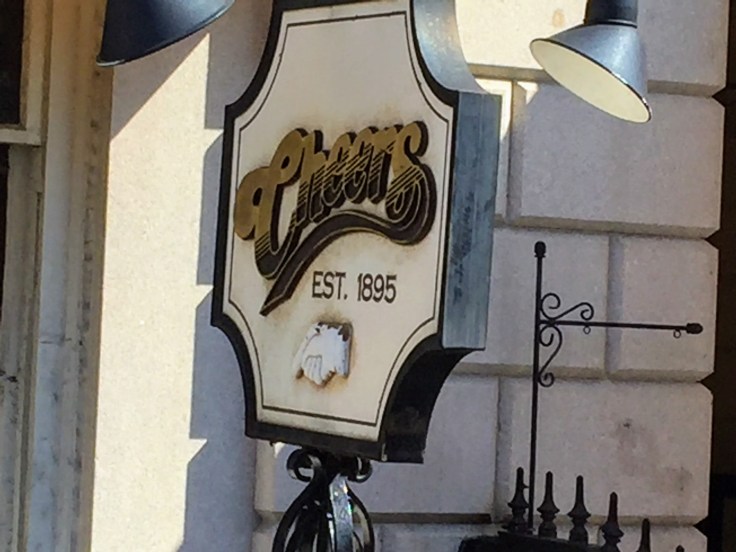
Along the way we saw the location of Cheers bar; Exterior photos of this place were used in the TV show, although the bar inside is nothing like the TV set. The owner has recreated the TV set in another Cheers bar location near the waterfront…

2017-07-17 Boston - Cheers


We saw the Charles River; a little regatta or sailing lessons are going on today:

2017-07-17 Boston - Charles River


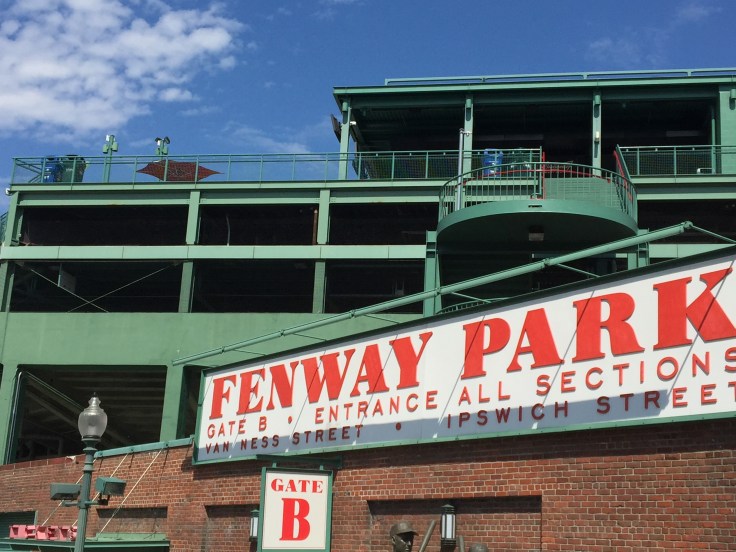
Fenway Park; they play baseball here:

2017-07-17 Boston - Fenway Park


We really wanted to see Trinity Church, located in Copley Square; we walked and walked and when we finally got there we saw that it was closed on Mondays. Who ever heard of a church being closed on Mondays? What’s next? Closing the Stockbridge dump on Thanksgiving?

We did get in a nice lunch at La Famiglia Giorgio’s.  And lots of walking.  The bus took us back to the Villa and we slept soundly that night… a good thing, because we come back tomorrow!


2017-07-16 Nor by Nor’east Caravan – Whale Watching and Rockport, MA

Today was Whale Watching Day!  We carpooled and convoyed to Gloucester and boarded the big ship…

2017-07-16 Gloucester Whale Watching 02

I takes awhile to board; conversation was lively:

2017-07-16 Gloucester Whale Watching 03

2017-07-16 Gloucester Whale Watching 05

2017-07-16 Gloucester Whale Watching 12


Our intrepid caravan leader, Cape Cod resident, Trevor Lake:

2017-07-16 Gloucester Whale Watching 06

Once the boat was underway we could enjoy the sights of the harbor:

2017-07-16 Gloucester Whale Watching 11

2017-07-16 Gloucester Whale Watching 10

2017-07-16 Gloucester Whale Watching 09


We were headed about 30-40 miles out, about halfway to Provincetown on Cape Cod…

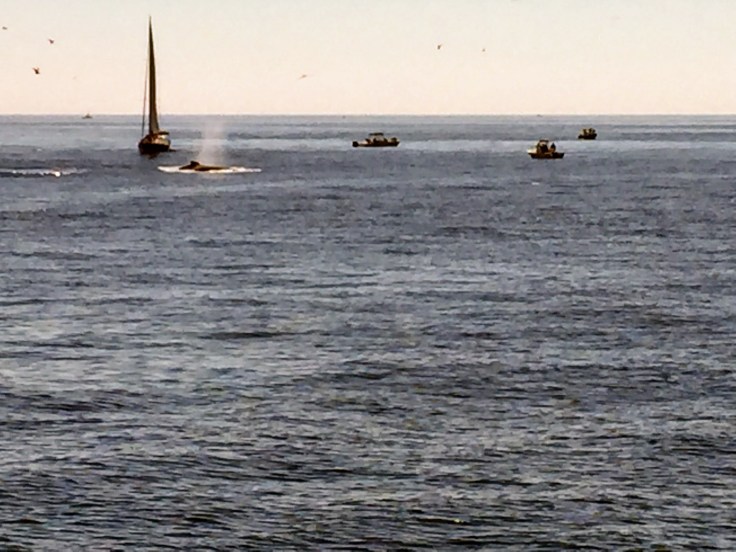
Our first sighting of a whale:

2017-07-16 Gloucester Whale Watching 21


Due to the natural features of the ocean bottom and other sea life in the area, whales return to about the same areas to feed, providing easy viewing for tourists like us on our boat and all these other boats in the area.

Whales generally travel together is loose associations (not pods – pods are livelong “families” of whales).  They seem to do two things:  surface and spout, and dive. I was hoping to see them jump out of the ocean like in the insurance commercial, but no luck.

The whales were plentiful today, as they surfaced and spouted:

2017-07-16 Gloucester Whale Watching 34

2017-07-16 Gloucester Whale Watching 35


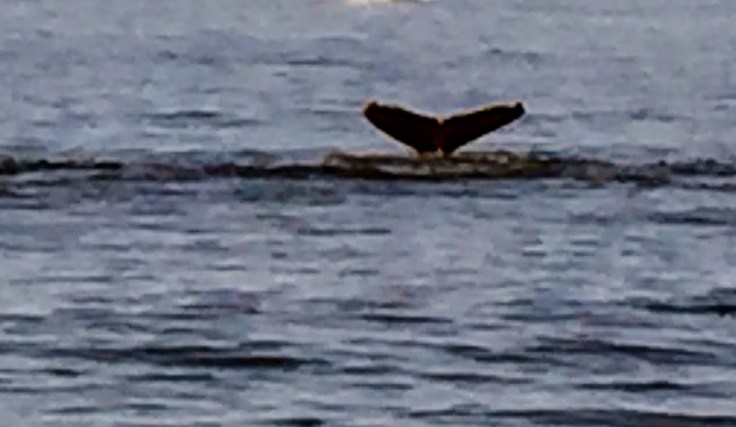
When they dive, we get to see their great tails; the people who study these whales identify them by the markings on their tails:

2017-07-16 Gloucester Whale Watching 49

2017-07-16 Gloucester Whale Watching 47

2017-07-16 Gloucester Whale Watching 46


After seeing many, many whales, we headed back to Gloucester; then we headed to Rockport to see this picturesque town and have lunch.  Rockport was crazy busy this afternoon…

Our carpool buddies, Victoria and John:

2017-07-16 Rockport MA 05


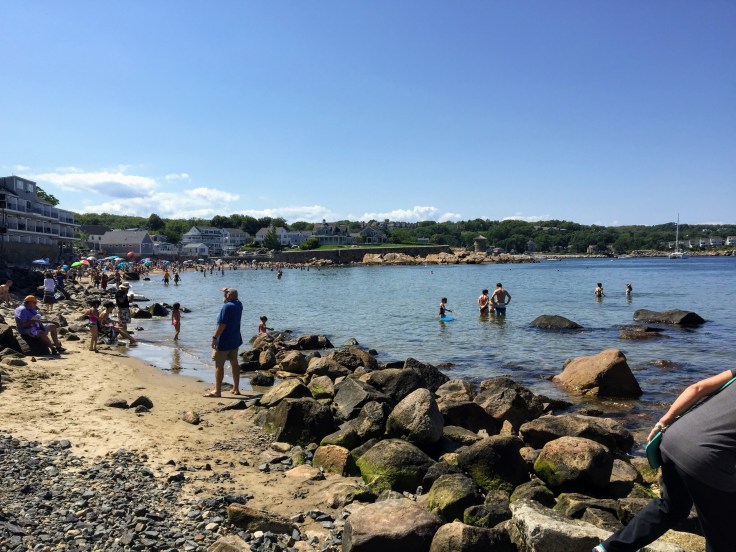
The town and harbor of Rockport:

2017-07-16 Rockport MA 10

2017-07-16 Rockport MA 09

2017-07-16 Rockport MA 08

2017-07-16 Rockport MA 07

2017-07-16 Rockport MA 06


This church was having a little work done; notice the top of the steeple sitting on the ground:

2017-07-16 Rockport MA 30

We had a delightful lunch of lobster rolls, with a nice white wine from New Zealand.  We headed back to the Villa; we have a meeting tonight to discuss our next two days as we travel to Boston!

PS:  As an update to our visit to Fallingwater on June 22, we saw on the news today that Mill Run, the creek that runs beneath Fallingwater, is at flood stage due to recent rains; the news story featured this photo of the team rescuing a statue that was toppled in the flood:

2017-07-16 Fallingwater Flood Topples Statue

(Sorry for the size… blame the newspaper…)

We had seen the statue, sitting adjacent to the plunge pool:

2017-06-22 Fallingwater 010d

Apparently, all is now well…


2017-07-09 Nor by Nor’east Caravan -Newport, Rhode Island – Summer Cottages, day 2

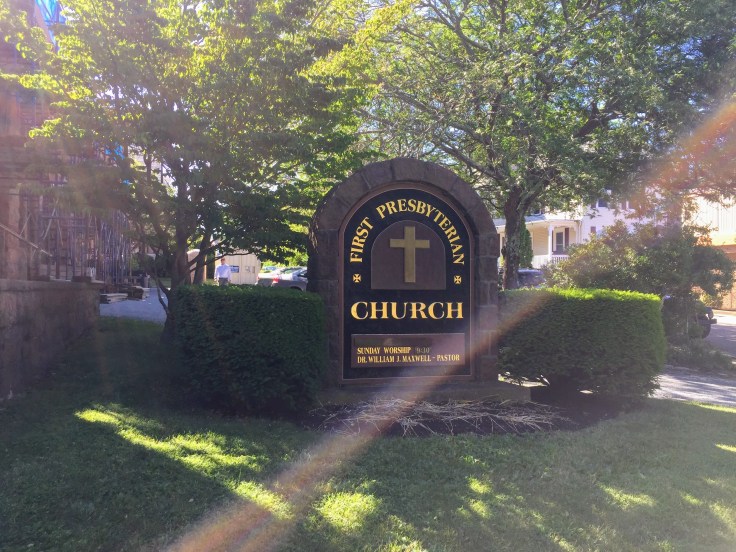
Today, being Sunday, we checked out a local church to attend… We used the Emmett Raitt method for selecting a church and picked the one whose service time was most suitable to our Sunday activities.  This happened to be:

2017-07-09 First Presbyterian

So we drove into Newport, and attended a service for the “frozen chosen”.   No one sang, the choir was terrible, and the hymns were VERY SLOW!  But it was a good service of reflection and we don’t regret attending…  It is a very small church, and very traditional. Even though their hymnal contained “modern” praise songs, the piano player made sure we didn’t get carried away and get excited over a fast tempo…

2017-07-09 First Presbyterian 02


We have two tours scheduled for today:  “Beneath the Breakers” , which will explain all the technology behind the operations of The Breakers, and “The Servants’ Life” at The Elms, my favorite house here in Newport.

We began at The Breakers, in the Gate House:

2017-07-09 Newport - Beneath the Breakers 05

2017-07-09 Newport - Beneath the Breakers 06.JPG

Originally intended for the caretaker, the cottage was most predominately occupied by the Estate Engineer.  His scrupulous notes have help recreate this picture of the technology beneath the Breakers…

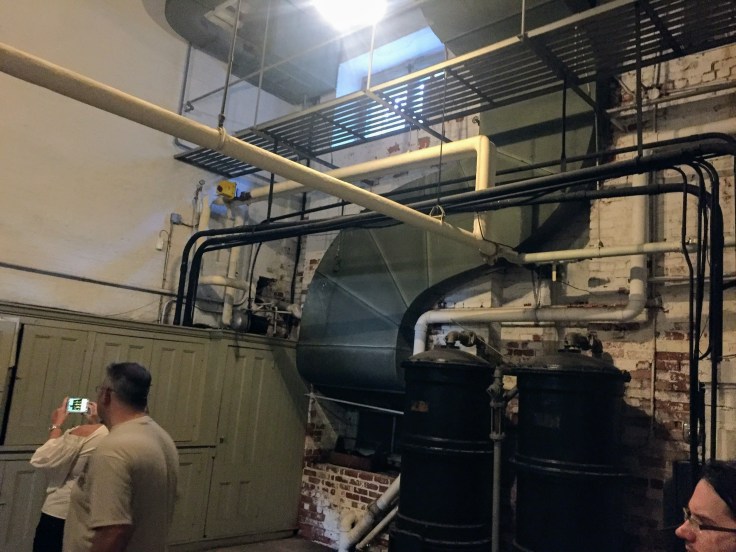
We began in the Parlor of the house. We then descended about 30′ beneath the ground to the main Boiler Room:

2017-07-09 Newport - Beneath the Breakers 01

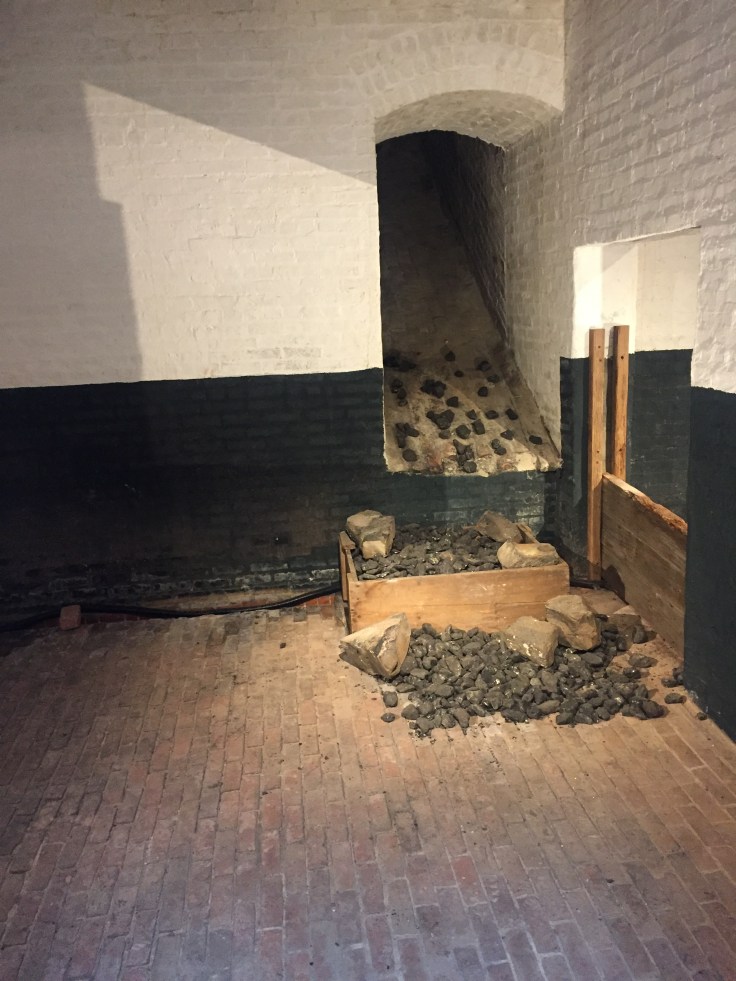
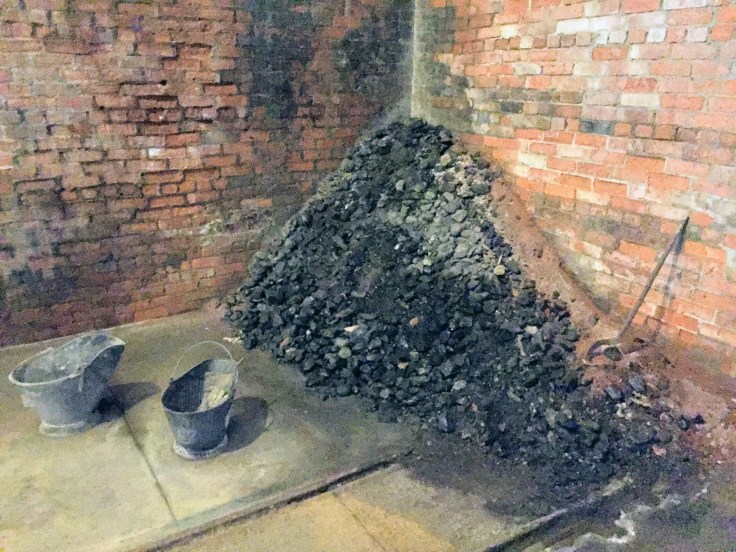
The below-grade room, close to the street, allowed coal to be dumped directly from the street into the coal bins, via chutes:

2017-07-09 Newport - Beneath the Breakers 02


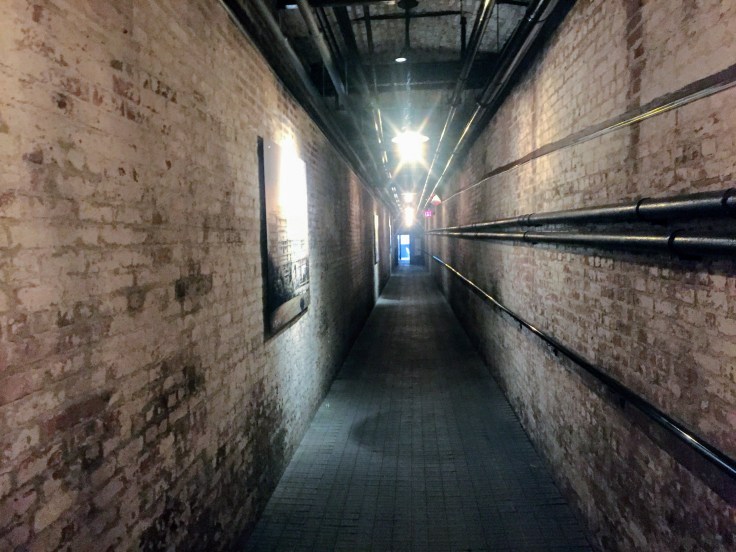
The Boiler Room is located far from the main house as a fire-prevention measure; it is connected to the main house via a tunnel, complete with fire doors.  Steam pipes, hot water pipes, and electrical conduits all run through this tunnel into the basement of the main house.

2017-07-09 Newport - Beneath the Breakers 04

As we continued on the tour we learned about the elevators, the elctrical system, how warm air was circulated through the house via radiators in the basement, and all sort of the latest technology of the house.  It was FASCINATING!

After the tour we had time for a quick lunch at Le Forge restaurant in Newport:

2017-07-09 Le Forge


Our next tour was “The Servants’ Life” at The Elms.  We started by climbing 3 flights of stairs to the third floor:

2017-07-09 Newport - The Servants' Life 01

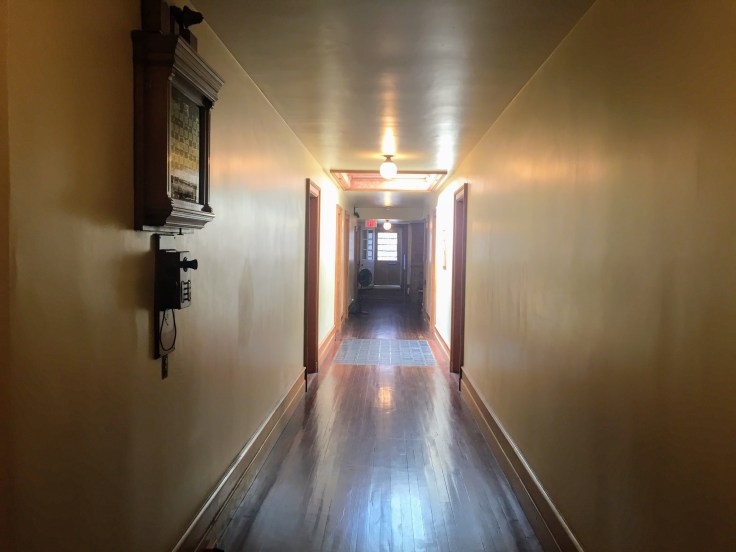
The third floor servants’ bedrooms had the feel of an old fashioned college dormitory. The hall was wide and well lit (note the skylights and the glass block floors allowing light into the second floor below).

The rooms were spartan but spacious:

2017-07-09 Newport - The Servants' Life 02

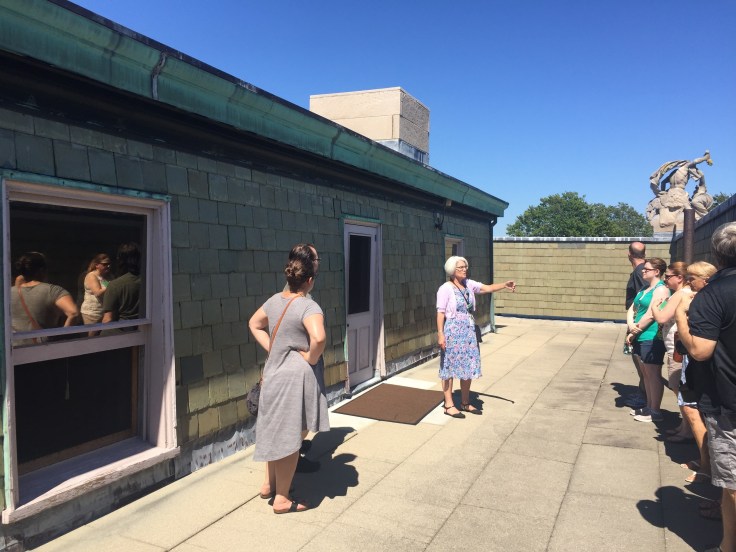
Because the third floor was hidden by the house’s parapet, there was a private roof-top space available to the servants:

2017-07-09 Newport - The Servants' Life 03

2017-07-09 Newport - The Servants' Life 04

There was also a view to the harbor beyond:

2017-07-09 Newport - The Servants' Life 05


From this vantage point you can get a better view of the carriage house:

2017-07-09 Newport - The Servants' Life 06

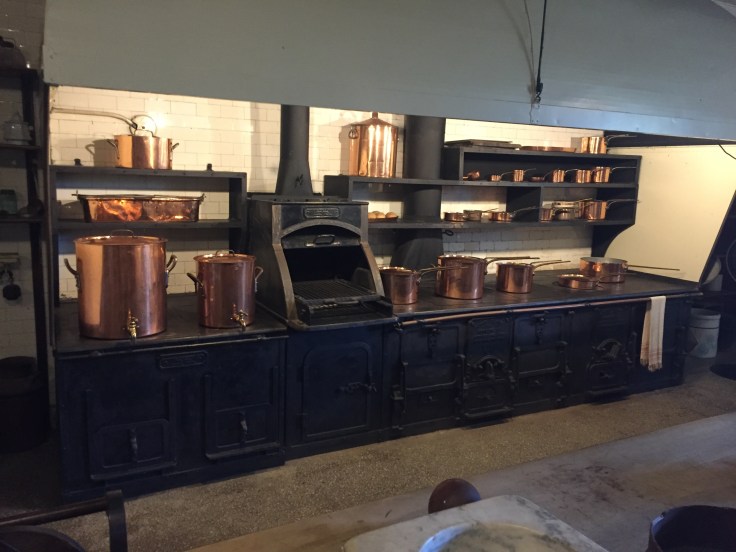
After touring the servants’ quarters, we descended the stairs to the basement; I showed a quick photo of the kitchen yesterday, but here is another:

2017-07-09 Newport - The Servants' Life 12


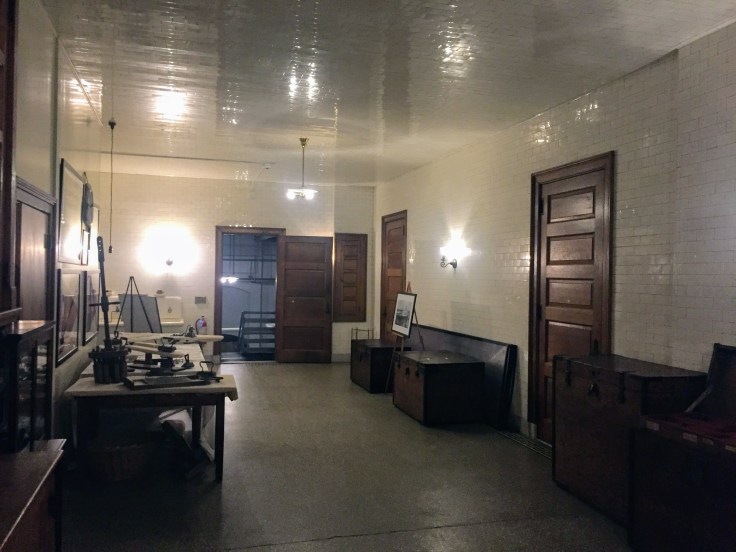
There was a laundry in the basement, truck storage, a bakery, and a root cellar: the two story high Boiler Room is also here…

2017-07-09 Newport - The Servants' Life 07

2017-07-09 Newport - The Servants' Life 08


Mr. Berwind made his money in the coal industry, so he had state-of-the-art coal delivery system:  There was a grate in the street; coal was delivered through the grate into carts, and the carts were rolled on rails through tunnels to the coal bins in the sub-basement:

2017-07-09 Newport - The Servants' Life 10

2017-07-09 Newport - The Servants' Life 11


It was another great day. An enjoyable time was had by all…


2017-07-02 New York, NY; Frank Lloyd Wright, Vincent Van Gogh, St. Patrick’s Cathedral, The High Line, and John Williams Campbell

Before I start today’s post I would remiss if I didn’t wish you all a belated Happy Canada Day with a photo of my favorite Canadamericans:

2017-07-01 McAnoy


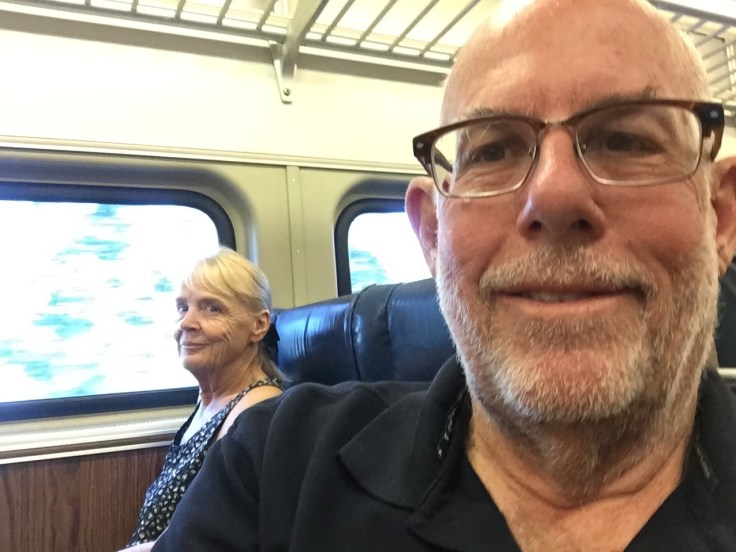
Sunday dawned quite nicely, and we drove the 1.9 miles through the park to the local train station. We bought our tickets for a round trip to New York City; it is about a 55 minute ride.  I find it quite amazing that we are less than 1 hour from NYC, yet we are far out into the country. This is the same timing as the train from Irvine to downtown Los Angeles, yet Irvine is not even close to being “in the country”…

The train trip was uneventful. We did notice a lot of barbed wire fences when passing through the city of Ossining. A quick Google search found this:

“Sing Sing Correctional Facility is a maximum security prison operated by the New York State Department of Corrections and Community Supervision in the village of Ossining, in the U.S. state of New York. It is located about 30 miles (50 km) north of New York City on the east bank of the Hudson River…

The prison property is bisected by the Metro-North Railroad’s four-track Hudson Line.”

2017-07-02 NYC Train 01

After arriving at Grand Central Terminal, and exiting onto the street, we gawked at the beautiful buildings:


Then we walked to Un Deux Trois Cafe for breakfast. It is a big place, not exactly a mom-and-pop operation, but it is very French, the food was good, and it was a fun time.

2017-07-02 NYC 123 01


As we walked towards MOMA, our main reason for this trip, we passed through Rockefeller Center. I had learned from my reading that it was developed during the Great Depression by John D. Rockefeller, Jr. on land owned by and leased from Columbia University. It was a major effort of “Urban Renewal” in the 1930s; however, Jr. never made any money from the development due to onerous terms imposed by Columbia. Finally, after Jr.’s death in 1960, when the center was falling into disrepair due to lack of capital for improvements, Jr.’s sons were able to renegotiate the deal and gain financial backing for improvements. It is a marvelous complex, the grounds teaming with people on this sunny Sunday morning.  It is no longer owned by the Rockefellers…

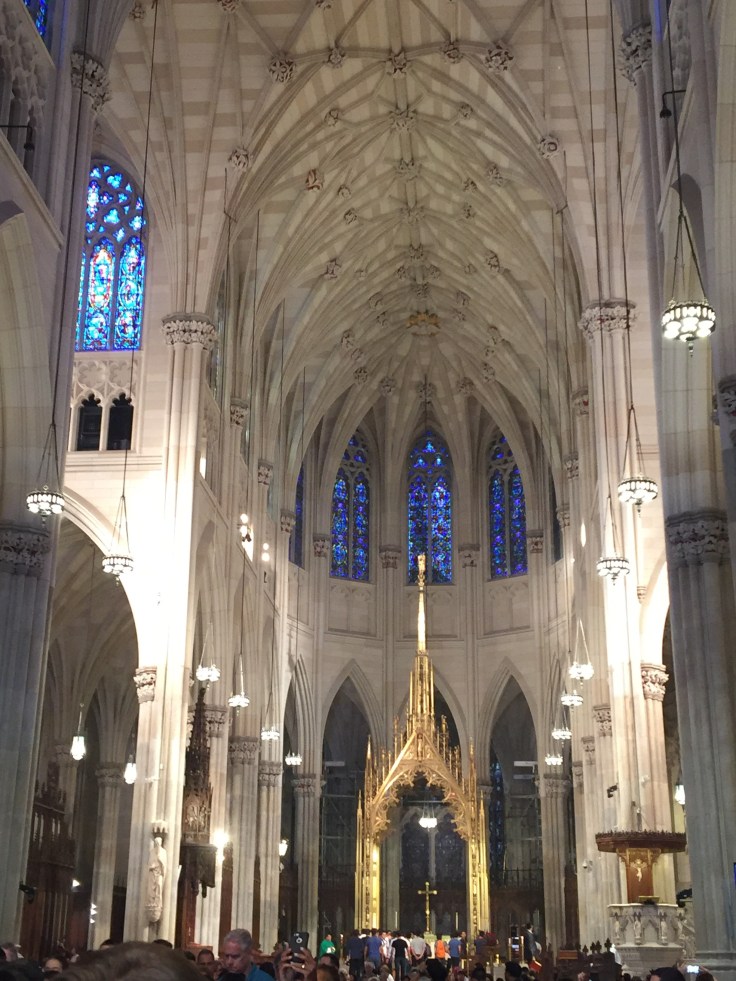
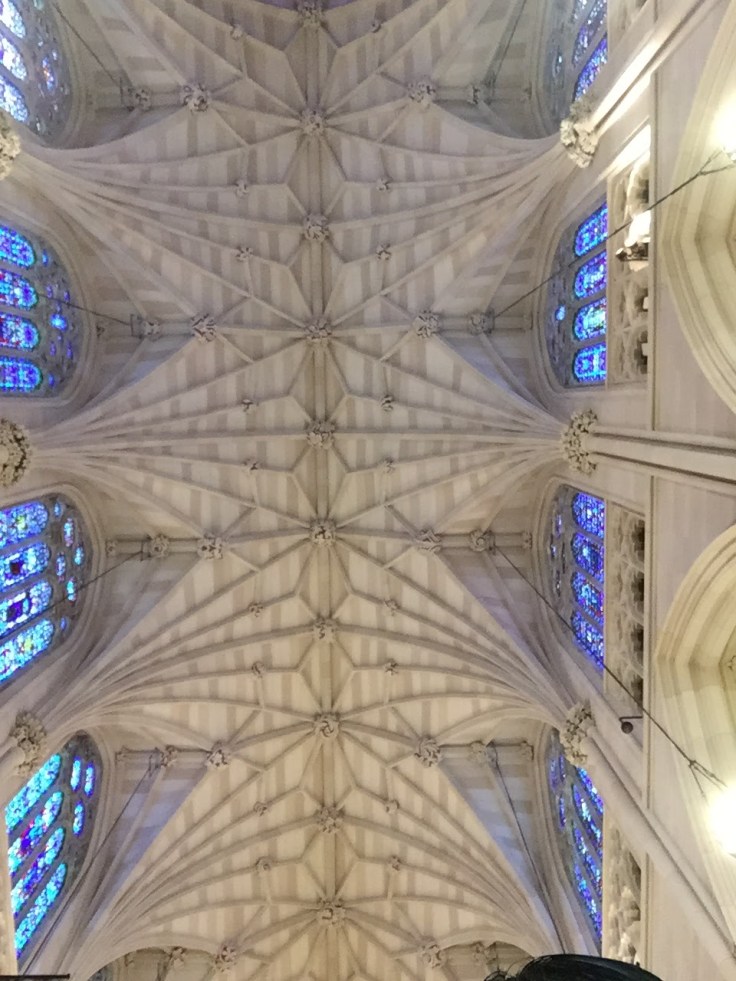
Across the street we found St. Patrick’s Cathedral.  Being Sunday morning, we stopped in for the 10:15 am services.  In celebration of Independence Day the great organ played “Stars and Stripes Forever”, and our final hymn was “America the Beautiful”…

2017-07-02 NYC St Patrick Cathedral 08

2017-07-02 NYC St Patrick Cathedral 062017-07-02 NYC St Patrick Cathedral 01

2017-07-02 NYC St Patrick Cathedral 04


Then  we were off to MOMA.  The Museum of Modern Art was a true grassroots effort, started by three ladies on their kitchen table, with nothing except a few hundred million dollars of Rockefeller money.  The main driver was Abby Aldrich Rockefeller, wife of Jr. (Jr. himself hated modern art…)  If fact, when MOMA needed land for a sculpture garden, Abby and Jr. donated their 9 story house next door, which was promptly demolished.

We were there for an exhibit of Frank Lloyd Wright drawings and models, in celebration of FLW’s 150th birthday:  Unpacking the Archive

It was a delightful exhibit. FLW used his drawings as working papers, to be scribbled on, torn in half, and reassembled; they were teaching tools, not precious objects d’art. There were models, too: The Price Tower in Bartlesville, OK. (See my blog post onJune 14, 2017), as well as the previously designed skyscraper that FLW designed for NYC, but which was never built.

After the FLW exhibit we took a quick detour upstairs to see Van Gogh’s The Starry Night. Wonderful…

So, with the afternoon still free, we headed downtown on the subway to see the 911 Memorial. It was mobbed with tourists, and it was quite hot.

2017-07-02 NYC World Trade Center 02

2017-07-02 NYC 911 Memorial 02

We saw one of the beautiful fountains, then headed back north to experience the High Line.  The High line is a linear park located on an abandoned railroad viaduct, about 1 1/2 miles long, on NYC’s west side. It is a delightful walk, and it was crowded with locals and tourists, alike.  We had lunch in its shadow, which was also nice…

2017-07-02 NYC Lunch 03

2017-07-02 NYC High Line

2017-07-02 NYC Lunch 01

2017-07-02 NYC High Line 01


Then we walked back to Grand Central Terminal and had afternoon drinks in the Campbell Apartment.  For 30 years this space was the private office and apartment of John Campbell, one of the Directors of the Grand Central Railway. After Campbell’s death in 1957 the space was underused, and its glory faded. It was reopened as a bar recently and it was a lot of fun. Drinks and food were good, and it was fun being in this “secret” space.

We caught a return train back to Croton Point, had a short drive back to the Villa; this is what camping is all about for us: cities and country, highways, subways, and railways, beaches, waterfalls, houses, museums, and cathedrals; an enjoyable time was had by all.


2017-06-18 Columbus, Indiana, Eliel Saarinen, and many other famous architects…

Our second day in Columbus was Sunday, so, naturally, we went to church. There are many modern churches in Columbus designed by famous architects, so we needed to make a choice. We selected the First Christian Church, designed by Eliel Saarinen (father of Eero…)

2017-06-18 Columbus - First Christian Church 1

It was fun to sing the old hymns in such a modern church. The church was built in 1942. It was the first contemporary building in Columbus and one of the first churches in the United States to be built in a contemporary architectural style.

After church we drove to the north part of town and spent 2 hours walking several blocks of very nice houses, some designed by famous, dead architects.

On this walk we saw:

North Christian Church, the last building designed by Eero Saarinen:

2017-06-18 Columbus - North Christian Church 2

2017-06-18 Columbus - North Christian Church 3


2017-06-18 Columbus - North Christian Church 4


St. Bartholomew Catholic Church, designed by Steven R. Risting (Ratio Architects):

2017-06-18 Columbus - St. Bart Catholic Church


Schmitt School, designed by Harry Weese; the first school that took advantage of the Cummins Foundation’s offer to pay the architect’s fees:

2017-06-18 Columbus - Schmitt School 2

2017-06-18 Columbus - Schmitt School 1


Northside School, designed by Harry Weese:

2017-06-18 Columbus - Northside School


We walked about 6 miles through the north Columbus neighborhood, so we needed a break at Zaharakos Ice Cream Parlor (open since 1900) for lunch:


Since this was Day #9 on our trip, we spent the rest of the day doing laundry, cleaning house, and setting up computer paraphernalia… An enjoyable time was had by all…


Blog at WordPress.com.

Up ↑