Search

Adventures in the Villa

Category

Louisiana

2019-04-05 – Airstream Cajun Country Caravan – Travel to Eunice, LA

Easy travel day again.  At least at the start.

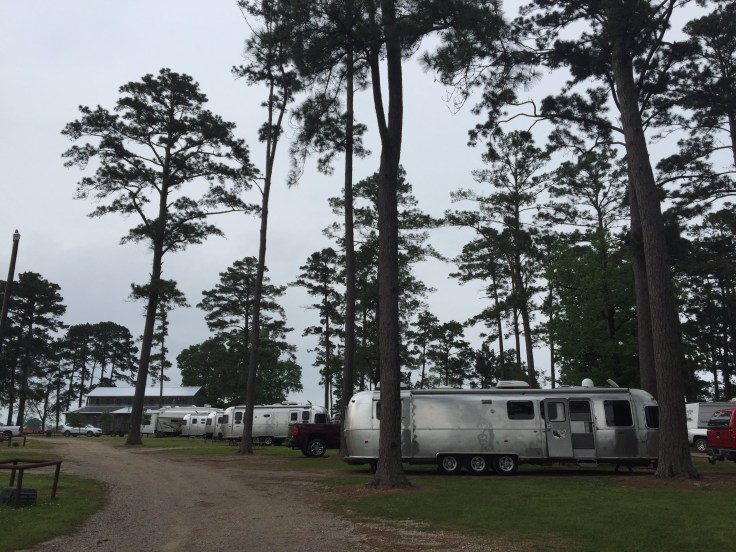
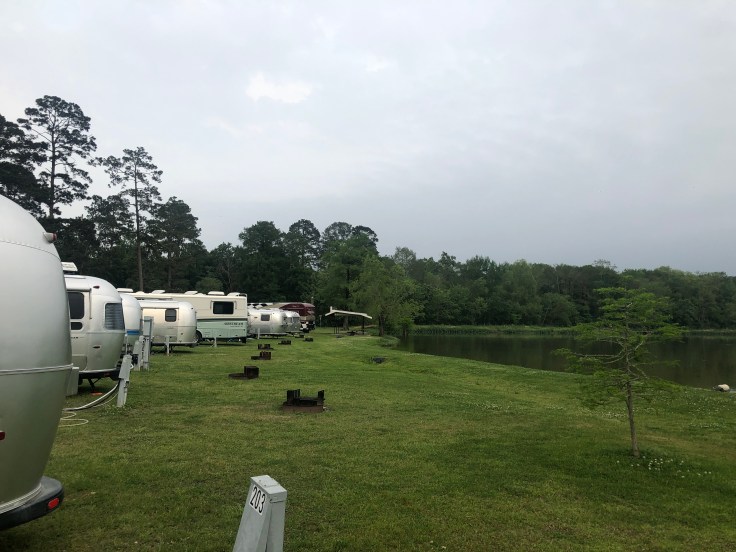
We drove over 50 miles today to camp at the Lakeview Park and Beach, just north of Eunice, LA.  It is a beautiful place, and, since it is Friday, the park is quickly filling up with weekenders from the local area.  There is a nice fishing lake, plus a swimming lake and beach, but it won’t open until next week…

img_1620img_7604img_1641

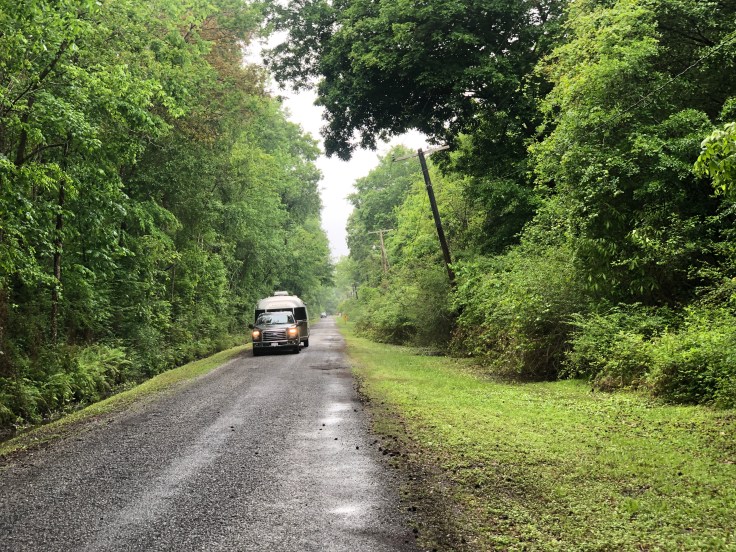
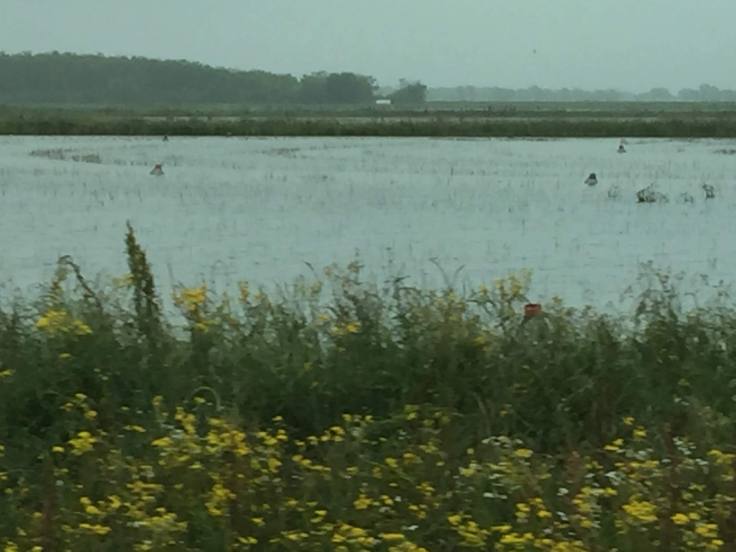
Along the route we passed by typical Louisiana roadside scenes:

img_1612img_1610img_7552img_7560img_7564img_7565img_7566img_7567img_7572

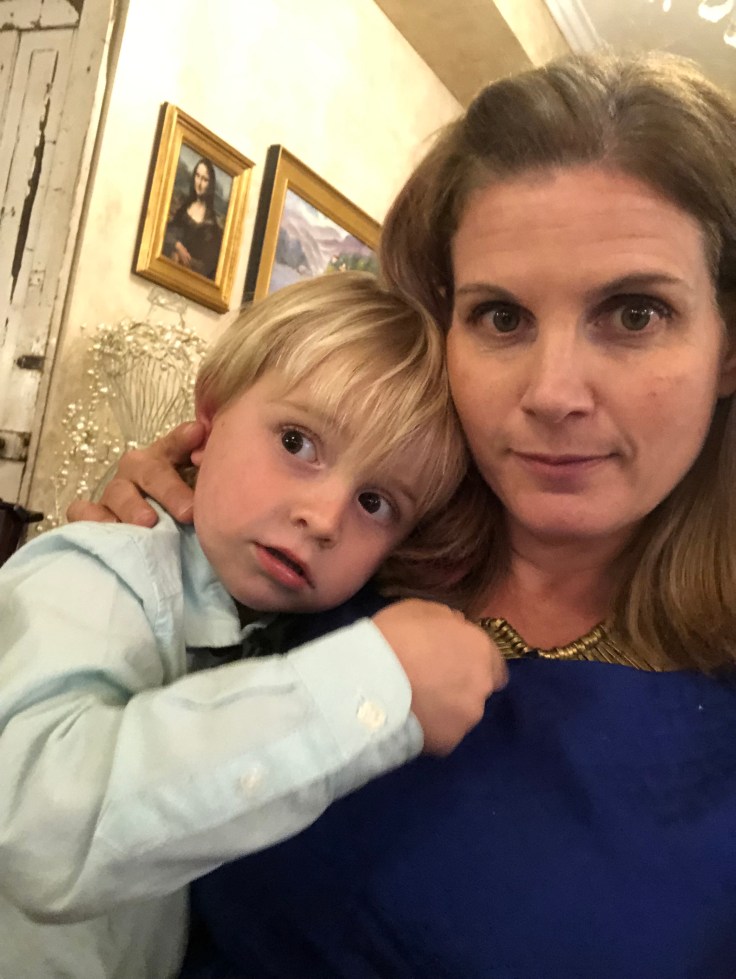
Upon arriving, I noticed that my iPhone was not charging – the cable would not plug in.  After several panicked minutes wondering where in rural SW Louisiana I could find an Apple store, then several more panicked minutes realizing that what I really need is an A&TT store, then remembering that I have insurance on this phone (because I do not believe in those ugly phone cases…), then a few more phone calls and we were back in the truck and off for a one hour drive to Lafayette to an Apple authorized repair shop.  If this proved to be unsucessful, I could get a replacement shipped to me – all I need to figure out is – Where will I be when the new phone arrives?

Lafayette was busy, but we found the store easily.  Five minutes and nine dollars later my phone was fully functional!  All it took was a tiny set of tweezers and knowing what to look for…

So, since we were already parked in a giant Target parking lot, we did a little grocery shopping, and headed back to Eunice.

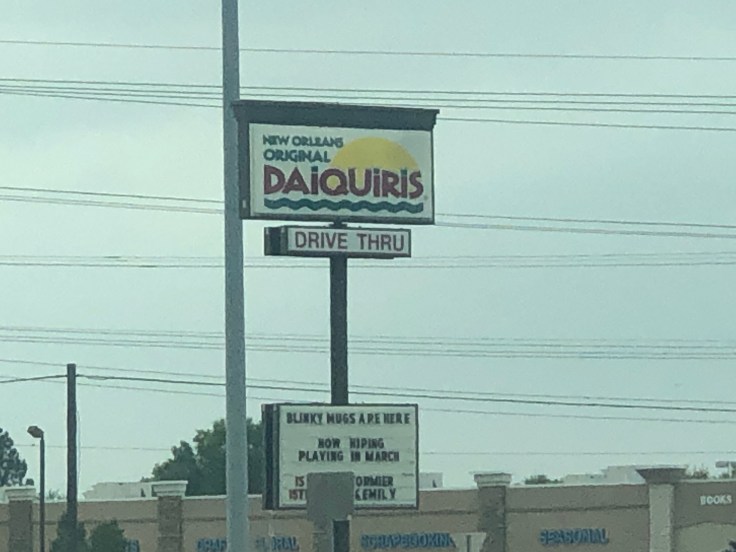
Along the way we did see one of the better ideas to come out of Lafayette:

img_1616

Yes, the drive-thru Daiquiri stand.  Due to recent laws banning open containers of alcohol in cars they now put a lid on the plastic daiquiri cup, and a straw to poke through the little hole in the lid…

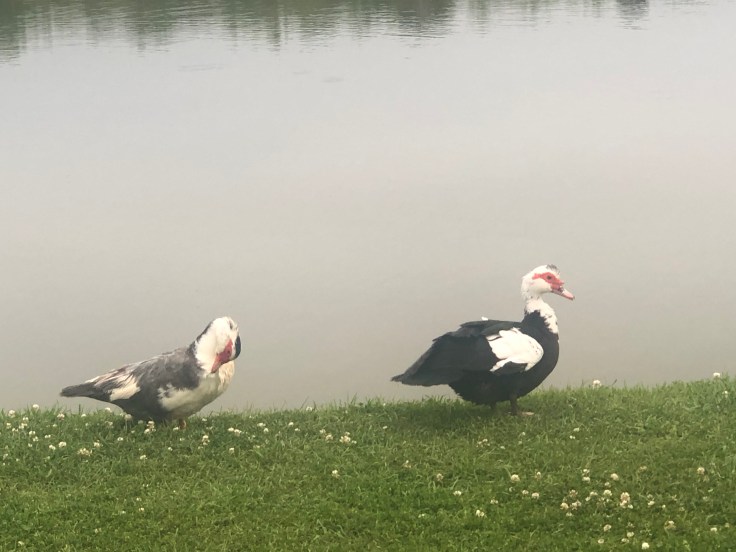
So we returned to the campground.  We had missed both the final GAM and a drivers’ meeting.  We took an evening stroll around the lake…

img_1618img_1619

After our traumatic day we retreated to the Villa and enjoyed an adult beverage or two…

img_7580

And an enjoyable time was had by all…

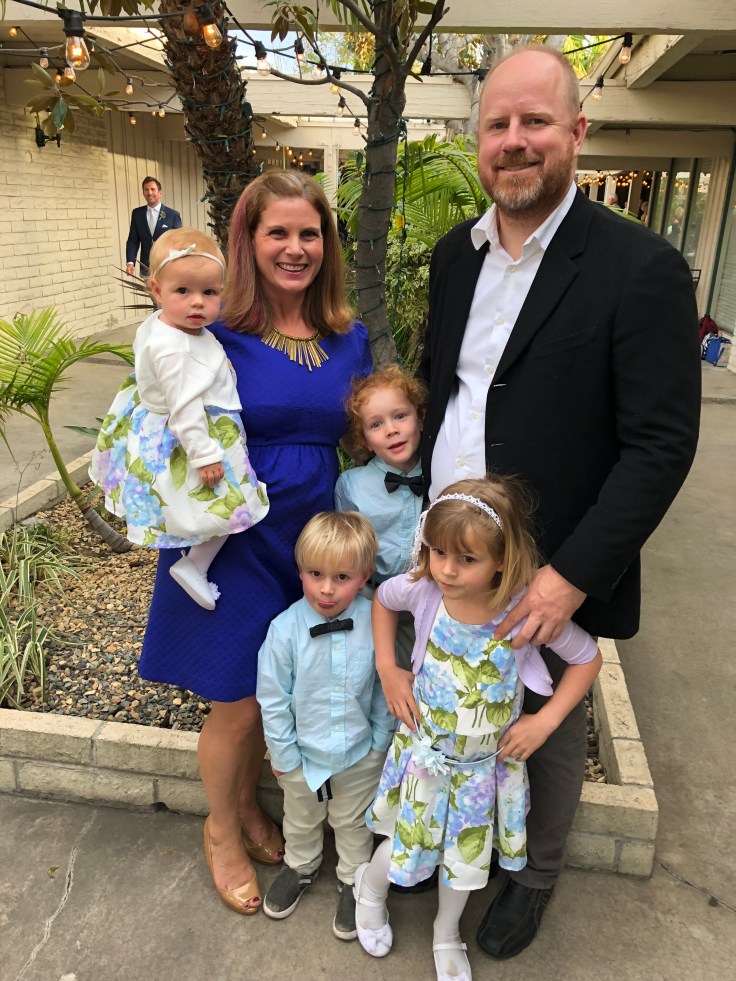
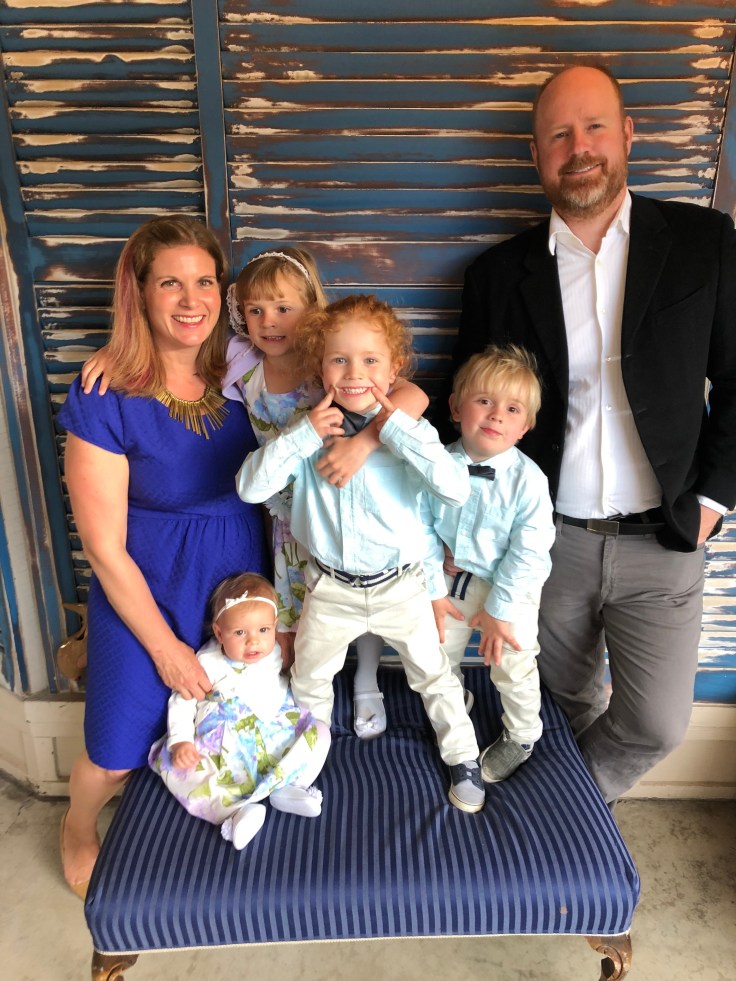
And the all-dressed-up McAnoy family:

img_1621img_1622img_0740

2019-04-04 – Airstream Cajun Country Caravan – Abbeville, LA – We almost meet the Mayor!

It thundered all night long, with a rare glimpse of lightning.  At 7:00 am it started raining in earnest.  It was a real downpour – not the sprinkles that we in California call rain.  The skies opened up and it dumped, with crashing thunder added for effect.  We were supposed to leave at 8:40 am to meet the Mayor of Abbeville and do a walking tour of the town, but this was postponed at about 8:15…

img_7544

At 9:45 all of the day’s activities were cancelled… While the campground was not in any danger of flooding, 2″-3″ of standing water makes walking about problematic.

At 11:15 another Airstreamer picked us up in their truck and we drove two miles into Abbeville, to a seafood restaurant called Shucks!  We had a great lunch with good Old Fashioneds, and tasty Louisiana delicacies.  I had oysters on the half shell (raw…) and Gator Bites – deep fried little morsels – way better than chicken… Lynda had crab cakes and fried shrimp, not being the adventurous type (at least when it comes to food…)

img_1599img_1600

By the time lunch was over the rain had stopped.  We returned to the Villa, then set out again to see what we could of the town of Abbeville…

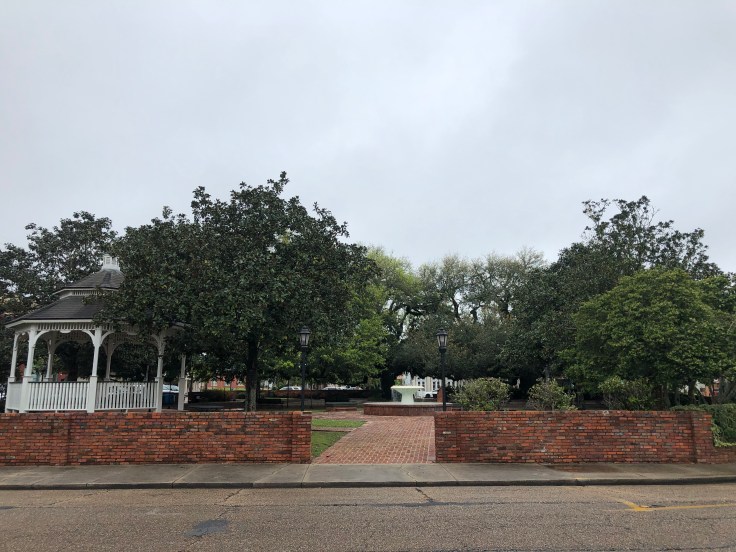
They have a nice town square – there is a music festival here every Thursday night, with food, dancing, etc., but tonight it was cancelled due to the rain…

img_1607img_1606

There is a nice big Catholic Church…

img_1602

And, in general, it is a fairly nice place, despite there being no viable businesses here (other than attorney offices around the Parish (county) Courthouse…)

img_1603

We eventually found our way to Kelvin’s Piano Bar – in a store that sold Kelvinator appliances in the olden days…)

img_1608img_1609

We had some good drinks and a few bites.  A piano player entertained us for a few minutes.

We returned to the Villa and an enjoyable time was had by all…

2019-04-03 – Airstream Cajun Country Caravan – Abbeville, LA – Crawfish!

We began our day with a trip to Crawfish Haven…

img_1584

Today we harvested Crawfish, learned more than we needed to know about crawfish, and ate crawfish for lunch…

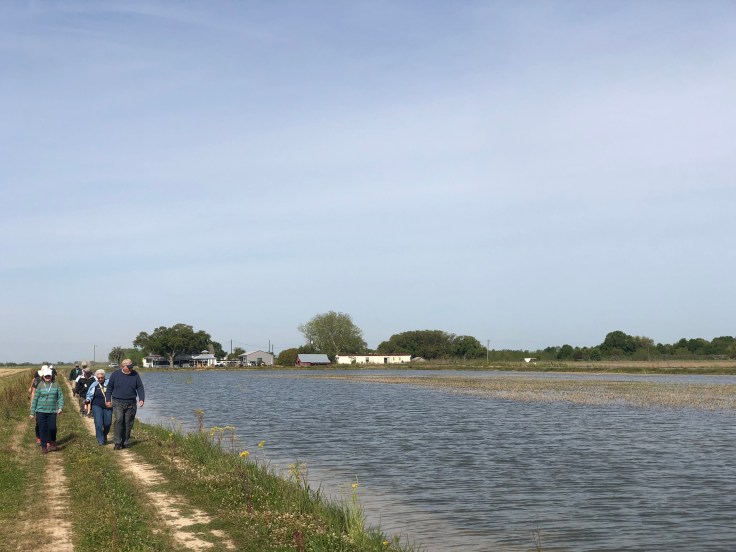
We began by walking about 1/2 mile out on the levees around various small ponds where the crawfish are raised.

img_1536img_1537

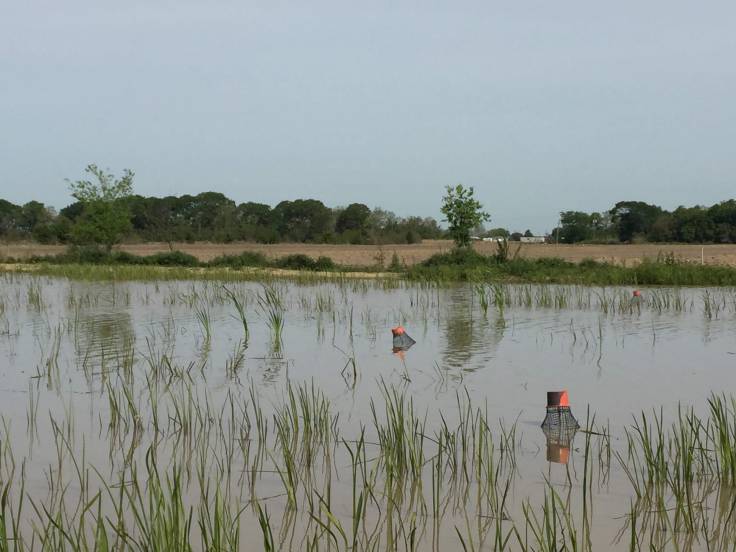
These red-topped devices are the crawfish traps.  They are baited with a piece of fish; the crawfish crawl into the trap but cannot crawl out.  Don’t ask me how this is accomplished…

img_7527

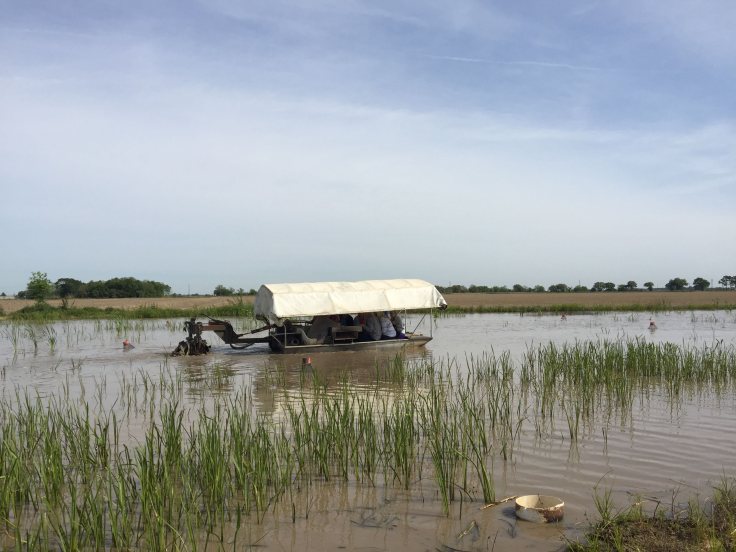
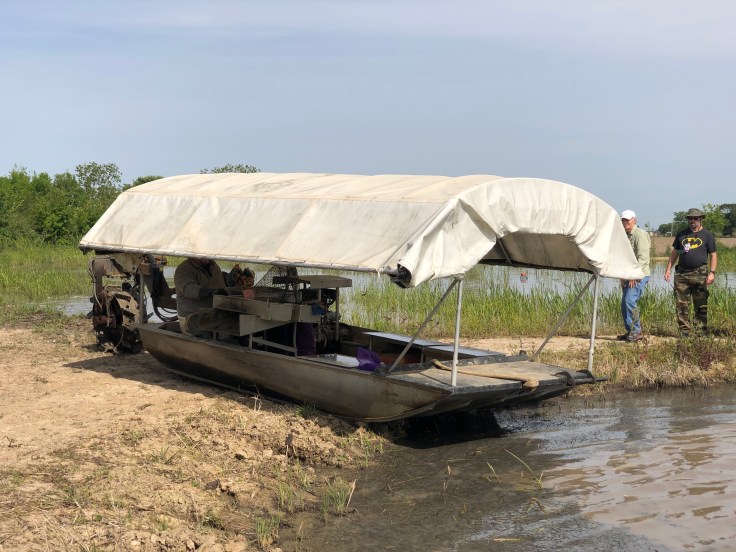
They have these strange flat bottomed boats which actually roll along on the bottom of the pond – the water is about one foot deep.  The boat is propelled by this strange drive wheel (almost like a paddle wheel) that rolls along the bottom of the pond and pushes the boat.

img_7525

The crawfish farmer generally does this work alone, but sometimes they have paying guests.  Here we are waiting for the first group of us to get out of the boat as it arrives at the shore…

img_1539img_7522

Before the next group can board they want to move the boat to another adjacent pond.  It simply rolls out of one pond, rolls across the land, and rolls down into the next pond…

img_1542img_1543img_1544

img_1545

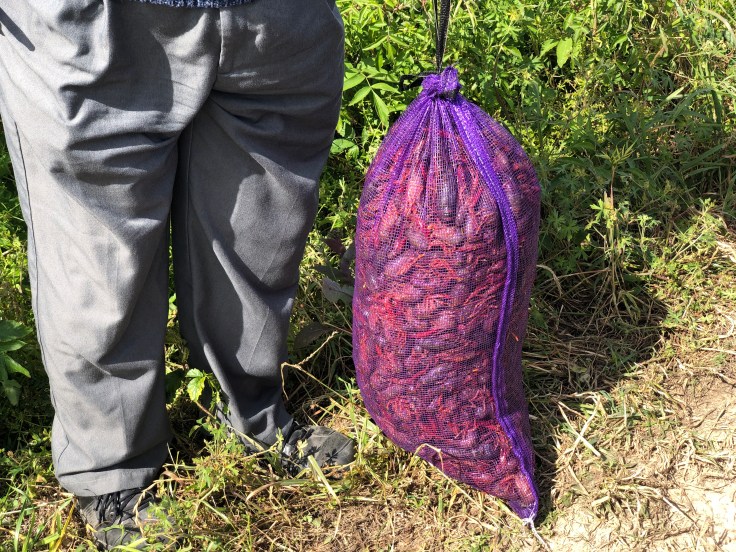
They did off-load the “catch” from the previous trip – two bags of crawfish…

img_1549

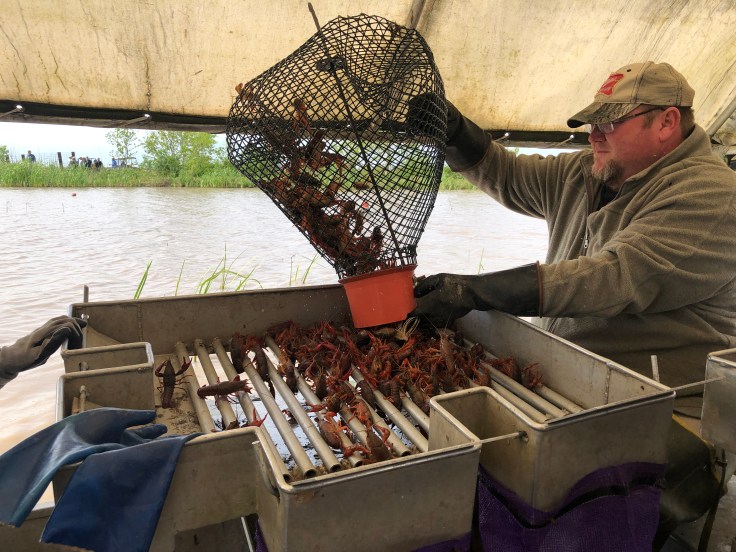
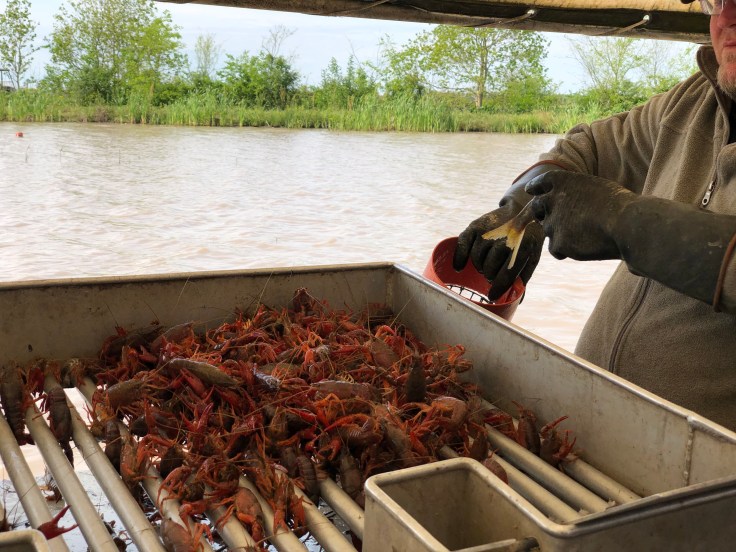
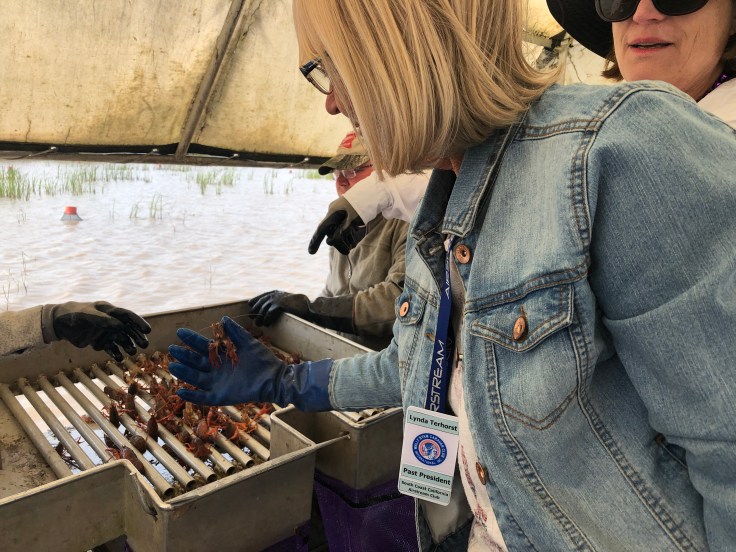
Once we board the boat and we set out into the pond we see how it works:  The driver has these red-topped traps.  He throws in a piece of fish and he sets the trap in the water, picking up another that has been sitting in the pond.  He dumps the crawfish out onto this odd table…

img_1552img_1553

The table has bars that slope towards openings where the bags are attached.  You sweep the crawfish towards the openings and they fall into the bags.  Small crawfish fall between the bars onto a surface which allows them to be swept back into the water…

img_1556

Lynda tries her hand at assisting the crawfish in sliding along the bars and falling into the bags…

img_1566img_1572img_1581img_1582

After twice around the pond our two bags are full and we land and climb off the boat.

We watch the next group board, and we walk back to the crawfish house.  Here we gather for lunch.

img_7539

But before we eat we learn a little about the crawfish.

Crawfish grow for about one year, molting about once per month and growing one size each time.  If they are not caught sooner, they might live two-three years.  The growing season starts in September, and, depending on the weather, the farmer might get two crops per year.  The optimum water temperature is 72 degrees; it is a little cold this season… They can harvest about 500 pounds of crawfish per acre per year.  Major predators are otters and minks.  Alligators keep them away, but there are not many alligators around these parts…

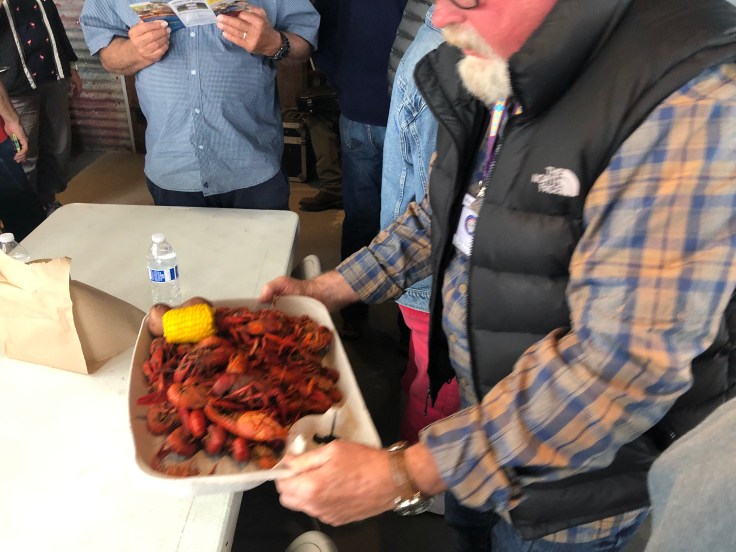
Lesson over, we get in line for our crawfish.  These have been boiled, the most traditional way to cook crawfish – similar to boiling lobster.  In case you don’t know what a crawfish looks like, it is a miniature lobster, sort of like a fresh water lagostino…

Here is what each of our lunches looked like:

img_1588

This is my platter (I asked for a small portion)… Before…

img_1589-1

After…

img_1590-1

You see, you pull off the tail, pull out and eat the meat from the tail (the meat is about the size of a tiny cocktail shrimp), and throw the shells back of the platter.  It is quite a labor intensive operation.  I believe your fingers will wear out before you get full…

Along with our meal we were treated to a Cajun singer and musician…

img_1587

We enjoyed our meal; soon we were on our way back to the Villa.

We had a relaxing day; the GAM scheduled for 4:00 was called off due to about 20 minutes of thunder showers…

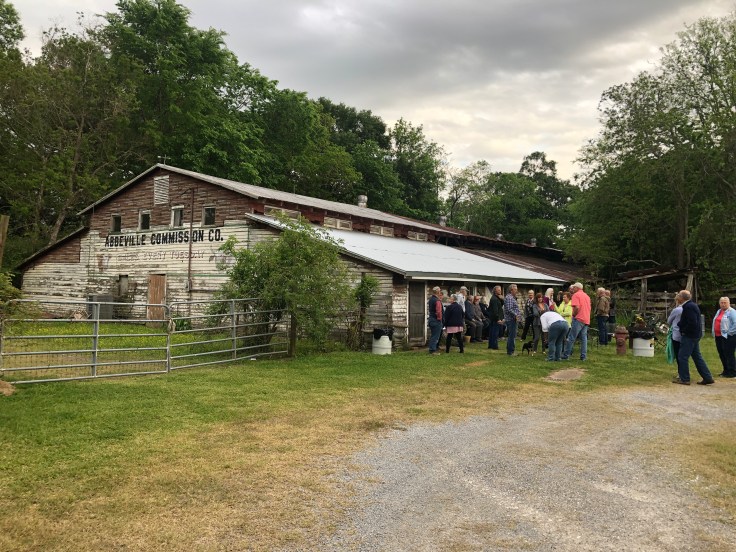
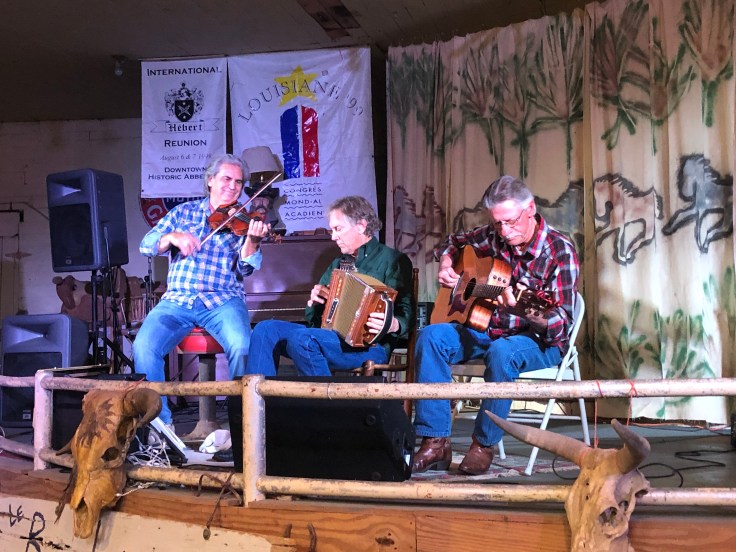
At 6:00 we set out for The Barn, to hear Cajun music…

img_1592-1

img_1591

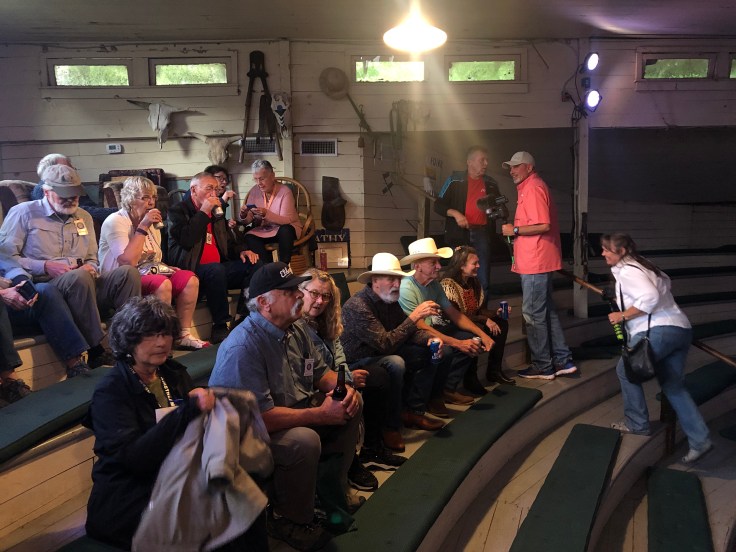
The building was built in 1946 as an cattle auction barn.  There was a small rustic amphitheater overlooking a pen where the animals were brought in to be bought and sold.  Today the amphitheater seats are still the same, but they built a stage atop the animal pens…

img_1593

We found a place to sit fairly close to the door, because you never know when leaving is the best option… The rest of the Airstreamers found their seats, too…

img_7542img_1594

There were three musicians, being introduced here by one of the owners of The Barn…

img_1595

When they got to playing it was a real toe-tapping scene…

img_1596

They finished after more than two hours – longer than I can sit on a hard, backless bench… But it was a fun evening to see how the locals have fun, and to hear (more) Cajun Music…!

And an enjoyable time was had by all…

2019-04-02 – Airstream Cajun Country Caravan – Travel to Abbeville, LA

Today is another travel day.  However, all travel days are short here in Cajun Country.  In total, we travel only 160 miles from campsite to campsite.  In fact, the only reason we move as much as we do is that a minimum of five locations are required on a National Caravan, according to the Airstream Club (WBCCI).

So today we drive from New Iberia to Abbeville – a total of 21 miles…!

The countryside is quite varied, but for the most part it is wide open spaces…

img_1532img_1531

The pictures above and below show sugar cane…

img_1583

There are a few small (very small) towns, and a variety of houses:  ramshackle, modest farm houses, very nice older farm houses, and, of course, starter castles and McMansions…  This trip was slow and easy…

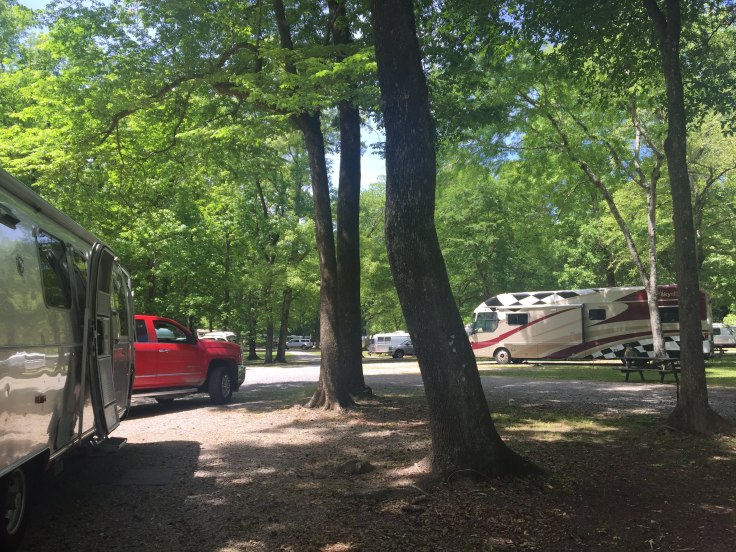
This campground is a total opposite of New Iberia; it is small, hidden back in the woods about one mile from the highway, full of trees (no satellite TV for me!), and no amenities other than full hook-ups.

img_7514

We parked and set up the Villa and had the rest of the day to catch up of my to-do list – I need to be finalizing the next leg of our trip after the caravan is over.  We will be heading to the east coast, travelling north a bit, then back west to Kentucky, where we begin Springtime in Kentucky Caravan on April 25…

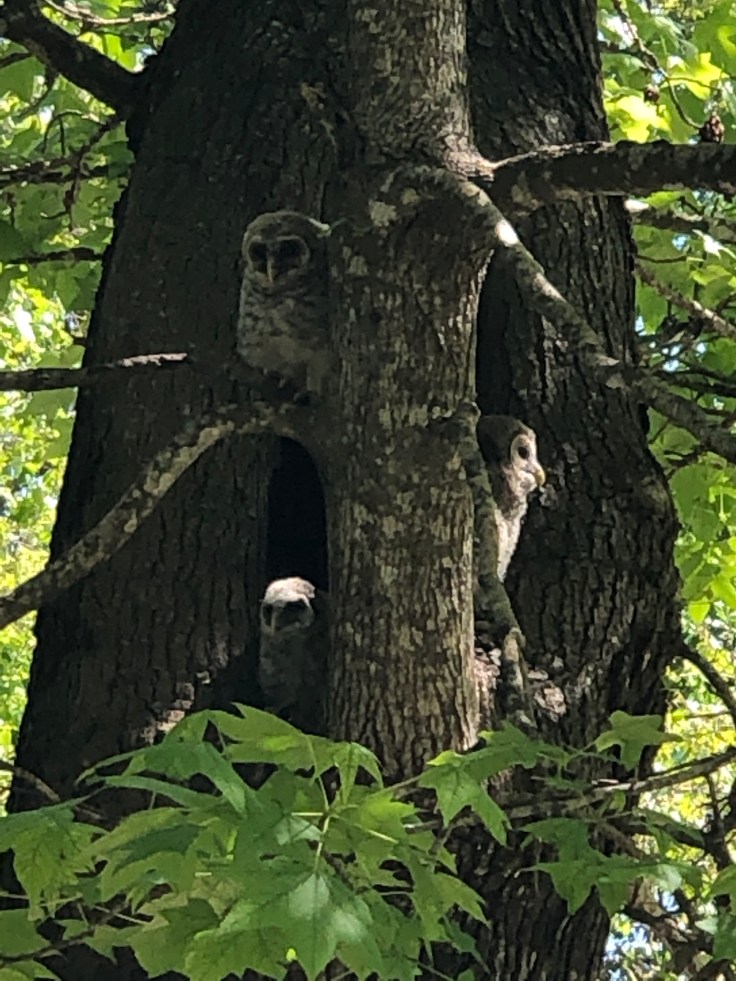
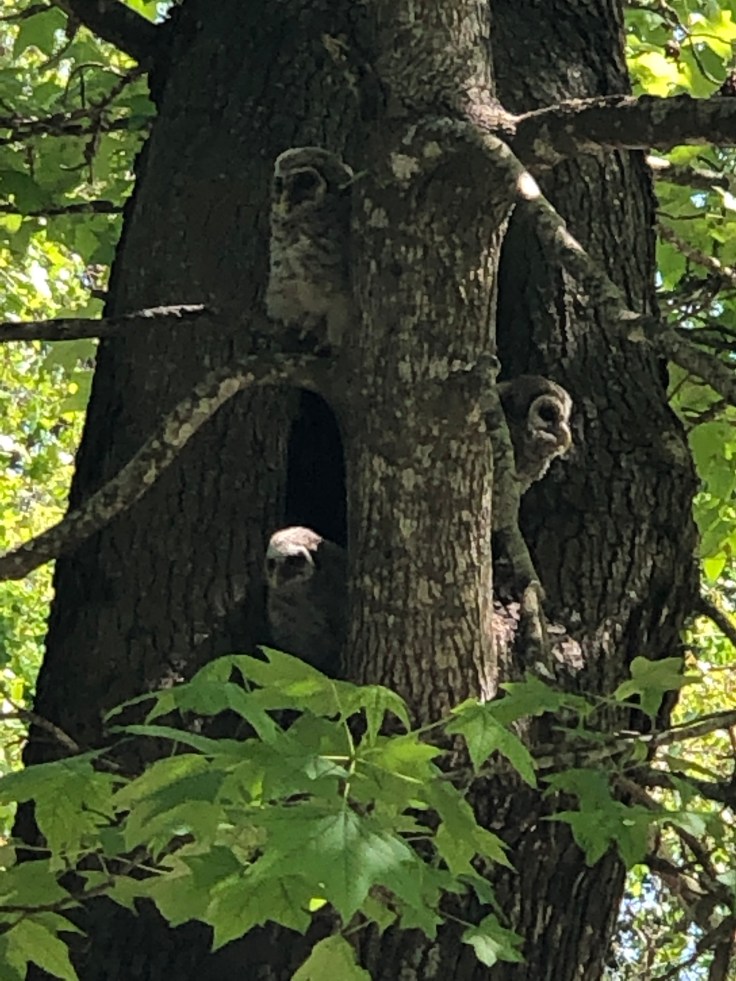
We did a lot of walking around the park to keep our Apple Watches happy.  We found this tree with a nest of three baby owls…

img_1524img_1527img_1529

This was probably the mom, watching nearby…

img_1530

We had a GAM again and turned in early.  And an enjoyable time was had by all…

And of course, the McAnoy family on a hiking outing…

img_0634img_0613img_0615img_0611

img_0604


2019-04-01 – Airstream Cajun Country Caravan – New Iberia, LA – The Rice Mill and Avery Island Tabasco

Our first stop today was the Konrico Rice Mill.  It was founded by Mr. Conrad, a local rice grower, in the early 20th century to mill his own rice to avoid paying shipping costs to the far away mills “up north”.  Other neighboring rice growers asked him to mill their rice, so by 1912 he had built this large rice mill and ceased being a farmer…

img_1487img_1488img_1489img_1490

We saw a video, and had a mini tour of the facilities.  It was pretty basic.  They were not milling today, so it was quiet.  Of course we visited the store where we could by trinkets and rice products… The amazing part is that the mill operates pretty much as it did in 1912, with the exception of modernization of some of the equipment – like replacing the steam engine with an electric motor on one piece of equipment, and having relatively modern bagging machines.  They still use a stencil and an ink roller to put the company name on the bags of rice…

From the rice mill we drove to Avery Island.  This is the third island we have visited here in SW Louisiana.  The Weeks’ family plantation (Shadows on the Teche) was on Weeks Island, the Jefferson Victorian house was on Jefferson Island, and today we go to Avery Island.  There are five “islands” here in this area.  However, these are not islands at all.  They are the five salt domes that have become the highest land area around.  They are not even near any meaningful water.  It’s just a bit on Louisiana nonsense that people here take for granted…

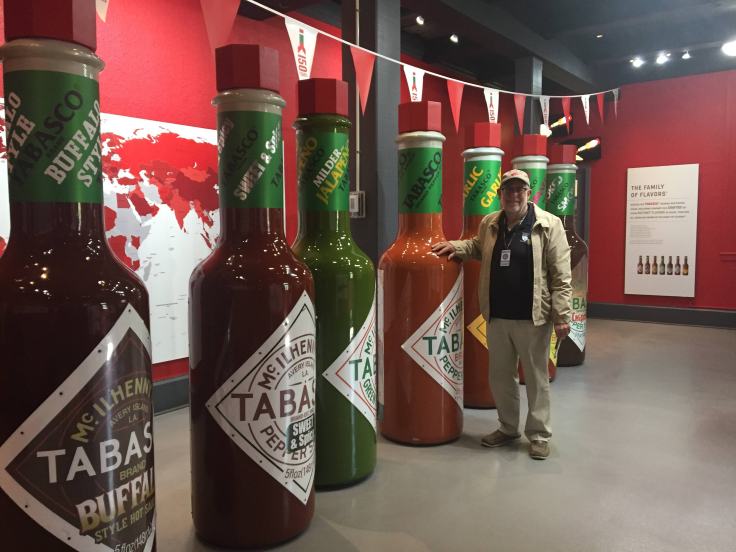
Anyway, we drove to Avery Island where the McIlhenny family has been growing peppers and making their famous Tabasco sauce for all these many years…  Edmund McIlhenny started growing peppers and making his sauce in 1868 after his banking job ended during the Civil War.  Five generations have run the company ever since.

We watched videos of the growing of the peppers and the making of the sauce.  Basically the peppers are ground into a mash, salt is added, and the mash is cured for three years on white oak barrels.  Then vinegar is added and the soup is stirred for three weeks.  The solids are strained out and the sauce is bottled.  That’s it!

We started, of course, with lunch…

img_1500img_1494img_1492

The walking tour meandered around these very substantial buildings…

img_1491

The barrel room.  The tops of the barrels are covered with salt to keep them sealed…

img_1493

The vats where the vinegar and the mash are stirred…


img_1496

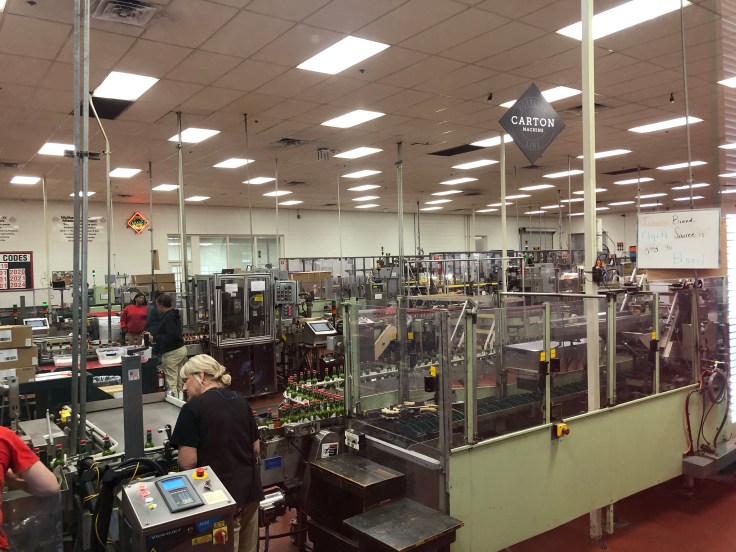
The fun part – the four bottling lines.  There had bottled about 200,000 bottles so far today…

img_1497img_1498

And some fun pictures…

img_7509img_1501

We returned to the Villa, happy hours ensured, and an enjoyable time was had by all…

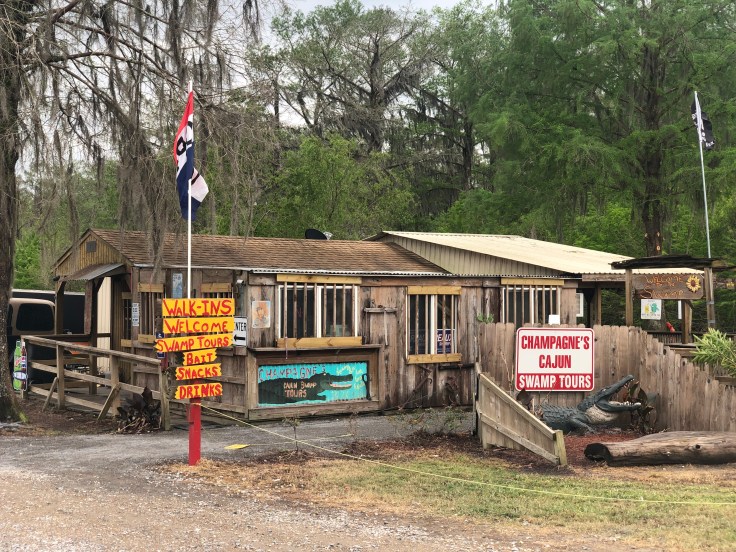
2019-03-31 – Airstream Cajun Country Caravan – New Iberia, LA – The Swamp Tour!

img_1419

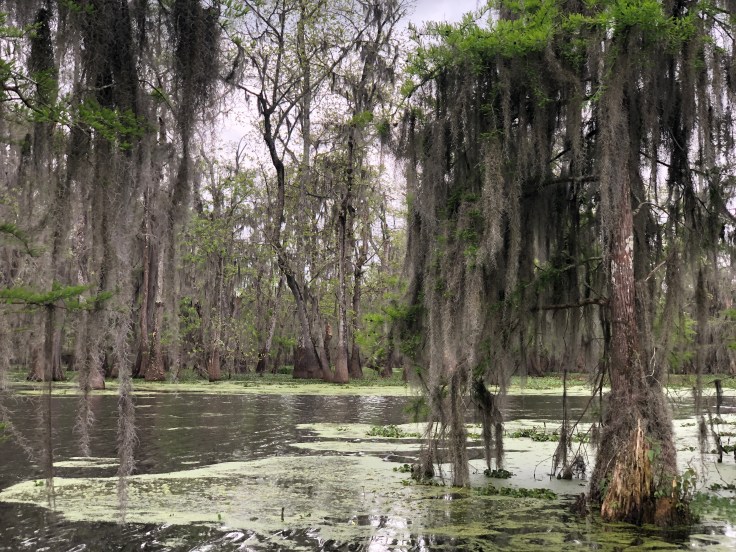
Today is The Swamp Tour!  I had no preconceived notion what a swamp tour was going to be, but this tour was not what I expected…  My picture of a swamp was an area of low-lying, muddy, bug-infested, uncultivated ground where water collects; a bog or marsh.  I think mud, puddles, stagnant, smelly water, and dangerous critters – bugs, snakes, and alligators…

In reality, the better definition is that a swamp is a forested wetland.  Many swamps occur along large rivers where they are critically dependent upon natural water level fluctuations.  Other swamps occur on the shores of large lakes.  The swamp we toured was both – adjacent to a large lake and fed by a bayou (a slow moving, muddy river).

But as for my preconceptions, I did not expect this…!

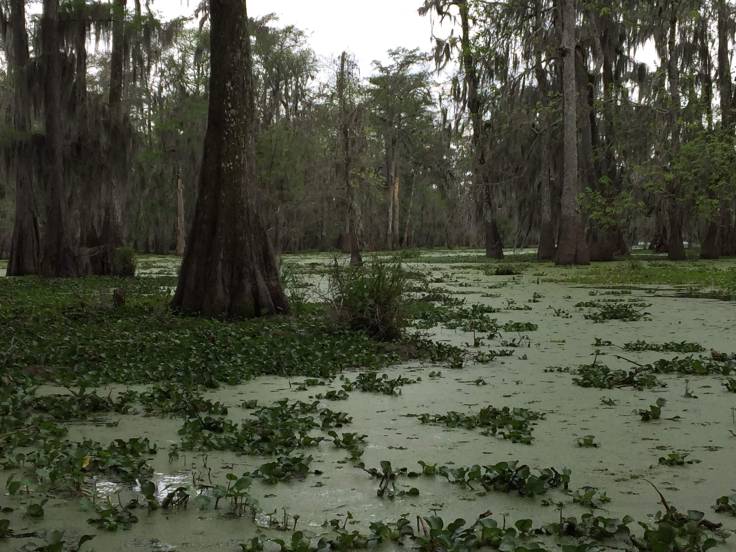
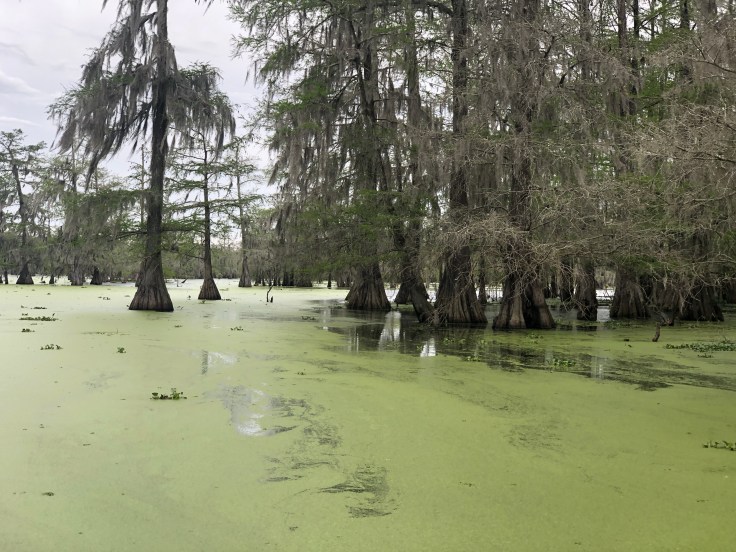
We boarded a boat with 25 of our friends and slowly cruised though the forest.  The water was covered with green stuff, what most people would call pond scum or algae.  It is neither…

img_1406

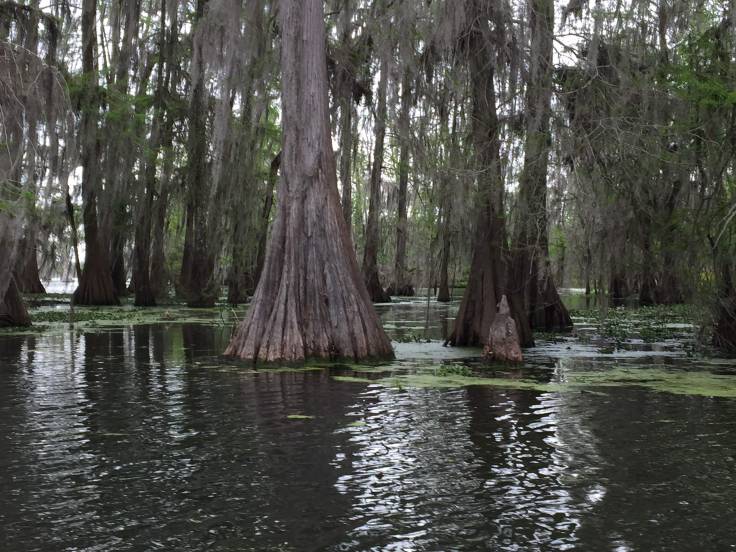
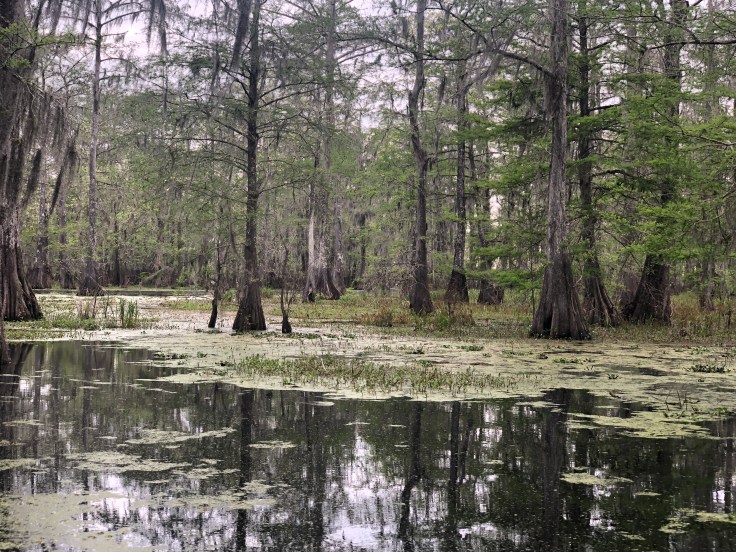
The reality is this:  it is Lemna Minor, or duckweed.  If you look closely it is like tiny water lilies; it forms an archetypal river scene of muddy, green waters lazily flowing under bald cypresses and water gum tupelos.  That’s what these trees are.

Duckweed is a very natural part of the enclosed environments of such swamps, and is a valuable source of protein for animals that consume it, notably most kinds of waterfowl. It has more protein than soybeans, and some parts of the world actually raise it commercially as a food crop.  To our “manicured lawn” mentality, it appears to be scum, the sign of stagnant water, as it no doubt did for generations of settlers who avoided swamps like the plague.  The ducks and other birds apparently disagree.

The swamp was quiet, cool, bug-free, and odor-free.  It was a beautiful, quiet time to contemplate the beauty of a fully functioning ecosystem.  The water here is 1′-2′ deep, but during spring flooding it can rise another 4′-5′.  The adjacent lake, in contrast, is 8′-10′ deep normally.

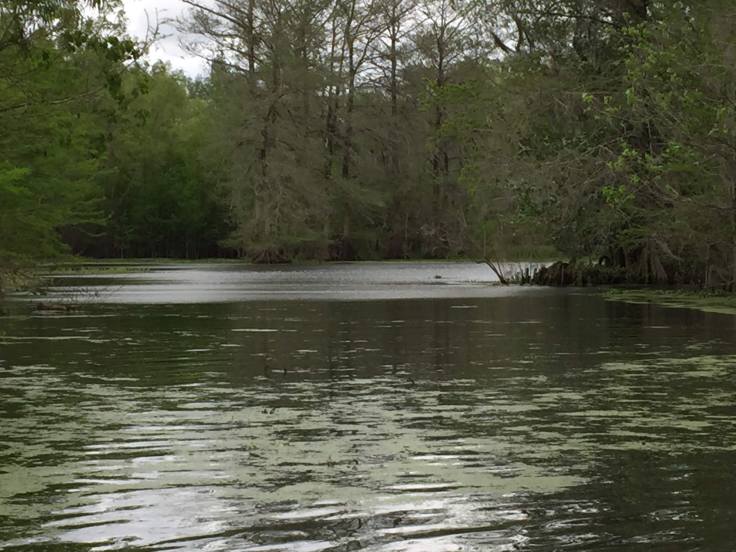
As we floated along we saw wonderful vistas into the forest…

img_7489img_7490img_1400img_1403img_1405img_7495

These larger plants growing along with the duckweed are an invasive species, and the State does eradicate it when necessary…

img_1410img_1422img_1433img_1446img_7506

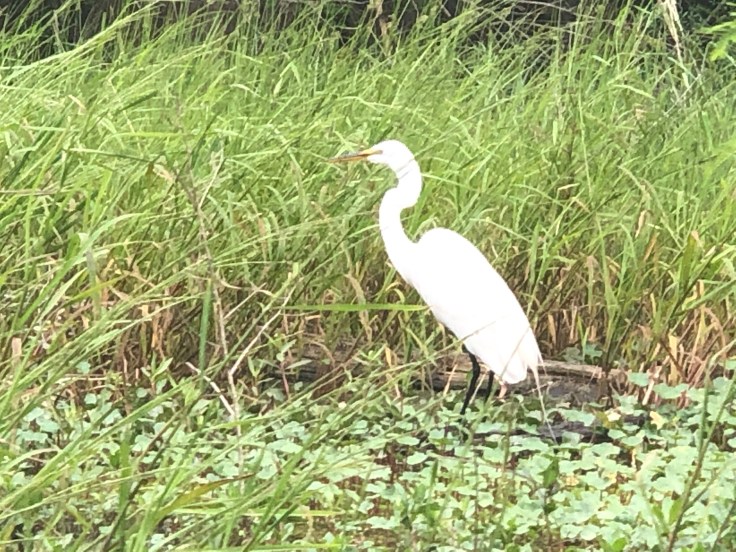
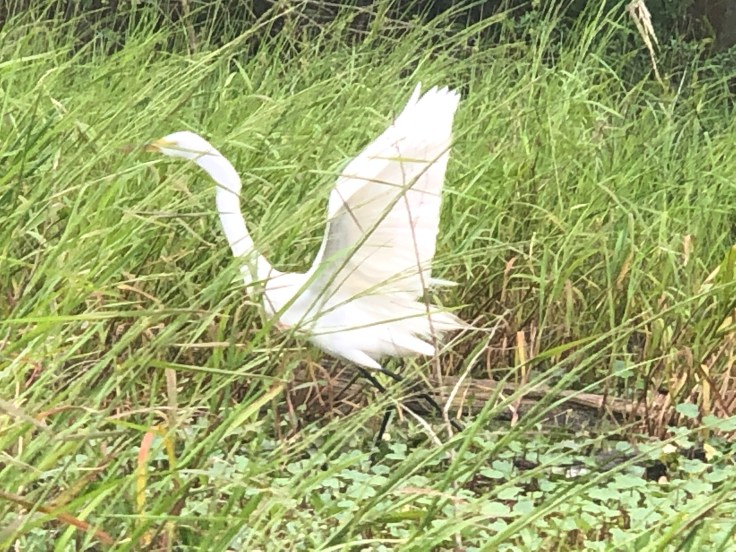
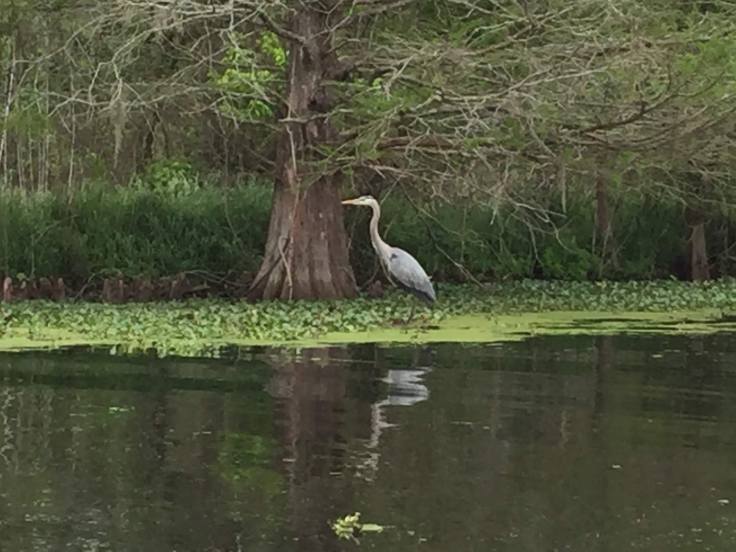
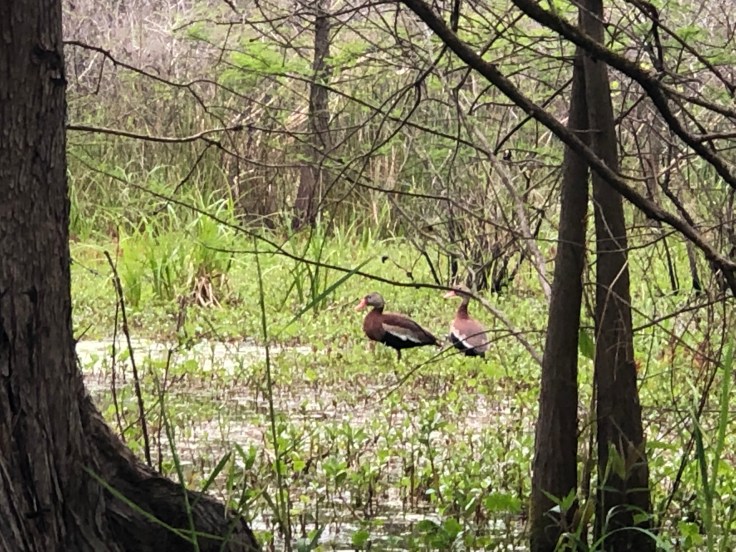
We saw birds.  Lots of birds.  The tour bordered on a bird sanctuary where we could see hundred of nesting egrets.  We also saw ibis, heron, and ducks…

img_1464img_1465img_7504img_1453img_7503img_1448img_1444img_7500

img_1429img_1426-1

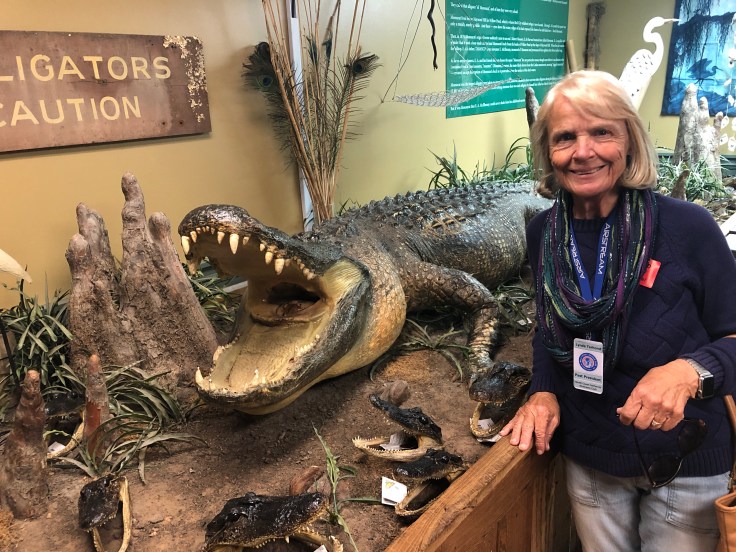
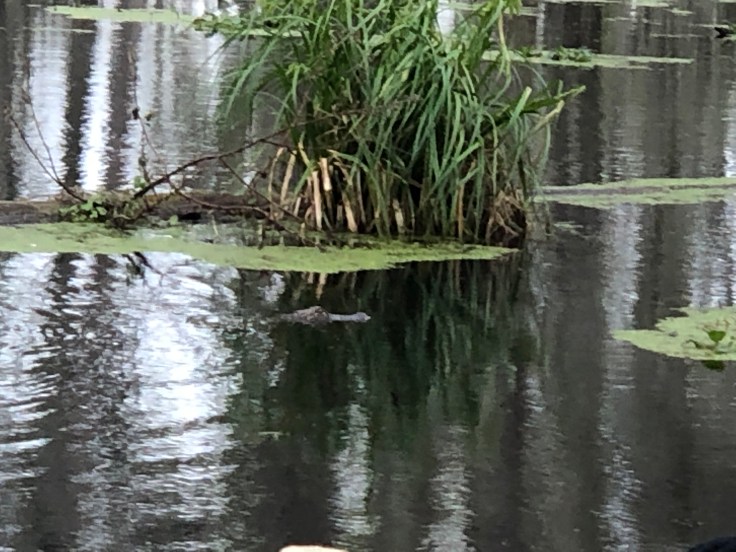
And, yes, we saw a small alligator.  Normally, on warm days, alligators are everywhere.  But today is cold and the water is warm. so the alligators stay underwater as much as possible…

img_1417

We spent two hours on the swamp.  It was delightful, something that should not be missed if you have the opportunity…

We returned to the docks:

img_1395img_7487

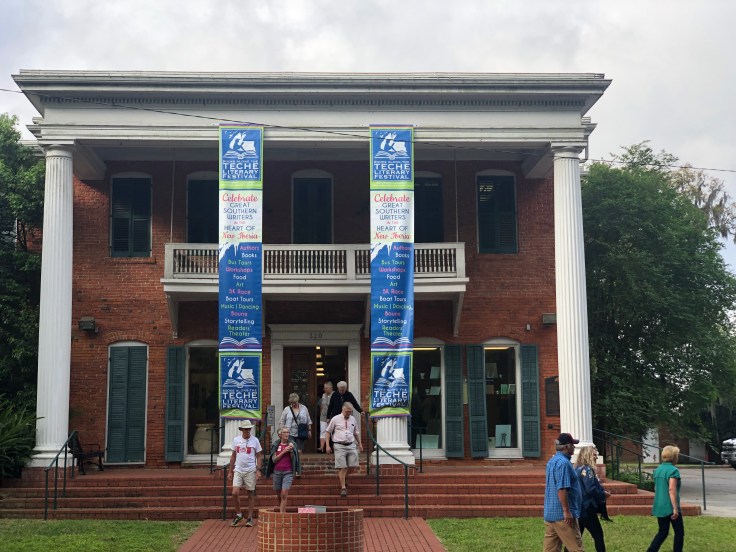
We drove back into “downtown” St. Martinville.  Another totally dead town… We ate at Clambaugh’s – sort of an event venue with no decoration or atmosphere at all, but pretty good food.  Then we walked over to the cultural center to see more displays of the Cajun and Creole cultures.  Interestingly, there were three or four exhibits that purported to explain the difference between Creole and Cajun, and they all contradicted each other…

img_1474

As best as I could figure, Cajuns are descendants of the Acadians who were deported from Nova Scotia in the late 18th century.  Creoles were here when the Acadians arrived.  There are Creole who are white and there are Creole who are people of color – African, Spanish, Mexican, Indian.  They all seemed to assimilate until the Civil Rights movement in the 1960 encouraged them to reclaim some of their ethnic heritage.

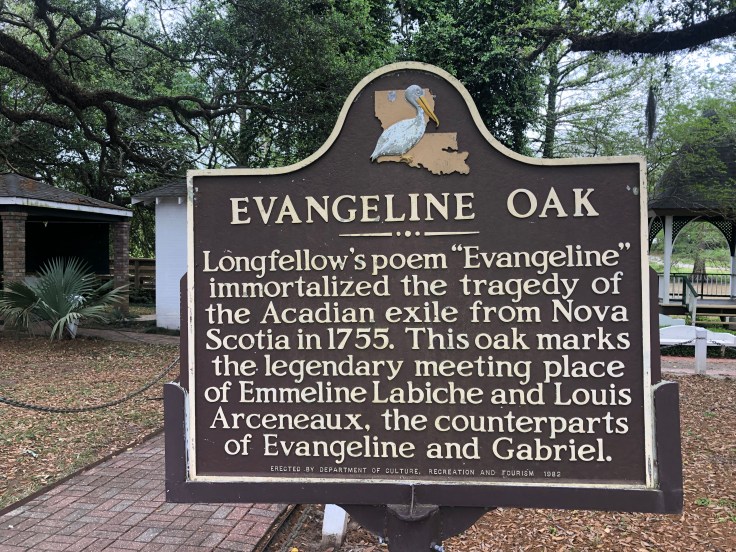
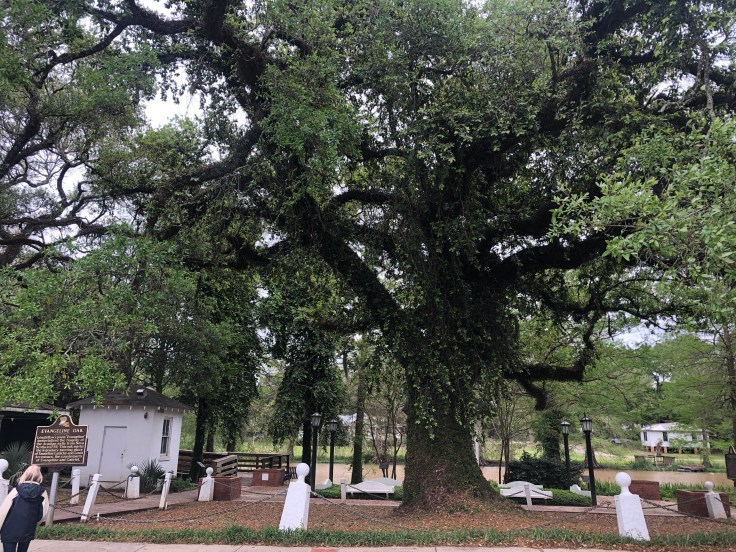
Also at this location we saw the Evangeline Oak, made famous by the Longfellow poem, “Evangeline”, about Acadian lovers who were separated during the Nova Scotia deportation and who tragically meet again here.  The poem is based on a semi-true story.

img_1473img_1472

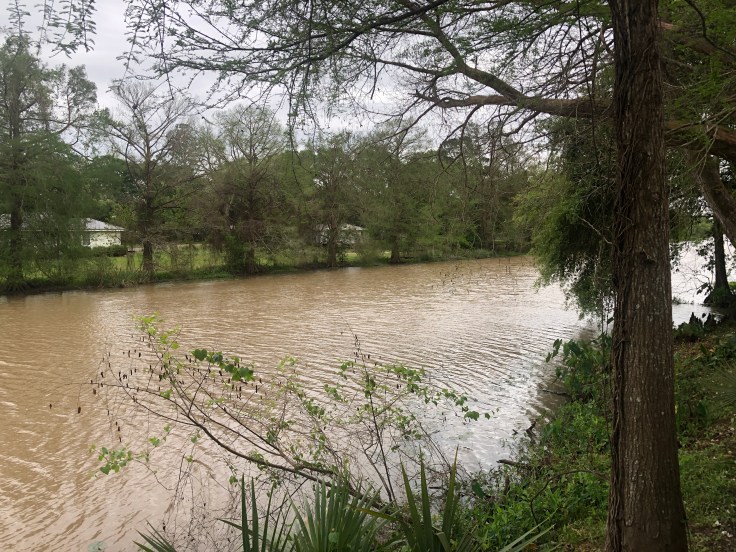
We had another stroll along The Bayou Teche…

img_1475

We returned to the Villa.  We had another Drivers Meeting, and we turned in early.  It was cold!

And an enjoyable time was had by all…

2019-03-30 – Airstream Cajun Country Caravan – New Iberia, LA

img_1346

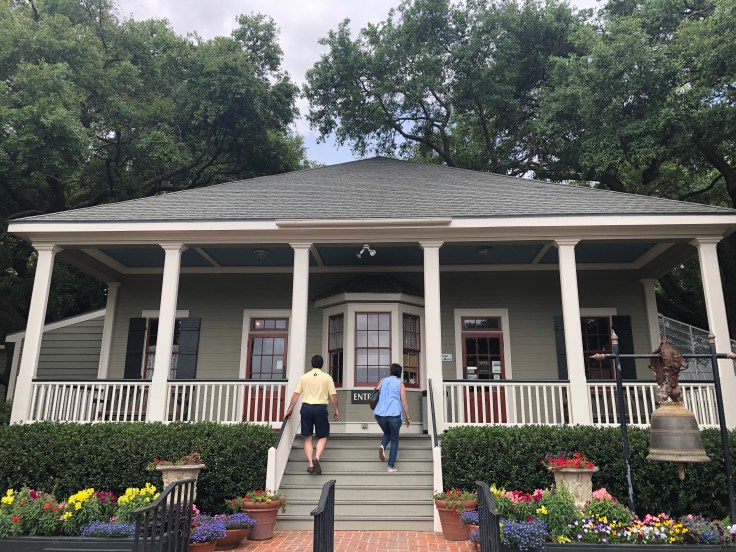
Today we get to see a Big House!  No, this isn’t it – this is the Visitors Center, across the street.  The house is called “Shadows on the Teche”.  Shadows is the house, named for the shadows from the giant Live Oak trees that envelope the house and grounds.  Teche is the name of the bayou the house faces.  (A bayou is a shallow, slow moving, muddy  river…)

img_1347

Here is the Big House, in all its glory…

img_1351

The house was built between 1831-1834.  It was occupied by four generations of the same family until 1958.  Ownership was transferred to the National Trust for Historic Preservation one day before the fourth generation occupant died…

The house today sits on 2 1/2 acres near the center of the town of New Iberia.  When it was built it was the center of a 158 acre farm.  The farm was only as wide as the current property, about 325′, but it stretched over two miles in either direction.  The family’s wealth came from their sugar cane plantation about 15 miles away.  (Due to swamps, bayous, and water being generally everywhere, it took 5-6 hours to travel from this house to the plantation…)  This farm was used for growing food to feed the family, their employees, and their 200 slaves.  Fortunately, right before the Civil War the owner subdivided the farm with the intention of selling town lots and small farms.  The war interrupted all that.  However, after the war, they were able to sell the lots as needed to raise cash, and they were able to hire and pay their former slaves to keep the plantation going.  In contrast, many (most?) plantation owners lost their land to pay taxes and other debts…

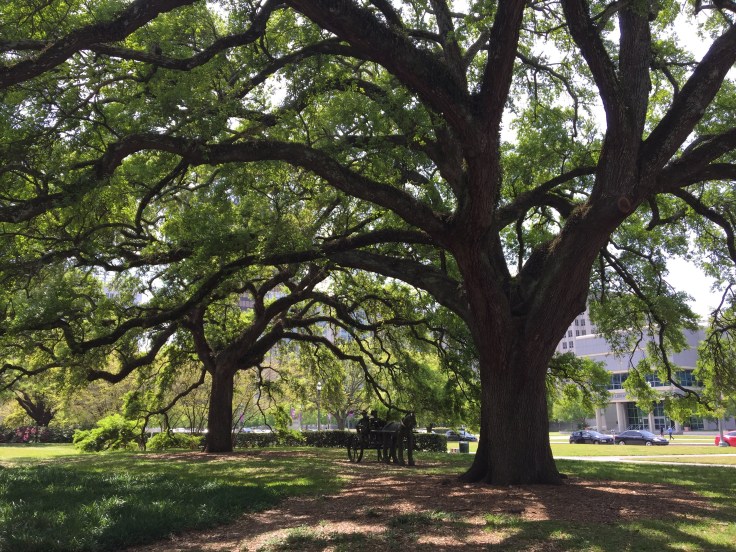
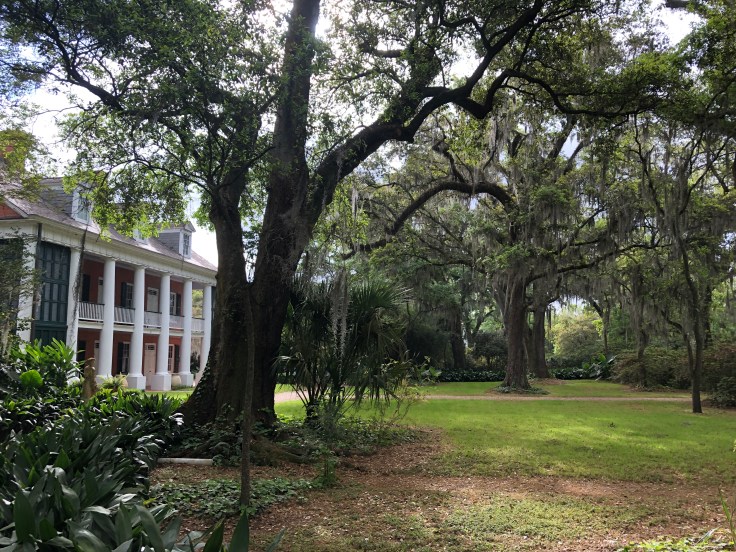
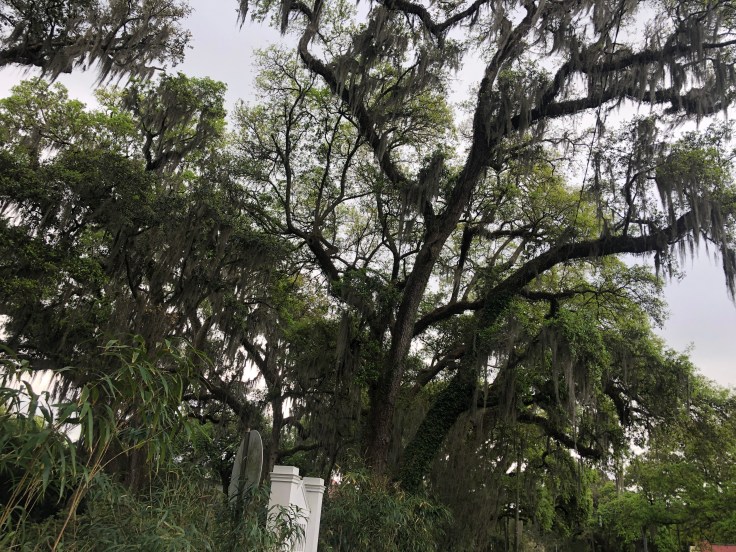
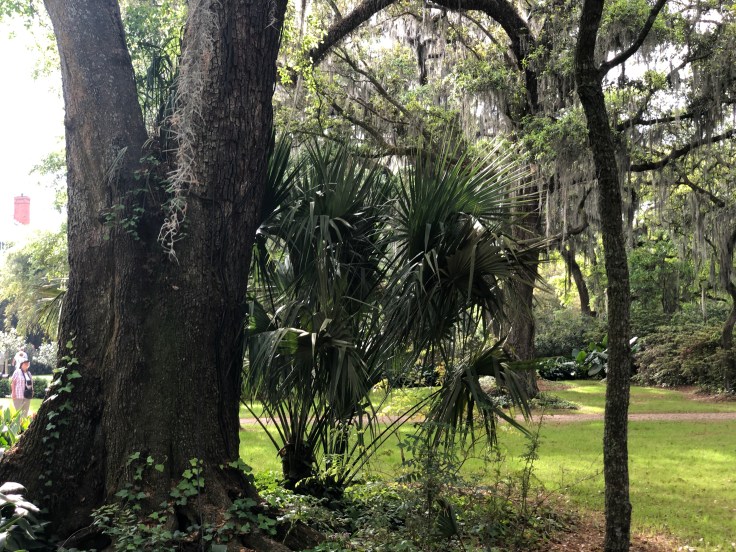
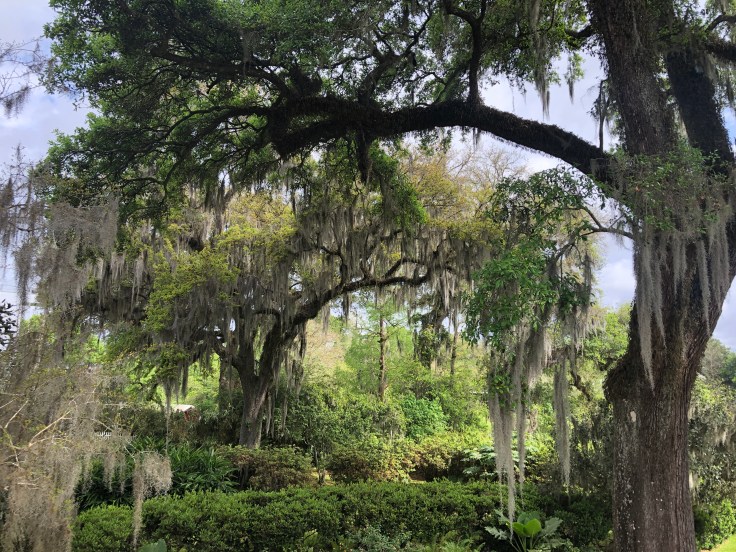
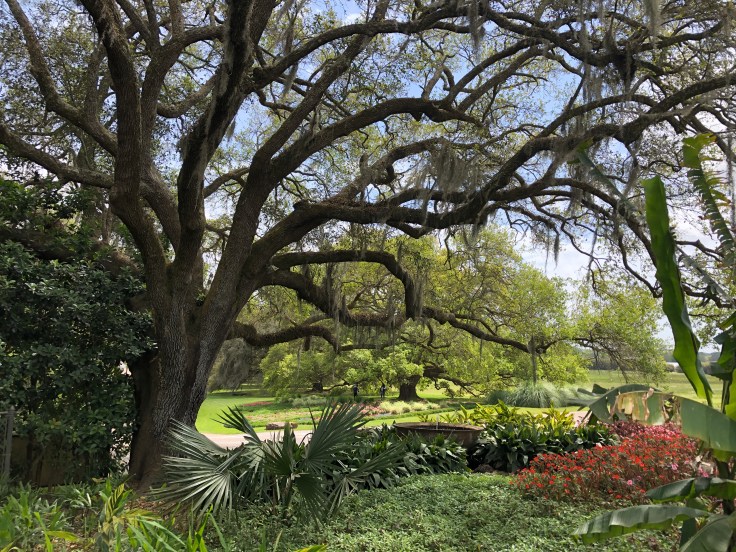
The grounds are beautiful, shaded by these 250 year old Live Oak trees…

img_1349img_1348img_1350img_1352img_1367img_1368img_1372

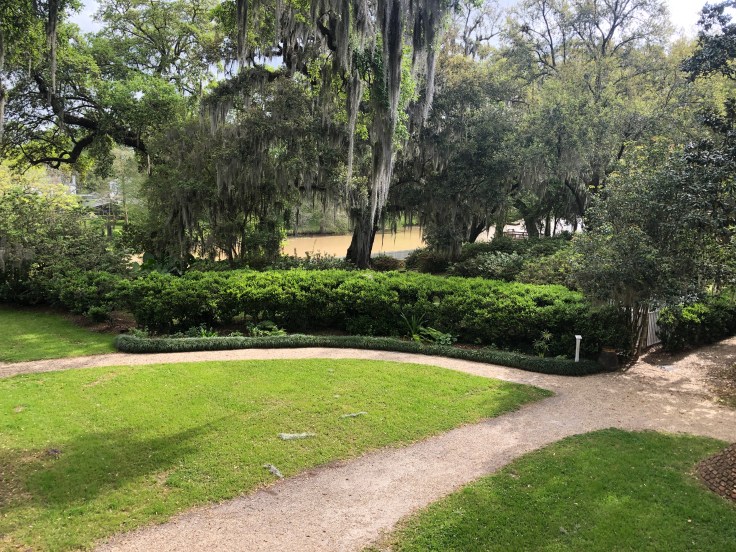
Behind the house is the Bayou Teche…

img_1357

We began the tour of the house on the front porch.  In contrast to plantations in Virginia (Mt. Vernon) the front door faces the street, not the bayou.  The stairs are here on the exterior, because interior stairs would block the breezes.  Everything about the design of the house is intended to maximize bringing the cooling breezes through the house.  Another unique thing is that the main living quarters are on the second floor, as protection from potential flooding.  This house has never flooded, but it has come close.  It is on the highest land in the area – about 18′ above sea level…

img_1355

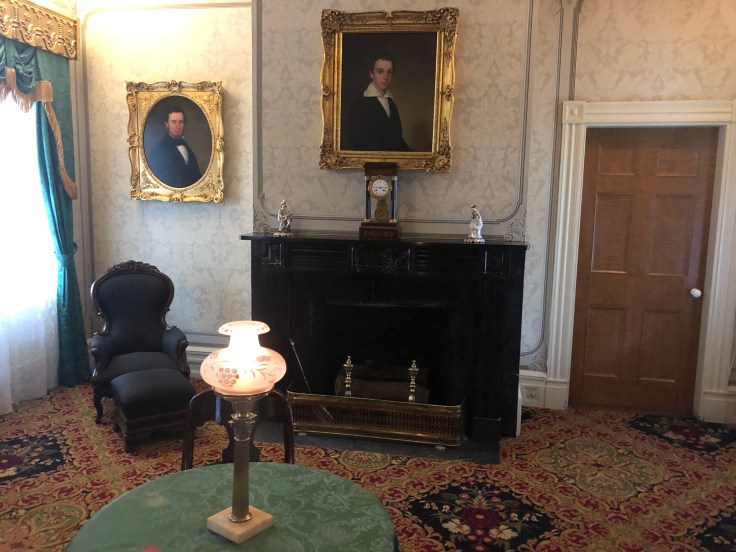
The first room we saw upstairs was the master bedroom and its adjacent sitting room..

img_1359


img_1360

The Living Room is in the center of the house, facing porches in the front and in the rear.

img_1363

Two secondary bedrooms complete the rooms on the upper floor…

img_1364

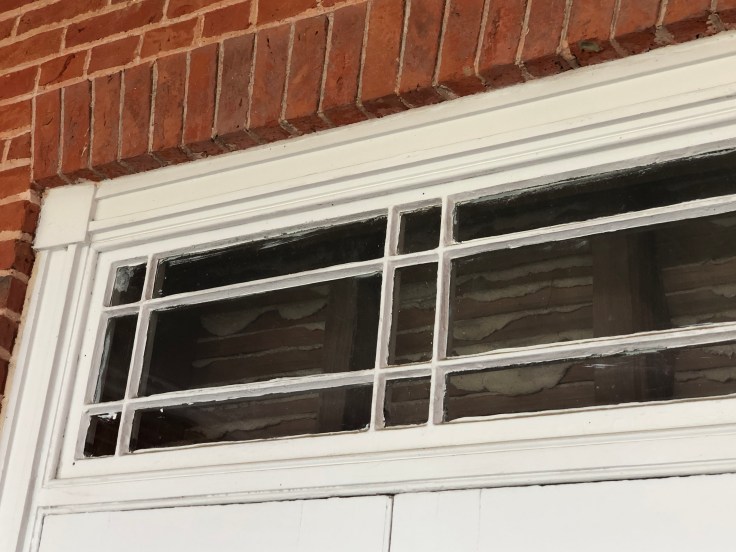
We noted that these clerestory windows are for decoration only – inside is a plastered wall…

img_1371

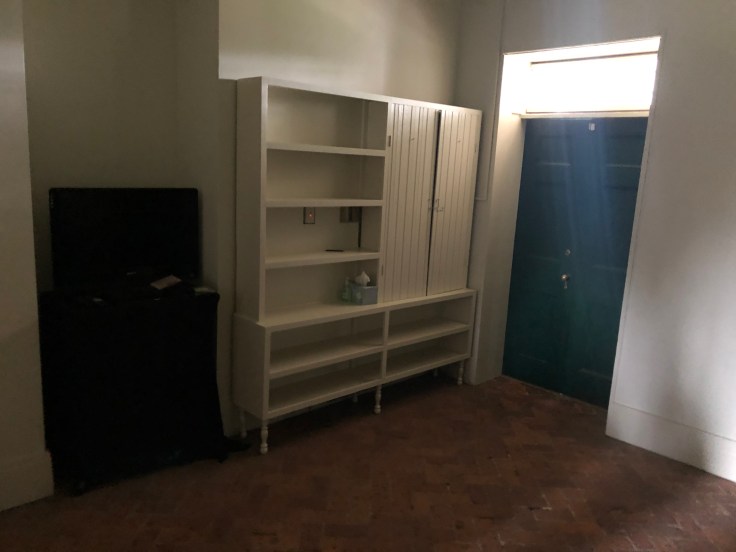
On the ground floor is a work room and storage room…  The Kitchen was in a separate building behind the house.

img_1373img_1375

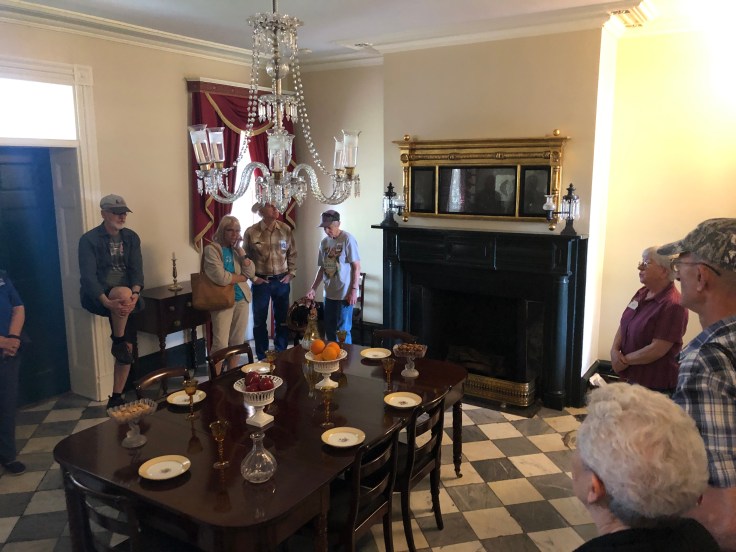
The formal Dining Room, used only for parties and distinguished visitors, is in the center of the ground floor.

img_1377img_1378

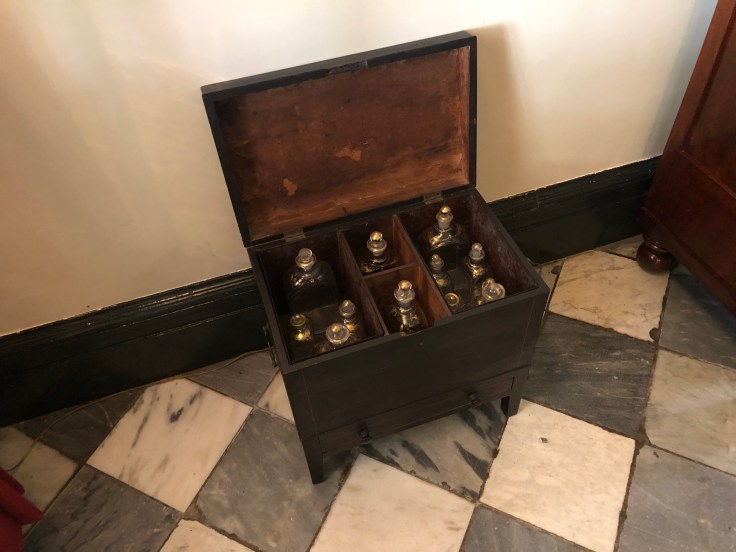
In a corner of the Dining Room is a “cellarette”, where wine and other beverages were kept.  Ice was inserted into the drawer below the bottles…

img_1379

There was also an Office and a “Bathing Room” on the ground floor.  The Bathing Room contained a bathtub.  Other bodily functions were handled via a chamber pot or a commode chair… and slaves to empty them…

During the Civil War Union Troops occupied the ground floor rooms.  Mrs. Weeks refused to leave, and she continued to live upstairs.

After the war Mr. Weeks was able to retain the former slaves as contract workers on the plantation and to pay them in cash, probably thanks to having the ability to sell lots carved out of the original farm.

The final owner and resident of the house was Weeks Hall, great grandson of David Weeks, who had built the house but died (in New Haven, CT) before the house was finished.  Weeks Hall moved in around 1922.  He never married and had no children.  He added a bathroom and a Kitchen and lived in the house until his death in 1958.  He had started to restore the house, and the National Trust for Historic Preservation finished the job, taking out the kitchen and bathroom and adding climate control to protect the contents.

After our very fun tour we traveled a few miles away to Rip Van Winkle Gardens and The Joseph Jefferson House… Joseph Jefferson was a wealthy actor who played Rip Van Winkle in live theater productions all over the country.  He bought and built this place to have a country vacation home.

img_1392

The house was an ugly conglomeration of Victorian kitsch…Fortunately for you, dear reader, interior photos were not permitted, so you didn’t have to look at it; however, we did…

The grounds (Rip Van Winkle Gardens) are beautiful…

img_1390

We started the tour with lunch in the delightful cafe.  We had seafood bisque and muffuletta, a sandwich made with round Italian bread and filled usually with cold cuts, cheese, and olive salad.  The muffuletta is one of the great sandwiches of New Orleans and southern Louisiana.  Food was great!

img_1389img_1388

The fun history story here is that in the 1920s the house was bought by the neighbor, Mr. Bayless, a horticulturist.  He designed and planted the gardens.  In 1980 his son inherited the property.  Having the same opinion of the house as I do, he had a new house built not far from the current cafe.  Unfortunately, the entire property sits atop a salt dome, which was being mined, and oil drilling was taking place around the salt dome, which is quite common in this area.  Oops!  A drilling rig punched a hole into the salt dome and within a few minutes the lake dropped 150′ as it flooded the mines.  The receding lake also took about 60 acres of land with it, including the brand new house of Mr. Bayless.  Within a few hours the lake filled up again from the Gulf of Mexico via the local bayou.  Today the lake is brackish, it contains some salt water fish, and all that remains of the brand new house is the chimney…

img_1387

We returned to the Villa, and we had another GAM, where we met another five of the caravan couples…

And an enjoyable time was had by all…

2019-03-29 – Airstream Cajun Country Caravan – Traveling to New Iberia, LA

Travel days are generally slow and relaxing, especially when we are only traveling 41 miles…

We left Breaux Bridge (actually closer to Butte La Rose…) and proceeded on the route.  We are traveling in a clockwise manner around southwestern Louisiana…

img_1333

GPS devices on the computer, on our phones, and in the truck all told us to turn right when exiting the RV park.  Our leaders, and our caravan driving instructions, said turn left.  Apparently to the right is a pontoon bridge with overhead clearance of 9′-6″ (most Airstreams are just under 10′-0″…); also there is a levee to be crossed – steep up, then a steep down, leaving a rig bottoming out at the top.  Bad idea!

So we turned left.  We stopped to fuel the truck and to restock the refrigerator.  Then we stopped for a flagger at road construction.  Then we stopped to wait for a coal train… This is why a 41 mile trip took almost 3 hours… But the countryside was beautiful.  This is a prosperous part of the state, with many McMansions and starter castles lining the highway…

This RV park is part of the Sugarena, sort of a fairgrounds type of place.  The parking spots all have concrete pads and full hook-ups, including cable.  And no trees to get in the way of my satellite TV…

Shortly after we arrived most of the folks set out to do some shopping… very few trucks to be seen…

img_1338img_1340

As a side note, when we were at the State Capitol yesterday we saw these water-filled areas next to the Mississippi River:

img_7477

What you don’t see here is that for most of the year these areas are parking lots.  There are floodgates in the levees that are usually opened in April to help relieve the spring flooding down stream.  This year these floodgates have been open, and these parking lots and other overflow areas have been fully flooded, since February.  And the spring surge hasn’t started yet…

So after a relaxing afternoon we gathered at 4:00 for a GAM – Get Acquainted Meeting.  We will have four or five of these in the next few days.  We met with five other couples and we, well, got acquainted.  Tomorrow is our turn to host another five couples…

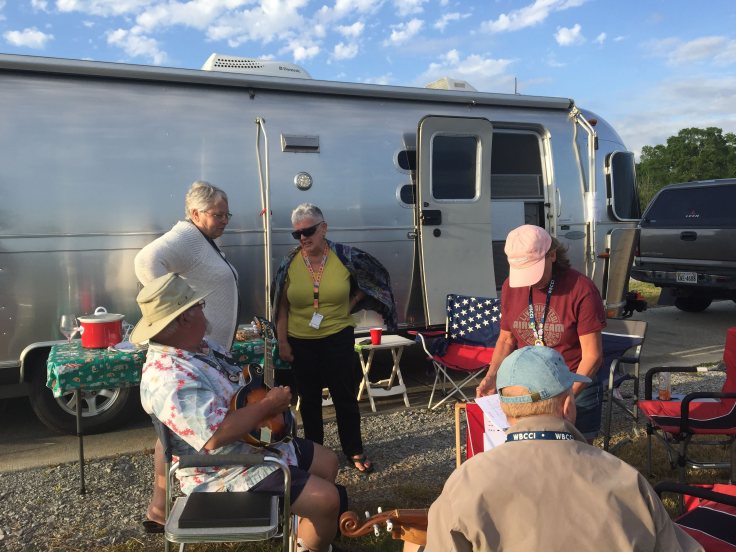
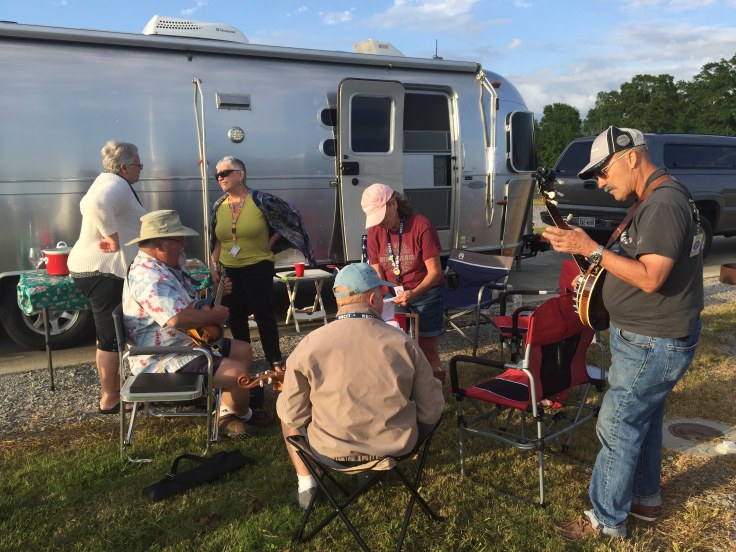
After the GAM/Happy Hour broke up some caravanners got together to play a little music…

img_7484img_7485img_7486

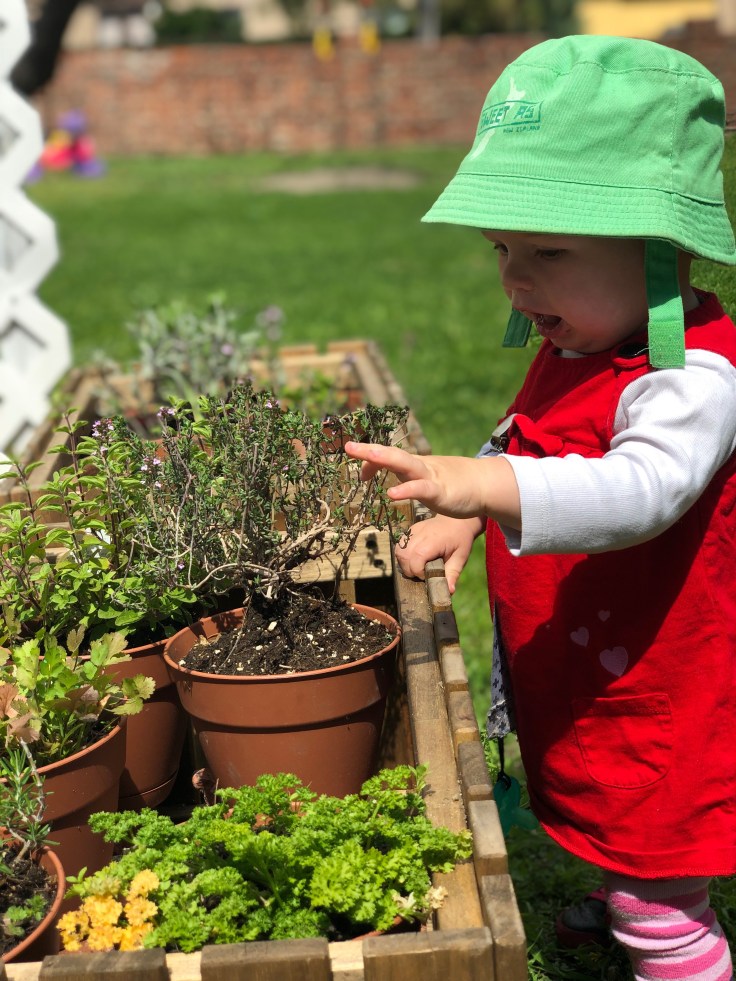
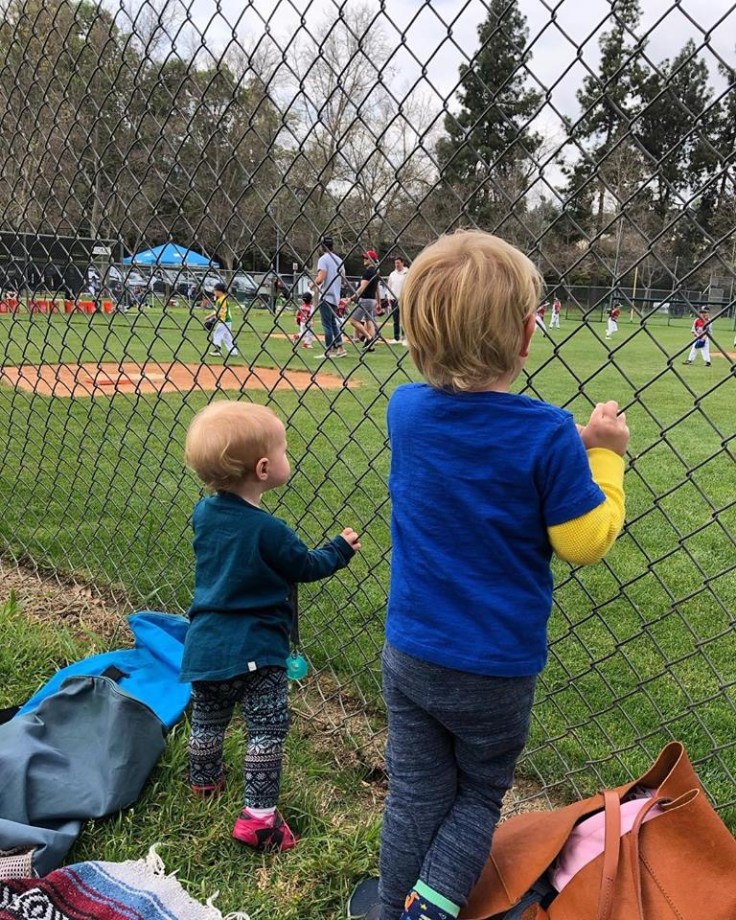
We turned in early, as is out custom.  And speaking of customs, here are a few pictures of some of our grandchildren

img_1342fullsizerender

img_1160

And an enjoyable time was had by all…

2019-03-28 – Airstream Cajun Country Caravan – Baton Rouge, LA – State Capitol and Rural Life Museum

We boarded the bus again for our ride back to Baton Rouge…

Our first stop was the Rural Life Museum, run by Louisiana State University.  It is on land that was originally a plantation; the family which owned the land donated it to preserve a record of plantation and rural life in Louisiana.  While the buildings on display are not original to this plantation, they were moved here from nearby plantations and restored.  The museum exhibits and the buildings were very interesting.  Our tour guide knew EVERYTHING about these buildings, and he was intent on telling us everything he knew… It was a bit of a bore.  But I loved looking at the buildings…

My only disappointment was that thee was no Big House here – apparently the house that was slated to be moved here was demolished one week before the legislature voted for it to become an historic landmark… We will see a Big House in a few days, and maybe more after the caravan is over…

The museum is set in a plantation-like setting…
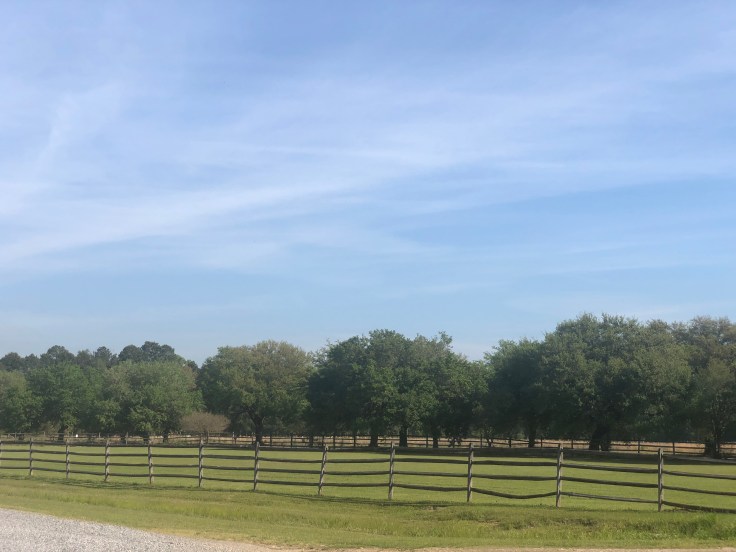
img_1239

img_7472

These are stone columns taken from a demolished library at LSU.  The scale is impressive.  They are solid, carved stone.  Many plantation houses had columns that looked like stone, but were, in fact, wood.  (IE:  Mt. Vernon…)  Why plantation owners had this perverse desire to live in the Parthenon escapes me, but I just love houses…

img_1240img_1241img_1242

The museum exhibit rooms contained many impressive mid-19th century funeral coaches…
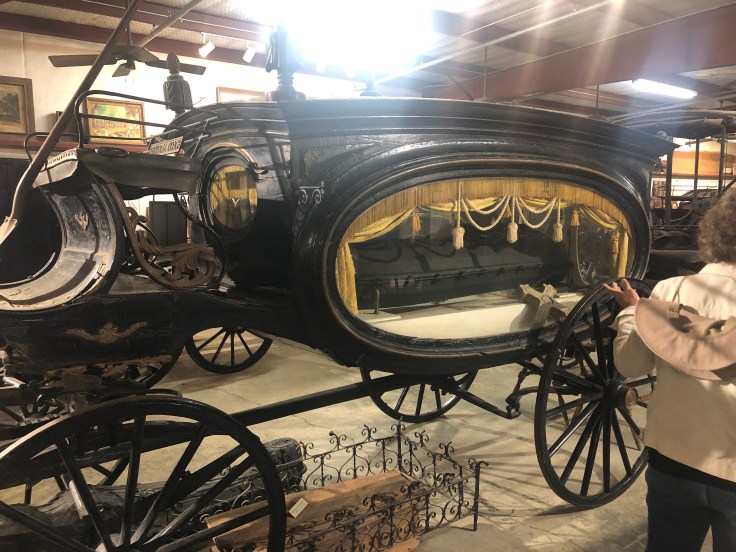
img_1243img_1244

The exhibit room was mostly filled with old junk that people had sitting around their garage and that they wanted to get rid of; they jumped at the chance to donate it for a tax deduction…

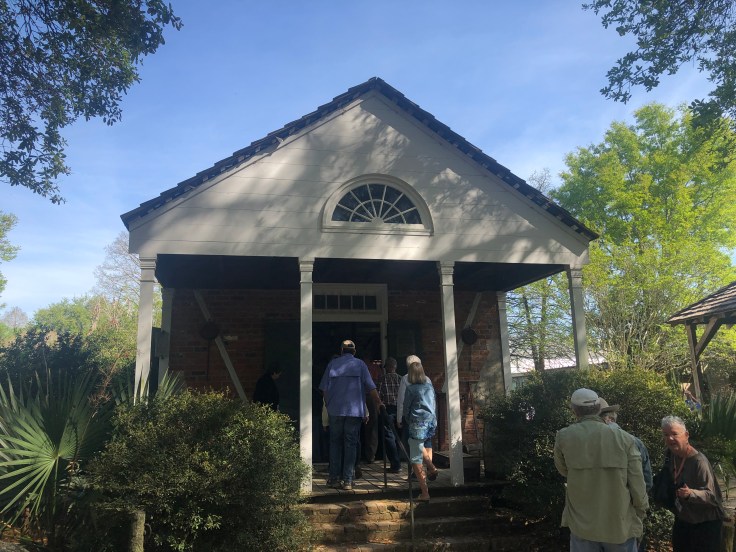
The Commissary or “Company Store”…  Sharecroppers were paid in script that could only be spent at the company store…
img_1247

The Overseer’s Home…  There were three classes of overseers: the professional overseer, who was in a social class similar to the plantation owner; the middle manager, often the owner’s son; and the hired hand, an itinerant farmer with little training or skills.

img_7458

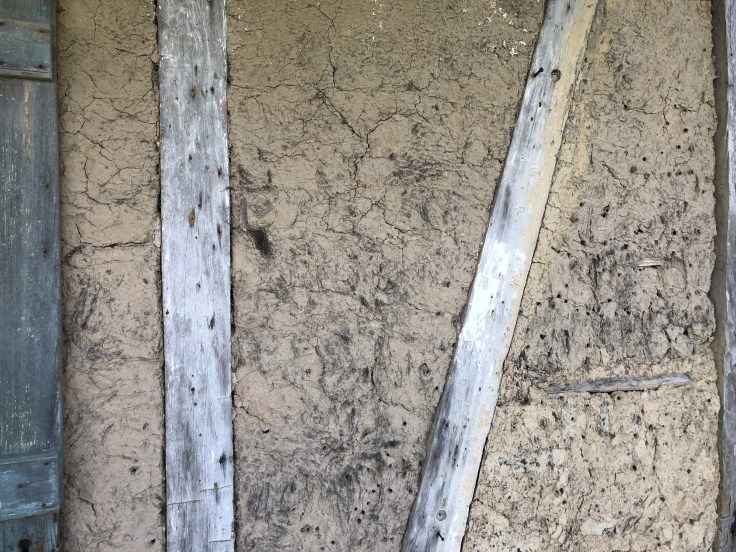
These buildings were wood framed; soft brick, made on-site, was used as infill for insulation.  It was either plastered over, or was covered with wood siding…

img_1253img_1252

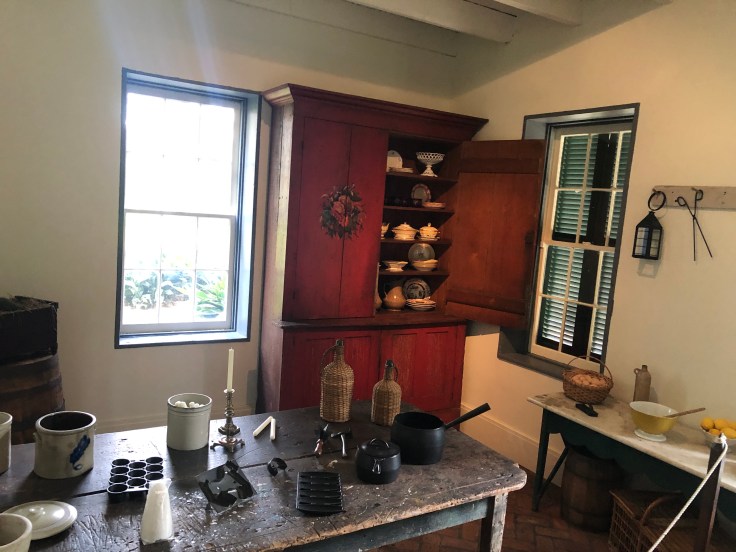
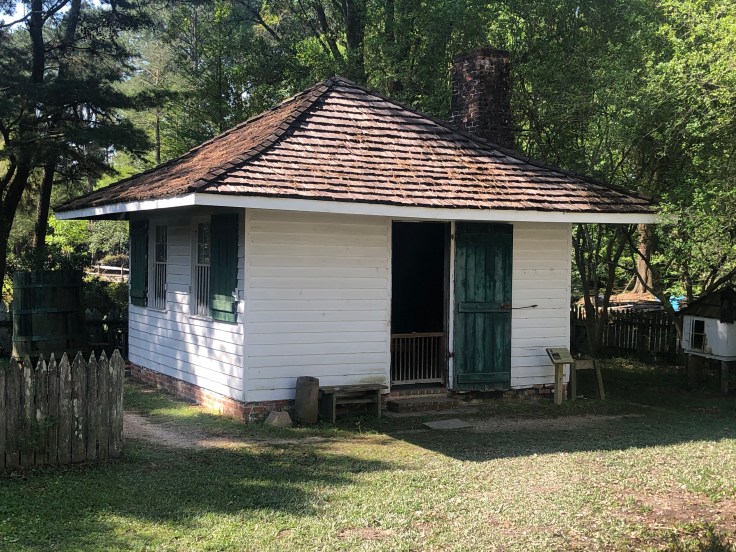
The kitchen…  This would usually be directly behind the Big House…
img_1251img_1256

img_1257

The Sick House, or slave hospital…  One room for examinations, one room for “lying in”…

img_1260img_1261img_1262

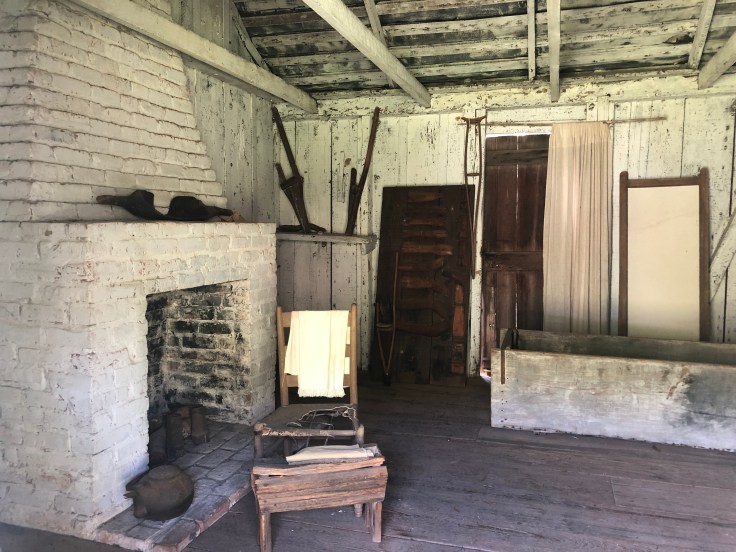
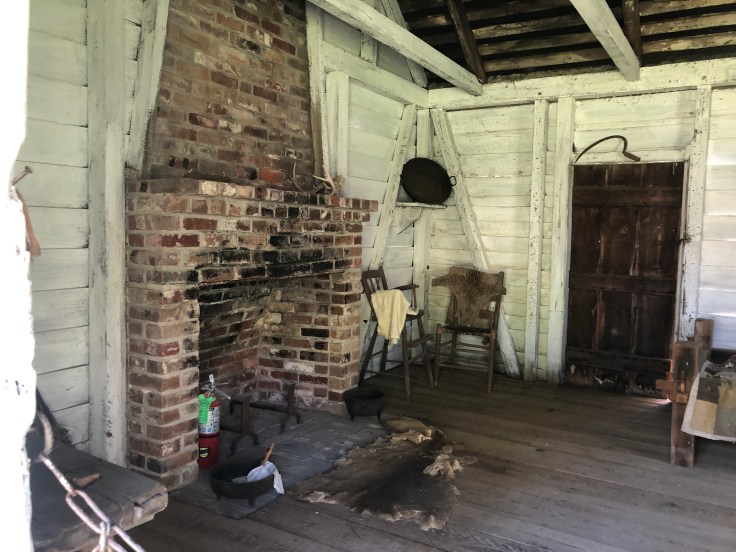
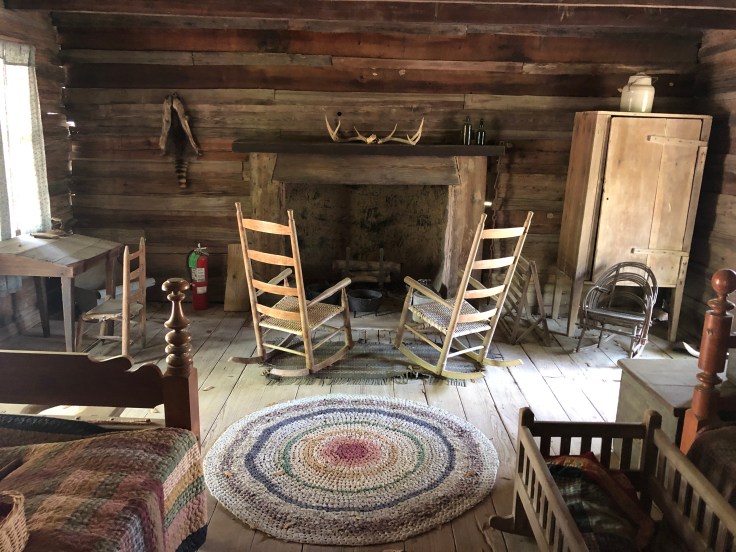
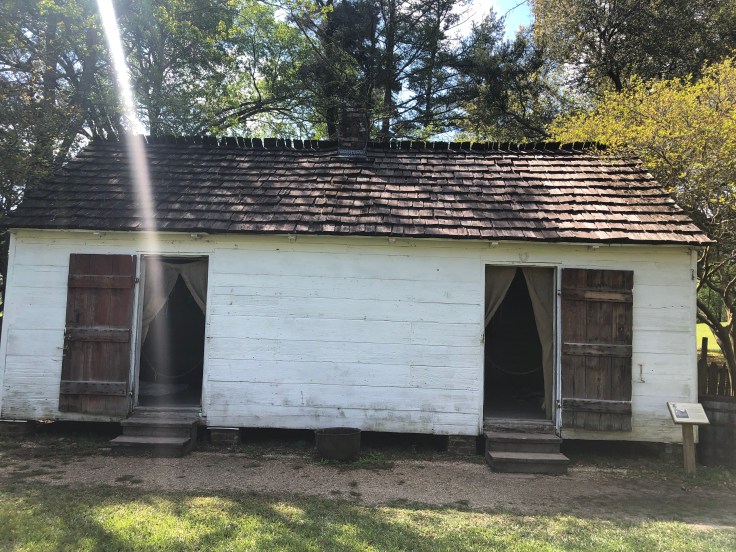
Typical slave cabin…  Two rooms sharing a central chimney…
img_1264

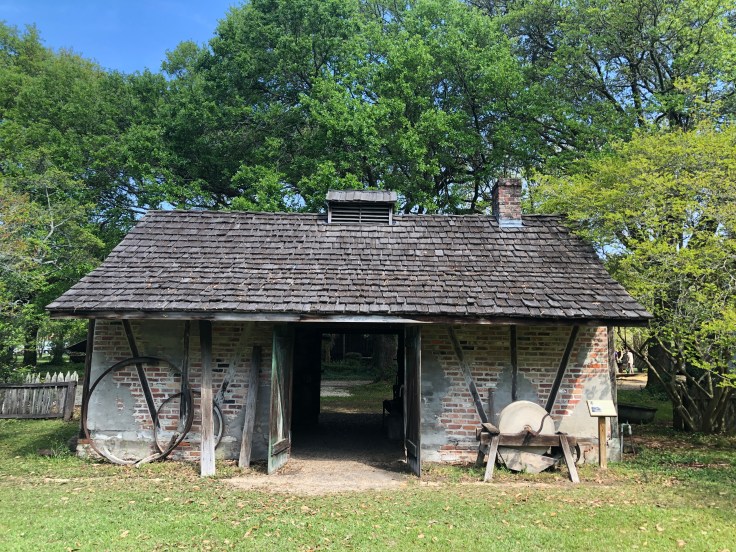
Blacksmith shop…

img_1265img_1267

Single room slave cabin…

img_1269img_1270img_1271

Sugar House…  Sugar cane was processed and boiled into sugar and molasses here.  Sugar Cane was a VERY lucrative crop, but its processing was VERY labor intensive.  There were over 1,000 sugar plantations in Louisiana before the Civil War.  Once the slaves were freed fewer than 100 sugar plantations remained…

img_1274

This is a cane grinder…  The canes were ground up here, the husks were taken away and burned, and the pulp was sent to the Sugar House to be boiled into sugar and syrup…

img_7462

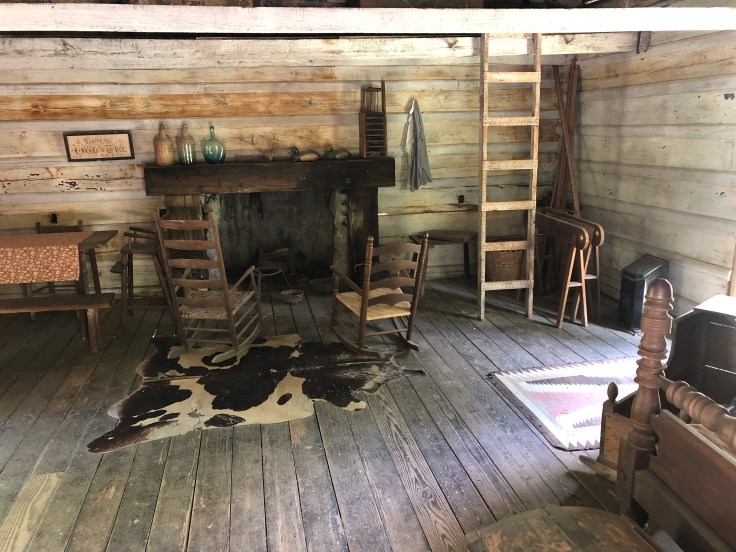
Pioneer cabin…  This is for a yeoman farmer, in northern Louisiana who was not in the same class as a plantation owner, but who struck out on his own to make his living as a farmer…  Many of these farmers were Creoles – more on the difference between Creoles and Cajuns to come later…

img_1276img_1277

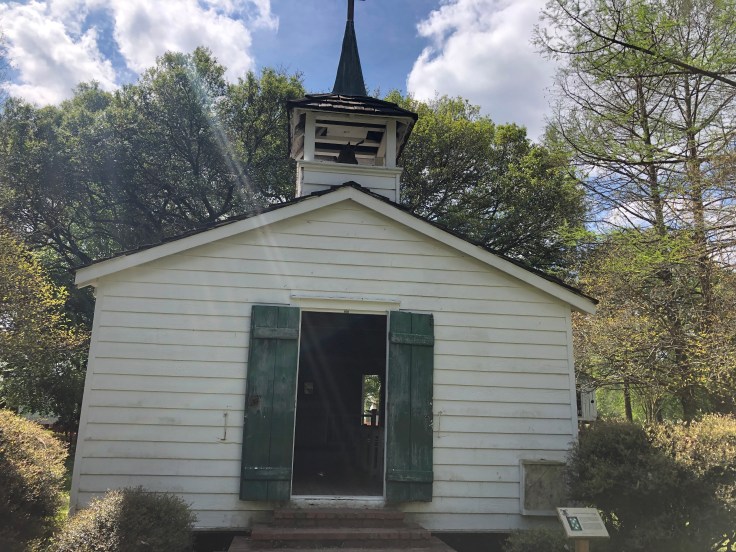
Baptist Church, founded and built by ex-slaves in 1870; It was used until 1960, and former congregants still come here once per year for a “homecoming” style gathering…
img_1279img_1280img_1291

Typical Acadian dwelling…  This one was built in 1805 and occupied until about 1960.  Note the exterior stairs to the attic sleeping loft…

img_1282

Rather than bricks, the spaces between the wood framing were filled in with a mixture of mud, moss, horse hair, and manure… It was generally covered with plaster or wood siding…
img_1284img_1286

Another Acadian dwelling; this one had three rooms front to back – a “shotgun” house…

img_1287img_7469

A “Dog-trot” house has two rooms separated by a breezeway…

img_1293img_1295img_1296

A barn…

img_1297

Inside the museum is an artist’s expression of his feelings toward the legislature…

img_1299

It was a fun place to visit – full of information about life in rural Louisiana in the 19th and early 20th centuries…

We were served a lunch of Jambalaya… Spicy rice with hearty smoked beef.  It was different than the seafood Jambalaya I was used to…

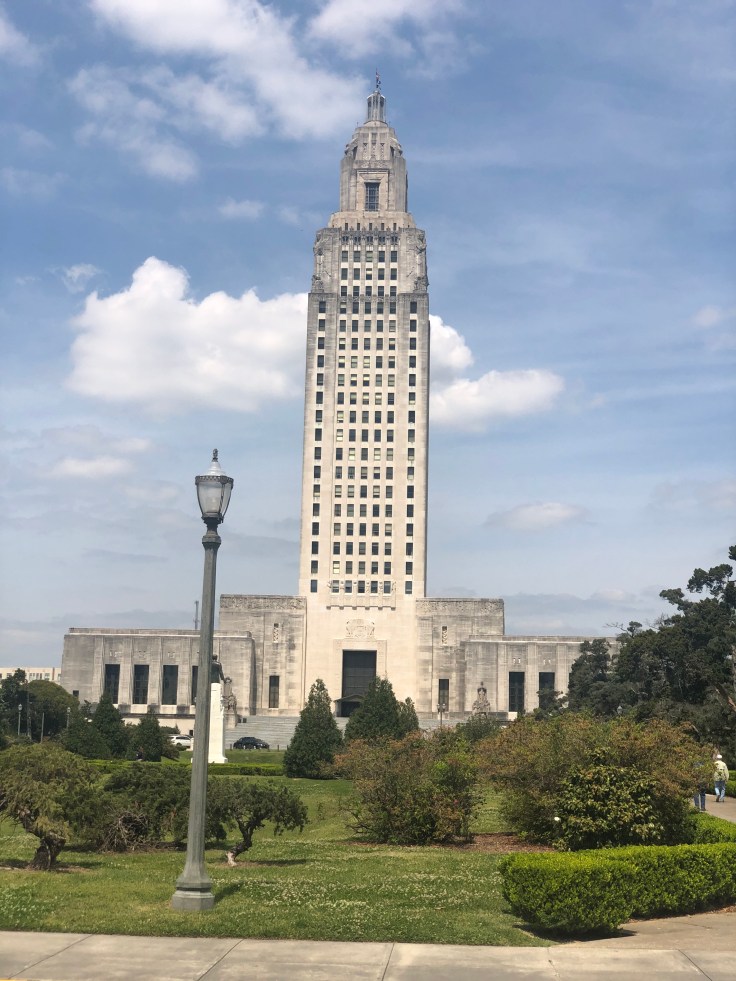
Back on the bus, we headed to the State Capitol – the tallest in the union…
img_1304

There are 48 steps, one for each of the 48 States when the building was built.  Alaska and Hawaii have been added off to the side, starting new columns of names…  Who’s next?  The huge statue on the left depicts the founding fathers; on the right are the pioneers…

img_1306

Inside the Grand Memorial Hall is all this beautiful marble.  These flags represent all the nations that have held sovereignty over Louisiana…

img_7473

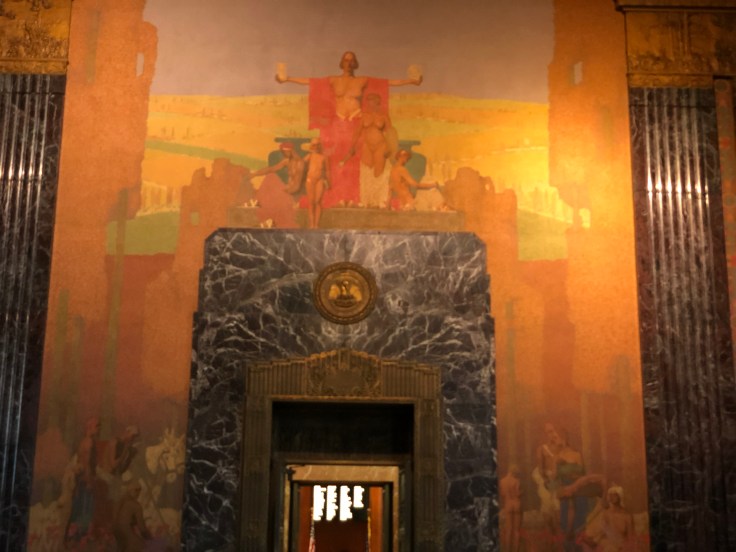
At the far end of the hall is a mural that is obscured in this photo by the chandeliers…

img_1308

Here is a close-up of the mural.  I thought this was Louise, the woman they named the State after, but apparently it is not…

img_1326img_1327

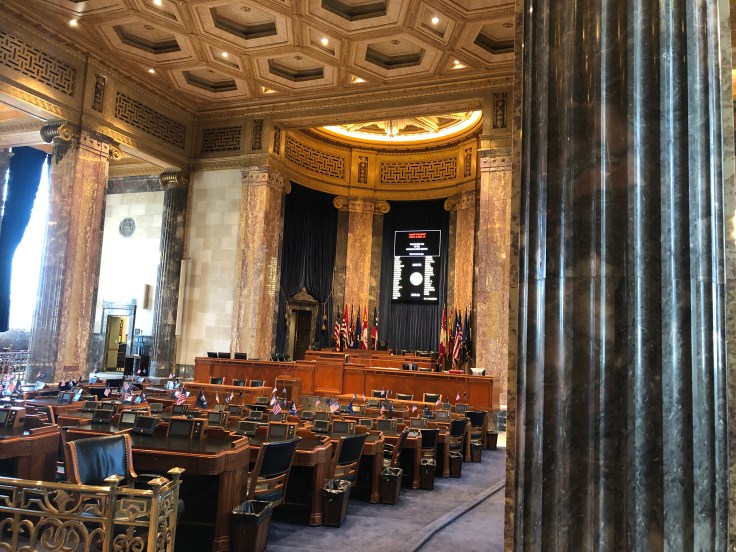
At either end of the hall is an antechamber with a stair for the legislative chambers… Very nice…

img_1310img_1309img_1311img_1312

We were told of the bomb that was exploded in the Senate chamber in 1970.  The room has since been restored to its former glory…

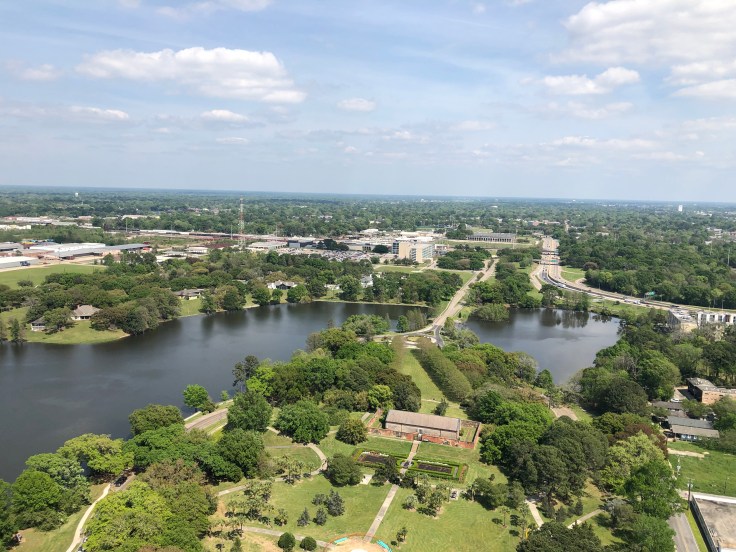
We took the elevators to the 27th floor – the observation balcony… This is the Mississippi River, looking north-west…

img_1313

Looking East we can see the Governor’s Mansion…
img_1316img_1315

The industrial north-east…

img_1323

Barges being pushed up-river…

img_1318

We were shown to the hall outside the governor’s elevator where Huey Long was shot and killed.  They tried to make a case for some sort of mystery along with conspiracy theories;  I checked it out on-line and nothing they said holds any water.  He was killed by the son-in-law of a judge that Long had had disbarred… End of story…

We returned to the bus and to the Villa…

We had a drivers meeting – we are moving to a new RV park tomorrow…

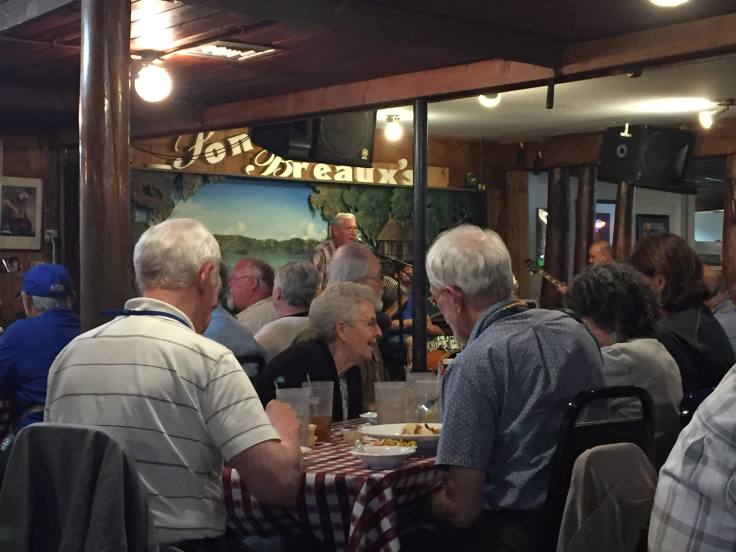
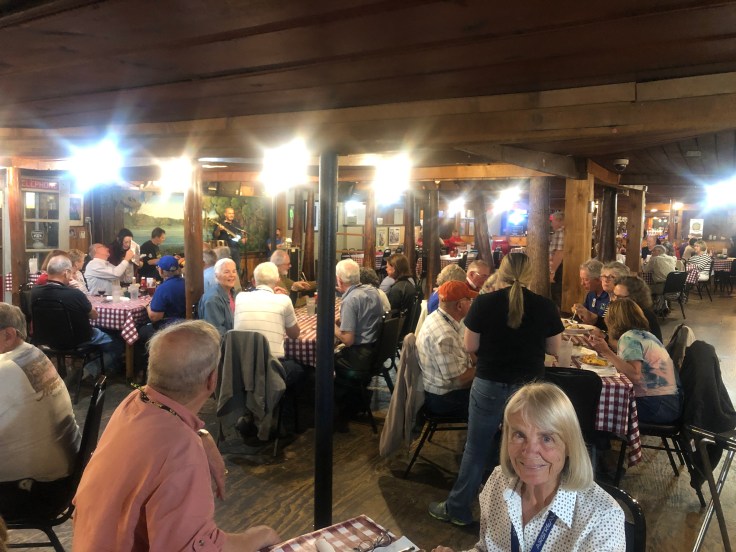
Then we all car-pooled together to Pont Breaux Cajun Restaurant…

img_1337img_1336

It was a real dive of a place, and we totally overwhelmed the wait staff… Even though we had called and told them that there would be 50 of us, somehow they were WAY under-staffed.  But the music was good, the food was OK, and…
img_1334img_1335img_7480img_7481

…an enjoyable time was had by all…
Blog at WordPress.com.

Up ↑