Search

Adventures in the Villa

Category

National Parks

2021-06-17 – Springtime in the Rockies caravan… Day 22 – Travelling to Yellowstone National Park

So we bid farewell to the Grand Tetons! It was the prettiest park we have seen on this trip. On to Yellowstone!

We left about 8:00 am to avoid traffic in the park. We’ve been told traffic can be terrible in Yellowstone.

The drive was short – only 112 miles. We drove directly through Grand Teton National Park, through the John D. Rockefeller, Jr. Memorial Parkway, and on into Yellowstone National Park…
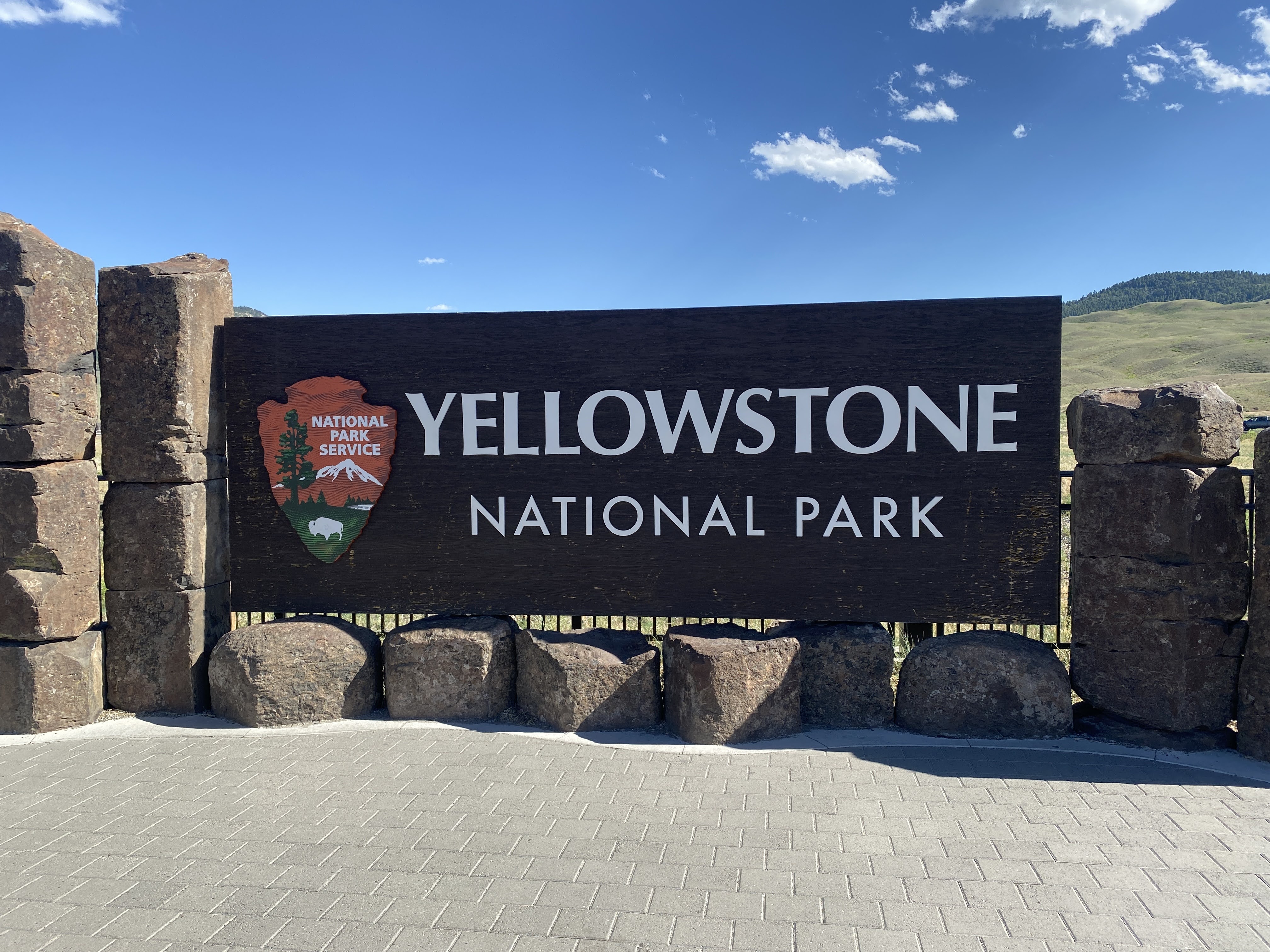
Yellowstone National Park is located in the in the northwest corner of Wyoming, with some areas extending into Montana and Idaho. It was established by the U.S. Congress and signed into law by President Ulysses S. Grant on March 1, 1872. Yellowstone was the first national park in the U.S. and is also widely held to be the first national park in the world.  The park is known for its wildlife and its many geothermal features, especially Old Faithful geyser.

We loved the Grand Tetons NP. In comparison, Grand Tetons covers 485 square miles, while Yellowstone covers 3,500 square miles. However, Grand Tetons is much more scenic, while Yellowstone features geothermal natural wonders and much more wildlife…

The views along the road are nice…
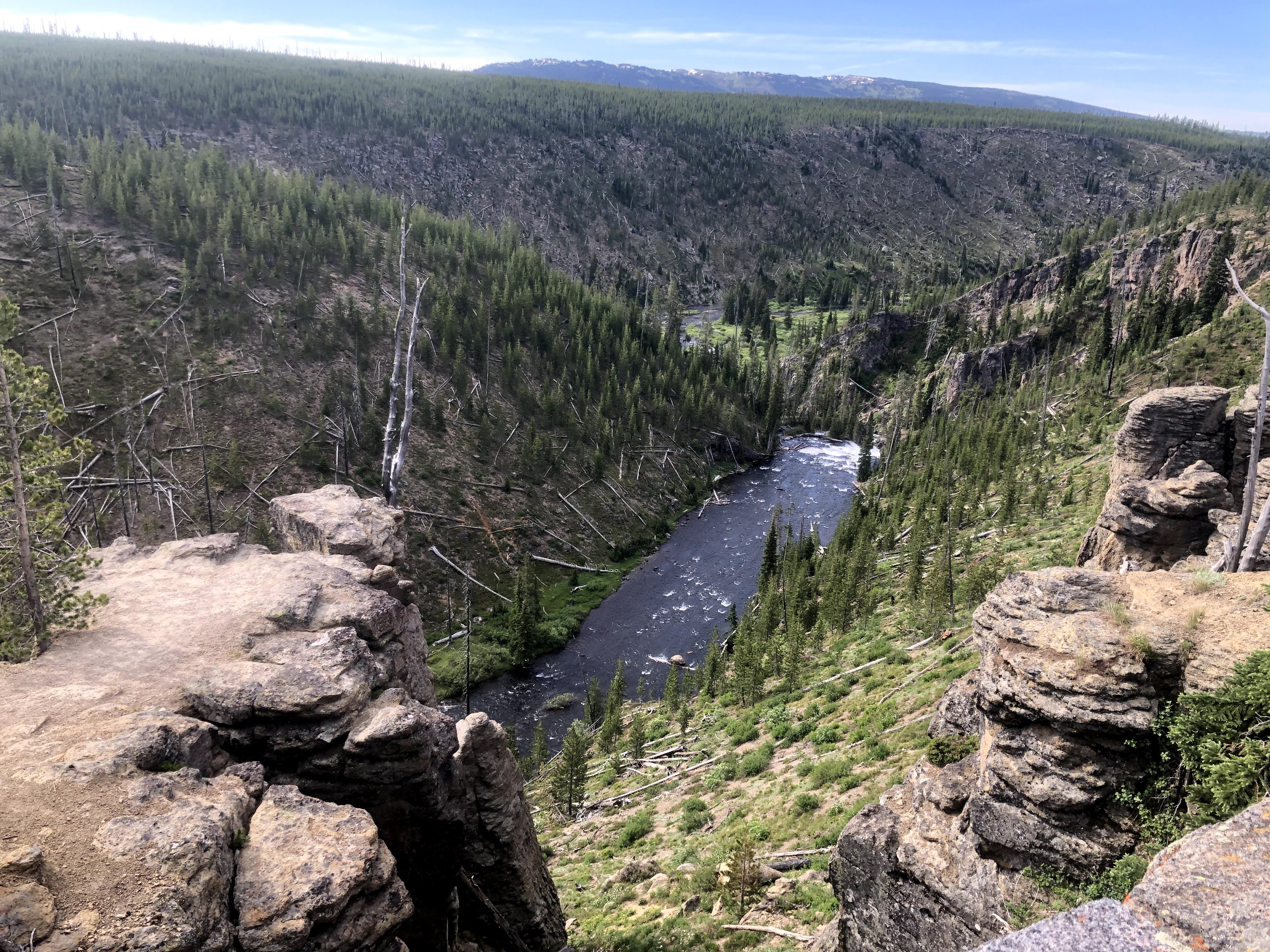
We soon stopped to see Old Faithful. First we hassled the very busy and crowded parking area. We only needed to jack-knife the Villa into 6 parking stalls, and we were set!

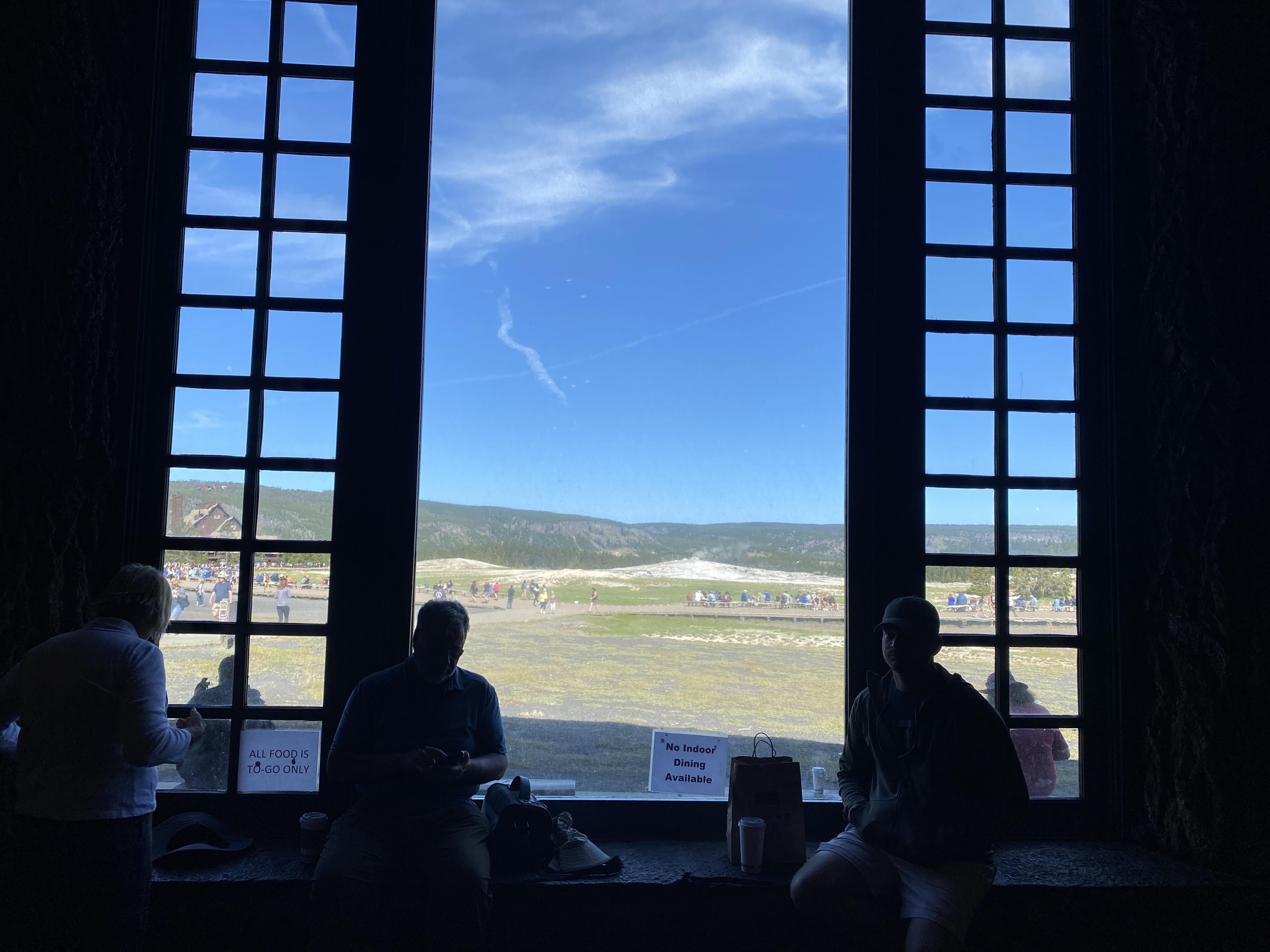
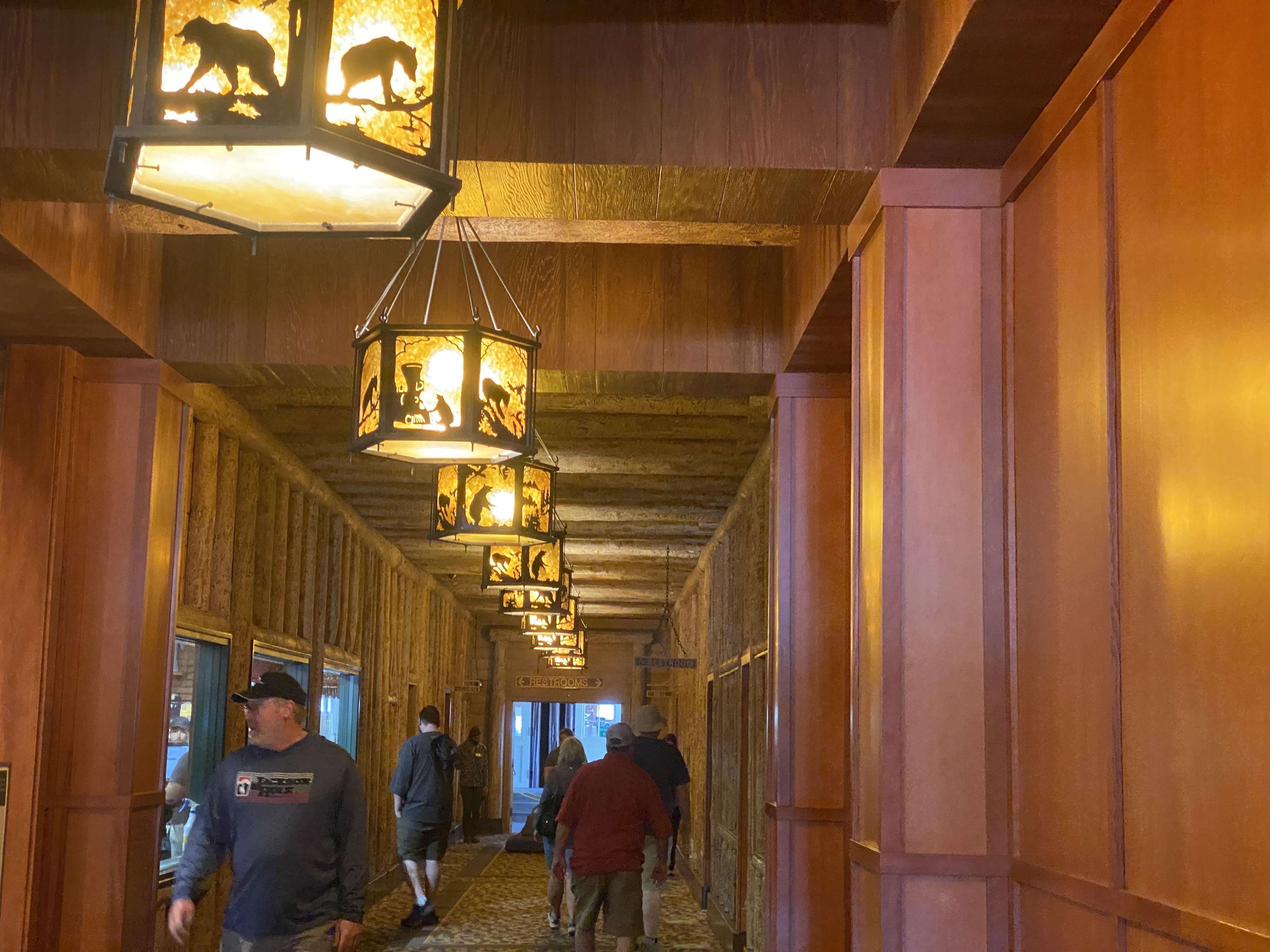
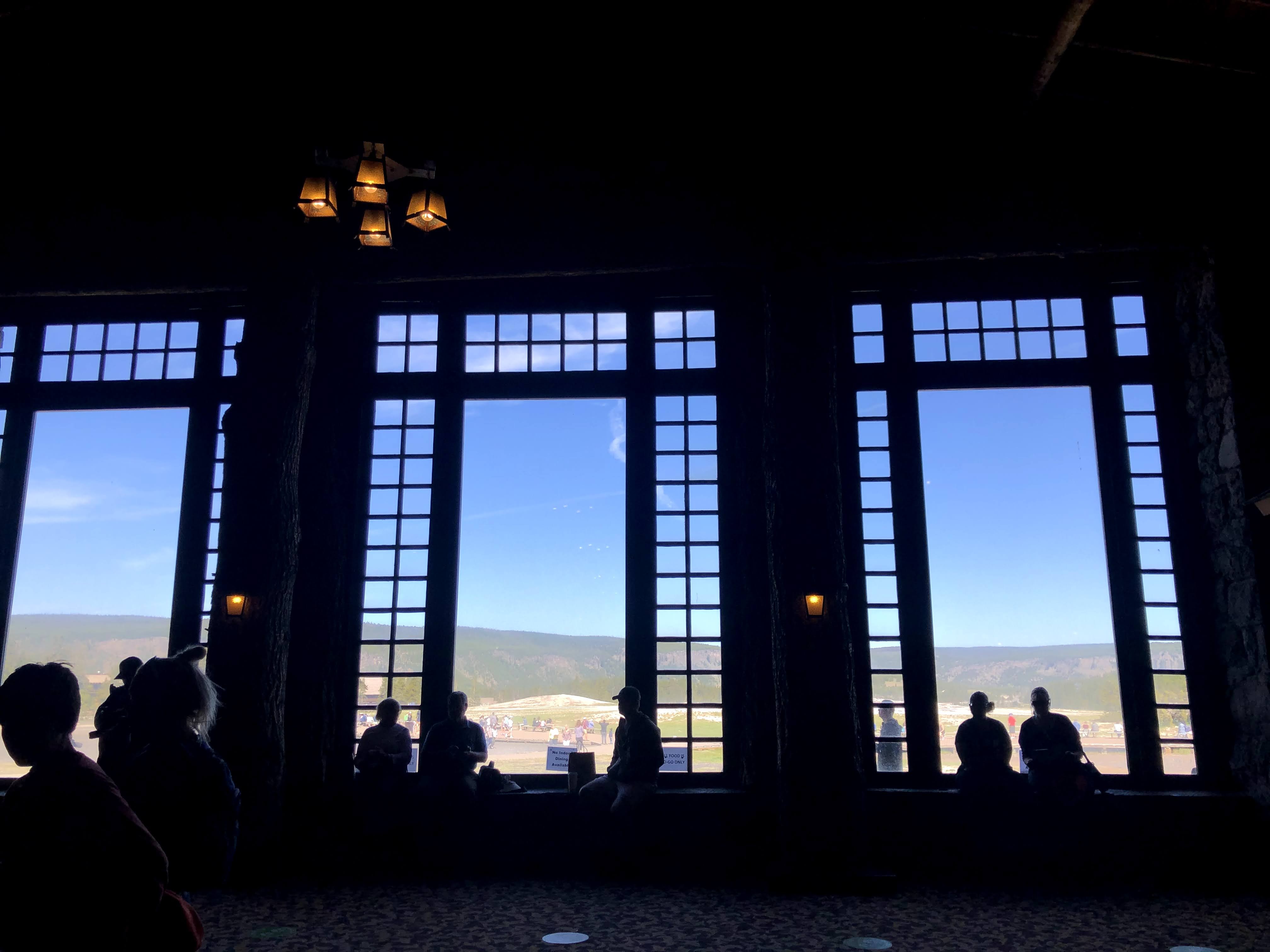
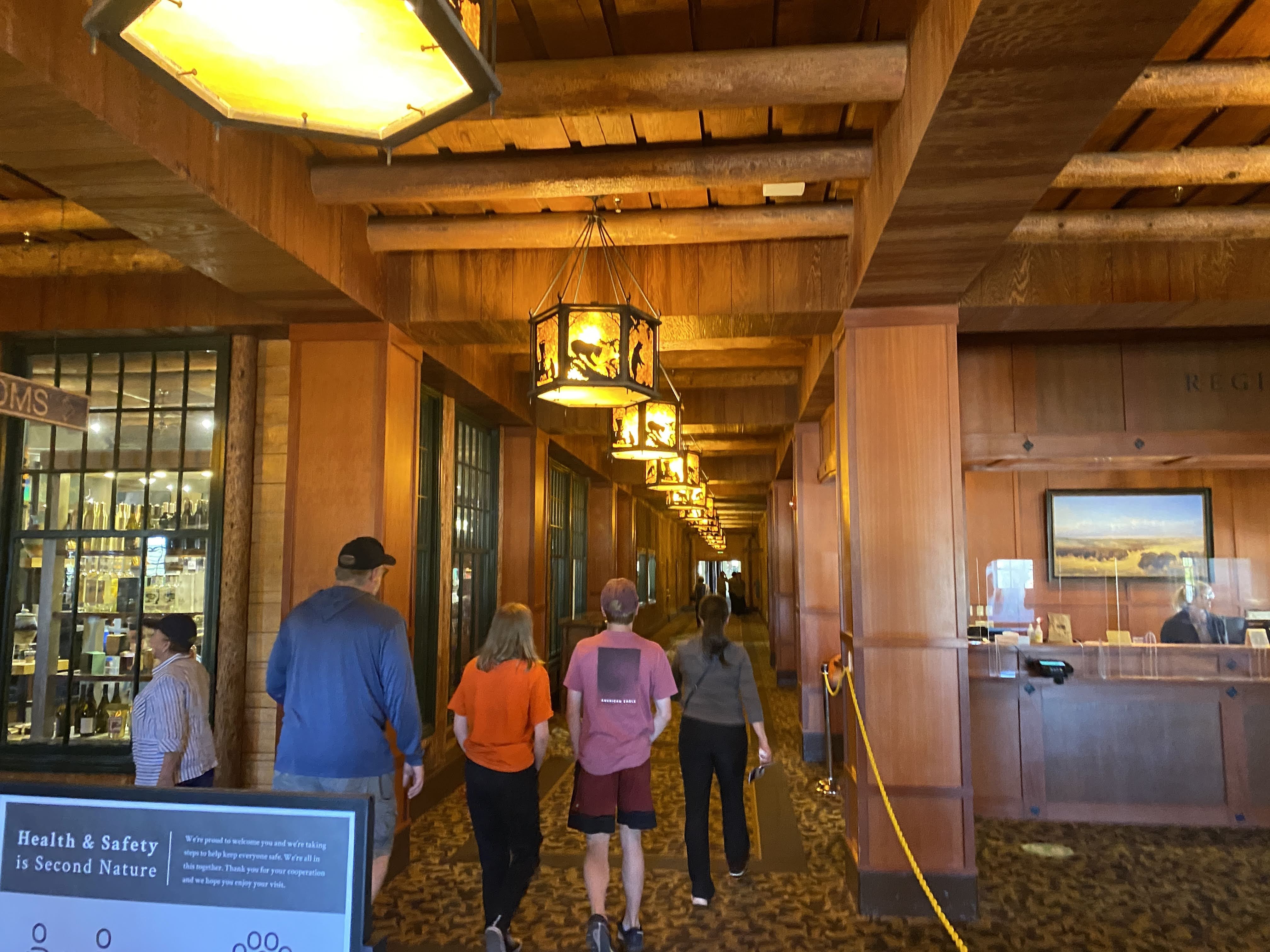
We entered the Old Faithful Lodge. Interiors were nice…
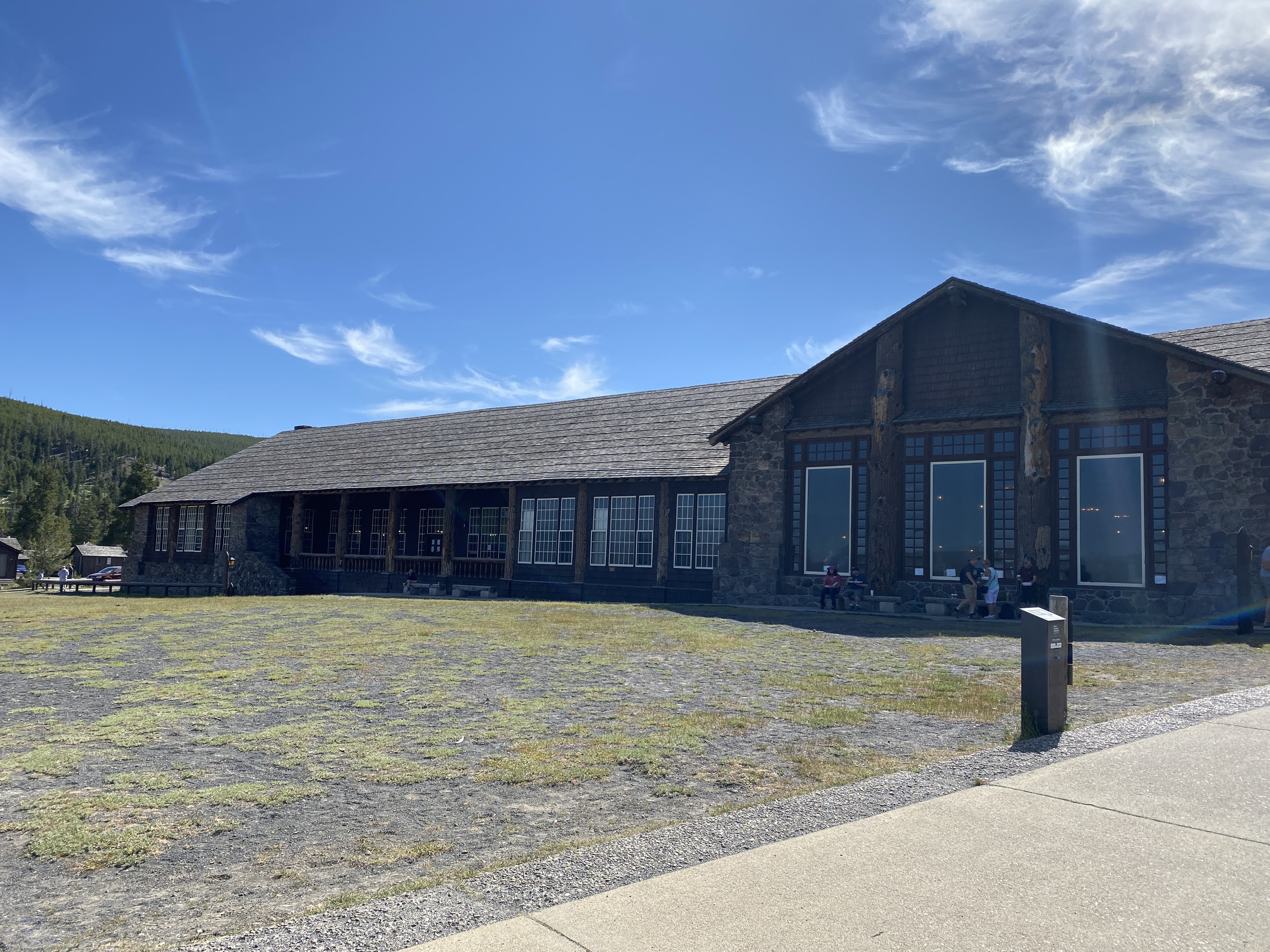
But the exterior was less than impressive…
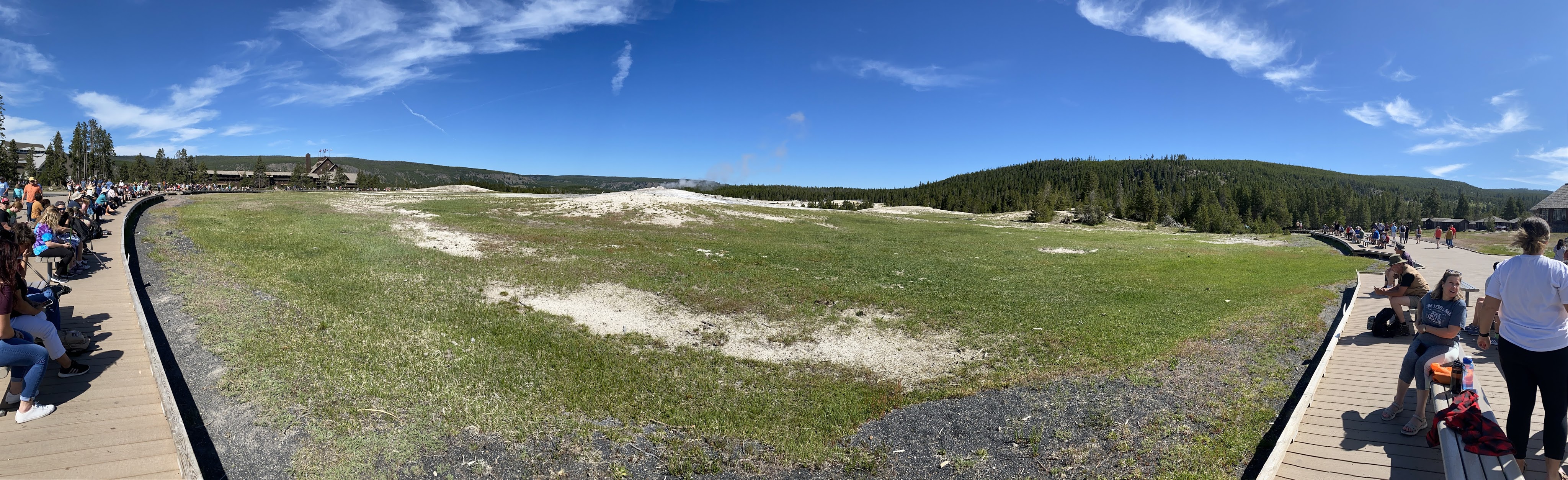
We walked out to the viewing area where people were already waiting to see Old Faithful; they will wait another 45 minutes…
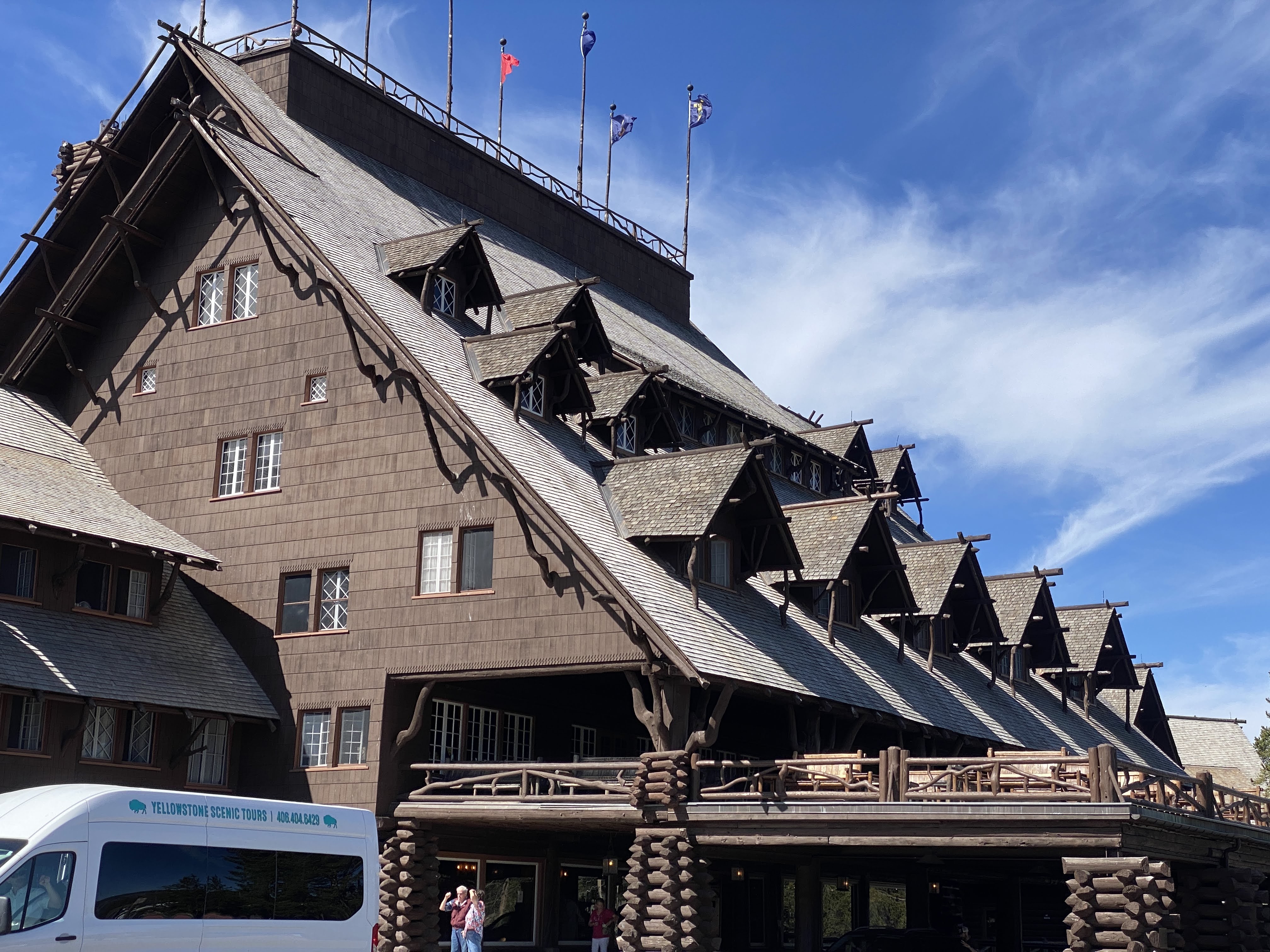
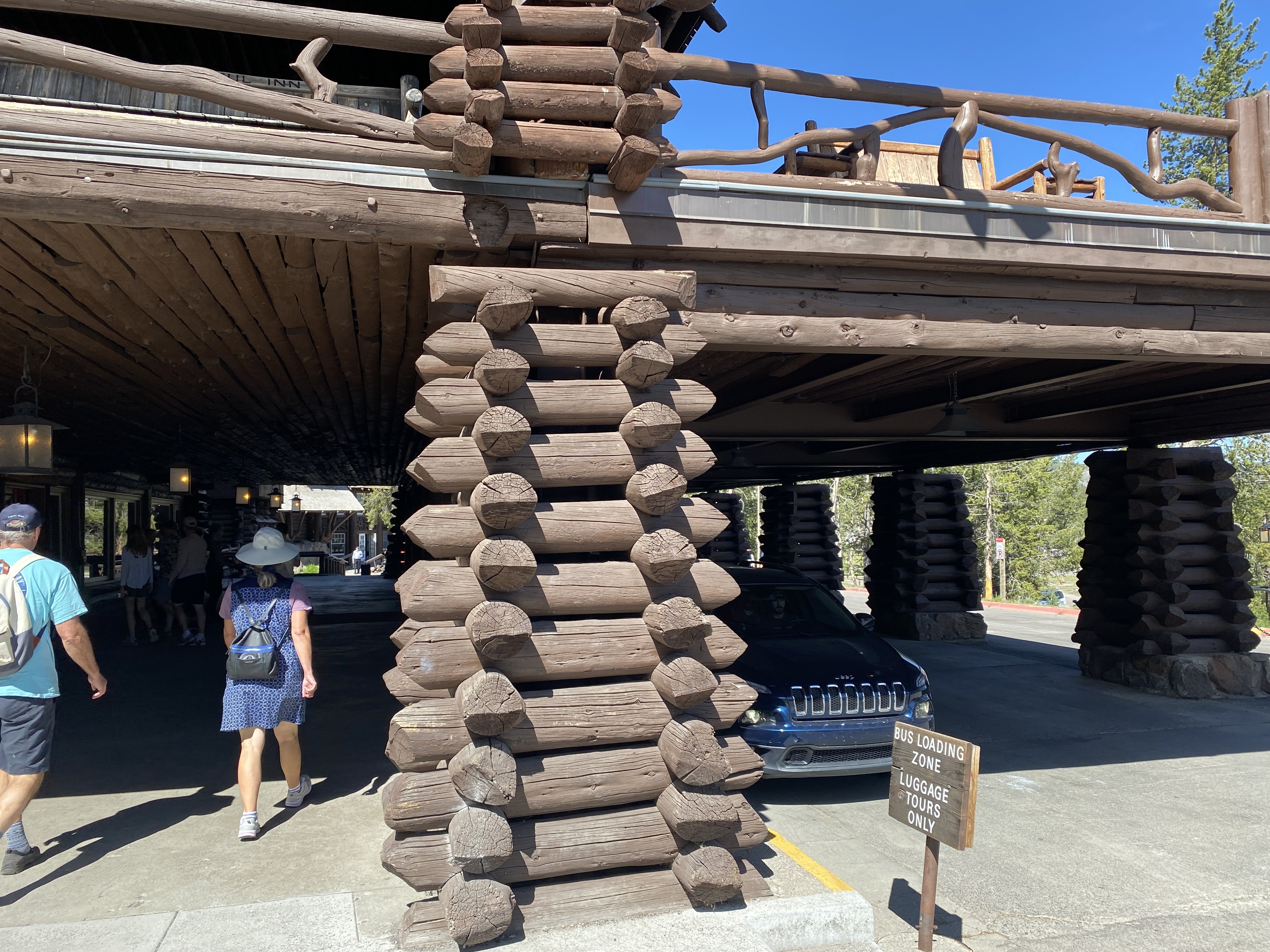
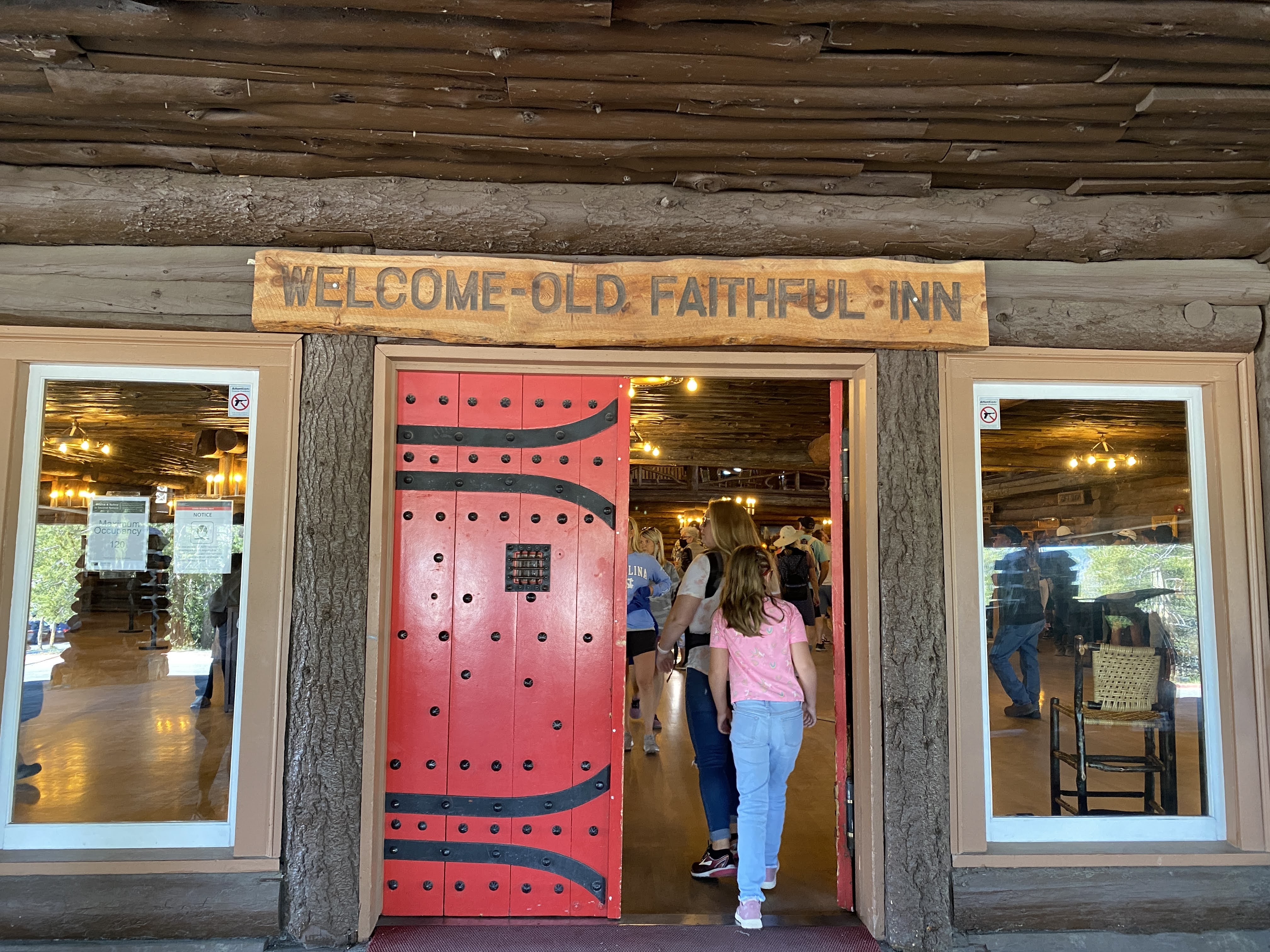
We wandered over to the Old Faithful Inn. It is much more impressive…!
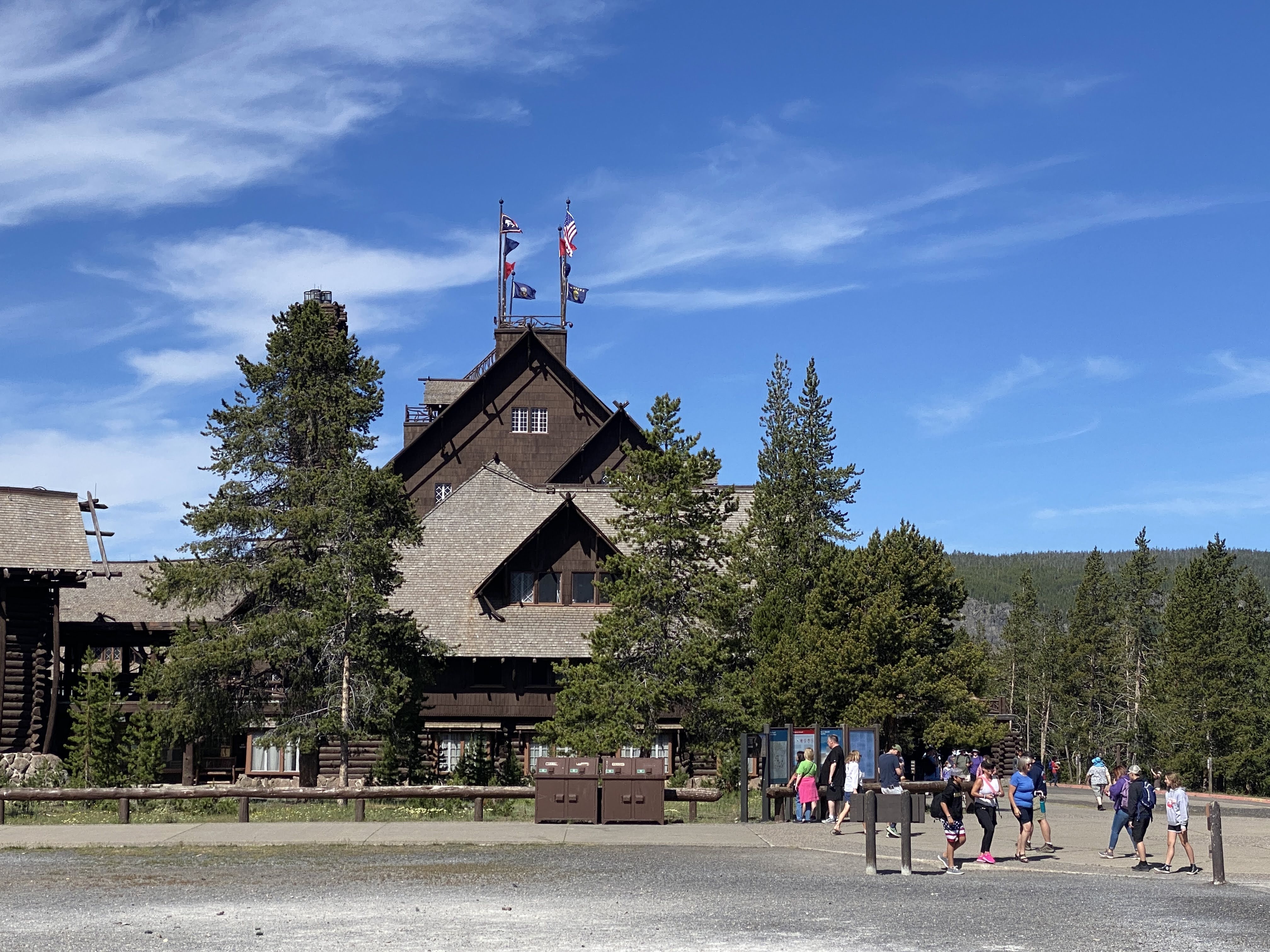
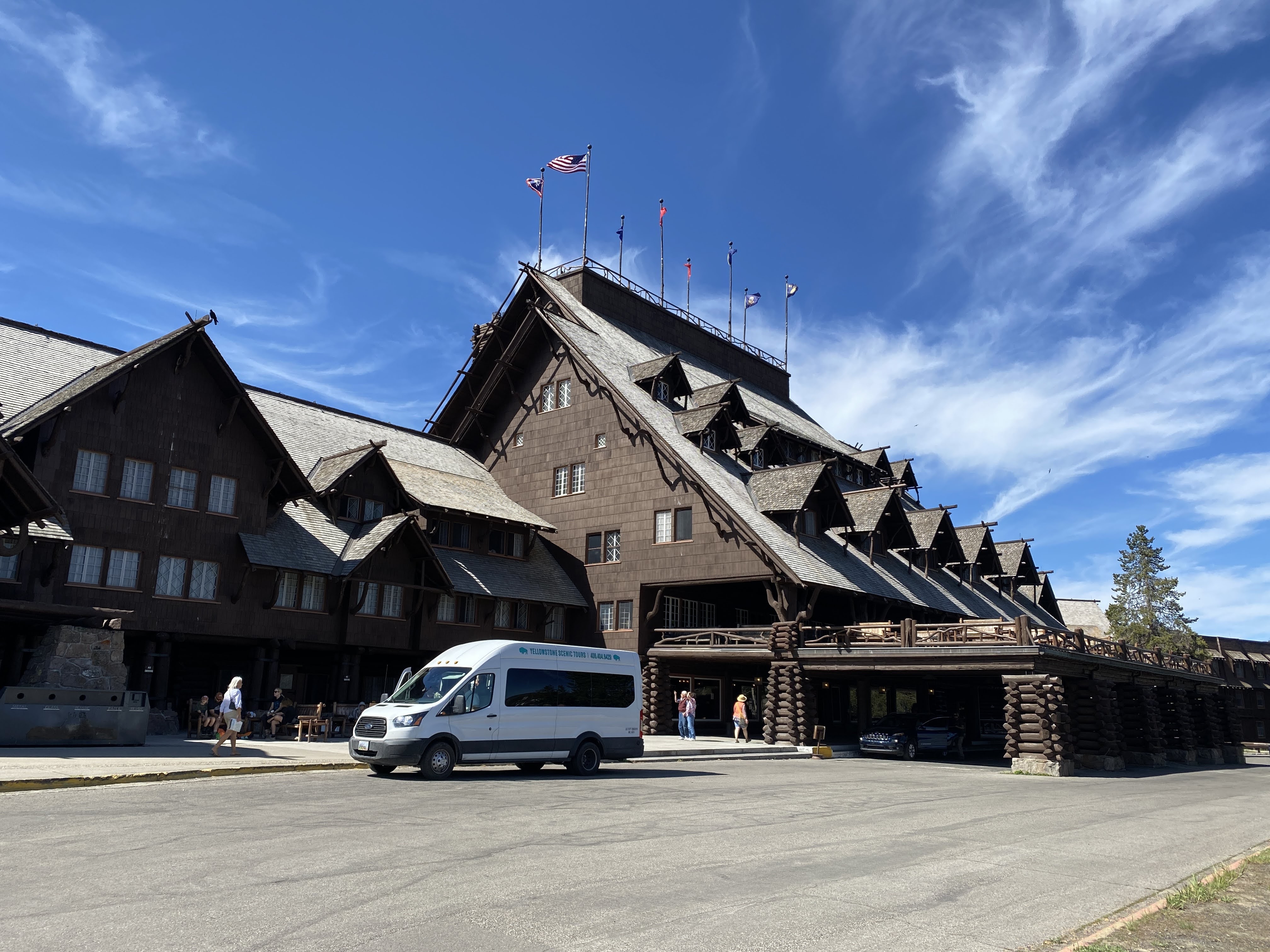
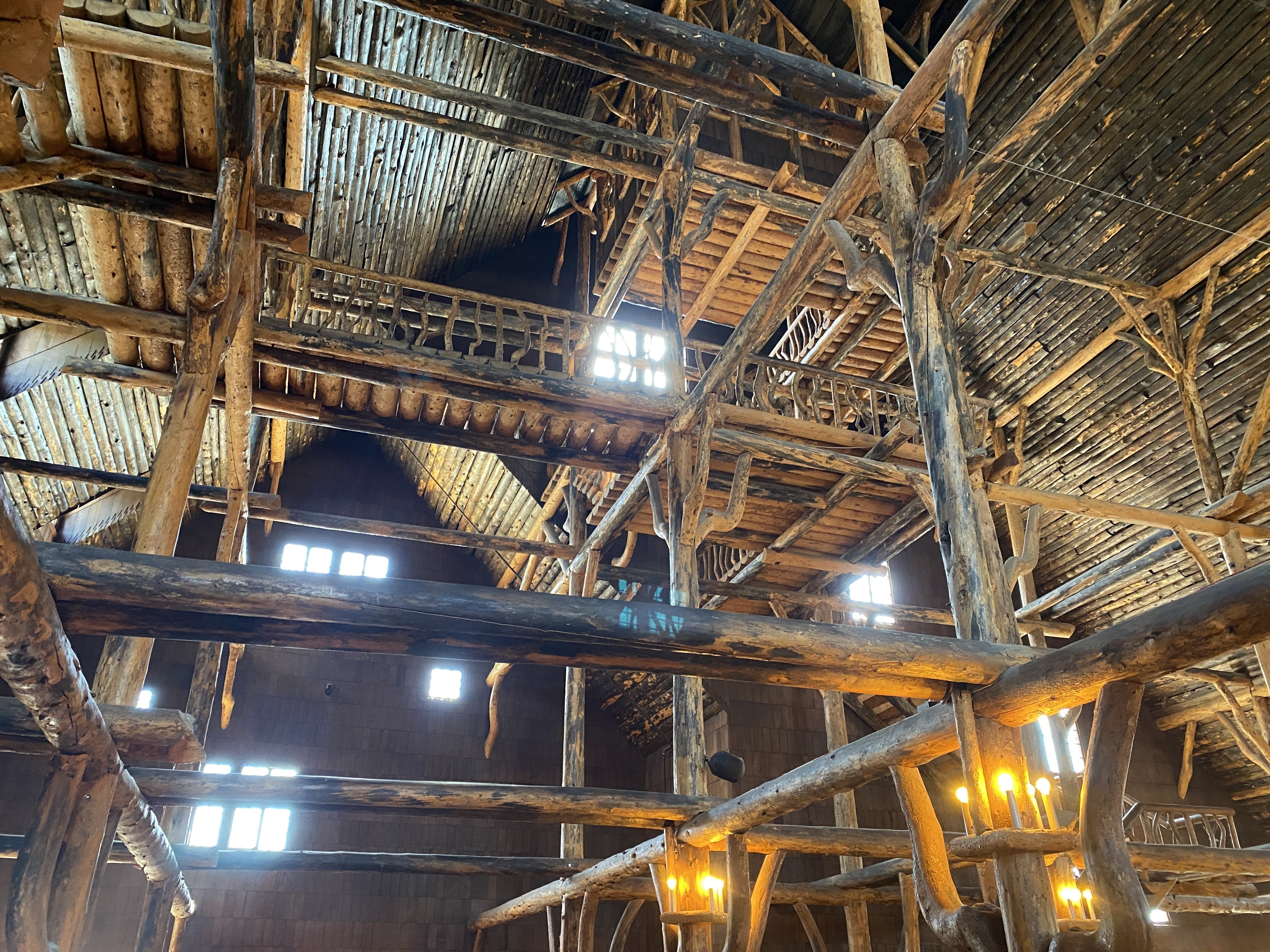
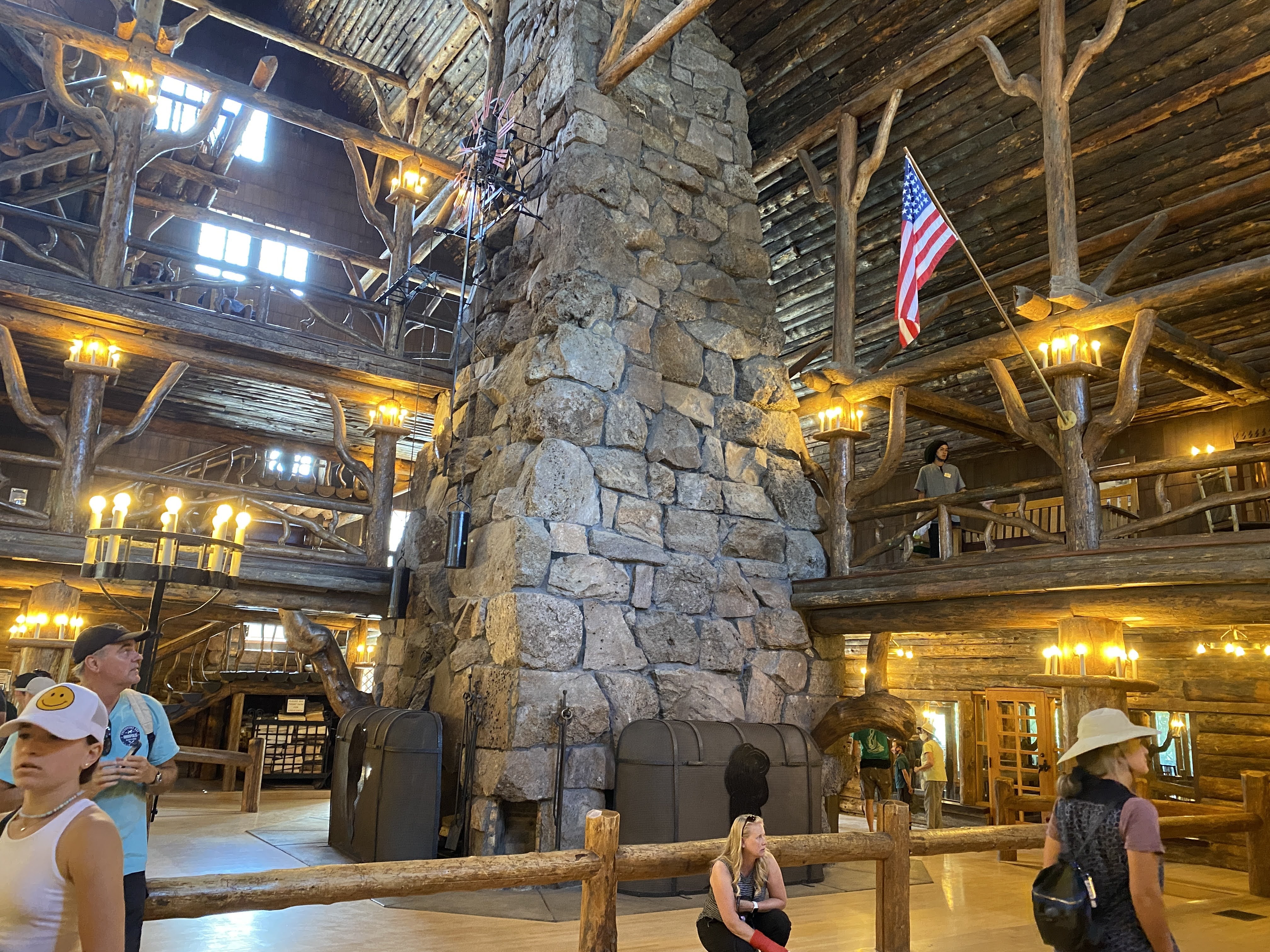
The lobby is this giant 3-4 story high space, all done up in National Park architecture…
The dining room is also very grand… Unfortunately, it is closed…
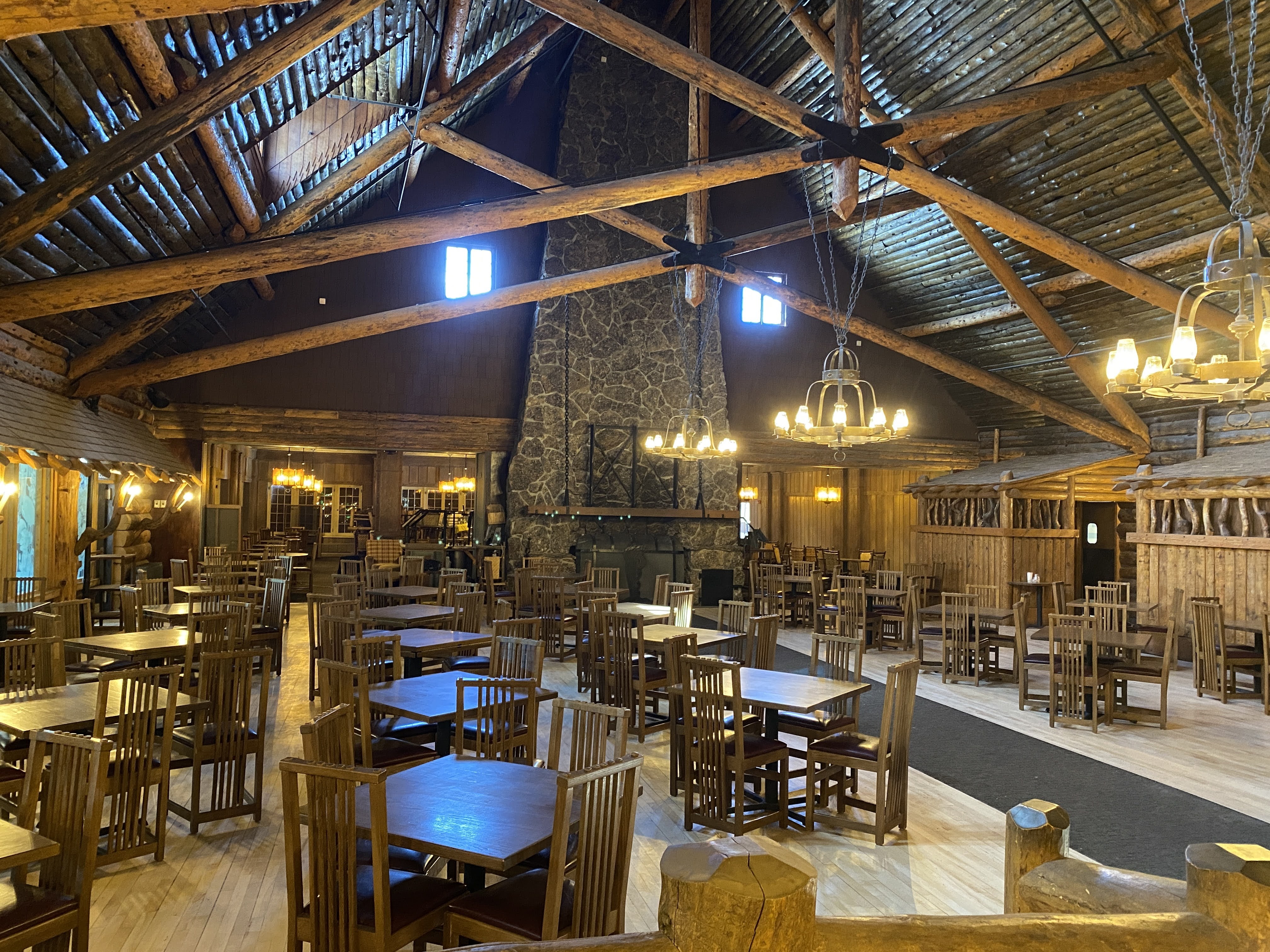
We ignored the sign and walked up the stairs.
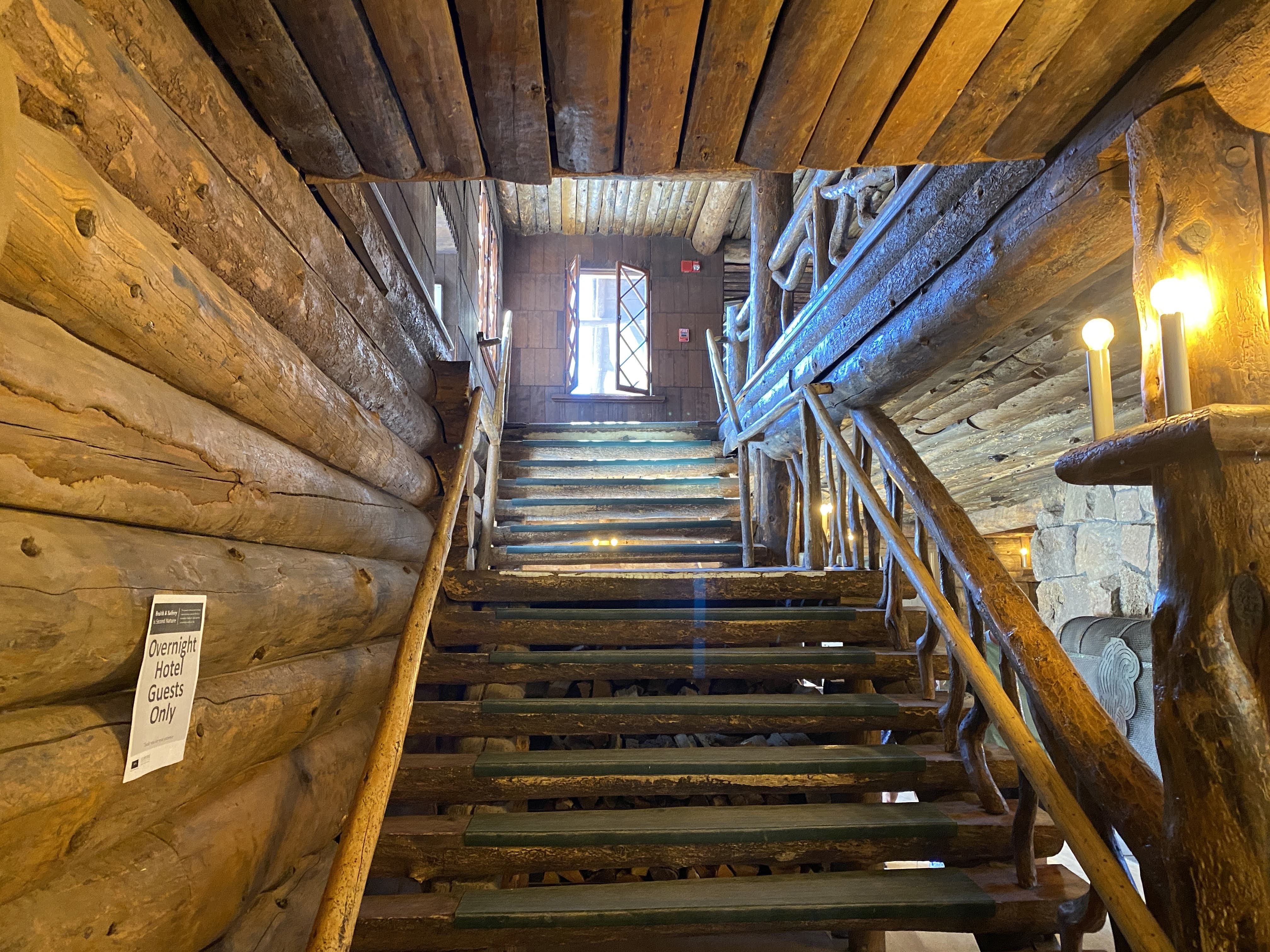
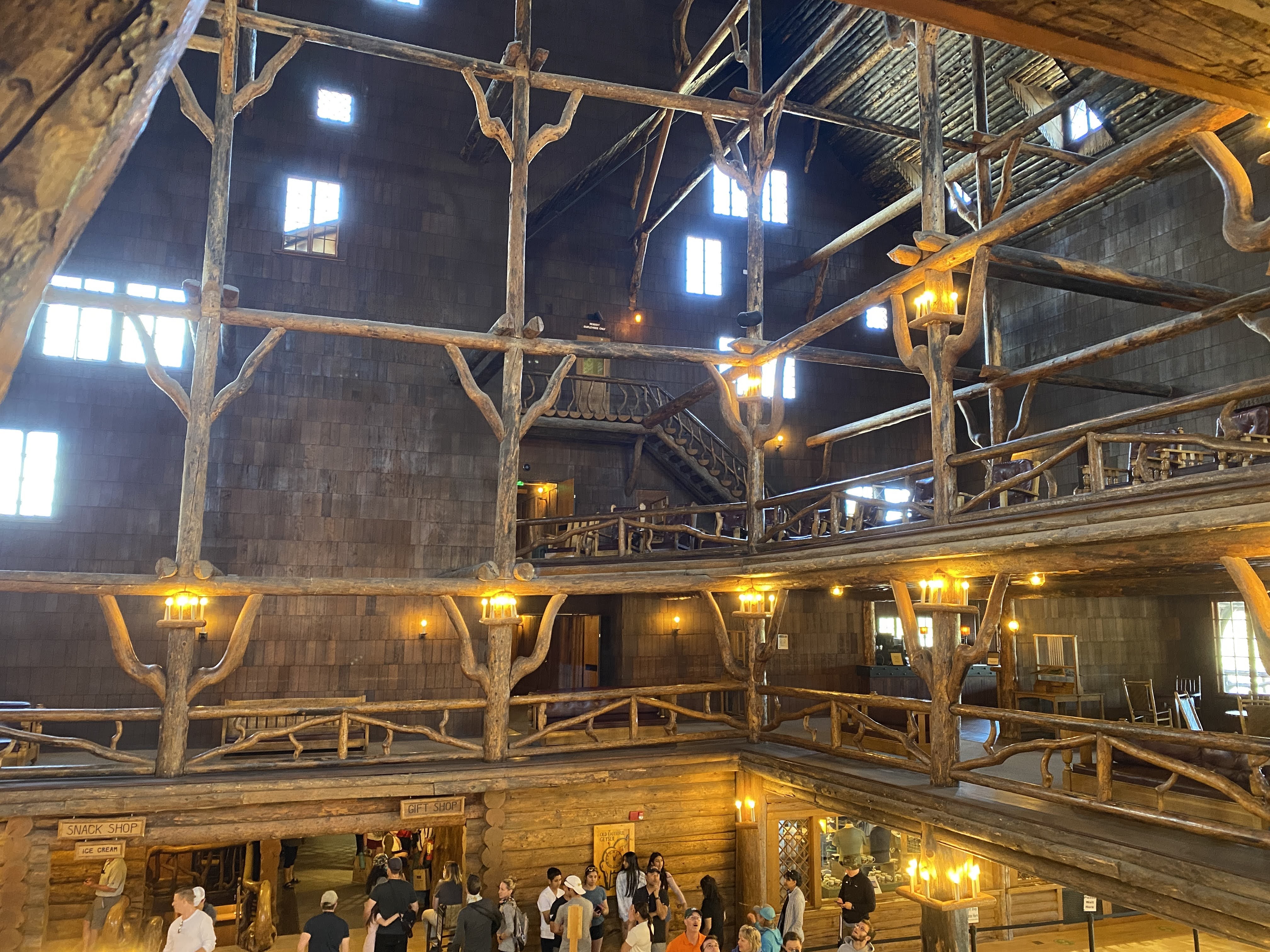
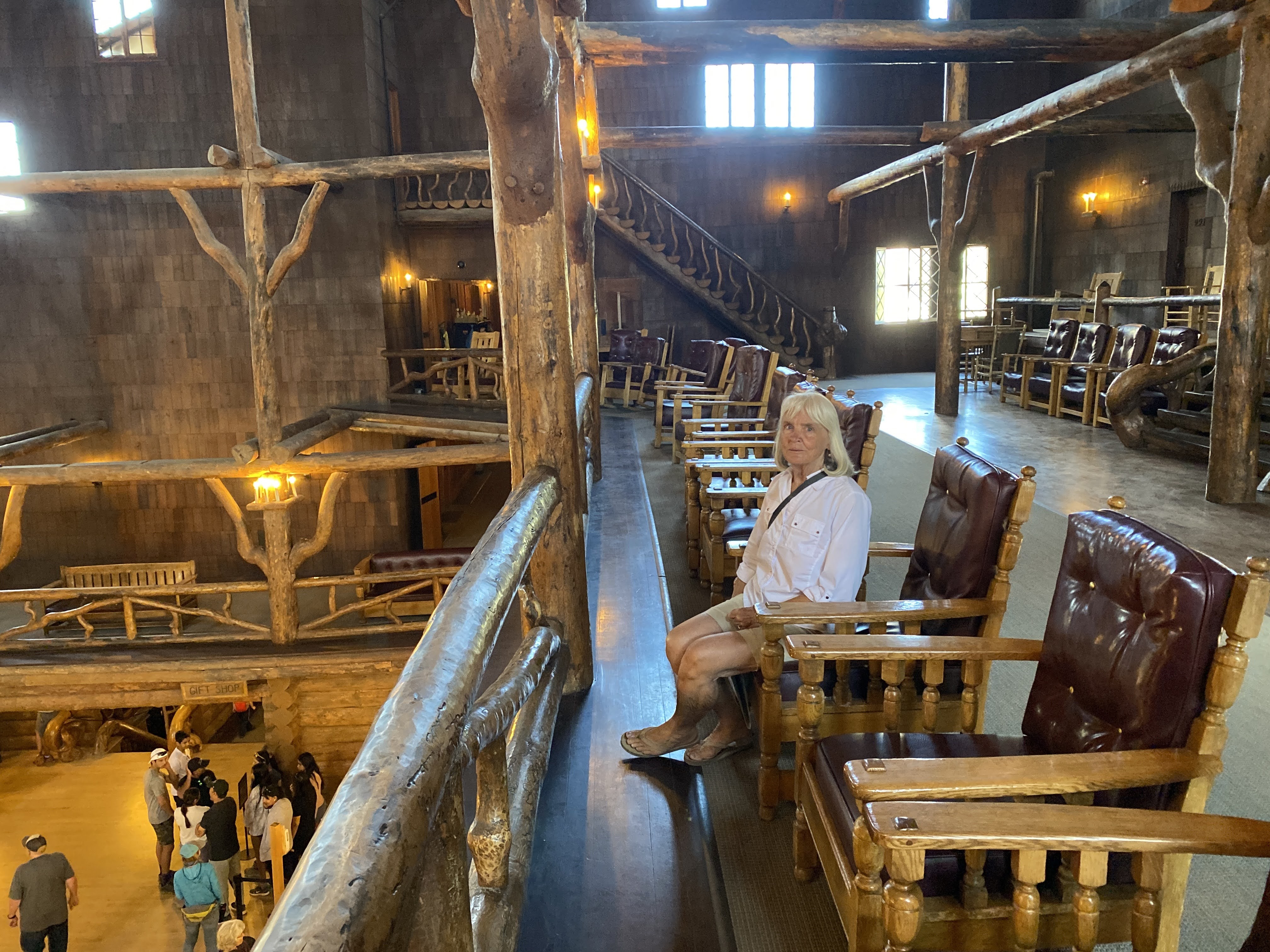
Very nice upper level lounge areas…
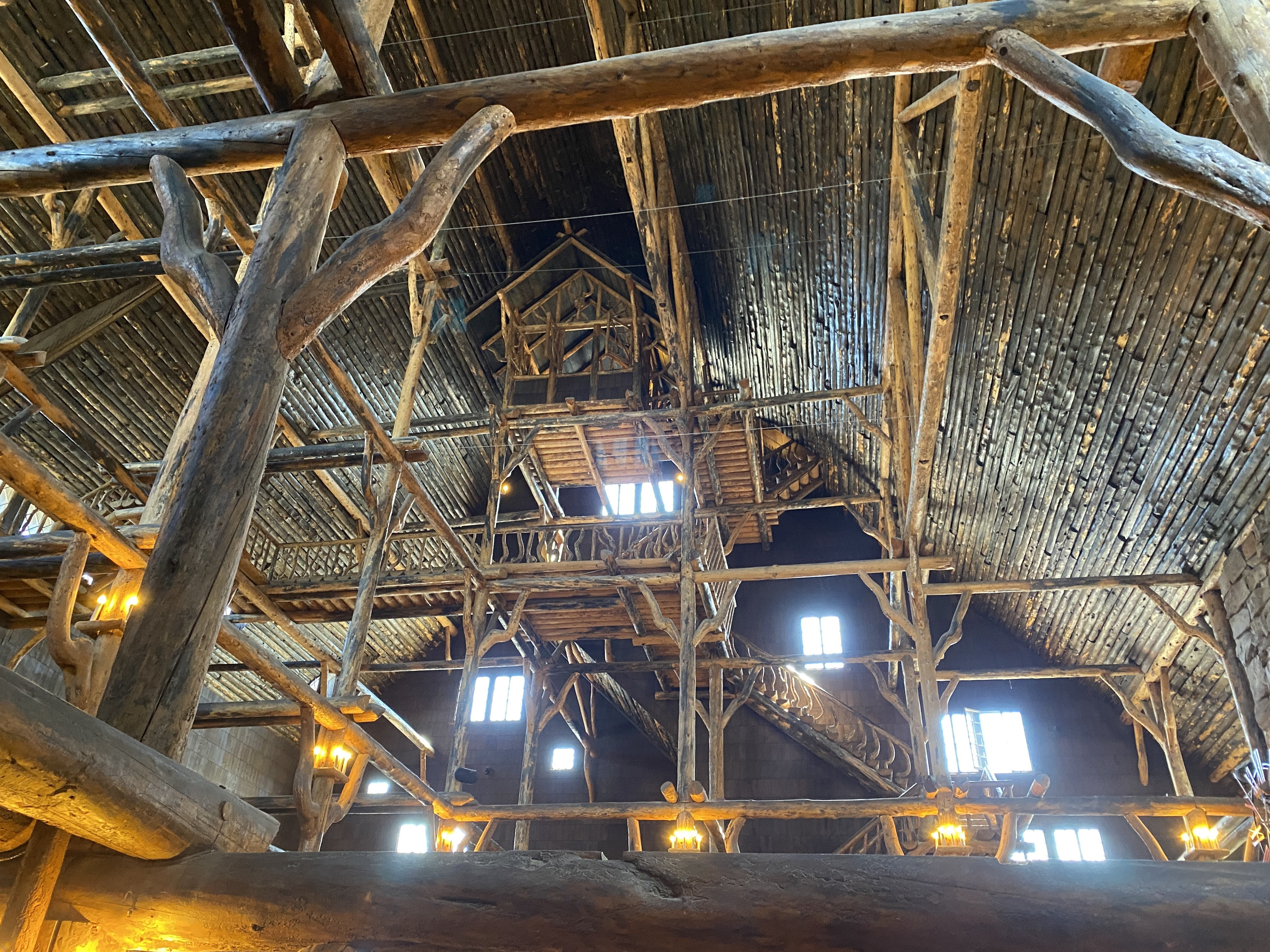
Near the top is what they call “the Crow’s Nest”. It is a room at the top of these stairs where orchestras would play in the evening. The top is 76′ tall! Unfortunately, in 1959 an earthquake damaged the structural integrity of the Crow’s Nest, so it is no longer habitable.
These writing desks are all over these upper floors… Beautiful!
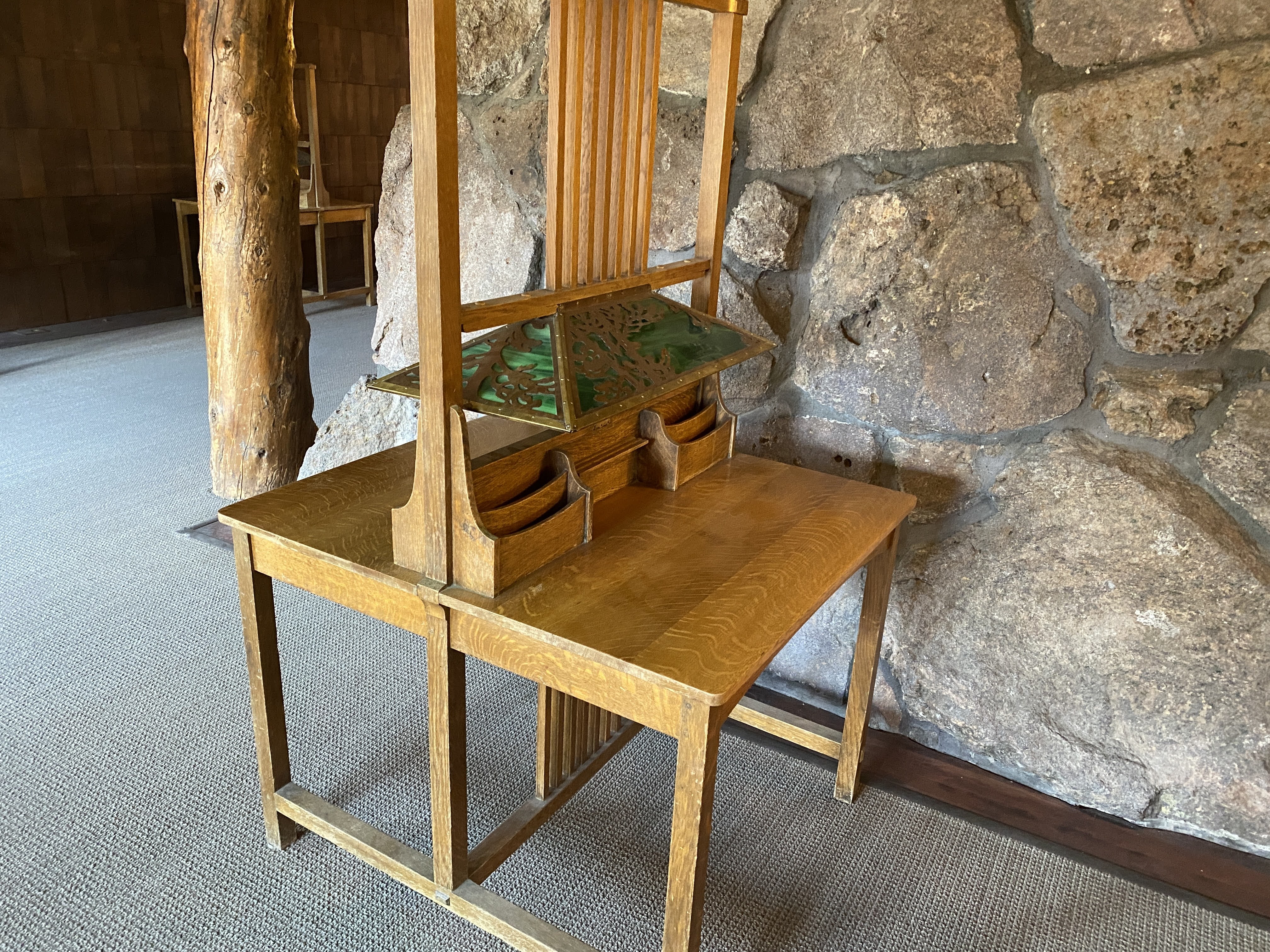
Unfortunately, there are no dining or lounge areas that are open. Only fast food is available, and only for take-out… Gift shops have such a restricted capacity that there lines hundreds of people long just to get inside. Yellowstone is much more shut down for Covid than Grand Tetons was…

So we moved on to a modern Visitors Center. Again, capacity is restricted… But the views are grand…
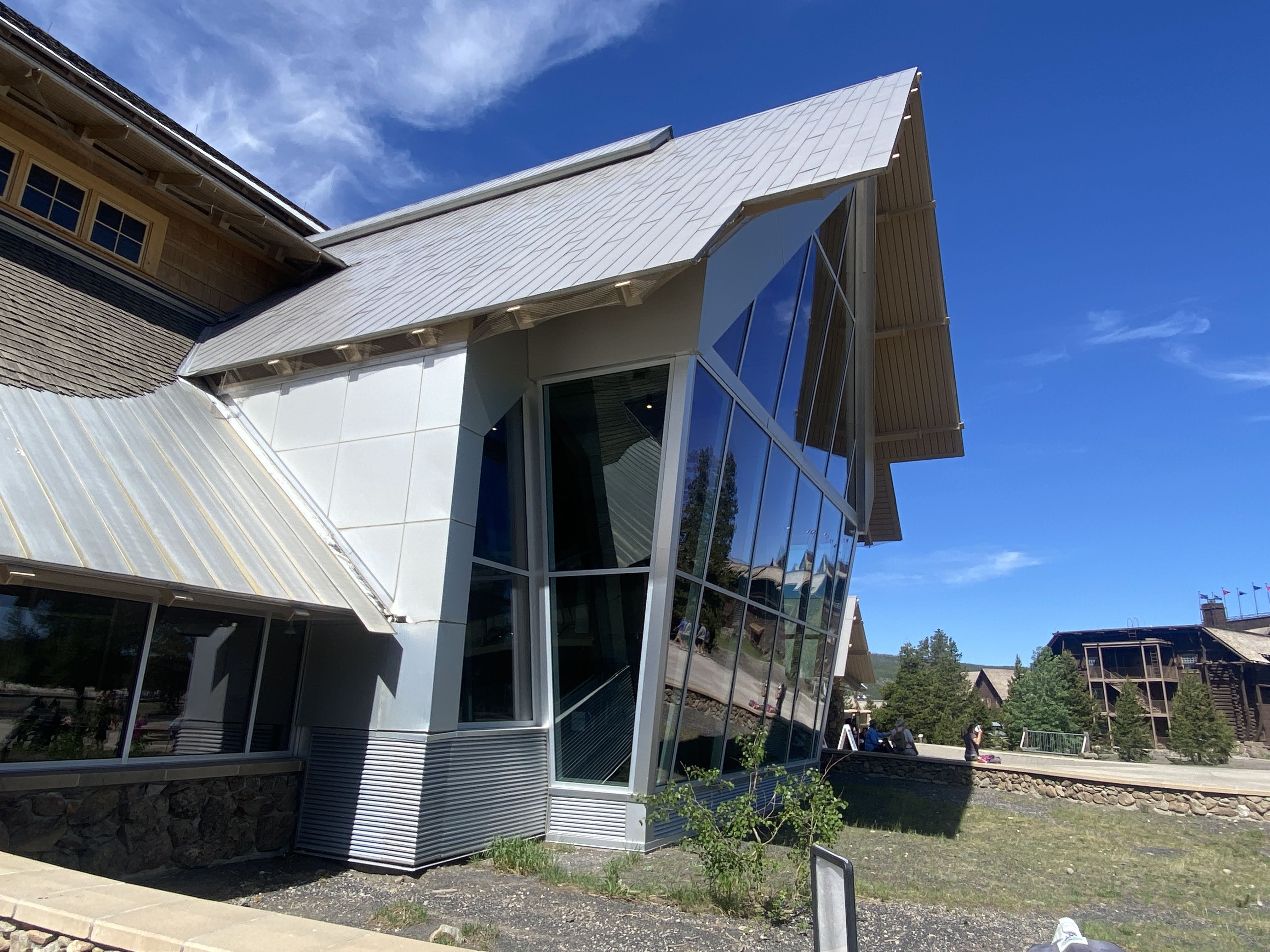
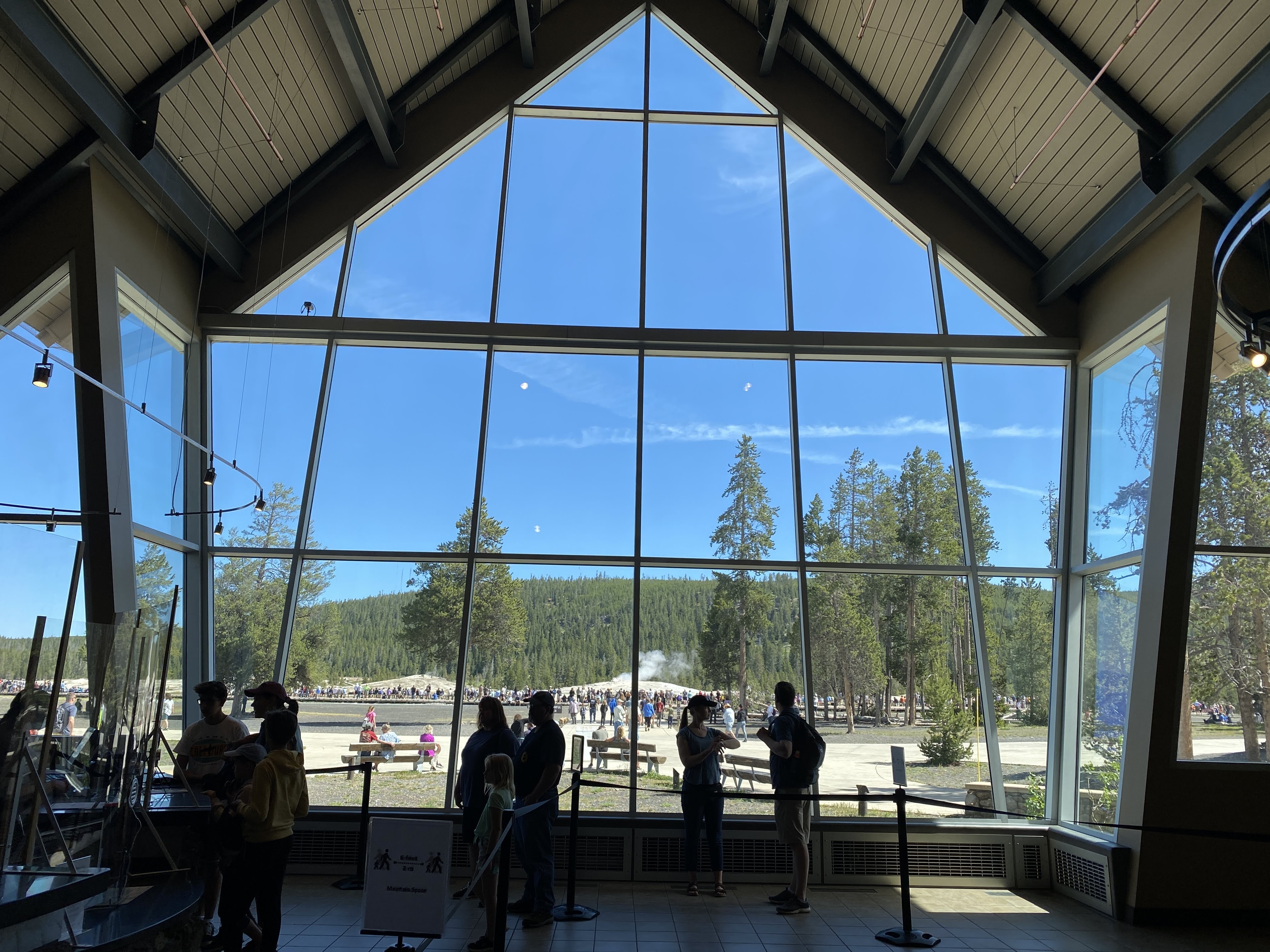
We returned to the Old Faithful viewing are. The crowd has tripled…

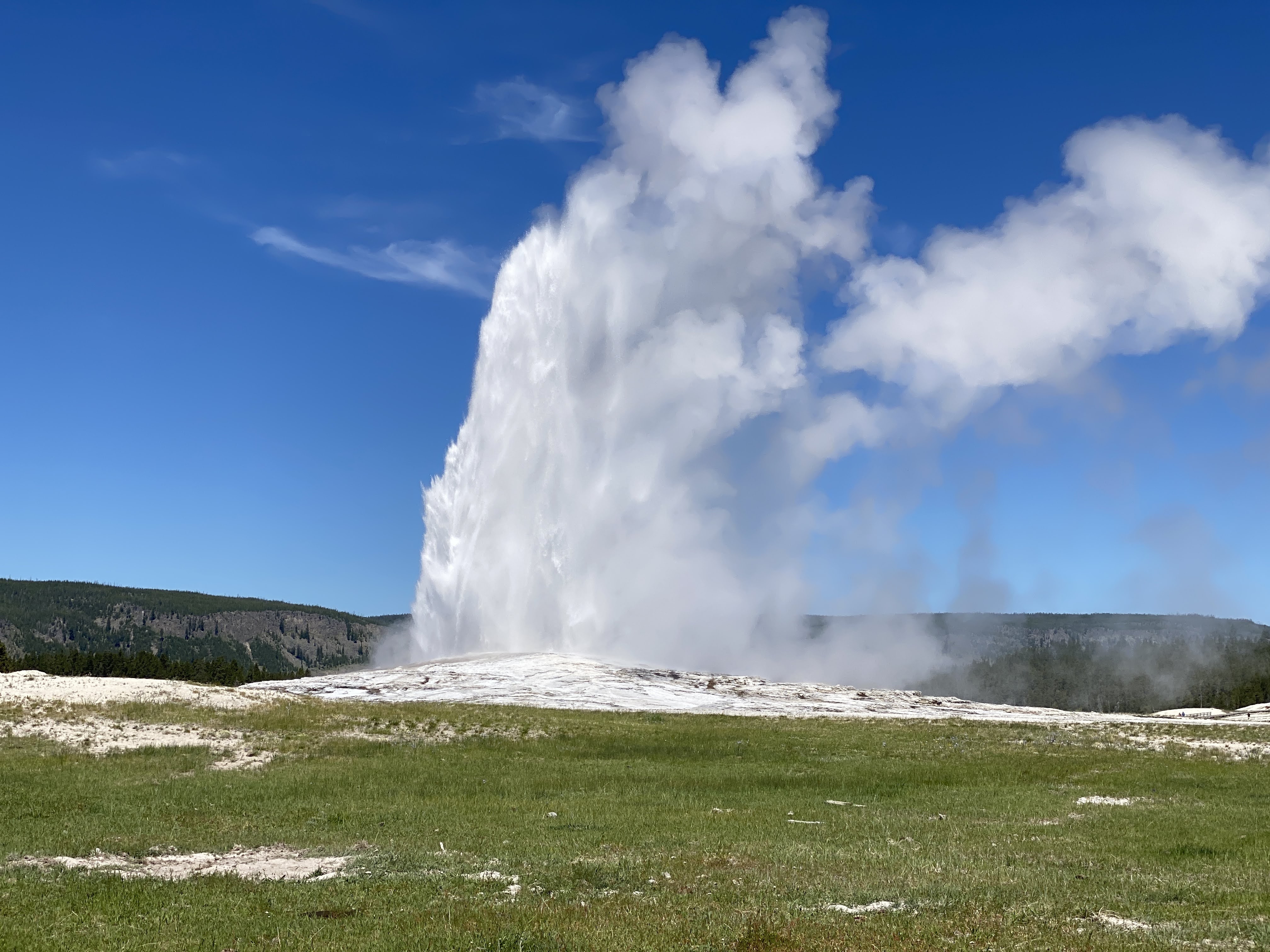
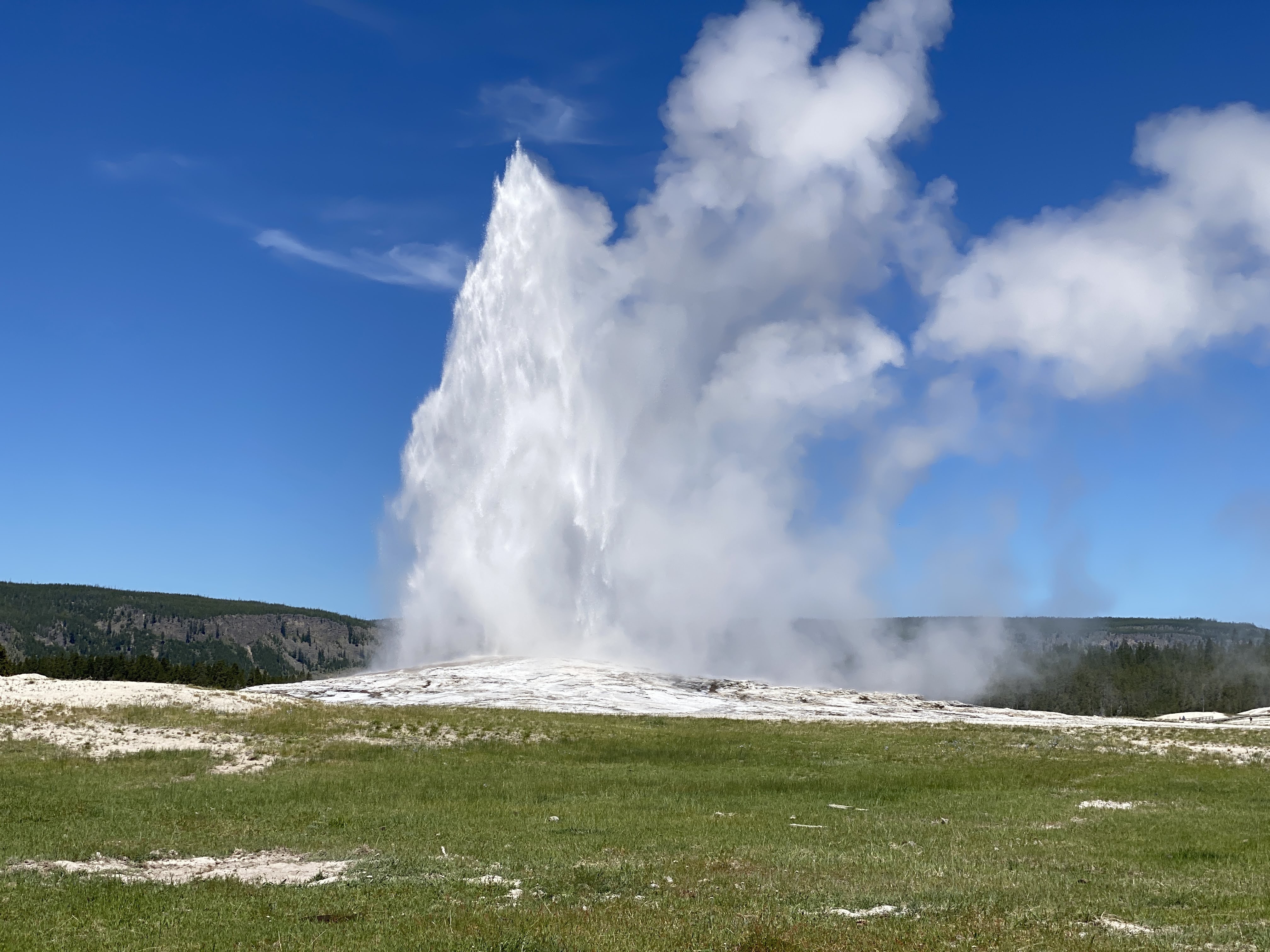
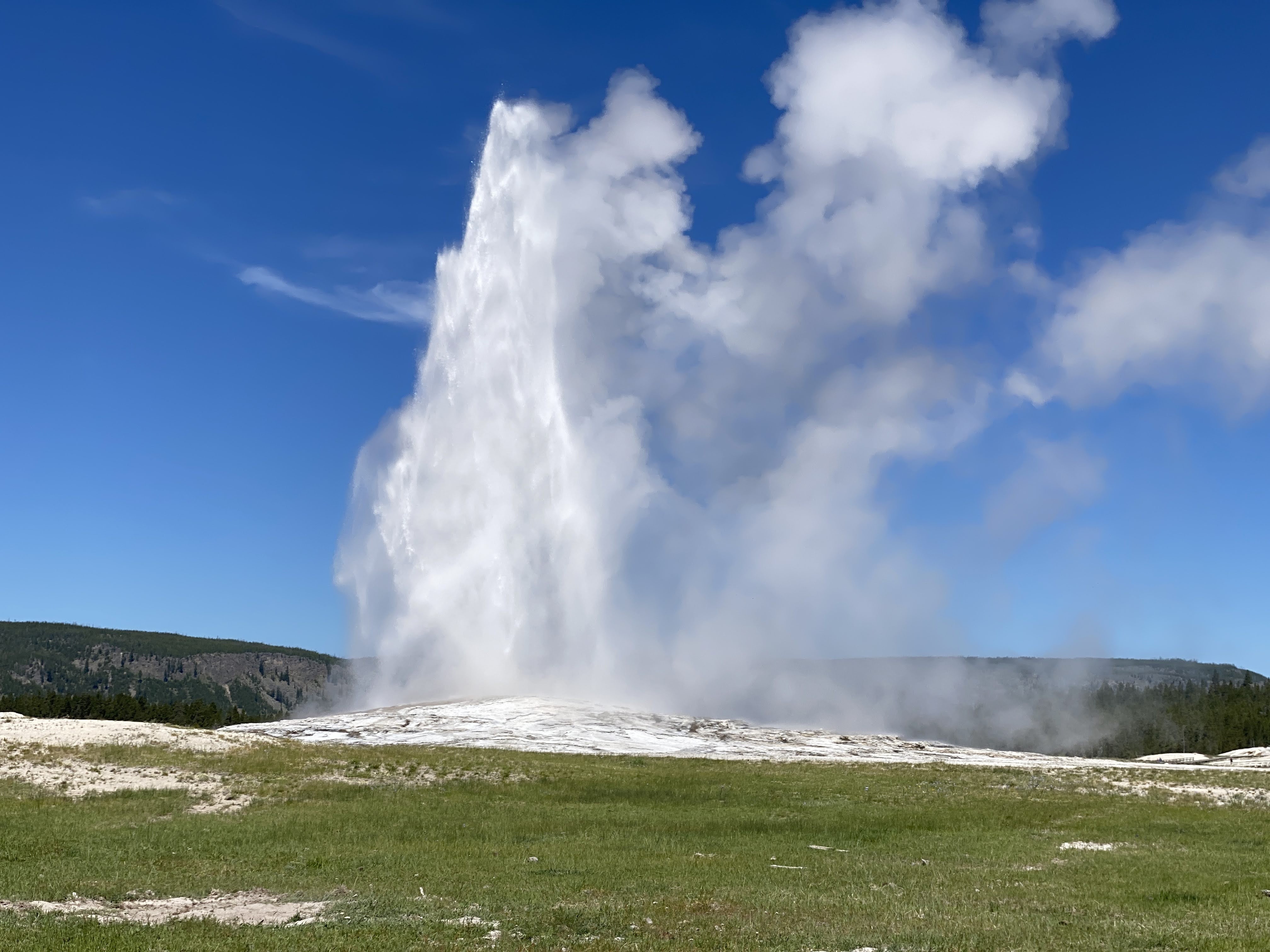
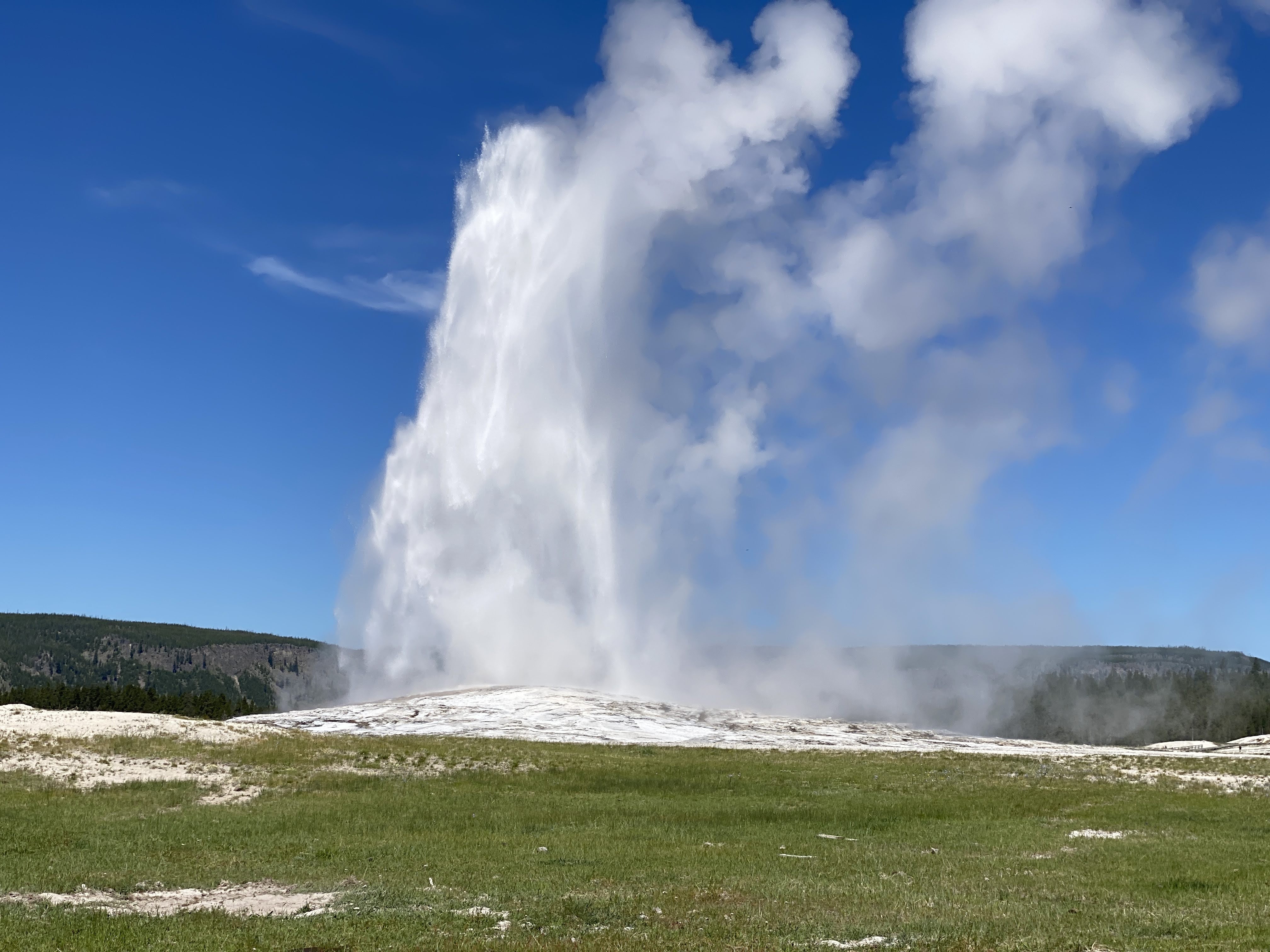
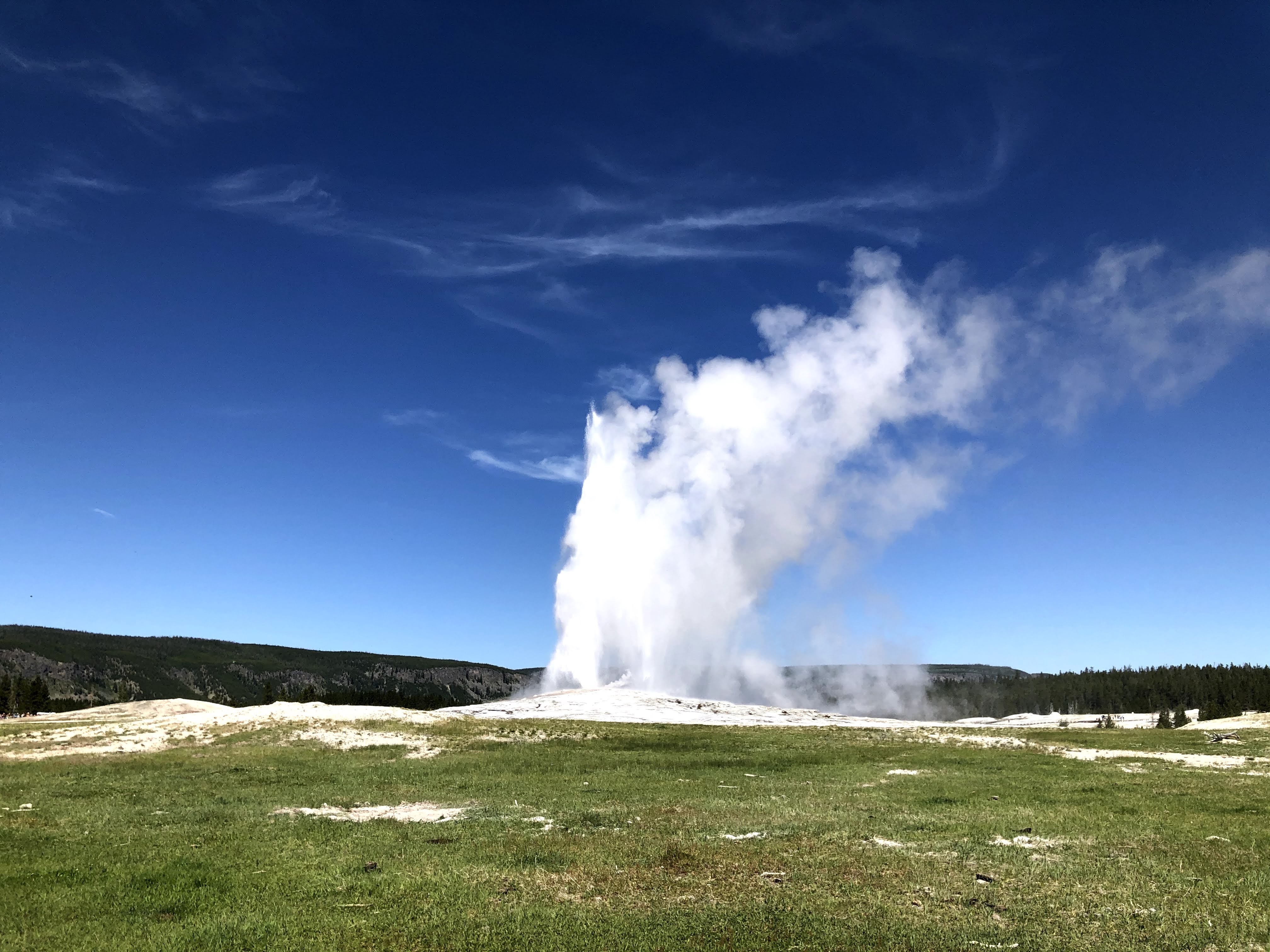
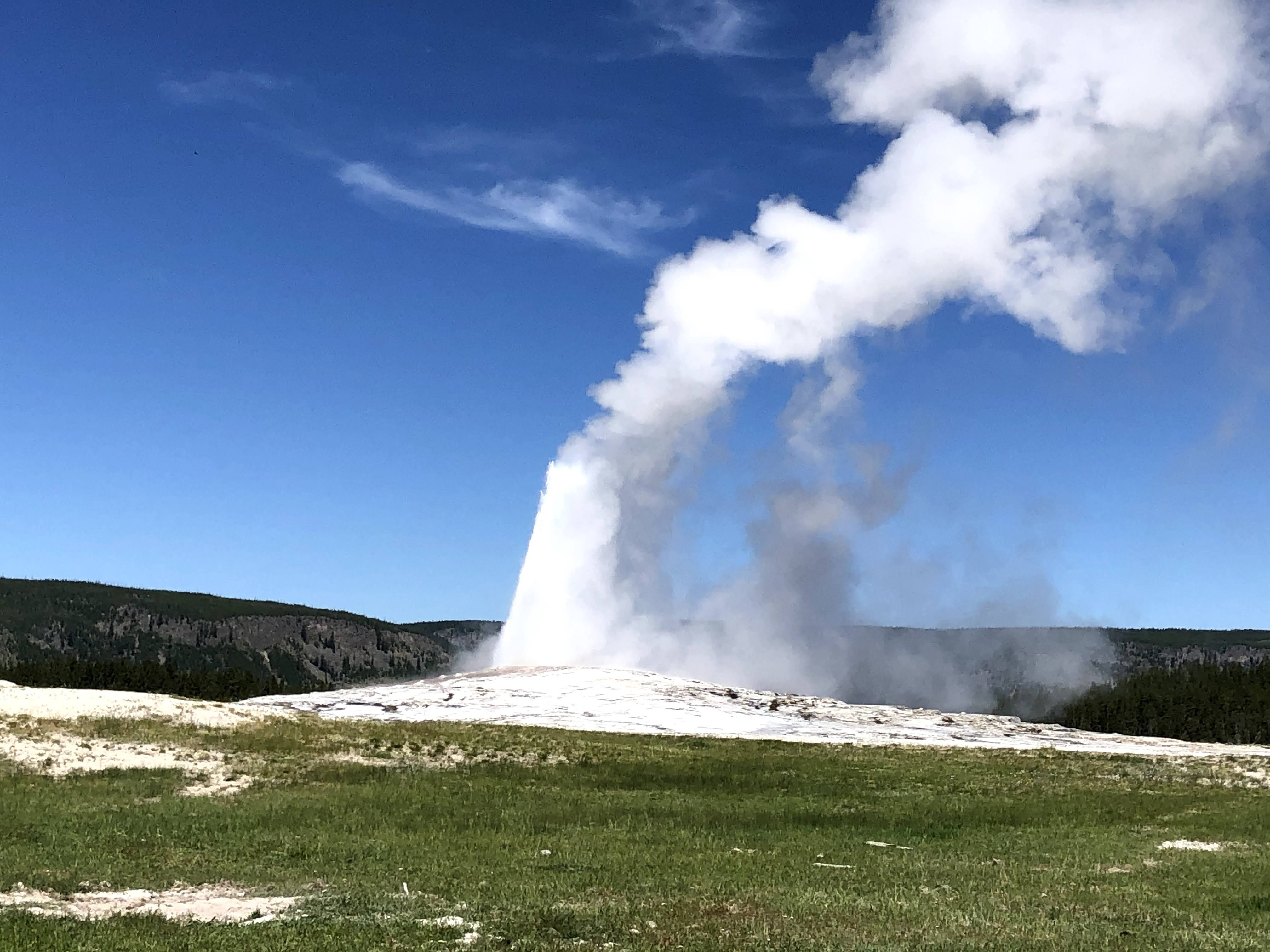
Old Faithful is a cone geyser. It was named in 1870 during the Washburn–Langford–Doane Expedition and was the first geyser in the park to be named. It is a highly predictable geothermal feature and has erupted every 44 minutes to two hours since 2000.  The geyser and the nearby Old Faithful Inn are part of the Old Faithful Historic District.
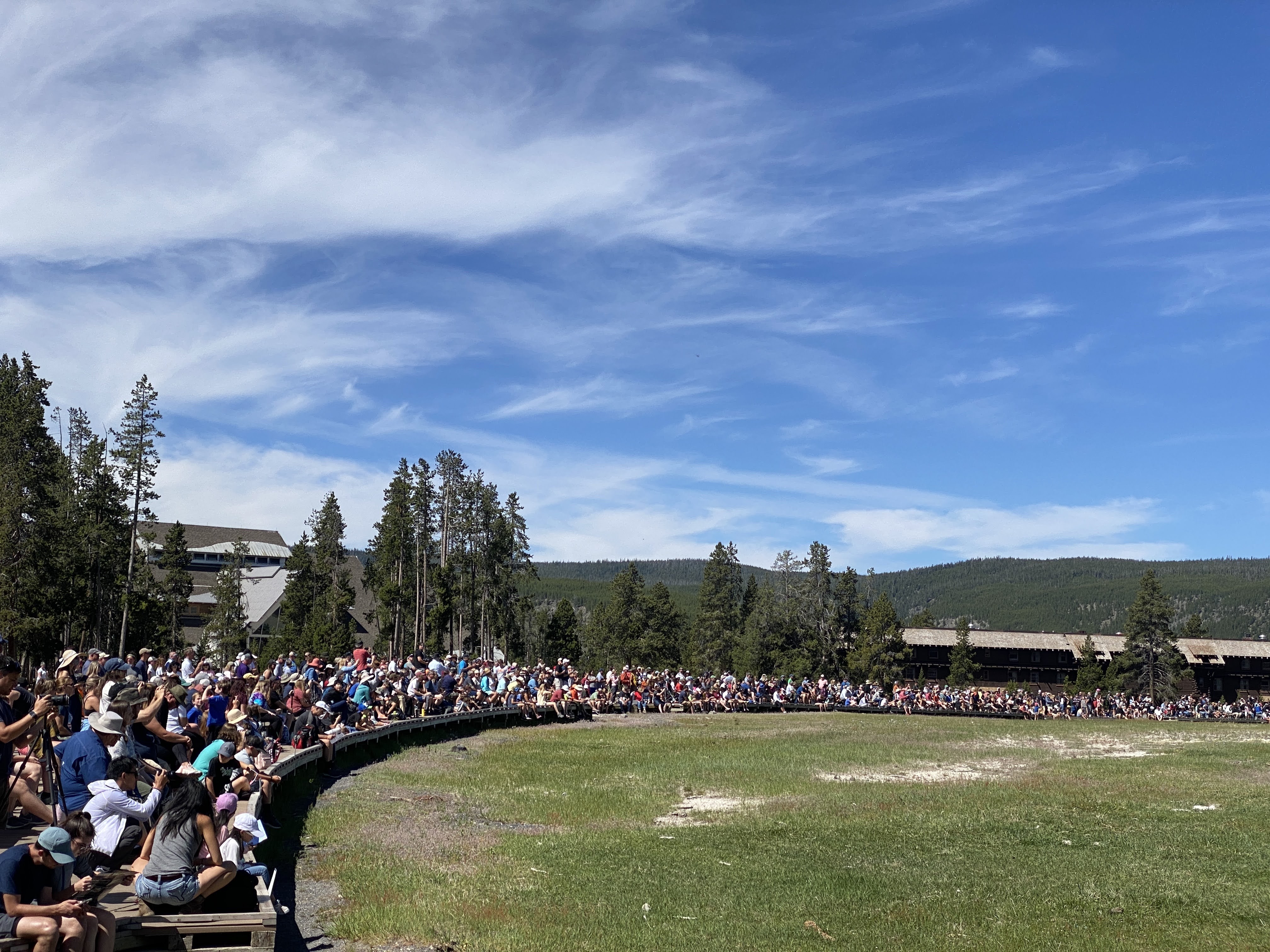
So thousands of people are standing around looking at this for the past hour. The next scheduled eruption is due at 11:06 am.
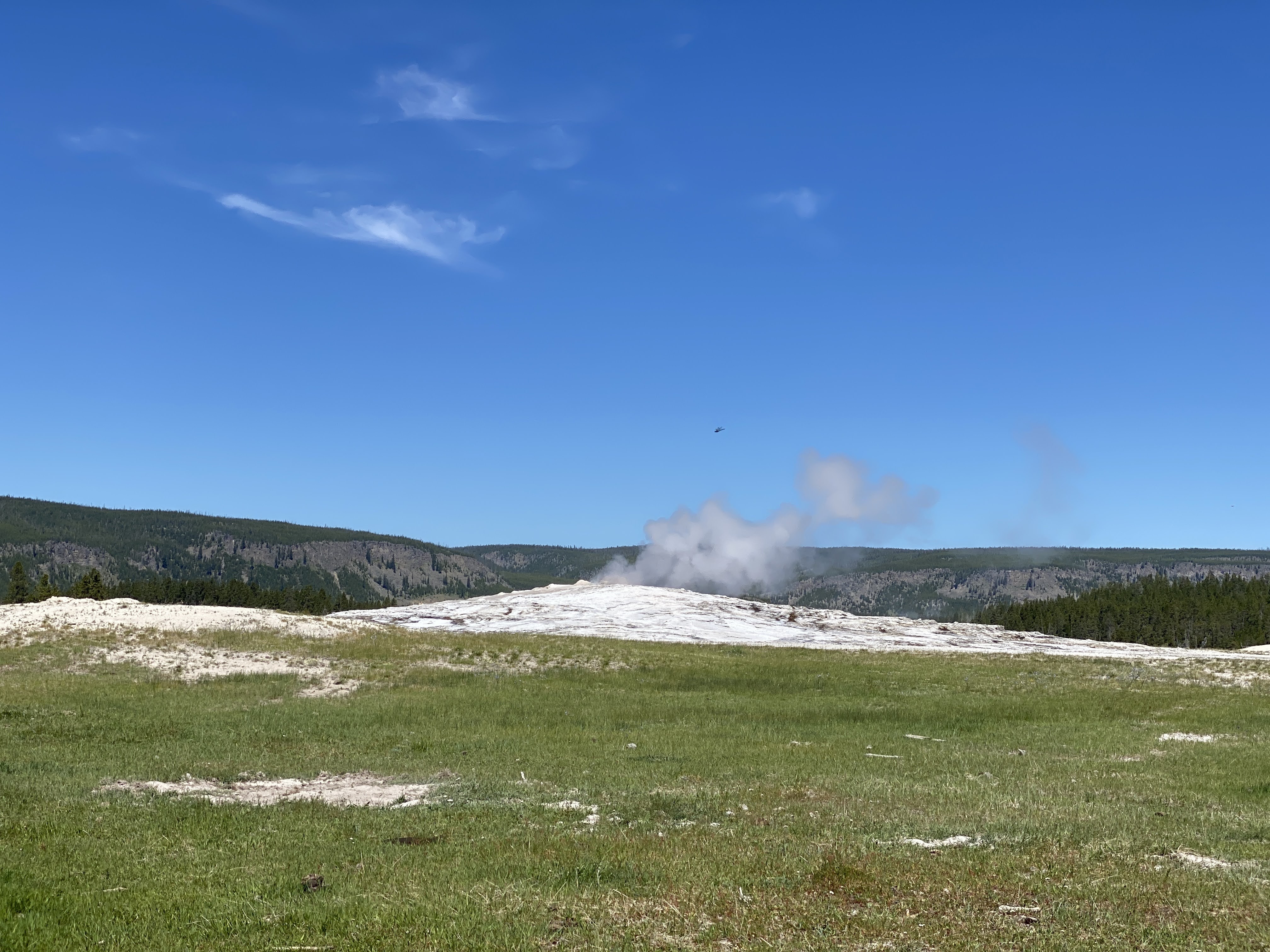
This image has an empty alt attribute; its file name is img_6694.jpg

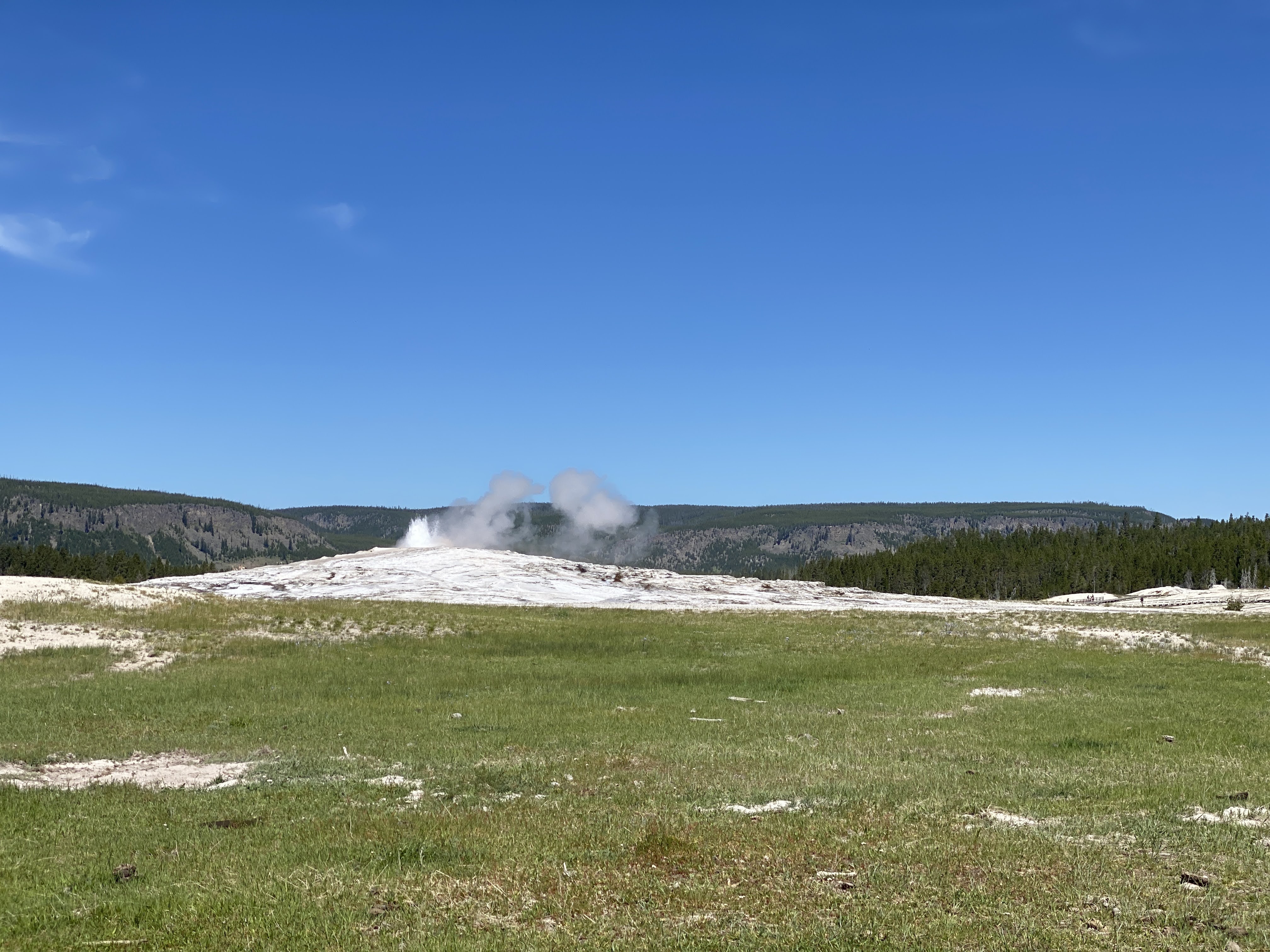
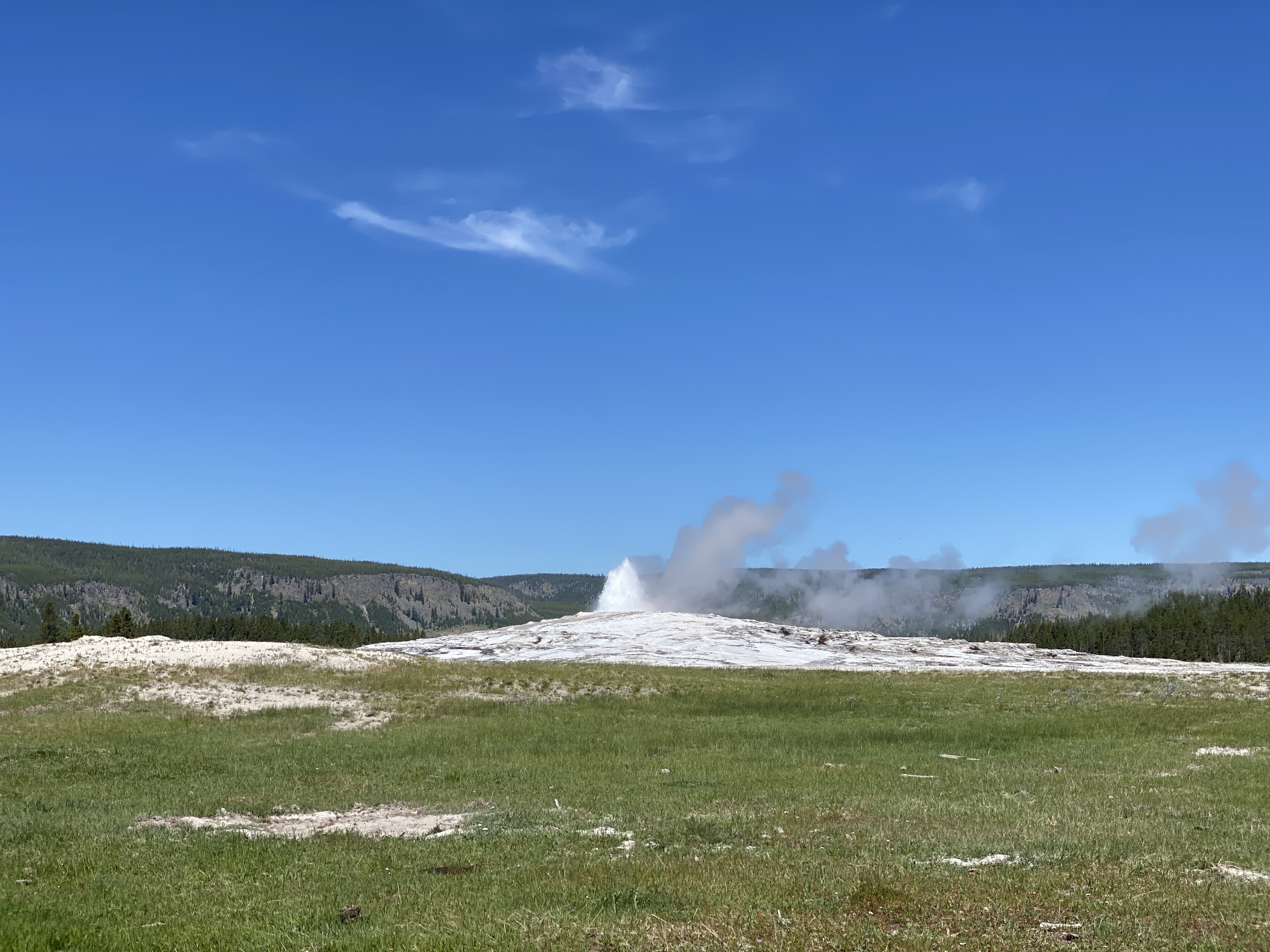
About ten minutes before the scheduled time the geyser spouts briefly…
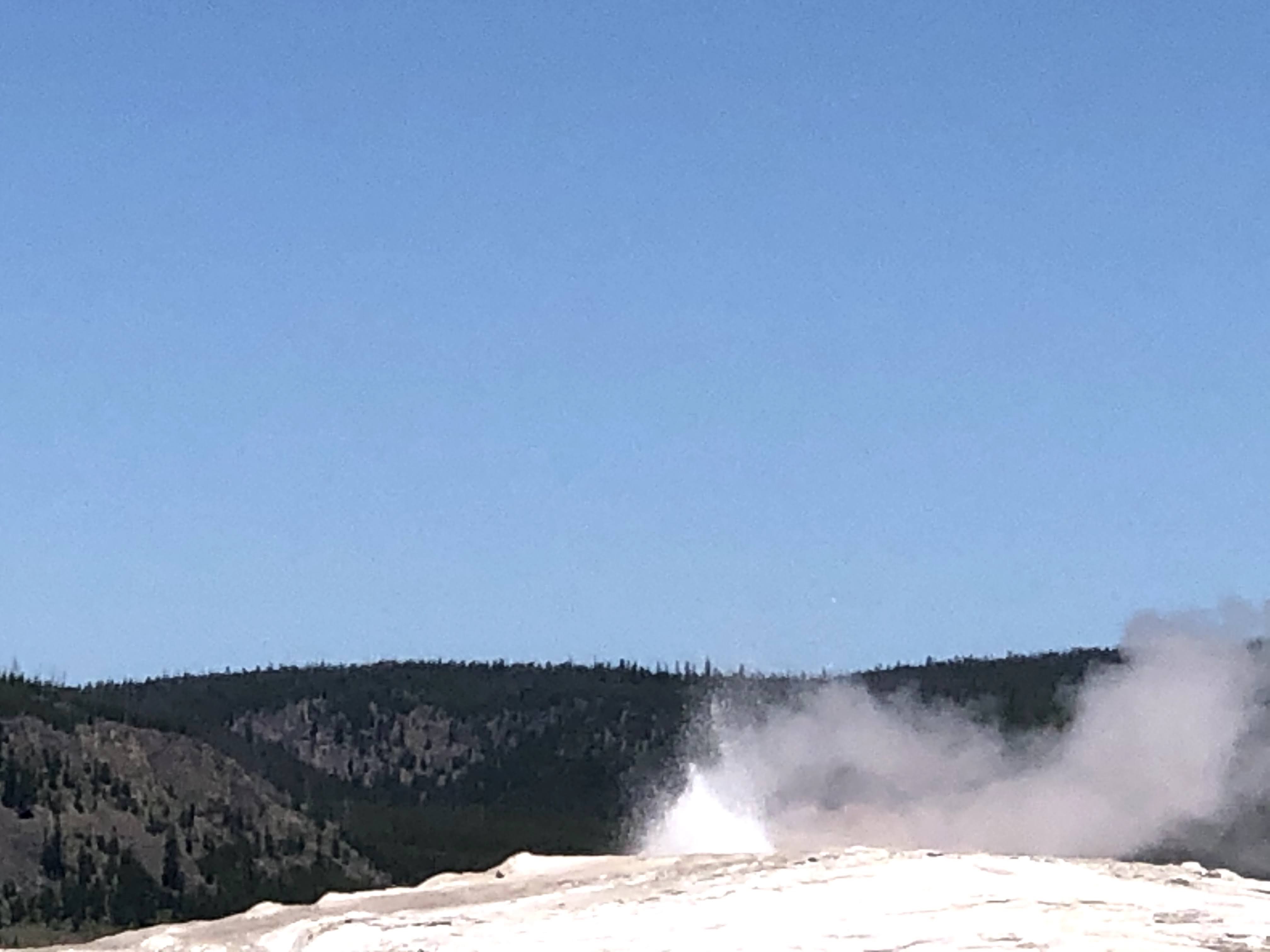
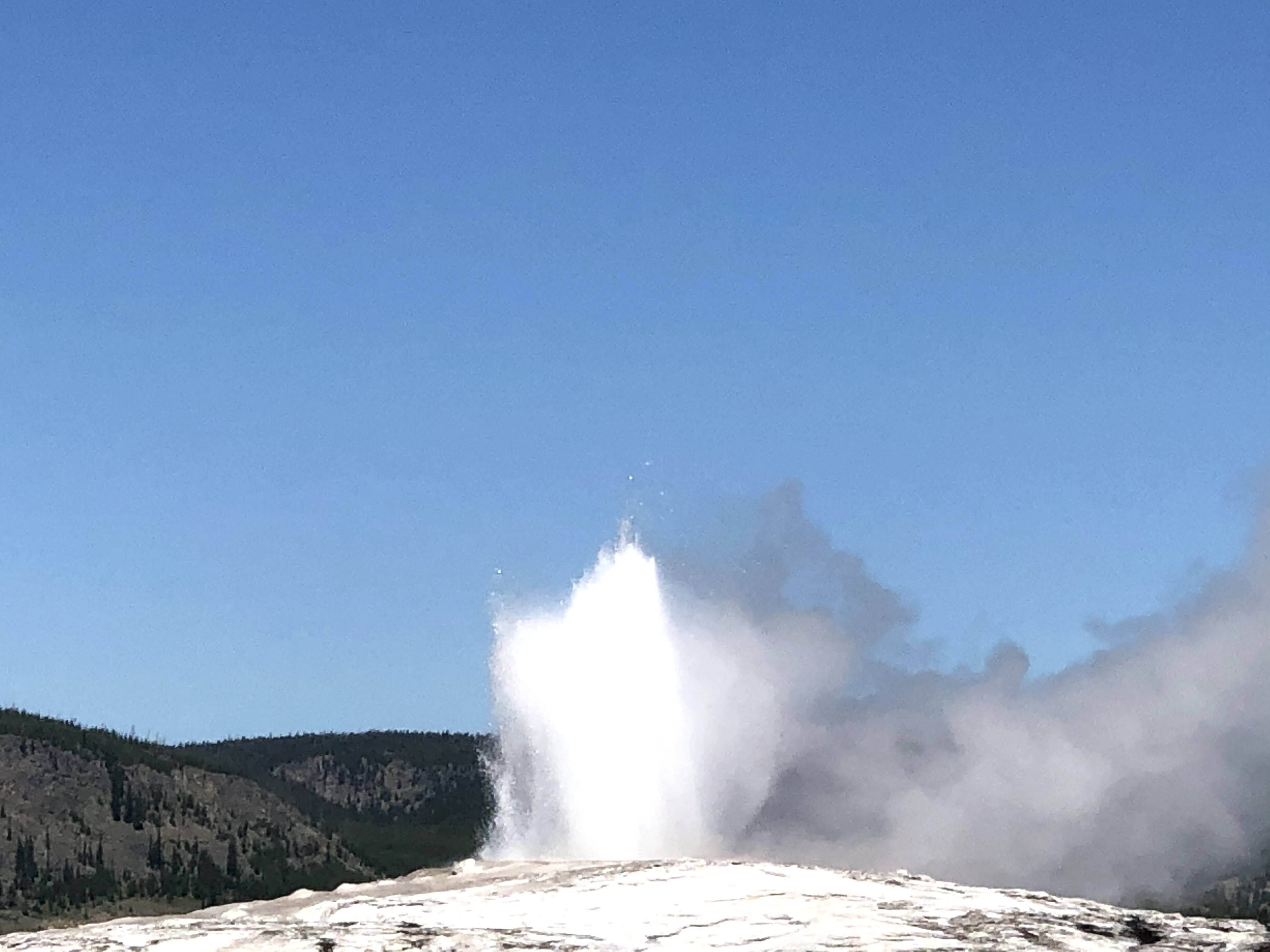
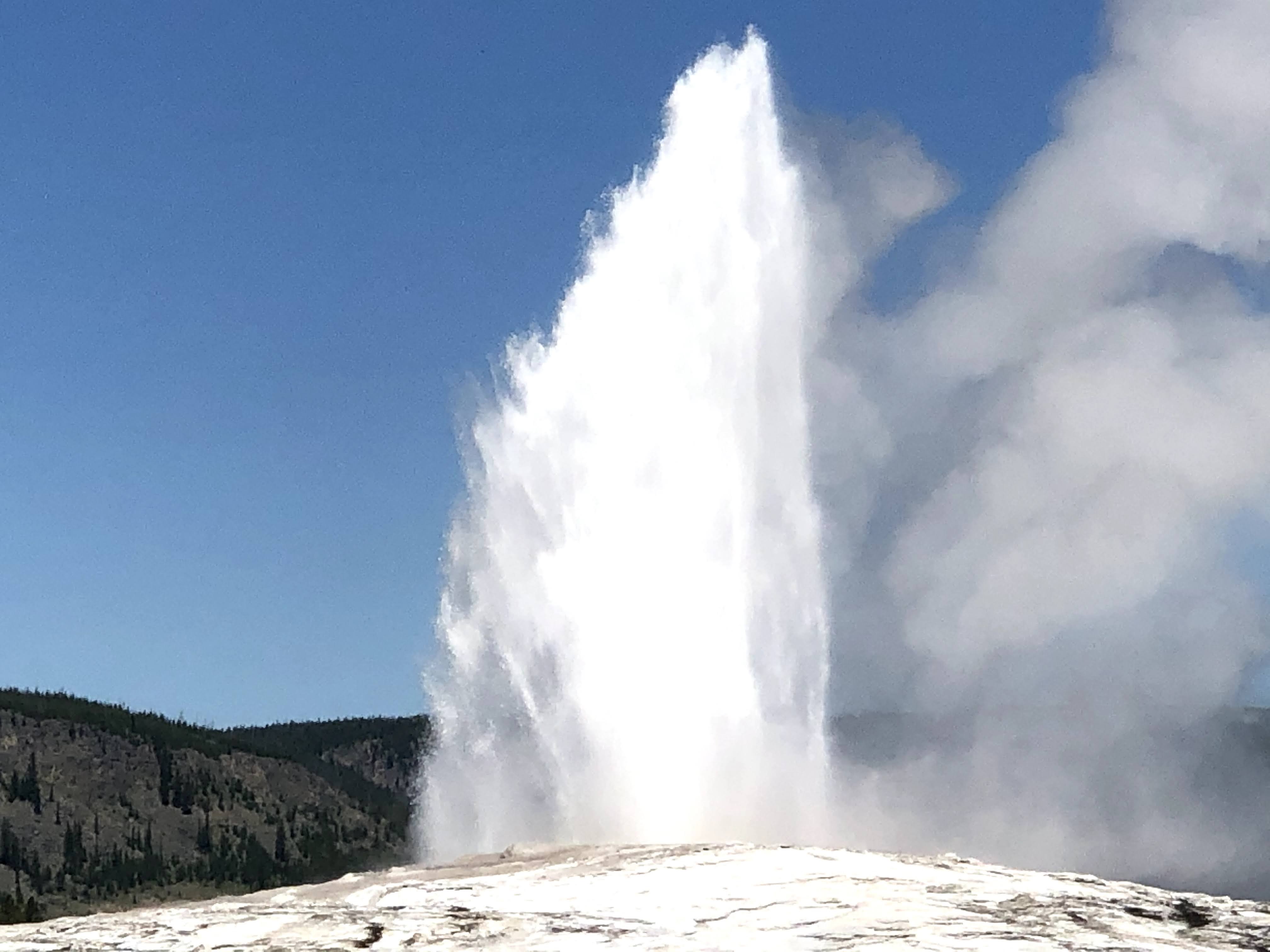
Finally, at 11:07 am Old Faithful earns her name…
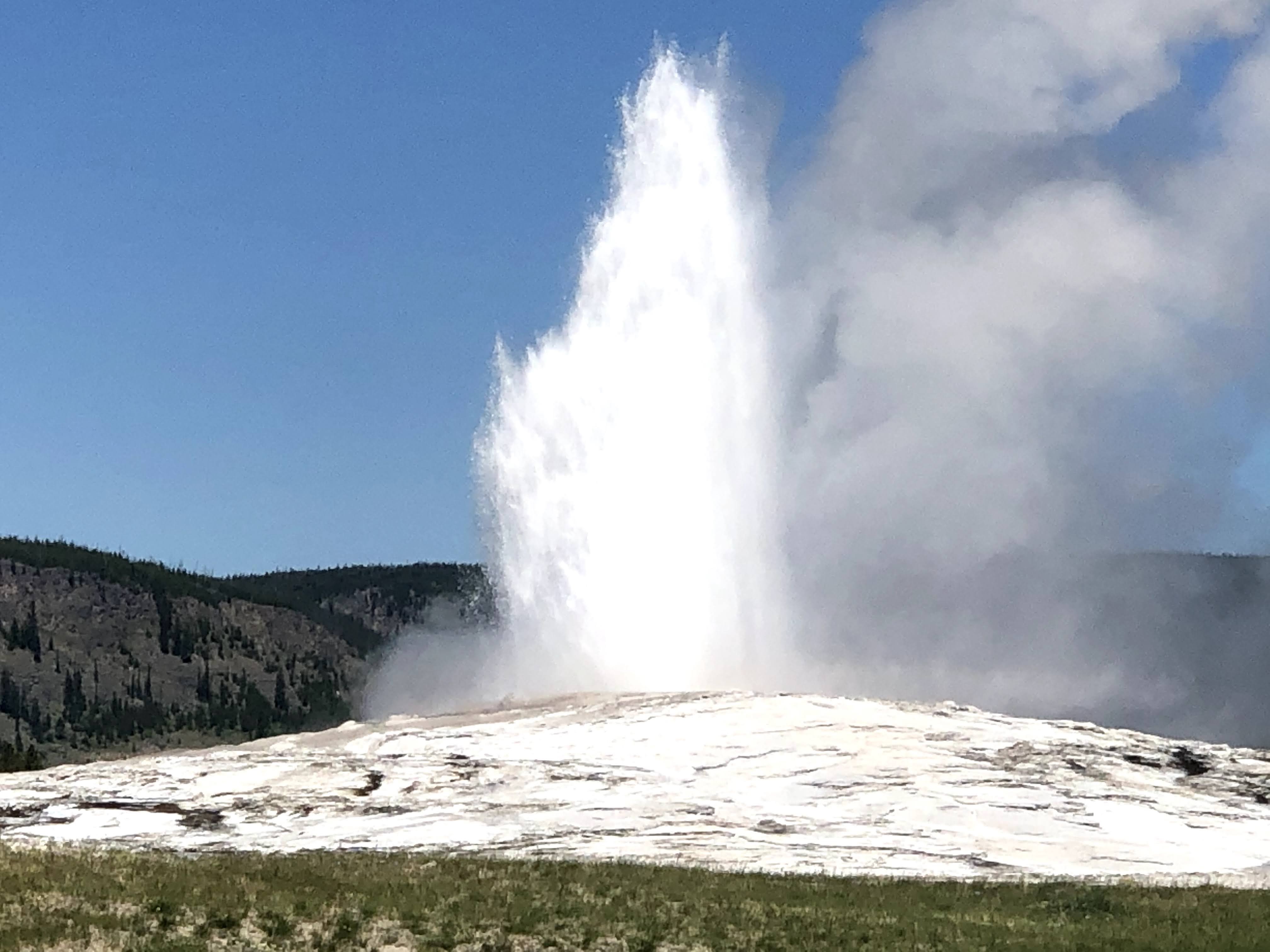
And it goes on and on…!
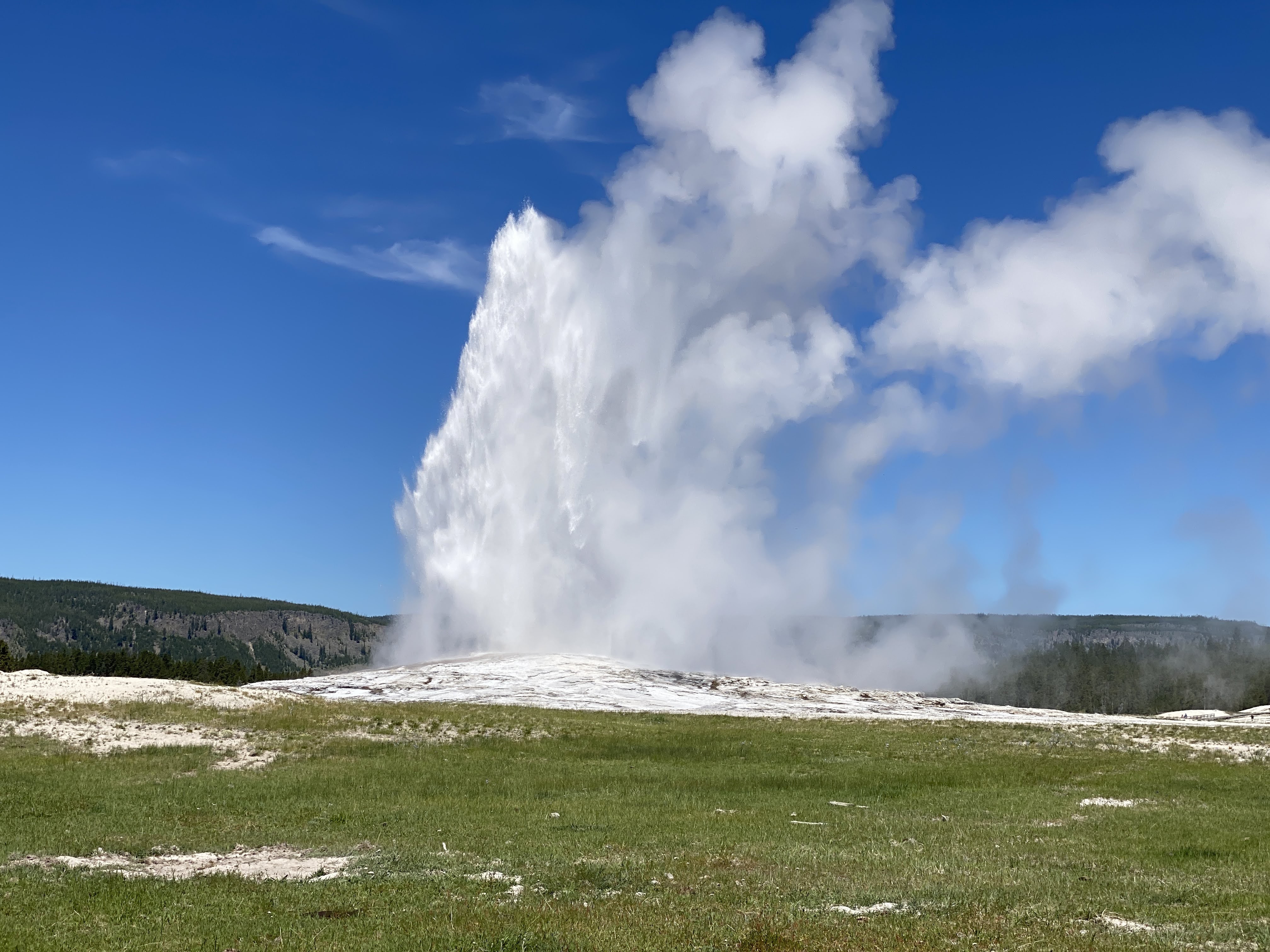
Finally the eruptions start to fade…

Eruptions can shoot 3,700 to 8,400 gallons of boiling water to a height of 106 to 185 feet, lasting from 112 to 5 minutes.

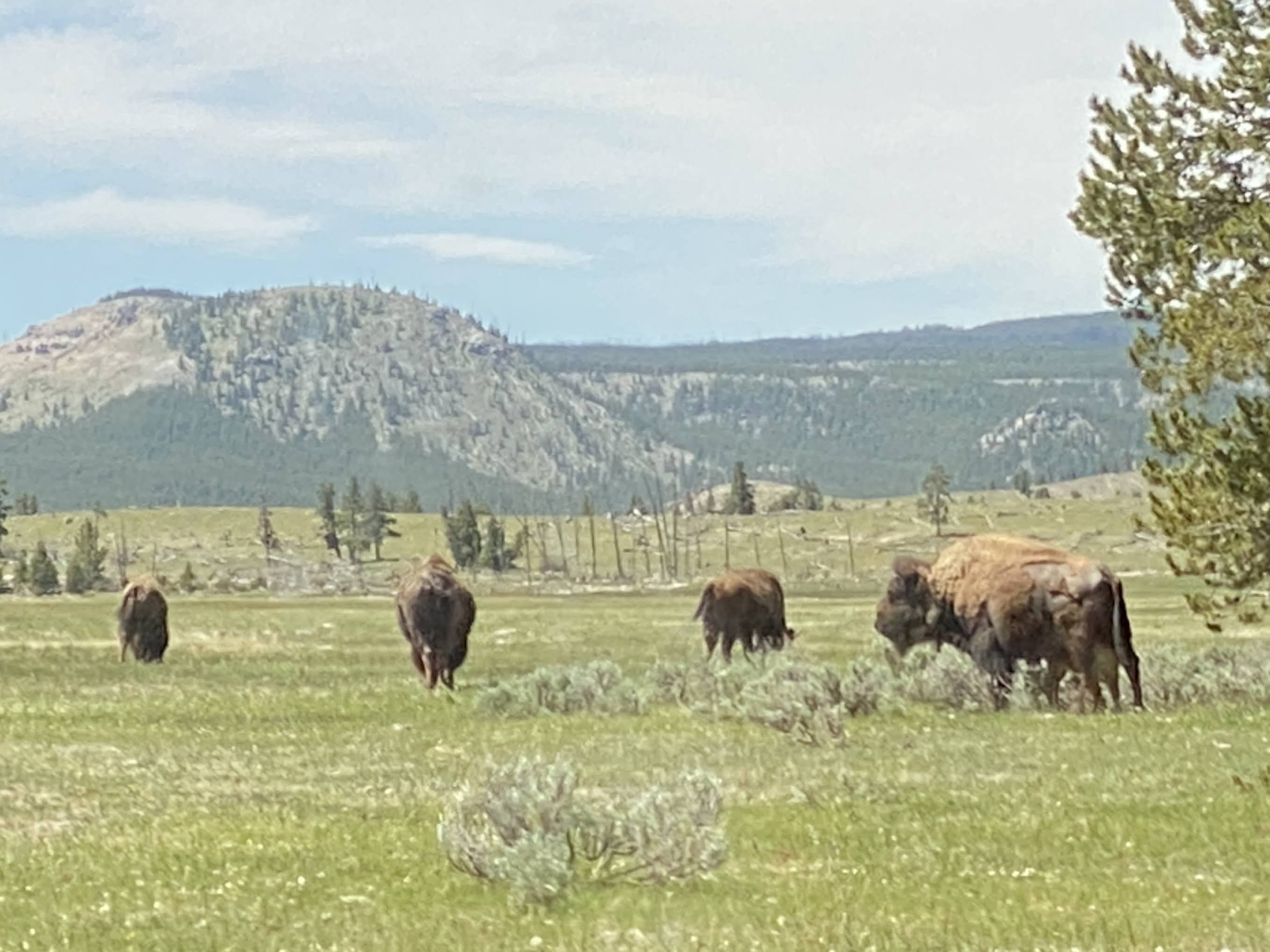
We continued to drive north. We found some Bison…
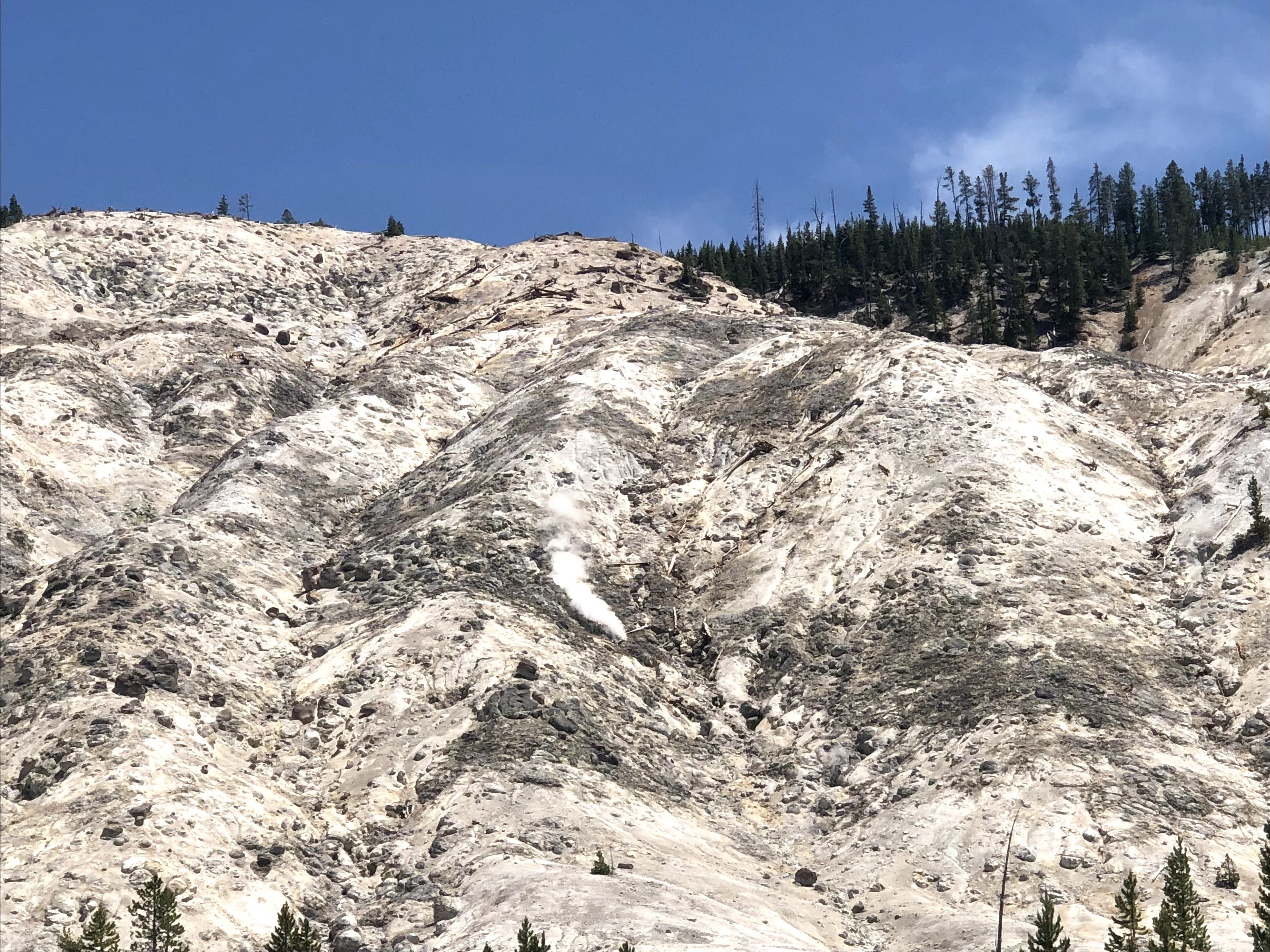
We found some Fumaroles at Roaring Mountain: (Fumaroles are similar to geysers, except that they do not have enough pressure to erupt; they just emit steam…)
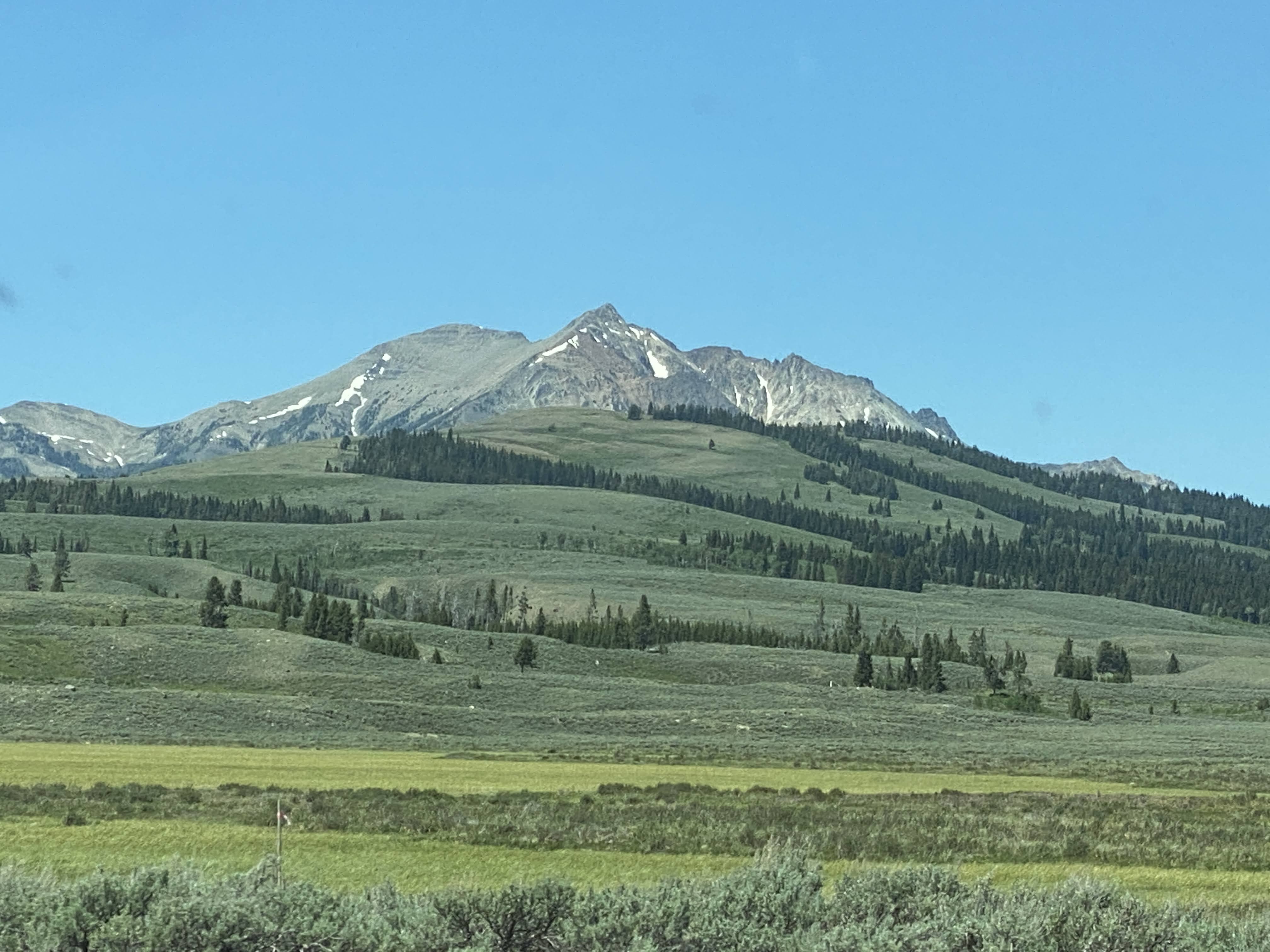
We had some fine views
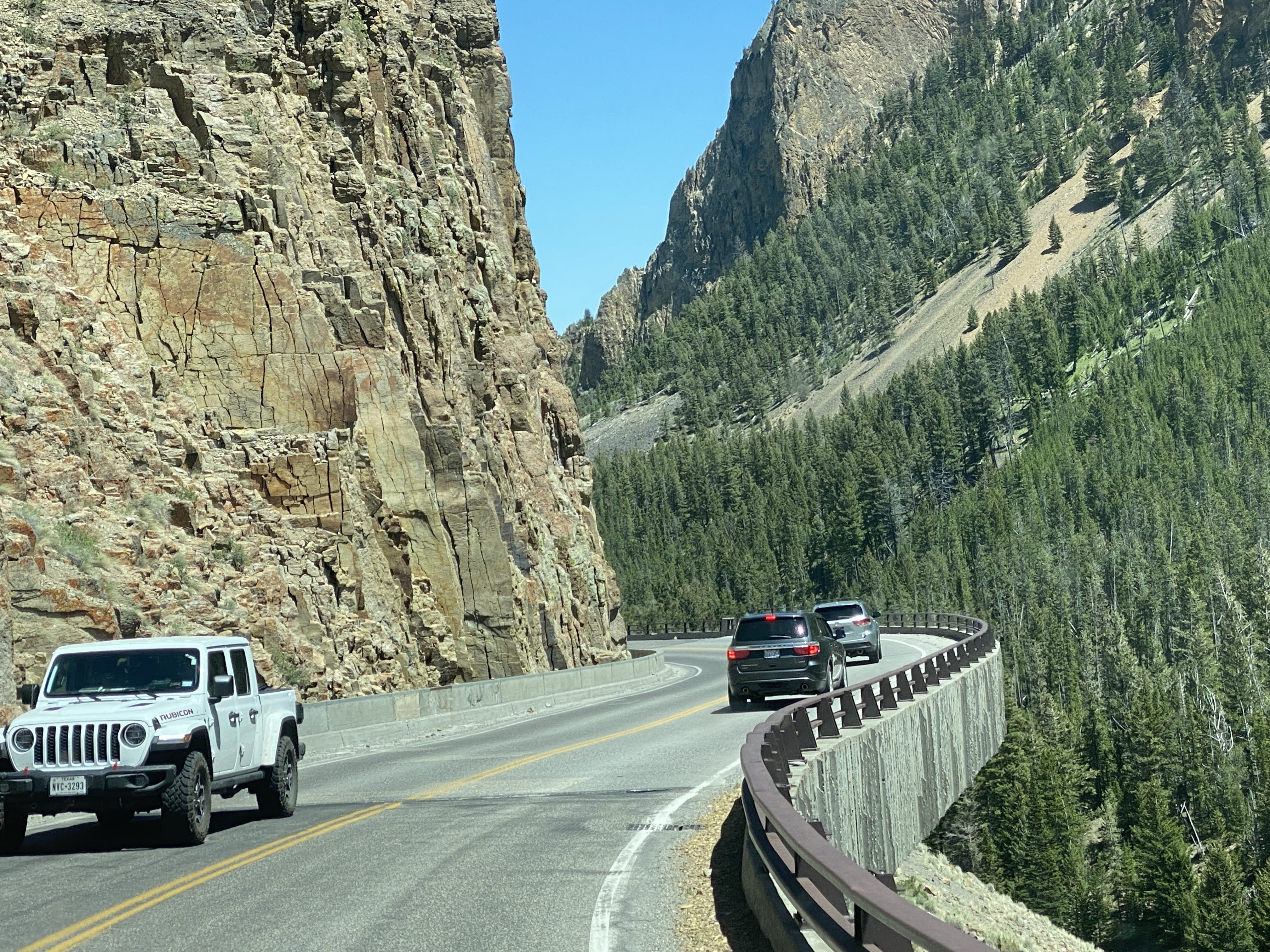
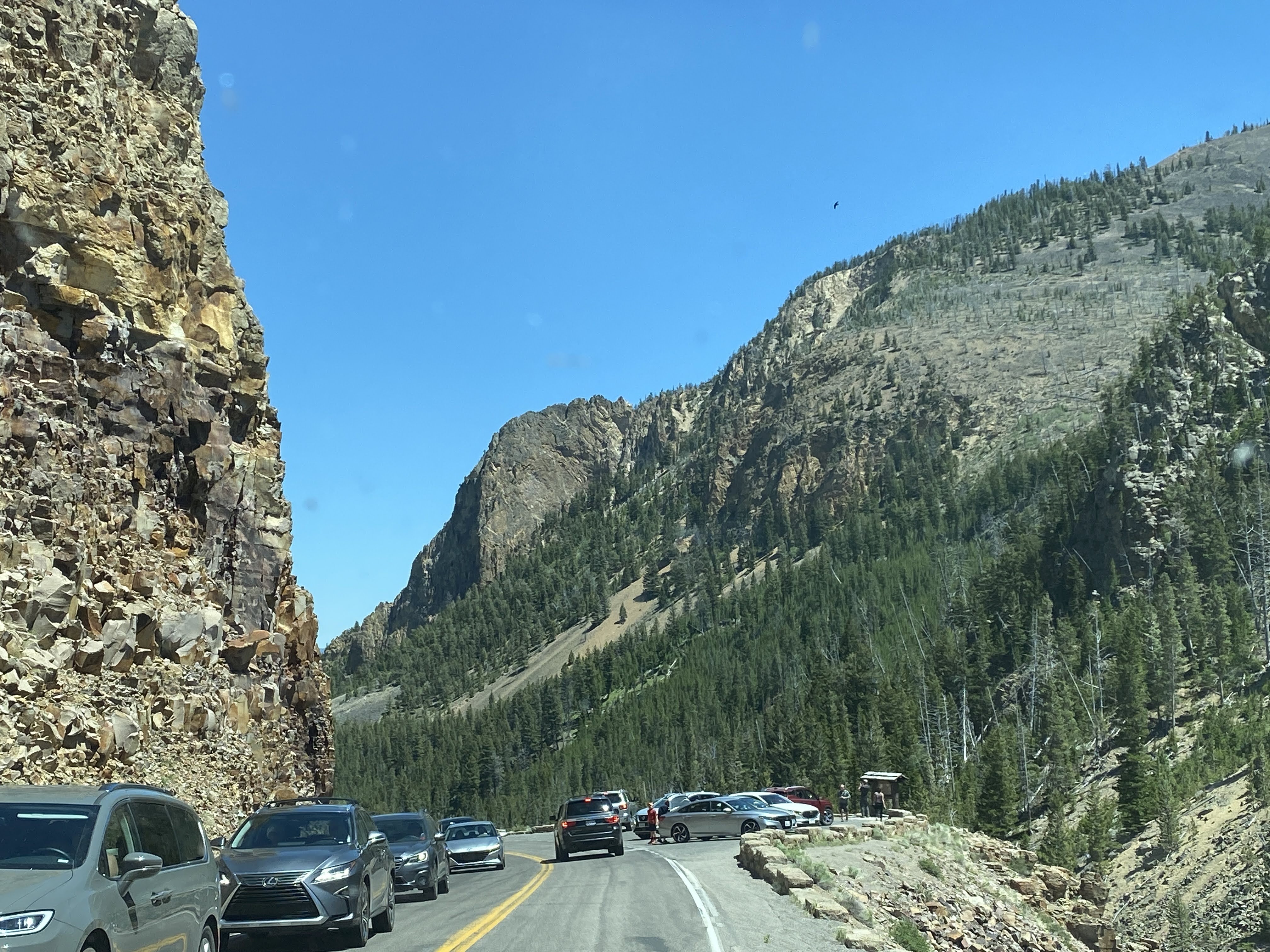
The traffic is bad and the roads are rough, slow, narrow, and curvy…
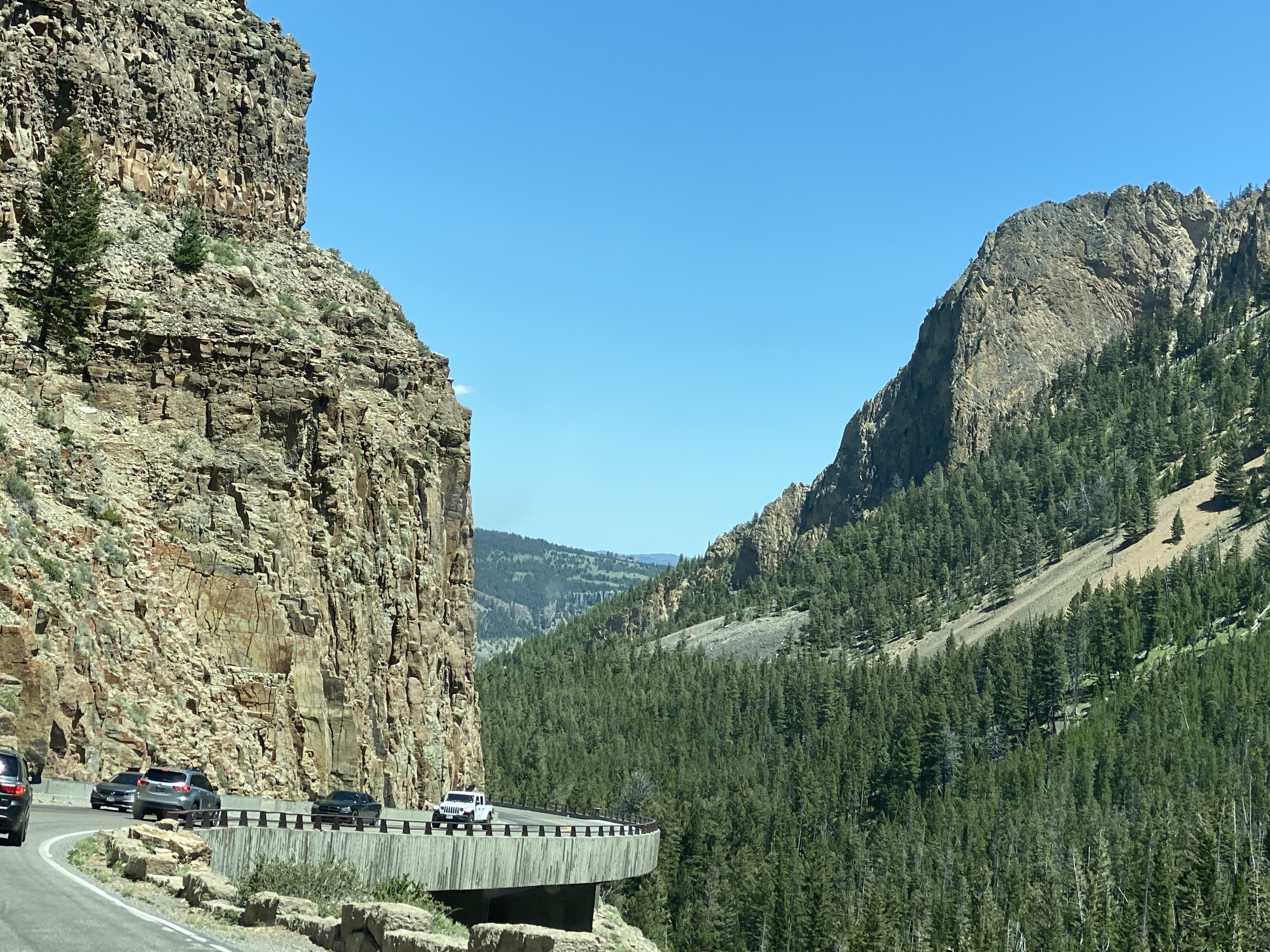
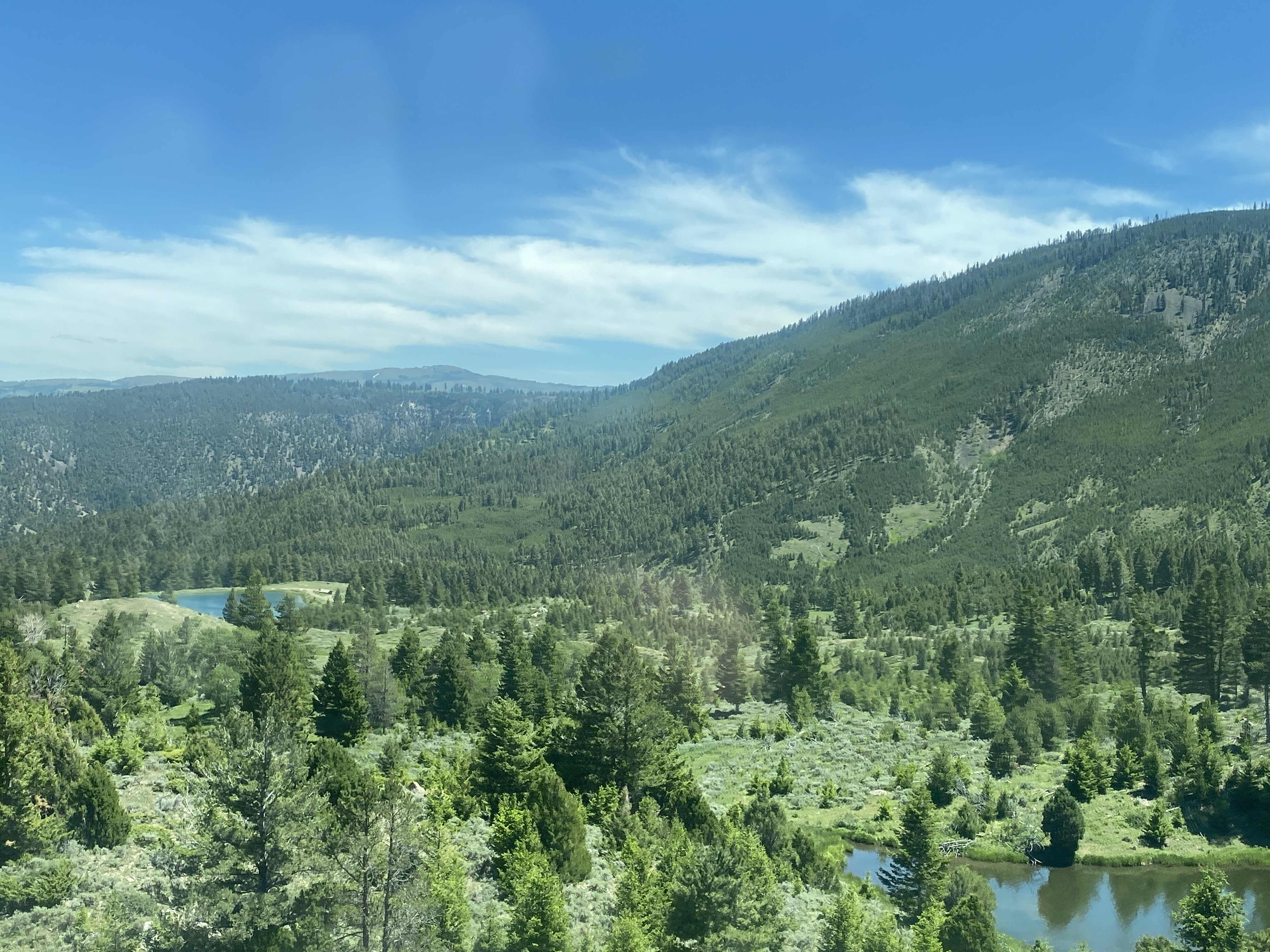
More green valleys…
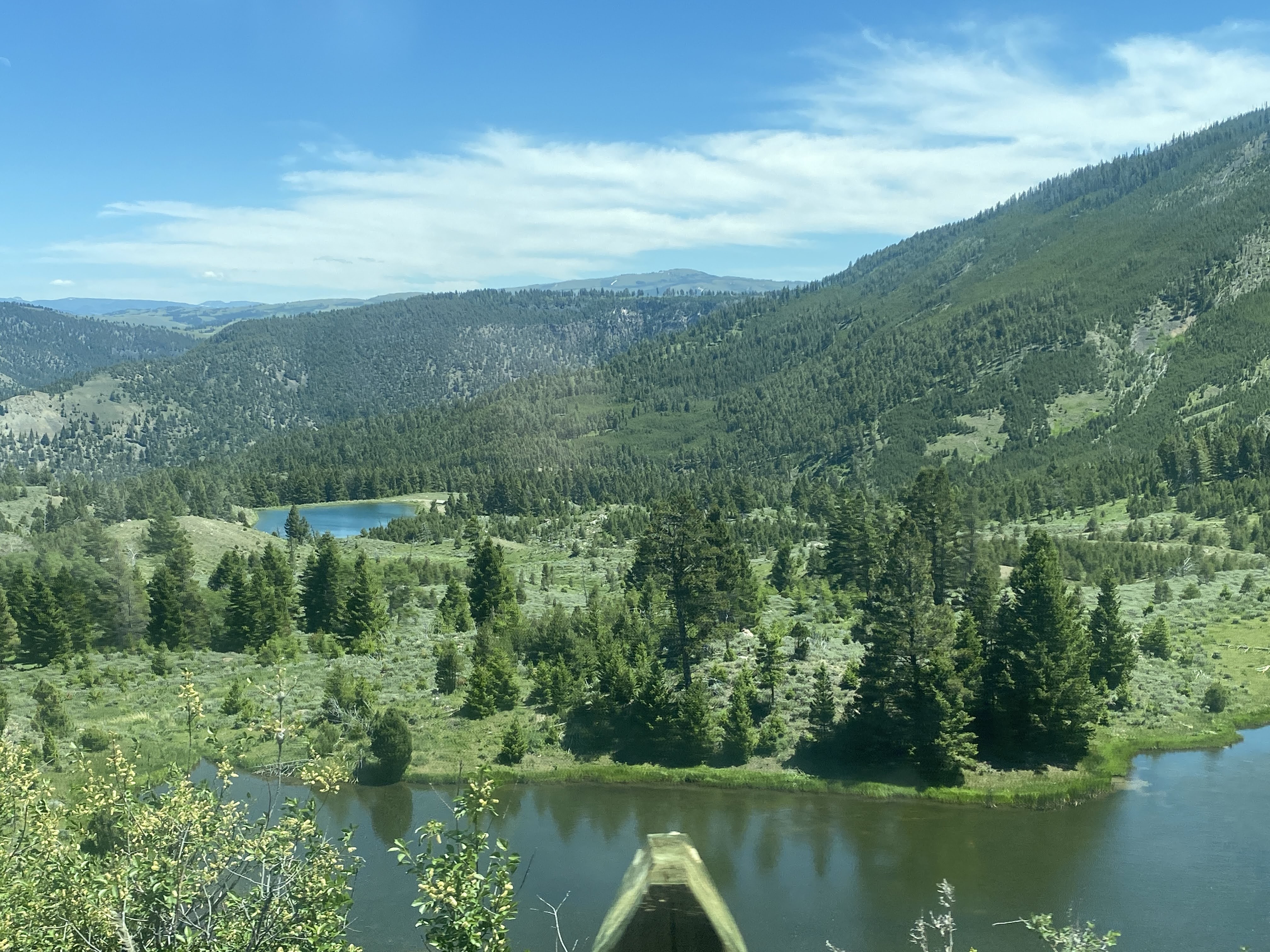
We saw this female elk hanging out along the side of the road…
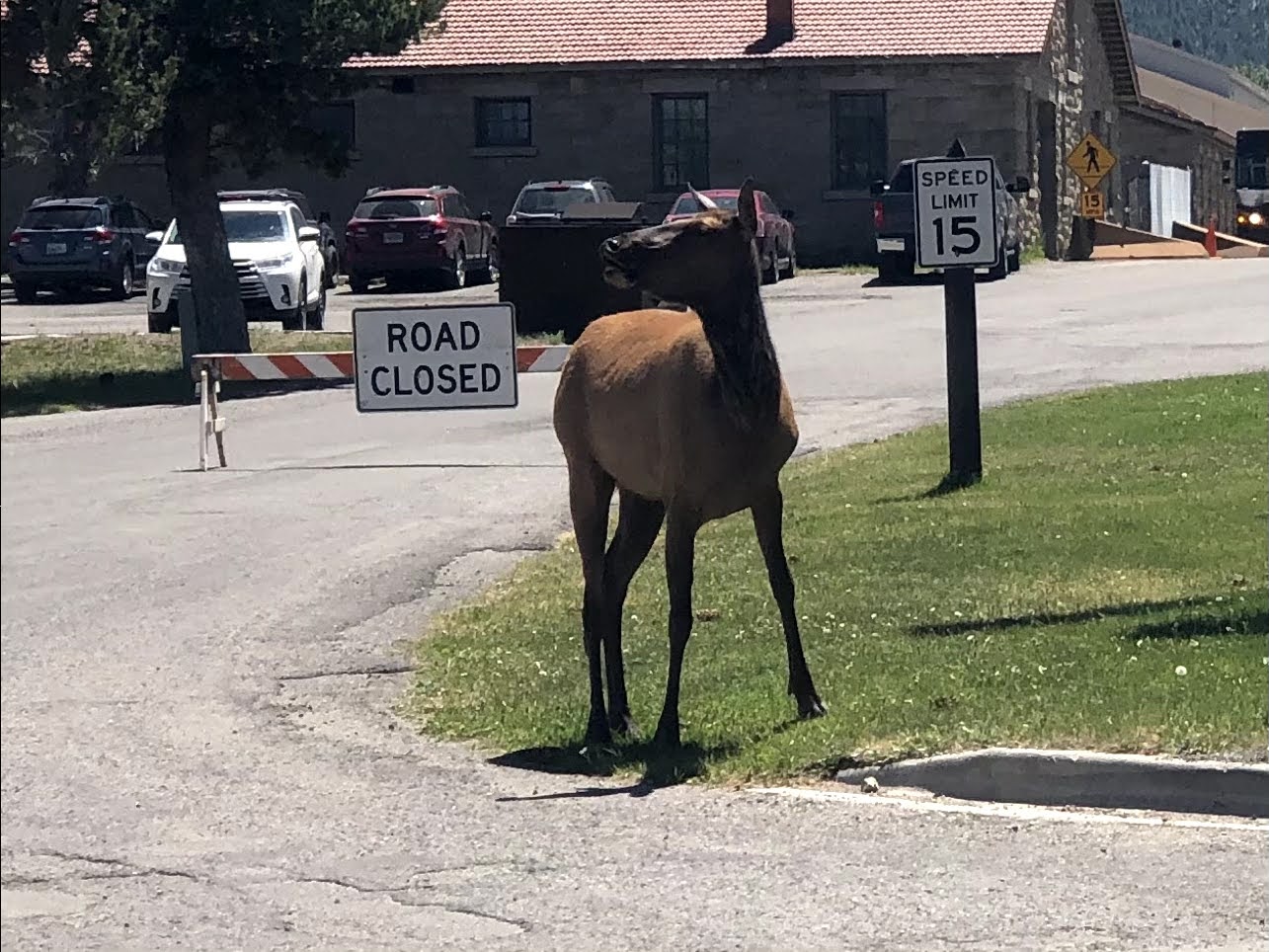
More Pronghorn Antelope… But they are far away…
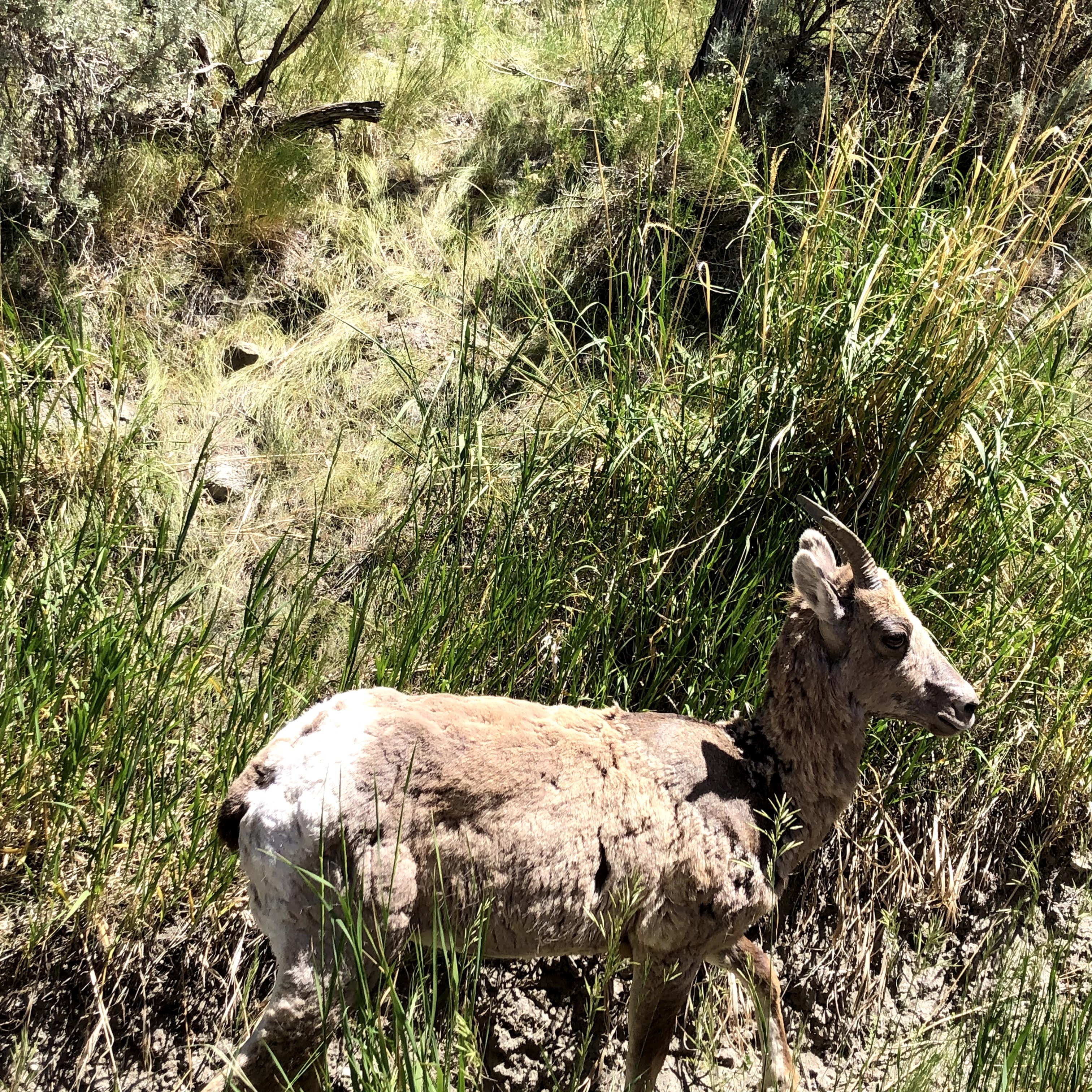
We continued out of the park and into Gardiner, Montana…
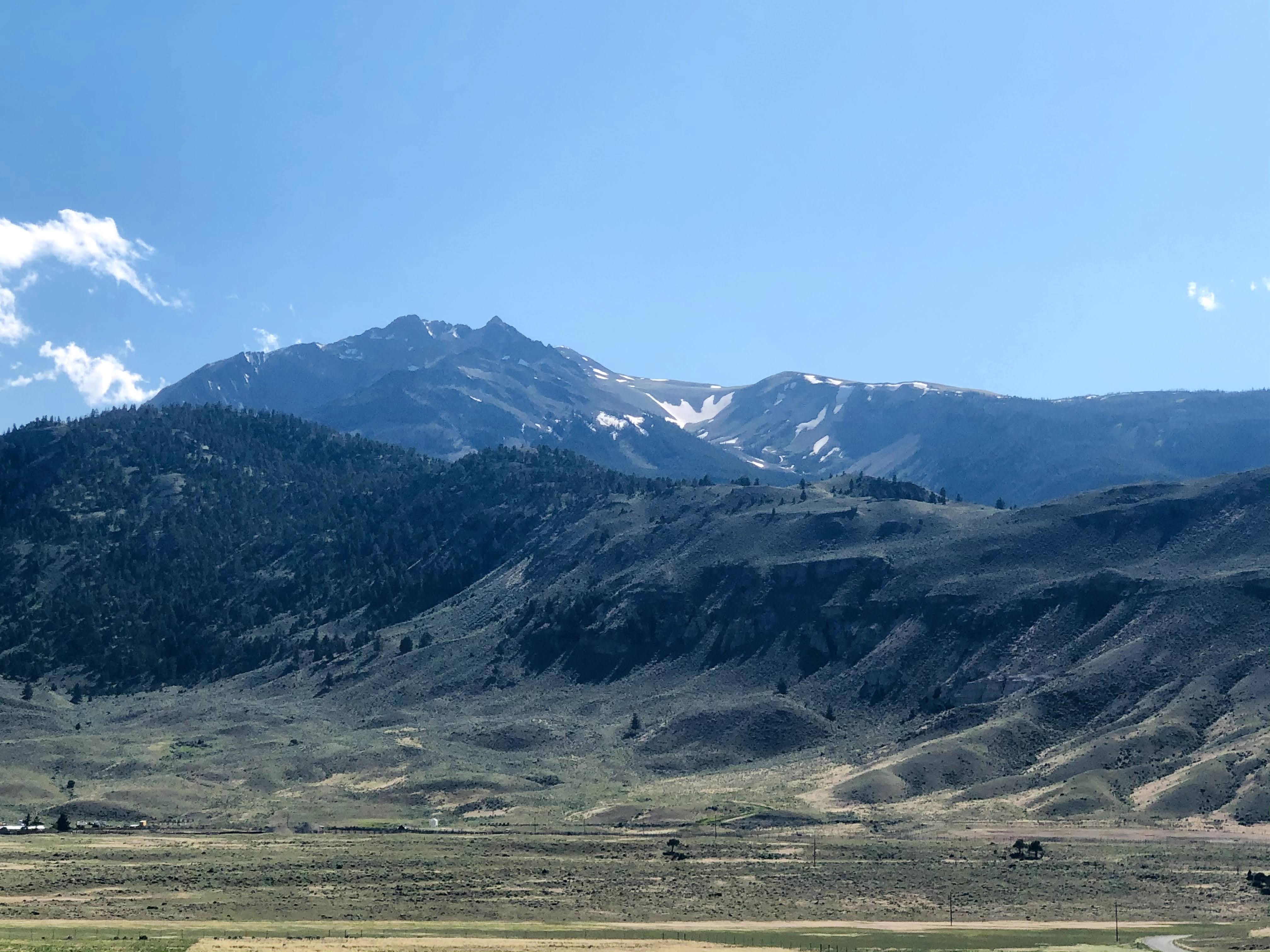
The town of Gardiner is just outside the park; it was the original entrance to the park, and at the time all guests would arrive by train, so there was a large train station here…
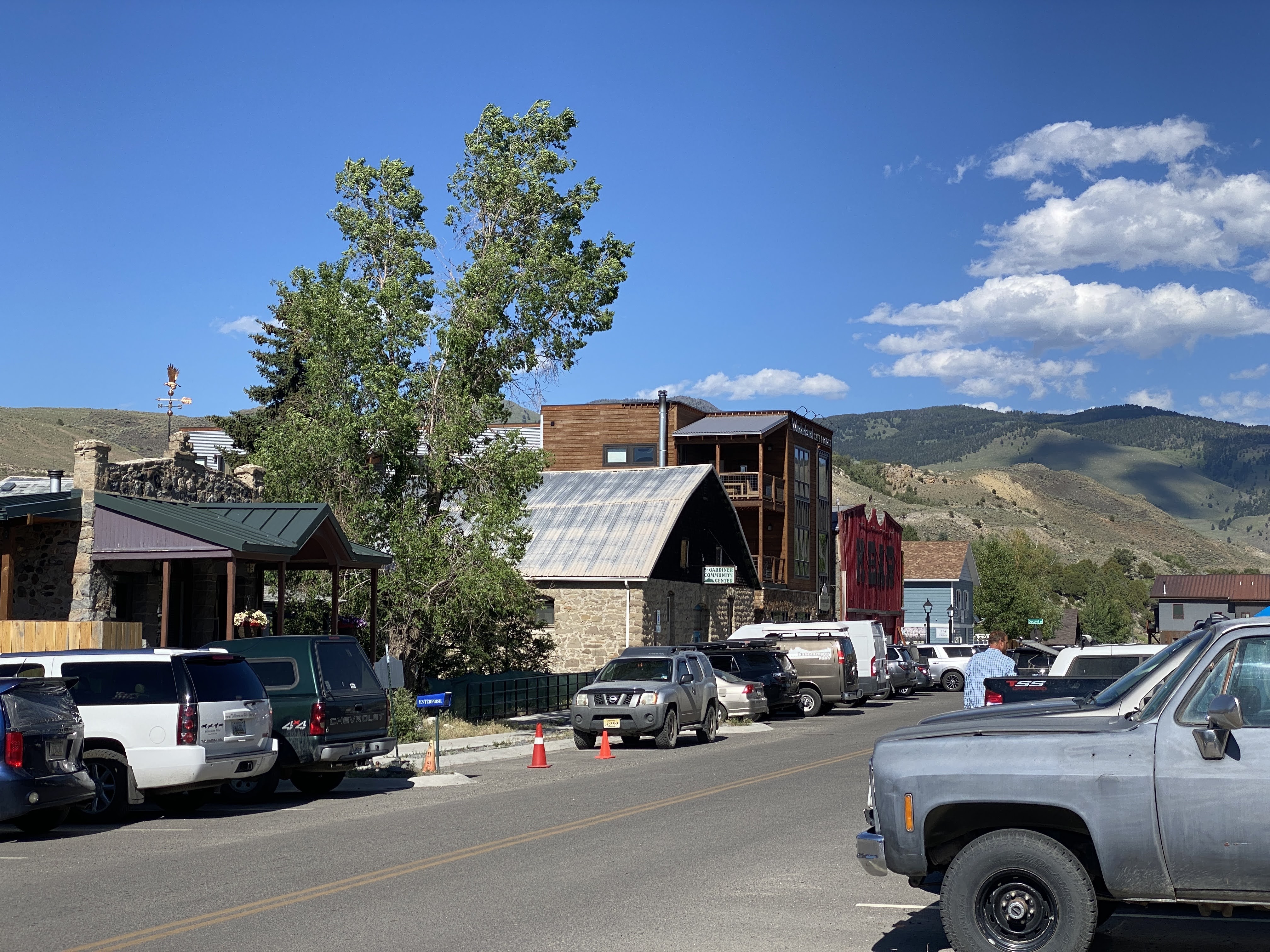
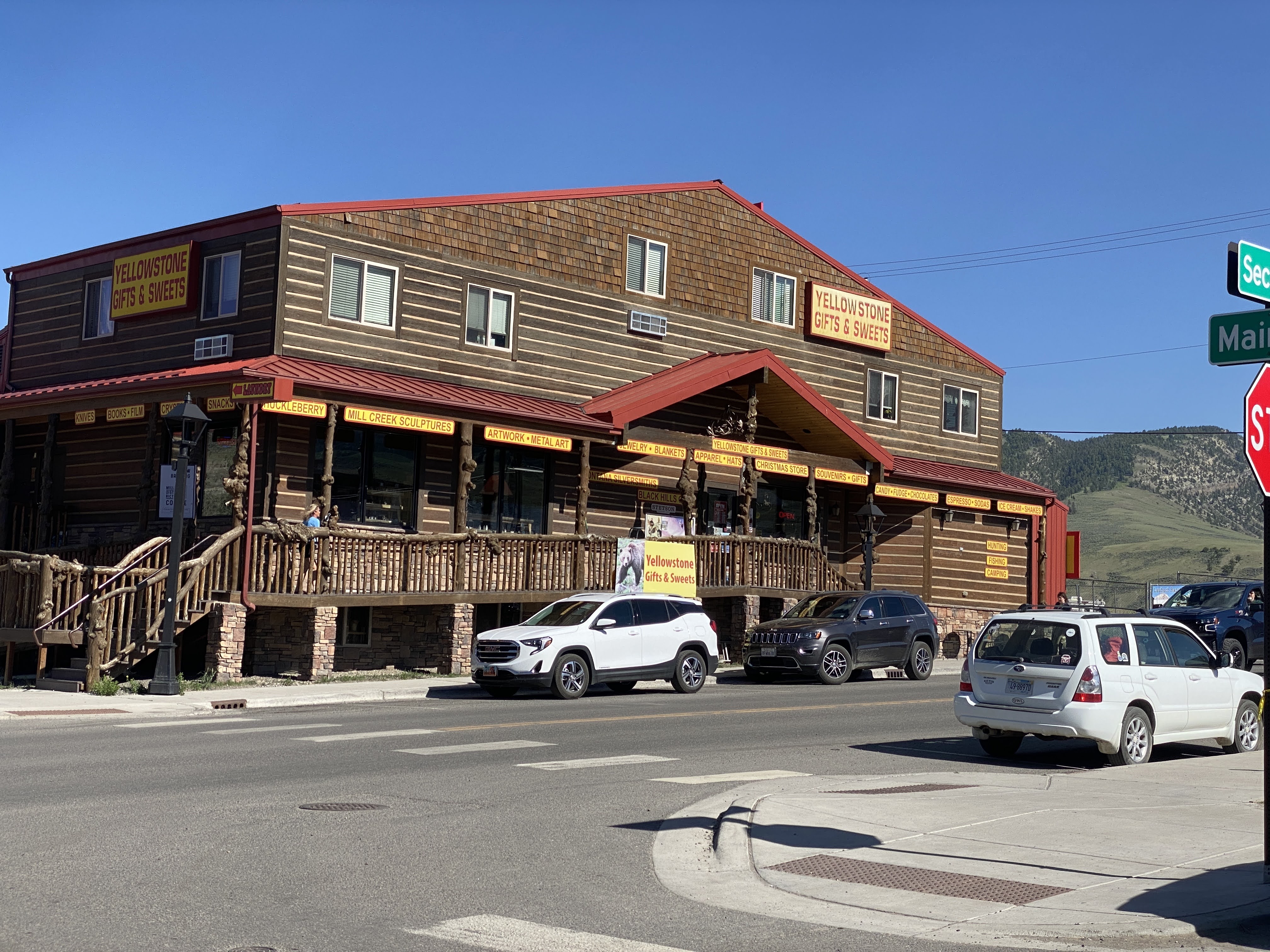
Today Gardiner has mostly tour companies, gift shops, lodges, motels, and RV parks. We met with the club for dinner at this recently-constructed dining terrace… (Construction workers were still working when we arrived…)
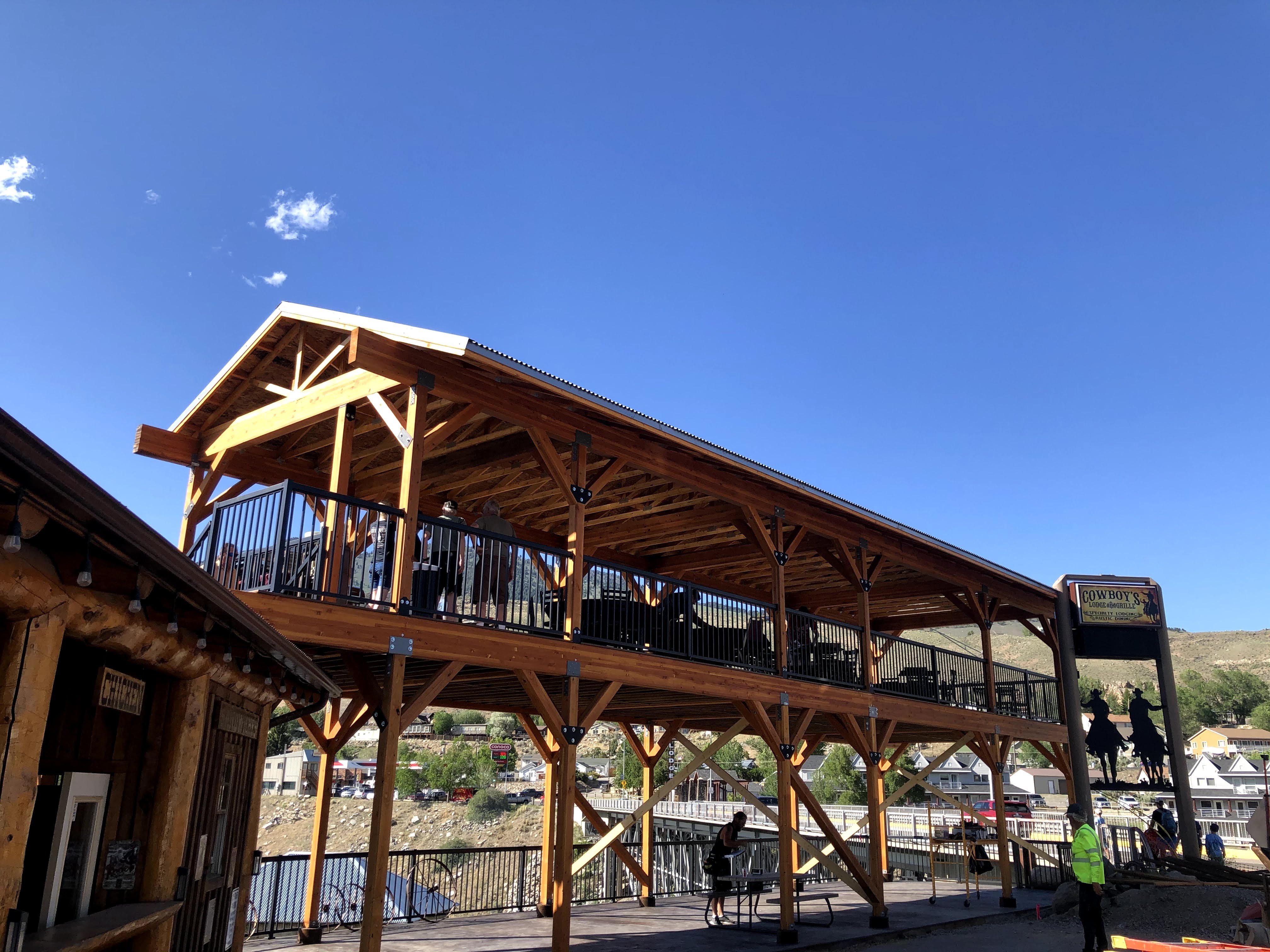
Airstreamers started arriving (early, as usual)
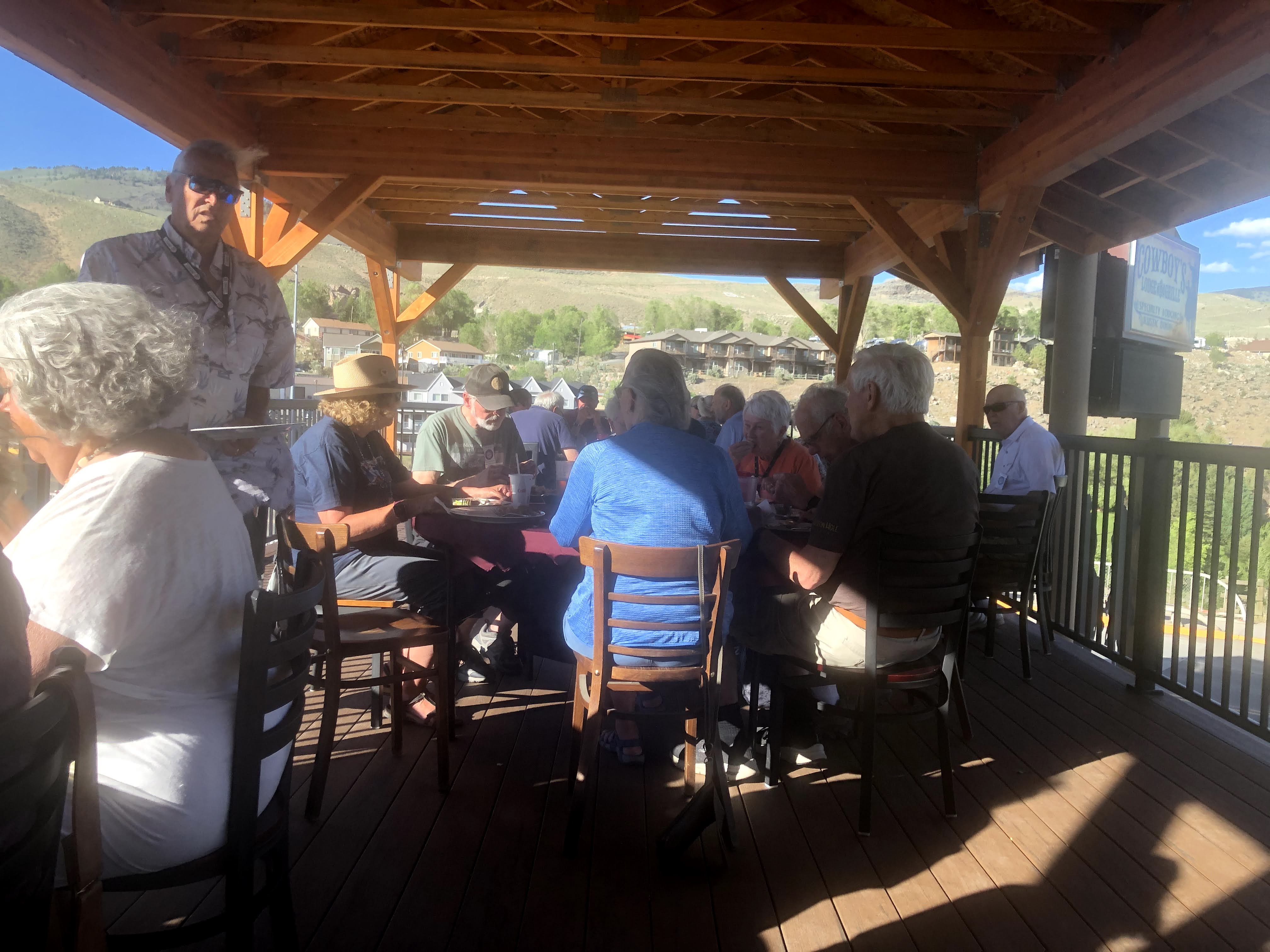
We enjoyed a very good fried chicken dinner buffet…
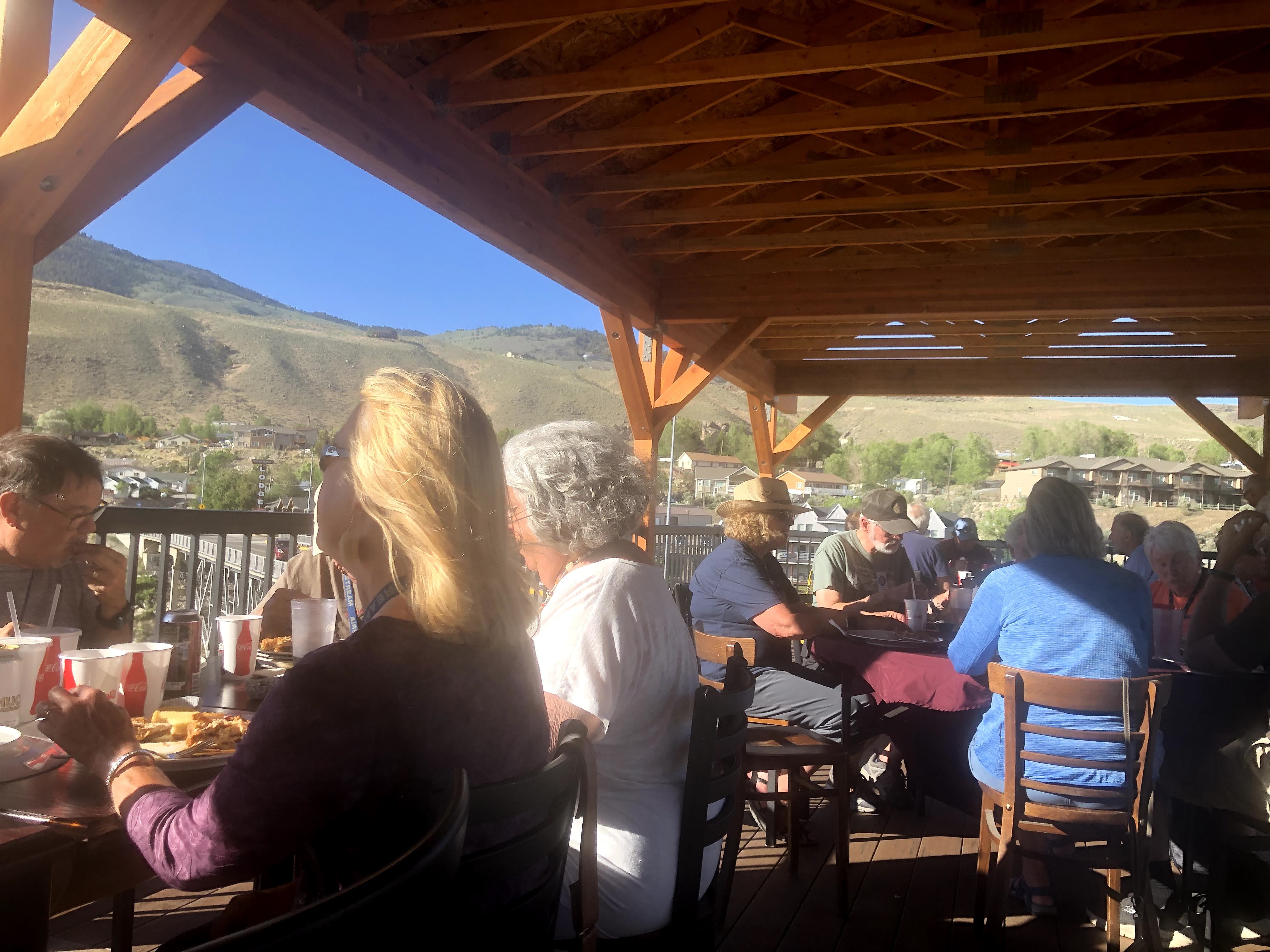
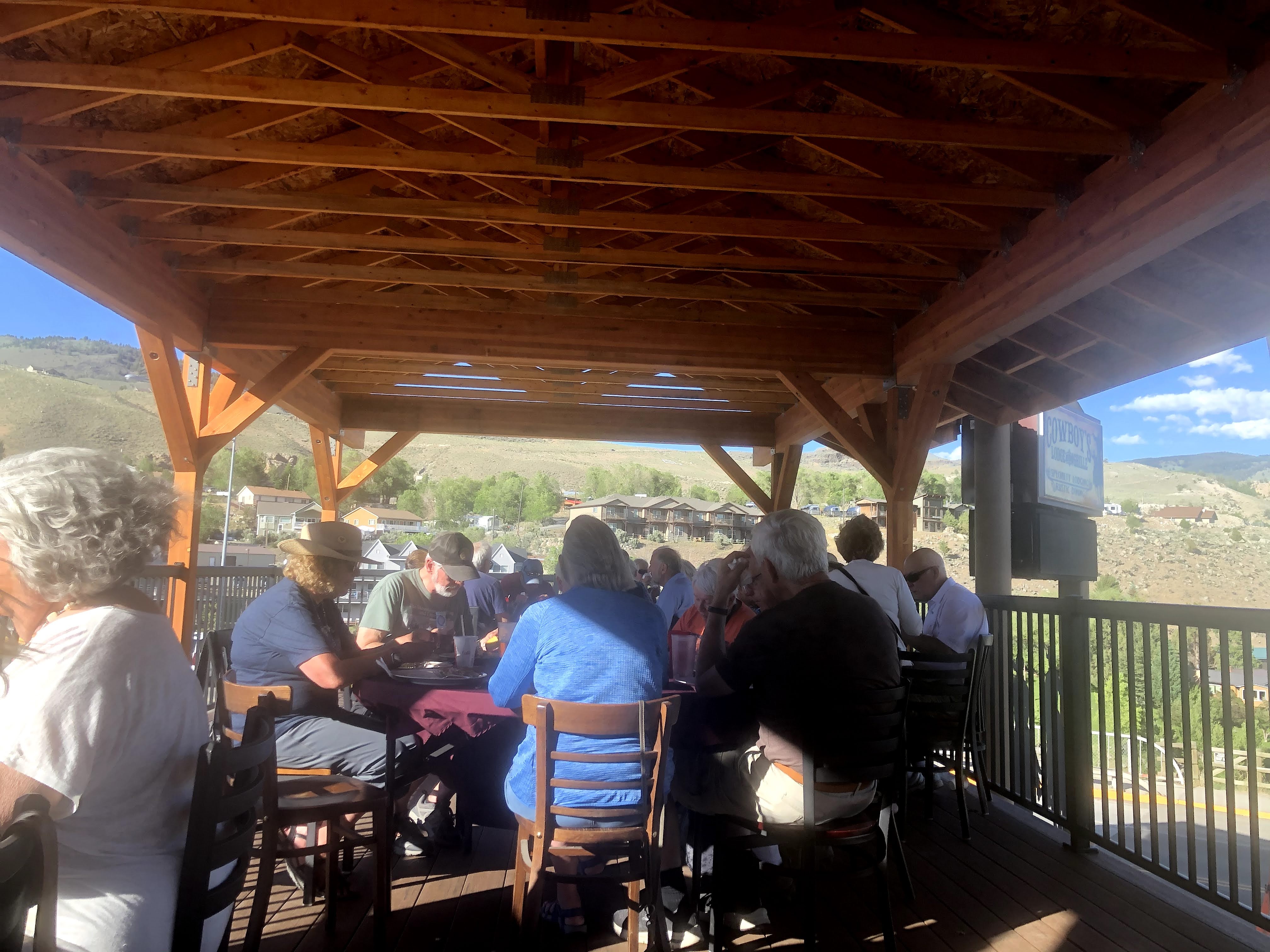
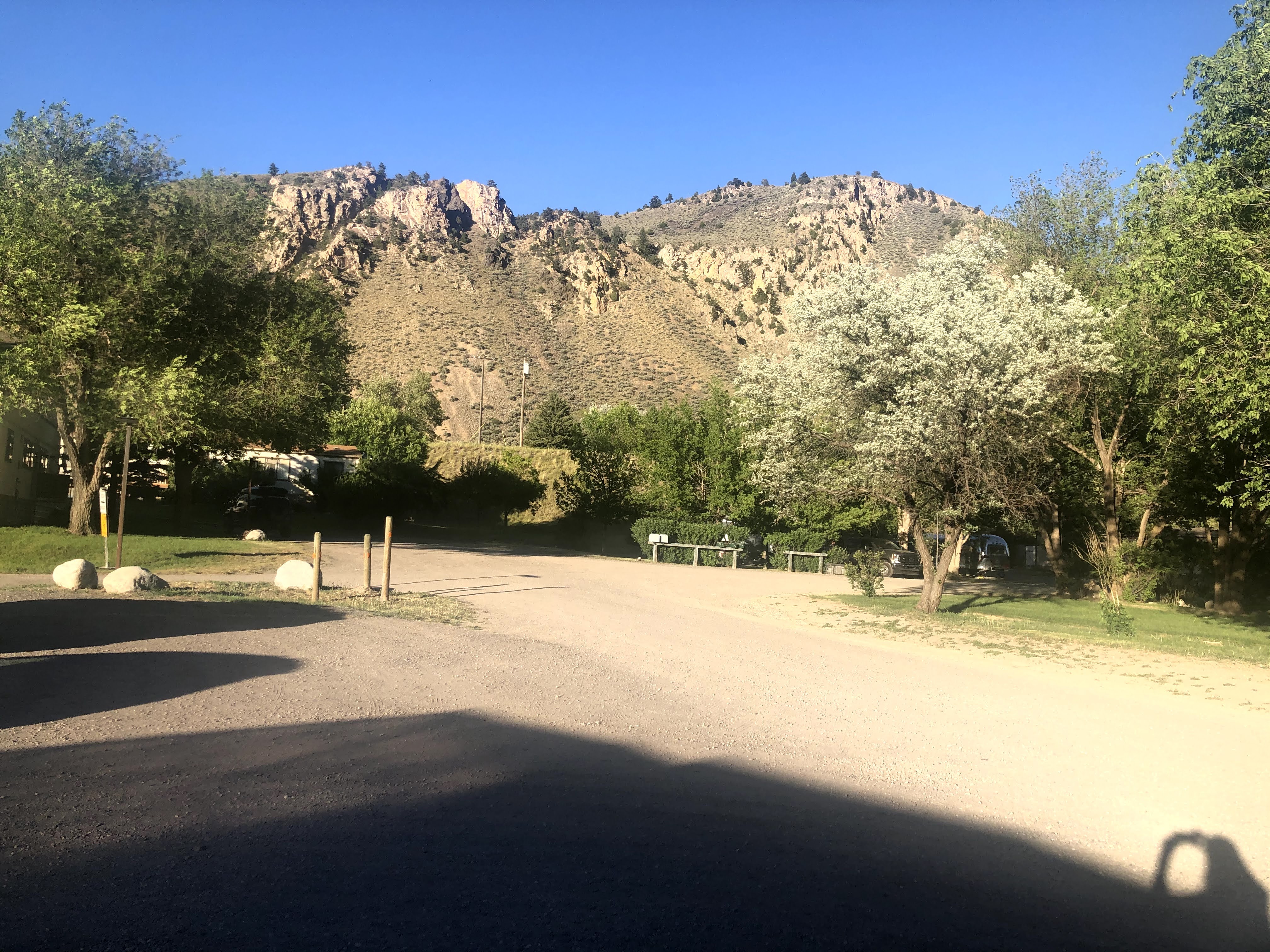
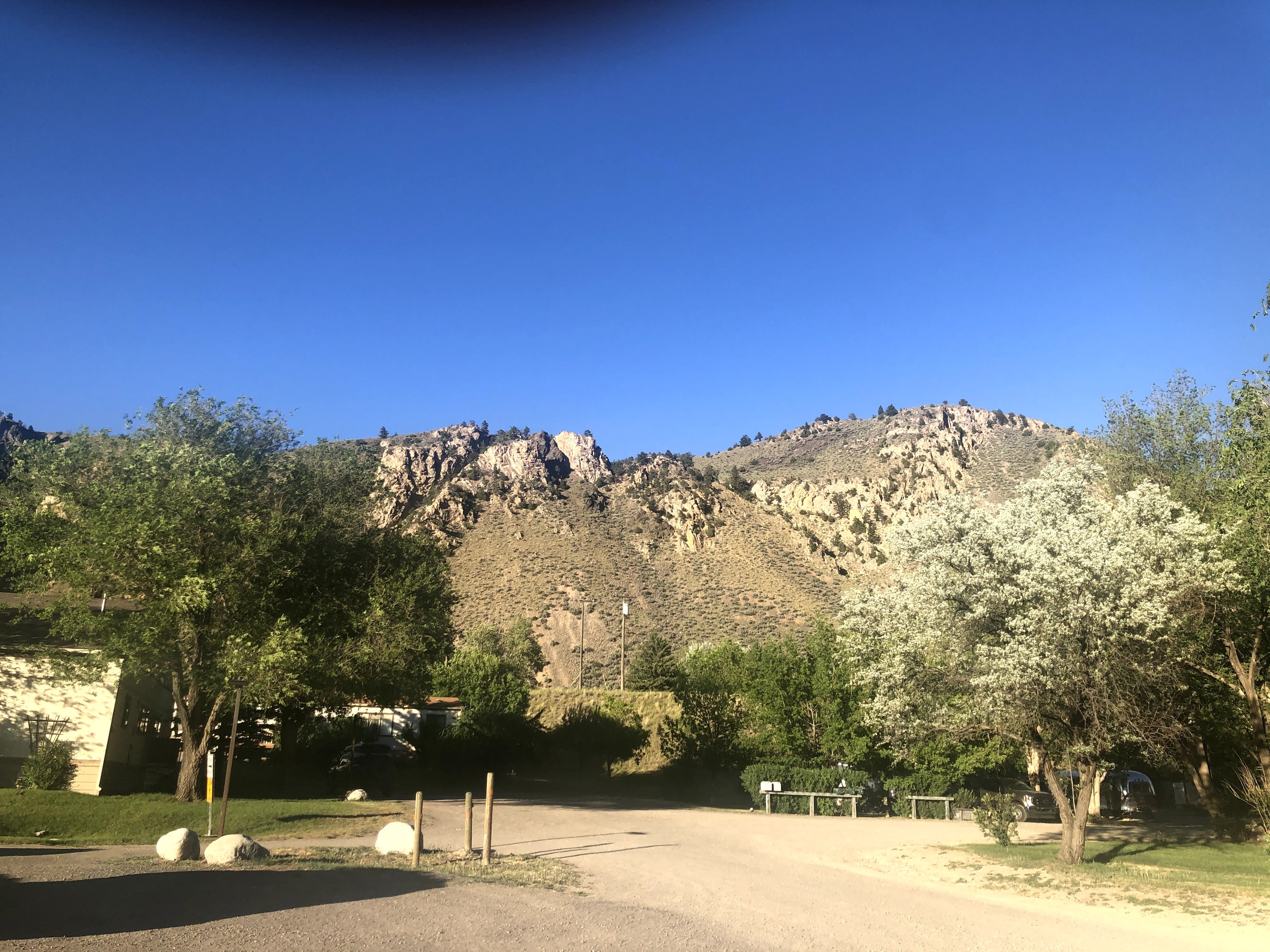
After dinner, we returned to the RV park and walked around. We are right next to the Yellowstone River, but only tent sites are adjacent to the river.
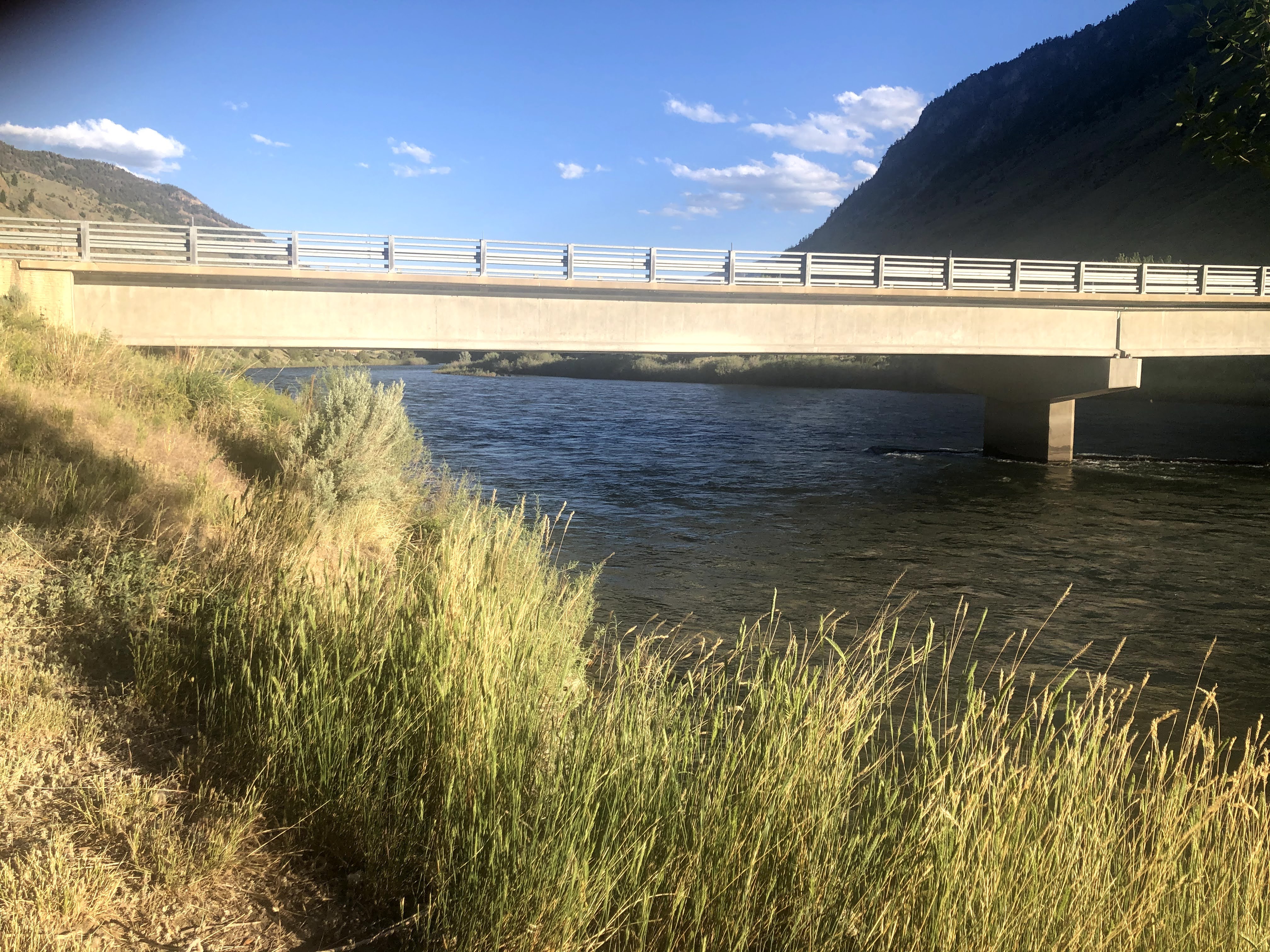
The park is dry and dusty, but there is a small grill for dinner and other amenities…
There are extensive hot spring pools…
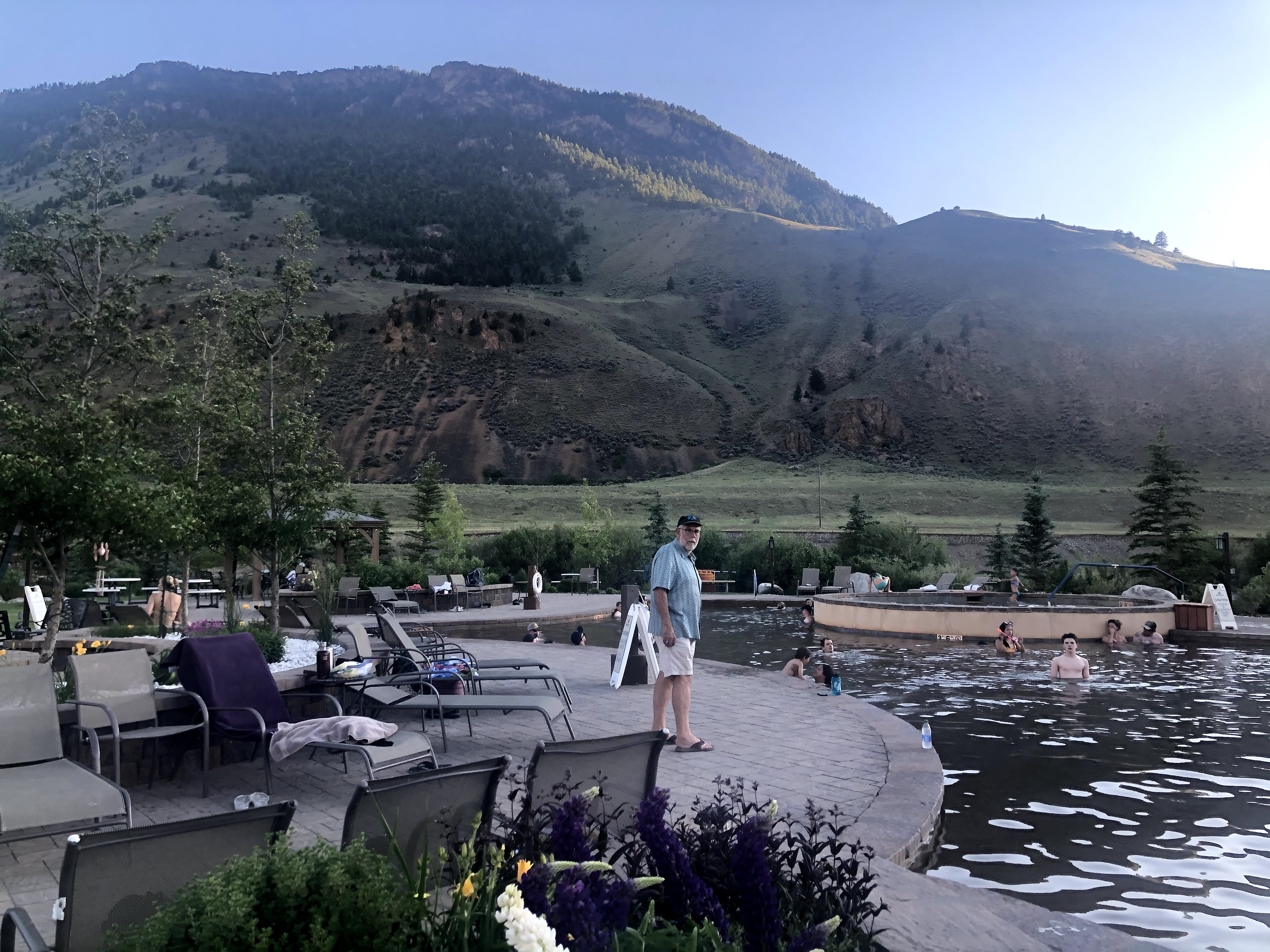
After checking out the hot spring pools we returned to the Villa. We have an early morning tomorrow.

And an enjoyable time was had by all…
2021-06-09 – Springtime in the Rockies caravan… Day 14 – Traveling to Jenson, UT

Today is a travel day, as we leave Colorado and enter the far northeast corner of Utah, just a few miles south of Wyoming. We left about 9:00 am and traveled north. At first the roads were small, straight, and well paved…

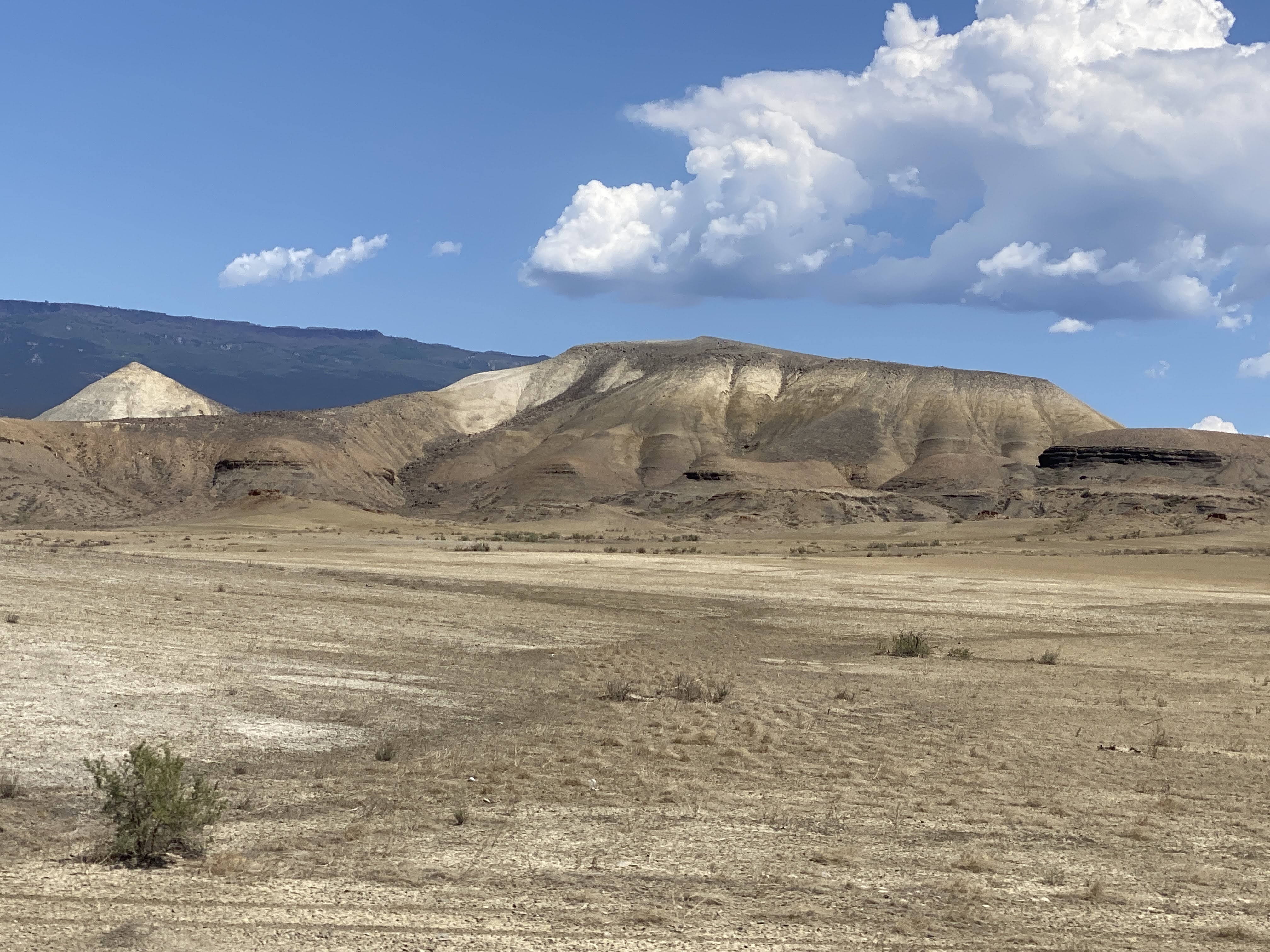
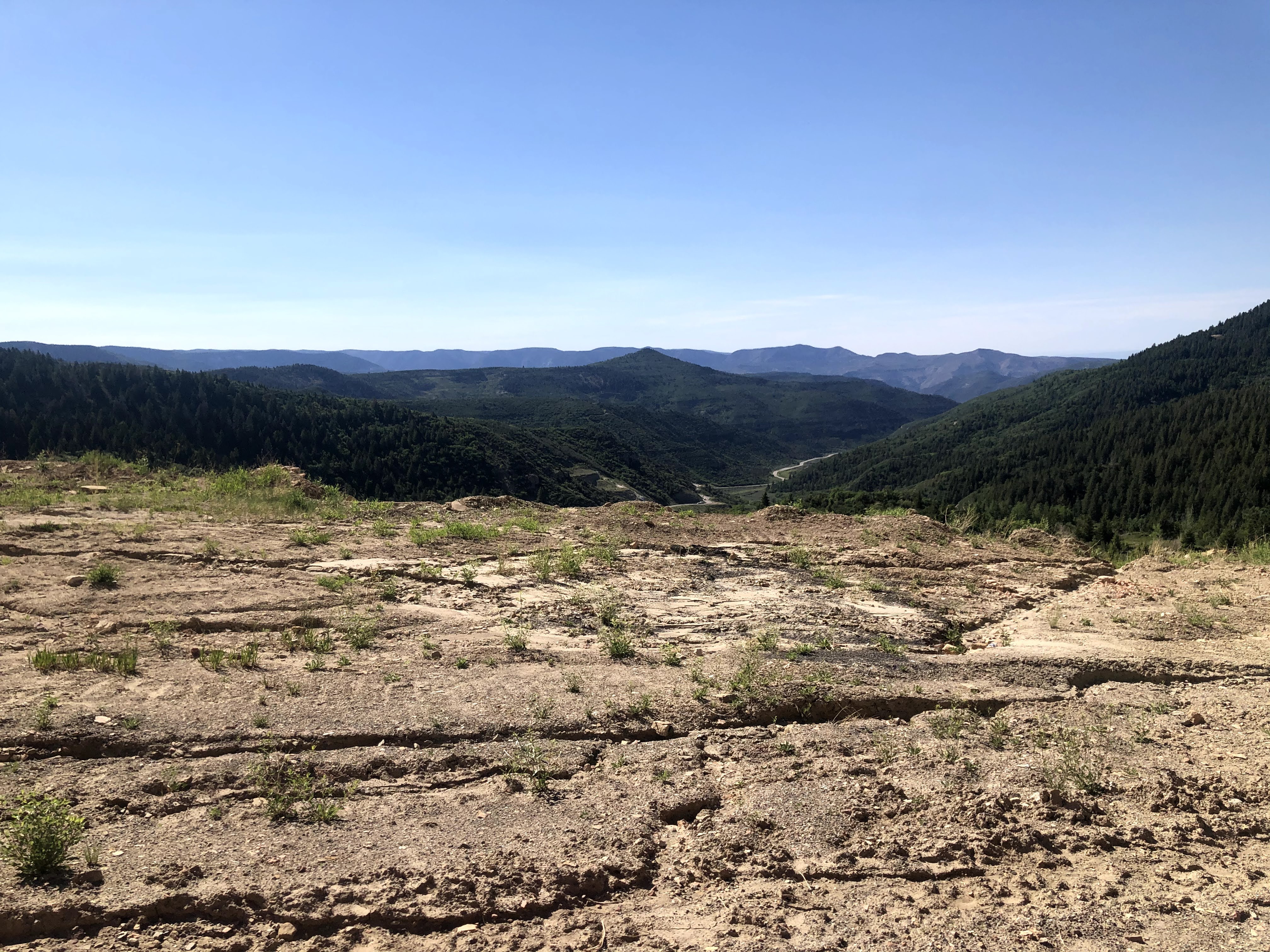
The views are very stark, very moon-like…

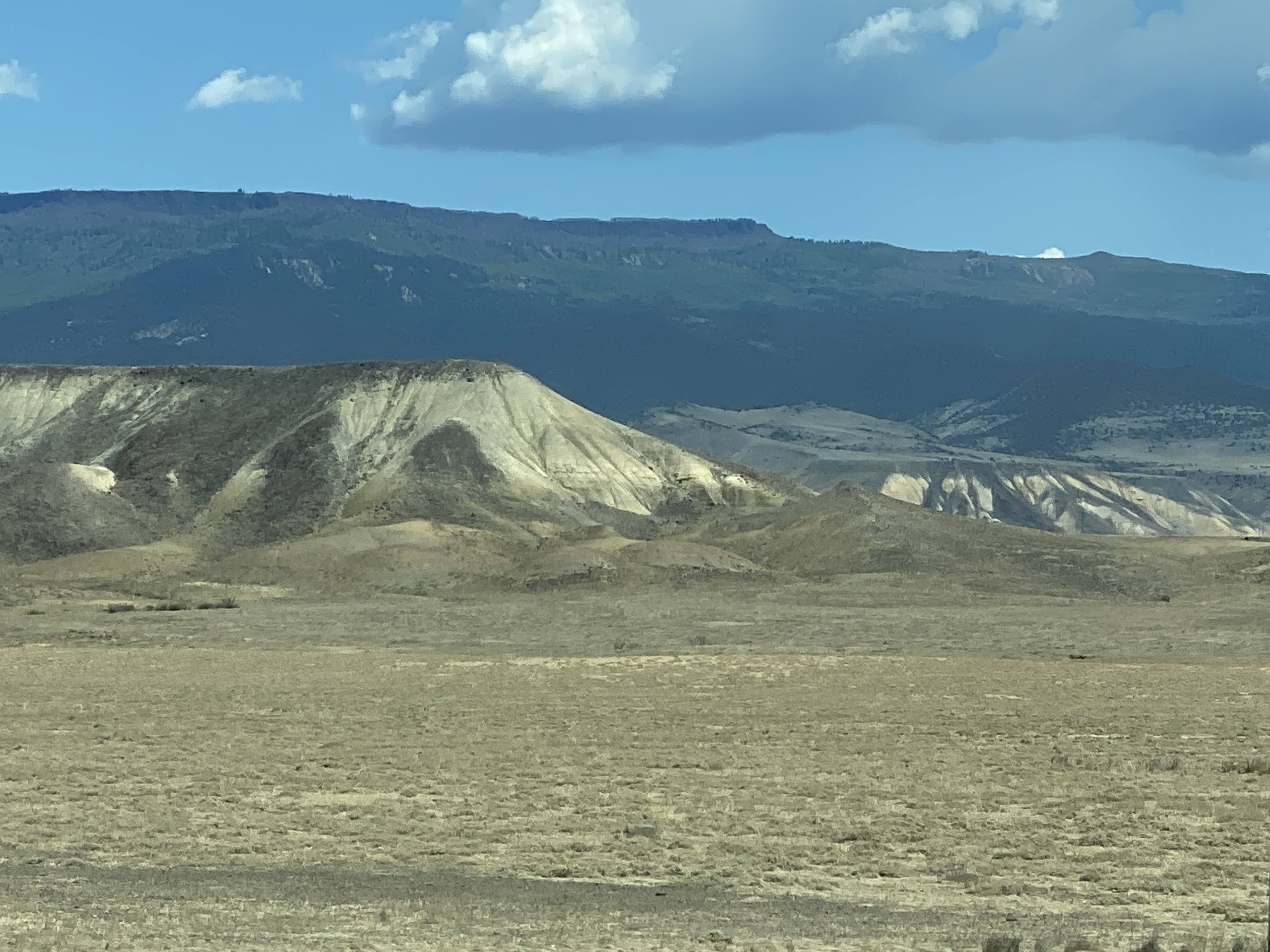
Mountains are rocky and very distinct…

We climbed the mountains, as usual. The road got windier, and the pavement got rougher. In fact, it was terrible!

We turned west, and entered the town of Rangley. We parked the Villa and walked the length of the town. We ate lunch at Dottie’s Diner. Best French fries we’ve had on this trip! But the chili had absolutely no spice or heat to it – I suspect there wasn’t even salt and pepper… But we easily put these things aside, and we enjoyed our meal…

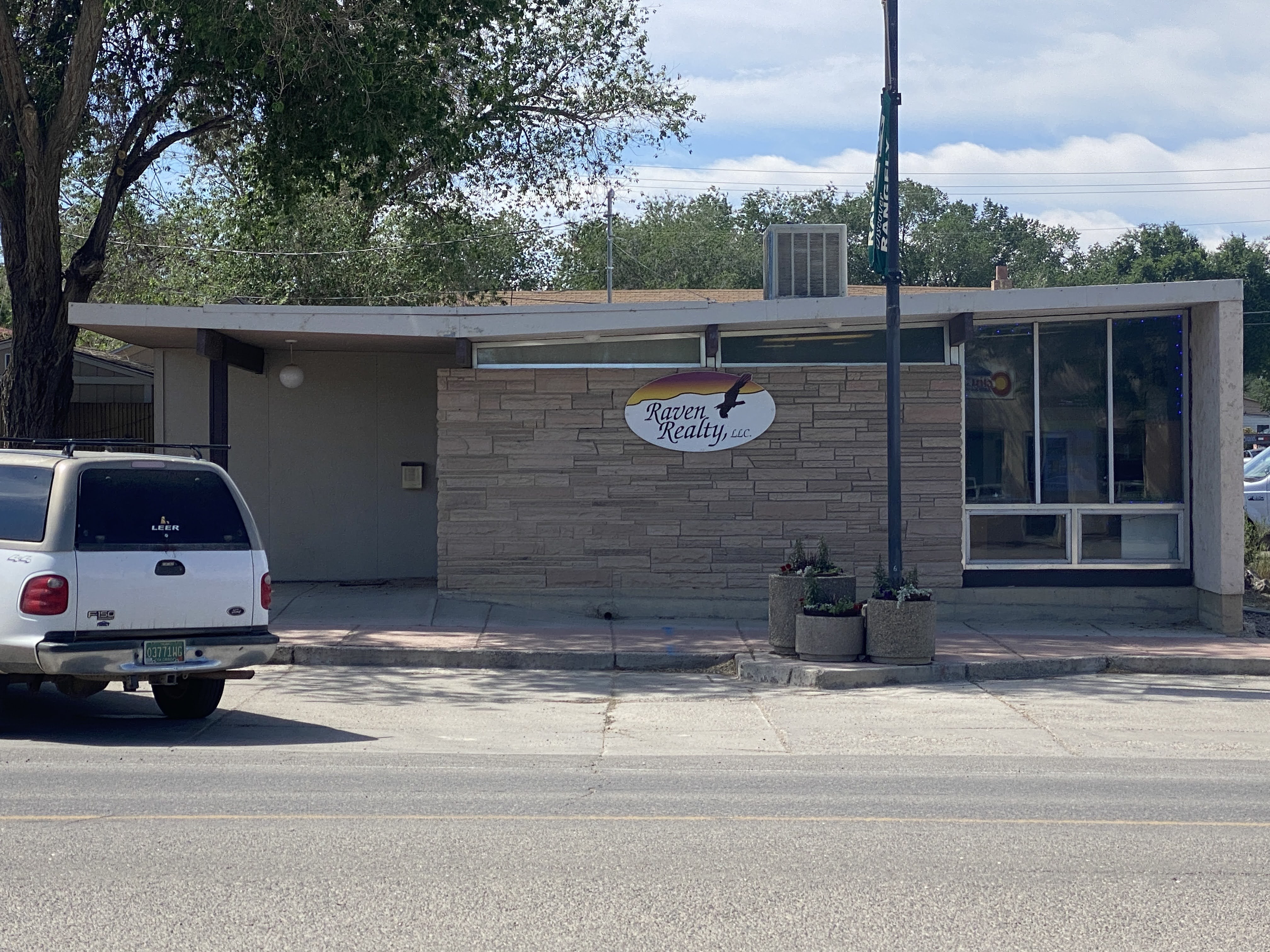
Walking back to the Villa we passed one of the very few modern building we have seen on this trip…

We walked back to the Villa and continued west, into Utah!

We proceeded west, passing through Dinosaur, CO, where the local townsfolk have a lot of fun naming their streets things like Brontosaurus Street and naming their ice cream parlor “Bedrock”…

Utah looks a lot like Colorado here…

We proceeded west, finally arriving at the tiny town of Jensen, UT. We turned north and entered Dinosaur National Monument…

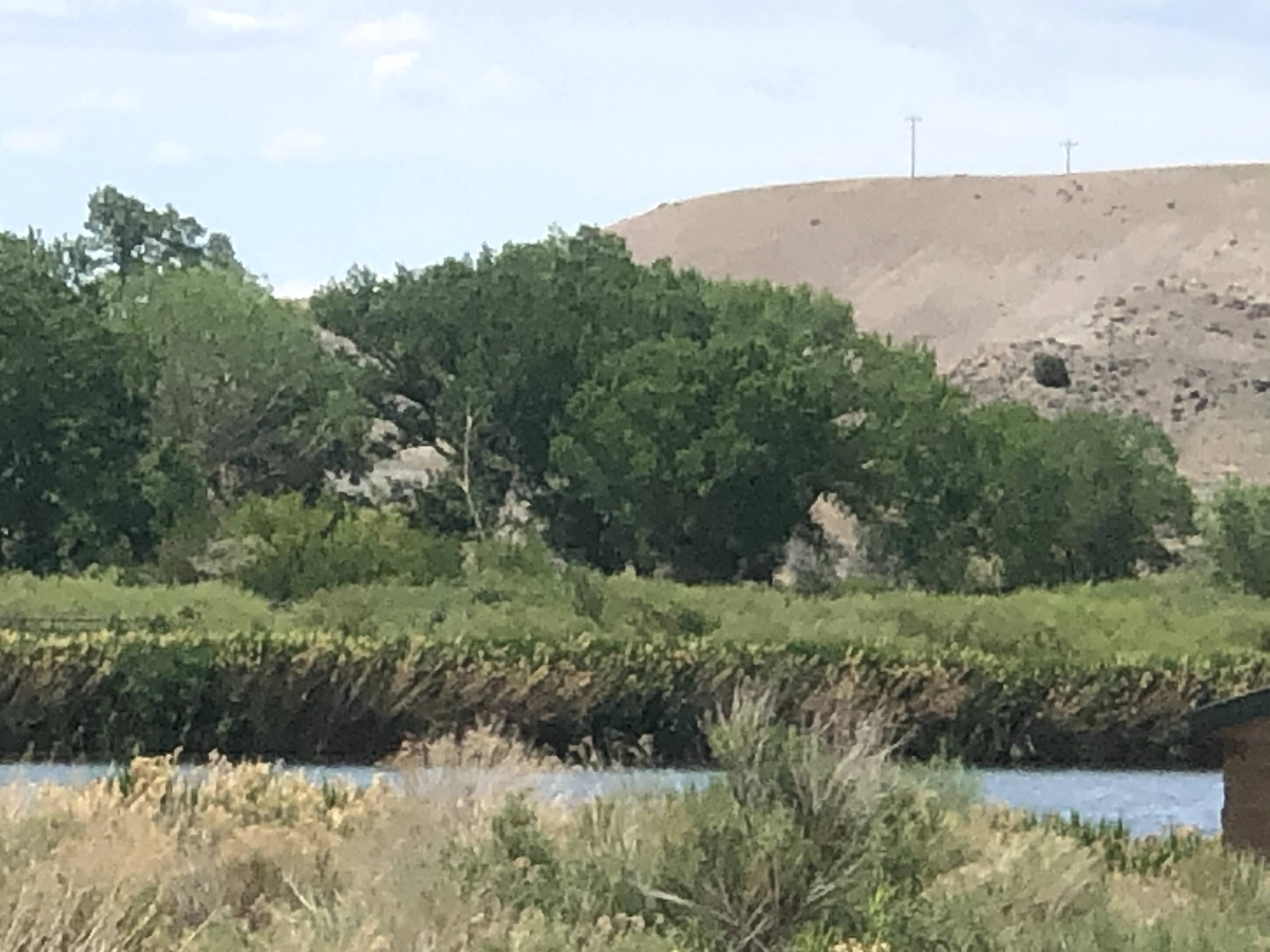
Our RV park is in a valley adjacent to the Green River. The Green River here is about as large as the Colorado River was near Fruita. Many miles south of here, just north of Moab, Utah, in the city of Green River, Utah, the Green joins the Colorado, and the Colorado becomes a very large river. It was at this point, on the Green River, that John Wesley Powell began his exploration of the Colorado River, starting in 1869, eventually traveling through the Grand Canyon…

This image has an empty alt attribute; its file name is img_6278.jpg

We set up the Villa in the park. We are “dry camping” here – no electricity, water, or sewer hook-ups. We are really roughing it! I set out the solar panels, and I hope we won’t have to bring out the generators…

We left the RV park to visit the Dinosaur National Monument Visitors Center and Quarry Exhibits.

We approached the Visitors Center. Quite a nice modern building…

Dinosaur National Monument is located on the southeast flank of the Uinta Mountains on the border between Colorado and Utah at the confluence of the Green and Yampa rivers. Although most of the monument area is in Colorado, the Dinosaur Quarry is located in Utah, north of the town of Jensen. The nearest Colorado town is Dinosaur, while the nearest cities in Utah are Naples and Vernal.

Originally preserved in 1915 to protect its famous Dinosaur Quarry, the monument was greatly expanded in 1938 to include its wealth of natural history. The park’s wild landscapes, topography, geology, paleontology, and history make it a unique resource for both science and recreation. The park contains over 800 paleontological sites and has fossils of dinosaurs including AllosaurusDeinonychusAbydosaurus, and various sauropods.  The Abydosaurus fossil consists of a nearly complete skull, the lower jaw, and first four neck vertebrae.

Paleontologist Earl Douglass of the Carnegie Museum discovered eight vertebra of an Apatosaurus on August 17, 1909, which became the first dinosaur skeleton discovered and excavated at the new Carnegie Quarry. The area around the quarry was declared a national monument on October 4, 1915.

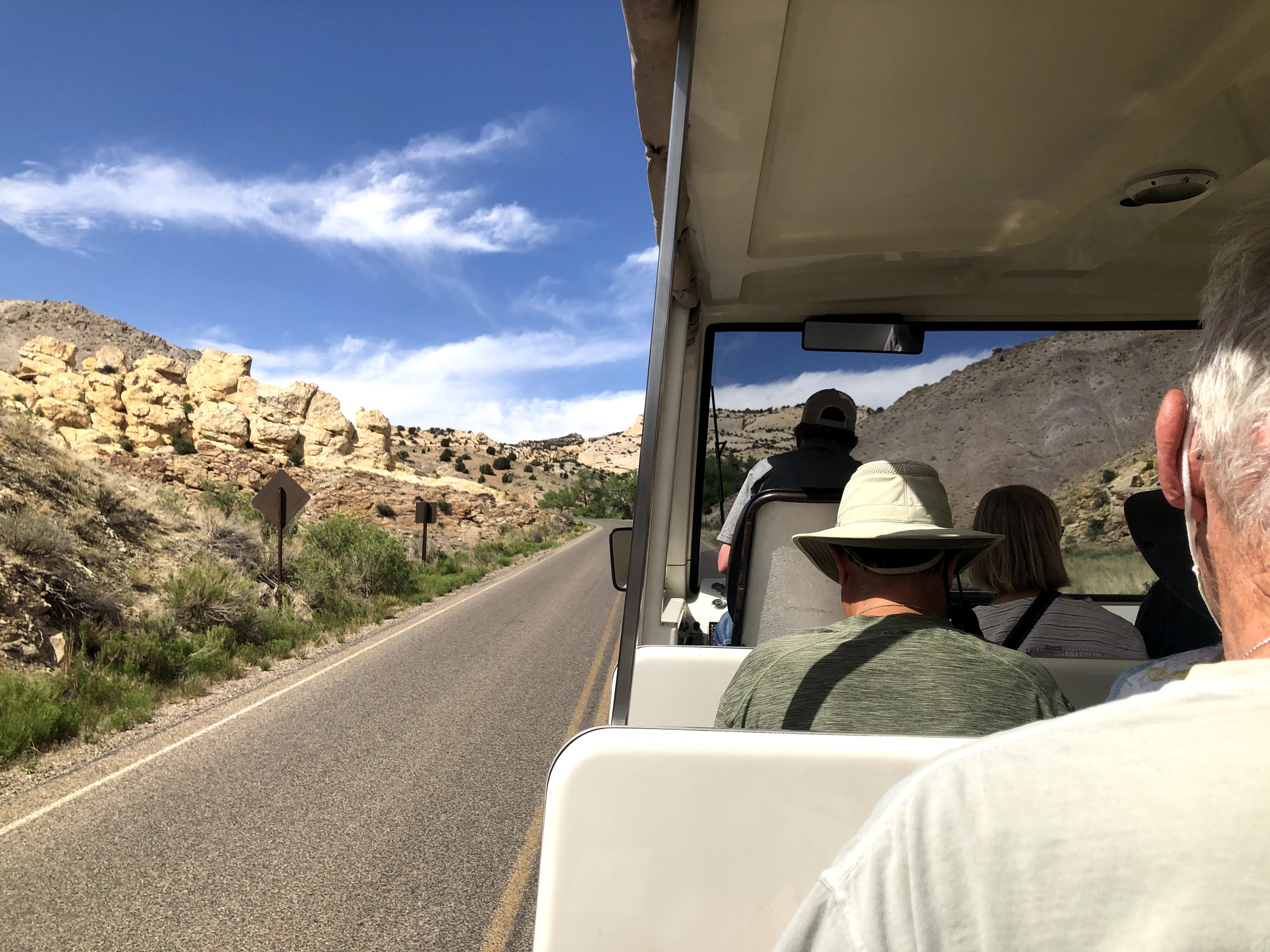
We took a shuttle from the Visitors Center up to the Quarry…

The Quarry Exhibit Hall is a magnificent building, built into the side of the mountain, to shield the quarry exhibits from the elements, and to show visitors what the bones and fossils look like when they are uncovered.

Again, I find the building much more interesting than dinosaur bones… I found this picture of the original building, erected in 1958. Unfortunately, due to the soils under the building and the seismic activity over the years, the original building was condemned in the 1990s, and totally reinforced and rebuilt. Note the difference between today’s building, above, and the original building, below…

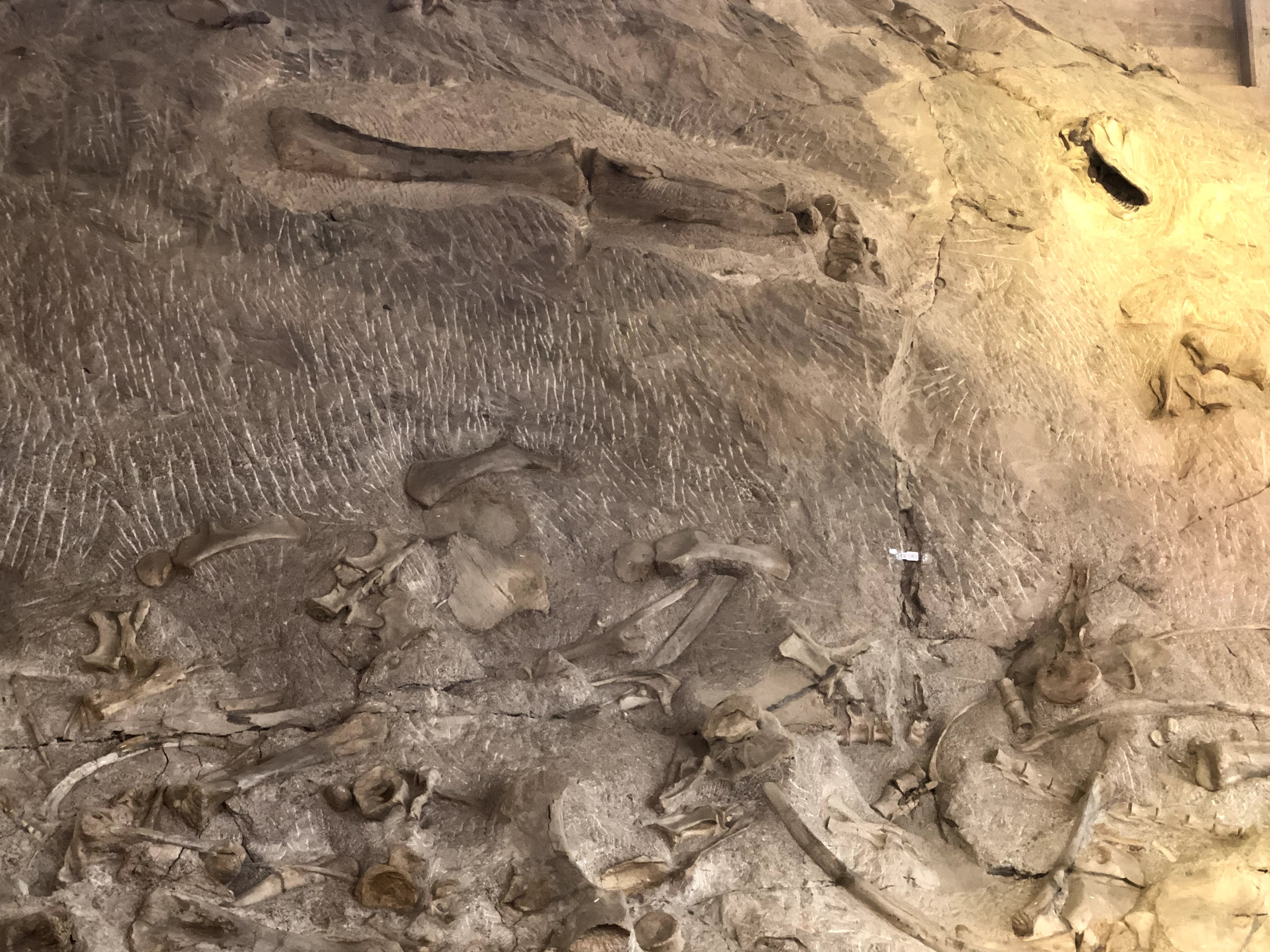
Inside is a giant, two level exhibit hall, allowing visitors to see the fossils and bones on display…

All these fossils and bones are in their “as-found” condition… It is quite a display…!

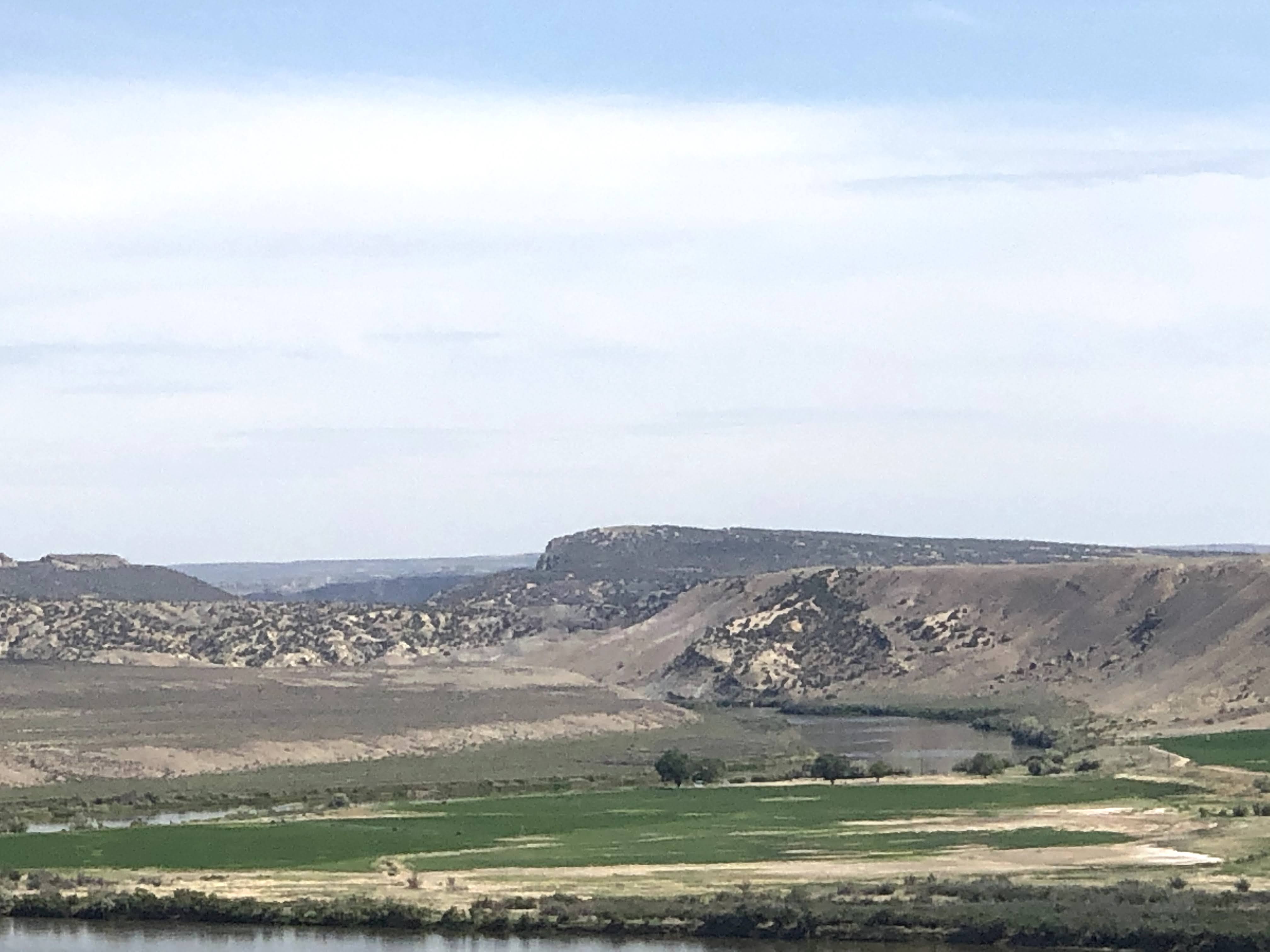
The views were great from the Quarry Exhibit… After we had had enough of bones and fossils, we returned to the Villa…

This image has an empty alt attribute; its file name is img_0977.jpg

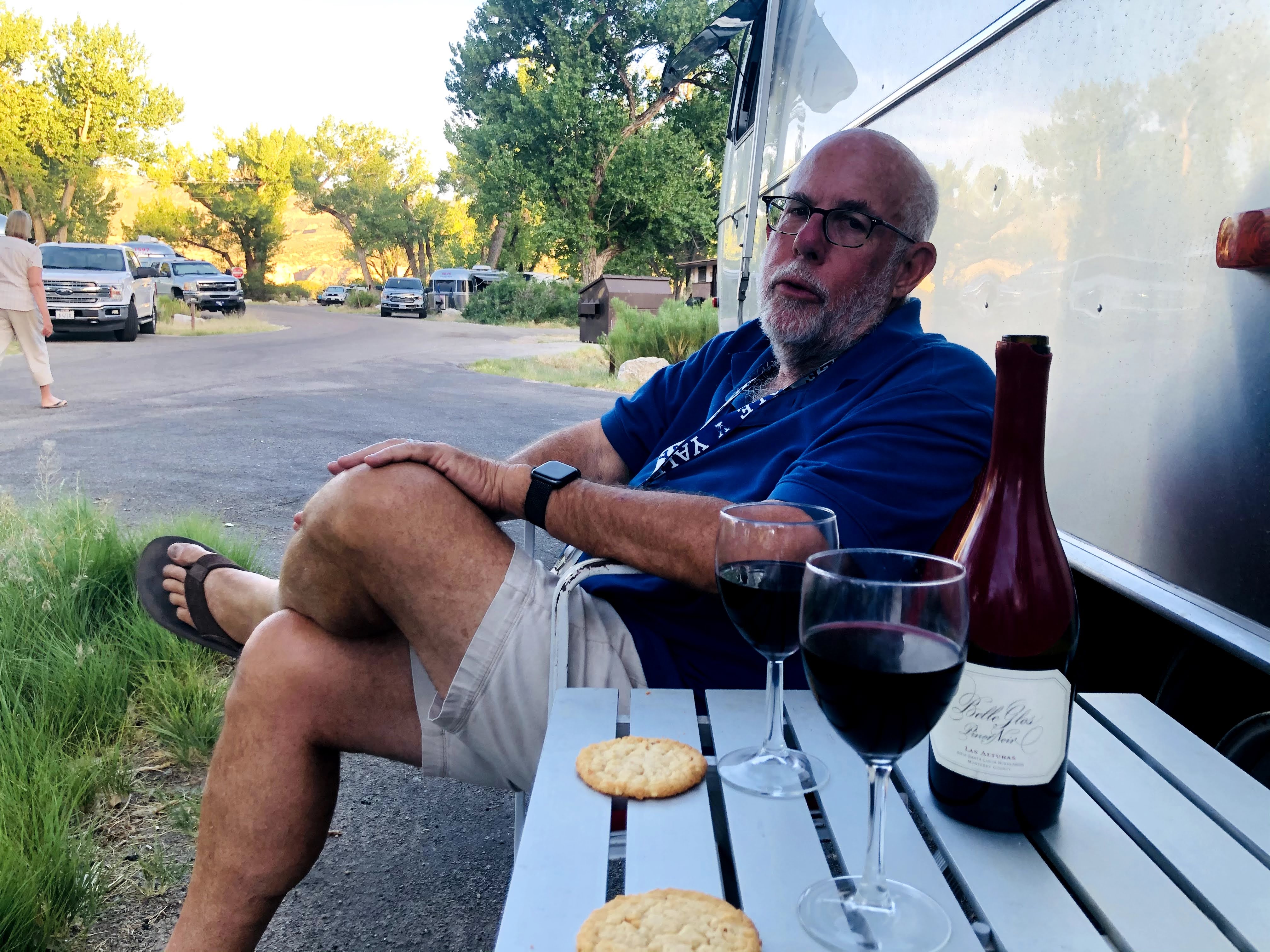
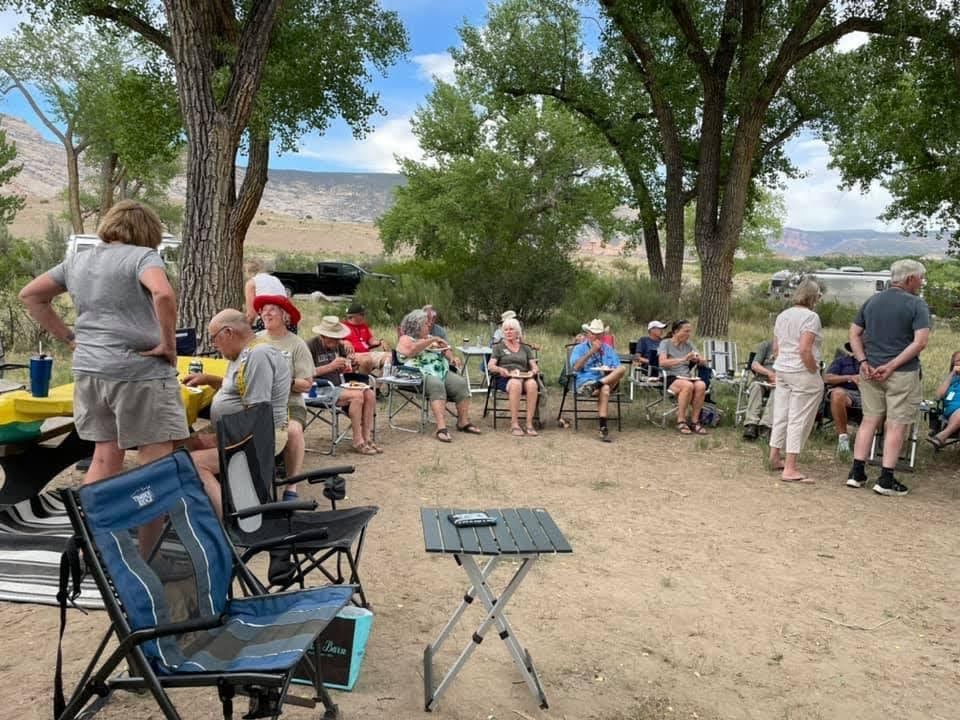
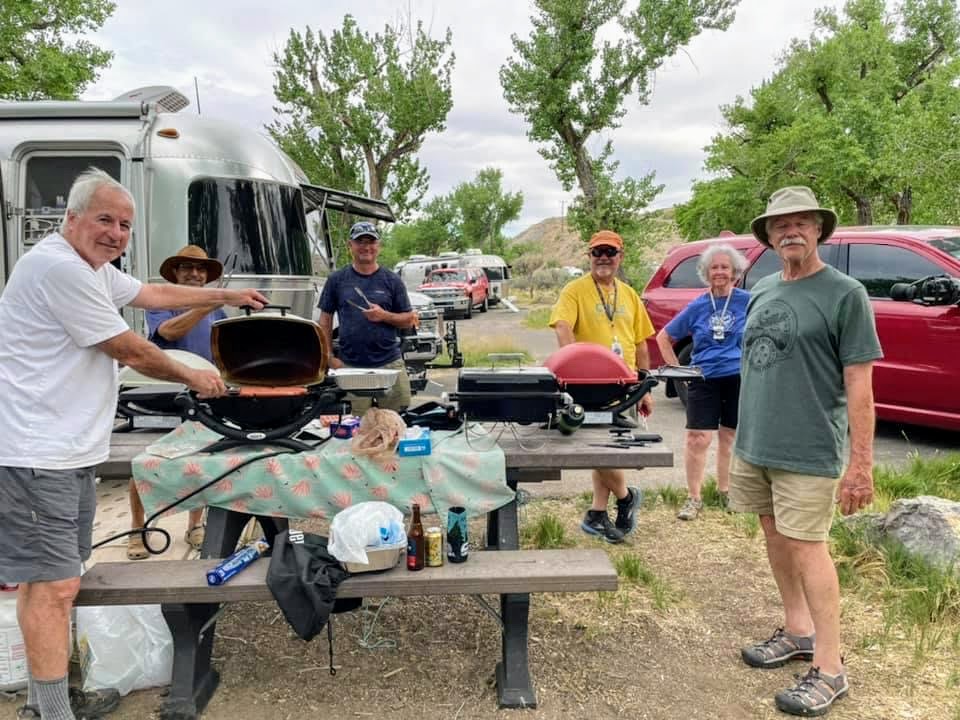
Happy Hours ensued, which turned into a weenie roast..

This is a typical thing on Airstream caravans – social get-togethers to share ice cream, birthday cake, or, in this case, a weenie roast…

We have cooking crew volunteers to set these things up…

And an enjoyable time was had by all…

2021-06-07 – Springtime in the Rockies caravan… Day 12 – Fruita, CO

Today we return to the Colorado National Monument to see more of its beauty…

On our way to the entrance we crossed the mighty Colorado River…

The Colorado River is the major river of the southwestern United States and northwest Mexico. Its headwaters are in Rocky Mountain National Park where La Poudre Pass Lake is its source. It flows southwest through the Colorado Plateau country of western Colorado, southeastern Utah and northwestern Arizona, where it flows through the Grand Canyon. It turns south near Las Vegas, Nevada, forming the Arizona–Nevada border in Lake Mead and the Arizona–California border a few miles below Davis Dam between Laughlin, Nevada and Needles, California, before entering Mexico in the Colorado Desert. Most of its waters are diverted into the Imperial Valley of Southern California. In Mexico its course forms the boundary between Sonora and Baja California before entering the Gulf of California.

We re-entered the Colorado National Monument.

On August 25, 1916, President Woodrow Wilson signed the “Organic Act” creating the National Park Service, a federal bureau in the Department of the Interior responsible for maintaining national parks and monuments that were then managed by the department. The National Park System has since expanded to 423 units (often referred to as parks), more than 150 related areas, and numerous programs that assist in conserving the nation’s natural and cultural heritage for the benefit of current and future generations.

The National Park Service manages all of the various “units” – Parks, Forests, Monuments, Historic Sites, Lakeshores, Recreation Areas, Scenic Trails, and several other designations. The first parks were Yellowstone (1872), Sequoia (1890), Yosemite (1890), Mt. Rainier (1899), Crater Lake (1902), Wind Cave (1903), Mesa Verde (1906), Glacier (1910), Rocky Mountain (1915). Colorado National Monument was established in 1911. The different desinations have to do with how they are created. National Parks are created by acts of Congress. National Monuments and most other designations are created by the President via Executive Order. Thirty States have National Parks; the States with the most parks are: California (9), Alaska (8), Utah (5), and Colorado (4).

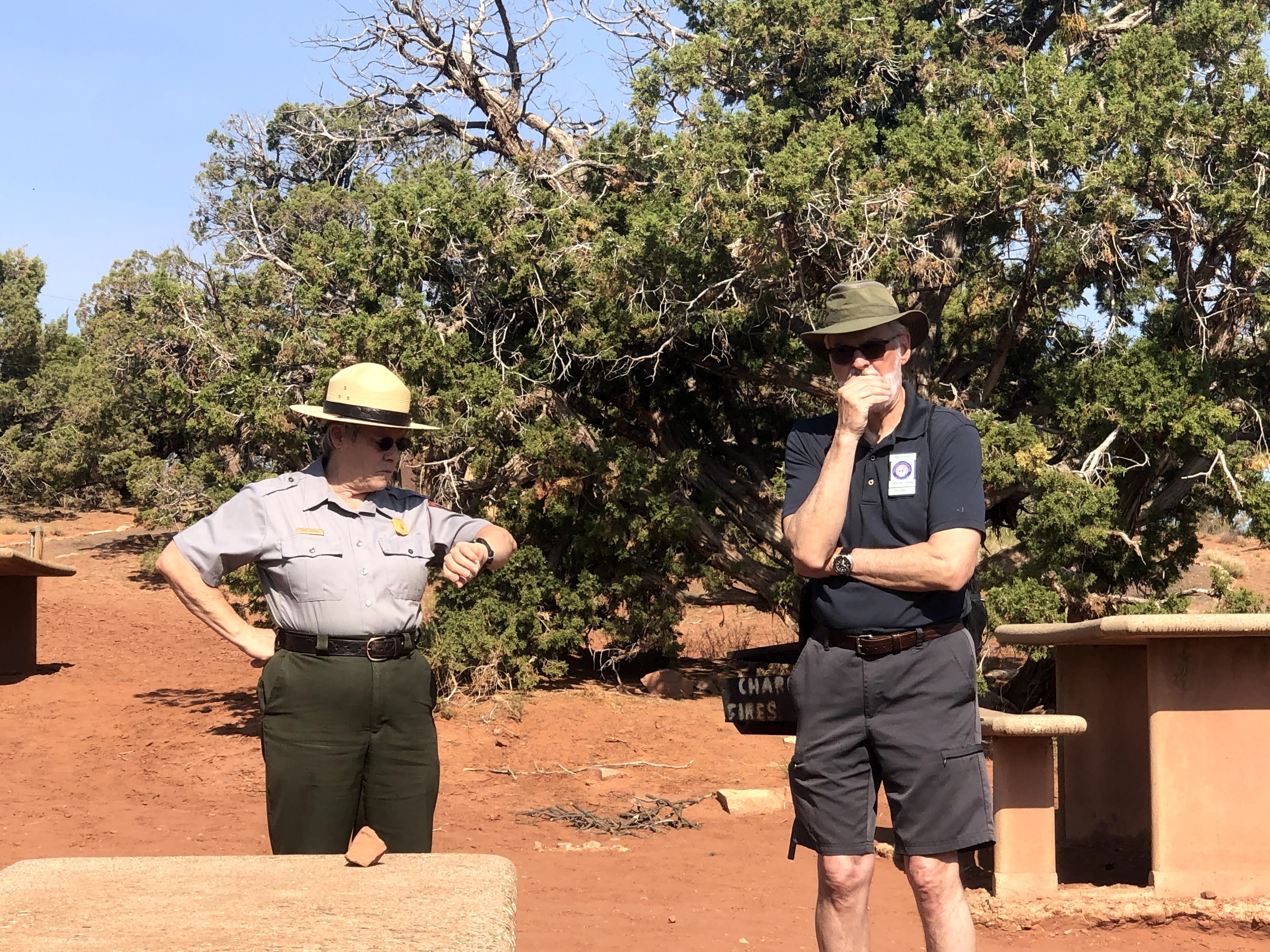
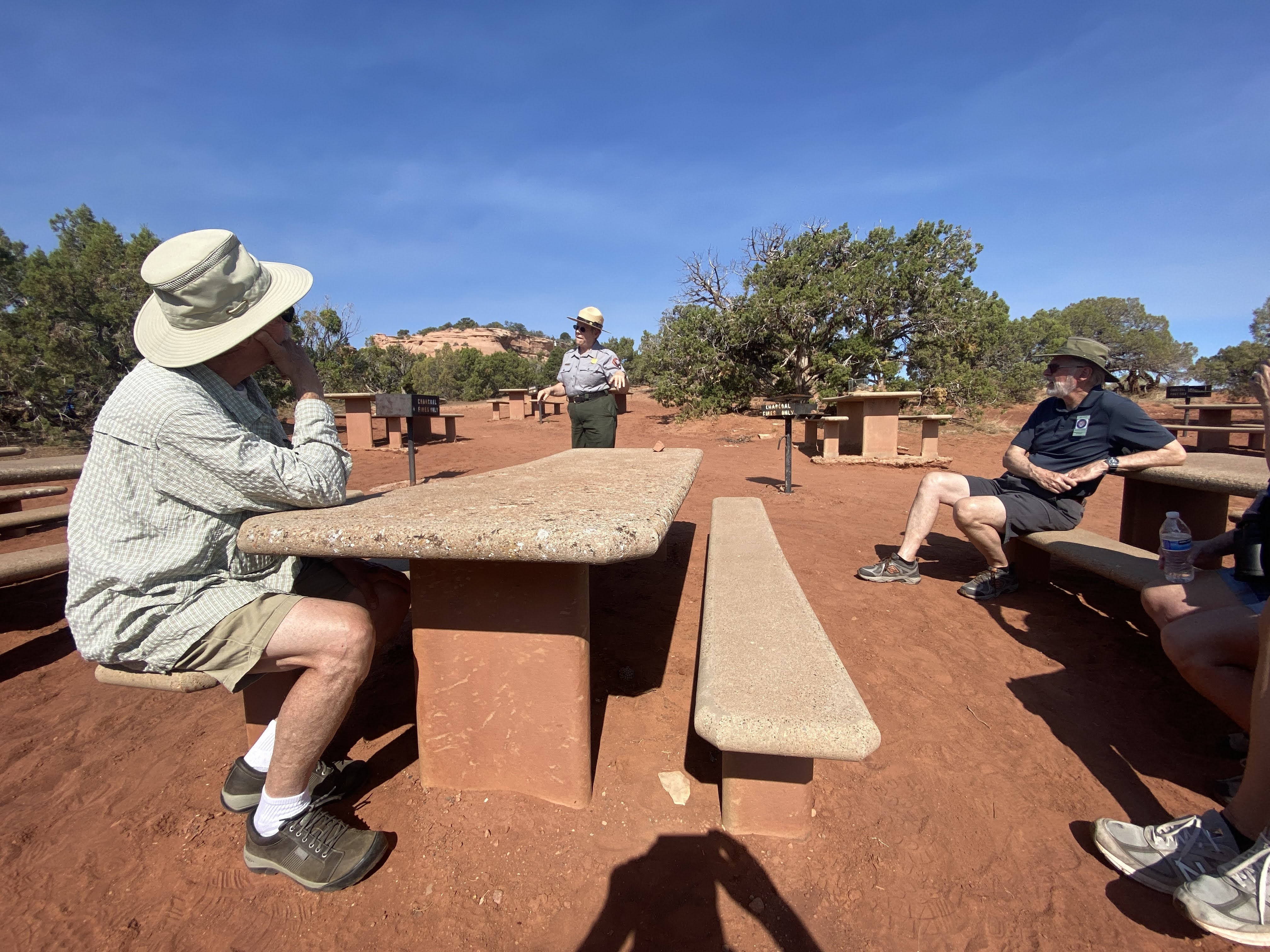
We began our visit with a ranger talk in the picnic area where we had had dinner last night…

We learned about the geology of these magnificent cliffs and canyons, plus a little of the park history. The man behind the creation of the Colorado National Monument was John Otto, who settled in Grand Junction in the early 20th century. Otto was the first white man to explore the area.

Prior to Otto’s arrival, many area residents believed the canyons to be inaccessible to humans. Otto began building trails on the plateau and into the canyons.  As word spread about his work, the Chamber of Commerce of Grand Junction sent a delegation to investigate. The delegation returned praising both Otto’s work and the scenic beauty of the wilderness area, and the local newspaper began lobbying to make it a National Park. A bill was introduced and carried by the local Representatives to the U.S. Congress and Senate but a Congressional slowdown in the final months threatened the process. To ensure protection of the canyons President William Howard Taft (who had visited the area) stepped in and used the highest powers available to him via the Antiquities Act and presidential proclamation to declare the canyons as a national monument

John Otto was hired as the first park ranger, drawing a salary of $1 per month. For the next 16 years, he continued building and maintaining trails while living in a tent in the park.

For many years during the Great Depression, the Civilian Conservation Corps. built roads, tunnels, trails, and other features of the park. The CCC left in 1941; the major Rim drive was completed in the 1950s.

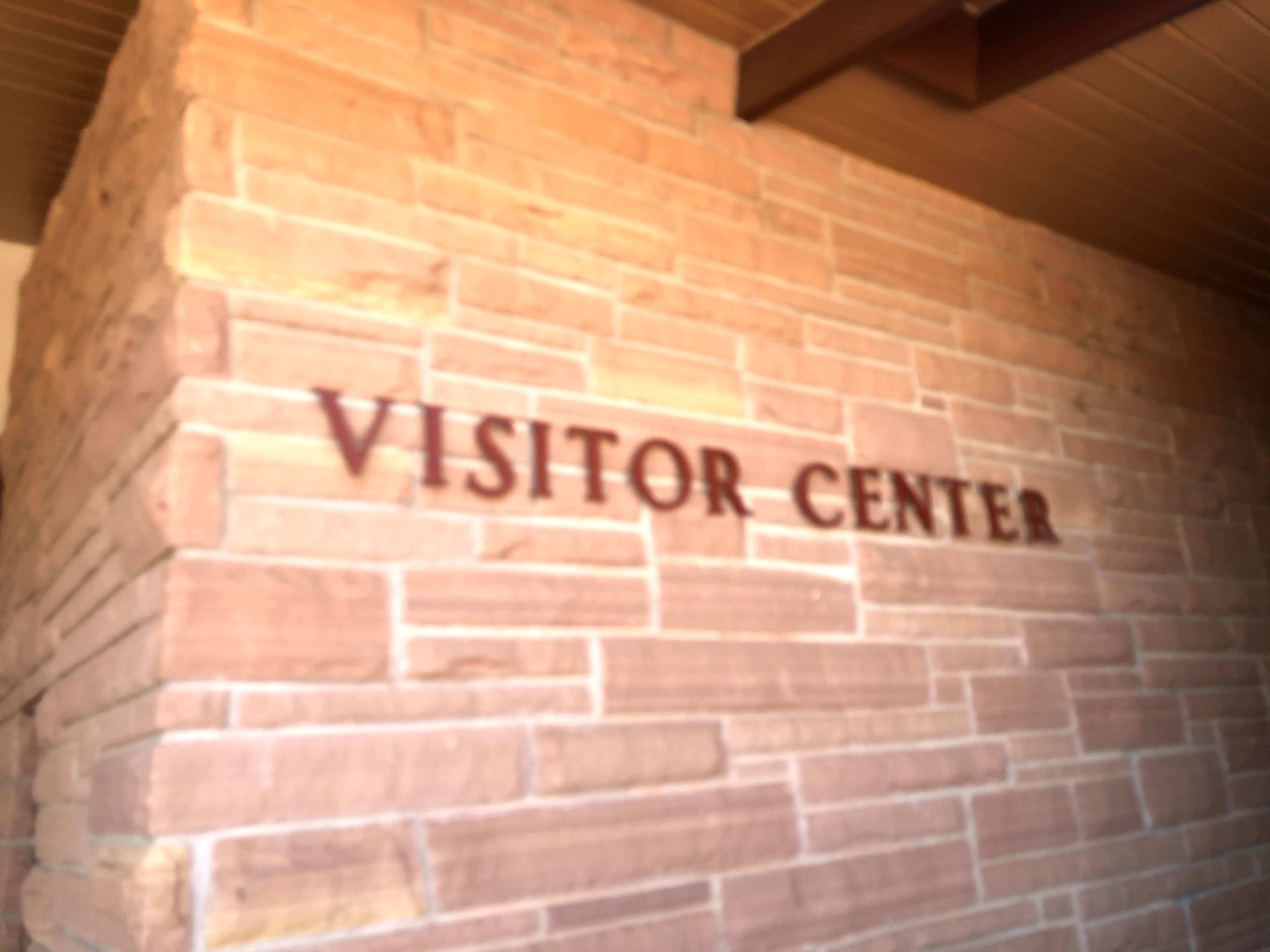
Following the Ranger talk we visited the Visitor Center. I liked the fact that it is built from the native sandstone…

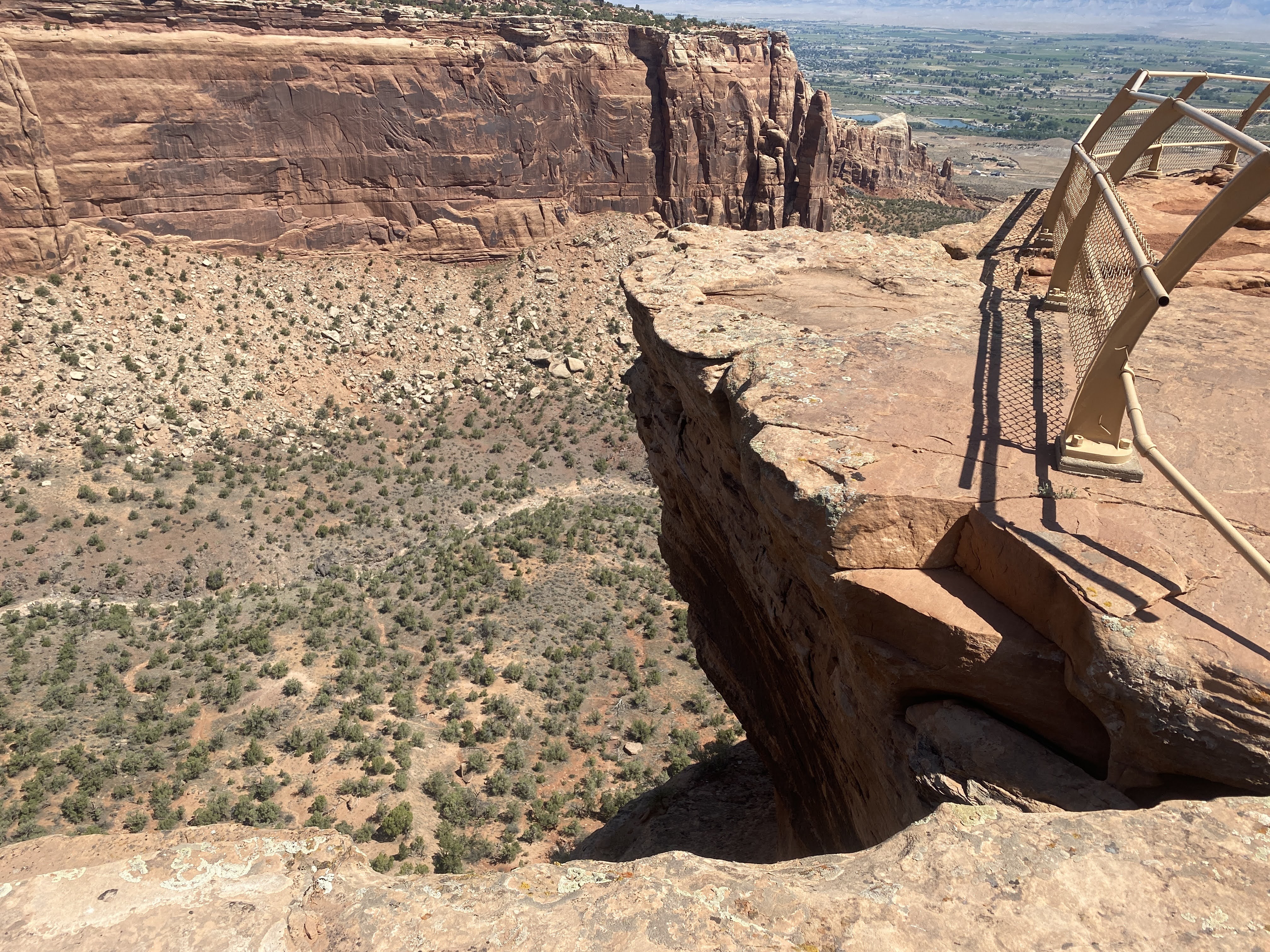
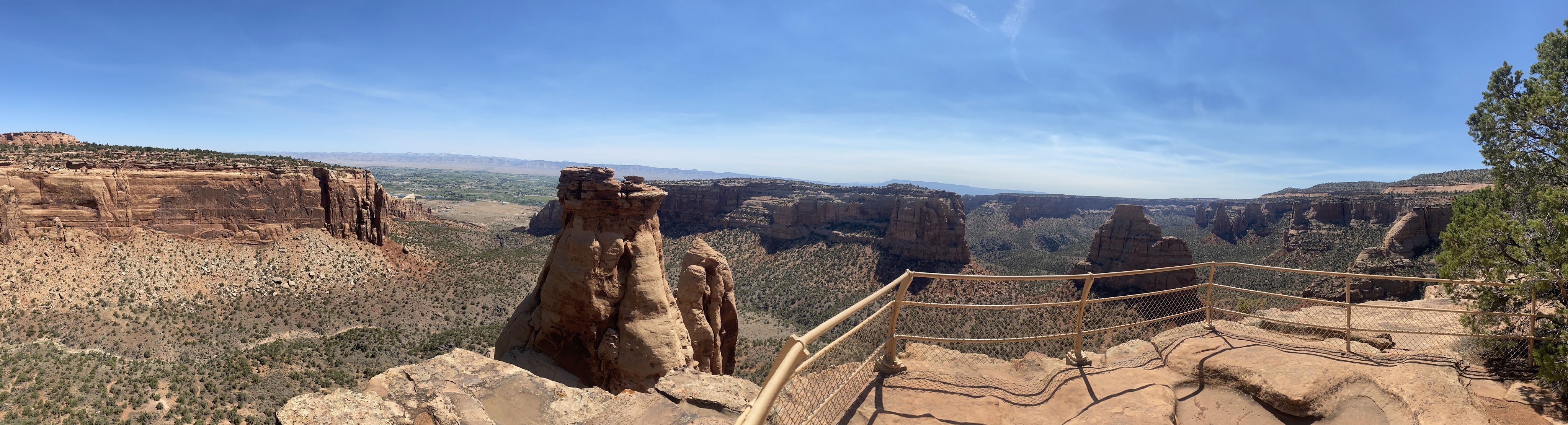
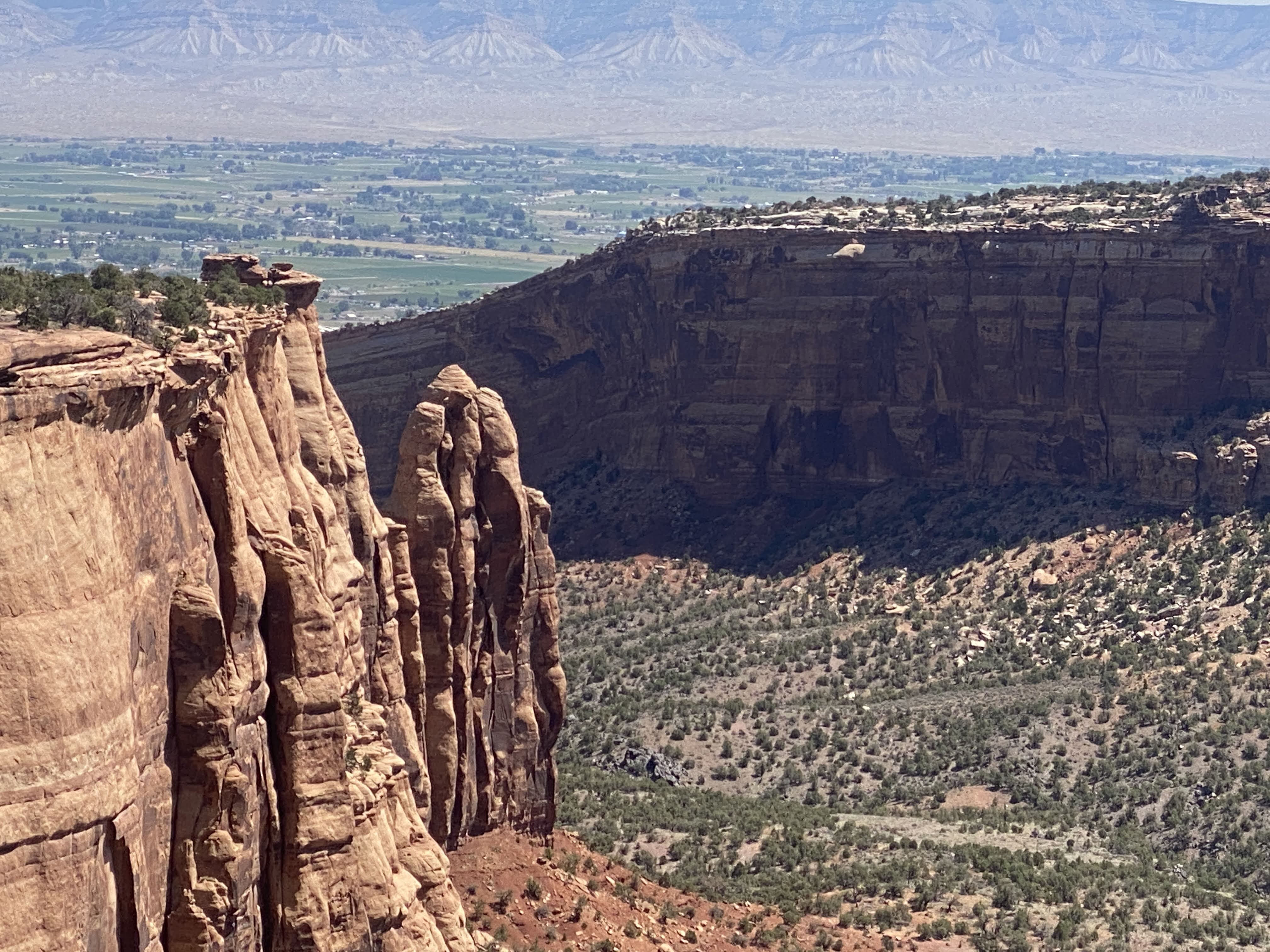
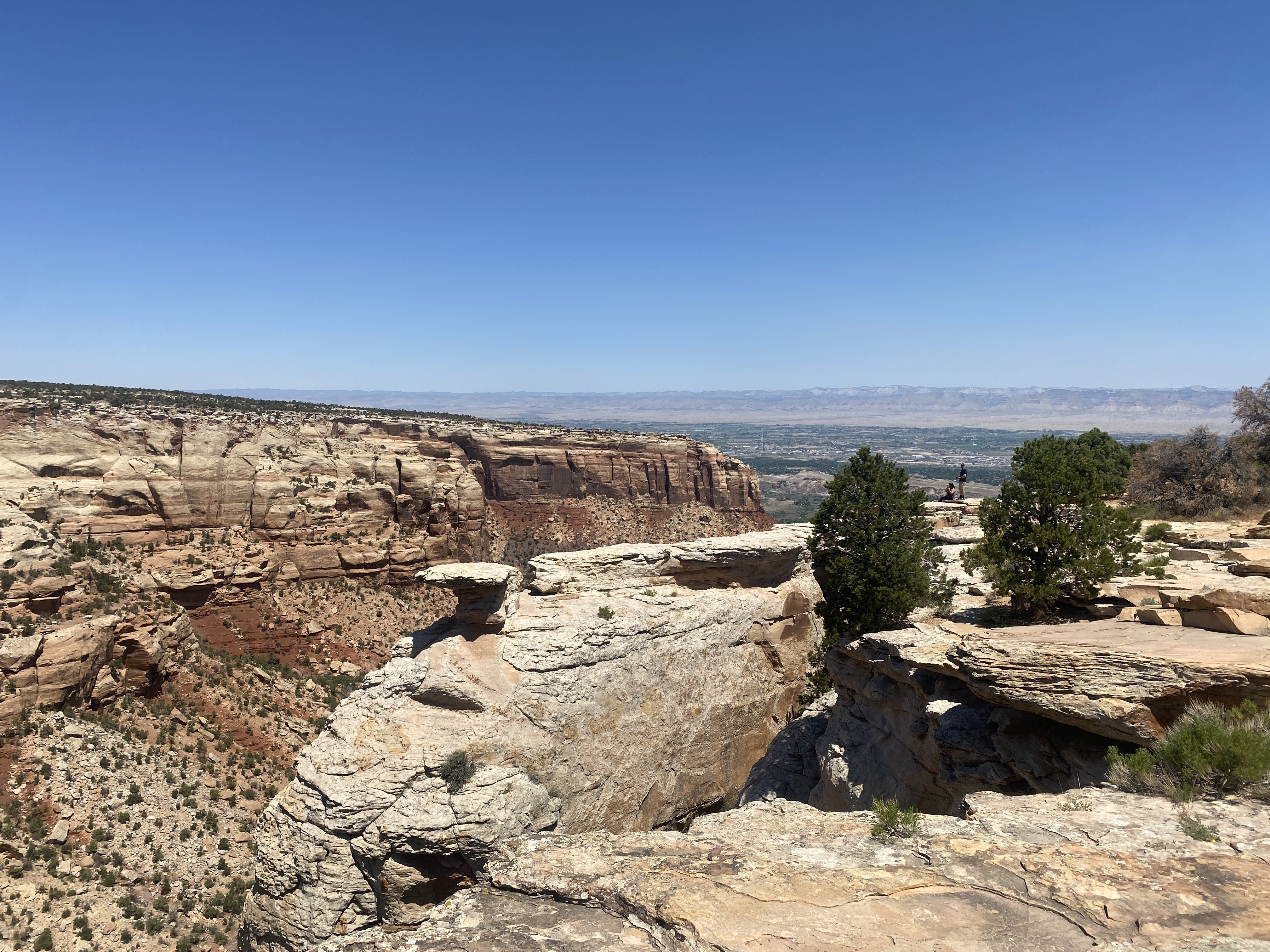
After we had seen a few exhibits in the Visitor Center we drove the Rim drive for 23 miles, all the way to Grand Junction. We saw 23 miles of rocks.

Here I liked the walls made from the natural sandstone… These walls are several hundred feet long, and they occur at many of the pull-outs along the Rim drive…

After we left the park we drove through Grand Junction again. We found truck fuel and DEF. Tomorrow we will return to Fruita for some final grocery shopping before we enter the wilderness of Dinosaur National Monument, Flaming Gorge Dam, and the Grand Tetons National Park…

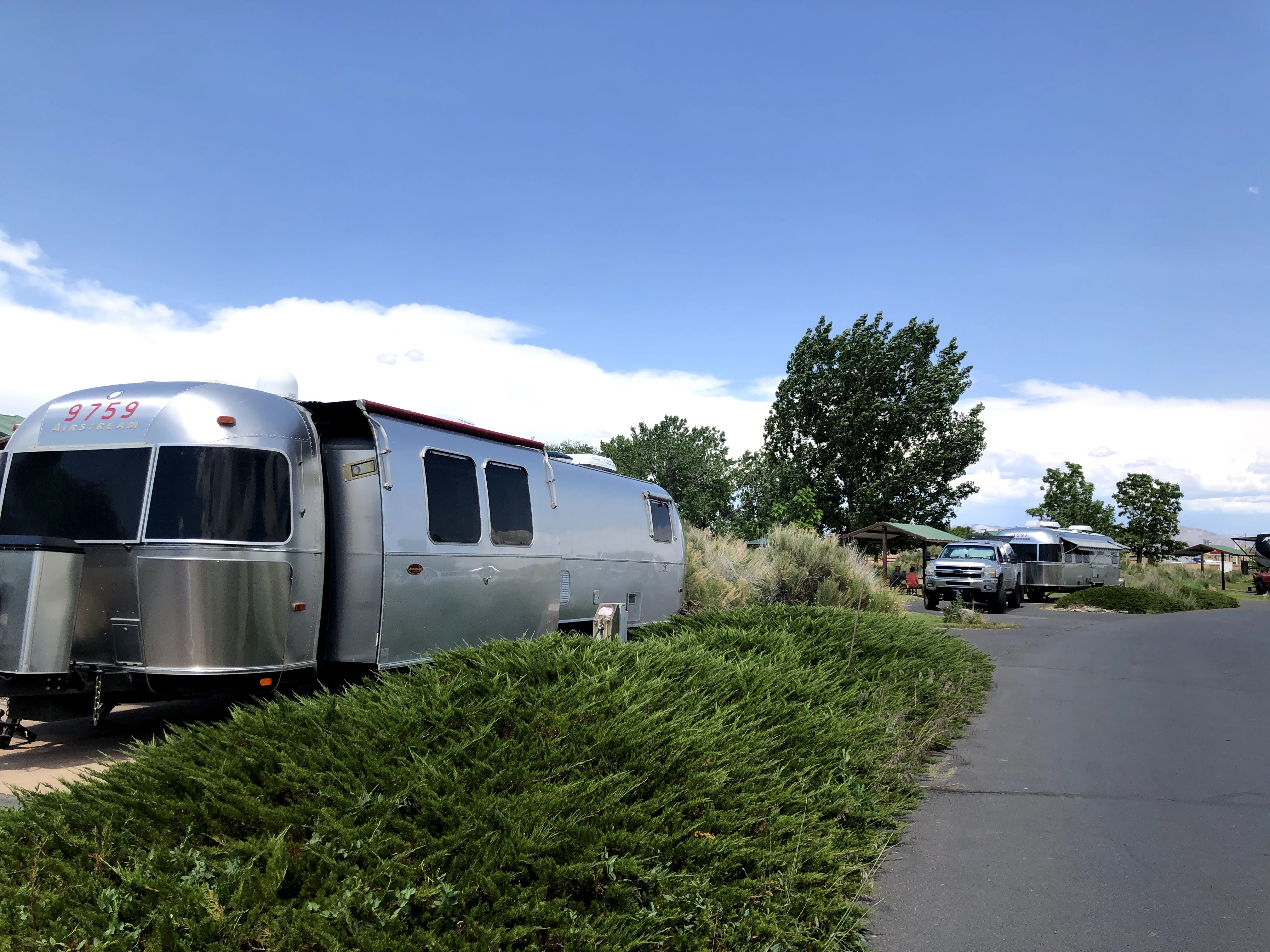
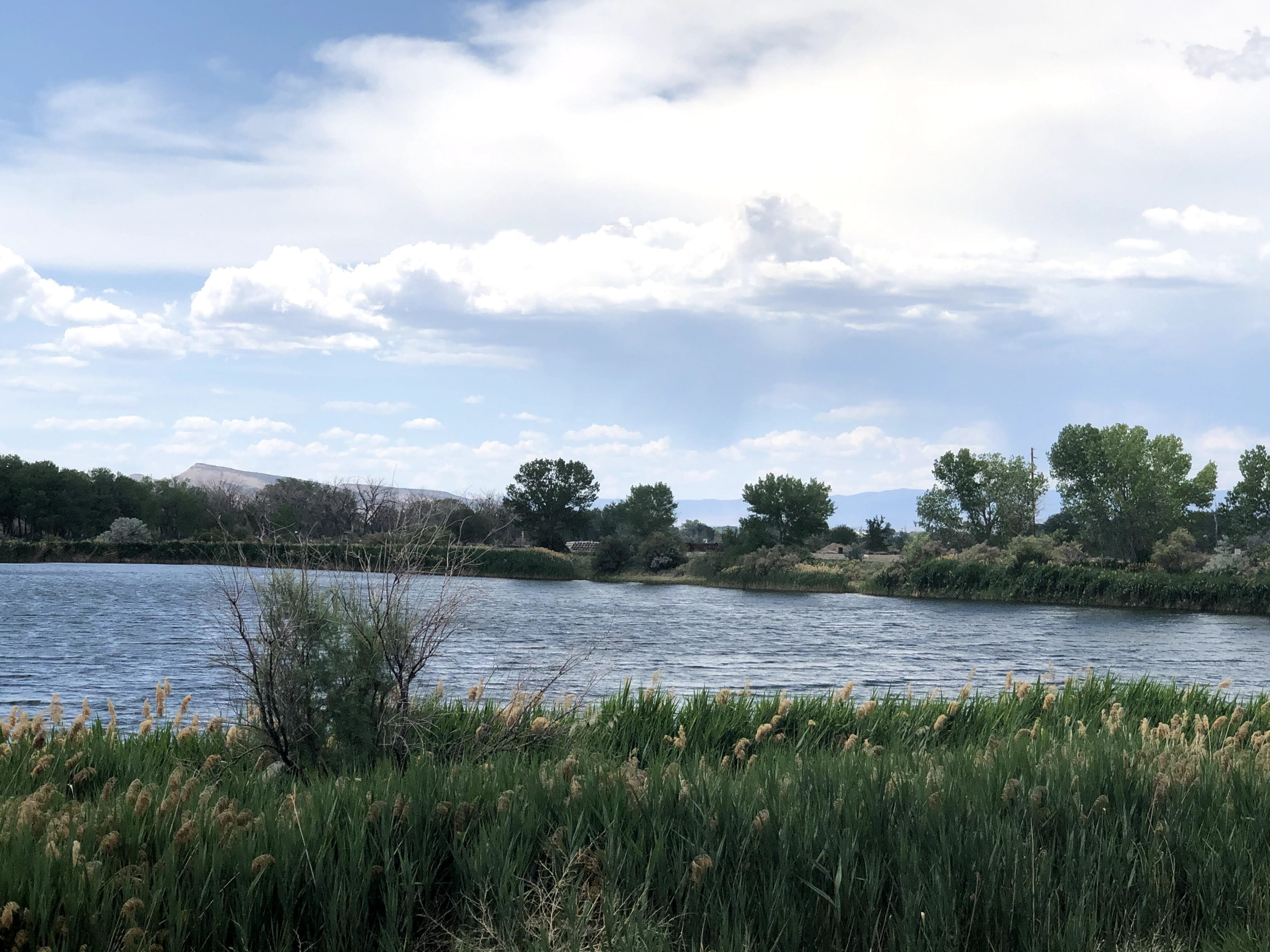
It was 97 degrees again, but we have good, clean power, so both AC units are running in the Airstream… At 5:00 we took a walk around the lake in the park.

We also saw the Colorado River again, adjacent to the park…

Unfortunately, we walked out of the park and around the outside of the park, and finally had to go totally around the park and walk in the maim entrance…

After a short break we joined other caravaners for happy hours. We returned to the Villa, and an enjoyable time was had by all…,

2021-06-06 – Springtime in the Rockies caravan… Day 11 – Traveling to Fruita, CO

Today we travel to Fruita, CO, near Grand Junction.

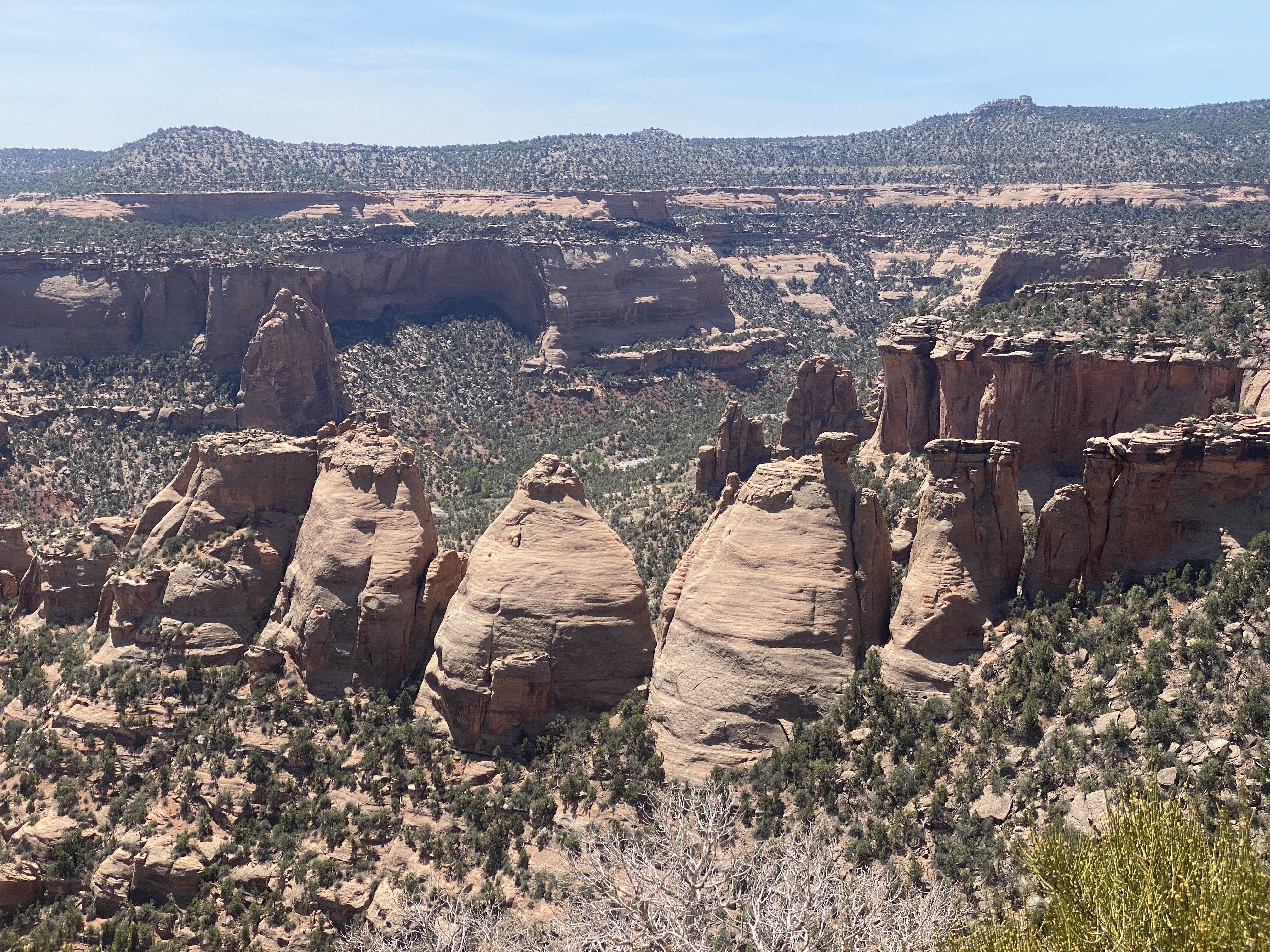
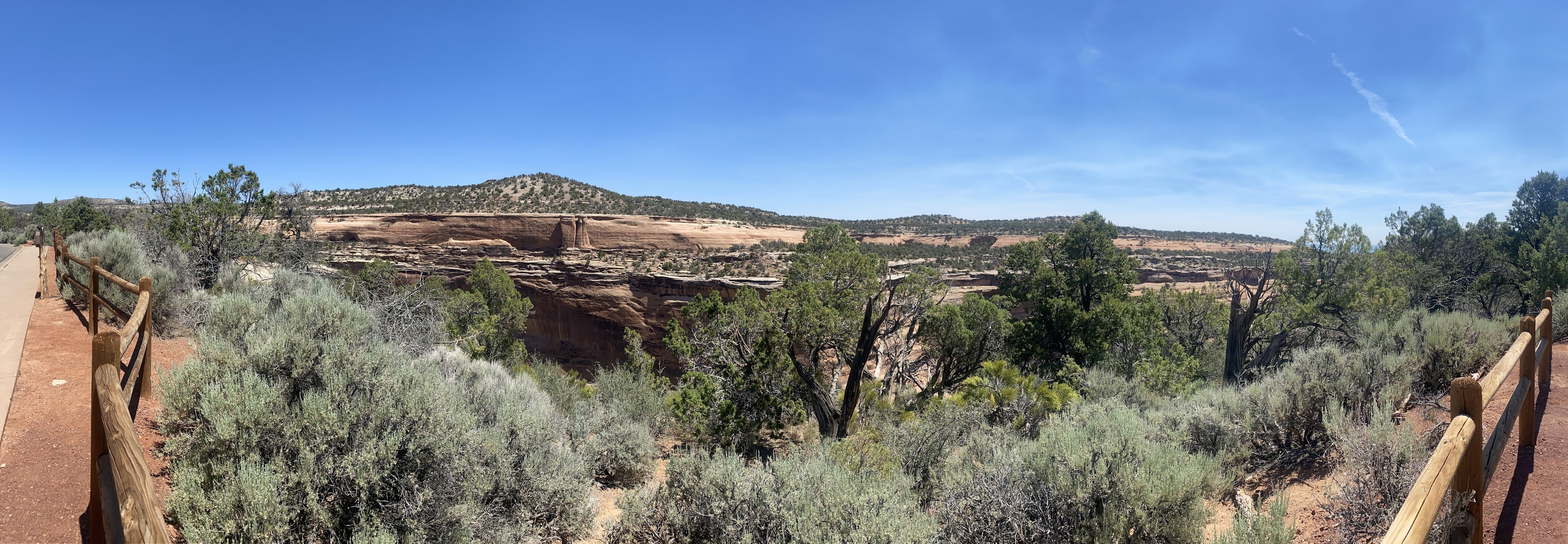
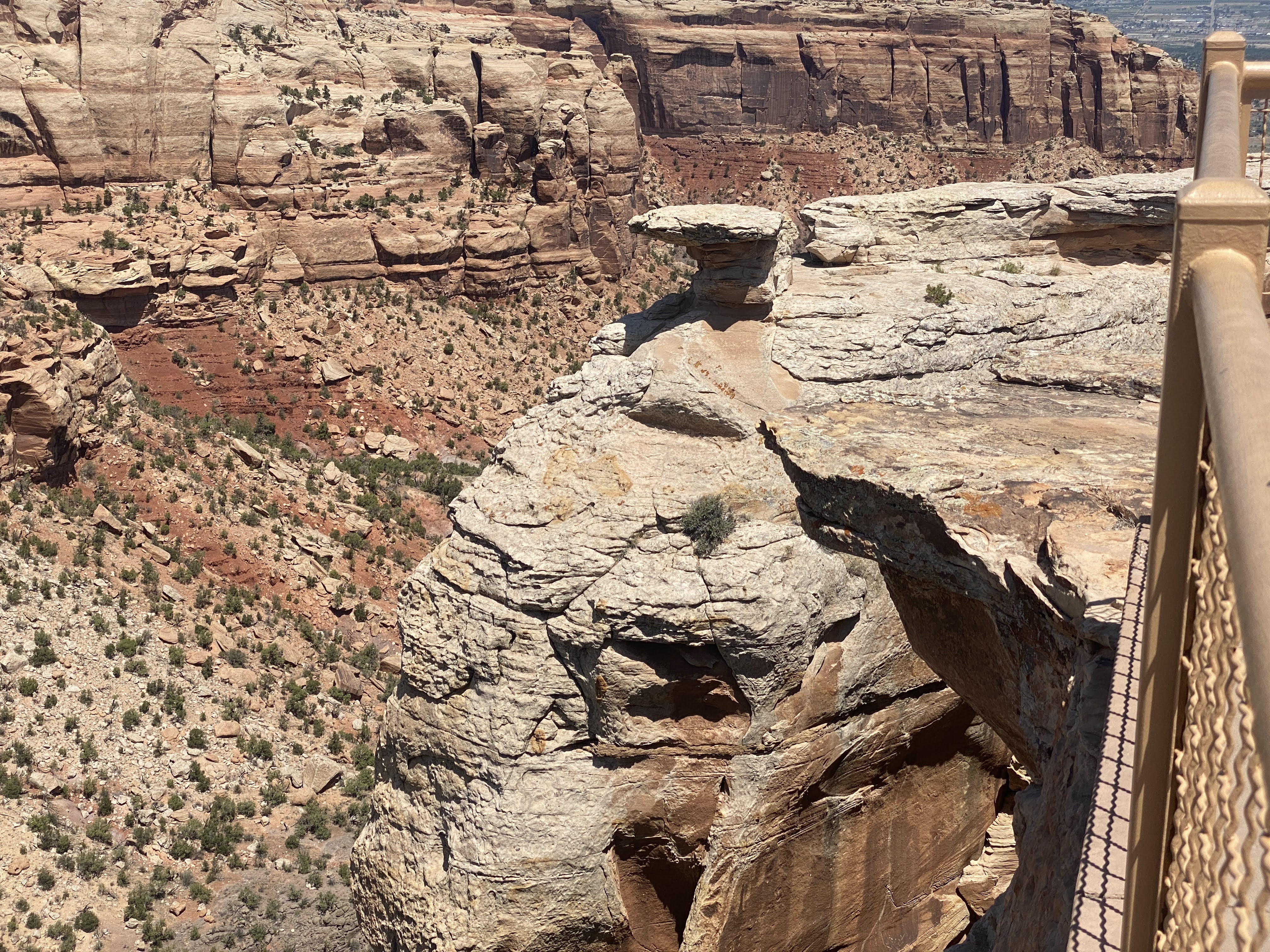
Colorado National Monument is a National Park Service unit near the city of Grand Junction, Colorado. Sheer-walled canyons cut deep into sandstone and granite–gneiss–schist rock formations. This is an area of desert land high on the Colorado Plateau, with pinyon and juniper forests on the plateau. The park hosts a wide range of wildlife, including red-tailed hawks, golden eagles, ravens, jays, desert bighorn sheep, and coyotes.

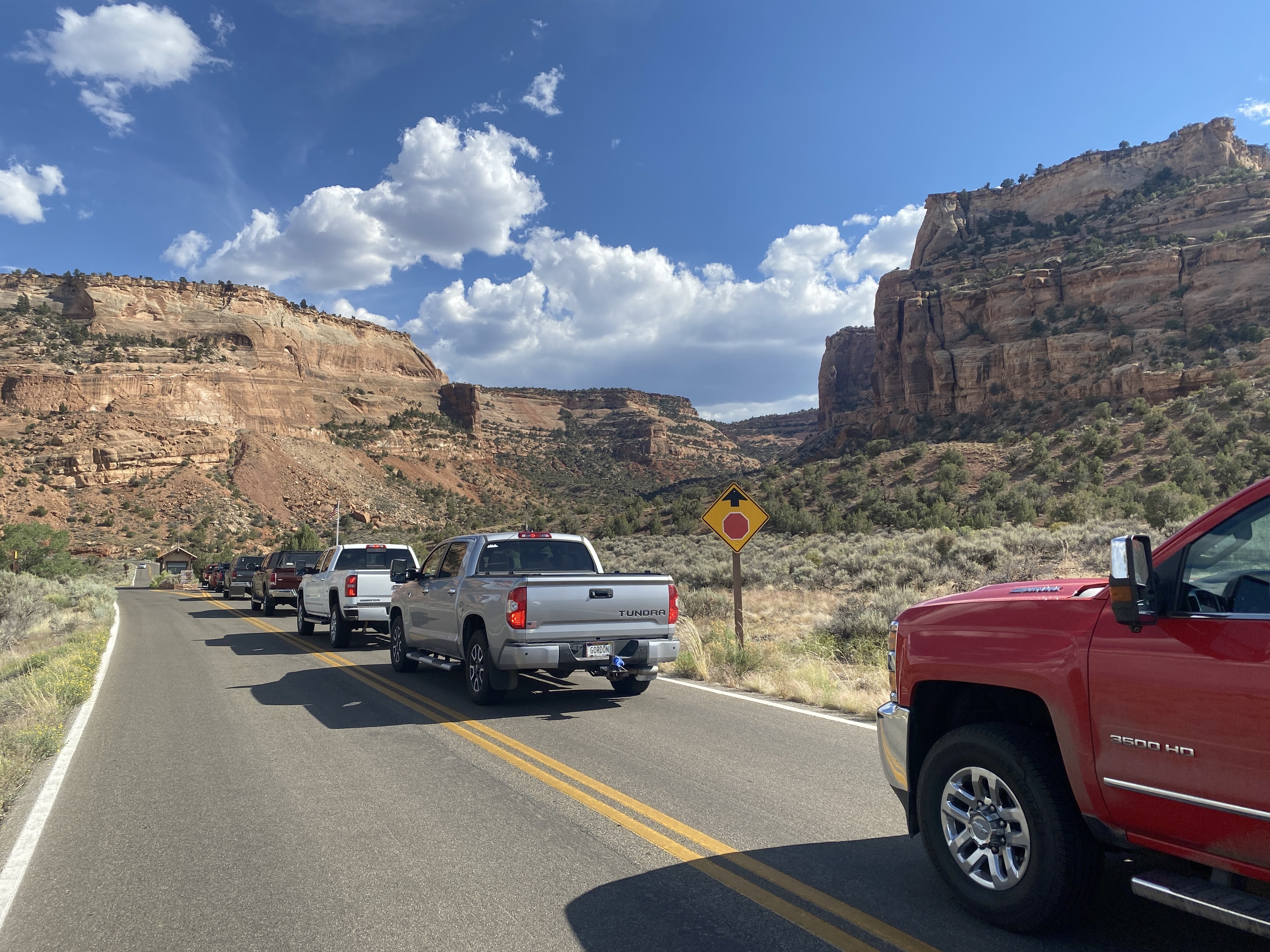
Here we are in our pickup truck caravan lining up to get into the park…

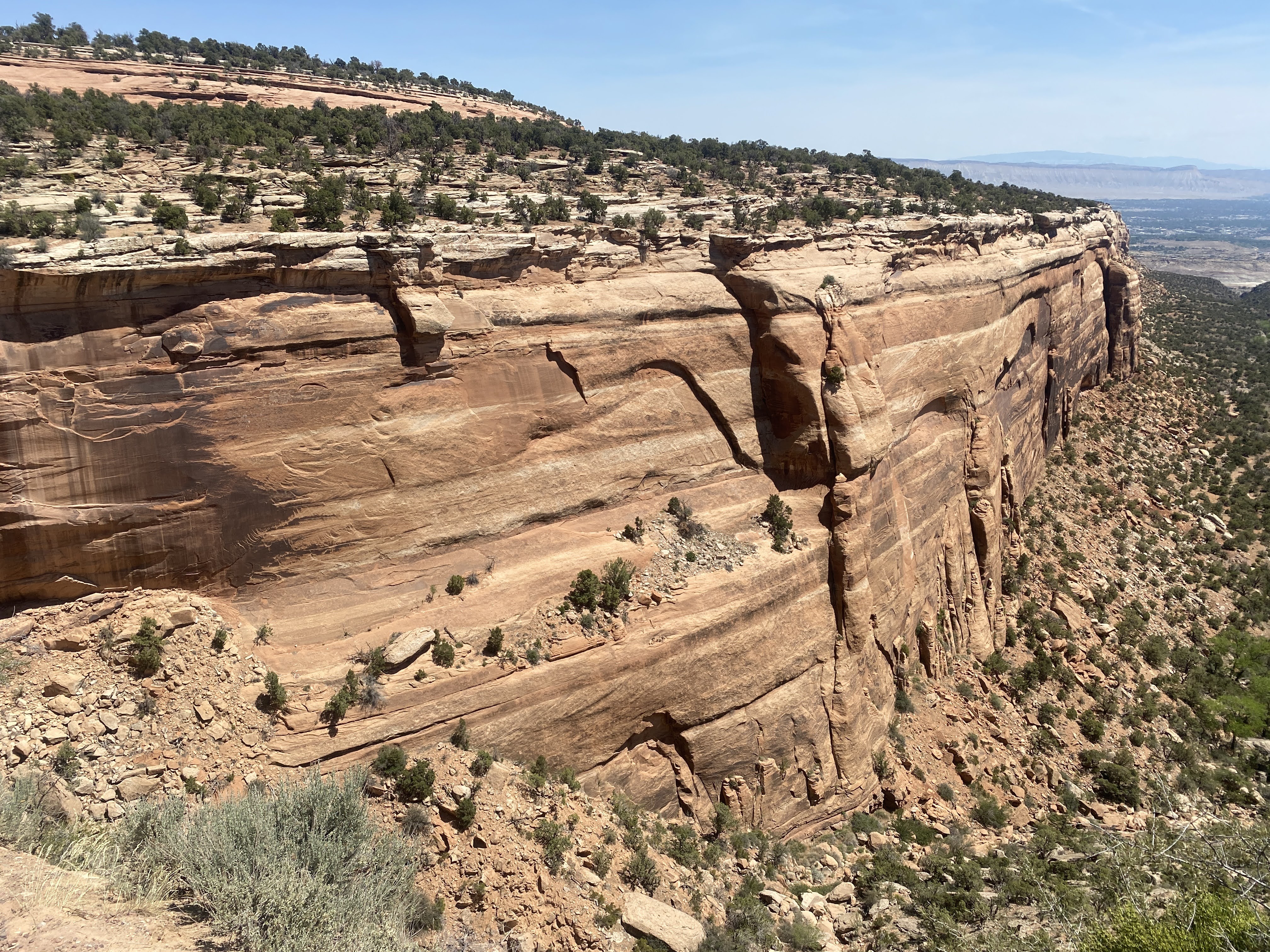
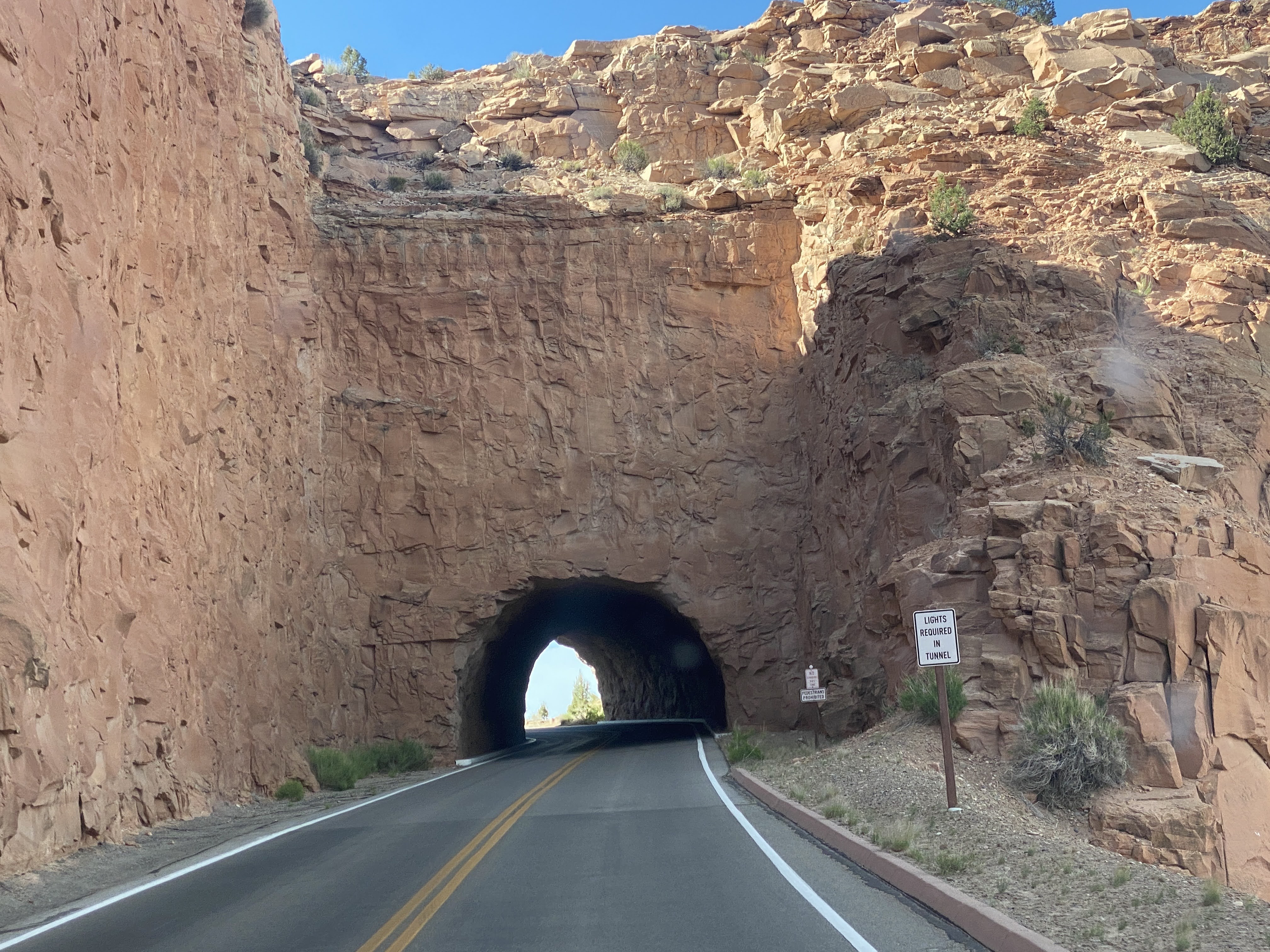
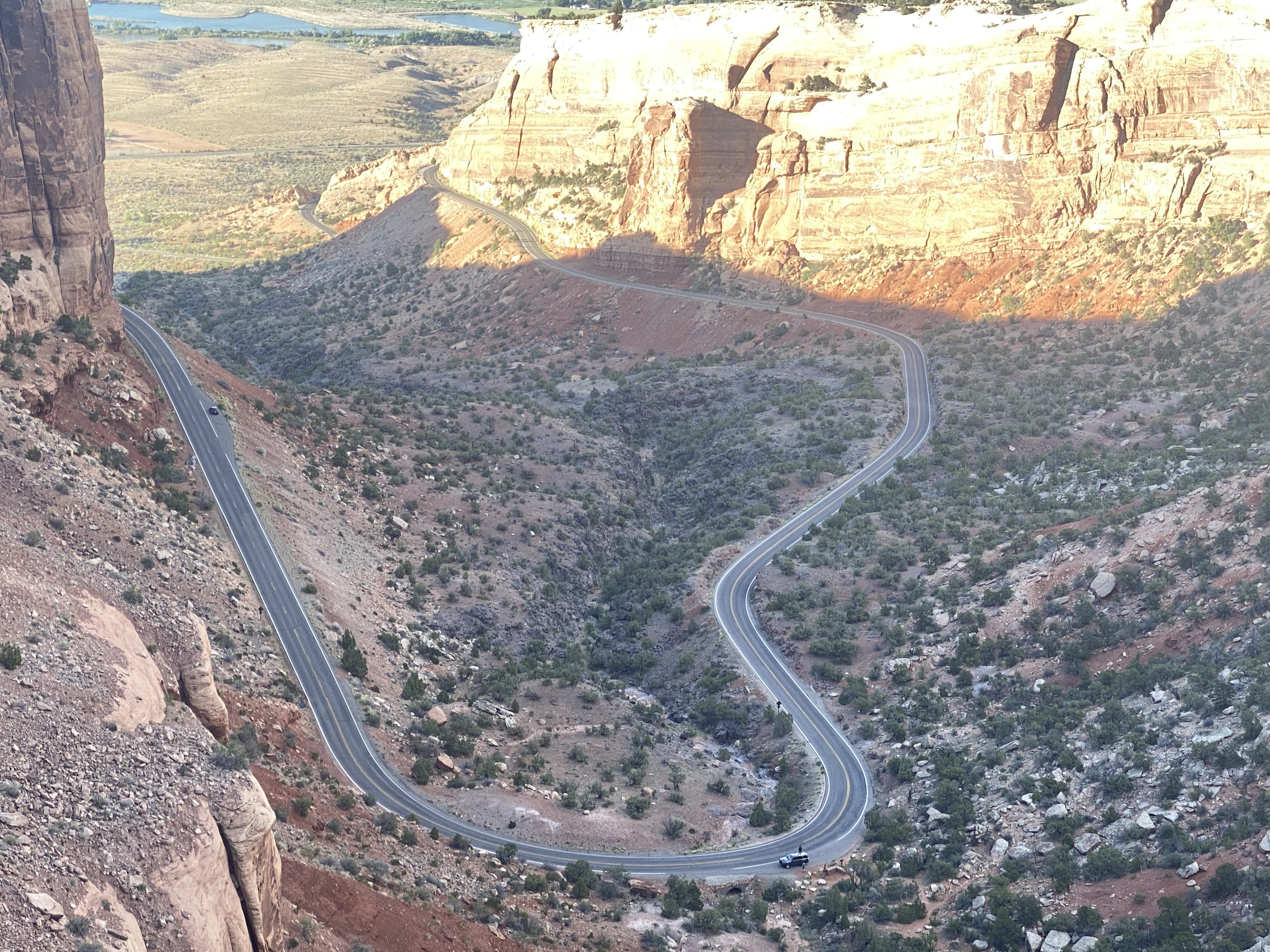
The cliff ahead is over 1,000 feet tall. We will drive up the side of it, as you can see here…

There are two tunnels through the rock…

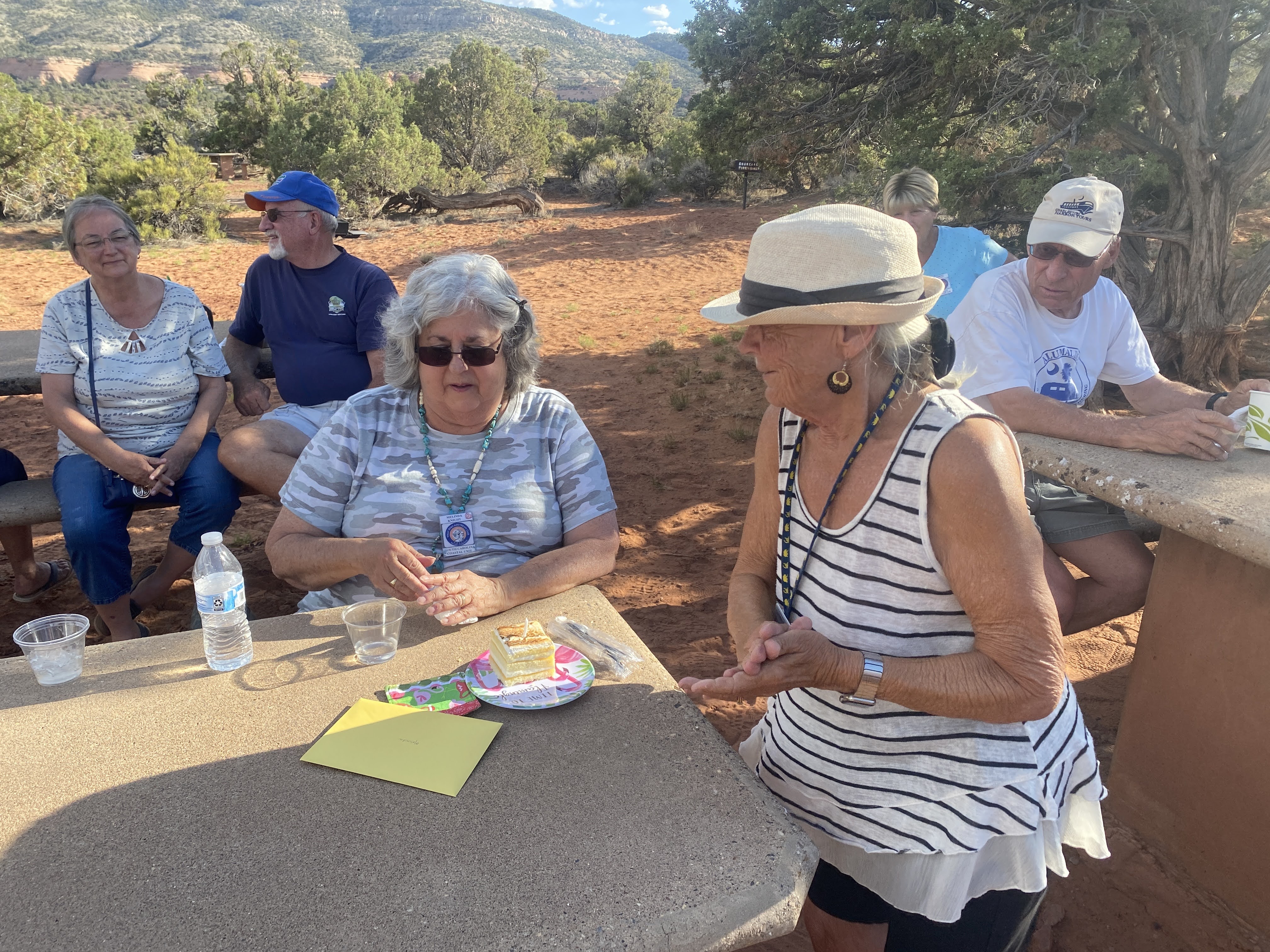
We met at the top for a catered “Southwest” dinner… I’m sure you know our personal prohibition of entering a Mexican restaurant outside of California (with rare exceptions…). SO we told ourselves that this is not a restaurant, and this is not even trying to be Mexican food… For a catered buffet served up in 97 degree heat in the middle of a desert, it was pretty good!

Lynda performed her first duty as birthday celebration host, presenting birthday cake to a fellow caravaner…

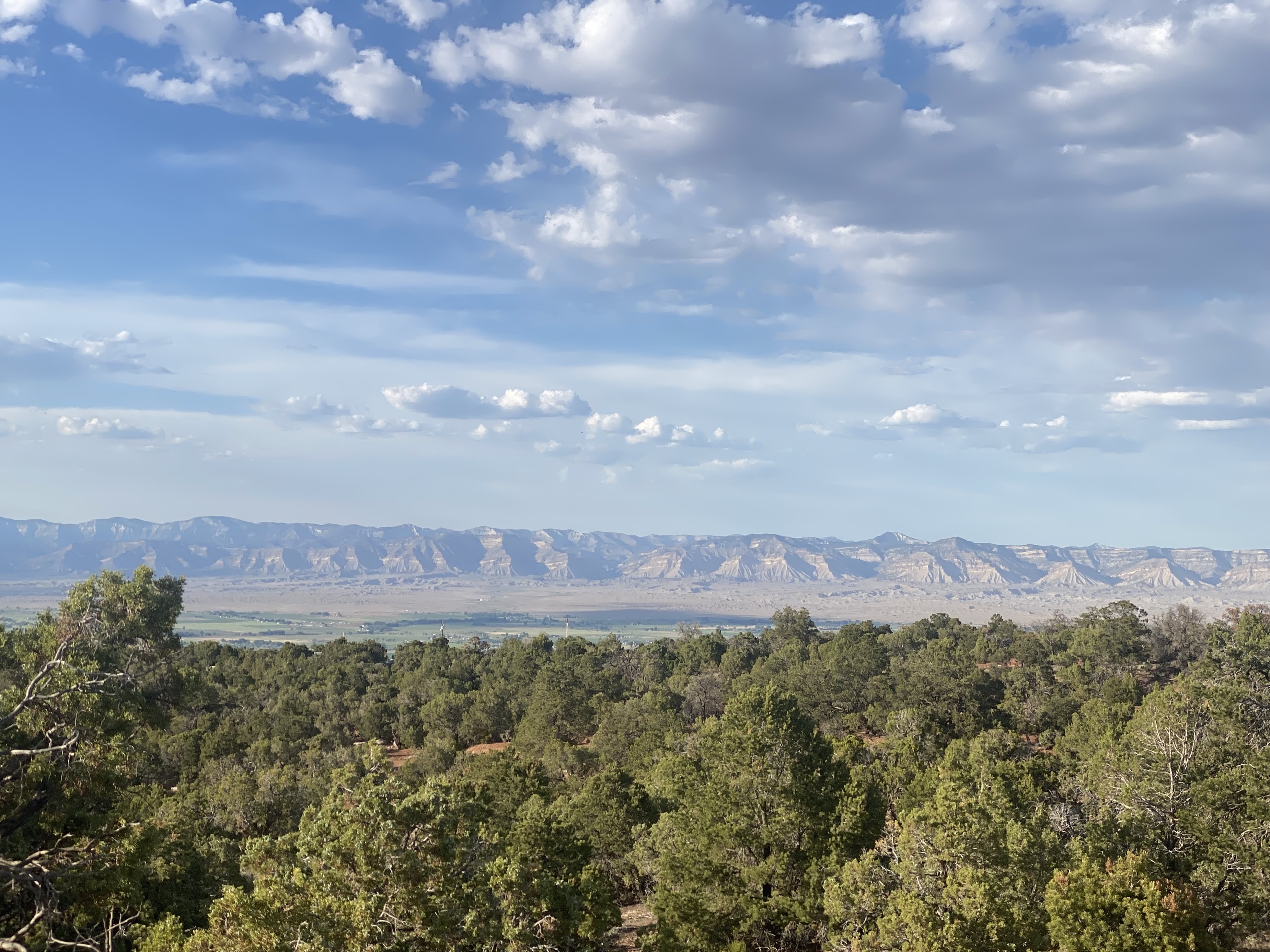
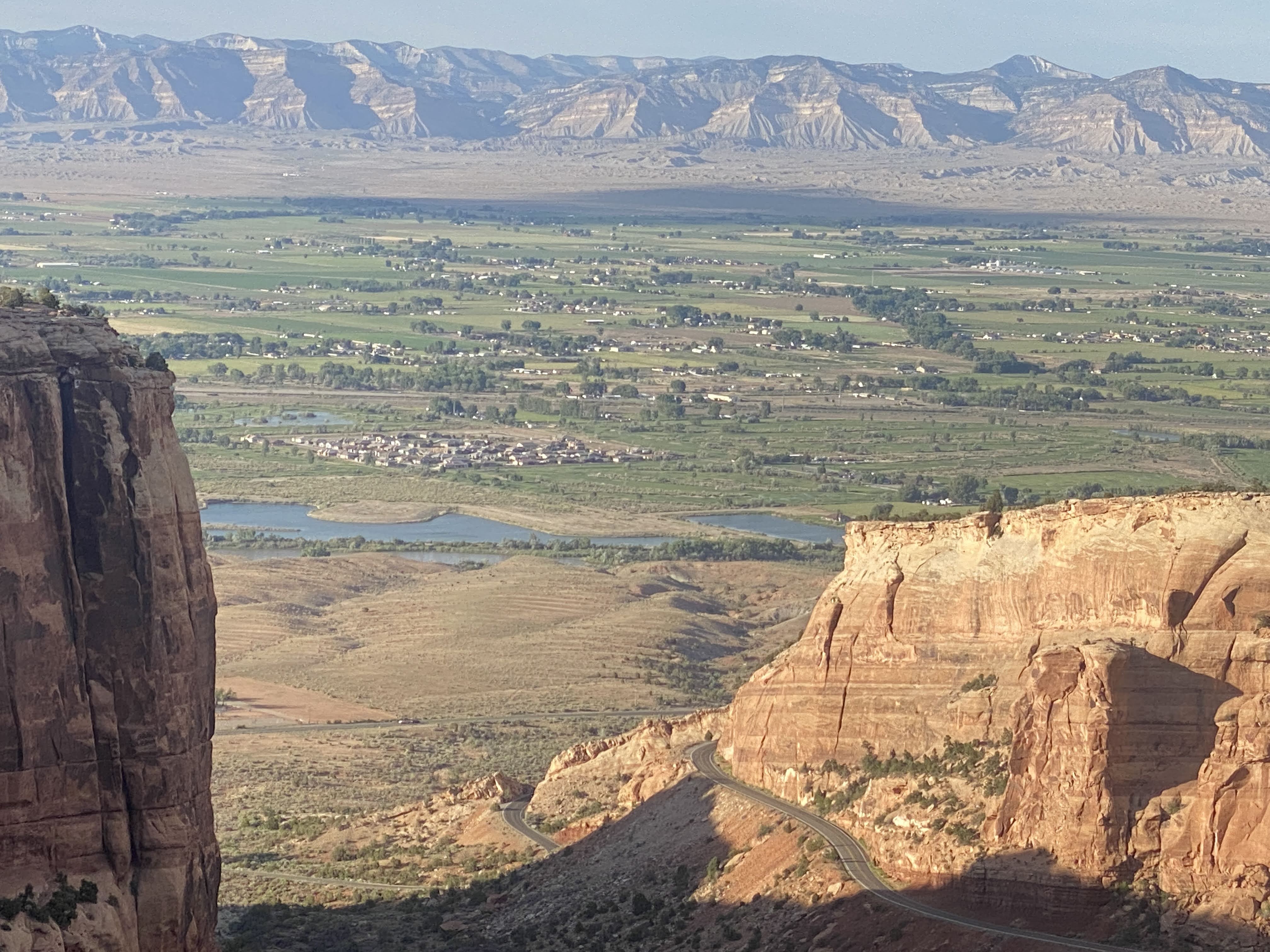
After dinner we drove back down the mountain. The light was just perfect on the valley floor…

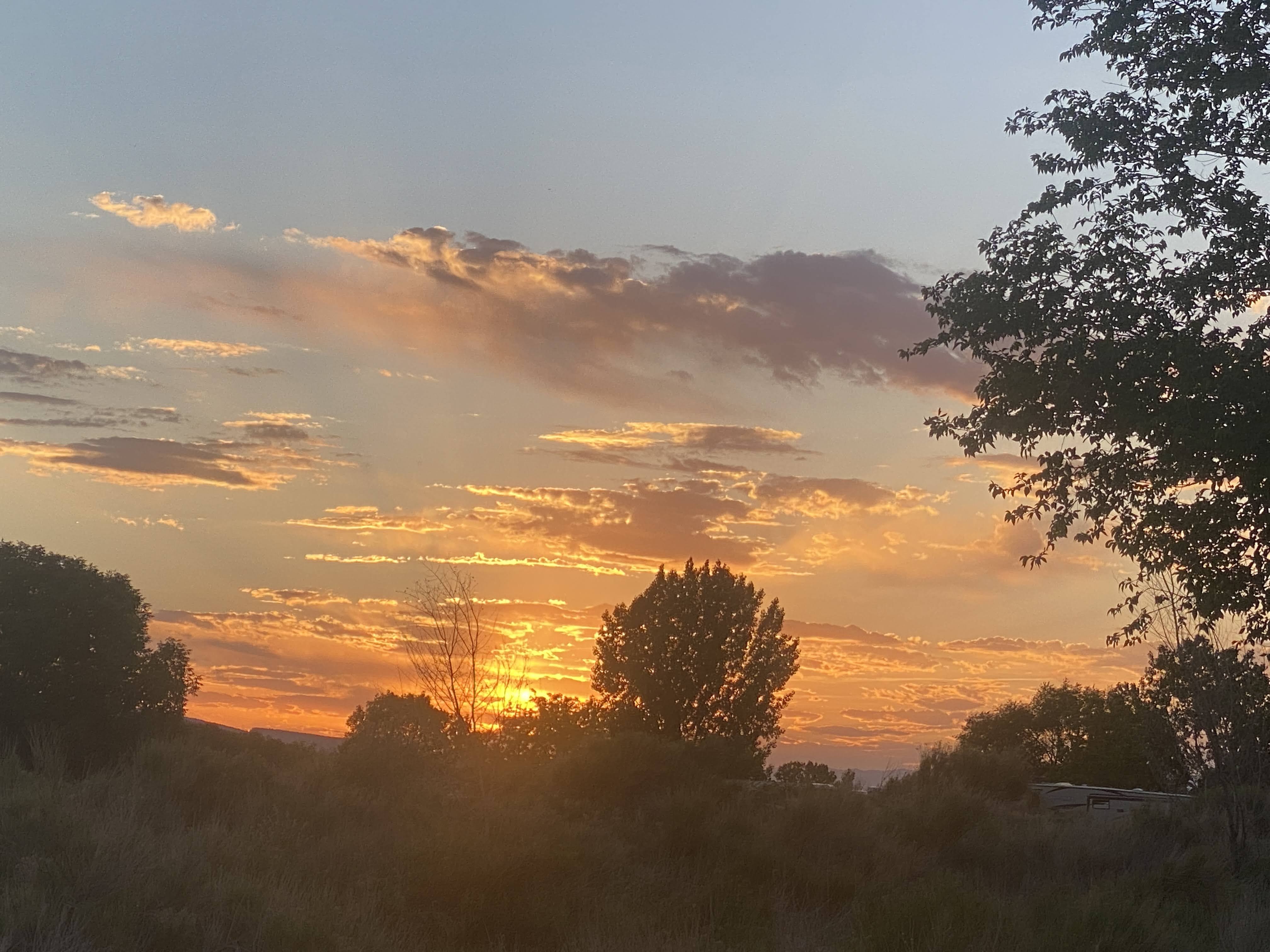
We returned to the Villa. The heat subsided to about 90 degrees, with a slight breeze. We walked the park, enjoyed the sunset, and had a nightcap on the picnic table…

And an enjoyable time was had by all…

2021-05-29 – Springtime in the Rockies caravan… Estes Park, CO – Day 3 – Rocky Mountain National Park

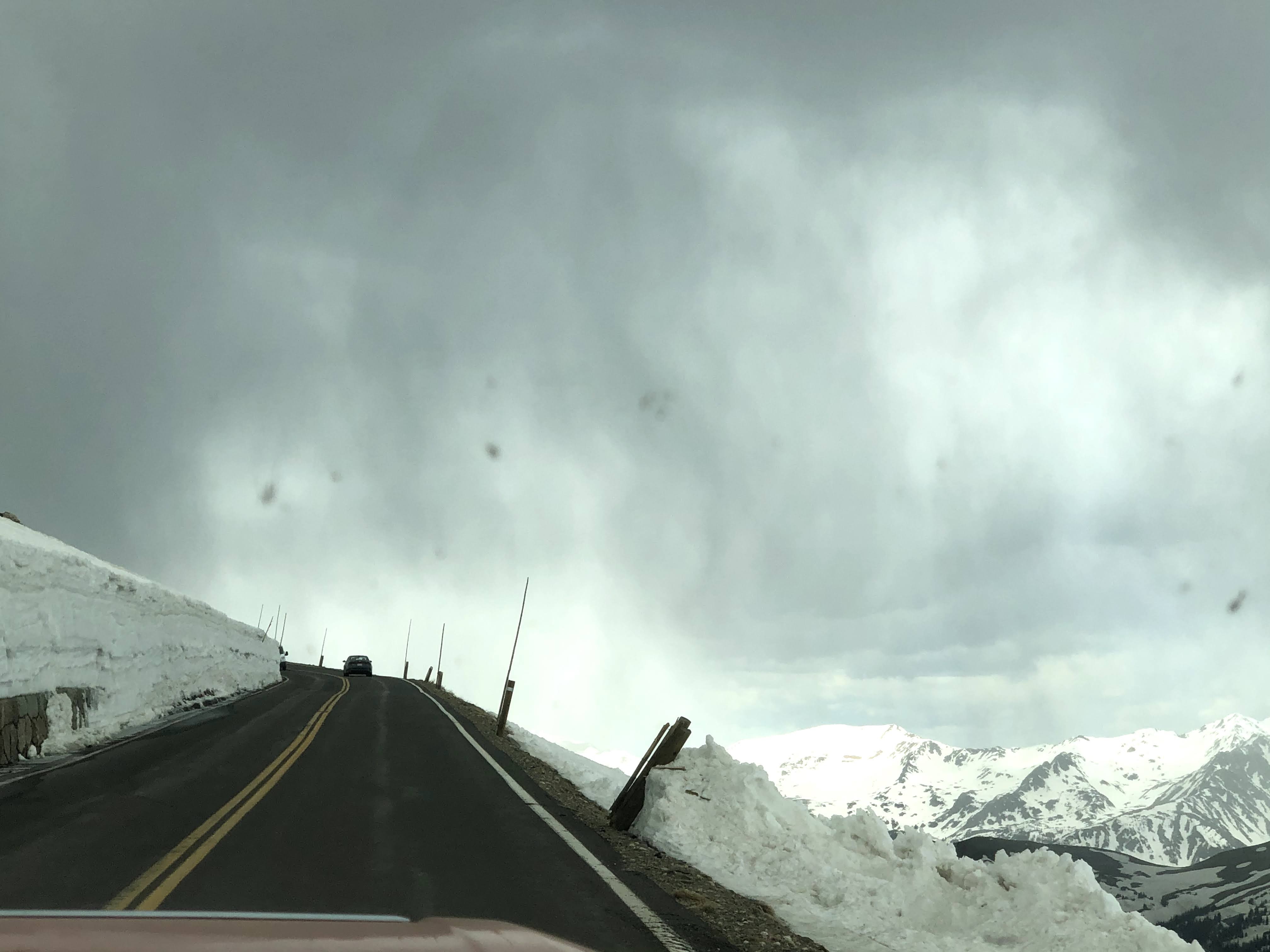
Today was a real thrill. Today’s drive was what Rocky Mountain National Park is all about. We drove from the RV Park (elevation 7,729) to the Alpine Visitor Center (elevation 11,796), passing the high point in the road at elevation 12,188…!

I took about 5,000 pictures. I’ll try to condense them down here…

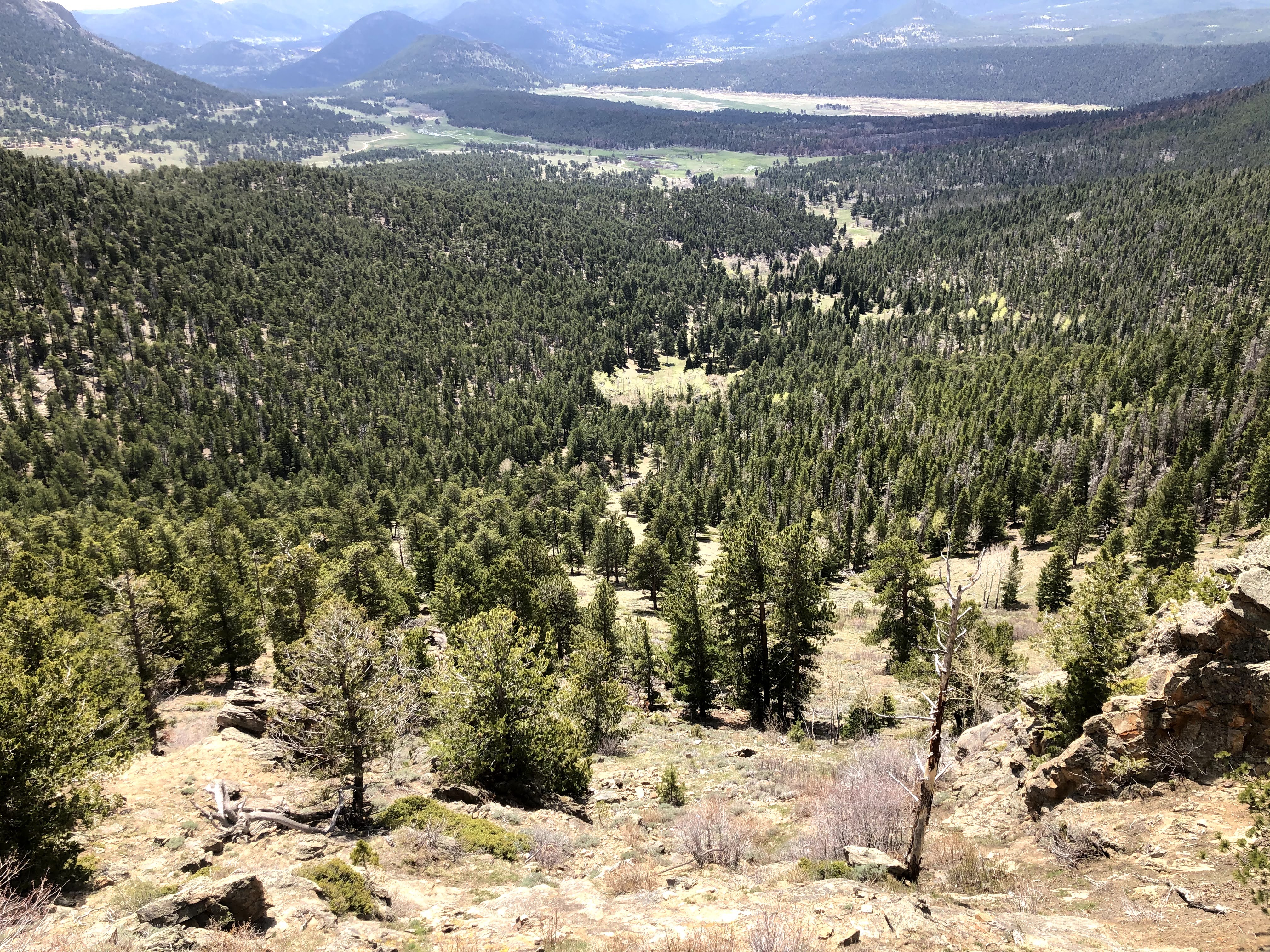
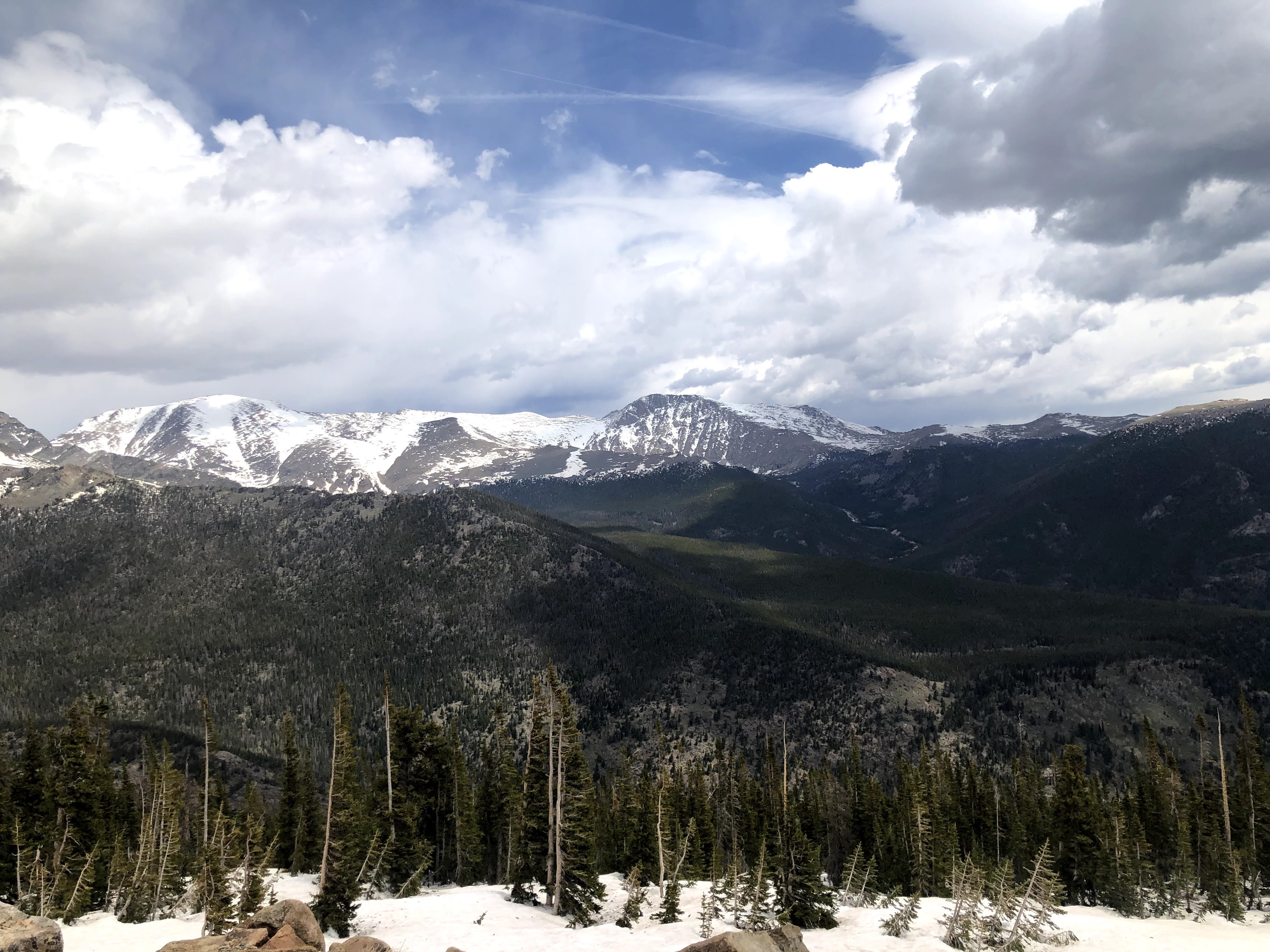
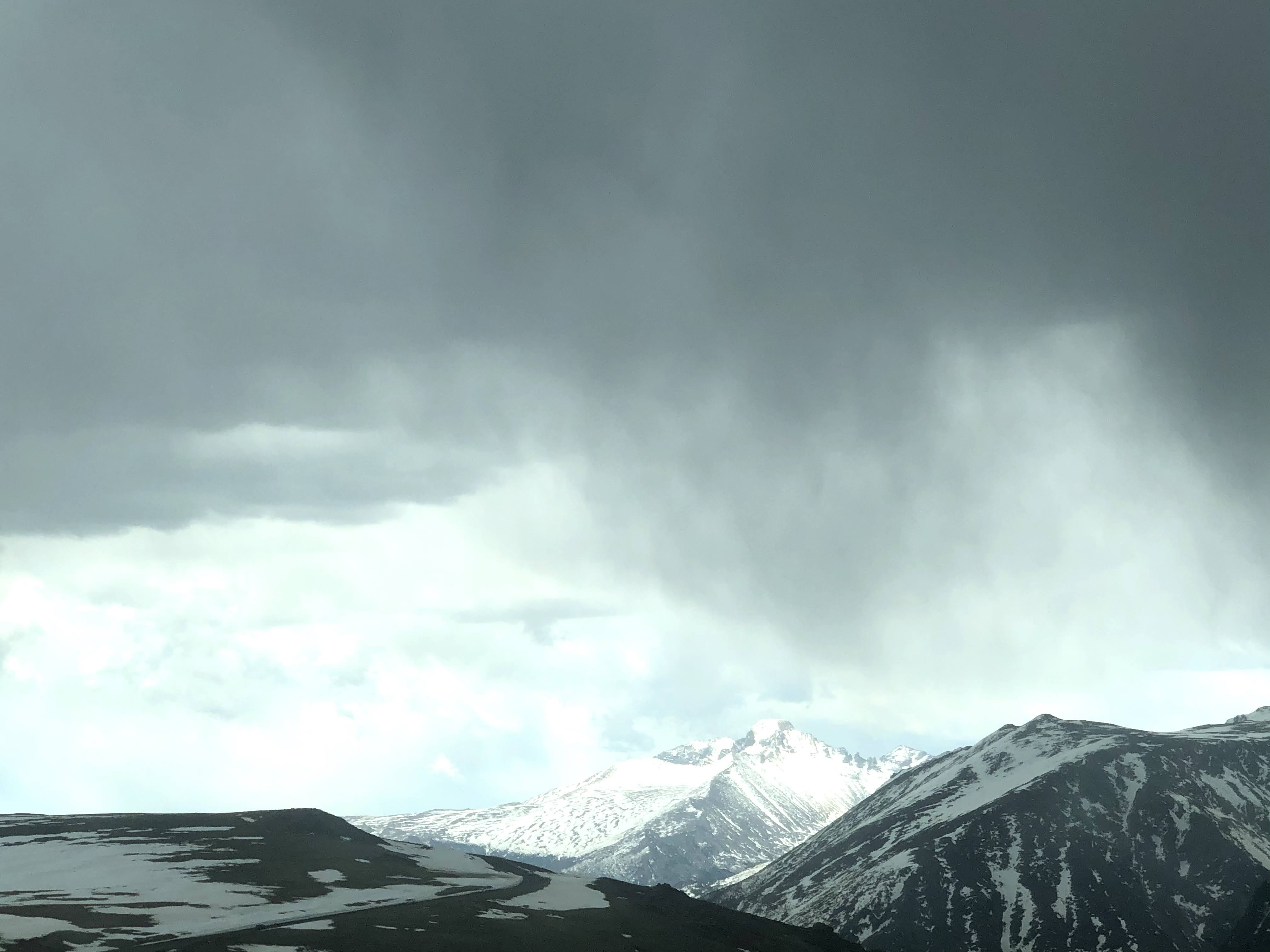
There are several ecosystems visible from the road – forest, snow, rocks, tundra… It changes at every turn…

In the photo above we can see outside the RMNP. The entire Park is surrounded by National Forests…

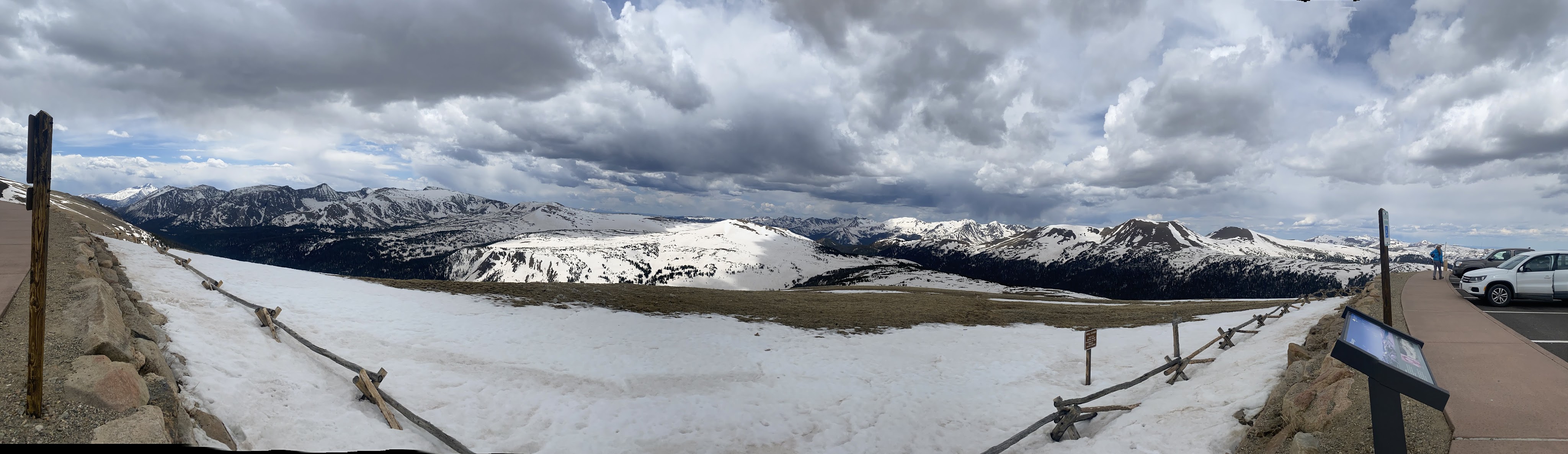
At the Forest Canyon Overlook, the pathway was totally covered with snow. We decided to skip this path… We are at elevation 11,700, and we can feel the effects of the altitude…

We are now above the tree line. Nothing but tundra consisting of tiny plants, miniaturizing themselves as a way to survive…

Below are the Lava Cliffs…

Here we see the Gore Range – mountains reaching as high as 12,928′.

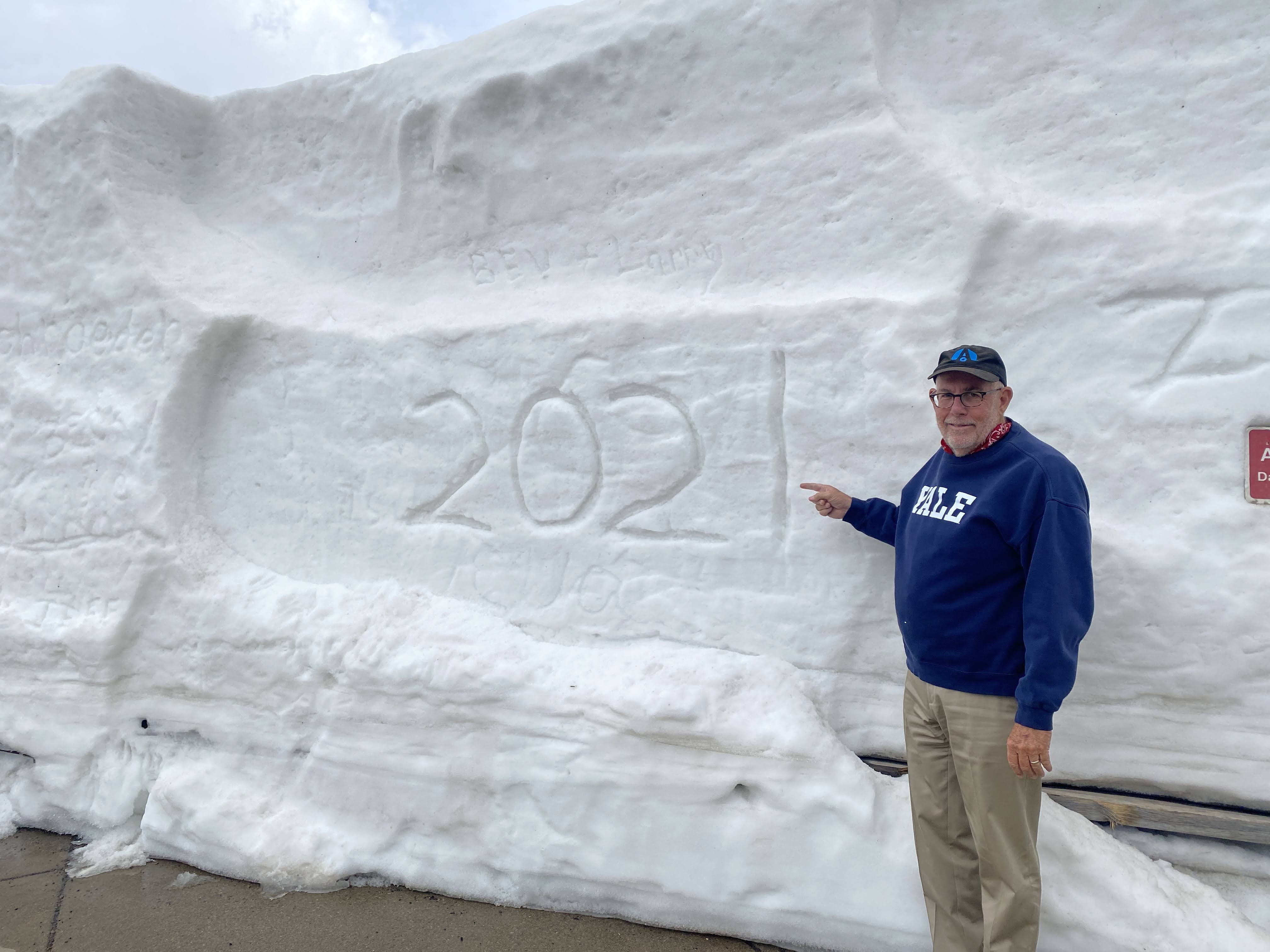
We have arrived at the Alpine Visitor Center, elevation 11,796. My Hemoglobins are starving! There is about 14′ of snow on the ground…

Our drive back “down” was exciting! We are driving on the edge of the world!

And then it started to snow!

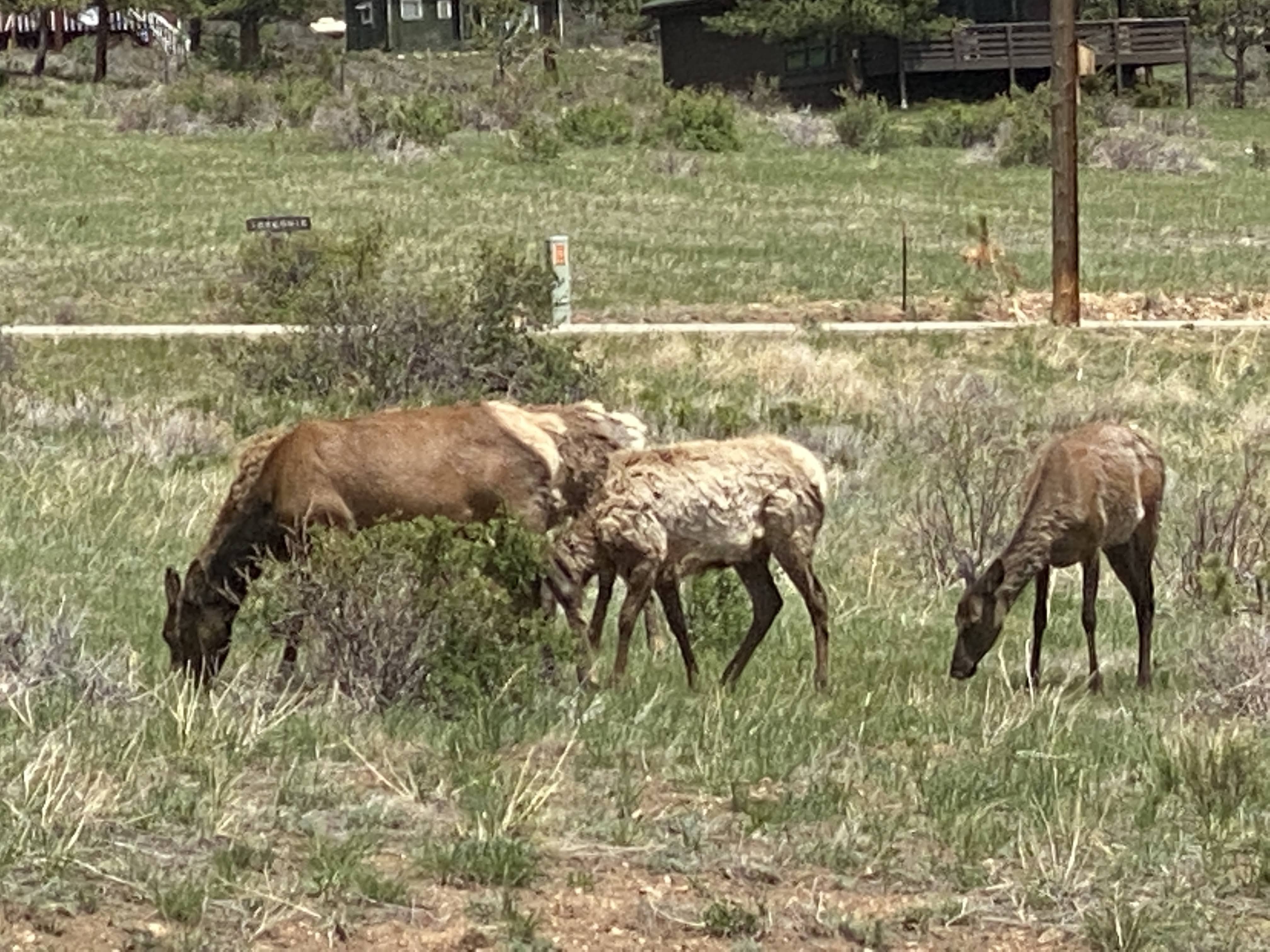
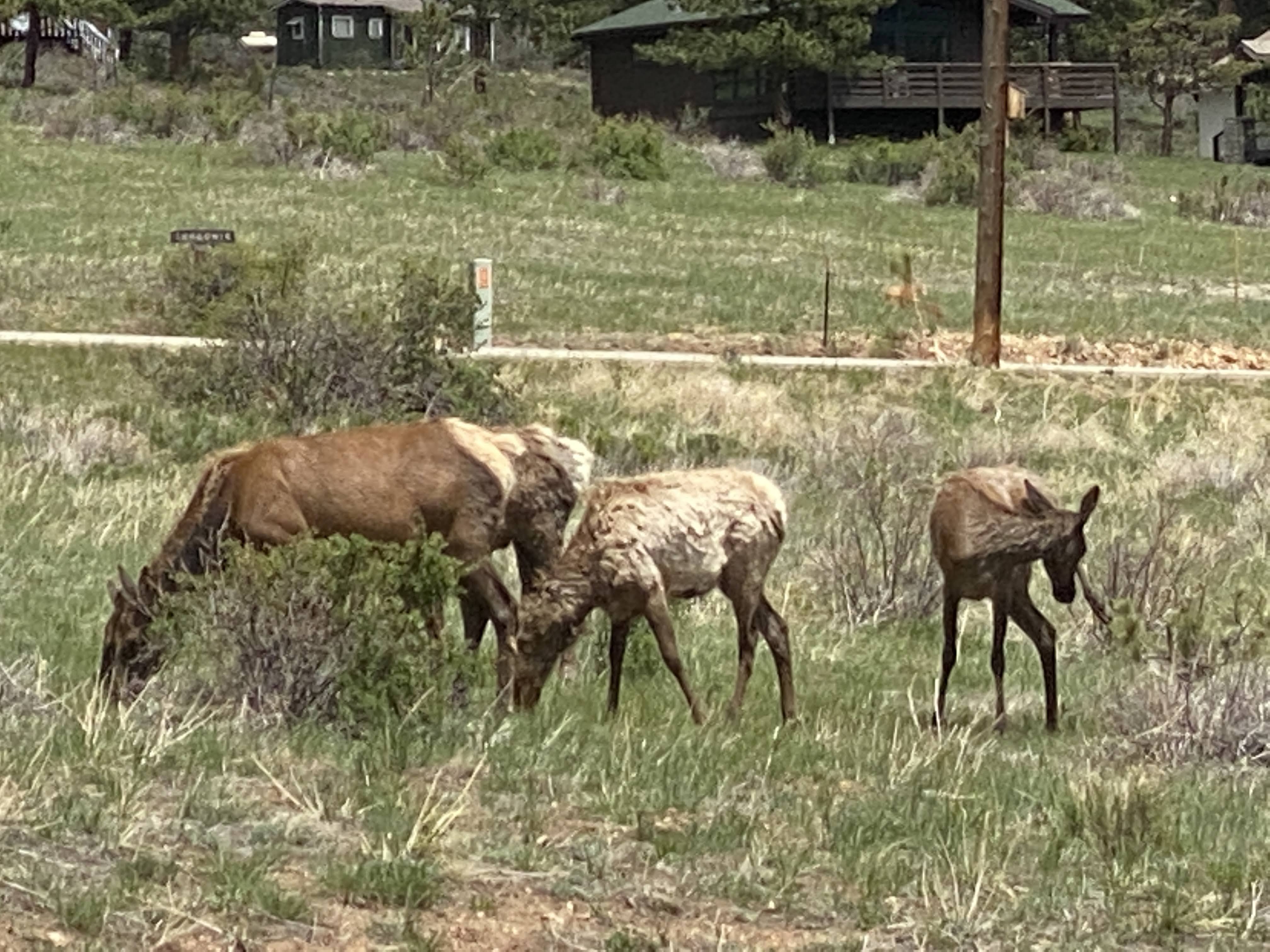
The rest of the drive down was uneventful. Near the park entrance we saw these funny looking animals…

We believe they are either mule deer or elk?

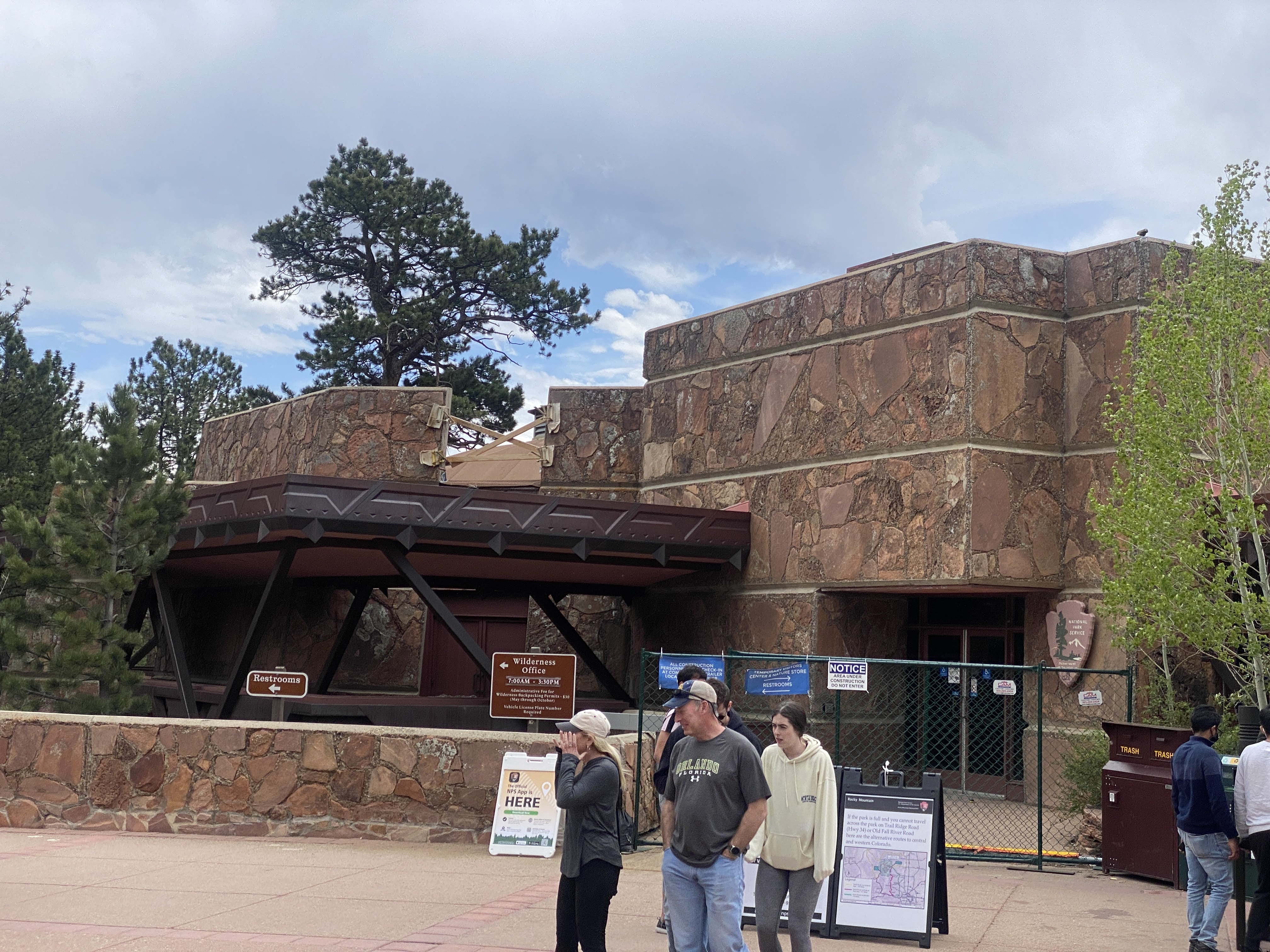
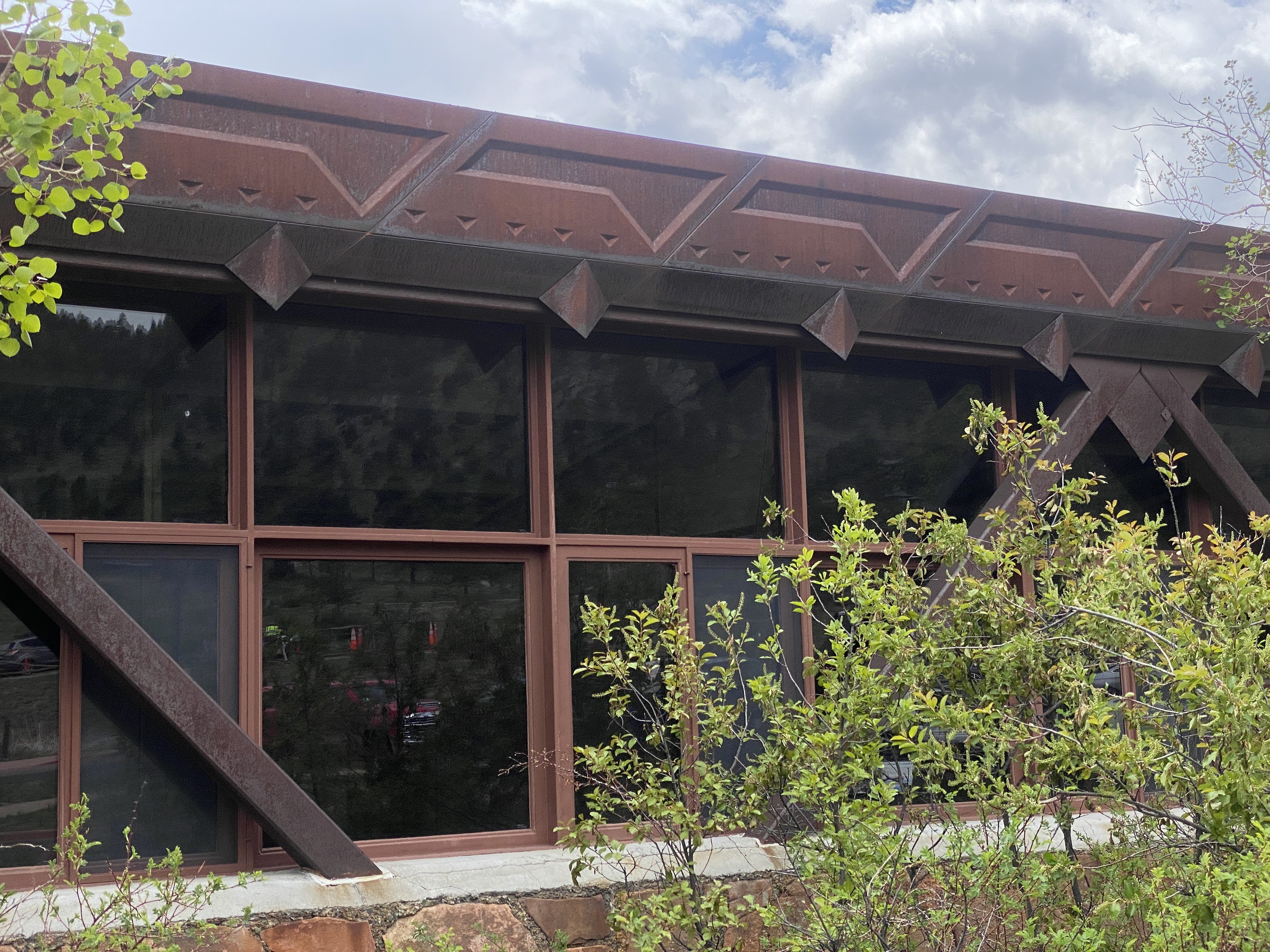
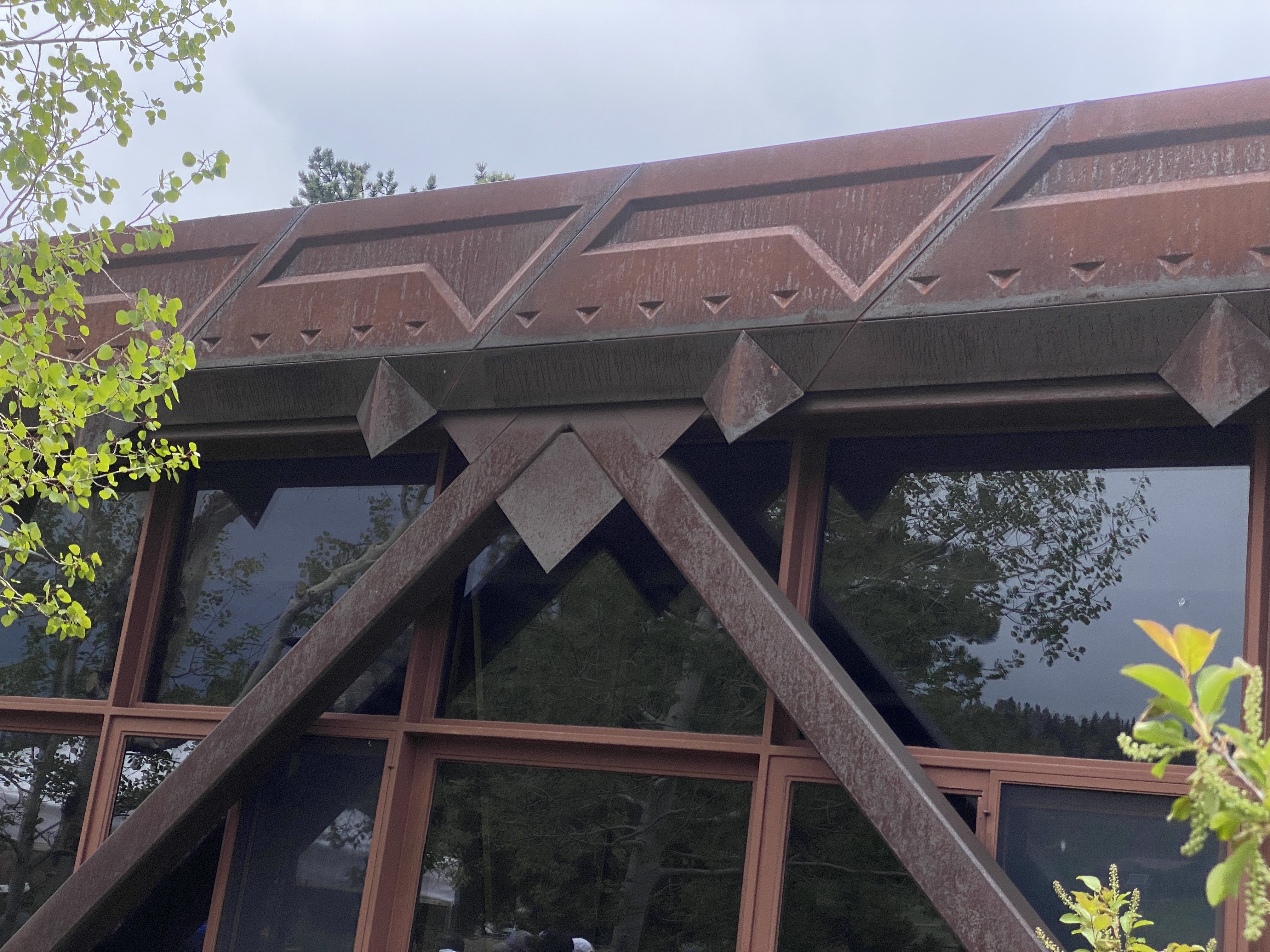
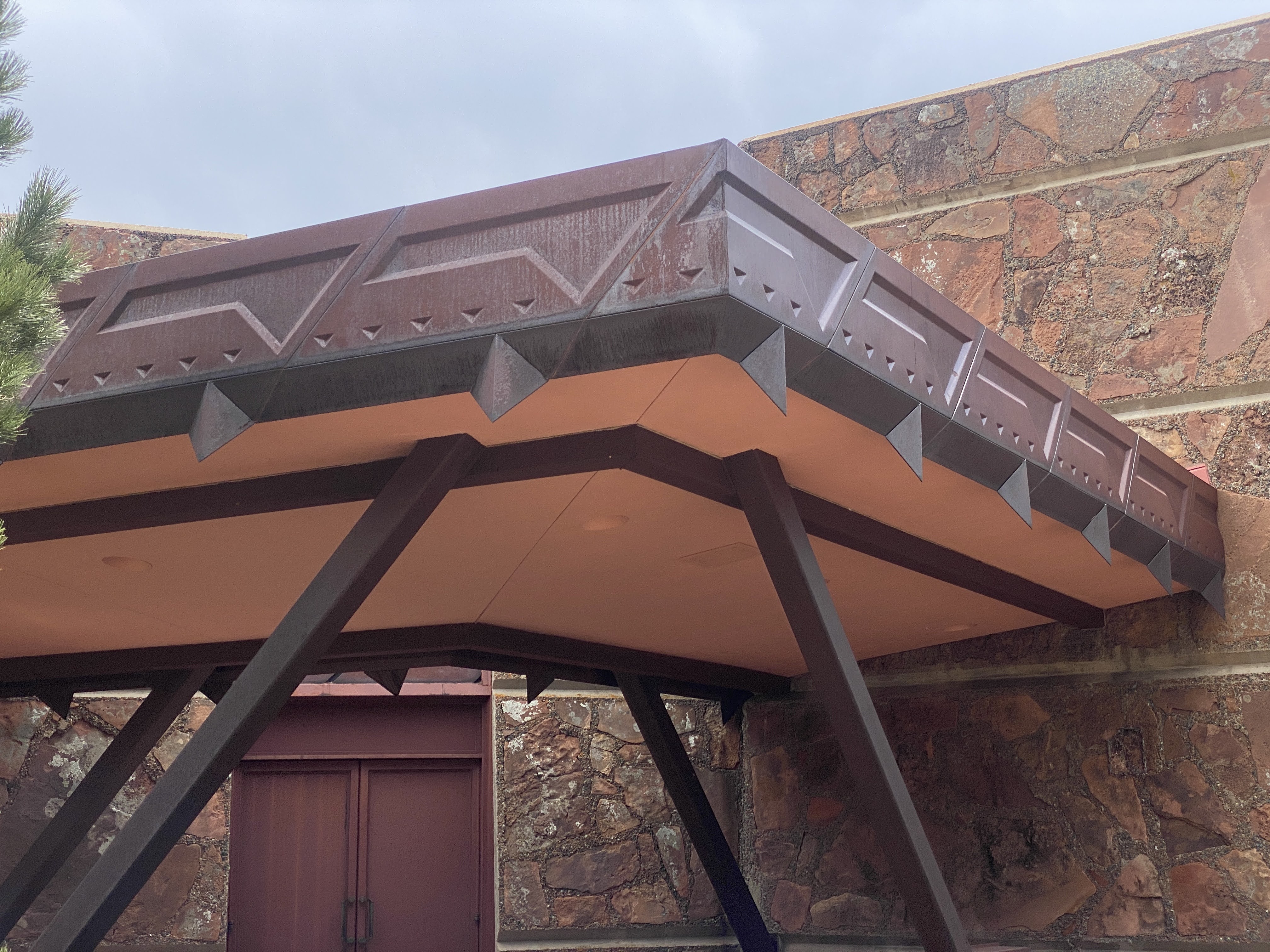
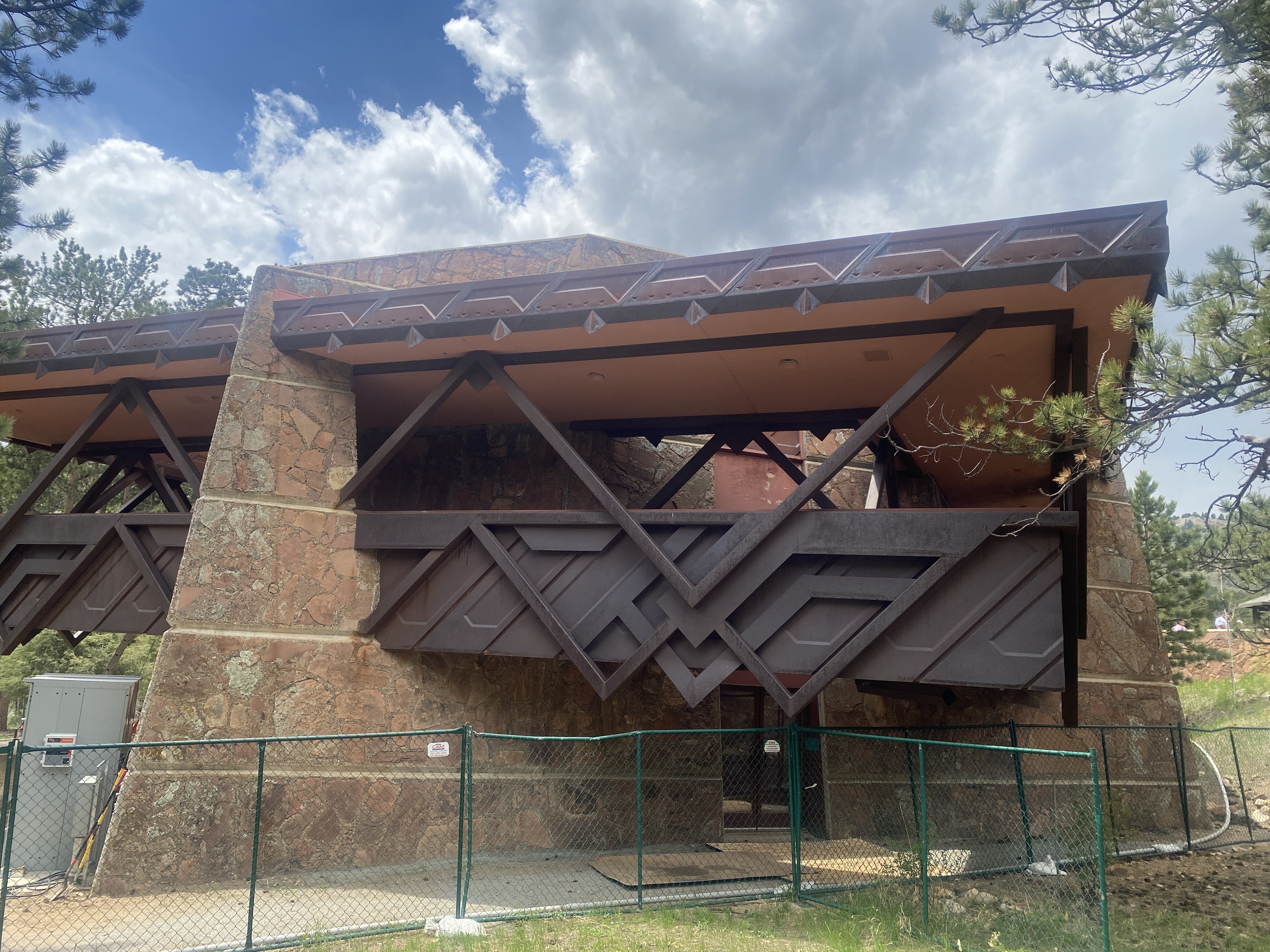
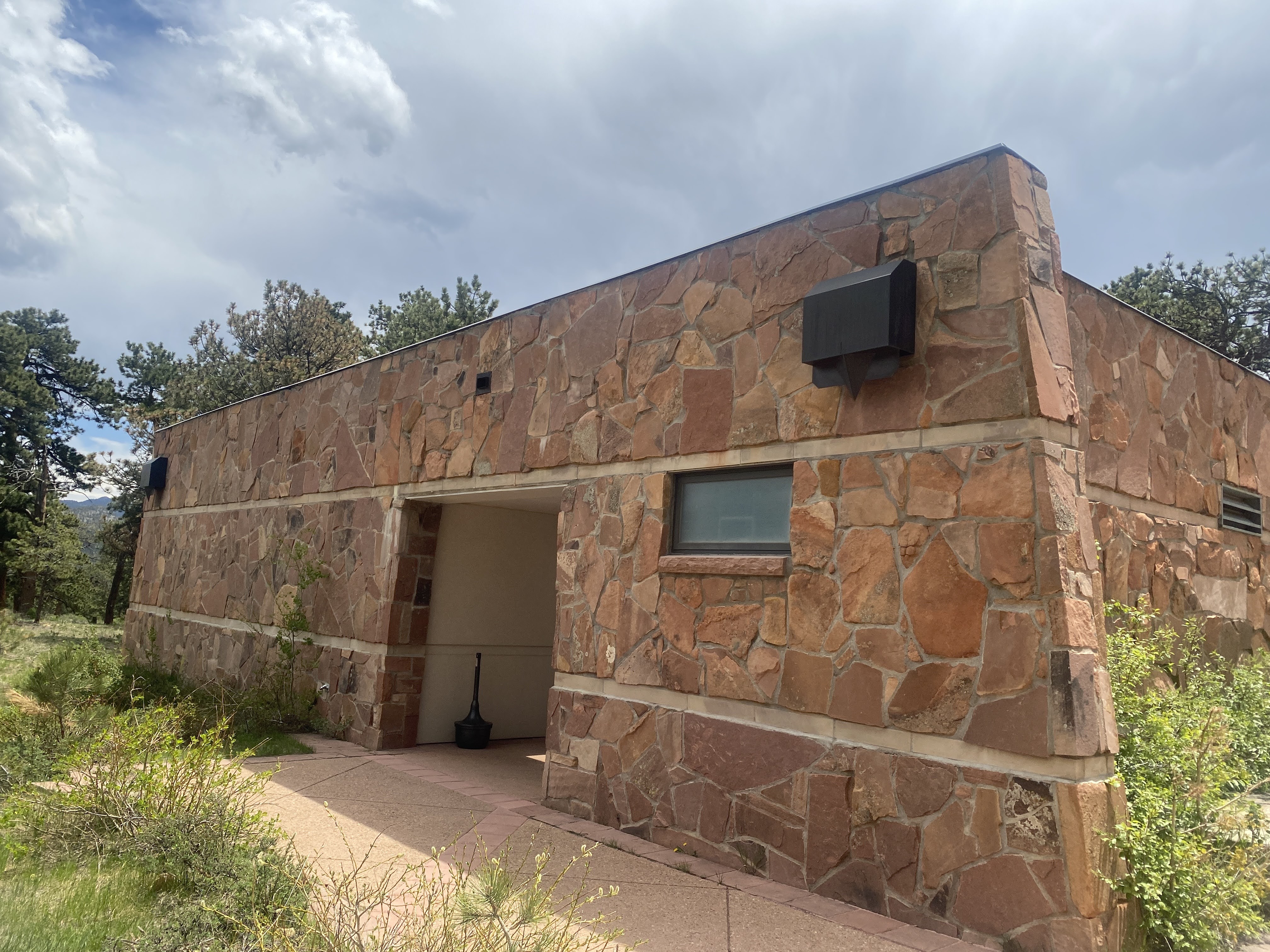
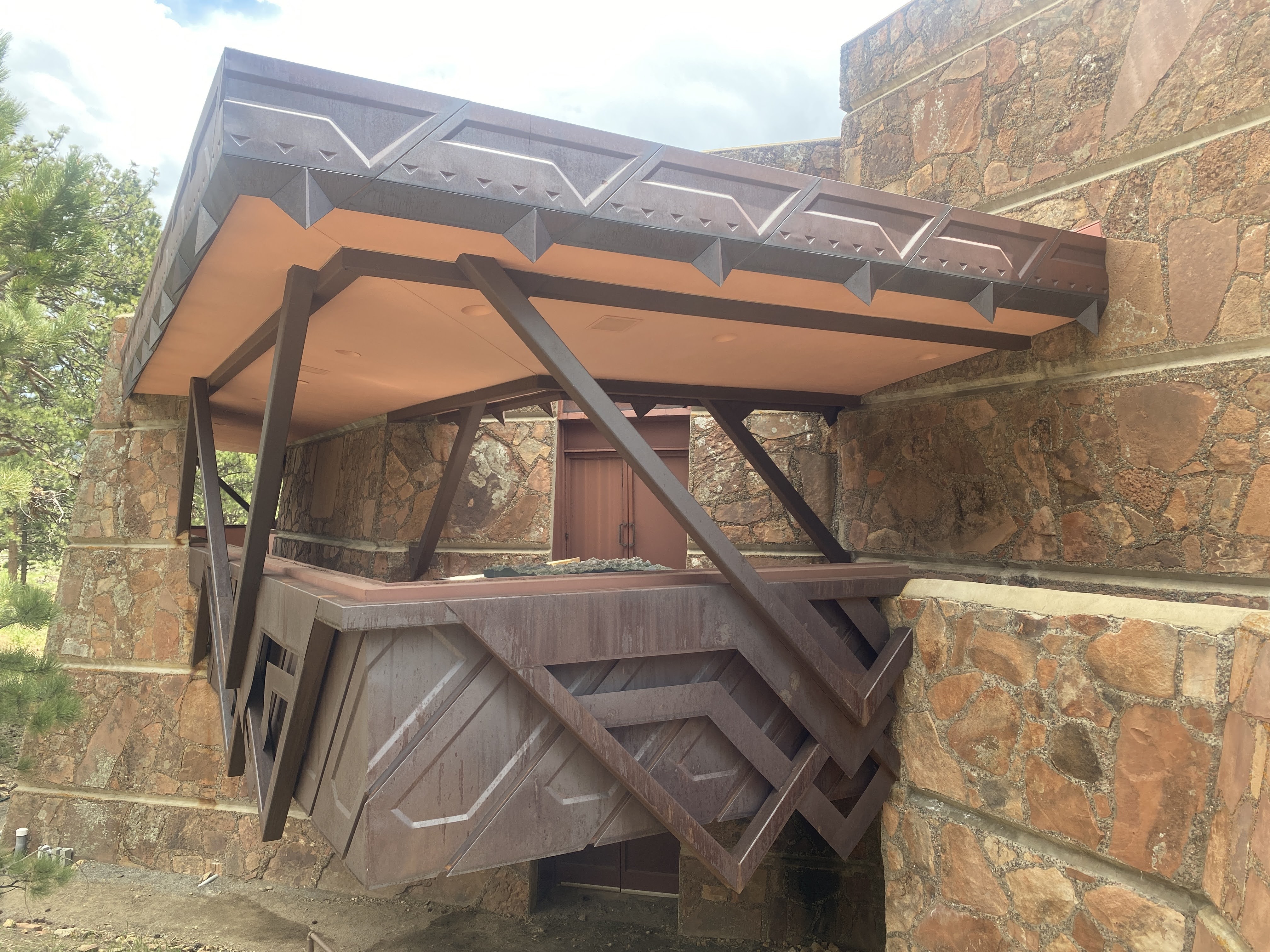
Quite serendipitously we stopped by the Beaver Meadows Visitor Center. I noticed the detailing…

Something seems familiar… I Googled it…

Beaver Meadows Visitor Center, also known as Rocky Mountain National Park Administration Building, is the park headquarters and principal visitors center of Rocky Mountain National Park. Completed in 1967, it was designed by Taliesin Associated Architects, and was one of the most significant commissions for that firm in the years immediately following the death of founder Frank Lloyd Wright. It was declared a National Historic Landmark in 2001.

Who knew!

So that concluded our time in Rocky Mountain National Park…

We had a drivers’ meeting to discuss our drive to Colorado Springs on Monday – Memorial Day. There are three pages of detailed driving instructions to travel the 145 mile route… Colorado roads must be amazing! (Apparently 20-30 miles of the 70 are under construction, so we are taking back roads…!

This evening, after the meeting, we returned to Bird and Jim, a local restaurant (“Colorado Cuisine”). This time we brought friends… We enjoyed craft cocktails, Smoked Pheasant Chowder, Short Rib Sliders, Colorado Trout, Beef Tenderloin, and something they called the “Carnivore Plate” – Elk Tenderloin, Lamb T-bone, and Wild Game Sausage. And a bottle or two of wine.

And an enjoyable time was had by all…
2021-05-28 – Springtime in the Rockies caravan… Estes Park, CO – Day 2 – Rocky Mountain National Park

Today we enter Rocky Mountain National Park.

Rocky Mountain National Park is located approximately 76 mi northwest of Denver in north-central Colorado, within the Front Range of the Rocky Mountains. The park is situated between the towns of Estes Park to the east and Grand Lake to the west. The eastern and western slopes of the Continental Divide run directly through the center of the park with the headwaters of the Colorado River located in the park’s northwestern region.[6] The main features of the park include mountains, alpine lakes and a wide variety of wildlife within various climates and environments, from wooded forests to mountain tundra.

The Rocky Mountain National Park Act was signed by President Woodrow Wilson on January 26, 1915, establishing the park boundaries and protecting the area for future generations.[3] The Civilian Conservation Corps built the main automobile route, Trail Ridge Road, in the 1930s.  In 1976, UNESCO designated the park as one of the first World Biosphere Reserves. In 2018, more than 4.5 million recreational visitors entered the park.  The park is one of the most visited in the National Park System, ranking as the third most visited national park in 2015.  In 2019, the park saw record attendance yet again with 4,678,804 visitors, a 44% increase since 2012.

The park has a total of five visitor centers, with park headquarters located at the Beaver Meadows Visitor Center—a National Historic Landmark designed by the Frank Lloyd Wright School of Architecture at Taliesin West. National Forest lands surround the park on all sides.

Today is the beginning of the summer season in the park. To control the crowds you must make a reservation to enter the park. We had procured a 9:00 am entrance time to go to Bear Lake, an alpine lake with a lovely walking/hiking path around it. We waited in three lines of cars for over 1/2 hour before we finally arrived at the entrance station.

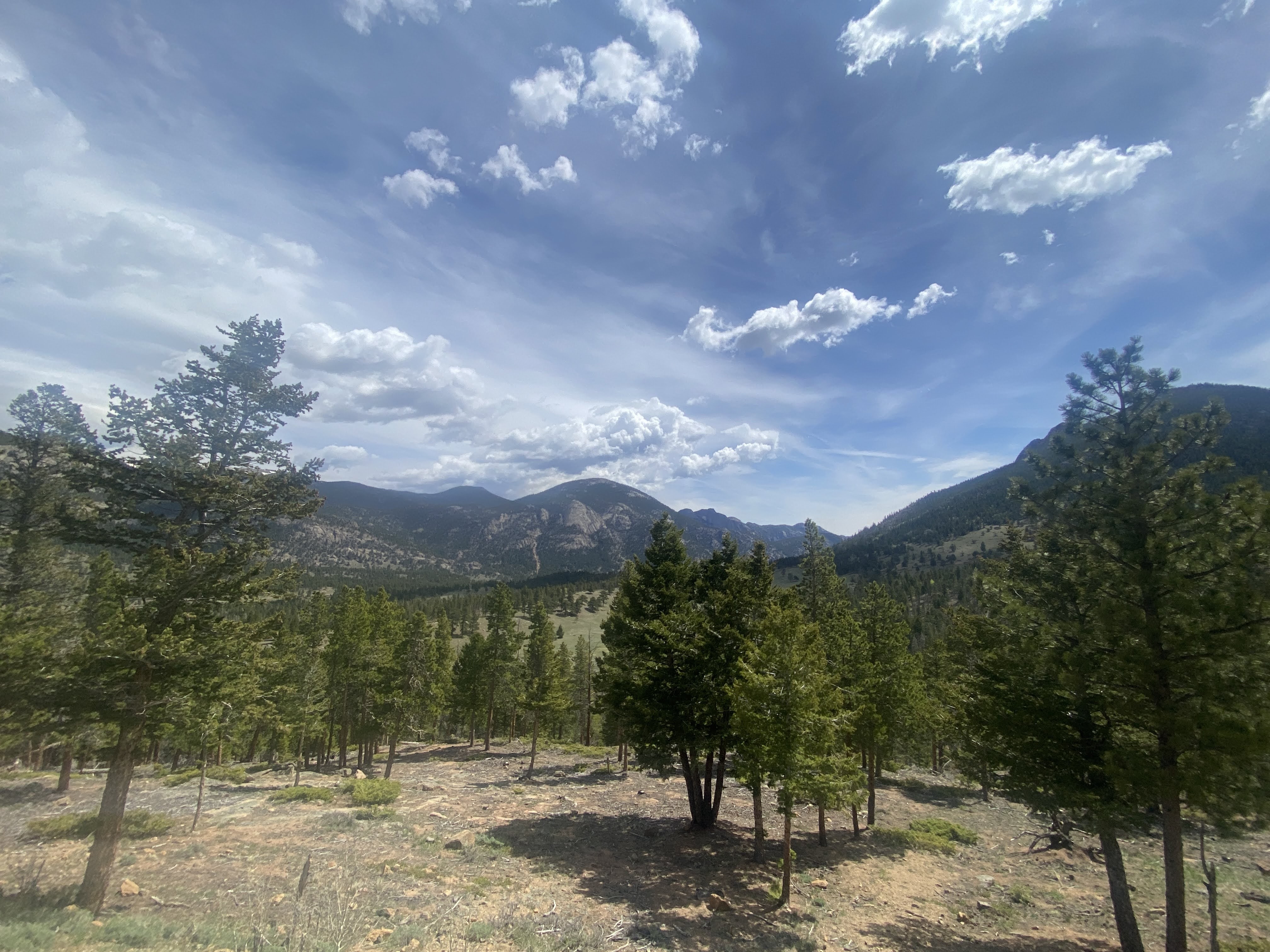
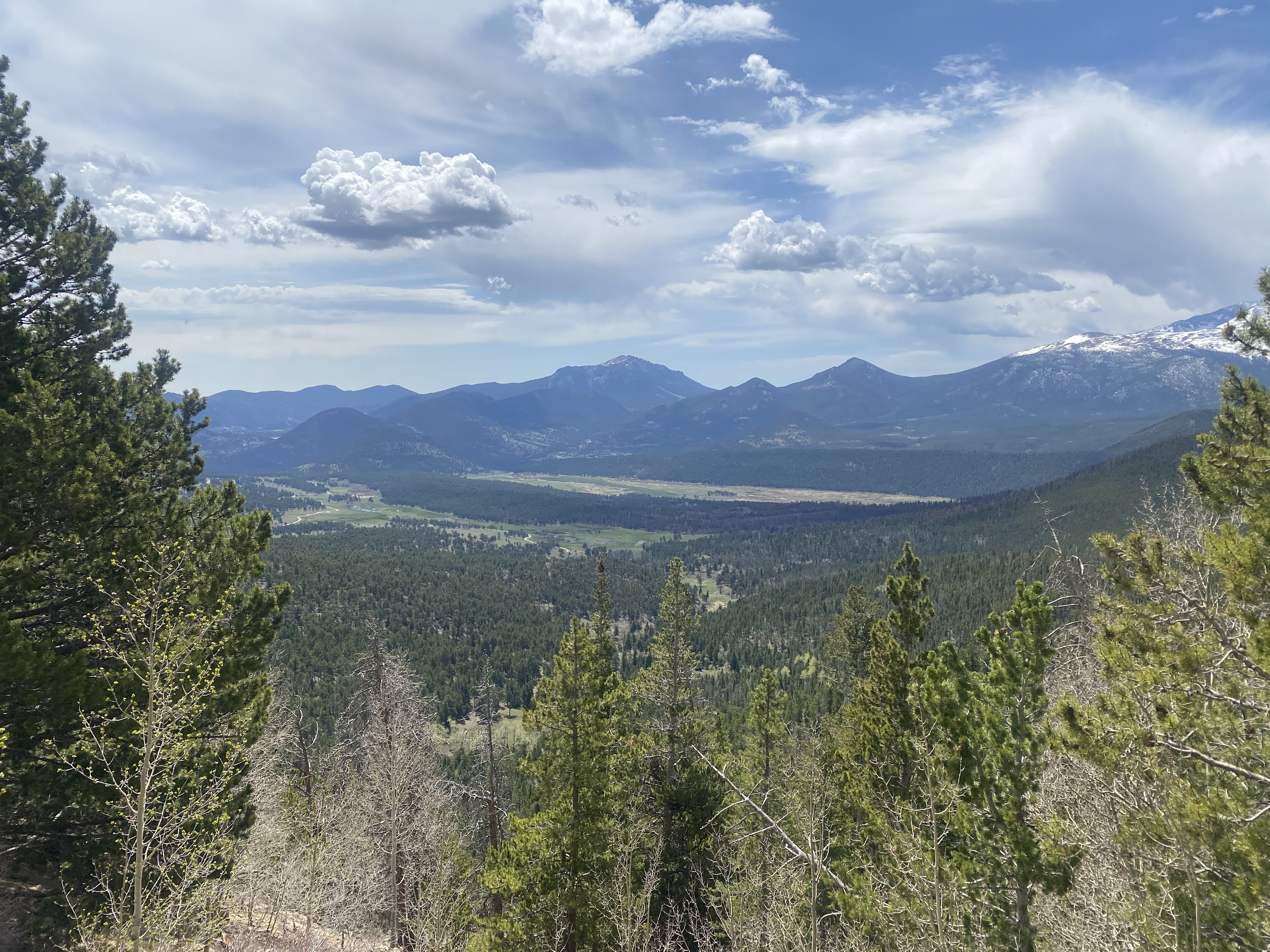
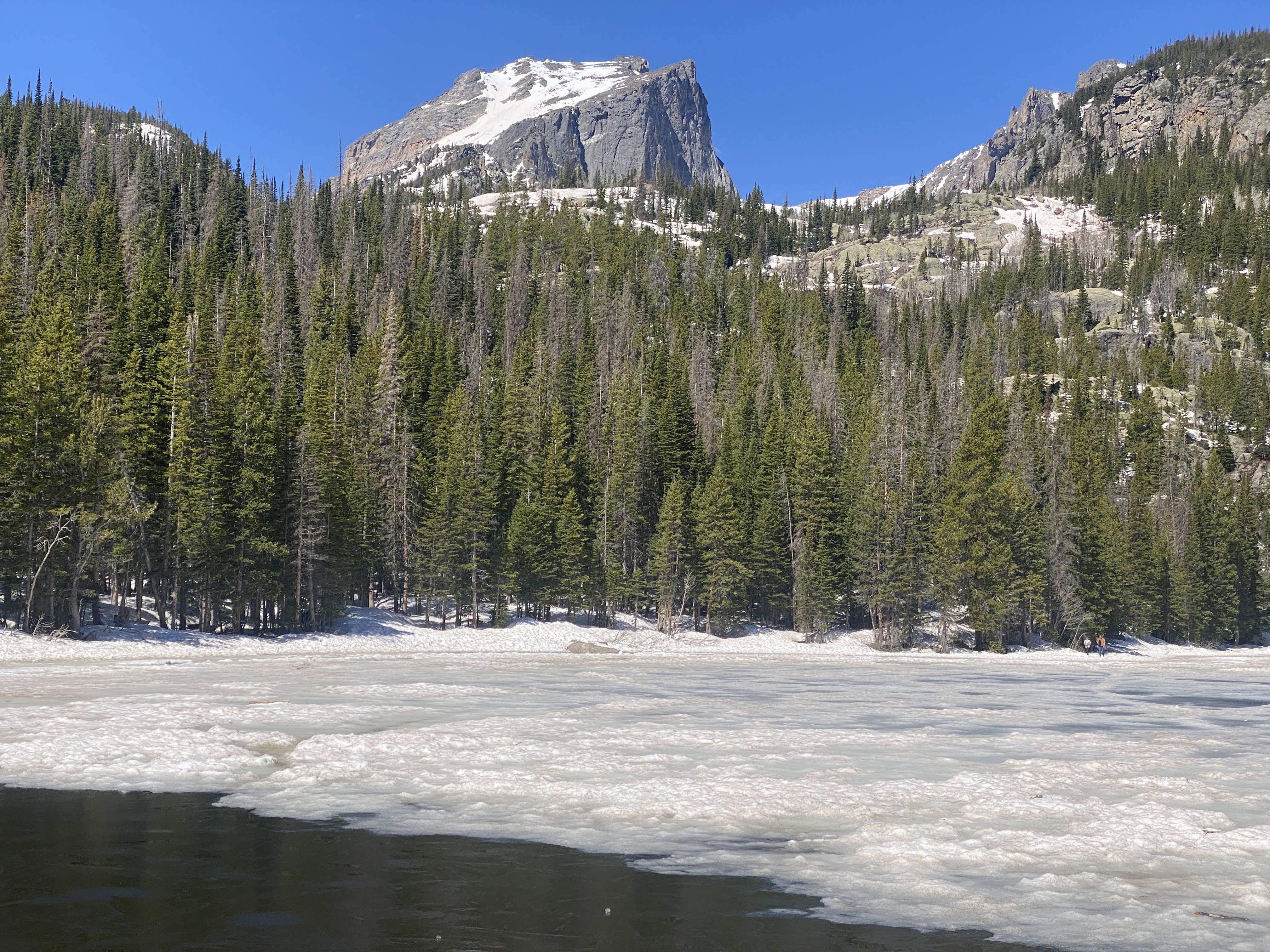
Once in the park we again saw these magnificent mountain peaks…

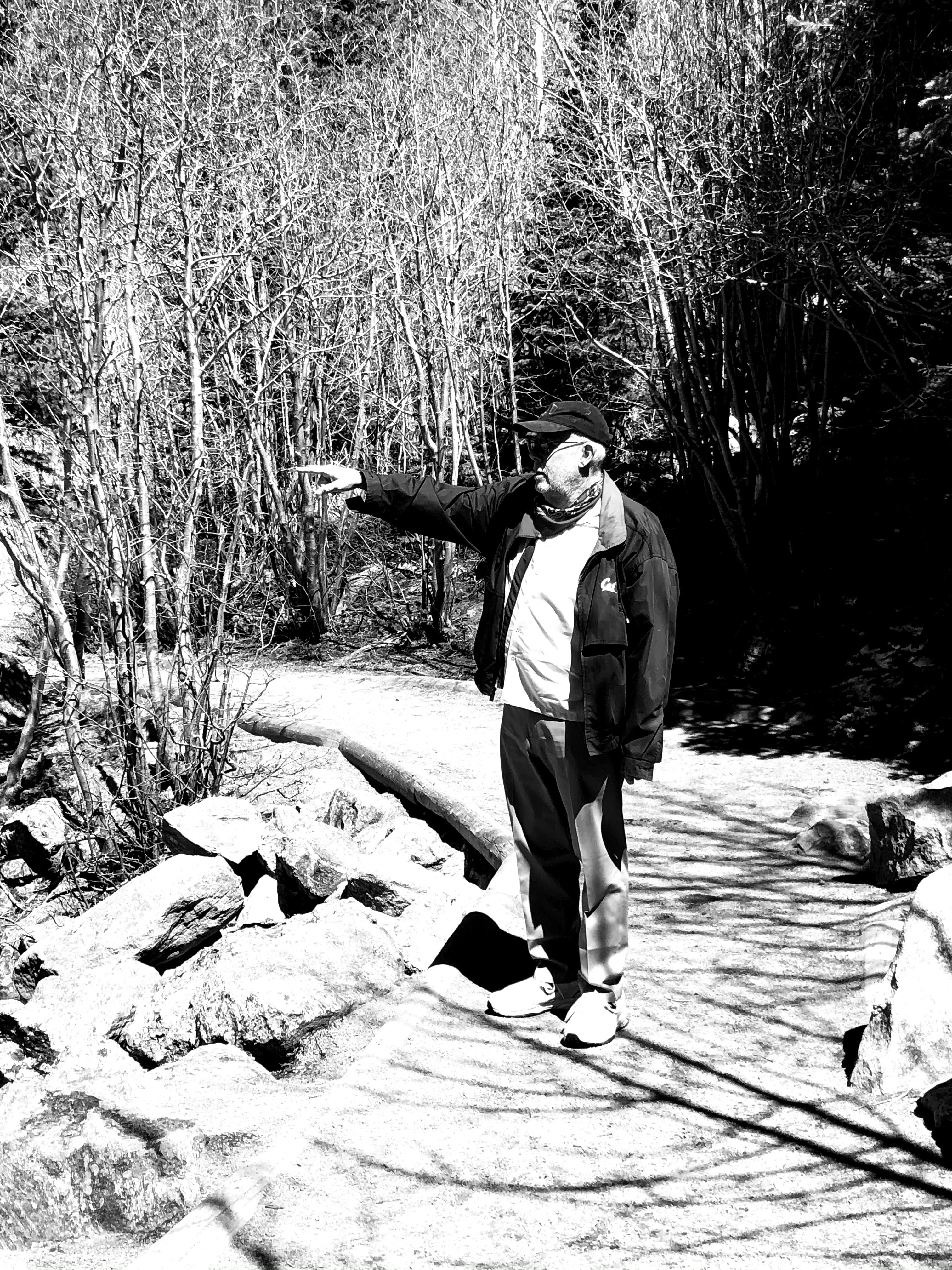
Once at Bear Lake we had friends take our picture… While the temperatures were in the mid-60s, the wind was freezing…

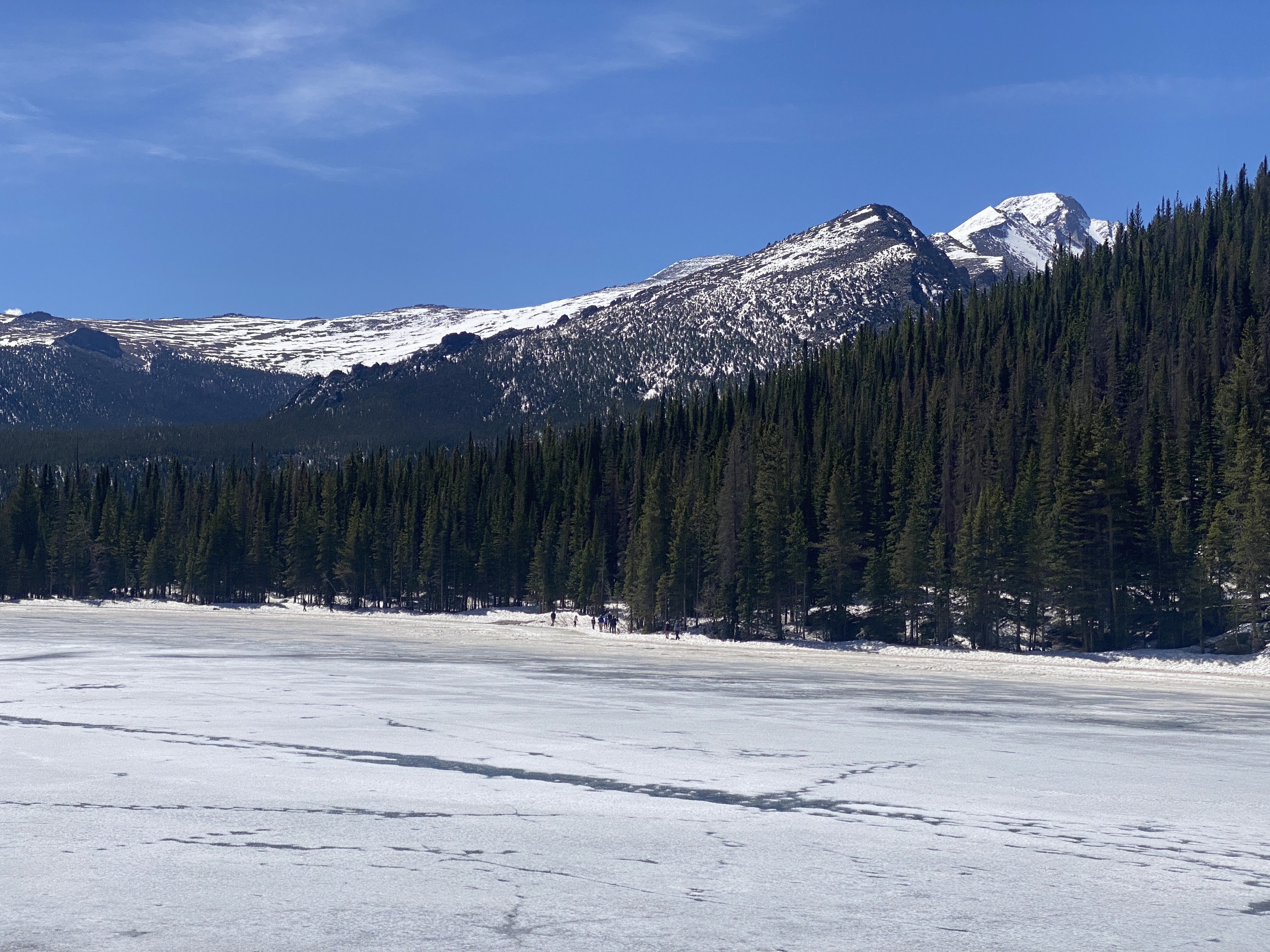
The lake is mostly frozen over. The path around the lake is mostly snow, slush, and ice, with rare patches of dirt, mud, and rocks.

This is what the path looked like most of the way around the lake:

After completing the Bear Lake loop we drove a short way to Sprague Lake; this is Glacier Creek, which feeds into the lake.:

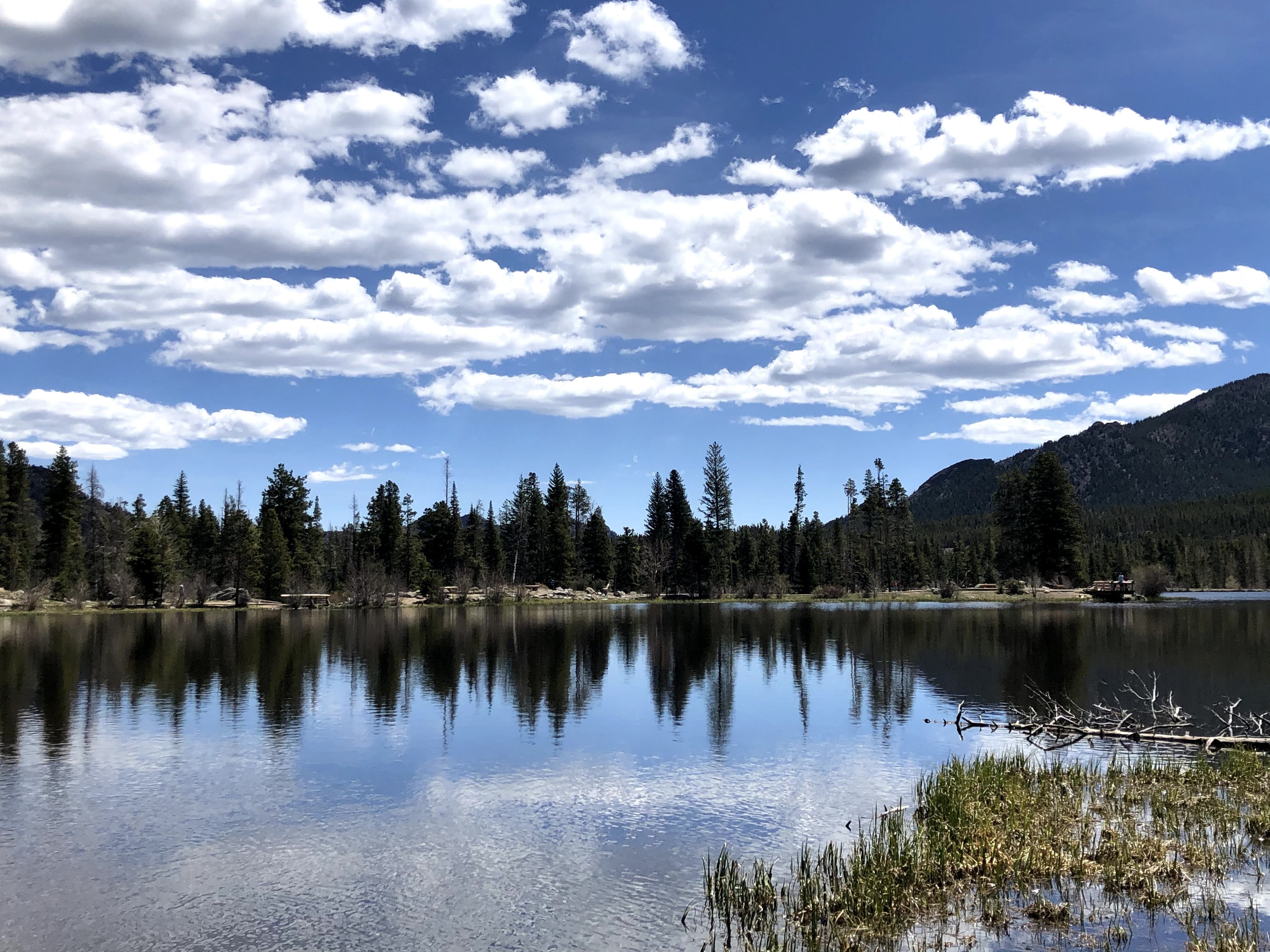
Spraugue Lake is named after Abner Sprague, one of the original settlers in the Estes Park area. Sprague built a homestead in Moraine Park in 1874 that eventually grew into a hunting and fishing lodge and dude ranch. He dammed the creek to create the lake so his guests could enjoy fishing and boating. The lodge operated from 1910 to 1940, preceding the actual National Park.

We enjoyed watching the ducks dive for food…

The lake offered great views all around. It was an easy 3/4 mile, with no ice and snow underfoot…

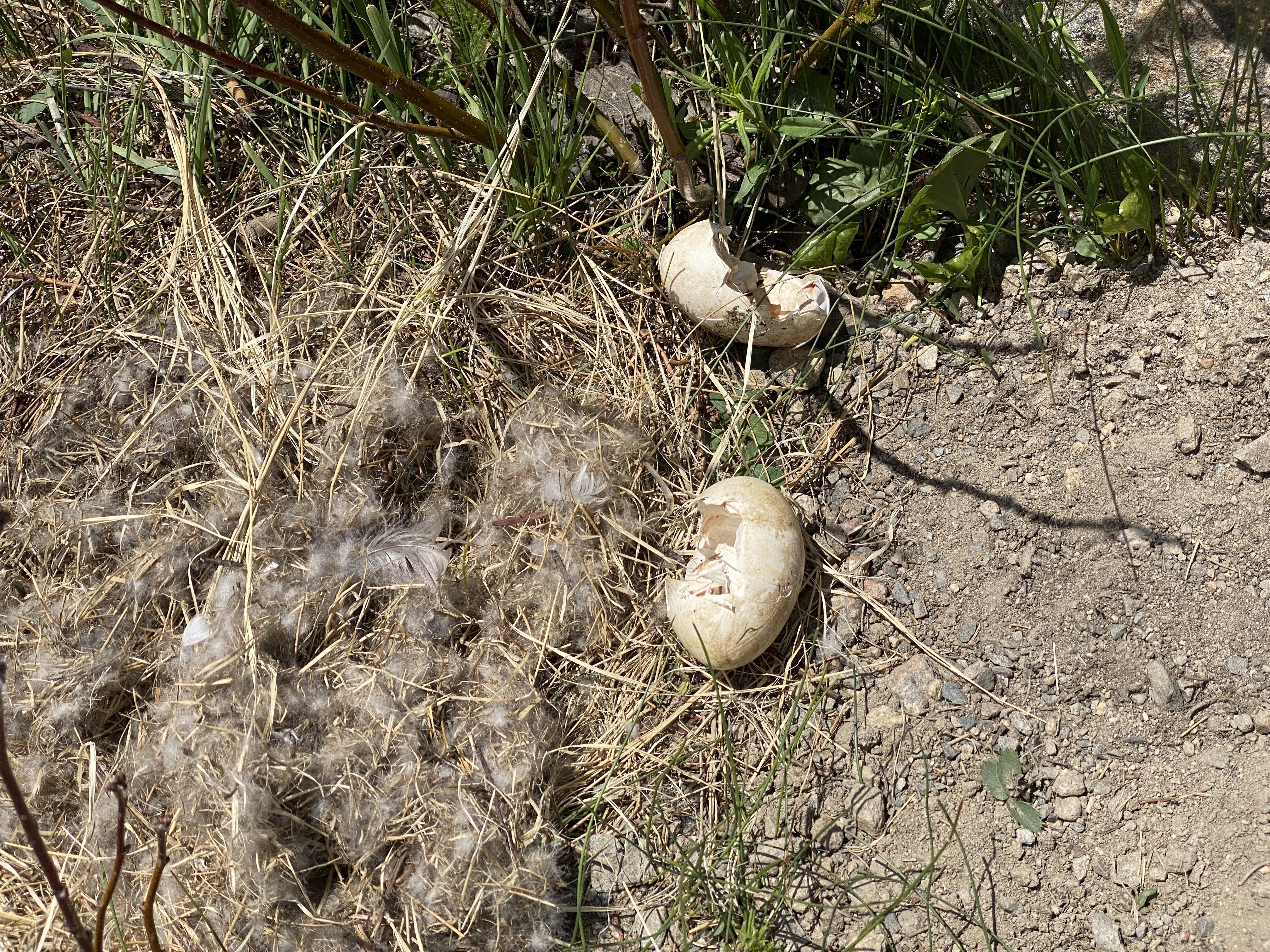
We don’t know what animal hatched out of these eggs… Maybe Elk? Moose?

After our time in the Park it was time for lunch! Bird and Jim’s serves “Colorado Cuisine”. Local ingredients, and creative recipes. We enjoyed a Smoked Pheasant Chowder and Short Rib Sliders…

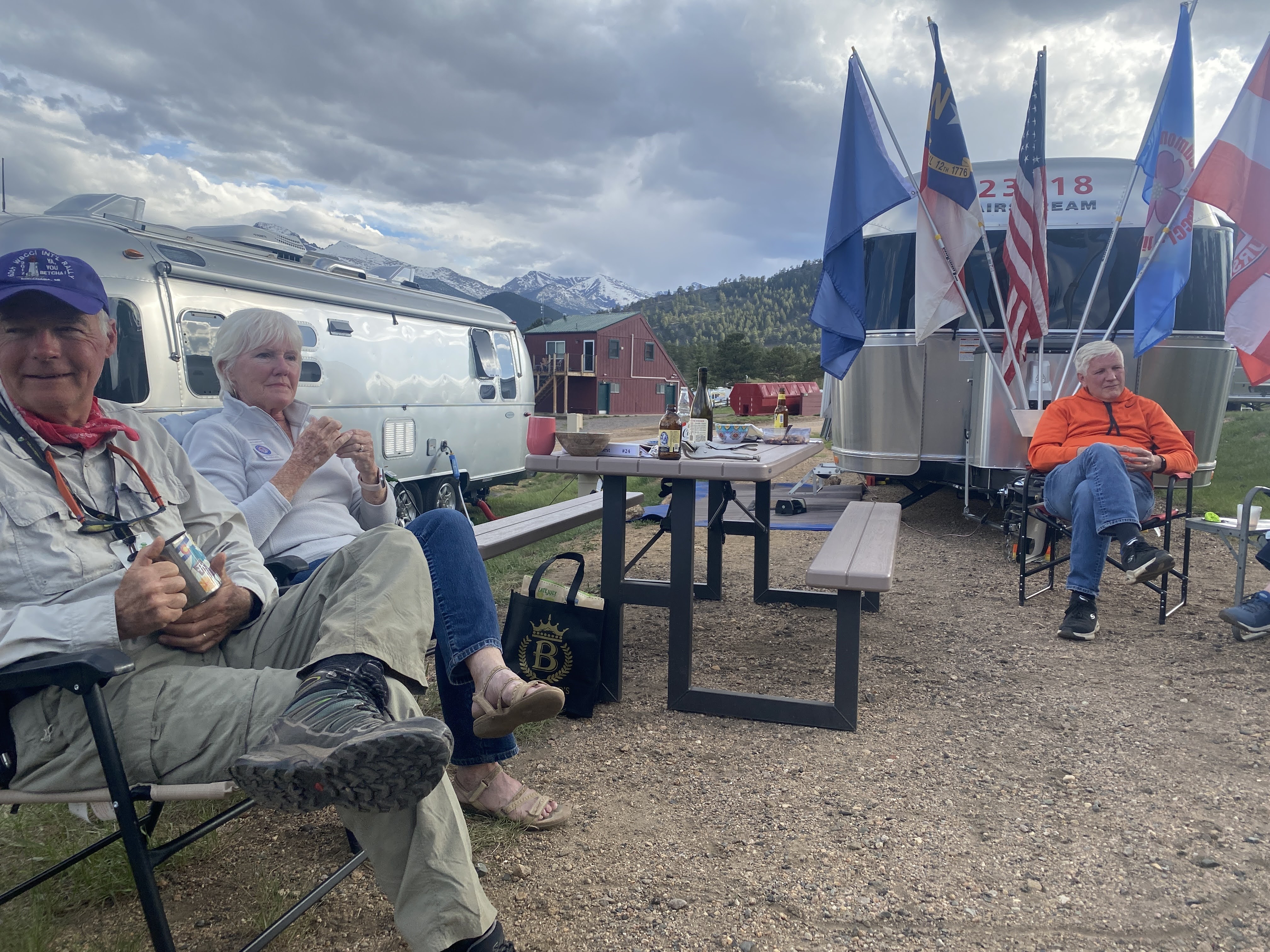
After lunch came a nap; then we had our first GAM – a “Get Acquainted Meeting”. We will have five of these, giving us all an opportunity to get to know each other even better…

After the GAM we walked around the pond, and returned to the Villa.

And an enjoyable time was had by all…

2019-06-01 – Traveling West – Eureka Springs, AR

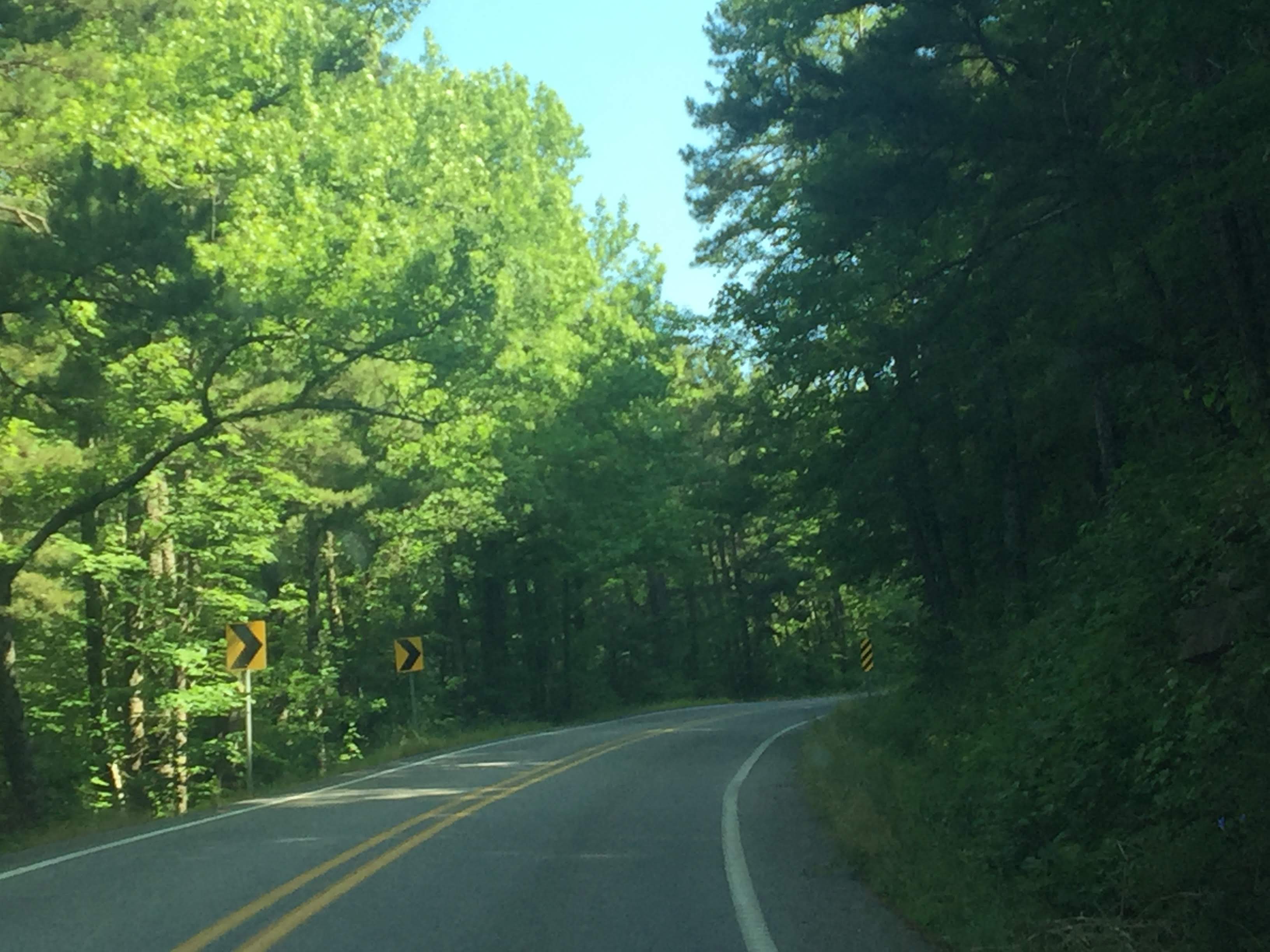
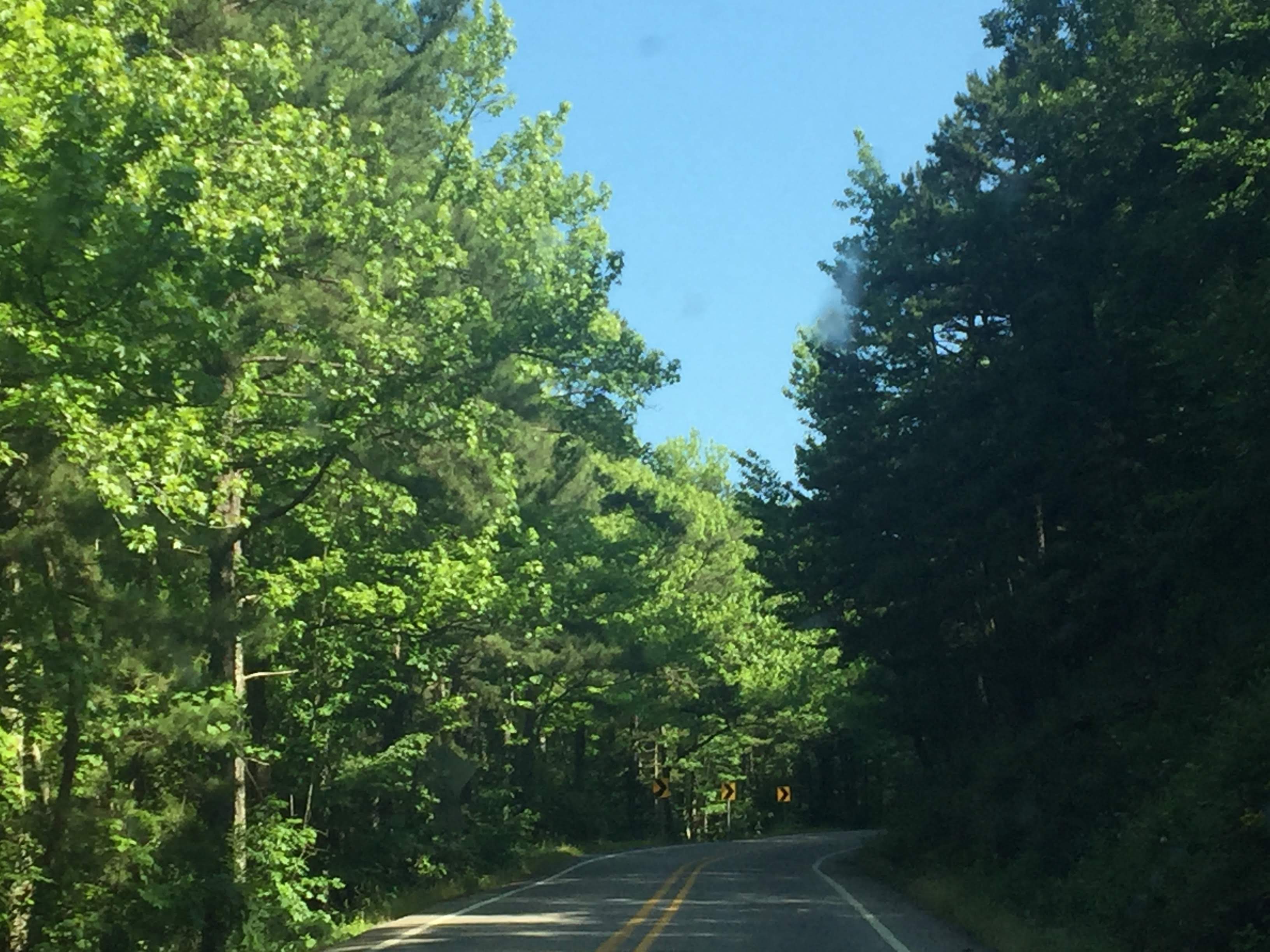
We left Little Rock about 8:00 am.  Arkansas is green…

img_9067img_9066

We were driving through the Ozarks National Forest…

img_9079img_9086img_9089img_9082

We stopped for a respite along the way… driving through windy, steep mountain roads is taxing, and relief was required…

img_9074

We arrived in Eureka Springs, and set up at the Green Tree Lodge and RV Park, a nice but basic RV park…

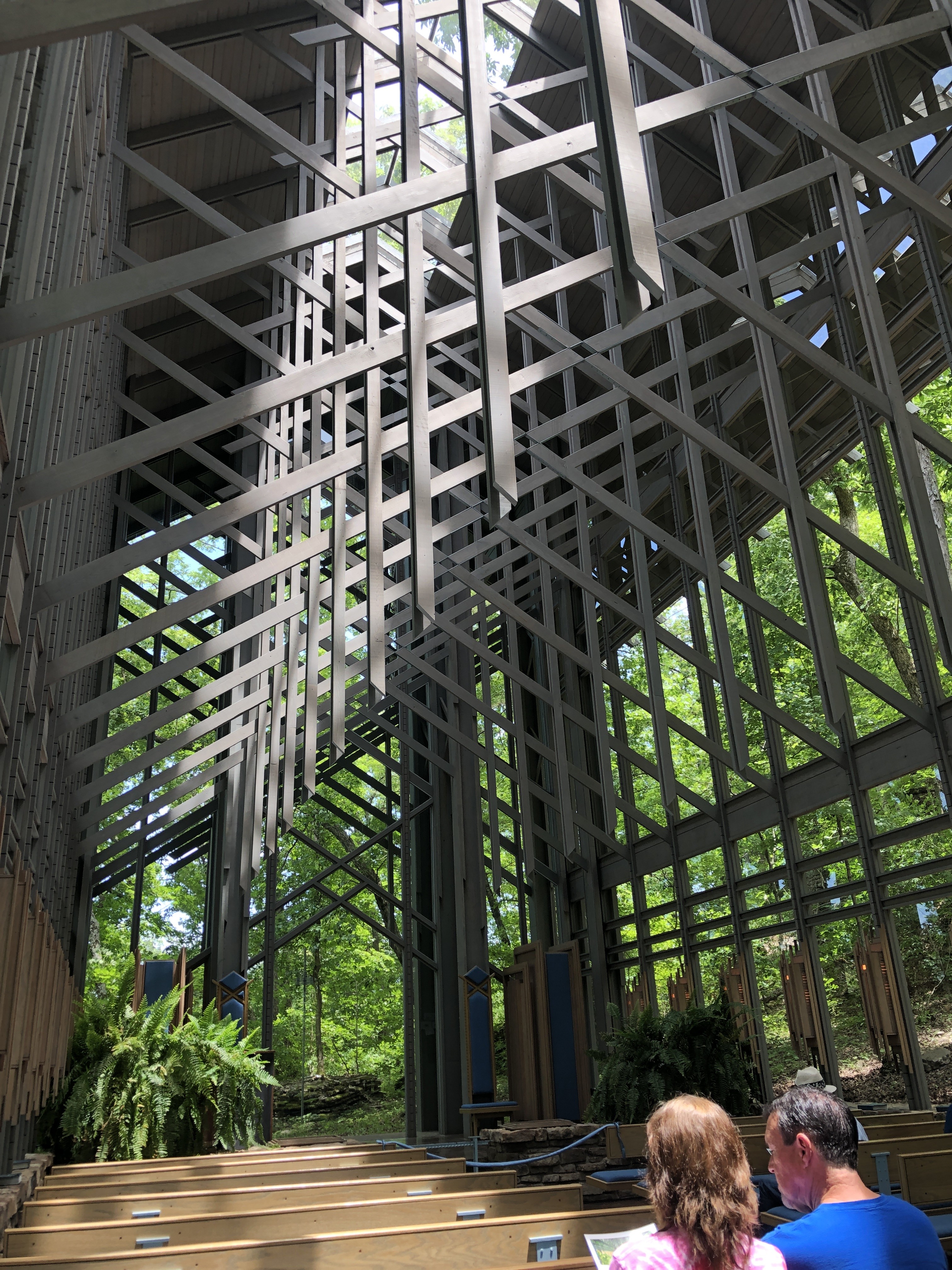
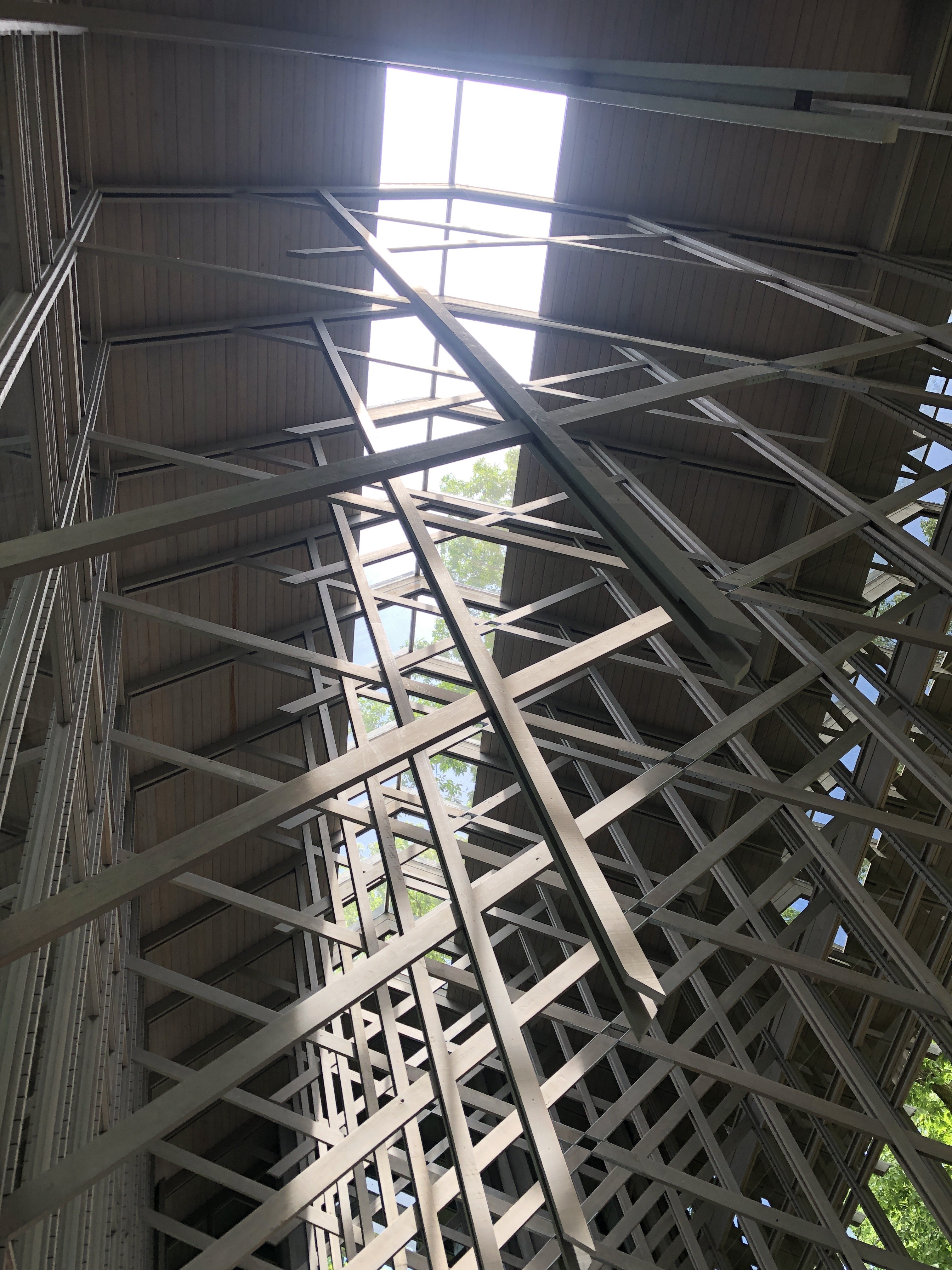
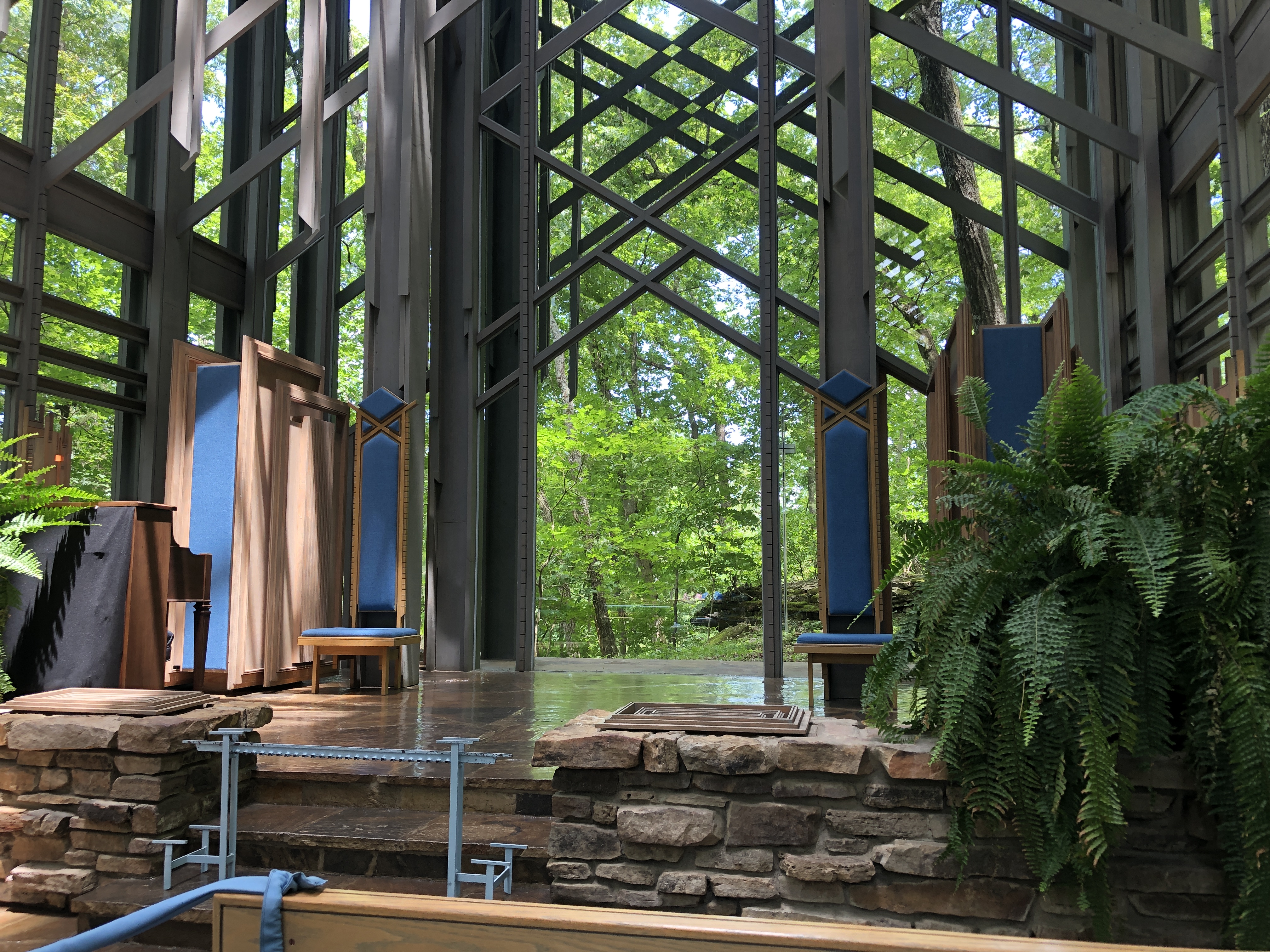
Then we drove one mile down the road to see the work of E. Fay Jones, an early apprentice of Frank Lloyd Wright at Taliesin, and a prolific architect and educator during his long career.  This is the Thorncrown Chapel:

img_3111img_3112img_9090

The interior is as spectacular as the exterior…

img_3113img_3114

The light fixtures along the “walls” are exquisite; the light is in the shape of the cross…

img_9091img_3116img_9092img_9096img_3121img_3119

As a true student of Frank Lloyd Wright, Fay’s chair designs are great, too!

img_3122

The rear is as great as the front…

img_3124

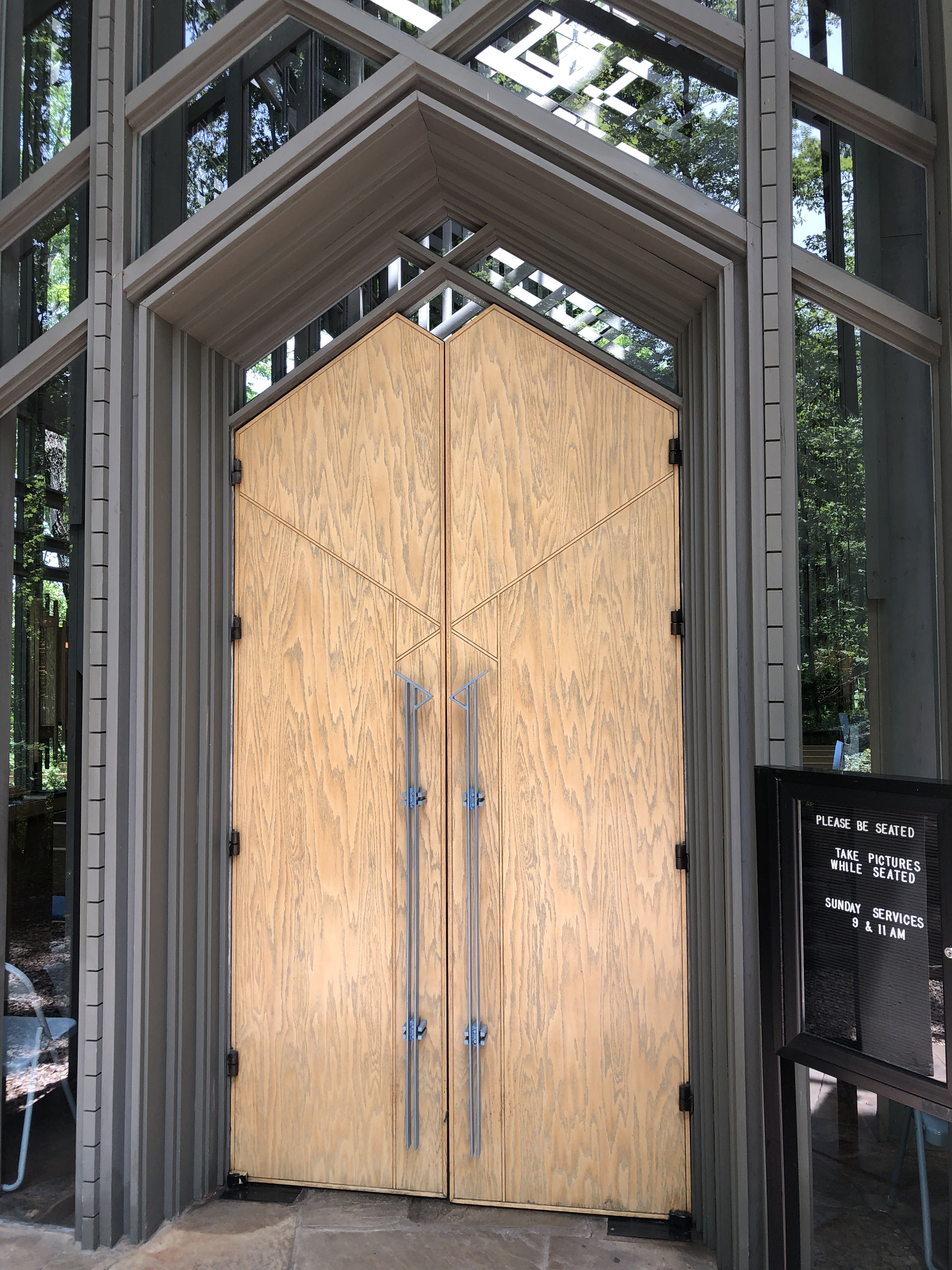
The attention to detail is astounding…

img_3128img_3129

The front door, repeating the diamond shape…

img_3135img_3136

The Thorncrown Chapel has won every architectural award imaginable… Just recently it was honored by leading the list of “40 under 40”, great architecture that has become iconic in less (fewer?) than 40 years…

The chapel is the dream of a man named Jim Reed, an Arkansas native, who bought this land in 1971 to build his retirement home.  Over the years he continually found strangers walking through the property enjoying the beautiful Ozarks hills.  Rather than fence them out, he decided to invite them in.  He and his wife decided to build a glass chapel as a place for visitors to relax in an inspiring way.  I think they have met their goal…

After such a beautiful place we drove to Eureka Springs and found the opposite:

img_9110

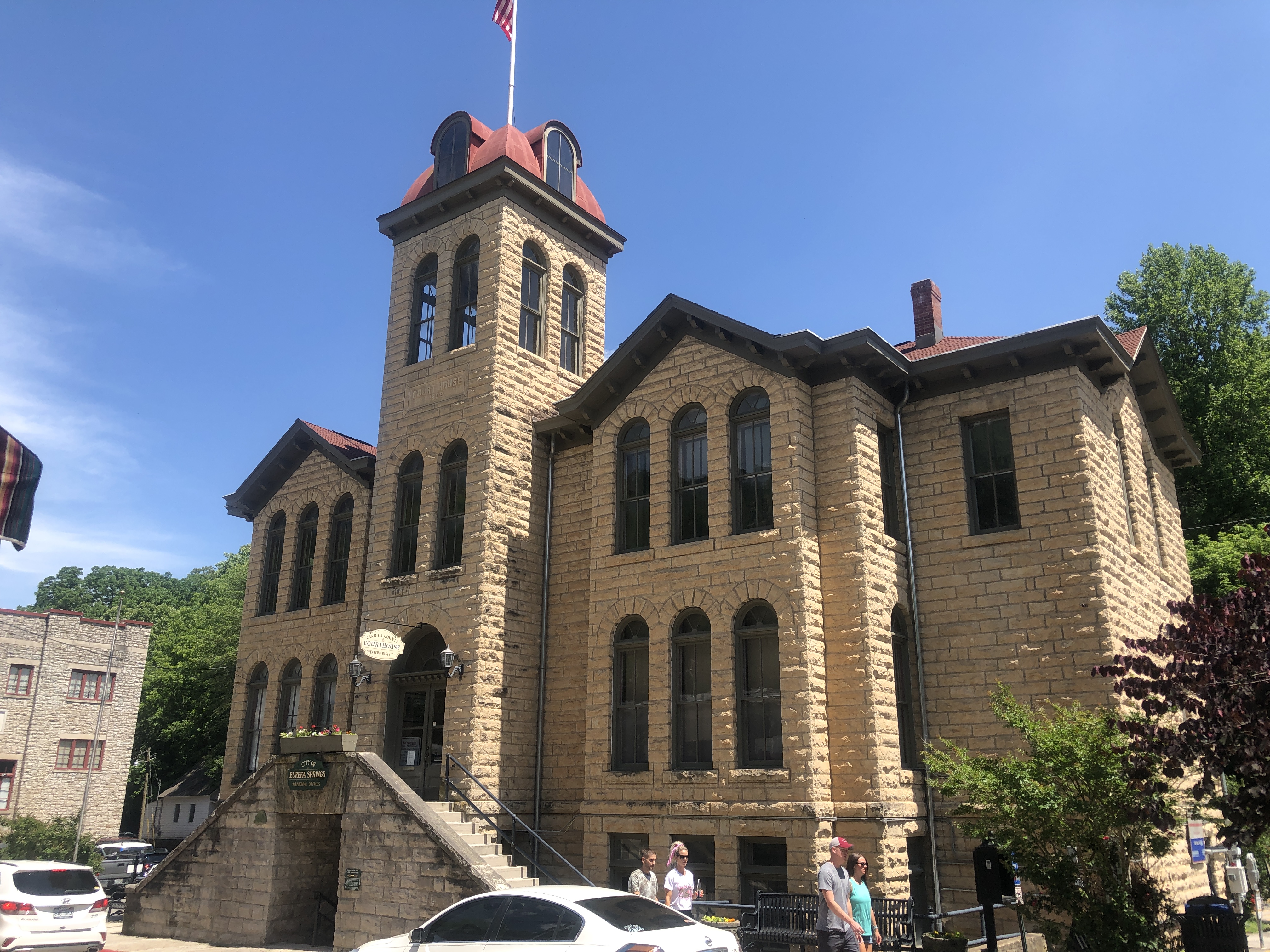
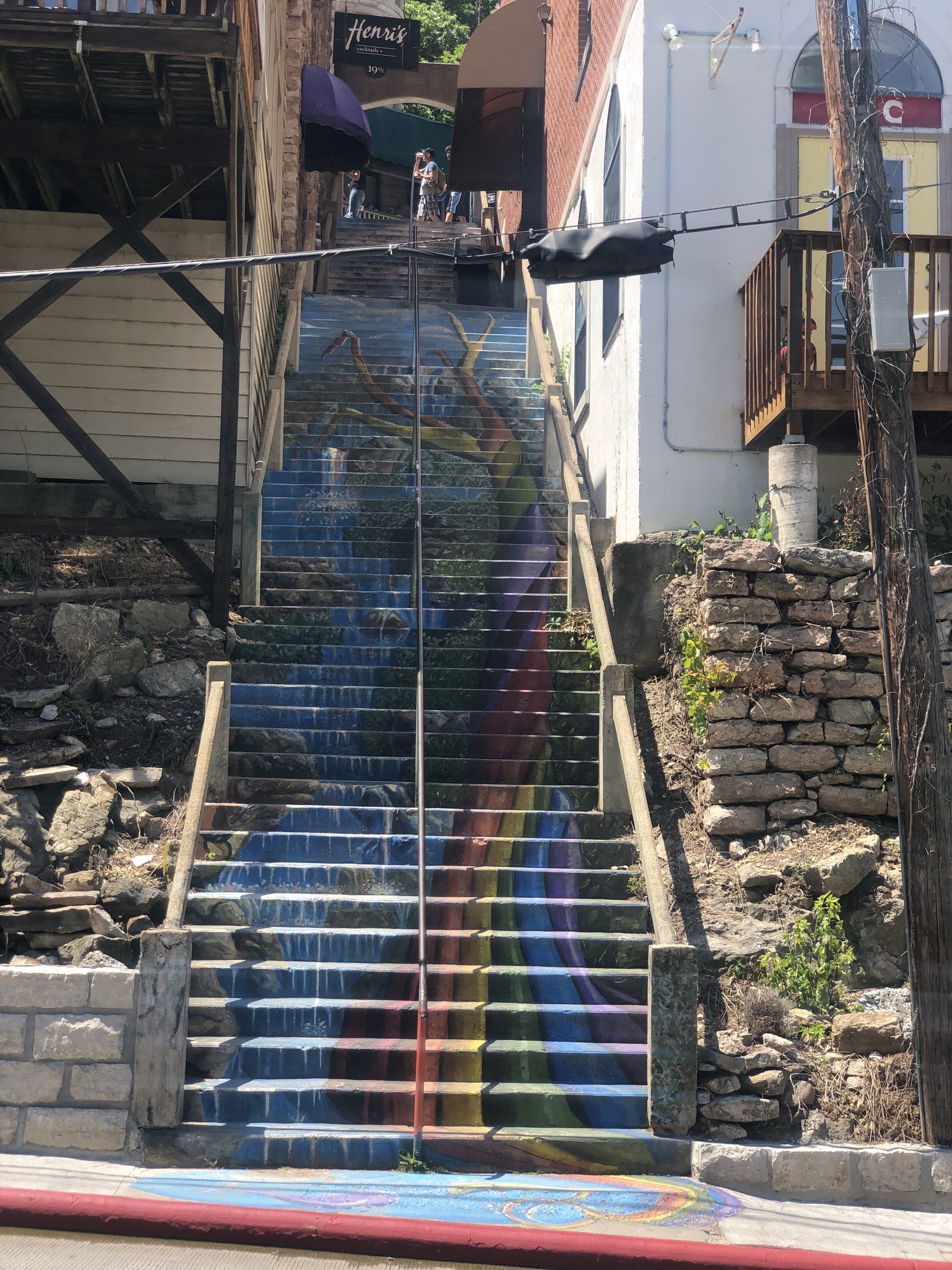
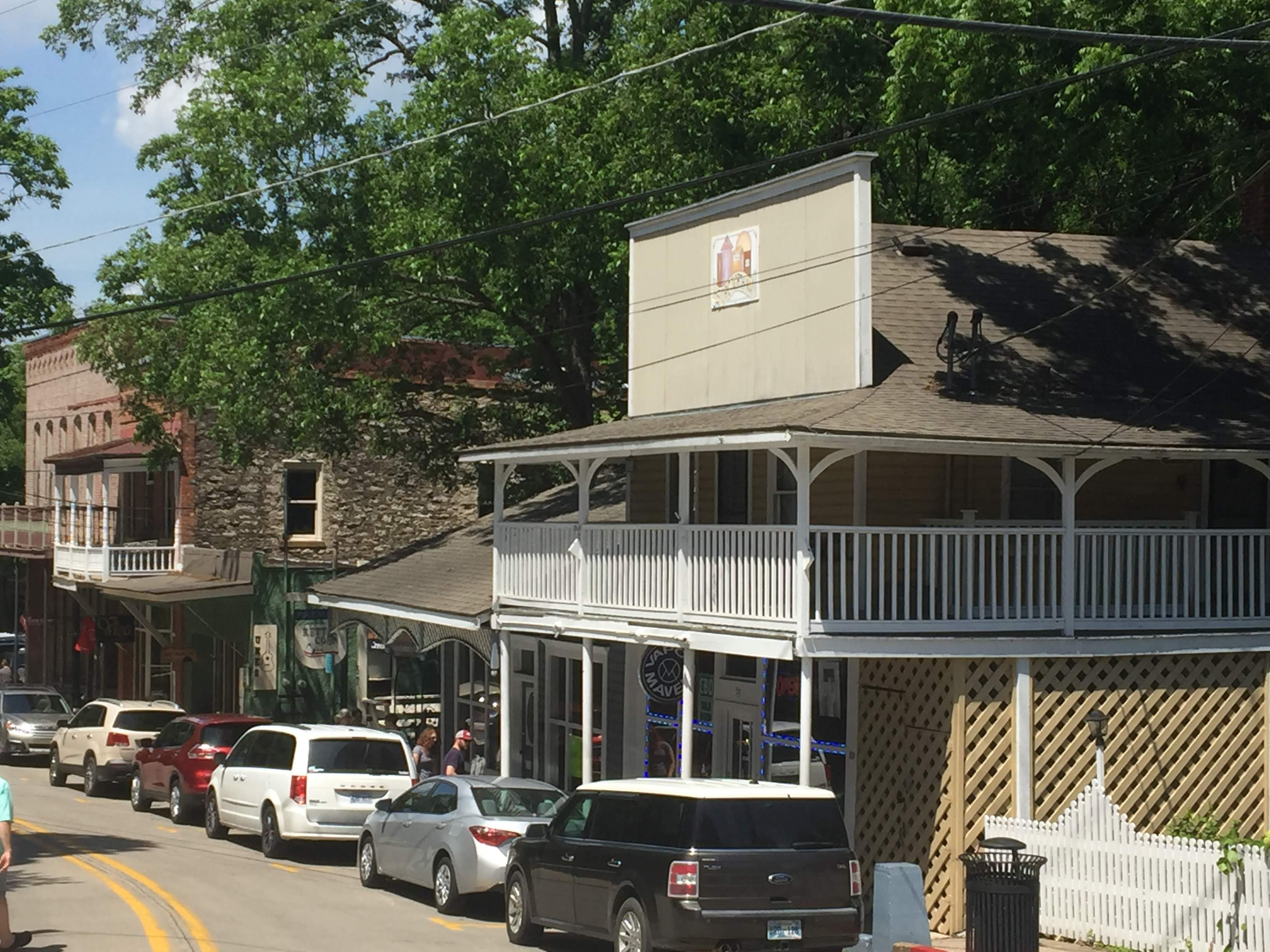
Eureka Springs was hot, noisy, crowded, and full of bikers and tourists.  There was some festival going on, although we never quite determined what it was.  The town is very historical, much like Bisbee, AZ, but the tourist factor rivaled Fredericksburg, TX, (and Graceland…)

img_3137img_3138img_9111

Eureka Springs was a late 19th century boom town which grew rapidly based on the water from their many springs.  All the quacks and snake oil salesmen came to town to sell magic water to cure everyone’s ills… The town suffered a bit when the Great Fire of 1888 burned it to the ground, but it was quickly rebuilt and grew to a population of over 4,000.  Today it has a population of about 2,000, but the historic downtown itself is nothing but biker bars and trinket shops… We did enjoy a good walk and we hope to return tomorrow for dinner at a highly rated French bistro…

As is our custom, we returned to the Villa for Happy Hours and a light supper; an enjoyable time was had by all…

2019-06-03 – Traveling West – Eureka Springs, AR to Oklahoma City, OK

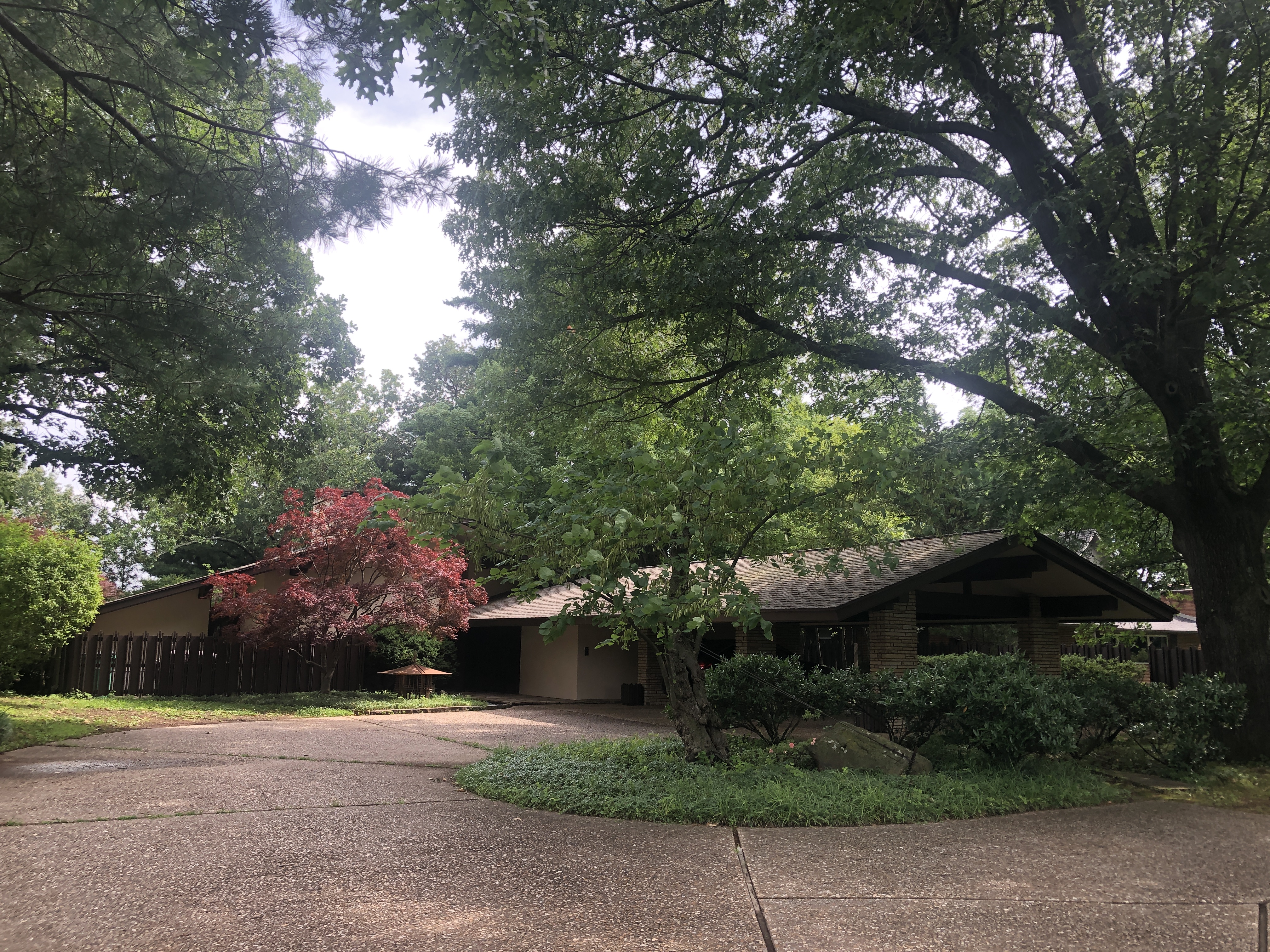
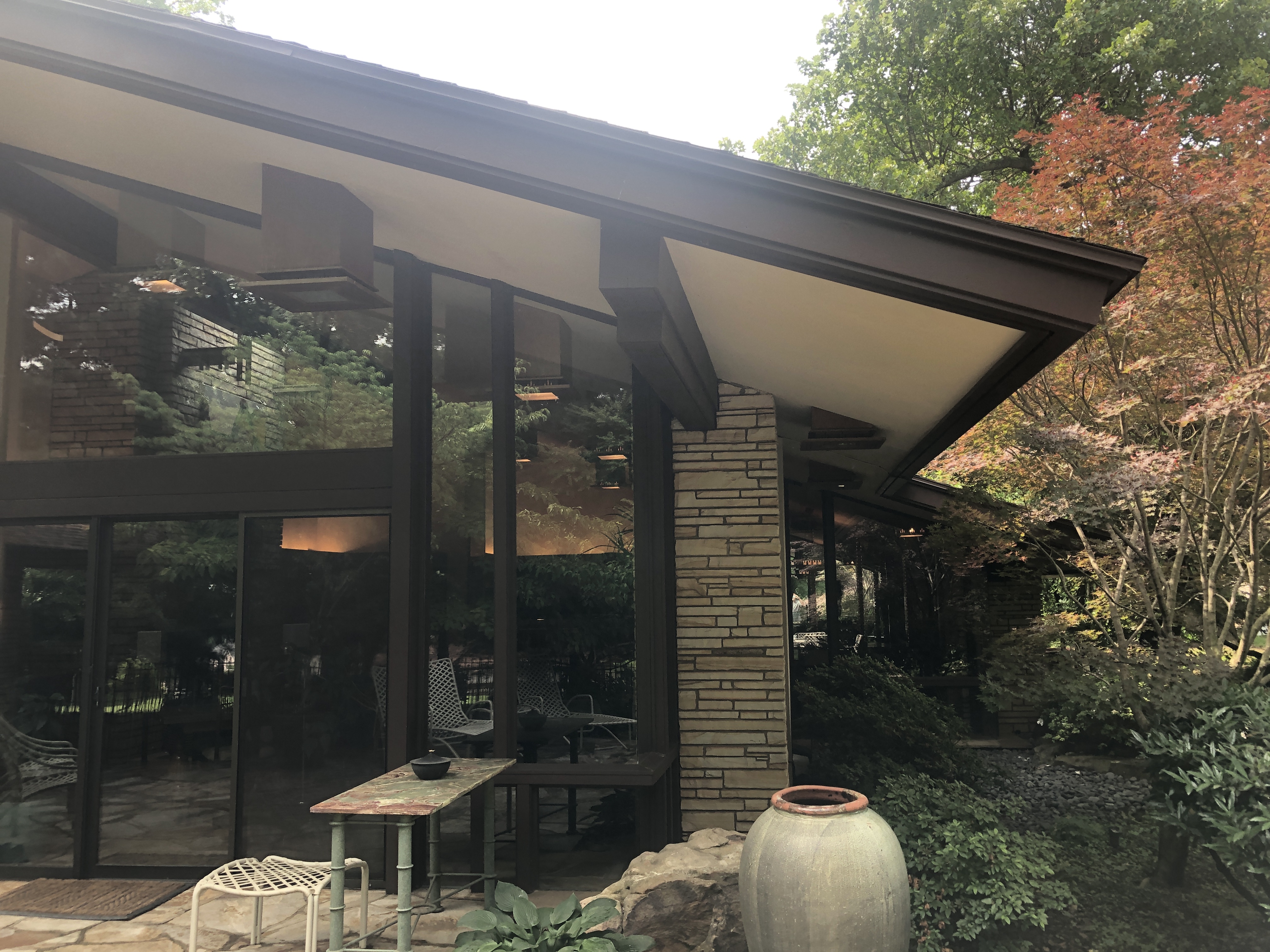
We left the RV park this morning with high anticipation.  Due to posting a few photos of the two Fay Jones chapels on Facebook, we have been invited to view a Fay Jones home nearby, just outside Fayetteville, AR.  In short, it was spectacular!  It is sited on a golf course, on a 1/2 acre lot…

img_3224

Immediately we saw the detailing of lighting fixtures all around the yard, carport, and entry…

img_3230img_3229img_3228

Note the blank front of the house – hidden front door, no front porch, and no windows…

img_3225img_3226img_3227

Inside, the entry has a custom designed light fixture…

img_3223img_9168

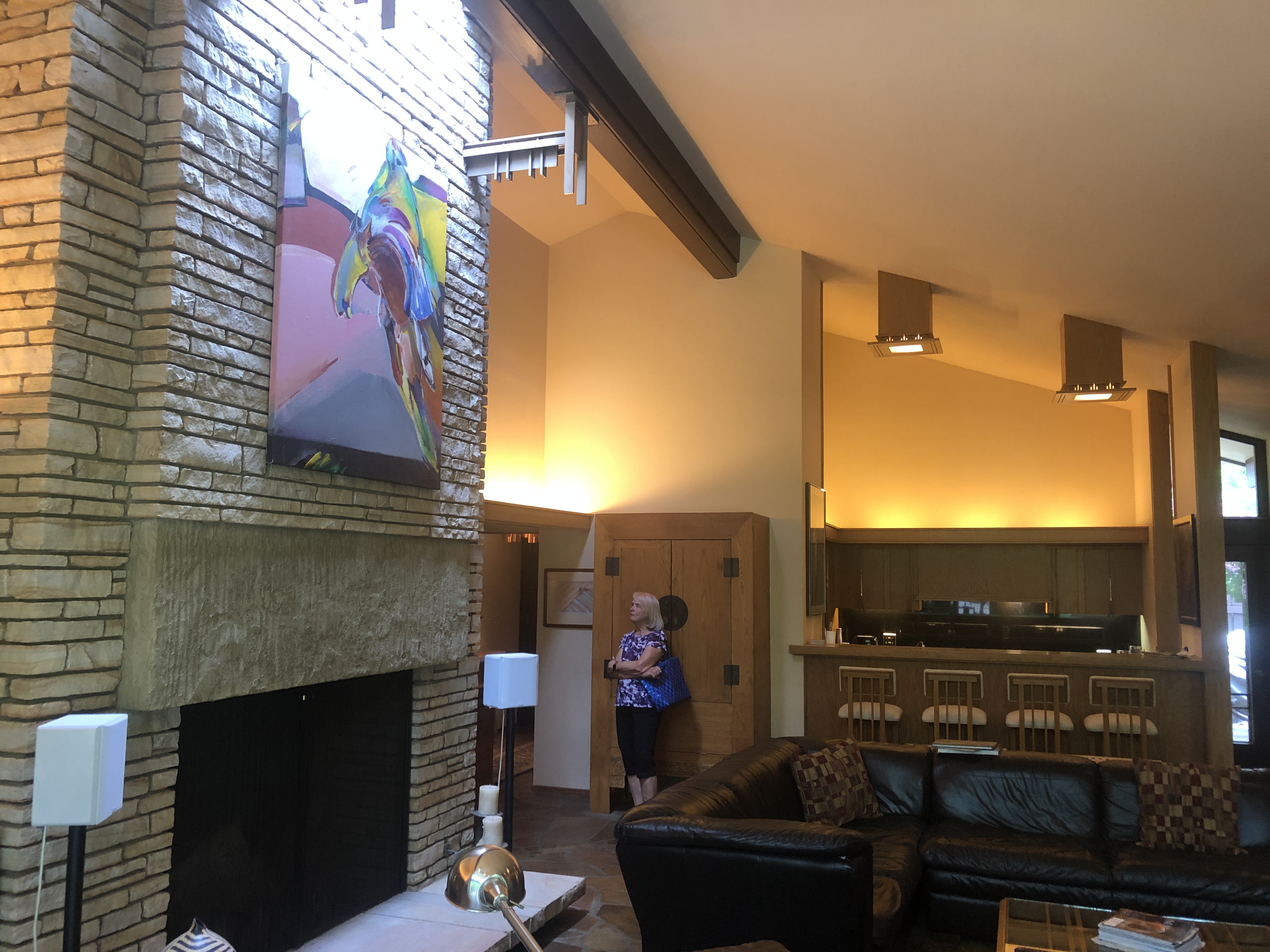
The Living Room…

img_3211img_3210img_3209img_3208

The Kitchen…

img_3206img_3205

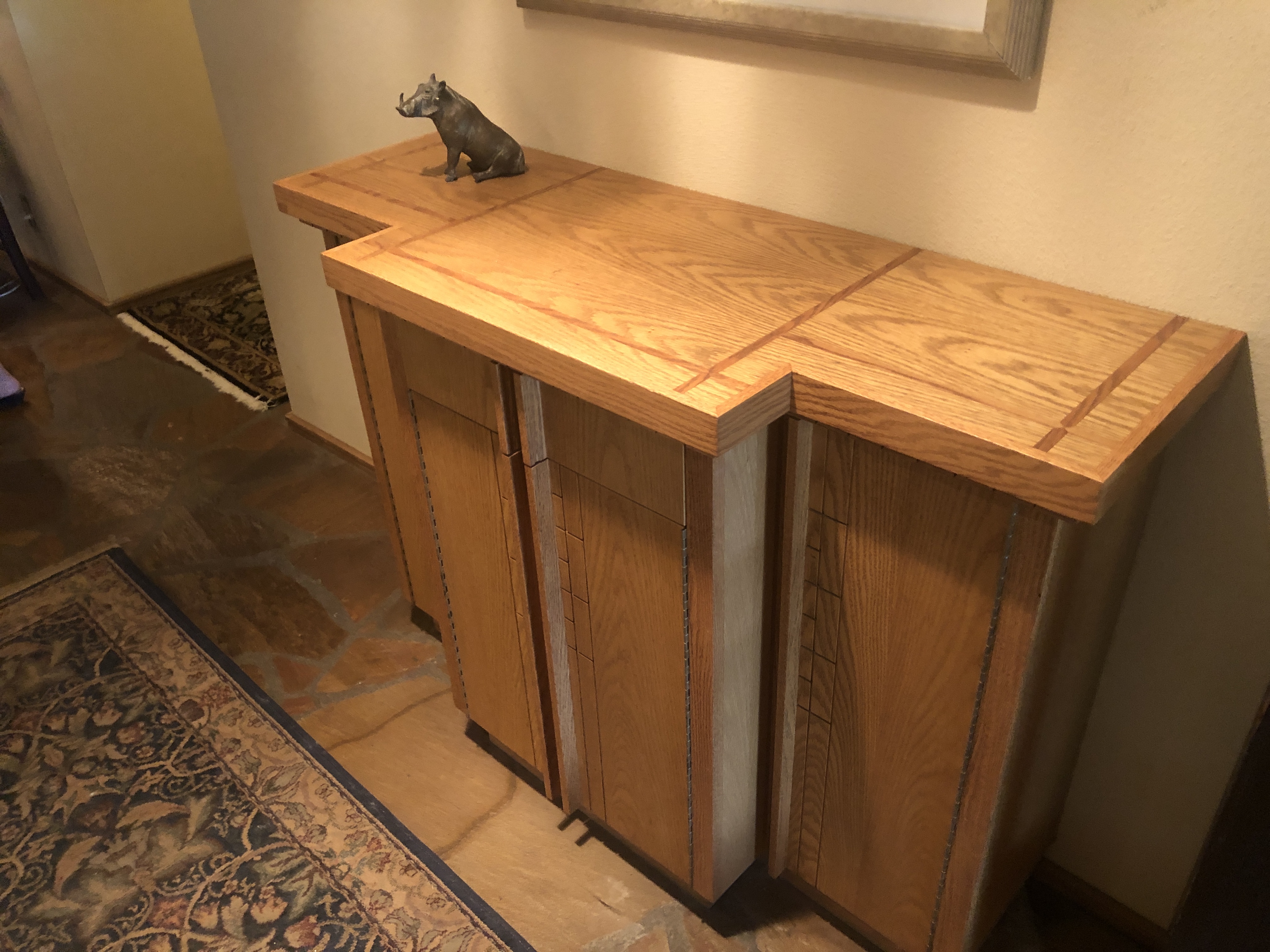
The Dining Room.  The table and all cabinets are custom designed by the architect…

img_3204

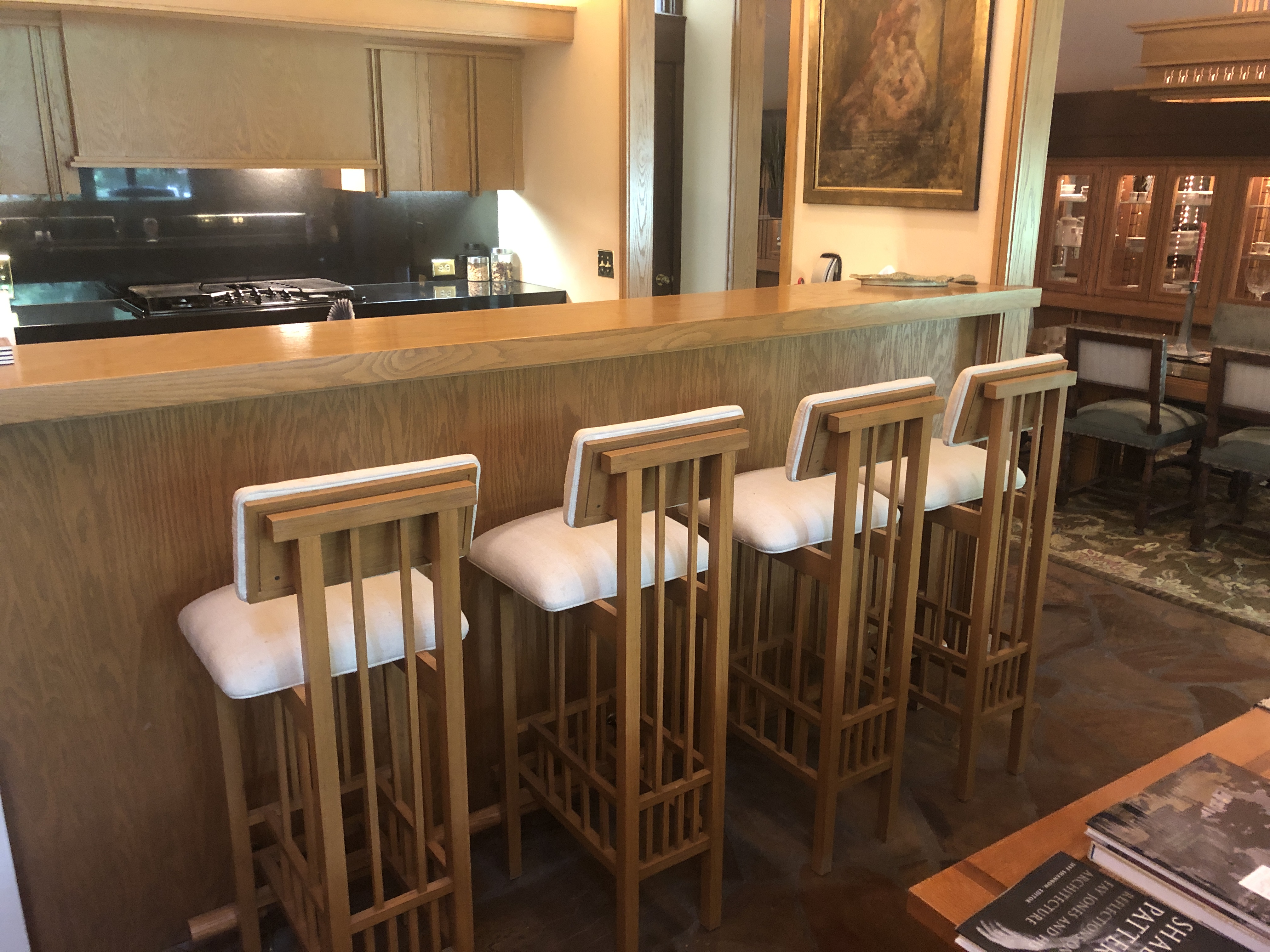
Architect-designed bar stools…

img_3203

The study was originally a teenage daughter’s bedroom; this is the custom desk and bookshelves…

img_3218img_3217

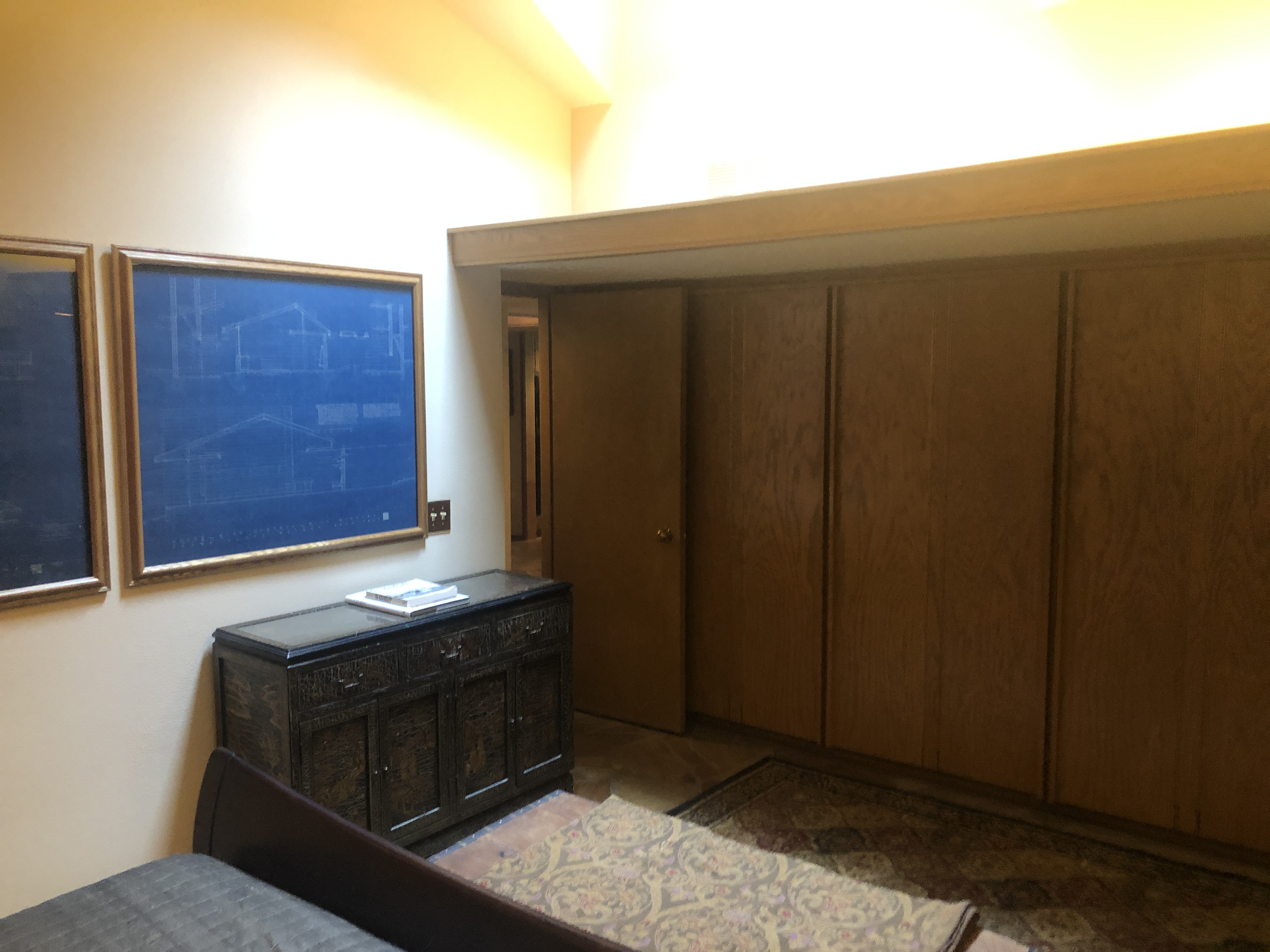
Blueprints from Frank Lloyd Wright’s office for an unbuilt house line the wall… All the bedrooms have custom built-in wardrobes, dressers, and bureaus…

img_3216img_3215img_3234

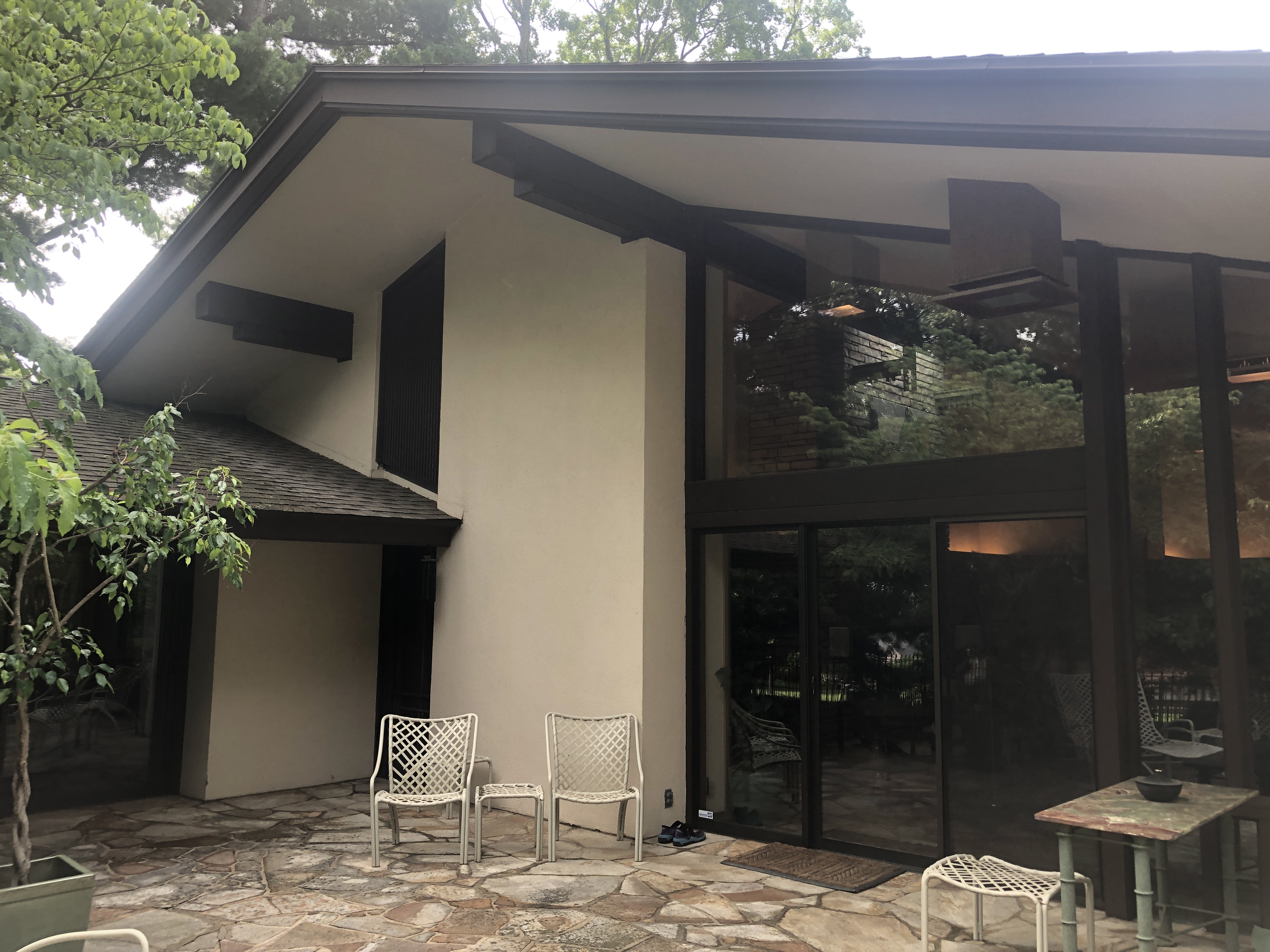
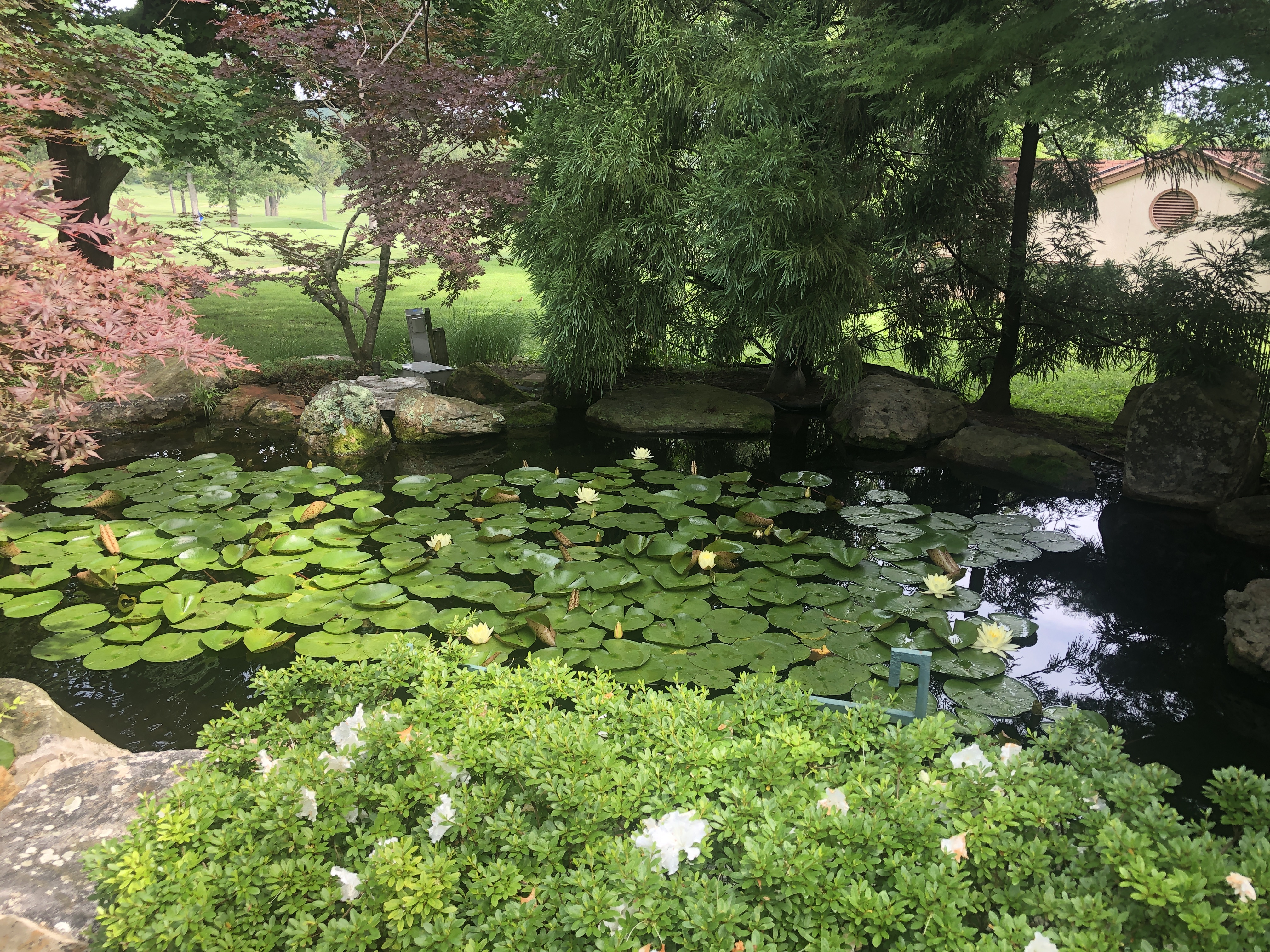
The rear of the house opens to the back patio, a koi pond, and the golf course beyond…

img_3235img_3236img_3237img_3238img_3241

The house was designed by Fay Jones at about the time of the Thorncrown Chapel.  The current owner has been here a little more than 10 years.  (PS:  the house is for sale!  Sale includes all the Fay Jones-designed furniture and fixtures…)

It was hard to leave this place, but we must move on.  We headed towards Oklahoma City.

Oklahoma is surprisingly green!

img_9170img_9171

We checked into Twin Fountains RV Resort… Very upscale place!  It has a bar and grill, pools, rec rooms, miniature golf, a lounge, and a concierge.  (A limousine is available for free rides to any of the attractions within 3 miles of the RV park…)

img_9172

We hailed an Uber and headed to downtown Oklahoma City…

img_9173

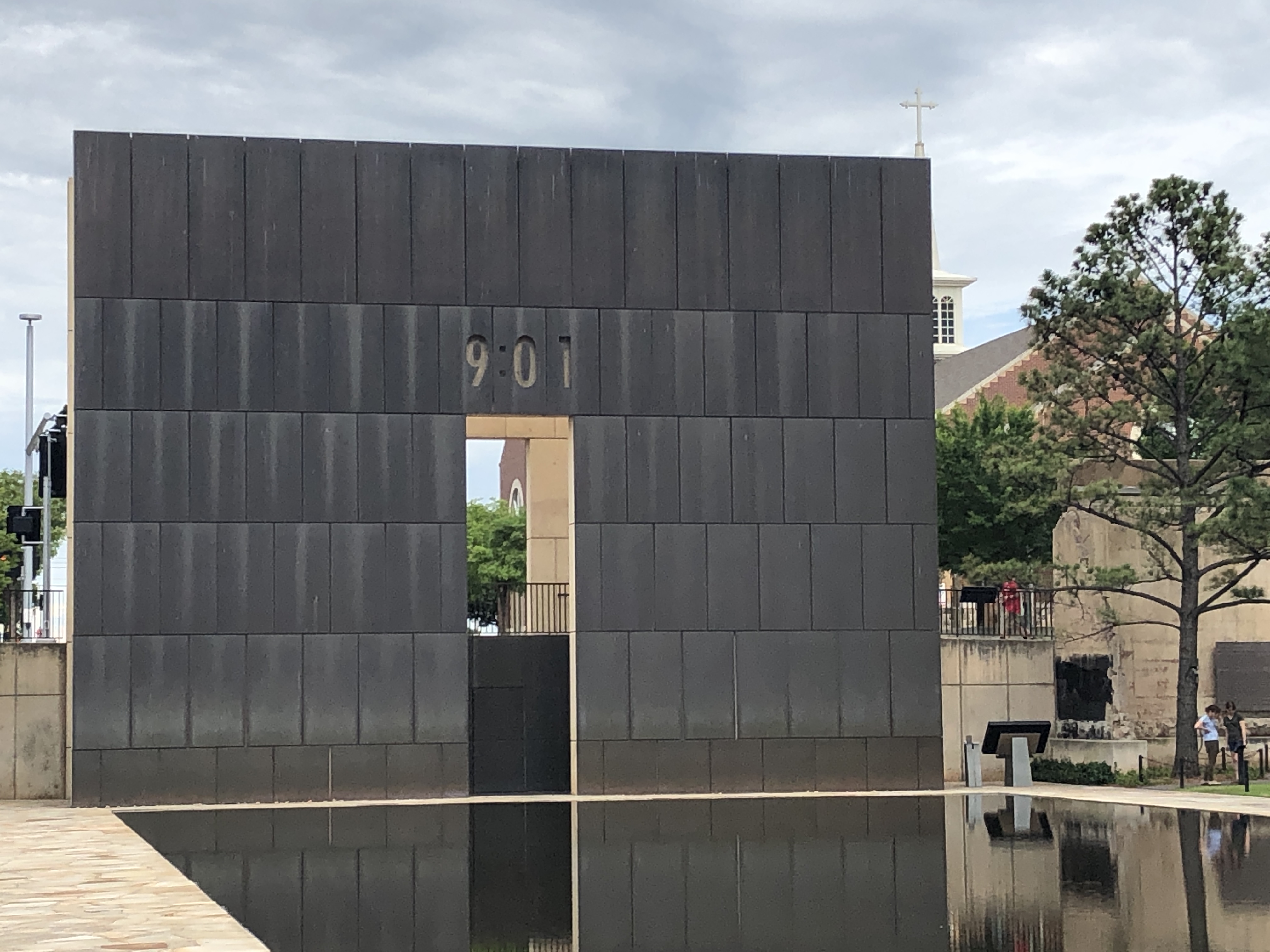
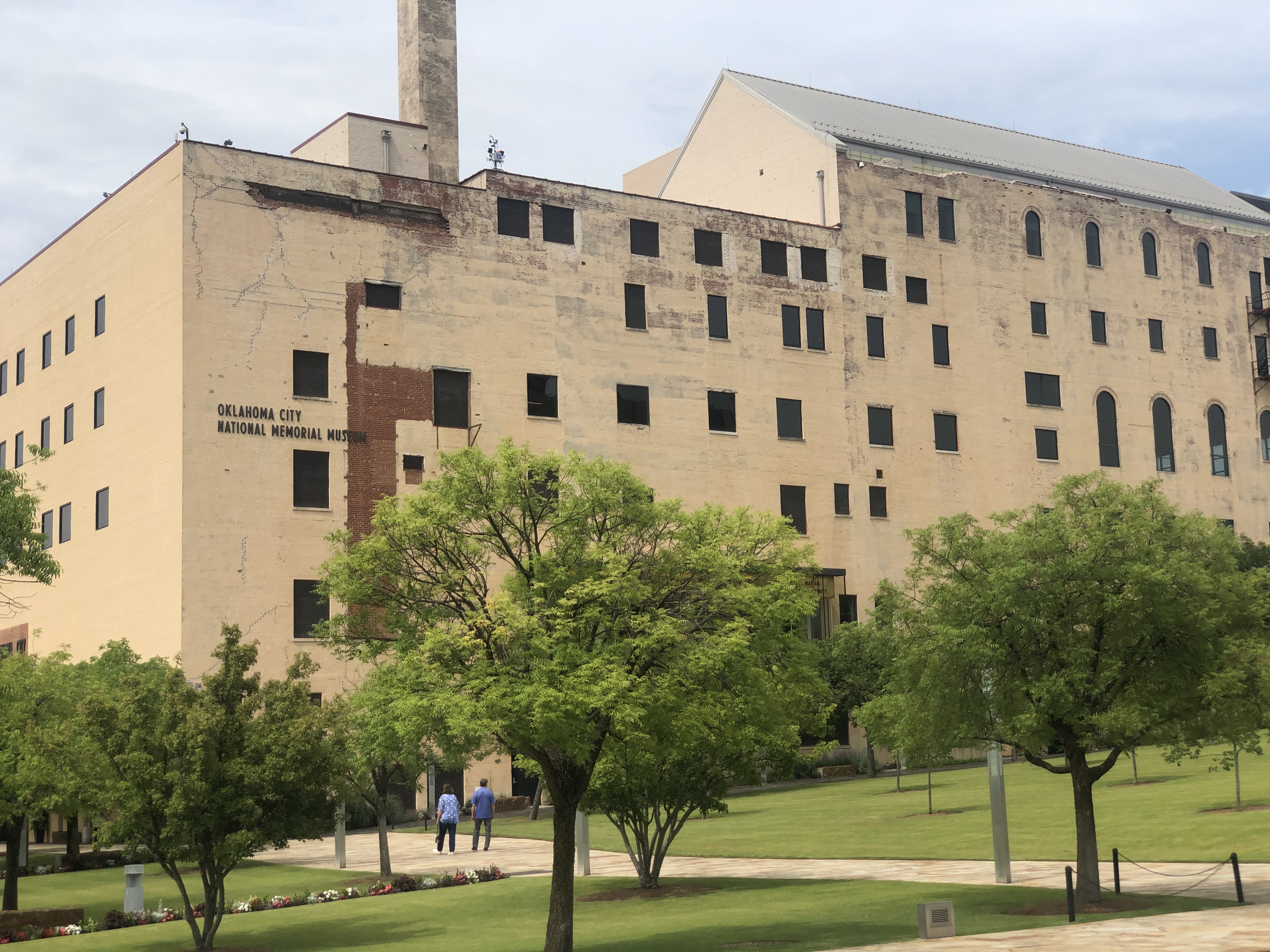
This is one entrance to the Oklahoma City National Memorial and Museum…

img_3245

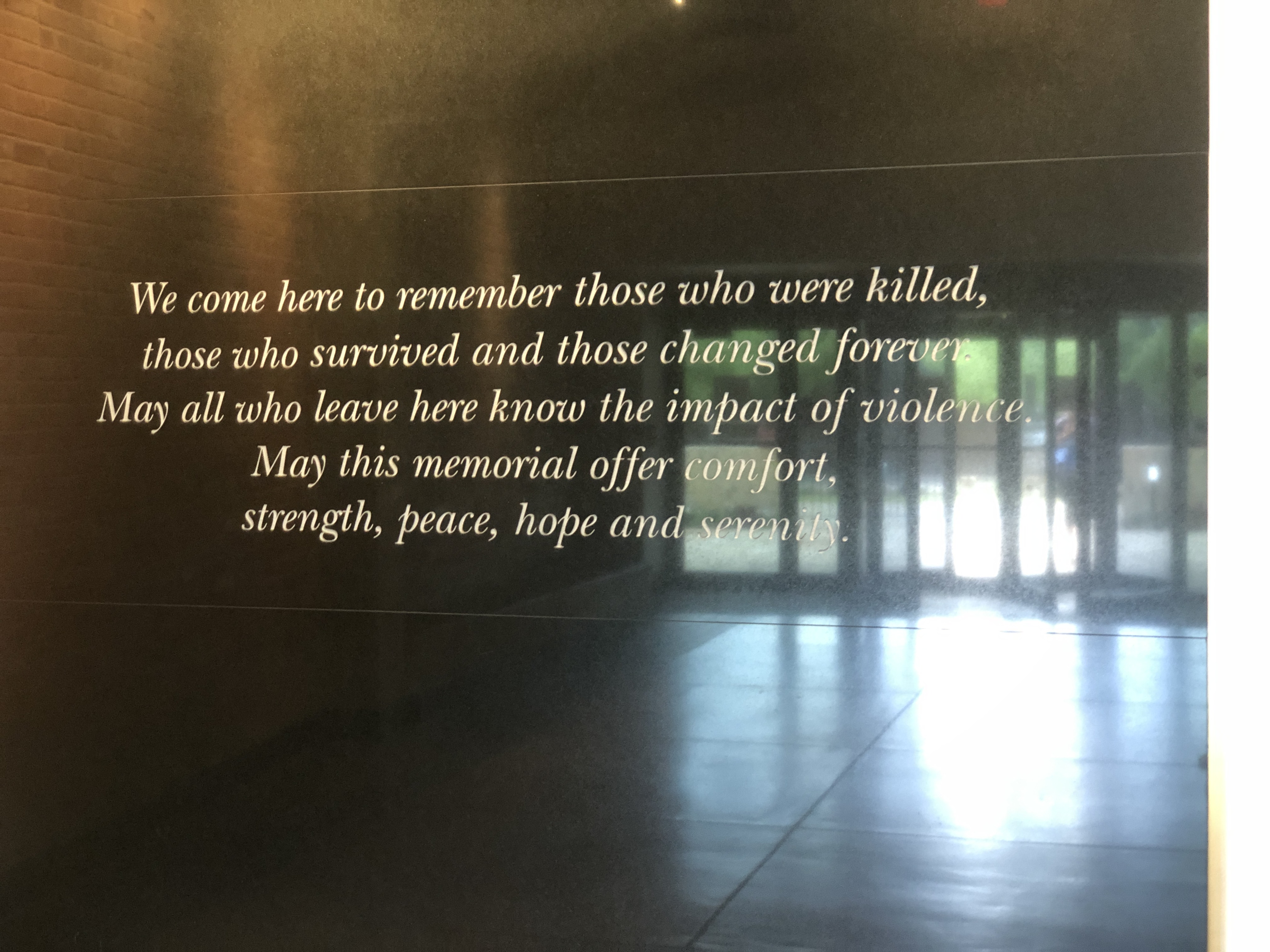
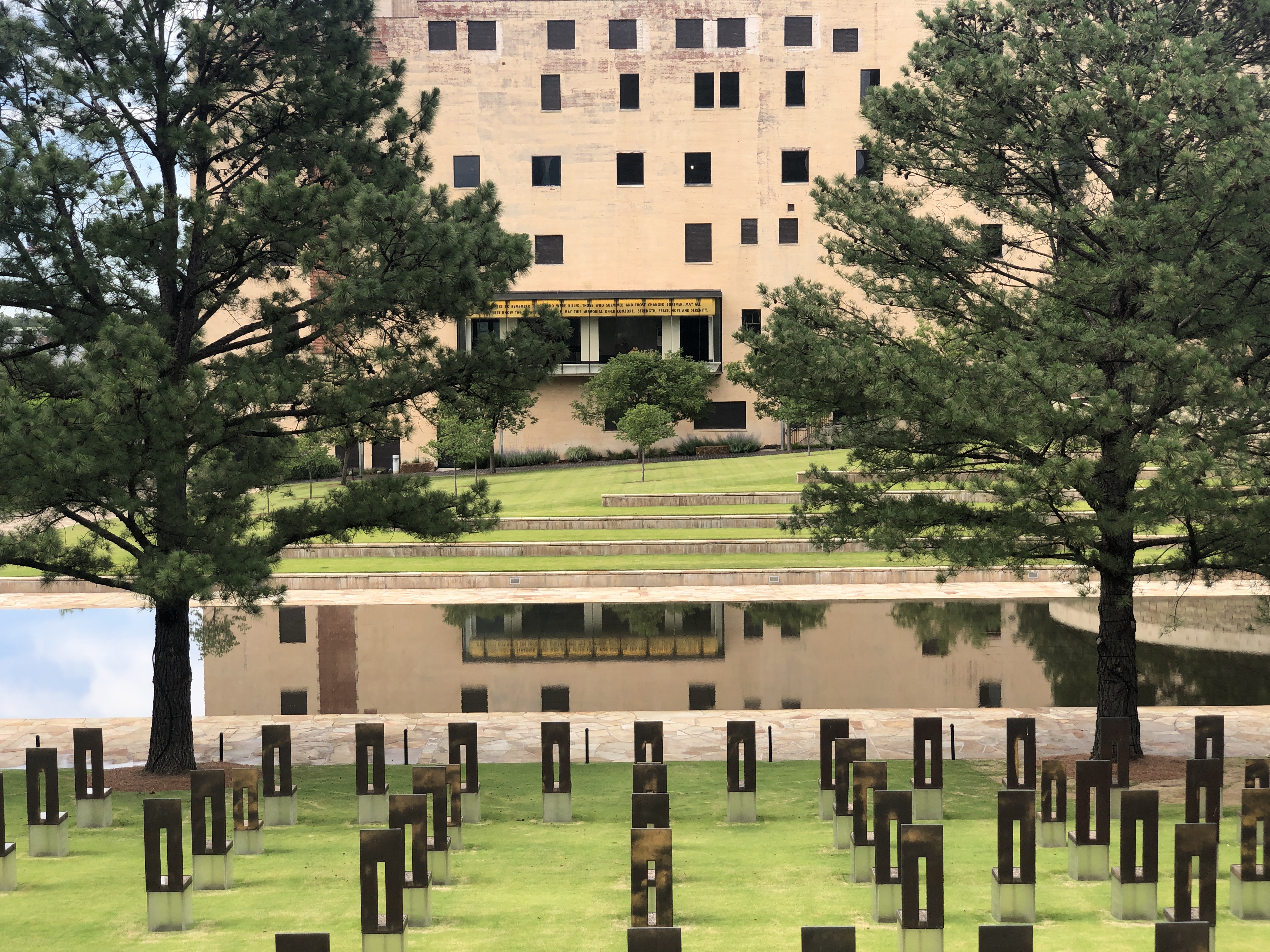
Printed on this wall (and lots of other places) is the mission statement for the Memorial:  We come here to remember those who were killed, those who survived and those changed forever. May all who leave here know the impact of violence. May this memorial offer comfort, strength, peace, hope and serenity.

img_3254

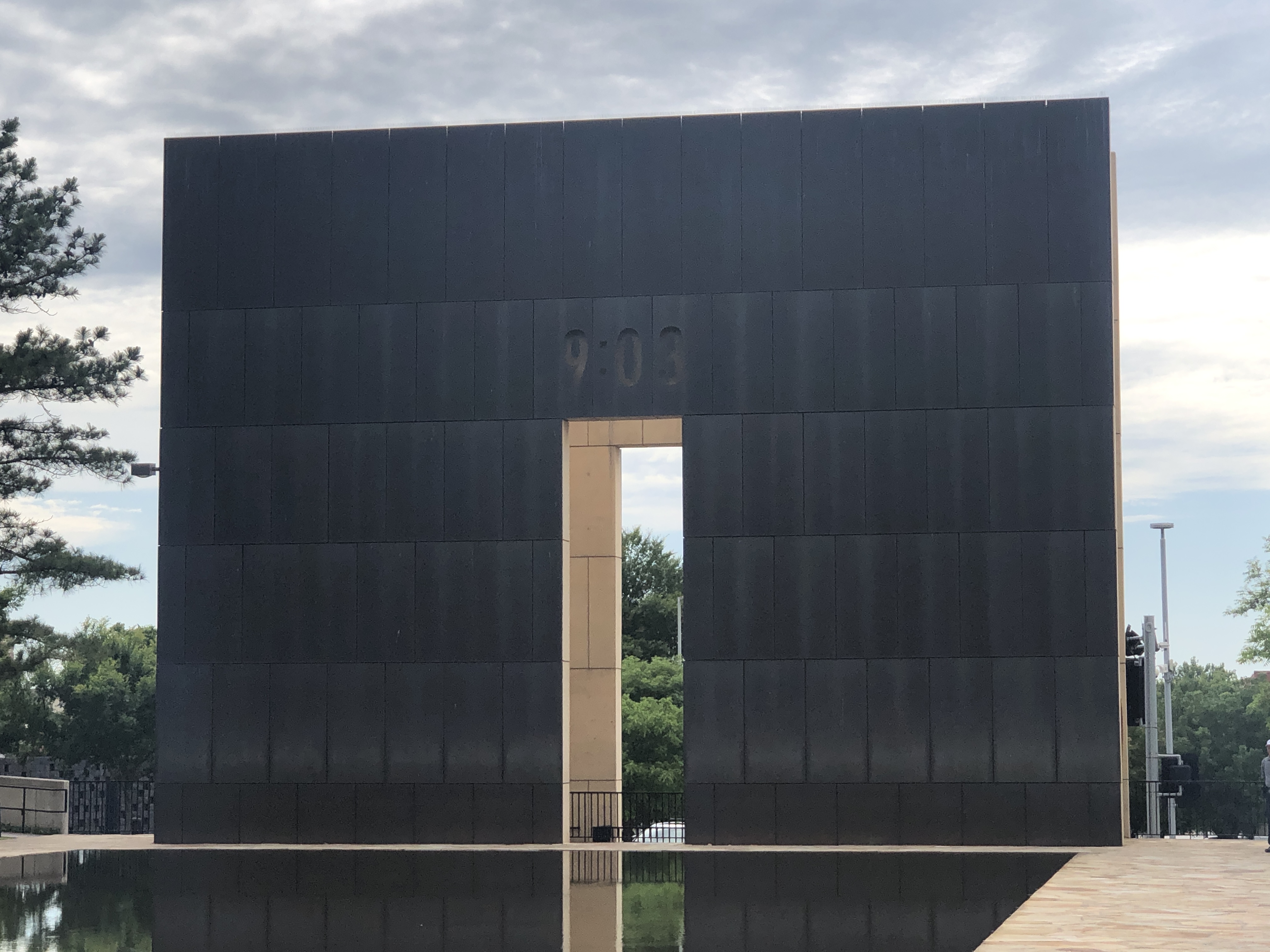
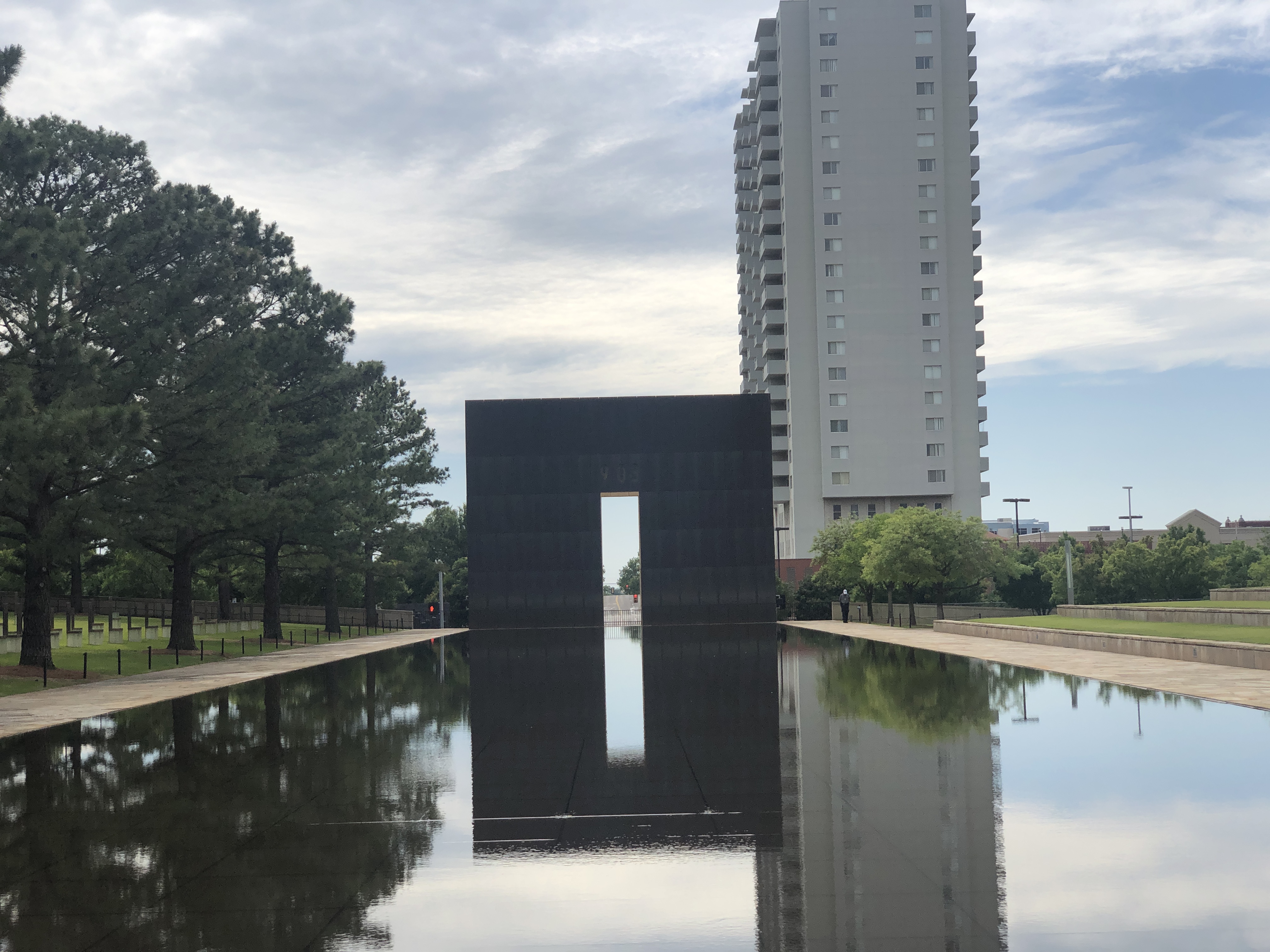
These two giant black granite walls flank the reflecting pond…

img_3256img_3257

9:01 everything was normal; the blast was 9:02; the healing began 9:03…

img_3258img_9177

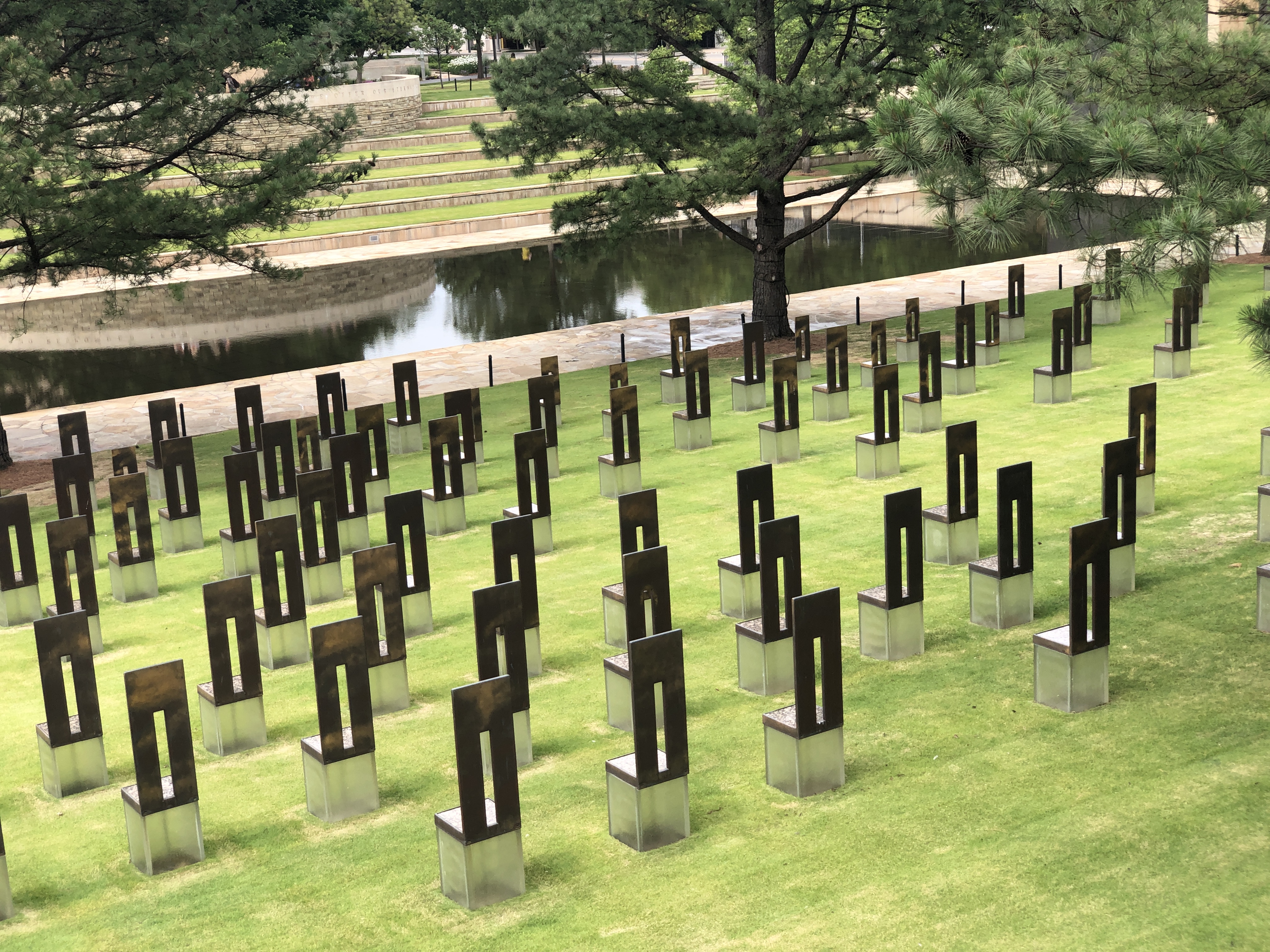
The chairs sit on the site of the former building; they are in nine rows, corresponding to the nine stories.  You’ll notice that all the small chairs are in rows one and two…

img_9175

img_3251-1img_3262-1

This former newspaper building is now the museum…

img_3249img_3250

This is the survivor tree – it was covered in rubble and most of the branches were blown off, but the tree survived.  Every year they harvest seeds, plant seedlings, and then distribute them to various stakeholders…

img_3255

This is the new Federal Building, built across the street…

img_3260

From this viewing window in the museum you can see the memorial below…

img_3261img_3262

It is a sobering remembrance, but, for us, it did not have the impact of the National Civil Rights Museum in Memphis…

We looked for a downtown street to walk, one with shops, restaurants, and bars.  We couldn’t find any.  Downtown Oklahoma City appears to be a concrete jungle of office buildings… By 6:00 pm it was deserted…

As is our custom, we returned to the Villa for Happy Hours and a light supper; an enjoyable time was had by all…

2019-05-13 – Airstream Caravan Travels – Springtime in Kentucky; Cumberland Falls, Corbin, KY – Day #19

Today we once again traveled into the green hills of Kentucky; all around us is the Daniel Boone National Forest.  We are headed to the State Park to see the Cumberland Falls and the Dupont Lodge…

img_2737img_2738img_2777img_2778img_2779

It was a lovely lodge.  Not as nice as the Grand Canyon North Rim Lodge, but still nice…

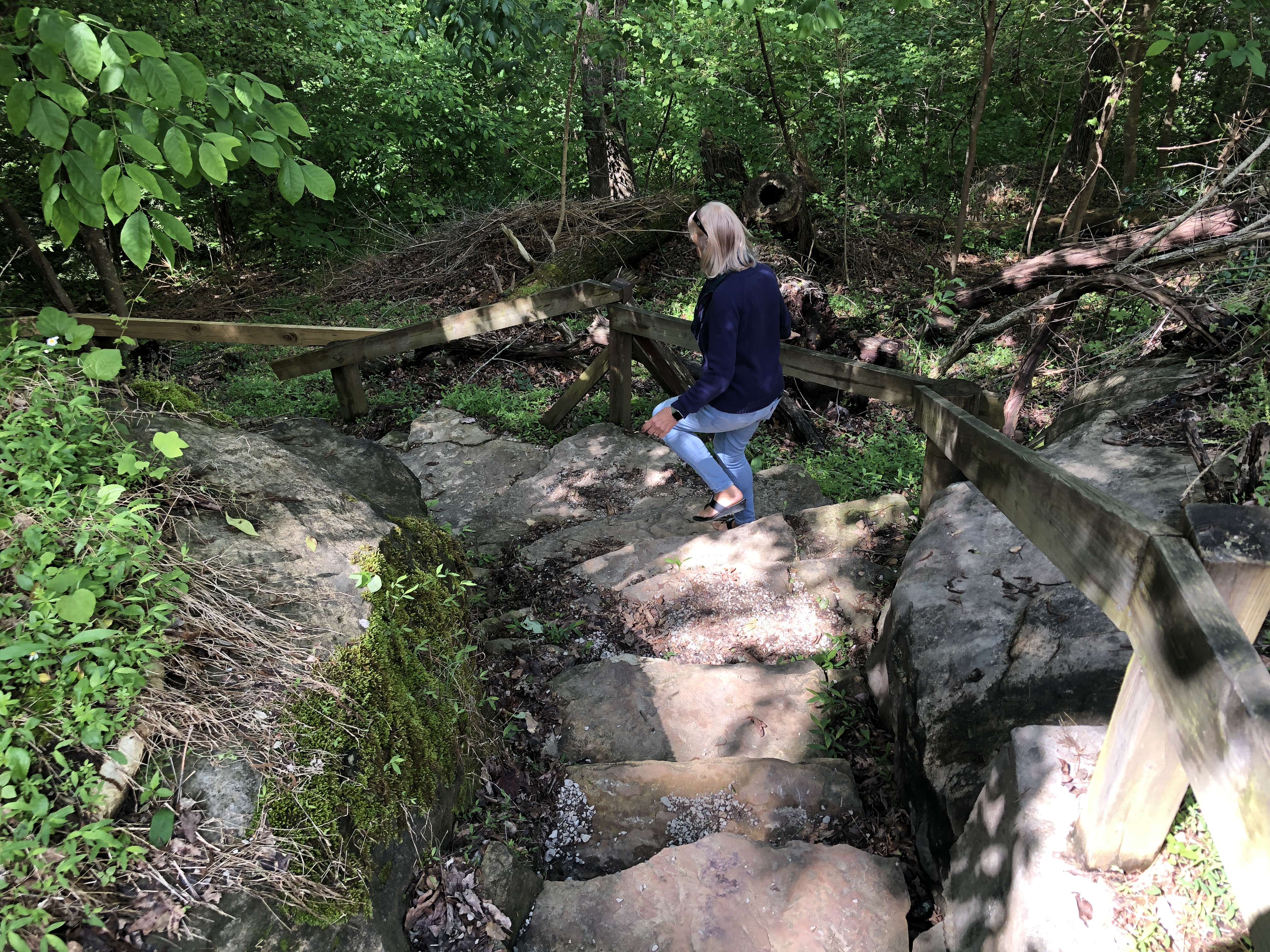
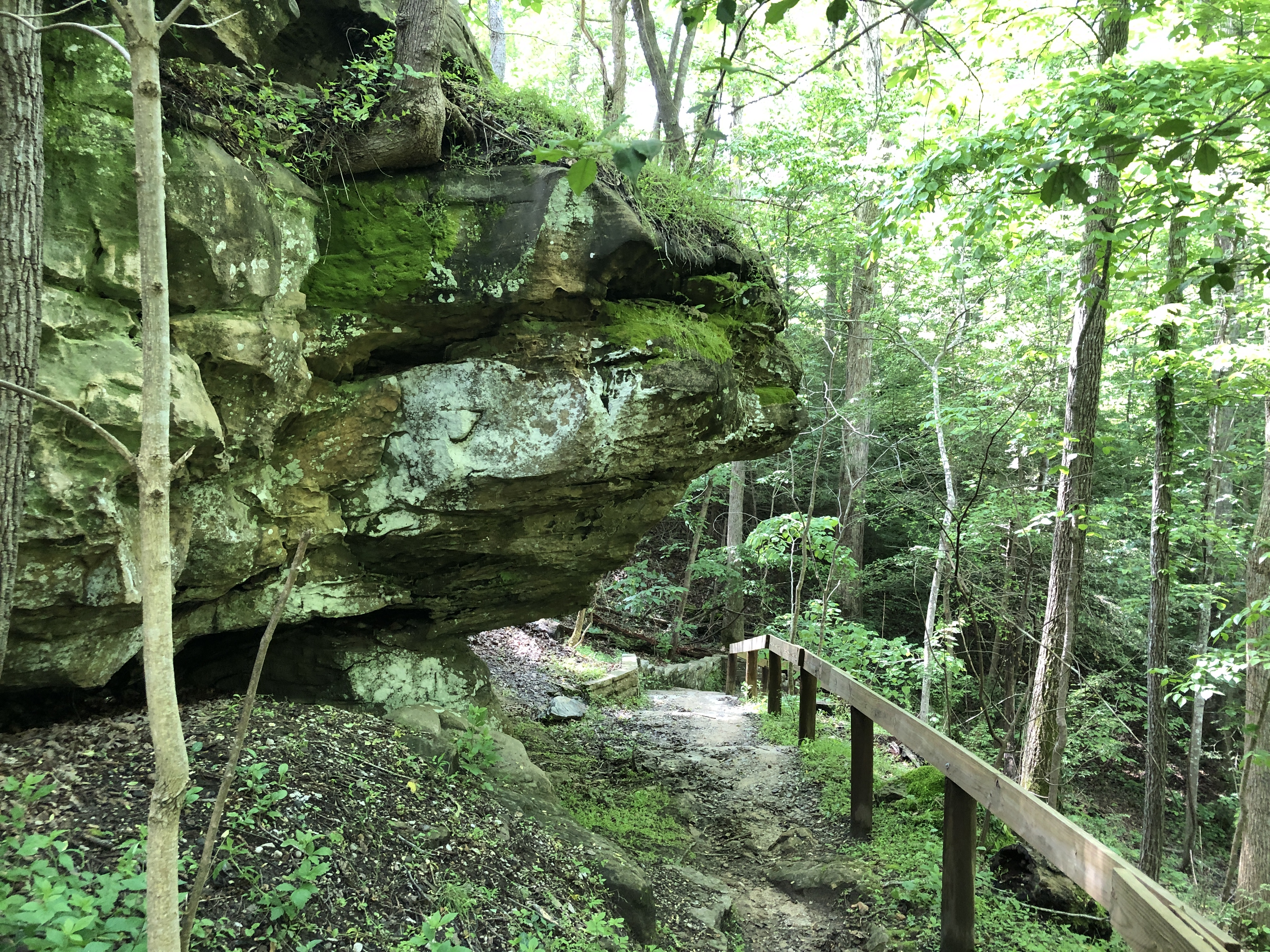
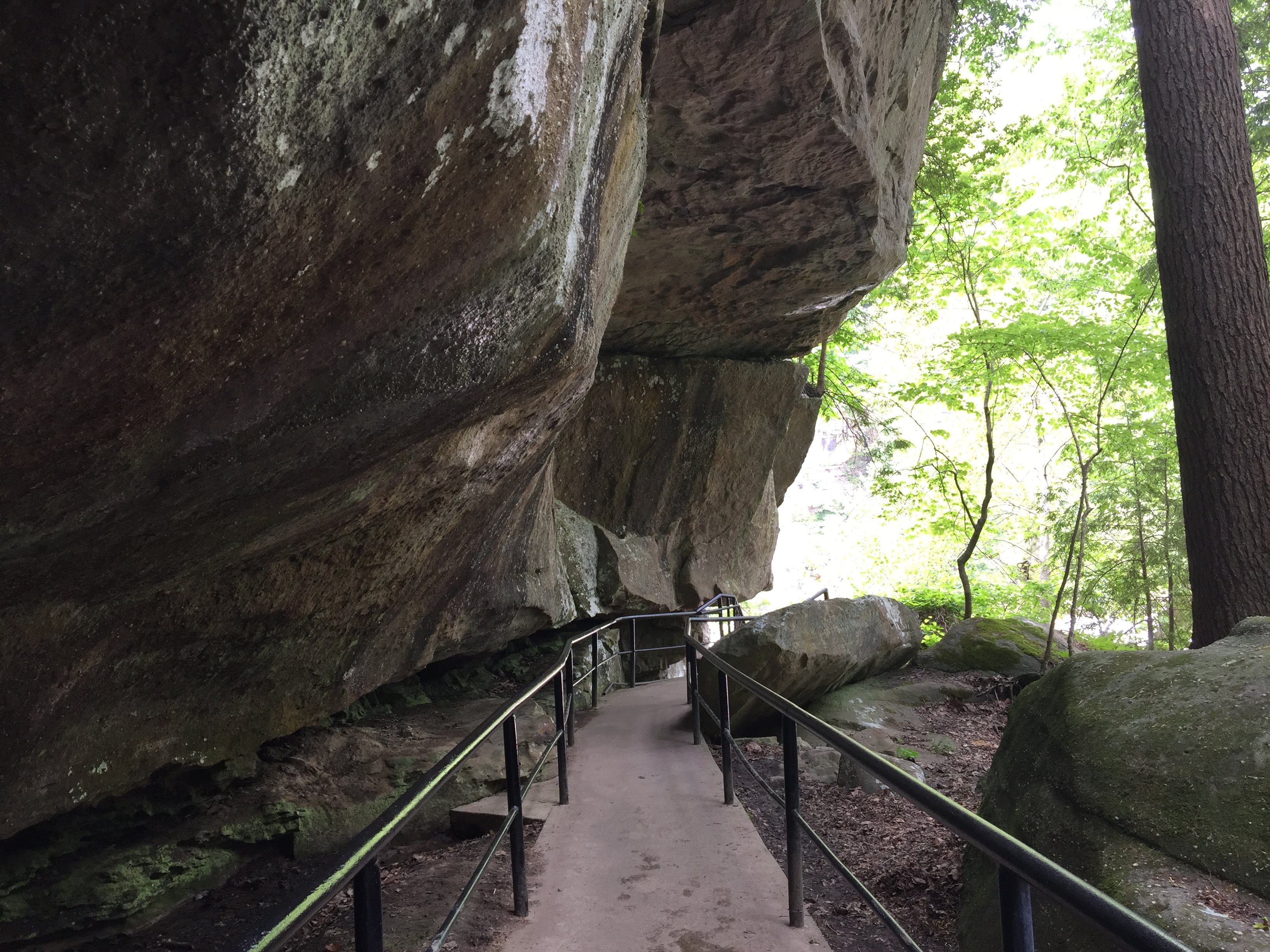
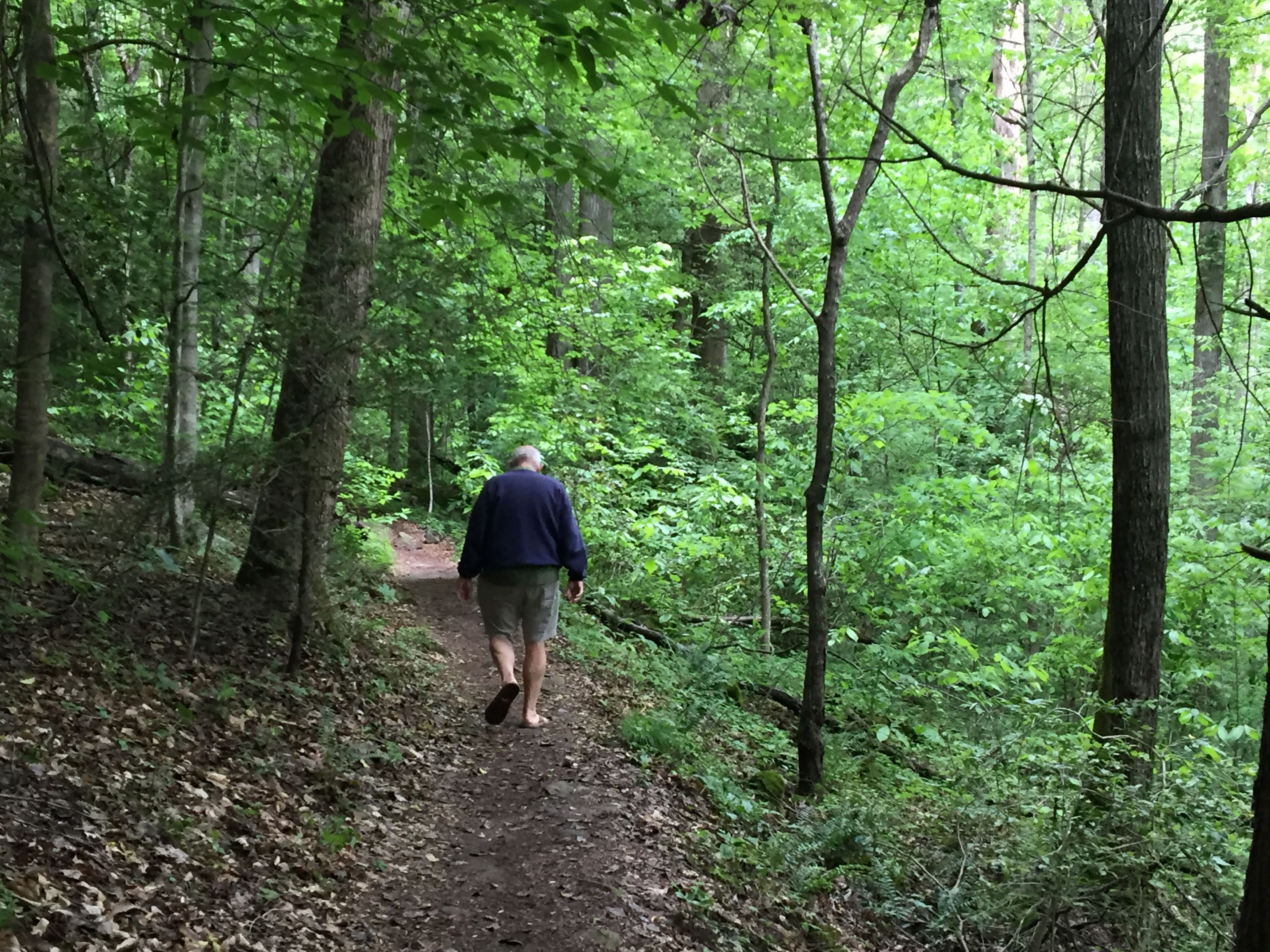
But before we could enjoy the lodge we walked 3/4 mile to the falls.  The path was wet, but fairly easy; there is a 270′ elevation change walking down to the falls…

img_2739img_2740img_2741

We could see the highway bridge over the Cumberland River far below…

img_2742

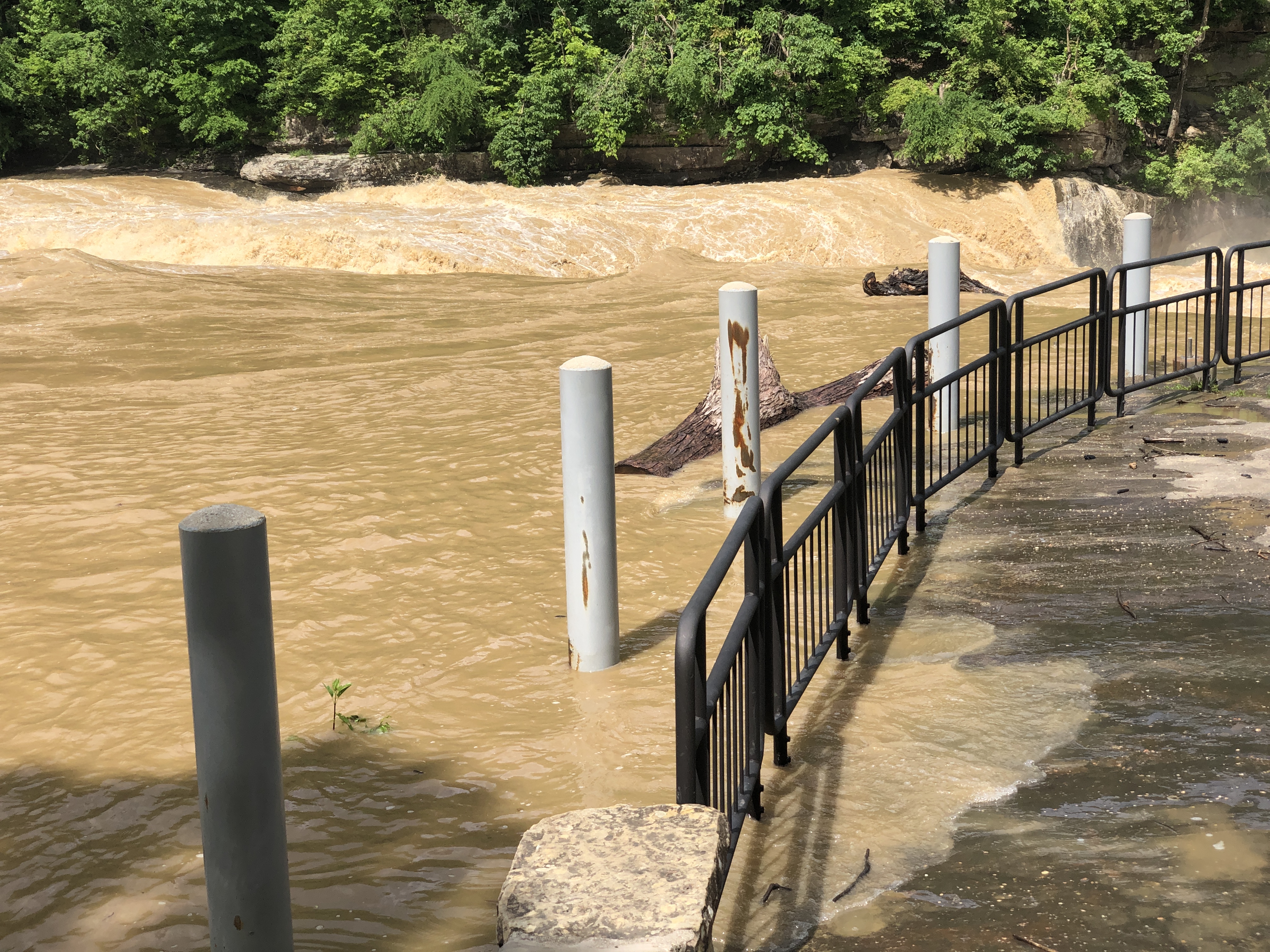
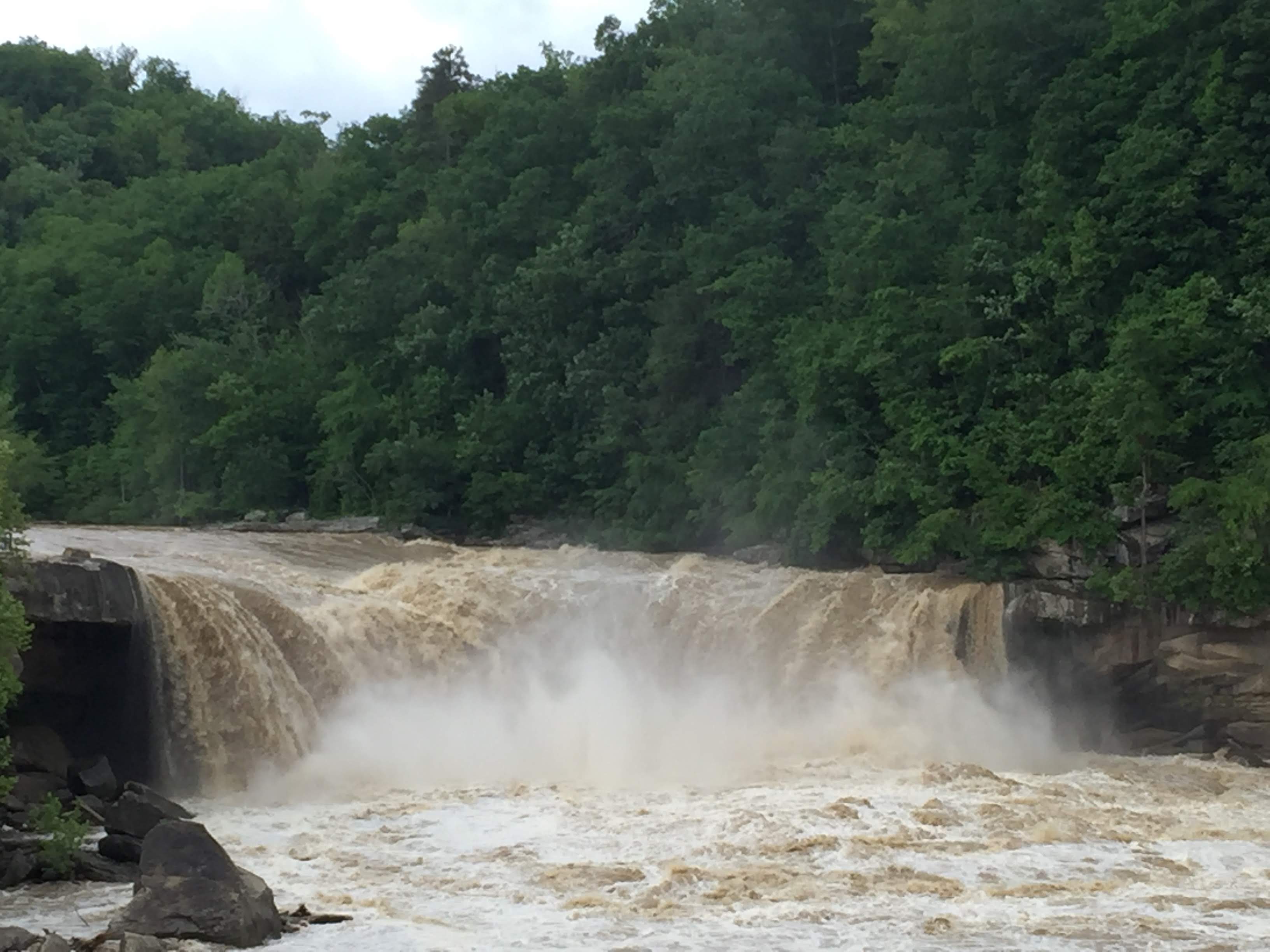
The raging river was lapping over this walkway…  There is about 10 times the normal water flow today due to melting snow up north and the recent rains locally… (thus, the muddy appearance…)

img_2752

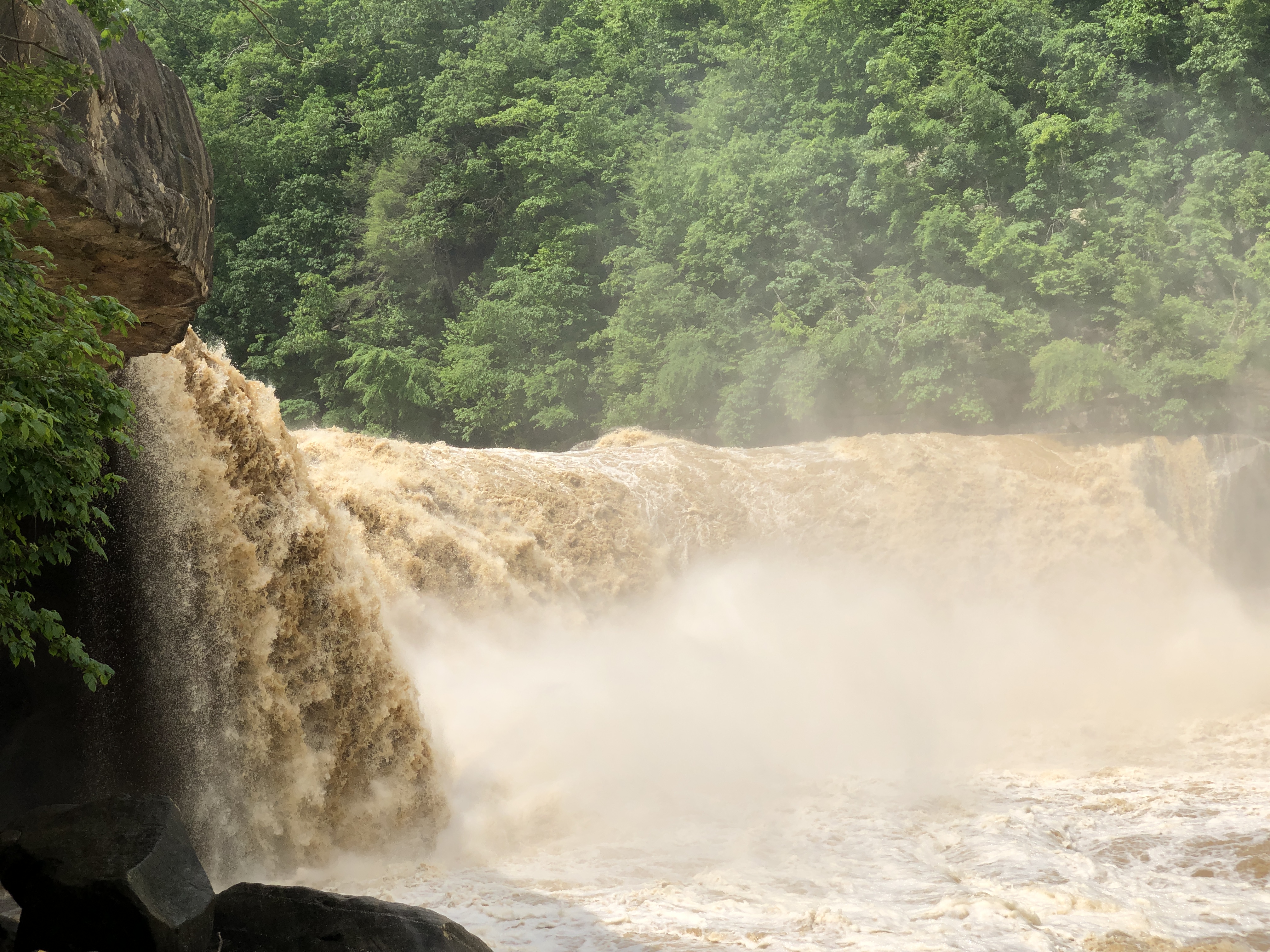
We finally arrived at the falls… They were great!

img_2754

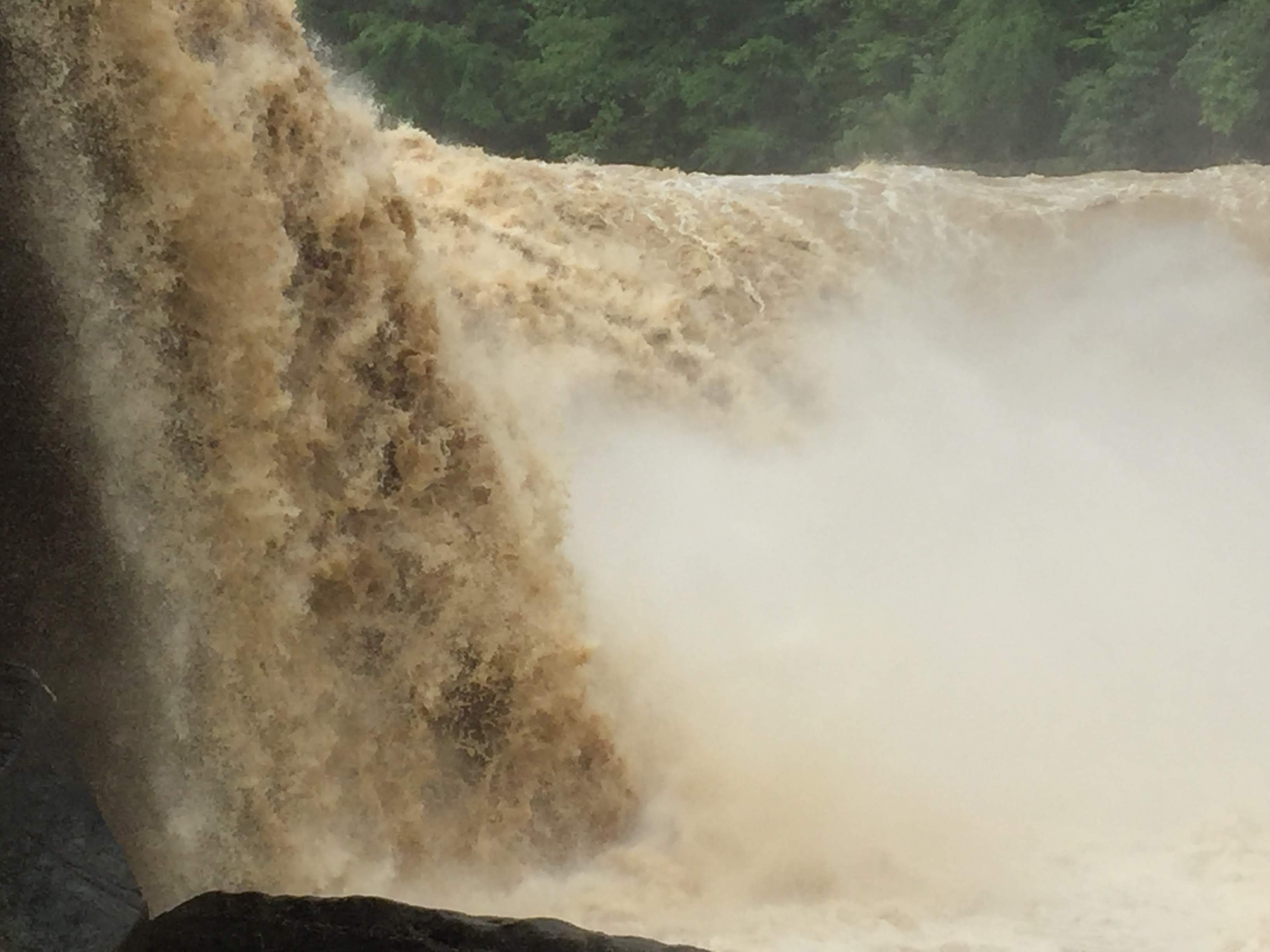
We went down below for a closer view…

img_8785img_2762img_2763

Did you know that over 280 people die each year taking selfies in dangerous locations?

img_2764img_8790img_8792

Further downstream we got a wider view…

img_8793img_8794

And then it was time to walk back up… But by now we were even further down.  We walked up 66 steps, then up the 270′ rise on the 3/4 mile path back up to the lodge…

img_2760-1img_2767img_8795img_2768

And then we sat down…

img_8799

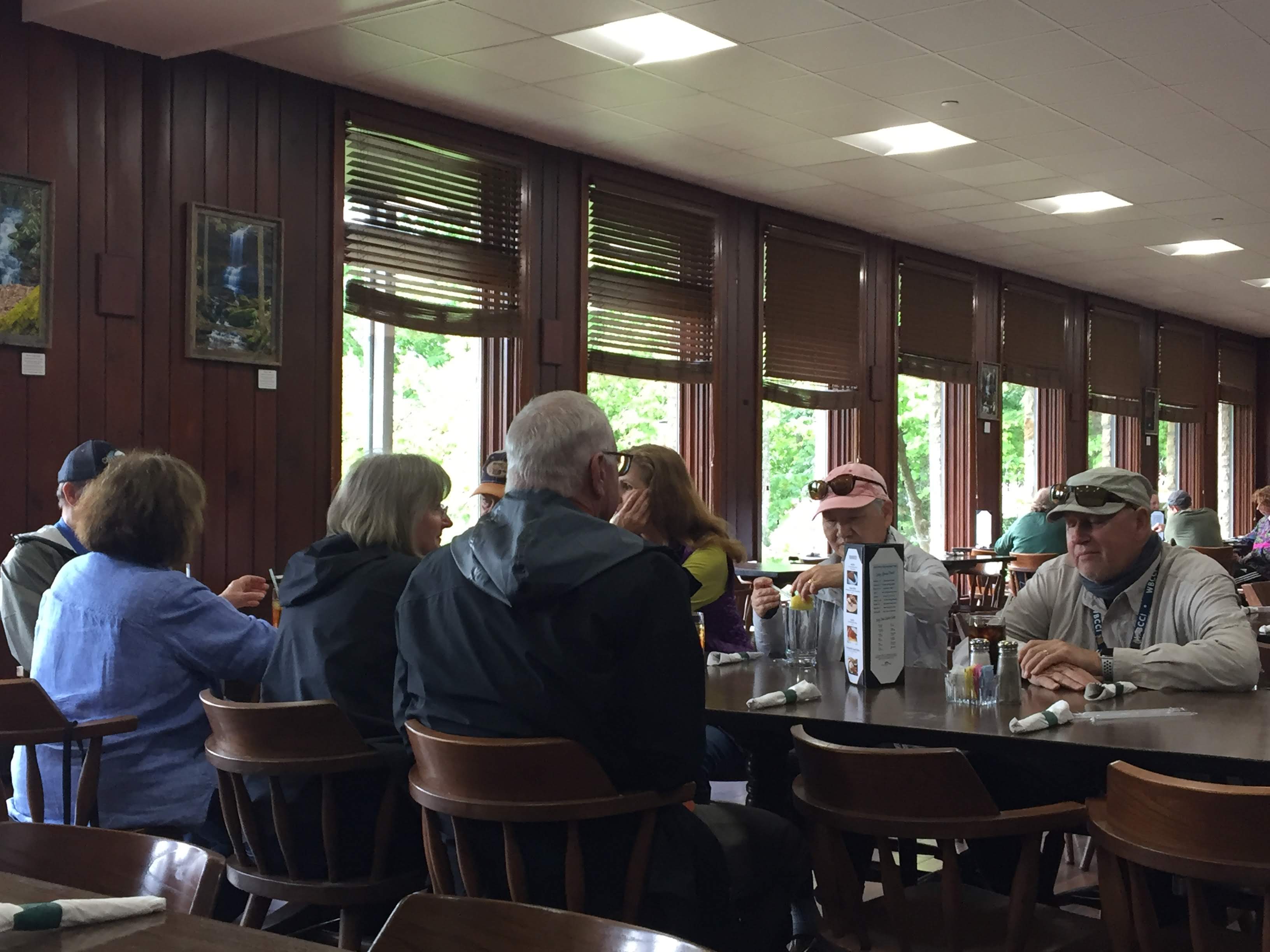
Soon it was time for lunch…

img_8800img_8801

The food was decent and the view was great!

img_2776

We returned to the campground.  We stopped along the way for Lynda to get her hair cut, and we took the truck to the local Chevy dealer for an oil change.

We had an “Open House” so that we could peak into all the other Airstreams; this gave way to Happy Hours…

And an enjoyable time was had by all…
Blog at WordPress.com.

Up ↑