Search

Adventures in the Villa

Category

Architecture

2017-07-08 Nor by Nor’east Caravan -Newport, Rhode Island – Summer Cottages, day 1

The day was sunny for a change, but not too warm. I’ve been looking forward to seeing the Summer Cottages again since I first saw them nine years ago…

2017-07-08 Newport - Breakers 01

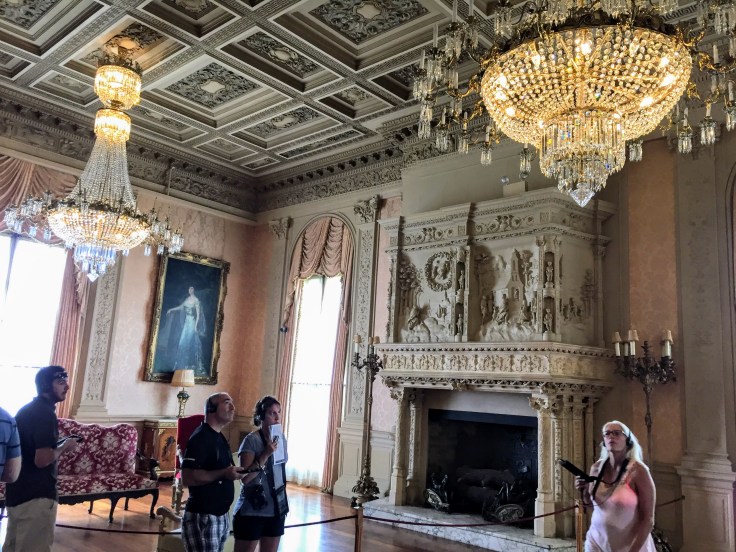
These were summer homes, used for 6-8 weeks each summer.  These are houses of the Gilded Age.  And gilded they were.  Gold and platinum were used as common decoration. Many of the interiors were ripped from palaces and castles in Europe, dismantled, sometimes cut into pieces, shipped to America and installed in these giant “cottages”. Nothing exceeds like excess here.  As architectural critic Ellsworth Toohey once said, (I paraphrase here…) “The house has a lovely garden gate, fine in proportion and workmanship. It is installed on the ceiling of the Dining Room”.

Pieces of furniture were cut up and used as decoration on stairways.  Huge paintings were cut in half, or reshaped into ovals, to fit into a room.  The money spent was pocket change to these people – labor was cheap and palaces and castles were cheap.

The various Vanderbilts had four houses here in Newport.  We toured two; one has been incorporated into a college, the other we could not fit into our schedule.

In any case, I love houses, even ostentatious ones. Even when a room hurts my eyes to look at it… We saw five houses today…

The Breakers; Cornelius Vanderbilt II; 138,000 s.f.; 70 rooms; 15 Bedroom suites; 33 staff bedrooms; 40 full time staff.  Architect: Richard Morris Hunt;

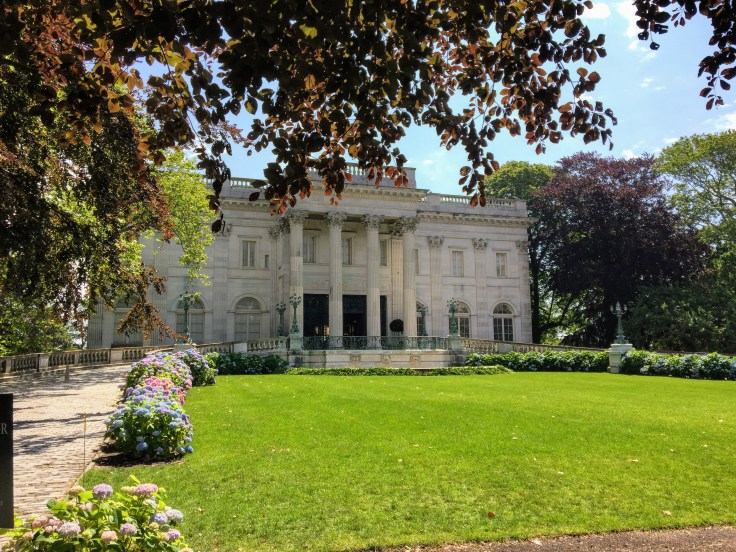
Marble House;  William Vanderbilt; 50 rooms; 7 Bedroom suites.  Architect: Richard Morris Hunt; contains over 500,000 cu. ft. of marble.

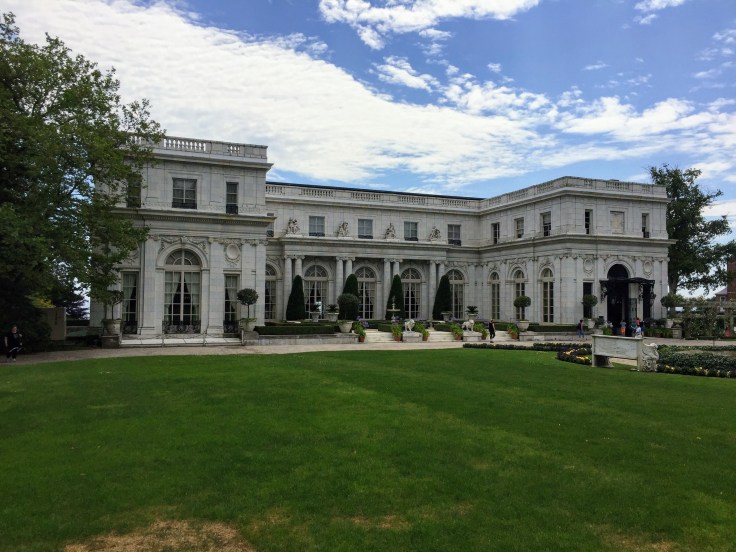
RoseCliff; Theresa Fair Oelrichs; 9 Bedroom suites; 33 staff bedrooms;      . Architect: McKim, Mead, and White

The Elms; Edward Berwind; 48 rooms; 7 Bedroom suites; 16 staff bedrooms; 40 full time staff.  Architect: Horace Trumbauer

Isaac Bell House; Isaac Bell; 7 Bedroom suites; 3 staff bedrooms.  Architect: McKim, Mead, and White

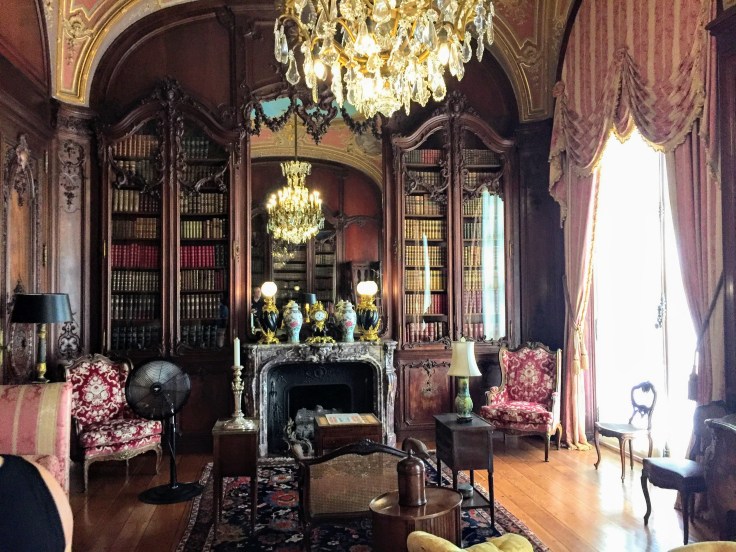
There isn’t a lot to say about these houses. The pictures tell the story:

The Breakers:

The biggest of all the Newport Mansions, and the best preserved; only lived-in for a few years…

The Approach:


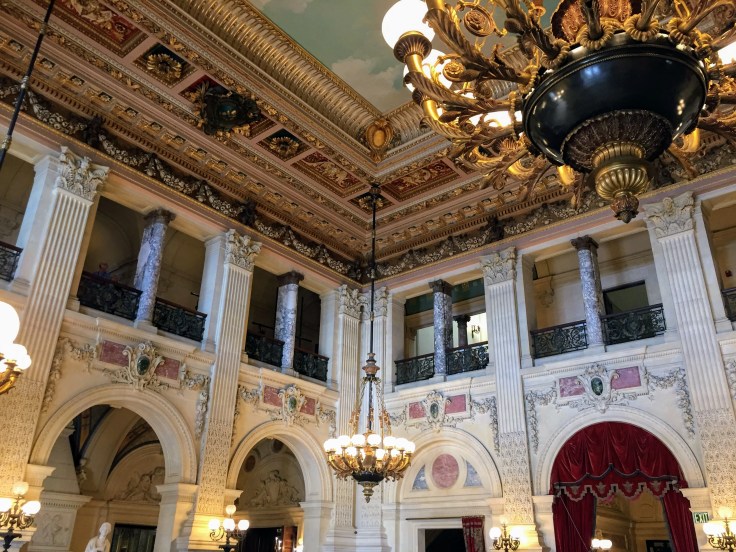
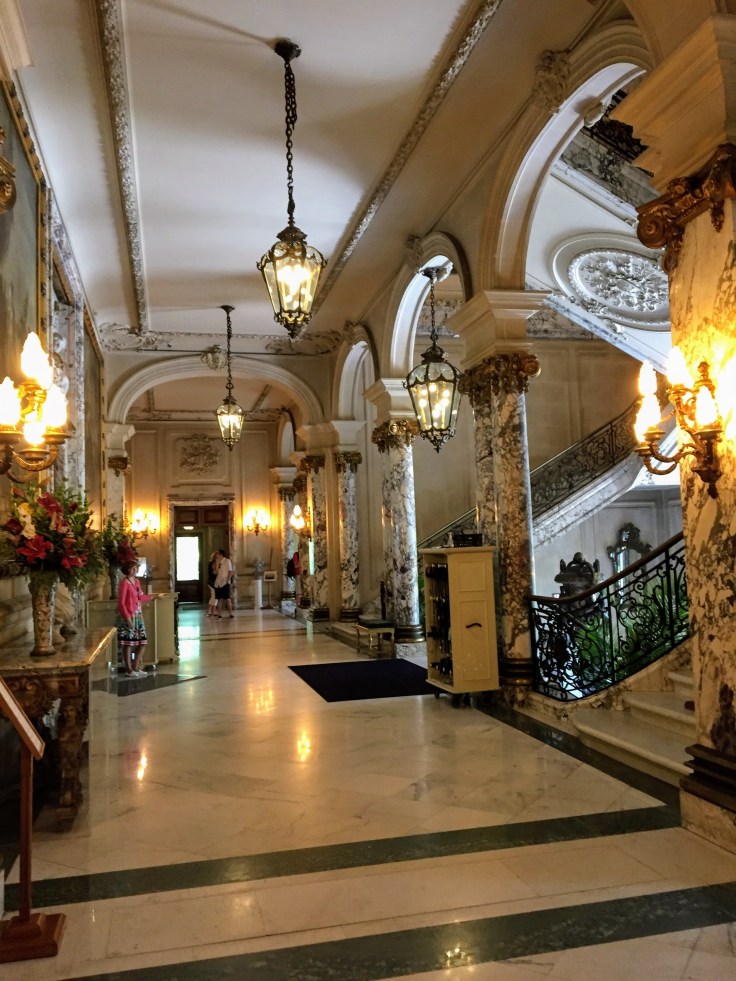
The Grand Hall:

2017-07-08 Newport - Breakers 03

2017-07-08 Newport - Breakers 04

2017-07-08 Newport - Breakers 09


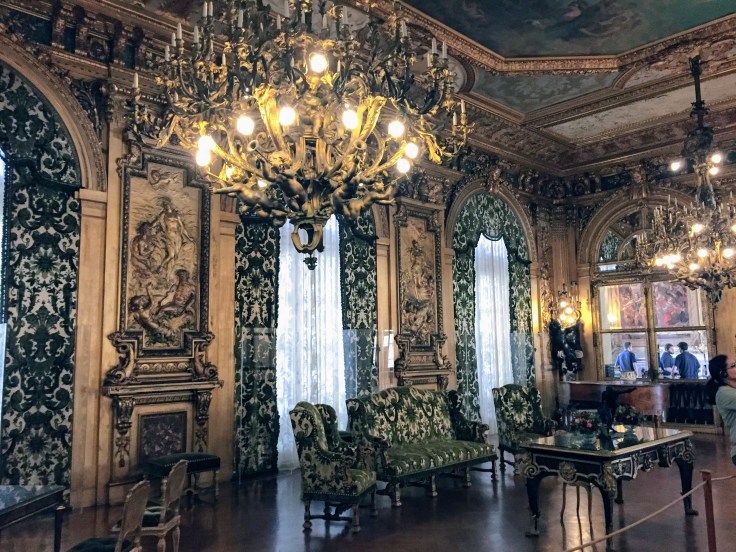
More of the grand, gilded rooms…

2017-07-08 Newport - Breakers 05


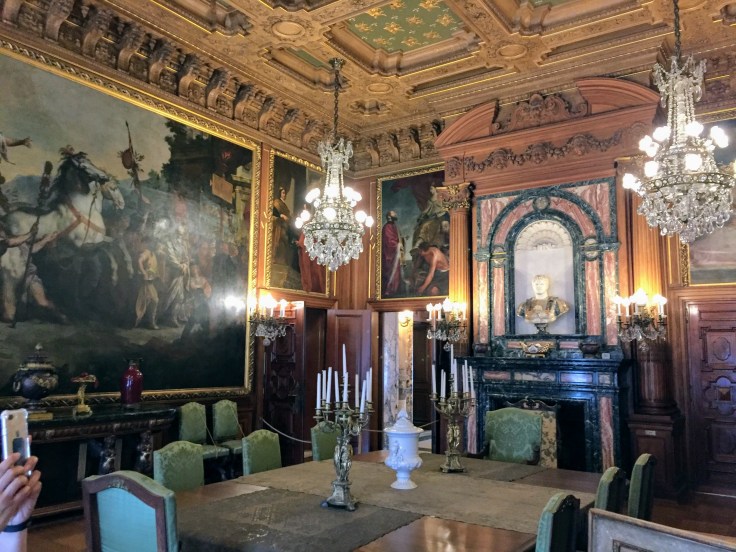
The Dining Room:

2017-07-08 Newport - Breakers 07


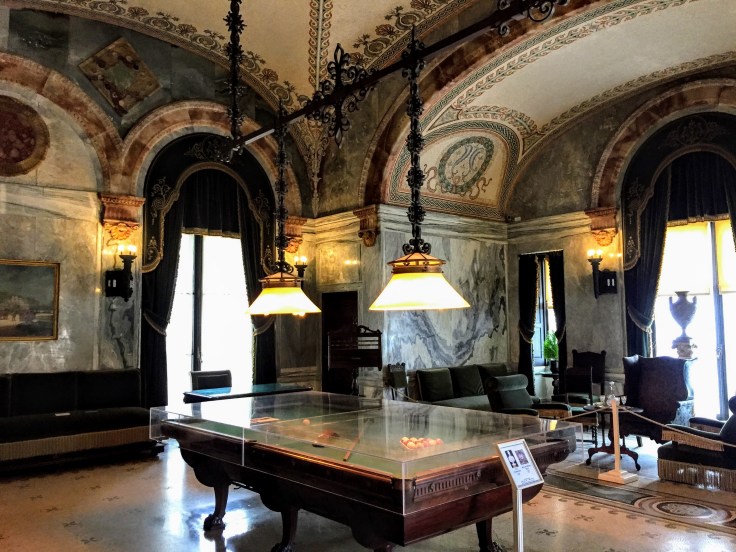
The Billiard Room:

2017-07-08 Newport - Breakers 10


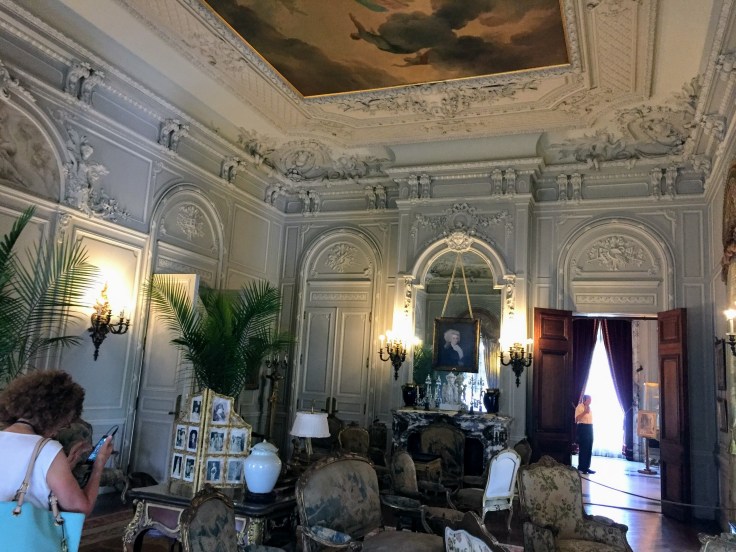
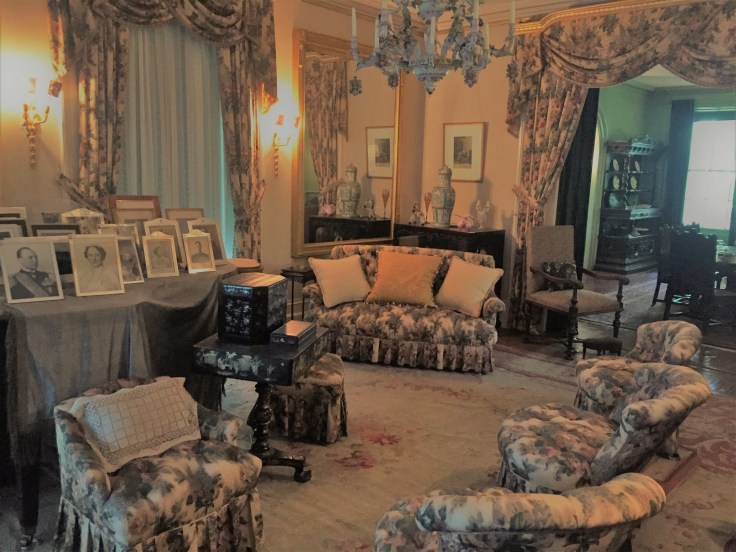
Sitting Room; note the platinum accents in the wallpaper…

2017-07-08 Newport - Breakers 11

2017-07-08 Newport - Breakers 12


The Music Room:

2017-07-08 Newport - Breakers 13


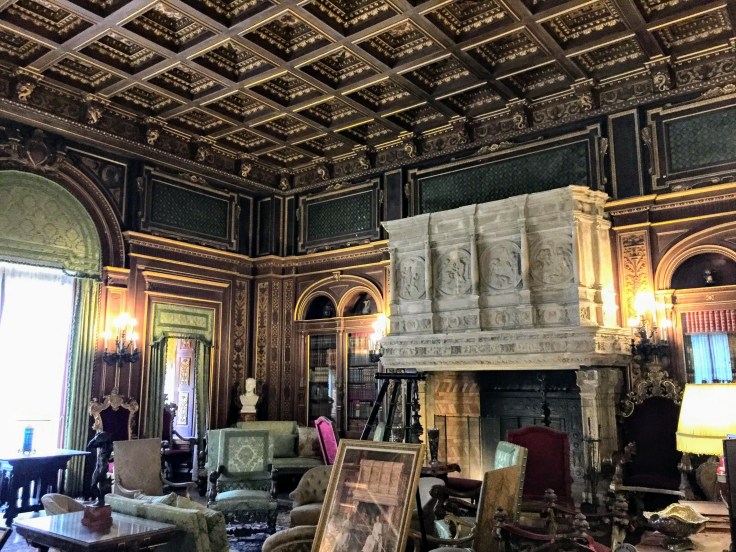
The Library:

2017-07-08 Newport - Breakers 14


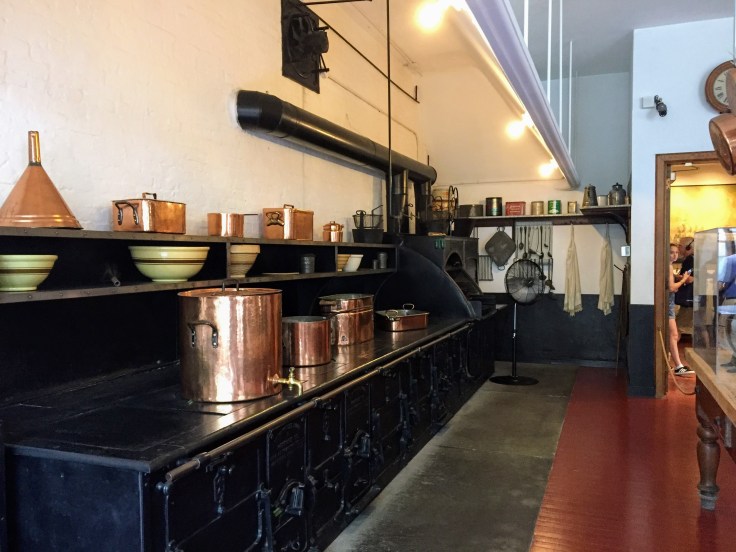
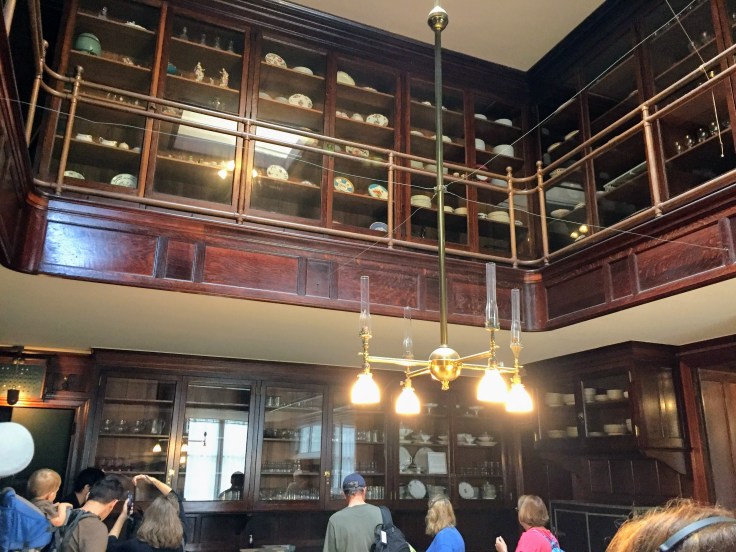
And more utilitarian spaces… The 2 story Butler’s Pantry:
2017-07-08 Newport - Breakers 15


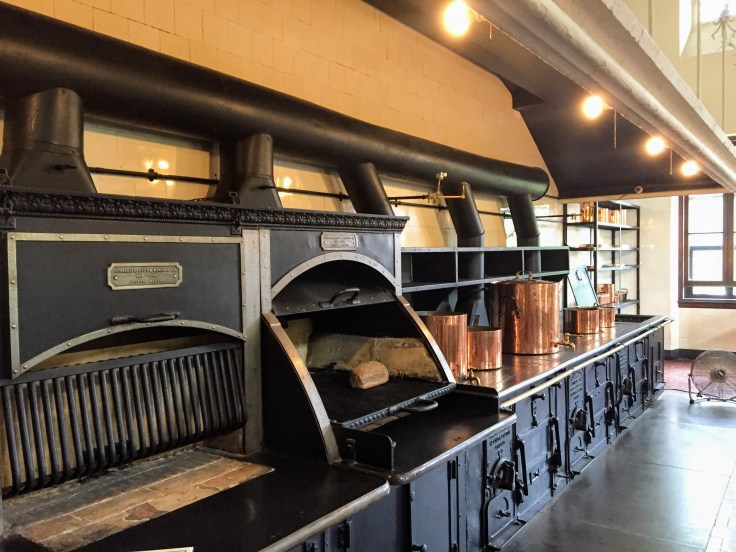
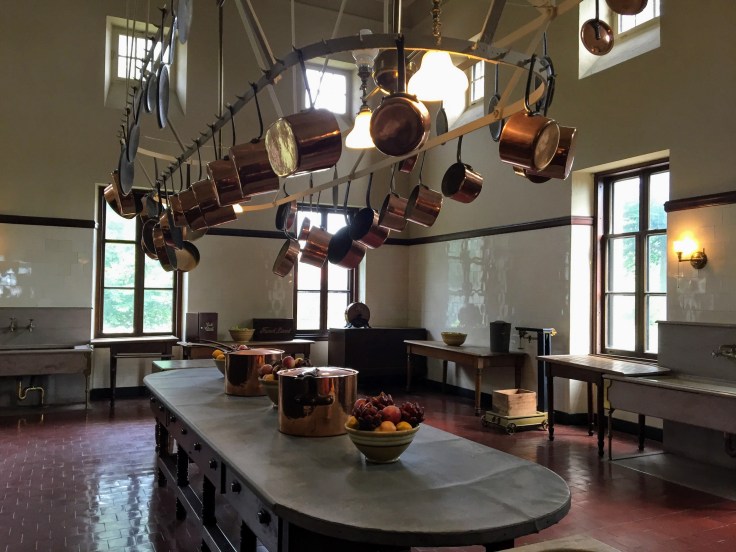
The Kitchen:

2017-07-08 Newport - Breakers 17


2017-07-08 Newport - Breakers 16


2017-07-08 Newport - Breakers 18


And, finally, the view over the grand lawn:

2017-07-08 Newport - Breakers 19


Marble House:

Over 500,000 cu. ft. of marble was installed inside and out…

The Approach:
2017-07-08 Newport - Marble House 01


The Dining Room:

2017-07-08 Newport - Marble House 02


The Library:

2017-07-08 Newport - Marble House 03


The Dining Room:

2017-07-08 Newport - Marble House 04


The Drawing Room:

2017-07-08 Newport - Marble House 05


The Grand Stair:

2017-07-08 Newport - Marble House 06


The Master Bedroom:

2017-07-08 Newport - Marble House 07


The other Master Bedroom:

2017-07-08 Newport - Marble House 08


The the fun rooms…

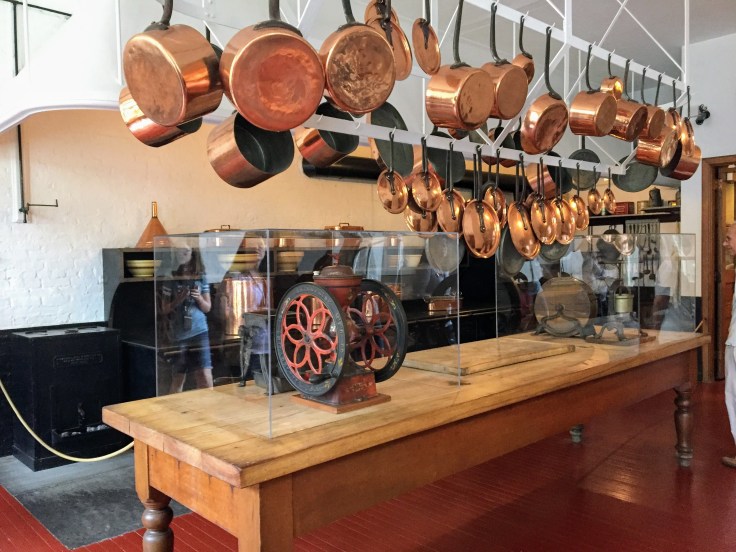
The Kitchen:

2017-07-08 Newport - Marble House 09b

2017-07-08 Newport - Marble House 09a

2017-07-08 Newport - Marble House 09


The Housekeeper’s Office:

2017-07-08 Newport - Marble House 10


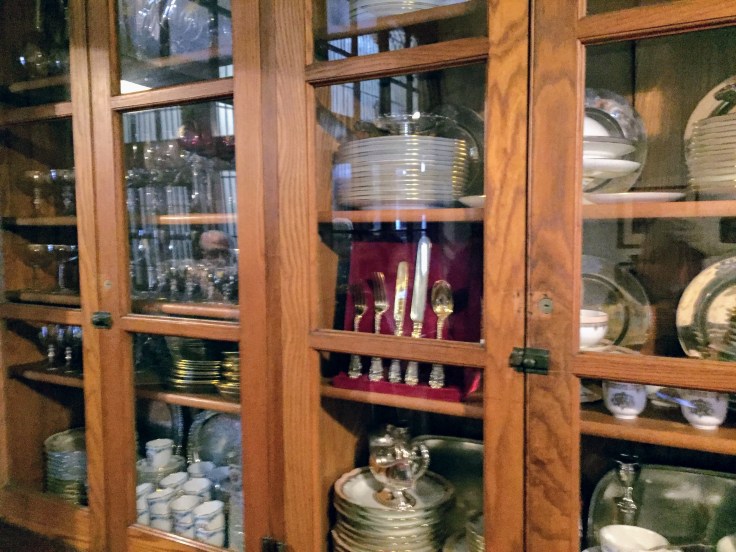
Part of the Butler’s Pantry:

2017-07-08 Newport - Marble House 11


Rosecliff:

All the furnishings were sold off in 1941; in the early 1950s the house bought by a family from New Orleans, who summered here until the 1960s; most furniture is from the 1950s…

The Approach:
2017-07-08 Newport - Rosecliff 01


The Grand Stair:

2017-07-08 Newport - Rosecliff 02


Entrance to the Drawing Room:

2017-07-08 Newport - Rosecliff 03


The Drawing Room:

2017-07-08 Newport - Rosecliff 04


The Ballroom:

2017-07-08 Newport - Rosecliff 05

2017-07-08 Newport - Rosecliff 06


The Library:

2017-07-08 Newport - Rosecliff 07


The Dining Room:

2017-07-08 Newport - Rosecliff 08


The Master Bedroom:

2017-07-08 Newport - Rosecliff 09


The Elms:

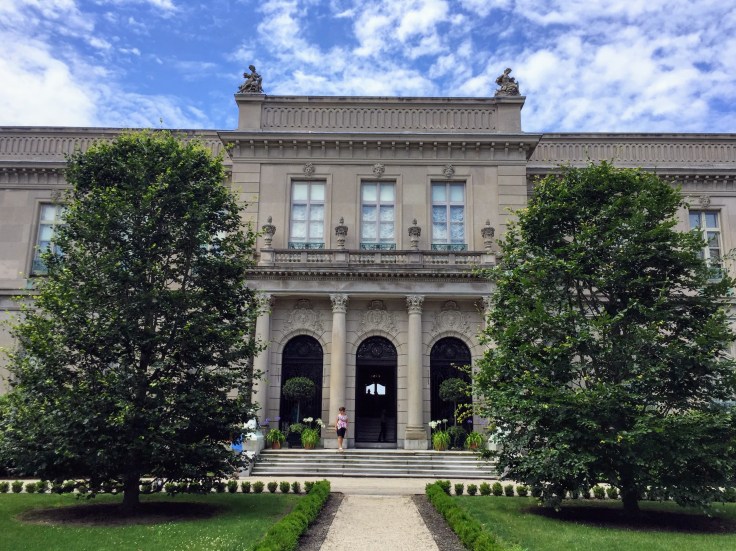
My favorite of the grand mansions.; The Berwind family started spending their summers in Newport in the 1890s, and they had The Elms built in 1901; Mrs. Berwind died in 1922; Mr. Berwind invited his niece,Julia Berwind, to take over hostess duties in the house.  Mr. Berwind died in 1936. Julia remained in the house until her death in 1961.  When Julia Berwind died, The Elms was one of the very last Newport cottages to be run in the fashion of the Gilded Age: forty servants were on staff, and Miss Berwind’s social season remained at six weeks each year.  The family lived day-to-day on the second floor. The first floor was for entertaining only… The kitchen and other service rooms are in the basement, and there is a hidden third floor containing the servants’ bedrooms (more on this tomorrow…). Mr. Berwind loved technology and the house was fitted with all the latest devices, and was continually being updated until Mr. Berwind’s death in 1936. Julia had no interest in technology, so nothing was changed after 1936.

The approach:
2017-07-08 Newport - The Elms 01


The Grand Hall:

2017-07-08 Newport - The Elms 02

2017-07-08 Newport - The Elms 03

2017-07-08 Newport - The Elms 04


The Grand Stair:

2017-07-08 Newport - The Elms 06


The Library:

2017-07-08 Newport - The Elms 07


The Conservatory:

2017-07-08 Newport - The Elms 08


The Drawing Room:

2017-07-08 Newport - The Elms 09


The Music Room:

2017-07-08 Newport - The Elms 10


The Dining Room:

2017-07-08 Newport - The Elms 11


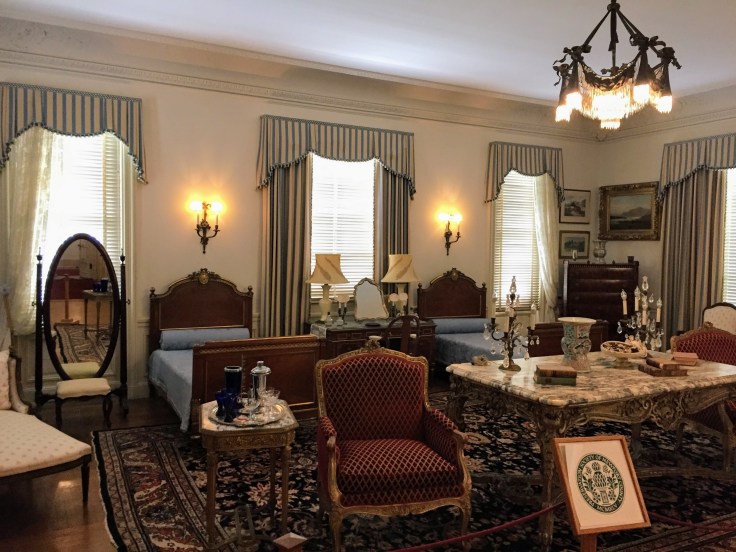
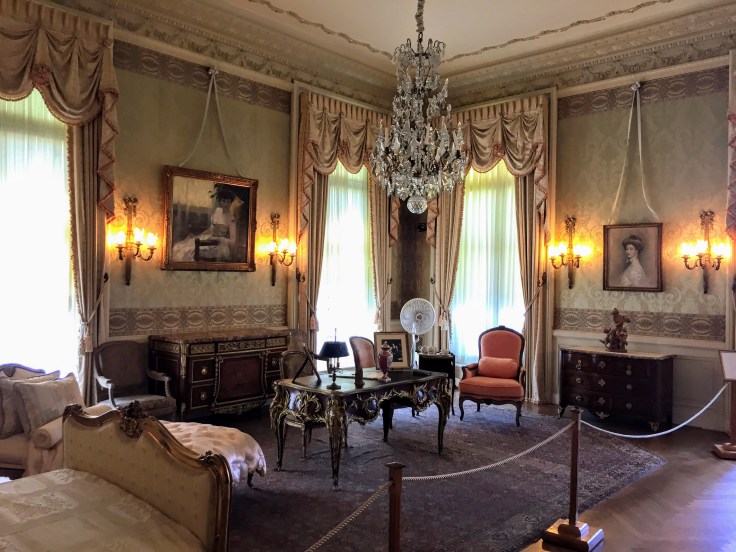
Mrs. Berwind’s Bedroom; this was also her sitting room, where she would receive lady friends during the day:

2017-07-08 Newport - The Elms 14

2017-07-08 Newport - The Elms 16


Mr. Berwind’s Bedroom:

2017-07-08 Newport - The Elms 17

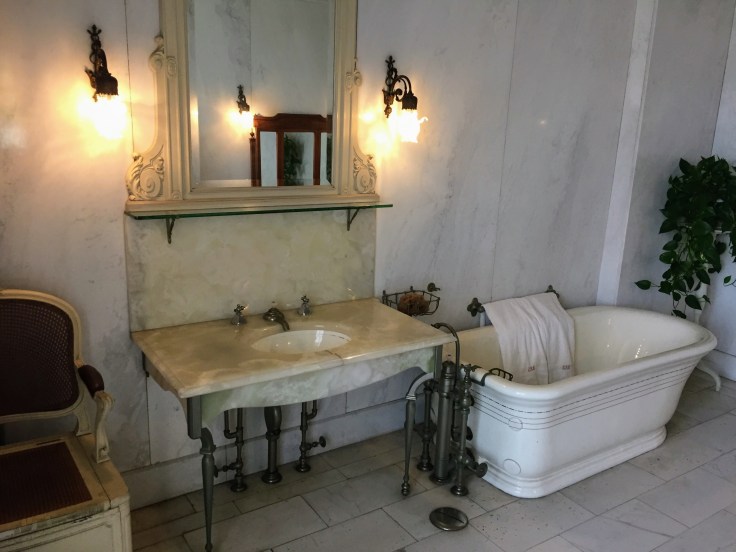
Mr. Berwind’s Bathroom:

2017-07-08 Newport - The Elms 18


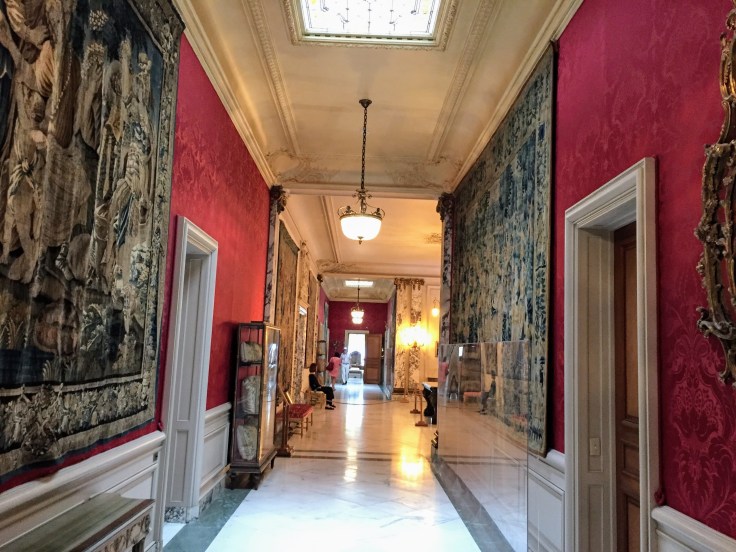
The Upstairs Hall; the stained glass skylights in the ceiling get their light from glass block floor in the servants’ hall on the third floor; the actual skylight is above the third floor, in the roof. (More on this tomorrow).
2017-07-08 Newport - The Elms 15


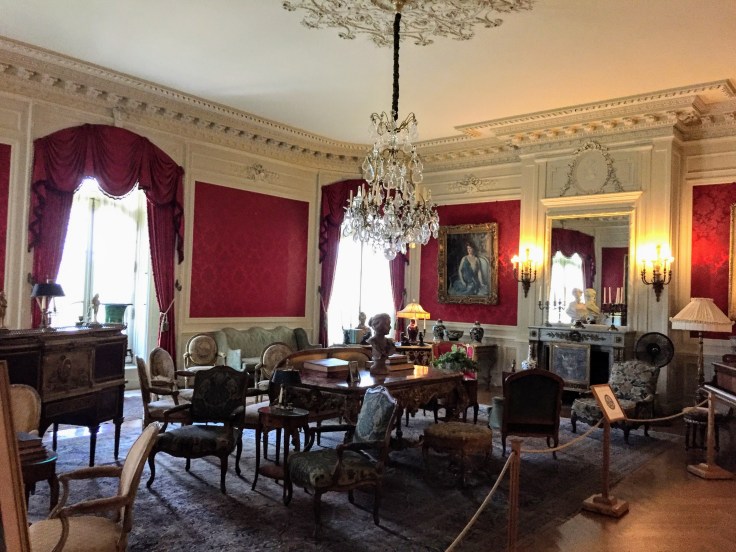
The Family Sitting Room on the second floor:
2017-07-08 Newport - The Elms 19


The Kitchen:

2017-07-08 Newport - The Elms 20


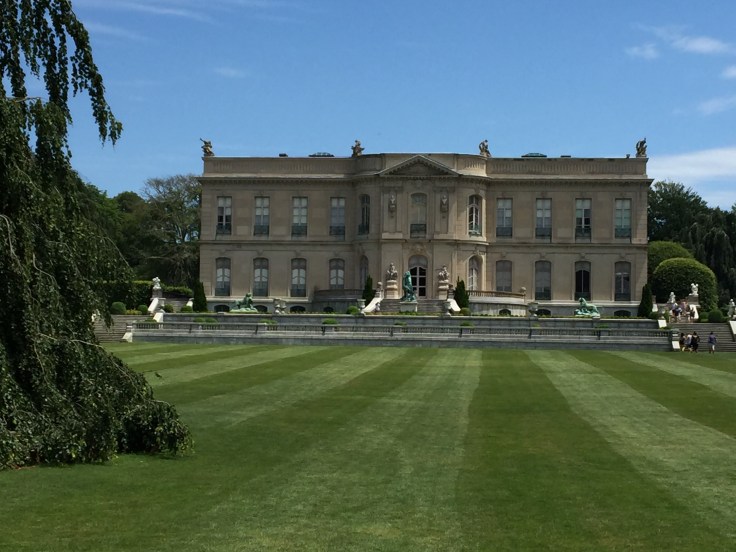
The Grand Lawn to the rear:

2017-07-08 Newport - The Elms 24


The Carriage House:

2017-07-08 Newport - The Elms 28


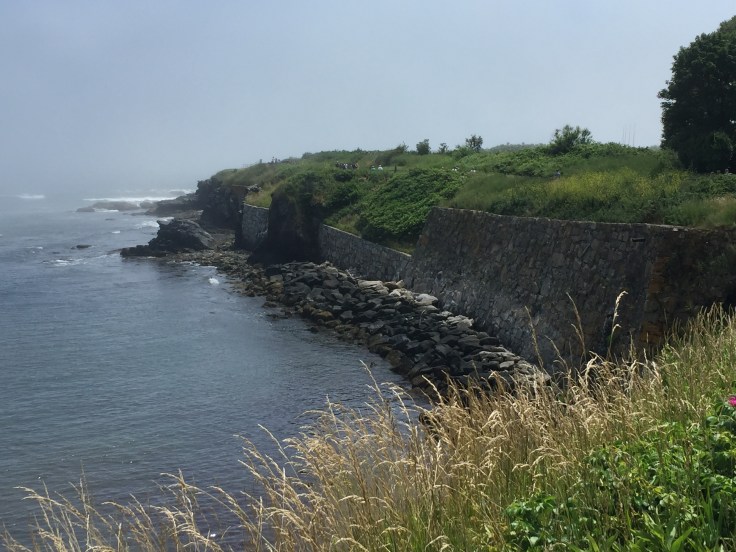
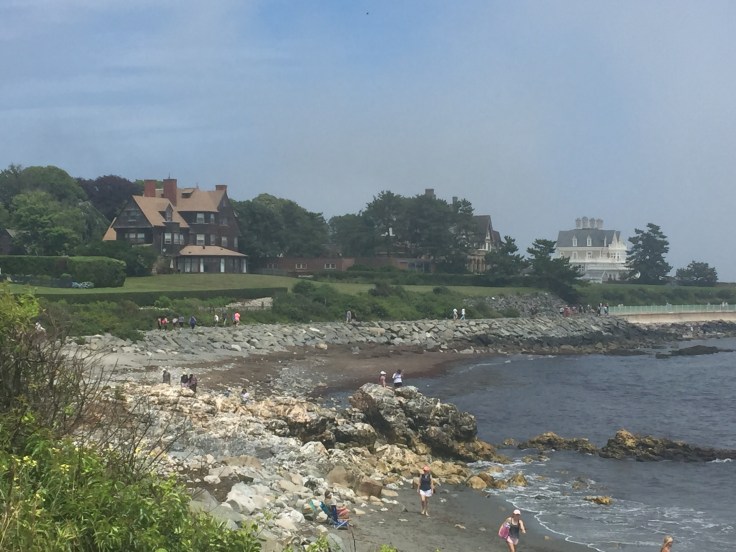
After touring these four houses, we needed a break. We took a long walk along “Cliff Walk”, a beautiful ocean front walkway around Newport:

2017-07-08 Newport - Cliffwalk 08

2017-07-08 Newport - Cliffwalk 06

2017-07-08 Newport - Cliffwalk 05

2017-07-08 Newport - Cliffwalk 01

There were even surfers:

2017-07-08 Newport - Cliffwalk 07


We had time for one more house:

The Isaac Bell House:

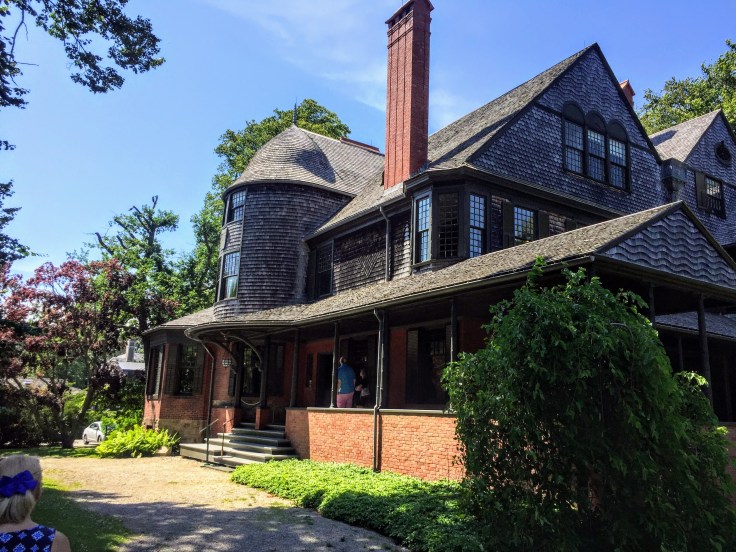
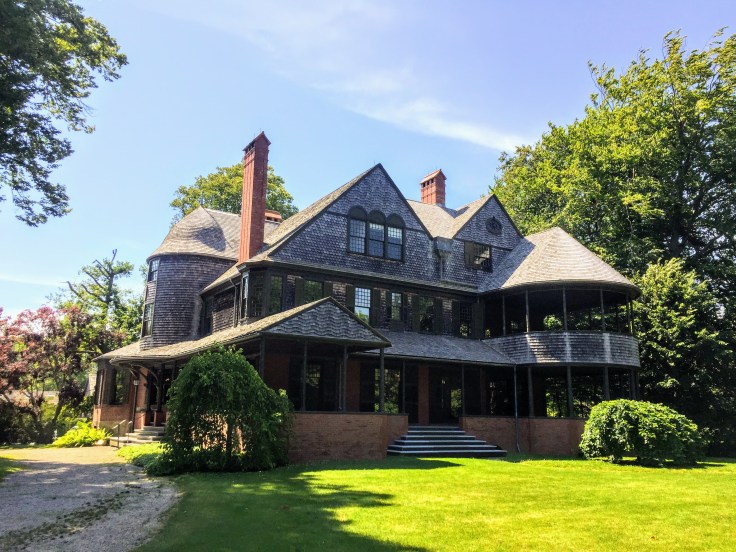
This house is totally different from the others; it is not a neoclassical stone pile, but a post-Victorian cottage at a more human scale. It is older than the grand houses, but it portends what is coming, and what continued long after the neoclassical craze was over. This is the type of house Frank Lloyd Wright was trained to design. He took it to a whole new level…

This house was lived-in up until the 1990s, as a boarding house, a nursing home, and other uses.  It is still undergoing restoration…

The Exterior:
2017-07-08 Newport - Isaac Bell 04

2017-07-08 Newport - Isaac Bell 01

2017-07-08 Newport - Isaac Bell 03

2017-07-08 Newport - Isaac Bell 02


The interior hall is dark:

2017-07-08 Newport - Isaac Bell 30

2017-07-08 Newport - Isaac Bell 11


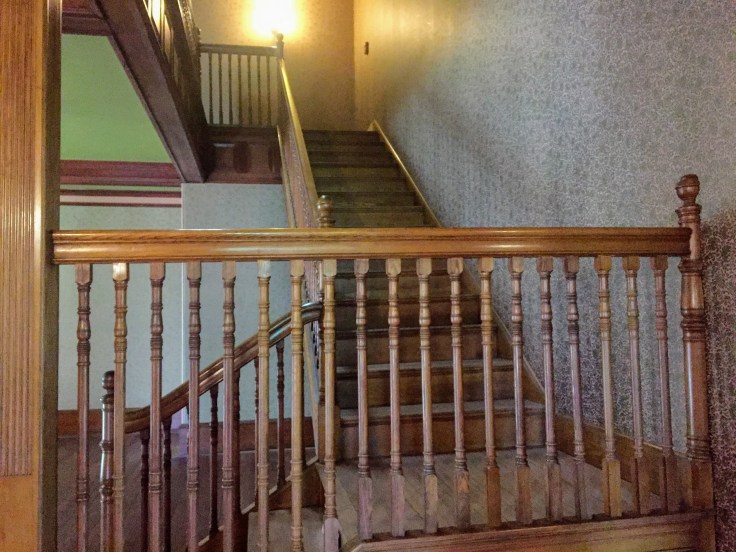
The Stair:

2017-07-08 Newport - Isaac Bell 31

Here we see something this house has in common with the others: These decorative panels were bought as bedsteads in Europe, dismantled and cut apart, and used as decoration on the stair:


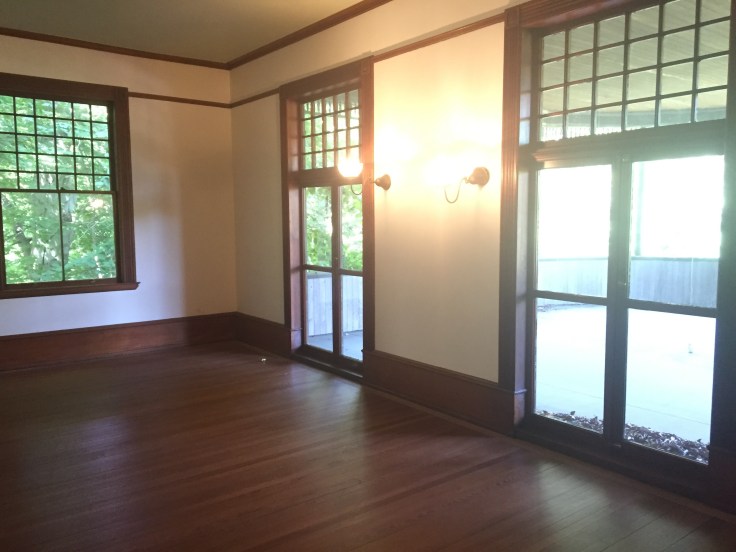
The Living Room:
2017-07-08 Newport - Isaac Bell 23


2017-07-08 Newport - Isaac Bell 36


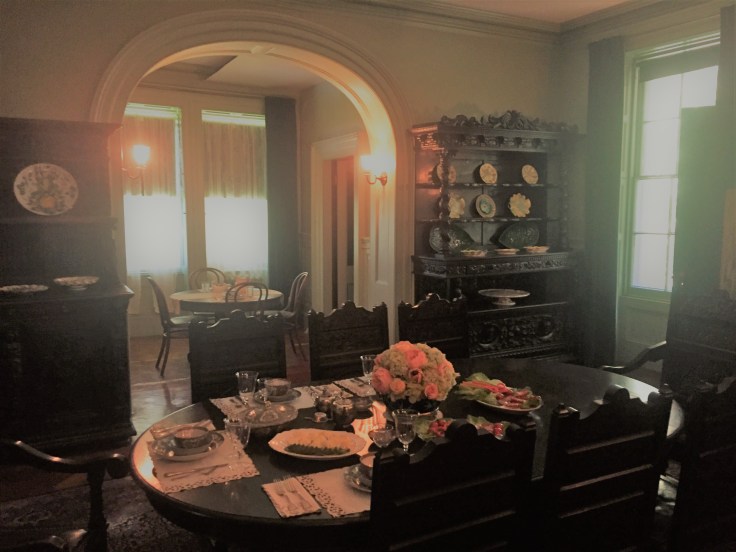
The Dining Room:

2017-07-08 Newport - Isaac Bell 37


2017-07-08 Newport - Isaac Bell 22


The Library:


The Upstairs:

2017-07-08 Newport - Isaac Bell 38


2017-07-08 Newport - Isaac Bell 29


So it was a long day. We headed back to the Villa and the rest of the caravaners… An enjoyable time was had by all…


2017-07-04 Hudson Valley, NY; Roosevelt’s many houses in Hyde Park, and the Great Estates of the Vanderbilts

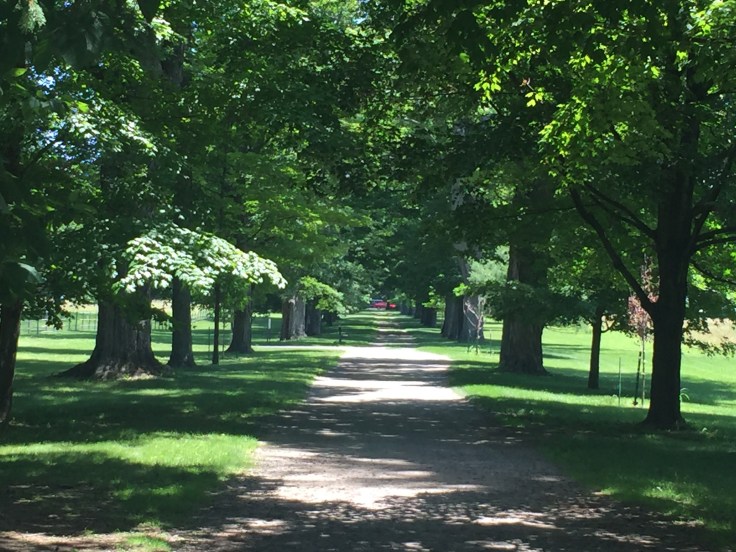
On 4th of July  we once again took to the train; this time going north, to Poughkeepsie.  At the train station we were shuttled to FDR’s Hyde Park estate, Springwood.  It has a nice driveway approach:

2017-07-04 Hyde Park FDR 31


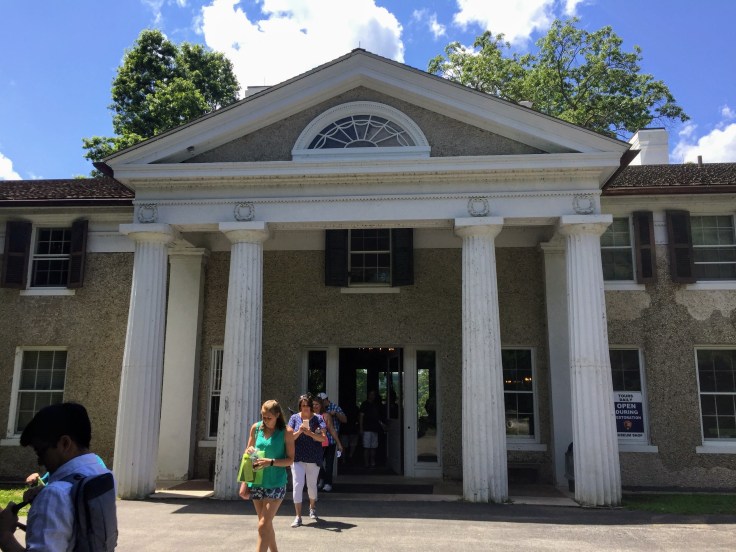
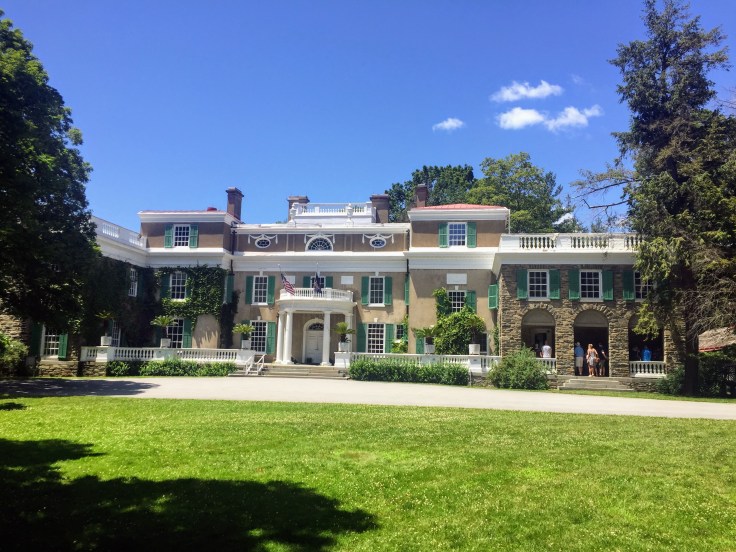
The house has a great presence as you approach:

2017-07-04 Hyde Park FDR 01

However, it is really a simple (yet large) farm house. Those columns you see aren’t marble, or even stone; they are wood, fashioned to imitate stone.  Inside, the rooms are quite plain, except for the Living Room; it is quite lovely:

2017-07-04 Hyde Park FDR 12


2017-07-04 Hyde Park FDR 11


The Sitting Room:

2017-07-04 Hyde Park FDR 13a


The Dining Room:

2017-07-04 Hyde Park FDR 13b


FDR was born in this house and lived here his entire life; for all but the last four years his mother lived here as well.  There are no permanent accommodations for the fact that he spent most of his waking hours in a wheelchair.  There is a ramp from the main level down to the Living Room, but when visitors were expected, he would transfer from the wheelchair to his desk chair in the Living Room, the ramp was removed and stored, and the wheelchair was hidden.  To access the upper level, he transferred himself into the dumbwaiter, and he hoisted himself up by using the ropes and pulleys.

As I said, FDR’s mother, Sara, lived here with FDR and his wife Eleanor.  FDR was a bit of a “Mama’s Boy” and Eleanor and Sara never got along well. Both Eleanor and FDR built separate, private houses for themselves on the estate, although FDR never slept in his…

Also on the grounds of the estate is the FDR Library; it was the first presidential library built, and it is the only presidential library that was actually used by a sitting president. It was built in about 1941, and expanded after his death.  There is a moving art installation in the garden: given by Winston Churchill’s grand-daughter, it is a sculpture made from pieces taken from the Berlin Wall.  It is entitled “Freedom of Speech”.  The western side is covered in graffiti; the east side is blank…

2017-07-04 Hyde Park FDR 22


In addition to being born here, and living here all his life, FDR is also buried here:

2017-07-04 Hyde Park FDR 07.jpg


Next we visited the Vanderbilt Estate, also in the city of Hyde Park.  Is is just one of many Vanderbilt mansions in America…

From the late 1870s to the 1920s, the Vanderbilt family employed some of the United States’s best Beaux-Arts architects and decorators to build an un-equalled string of New York townhouses and East Coast palaces.

The list of architects employed by the Vanderbilts is a “who’s who” of the New York-based firms that embodied the “eclectic” styles of the American Renaissance: Richard Morris HuntGeorge B. PostMcKim, Mead, and WhiteCharles B. AtwoodCarrère and HastingsWarren and WetmoreHorace TrumbauerJohn Russell Pope and Addison Mizner were all employed by the eight grandchildren of Cornelius “Commodore” Vanderbilt, who built only very modest houses for himself.

Commodore’s grandchildren inheritted about $200,000 from their father, and they treated it as play money to indulge their home-building passions;  I count 24 houses…

  1. Cornelius Vanderbilt II (1843–1899), built a townhouse, the “Cornelius Vanderbilt II House” (1883) at 1 West 57th Street, New York by George B. Post. Enlargements by George B. Post and Richard Morris Hunt. This mansion was, and remains, the largest private residence ever built in Manhattan. Demolished.  Also, “The Breakers” in Newport, Rhode Island, in 1892–95, which was also designed by Richard Morris Hunt.  Also, “Oakland Farm” (1893), mansion and stables on 150 acres in Portsmouth, Rhode Island. Demolished.
  2. Margaret Louisa Vanderbilt (1845–1924), built a townhouse (1882), part of the Triple Palace, at 2 West 52nd Street, provided to them by her father and shared with her sister Emily Thorn Vanderbilt and their families. Demolished.  Also,  Woodlea (1892–95), designed by McKim, Mead & White, a country estate in Scarborough, New York, now the Sleepy Hollow Country Club.
  3. William Kissam Vanderbilt (1849–1920) had three houses designed by Richard Morris Hunt.
    • Petit Chateau“, the New York City townhouse at 660 Fifth Avenue, built in 1882 with details drawn in part from the late-Gothic Hôtel de Cluny, Paris. Demolished in 1926.
    • “Idle Hour” country estate in Oakdale, Long Island, New York, was built in 1878–79 and destroyed by fire in 1899. A new “Idle Hour”, designed by Hunt’s son Richard Howland Hunt, was built on the same property from 1900–01 of brick and marble in the English Country Style and is now part of the Dowling College Campus.
    • Marble House” summer home in Newport, Rhode Island, in 1888–92.
  4. Emily Thorn Vanderbilt (1852–1946) built a townhouse, 642 Fifth Avenue, part of the Vanderbilt Triple Palace, provided to them by her father. Demolished. Also, “Elm Court” in Lenox, Massachusetts, in 1887. It is the largest shingle-style house in the United States.
  5. Florence Adele Vanderbilt (1854–1952) built a townhouse at 684 Fifth Avenue, New York (1883). Designed by John B. Snook,  Demolished.  Also, Florham” in Convent Station, New Jersey, in 1894–97. Designed by McKim, Mead and White as a summer estate, it is now used for classrooms, faculty offices, and administration at Fairleigh Dickinson University.  Also, “Vinland” in Newport, Rhode Island. Renovated by Ogden Codman, Jr.. Now part of the Salve Regina University.  Also, a townhouse, her second, a 70-room house at 1 East 71st Street, New York. Designed by Whitney Warren. Demolished.
  6. Frederick William Vanderbilt (1856–1938) built “Hyde Park” in Hyde Park, New York. Designed by McKim, Mead and White and built in 1896–99.  Also,  “Rough Point” in Newport, Rhode Island designed by Peabody and Stearns built in 1892. Also, “Pine Tree Point“, Adirondack Great Camp on Upper St. Regis Lake in 1901. Also, “Sonogee” (1903) in Bar Harbor, Maine purchased and renovated in 1915.
  7. Eliza Osgood Vanderbilt (1860–1936) built “Shelburne Farms” in Shelburne, Vermont, built in 1899.  Also, a townhouse (1883) at 680 Fifth Avenue, New York. The house was a wedding gift from William H. Vanderbilt to his daughter. Demolished.  Also, “NaHaSaNe” (1893), the 115,000 acre Great Camp located on Lake Lila in the Adirondacks.
  8. George Washington Vanderbilt II (1862–1914) built a townhouse (1887) at 9 West 53rd Street in New York City. Designed by Richard Morris Hunt. Demolished. Also, “Biltmore” in Asheville, North Carolina, in 1888–95. Designed by Hunt, it is the largest house in the United States.  Also, houses at 645 and 647 Fifth Avenue, New York, called the “Marble Twins”. 1902–05. Number 647 survives, a designated landmark, as the flagship store for Versace.  Also, “Pointe d’Acadie” (1869), the Bar Harbor, Maine cottage purchased and renovated in 1889. Demolished 1952

The Vanderbilts started the craze of building ostentatious mansions to showcase their wealth and to be a backdrop for their lavish parties. You will hear more about these houses in a few days when we visit the “Summer Cottages” in Newport, Rhode Island.

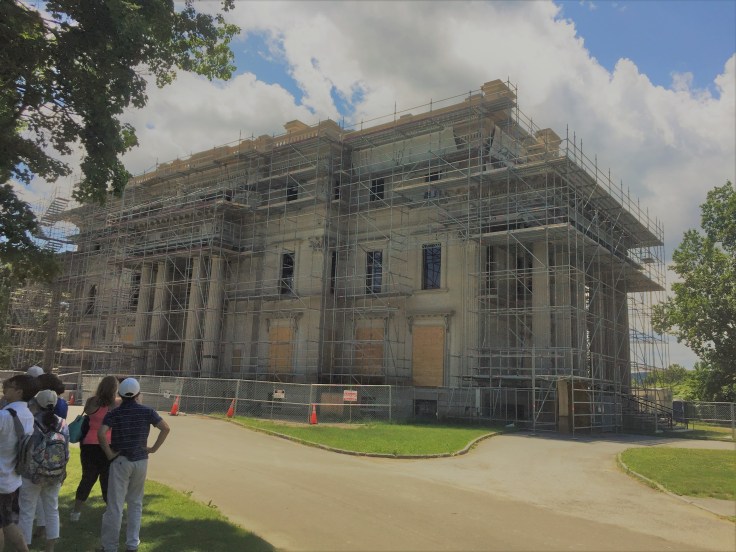
The Frederick Vanderbilt house in Hyde Park is arguably the smallest of the grand houses, a mere 55,000 square feet.  Unfortunately, it is undergoing restoration and thus is covered in scaffolding and slipcovers.

Today’s visitors center was originally built as a cottage for the Vanderbilts to view the ongoing construction:2017-07-04 Vanderbilt Hyde Park 01


The mansion as it looks today:

2017-07-04 Vanderbilt Hyde Park 02

2017-07-04 Vanderbilt Hyde Park 02a


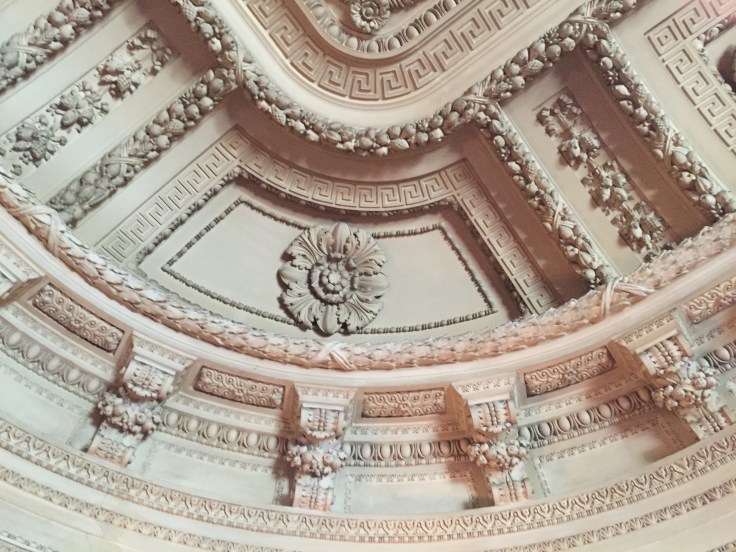
We were allowed to take interior photos, but the interiors are in a state of disarray:

2017-07-04 Vanderbilt Hyde Park 03

2017-07-04 Vanderbilt Hyde Park 04

2017-07-04 Vanderbilt Hyde Park 05

2017-07-04 Vanderbilt Hyde Park 07

As you can see, this house, like others I will show you in Newport, is simply an ostentatious display of excess;  these people were not patrons of artists who benefited their development; they simply bought castles and palaces in Europe, dismantled them, and reassembled them here in America. Don’t forget, this is one on the smallest, simplest Vanderbilt house; we will see more…

We returned on the train back to the Villa; this being the 4th of July, the Park was packed with thousands of people, crowding the beaches and lawns.  It was quite a madhouse. Luckily the RV park is about 1/2 mile beyond all the partying, so we were not affected by the crowds once we were finally able to drive by them. W spent the evening cleaning and packing. Today marks the final day of Part 1 of this Odyssey; tomorrow we rendezvous with the Nor by Nor’east caravan in Ashaway, Rhode Island.


2017-07-02 New York, NY; Frank Lloyd Wright, Vincent Van Gogh, St. Patrick’s Cathedral, The High Line, and John Williams Campbell

Before I start today’s post I would remiss if I didn’t wish you all a belated Happy Canada Day with a photo of my favorite Canadamericans:

2017-07-01 McAnoy


Sunday dawned quite nicely, and we drove the 1.9 miles through the park to the local train station. We bought our tickets for a round trip to New York City; it is about a 55 minute ride.  I find it quite amazing that we are less than 1 hour from NYC, yet we are far out into the country. This is the same timing as the train from Irvine to downtown Los Angeles, yet Irvine is not even close to being “in the country”…

The train trip was uneventful. We did notice a lot of barbed wire fences when passing through the city of Ossining. A quick Google search found this:

“Sing Sing Correctional Facility is a maximum security prison operated by the New York State Department of Corrections and Community Supervision in the village of Ossining, in the U.S. state of New York. It is located about 30 miles (50 km) north of New York City on the east bank of the Hudson River…

The prison property is bisected by the Metro-North Railroad’s four-track Hudson Line.”

2017-07-02 NYC Train 01

After arriving at Grand Central Terminal, and exiting onto the street, we gawked at the beautiful buildings:


Then we walked to Un Deux Trois Cafe for breakfast. It is a big place, not exactly a mom-and-pop operation, but it is very French, the food was good, and it was a fun time.

2017-07-02 NYC 123 01


As we walked towards MOMA, our main reason for this trip, we passed through Rockefeller Center. I had learned from my reading that it was developed during the Great Depression by John D. Rockefeller, Jr. on land owned by and leased from Columbia University. It was a major effort of “Urban Renewal” in the 1930s; however, Jr. never made any money from the development due to onerous terms imposed by Columbia. Finally, after Jr.’s death in 1960, when the center was falling into disrepair due to lack of capital for improvements, Jr.’s sons were able to renegotiate the deal and gain financial backing for improvements. It is a marvelous complex, the grounds teaming with people on this sunny Sunday morning.  It is no longer owned by the Rockefellers…

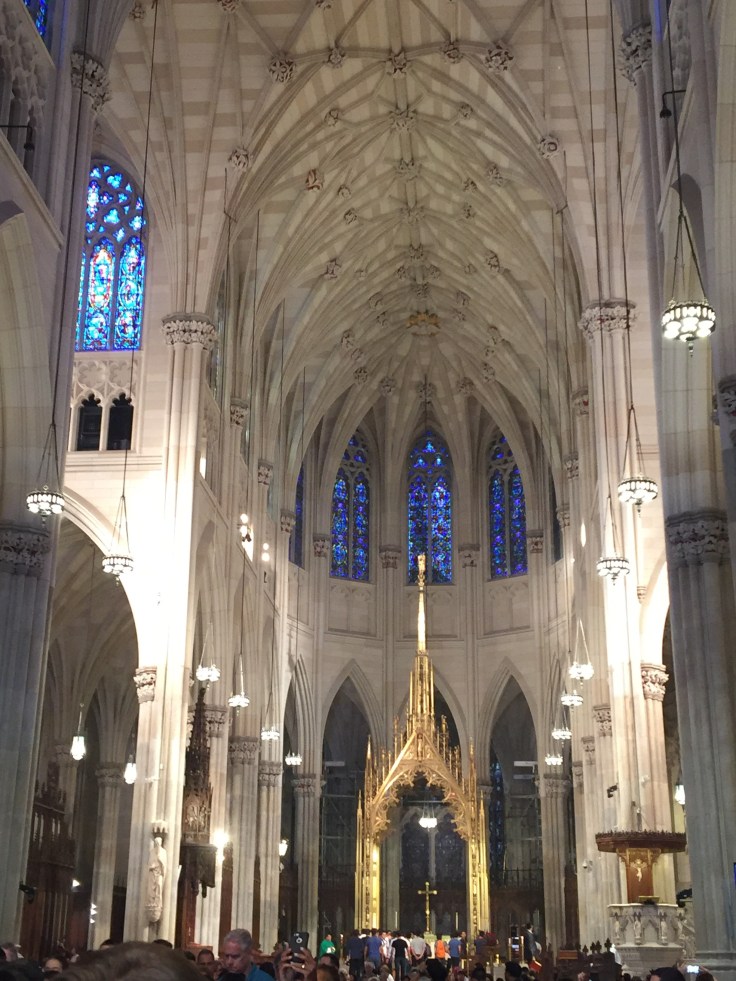
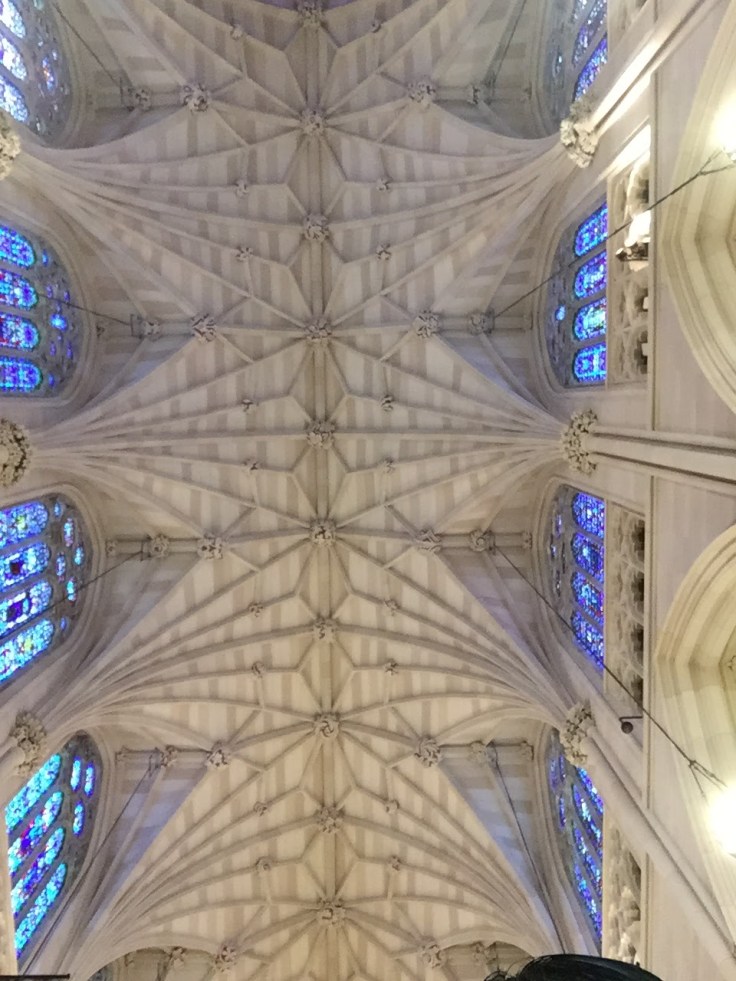
Across the street we found St. Patrick’s Cathedral.  Being Sunday morning, we stopped in for the 10:15 am services.  In celebration of Independence Day the great organ played “Stars and Stripes Forever”, and our final hymn was “America the Beautiful”…

2017-07-02 NYC St Patrick Cathedral 08

2017-07-02 NYC St Patrick Cathedral 062017-07-02 NYC St Patrick Cathedral 01

2017-07-02 NYC St Patrick Cathedral 04


Then  we were off to MOMA.  The Museum of Modern Art was a true grassroots effort, started by three ladies on their kitchen table, with nothing except a few hundred million dollars of Rockefeller money.  The main driver was Abby Aldrich Rockefeller, wife of Jr. (Jr. himself hated modern art…)  If fact, when MOMA needed land for a sculpture garden, Abby and Jr. donated their 9 story house next door, which was promptly demolished.

We were there for an exhibit of Frank Lloyd Wright drawings and models, in celebration of FLW’s 150th birthday:  Unpacking the Archive

It was a delightful exhibit. FLW used his drawings as working papers, to be scribbled on, torn in half, and reassembled; they were teaching tools, not precious objects d’art. There were models, too: The Price Tower in Bartlesville, OK. (See my blog post onJune 14, 2017), as well as the previously designed skyscraper that FLW designed for NYC, but which was never built.

After the FLW exhibit we took a quick detour upstairs to see Van Gogh’s The Starry Night. Wonderful…

So, with the afternoon still free, we headed downtown on the subway to see the 911 Memorial. It was mobbed with tourists, and it was quite hot.

2017-07-02 NYC World Trade Center 02

2017-07-02 NYC 911 Memorial 02

We saw one of the beautiful fountains, then headed back north to experience the High Line.  The High line is a linear park located on an abandoned railroad viaduct, about 1 1/2 miles long, on NYC’s west side. It is a delightful walk, and it was crowded with locals and tourists, alike.  We had lunch in its shadow, which was also nice…

2017-07-02 NYC Lunch 03

2017-07-02 NYC High Line

2017-07-02 NYC Lunch 01

2017-07-02 NYC High Line 01


Then we walked back to Grand Central Terminal and had afternoon drinks in the Campbell Apartment.  For 30 years this space was the private office and apartment of John Campbell, one of the Directors of the Grand Central Railway. After Campbell’s death in 1957 the space was underused, and its glory faded. It was reopened as a bar recently and it was a lot of fun. Drinks and food were good, and it was fun being in this “secret” space.

We caught a return train back to Croton Point, had a short drive back to the Villa; this is what camping is all about for us: cities and country, highways, subways, and railways, beaches, waterfalls, houses, museums, and cathedrals; an enjoyable time was had by all.


2017-07-01 Hudson Valley, NY; the Rockefellers and Kykuit, the Union Church, Marc Chagall, and Henri Matisse;

Before our trip I had read a biography by Ron Chernow: “Titan – The Life of John D. Rockefeller.”  Shortly after, about two months ago, I read “Memoirs“, by David Rockefeller, JDR’s youngest grandson.  The first told the story of how JDR made his money (your opinion may vary…) and built his estate here in the Hudson Valley, and the second told of growing up in his grandfather’s house and eventually turning it into a museum and art gallery for all to enjoy.  Both also contained much information about the life of John D. Rockefeller, Jr (whom I refer to here as Jr.), David’s father. (David died in March, 2017 at the age of 101…)

We set out today to visit Kykuit, home to 4 generations of the Rockefeller family.  It is located a few miles from the Hudson River, east of Sleepy Hollow and Tarrytown, about 25 miles north of New York City.

Kykuit sits amid the vast family estate, known as Pocantico or Pocantico Hills; it occupies an area of  over 3,400 acres. During much of the 20th century, the estate featured a resident workforce of security guards, gardeners and laborers, and had its own farming, cattle and food supplies. It has a nine-hole, reversible golf course, and at one time had seventy-five houses and seventy private roads, most designed by JDR and Jr. A longstanding witticism about the estate quips: ‘It’s what God would have built, if only He had the money’.

(In 1946, the family considered donating a portion of the estate as a home for the newly formed United Nations.  Instead, they bought the 17 acre site in New York City and donated it to the UN…)

When JDR originally bought the estate in the late 1890s, he moved the family into an existing farm house.  He had no need for an elaborate mansion, unlike his wealthy contemporaries like the Vanderbilts, the Astors, or J. P. Morgan.  What he did want, and soon built, was a carriage house and stables for his prized horses, and a golf course for his personal use.

After the original house burned down, JDR wanted to move into another existing modest dwelling on the estate.  Instead, Jr. convinced him that he needed a grand house more befitting his status as the wealthiest man in America.  JDR finally agreed.  A new house was promptly built; it was found to be inadequate and faulty in both design and construction, and a new house was rebuilt in its place.  It was completed in 1913. It has four stories and two basements; however…

Unlike the monumental size and the display of vast wealth seen in other museum-like Gilded Age mansions, Kykuit’s cozy rooms are a reflection of the conservative and family-oriented lifestyle of the Rockefeller family.  The devout John D. Rockefeller’s puritan values dictated that there be no ballroom, no card room, no billiard room, and no place for drinking or other activities deemed to be inappropriate.  The house had only 40 rooms – very modest by the gilded age standards of the day… There are 11 family and guest bedrooms.

In fact, JDR and Jr. spent more money on the grounds then they did on the house; the last resident, Nelson, used the estate as a giant art gallery, displaying his huge collection of modern art.  To preserve the view, JDR moved an entire village, including the train station and miles of tracks, a few thousand yards further away. To keep down the noise of constant service deliveries he built tunnels so that all deliveries and service access to the house were underground.  Jr. and his wife built a “Playhouse” to keep their 6 children occupied.  It is larger than the main house, and includes indoor and outdoor tennis courts, indoor and outdoor swimming pools, a bowling alley, billiards, a soda fountain, a theater, and assorted other amenities.  About 86 acres were enclosed into the “Park”, which contained the main house, the Playhouse, a reversible 9 hole golf course, plus many other houses for various other family members over the years. All the rest of the land has always been left open for the public to use. It was all donated to the National Trust in the 1980s, and the house and some of the “Park” is now also open to the public.  (Some portions of the estate are still private, because family members still live in some of the houses…) The majority of the original 3,400 acres are now a New York State Park.

At the time of the donation, except for family events, the 11-bedroom house had been unoccupied since Nelson Rockefeller, a grandson of JDR, died in 1979. The National Trust acquired a quarter interest in the 600-acre Rockefeller property in Pocantico Hills in 1979 under his will. In 1983, the Rockefeller Brothers Fund and the National Trust determined the boundaries of the new 86-acre Pocantico Historic Area, which includes the property and Nelson Rockefeller’s art collections at Kykuit.

Throughout the house, priceless East Asian pottery that the family avidly collected and cherished anchors each room. The main floors and basement (the latter was turned into a vast art gallery) boast modern art by the likes of Pablo Picasso, Alexander Calder, Andy Warhol and Henry Moore collected by modern art enthusiast Abby A. Rockefeller Jr.’s wife) and Nelson Rockefeller

Again, interior photographs are not allowed on the tour. The house has only two rooms that visitors would ever see – the office and a small parlor. There is no grand staircase, no Ballroom, no Grand Hall. This house was not designed for ostentation and the display of wealth.  Most of the house was reserved for the family.  Life for the family revolved around a “family” room in the center of the house, which contained a massive pipe organ (removed by Nelson). There is a large dining room for family meals, and a quieter sitting room. The terrace to the west boasts a view over the treetops to the Hudson River. No other buildings are visible between the house and the river.

On the second floor are two complete 3 room master suites; one or the other was occupied by JDR and his wife Cetti, then Jr. and his wife Abby, and finally Nelson and his wife Happy. The other Master suite was used for honored guests.  More family bedrooms are on the third floor and servant bedrooms are on the fourth floor.

Our tour started in the town of Sleepy Hollow at the Visitor Center. We took a shuttle up to the Park, where we drove along the original carriage roads, then up to the entrance court of Kykuit.  The front of the house is relatively narrow, but the view to the East is fabulous.


Entrance – East Facade:

2017-07-01 Kykuit 06


Side facing the lawns and gardens:

2017-07-01 Kykuit 08


West views towards the Hudson:


The original family swimming pool:

2017-07-01 Kykuit 43


The Teahouse; Nelson had swimming pools built where the sunken lawns were (and are), and he converted the Teahouse into a soda fountain…

2017-07-01 Kykuit 29


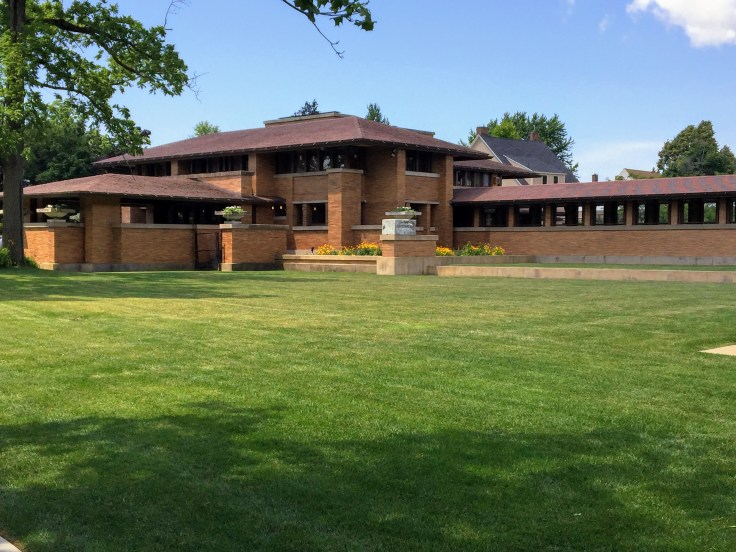
While there are obviously many differences between Kykuit and other neo-classic great houses of this era, there is one striking thing that we noted:  These houses were all built about the same time as the Martin House, which we saw in Buffalo. (See my June 28 2017 blog post…)  As these piles of excess were being assembled, Frank Lloyd Wright was rethinking the whole idea of what a house is, and what 20th century architecture is.

Compare:

Kykuit…

2017-07-01 Kykuit 01.jpg

Martin…

2017-06-28 Martin 05.jpg


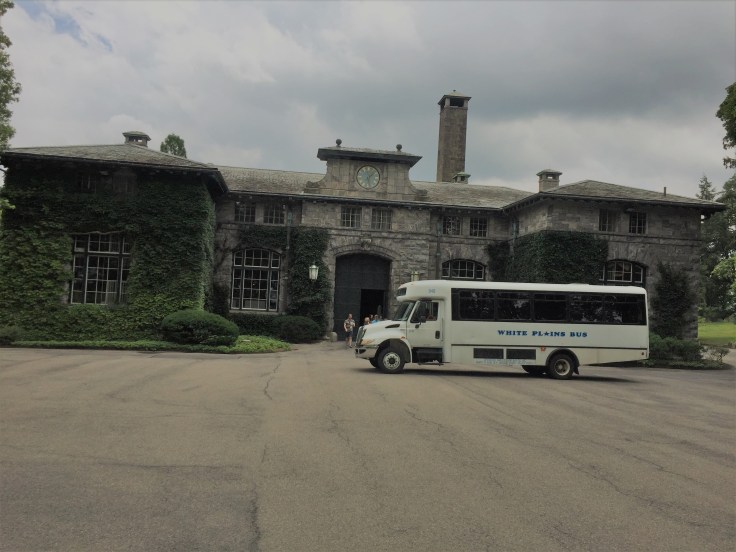
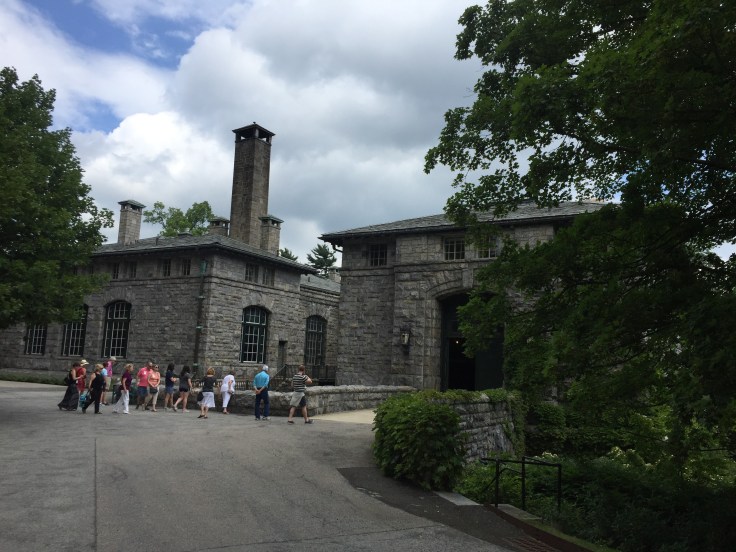
As I said above, JDR loved horses and carriage racing. His first act upon buying the estate property was to build a Carriage House.  Today it contains historic carriages and cars owned by the family.  The basement and upper stories have been converted to a conference center for the use of the family’s business and charitable interests.

2017-07-01 Kykuit 67a

2017-07-01 Kykuit 63

2017-07-01 Kykuit 65

2017-07-01 Kykuit 66

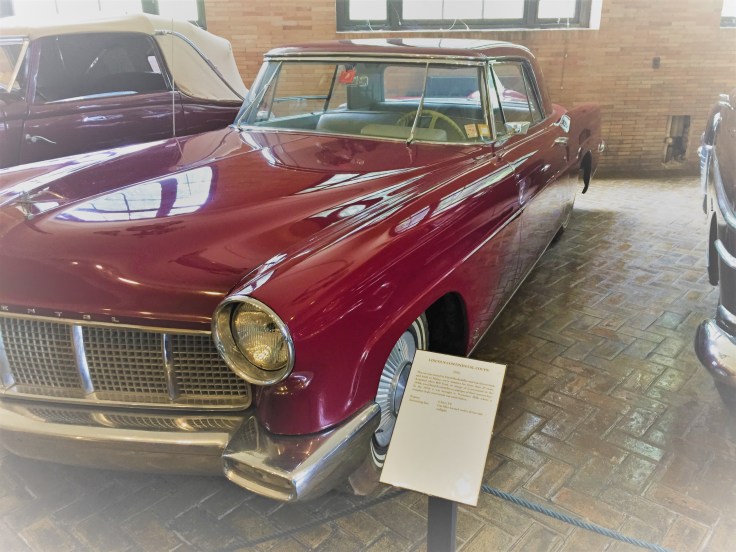
This is David Rockefeller’s Continental.  The joke here is that, as any Continental lover knows, this car is NOT a Lincoln; Continental was a separate division of Ford when this car was built…


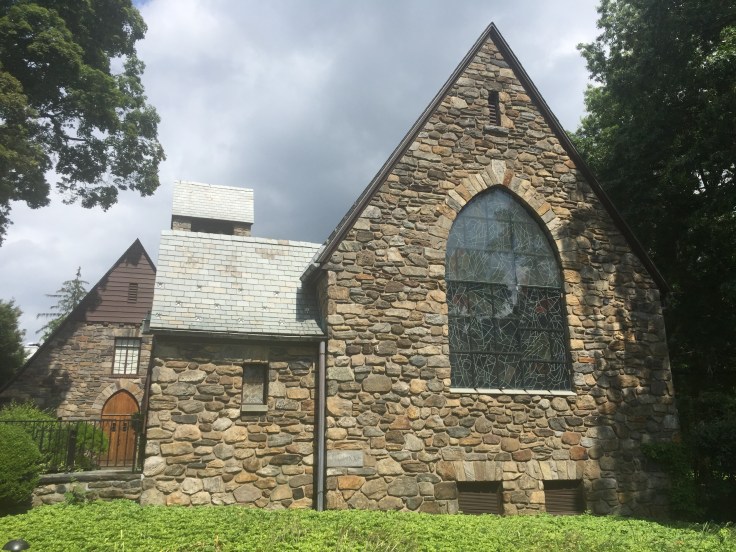
After the tour we were shuttled back to Sleepy Hollow; we grabbed a quick lunch in a local pub, then drove to The Union Church of Pocantico Hills.  This tiny country church has a stained glass rose window by Henri Matisse, and 9 stained glass windows by Marc Chagall… After all, when some of your parishioners are the Rockefeller family, things get done.

The church was built by John D. Rockefeller, Jr. in 1921, as part of his plans to develop the town of Pocantico Hills, which was below his estate Kykuit.   It is a one story neo-Gothic style building with fieldstone foundation and walls and a slate covered, highly pitched gable roof. In 1930-1931, a parish hall was added to the east end of the church.

Upon the death of Jr.’s wife, Abby Aldrich Rockefeller, in 1948, their son Nelson Rockefeller had Henri Matisse design the church’s rose window in honor of her memory shortly before the artist’s own death in 1954.  When Jr. died in 1960, his children, led by their son, David Rockefeller,  had artist Marc Chagall design a Good Samaritan window in his honor.   This commission later expanded to include all eight windows in the nave of the church. They memorialize, among others, Michael Clark Rockefeller, Governor Nelson A. Rockefeller, Peggy Rockefeller (Mrs. David Rockefeller), and Mary Rockefeller (Mrs. Laurance Rockefeller). Chagall and members of the Rockefeller family carefully selected the subject matter for the windows from Biblical texts.

David Rockefeller, members of the Rockefeller family, and members of the church commissioned organ-builder Sebastian M. Glück to design and build the Laurance Spelman Rockefeller Memorial Pipe Organ in 2006.  It is used for public recitals as well as for church services.

2017-07-01 Union Church.jpg


We returned to the Villa and had a quiet evening in the Villa.  At least we were quiet. The weather was not.  We were treated to a huge thunderstorm that raged for what seemed like hours.  Thunder and lightning and heavy rain, things all so unfamiliar to us…  We were parked under a large tree, and, being unaccustomed to lightning, we were not sure whether this is a good thing or a bad thing… However, all ended well and we survived…


2017-06-28 Back in the USA; All the Martin Houses by Frank Lloyd Wright

We left the campground in Niagara early in the morning – we have a long day ahead of us; first we need to cross the border, then get to a 10:00 am house tour in Buffalo, then on to another tour in Rochester, then on to our next campground for the night…

The border was quite busy as we approached; the RV lane was very slow. They eventually opened another lane, and the RVs were cruising through at a fast clip, but we were stuck in our slow lane… Finally we made it to the customs agent. No smiles, no conversation, but easy questions and we were quickly on our way. It had taken almost an hour… But now we were on to Buffalo.

I don’t know what you think about Buffalo, but I didn’t have high expectations. However, the “Parkview” neighborhood we found ourselves in was lovely. There was a huge Olmstead-designed park, and a lovely neighborhood of well-kept houses and tree lined streets. It is about 1 mile from downtown.

2017-06-28 Martin 75


Here is the house Frank Lloyd Wright built for Mr. Martin in this neighborhood:

2017-06-28 Martin 02


Darwin Martin lived in this neighborhood in a Queen Ann style Victorian house. He was a rags-to-riches story, eventually rising to be a top executive with the Larkin Soap Company.  In the early  1900s, the Larkin company needed a new headquarters, and Mr. Martin’s brother lived in a Frank Lloyd Wright-designed house in Oak Park, IL. He suggested Larkin consider retaining FLW for their headquarters. FLW did not have much of a track record doing commercial buildings on his own, and Larkin was cautious. In the mean time, Martin was looking to build a new house for himself, and he had bought a lot in a prestigious neighborhood on the other side of Buffalo.

When FLW visited Martin, he saw a 1 1/2 acre parcel a few blocks from Martin’s house. He convinced Martin to sell his other lot and buy this parcel. FLW set out to design a family compound for Mr. Martin. The first house to be built was for Martin’s sister and her husband, Mr. and Mrs. Barton.  This proved to be successful, and as a result, Larkin retained FLW to design the new Larkins Headquarters.  This was FLW’s first substantial commercial commission, and it set the stage for many others. (The Larkin Building was demolished in 1950.)

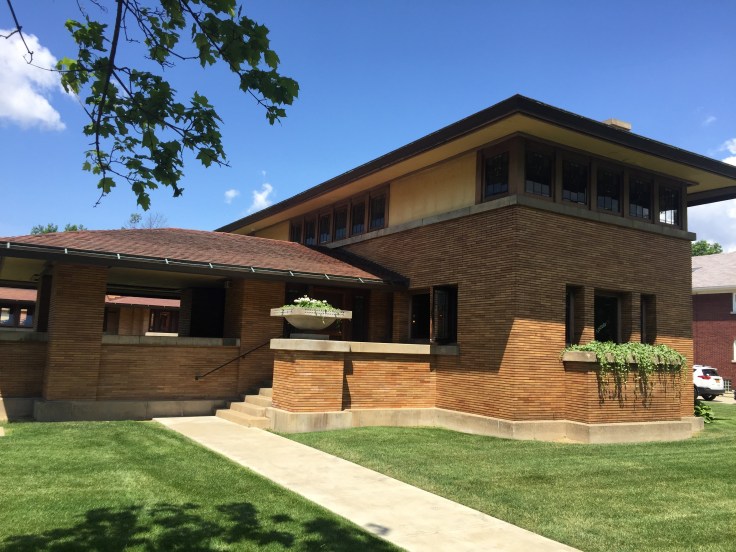
After the Barton house was complete, the Martin house was built. It is the ultimate FLW “Prairie-style” house, similar to 60 other houses, but one of the first, and one of the largest. These houses are distinguished by horizontal lines: strips of windows, low and wide bricks, broad and low roof eaves, and a sprawling plan – nothing boxy like other houses of the era. (The more famous Robie house in Chicago has many of the same features…)

The Martin House Complex includes the main house, the Barton house, a Conservatory or greenhouse, a Pergola connecting the Conservatory to the main house, a carriage house with servants quarters above (and a steam generating plant below, to heat the complex), and a Gardener’s cottage.  Mr. Martin and FLW became best friends, mainly because Martin referred FLW to other commissions, and helped him financially on many occasions…

The Martins lived in the house from 1905 to the early 1930s. Mr. Martin was pretty much wiped out by the 1929 stock market crash; he only had enough money left to build another FLW-designed summer house on the shores of Lake Erie, about 30 miles away. Mr. Martin died in 1935 and the family abandoned the complex in 1937, with Mrs. Martin moving full time to the summer house. The complex fell into disrepair; in 1946 the City of Buffalo sold the house in a tax foreclosure auction. The Barton house and the Gardener’s cottage were sold off, and eventually the Pergola, the Carriage house, and the Conservatory were demolished and that parcel was sold; apartment buildings were build on the land.  Portions of the main house were turned into office space and several apartments.

In 1992 the restoration and rebuilding were begun. The parcels were re-purchased, the apartments were demolished, and the Pergola, the Carriage house, and the Conservatory were rebuilt to exacting standards. The upper floors of the buildings are still undergoing restoration, so we were not able to see them, and interior photos were not allowed.

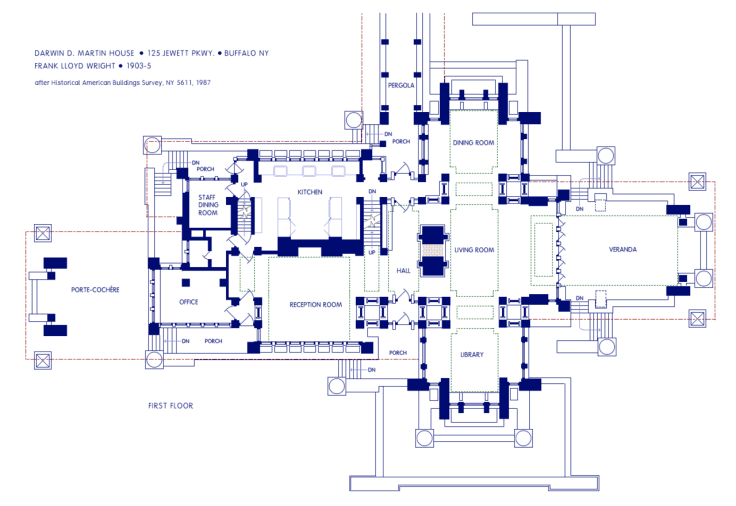
The main house was quite amazing, considering the kinds of houses wealthy people were building during this era.  The floor plan tells you a lot about how different this house was.  Note the large kitchen on the main floor (not in the basement), and note the “Great Room” – Dining, Living, and Library combined together and open to each other, yet each well defined by the architecture.2017-06-28 Martin Plan

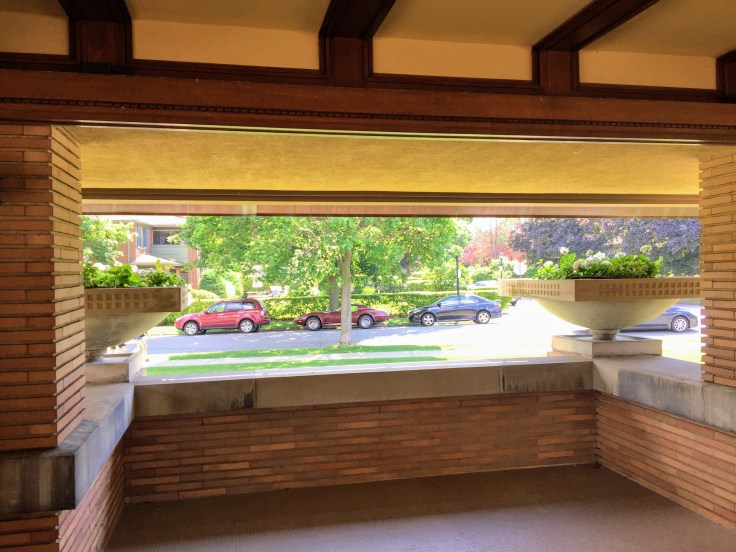
Pictures don’t do the house justice; also, considering that the house has large, low roof overhangs, the facade is almost always in shade.

Horizontal strip windows:

2017-06-28 Martin 08


The Pergola and the rear of the house (note the horizontal lines of the bricks and the eaves):

2017-06-28 Martin 01


More circles within squares…


The Terrace:

2017-06-28 Martin 04


The entrance – note the hidden front door…

2017-06-28 Martin 03


The Barton house…

2017-06-28 Martin 21


The Gardener’s cottage:

2017-06-28 Martin 31


The tour was very well done. We were welcomed at the visitor’s center by Frank himself:

2017-06-28 Martin 98


Our intentions for the rest of the day were immediately changed; we abandoned the idea of going to Rochester to see George Eastman’s house; instead, we headed west towards Lake Erie to see Greycliff, the Martins’ summer house.

2017-06-28 Greycliff 01

This house is Mrs. Martin’s house. She never liked the main house in Buffalo because her eyesight was poor and the house was dark. This house is very light, with more windows, and with views to the lake. The house has terraces on two sides, overlooking the lake and away from the lake, protected from the lake’s sometimes harsh winds. The upstairs hallways are on the exterior of the house, with strip windows that could be opened on nice days.

The house sits atop a bluff about 65′ above the beach. A stair tower was built to the beach, connected to the bluff by a bridge. The bridge has been removed due to safety concerns, and is being restored. The stair tower is still here, and is structurally sound. They will be reunited soon.

2017-06-28 Greycliff 80


The “see-thru” house…

2017-06-28 Greycliff 07


The lake side of the house:

2017-06-28 Greycliff 06


Frank was here, too:

2017-06-28 Greycliff 20


Mrs. Martin lived here until her death in 1943; the Martins’ daughter and her family lived here as well. The house was sold to a religious order, who kept up the estate until 1997, when it was purchased by the Conservancy and restoration was started. The house is still in pretty bad shape, but all the additions and changes installed by the religious order have been removed.

Again, we really enjoyed our tour here; but we had a long drive ahead. We set out for Canandaigua, a small town south of Rochester, just on the northern edge of the Finger Lake Region of New York.


An enjoyable time was had by all…


2017-06-23 Frank Lloyd Wright and Peter Berndtson

Today we visit more architecture!  And a bit of history.  Three houses are on the agenda, but these are different than the two we saw yesterday; they are all within a park preserve not far from Fallingwater.

The site is called Polymath Park, and it is an 125-acre preserve dedicated to these significant houses.  The site is surrounded by private forest in the Allegheny Mountains and features three architectural landmarks: Frank Lloyd Wright’s Donald C. Duncan House and two others by Peter Berndtson (1909–1972), who was one of the original Wright associates at Taliesin.

In 1962, Berndtson master planned the 125 acre property for 24 dwellings, each sited in a circular clearing in the forest. Only two houses, however, were actually built: the Balter House in 1964 and the 1965 Blum House.  The development plan never progressed, and eventually the Blums and the Balters sold their houses.  Many years later, Thomas and Heather Papinchak purchased the property, and began a dream project to restore and preserve these two houses, plus more.

Frank Lloyd Wright developed a systems-built concept to bring his unique design ideas to modest, production-style houses. These “Usonian” houses were available as pre-cut kits, to be shipped to your site and assembled by local labor. FLW himself would site your house if you sent him a topographical survey of your property. The buyers of these kits were not allowed to communicate with FLW directly.

One of these Usonian kit houses was built in 1957 in Lisle, Illinois, for Donald and Elizabeth Duncan,  After the Duncans’ deaths the house fell into disrepair, and was constantly being damaged by the flooding of its site. The house was sold and deconstructed in 2004 and put into storage, waiting for a new site to be readied. When the deal for the new site fell through the fate of the Duncan house was in question.

However, when Thomas and Heather Papinchak heard about it, things started moving rapidly. The Duncan house was shipped to Polymath Park and reassembled in 2007. Today, the Duncan house, The Blum house, and the Balter house are all open for tours; in addition, a fourth FLW house is being moved to the site; foundations are currently under construction.

We began our day by driving in the rain to this remote location. However, unlike yesterday, the rain never let up. We met our tour guide in “Treetops”, the original house of Thomas and Heather Papinchak, adjacent to Polymath Park. Our tour guide drove our group in the little shuttle bus; first was the Duncan house., then Balter, then Blum; after our tour, as we drove back to Treetops for lunch, our guide told us a story:

At Fallingwater, the Kaufmans had a long-time cook. In fact, she is still alive today, at age 104. When the Kaufmans would put on a large party, additional help was needed. The cook asked her best friend to come assist, and this friend would also bring her small son, who would play around the kitchen and staff rooms of Fallingewater.  At one such event, Frank Lloyd Wright was in attendance, and FLW playfully interacted with the small boy for a few minutes.

This small boy was our guide’s grandfather… He told us that he only heard this story after he had started giving tours at Polymath Park… And now you know the rest of the story…

But back to the houses:  These were very modest, affordable, middle class, 1950s houses. But the design features, the settings, the details and the materials are artfully designed and integrated into simple and beautiful houses…


The Duncan House:

2017-06-23 Duncan 02

2017-06-23 Duncan 92


The Balter House:

2017-06-23 Balter 08

2017-06-23 Balter 03


The Blum House:

2017-06-23 Blum 04


All in all a very fun day, learning about more than just FLW houses.  We hope this neat little park will eventually be filled  with these great houses.


2017-06-22 Our 43rd Anniversary; more Frank Lloyd Wright: visiting Fallingwater and Kentuck Knob

What better way to celebrate a marriage than to see world class houses and world class architecture?

Five years ago we celebrated 38 years by seeing the Stahl House in the Hollywood Hills – sometimes known as Case Study House #22; it was designed by Pierre Koenig, built in 1959, and is the subject of probably the most famous house photograph in the world, shot as a double exposure by the photographic genius Julius Shulman.  I can’t post that photo here, but here is a similar shot when we visited in 2012:

house-50

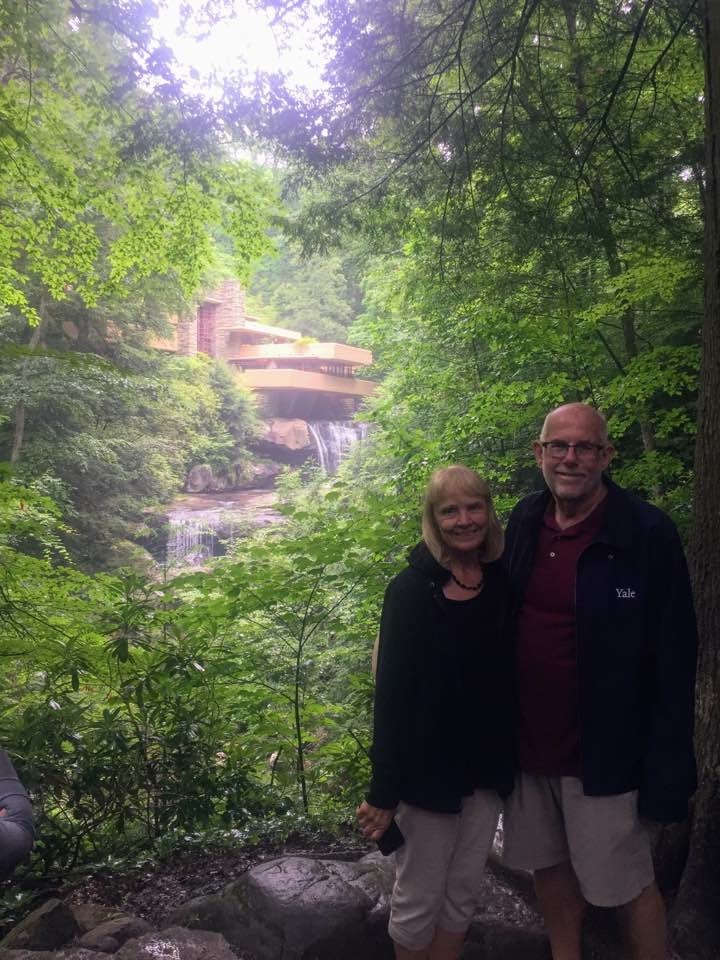
This year we are at the most famous and beloved house in the world:  Fallingwater. Lynda and I preyed upon some tourist to take our picture there…

2017-06-22 Fallingwater 020

Because it had been raining and the sun had just broken through, this photo looks surreal… a little like Shangri la…

Fallingwater was built as a weekend and summer house for the Kaufman family, owners of a large, successful furniture and department store in Pittsburgh.  If you think of Pittsburgh in the 1920s and 1930s – the air and water pollution were horrible – you can see why Mr. and Mrs. Kaufman wanted a weekend escape in the country, to enjoy fresh air and just being in nature.  Mr. Kaufman and Mr. Wright had a great love-hate relationship – they argued over money, design details, and just about everything else, but Mr. Kaufman kept giving Mr. Wright other commissions – his office interiors in Pittsburgh, and various other things around their Pittsburgh home and store.

The house is amazing.  I have read books and poured over photographs for years, but being there is impossible to replicate.  The major rooms of the house felt protecting and cave-like on one side, and wildly exuberant, thrusting you out onto cantilevered decks atop the waterfall on the other side.  The trees and rocks are ever-present, as is the sound of the waterfall. You cannot see the waterfall unless you walk to the edge of the balcony and look over the edge down below.

It was raining when we arrived, and we carried umbrellas with us as the tour started, but once we got inside the house the rain had stopped.  It was a small group, maybe 10 people, and this was the extended, or photography, tour – we were permitted to take photos inside the house, unlike many other house museums.  We spent 2 hours seeing the three floors of the house (plus a small utilitarian basement), plus the two-story guest house and servants quarters just up the hill from the main house.

Since I’ve already said that photographs don’t do this house justice, I won’t post all 129 pictures we took; but I will post a few that I find remarkable…

The approach is via the driveway, across the bridge, over the creek…

2017-06-22 Fallingwater 001d


Once you are on the bridge you see the house, with the stairway down to the creek; the house is literally perched on the stone bank of the creek, and tied back into the rock behind the house…

2017-06-22 Fallingwater 002

The original stair was suspended from the deck above. It was destroyed by the raging waters of the flooded creek in the early 1960s. The rebuilt stair you see here is supported on steel columns that extend down into the creek bed.

The driveway wraps around the rear of the house, between the house and the rock wall of the hill; a trellis ties the house structurally into the rock, and visually connects the house to the rock, providing a sense of protection as you approach the front door.

2017-06-22 Fallingwater 003a


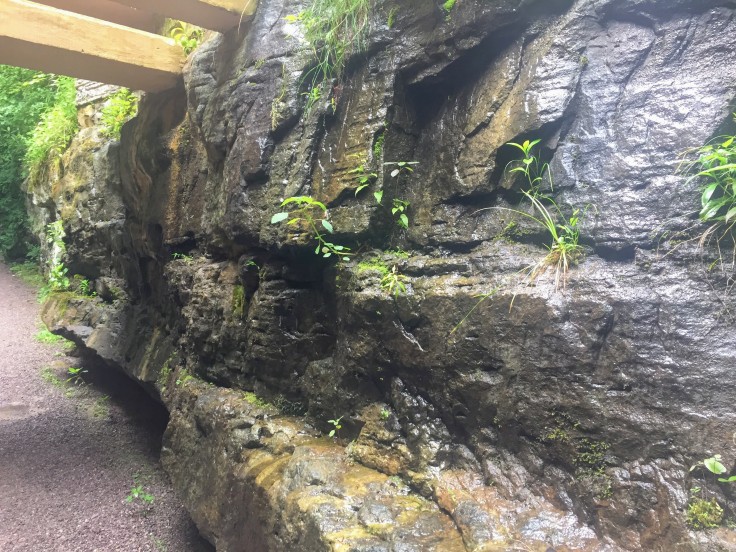
The rock seeps and drips water, in a reference to the much larger waterfall beneath the house…

2017-06-22 Fallingwater 003l


Where is the front door, you ask?  Here I am, looking for it…

2017-06-22 Fallingwater 003g


Yes, Frank Lloyd Wright always liked to hide the front door, and he always had a very low ceiling at the door, using his signature “compress and release” concept to bring you through the door and into the main space of the house.

2017-06-22 Fallingwater 003b

Note the concrete beam that curves around the tree…


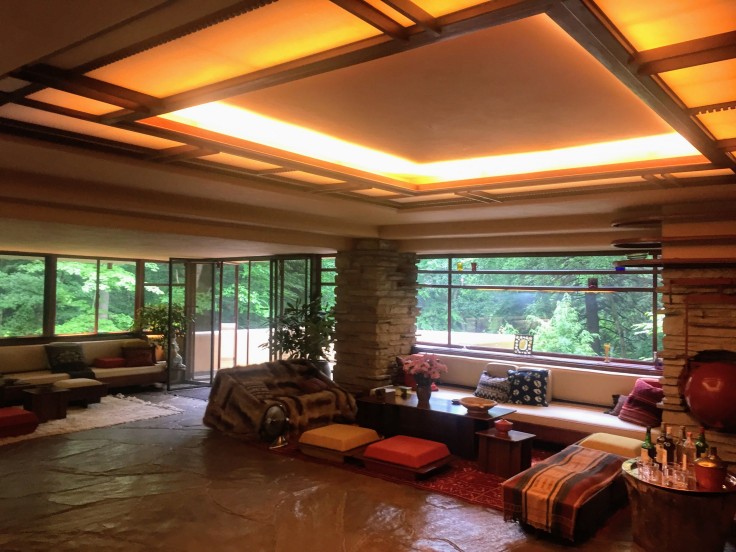
The main Living Room…

2017-06-22 Fallingwater 005

It is much more than just a living room – it includes not only the living space with two distinct sitting areas, but also includes dining space, study space, fireplace and hearth, access to the stair going down to the creek, plus the opportunity to see the view and walk out onto the terrace.


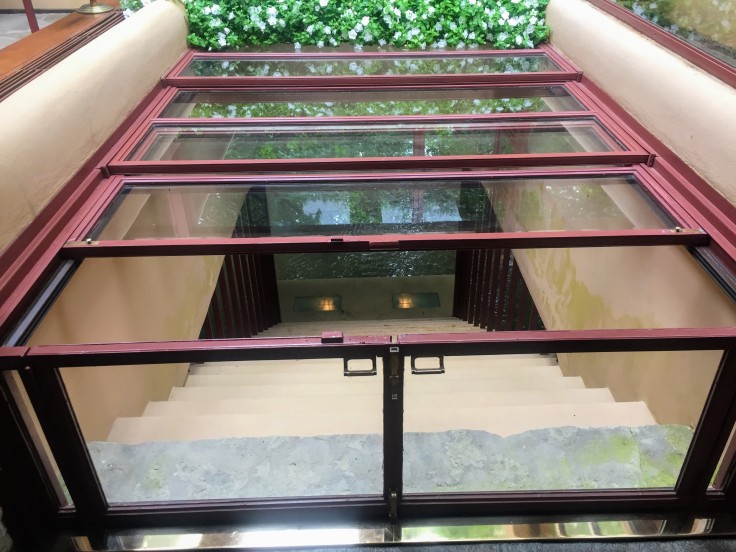
Here is the hatch to the stair that goes down to the creek…

2017-06-22 Fallingwater 005j


The Terrace, which cantilevers over the waterfall…

2017-06-22 Fallingwater 006gg


And the waterfall itself…

2017-06-22 Fallingwater 006d


Some of my favorite details:

2017-06-22 Fallingwater 008e

The desk in the master study has a cut-out to allow the window to open; FLW loved to put circles inside squares.


There is a small pool adjacent to the creek.

2017-06-22 Fallingwater 010d

There are also exterior stairs leading up from the pool to the bedroom level above…

The story goes that they would climb down to the pool in the morning, have a quick dip in the icy water, then run back upstairs, jump into bed, and ring for the maid, to be served breakfast in bed… While that story may not be true, it certainly might be apocryphal…


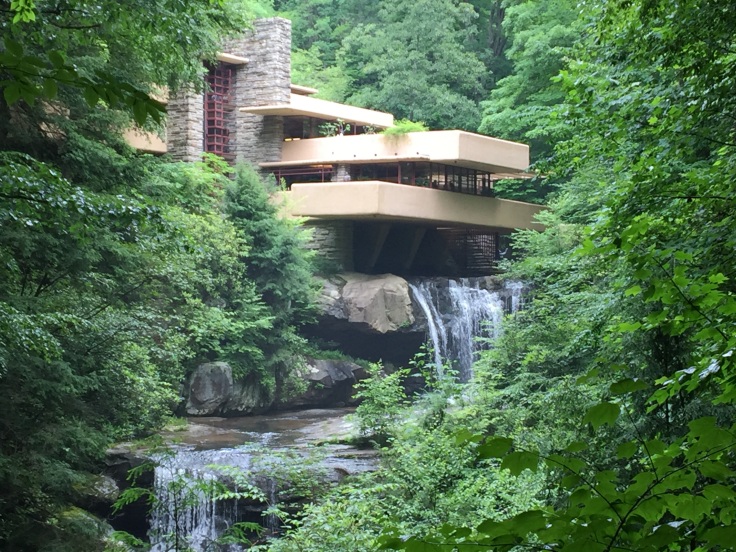
The typical shot of the house projecting over the waterfall.

2017-06-22 Fallingwater 020ww

The Kaufmans wanted a house near the falls so that they could view the falls from the house. Wright believed that having the falls constantly in sight would render them commonplace. So he placed the house atop the falls; you always know the falls are there, but you need to walk over to the edge to see them… The Kaufman family members enjoyed the house for 25 years before donating the house, the surround land, and an endowment, to have the house opened to the public in 1964.  It was the first FLW house opened to the public on a full time basis.

While we regretting leaving this spectacular place, we had appointments to keep…


Mr. and Mrs. Hagan ran in the same social circle as the Kaufmans; after seeing Fallingwater many times over many years, they decided they needed a FLW house of their own.  They bought 80 acres (Fallingwater is set on over 2,000 acres…) about seven miles from Fallingwater and retained Frank Lloyd Wright to design them a small, modest, full time house. (Fallingwater was a weekend house…) The house is named for the hill on which it sits: Kentuck Knob.

The house was completed in 1956, and the Hagans lived in it for over 30 years. It was sold to a British man who owns it today. He has brought in his large art collection, and the house is open for tours.

Kentuck Knob is not just more modest than Fallingwater; it is a 1950s house, to suit the more modern lifestyle of the Hagans. Mrs. Hagan loved to cook and entertain, so the kitchen is not relegated to a rear, closed-in space for the servants, but is a centerpiece of the house. It is a one-story house, a typical example of Wright’s Usonian houses.

2017-06-22 Kentuck Knob 16

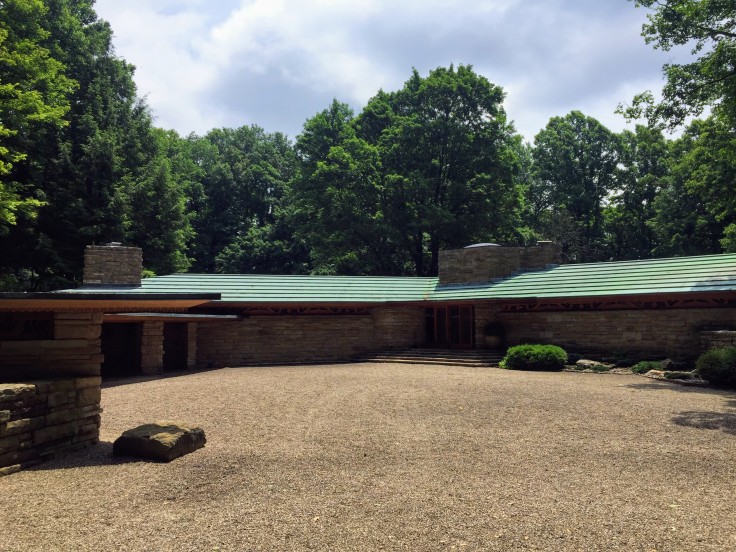
The house sprawls across its site, with the carport on the left, and the entry in the center. The wide roof overhangs keep the front in almost constant shade.


2017-06-22 Kentuck Knob 19

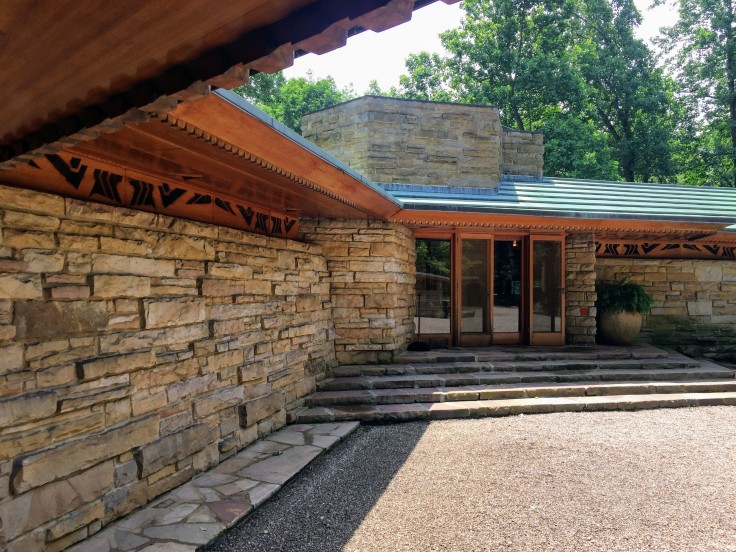
The entry door is again very short, allowing the experience of compress and release as you enter the much larger space inside.  The clerestory windows are filled with wood cut-outs of the various forms in the house to filter the light.  Unfortunately, we were not allowed to take interior photos…


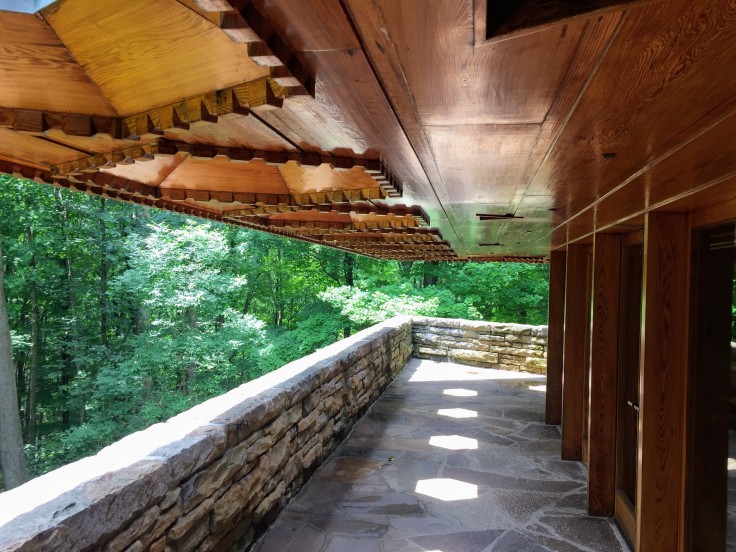
The terrace overlooking the forest wraps around the rear of the house. This was wide open land when the Hagans had the house built. They planted hundred of trees, so today the views are almost all obscured by forest…

2017-06-22 Kentuck Knob 21

Note the hexagonal “skylights” that cast a pattern of light that moves across the terrace as the day wears on…


Here is the view that the Hagans had when the house was first built…

2017-06-22 Kentuck Knob 15

The kitchen is in the center of the house; it is hexagonal is shape and it has a huge skylight over the entire room. The hallways and doorways within the house are all very narrow, following the compress and release concept, but the house is very livable, and was certainly ahead of its time in the 1950s…


All in all, a wonderful day. We returned back to the Villa and enjoyed a marvelous home-made pizza and great wine. A perfect anniversary celebration!


Tomorrow: More houses!


2017-06-18 Columbus, Indiana, Eliel Saarinen, and many other famous architects…

Our second day in Columbus was Sunday, so, naturally, we went to church. There are many modern churches in Columbus designed by famous architects, so we needed to make a choice. We selected the First Christian Church, designed by Eliel Saarinen (father of Eero…)

2017-06-18 Columbus - First Christian Church 1

It was fun to sing the old hymns in such a modern church. The church was built in 1942. It was the first contemporary building in Columbus and one of the first churches in the United States to be built in a contemporary architectural style.

After church we drove to the north part of town and spent 2 hours walking several blocks of very nice houses, some designed by famous, dead architects.

On this walk we saw:

North Christian Church, the last building designed by Eero Saarinen:

2017-06-18 Columbus - North Christian Church 2

2017-06-18 Columbus - North Christian Church 3


2017-06-18 Columbus - North Christian Church 4


St. Bartholomew Catholic Church, designed by Steven R. Risting (Ratio Architects):

2017-06-18 Columbus - St. Bart Catholic Church


Schmitt School, designed by Harry Weese; the first school that took advantage of the Cummins Foundation’s offer to pay the architect’s fees:

2017-06-18 Columbus - Schmitt School 2

2017-06-18 Columbus - Schmitt School 1


Northside School, designed by Harry Weese:

2017-06-18 Columbus - Northside School


We walked about 6 miles through the north Columbus neighborhood, so we needed a break at Zaharakos Ice Cream Parlor (open since 1900) for lunch:


Since this was Day #9 on our trip, we spent the rest of the day doing laundry, cleaning house, and setting up computer paraphernalia… An enjoyable time was had by all…


2017-06-17 Columbus, Indiana, and Eero Saarinen

We left the Casino Queen RV Park at 5:30 am and we continued east across Illinois. Our destination today: Columbus, Indiana.  First: We crossed the border into Indiana…

2017-06-17 Map Indiana

Columbus, Indiana, is an architectural gem.  It is a typical Midwestern town of 44,000, located about 40 miles south of Indianapolis. It has a Victorian downtown, built in the late 19th and early 20th centuries.  It is also the home of Cummins, Inc. And therein lies the story:

J. Irwin Miller joined Cummins, the family business, in 1934.  As the nephew of the President, he always felt like others at the firm treated him differently and minimized his contribution to the company.  When World War II broke out he took the opportunity to enlist, and he served as a lieutenant in the U.S. Navy in the South Pacific. However, he was called back when his uncle died unexpectedly.  He was executive vice president from 1944 to 1947, president from 1947 to 1951, and chairman from 1951 to 1977.

In 1950, Miller helped to establish the National Council of Churches (NCC) and later served as its first lay president (1960–63). Miller chaired the NCC’s Commission on Religion and Race, which coordinated organized religion’s support for strong civil rights legislation, and jointly sponsored the March on Washington. He led religious delegations that met with Presidents John F. Kennedy and Lyndon Johnson to push for the legislation that became the Civil Rights Act of 1964.

In 1954, he established the Cummins Foundation; during the post-war boom, the city of Columbus started to build new schools. The first schools built were so ugly, and so poorly suited for fostering children’s education, that Miller felt he had to do something.  In 1957, he made an offer to the city that the foundation would pay all the architects’ fees for new public buildings in Columbus IF they were chosen from a list of architects selected by the Foundation.  Thus this small Midwestern city has buildings by Eero Saarinen, Eliel Saarinen, I.M. Pei, Kevin Roche, Richard Meier, Harry Weese, César Pelli, Gunnar Birkerts, John Dinkeloo, and Skidmore, Owings & Merrill, many of which feature extensive interiors designed by Alexander Girard.  The American Institute of Architects in 1991 declared Columbus America’s sixth most important city in terms of architecture. 

So this is why we are heading towards Columbus. Today we will tour the Miller house, and tomorrow we will see the other significant buildings in the city.

After an uneventful drive across Illinois and Indiana, we checked into the RV park at Ceraland; here is another piece of Mr. Miller’s legacy.

CERAland Park, established in 1963 as the Cummins Employees Recreation Association, started out as a corporate recreation facility in Columbus, IN, that has 345 acres of beautiful park land consisting of both indoor and outdoor recreational activities.  In 2012, the CERA Sports Corp was established as a not-for-profit organization that is committed to developing CERAland Park into the highest-quality recreation and wellness provider in the community.

Ceraland offers an 11-acre stocked lake, fishing, paddle boats, row boats, and canoes, 324 site campground, 6 camping cabins, picnic areas, 7 shelter houses, 2 outdoor basketball courts, 4 permanent Corn Hole sets and 3 portable sets, 6 horseshoe pits, 2 sandpit volleyball courts, a go-kart track, 18 hole miniature golf course, driving range, 6 tennis courts, outdoor amphitheater, playgrounds, remote control airplane strip, rifle and archery range, trap and skeet range, 9 softball / baseball diamonds, aquatic center with large water slide and toddler play area, 30,000 square foot sports & fitness center with 2 full gymnasiums, cardio room, running/walking track, weight room, locker rooms, and much, much more.

Currently, CERA has over 100 local community corporations / partners that provide the opportunity for their employees to participate and utilize the services of CERA for discounted corporate rates.  In addition, CERA continues its community outreach by offering an expansive Youth Sports program and events schedule.  CERA is the host site for Bartholomew County Little League, numerous Fast-pitch Softball and Baseball tournaments and leagues and is an AAU sanctioned park.

In 2014, CERA was opened to the public, and, thus, we are staying here for a few nights…

2017-06-17 Cereland 6

There were major softball/baseball tournaments going on this weekend, but the camping area was very quiet:


I don’t know why, but Lynda keeps insisting on taking pictures with me in them. I have expressed my dissatisfaction…

2017-06-17 Cereland 4


After setting up, we headed back into Columbus and met the Miller house tour at the visitor center. After watching a short video we boarded the shuttle bus to ride to the house, about 2 miles away.  The house is about 6,300 square feet, and is set on over 13 acres of beautiful, landscaped grounds. To get an idea of the extravagance of the place, we were told that Mr. Miller paid $30,000 for the land and over $550,000 for the construction of the house. Do the math… This was an extremely expensive house when it was built in the early 1950s.

Unfortunately, no interior photography is allowed, so you can only get a feel for the exterior and the grounds…

The house was designed by Eero Saarinen, the same architect who did the Gateway Arch in St. Louis. This is one of only a few houses designed by Saarinen; he and Mr. Miller were close friends, and this house resulted.

The Millers had five children, and this was designed to be a true family home; in addition, was was designed on a grand scale to accommodate the many guests who came to visit – heads of state, titans of industry, famous architects.

The exterior walls are all giant slabs of black slate, with some walls clad in marble. The rest is glass… The interior walls are all the same white marble. There are linear skylights throughout the house, which means the quality and intensity of light changes as clouds pass by…

We entered the grounds through the service entry:

2017-06-17 Columbus - Miller 91


The real entry approach for family and guests is off a small residential street:

2017-06-17 Columbus - Miller 92

2017-06-17 Columbus - Miller 94


The front yard is impressive:


2017-06-17 Columbus - Miller 95

2017-06-17 Columbus - Miller 96


So is the back yard…

2017-06-17 Columbus - Miller 83

2017-06-17 Columbus - Miller 82

2017-06-17 Columbus - Miller 80


And the path to the pool:

2017-06-17 Columbus - Miller 84


These exterior shots show some of the materials and detailing of the house…


All in all, a very impressive house. Designed to last for hundreds of years…


Blog at WordPress.com.

Up ↑