Search

Adventures in the Villa

Category

Frank Lloyd Wright

2017-09-05 Westbound; Stranded in Thunder Bay, Day 5…

Stranded, Day 5:

2017-09-01 GMC 03

Tuesday; Labor Day is over and the world resumes its normal activities.  The happy merry workers at Dominion Motors GMC return to work and we get to sit in their waiting room, drink their coffee, watch their TV, use their internet, and use their restrooms (washrooms here in Canada…).

There is no word on the truck.  They have run their diagnostics and sent the data to technical support in Detroit.  Maybe they will hear back today or tomorrow; for now it looks like a blown engine; the normal fix for this is a complete engine replacement.  We might be here for awhile…

So we did some sight-seeing and checked out the local artisans; first, we went to Thunder Oak Cheese Farm:

2017-09-05 Cheese 01

The Thunder Oak Cheese Farm specializes in Gouda cheese, and all things Dutch:

2017-09-05 Cheese 02

We tasted their cheeses and even cheese curds; Lynda wanted some Komijne Kaas, and they have it!  Also some dropjes…

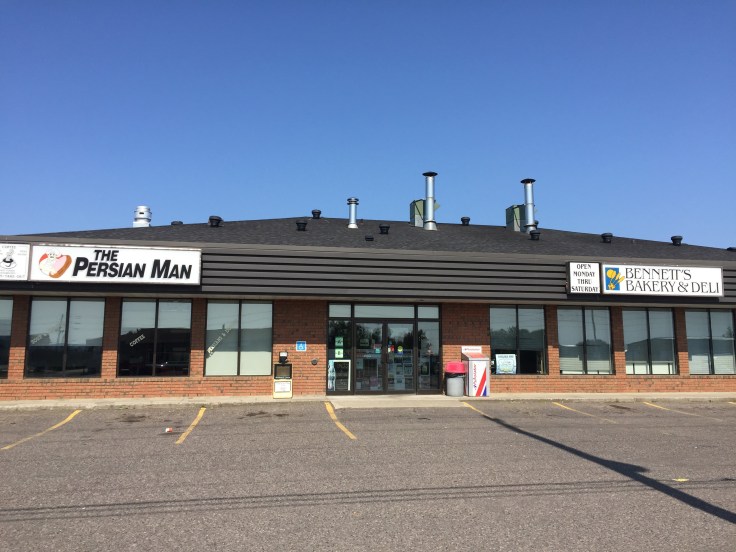
Around mid-day we visited The Persian Man; “he” or “it” is located within Bennett’s Bakery.  Apparently Persians are a “Thunder Bay Specialty”.  But I’m all, “What’s a Persian?”

A Persian is an oval-shaped, cinnamon-bun-like sweet roll with a sweet, pink icing made of either raspberries or strawberries.  It is credited to have originated at Bennett’s Bakery in, and remains particular to, Thunder Bay.  It is sometimes confused with a Pershing or a Persian bun which are regional items in parts of the United States but are a completely different baked good made with doughnut batter as opposed to being a sweet roll.  So there!

2017-09-05 Persian Man

It happens that we are “camped” right around the corner from Bennett’s Bakery; also, Syd, an employee of the GMC dealer where we are camped, stopped by on Saturday and gave us a gift certificate to have Persians at The Persian Man at Bennett’s Bakery. Around the corner.

So we  walked around the corner to The Persian Man at Bennett’s Bakery, and had coffee and Persians.  It was interesting…

2017-09-05 Persian 01

Later in the afternoon we walked around the corner to Dawson Trail Craft Brewery. We tasted 4 very nice craft beers and chatted with the owner about what it’s like to be a craft brewery in Thunder Bay.  While it is a small town (108,000), there is only one other brewery, no distilleries, and there are no wineries or wine tasting rooms… So while this sort of craft/artisanal business hasn’t really caught on here on the north shore, it is an up and coming thing, and they are optimistic…

2017-09-05 Dawson Trail

Since we still haven’t heard anything about the truck’s prognosis, and since our time here is seemingly endless, we did two things:

  1. We planned to go to Wisconsin in our rental car to see the Frank Lloyd Wright buildings that had always been on our itinerary for this week…
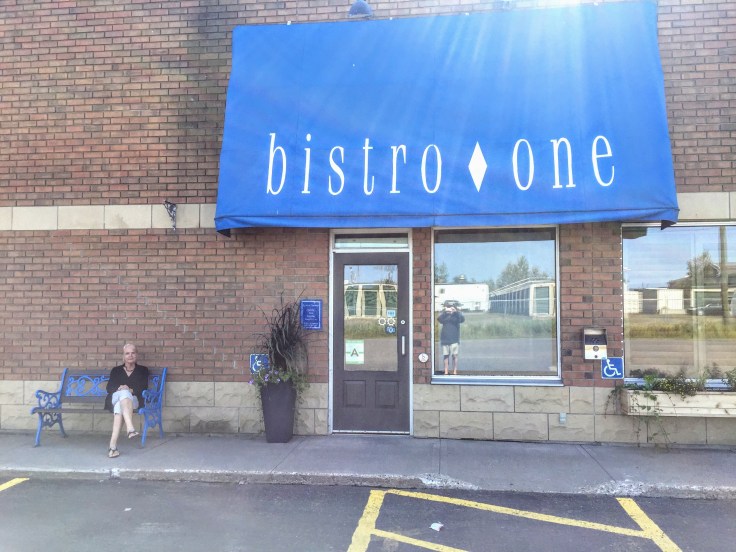
  2. We went to dinner at our favorite Thunder Bay restaurant, Bistro One. The fact that we have a favorite restaurant tells us we have already been here way too long; we have a standing reservation for every Tuesday night…

2017-09-05 Bistro One

After dinner we turned in early; tomorrow is a 10 hour drive across the border and through Minnesota, into Wisconsin, down to the town of Spring Green.

And a not too awful time was had by all.


2017-08-10 Nor by Nor’east Caravan – More Lobster!

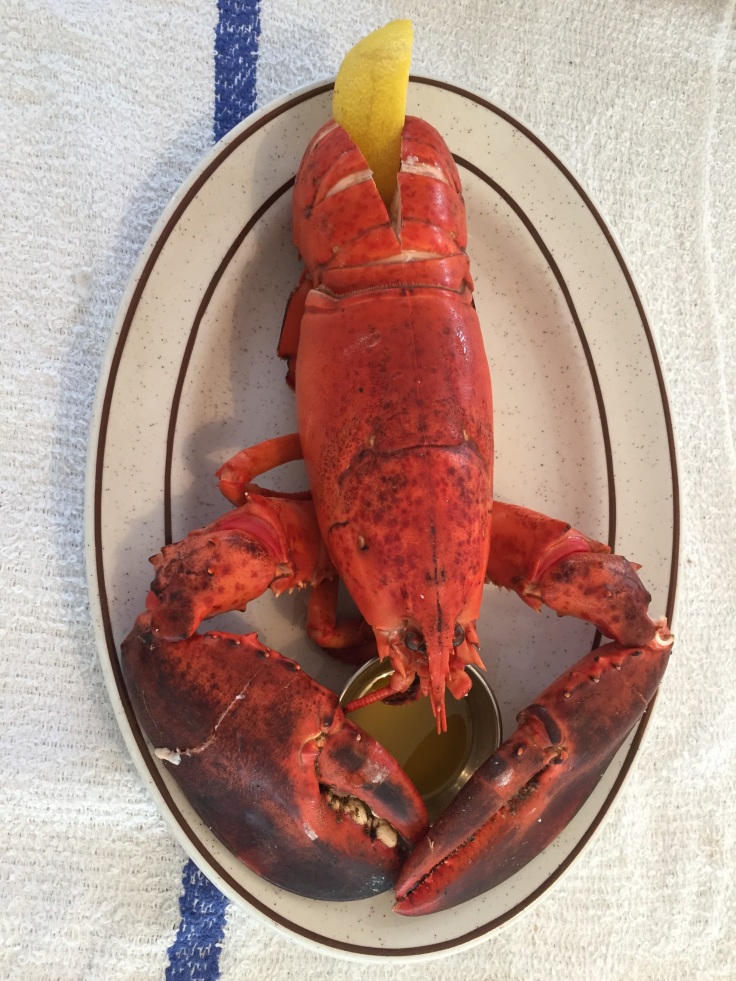
Today we had another day on our own; we spent the day planning the remainder of the trip and enjoyed some quiet time.  We need to rest up, because tonight is: More Lobster!

2017-08-10 Lobster Dinner 03

Once the caravan ends (in five days) we have about 2 months to get home; we will travel back through Canada, through New Brunswick and Ontario, stopping off to see the 1000 Islands; we will stop at CanAm RV in London, ON, then meet up with the McAnoys and see our Grandchildren on Boblo Island, located between Lake Huron and Lake Erie. After that interlude, we head north, over the top of Lake Huron and Lake Superior, through Thunder Bay, and back into the USA in Minnesota, all by September 1… After that, we’ll go through Wisconsin, Minnesota, and South Dakota, checking out all the Frank Lloyd Wright and Laura Ingalls Wilder sites we can manage.

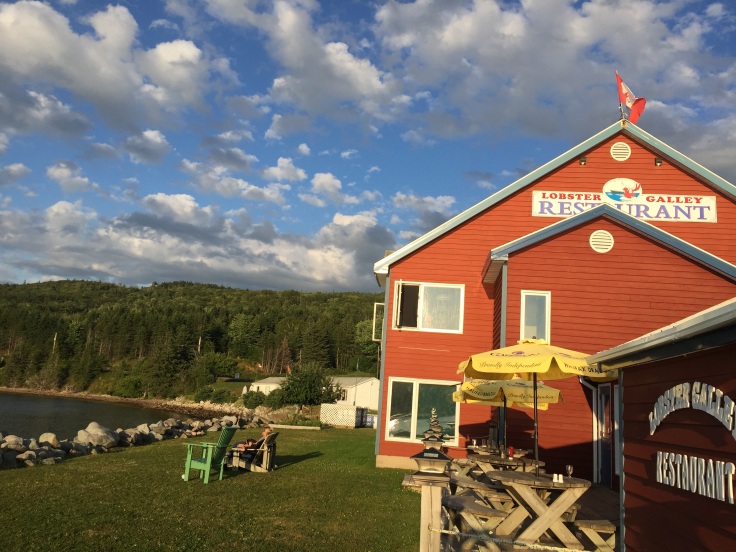
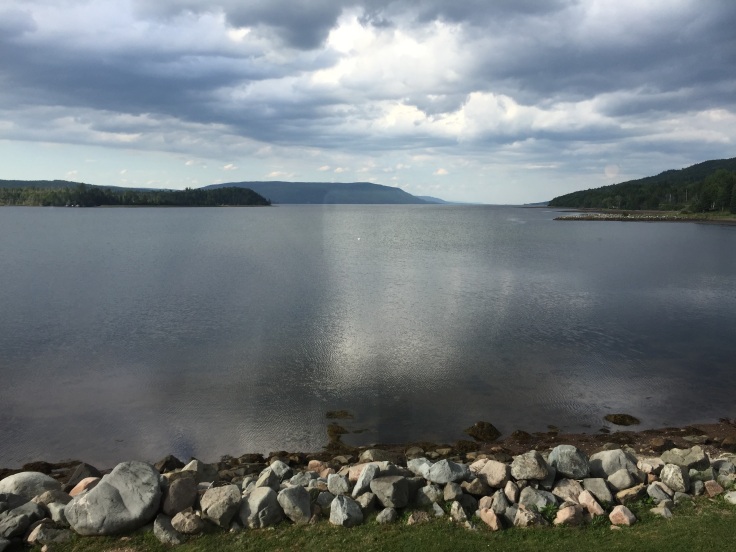
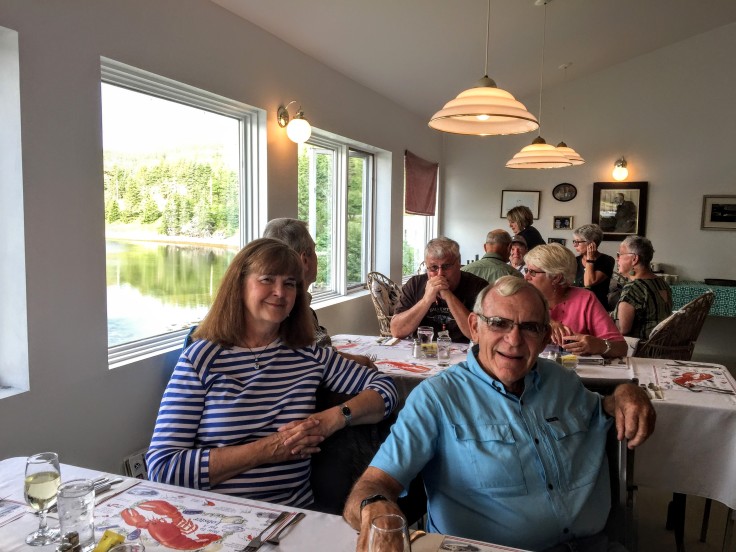
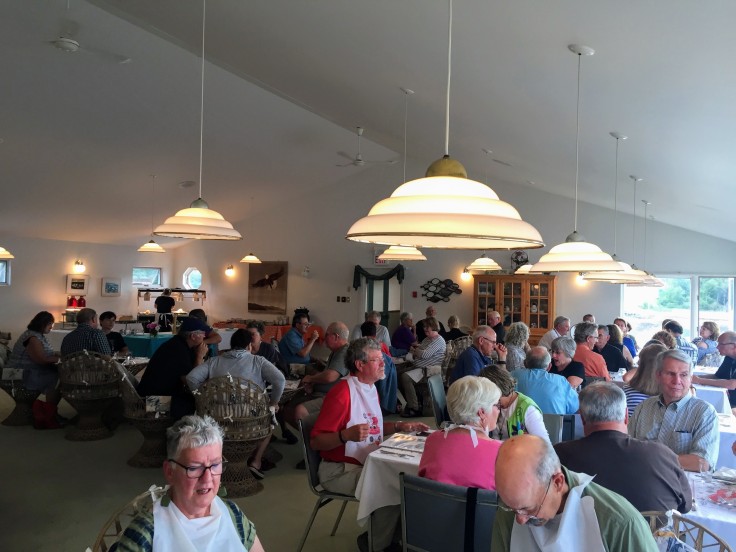
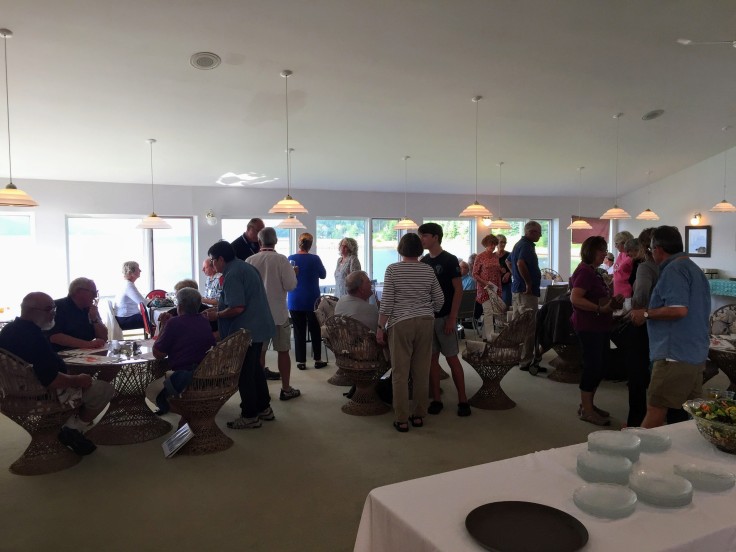
But tonight we have a dinner at St. Ann’s Lobster Galley. This is a very nice restaurant set on a lovely lake.  Once again we enjoyed time eating together; meals like this create opportunities to get to know the other caravanners and enjoy a stress-free time together.

2017-08-10 Lobster Dinner 01

2017-08-10 Lobster Dinner 02

2017-08-10 Lobster Dinner 06

2017-08-10 Lobster Dinner 07

2017-08-10 Lobster Dinner 04

2017-08-10 Lobster Dinner 05

We had a Drivers Meeting to discuss our last travel day within the caravan; tomorrow we take a ferry from Caribou, NS to Wood Islands, Prince Edward Island…


2017-07-08 Nor by Nor’east Caravan -Newport, Rhode Island – Summer Cottages, day 1

The day was sunny for a change, but not too warm. I’ve been looking forward to seeing the Summer Cottages again since I first saw them nine years ago…

2017-07-08 Newport - Breakers 01

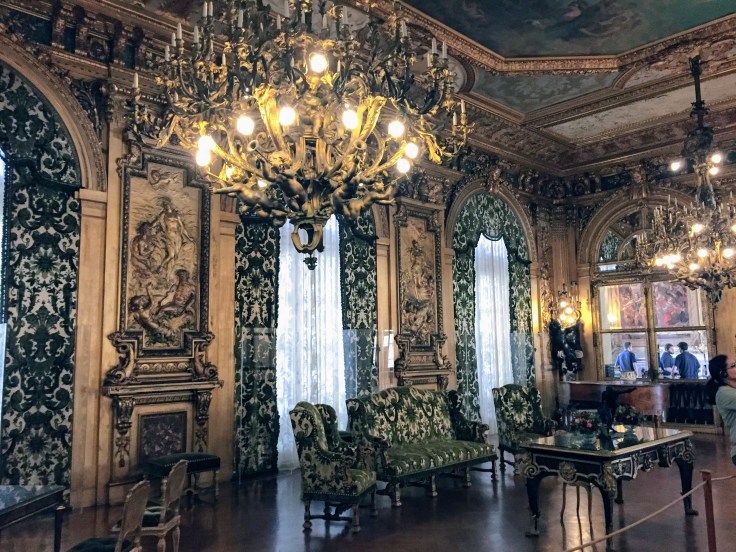
These were summer homes, used for 6-8 weeks each summer.  These are houses of the Gilded Age.  And gilded they were.  Gold and platinum were used as common decoration. Many of the interiors were ripped from palaces and castles in Europe, dismantled, sometimes cut into pieces, shipped to America and installed in these giant “cottages”. Nothing exceeds like excess here.  As architectural critic Ellsworth Toohey once said, (I paraphrase here…) “The house has a lovely garden gate, fine in proportion and workmanship. It is installed on the ceiling of the Dining Room”.

Pieces of furniture were cut up and used as decoration on stairways.  Huge paintings were cut in half, or reshaped into ovals, to fit into a room.  The money spent was pocket change to these people – labor was cheap and palaces and castles were cheap.

The various Vanderbilts had four houses here in Newport.  We toured two; one has been incorporated into a college, the other we could not fit into our schedule.

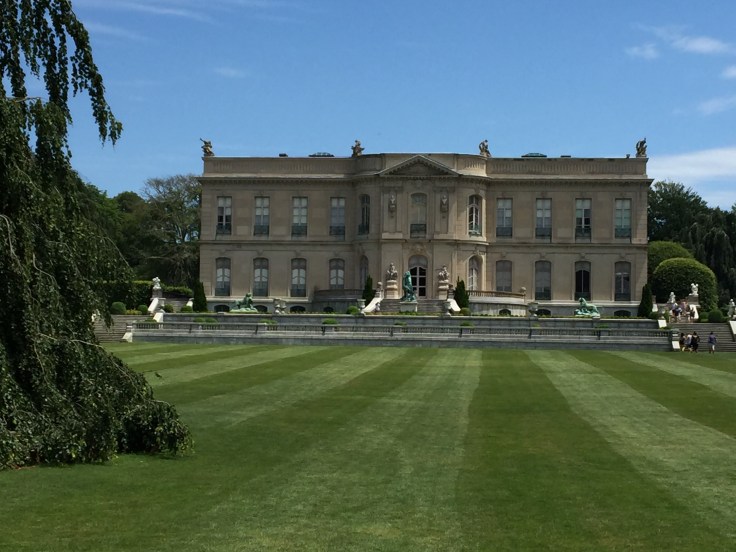
In any case, I love houses, even ostentatious ones. Even when a room hurts my eyes to look at it… We saw five houses today…

The Breakers; Cornelius Vanderbilt II; 138,000 s.f.; 70 rooms; 15 Bedroom suites; 33 staff bedrooms; 40 full time staff.  Architect: Richard Morris Hunt;

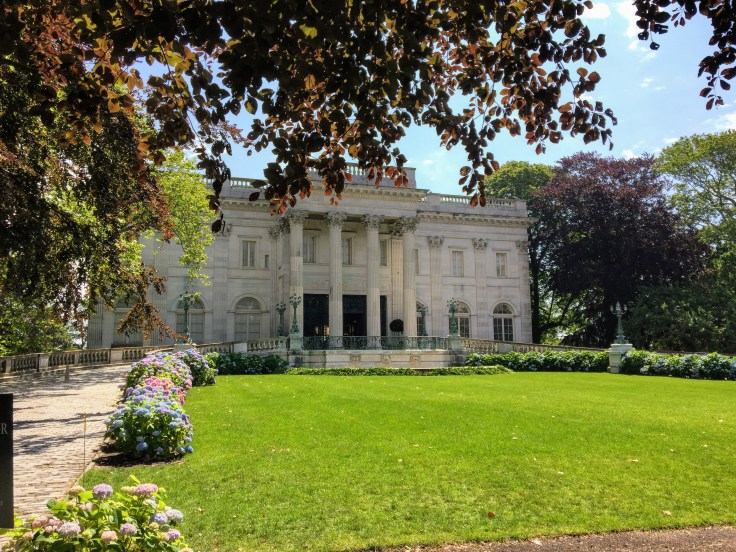
Marble House;  William Vanderbilt; 50 rooms; 7 Bedroom suites.  Architect: Richard Morris Hunt; contains over 500,000 cu. ft. of marble.

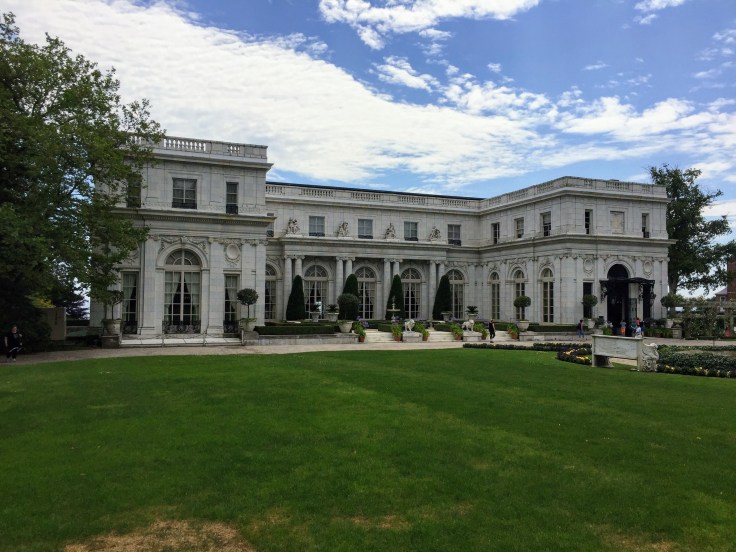
RoseCliff; Theresa Fair Oelrichs; 9 Bedroom suites; 33 staff bedrooms;      . Architect: McKim, Mead, and White

The Elms; Edward Berwind; 48 rooms; 7 Bedroom suites; 16 staff bedrooms; 40 full time staff.  Architect: Horace Trumbauer

Isaac Bell House; Isaac Bell; 7 Bedroom suites; 3 staff bedrooms.  Architect: McKim, Mead, and White

There isn’t a lot to say about these houses. The pictures tell the story:

The Breakers:

The biggest of all the Newport Mansions, and the best preserved; only lived-in for a few years…

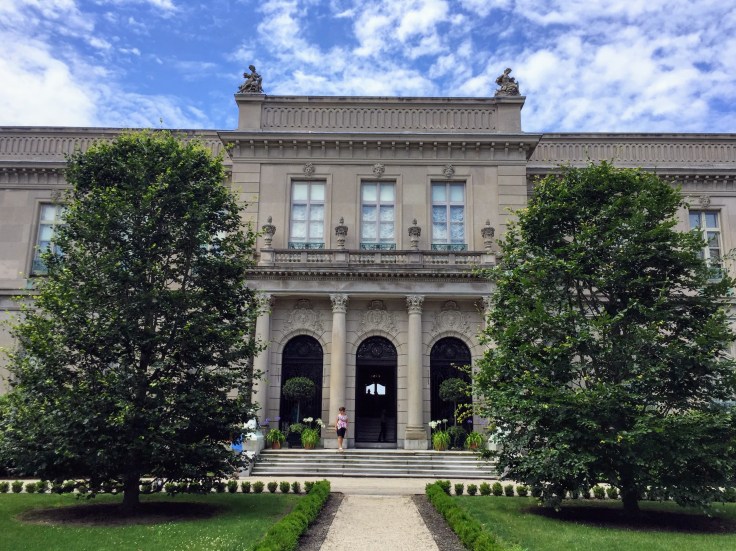
The Approach:


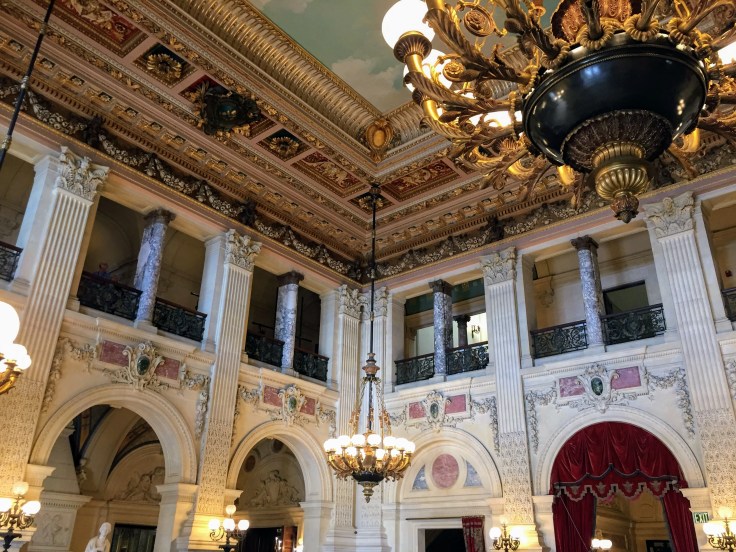
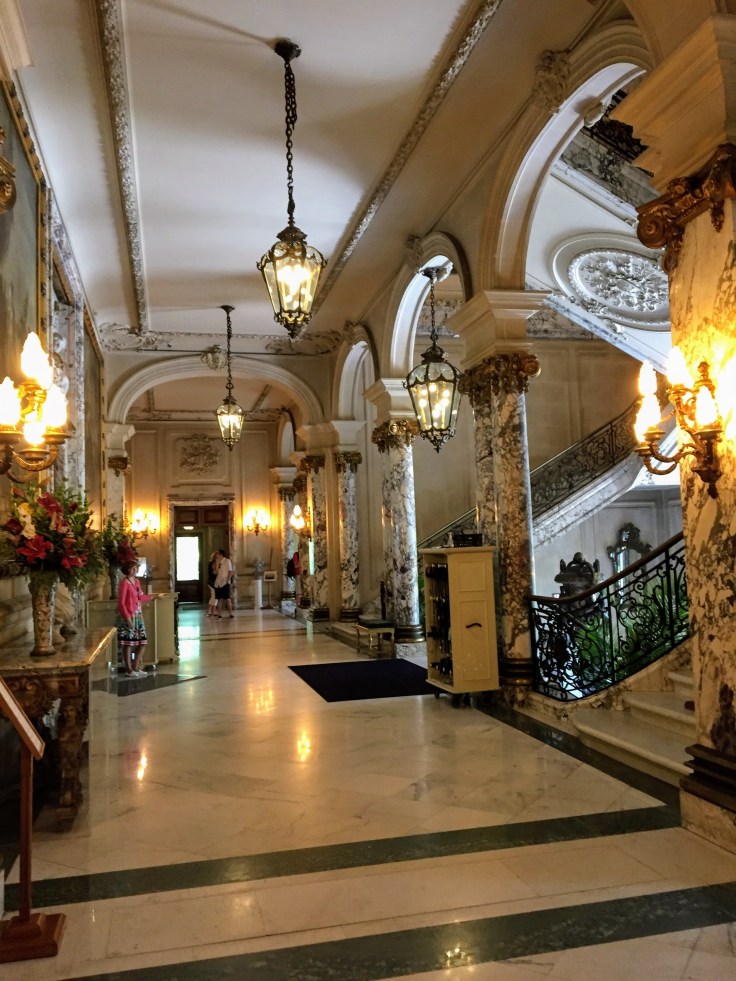
The Grand Hall:

2017-07-08 Newport - Breakers 03

2017-07-08 Newport - Breakers 04

2017-07-08 Newport - Breakers 09


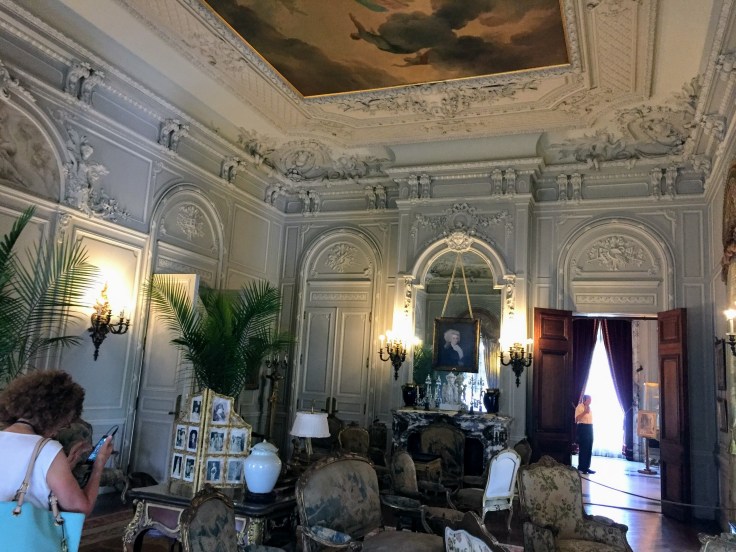
More of the grand, gilded rooms…

2017-07-08 Newport - Breakers 05


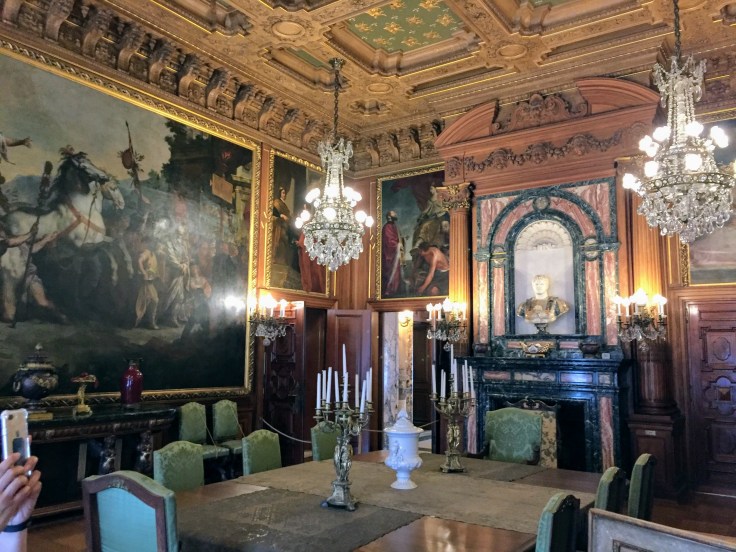
The Dining Room:

2017-07-08 Newport - Breakers 07


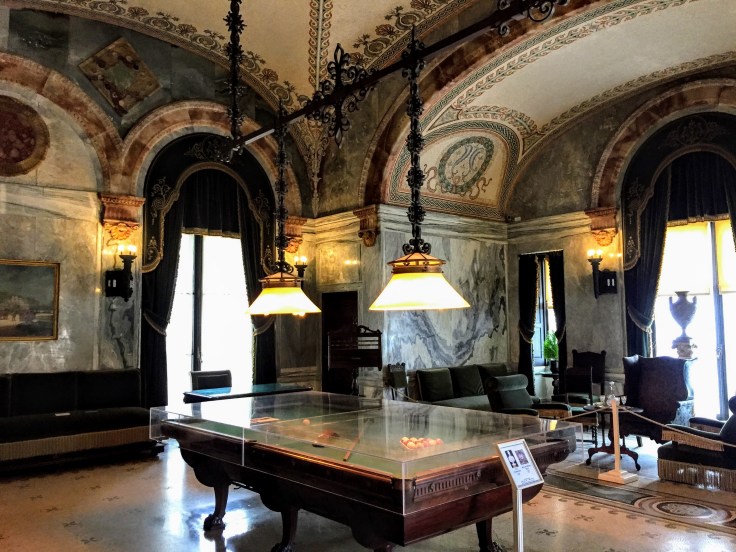
The Billiard Room:

2017-07-08 Newport - Breakers 10


Sitting Room; note the platinum accents in the wallpaper…

2017-07-08 Newport - Breakers 11

2017-07-08 Newport - Breakers 12


The Music Room:

2017-07-08 Newport - Breakers 13


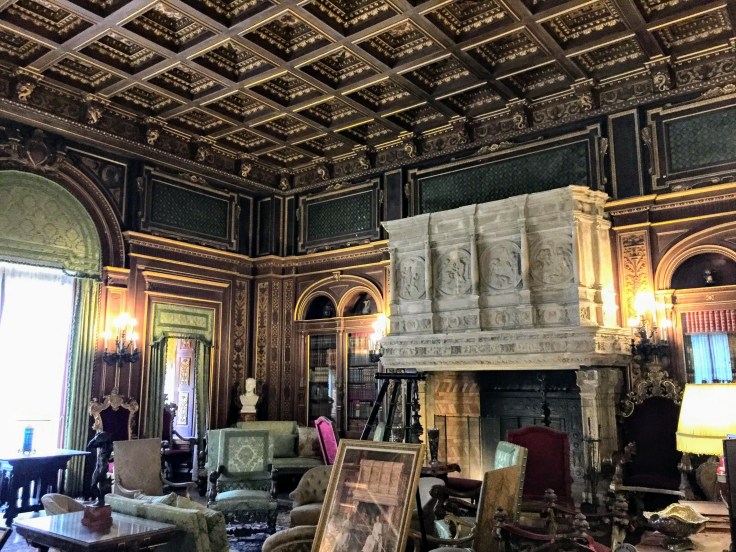
The Library:

2017-07-08 Newport - Breakers 14


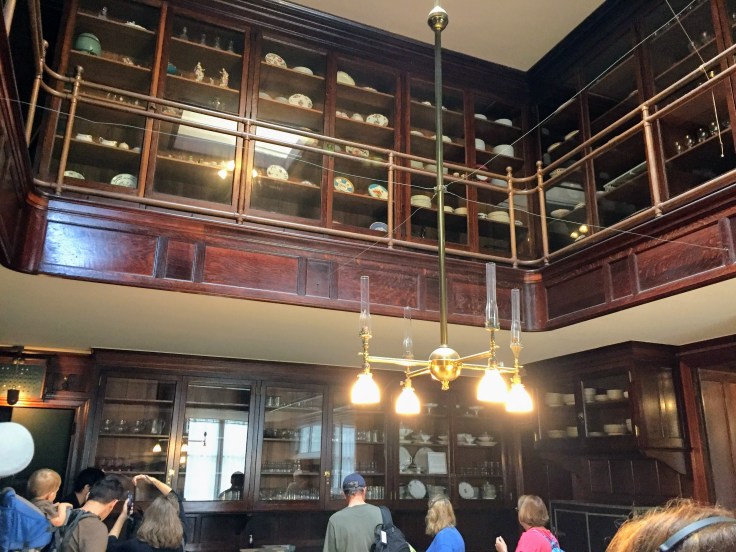
And more utilitarian spaces… The 2 story Butler’s Pantry:

2017-07-08 Newport - Breakers 15


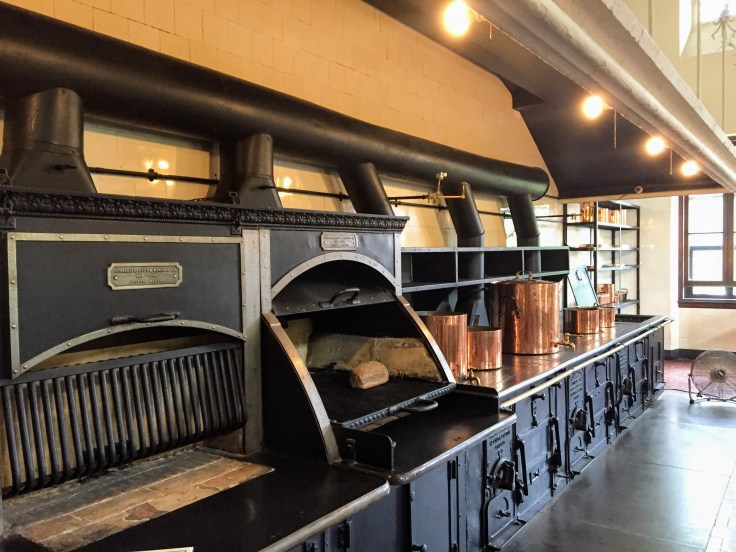
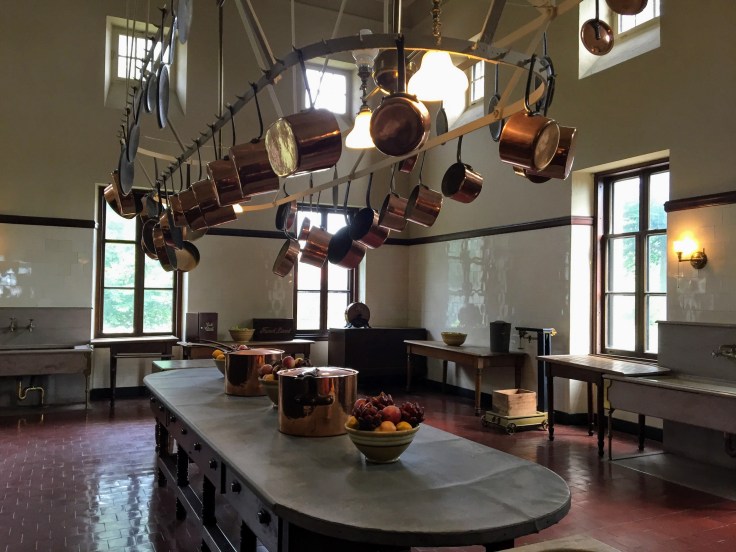
The Kitchen:

2017-07-08 Newport - Breakers 17


2017-07-08 Newport - Breakers 16


2017-07-08 Newport - Breakers 18


And, finally, the view over the grand lawn:

2017-07-08 Newport - Breakers 19


Marble House:

Over 500,000 cu. ft. of marble was installed inside and out…

The Approach:

2017-07-08 Newport - Marble House 01


The Dining Room:

2017-07-08 Newport - Marble House 02


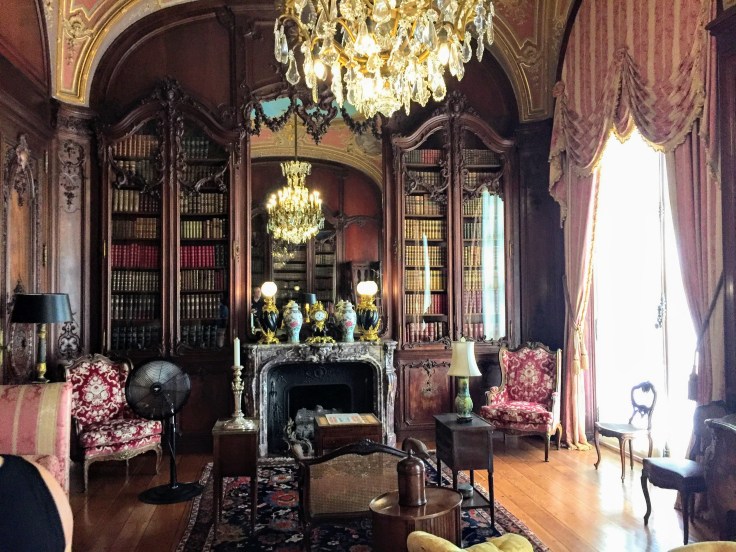
The Library:

2017-07-08 Newport - Marble House 03


The Dining Room:

2017-07-08 Newport - Marble House 04


The Drawing Room:

2017-07-08 Newport - Marble House 05


The Grand Stair:

2017-07-08 Newport - Marble House 06


The Master Bedroom:

2017-07-08 Newport - Marble House 07


The other Master Bedroom:

2017-07-08 Newport - Marble House 08


The the fun rooms…

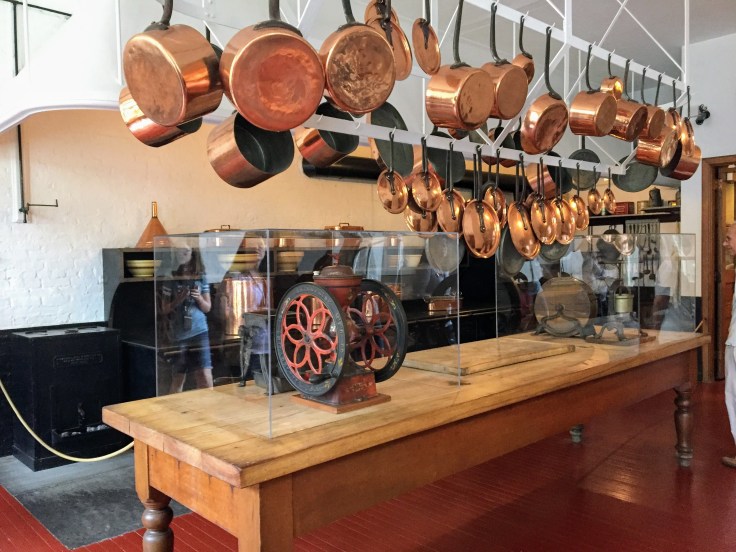
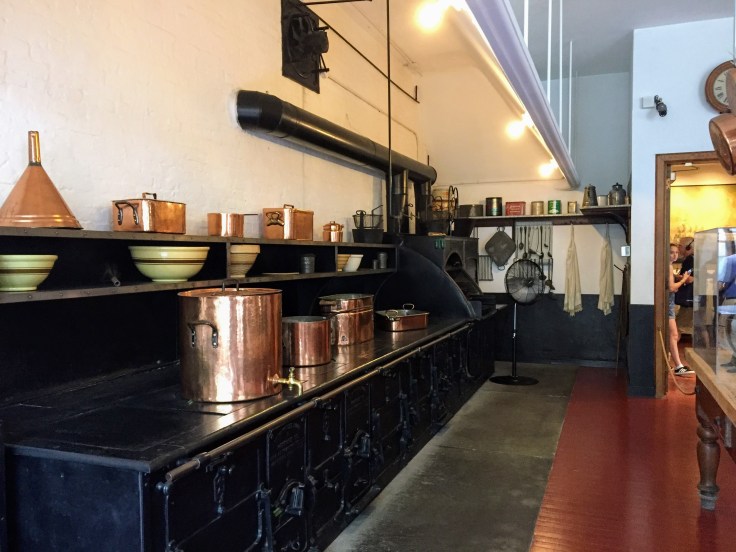
The Kitchen:

2017-07-08 Newport - Marble House 09b

2017-07-08 Newport - Marble House 09a

2017-07-08 Newport - Marble House 09


The Housekeeper’s Office:

2017-07-08 Newport - Marble House 10


Part of the Butler’s Pantry:

2017-07-08 Newport - Marble House 11


Rosecliff:

All the furnishings were sold off in 1941; in the early 1950s the house bought by a family from New Orleans, who summered here until the 1960s; most furniture is from the 1950s…

The Approach:

2017-07-08 Newport - Rosecliff 01


The Grand Stair:

2017-07-08 Newport - Rosecliff 02


Entrance to the Drawing Room:

2017-07-08 Newport - Rosecliff 03


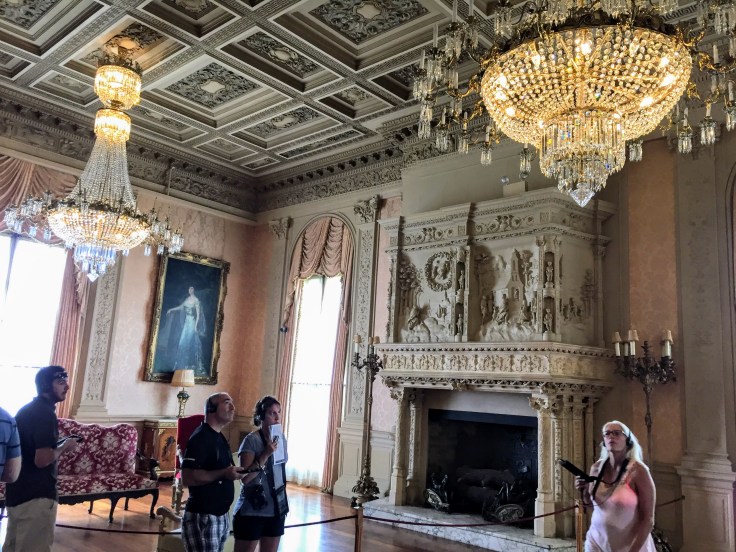
The Drawing Room:

2017-07-08 Newport - Rosecliff 04


The Ballroom:

2017-07-08 Newport - Rosecliff 05

2017-07-08 Newport - Rosecliff 06


The Library:

2017-07-08 Newport - Rosecliff 07


The Dining Room:

2017-07-08 Newport - Rosecliff 08


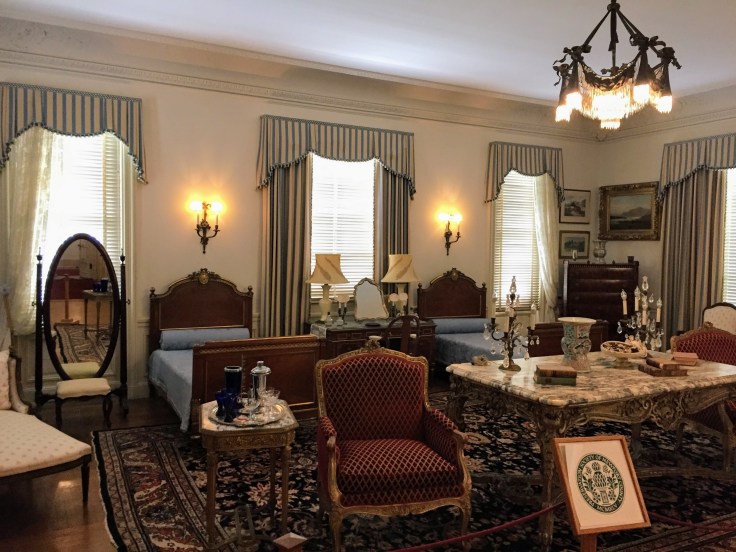
The Master Bedroom:

2017-07-08 Newport - Rosecliff 09


The Elms:

My favorite of the grand mansions.; The Berwind family started spending their summers in Newport in the 1890s, and they had The Elms built in 1901; Mrs. Berwind died in 1922; Mr. Berwind invited his niece,Julia Berwind, to take over hostess duties in the house.  Mr. Berwind died in 1936. Julia remained in the house until her death in 1961.  When Julia Berwind died, The Elms was one of the very last Newport cottages to be run in the fashion of the Gilded Age: forty servants were on staff, and Miss Berwind’s social season remained at six weeks each year.  The family lived day-to-day on the second floor. The first floor was for entertaining only… The kitchen and other service rooms are in the basement, and there is a hidden third floor containing the servants’ bedrooms (more on this tomorrow…). Mr. Berwind loved technology and the house was fitted with all the latest devices, and was continually being updated until Mr. Berwind’s death in 1936. Julia had no interest in technology, so nothing was changed after 1936.

The approach:

2017-07-08 Newport - The Elms 01


The Grand Hall:

2017-07-08 Newport - The Elms 02

2017-07-08 Newport - The Elms 03

2017-07-08 Newport - The Elms 04


The Grand Stair:

2017-07-08 Newport - The Elms 06


The Library:

2017-07-08 Newport - The Elms 07


The Conservatory:

2017-07-08 Newport - The Elms 08


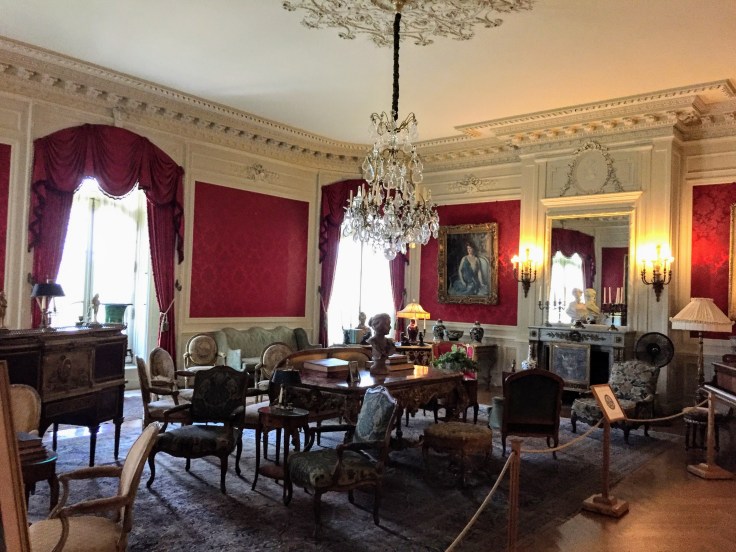
The Drawing Room:

2017-07-08 Newport - The Elms 09


The Music Room:

2017-07-08 Newport - The Elms 10


The Dining Room:

2017-07-08 Newport - The Elms 11


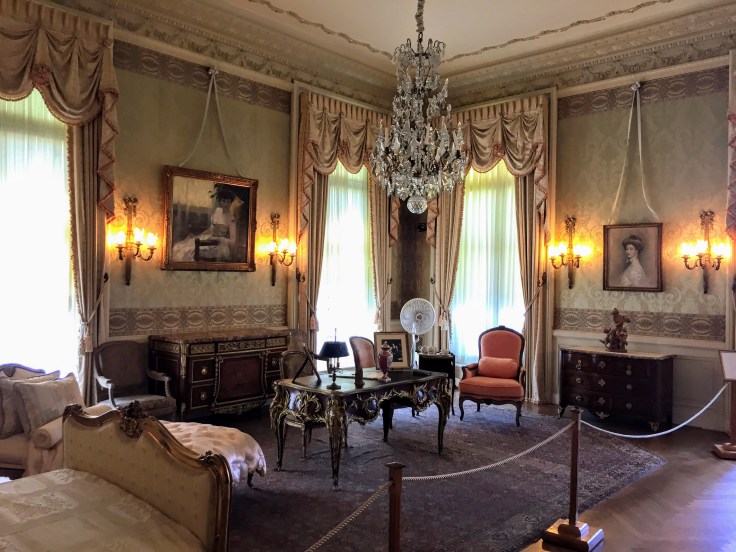
Mrs. Berwind’s Bedroom; this was also her sitting room, where she would receive lady friends during the day:

2017-07-08 Newport - The Elms 14

2017-07-08 Newport - The Elms 16


Mr. Berwind’s Bedroom:

2017-07-08 Newport - The Elms 17

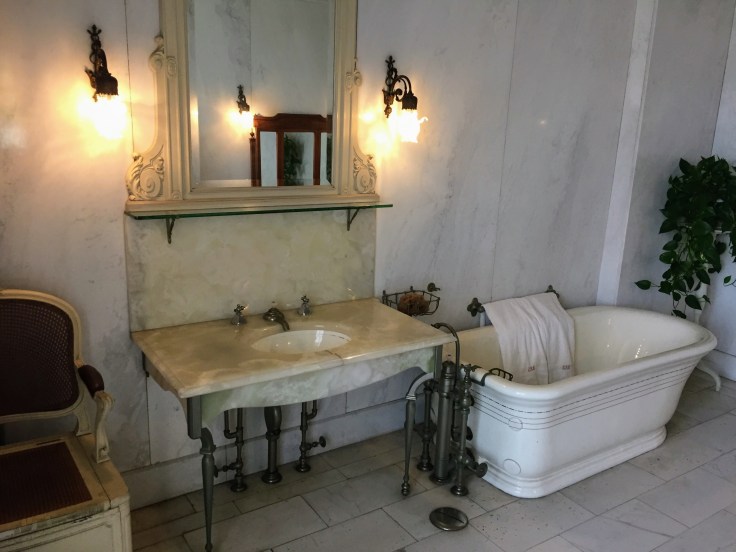
Mr. Berwind’s Bathroom:

2017-07-08 Newport - The Elms 18


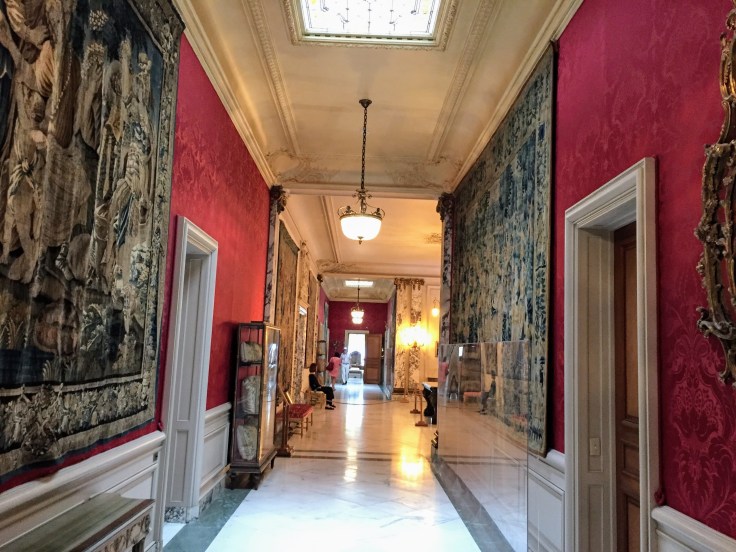
The Upstairs Hall; the stained glass skylights in the ceiling get their light from glass block floor in the servants’ hall on the third floor; the actual skylight is above the third floor, in the roof. (More on this tomorrow).

2017-07-08 Newport - The Elms 15


The Family Sitting Room on the second floor:

2017-07-08 Newport - The Elms 19


The Kitchen:

2017-07-08 Newport - The Elms 20


The Grand Lawn to the rear:

2017-07-08 Newport - The Elms 24


The Carriage House:

2017-07-08 Newport - The Elms 28


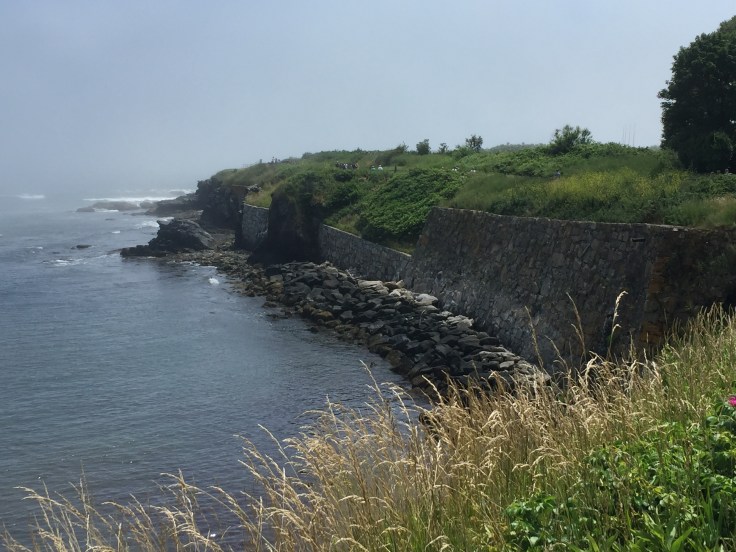
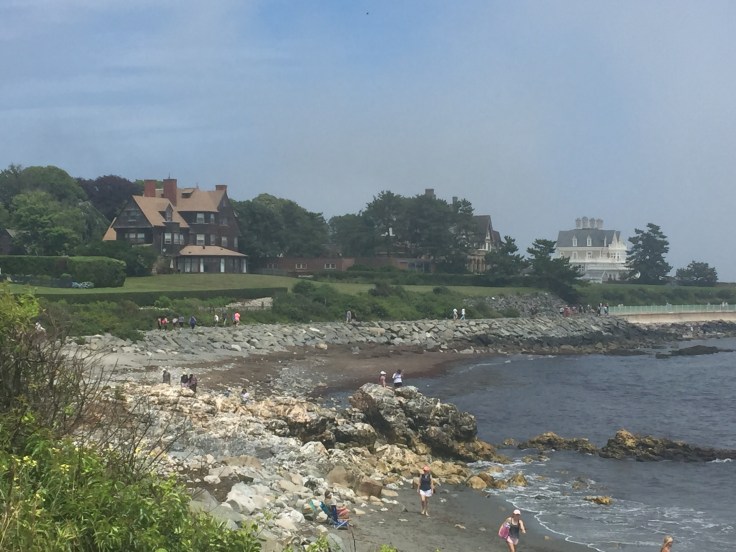
After touring these four houses, we needed a break. We took a long walk along “Cliff Walk”, a beautiful ocean front walkway around Newport:

2017-07-08 Newport - Cliffwalk 08

2017-07-08 Newport - Cliffwalk 06

2017-07-08 Newport - Cliffwalk 05

2017-07-08 Newport - Cliffwalk 01

There were even surfers:

2017-07-08 Newport - Cliffwalk 07


We had time for one more house:

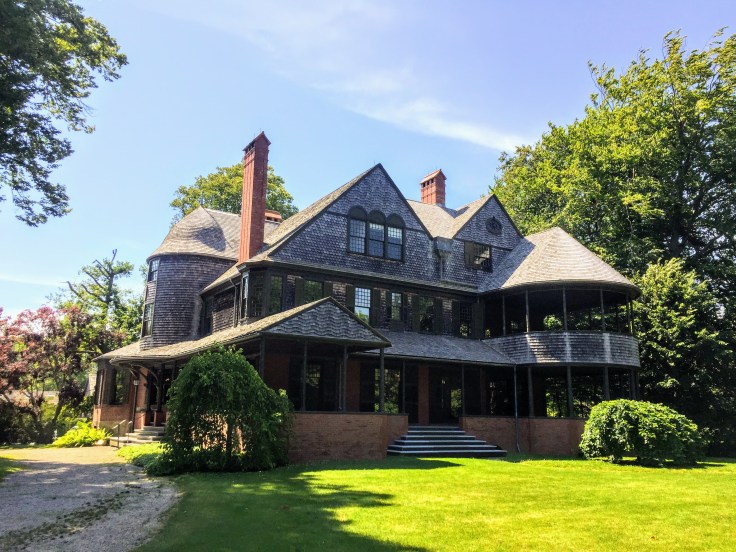
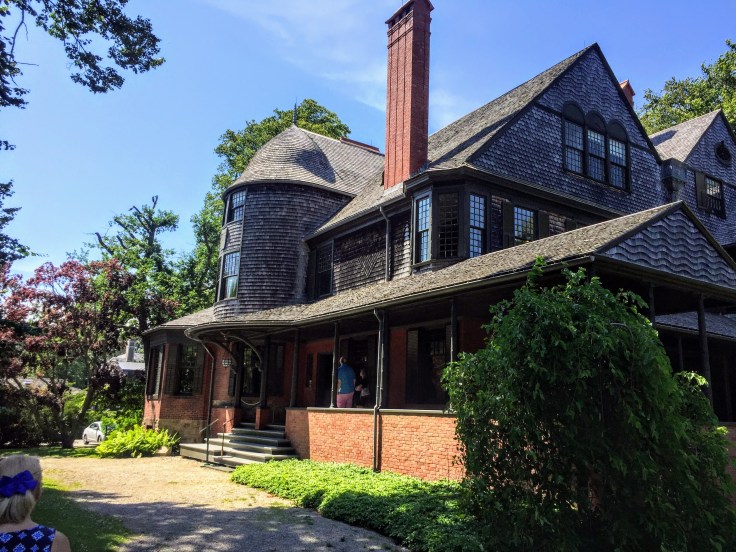
The Isaac Bell House:

This house is totally different from the others; it is not a neoclassical stone pile, but a post-Victorian cottage at a more human scale. It is older than the grand houses, but it portends what is coming, and what continued long after the neoclassical craze was over. This is the type of house Frank Lloyd Wright was trained to design. He took it to a whole new level…

This house was lived-in up until the 1990s, as a boarding house, a nursing home, and other uses.  It is still undergoing restoration…

The Exterior:

2017-07-08 Newport - Isaac Bell 04

2017-07-08 Newport - Isaac Bell 01

2017-07-08 Newport - Isaac Bell 03

2017-07-08 Newport - Isaac Bell 02


The interior hall is dark:

2017-07-08 Newport - Isaac Bell 30

2017-07-08 Newport - Isaac Bell 11


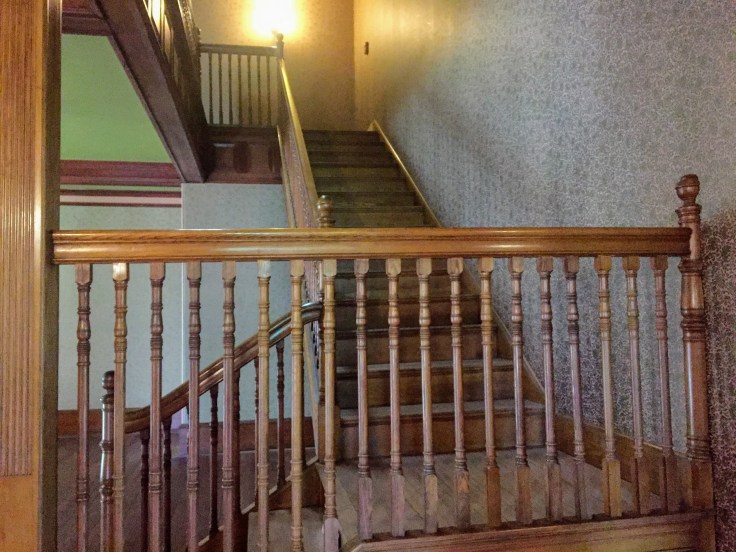
The Stair:

2017-07-08 Newport - Isaac Bell 31

Here we see something this house has in common with the others: These decorative panels were bought as bedsteads in Europe, dismantled and cut apart, and used as decoration on the stair:


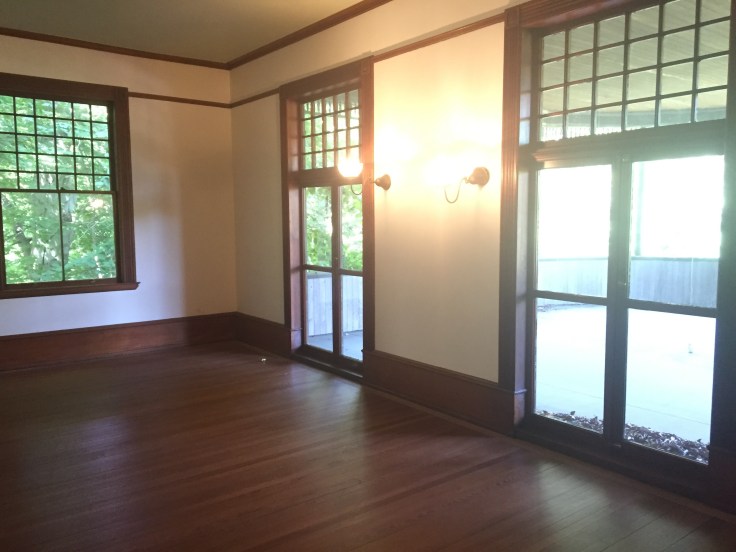
The Living Room:

2017-07-08 Newport - Isaac Bell 23


2017-07-08 Newport - Isaac Bell 36


The Dining Room:

2017-07-08 Newport - Isaac Bell 37


2017-07-08 Newport - Isaac Bell 22


The Library:


The Upstairs:

2017-07-08 Newport - Isaac Bell 38


2017-07-08 Newport - Isaac Bell 29


So it was a long day. We headed back to the Villa and the rest of the caravaners… An enjoyable time was had by all…


2017-07-01 Hudson Valley, NY; the Rockefellers and Kykuit, the Union Church, Marc Chagall, and Henri Matisse;

Before our trip I had read a biography by Ron Chernow: “Titan – The Life of John D. Rockefeller.”  Shortly after, about two months ago, I read “Memoirs“, by David Rockefeller, JDR’s youngest grandson.  The first told the story of how JDR made his money (your opinion may vary…) and built his estate here in the Hudson Valley, and the second told of growing up in his grandfather’s house and eventually turning it into a museum and art gallery for all to enjoy.  Both also contained much information about the life of John D. Rockefeller, Jr (whom I refer to here as Jr.), David’s father. (David died in March, 2017 at the age of 101…)

We set out today to visit Kykuit, home to 4 generations of the Rockefeller family.  It is located a few miles from the Hudson River, east of Sleepy Hollow and Tarrytown, about 25 miles north of New York City.

Kykuit sits amid the vast family estate, known as Pocantico or Pocantico Hills; it occupies an area of  over 3,400 acres. During much of the 20th century, the estate featured a resident workforce of security guards, gardeners and laborers, and had its own farming, cattle and food supplies. It has a nine-hole, reversible golf course, and at one time had seventy-five houses and seventy private roads, most designed by JDR and Jr. A longstanding witticism about the estate quips: ‘It’s what God would have built, if only He had the money’.

(In 1946, the family considered donating a portion of the estate as a home for the newly formed United Nations.  Instead, they bought the 17 acre site in New York City and donated it to the UN…)

When JDR originally bought the estate in the late 1890s, he moved the family into an existing farm house.  He had no need for an elaborate mansion, unlike his wealthy contemporaries like the Vanderbilts, the Astors, or J. P. Morgan.  What he did want, and soon built, was a carriage house and stables for his prized horses, and a golf course for his personal use.

After the original house burned down, JDR wanted to move into another existing modest dwelling on the estate.  Instead, Jr. convinced him that he needed a grand house more befitting his status as the wealthiest man in America.  JDR finally agreed.  A new house was promptly built; it was found to be inadequate and faulty in both design and construction, and a new house was rebuilt in its place.  It was completed in 1913. It has four stories and two basements; however…

Unlike the monumental size and the display of vast wealth seen in other museum-like Gilded Age mansions, Kykuit’s cozy rooms are a reflection of the conservative and family-oriented lifestyle of the Rockefeller family.  The devout John D. Rockefeller’s puritan values dictated that there be no ballroom, no card room, no billiard room, and no place for drinking or other activities deemed to be inappropriate.  The house had only 40 rooms – very modest by the gilded age standards of the day… There are 11 family and guest bedrooms.

In fact, JDR and Jr. spent more money on the grounds then they did on the house; the last resident, Nelson, used the estate as a giant art gallery, displaying his huge collection of modern art.  To preserve the view, JDR moved an entire village, including the train station and miles of tracks, a few thousand yards further away. To keep down the noise of constant service deliveries he built tunnels so that all deliveries and service access to the house were underground.  Jr. and his wife built a “Playhouse” to keep their 6 children occupied.  It is larger than the main house, and includes indoor and outdoor tennis courts, indoor and outdoor swimming pools, a bowling alley, billiards, a soda fountain, a theater, and assorted other amenities.  About 86 acres were enclosed into the “Park”, which contained the main house, the Playhouse, a reversible 9 hole golf course, plus many other houses for various other family members over the years. All the rest of the land has always been left open for the public to use. It was all donated to the National Trust in the 1980s, and the house and some of the “Park” is now also open to the public.  (Some portions of the estate are still private, because family members still live in some of the houses…) The majority of the original 3,400 acres are now a New York State Park.

At the time of the donation, except for family events, the 11-bedroom house had been unoccupied since Nelson Rockefeller, a grandson of JDR, died in 1979. The National Trust acquired a quarter interest in the 600-acre Rockefeller property in Pocantico Hills in 1979 under his will. In 1983, the Rockefeller Brothers Fund and the National Trust determined the boundaries of the new 86-acre Pocantico Historic Area, which includes the property and Nelson Rockefeller’s art collections at Kykuit.

Throughout the house, priceless East Asian pottery that the family avidly collected and cherished anchors each room. The main floors and basement (the latter was turned into a vast art gallery) boast modern art by the likes of Pablo Picasso, Alexander Calder, Andy Warhol and Henry Moore collected by modern art enthusiast Abby A. Rockefeller Jr.’s wife) and Nelson Rockefeller

Again, interior photographs are not allowed on the tour. The house has only two rooms that visitors would ever see – the office and a small parlor. There is no grand staircase, no Ballroom, no Grand Hall. This house was not designed for ostentation and the display of wealth.  Most of the house was reserved for the family.  Life for the family revolved around a “family” room in the center of the house, which contained a massive pipe organ (removed by Nelson). There is a large dining room for family meals, and a quieter sitting room. The terrace to the west boasts a view over the treetops to the Hudson River. No other buildings are visible between the house and the river.

On the second floor are two complete 3 room master suites; one or the other was occupied by JDR and his wife Cetti, then Jr. and his wife Abby, and finally Nelson and his wife Happy. The other Master suite was used for honored guests.  More family bedrooms are on the third floor and servant bedrooms are on the fourth floor.

Our tour started in the town of Sleepy Hollow at the Visitor Center. We took a shuttle up to the Park, where we drove along the original carriage roads, then up to the entrance court of Kykuit.  The front of the house is relatively narrow, but the view to the East is fabulous.


Entrance – East Facade:

2017-07-01 Kykuit 06


Side facing the lawns and gardens:

2017-07-01 Kykuit 08


West views towards the Hudson:


The original family swimming pool:

2017-07-01 Kykuit 43


The Teahouse; Nelson had swimming pools built where the sunken lawns were (and are), and he converted the Teahouse into a soda fountain…

2017-07-01 Kykuit 29


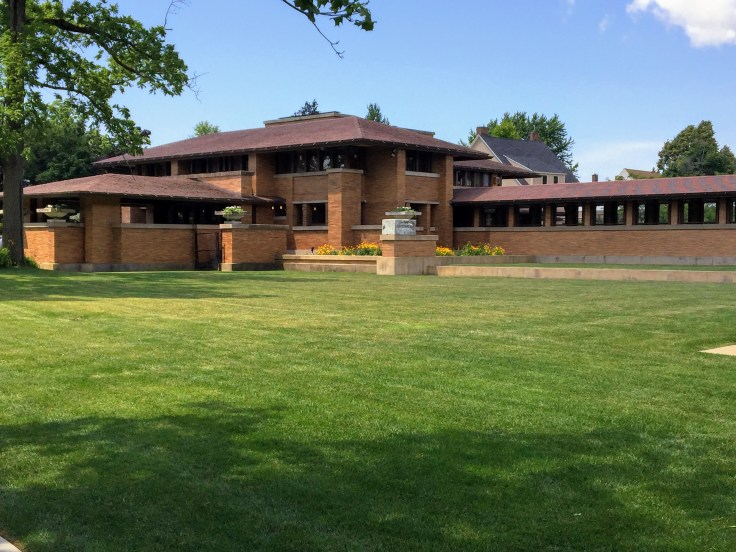
While there are obviously many differences between Kykuit and other neo-classic great houses of this era, there is one striking thing that we noted:  These houses were all built about the same time as the Martin House, which we saw in Buffalo. (See my June 28 2017 blog post…)  As these piles of excess were being assembled, Frank Lloyd Wright was rethinking the whole idea of what a house is, and what 20th century architecture is.

Compare:

Kykuit…

2017-07-01 Kykuit 01.jpg

Martin…

2017-06-28 Martin 05.jpg


As I said above, JDR loved horses and carriage racing. His first act upon buying the estate property was to build a Carriage House.  Today it contains historic carriages and cars owned by the family.  The basement and upper stories have been converted to a conference center for the use of the family’s business and charitable interests.
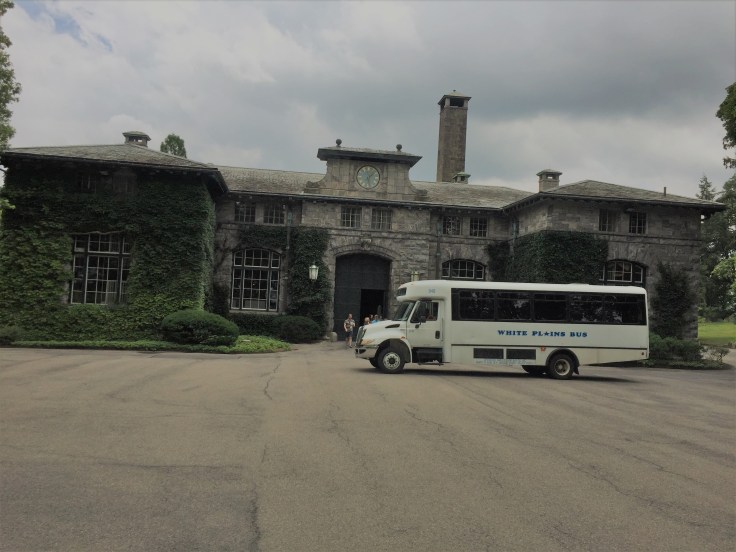
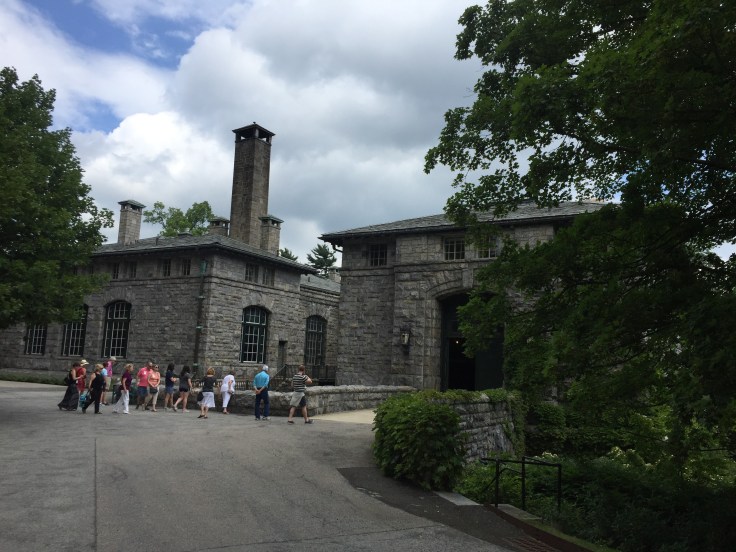
2017-07-01 Kykuit 67a

2017-07-01 Kykuit 63

2017-07-01 Kykuit 65

2017-07-01 Kykuit 66

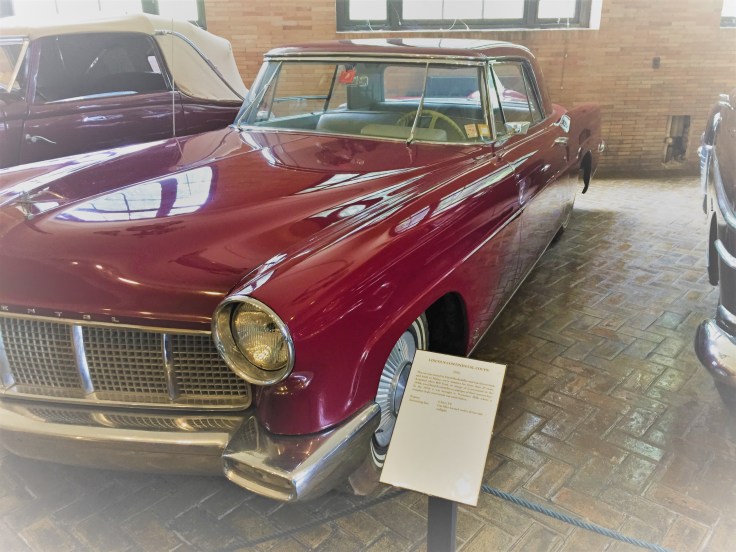
This is David Rockefeller’s Continental.  The joke here is that, as any Continental lover knows, this car is NOT a Lincoln; Continental was a separate division of Ford when this car was built…


After the tour we were shuttled back to Sleepy Hollow; we grabbed a quick lunch in a local pub, then drove to The Union Church of Pocantico Hills.  This tiny country church has a stained glass rose window by Henri Matisse, and 9 stained glass windows by Marc Chagall… After all, when some of your parishioners are the Rockefeller family, things get done.

The church was built by John D. Rockefeller, Jr. in 1921, as part of his plans to develop the town of Pocantico Hills, which was below his estate Kykuit.   It is a one story neo-Gothic style building with fieldstone foundation and walls and a slate covered, highly pitched gable roof. In 1930-1931, a parish hall was added to the east end of the church.

Upon the death of Jr.’s wife, Abby Aldrich Rockefeller, in 1948, their son Nelson Rockefeller had Henri Matisse design the church’s rose window in honor of her memory shortly before the artist’s own death in 1954.  When Jr. died in 1960, his children, led by their son, David Rockefeller,  had artist Marc Chagall design a Good Samaritan window in his honor.   This commission later expanded to include all eight windows in the nave of the church. They memorialize, among others, Michael Clark Rockefeller, Governor Nelson A. Rockefeller, Peggy Rockefeller (Mrs. David Rockefeller), and Mary Rockefeller (Mrs. Laurance Rockefeller). Chagall and members of the Rockefeller family carefully selected the subject matter for the windows from Biblical texts.

David Rockefeller, members of the Rockefeller family, and members of the church commissioned organ-builder Sebastian M. Glück to design and build the Laurance Spelman Rockefeller Memorial Pipe Organ in 2006.  It is used for public recitals as well as for church services.
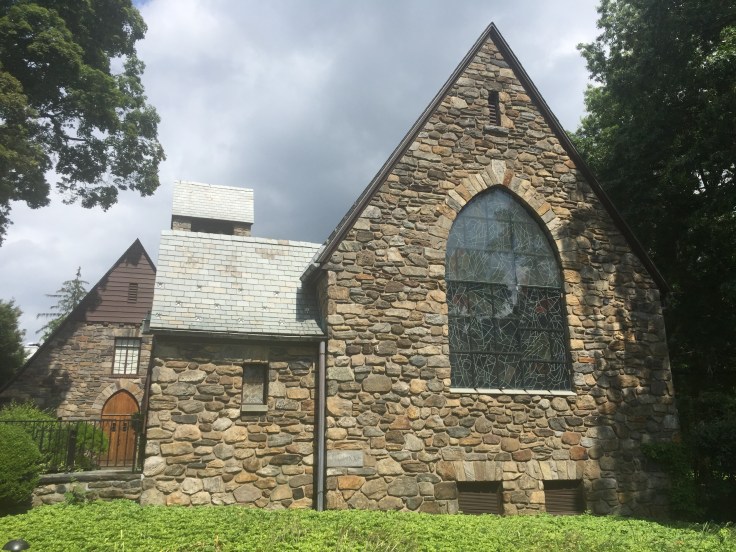
2017-07-01 Union Church.jpg


We returned to the Villa and had a quiet evening in the Villa.  At least we were quiet. The weather was not.  We were treated to a huge thunderstorm that raged for what seemed like hours.  Thunder and lightning and heavy rain, things all so unfamiliar to us…  We were parked under a large tree, and, being unaccustomed to lightning, we were not sure whether this is a good thing or a bad thing… However, all ended well and we survived…
 

2017-06-28 Back in the USA; All the Martin Houses by Frank Lloyd Wright

We left the campground in Niagara early in the morning – we have a long day ahead of us; first we need to cross the border, then get to a 10:00 am house tour in Buffalo, then on to another tour in Rochester, then on to our next campground for the night…

The border was quite busy as we approached; the RV lane was very slow. They eventually opened another lane, and the RVs were cruising through at a fast clip, but we were stuck in our slow lane… Finally we made it to the customs agent. No smiles, no conversation, but easy questions and we were quickly on our way. It had taken almost an hour… But now we were on to Buffalo.

I don’t know what you think about Buffalo, but I didn’t have high expectations. However, the “Parkview” neighborhood we found ourselves in was lovely. There was a huge Olmstead-designed park, and a lovely neighborhood of well-kept houses and tree lined streets. It is about 1 mile from downtown.

2017-06-28 Martin 75


Here is the house Frank Lloyd Wright built for Mr. Martin in this neighborhood:

2017-06-28 Martin 02


Darwin Martin lived in this neighborhood in a Queen Ann style Victorian house. He was a rags-to-riches story, eventually rising to be a top executive with the Larkin Soap Company.  In the early  1900s, the Larkin company needed a new headquarters, and Mr. Martin’s brother lived in a Frank Lloyd Wright-designed house in Oak Park, IL. He suggested Larkin consider retaining FLW for their headquarters. FLW did not have much of a track record doing commercial buildings on his own, and Larkin was cautious. In the mean time, Martin was looking to build a new house for himself, and he had bought a lot in a prestigious neighborhood on the other side of Buffalo.

When FLW visited Martin, he saw a 1 1/2 acre parcel a few blocks from Martin’s house. He convinced Martin to sell his other lot and buy this parcel. FLW set out to design a family compound for Mr. Martin. The first house to be built was for Martin’s sister and her husband, Mr. and Mrs. Barton.  This proved to be successful, and as a result, Larkin retained FLW to design the new Larkins Headquarters.  This was FLW’s first substantial commercial commission, and it set the stage for many others. (The Larkin Building was demolished in 1950.)

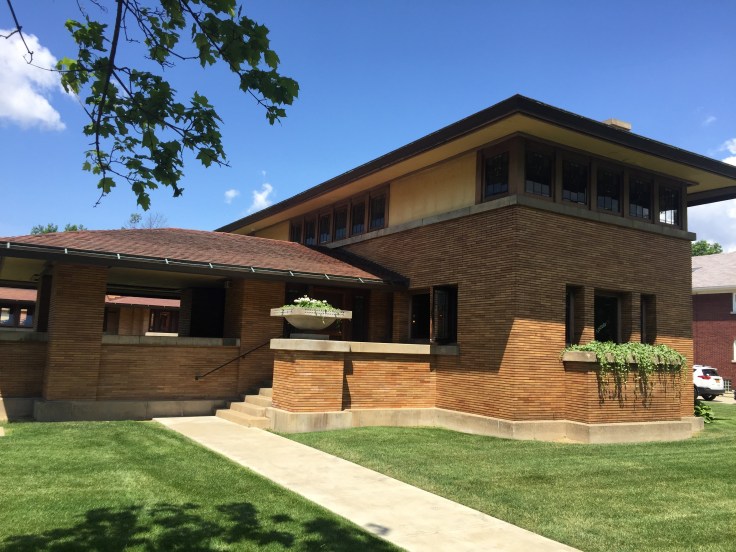
After the Barton house was complete, the Martin house was built. It is the ultimate FLW “Prairie-style” house, similar to 60 other houses, but one of the first, and one of the largest. These houses are distinguished by horizontal lines: strips of windows, low and wide bricks, broad and low roof eaves, and a sprawling plan – nothing boxy like other houses of the era. (The more famous Robie house in Chicago has many of the same features…)

The Martin House Complex includes the main house, the Barton house, a Conservatory or greenhouse, a Pergola connecting the Conservatory to the main house, a carriage house with servants quarters above (and a steam generating plant below, to heat the complex), and a Gardener’s cottage.  Mr. Martin and FLW became best friends, mainly because Martin referred FLW to other commissions, and helped him financially on many occasions…

The Martins lived in the house from 1905 to the early 1930s. Mr. Martin was pretty much wiped out by the 1929 stock market crash; he only had enough money left to build another FLW-designed summer house on the shores of Lake Erie, about 30 miles away. Mr. Martin died in 1935 and the family abandoned the complex in 1937, with Mrs. Martin moving full time to the summer house. The complex fell into disrepair; in 1946 the City of Buffalo sold the house in a tax foreclosure auction. The Barton house and the Gardener’s cottage were sold off, and eventually the Pergola, the Carriage house, and the Conservatory were demolished and that parcel was sold; apartment buildings were build on the land.  Portions of the main house were turned into office space and several apartments.

In 1992 the restoration and rebuilding were begun. The parcels were re-purchased, the apartments were demolished, and the Pergola, the Carriage house, and the Conservatory were rebuilt to exacting standards. The upper floors of the buildings are still undergoing restoration, so we were not able to see them, and interior photos were not allowed.

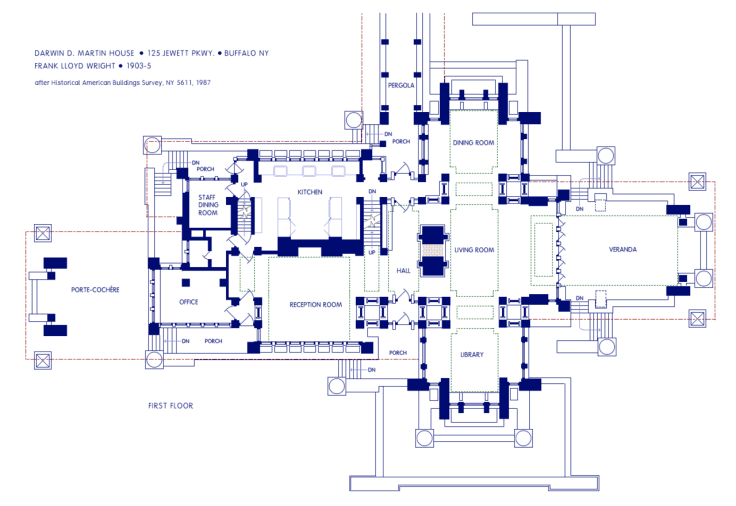
The main house was quite amazing, considering the kinds of houses wealthy people were building during this era.  The floor plan tells you a lot about how different this house was.  Note the large kitchen on the main floor (not in the basement), and note the “Great Room” – Dining, Living, and Library combined together and open to each other, yet each well defined by the architecture.2017-06-28 Martin Plan

Pictures don’t do the house justice; also, considering that the house has large, low roof overhangs, the facade is almost always in shade.

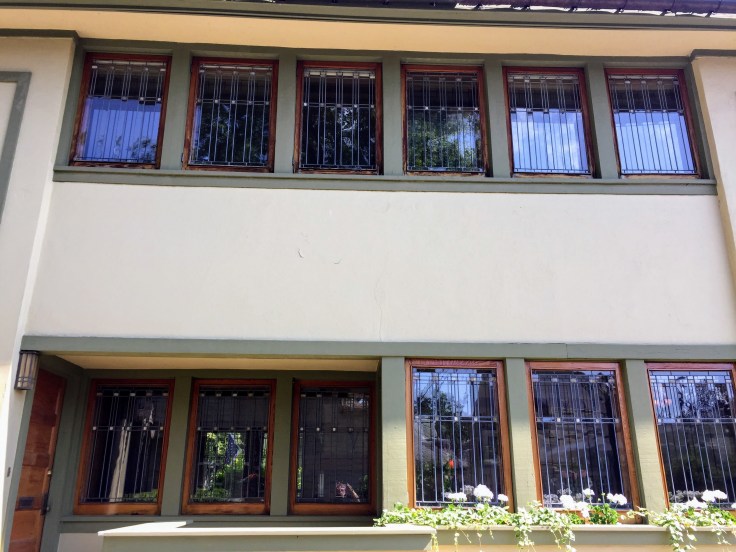
Horizontal strip windows:

2017-06-28 Martin 08


The Pergola and the rear of the house (note the horizontal lines of the bricks and the eaves):

2017-06-28 Martin 01


More circles within squares…


The Terrace:

2017-06-28 Martin 04


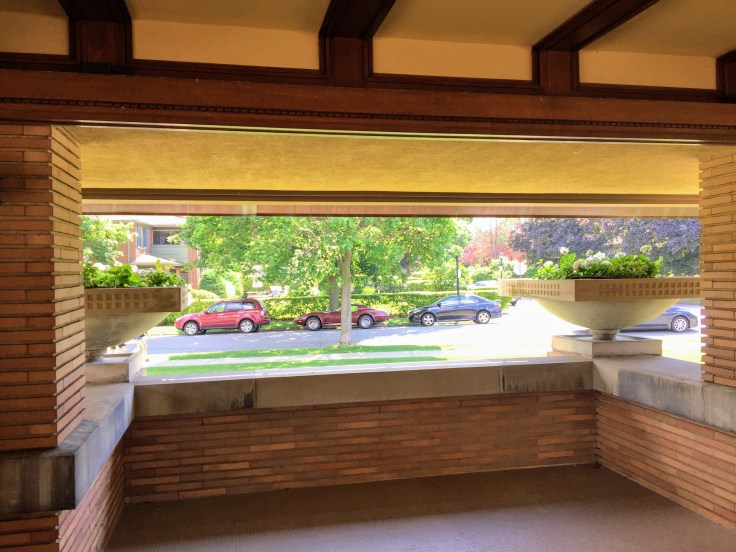
The entrance – note the hidden front door…

2017-06-28 Martin 03


The Barton house…

2017-06-28 Martin 21


The Gardener’s cottage:

2017-06-28 Martin 31


The tour was very well done. We were welcomed at the visitor’s center by Frank himself:

2017-06-28 Martin 98


Our intentions for the rest of the day were immediately changed; we abandoned the idea of going to Rochester to see George Eastman’s house; instead, we headed west towards Lake Erie to see Greycliff, the Martins’ summer house.

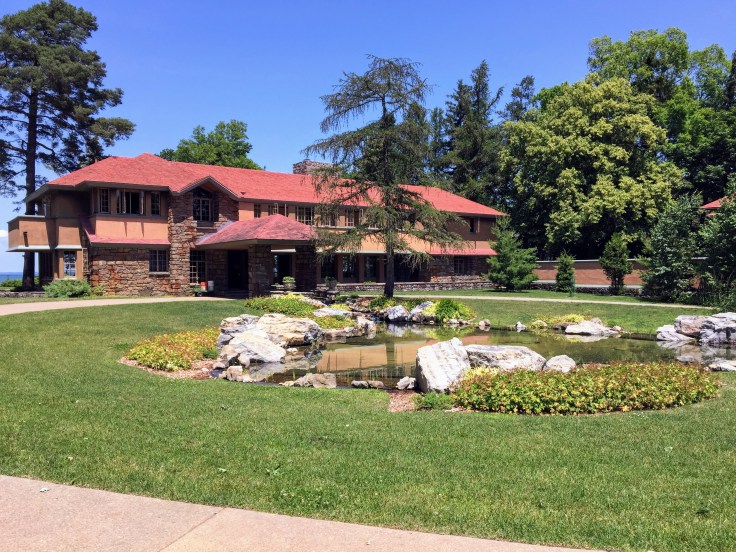
2017-06-28 Greycliff 01

This house is Mrs. Martin’s house. She never liked the main house in Buffalo because her eyesight was poor and the house was dark. This house is very light, with more windows, and with views to the lake. The house has terraces on two sides, overlooking the lake and away from the lake, protected from the lake’s sometimes harsh winds. The upstairs hallways are on the exterior of the house, with strip windows that could be opened on nice days.

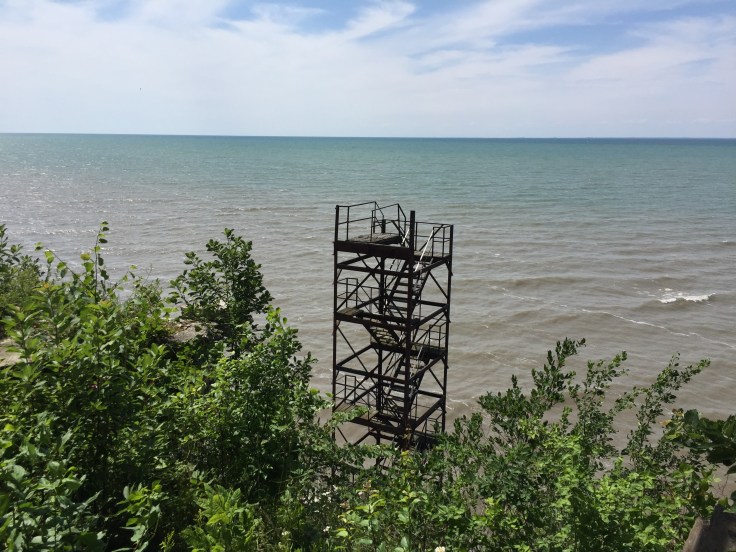
The house sits atop a bluff about 65′ above the beach. A stair tower was built to the beach, connected to the bluff by a bridge. The bridge has been removed due to safety concerns, and is being restored. The stair tower is still here, and is structurally sound. They will be reunited soon.

2017-06-28 Greycliff 80


The “see-thru” house…

2017-06-28 Greycliff 07


The lake side of the house:

2017-06-28 Greycliff 06


Frank was here, too:

2017-06-28 Greycliff 20


Mrs. Martin lived here until her death in 1943; the Martins’ daughter and her family lived here as well. The house was sold to a religious order, who kept up the estate until 1997, when it was purchased by the Conservancy and restoration was started. The house is still in pretty bad shape, but all the additions and changes installed by the religious order have been removed.

Again, we really enjoyed our tour here; but we had a long drive ahead. We set out for Canandaigua, a small town south of Rochester, just on the northern edge of the Finger Lake Region of New York.


An enjoyable time was had by all…


2017-06-23 Frank Lloyd Wright and Peter Berndtson

Today we visit more architecture!  And a bit of history.  Three houses are on the agenda, but these are different than the two we saw yesterday; they are all within a park preserve not far from Fallingwater.

The site is called Polymath Park, and it is an 125-acre preserve dedicated to these significant houses.  The site is surrounded by private forest in the Allegheny Mountains and features three architectural landmarks: Frank Lloyd Wright’s Donald C. Duncan House and two others by Peter Berndtson (1909–1972), who was one of the original Wright associates at Taliesin.

In 1962, Berndtson master planned the 125 acre property for 24 dwellings, each sited in a circular clearing in the forest. Only two houses, however, were actually built: the Balter House in 1964 and the 1965 Blum House.  The development plan never progressed, and eventually the Blums and the Balters sold their houses.  Many years later, Thomas and Heather Papinchak purchased the property, and began a dream project to restore and preserve these two houses, plus more.

Frank Lloyd Wright developed a systems-built concept to bring his unique design ideas to modest, production-style houses. These “Usonian” houses were available as pre-cut kits, to be shipped to your site and assembled by local labor. FLW himself would site your house if you sent him a topographical survey of your property. The buyers of these kits were not allowed to communicate with FLW directly.

One of these Usonian kit houses was built in 1957 in Lisle, Illinois, for Donald and Elizabeth Duncan,  After the Duncans’ deaths the house fell into disrepair, and was constantly being damaged by the flooding of its site. The house was sold and deconstructed in 2004 and put into storage, waiting for a new site to be readied. When the deal for the new site fell through the fate of the Duncan house was in question.

However, when Thomas and Heather Papinchak heard about it, things started moving rapidly. The Duncan house was shipped to Polymath Park and reassembled in 2007. Today, the Duncan house, The Blum house, and the Balter house are all open for tours; in addition, a fourth FLW house is being moved to the site; foundations are currently under construction.

We began our day by driving in the rain to this remote location. However, unlike yesterday, the rain never let up. We met our tour guide in “Treetops”, the original house of Thomas and Heather Papinchak, adjacent to Polymath Park. Our tour guide drove our group in the little shuttle bus; first was the Duncan house., then Balter, then Blum; after our tour, as we drove back to Treetops for lunch, our guide told us a story:

At Fallingwater, the Kaufmans had a long-time cook. In fact, she is still alive today, at age 104. When the Kaufmans would put on a large party, additional help was needed. The cook asked her best friend to come assist, and this friend would also bring her small son, who would play around the kitchen and staff rooms of Fallingewater.  At one such event, Frank Lloyd Wright was in attendance, and FLW playfully interacted with the small boy for a few minutes.

This small boy was our guide’s grandfather… He told us that he only heard this story after he had started giving tours at Polymath Park… And now you know the rest of the story…

But back to the houses:  These were very modest, affordable, middle class, 1950s houses. But the design features, the settings, the details and the materials are artfully designed and integrated into simple and beautiful houses…


The Duncan House:

2017-06-23 Duncan 02

2017-06-23 Duncan 92


The Balter House:

2017-06-23 Balter 08

2017-06-23 Balter 03


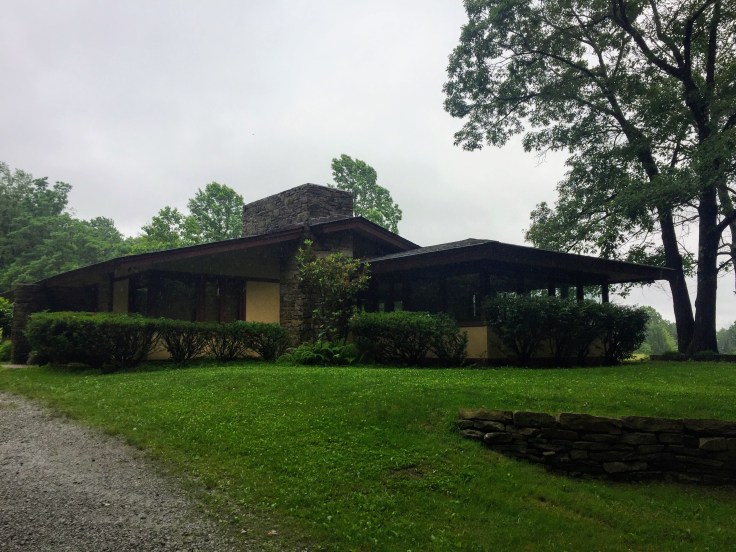
The Blum House:

2017-06-23 Blum 04


All in all a very fun day, learning about more than just FLW houses.  We hope this neat little park will eventually be filled  with these great houses.


2017-06-22 Our 43rd Anniversary; more Frank Lloyd Wright: visiting Fallingwater and Kentuck Knob

What better way to celebrate a marriage than to see world class houses and world class architecture?

Five years ago we celebrated 38 years by seeing the Stahl House in the Hollywood Hills – sometimes known as Case Study House #22; it was designed by Pierre Koenig, built in 1959, and is the subject of probably the most famous house photograph in the world, shot as a double exposure by the photographic genius Julius Shulman.  I can’t post that photo here, but here is a similar shot when we visited in 2012:

house-50

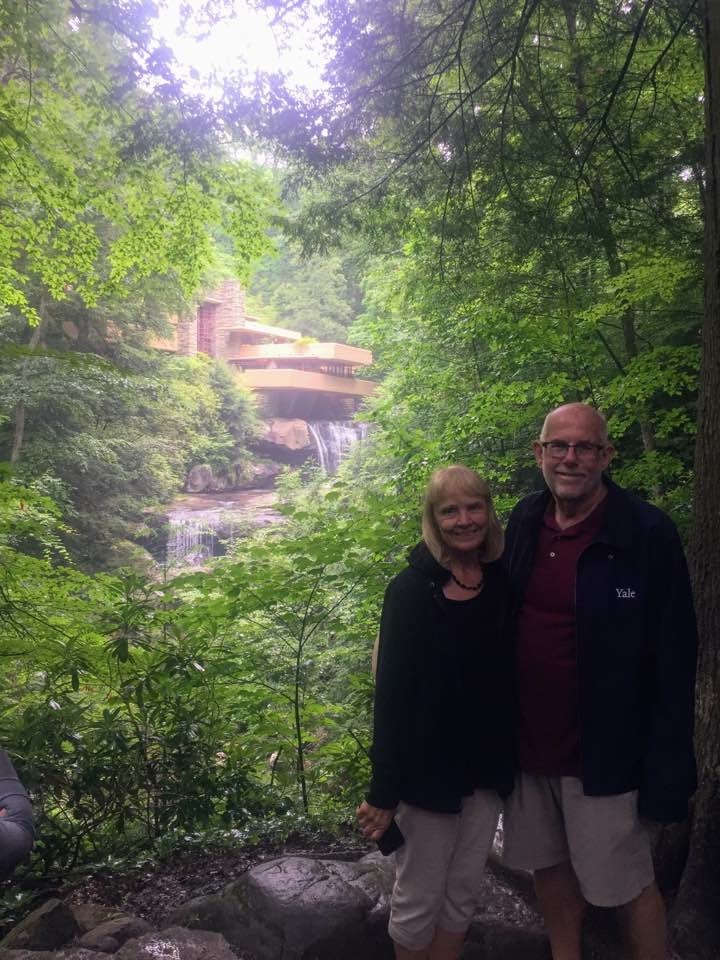
This year we are at the most famous and beloved house in the world:  Fallingwater. Lynda and I preyed upon some tourist to take our picture there…

2017-06-22 Fallingwater 020

Because it had been raining and the sun had just broken through, this photo looks surreal… a little like Shangri la…

Fallingwater was built as a weekend and summer house for the Kaufman family, owners of a large, successful furniture and department store in Pittsburgh.  If you think of Pittsburgh in the 1920s and 1930s – the air and water pollution were horrible – you can see why Mr. and Mrs. Kaufman wanted a weekend escape in the country, to enjoy fresh air and just being in nature.  Mr. Kaufman and Mr. Wright had a great love-hate relationship – they argued over money, design details, and just about everything else, but Mr. Kaufman kept giving Mr. Wright other commissions – his office interiors in Pittsburgh, and various other things around their Pittsburgh home and store.

The house is amazing.  I have read books and poured over photographs for years, but being there is impossible to replicate.  The major rooms of the house felt protecting and cave-like on one side, and wildly exuberant, thrusting you out onto cantilevered decks atop the waterfall on the other side.  The trees and rocks are ever-present, as is the sound of the waterfall. You cannot see the waterfall unless you walk to the edge of the balcony and look over the edge down below.

It was raining when we arrived, and we carried umbrellas with us as the tour started, but once we got inside the house the rain had stopped.  It was a small group, maybe 10 people, and this was the extended, or photography, tour – we were permitted to take photos inside the house, unlike many other house museums.  We spent 2 hours seeing the three floors of the house (plus a small utilitarian basement), plus the two-story guest house and servants quarters just up the hill from the main house.

Since I’ve already said that photographs don’t do this house justice, I won’t post all 129 pictures we took; but I will post a few that I find remarkable…

The approach is via the driveway, across the bridge, over the creek…

2017-06-22 Fallingwater 001d


Once you are on the bridge you see the house, with the stairway down to the creek; the house is literally perched on the stone bank of the creek, and tied back into the rock behind the house…

2017-06-22 Fallingwater 002

The original stair was suspended from the deck above. It was destroyed by the raging waters of the flooded creek in the early 1960s. The rebuilt stair you see here is supported on steel columns that extend down into the creek bed.

The driveway wraps around the rear of the house, between the house and the rock wall of the hill; a trellis ties the house structurally into the rock, and visually connects the house to the rock, providing a sense of protection as you approach the front door.

2017-06-22 Fallingwater 003a


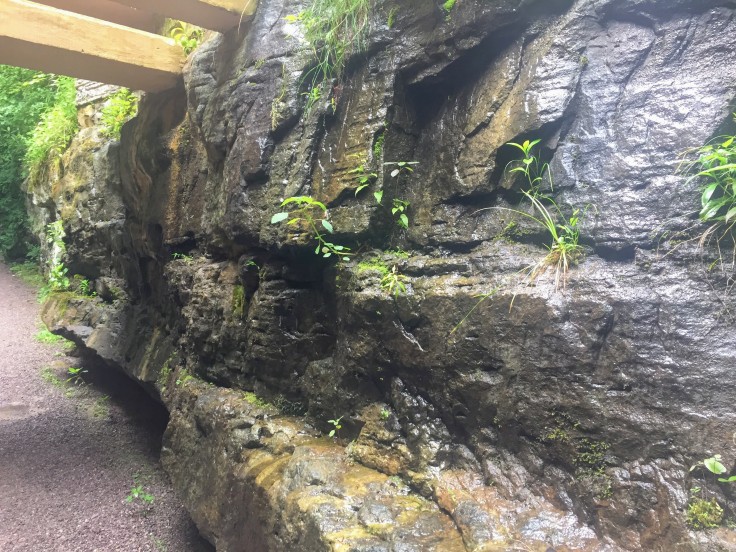
The rock seeps and drips water, in a reference to the much larger waterfall beneath the house…

2017-06-22 Fallingwater 003l


Where is the front door, you ask?  Here I am, looking for it…

2017-06-22 Fallingwater 003g


Yes, Frank Lloyd Wright always liked to hide the front door, and he always had a very low ceiling at the door, using his signature “compress and release” concept to bring you through the door and into the main space of the house.

2017-06-22 Fallingwater 003b

Note the concrete beam that curves around the tree…


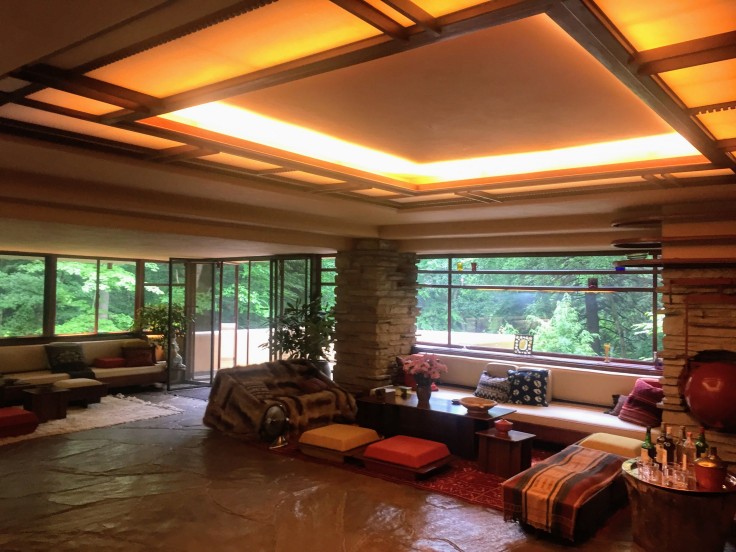
The main Living Room…

2017-06-22 Fallingwater 005

It is much more than just a living room – it includes not only the living space with two distinct sitting areas, but also includes dining space, study space, fireplace and hearth, access to the stair going down to the creek, plus the opportunity to see the view and walk out onto the terrace.


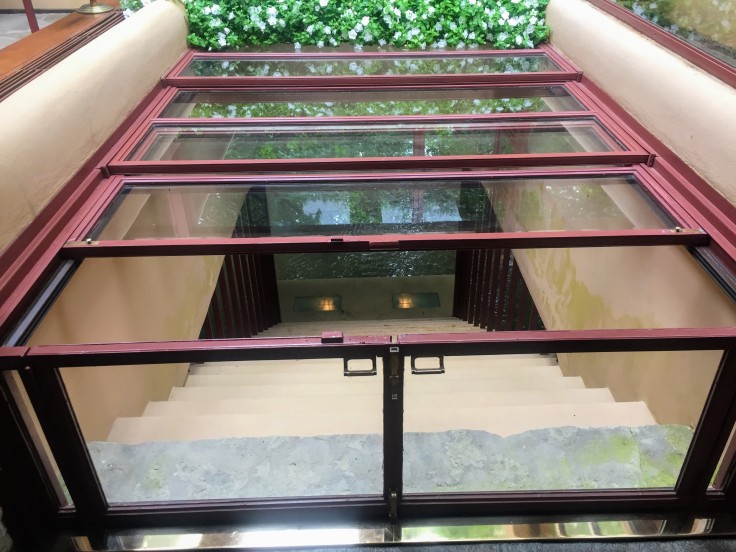
Here is the hatch to the stair that goes down to the creek…

2017-06-22 Fallingwater 005j


The Terrace, which cantilevers over the waterfall…

2017-06-22 Fallingwater 006gg


And the waterfall itself…

2017-06-22 Fallingwater 006d


Some of my favorite details:

2017-06-22 Fallingwater 008e

The desk in the master study has a cut-out to allow the window to open; FLW loved to put circles inside squares.


There is a small pool adjacent to the creek.

2017-06-22 Fallingwater 010d

There are also exterior stairs leading up from the pool to the bedroom level above…

The story goes that they would climb down to the pool in the morning, have a quick dip in the icy water, then run back upstairs, jump into bed, and ring for the maid, to be served breakfast in bed… While that story may not be true, it certainly might be apocryphal…
 

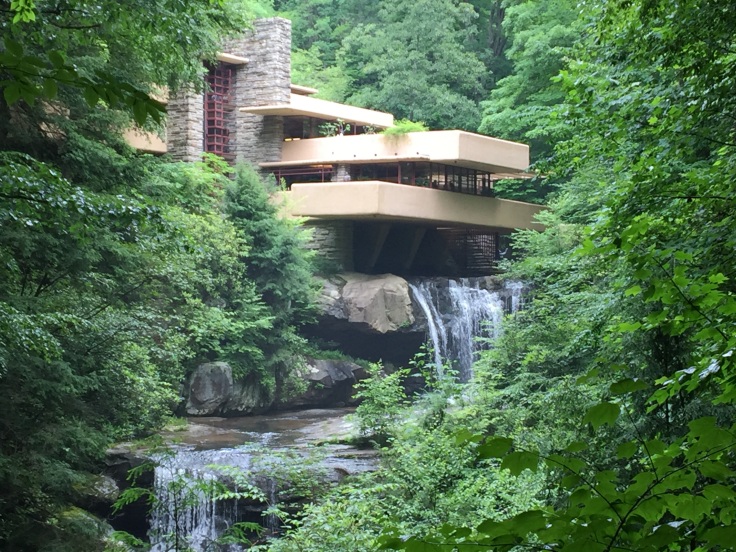
The typical shot of the house projecting over the waterfall.

2017-06-22 Fallingwater 020ww

The Kaufmans wanted a house near the falls so that they could view the falls from the house. Wright believed that having the falls constantly in sight would render them commonplace. So he placed the house atop the falls; you always know the falls are there, but you need to walk over to the edge to see them… The Kaufman family members enjoyed the house for 25 years before donating the house, the surround land, and an endowment, to have the house opened to the public in 1964.  It was the first FLW house opened to the public on a full time basis.

While we regretting leaving this spectacular place, we had appointments to keep…


Mr. and Mrs. Hagan ran in the same social circle as the Kaufmans; after seeing Fallingwater many times over many years, they decided they needed a FLW house of their own.  They bought 80 acres (Fallingwater is set on over 2,000 acres…) about seven miles from Fallingwater and retained Frank Lloyd Wright to design them a small, modest, full time house. (Fallingwater was a weekend house…) The house is named for the hill on which it sits: Kentuck Knob.

The house was completed in 1956, and the Hagans lived in it for over 30 years. It was sold to a British man who owns it today. He has brought in his large art collection, and the house is open for tours.

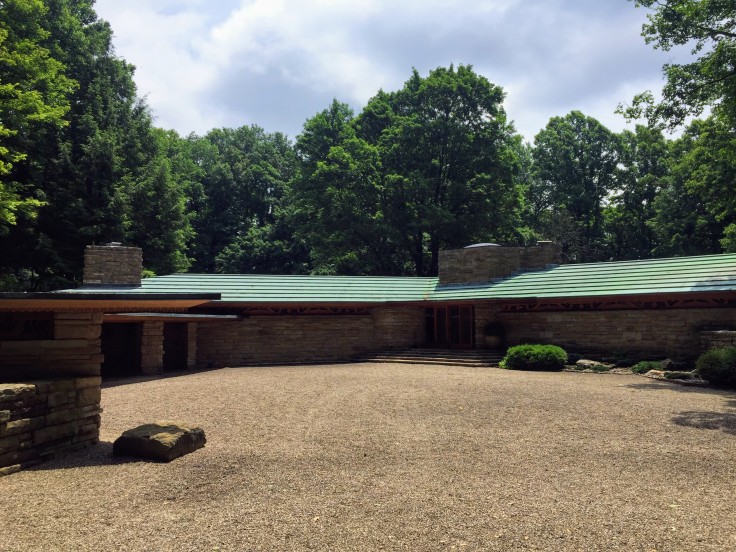
Kentuck Knob is not just more modest than Fallingwater; it is a 1950s house, to suit the more modern lifestyle of the Hagans. Mrs. Hagan loved to cook and entertain, so the kitchen is not relegated to a rear, closed-in space for the servants, but is a centerpiece of the house. It is a one-story house, a typical example of Wright’s Usonian houses.

2017-06-22 Kentuck Knob 16

The house sprawls across its site, with the carport on the left, and the entry in the center. The wide roof overhangs keep the front in almost constant shade.


2017-06-22 Kentuck Knob 19

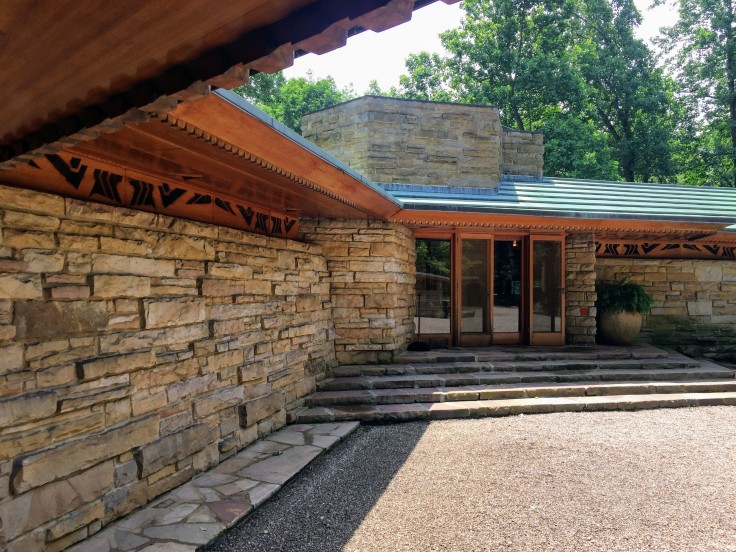
The entry door is again very short, allowing the experience of compress and release as you enter the much larger space inside.  The clerestory windows are filled with wood cut-outs of the various forms in the house to filter the light.  Unfortunately, we were not allowed to take interior photos…


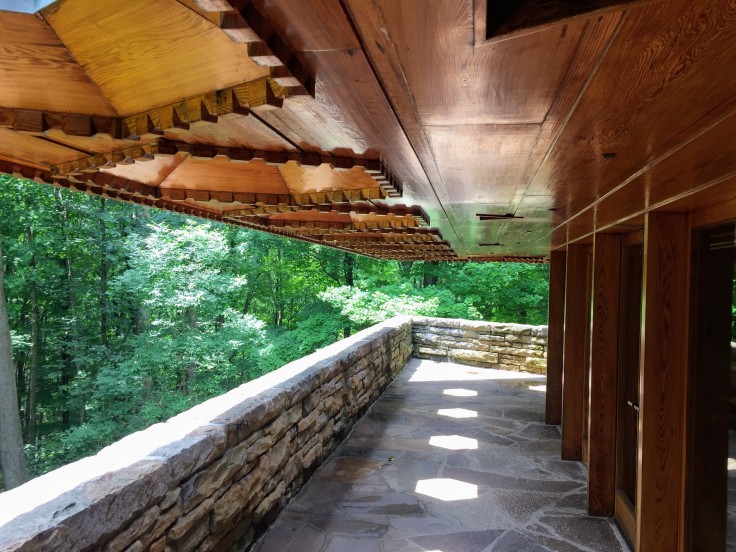
The terrace overlooking the forest wraps around the rear of the house. This was wide open land when the Hagans had the house built. They planted hundred of trees, so today the views are almost all obscured by forest…

2017-06-22 Kentuck Knob 21

Note the hexagonal “skylights” that cast a pattern of light that moves across the terrace as the day wears on…


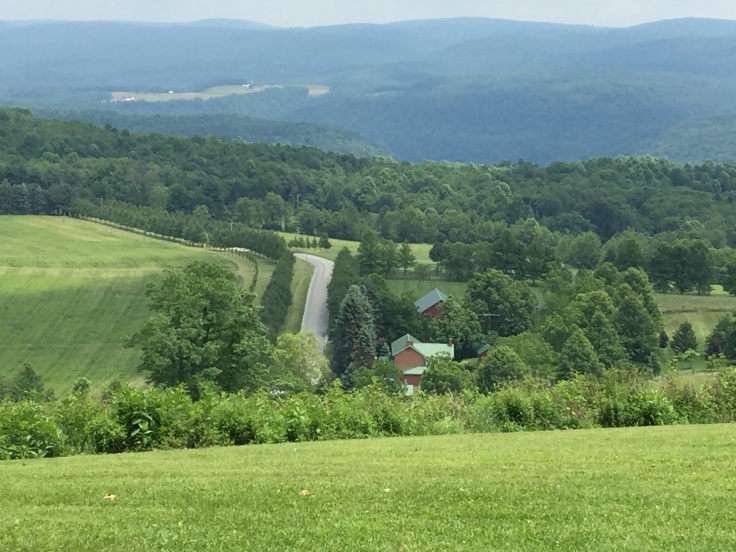
Here is the view that the Hagans had when the house was first built…

2017-06-22 Kentuck Knob 15

The kitchen is in the center of the house; it is hexagonal is shape and it has a huge skylight over the entire room. The hallways and doorways within the house are all very narrow, following the compress and release concept, but the house is very livable, and was certainly ahead of its time in the 1950s…


All in all, a wonderful day. We returned back to the Villa and enjoyed a marvelous home-made pizza and great wine. A perfect anniversary celebration!


Tomorrow: More houses!


2017-06-16 Missouri, and Eero Saarinen

Before I get to today’s activities, a thought struck me regarding Frank Lloyd Wright and Laura Ingalls Wilder:  They were both born in 1867; she died in 1957 and he died in 1959. They were contemporaries in time, yet I can’t think of two more different people who lived two very different lives… They were born in the age of horse and buggy and covered wagons; they lived to experience trains, planes, and automobiles. She was modest, a simple homebody, and quite introspective; he was arrogant, a home wrecker, and a master designer of our built environment… A very interesting contrast that just appeared on our trip on two adjacent days…

Now, back to our travels:

This morning we walked to Mansfield, and found a delightful little cafe where we had coffee and Belgian waffles. (Ma and Pa’s Diner had terrible Yelp reviews…) Then we packed up and headed the Villa towards St. Louis.

We did our best to avoid the Interstate, because we could. However, whilst driving the back roads of Missouri, it started to rain. Not just any rain, but a true cloud burst like I have never seen. We drove for about 45 minutes with the windshield wipers at full speed, travelling maybe at 30 mph because we could not see any further ahead.  There was thunder and lightning (luckily, no hail – Airstreams hate hail like Superman hates kryptonite…).  Then, suddenly, within a 5 minute time-span, the rain stopped, the road was dry, the sky was blue, the sun was shining, and a guy passed us by in a top-down convertible… I’m just glad we had that vent cover fixed!

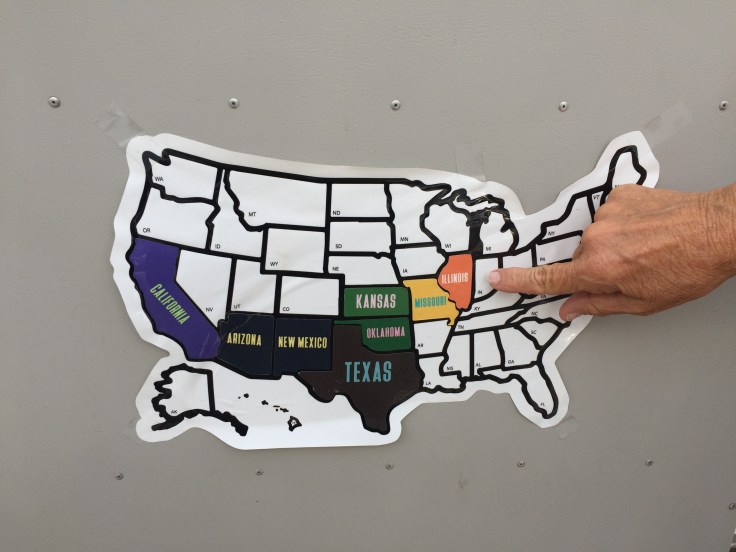
We proceeded to St. Louis, then immediately crossed the Mississippi river into Illinois to camp at an RV park behind a casino in East St. Louis. It was 94 degrees and very humid, not a breath of air moving. We plugged into shore power, turned on both AC units, and headed back to St. Louis. There was a convenient light rail train service right at the casino, and we soon were walking the streets of St. Louis.

2017-06-16 Map Illinois

We had two goals to accomplish in St. Louis:  BBQ for dinner, and a ride the top of the Jefferson Memorial Arch, designed by Eero Saarinen. (Eero Saarinen died in 1961, so he did not live to see the arch completed.) But remember the name…

We headed towards the Jefferson Memorial. It was started in 1935; they cleared 40 acres of riverfront property to make way for the Arch. The Arch was completed in 1965, and tours to the top began in 1967.  We found that most of the tickets for the day had been sold out, but we were able to get tickets for the 8:35 pm tour.  This left us plenty of time for our BBQ dinner.

BBQ, as most of you know, is a generic term that literally has no meaning. Saying “I am eating BBQ” is like saying , “I’m eating soup” or “I’m eating meat”.  What kind of soup? Cream based or broth based?  Or, what kind of meat? Braised, grilled, or roasted?  All meaningless without many more descriptors.  Having endured living in Texas for some time, there is exactly one thing I love from Texas and that is their style of BBQ. But I am always happy to try others.  St. Louis BBQ refers not to their sauces or type of cooking – you can find both slow smoked and fast grilled BBQ in St. Louis, with a variety of sauces – sweet, vinegar-based, tomato based – whatever you want.  What is unique about St. Louis BBQ is the way they cut their ribs:  According to Wikipedia, “St. Louis-style spare ribs are cut in a particular way with the sternum bone, cartilage and rib tips removed so that a well-formed, rectangular-shaped rack is created for presentation.”

There are 2 local places that seem to have their fans – Pappy’s and Bogarts. We opted for Pappy’s, because it was a nicer walk through the city to get there… always a determining factor in our lives…

2017-06-16 St Louis - Dinner at Pappys

It was terrible.

OK. On to the arch…

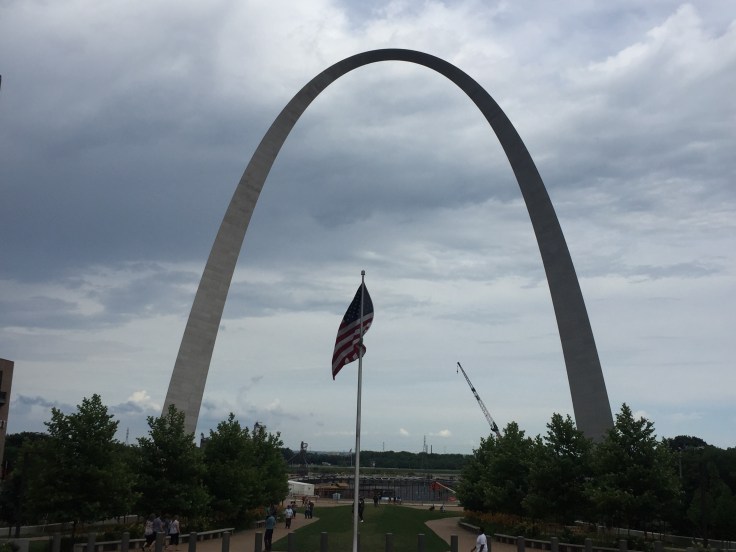
2017-06-16 St Louis - Gateway Arch 12

The Arch is officially called the Jefferson National Expansion Memorial, to commemorate Jefferson’s Louisiana Purchase and the massive migration west by the pioneers in the late 19th century as the Federal government literally gave away hundreds of thousands of acres of land. It is probably the largest planned migration of people in the history of the world, and it totally reshaped the USA.

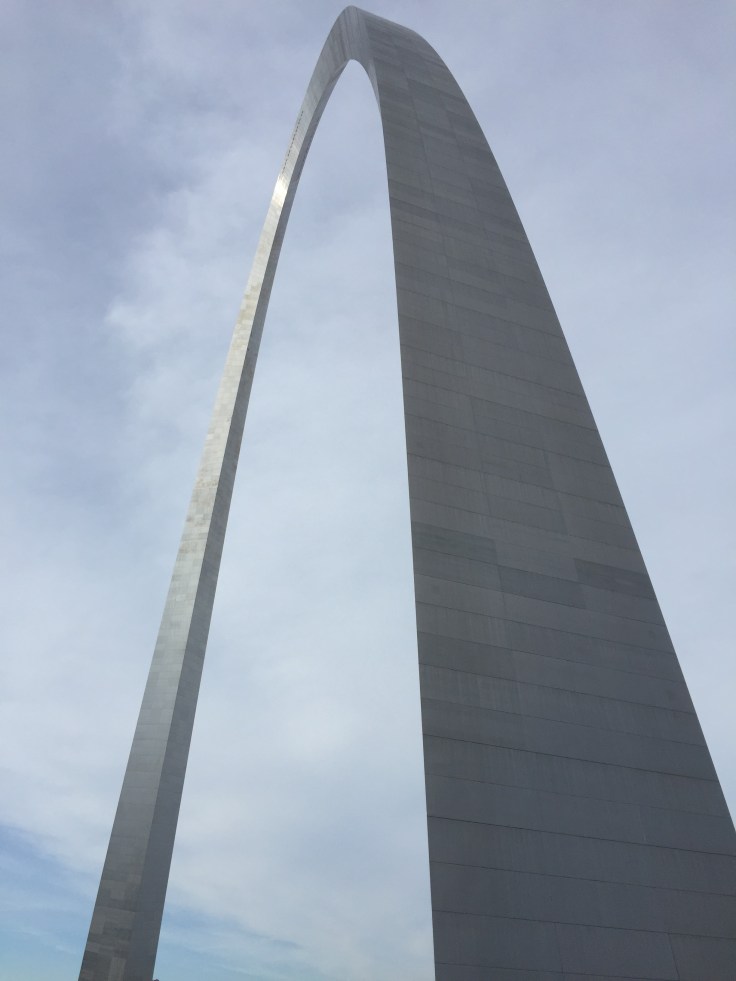
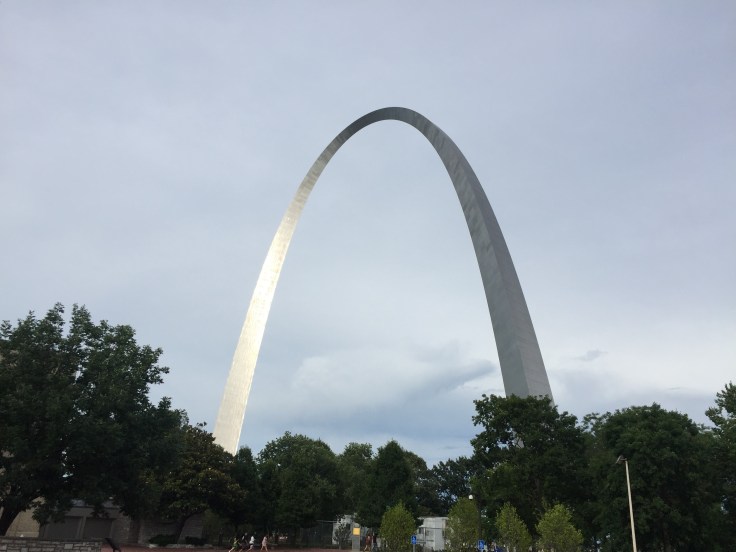
The shape of the arch is what engineers call an inverted catenary arch. It is the shape that a loose chain takes when suspended between 2 points, just up-side-down.  This shape can be calculated using integrated calculus, and it is also the the graph of 100% tension and zero compression, since a chain, while strong in tension, can withstand absolutely no compression. And that is the limit of my knowledge of structural theory, strength of materials, and calculus…

The arch is 630 feet wide, and 630 feet tall. (The Washington Memorial in Washington, DC, is 555′ tall, and would fit under the arch…) The shape of the cross section is an equilateral triangle. As the triangular form ascends to the top of the arch it gets smaller, creating very interesting perspectives…

2017-06-16 St Louis - Gateway Arch 042017-06-16 St Louis - Gateway Arch 022017-06-16 St Louis - Gateway Arch 062017-06-16 St Louis - Gateway Arch 012017-06-16 St Louis - Gateway Arch 112017-06-16 St Louis - Gateway Arch 17

The designers knew people would want to ascend to the top, so a complicated tramway system was custom designed to carry 40 people at a time. There are two trams, one in each leg, and the viewing space holds about 100 people… The trams consist of 8 cars each, holding 5 people each. The cars are tiny, cramped compartments, less than 6 feet tall, with a door about 2 feet wide and less than 5 feet tall. As the tram ascends along the curved path of the arch, the tram cars must articulate, a bit like a Ferris wheel, except not in a smooth manner. As the cars ascend they tilt (forward or backward), then abruptly snap back into a vertical position.

It was TERRIFYING!

Once at the top, you can see forever. Since we were there just after sunset, our views are all at night…

2017-06-16 St Louis - Gateway Arch 31


The old courthouse, where the Dred Scott trial was held


2017-06-16 St Louis - Gateway Arch 35

Illinois across the Mississippi River – our RV park is back there somewhere…


2017-06-16 St Louis - Gateway Arch 34

Busch Stadium, home of the St. Louis Cardinals…

After our terrifying experience (for some reason, Lynda didn’t find it terrifying at all…), we returned home back to the Villa. We have a long drive tomorrow across Illinois and into Indiana…


2017-06-14 Bartlesville, Oklahoma and Frank Lloyd Wright

No Airstream repair issues today! Just a romp through a rare icon of Frank Lloyd Wright architecture.

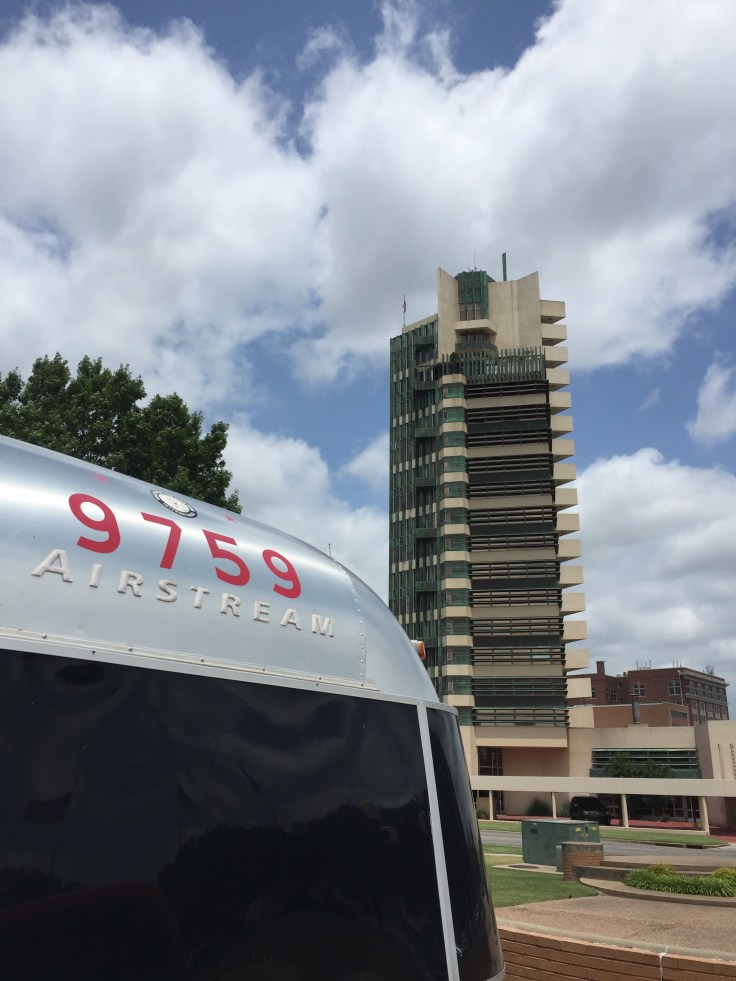
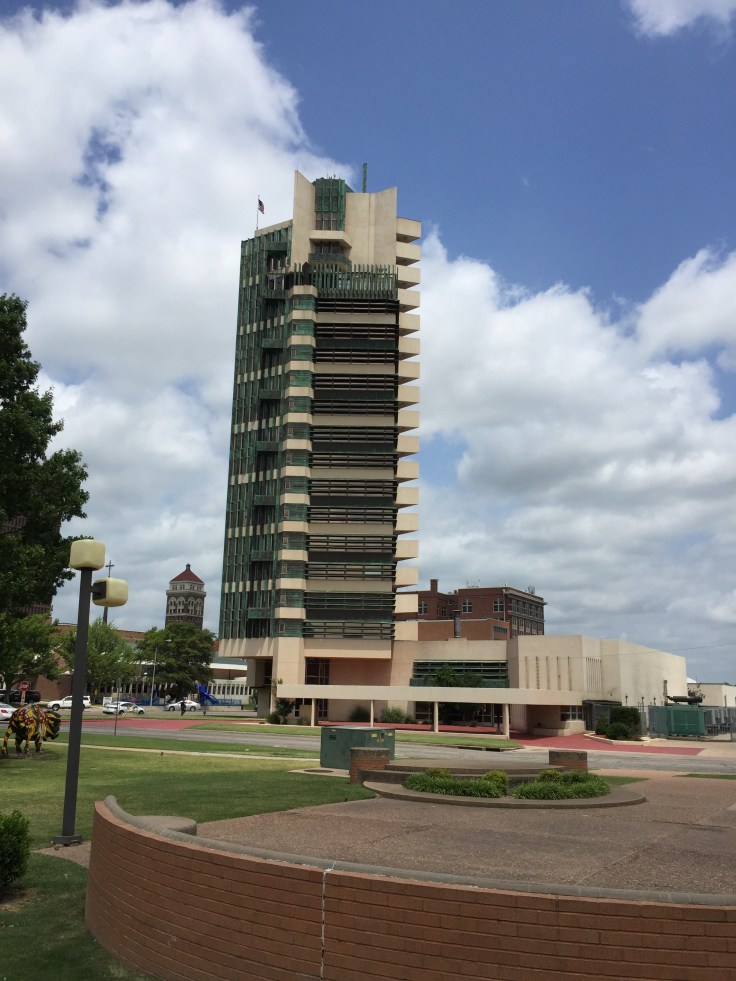
We had a leisurely morning and an easy drive north from Oklahoma City to Bartlesville, OK, located north of Tulsa, and a few miles south of the Kansas border.  Bartlesville is an oil town, subject to oil’s booms and busts. Mr. Harold Price wanted to expand his oil pipeline business, and to do so, he needed a new building. In 1952, he contacted FLW and told him of his intention to build a 4 story building for about $750,000.  FLW visited Bartlesville, rejected the chosen site, rejected the concept of a 4 story building, and convinced Mr. Price that what he really wanted was a 19 story building that would cost $2,000,000.  It was completed in 1957, just before FLW’s death.  And, to make a long story short, here it is:

2017-06-14 Bartlesville Price Tower 3

2017-06-14 Bartlesville Price Tower 8

2017-06-14 Bartlesville Price Tower 6

2017-06-14 Bartlesville Price Tower 4

2017-06-14 Bartlesville Price Tower 2


The building is laid out on a hexagonal grid, with a structure of concrete and all else being non-bearing walls.  The ground floor contained the local utility company offices, a salon, the lobby, and a fancy dress shop. The tower floors each had three offices and one (2 level) apartment. The top floor, where you can see the facade steps back, is the office of Mr. Price and his secretary.  If you look at the tower, the areas with horizontal louvers are offices, and the areas with the vertical louvers are the apartments. There are eight 2 level apartments, about 850 square feet, each with 2 bedrooms. One apartment was kept by Mr. Price for corporate functions, two others were rented to long-term tenants, but the others were only rarely rented. The rent, in 1957, was $285 per month, so you can see that this was an extremely expensive place.

We had a tour of the building, seeing Mr. Price’s office and one of the apartments, all beautifully restored. There are 4 very small, odd shaped elevators (hexagonal grid, remember?). There is one stair. It is a delightful and beautiful building!

Mr. Price and his sons ran his firm from the tower for about 30 years; His firm was then bought by Phillips Petroleum, who used the building for about 10 years until they moved their headquarters out of Bartlesville. After that the building sat empty, until Phillips had it restored about 10 years ago. Here is the fun part:

The tower was converted to a hotel!

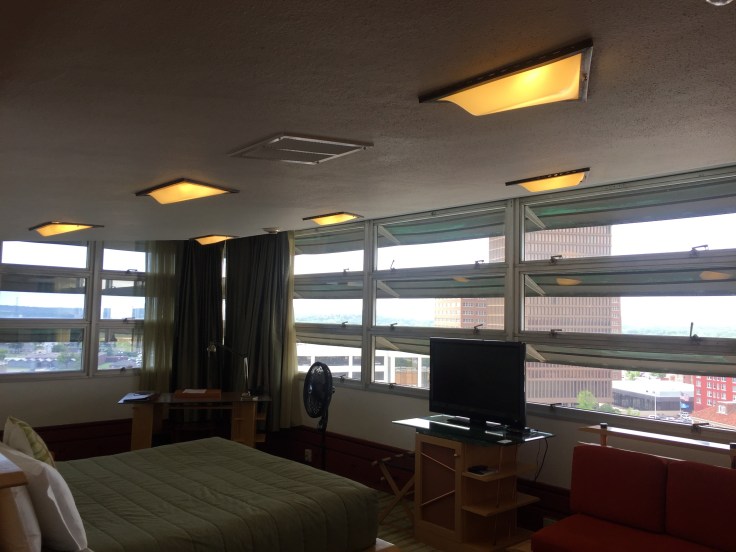
So we took the opportunity to leave the Villa in the parking lot next door, and we spent the night in the tower.  Our room was one on the office spaces. (The 2 story apartments are also part of the hotel, but they are much more expensive…)  The interiors of our room is not original FLW, of course, since it used to be one of the office spaces.  But is was designed by the FLW devotees at Taliesen, the FLW school and studio…

2017-06-14 Bartlesville Price Tower Interiors 3

Here I am sitting uncomfortably in the FLW-style stair (which are always uncomfortable…


2017-06-14 Bartlesville Price Tower Interiors 7

2017-06-14 Bartlesville Price Tower Interiors 9

The rooms are quite bright – only my camera skills make them seem a little dark…


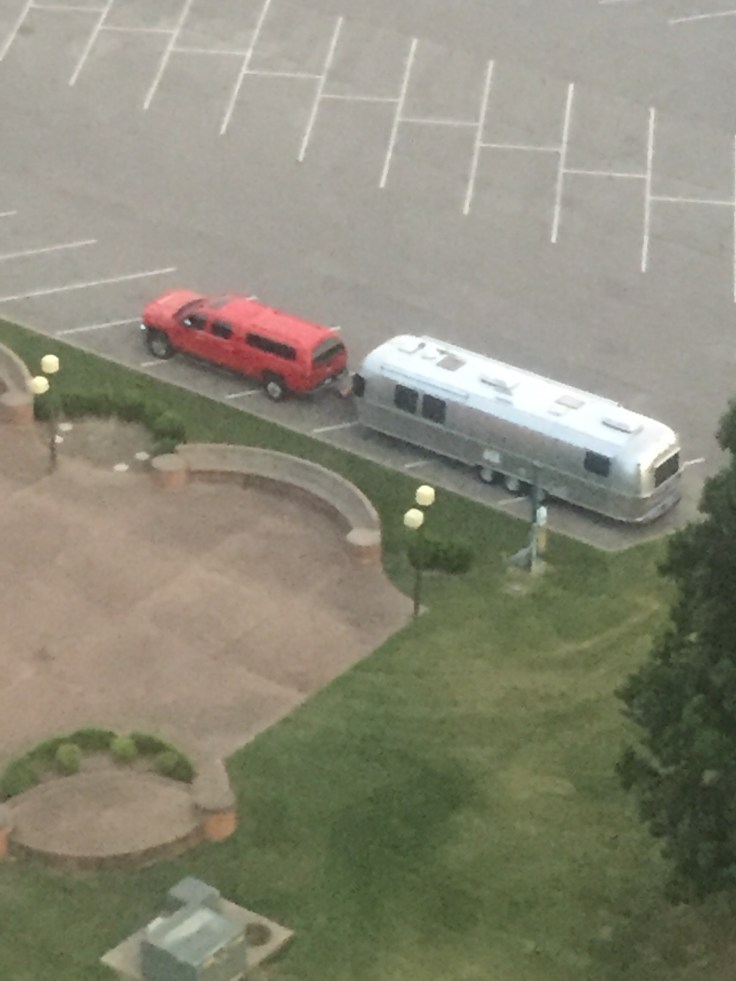
2017-06-14 Bartlesville Price Tower Airstream

And the Villa, parked below…


We had a delightful time walking the town, having lunch in a local pub, and having drinks and dinner in the restaurant atop the Price Tower, located in one of the 2 story apartments…

I also took a selfie with Frank to celebrate his 150th birthday…

2017-06-14 Bartlesville Price Tower #FLW150 Flat Frank


And an enjoyable time was had by all…


Blog at WordPress.com.

Up ↑