Search

Adventures in the Villa

Month

July 2017

2017-07-12 Nor by Nor’east Caravan – Provincetown

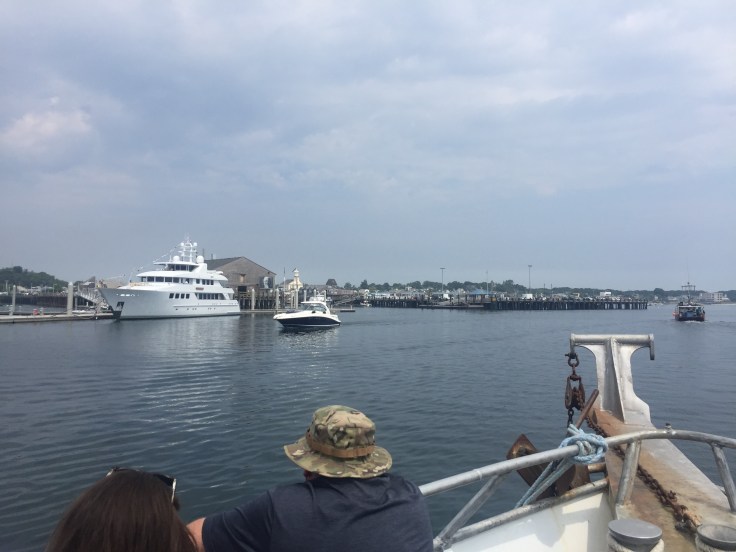
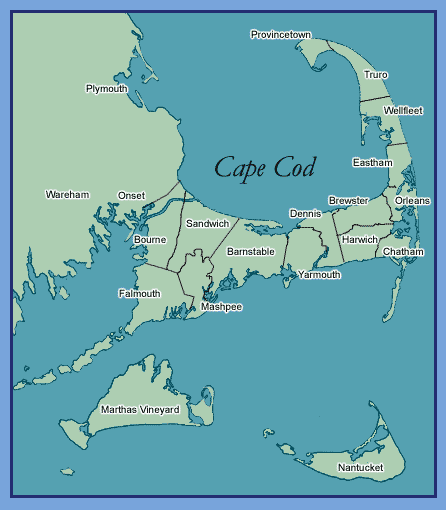
Today is wasn’t raining – yet.  It is a free day, so we can do whatever we want to enjoy Cape Cod. We had seen the normal sights when we were here in 2004 – Martha’s Vineyard, Hyannis, light houses, beaches and sand dunes… We also didn’t want to fight the summertime traffic, so instead, we headed back to Plymouth and caught a fast boat to Provincetown.

2017-07-12 Cape Cod

You can see that it is a quick boat ride, about 1 1/2 hours. To drive, in no traffic (and there is ALWAYS traffic…) is 1 1/2 hours. It was an easy call…

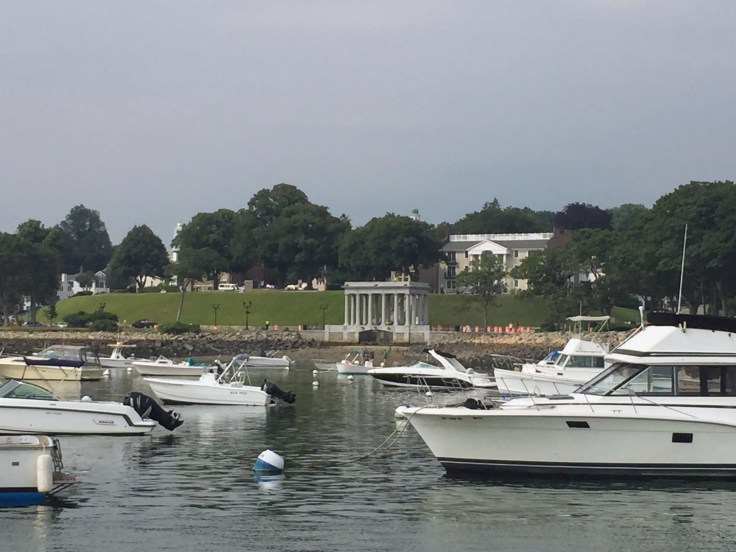
The weather in Plymouth was a little foggy, but nothing to obstruct the views.  The little temple on the shore is the “canopy” over Plymouth Rock:

2017-07-12 Plymouth Rock Temple


In the outer harbor are houses and a lighthouse along a tiny sand spit:

2017-07-12 Plymouth Harbor


The entrance to Provincetown Harbor:

2017-07-12 Provincetown 02

2017-07-12 Provincetown 01


Looming over the town is this giant tower:

2017-07-12 Provincetown 03


It is the Pilgrim Monument:

2017-07-12 Provincetown 04

The Pilgrim Monument was built between 1907 and 1910 to commemorate the first landing of the Mayflower Pilgrims in Provincetown on November 21, 1620. It was dedicated by President Taft.

Yes! The Pilgrims in the Mayflower landed at Provincetown, not Plymouth! It is where the Mayflower Compact was written and signed.  We’ve been lied to all these years! After they landed at Provincetown, and saw that there was no fresh water, and that the sand was no good for farming, they set out in a small boat to explore Cape Cod Bay.  They found Plymouth, with a natural harbor, fresh water in a flowing creek, and land good for farming, at least once you clear away the rocks. Lots of rocks!

It claims to be the tallest all-granite structure in the United States.  The tower is 252 feet, 7.5 inches (77 meters) tall and rises 350 feet above sea level. So, of course, we had to climb the tower. It was raining at the top:

2017-07-12 Provincetown 05

2017-07-12 Provincetown 06

Provincetown prospered as a fishing village and as a whaling center.  Whale oil had always been the principal light source in the United States.  Kerosene was cheaper, but it was smelly and smokey.  John D. Rockefeller (see my earlier posts) hired research chemists from Yale to develop a cleaner burning kerosene. They succeeded.  In the late nineteenth century the whaling industry died as kerosene replaced whale oil as a lighting  source. Another New England industry bites the dust, and John D. Rockefeller gets rich.

(As electric lights became available, kerosene became another dead industry.  Luckily, by that time JDR was refining gasoline for the new-fangled automobiles…)

We spent the day wandering the delightfully crowded and narrow streets, peeking into shops, and enjoying the day. We had a late lunch and followed up with an ice cream cone… The boat ride back to Plymouth was uneventful. I may have dosed off a bit. An enjoyable time was had by all…


2017-07-11 Nor by Nor’east Caravan – Cape Cod and Plimoth Plantation

Another tourism day, in the rain, this time to Plimoth Plantation. I know, I’m not spelling it correctly, but that’ the way they spell it, so I will go along. It also helps to distinguish it from the town of Plymouth…

2017-07-11 Plimoth 04

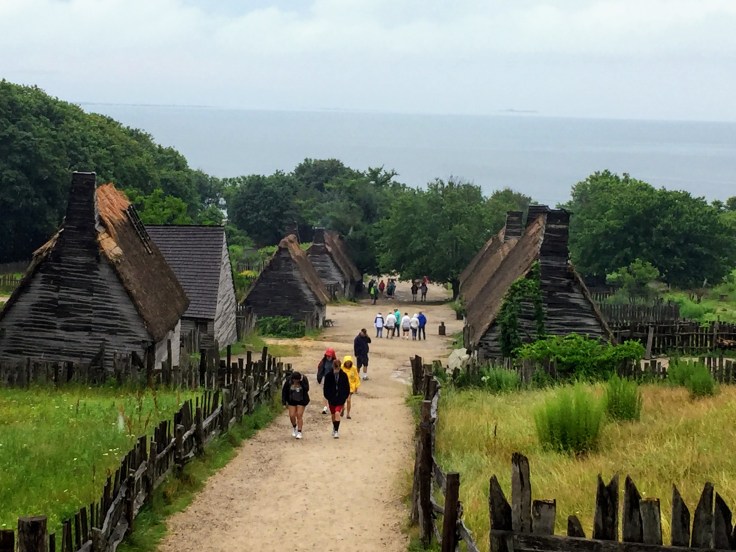
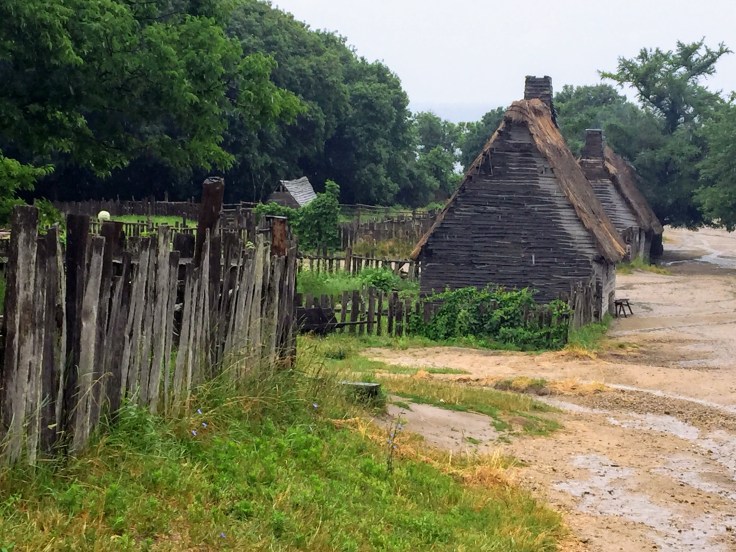
Similar to Mystic Seaport, Plimoth Plantation, founded in 1947, is a living history museum just outside Plymouth, Massachusetts, that attempts to replicate the original settlement of the Plymouth Colony established in the 17th century by English colonists who later became known as the Pilgrims.  In many ways, Plimoth Plantation is similar to Mystic Seaport, in that it displays buildings built as the Pilgrims would have built them; there are costumned people who will speak the Olde English, and will tell you what life in the Plimoth is all about.

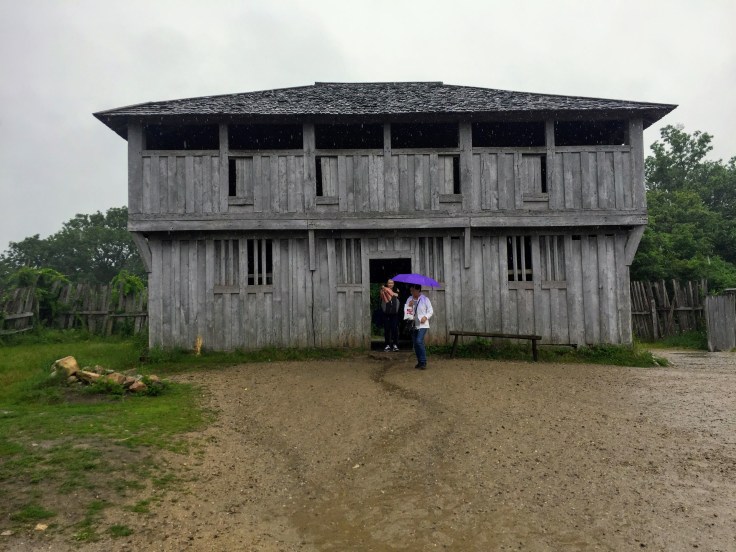
The largest building in the village is the meeting house, which was later fortified into a “fort”:

2017-07-11 Plimoth 01

They even built a wall around the village to keep out their enemies:

2017-07-11 Plimoth 02

I’m not sure who they think they will keep out with this fence, but what do I know…?


The local residents, posing with the tourist:

2017-07-11 Plimoth 05


And the typical houses:

2017-07-11 Plimoth 07

2017-07-11 Plimoth 06


The buildings and gardens were interesting, but I came to fear sticking my head inside a house lest I be invited in and be subjected to some stranger talking to me.  I don’t like talking to strangers…

So after seeing all that there was to see, including a moderately interesting Indian village and a museum, we had a quick lunch and headed back to the Villa.

Tonight was our second GAM (Get Acquainted Meeting). We were hosts to 4 other couples. We enjoyed the social time getting to know each other and hoping to remember their names…

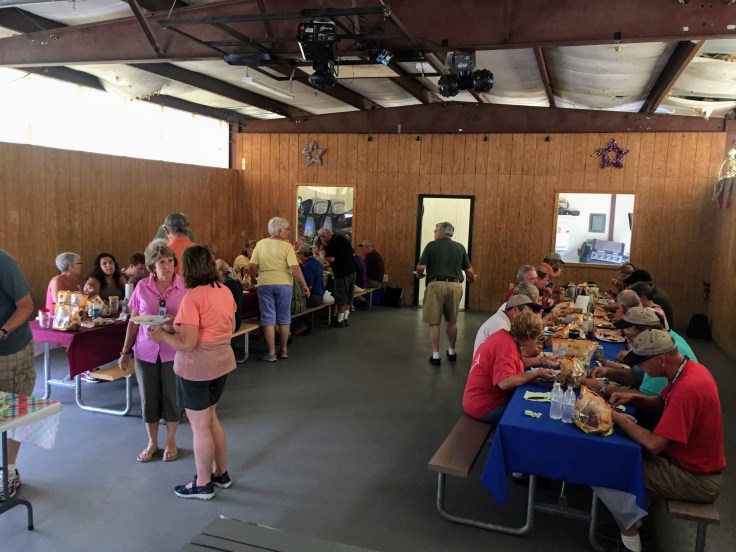
Our dinner for the evening was provided by the caravan, in the RV park Rec building:

2017-07-11 Sandy Pond Chicken Dinner

Each couple received a whole “broasted” chicken, plus all the side dishes and desserts we wanted… It was another opportunity to socialize with the other 48 people on the caravan. And an enjoyable time was had by all…


2017-07-10 Nor by Nor’east Caravan – Cape Cod, Sandwich, and Kentucky Bourbon

Today is moving day!  The caravan organizes the comings and goings of the Airstreams in a much more formal way than I have ever experienced.

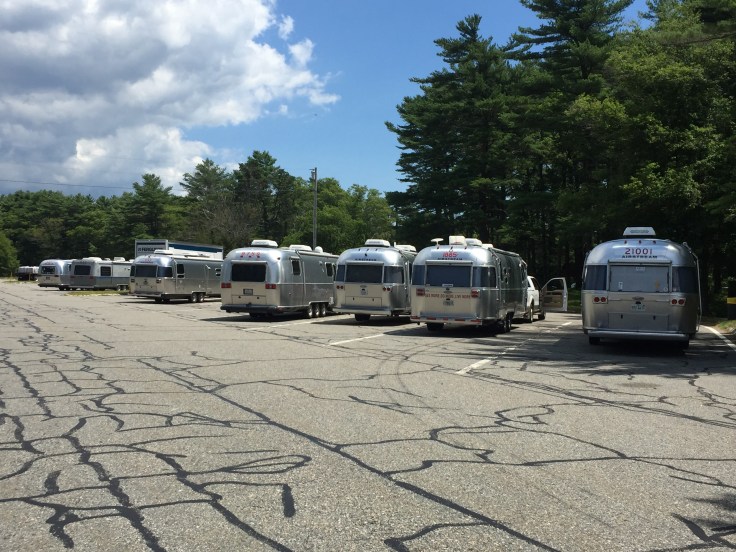
2017-07-10 Travel Day

There are two reasons for this format: one is safety; we have a team of “Deparkers” who check each Airstream as it leaves the RV Park, checking for lights, directional signals, windows and doors being closed, TV antenna being down, things like that.  We also have “Parkers” at the next RV Park, guiding the Airstreams into their assigned spaces and making sure traffic jams are kept to a minimum.  However, for this reason, we are not permitted to arrive at the next RV Park before an assigned time.  So we teamed up with two other couples, one with a 34′ Airstream and the other with a 32′ “Squarestream”. (Airstream experimented with making a fiberglass Airstream in a traditional boxy shape back in the 1980s. I had never seen one until this trip… you can see it in the photo above, second from the left…)

So we arrived safely and parked at Sandy Pond Campground in Plymouth, MA. We added another sticker to the map:

2017-07-10 Map Massachusetts.JPG


We had a free afternoon, so we headed out towards Cape Cod to the little town of Sandwich. We are headed to the Glass Blowing Museum.  In the 17th and 18th centuries glass blowing was an important industry in New England.  Eventually, by the late 19th and early 20th centuries, this kind of manufacturing industry ceased to exist here. Competition from more modern techniques, in areas of the country with cheaper fuel, doomed glass blowing in Sandwich.  This type of story was repeated throughout New England in many industries: textiles, clothing, shoes, whaling, fishing, and on and on. Even farming is rare here; fields that were laboriously cleared of trees and rocks by the Pilgrims and Puritans and other colonists were abandoned and have now been taken over by forests again.

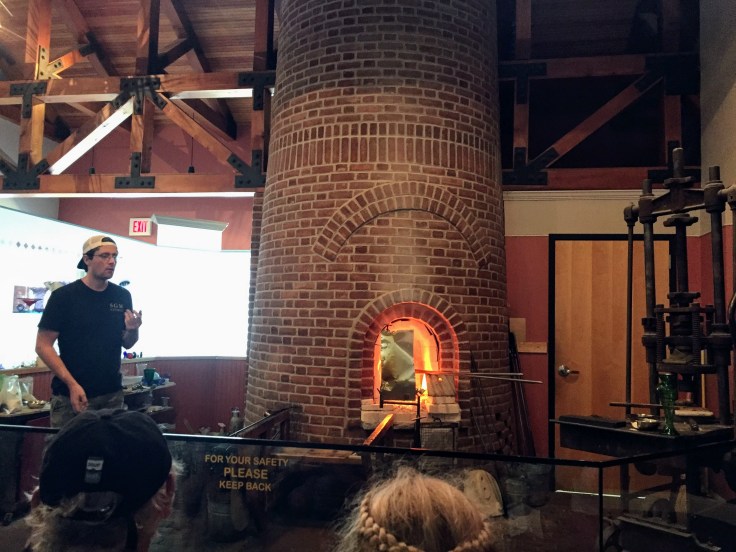
In Sandwich is a museum showing the types of glass that was made in Sandwich, both by blowing and by pressing. There was also great information on Sandwich’s own factory and its history, owners, labor strife, and competition.  But the best part was the glass blowing demonstration.

We asked the glass blowing guy how he got into this line of work. He said he took the job right out of high school because it was easy and convenient. He has been here six years now.

2017-07-10 Sandwich Glass Blowing 1He has his patter down, much like a magician; he was a great performer, swinging these red-hot rods around like a baton twirler.  It was really fun to watch.  He asked the group (about 20 spectators) if he should make a vase or a wine glass. The immediate answer (me) was “wine glass”.

It was a really amazing demonstration. First the blob of sand is heated to about 2,000 degrees F:

2017-07-10 Sandwich Glass Blowing 3


2017-07-10 Sandwich Glass Blowing 2

This hot glob of melted sand is gently shaped as he rolls the rod along the bench.  Then he blows into the end of the tube and the glob expands into the glass bowl:

2017-07-10 Sandwich Glass Blowing 4

He continues to shape the bowl, then grabs another glob of molten sand and forms the stem, then the foot.  It all happens so fast that photos were difficult. Finally, he set the perfectly formed wine glass on the work bench. I’m so excited! I want this glass!

Then he tells us that within about 5 minutes the glass will explode. As the glass cools the differential between the internal temperature and the surface temperature will cause the glass to crack.  To prevent the glass from exploding it must be cooled slowly, in an annealing oven. It takes from 1-7 days, depending on the type of glass and the design.  By now the glass is down to about 900 degrees… He sprinkles a few drops of water on the glass, it shatters, and he throws the scraps into the broken glass pile.  Demonstration over.  (The broken glass is put back into the oven and it is 100% recycled…)

I’d watch this again! It was much fun!

So, empty handed, we set out to Seafood Sam’s for lunch – Lobster Rolls (New England style, not Connecticut style…). After lunch we walked along the Cape Cod Canal.

2017-07-10 Cape Cod Canal

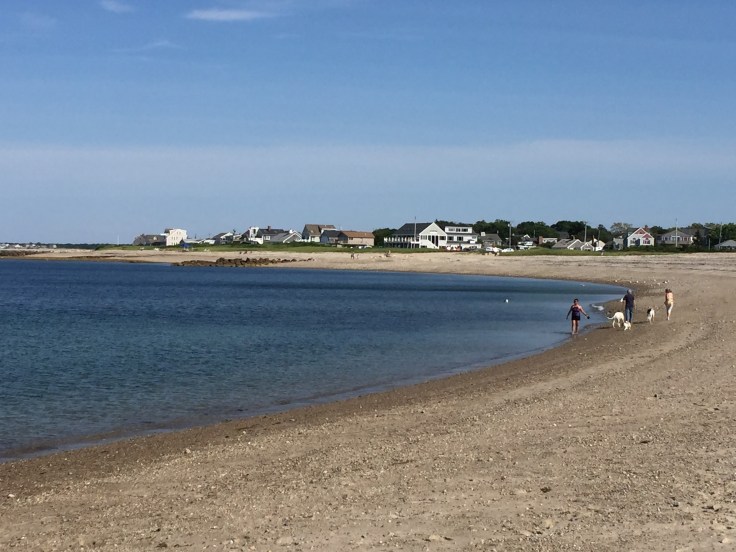
The canal actually cuts through the peninsula, from the open sea into the protected harbor, technically making Cape Cod an Island.  We also walked along to the end to see the Beach:

2017-07-10 Cape Cod Beach

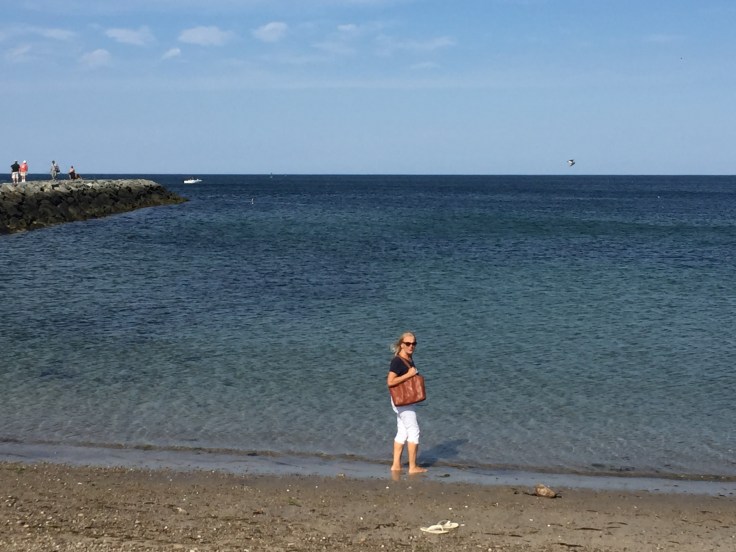
Just what Cape Cod is supposed to look like… Lynda had to see if the water is warm or cold:

2017-07-10 Cape Cod Water

It is cold – very cold…

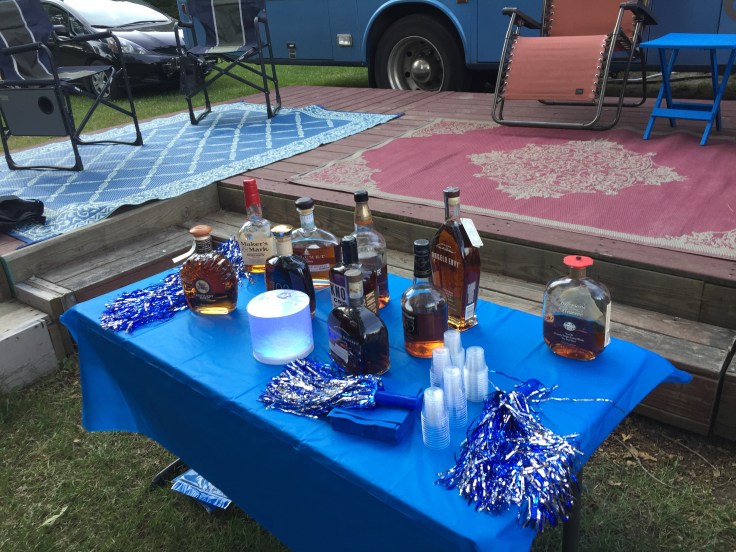
We walked until our Apple watches were happy, then we headed back to the Villa. We have a Bourbon Tasting tonight!

2017-07-10 Bourbon Tasting 1 01

Three of our caravanners are from Kentucky, and they brought out a grand selection of Bourbons for us all to taste.  Needless to say, an enjoyable time was had by all…


2017-07-09 Nor by Nor’east Caravan -Newport, Rhode Island – Summer Cottages, day 2

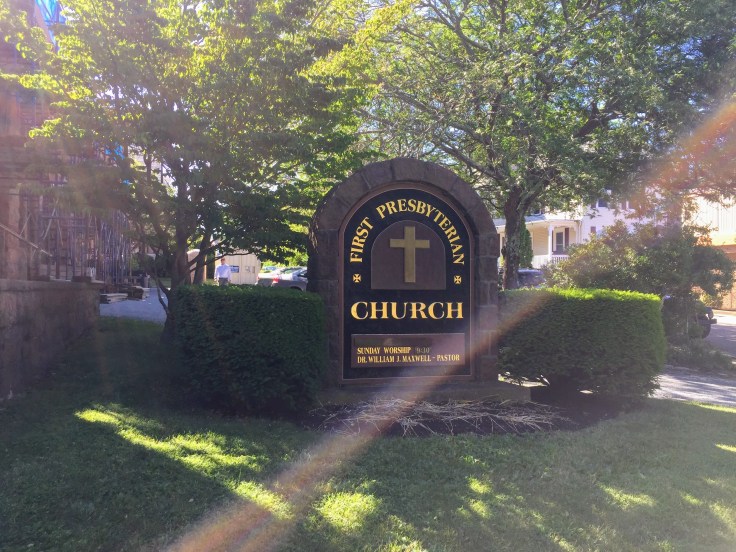
Today, being Sunday, we checked out a local church to attend… We used the Emmett Raitt method for selecting a church and picked the one whose service time was most suitable to our Sunday activities.  This happened to be:

2017-07-09 First Presbyterian

So we drove into Newport, and attended a service for the “frozen chosen”.   No one sang, the choir was terrible, and the hymns were VERY SLOW!  But it was a good service of reflection and we don’t regret attending…  It is a very small church, and very traditional. Even though their hymnal contained “modern” praise songs, the piano player made sure we didn’t get carried away and get excited over a fast tempo…

2017-07-09 First Presbyterian 02


We have two tours scheduled for today:  “Beneath the Breakers” , which will explain all the technology behind the operations of The Breakers, and “The Servants’ Life” at The Elms, my favorite house here in Newport.

We began at The Breakers, in the Gate House:

2017-07-09 Newport - Beneath the Breakers 05

2017-07-09 Newport - Beneath the Breakers 06.JPG

Originally intended for the caretaker, the cottage was most predominately occupied by the Estate Engineer.  His scrupulous notes have help recreate this picture of the technology beneath the Breakers…

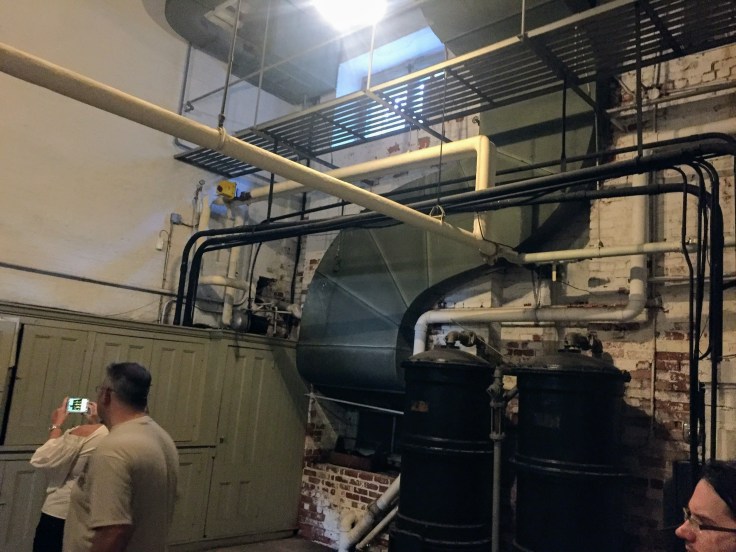
We began in the Parlor of the house. We then descended about 30′ beneath the ground to the main Boiler Room:

2017-07-09 Newport - Beneath the Breakers 01

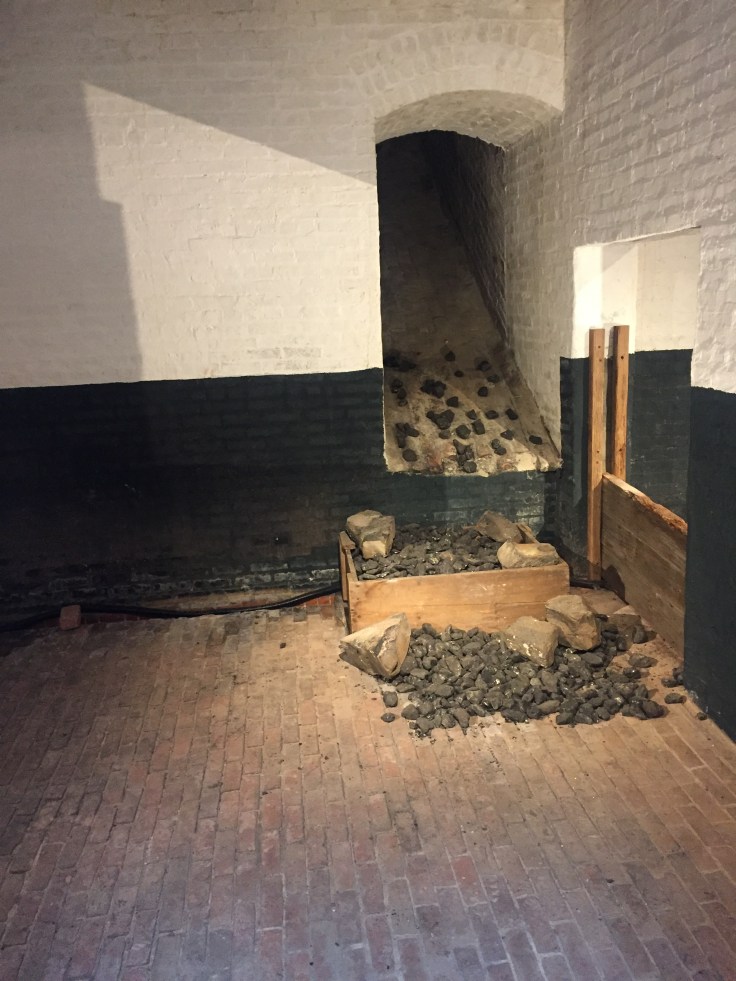
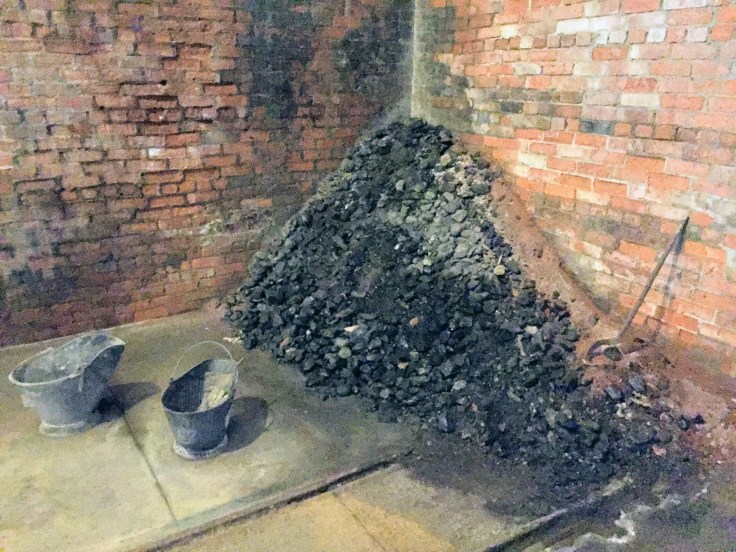
The below-grade room, close to the street, allowed coal to be dumped directly from the street into the coal bins, via chutes:

2017-07-09 Newport - Beneath the Breakers 02


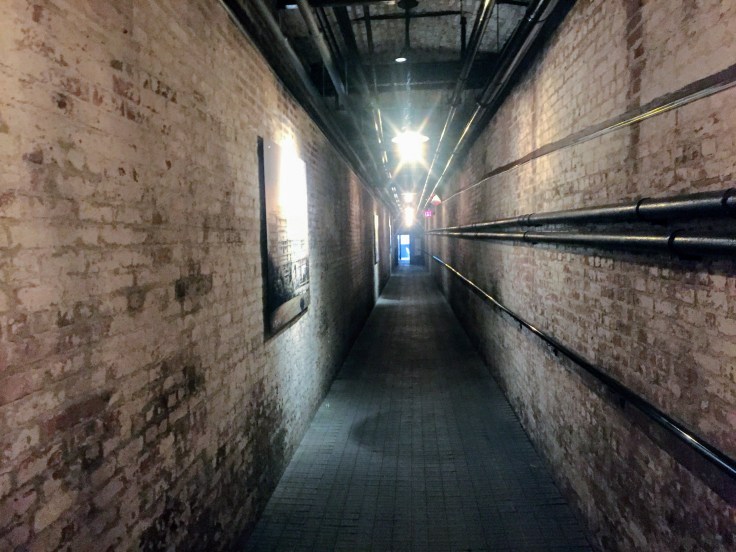
The Boiler Room is located far from the main house as a fire-prevention measure; it is connected to the main house via a tunnel, complete with fire doors.  Steam pipes, hot water pipes, and electrical conduits all run through this tunnel into the basement of the main house.

2017-07-09 Newport - Beneath the Breakers 04

As we continued on the tour we learned about the elevators, the elctrical system, how warm air was circulated through the house via radiators in the basement, and all sort of the latest technology of the house.  It was FASCINATING!

After the tour we had time for a quick lunch at Le Forge restaurant in Newport:

2017-07-09 Le Forge


Our next tour was “The Servants’ Life” at The Elms.  We started by climbing 3 flights of stairs to the third floor:

2017-07-09 Newport - The Servants' Life 01

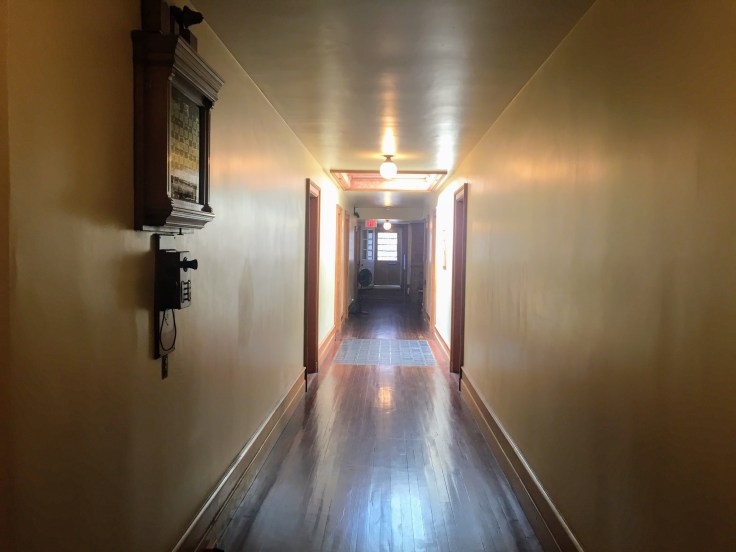
The third floor servants’ bedrooms had the feel of an old fashioned college dormitory. The hall was wide and well lit (note the skylights and the glass block floors allowing light into the second floor below).

The rooms were spartan but spacious:

2017-07-09 Newport - The Servants' Life 02

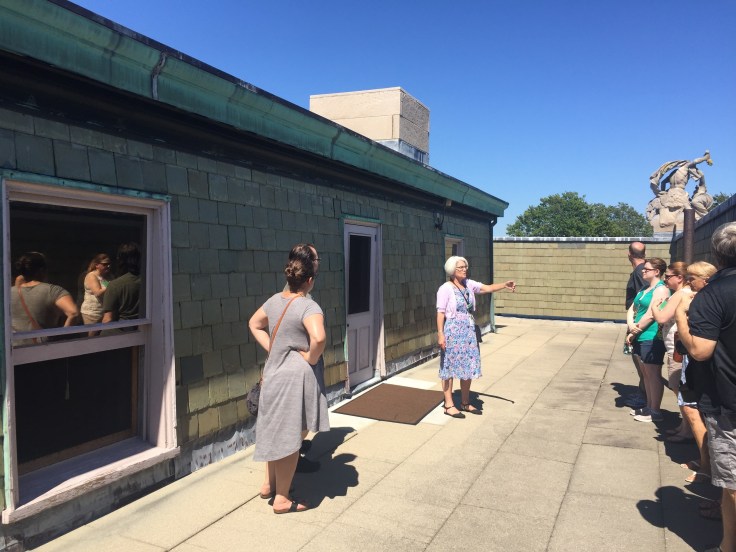
Because the third floor was hidden by the house’s parapet, there was a private roof-top space available to the servants:

2017-07-09 Newport - The Servants' Life 03

2017-07-09 Newport - The Servants' Life 04

There was also a view to the harbor beyond:

2017-07-09 Newport - The Servants' Life 05


From this vantage point you can get a better view of the carriage house:

2017-07-09 Newport - The Servants' Life 06

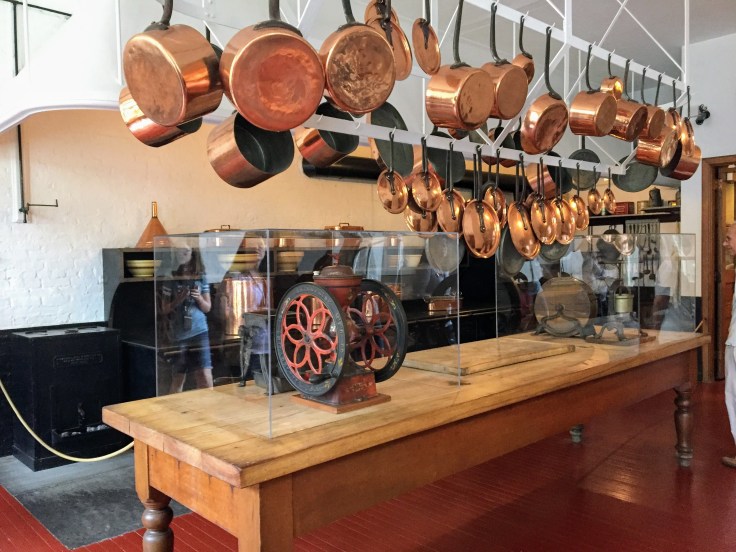
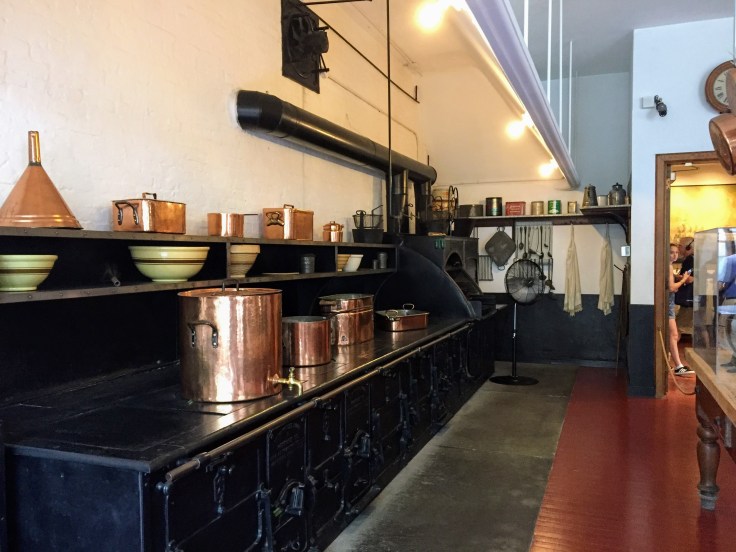
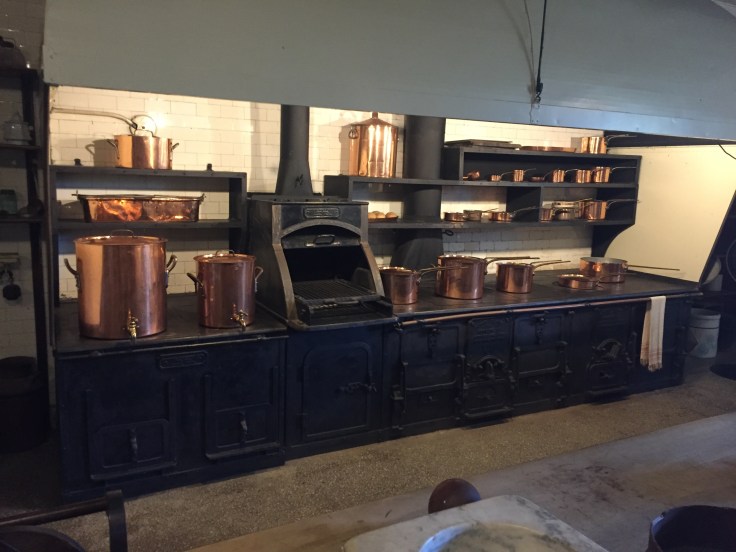
After touring the servants’ quarters, we descended the stairs to the basement; I showed a quick photo of the kitchen yesterday, but here is another:

2017-07-09 Newport - The Servants' Life 12


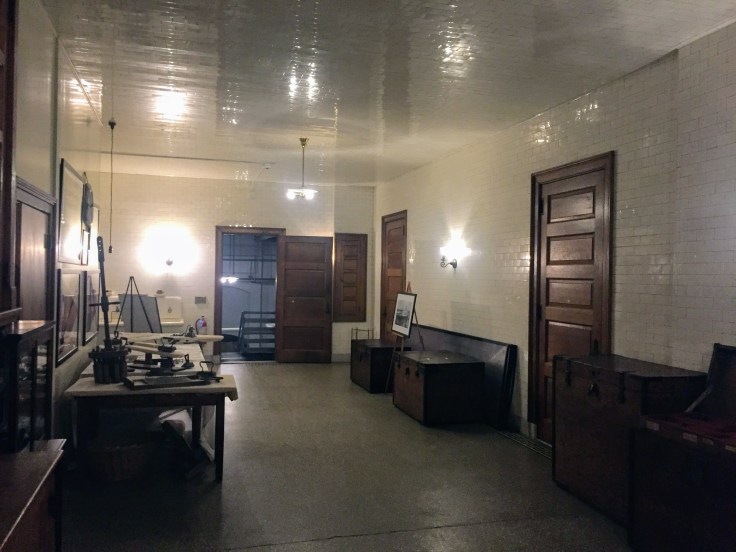
There was a laundry in the basement, truck storage, a bakery, and a root cellar: the two story high Boiler Room is also here…

2017-07-09 Newport - The Servants' Life 07

2017-07-09 Newport - The Servants' Life 08


Mr. Berwind made his money in the coal industry, so he had state-of-the-art coal delivery system:  There was a grate in the street; coal was delivered through the grate into carts, and the carts were rolled on rails through tunnels to the coal bins in the sub-basement:

2017-07-09 Newport - The Servants' Life 10

2017-07-09 Newport - The Servants' Life 11


It was another great day. An enjoyable time was had by all…


2017-07-08 Nor by Nor’east Caravan -Newport, Rhode Island – Summer Cottages, day 1

The day was sunny for a change, but not too warm. I’ve been looking forward to seeing the Summer Cottages again since I first saw them nine years ago…

2017-07-08 Newport - Breakers 01

These were summer homes, used for 6-8 weeks each summer.  These are houses of the Gilded Age.  And gilded they were.  Gold and platinum were used as common decoration. Many of the interiors were ripped from palaces and castles in Europe, dismantled, sometimes cut into pieces, shipped to America and installed in these giant “cottages”. Nothing exceeds like excess here.  As architectural critic Ellsworth Toohey once said, (I paraphrase here…) “The house has a lovely garden gate, fine in proportion and workmanship. It is installed on the ceiling of the Dining Room”.

Pieces of furniture were cut up and used as decoration on stairways.  Huge paintings were cut in half, or reshaped into ovals, to fit into a room.  The money spent was pocket change to these people – labor was cheap and palaces and castles were cheap.

The various Vanderbilts had four houses here in Newport.  We toured two; one has been incorporated into a college, the other we could not fit into our schedule.

In any case, I love houses, even ostentatious ones. Even when a room hurts my eyes to look at it… We saw five houses today…

The Breakers; Cornelius Vanderbilt II; 138,000 s.f.; 70 rooms; 15 Bedroom suites; 33 staff bedrooms; 40 full time staff.  Architect: Richard Morris Hunt;

Marble House;  William Vanderbilt; 50 rooms; 7 Bedroom suites.  Architect: Richard Morris Hunt; contains over 500,000 cu. ft. of marble.

RoseCliff; Theresa Fair Oelrichs; 9 Bedroom suites; 33 staff bedrooms;      . Architect: McKim, Mead, and White

The Elms; Edward Berwind; 48 rooms; 7 Bedroom suites; 16 staff bedrooms; 40 full time staff.  Architect: Horace Trumbauer

Isaac Bell House; Isaac Bell; 7 Bedroom suites; 3 staff bedrooms.  Architect: McKim, Mead, and White

There isn’t a lot to say about these houses. The pictures tell the story:

The Breakers:

The biggest of all the Newport Mansions, and the best preserved; only lived-in for a few years…

The Approach:


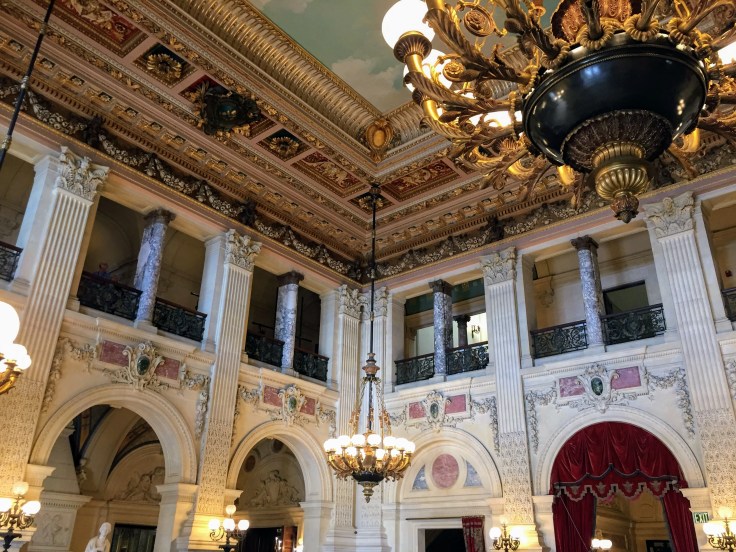
The Grand Hall:

2017-07-08 Newport - Breakers 03

2017-07-08 Newport - Breakers 04

2017-07-08 Newport - Breakers 09


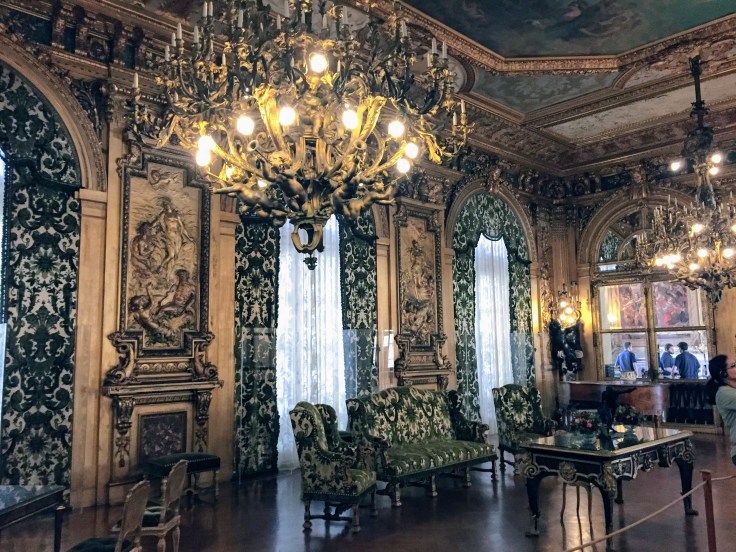
More of the grand, gilded rooms…

2017-07-08 Newport - Breakers 05


The Dining Room:

2017-07-08 Newport - Breakers 07


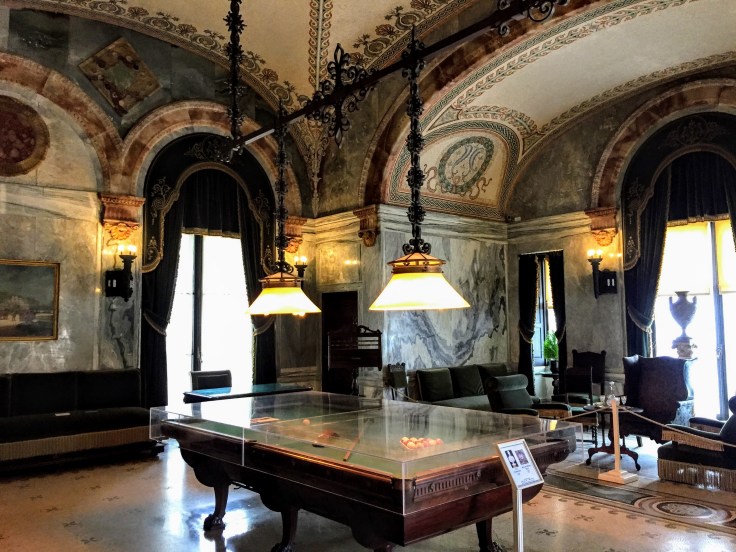
The Billiard Room:

2017-07-08 Newport - Breakers 10


Sitting Room; note the platinum accents in the wallpaper…

2017-07-08 Newport - Breakers 11

2017-07-08 Newport - Breakers 12


The Music Room:

2017-07-08 Newport - Breakers 13


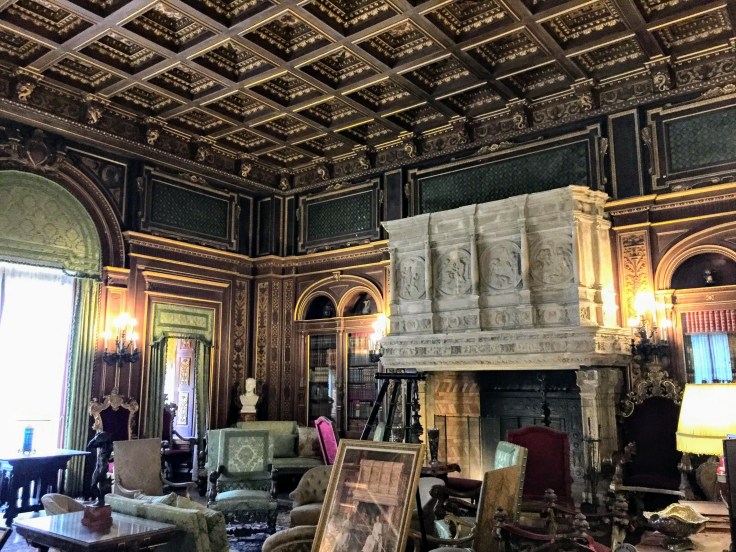
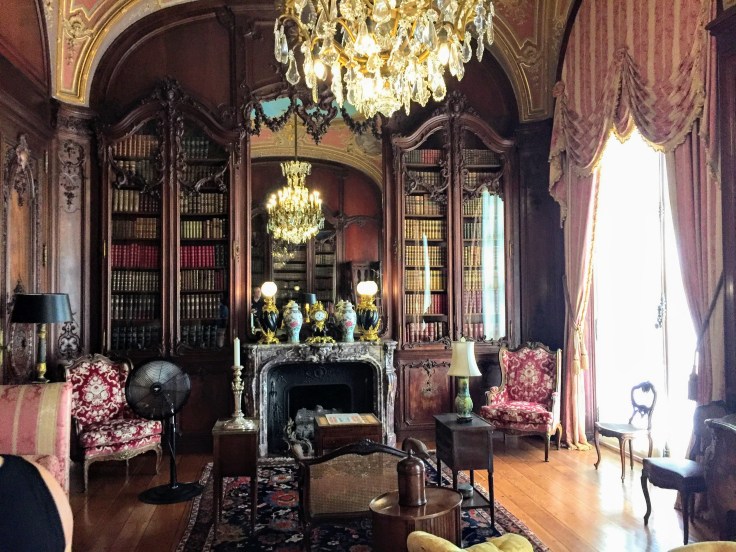
The Library:

2017-07-08 Newport - Breakers 14


And more utilitarian spaces… The 2 story Butler’s Pantry:
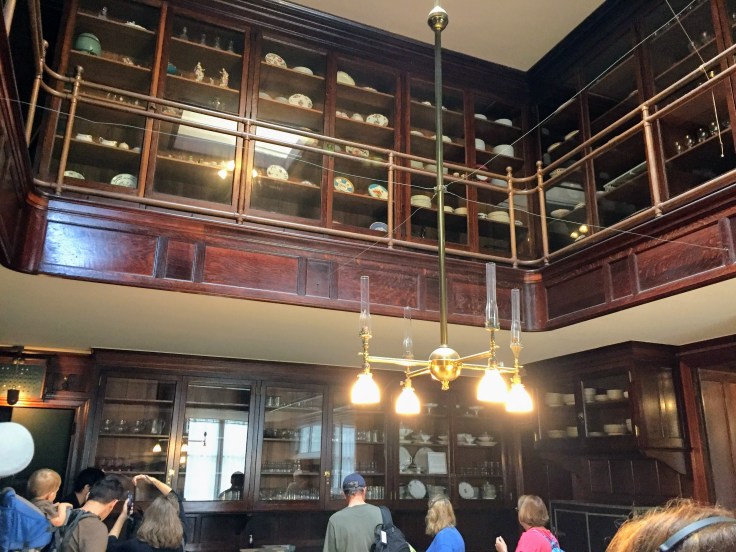
2017-07-08 Newport - Breakers 15


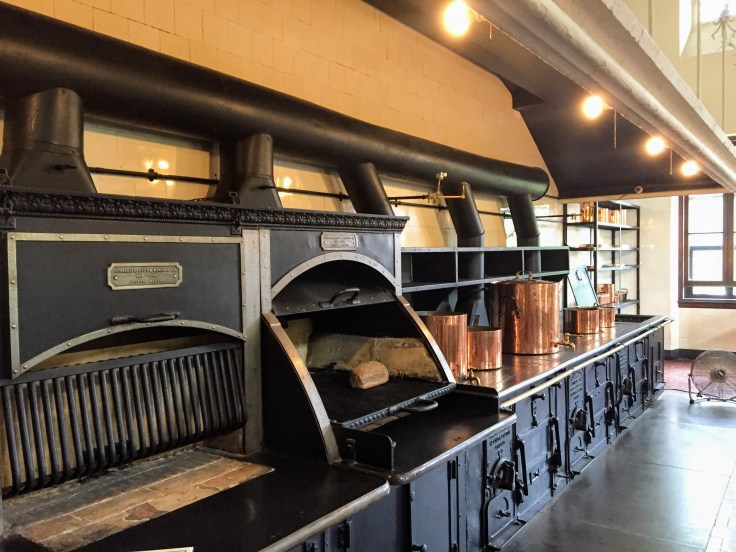
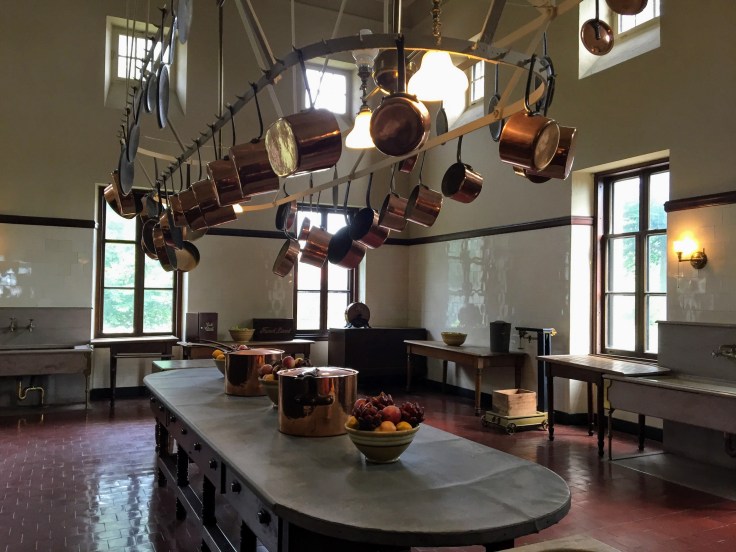
The Kitchen:

2017-07-08 Newport - Breakers 17


2017-07-08 Newport - Breakers 16


2017-07-08 Newport - Breakers 18


And, finally, the view over the grand lawn:

2017-07-08 Newport - Breakers 19


Marble House:

Over 500,000 cu. ft. of marble was installed inside and out…

The Approach:
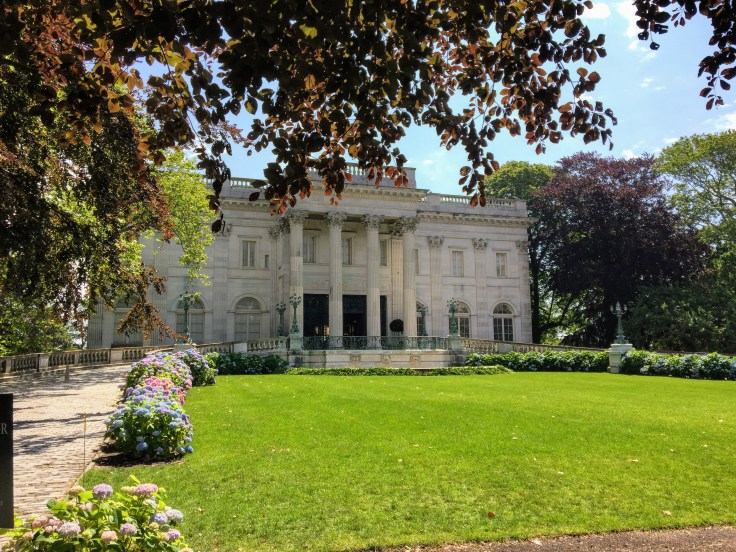
2017-07-08 Newport - Marble House 01


The Dining Room:

2017-07-08 Newport - Marble House 02


The Library:

2017-07-08 Newport - Marble House 03


The Dining Room:

2017-07-08 Newport - Marble House 04


The Drawing Room:

2017-07-08 Newport - Marble House 05


The Grand Stair:

2017-07-08 Newport - Marble House 06


The Master Bedroom:

2017-07-08 Newport - Marble House 07


The other Master Bedroom:

2017-07-08 Newport - Marble House 08


The the fun rooms…

The Kitchen:

2017-07-08 Newport - Marble House 09b

2017-07-08 Newport - Marble House 09a

2017-07-08 Newport - Marble House 09


The Housekeeper’s Office:

2017-07-08 Newport - Marble House 10


Part of the Butler’s Pantry:

2017-07-08 Newport - Marble House 11


Rosecliff:

All the furnishings were sold off in 1941; in the early 1950s the house bought by a family from New Orleans, who summered here until the 1960s; most furniture is from the 1950s…

The Approach:
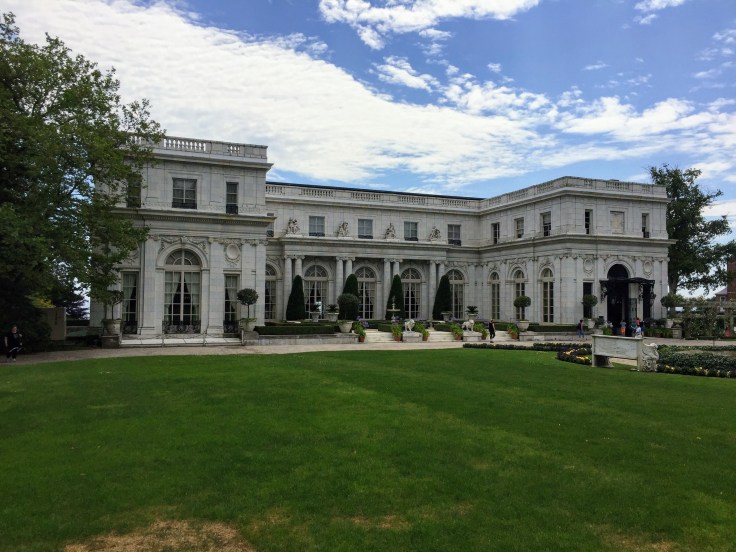
2017-07-08 Newport - Rosecliff 01


The Grand Stair:

2017-07-08 Newport - Rosecliff 02


Entrance to the Drawing Room:

2017-07-08 Newport - Rosecliff 03


The Drawing Room:

2017-07-08 Newport - Rosecliff 04


The Ballroom:

2017-07-08 Newport - Rosecliff 05

2017-07-08 Newport - Rosecliff 06


The Library:

2017-07-08 Newport - Rosecliff 07


The Dining Room:

2017-07-08 Newport - Rosecliff 08


The Master Bedroom:

2017-07-08 Newport - Rosecliff 09


The Elms:

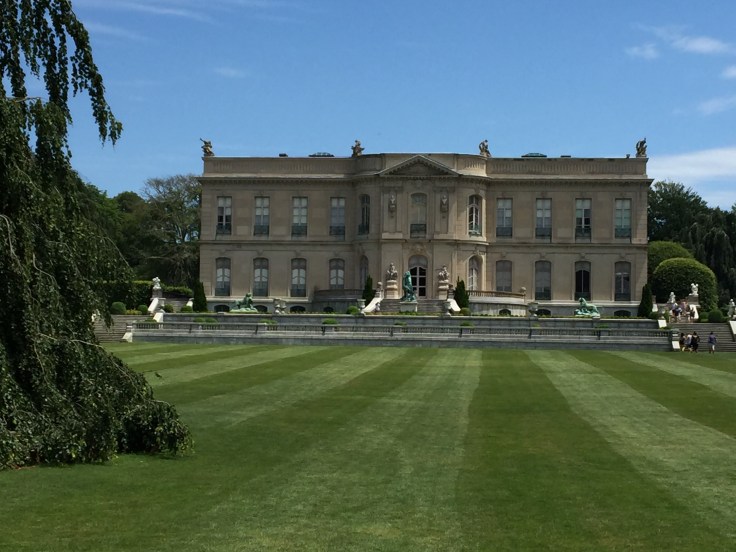
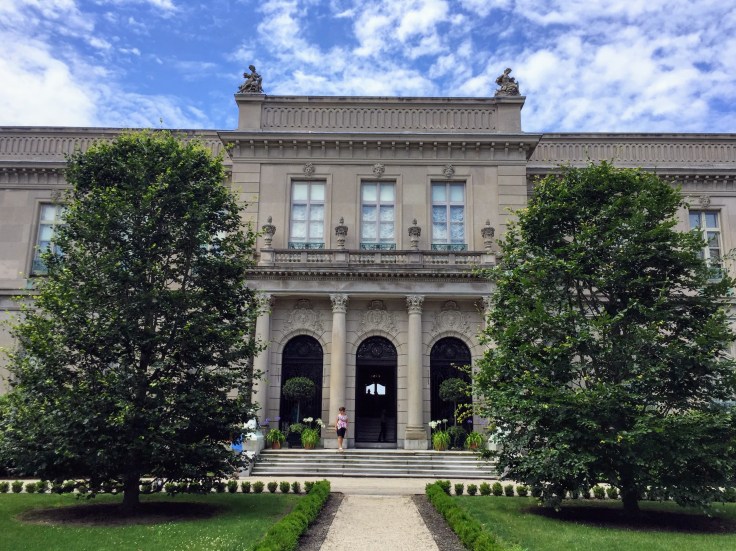
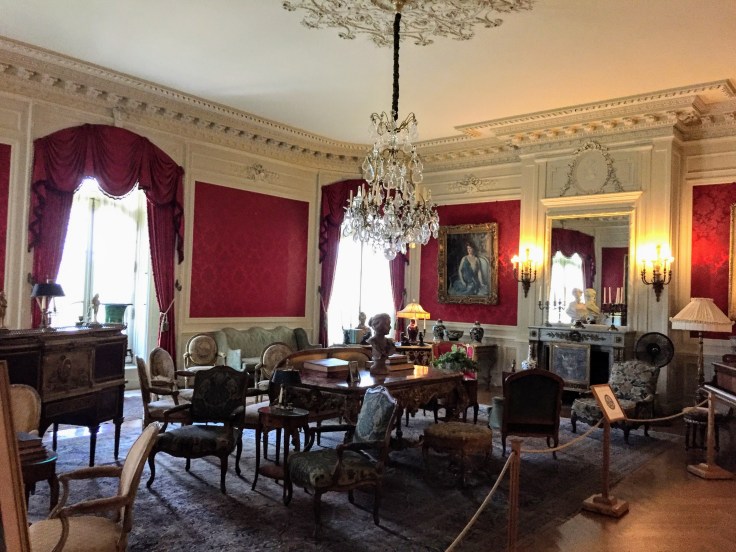
My favorite of the grand mansions.; The Berwind family started spending their summers in Newport in the 1890s, and they had The Elms built in 1901; Mrs. Berwind died in 1922; Mr. Berwind invited his niece,Julia Berwind, to take over hostess duties in the house.  Mr. Berwind died in 1936. Julia remained in the house until her death in 1961.  When Julia Berwind died, The Elms was one of the very last Newport cottages to be run in the fashion of the Gilded Age: forty servants were on staff, and Miss Berwind’s social season remained at six weeks each year.  The family lived day-to-day on the second floor. The first floor was for entertaining only… The kitchen and other service rooms are in the basement, and there is a hidden third floor containing the servants’ bedrooms (more on this tomorrow…). Mr. Berwind loved technology and the house was fitted with all the latest devices, and was continually being updated until Mr. Berwind’s death in 1936. Julia had no interest in technology, so nothing was changed after 1936.

The approach:
2017-07-08 Newport - The Elms 01


The Grand Hall:

2017-07-08 Newport - The Elms 02

2017-07-08 Newport - The Elms 03

2017-07-08 Newport - The Elms 04


The Grand Stair:

2017-07-08 Newport - The Elms 06


The Library:

2017-07-08 Newport - The Elms 07


The Conservatory:

2017-07-08 Newport - The Elms 08


The Drawing Room:

2017-07-08 Newport - The Elms 09


The Music Room:

2017-07-08 Newport - The Elms 10


The Dining Room:

2017-07-08 Newport - The Elms 11


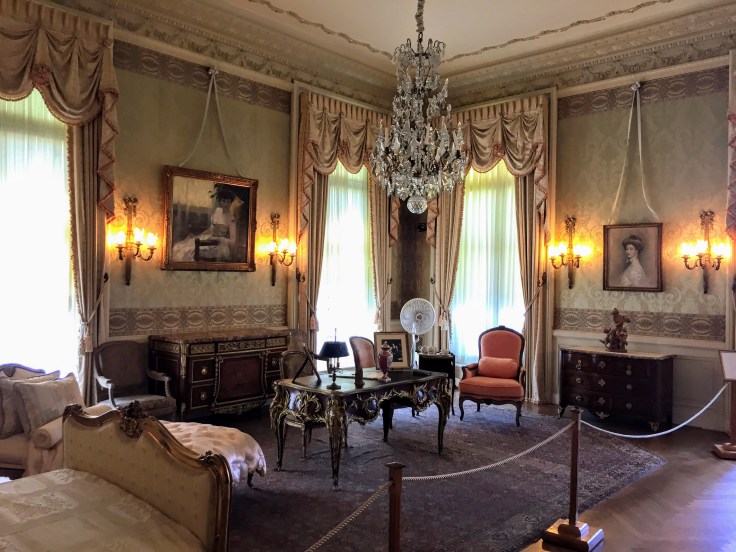
Mrs. Berwind’s Bedroom; this was also her sitting room, where she would receive lady friends during the day:

2017-07-08 Newport - The Elms 14

2017-07-08 Newport - The Elms 16


Mr. Berwind’s Bedroom:

2017-07-08 Newport - The Elms 17

Mr. Berwind’s Bathroom:

2017-07-08 Newport - The Elms 18


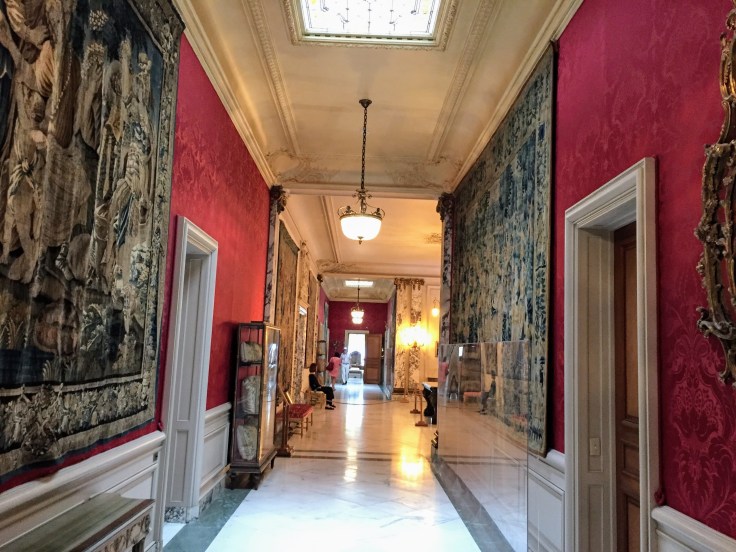
The Upstairs Hall; the stained glass skylights in the ceiling get their light from glass block floor in the servants’ hall on the third floor; the actual skylight is above the third floor, in the roof. (More on this tomorrow).
2017-07-08 Newport - The Elms 15


The Family Sitting Room on the second floor:
2017-07-08 Newport - The Elms 19


The Kitchen:

2017-07-08 Newport - The Elms 20


The Grand Lawn to the rear:

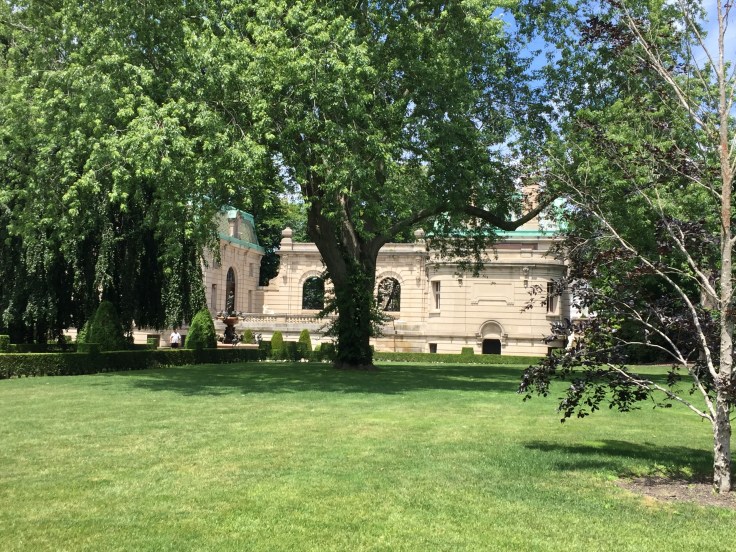
2017-07-08 Newport - The Elms 24


The Carriage House:

2017-07-08 Newport - The Elms 28


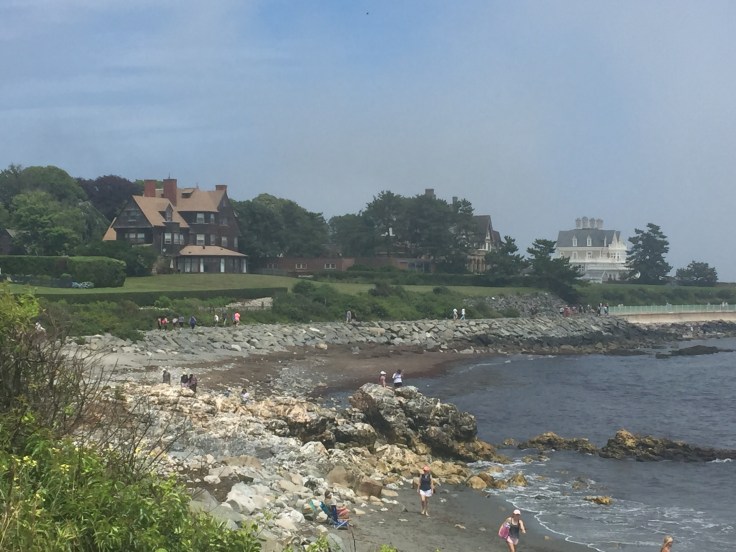
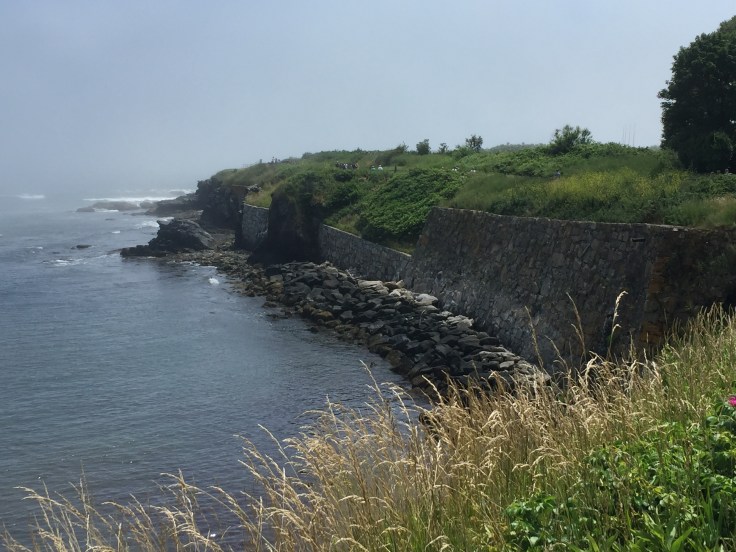
After touring these four houses, we needed a break. We took a long walk along “Cliff Walk”, a beautiful ocean front walkway around Newport:

2017-07-08 Newport - Cliffwalk 08

2017-07-08 Newport - Cliffwalk 06

2017-07-08 Newport - Cliffwalk 05

2017-07-08 Newport - Cliffwalk 01

There were even surfers:

2017-07-08 Newport - Cliffwalk 07


We had time for one more house:

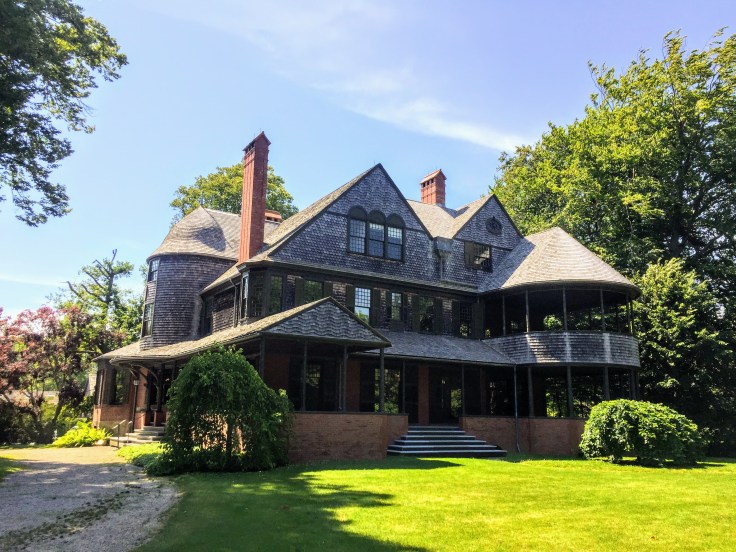
The Isaac Bell House:

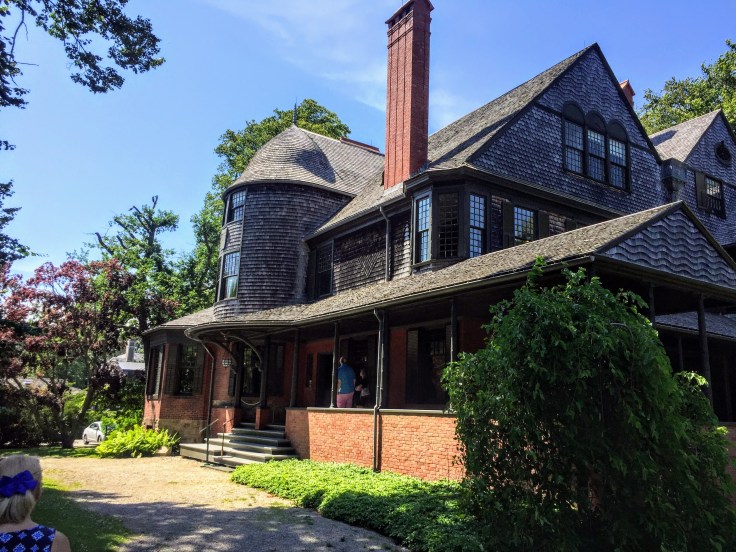
This house is totally different from the others; it is not a neoclassical stone pile, but a post-Victorian cottage at a more human scale. It is older than the grand houses, but it portends what is coming, and what continued long after the neoclassical craze was over. This is the type of house Frank Lloyd Wright was trained to design. He took it to a whole new level…

This house was lived-in up until the 1990s, as a boarding house, a nursing home, and other uses.  It is still undergoing restoration…

The Exterior:
2017-07-08 Newport - Isaac Bell 04

2017-07-08 Newport - Isaac Bell 01

2017-07-08 Newport - Isaac Bell 03

2017-07-08 Newport - Isaac Bell 02


The interior hall is dark:

2017-07-08 Newport - Isaac Bell 30

2017-07-08 Newport - Isaac Bell 11


The Stair:

2017-07-08 Newport - Isaac Bell 31

Here we see something this house has in common with the others: These decorative panels were bought as bedsteads in Europe, dismantled and cut apart, and used as decoration on the stair:


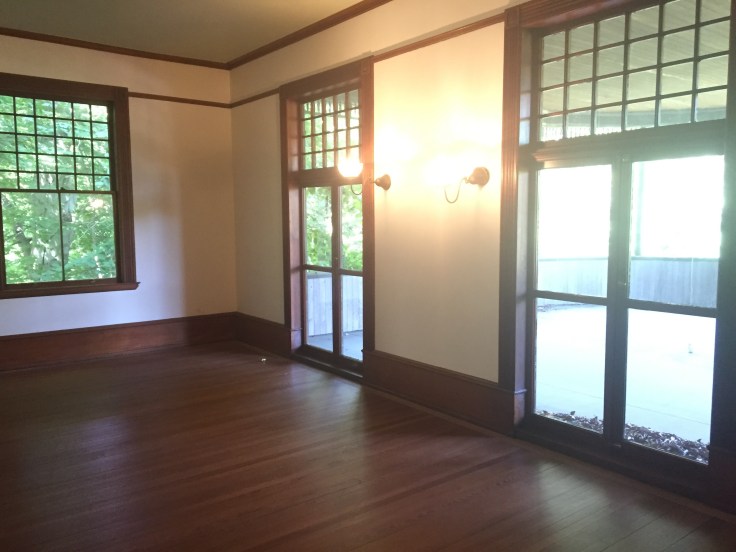
The Living Room:
2017-07-08 Newport - Isaac Bell 23


2017-07-08 Newport - Isaac Bell 36


The Dining Room:

2017-07-08 Newport - Isaac Bell 37


2017-07-08 Newport - Isaac Bell 22


The Library:


The Upstairs:

2017-07-08 Newport - Isaac Bell 38


2017-07-08 Newport - Isaac Bell 29


So it was a long day. We headed back to the Villa and the rest of the caravaners… An enjoyable time was had by all…


2017-07-07 Nor by Nor’east Caravan -Newport, Rhode Island

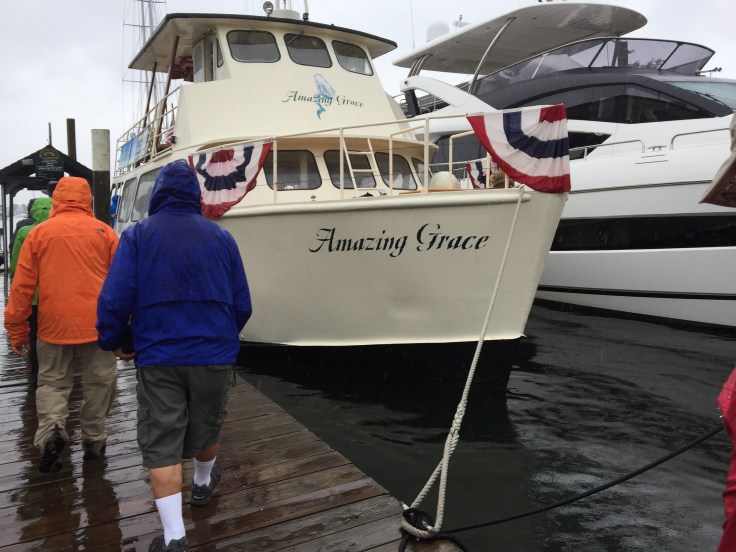
More rain today… But the caravan continues with a trolley tour of Newport, RI, and a harbor tour on the Amazing Grace…

2017-07-07 Newport 12 (2).JPG


Our convoy of caravanners arrived and parked at William Rogers High School in Newport. We were promptly picked up by two trolleys and we were given a nice overview of Newport. We saw the port and the fort.  We saw President Eisenhower’s summer White House (this was before the days of Camp David…).  We drove along and peeked behind the gates of the “Summer Cottages” of New York City’s elites.  We heard gossip and other stories about the cottages and their owners and their guests.  We heard about the servants and their lives.  It was a nice general backdrop for our future visits.

Eisenhower’s house, on the grounds of Fort Adams:

2017-07-07 Newport 01 Eisenhower


After the trolley ride we had lunch at the Brick Alley restaurant.  Lobster Bisque, stuffed quahogs, clam chowder, lobster rolls, steamers…

2017-07-07 Newport 14


The trolleys took us to the docks where we boarded the Amazing Grace:

2017-07-07 Newport 05


The harbor tour was great. If there is anything I like as much as houses it is boats.  And houses overlooking boats are about the best!

2017-07-07 Newport 11


There some pretty nice boats in the harbor, but it was not a very pleasant day to be boating:


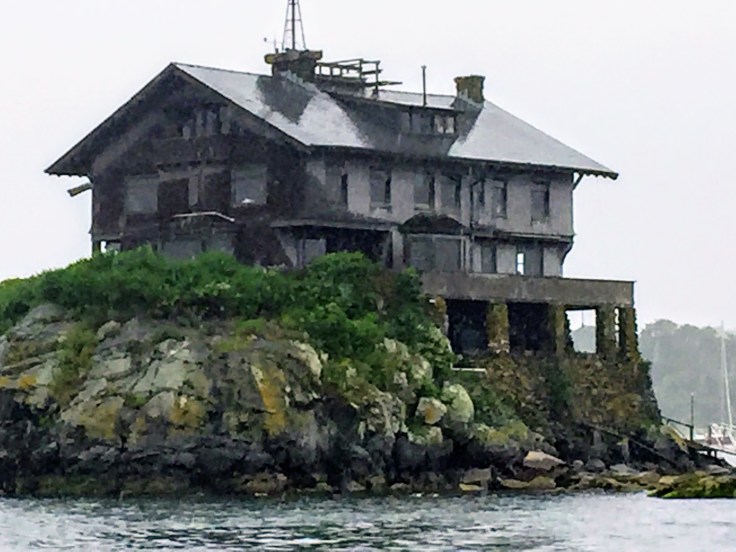
The house at the top of this post is called “Clingstone” by its owners, but the locals call it, “The House on the Rock.”  It was built in 1905, perched atop a small, rocky island in an island group called “The Dumplings” in Narragansett Bay, near Jamestown, Rhode Island.

The dwelling, designed by Philadelphia socialite J. S. Lovering Wharton and artist William Trost Richards, is a three-story 23-room 10,000-square-foot shingle-style cottage.  The structural system of heavy mill-type framing was designed to withstand hurricane force winds.

The original owner, relative of industrialist Joseph Wharton, built the house in response to the government condemning his earlier summer home in order to build Fort Wetherill.  Wharton summered here until his death in the 1930s. Heavily damaged by a hurricane in 1938, the residence was vacant from the time of his wife’s death in 1941 until it was purchased in 1961 by Boston architect Henry Wood.  Wood, a distant cousin of the Philadelphia Whartons, was able to purchase the property for $3,600, the amount owed in back taxes. It has been restored and is now available as a summer rental…


2017-07-07 Newport 10


After the harbor tour we were shuttled back to the high school. A few of us decided to stop in at a tavern in town.

2017-07-07 Newport 13

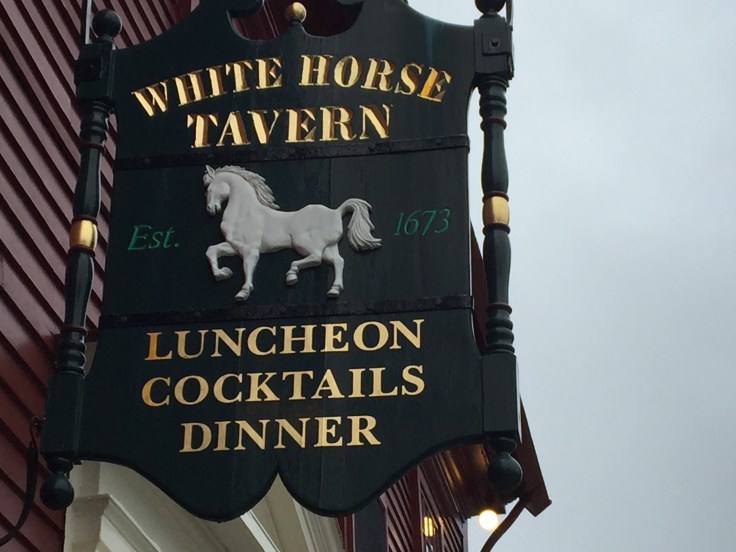
The White Horse Tavern, constructed in 1652 in Newport, Rhode Island, is believed to be the oldest tavern building in the United States.  Everyone in the place will tell you so… They will also tell you that they have documented that John Hancock, Paul Revere, and Samuel Adams all were here.  Jackie Kennedy Onassis often lunched here while spending time at her family’s summer cottage nearby…

Frances Brinley constructed the original building on the site.  In 1673, the lot was sold to William Mayes, and the building was enlarged to become a tavern. The building was also used for large meetings, including use as a Rhode Island General Assembly meeting place, a court house, and a city hall.  William Mayes, Sr., obtained a tavern license in 1687 and William Mayes, Jr., a well-known pirate, operated the tavern through the early eighteenth century.  The operation was named “The White Horse Tavern” in 1730 by owner Jonathan Nichols.  During the American Revolution, Tories and British troops were quartered there around the time of the British occupation and the Battle of Rhode Island.  After years of neglect as a boarding house, Newport’s Van Bueren family donated money to the private Preservation Society of Newport to restore the building in 1952. After the restoration, the building was sold and once again operated as a private tavern and restaurant.  Today it still remains a popular drinking and dining location.  

We had some drinks and snacks and enjoyed meeting a few other caravanners.  An enjoyable time was had by all…


2017-07-06 Nor by Nor’east Caravan -Mystic, CT; lunch at Abbot’s and Costello’s

Today was our first “tourism” day with the caravan; this will be the test.  We have about 30 of these days; if you know me, I’m not a big fan of tourist things.  But I will endure and hold off judgement until we are complete.  Today, we head to Mystic Seaport…


I mentioned how we convoyed into Ashaway with 4 Airstreams.  Tourism days on the caravan means a convoy of pick-up trucks and Suburbans… We do carpool, but even with 4 people per vehicle this still means 12 vehicles heading down the road together…

We hitched a ride with a neighbor, since we still had 8 cases of water and 3 cases of wine taking up all of our back seat area. (We need to drink this wine before we enter Canada…).

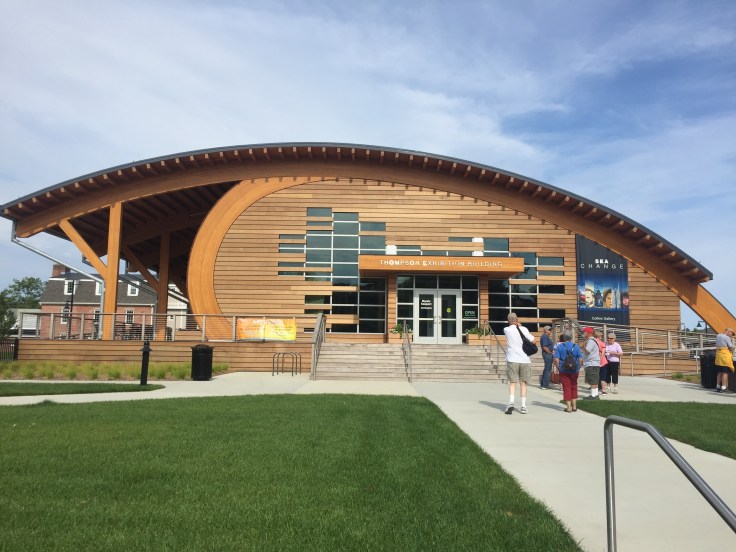
The visitor’s center is quite impressive – resembling an ocean wave, an homage to the seafaring nature of the Atlantic coast of New England…

2017-07-06 Mystic Seaport 14


Mystic Seaport is a delightful area of recreations of 17th and 18th century industry and craftsmanship.

There was a whaling ship, and we could tour the various decks seeing the caption’s quarters, the “tween decks”, where the crew lived, and the cargo level where the whale blubber was rendered into oil… There was a crew on-board who demonstrated raising and lowering the sails.

2017-07-06 Mystic Seaport 05


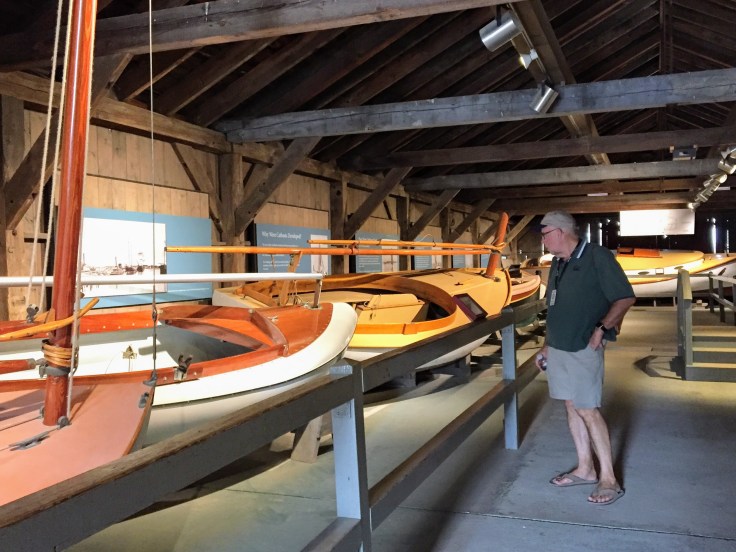
There was a building housing an exhibit of “Cat Boats”, small, simple boats used for various utilitarian purposes as well as for recreation and racing…

2017-07-06 Mystic Seaport 09


Back in 2004 we visited Plymouth, MA; we saw “the rock” and we saw “Mayflower II”. Today, “Mayflower II” is in Mystic, undergoing a full restoration in preparation of the 400th anniversary of the Pilgrims’ landing in 1620.  We could not see much of it, but here it is:

2017-07-06 Mystic Seaport 20


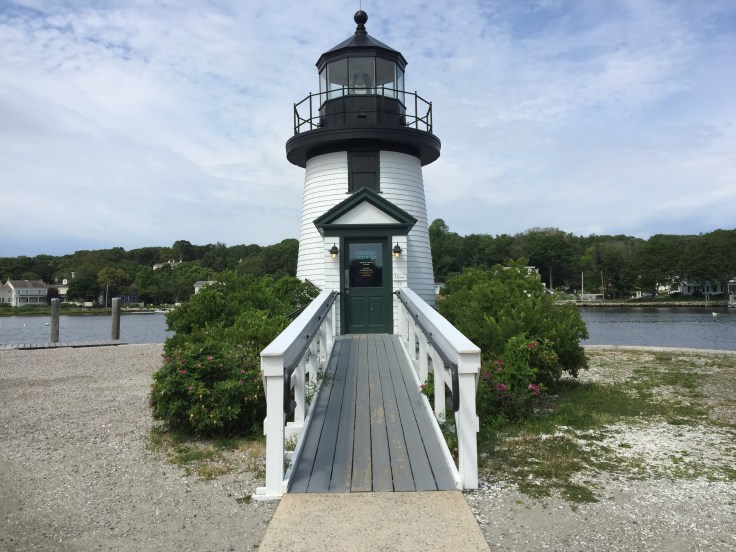
This lighthouse, in Mystic Seaport, is a reproduction of the light on Nantucket. It is claimed to be the shortest lighthouse in the USA, but, who knows?  I think tour guides just make things up. We saw lights in Newport and Plymouth and Provincetown that seem to be just as short…

2017-07-06 Mystic Seaport 10


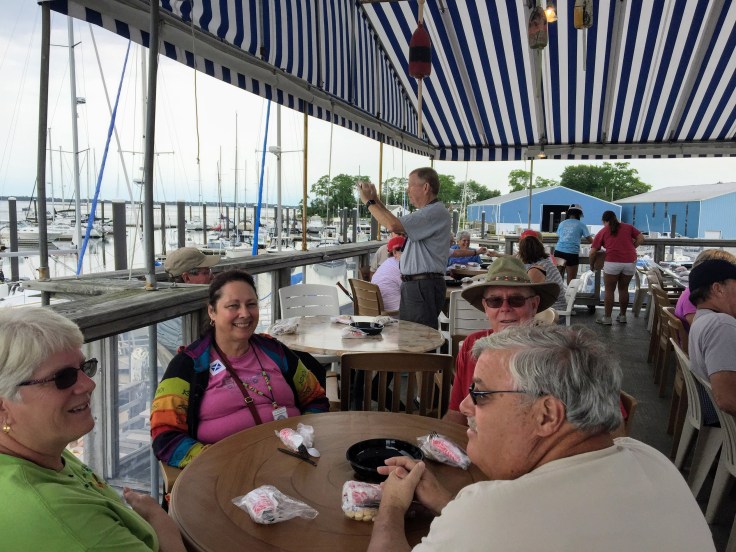
After our time in Mystic it was time for lunch.  No, not Mystic Pizza… (I had been there in 2008…). We went to Noank, CT, to Costello’s Crab Shank. We were originally scheduled to have lunch at Abbot’s Lobster in the Rough, but four busloads of tourists had descended on the place, so we opted to go to Costello’s.  They are owned by the same people and our wait-staff were from Abbott’s.  The feature here was, of course, lobster.  We started with a nice clam soup (not chowder…) and a huge bowl of Steamers and Mussels.  The then lobsters – two 1-1/4 lb. lobsters…

2017-07-06 Costello's 03

2017-07-06 Costello's 02

2017-07-06 Costello's 01


We returned to the Villa, in the rain…  Tomorrow we head towards Newport… An enjoyable time was had by all…


2017-07-05 Caravan Rendezvous

Today we begin the Nor by Nor’east Caravan!  Today we join with 24 other Airstreams to spend 6 weeks exploring the Atlantic Coast from Rhode Island to Prince Edward Island.

2017-07-05 Ashaway RV Park 01

We left Croton Point in the Hudson Valley with our destination being Ashaway, Rhode Island.  We wanted to avoid driving the New York City area, as well as coastal Connecticut, so we headed straightaway for Danbury, CT.  After a short drive we found ourselves at the largest Trader Joe’s store we have ever seen.

After replenishing our supplies we continued on our way.  Somewhere, on Highway 6, in the middle of Connecticut, we thought we spotted an Airstream far ahead of us.  Soon we confirmed that it was an Airstream, and we thought we could see another ahead of it.  I pushed the throttle ahead a bit, and, lo and behold, there were THREE Airstreams, all heading east, and all from Kentucky!  We soon passed them and we all made our way into Rhode Island and the Ashaway RV Park.  There we joined the others, many of whom had been there for two or three days already.  We parked the Villa, got set up, and met our leaders, Trevor and Gale Lake.

Connecticut and Rhode Island stickers:


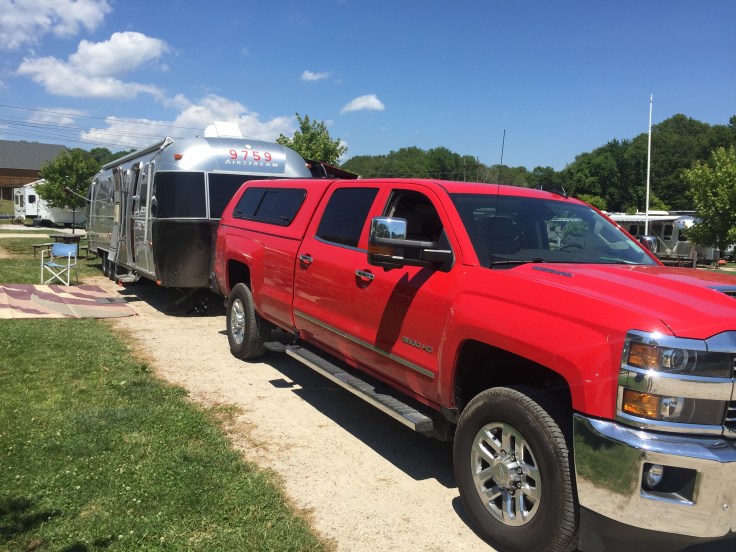
Being the neighborly types, we invited our 2 neighbors to happy hour at our site.  I guess word spread, because 35 people showed up. An enjoyable time was had by all.

That evening we had an orientation meeting to discuss the general culture of the caravan and to confirm and explain tomorrow’s activities.

The group meeting:

2017-07-05 Ashaway RV Park 03


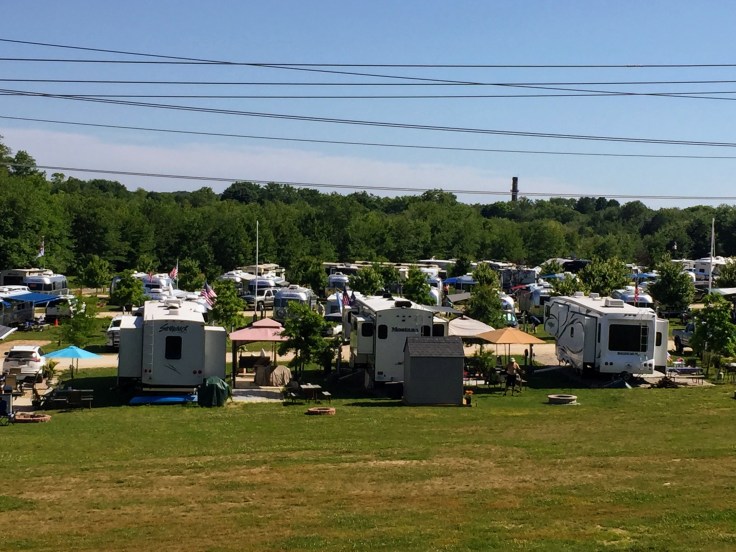
The campground:

2017-07-05 Ashaway RV Park 02


The caravan will last 41 days and we will camp at 11 places; we will travel about 1,000 miles, including side trips, detours, and excursions.  The weather today was warm and sunny; we won’t be so lucky tomorrow, when we head to Mystic Seaport…

2017-07-04 Hudson Valley, NY; Roosevelt’s many houses in Hyde Park, and the Great Estates of the Vanderbilts

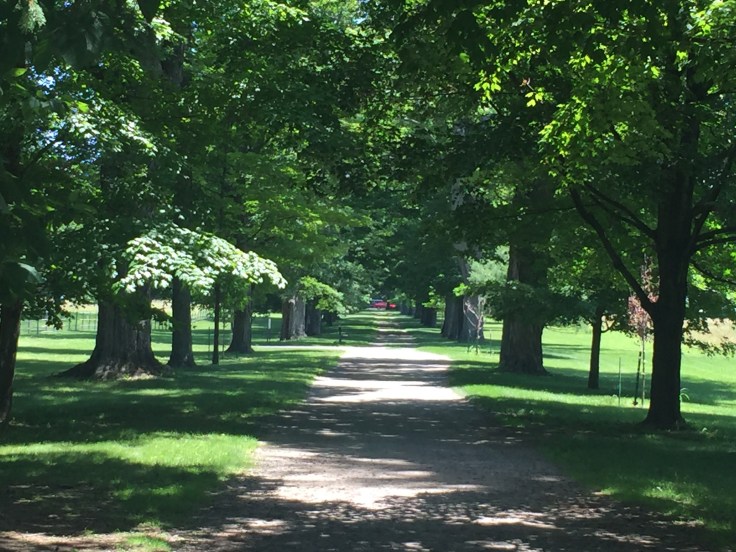
On 4th of July  we once again took to the train; this time going north, to Poughkeepsie.  At the train station we were shuttled to FDR’s Hyde Park estate, Springwood.  It has a nice driveway approach:

2017-07-04 Hyde Park FDR 31


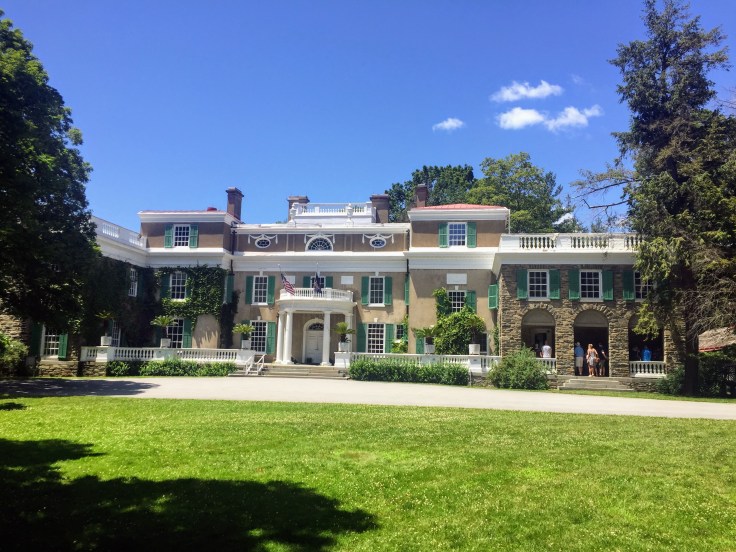
The house has a great presence as you approach:

2017-07-04 Hyde Park FDR 01

However, it is really a simple (yet large) farm house. Those columns you see aren’t marble, or even stone; they are wood, fashioned to imitate stone.  Inside, the rooms are quite plain, except for the Living Room; it is quite lovely:

2017-07-04 Hyde Park FDR 12


2017-07-04 Hyde Park FDR 11


The Sitting Room:

2017-07-04 Hyde Park FDR 13a


The Dining Room:

2017-07-04 Hyde Park FDR 13b


FDR was born in this house and lived here his entire life; for all but the last four years his mother lived here as well.  There are no permanent accommodations for the fact that he spent most of his waking hours in a wheelchair.  There is a ramp from the main level down to the Living Room, but when visitors were expected, he would transfer from the wheelchair to his desk chair in the Living Room, the ramp was removed and stored, and the wheelchair was hidden.  To access the upper level, he transferred himself into the dumbwaiter, and he hoisted himself up by using the ropes and pulleys.

As I said, FDR’s mother, Sara, lived here with FDR and his wife Eleanor.  FDR was a bit of a “Mama’s Boy” and Eleanor and Sara never got along well. Both Eleanor and FDR built separate, private houses for themselves on the estate, although FDR never slept in his…

Also on the grounds of the estate is the FDR Library; it was the first presidential library built, and it is the only presidential library that was actually used by a sitting president. It was built in about 1941, and expanded after his death.  There is a moving art installation in the garden: given by Winston Churchill’s grand-daughter, it is a sculpture made from pieces taken from the Berlin Wall.  It is entitled “Freedom of Speech”.  The western side is covered in graffiti; the east side is blank…

2017-07-04 Hyde Park FDR 22


In addition to being born here, and living here all his life, FDR is also buried here:

2017-07-04 Hyde Park FDR 07.jpg


Next we visited the Vanderbilt Estate, also in the city of Hyde Park.  Is is just one of many Vanderbilt mansions in America…

From the late 1870s to the 1920s, the Vanderbilt family employed some of the United States’s best Beaux-Arts architects and decorators to build an un-equalled string of New York townhouses and East Coast palaces.

The list of architects employed by the Vanderbilts is a “who’s who” of the New York-based firms that embodied the “eclectic” styles of the American Renaissance: Richard Morris HuntGeorge B. PostMcKim, Mead, and WhiteCharles B. AtwoodCarrère and HastingsWarren and WetmoreHorace TrumbauerJohn Russell Pope and Addison Mizner were all employed by the eight grandchildren of Cornelius “Commodore” Vanderbilt, who built only very modest houses for himself.

Commodore’s grandchildren inheritted about $200,000 from their father, and they treated it as play money to indulge their home-building passions;  I count 24 houses…

  1. Cornelius Vanderbilt II (1843–1899), built a townhouse, the “Cornelius Vanderbilt II House” (1883) at 1 West 57th Street, New York by George B. Post. Enlargements by George B. Post and Richard Morris Hunt. This mansion was, and remains, the largest private residence ever built in Manhattan. Demolished.  Also, “The Breakers” in Newport, Rhode Island, in 1892–95, which was also designed by Richard Morris Hunt.  Also, “Oakland Farm” (1893), mansion and stables on 150 acres in Portsmouth, Rhode Island. Demolished.
  2. Margaret Louisa Vanderbilt (1845–1924), built a townhouse (1882), part of the Triple Palace, at 2 West 52nd Street, provided to them by her father and shared with her sister Emily Thorn Vanderbilt and their families. Demolished.  Also,  Woodlea (1892–95), designed by McKim, Mead & White, a country estate in Scarborough, New York, now the Sleepy Hollow Country Club.
  3. William Kissam Vanderbilt (1849–1920) had three houses designed by Richard Morris Hunt.
    • Petit Chateau“, the New York City townhouse at 660 Fifth Avenue, built in 1882 with details drawn in part from the late-Gothic Hôtel de Cluny, Paris. Demolished in 1926.
    • “Idle Hour” country estate in Oakdale, Long Island, New York, was built in 1878–79 and destroyed by fire in 1899. A new “Idle Hour”, designed by Hunt’s son Richard Howland Hunt, was built on the same property from 1900–01 of brick and marble in the English Country Style and is now part of the Dowling College Campus.
    • Marble House” summer home in Newport, Rhode Island, in 1888–92.
  4. Emily Thorn Vanderbilt (1852–1946) built a townhouse, 642 Fifth Avenue, part of the Vanderbilt Triple Palace, provided to them by her father. Demolished. Also, “Elm Court” in Lenox, Massachusetts, in 1887. It is the largest shingle-style house in the United States.
  5. Florence Adele Vanderbilt (1854–1952) built a townhouse at 684 Fifth Avenue, New York (1883). Designed by John B. Snook,  Demolished.  Also, Florham” in Convent Station, New Jersey, in 1894–97. Designed by McKim, Mead and White as a summer estate, it is now used for classrooms, faculty offices, and administration at Fairleigh Dickinson University.  Also, “Vinland” in Newport, Rhode Island. Renovated by Ogden Codman, Jr.. Now part of the Salve Regina University.  Also, a townhouse, her second, a 70-room house at 1 East 71st Street, New York. Designed by Whitney Warren. Demolished.
  6. Frederick William Vanderbilt (1856–1938) built “Hyde Park” in Hyde Park, New York. Designed by McKim, Mead and White and built in 1896–99.  Also,  “Rough Point” in Newport, Rhode Island designed by Peabody and Stearns built in 1892. Also, “Pine Tree Point“, Adirondack Great Camp on Upper St. Regis Lake in 1901. Also, “Sonogee” (1903) in Bar Harbor, Maine purchased and renovated in 1915.
  7. Eliza Osgood Vanderbilt (1860–1936) built “Shelburne Farms” in Shelburne, Vermont, built in 1899.  Also, a townhouse (1883) at 680 Fifth Avenue, New York. The house was a wedding gift from William H. Vanderbilt to his daughter. Demolished.  Also, “NaHaSaNe” (1893), the 115,000 acre Great Camp located on Lake Lila in the Adirondacks.
  8. George Washington Vanderbilt II (1862–1914) built a townhouse (1887) at 9 West 53rd Street in New York City. Designed by Richard Morris Hunt. Demolished. Also, “Biltmore” in Asheville, North Carolina, in 1888–95. Designed by Hunt, it is the largest house in the United States.  Also, houses at 645 and 647 Fifth Avenue, New York, called the “Marble Twins”. 1902–05. Number 647 survives, a designated landmark, as the flagship store for Versace.  Also, “Pointe d’Acadie” (1869), the Bar Harbor, Maine cottage purchased and renovated in 1889. Demolished 1952
The Vanderbilts started the craze of building ostentatious mansions to showcase their wealth and to be a backdrop for their lavish parties. You will hear more about these houses in a few days when we visit the “Summer Cottages” in Newport, Rhode Island.

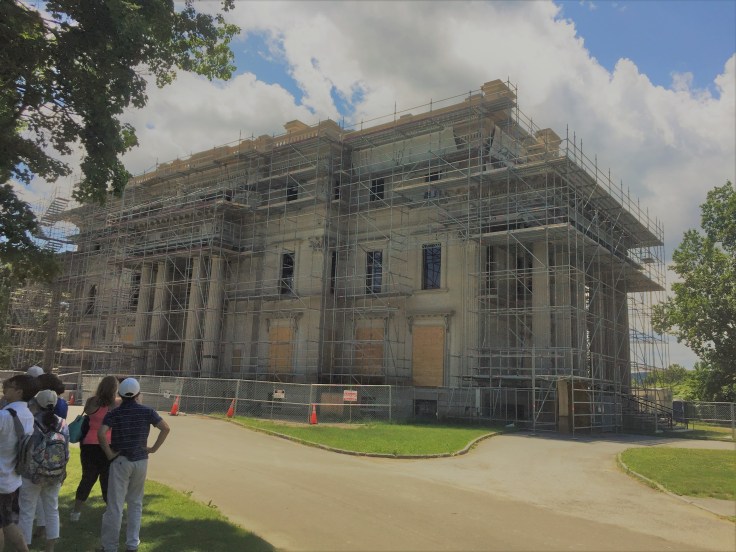
The Frederick Vanderbilt house in Hyde Park is arguably the smallest of the grand houses, a mere 55,000 square feet.  Unfortunately, it is undergoing restoration and thus is covered in scaffolding and slipcovers.

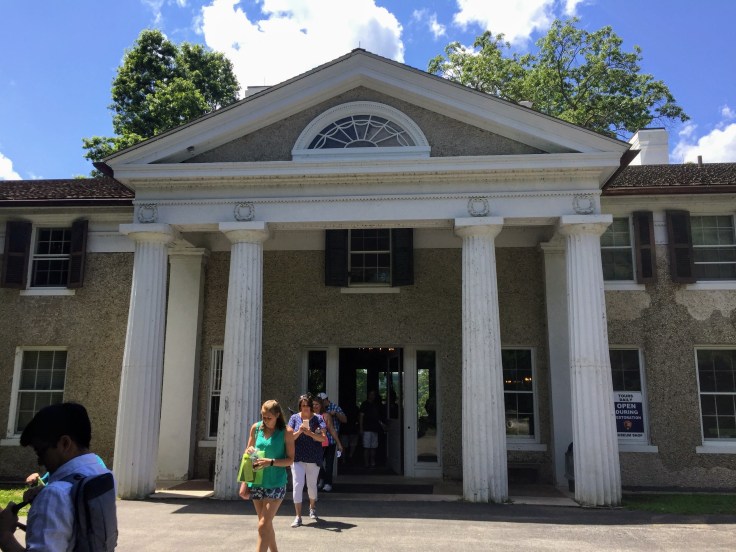
Today’s visitors center was originally built as a cottage for the Vanderbilts to view the ongoing construction:2017-07-04 Vanderbilt Hyde Park 01


The mansion as it looks today:

2017-07-04 Vanderbilt Hyde Park 02

2017-07-04 Vanderbilt Hyde Park 02a


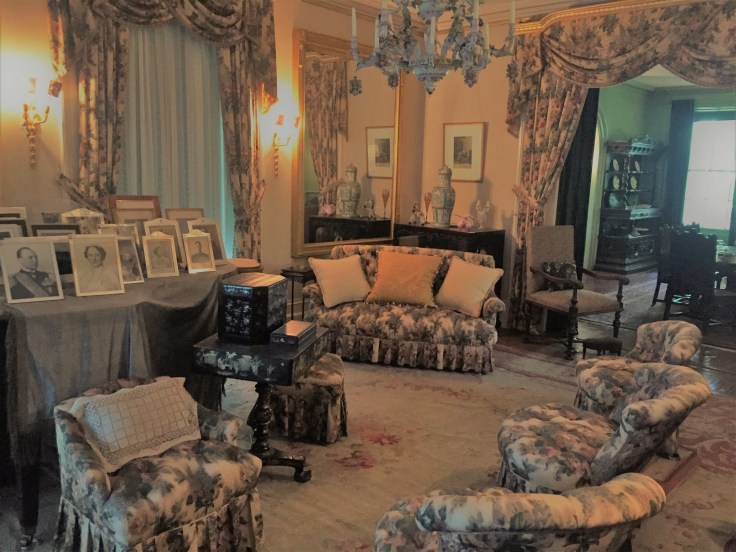
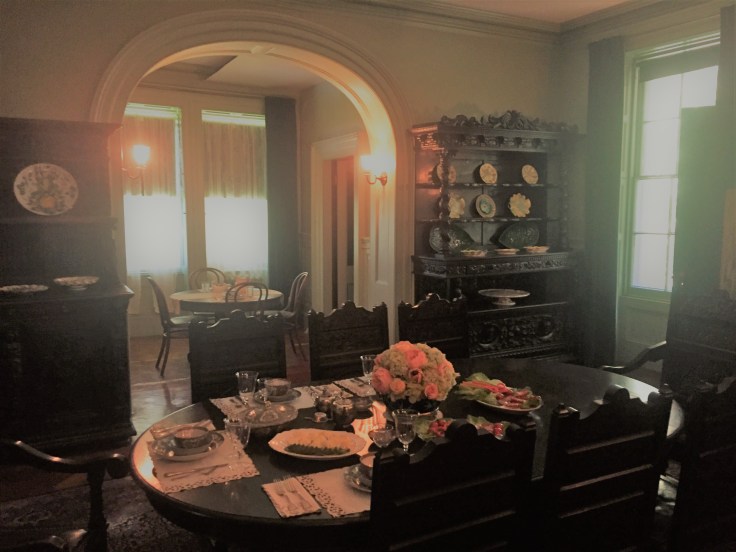
We were allowed to take interior photos, but the interiors are in a state of disarray:

2017-07-04 Vanderbilt Hyde Park 03

2017-07-04 Vanderbilt Hyde Park 04

2017-07-04 Vanderbilt Hyde Park 05

2017-07-04 Vanderbilt Hyde Park 07

As you can see, this house, like others I will show you in Newport, is simply an ostentatious display of excess;  these people were not patrons of artists who benefited their development; they simply bought castles and palaces in Europe, dismantled them, and reassembled them here in America. Don’t forget, this is one on the smallest, simplest Vanderbilt house; we will see more…

We returned on the train back to the Villa; this being the 4th of July, the Park was packed with thousands of people, crowding the beaches and lawns.  It was quite a madhouse. Luckily the RV park is about 1/2 mile beyond all the partying, so we were not affected by the crowds once we were finally able to drive by them. W spent the evening cleaning and packing. Today marks the final day of Part 1 of this Odyssey; tomorrow we rendezvous with the Nor by Nor’east caravan in Ashaway, Rhode Island.


Blog at WordPress.com.

Up ↑