Search

Adventures in the Villa

Category

Architecture

2017-08-20 Westbound; 1000 Islands, USA

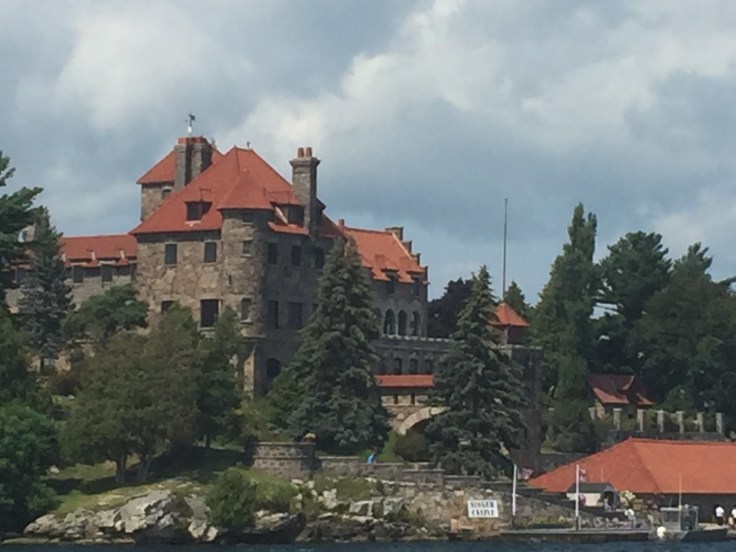
Today is an exciting day.  When we started planning this trip last spring this was not on the itinerary.  But a Singer sewing machine in one of the old houses we toured reminded me about Mr. Bourne’s castle, located here in the 1000 Islands
2017-08-20 1000 Islands 57 Singer

But first we had to get there!  We left our campground outside Montreal before first light. We were at the KOA in Ivy Lea, ON, by 9:00 am.  Luckily our reserved site had just been vacated, so we could pull in and do a minimum of set up.  We left and headed for the bridge over the St. Lawrence River, across the border, to Alexandria Bay, New York!


2017-08-20 1000 Islands 01 USA Bridge

We slipped through customs very easily, because we were not pulling the Villa.  We were soon on the boat trip to the Singer Castle:

2017-08-20 1000 Islands 02

The 1000 Islands are a group of more than 1,800 islands in the St. Lawrence River, straddling the border of the U.S. and Canada, extending from the edge of Lake Ontario and stretching 50-60 miles down river. A fashionable retreat for the elite in the late 19th century, today the area is a hub for outdoor activities. It’s home to elaborate island mansions and modest summer cottages.

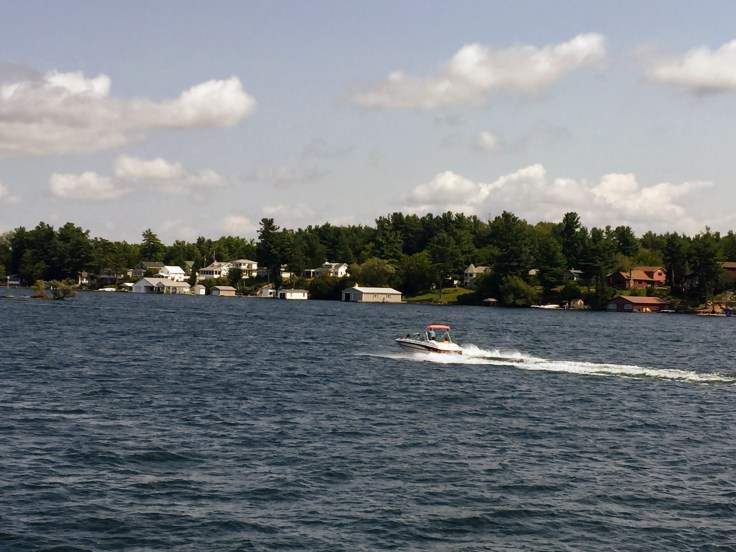
We were amazed at the beauty of this place. It rivals Nova Scotia, but it is at a much more human scale. hundreds of miles of coastline are covered with cabins, docks, mansions, boat houses, beaches and forests.  Anyone who loves water and boats will love this place:

2017-08-20 1000 Islands 10

2017-08-20 1000 Islands 05

2017-08-20 1000 Islands 11

2017-08-20 1000 Islands 13

2017-08-20 1000 Islands 03

2017-08-20 1000 Islands 04

2017-08-20 1000 Islands 12

We cruised down the river for about an hour; soon we approached the Singer Castle:

2017-08-20 1000 Islands 64 Singer

American history and local folklore meet at Singer Castle on Dark Island, located in the St. Lawrence River, about 30 miles down river from Alexandria Bay, NY.. Singer Castle is the only remaining/existing castle on the river to be completed, fully furnished and resided in during the heyday of the great builders of castles. The Castle remained in the possession of the original owners, the Bourne family, from its construction in 1905 until the mid 1950’s. Frederick Bourne was the fifth President of the Singer Sewing Machine Company, which is where the name “Singer Castle” came from.

2017-08-20 1000 Islands 58 Singer

I love the Boathouse:

2017-08-20 1000 Islands 59 Singer

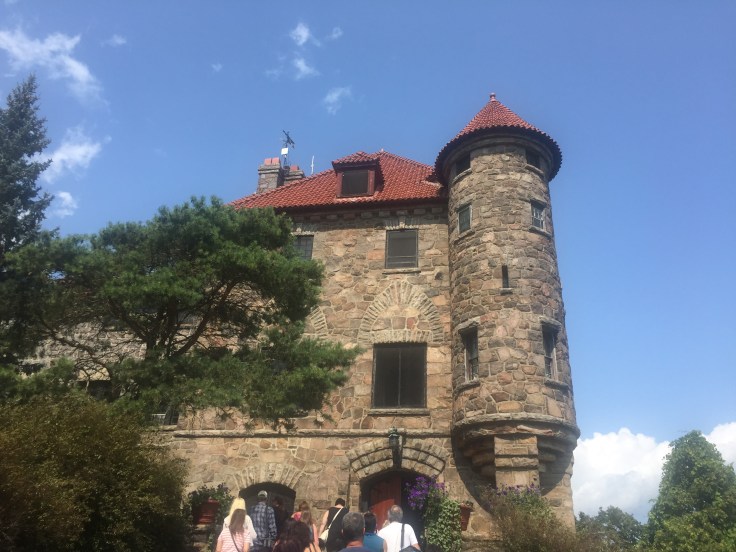
The dungeon is in the tower, at the tiny windows:
2017-08-20 1000 Islands 61 Singer

2017-08-20 1000 Islands 62 Singer

2017-08-20 1000 Islands 70 Singer

2017-08-20 1000 Islands 66 Singer

The view:

2017-08-20 1000 Islands 65 Singer

As the story goes, Bourne and his architect had read the novel “Woodstock” by Walter Scott; it is set in Woodstock Palace, a bizarre and spooky place with secret doors, stairs, and passages. This was their inspiration for designing all the service corridors and stairs in “secret” locations. There are 3 circular stairs located behind hidden doors, plus a maze of corridors, many on an interstitial level, allowing the servants to watch activities of the family and allowing them to see and anticipate the family’s needs, say for the refill of a drink, or a second helping of food at dinner…

The house contains all the original furniture. It looks like the family walked away yesterday… In reality, the family sold it in the early 1950s, and it had a sucession of owners, but it was left intact. Today it is owned by a multi-national corporation who buys and restores these great old buildings and opens them to the public. They are also available for weddings and other activities. In the case of the Singer Castle, you can rent a 2 bedroom apartment in the house, up to 6 guests, for overnight stays, including full access to the castle, dinner served in the dining room, etc.

The Library:

2017-08-20 1000 Islands 69 Singer

The Wine Cellar:

2017-08-20 1000 Islands 63 Singer

One of the “secret” circular stairways:

2017-08-20 1000 Islands 71 Singer

The Dining Room:

2017-08-20 1000 Islands 67 Singer

The Loggia:

2017-08-20 1000 Islands 68 Singer

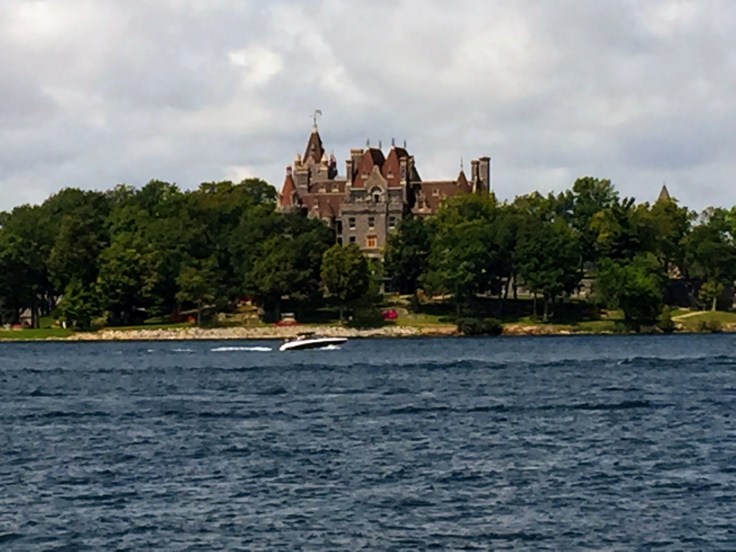
It was a delightful visit. We boarded the boat and cruised up the river back towards Alexandria Bay.  Directly across from Alexandria Bay is Boldt Castle. It is larger than the Singer Castle, but it was never finished (due to family “issues”…) and it was never occupied.  After sitting vacant for over 70 years, it was finally donated to Alexandria Bay with the condition that it be opened to the public, but never finished or occupied…
2017-08-23 1000 Islands 30 Boult

2017-08-23 1000 Islands 31 Boult

So after this exhilarating day, we stopped off and bought some Kentucky bourbon (rarely available in Canada) and headed back across the border to return to the Villa.  We relaxed with Happy Hours; an enjoyable time was had by all…
2017-08-19 Westbound; Montreal Old City

Today we go in to see the old city of Montreal. While this RV park did not offer a shuttle into the city, they did tell us how to take a city bus. The station was about a two mile drive from the RV park; we then boarded a bus and 20 minutes later we were in Montreal.

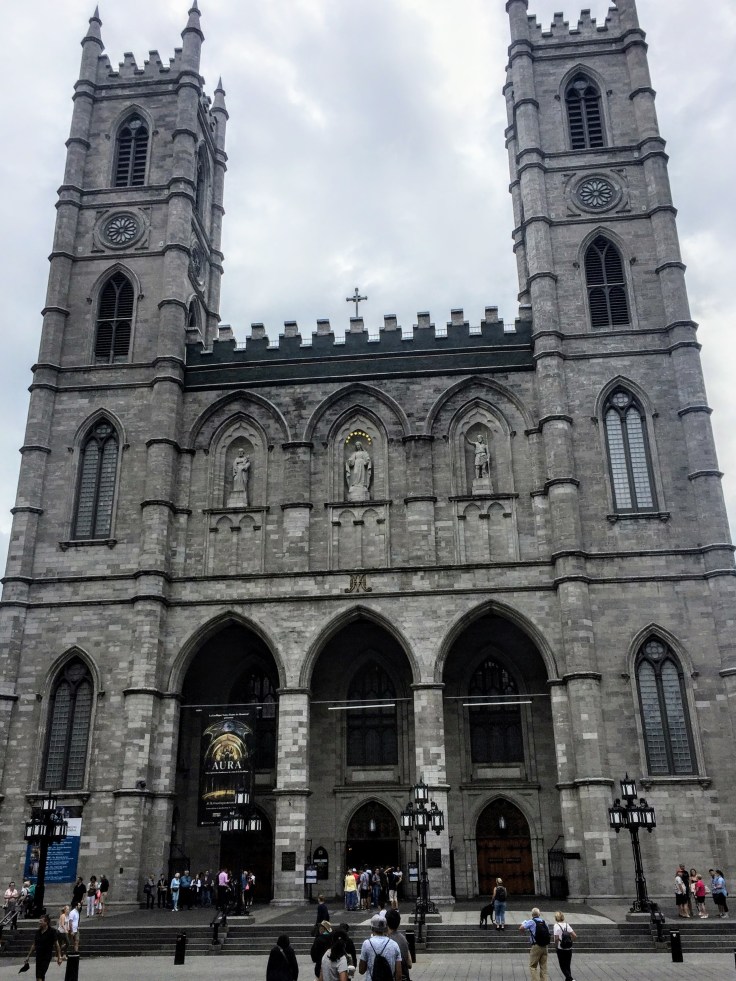
After a short walk we were in the old city and were at the plaza in front of the Basilica de Notre Dame:


2017-08-19 Montreal 18 Bassilica

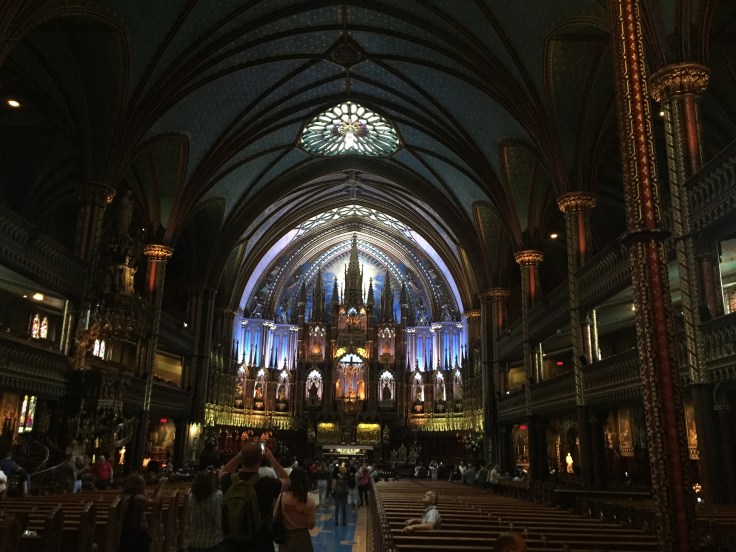
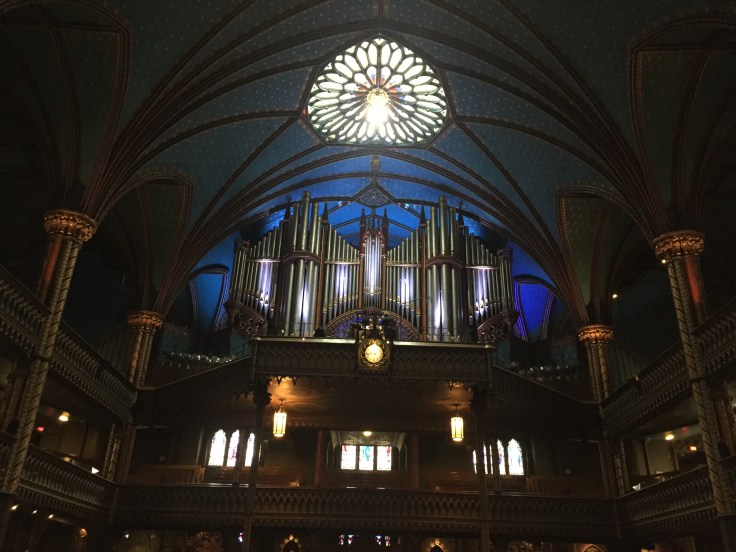
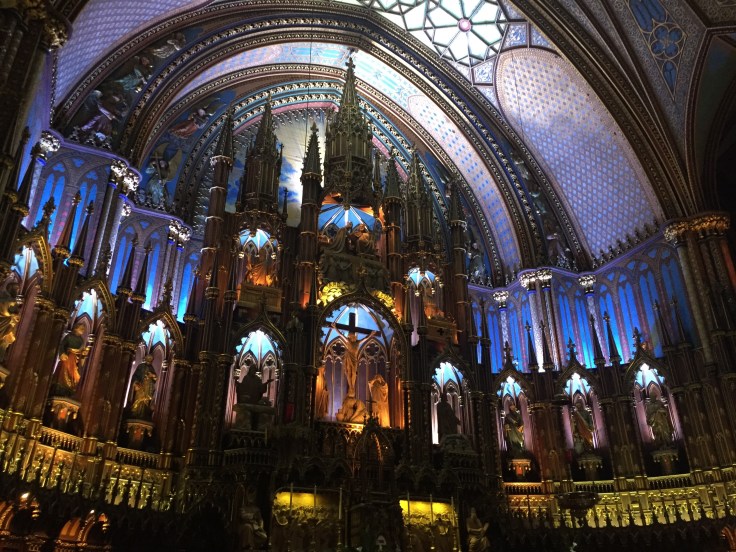
As majestic as this facade was, it didn’t prepare us for the interior!

2017-08-19 Montreal 17 Bassilica

2017-08-19 Montreal 16 Bassilica

2017-08-19 Montreal 15 Bassilica

Obviously, much of the impressiveness comes from the well-designed lighting, but still, it is breathtaking!

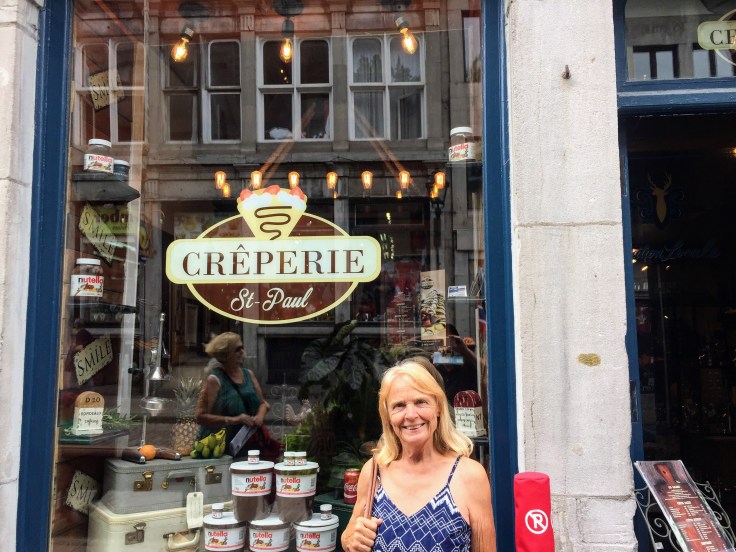
Then we started walking the town. We HAD to stop for a late breakfast of crepes:

2017-08-19 Montreal 13

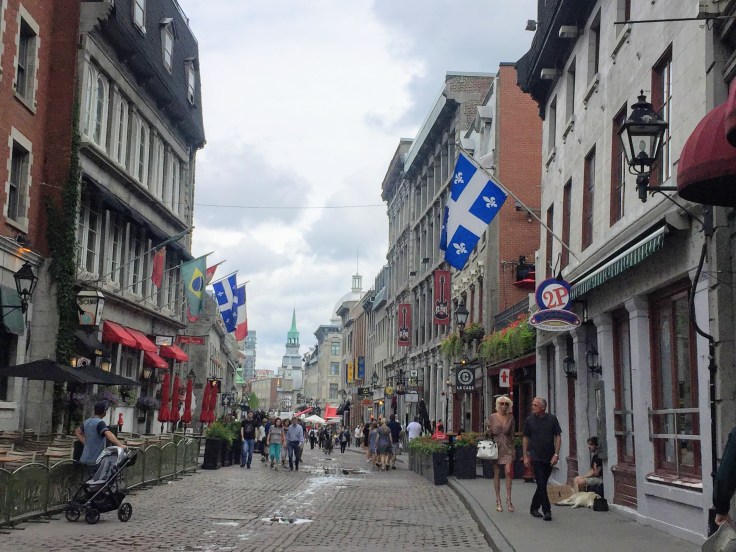
The old city is a lot of fun. We were there early, so it was not crowded, and streets reserved for pedestrians later in the day are bustling with delivery trucks..

We walked down to the waterfront; they had a lot of amusement park type places, and was not really interesting, but it was a nice stroll among the trees…

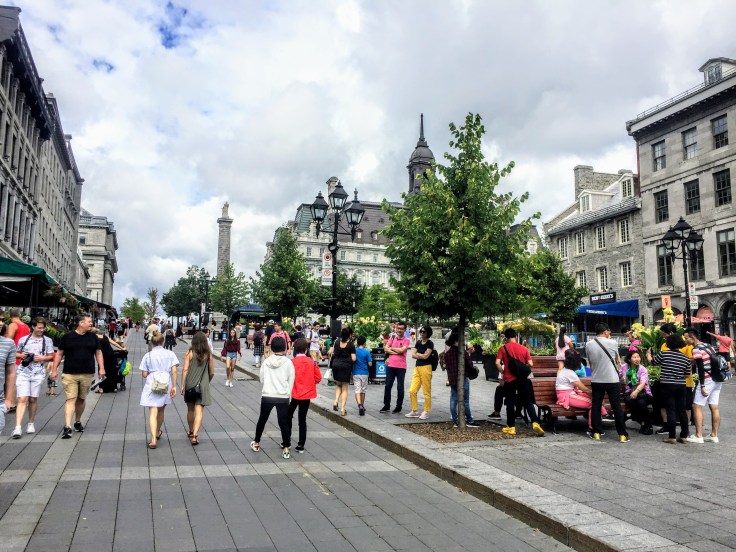
Then we walked back up to the Old City. Things had changed! The streets were packed with people. Restaurants were putting tables and chairs out onto the sidewalks.  Throngs of people were everywhere!  It was marvelous!

2017-08-19 Montreal 10

2017-08-19 Montreal 06

2017-08-19 Montreal 12

2017-08-19 Montreal 07

We found that Montreal has many lovely french-style cafes:

2017-08-19 Montreal 19

And then they also have this:

2017-08-19 Montreal 14

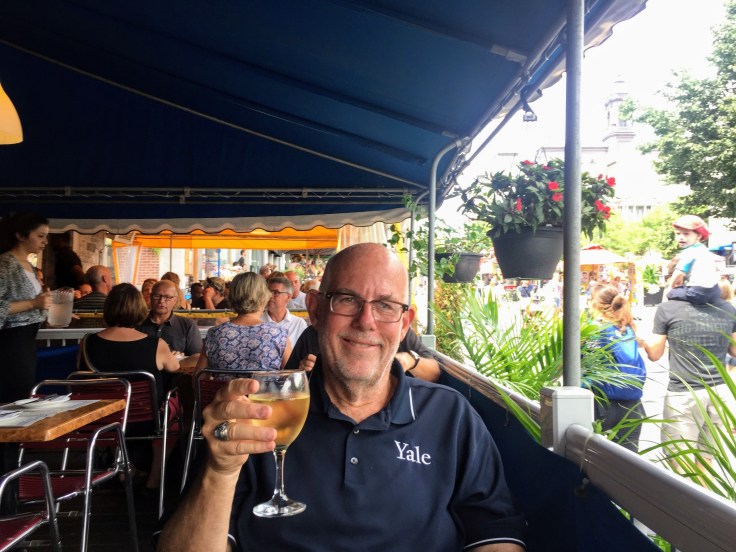
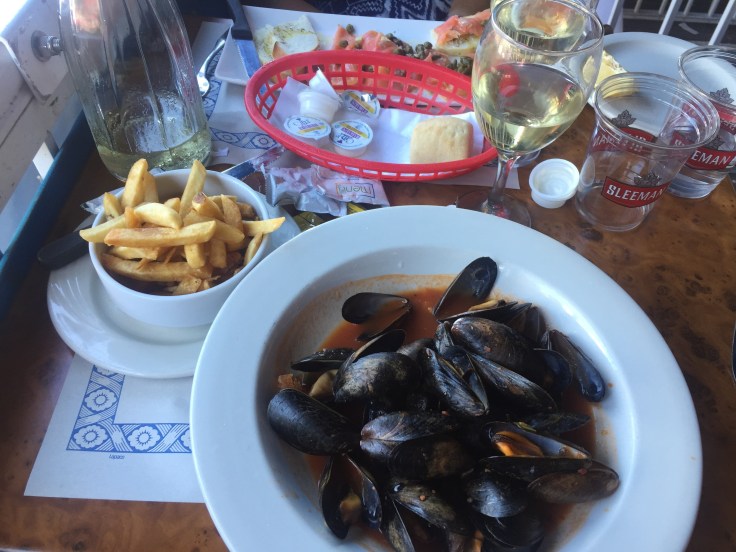
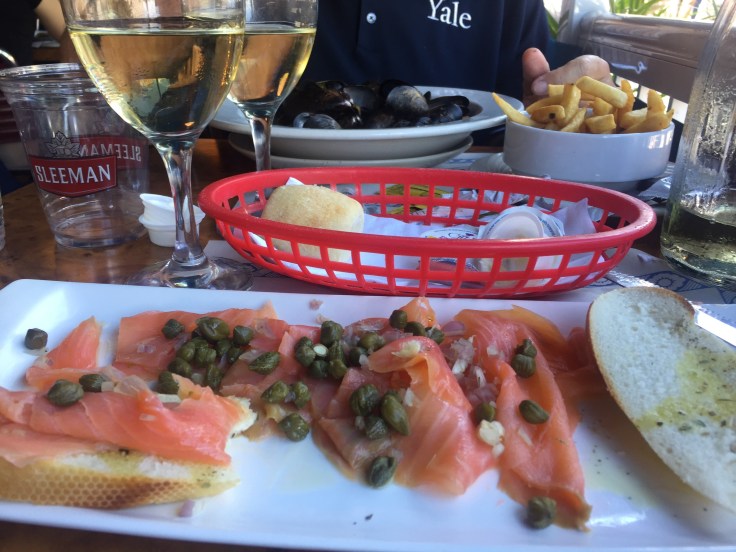
And soon it was time for lunch:

2017-08-19 Montreal 05 Lunch


2017-08-19 Montreal 04 Lunch


2017-08-19 Montreal 03 Lunch

After our late lunch we headed back towards the bus station. Along the way we found a brave soul pulling an Airstream through old Montreal…

2017-08-19 Montreal 02 Airstream

Upon arriving at the bus station, we found that, of course! Doesn’t every bus station have an ice skating rink?

2017-08-19 Montreal 01

We caught our bus and soon were back at the Villa.  We took a swim and had more Happy Hours. And an enjoyable time was had by all…


2017-08-08 Nor by Nor’east Caravan – Alexander Graham Bell and the Gaelic College

Today we learned about Alexander Graham Bell and his life in the town of Baddeck.

2017-08-08 Baddeck Alex Bell Museum 04

We visited the Alexander Graham Bell National Historic Site in Baddeck, which commemorates the genius and compassion of renowned inventor Alexander Graham Bell.  Exhibits here show how he and his associates achieved Canada’s first powered flight with their airplane Silver Dart, produced the world’s fastest boat, advanced recording technology, designed giant kites and, of course, invented the telephone. Original artifacts, films, and family photographs highlight his scientific and humanitarian work.  Situated adjacent to downtown Baddeck, with a superb view of the Bras d’Or Lake, the Site overlooks Bell’s summer home, Beinn Bhreagh, still privately owned by his descendants.

Alexander Graham Bell (March 3, 1847 – August 2, 1922) was a Scottish-born scientist, inventor, engineer, and innovator who is credited with patenting the first practical telephone.

Bell’s father, grandfather, and brother had all been associated with work on elocution and speech and both his mother and wife were deaf, profoundly influencing Bell’s life’s work.  His research on hearing and speech further led him to experiment with hearing devices which eventually culminated in Bell being awarded the first U.S. patent for the telephone in 1876.  Bell considered his most famous invention an intrusion on his real work as a scientist and refused to have a telephone in his study.

Many other inventions marked Bell’s later life, including groundbreaking work in optical telecommunicationshydrofoils, and aeronautics.  Although Bell was not one of the 33 founders of the National Geographic Society, he had a strong influence on the magazine while serving as the second president from January 7, 1898, until 1903.

After he gained wealth and fame through the invention of the telephone, Bell and his wife lived in Washington, D.C.  In 1885 the Bells vacationed on Cape Breton Island in Nova Scotia, spending time right here in the small village of Baddeck.  Returning in 1886, Bell started building a summer retreat on a point across from Baddeck, overlooking Bras d’Or Lake.  By 1889, a large house, christened The Lodge was completed and two years later, a larger complex of buildings, including a new laboratory, were begun that the Bells would name Beinn Bhreagh (Gaelic: beautiful mountain) after Bell’s ancestral Scottish highlands. Bell also built the Bell Boatyard on the estate, employing up to 40 people building experimental craft as well as wartime lifeboats and workboats for the Royal Canadian Navy and pleasure craft for the Bell family.  He was an enthusiastic boater, and Bell and his family sailed or rowed a long series of vessels on Bras d’Or Lake. 

Until the end of his life, Bell and his family would alternate between their two homes, but Beinn Bhreagh would, over the next 30 years, become more than a summer home as Bell became so absorbed in his experiments that his annual stays lengthened. Both Bell and his wife became immersed in the Baddeck community and were accepted by the villagers as “one of their own”.  The Bells were still in residence at Beinn Bhreagh when the Halifax Explosion occurred on December 6, 1917 (see my blog dated 8/1/17).  Bell and his wife mobilized the community to help victims in Halifax.

I had read a lot as a child about Alexander Graham Bell, but most of the books I read stopped at the invention of the telephone.  Today we learned about the hydrofoil boats and airplanes he was working on throughout his life.  He loved triangles and tetrahedrons, so these are represented in the architecture of the Museum.

2017-08-08 Baddeck Alex Bell Museum 05

2017-08-08 Baddeck Alex Bell Museum 02

After we finished enjoying the museum we drove a few miles south to the Royal Cape Breton Gaelic College (in Scottish Gaelic: Colaisde Rìoghail na Gàidhlig).  It is a non-profit educational institution located in the community of St. Ann’s, along the Cabot Trail. Founded in 1938, its focus has been on the perpetuation of Highland Scottish Gaelic culture.

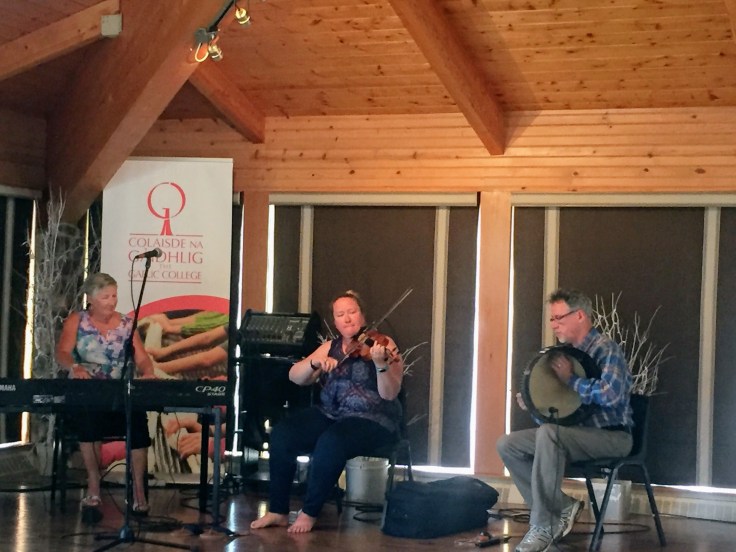
We went for a lunch time ceilidh (pronounced,”Kalie”).  A ceilidh is a social event at which there is Scottish or Irish folk music and singing, traditional dancing, and storytelling.  The college also has lots of public programs; Lynda spent time learning about the Gaelic language. I considered sticking needles in my eyes to avoid going to this presentation, but instead I escaped to the exhibit hall and spent time learning of the Gaelic culture and history.   Then on to lunch and the ceilidh. (By the way, if anyone reading this is considering naming their precious baby girl Ceilidh, be aware that once she is in school she will be forever known as “See-Lid”…)

We enjoyed the music. It was similar to what we heard at the Louisbourg Playhouse and still a lot of fun.

2017-08-08 Gailic College Ceilidh 02


2017-08-08 Gailic College Ceilidh 01

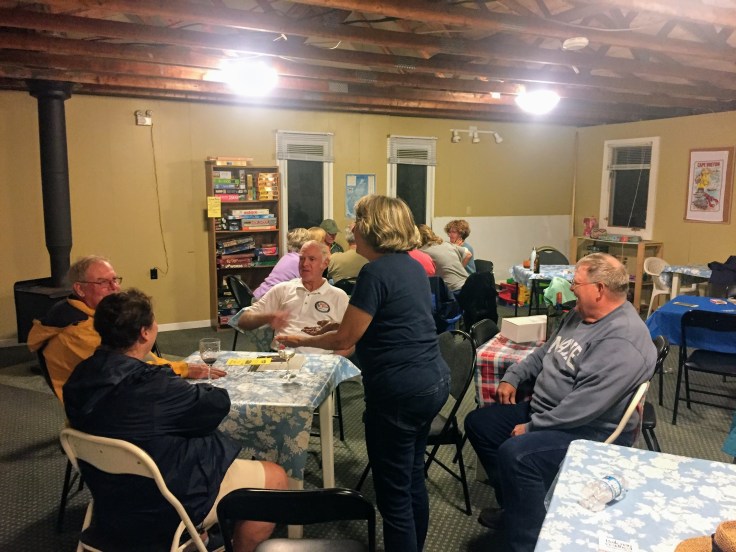
This evening, back at the campground, it started raining. And raining hard.  Some of the caravanners gathered in the Rec Room for games.  Several folks played Mexican Train dominoes; I joined in a rousing game of Spoons, except that we didn’t have spoons, only knives… Hilarity (and torn table clothes and other things) ensued…

2017-08-08 Baddeck Game Night 01

An enjoyable time was had by all…


2017-08-05 Nor by Nor’east Caravan – Louisbourg Fortress and the Beggars’ Banquet

What is a Fortress? How is it different from a Fort?

2017-08-05 Louisbourg Fortress 11

A Fortress is a fortified town.  A Fort is a military-only defensive structure.  A Fortress contains both the military and civilians. All the essential operations are of a town – the butcher, the baker, and the candlestick maker – are within the fortress, as well as government and military operations.

2017-08-05 Louisbourg Fortress 01

The Fortress of Louisbourg was a French fortress on Cape Breton Island, Nova Scotia.  Its two sieges, especially that of 1758, were turning points in the Anglo-French struggle for what eventually became Canada.  

The original settlement was made in 1713, and initially called Havre à l’Anglois. Subsequently, the fishing port grew to become a major commercial port and a strongly defended fortress.  The fortifications eventually surrounded the town.  The walls were constructed mainly between 1720 and 1740.  By the mid-1740s, Louisbourg was one of the most extensive (and expensive) European fortifications constructed in North America.  The Fortress of Louisbourg suffered key weaknesses, since it was erected on low-lying ground commanded by nearby hills and its design was directed mainly toward sea-based assaults, leaving the land-facing defenses relatively weak.  A third weakness was that it was a long way from France or Quebec, from which reinforcements might be sent.

Louisbourg was captured by British colonists in 1745, and was a major bargaining chip in the negotiations leading to the 1748 treaty ending the War of the Austrian Succession. It was returned to the French in exchange for border towns in what is today Belgium.  It was captured again in 1758 by British forces in the French and Indian War, after which its fortifications were systematically destroyed by British engineers.  The British continued to have a garrison at Louisbourg until 1768, when it was again returned to the French.

The fortress and town were partially reconstructed in the 1960s and 1970s, using some of the original stonework, which provided jobs for unemployed coal miners.  The site is operated by Parks Canada as a living history museum, much like Williamsburg, VA and the Plimoth Colony in Plymouth, MA.

We were able to walk from the RV park to the Visitors Center, whereupon we were bused over to the Fortress.  We entered through the original gates, where we were met by a “guard” who demanded to know our business here.  We wandered the town, hearing some of the history from our guide. They have a bakery operating in the old bakery building, making fresh bread daily using centuries-old recipes and methods. They also have a few restaurants, serving food of the era… we passed on the opportunity to eat centuries-old food…

They also have daily recreations of various milirary operations… After our tour we walked all the way back to the Villa…

2017-08-05 Louisbourg Fortress 09


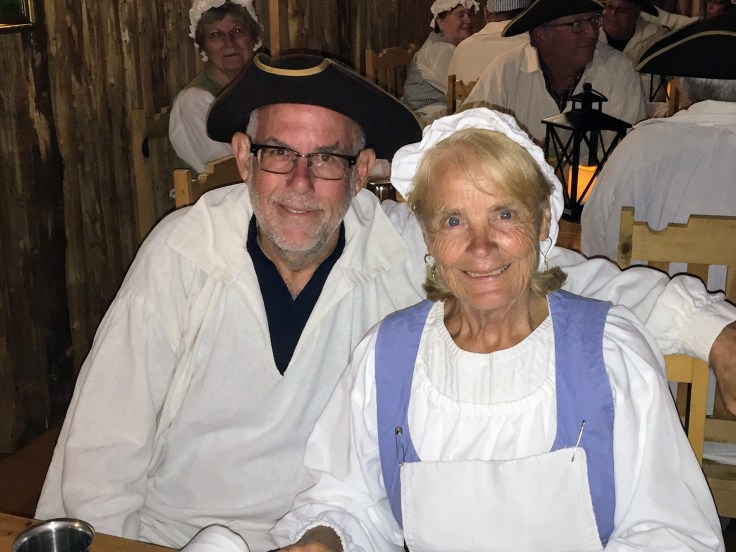
That evening, we were introduced to another fascinating feature of the modern day town of Louisbourg: we learned about what they call “The Beggars’ Banquet”.  We were told nothing about this event, other than we had to pre-select our entree for the dinner – lobster or steak.  This didn’t sound like what beggars normally ate, but we went along with it.  Also, we were told that we would have to dress in period costume, something that always freaks me out…

We arrived at the location of the Beggars Banquet about 30 minutes early, and we were not the first ones there.  This proclivity of being chronically early for all events is an Airstream Club tradition (and curse…).  We were immediately re-dressed in what we assume are “beggars clothes”.  Luckily for me, this consisted of an oversized shirt and a 3-corner hat.  We then were shown to our dining room and invited to buy drinks at the bar.  So far, so good.

2017-08-05 Beggars Banquet 05

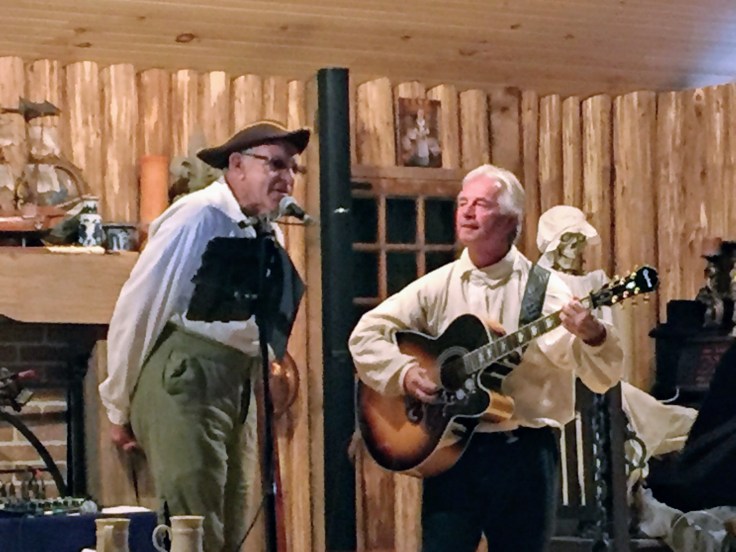
The dinner was quite good, considering the buffet banquet-style operation. There was musical entertainment all through the evening.  One of our members even helped-out at one point in time:

2017-08-05 Beggars Banquet 07

Other members of our group:

The “fun” began about halfway through the evening: A bizarre-looking caricature of a women joined the group and set about selecting men from our group to dance with.  I almost ran screaming running from the room… I vowed to do just that if she approached me… Luckily, she did not…  I must have looked as scary to her as she looked to me…!  (We later found out that she actually is the owner of the place, and this is just her shtick for the evening…)

We again walked back to the Villa.  An enjoyable time was had by all…


2017-08-02 Nor by Nor’east Caravan – Nova Scotia House Hunt!

We now have two free days to explore Nova Scotia on our own.  Today we return to the South Shore…

2017-08-02 Mahone Bay 09

We began with a drive around the other side of St Margaret’s Bay; as we continued southeast, we came to Cleveland Beach. Here, at the height of summer, on this beautiful day, was a beach, crowded with 2 small families… It is amazing that this unspoiled paradise is so sparsely inhabited:

2017-08-02 Cleveland Beach 02

2017-08-02 Cleveland Beach 01

As we drove along we came to a small sign announcing Graves Island.  Being a sucker for islands, we turned off and drove across a Ted Kennedy-worth causeway onto the island. We found a campground and a park. We stopped and took a 2 mile “hike” on a path around the tip of the island. It was a nice morning break.

2017-08-02 Graves Island 03

2017-08-02 Graves Island 02

2017-08-02 Graves Island 01

Moving on, we arrived at our first goal for the day, Mahone Bay:

2017-08-02 Mahone Bay 08

2017-08-02 Mahone Bay 09

2017-08-02 Mahone Bay 05

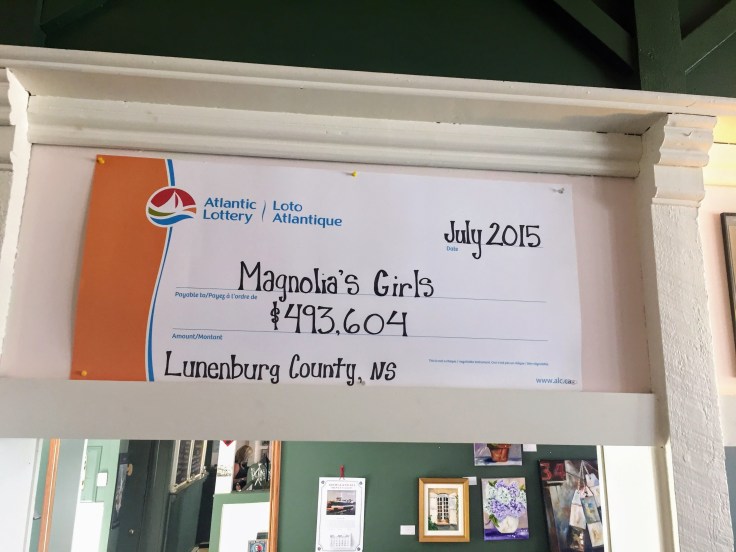
Our next destination was Lunenburg, an UNESCO Heritage site; this little village is a mix of fisher-folk, artists, and summer visitors. It is lovely. We walked the streets of the town, and eventually found ourselves settling in for lunch at the Magnolia Grill.  Lynda had fish cakes, and I opted for seared scallops (or fried scallops, as they say here…)  Food was excellent and the tiny place was delightful.  We noticed a large, ceremonial check, made out to “Magnolia’s Girls”, from the Nova Scotia Lottery Office, for $493,000.  When we asked our waitress about it, she seemed a little upset: apparently, she worked here for 18 years, playing the lottery with the other “girls” every week. Three weeks after she quit, the other 4 girls win $493,000. Two of them quit, and 2 are still working there. But since Magnolia Grill is now short handed, our waitress came back to work.  Sour grapes? Maybe…

2017-08-02 Lunnenberg - Magnolias 1

2017-08-02 Lunnenberg - Magnolias 2

More Lunnenburg:

2017-08-02 Lunnenberg 02

2017-08-02 Lunnenberg 03


But we move on, now to Rose Bay.

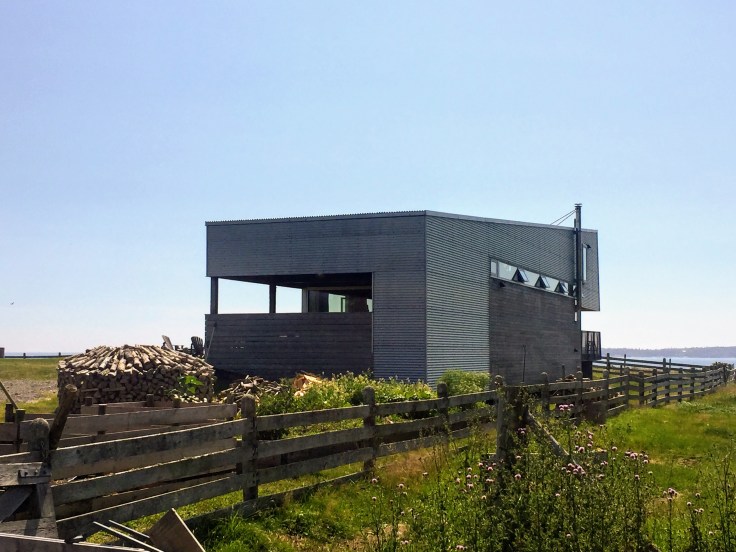
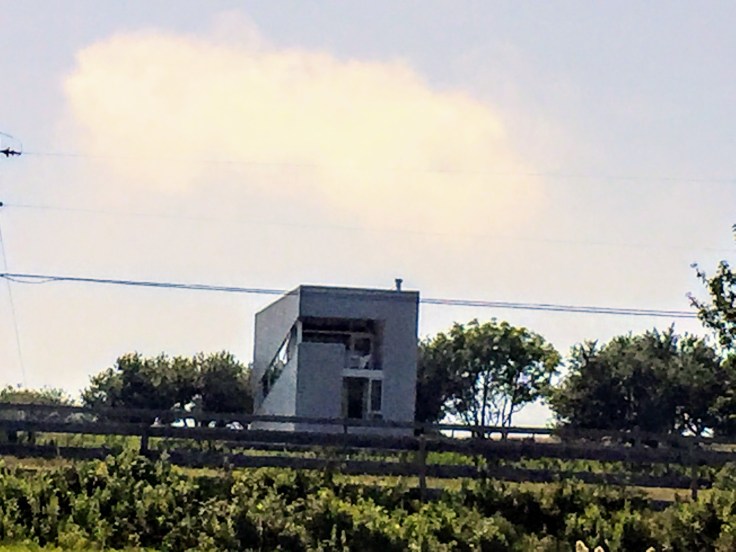
In the March edition of Dwell Magazine, they featured the “Sliding Down House”, located in Upper Kingsburg, outside Rose Bay, Nova Scotia.  Well, since I was going to be in Nova Scotia, I had to try to find it!

We drove to Rose Bay. We stopped at the General Store:

2017-08-02 Rose Bay 03

First off, we were impressed with the General Store. It had everything a summer (or winter) resident could need. (Remember, we are a long ways from Halifax here…) There were canned soups, frozen pizzas, and fresh fruits and vegetables.  Also, milk and eggs and cheese.  PLUS:  they are an agent of the Nova Scotia Provincial Liquor Store! After we perused the store, and Lynda bought some of her “Ice” water, I approached the counter.  The sweet young lady at the counter asked, “May I help you?”  I presented the picture of the house in Dwell, and asked, “Can you tell me where this is?”  She immediately answered, “Turn left here, take your first right, and go to the end of the road. You can’t miss it. And, there are other buildings in the area by the same architect – it’s called Shobac.”

After paying for Lynda’s drinks, we set out, and there it was, atop the hill:

2017-08-02 Rose Bay - Sliding Houses 12

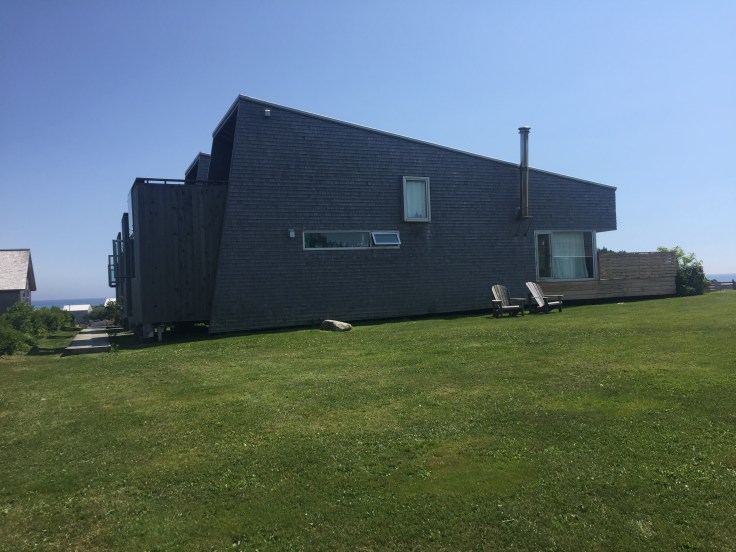
We drove around the corner and saw it from another angle.  But wait! it’s different!  It must be a different house!

2017-08-02 Rose Bay - Sliding Houses 17

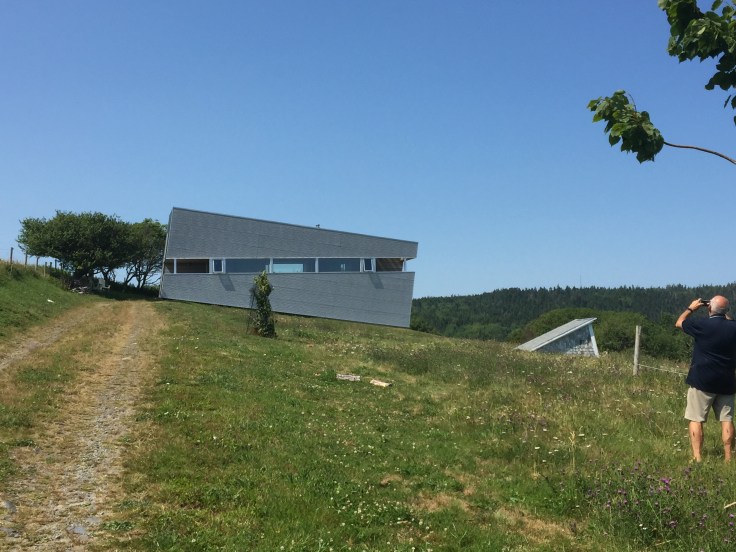
It turns out that after the first house (the one that was published), he built 2 more on the hillside, and another one in the valley near the water, along with several other buildings clustered in the little community of Shobac.  However, we couldn’t quite find the original house…

2017-08-02 Rose Bay - Sliding Houses 11

2017-08-02 Rose Bay - Sliding Houses 08

2017-08-02 Rose Bay - Sliding Houses 07

2017-08-02 Rose Bay - Sliding Houses 06

2017-08-02 Rose Bay - Sliding Houses 05

2017-08-02 Rose Bay - Sliding Houses 04

But we had an amazing time. All of the houses were occupied, so we tread carefully, respecting their privacy, but we took many photos and saw many great things. It was exhilarating!

Finally, as we were leaving, we found the original, published house:

2017-08-02 Rose Bay - Sliding Houses 16

Or:

2017-08-02 Rose Bay - Sliding Houses 02

No. It’s an amazingly simple house, sited and designed to fit the site and the extreme weather.  As we left the area, we saw what the boats in the harbor can see:

2017-08-02 Rose Bay - Sliding Houses 03

Excited as we were (or, I should say, as I was…) we departed to return to the Villa. We again had Happy Hours and enjoyed hearing what everyone had done with their day… And an enjoyable time was had by all…


2017-07-27 Nor by Nor’east Caravan – Campobello Island – FDR and Eleanor…

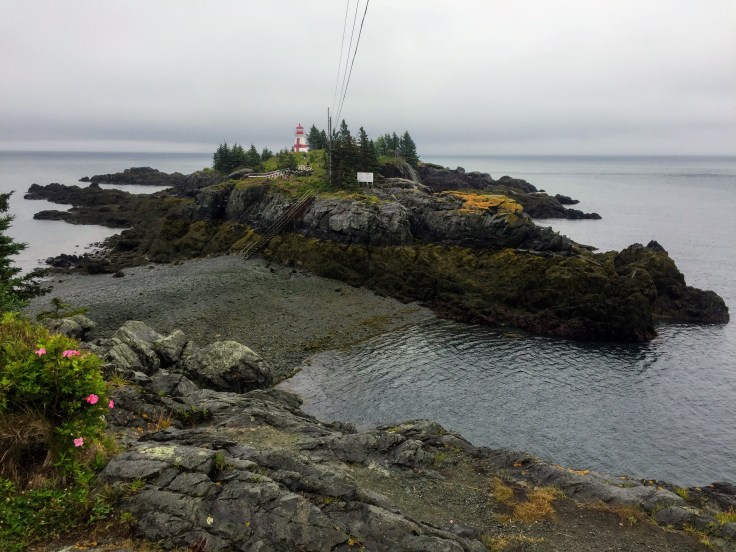
We began our day in the rain.  It was very overcast and foggy.  We drove to the lighthouse:

2017-07-27 Campobello - Quoddy LH 2

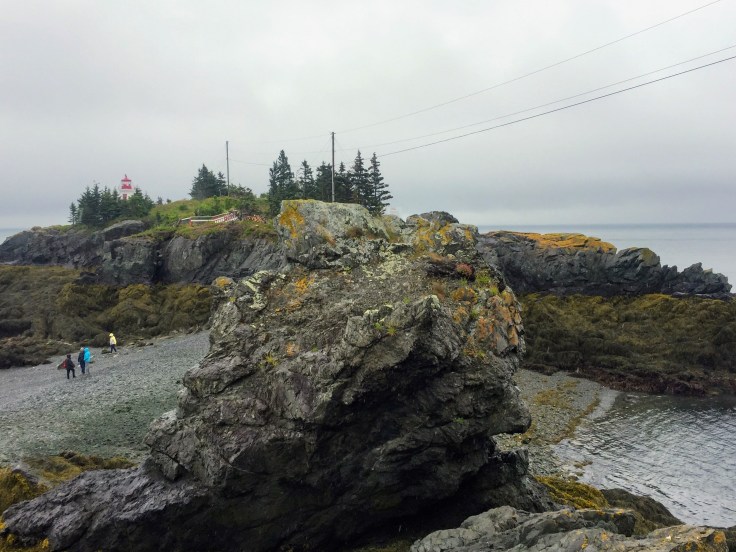
The lighthouse is on the northernmost tip of the island, and it is only accessible at low tide; at high tide it becomes its own island. Tides here are about 18′-20′, this being within the Bay of Fundy. (More on that in a few days…)

2017-07-27 Campobello - Quoddy LH 3

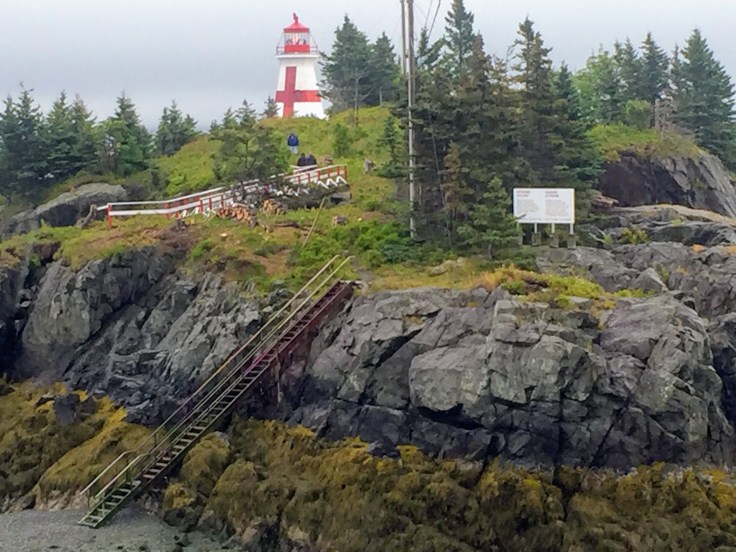
First you have to climb down steep steps to the “beach”, which, at high tide, is the ocean floor…) Then you have to walk across the rocks and seaweed and climb up steep steps on the opposite side to access the lighthouse.

2017-07-27 Campobello - Quoddy LH 1

We’ve seen lighthouses before, and several people had already slipped and fallen by the time we arrived, so we stayed on the safe upper path…

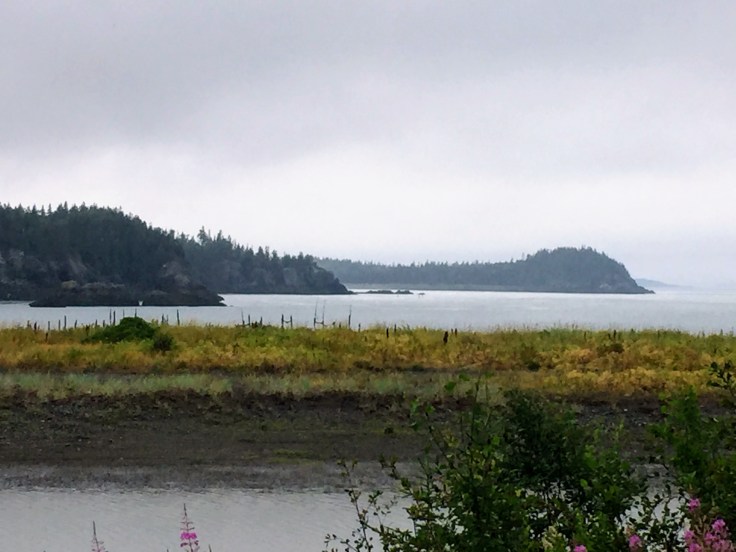
After enjoying the view of the lighthouse we drove through the rest of the northern part of the island. This area is very sparsely populated, and the scenery was beautiful.

2017-07-27 Campobello 03

2017-07-27 Campobello 02

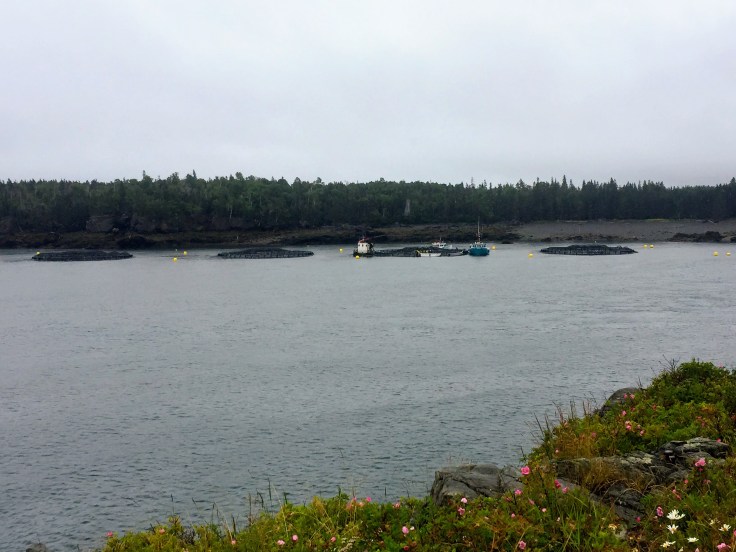
These small “islands” are actually salmon farms:

2017-07-27 Campobello 01


We then headed to the main attraction of the day: Franklin and Eleanor Roosevelt’s “cottage” here on the island…

2017-07-27 Campobello - FDR 01

Franklin Roosevelt spent many enjoyable vacations at his summer home on Campobello Island in New Brunswick’s Bay of Fundy.

FDR’s “cottage” has been preserved, and is almost exactly as it was in 1920, the summer before Franklin was stricken with polio. We were able to tour the first and second floors of the 34-room memorabilia filled cottage. Guides were stationed throughout the home to offer interpretation and answer questions about the house, its historic furnishings, and the family.  Interestingly, a ramp installed a few years ago provides easy access to the first floor, although FDR never added a ramp to accommodate his wheelchair… (But, then again, he had “people”…)

The “cottage” was built in 1897 for Mrs. Hartman Kuhn, of Boston.  It is next door to the cottage of FDR’s parents, where he summered as a child.  Mrs. Kuhn developed a fondness for Eleanor when Franklin and Eleanor summered at his mother’s cottage next door. A provision in Mrs. Kuhn’s will offered her cottage to FDR’s mother, Sara, for $5,000.00.  Sara purchased the furnished cottage and 5 acres of land in 1909, and gave the cottage to Franklin and Eleanor.  The growing family spent summers in the cottage from 1909 to 1921.  FDR altered the design of the house in 1915, when he added a new wing to provide additional space for his growing family.

2017-07-27 Campobello - FDR 21


2017-07-27 Campobello - FDR 22

FDR’s cottage exhibits design principles of the Arts and Crafts movement, and also elements of early Dutch-American Colonial architecture.  Considerations in the design of summer homes of the era were comfort, orientation to a scenic view and to the sun, and a “picturesque charm” so valued by the Arts and Crafts Movement.

I’m told that the cottage contains 34 rooms, 18 of which are bedrooms and 6 of which are bathrooms, although I didn’t count them.  The third floor, which we didn’t see, contained guest rooms and servants’ rooms, and, I assume, 3 bathrooms… There was even a bedroom on the second floor for Louis Howe, FDR’s political adviser…

The Kitchen:

2017-07-27 Campobello - FDR 26


The Servants Dining, in the Kitchen:

2017-07-27 Campobello - FDR 23


The Laundry:

2017-07-27 Campobello - FDR 25


The Master Bedroom:

2017-07-27 Campobello - FDR 24

The cottage was considered quite modern for its time, but had neither electricity nor telephone.  Kerosene lamps and candles provided light.  Seven fireplaces and kitchen coal and wood-fired stoves provided heat.  It even had hot and cold running water for bathing, cooking, and cleaning.  (Many cottages on the island had neither kerosene lamps nor running water… these people prided themselves as being “rustic”, but they also had servants to feed the fireplaces, light the candles, cook the meals, haul the water, and empty the chamber pots…)    The water came from storage tanks on the third floor of the cottage.  The storage tanks were fed by gravity from a tank atop a nearby windmill. Drinking water came in large bottles by horse and cart, from a spring called Barrel Well.

Every summer, the Roosevelts brought a nurse and a governess to tutor and instruct the children, and several servants to run the cottage.  Campobello residents were hired to help with the daily chores.

The rear of the house (note the screened porch):

2017-07-27 Campobello - FDR 02


The view from the house:

2017-07-27 Campobello - FDR 03


The rear of the house from the water’s edge, at the dock:


2017-07-27 Campobello - FDR 04


Lynda standing on the dock:

2017-07-27 Campobello - FDR 10


In addition to the Roosevelt cottage we were able to see the Hubbard Cottage… It sits adjacent to FDR’s cottage, on the other side of where FDR’s mother cottage was:

2017-07-27 Campobello - Hubbard 1

(They are working on replacing some siding; thus, the cherry-picker…)

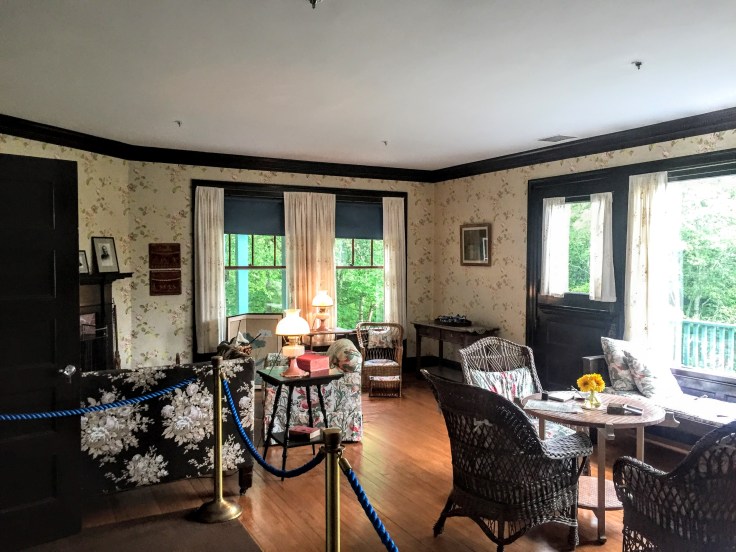
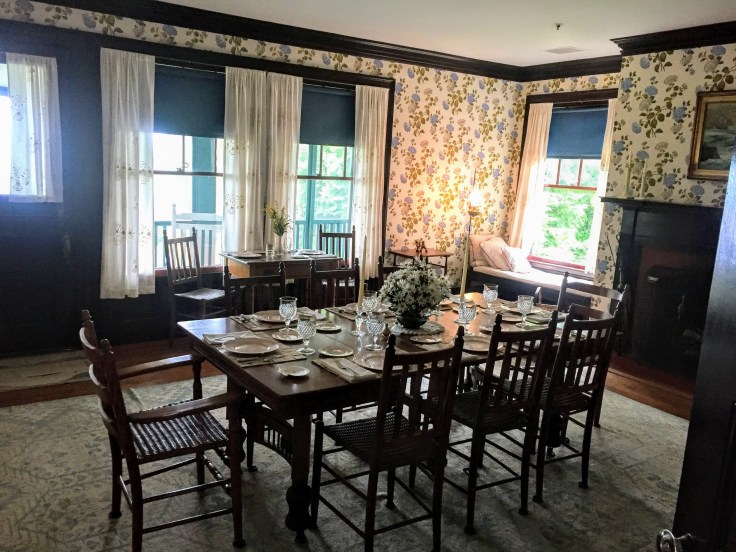
Only the first floor was available to tour, but there were grand rooms to see:

2017-07-27 Campobello - Hubbard 3

2017-07-27 Campobello - Hubbard 4

2017-07-27 Campobello - Hubbard 5


And a grand porch:

2017-07-27 Campobello - Hubbard 2


The rear of the house:

2017-07-27 Campobello - Hubbard 6


We spent the middle of the day at Josie’s porch, a local coffee-house and general community hang-out.  But they had good internet access, so we spent some quality time catching up on important things…

Later that afternoon we had “Tea with Eleanor”. We assembled at the Wells-Shober house; we were led into parlors and dining room where the 49 of us sat and enjoyed tea and cookies. Two docents spoke for about 45 minutes on the life and times of Eleanor Roosevelt.  She had a tough life growing up, losing her parents at an early age and attending boarding schools in England and other parts of Europe.  It was interesting to hear all this; she never sought the limelight, and hated politics, but she did what she knew was right. After FDR was struck down by polio, it was she who went out and gave speeches to keep FDR in the public eye. After FDR’s death she continued to champion women’s rights and civil rights. During WWII she traveled the world, meeting military personnel in hospitals. She wrote personal letters to the families of everyone she met; sometimes she wrote 12-14 hours per day for months on end to give these families some sense of comfort.

She last returned to Campobello Island in 1962 for the dedication of the FDR bridge from Maine onto the island.

The Wells-Shober Cottage:

2017-07-27 Campobello - Tea 01


Waiting to be taken in:

2017-07-27 Campobello - Tea 02


Hilarity ensues as we try to find our places:

2017-07-27 Campobello - Tea 03


The docents, telling their stories:  (The short one is a 10th generation islander…)

2017-07-27 Campobello - Tea 04


After the tea, the ladies of the caravan assembled for a group picture, as is the caravan’s tradition…

2017-07-27 Campobello - Tea 05


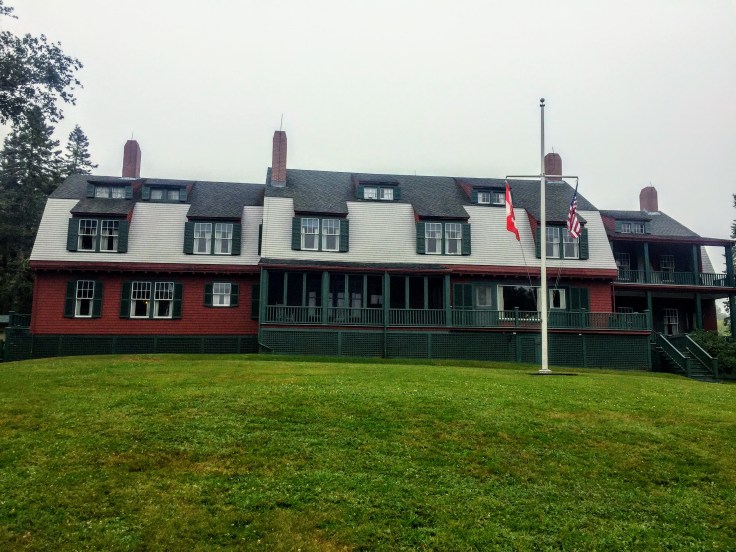
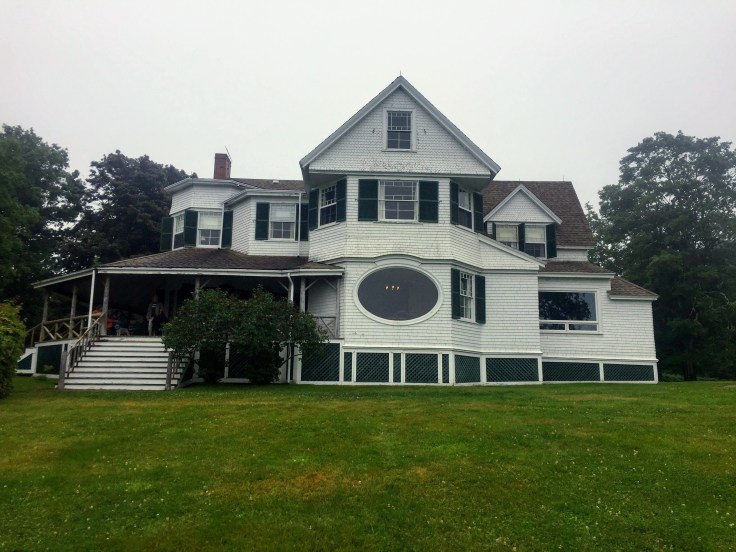
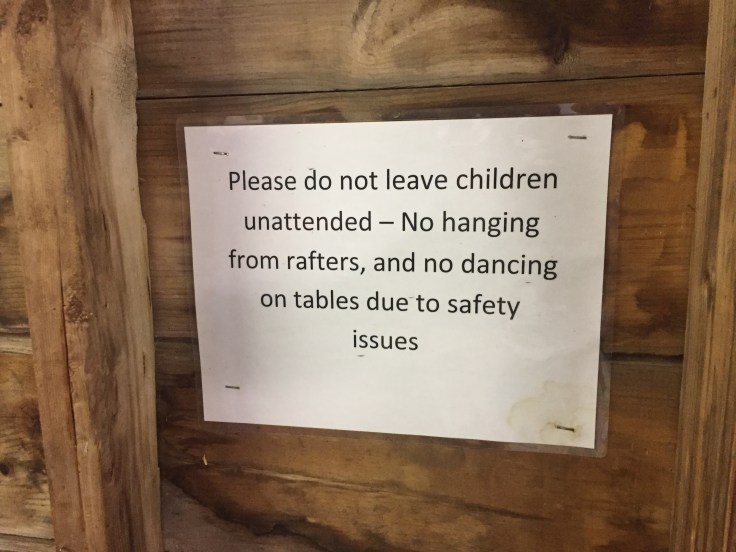
After tea we returned to the campground and readied ourselves for another travel day. We had a “Drivers’ Meeting” to discuss timing and routing.  We met in the campground recreation room; apparently they’ve been having good times, based on this sign…

2017-07-27 Campobello - Sign

As always, an enjoyable time was had by all…
 

2017-07-24 Nor by Nor’east Caravan – Maine – Bar Harbor, Acadia National Park, Seal Harbor, Northeast Harbor, and Lobster!

Mt. Desert Island is quite a beautiful place, with rocky shores and quiet harbors.

2017-07-24 Acadia NP 01

Like Newport, RI, Mt. Desert Island was a favorite place for the very wealthy to have summer cottages.  However, rather than being sophisticated and elegant, filled with grand, showy homes, like Newport, MDI was known for its quiet, rustic ways.  Homes, while huge, and filled with servants, were simple, wood houses, with fireplaces and always set back into the wilderness.  Some of the houses from the late 19th century survive, but many were torn down by the 1950s because they were obsolete and too rustic for modern living.  The descendants of the original families who had homes here (Fords, Rockefellers, Astors, Vanderbilts) still have homes here, and many come for the summer season; but the houses are not as visible – they are mostly hidden in the woods…

The heart of social life, for those who participated, was (and is) the town of Bar Harbor. Many elegant hotels line the waterfront. Many of the families, though, stayed away from the town – they preferred to be in the woods, and along the sea, living the simple life – swimming, sailing, and taking long carriage rides along the carriage roads (mostly built by John D. Rockefeller). In fact, most of the land making up Acadia National Park was donated by the Rockefeller family.

We had been warned about the terrible traffic both in Bar Harbor, and in Acadia; we also were warned about road construction in the area.  So, armed with good maps we set off at 7:00 am (along with Larry and Kathy Warrren) to get an early start on the day.  We easily found the “good” road, and we easily found parking in Bar Harbor.  We strolled down empty streets; the only people out this early are folks heading for the whale watching boats. We were soon at our destination – Sunrise Café.  We enjoyed a nice quiet breakfast in this tiny place, then we walked along the Shore Path. The path runs right along the water’s edge, and it extends from the edge of town for about 1 ½ miles. We then could walk back along quiet residential streets. It was a great way to start the day.

2017-07-24 Bar Harbor 11

2017-07-24 Bar Harbor 12

Once back to the car we headed up Cadillac Mountain, the tallest “mountain” along the Atlantic coast – about 1,500 feet elevation. (In California we call these “hills”…)  From here you can see all the islands surrounding the main island of Mt. Desert Island.  The views are stunning!


2017-07-24 Acadia NP 05


2017-07-24 Acadia NP 04

2017-07-24 Acadia NP 03


As the park began getting busy we headed to the quieter side of the island, where many of the original wealthy families had their summer cottages.  We stopped in Seal Harbor, a beautiful place, and amazingly quiet.  The town of Seal Harbor consists of a church, an empty store building, a coffee house, and a bookstore.  And, of course, a real estate office.  There are three or four houses along the water’s edge, and many more in the hills.  All the houses are simple, neat, and unassuming.  There is a tiny Yacht Club perched on the side of the hill overlooking the harbor.

2017-07-24 Bar Harbor 15

2017-07-24 Seal Harbor 01

2017-07-24 Seal Harbor 02

Someone even built a very nice new vacation house right at the harbor’s edge:

2017-07-24 Seal Harbor 03

The next town is Northeast Harbor, a bustling place, filled with many art galleries. The harbor is much larger, and ferries run regularly between the harbor and two of the larger islands just off shore: Great Cranberry Island and Little Cranberry Island.  Many houses dot the streets of the town and the surrounding hills. People who live in Seal Harbor must come here to shop and eat.

2017-07-24 Bar Harbor 13


By now we were ready for lunch. We had been tipped off to another fabulous lobster pound, Trenton Bridge Lobster Pound. Only it was much more of a restaurant than a lobster shack. They served wine and offered napkins, eating utensils, and tools for eating the lobster.  Lobsters were great, but it was not as much fun as a real lobster pound…

We decided to call it a day and head back to the Villa. Tonight we had GAM #5, and we are hosting.  As we arrived at the RV Park it started to rain.  And it continued to rain.  Cold rain.  Maine rain.  We decided to have our GAM inside The Villa – all 10 of us.  It was cozy. But it was much nicer than sitting in the pavilion out in the cold.  We had great snacks and there was free flowing wine as we got to know another set of new friends. An enjoyable time was had by all…


2017-07-15 Nor by Nor’east Caravan – Lexington, Concord, and The Shot Heard ‘Round the World; Walter Gropius and Marcel Breuer…

We had a free day to explore the region. We chose to tour Concord and Lexington.  After driving to Lexington we joined a trolley ride for a 90 minute to drive along the roads between Lexington and Concord; our guide told us the history of the Battle of Concord and Lexington, the start of the War for Independence.


2017-07-15 Concord Lexington 01

Our trolley tour told of the first shots fired – it was it Lexington, but no one knows who fired first.  Paul Revere and William Dawes had ridden in from Boston to warn the town that the British were coming. (Although everyone here was British at the time…)

Also, because Longfellow told us, everyone knows:

Listen, my children, and you shall hear 
Of the midnight ride of Paul Revere, 
On the eighteenth of April, in Seventy-five; 
Hardly a man is now alive 
Who remembers that famous day and year. 


In 1896 Helen F. Moore, dismayed that William Dawes had been forgotten by Longfellow, penned a parody of Longfellow’s poem:

‘Tis all very well for the children to hear
Of the midnight ride of Paul Revere;
But why should my name be quite forgot,
Who rode as boldly and well, God wot?
Why should I ask? The reason is clear—
My name was Dawes and his Revere.

Revere was arrested, but the word was out. The main confrontation occurred in Concord, as memorialized in the first verse of the Concord Hymn:

By the rude bridge that arched the flood,
Their flag to April’s breeze unfurled,
Here once the embattled farmers stood,
And fired the shot heard round the world.

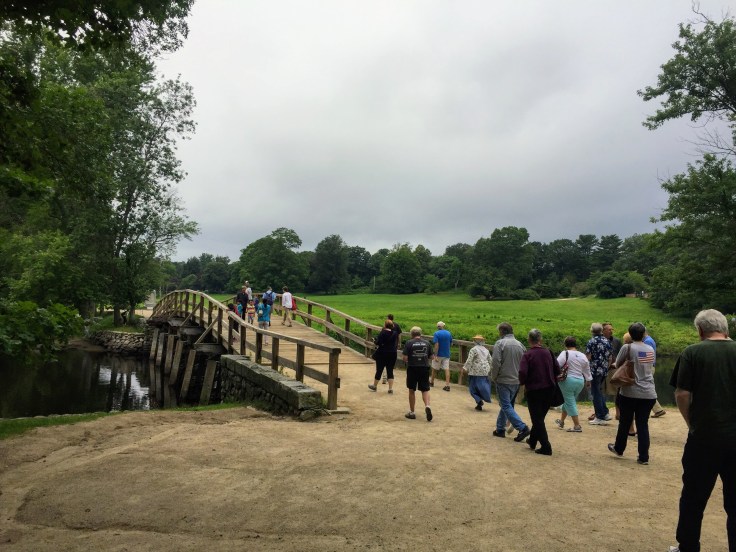
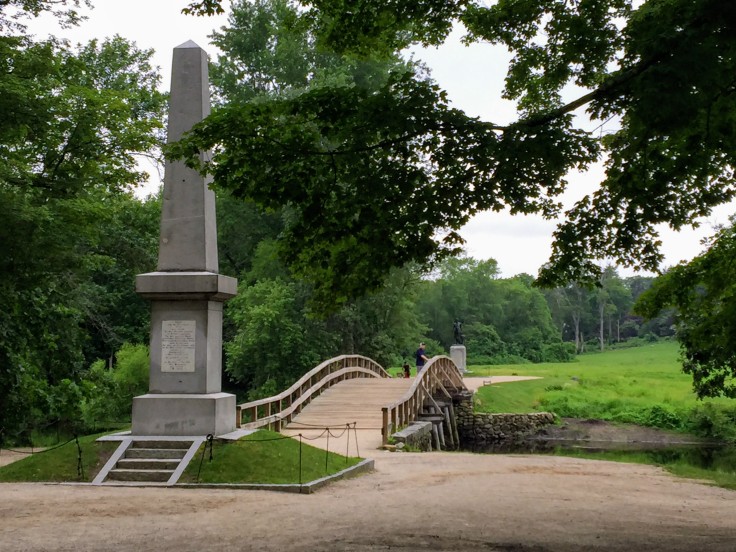
We walked along the area of the first battle, and across the bridge. (Not the original bridge…):

2017-07-15 Concord Lexington 01a

2017-07-15 Concord Lexington 02


There are graves of British here, too:

2017-07-15 Concord Lexington 04


Along the trolley tour we saw the houses of Ralph Waldo Emerson and Henry David Thoreau.  Thoreau’s house is about 1 1/2 miles from Walden Pond, so for all those months when Thoreau was isolated and alone at the pond, he usually walked home for dinner in the evening…

We walked about to see several historic houses in Lexington; this is the house that Revere (and Dawes) were riding to:

2017-07-15 Concord Lexington 07

2017-07-15 Concord Lexington 09

I know it’s a really old house, but this house (especially the door…) needs some attention:

2017-07-15 Concord Lexington 08


The Munroe Tavern was occupied by the British as their headquarters:

2017-07-15 Concord Lexington 10

2017-07-15 Concord Lexington 11


After our memories of the history of the war with the British were refreshed, we needed to be refreshed with a little French food:

2017-07-15 Concord Lexington 12

We walked about the town a bit, and headed back to the truck:

2017-07-15 Concord Lexington 13


I had been in this area in 2008, on a bus tour, but not to see historic sights; we were here to see architecture.  I recalled a neighborhood of modernist houses, but I didn’t know where they were or whose houses they were.  I did remember the bus driver pointing out Walden Pond, so I thought we should check out the area and see what we could find.

We easily found the pond.  So I tried turning down some small roads to see what we could find; on my second try we found it!

This is the Walter Gropius house:

2017-07-15 Gropius 02

Walter Gropius founded The Bauhaus in Germany in the 1920s, revolutionizing modern architecture around the world. Apparently, the Germans were not impressed, because they closed The Bauhaus and Gropius fled Germany in the 1930s. After a time as a refugee in London, Gropius was hired to head Harvard’s Architecture Department.  As his fame and influence spread, a nice lady offered Gropius $20,000 and 4 1/2 acres of land for him to build himself a house; here it is:

2017-07-15 Gropius 01

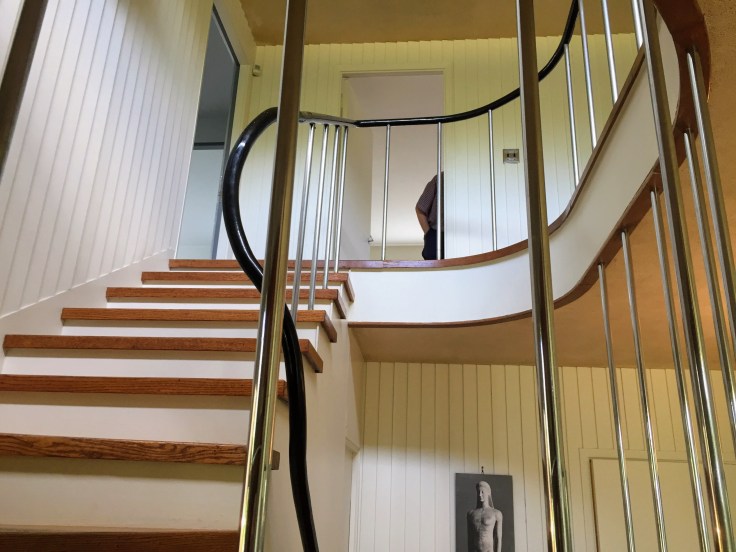
It is Gropius’ idea of a modern New England cottage; wood siding, but vertical, not horizontal; also, horizontal windows, not vertical. Flat roof, not pitched… Plus an angled front porch and a spiral stair just for fun.

Inside the house is wonderful; the entry hall with the traditional center stair:

2017-07-15 Gropius 06


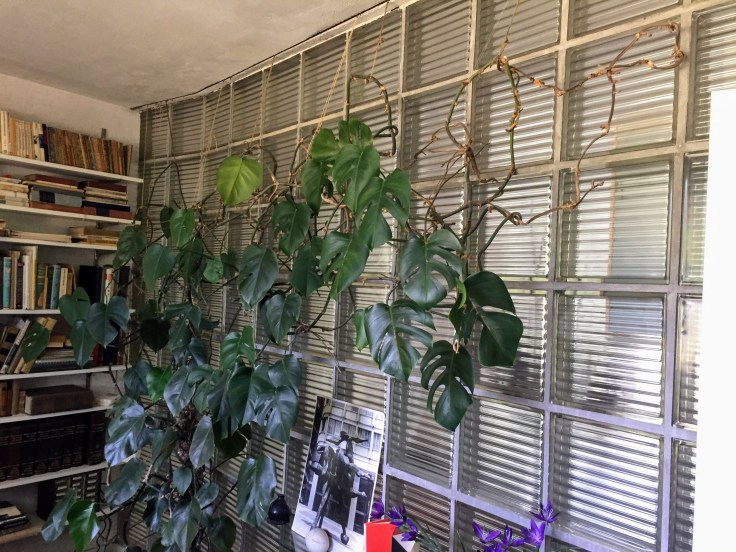
The study, with an interior wall of glass block to share light with the Dining Room beyond:

2017-07-15 Gropius 07

2017-07-15 Gropius 08


The Dining Room, with the screened porch beyond:

2017-07-15 Gropius 09


Upstairs is a lovely deck, with one wall painted his custom-designed color, Bauhaus Pink:

2017-07-15 Gropius 10


And the view down from the deck towards the screened porch:

2017-07-15 Gropius 11

After all, what says “New England cottage” more than a screened porch?

Other views around the house:


Much of the furniture inside the house was designed by Gropius’ colleague, Marcel Breuer.  Breuer was also given land next door to build his house, along with three other people this lady with the land liked… The other houses are privately owned and were not open, but back in 2008 we were permitted to walk the grounds.

Walter Gropius and his wife lived in the house until their deaths in 1969 and 1980, whereupon it was donated to the Historic Society…

We headed back to the Villa and enjoyed another GAM (Get Acquainted Meeting) with the other caravanners… Once again, an enjoyable time was had by all…

2017-07-09 Nor by Nor’east Caravan -Newport, Rhode Island – Summer Cottages, day 2

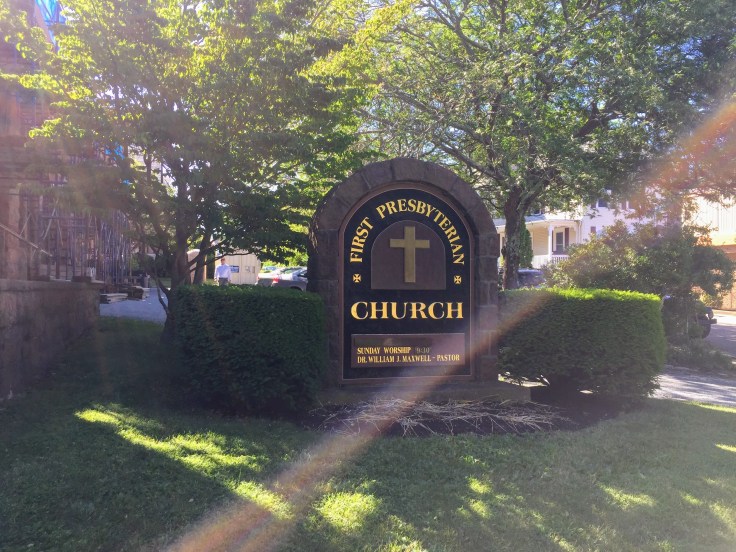
Today, being Sunday, we checked out a local church to attend… We used the Emmett Raitt method for selecting a church and picked the one whose service time was most suitable to our Sunday activities.  This happened to be:

2017-07-09 First Presbyterian

So we drove into Newport, and attended a service for the “frozen chosen”.   No one sang, the choir was terrible, and the hymns were VERY SLOW!  But it was a good service of reflection and we don’t regret attending…  It is a very small church, and very traditional. Even though their hymnal contained “modern” praise songs, the piano player made sure we didn’t get carried away and get excited over a fast tempo…

2017-07-09 First Presbyterian 02


We have two tours scheduled for today:  “Beneath the Breakers” , which will explain all the technology behind the operations of The Breakers, and “The Servants’ Life” at The Elms, my favorite house here in Newport.

We began at The Breakers, in the Gate House:

2017-07-09 Newport - Beneath the Breakers 05

2017-07-09 Newport - Beneath the Breakers 06.JPG

Originally intended for the caretaker, the cottage was most predominately occupied by the Estate Engineer.  His scrupulous notes have help recreate this picture of the technology beneath the Breakers…

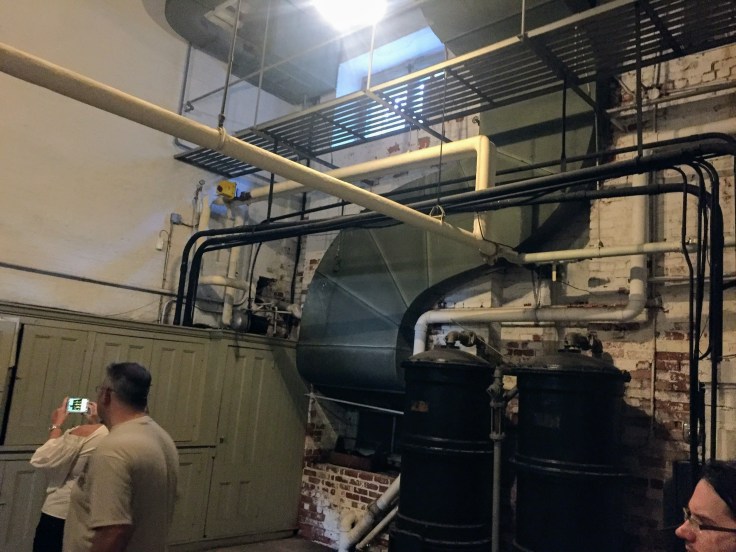
We began in the Parlor of the house. We then descended about 30′ beneath the ground to the main Boiler Room:

2017-07-09 Newport - Beneath the Breakers 01

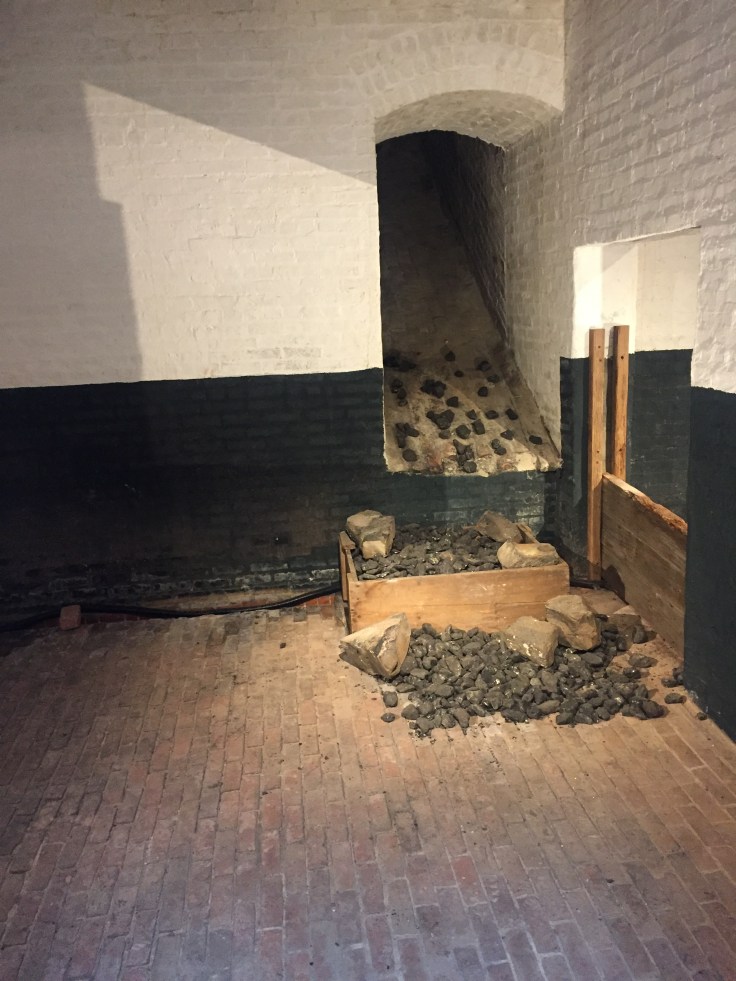
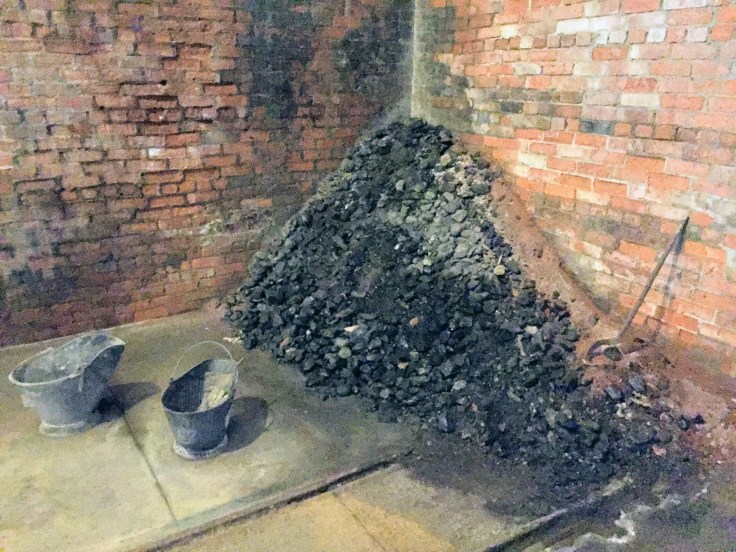
The below-grade room, close to the street, allowed coal to be dumped directly from the street into the coal bins, via chutes:

2017-07-09 Newport - Beneath the Breakers 02


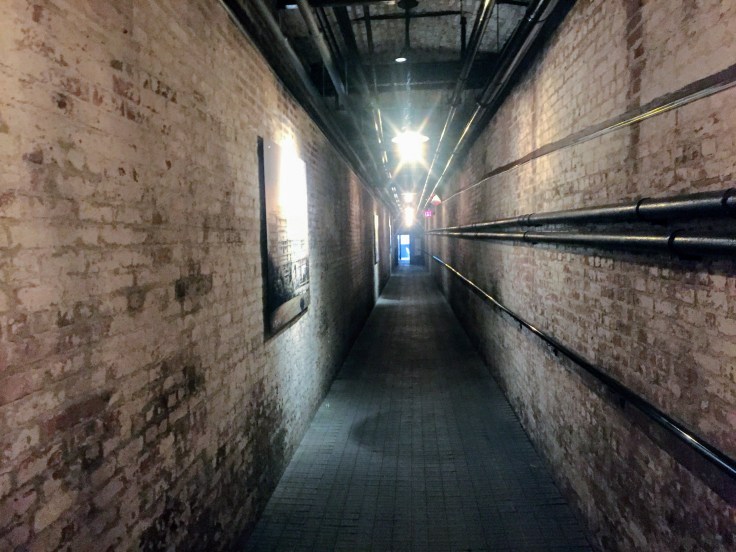
The Boiler Room is located far from the main house as a fire-prevention measure; it is connected to the main house via a tunnel, complete with fire doors.  Steam pipes, hot water pipes, and electrical conduits all run through this tunnel into the basement of the main house.

2017-07-09 Newport - Beneath the Breakers 04

As we continued on the tour we learned about the elevators, the elctrical system, how warm air was circulated through the house via radiators in the basement, and all sort of the latest technology of the house.  It was FASCINATING!

After the tour we had time for a quick lunch at Le Forge restaurant in Newport:

2017-07-09 Le Forge


Our next tour was “The Servants’ Life” at The Elms.  We started by climbing 3 flights of stairs to the third floor:

2017-07-09 Newport - The Servants' Life 01

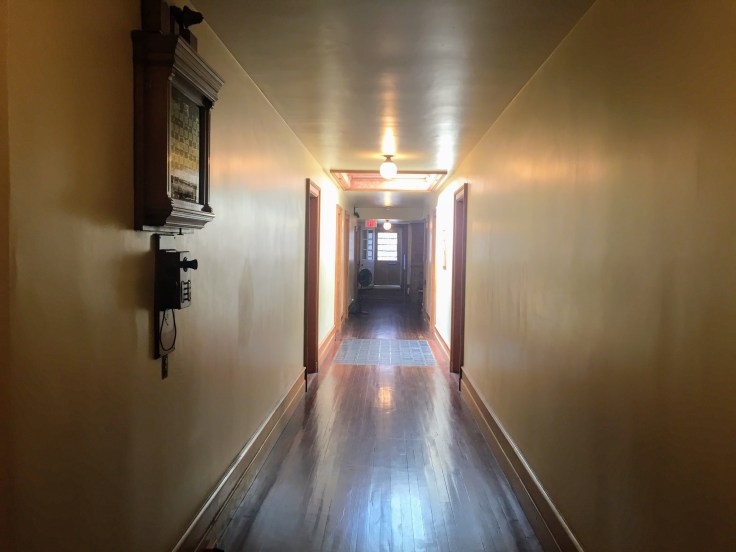
The third floor servants’ bedrooms had the feel of an old fashioned college dormitory. The hall was wide and well lit (note the skylights and the glass block floors allowing light into the second floor below).

The rooms were spartan but spacious:

2017-07-09 Newport - The Servants' Life 02

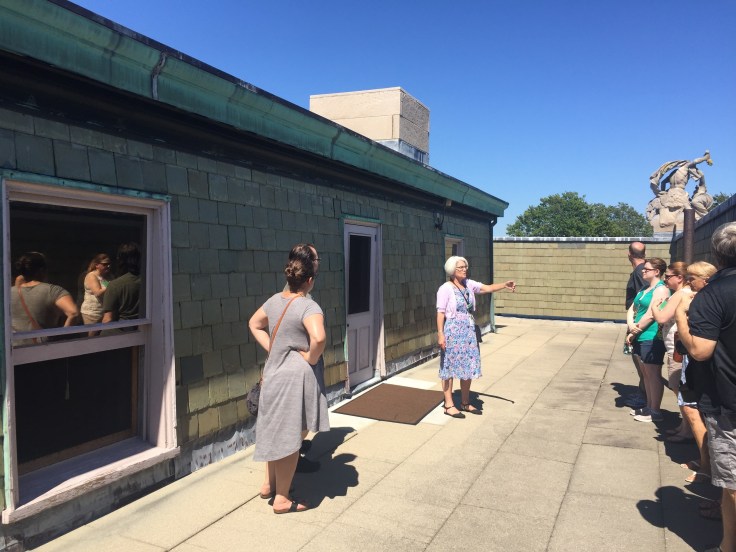
Because the third floor was hidden by the house’s parapet, there was a private roof-top space available to the servants:

2017-07-09 Newport - The Servants' Life 03

2017-07-09 Newport - The Servants' Life 04

There was also a view to the harbor beyond:

2017-07-09 Newport - The Servants' Life 05


From this vantage point you can get a better view of the carriage house:

2017-07-09 Newport - The Servants' Life 06

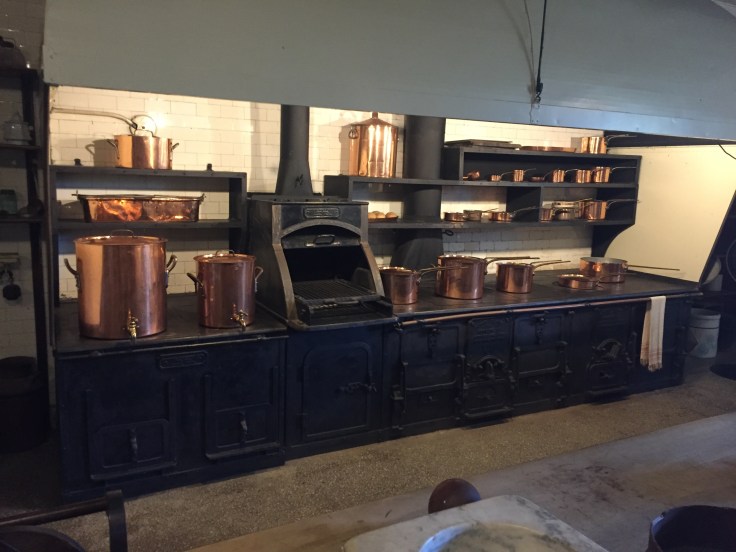
After touring the servants’ quarters, we descended the stairs to the basement; I showed a quick photo of the kitchen yesterday, but here is another:

2017-07-09 Newport - The Servants' Life 12


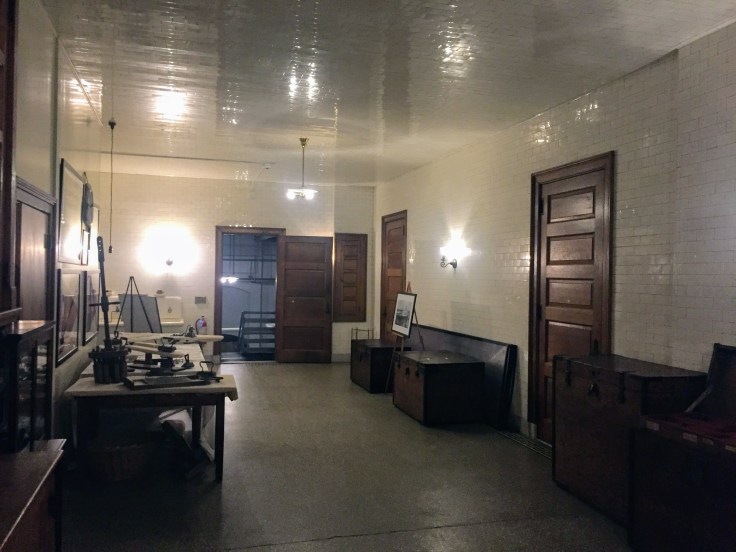
There was a laundry in the basement, truck storage, a bakery, and a root cellar: the two story high Boiler Room is also here…

2017-07-09 Newport - The Servants' Life 07

2017-07-09 Newport - The Servants' Life 08


Mr. Berwind made his money in the coal industry, so he had state-of-the-art coal delivery system:  There was a grate in the street; coal was delivered through the grate into carts, and the carts were rolled on rails through tunnels to the coal bins in the sub-basement:

2017-07-09 Newport - The Servants' Life 10

2017-07-09 Newport - The Servants' Life 11


It was another great day. An enjoyable time was had by all…


Blog at WordPress.com.

Up ↑