Search

Adventures in the Villa

2017-07-16 Nor by Nor’east Caravan – Whale Watching and Rockport, MA

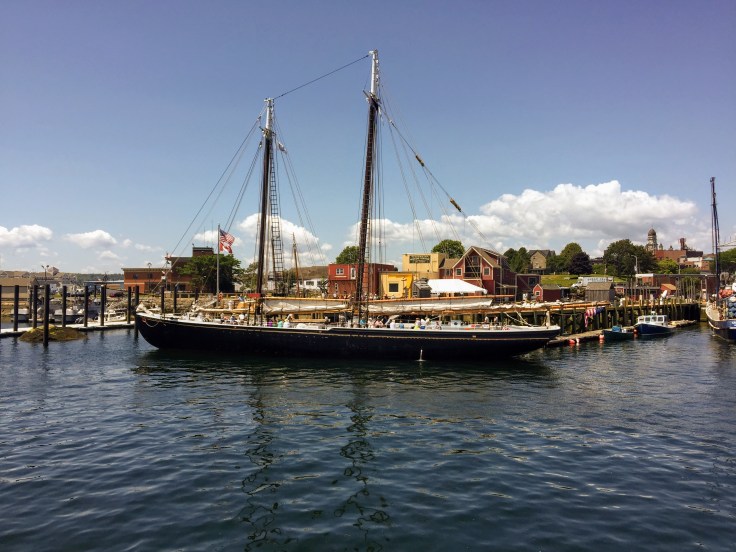
Today was Whale Watching Day!  We carpooled and convoyed to Gloucester and boarded the big ship…

2017-07-16 Gloucester Whale Watching 02

I takes awhile to board; conversation was lively:

2017-07-16 Gloucester Whale Watching 03

2017-07-16 Gloucester Whale Watching 05

2017-07-16 Gloucester Whale Watching 12


Our intrepid caravan leader, Cape Cod resident, Trevor Lake:

2017-07-16 Gloucester Whale Watching 06

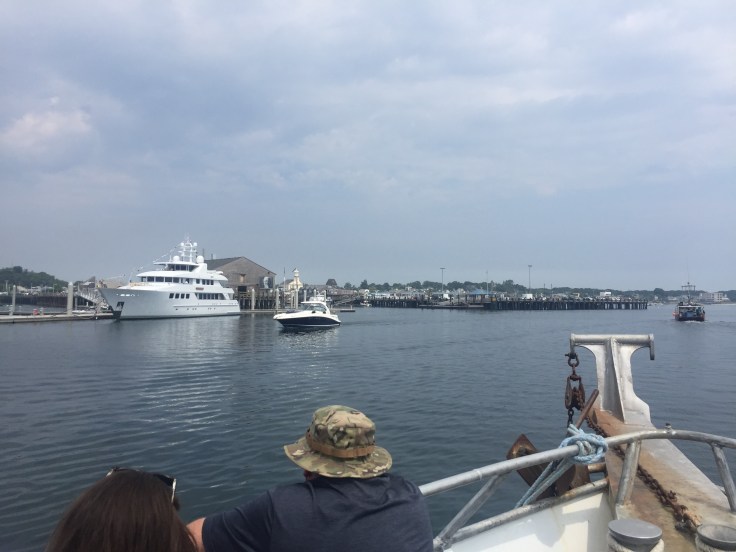
Once the boat was underway we could enjoy the sights of the harbor:

2017-07-16 Gloucester Whale Watching 11

2017-07-16 Gloucester Whale Watching 10

2017-07-16 Gloucester Whale Watching 09


We were headed about 30-40 miles out, about halfway to Provincetown on Cape Cod…

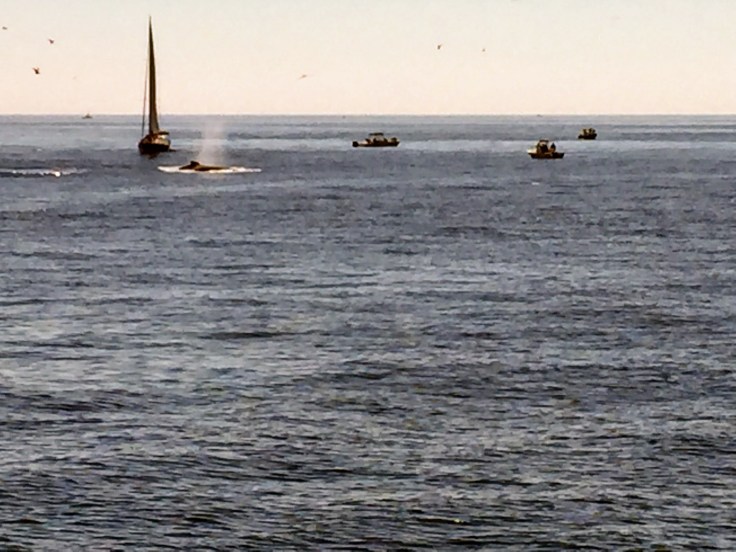
Our first sighting of a whale:

2017-07-16 Gloucester Whale Watching 21


Due to the natural features of the ocean bottom and other sea life in the area, whales return to about the same areas to feed, providing easy viewing for tourists like us on our boat and all these other boats in the area.

Whales generally travel together is loose associations (not pods – pods are livelong “families” of whales).  They seem to do two things:  surface and spout, and dive. I was hoping to see them jump out of the ocean like in the insurance commercial, but no luck.

The whales were plentiful today, as they surfaced and spouted:

2017-07-16 Gloucester Whale Watching 34

2017-07-16 Gloucester Whale Watching 35


When they dive, we get to see their great tails; the people who study these whales identify them by the markings on their tails:

2017-07-16 Gloucester Whale Watching 49

2017-07-16 Gloucester Whale Watching 47

2017-07-16 Gloucester Whale Watching 46


After seeing many, many whales, we headed back to Gloucester; then we headed to Rockport to see this picturesque town and have lunch.  Rockport was crazy busy this afternoon…

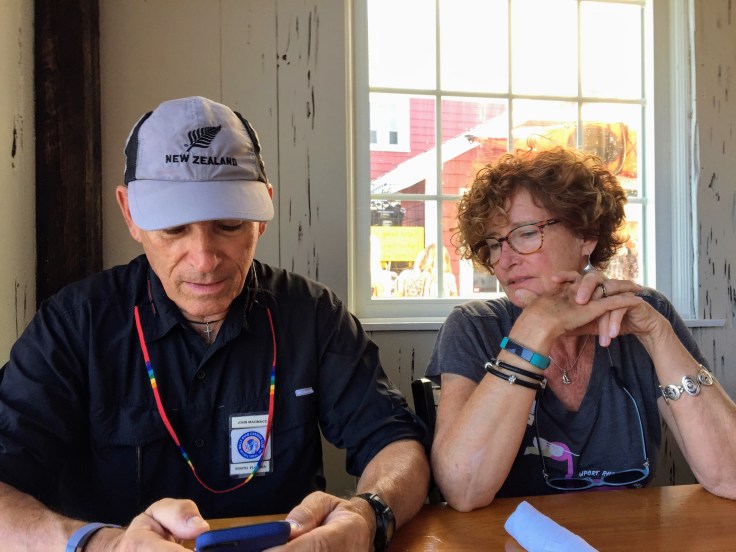
Our carpool buddies, Victoria and John:

2017-07-16 Rockport MA 05


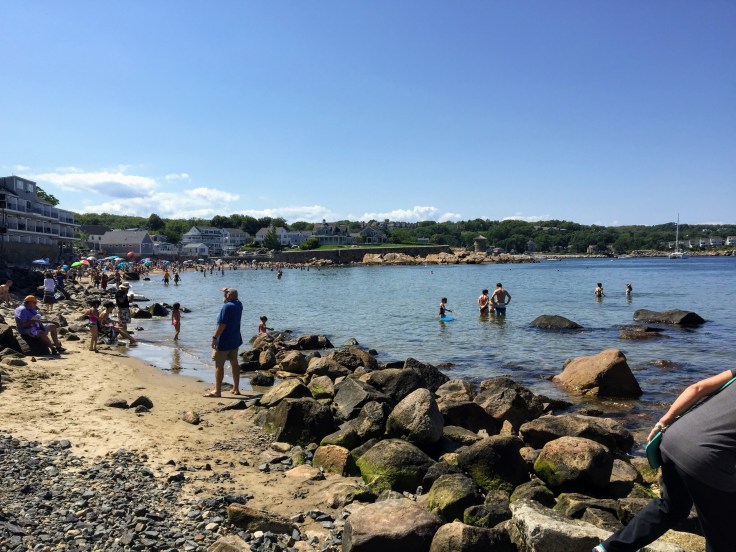
The town and harbor of Rockport:

2017-07-16 Rockport MA 10

2017-07-16 Rockport MA 09

2017-07-16 Rockport MA 08

2017-07-16 Rockport MA 07

2017-07-16 Rockport MA 06


This church was having a little work done; notice the top of the steeple sitting on the ground:

2017-07-16 Rockport MA 30

We had a delightful lunch of lobster rolls, with a nice white wine from New Zealand.  We headed back to the Villa; we have a meeting tonight to discuss our next two days as we travel to Boston!

PS:  As an update to our visit to Fallingwater on June 22, we saw on the news today that Mill Run, the creek that runs beneath Fallingwater, is at flood stage due to recent rains; the news story featured this photo of the team rescuing a statue that was toppled in the flood:

2017-07-16 Fallingwater Flood Topples Statue

(Sorry for the size… blame the newspaper…)

We had seen the statue, sitting adjacent to the plunge pool:

2017-06-22 Fallingwater 010d

Apparently, all is now well…


2017-07-15 Nor by Nor’east Caravan – Lexington, Concord, and The Shot Heard ‘Round the World; Walter Gropius and Marcel Breuer…

We had a free day to explore the region. We chose to tour Concord and Lexington.  After driving to Lexington we joined a trolley ride for a 90 minute to drive along the roads between Lexington and Concord; our guide told us the history of the Battle of Concord and Lexington, the start of the War for Independence.


2017-07-15 Concord Lexington 01

Our trolley tour told of the first shots fired – it was it Lexington, but no one knows who fired first.  Paul Revere and William Dawes had ridden in from Boston to warn the town that the British were coming. (Although everyone here was British at the time…)

Also, because Longfellow told us, everyone knows:

Listen, my children, and you shall hear 
Of the midnight ride of Paul Revere, 
On the eighteenth of April, in Seventy-five; 
Hardly a man is now alive 
Who remembers that famous day and year. 


In 1896 Helen F. Moore, dismayed that William Dawes had been forgotten by Longfellow, penned a parody of Longfellow’s poem:

‘Tis all very well for the children to hear
Of the midnight ride of Paul Revere;
But why should my name be quite forgot,
Who rode as boldly and well, God wot?
Why should I ask? The reason is clear—
My name was Dawes and his Revere.

Revere was arrested, but the word was out. The main confrontation occurred in Concord, as memorialized in the first verse of the Concord Hymn:

By the rude bridge that arched the flood,
Their flag to April’s breeze unfurled,
Here once the embattled farmers stood,
And fired the shot heard round the world.

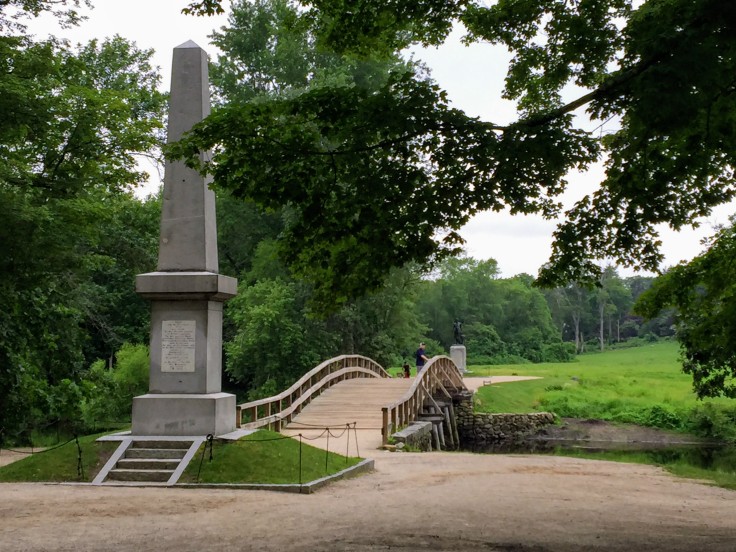
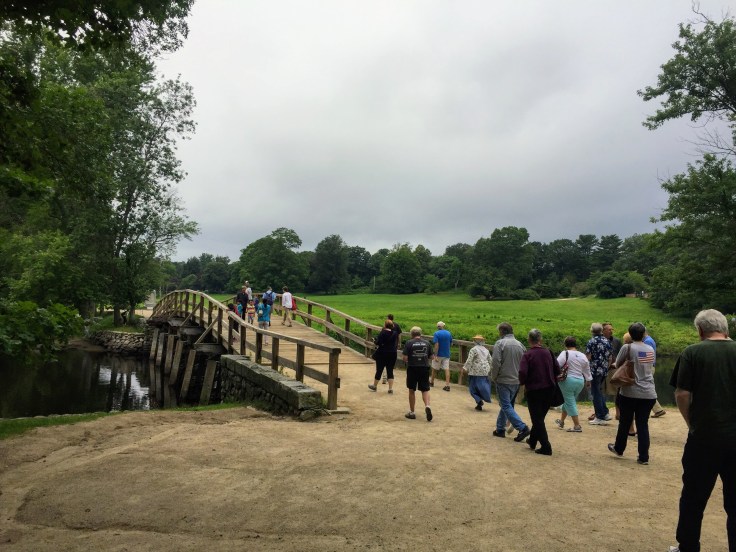
We walked along the area of the first battle, and across the bridge. (Not the original bridge…):
2017-07-15 Concord Lexington 01a

2017-07-15 Concord Lexington 02


There are graves of British here, too:

2017-07-15 Concord Lexington 04


Along the trolley tour we saw the houses of Ralph Waldo Emerson and Henry David Thoreau.  Thoreau’s house is about 1 1/2 miles from Walden Pond, so for all those months when Thoreau was isolated and alone at the pond, he usually walked home for dinner in the evening…

We walked about to see several historic houses in Lexington; this is the house that Revere (and Dawes) were riding to:

2017-07-15 Concord Lexington 07

2017-07-15 Concord Lexington 09

I know it’s a really old house, but this house (especially the door…) needs some attention:

2017-07-15 Concord Lexington 08


The Munroe Tavern was occupied by the British as their headquarters:

2017-07-15 Concord Lexington 10

2017-07-15 Concord Lexington 11


After our memories of the history of the war with the British were refreshed, we needed to be refreshed with a little French food:

2017-07-15 Concord Lexington 12

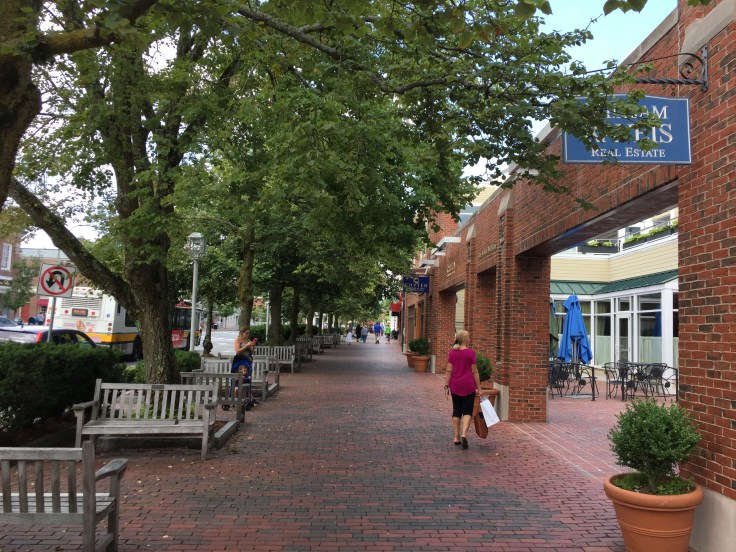
We walked about the town a bit, and headed back to the truck:
2017-07-15 Concord Lexington 13


I had been in this area in 2008, on a bus tour, but not to see historic sights; we were here to see architecture.  I recalled a neighborhood of modernist houses, but I didn’t know where they were or whose houses they were.  I did remember the bus driver pointing out Walden Pond, so I thought we should check out the area and see what we could find.

We easily found the pond.  So I tried turning down some small roads to see what we could find; on my second try we found it!

This is the Walter Gropius house:

2017-07-15 Gropius 02

Walter Gropius founded The Bauhaus in Germany in the 1920s, revolutionizing modern architecture around the world. Apparently, the Germans were not impressed, because they closed The Bauhaus and Gropius fled Germany in the 1930s. After a time as a refugee in London, Gropius was hired to head Harvard’s Architecture Department.  As his fame and influence spread, a nice lady offered Gropius $20,000 and 4 1/2 acres of land for him to build himself a house; here it is:

2017-07-15 Gropius 01

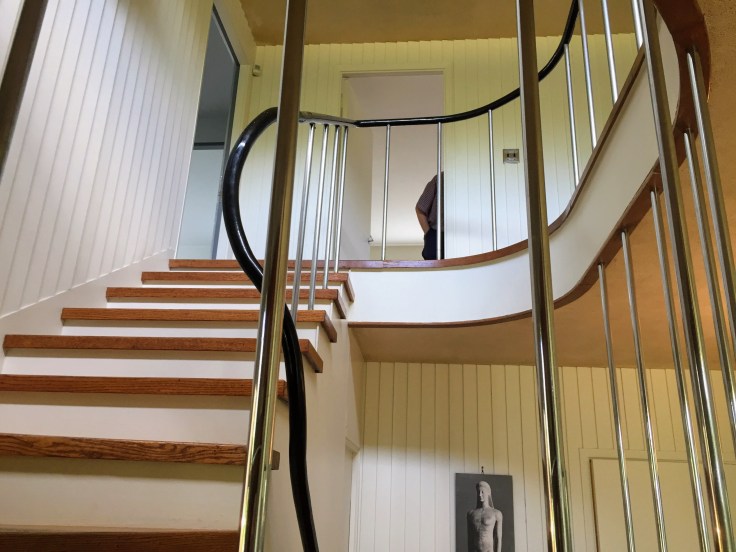
It is Gropius’ idea of a modern New England cottage; wood siding, but vertical, not horizontal; also, horizontal windows, not vertical. Flat roof, not pitched… Plus an angled front porch and a spiral stair just for fun.

Inside the house is wonderful; the entry hall with the traditional center stair:
2017-07-15 Gropius 06


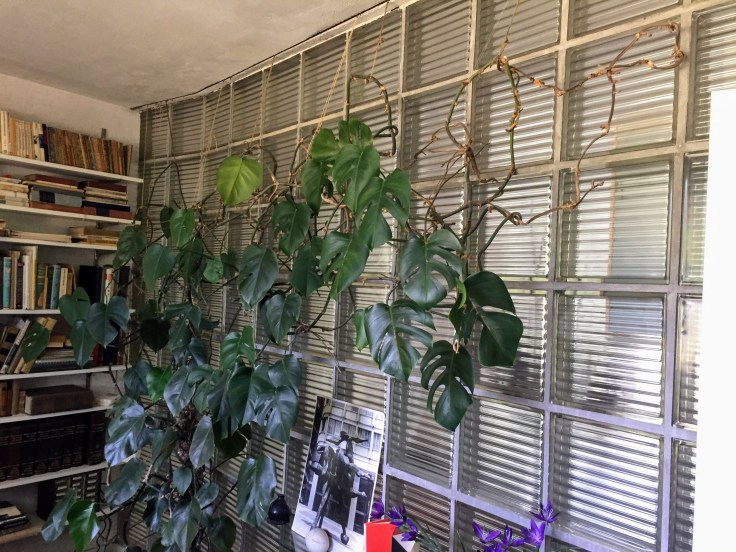
The study, with an interior wall of glass block to share light with the Dining Room beyond:

2017-07-15 Gropius 07

2017-07-15 Gropius 08


The Dining Room, with the screened porch beyond:

2017-07-15 Gropius 09


Upstairs is a lovely deck, with one wall painted his custom-designed color, Bauhaus Pink:

2017-07-15 Gropius 10


And the view down from the deck towards the screened porch:

2017-07-15 Gropius 11

After all, what says “New England cottage” more than a screened porch?

Other views around the house:


Much of the furniture inside the house was designed by Gropius’ colleague, Marcel Breuer.  Breuer was also given land next door to build his house, along with three other people this lady with the land liked… The other houses are privately owned and were not open, but back in 2008 we were permitted to walk the grounds.

Walter Gropius and his wife lived in the house until their deaths in 1969 and 1980, whereupon it was donated to the Historic Society…

We headed back to the Villa and enjoyed another GAM (Get Acquainted Meeting) with the other caravanners… Once again, an enjoyable time was had by all…

2017-07-14 Nor by Nor’east Caravan – Camping at the Topsfield Fair Grounds…

Today is moving day once again. We traveled from Plymouth to Topsfield. The trick, though, was to avoid Boston and their bridges and tunnels that prohibit propane… So it was a relatively long drive, about 125 miles, 2 1/2 – 3 hours.  We are camped on the grounds of the Topsfield Fair:

2017-07-15 Topsfield 01

No defined camp sites, just a lot of grass:

2017-07-15 Topsfield 02

It was fun to be all by ourselves – just the Airstreams and the Caravanners – no one else anywhere around…

That evening we once again had a meeting to discuss the tourism opportunities in this part of the country:

2017-07-15 Topsfield 03

Since this day has little other opportunities for photos, I post pictures of my grandchildren; they are at the beach in California:

2017-07-15 McAnoy

And an enjoyable time was had by all…


2017-07-13 Nor by Nor’east Caravan – Plymouth, National Monument to the Forefathers, and the Grist Mill…

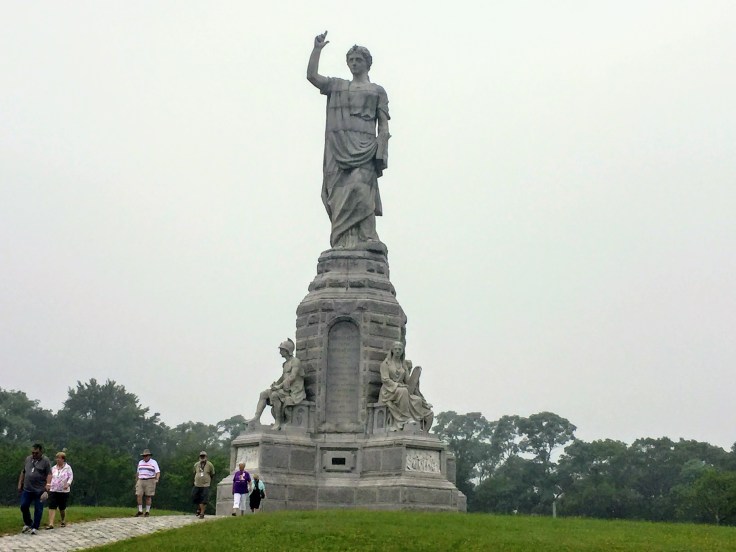
Once again it was raining. We convoyed to Plymouth to see and hear about The National Monument to the Forefathers:


2017-07-13 Monument Forefathers 02

This thing is huge. Not Statue of Liberty huge, but impressive, none the less… It is 81′ tall.

The original concept dates to around 1820, with actual planning beginning in 1850. The cornerstone was laid August 2, 1859 and the monument was completed in October 1888. It was dedicated with appropriate ceremonies on August 1, 1889.

Our guide, in Pilgrim garb, explained the monument:

2017-07-13 Monument Forefathers 05

He was a little preachy, and it was hard to tell when he was talking as a Pilgrim and when he was talking about today. But the Monument has a lot to say.

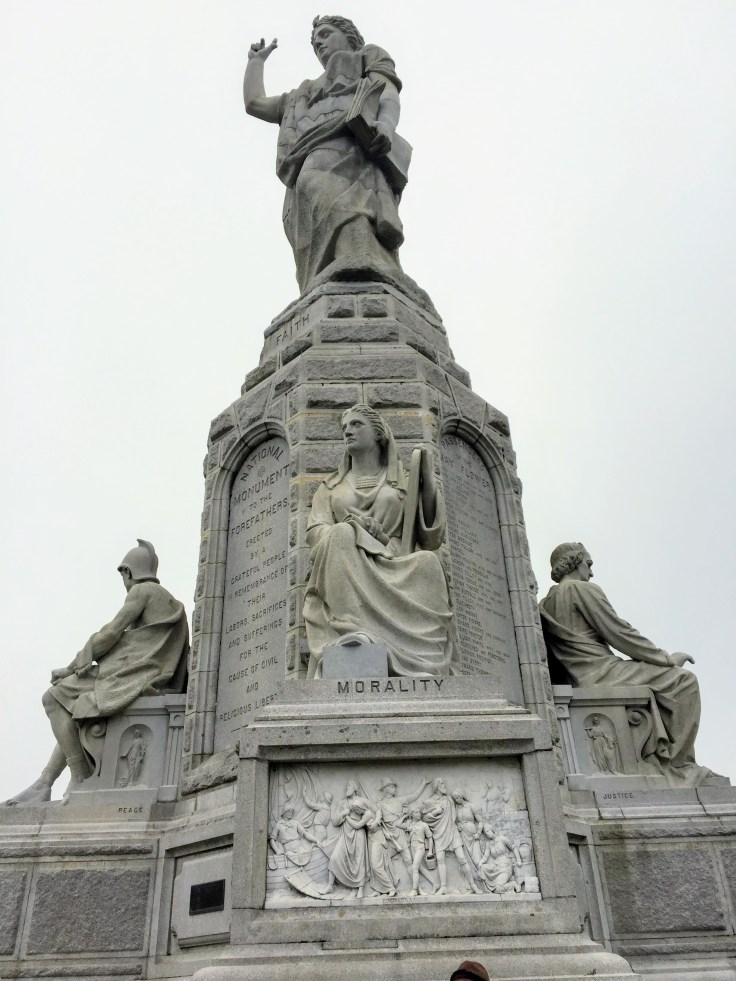
On the main pedestal stands the heroic figure of “Faith”, with her right hand pointing toward heaven and her left hand clutching the Bible. Upon the four buttresses also are seated figures emblematic of the principles upon which the Pilgrims founded their Commonwealth; counter-clockwise from the east are Morality, Law, Education, and Liberty. Each was carved from a solid block of granite, posed in the sitting position upon chairs with a high relief on either side of minor characteristics. Under “Morality” stand “Prophet” and “Evangelist”; under “Law” stand “Justice” and “Mercy”; under “Education” are “Youth” and “Wisdom”; and under “Liberty” stand “Tyranny Overthrown” and “Peace”. On the face of the buttresses, beneath these figures are high reliefs in marble, representing scenes from Pilgrim history. Under “Morality” is “Embarcation”; under “Law” is “Treaty”; under “Education” is “Compact”; and under “Freedom” is “Landing”. Upon the four faces of the main pedestal are large panels for records. The front panel is inscribed as follows: “National Monument to the Forefathers. Erected by a grateful people in remembrance of their labors, sacrifices and sufferings for the cause of civil and religious liberty.” The right and left panels contain the names of those who came over in the Mayflower, including distant relatives of Irvine’s own Kirk Winslow.  The rear panel, which was not engraved until recently, contains a quote from Governor William Bradford’s famous history, Of Plymouth Plantation:

“Thus out of small beginnings greater things have been produced by His hand that made all things of nothing and gives being to all things that are; and as one small candle may light a thousand, so the light here kindled hath shone unto many, yea in some sort to our whole nation; let the glorious name of Jehovah have all praise.”

The overall scheme was designed by architect Hammatt Billings.

The rear:

2017-07-13 Monument Forefathers 04


The close-up:

2017-07-13 Monument Forefathers 03


After we learned everything and more about the Monument, we walked down to see a recreation of a 17th century grist mill.  It is a fully functioning mill, and it operates on the weekends, and it sells its flour to the public.

The water wheel:

2017-07-13 Grist Mill 02

2017-07-13 Grist Mill 01


The millstones – 2,500 lbs each:

2017-07-13 Grist Mill 04

The two millstones are apart for display purposes. When the mill is operating, the one that you see vertical is turned and set atop the lower stone. The upper stone is fixed in place, and the lower stone is turned by the power of the water wheel and the gears below the floor:

2017-07-13 Grist Mill 05

These wheels and gears are the heart of the mill.  It is a fascinating operation and display of the incredible power water and simple tools have. The first public grist mill was built about 10 years after the Pilgrims arrived – before that, all grain had to be ground by hand… not an enjoyable time…

After our time at the grist mill we went to lunch at a local pub. Unlike the early Pilgrims, an enjoyable time was had by all…


2017-07-12 Nor by Nor’east Caravan – Provincetown

Today is wasn’t raining – yet.  It is a free day, so we can do whatever we want to enjoy Cape Cod. We had seen the normal sights when we were here in 2004 – Martha’s Vineyard, Hyannis, light houses, beaches and sand dunes… We also didn’t want to fight the summertime traffic, so instead, we headed back to Plymouth and caught a fast boat to Provincetown.

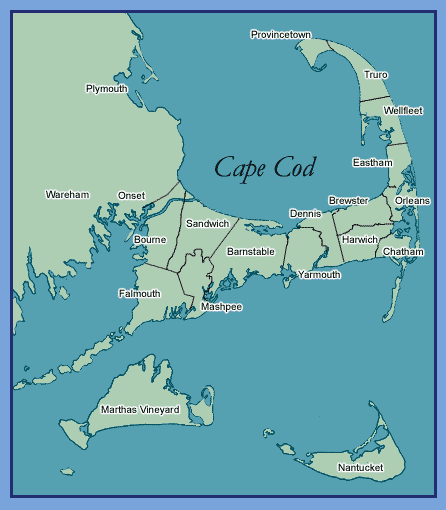
2017-07-12 Cape Cod

You can see that it is a quick boat ride, about 1 1/2 hours. To drive, in no traffic (and there is ALWAYS traffic…) is 1 1/2 hours. It was an easy call…

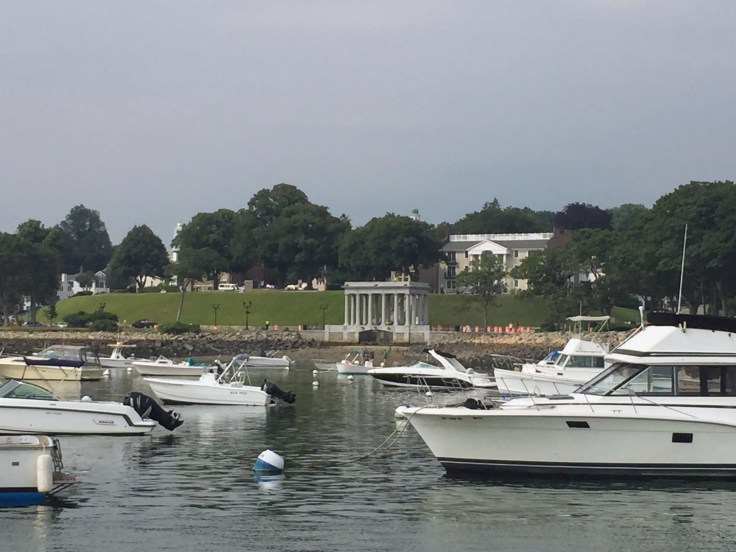
The weather in Plymouth was a little foggy, but nothing to obstruct the views.  The little temple on the shore is the “canopy” over Plymouth Rock:

2017-07-12 Plymouth Rock Temple


In the outer harbor are houses and a lighthouse along a tiny sand spit:

2017-07-12 Plymouth Harbor


The entrance to Provincetown Harbor:

2017-07-12 Provincetown 02

2017-07-12 Provincetown 01


Looming over the town is this giant tower:

2017-07-12 Provincetown 03


It is the Pilgrim Monument:

2017-07-12 Provincetown 04

The Pilgrim Monument was built between 1907 and 1910 to commemorate the first landing of the Mayflower Pilgrims in Provincetown on November 21, 1620. It was dedicated by President Taft.

Yes! The Pilgrims in the Mayflower landed at Provincetown, not Plymouth! It is where the Mayflower Compact was written and signed.  We’ve been lied to all these years! After they landed at Provincetown, and saw that there was no fresh water, and that the sand was no good for farming, they set out in a small boat to explore Cape Cod Bay.  They found Plymouth, with a natural harbor, fresh water in a flowing creek, and land good for farming, at least once you clear away the rocks. Lots of rocks!

It claims to be the tallest all-granite structure in the United States.  The tower is 252 feet, 7.5 inches (77 meters) tall and rises 350 feet above sea level. So, of course, we had to climb the tower. It was raining at the top:

2017-07-12 Provincetown 05

2017-07-12 Provincetown 06

Provincetown prospered as a fishing village and as a whaling center.  Whale oil had always been the principal light source in the United States.  Kerosene was cheaper, but it was smelly and smokey.  John D. Rockefeller (see my earlier posts) hired research chemists from Yale to develop a cleaner burning kerosene. They succeeded.  In the late nineteenth century the whaling industry died as kerosene replaced whale oil as a lighting  source. Another New England industry bites the dust, and John D. Rockefeller gets rich.

(As electric lights became available, kerosene became another dead industry.  Luckily, by that time JDR was refining gasoline for the new-fangled automobiles…)

We spent the day wandering the delightfully crowded and narrow streets, peeking into shops, and enjoying the day. We had a late lunch and followed up with an ice cream cone… The boat ride back to Plymouth was uneventful. I may have dosed off a bit. An enjoyable time was had by all…


2017-07-11 Nor by Nor’east Caravan – Cape Cod and Plimoth Plantation

Another tourism day, in the rain, this time to Plimoth Plantation. I know, I’m not spelling it correctly, but that’ the way they spell it, so I will go along. It also helps to distinguish it from the town of Plymouth…

2017-07-11 Plimoth 04

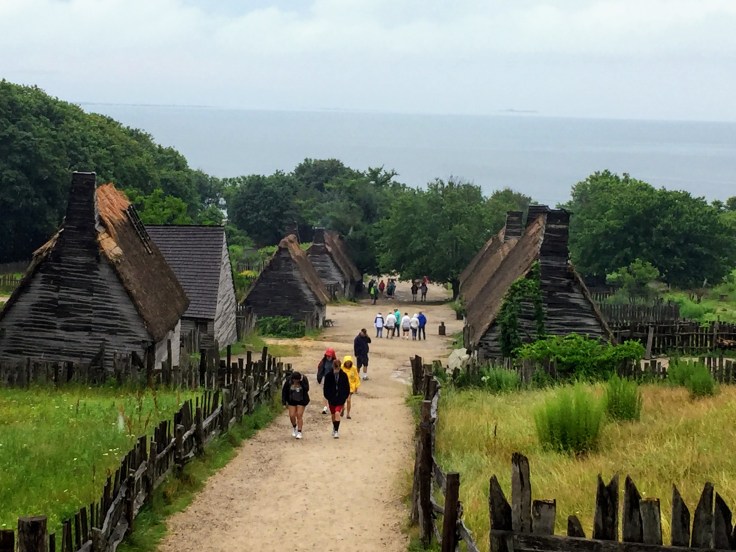
Similar to Mystic Seaport, Plimoth Plantation, founded in 1947, is a living history museum just outside Plymouth, Massachusetts, that attempts to replicate the original settlement of the Plymouth Colony established in the 17th century by English colonists who later became known as the Pilgrims.  In many ways, Plimoth Plantation is similar to Mystic Seaport, in that it displays buildings built as the Pilgrims would have built them; there are costumned people who will speak the Olde English, and will tell you what life in the Plimoth is all about.

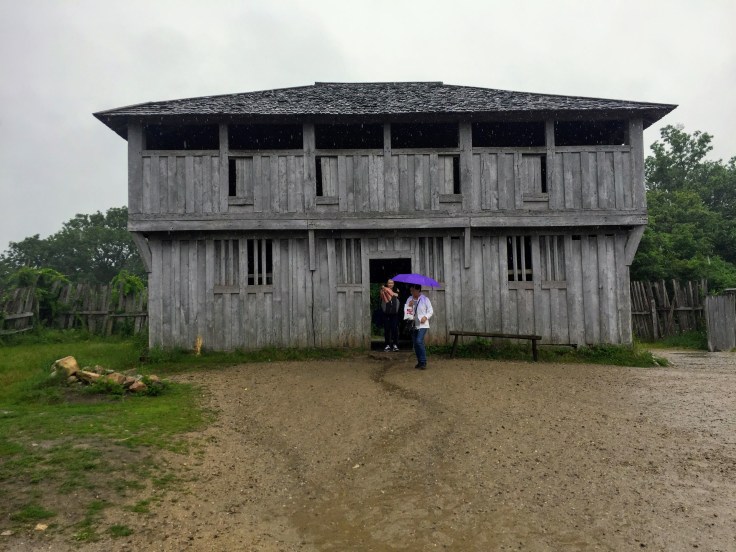
The largest building in the village is the meeting house, which was later fortified into a “fort”:

2017-07-11 Plimoth 01

They even built a wall around the village to keep out their enemies:

2017-07-11 Plimoth 02

I’m not sure who they think they will keep out with this fence, but what do I know…?


The local residents, posing with the tourist:

2017-07-11 Plimoth 05


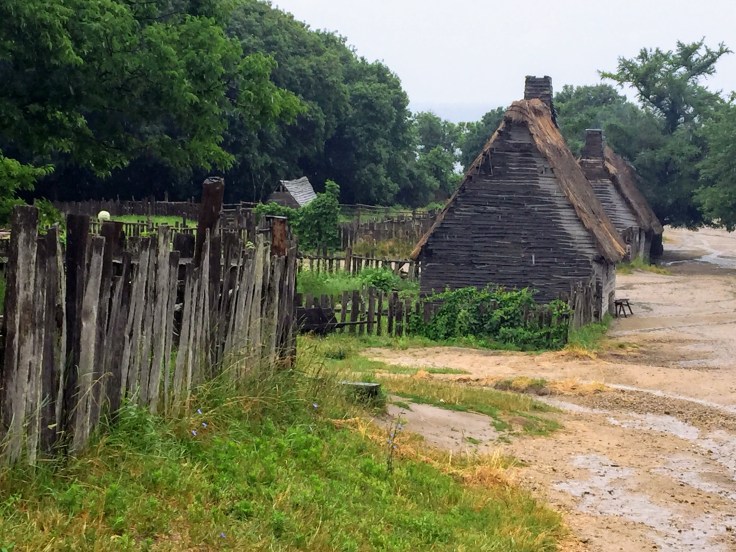
And the typical houses:

2017-07-11 Plimoth 07

2017-07-11 Plimoth 06


The buildings and gardens were interesting, but I came to fear sticking my head inside a house lest I be invited in and be subjected to some stranger talking to me.  I don’t like talking to strangers…

So after seeing all that there was to see, including a moderately interesting Indian village and a museum, we had a quick lunch and headed back to the Villa.

Tonight was our second GAM (Get Acquainted Meeting). We were hosts to 4 other couples. We enjoyed the social time getting to know each other and hoping to remember their names…

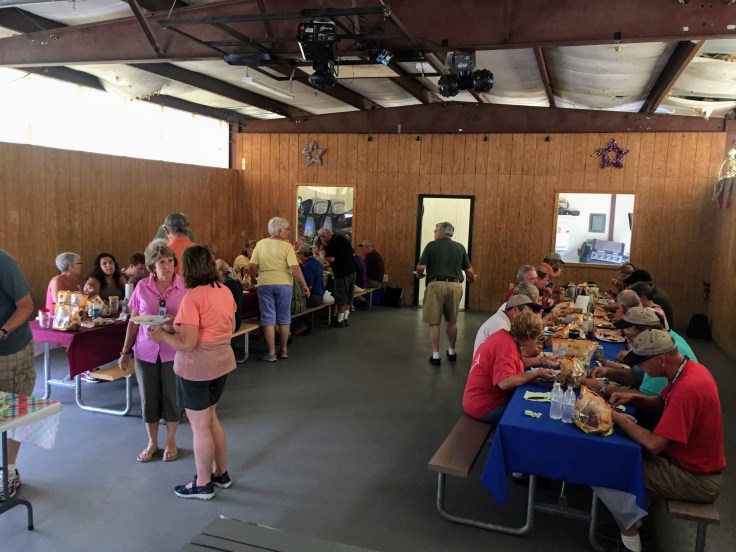
Our dinner for the evening was provided by the caravan, in the RV park Rec building:

2017-07-11 Sandy Pond Chicken Dinner

Each couple received a whole “broasted” chicken, plus all the side dishes and desserts we wanted… It was another opportunity to socialize with the other 48 people on the caravan. And an enjoyable time was had by all…


2017-07-10 Nor by Nor’east Caravan – Cape Cod, Sandwich, and Kentucky Bourbon

Today is moving day!  The caravan organizes the comings and goings of the Airstreams in a much more formal way than I have ever experienced.

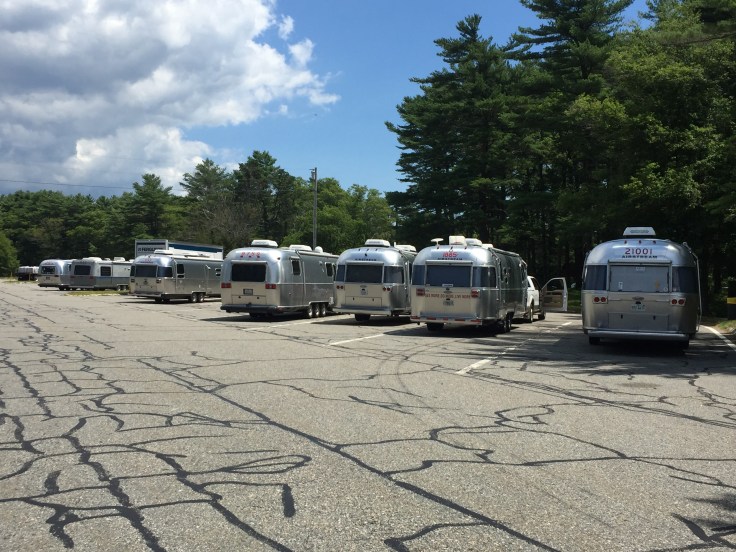
2017-07-10 Travel Day

There are two reasons for this format: one is safety; we have a team of “Deparkers” who check each Airstream as it leaves the RV Park, checking for lights, directional signals, windows and doors being closed, TV antenna being down, things like that.  We also have “Parkers” at the next RV Park, guiding the Airstreams into their assigned spaces and making sure traffic jams are kept to a minimum.  However, for this reason, we are not permitted to arrive at the next RV Park before an assigned time.  So we teamed up with two other couples, one with a 34′ Airstream and the other with a 32′ “Squarestream”. (Airstream experimented with making a fiberglass Airstream in a traditional boxy shape back in the 1980s. I had never seen one until this trip… you can see it in the photo above, second from the left…)

So we arrived safely and parked at Sandy Pond Campground in Plymouth, MA. We added another sticker to the map:

2017-07-10 Map Massachusetts.JPG


We had a free afternoon, so we headed out towards Cape Cod to the little town of Sandwich. We are headed to the Glass Blowing Museum.  In the 17th and 18th centuries glass blowing was an important industry in New England.  Eventually, by the late 19th and early 20th centuries, this kind of manufacturing industry ceased to exist here. Competition from more modern techniques, in areas of the country with cheaper fuel, doomed glass blowing in Sandwich.  This type of story was repeated throughout New England in many industries: textiles, clothing, shoes, whaling, fishing, and on and on. Even farming is rare here; fields that were laboriously cleared of trees and rocks by the Pilgrims and Puritans and other colonists were abandoned and have now been taken over by forests again.

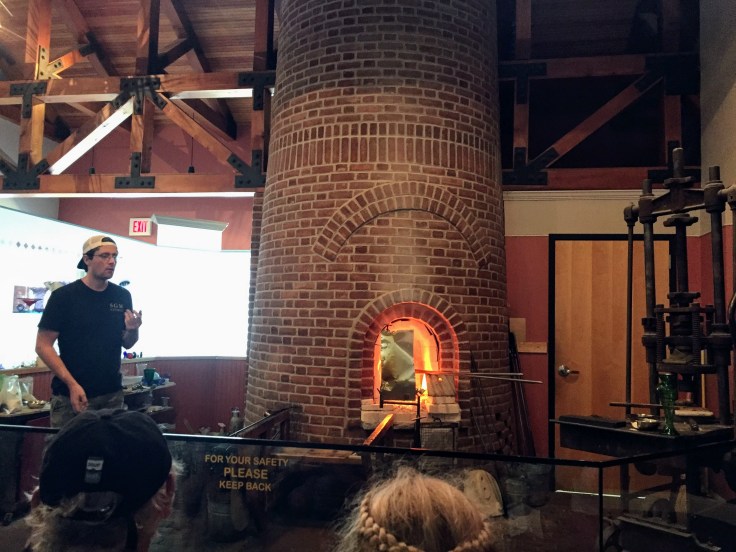
In Sandwich is a museum showing the types of glass that was made in Sandwich, both by blowing and by pressing. There was also great information on Sandwich’s own factory and its history, owners, labor strife, and competition.  But the best part was the glass blowing demonstration.

We asked the glass blowing guy how he got into this line of work. He said he took the job right out of high school because it was easy and convenient. He has been here six years now.

2017-07-10 Sandwich Glass Blowing 1He has his patter down, much like a magician; he was a great performer, swinging these red-hot rods around like a baton twirler.  It was really fun to watch.  He asked the group (about 20 spectators) if he should make a vase or a wine glass. The immediate answer (me) was “wine glass”.

It was a really amazing demonstration. First the blob of sand is heated to about 2,000 degrees F:

2017-07-10 Sandwich Glass Blowing 3


2017-07-10 Sandwich Glass Blowing 2

This hot glob of melted sand is gently shaped as he rolls the rod along the bench.  Then he blows into the end of the tube and the glob expands into the glass bowl:

2017-07-10 Sandwich Glass Blowing 4

He continues to shape the bowl, then grabs another glob of molten sand and forms the stem, then the foot.  It all happens so fast that photos were difficult. Finally, he set the perfectly formed wine glass on the work bench. I’m so excited! I want this glass!

Then he tells us that within about 5 minutes the glass will explode. As the glass cools the differential between the internal temperature and the surface temperature will cause the glass to crack.  To prevent the glass from exploding it must be cooled slowly, in an annealing oven. It takes from 1-7 days, depending on the type of glass and the design.  By now the glass is down to about 900 degrees… He sprinkles a few drops of water on the glass, it shatters, and he throws the scraps into the broken glass pile.  Demonstration over.  (The broken glass is put back into the oven and it is 100% recycled…)

I’d watch this again! It was much fun!

So, empty handed, we set out to Seafood Sam’s for lunch – Lobster Rolls (New England style, not Connecticut style…). After lunch we walked along the Cape Cod Canal.

2017-07-10 Cape Cod Canal

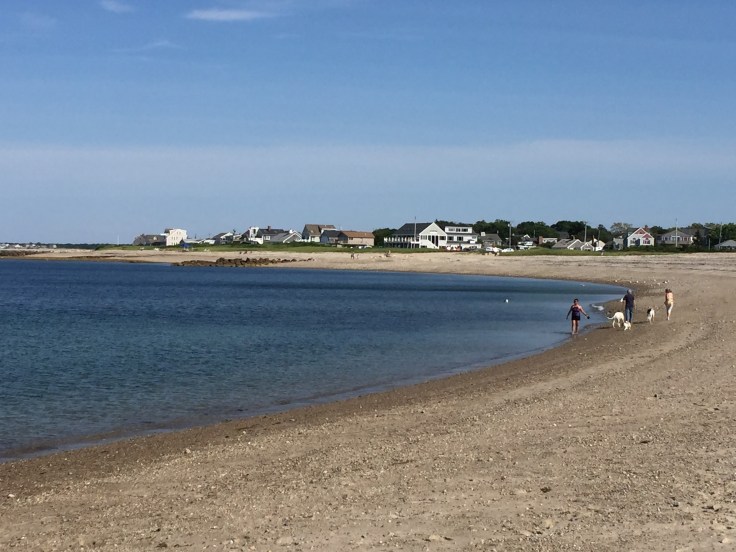
The canal actually cuts through the peninsula, from the open sea into the protected harbor, technically making Cape Cod an Island.  We also walked along to the end to see the Beach:

2017-07-10 Cape Cod Beach

Just what Cape Cod is supposed to look like… Lynda had to see if the water is warm or cold:

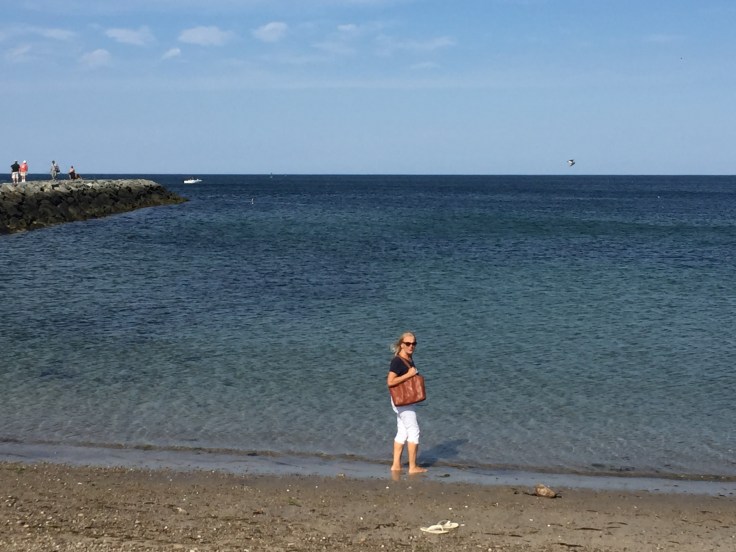
2017-07-10 Cape Cod Water

It is cold – very cold…

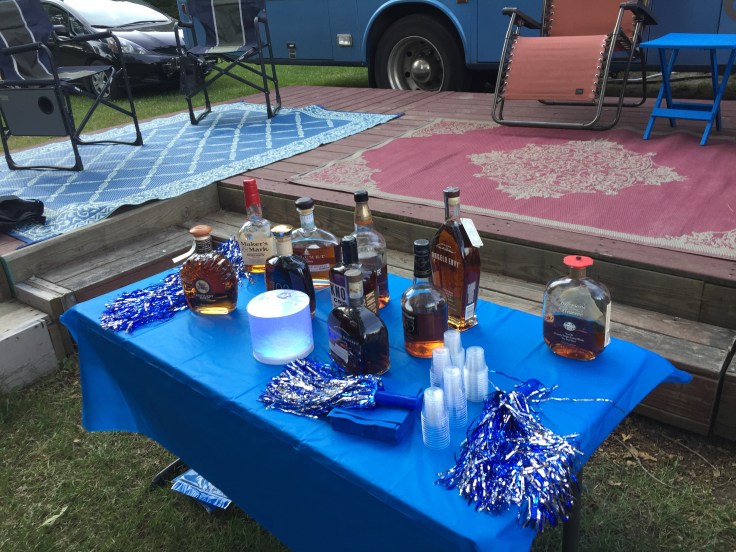
We walked until our Apple watches were happy, then we headed back to the Villa. We have a Bourbon Tasting tonight!

2017-07-10 Bourbon Tasting 1 01

Three of our caravanners are from Kentucky, and they brought out a grand selection of Bourbons for us all to taste.  Needless to say, an enjoyable time was had by all…


2017-07-09 Nor by Nor’east Caravan -Newport, Rhode Island – Summer Cottages, day 2

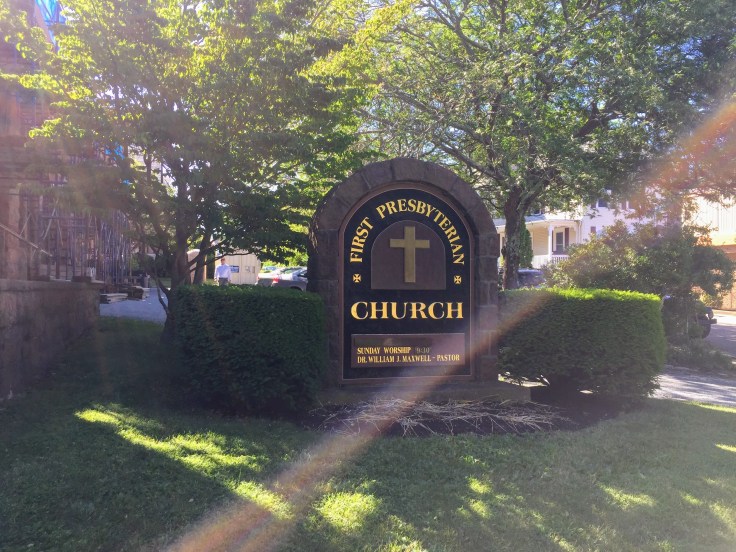
Today, being Sunday, we checked out a local church to attend… We used the Emmett Raitt method for selecting a church and picked the one whose service time was most suitable to our Sunday activities.  This happened to be:

2017-07-09 First Presbyterian

So we drove into Newport, and attended a service for the “frozen chosen”.   No one sang, the choir was terrible, and the hymns were VERY SLOW!  But it was a good service of reflection and we don’t regret attending…  It is a very small church, and very traditional. Even though their hymnal contained “modern” praise songs, the piano player made sure we didn’t get carried away and get excited over a fast tempo…

2017-07-09 First Presbyterian 02


We have two tours scheduled for today:  “Beneath the Breakers” , which will explain all the technology behind the operations of The Breakers, and “The Servants’ Life” at The Elms, my favorite house here in Newport.

We began at The Breakers, in the Gate House:

2017-07-09 Newport - Beneath the Breakers 05

2017-07-09 Newport - Beneath the Breakers 06.JPG

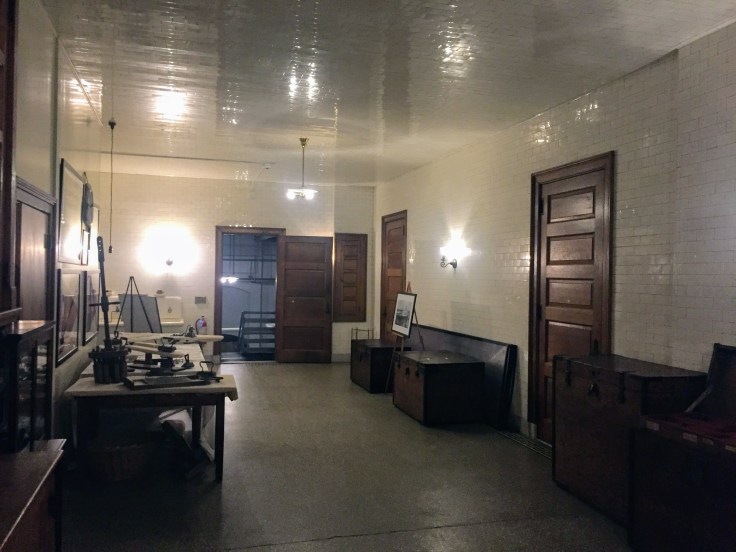
Originally intended for the caretaker, the cottage was most predominately occupied by the Estate Engineer.  His scrupulous notes have help recreate this picture of the technology beneath the Breakers…

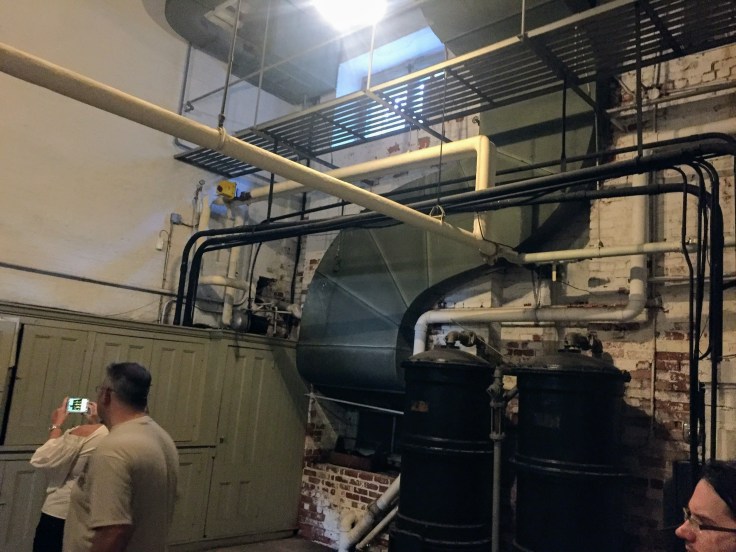
We began in the Parlor of the house. We then descended about 30′ beneath the ground to the main Boiler Room:

2017-07-09 Newport - Beneath the Breakers 01

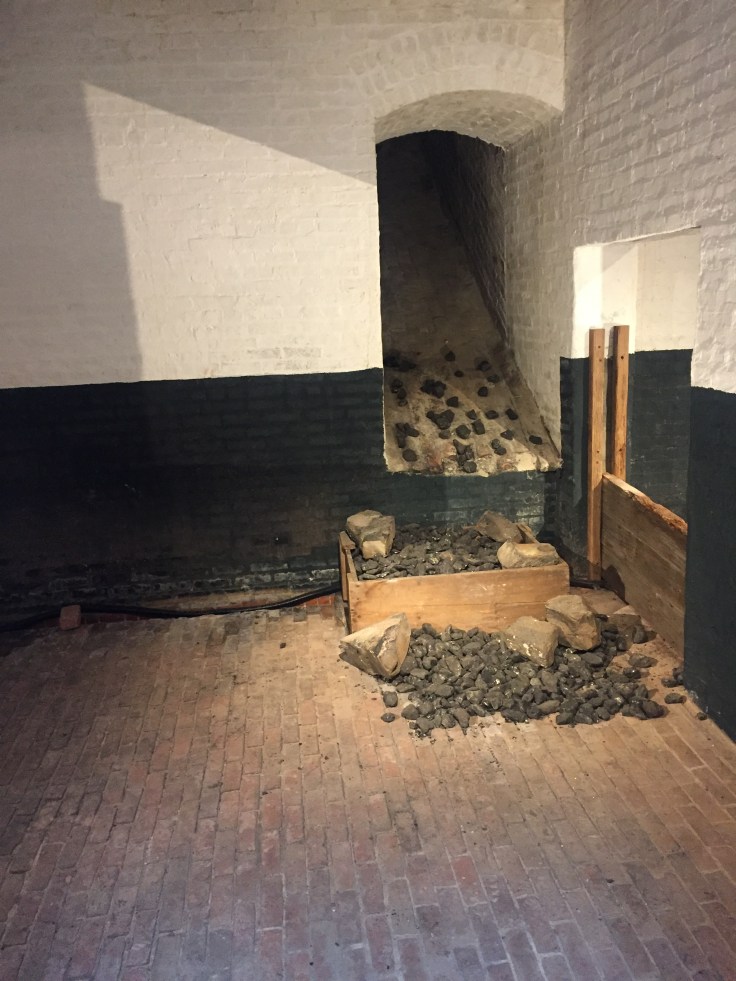
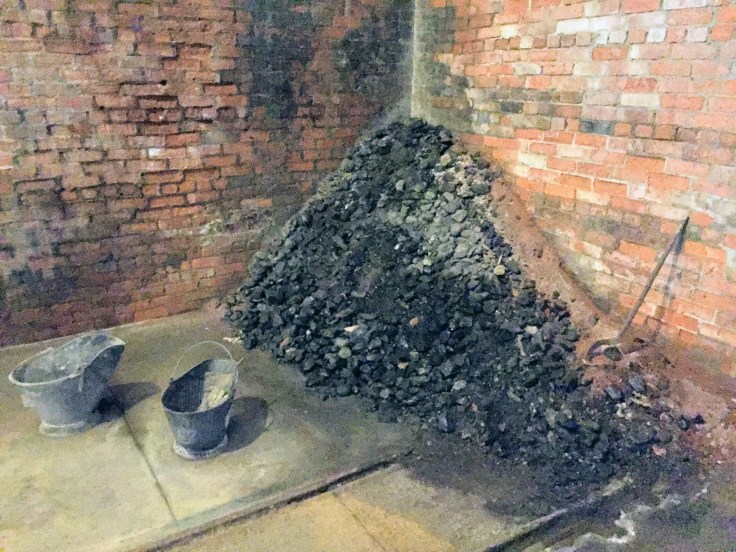
The below-grade room, close to the street, allowed coal to be dumped directly from the street into the coal bins, via chutes:

2017-07-09 Newport - Beneath the Breakers 02


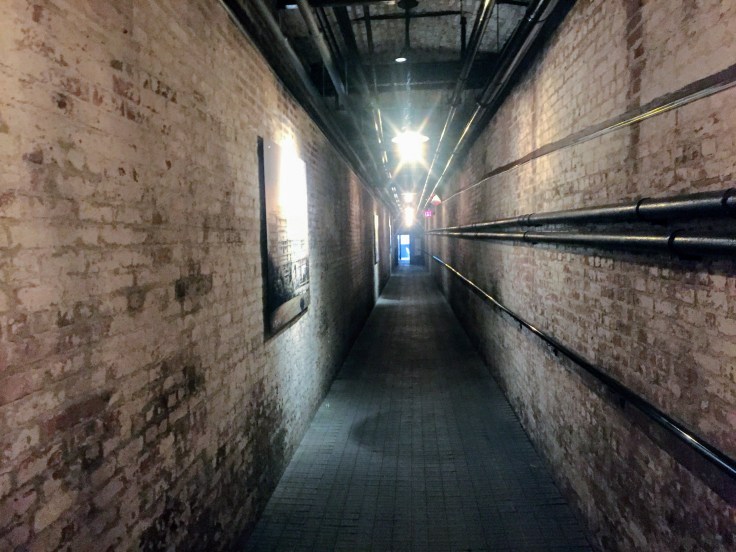
The Boiler Room is located far from the main house as a fire-prevention measure; it is connected to the main house via a tunnel, complete with fire doors.  Steam pipes, hot water pipes, and electrical conduits all run through this tunnel into the basement of the main house.

2017-07-09 Newport - Beneath the Breakers 04

As we continued on the tour we learned about the elevators, the elctrical system, how warm air was circulated through the house via radiators in the basement, and all sort of the latest technology of the house.  It was FASCINATING!

After the tour we had time for a quick lunch at Le Forge restaurant in Newport:

2017-07-09 Le Forge


Our next tour was “The Servants’ Life” at The Elms.  We started by climbing 3 flights of stairs to the third floor:

2017-07-09 Newport - The Servants' Life 01

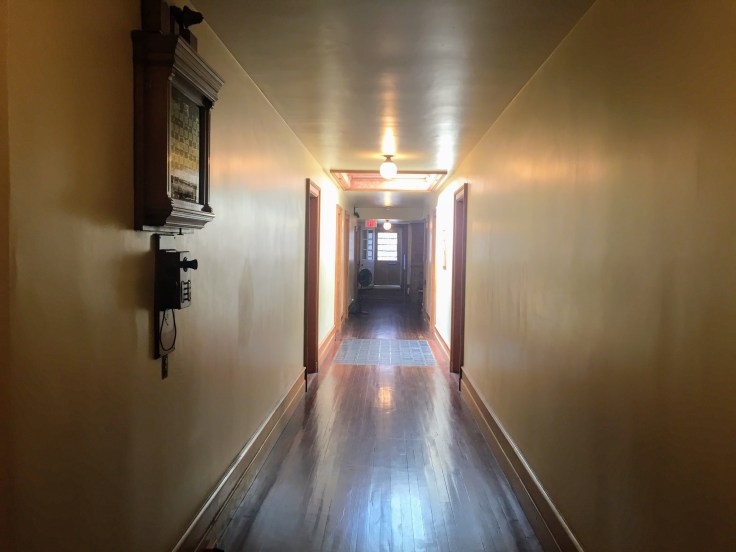
The third floor servants’ bedrooms had the feel of an old fashioned college dormitory. The hall was wide and well lit (note the skylights and the glass block floors allowing light into the second floor below).

The rooms were spartan but spacious:

2017-07-09 Newport - The Servants' Life 02

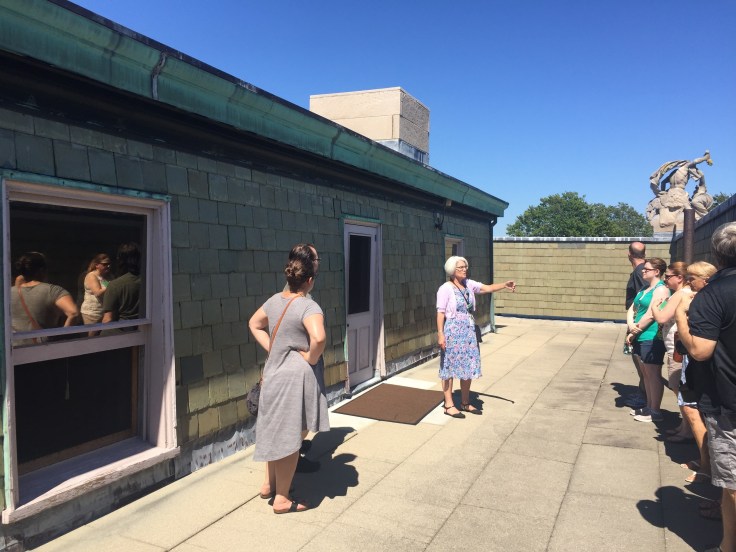
Because the third floor was hidden by the house’s parapet, there was a private roof-top space available to the servants:

2017-07-09 Newport - The Servants' Life 03

2017-07-09 Newport - The Servants' Life 04

There was also a view to the harbor beyond:

2017-07-09 Newport - The Servants' Life 05


From this vantage point you can get a better view of the carriage house:

2017-07-09 Newport - The Servants' Life 06

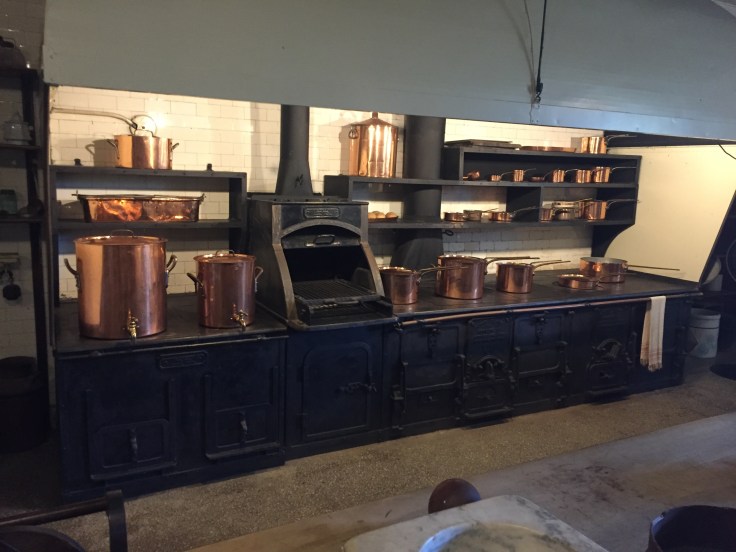
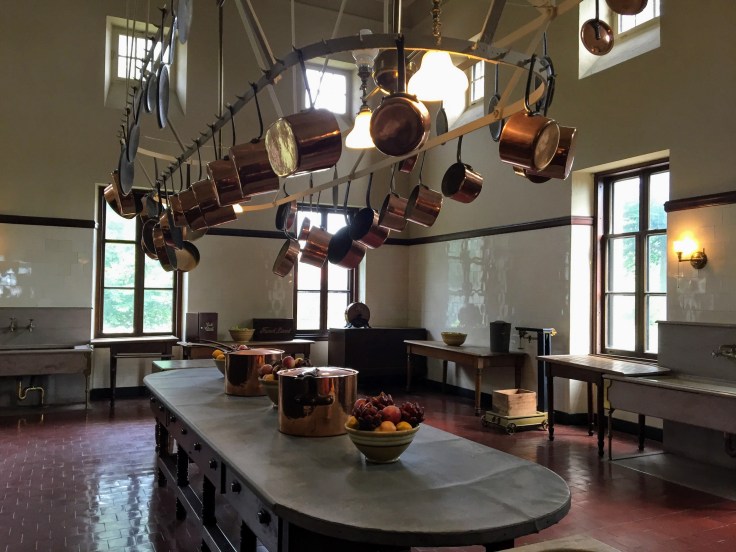
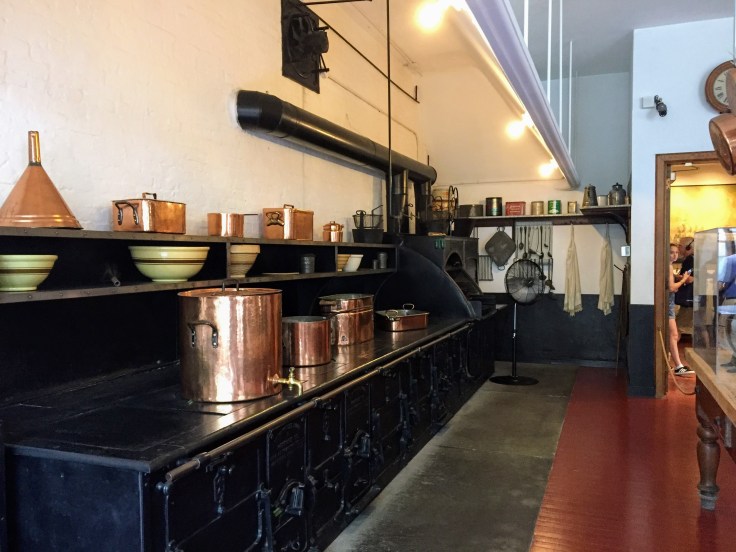
After touring the servants’ quarters, we descended the stairs to the basement; I showed a quick photo of the kitchen yesterday, but here is another:

2017-07-09 Newport - The Servants' Life 12


There was a laundry in the basement, truck storage, a bakery, and a root cellar: the two story high Boiler Room is also here…

2017-07-09 Newport - The Servants' Life 07

2017-07-09 Newport - The Servants' Life 08


Mr. Berwind made his money in the coal industry, so he had state-of-the-art coal delivery system:  There was a grate in the street; coal was delivered through the grate into carts, and the carts were rolled on rails through tunnels to the coal bins in the sub-basement:

2017-07-09 Newport - The Servants' Life 10

2017-07-09 Newport - The Servants' Life 11


It was another great day. An enjoyable time was had by all…


2017-07-08 Nor by Nor’east Caravan -Newport, Rhode Island – Summer Cottages, day 1

The day was sunny for a change, but not too warm. I’ve been looking forward to seeing the Summer Cottages again since I first saw them nine years ago…

2017-07-08 Newport - Breakers 01

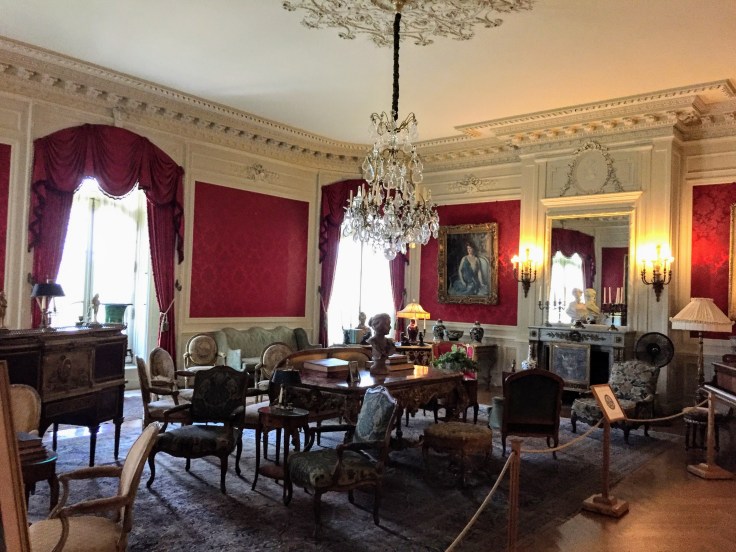
These were summer homes, used for 6-8 weeks each summer.  These are houses of the Gilded Age.  And gilded they were.  Gold and platinum were used as common decoration. Many of the interiors were ripped from palaces and castles in Europe, dismantled, sometimes cut into pieces, shipped to America and installed in these giant “cottages”. Nothing exceeds like excess here.  As architectural critic Ellsworth Toohey once said, (I paraphrase here…) “The house has a lovely garden gate, fine in proportion and workmanship. It is installed on the ceiling of the Dining Room”.

Pieces of furniture were cut up and used as decoration on stairways.  Huge paintings were cut in half, or reshaped into ovals, to fit into a room.  The money spent was pocket change to these people – labor was cheap and palaces and castles were cheap.

The various Vanderbilts had four houses here in Newport.  We toured two; one has been incorporated into a college, the other we could not fit into our schedule.

In any case, I love houses, even ostentatious ones. Even when a room hurts my eyes to look at it… We saw five houses today…

The Breakers; Cornelius Vanderbilt II; 138,000 s.f.; 70 rooms; 15 Bedroom suites; 33 staff bedrooms; 40 full time staff.  Architect: Richard Morris Hunt;

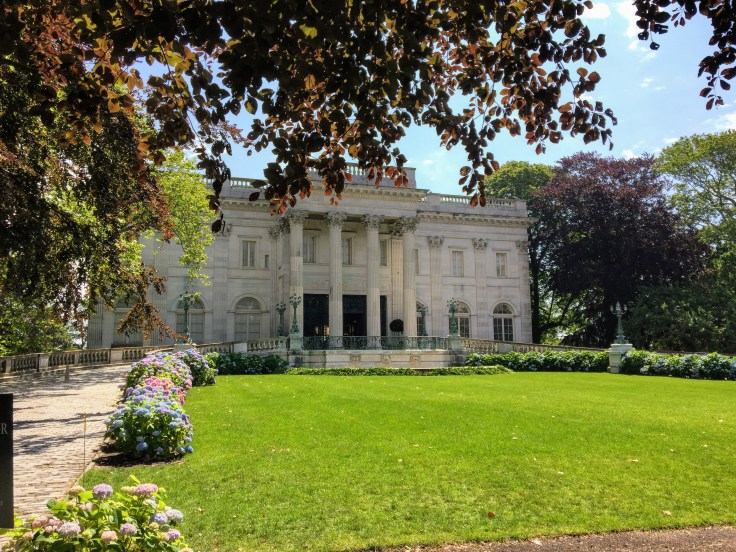
Marble House;  William Vanderbilt; 50 rooms; 7 Bedroom suites.  Architect: Richard Morris Hunt; contains over 500,000 cu. ft. of marble.

RoseCliff; Theresa Fair Oelrichs; 9 Bedroom suites; 33 staff bedrooms;      . Architect: McKim, Mead, and White

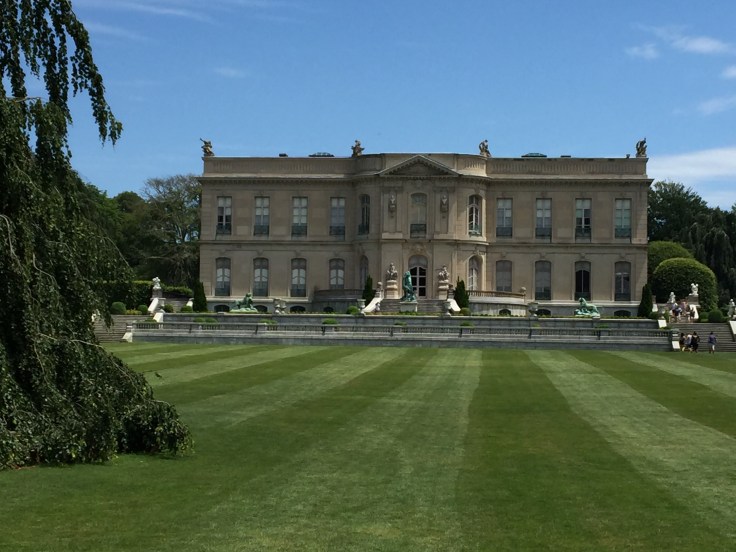
The Elms; Edward Berwind; 48 rooms; 7 Bedroom suites; 16 staff bedrooms; 40 full time staff.  Architect: Horace Trumbauer

Isaac Bell House; Isaac Bell; 7 Bedroom suites; 3 staff bedrooms.  Architect: McKim, Mead, and White

There isn’t a lot to say about these houses. The pictures tell the story:

The Breakers:

The biggest of all the Newport Mansions, and the best preserved; only lived-in for a few years…

The Approach:


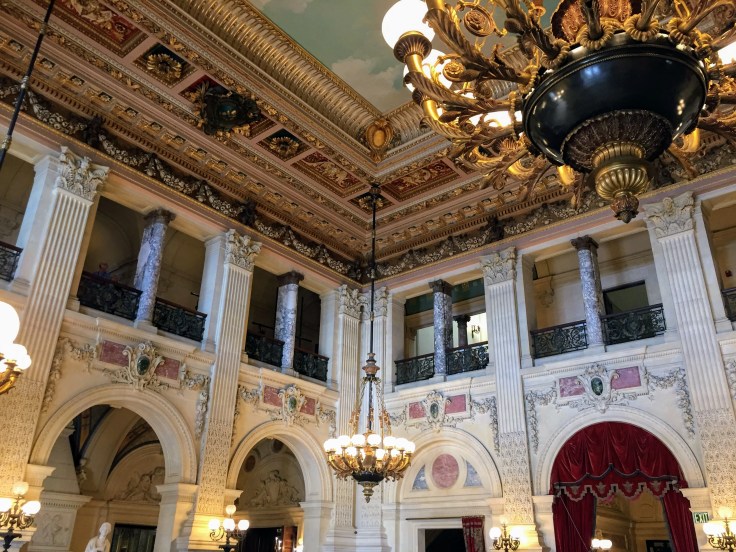
The Grand Hall:

2017-07-08 Newport - Breakers 03

2017-07-08 Newport - Breakers 04

2017-07-08 Newport - Breakers 09


More of the grand, gilded rooms…

2017-07-08 Newport - Breakers 05


The Dining Room:

2017-07-08 Newport - Breakers 07


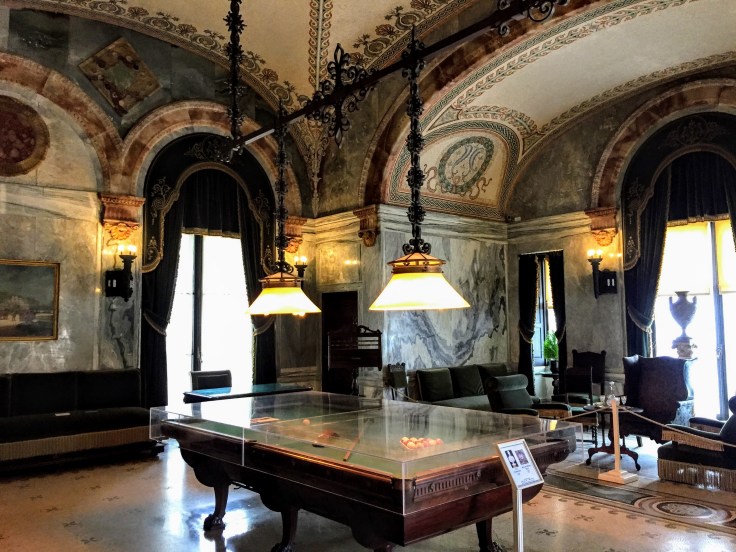
The Billiard Room:

2017-07-08 Newport - Breakers 10


Sitting Room; note the platinum accents in the wallpaper…

2017-07-08 Newport - Breakers 11

2017-07-08 Newport - Breakers 12


The Music Room:

2017-07-08 Newport - Breakers 13


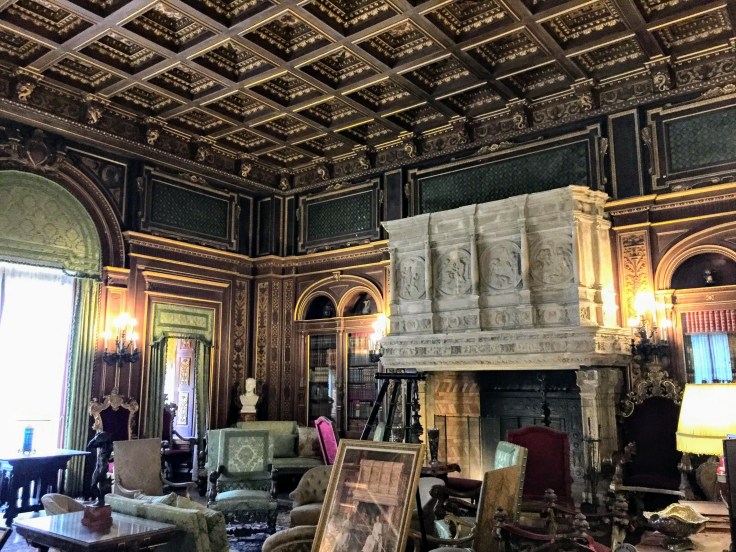
The Library:

2017-07-08 Newport - Breakers 14


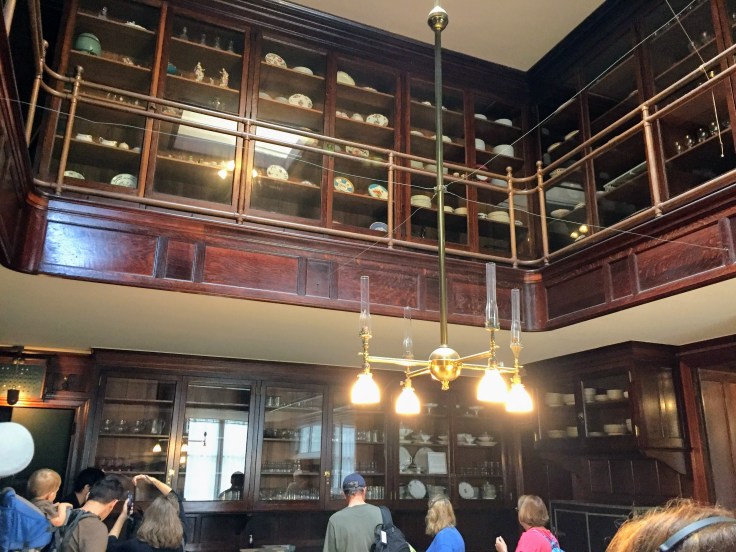
And more utilitarian spaces… The 2 story Butler’s Pantry:

2017-07-08 Newport - Breakers 15


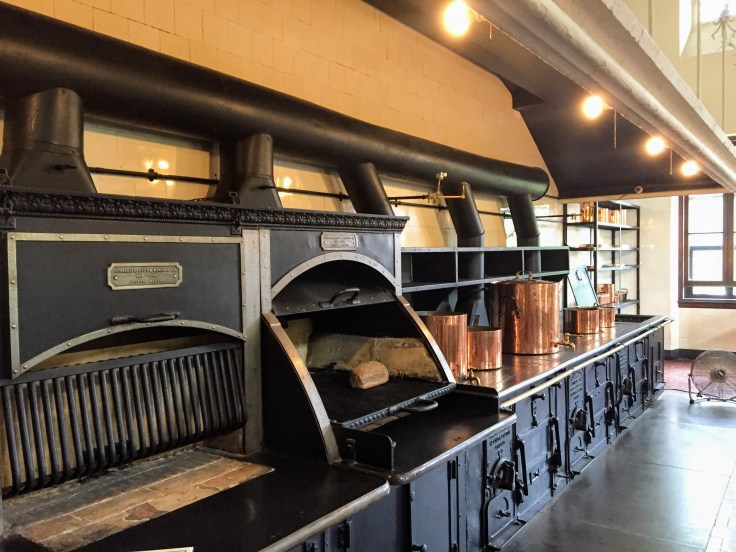
The Kitchen:

2017-07-08 Newport - Breakers 17


2017-07-08 Newport - Breakers 16


2017-07-08 Newport - Breakers 18


And, finally, the view over the grand lawn:

2017-07-08 Newport - Breakers 19


Marble House:

Over 500,000 cu. ft. of marble was installed inside and out…

The Approach:

2017-07-08 Newport - Marble House 01


The Dining Room:

2017-07-08 Newport - Marble House 02


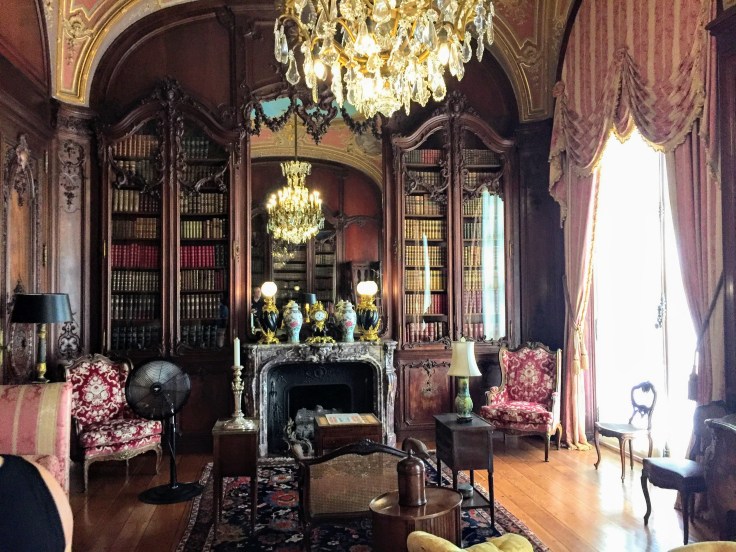
The Library:

2017-07-08 Newport - Marble House 03


The Dining Room:

2017-07-08 Newport - Marble House 04


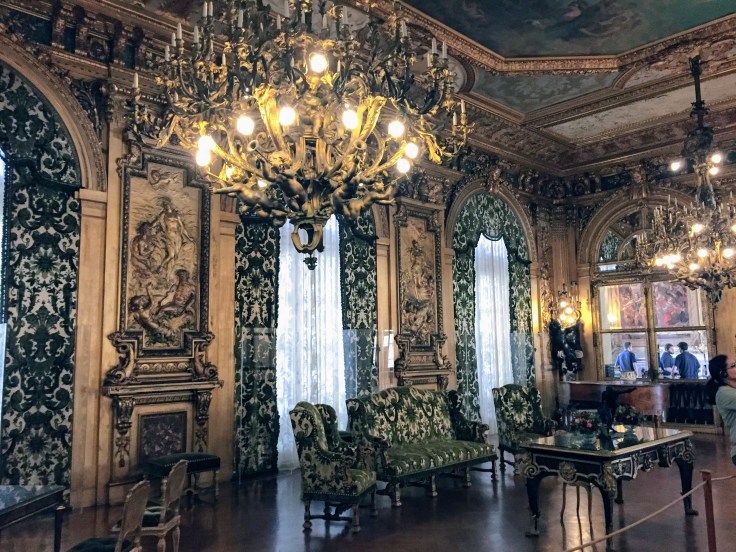
The Drawing Room:

2017-07-08 Newport - Marble House 05


The Grand Stair:

2017-07-08 Newport - Marble House 06


The Master Bedroom:

2017-07-08 Newport - Marble House 07


The other Master Bedroom:

2017-07-08 Newport - Marble House 08


The the fun rooms…

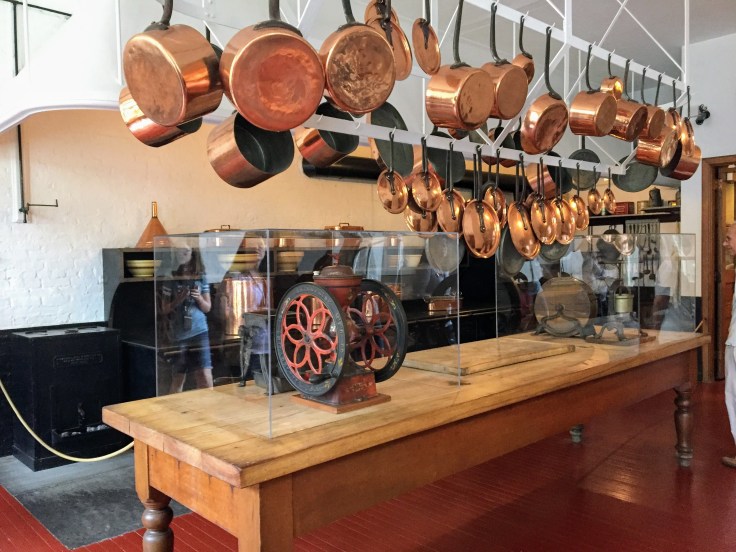
The Kitchen:

2017-07-08 Newport - Marble House 09b

2017-07-08 Newport - Marble House 09a

2017-07-08 Newport - Marble House 09


The Housekeeper’s Office:

2017-07-08 Newport - Marble House 10


Part of the Butler’s Pantry:

2017-07-08 Newport - Marble House 11


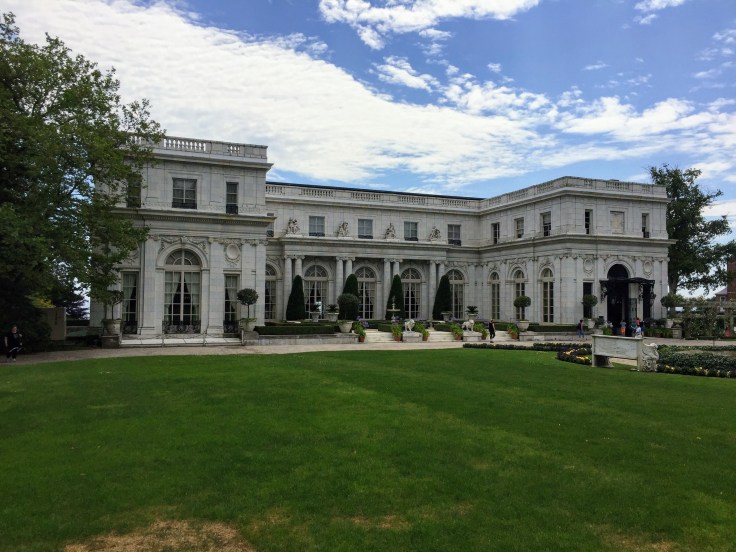
Rosecliff:

All the furnishings were sold off in 1941; in the early 1950s the house bought by a family from New Orleans, who summered here until the 1960s; most furniture is from the 1950s…

The Approach:

2017-07-08 Newport - Rosecliff 01


The Grand Stair:

2017-07-08 Newport - Rosecliff 02


Entrance to the Drawing Room:

2017-07-08 Newport - Rosecliff 03


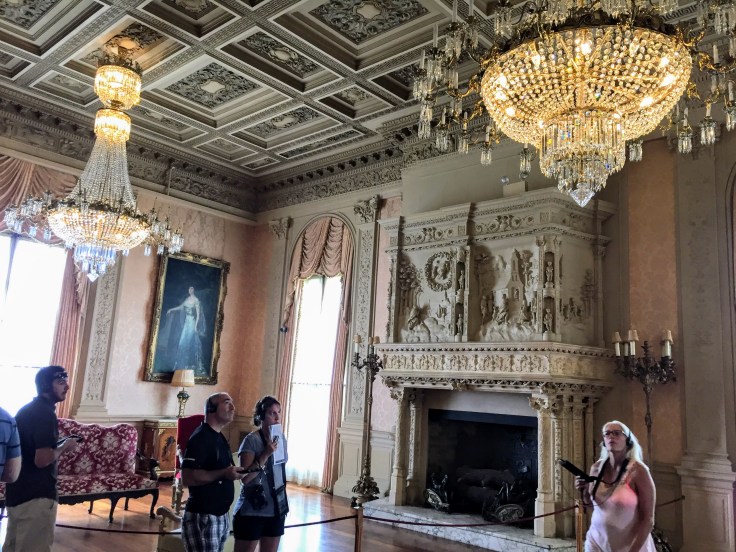
The Drawing Room:

2017-07-08 Newport - Rosecliff 04


The Ballroom:

2017-07-08 Newport - Rosecliff 05

2017-07-08 Newport - Rosecliff 06


The Library:

2017-07-08 Newport - Rosecliff 07


The Dining Room:

2017-07-08 Newport - Rosecliff 08


The Master Bedroom:

2017-07-08 Newport - Rosecliff 09


The Elms:

My favorite of the grand mansions.; The Berwind family started spending their summers in Newport in the 1890s, and they had The Elms built in 1901; Mrs. Berwind died in 1922; Mr. Berwind invited his niece,Julia Berwind, to take over hostess duties in the house.  Mr. Berwind died in 1936. Julia remained in the house until her death in 1961.  When Julia Berwind died, The Elms was one of the very last Newport cottages to be run in the fashion of the Gilded Age: forty servants were on staff, and Miss Berwind’s social season remained at six weeks each year.  The family lived day-to-day on the second floor. The first floor was for entertaining only… The kitchen and other service rooms are in the basement, and there is a hidden third floor containing the servants’ bedrooms (more on this tomorrow…). Mr. Berwind loved technology and the house was fitted with all the latest devices, and was continually being updated until Mr. Berwind’s death in 1936. Julia had no interest in technology, so nothing was changed after 1936.

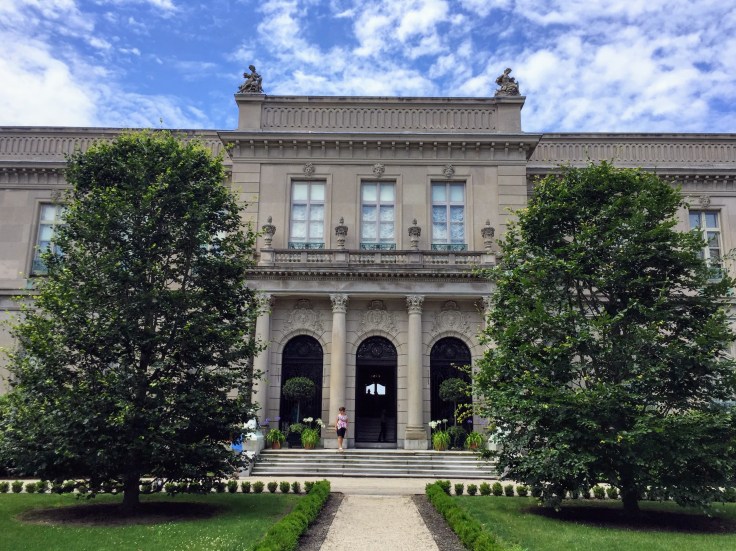
The approach:

2017-07-08 Newport - The Elms 01


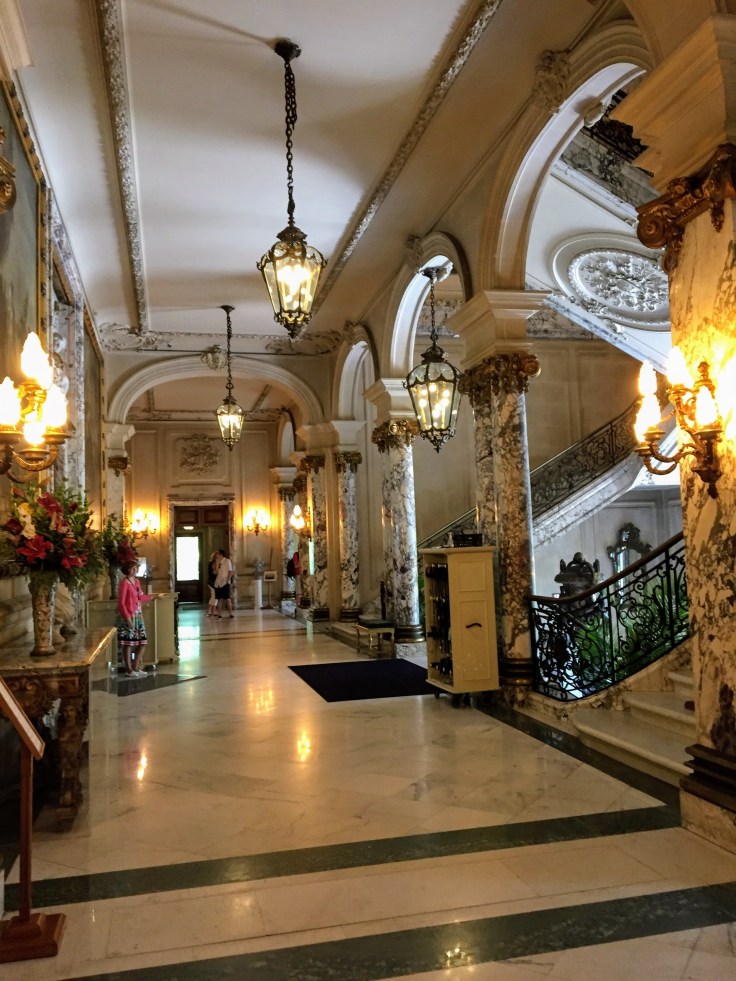
The Grand Hall:

2017-07-08 Newport - The Elms 02

2017-07-08 Newport - The Elms 03

2017-07-08 Newport - The Elms 04


The Grand Stair:

2017-07-08 Newport - The Elms 06


The Library:

2017-07-08 Newport - The Elms 07


The Conservatory:

2017-07-08 Newport - The Elms 08


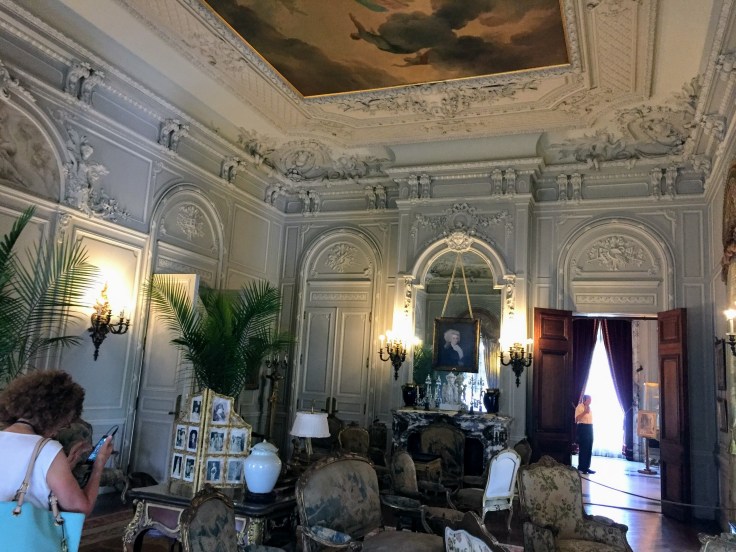
The Drawing Room:

2017-07-08 Newport - The Elms 09


The Music Room:

2017-07-08 Newport - The Elms 10


The Dining Room:

2017-07-08 Newport - The Elms 11


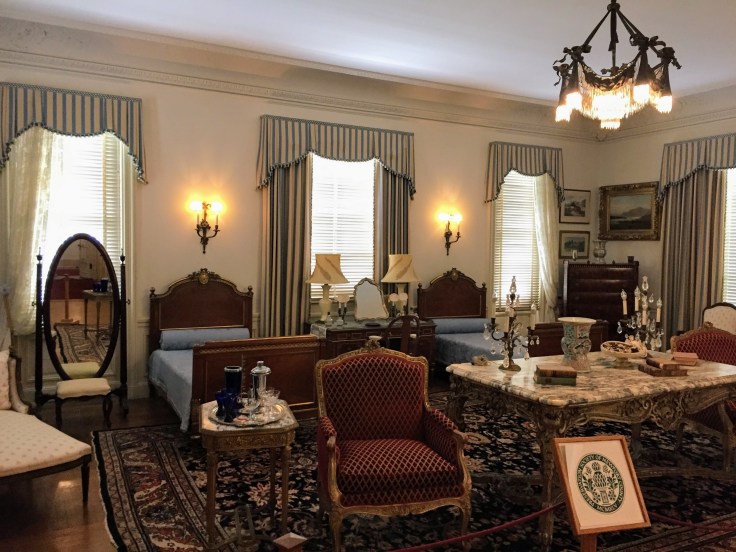
Mrs. Berwind’s Bedroom; this was also her sitting room, where she would receive lady friends during the day:

2017-07-08 Newport - The Elms 14

2017-07-08 Newport - The Elms 16


Mr. Berwind’s Bedroom:

2017-07-08 Newport - The Elms 17

Mr. Berwind’s Bathroom:

2017-07-08 Newport - The Elms 18


The Upstairs Hall; the stained glass skylights in the ceiling get their light from glass block floor in the servants’ hall on the third floor; the actual skylight is above the third floor, in the roof. (More on this tomorrow).

2017-07-08 Newport - The Elms 15


The Family Sitting Room on the second floor:

2017-07-08 Newport - The Elms 19


The Kitchen:

2017-07-08 Newport - The Elms 20


The Grand Lawn to the rear:

2017-07-08 Newport - The Elms 24


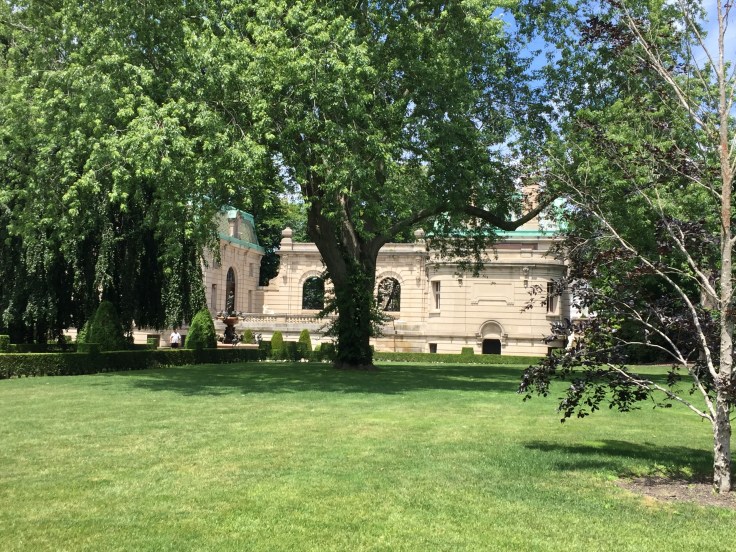
The Carriage House:

2017-07-08 Newport - The Elms 28


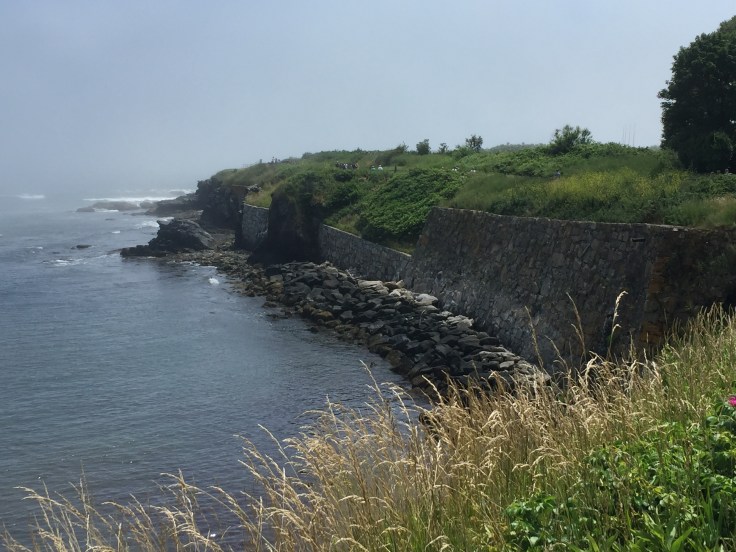
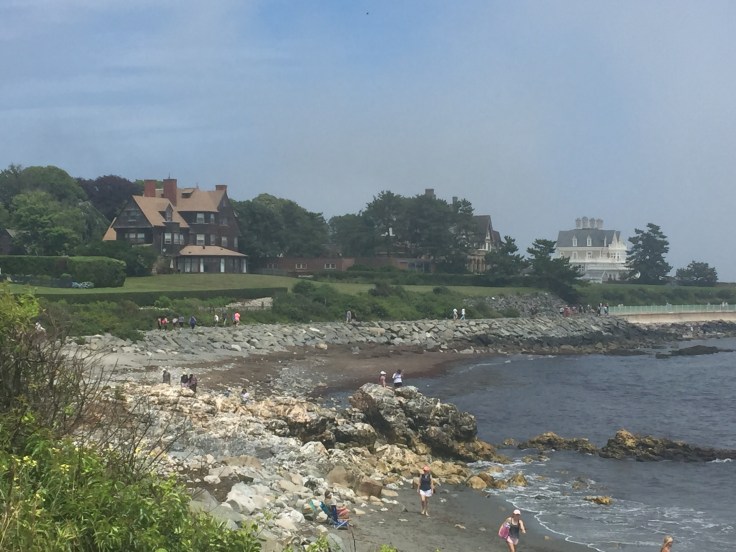
After touring these four houses, we needed a break. We took a long walk along “Cliff Walk”, a beautiful ocean front walkway around Newport:

2017-07-08 Newport - Cliffwalk 08

2017-07-08 Newport - Cliffwalk 06

2017-07-08 Newport - Cliffwalk 05

2017-07-08 Newport - Cliffwalk 01

There were even surfers:

2017-07-08 Newport - Cliffwalk 07


We had time for one more house:

The Isaac Bell House:

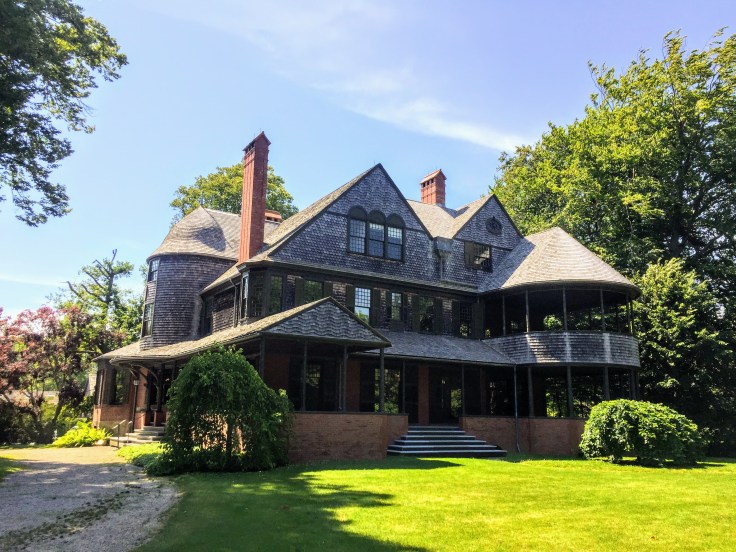
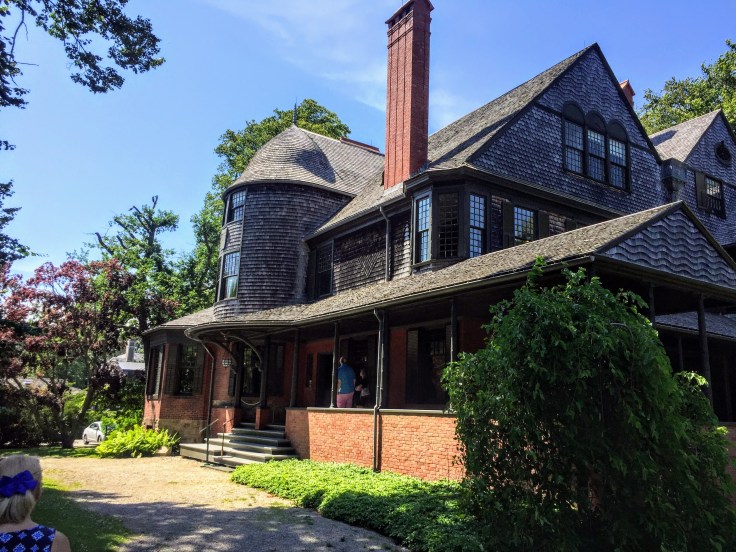
This house is totally different from the others; it is not a neoclassical stone pile, but a post-Victorian cottage at a more human scale. It is older than the grand houses, but it portends what is coming, and what continued long after the neoclassical craze was over. This is the type of house Frank Lloyd Wright was trained to design. He took it to a whole new level…

This house was lived-in up until the 1990s, as a boarding house, a nursing home, and other uses.  It is still undergoing restoration…

The Exterior:

2017-07-08 Newport - Isaac Bell 04

2017-07-08 Newport - Isaac Bell 01

2017-07-08 Newport - Isaac Bell 03

2017-07-08 Newport - Isaac Bell 02


The interior hall is dark:

2017-07-08 Newport - Isaac Bell 30

2017-07-08 Newport - Isaac Bell 11


The Stair:

2017-07-08 Newport - Isaac Bell 31

Here we see something this house has in common with the others: These decorative panels were bought as bedsteads in Europe, dismantled and cut apart, and used as decoration on the stair:


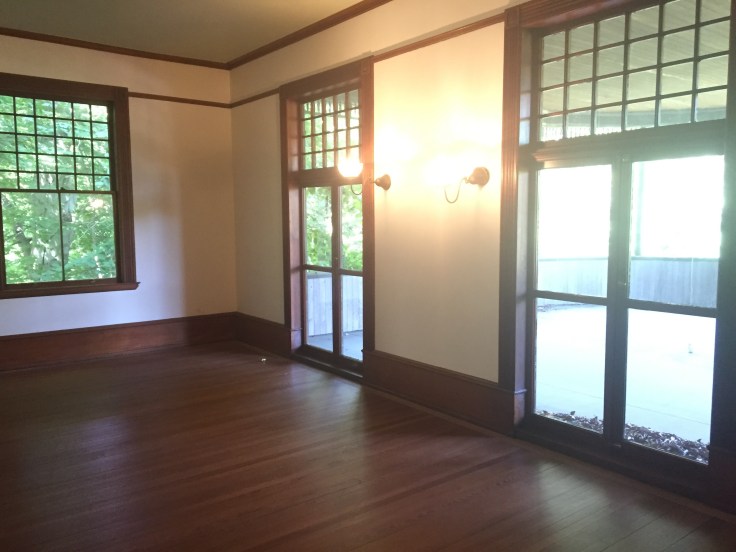
The Living Room:

2017-07-08 Newport - Isaac Bell 23


2017-07-08 Newport - Isaac Bell 36


The Dining Room:

2017-07-08 Newport - Isaac Bell 37


2017-07-08 Newport - Isaac Bell 22


The Library:


The Upstairs:

2017-07-08 Newport - Isaac Bell 38


2017-07-08 Newport - Isaac Bell 29


So it was a long day. We headed back to the Villa and the rest of the caravaners… An enjoyable time was had by all…


Blog at WordPress.com.
Up ↑