Search

Adventures in the Villa

Month

August 2017

2017-08-02 Nor by Nor’east Caravan – Nova Scotia House Hunt!

We now have two free days to explore Nova Scotia on our own.  Today we return to the South Shore…

2017-08-02 Mahone Bay 09

We began with a drive around the other side of St Margaret’s Bay; as we continued southeast, we came to Cleveland Beach. Here, at the height of summer, on this beautiful day, was a beach, crowded with 2 small families… It is amazing that this unspoiled paradise is so sparsely inhabited:

2017-08-02 Cleveland Beach 02

2017-08-02 Cleveland Beach 01

As we drove along we came to a small sign announcing Graves Island.  Being a sucker for islands, we turned off and drove across a Ted Kennedy-worth causeway onto the island. We found a campground and a park. We stopped and took a 2 mile “hike” on a path around the tip of the island. It was a nice morning break.

2017-08-02 Graves Island 03

2017-08-02 Graves Island 02

2017-08-02 Graves Island 01

Moving on, we arrived at our first goal for the day, Mahone Bay:

2017-08-02 Mahone Bay 08

2017-08-02 Mahone Bay 09

2017-08-02 Mahone Bay 05

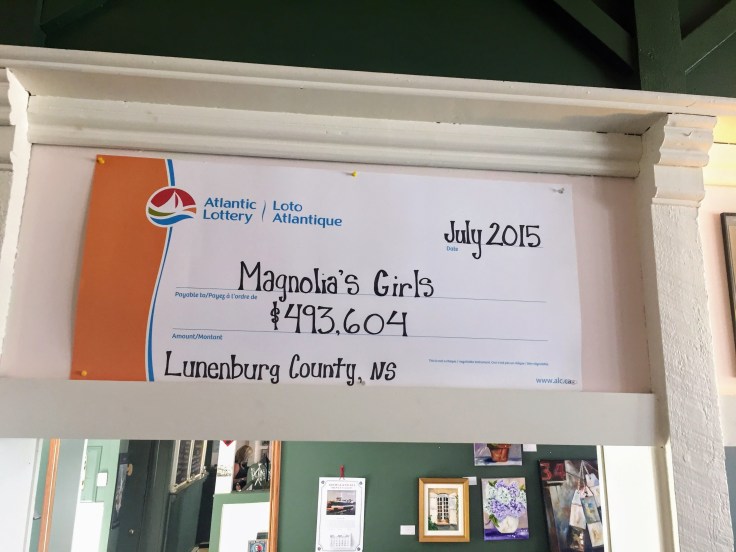
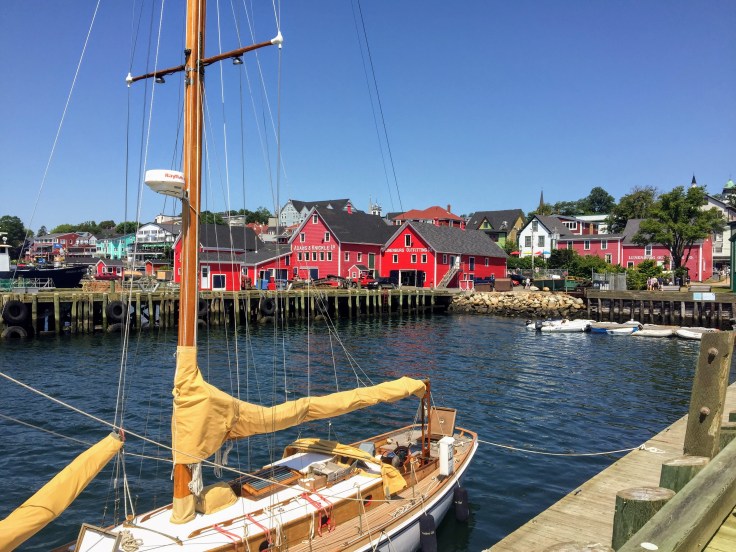
Our next destination was Lunenburg, an UNESCO Heritage site; this little village is a mix of fisher-folk, artists, and summer visitors. It is lovely. We walked the streets of the town, and eventually found ourselves settling in for lunch at the Magnolia Grill.  Lynda had fish cakes, and I opted for seared scallops (or fried scallops, as they say here…)  Food was excellent and the tiny place was delightful.  We noticed a large, ceremonial check, made out to “Magnolia’s Girls”, from the Nova Scotia Lottery Office, for $493,000.  When we asked our waitress about it, she seemed a little upset: apparently, she worked here for 18 years, playing the lottery with the other “girls” every week. Three weeks after she quit, the other 4 girls win $493,000. Two of them quit, and 2 are still working there. But since Magnolia Grill is now short handed, our waitress came back to work.  Sour grapes? Maybe…

2017-08-02 Lunnenberg - Magnolias 1

2017-08-02 Lunnenberg - Magnolias 2

More Lunnenburg:

2017-08-02 Lunnenberg 02

2017-08-02 Lunnenberg 03


But we move on, now to Rose Bay.

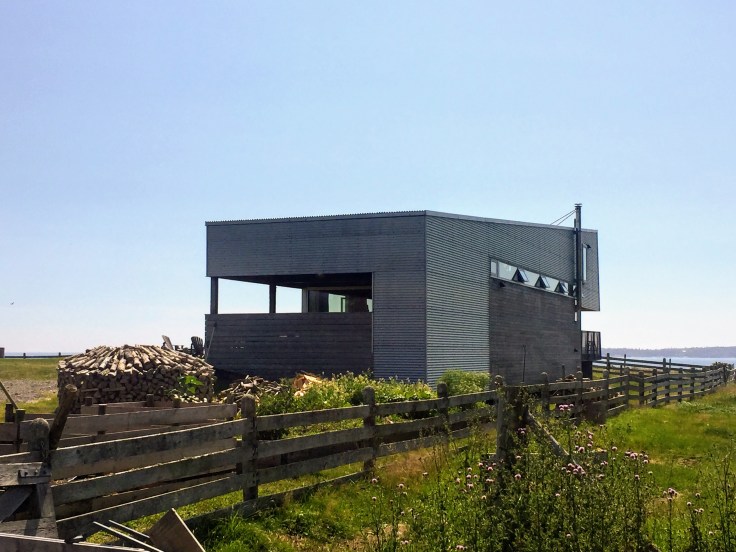
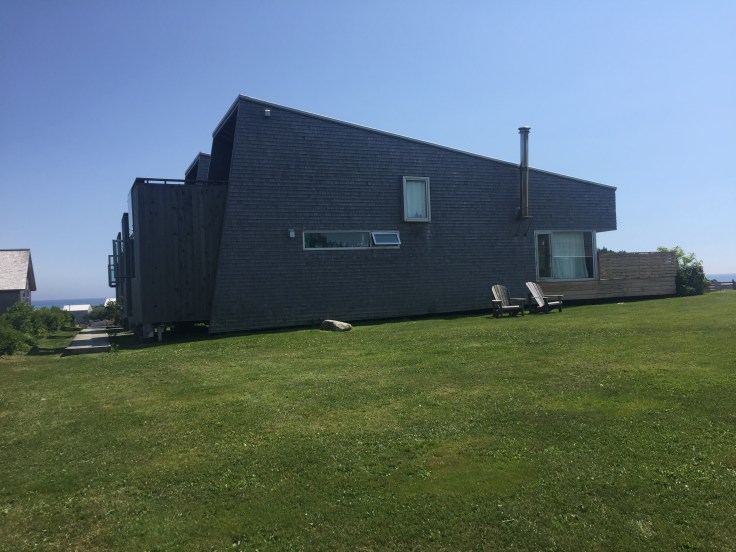
In the March edition of Dwell Magazine, they featured the “Sliding Down House”, located in Upper Kingsburg, outside Rose Bay, Nova Scotia.  Well, since I was going to be in Nova Scotia, I had to try to find it!

We drove to Rose Bay. We stopped at the General Store:

2017-08-02 Rose Bay 03

First off, we were impressed with the General Store. It had everything a summer (or winter) resident could need. (Remember, we are a long ways from Halifax here…) There were canned soups, frozen pizzas, and fresh fruits and vegetables.  Also, milk and eggs and cheese.  PLUS:  they are an agent of the Nova Scotia Provincial Liquor Store! After we perused the store, and Lynda bought some of her “Ice” water, I approached the counter.  The sweet young lady at the counter asked, “May I help you?”  I presented the picture of the house in Dwell, and asked, “Can you tell me where this is?”  She immediately answered, “Turn left here, take your first right, and go to the end of the road. You can’t miss it. And, there are other buildings in the area by the same architect – it’s called Shobac.”

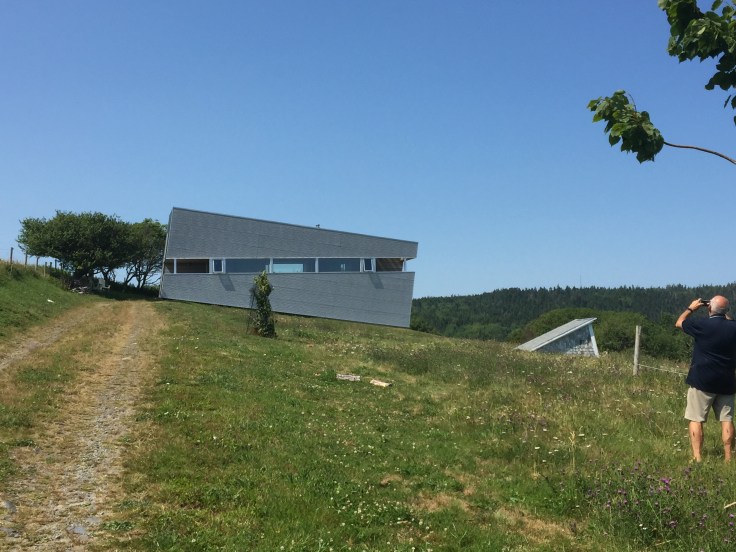
After paying for Lynda’s drinks, we set out, and there it was, atop the hill:

2017-08-02 Rose Bay - Sliding Houses 12

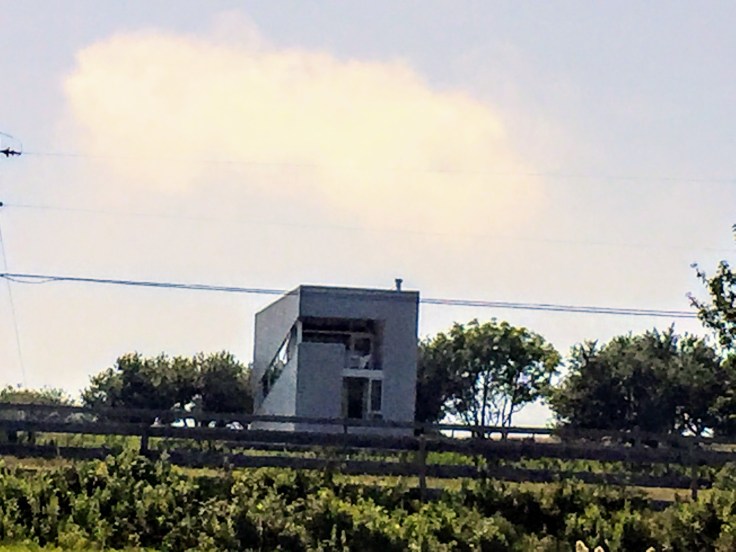
We drove around the corner and saw it from another angle.  But wait! it’s different!  It must be a different house!

2017-08-02 Rose Bay - Sliding Houses 17

It turns out that after the first house (the one that was published), he built 2 more on the hillside, and another one in the valley near the water, along with several other buildings clustered in the little community of Shobac.  However, we couldn’t quite find the original house…

2017-08-02 Rose Bay - Sliding Houses 11

2017-08-02 Rose Bay - Sliding Houses 08

2017-08-02 Rose Bay - Sliding Houses 07

2017-08-02 Rose Bay - Sliding Houses 06

2017-08-02 Rose Bay - Sliding Houses 05

2017-08-02 Rose Bay - Sliding Houses 04

But we had an amazing time. All of the houses were occupied, so we tread carefully, respecting their privacy, but we took many photos and saw many great things. It was exhilarating!

Finally, as we were leaving, we found the original, published house:

2017-08-02 Rose Bay - Sliding Houses 16

Or:

2017-08-02 Rose Bay - Sliding Houses 02

No. It’s an amazingly simple house, sited and designed to fit the site and the extreme weather.  As we left the area, we saw what the boats in the harbor can see:

2017-08-02 Rose Bay - Sliding Houses 03

Excited as we were (or, I should say, as I was…) we departed to return to the Villa. We again had Happy Hours and enjoyed hearing what everyone had done with their day… And an enjoyable time was had by all…


2017-08-01 Nor by Nor’east Caravan – Peggy’s Cove, Halifax, Tall Ships, and Four Tragedies…

Most of Nova Scotia is a large peninsula, attached to New Brunswick by a 12 mile wide isthmus. In addition, to the northeast is a huge island, Cape Breton Island. Halifax is on the South Shore of the peninsula; this is where we are going today.
2017-08-01 Halifax Bus

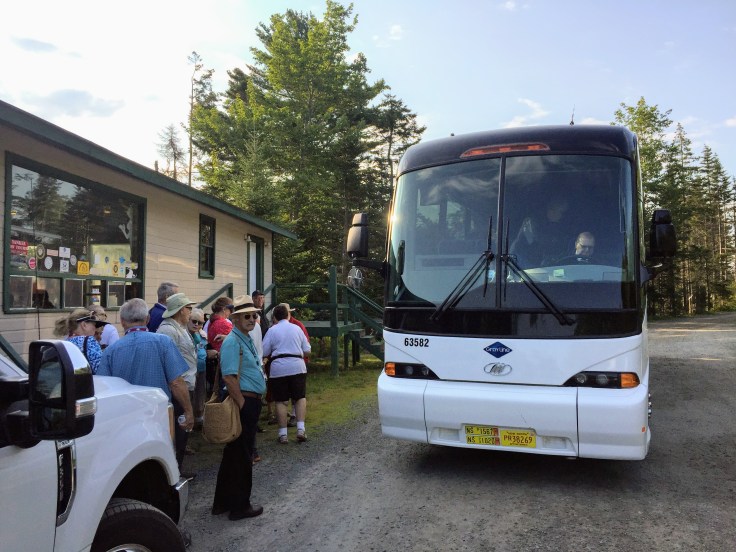
The bus picked us up at the campground at 8:15 this morning. We had a very knowledgeable tour guide, a native of Halifax and a former school teacher.  Shortly we were cruising along St. Margaret’s Bay, a lovely bay on Nova Scotia’s South Shore, lined with picturesque coves.  Unfortunately, we were sitting on the wrong side of the bus, so we have no drive-by photos to show you…

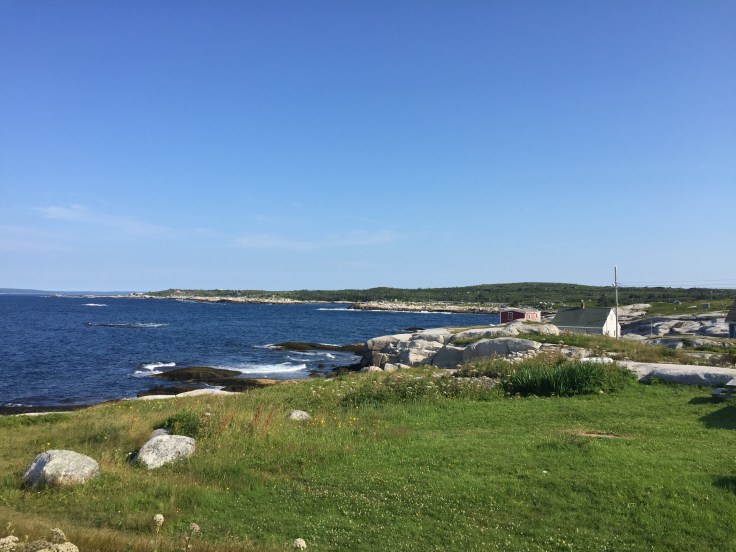
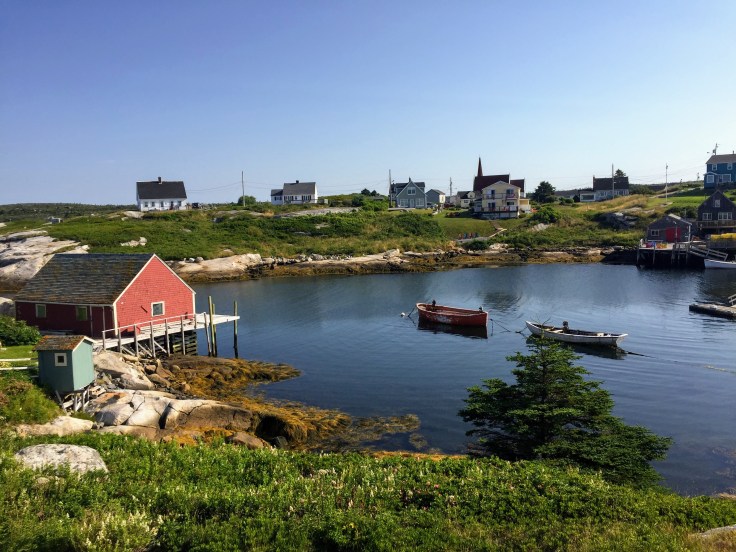
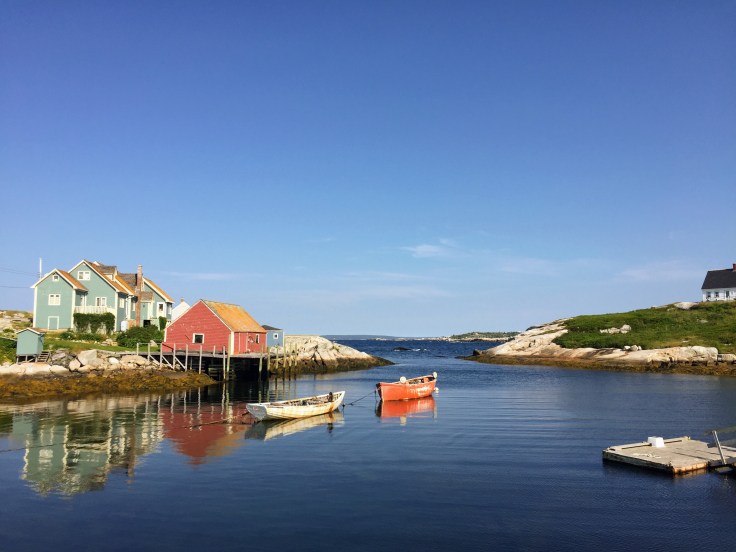
But then we arrived at Peggy’s Cove.  It has picturesque written all over it.  The hamlet of Peggy’s Cove is home to a few hearty lobster fishermen and the required number of down home artists. There are a few shops selling trinkets and puffin-watching boat tours, and a HUGE restaurant, packed on this morning with tourists having breakfast. Oh yes – there is also a lighthouse…

Our bus driver parked our huge bus amongst the other huge tour buses:

2017-08-01 Peggys Cove - Bus

We clamored over the rocks to see the lighthouse up close and personal.  It is a marvelous sight – perched out there on the open Atlantic, anchored into the rock…

2017-08-01 Peggys Cove 10

2017-08-01 Peggys Cove 13

2017-08-01 Peggys Cove 11

2017-08-01 Peggys Cove 01

Signs everywhere warn you to stay off the black rocks – they are submerged at high tide, and thus are wet and slimy and slippery.  So far two people have died this year slipping and falling into the water. Due to rough waves and cold water, rescue is virtually impossible…

Here I am, safely on the white rocks:

2017-08-01 Peggys Cove 02

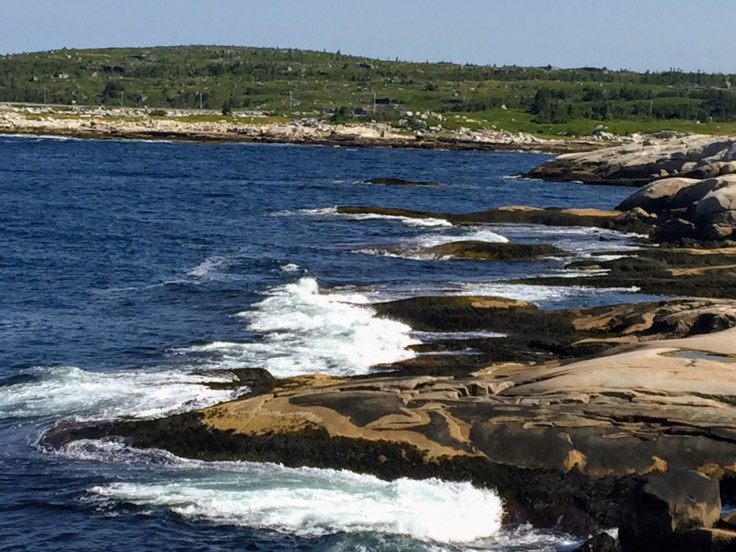
The rocky shore is a sight to behold:
2017-08-01 Peggys Cove 12

2017-08-01 Peggys Cove 09

We also walked through the town and found interesting sights:

2017-08-01 Peggys Cove 08

2017-08-01 Peggys Cove 07

2017-08-01 Peggys Cove 06

2017-08-01 Peggys Cove 05

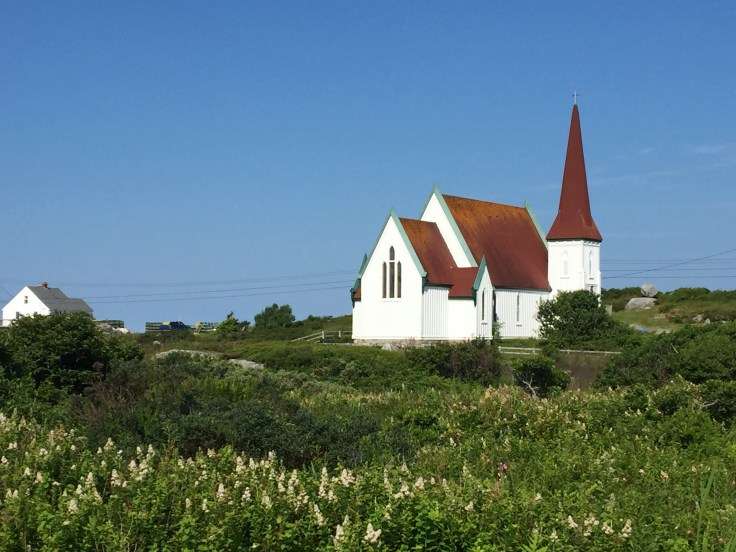
And, of course, the church:

2017-08-01 Peggys Cove - Church

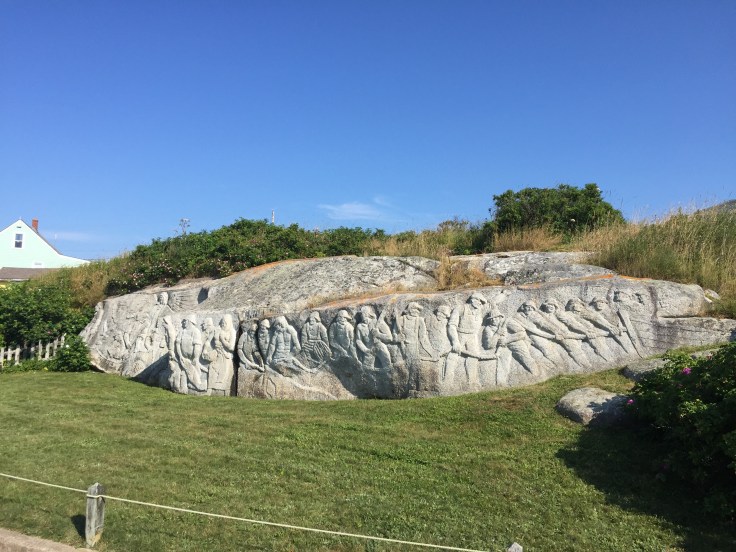
There is a Fishermen’s Memorial, carved by a long time local artist into a wall of solid granite in the side yard of his house:
2017-08-01 Peggys Cove - Fisherman Memorial 2

2017-08-01 Peggys Cove - Fisherman Memorial 1

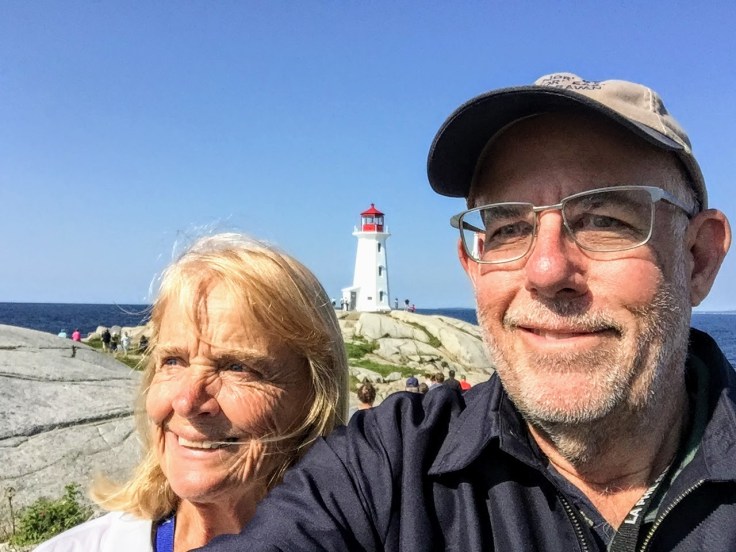
One more selfie at the lighthouse:

2017-08-01 Peggys Cove 04


After 1 1/2 hour, our tour continued as we drove into Halifax. Along the way we heard of the history of the town, and about it’s renowned hospitality to those in need.  We arrived at the Maritime Museum, but we opted not to go in at this time; we walked down to the waterfront to see the Tall Ships parading about the harbor, under full sail.

2017-08-01 Halifax - Tall Ships 05

Halifax has a HUGE harbor – most of it is beyond what we see at this waterfront location. We found a restaurant for lunch and were blessed with a water-front table. As we ate our lunch we could see the ships sail by. They sailed out of the harbor, then back in, getting themselves arranged in some semblance of order, then they circled the harbor once again. On the final trip around, they headed out to sea; they are going to Louisbourg, NS, which is our next stop on this caravan.

They have a lot of construction going on here on the waterfront, so they built a temporary floating boardwalk to keep the waterfront path continuous.  It is a real challenge, especially when a big ship goes by, and its wake hits the floating boardwalk, then everyone sees another Tall Ship and rushes to one side… It feels like it is going to tip over:

2017-08-01 Halifax - Floating Boardwalk

Our lunch at Murphy’s:

2017-08-01 Halifax - Murphys - Lunch

And being photo-bombed by Kathy:

2017-08-01 Halifax - Murphys - Selfie

So after a pleasant lunch and more big sailboats that anyone can handle, we went back into town and toured the Maritime Museum, which was interesting… maybe they should have named it the Disaster Museum…?

Several disasters have impacted the hearts and souls of the residents of Halifax.  In addition to the requisite shipwrecks and fishermen who were lost at sea, in 1912 Halifax was the best port into which to bring both the survivors and the victims of the sinking of the Titanic.  Halifax was chosen because, being on the mainland, it has a direct railroad connection to the rest of North America. (Newfoundland was closer, but, because it is an island, logistics would be a problem…)

The doctors and other personnel devised a system of numbering the victims via toe-tags and keeping records of their statistics and personal effects that is still used today. Because of this, MOST of the victims have been identified; some research with DNA is going on today to identify the few remaining unknowns.  The most remarkable:

2017-08-01 Halifax - Titanic 3

Sidney Leslie Goodwin (9 September 1910 – 15 April 1912) was a 19-month-old English boy who died during the sinking of the RMS Titanic. His unidentified body was recovered by the ship Mackay-Bennett after the sinking, and for decades was referred to as The Unknown Child. His headstone read “Erected to the memory of an unknown child whose remains were recovered after the disaster to the Titanic April 15th 1912”.  Previously, the remains of two other children were tentatively identified, but these proved to be false.  In 2008, mitochondrial DNA testing by the Armed Forces lab revealed his identity. Baby Goodwin is the only member of his family whose body has been recovered and subsequently identified.

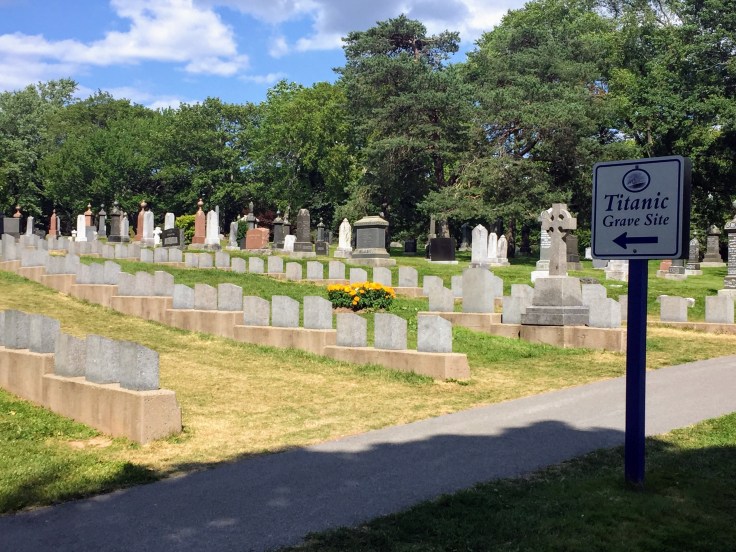
Where did we learn all this?  At the Fairview Cemetery, where 121 victims of the Titanic are buried:
2017-08-01 Halifax - Titanic 1

2017-08-01 Halifax - Titanic 2

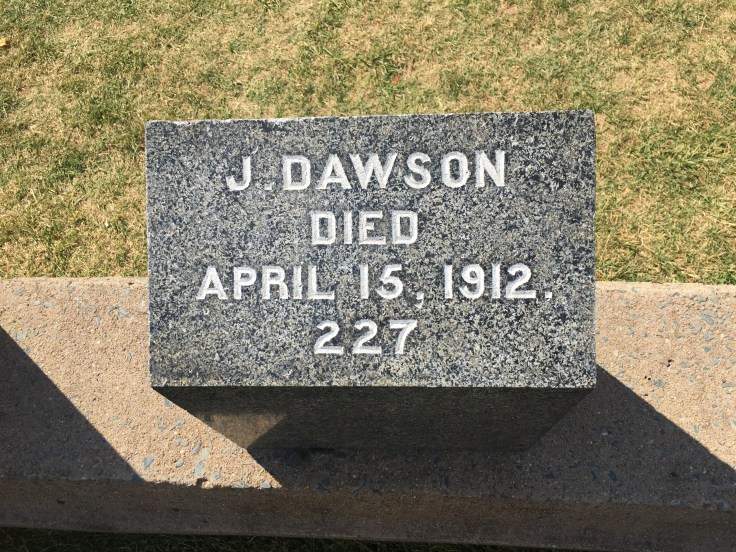
While many of the bodies were shipped home to their families, many were buried here. In addition to the grave of the “unknown child”, here is the grave of J. Dawson:
2017-08-01 Halifax - Titanic 4

No, this isn’t Jack Dawson from the Titanic movie – he is fictional.  This is Joseph Dawson, a crew member who worked below decks as a coal trimmer, about the most lowly shipboard job there is – raking the burning coal that provided the steam to power the engines…

Want more?

On the morning of 6 December 1917, the SS Mont-Blanc, a French cargo ship laden with high explosives, collided with the Norwegian vessel SS Imo in the Narrows, a strait connecting the upper Halifax Harbour to Bedford Basin.  It was a simple fender-bender, but fire broke out on board the French ship; the French crew immediately ran (and rowed) for cover, as the ship drifted towards the docks of Halifax.  The fire ignited her cargo, causing a large explosion that devastated the Richmond district of Halifax. Approximately 2,000 people were killed by blast, debris, fires and collapsed buildings, and an estimated 9,000 others were injured.  The blast was the largest man-made explosion prior to the development of nuclear weapons, releasing the equivalent energy of roughly 2.9 kilotons of TNT.  Many of the injured were blinded by shards of flying glass, moving with such force that the victims were unable to blink.  In addition to the blast, the air was now filled with oil, gunpowder residue, and other chemicals; if you were injured by flying glass or other cuts and abrasions, your wound was infused with this blueish melange; as a result, as the wound healed, the scars took on a blue tint. From then on, victims of the Halifax Explosion were easily identified by their “blue tattoos”…

Once again, the citizens of Halifax responded, caring for the wounded and identifying the dead, using systems devised for the Titanic.  Relief efforts began almost immediately, and hospitals quickly became full. Emergency shelters were erected, but an unexpected blizzard claimed many more lives, adding insult to injury… Many victims of the Halifax Explosion are buried in a mass grave at the Fairview Cemetery.

But wait! There’s more!

Swissair Flight 111 was a scheduled international passenger flight from New York City, to Geneva, Switzerland.  On September 2, 1998, the McDonnell Douglas MD-11 crashed into the Atlantic Ocean southwest of Halifax International Airport at the entrance to St. Margarets Bay, Nova Scotia. The crash site was five miles from shore, roughly equidistant from the tiny fishing and tourist communities of Peggys Cove and Bayswater.  All 229 passengers and crew aboard the MD-11 died.  The ground search and rescue operation was handled by teams from Halifax.  There is a memorial to Swissair Flight 111 near Peggy’s Cove. However, it is intended only for family members, so no parking facilities are provided for tour buses…

And, finally:

After the 911 attacks, the US halted all air traffic over the USA.  Inbound flights needed to land, and over 60 jets filled with passengers landed at Halifax airport.  12,000 passengers were now on the ground; this is over 3 1/2 percent of the population of Halifax.  As all the hotels and motels quickly filled, and as emergency shelters in high school gymnasiums were overwhelmed, Halifax residents opened their doors, inviting the “plane people” to stay in their homes.  Similar situations occurred all over Newfoundland and other parts of Eastern Canada, but we’re in Halifax, so we point out and appreciate their hospitality.

After a moving afternoon in the cemetery, toured the Public Gardens:

2017-08-01 Halifax - Public Gardens

Very formal, very symmetrical, and very Victorian…

We finally returned to campground; Happy Hours ensued and an enjoyable time was had by all.


2017-07-31 Nor by Nor’east Caravan – Leaving New Brunswick and on to Nova Scotia

We left early, along with Trevor and Gale, our leaders, and Skip and Kathy, our other parking crew members. It was a relatively long drive – about 3 1/2 hours. But the road was smooth and we discovered some of the beauty of Nova Scotia. We are staying about 15 miles outside of Halifax, which will give us a base from which to explore the mainland of Nova Scotia.

About 1/4 mile from the entrance to the campground we approached a flagger, stopping traffic.  We sat for 20 minutes, while opposing traffic came through. They were repaving this 2 lane road, and so we waited… Taking advantage of this long wait, Kathy went back to the Airstream to avail herself of the sanitary facilities. When she exited the trailer, she opened the door and just about knocked over a guy on a moped, curb-sneaking along the right side of the road.  While he didn’t hit the door, he had to take evasive action and a string of French swear words emanated from the mouth of this very irritated man…

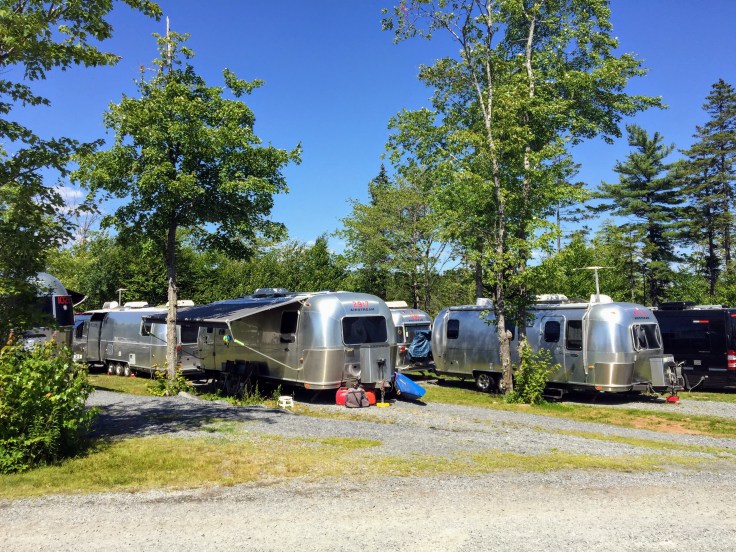
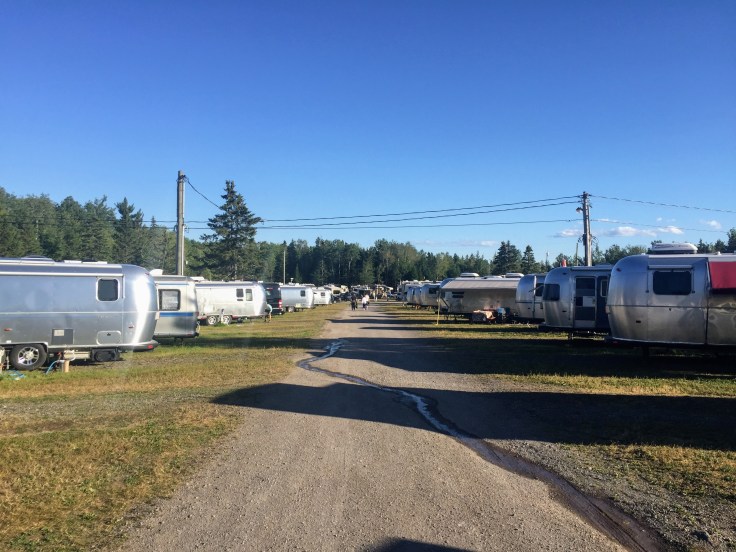
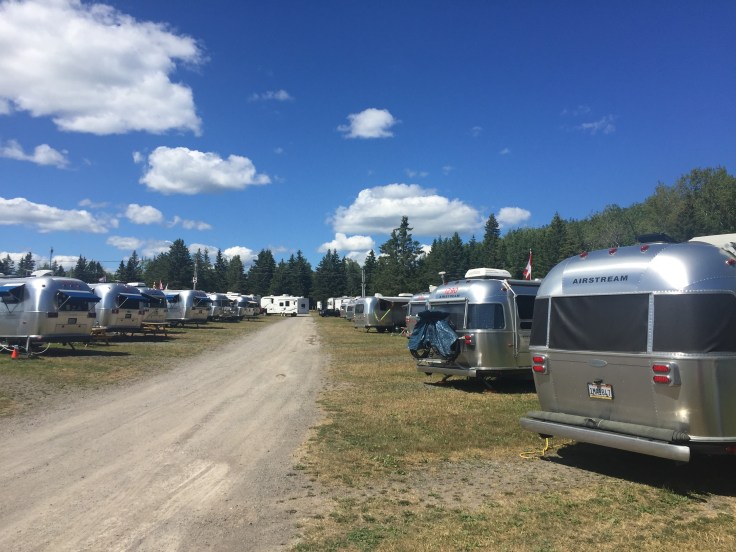
Upon arrival at the campground the manager showed the three of us where to park. He also wanted to assign all of the other sites as well. The park is a little oddly laid out (aren’t they all?) In any case, our work was limited.  Skip and Trevor stayed back among our allotted sites, whilst I stayed by the office, passing out campground information and telling each Airstreamer what to expect when the manager led them back to their site.

The first caravanners pulled in about 1/2 hour later than we expected because, duh! they were sitting in the stopped traffic out front. By the time the last folks arrived their wait had been over 45 minutes… Anyway, in the mean time, Lynda didn’t really have any assigned duties, and all I had to do in between arrivals of Airstreams was to sit in the shade and watch the 3 teenage girls in the pool across the way…

That evening we had a tourism meeting, explaining our options for exploring the area, and we again hosted Happy Hours, with about 15 people attending.  Several folks drove into Halifax to see the Tall Ships up close… Tomorrow we take a bus tour around the area.

2017-07-31 Halifax - Woodhaven RV Park 03

2017-07-31 Halifax - Woodhaven RV Park 02

2017-07-31 Halifax - Woodhaven RV Park 01


2017-07-30 Nor by Nor’east Caravan – Free day in Moncton, New Brunswick

After our exhausting day at Hopewell Rocks yesterday, today we rest.  We did some reading and writing, and I think I even took a nap.

2017-07-30 Moncton Camper City 02

We did go to a Super WalMart. I had never been in one of these before… As odd as that is, don’t forget that we are in Canada. We will be in Canada for another 5-6 weeks, so we better get used to it!

Shopping was fun, because we didn’t have any idea what they had, and we were not very picky about what we bought. We needed a few staples, but after that, we were able to buy whatever looked good and would fit into the Villa.

We did “host” Happy Hours:  We would invite people to our campsite for Happy Hours, then tell them, “Bring your own chair, bring your own food, to share, and bring your own drink.  We’ll do the rest.”  We do this almost every night.  Sometimes one person will show up, sometimes more. Once, I told 2 people, and 35 people showed up! It doesn’t matter, we all have a good time.


2017-07-30 Moncton Happy Hours 02


2017-07-30 Moncton Camper City 01

We had a drivers’ meeting to learn of tomorrow’s route into Nova Scotia. This will be a new experience for us: we are part of the parking crew.  We leave first in the morning, get to the campground early, and arrange where everyone will park, then we direct them to their spots.  How hard can this be?

So after the meeting we grabbed our bright orange vests and a pair of walkie-talkies, and retired to the Villa. Another uneventful day on our Odyssey.


2017-07-29 Nor by Nor’east Caravan – New Brunswick – Cape Hopewell Rocks at the Bay of Fundy

2017-07-29 Hopewell Rocks 01

The Bay of Fundy  is a bay on the Atlantic coast of North America, on the northeast end of the Gulf of Maine between the Canadian provinces of New Brunswick and Nova Scotia, with a small portion touching the U.S. state of Maine.

The Bay of Fundy is known for having the highest tidal range in the world. Rivaled by Ungava Bay in northern Quebec, King Sound in Western Australia, Gulf of Khambhat in India, and the Severn Estuary in the UK, it has one of the highest vertical tidal ranges in the world. Finally, The Guinness Book of World Records (1975) declared that, indeed, the Bay of Fundy, at Burntcoat Head, Nova Scotia, has the highest tides in the world. It averages about 50 vertical feet…

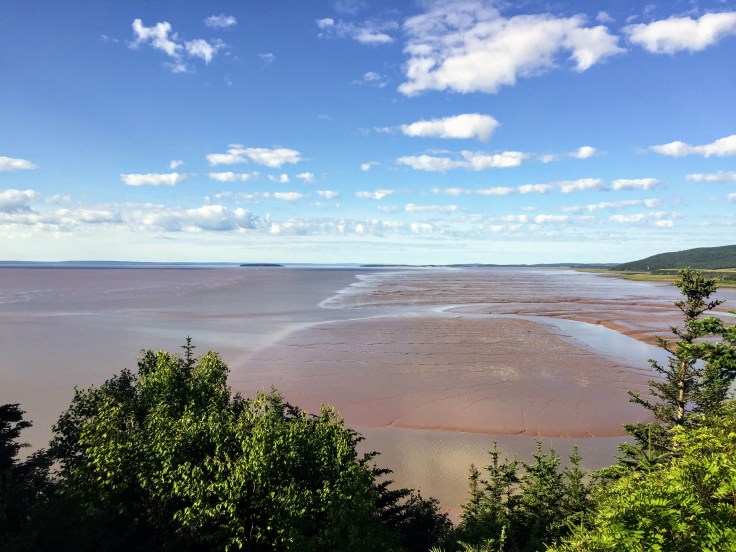
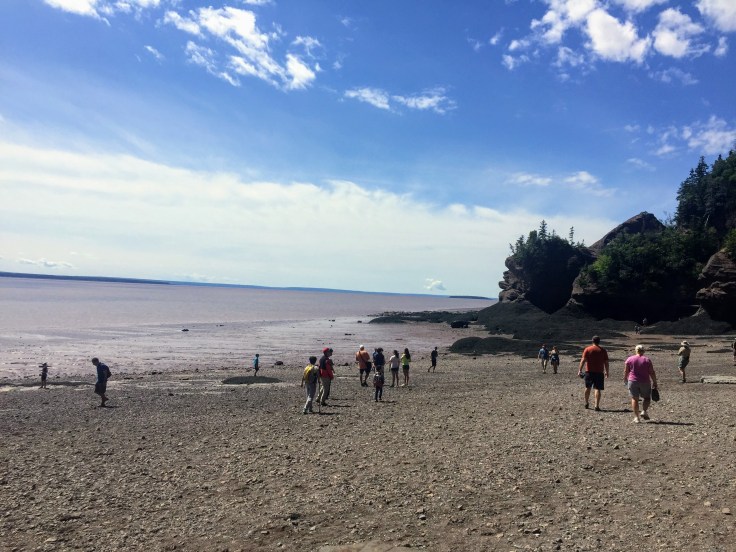
As the tide goes out, mud flats appear:

2017-07-29 Hopewell Rocks 08

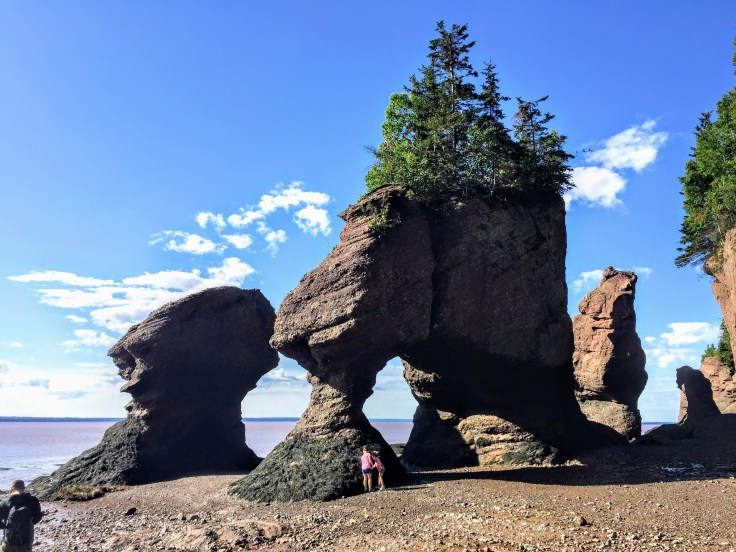
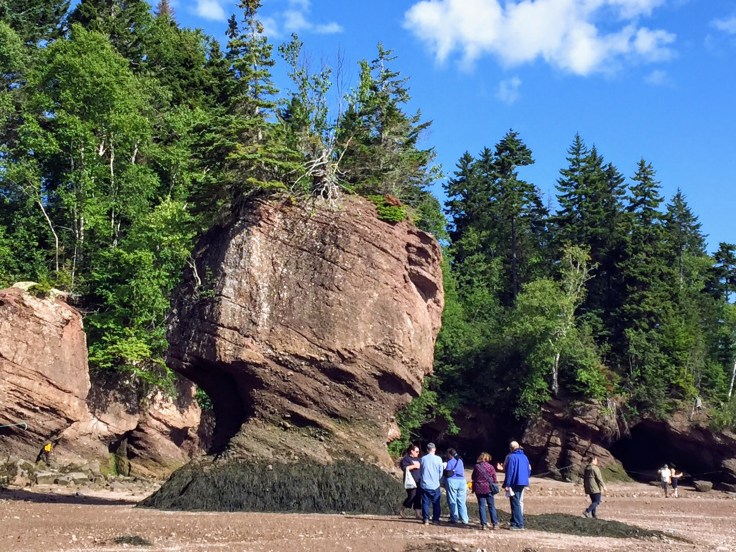
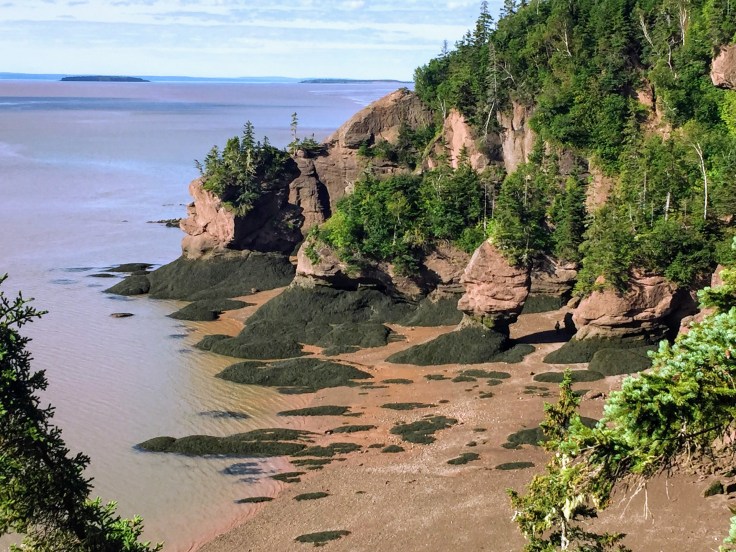
Today the caravan convoys to the Hopewell Rocks to see the effects of the tides.  We arrived about 2 hours before low tide to give us a chance to walk on the ocean floor. The main “beach” was about 1 mile long – an easy walk from one end to the other. Along the way were amazing rock outcroppings, arches, towers, and “flower pots”.

After checking out the Visitors Center we walked through the woods to the bluffs overlooking the bay below:

2017-07-29 Hopewell Rocks 02

At the first overlook we get a glimpse of what we will be experiencing:

2017-07-29 Hopewell Rocks 09

2017-07-29 Hopewell Rocks 11

2017-07-29 Hopewell Rocks 10

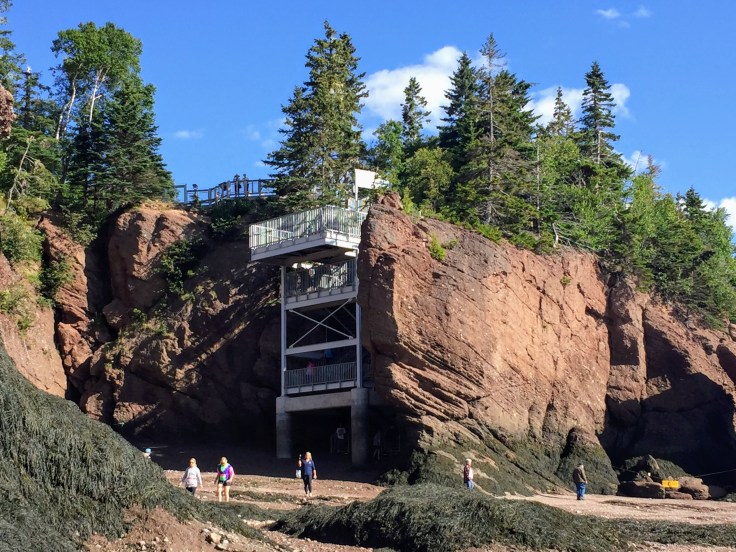
We descended this staircase to reach the ocean floor. At high tide this entire structure is mostly under water:

2017-07-29 Hopewell Rocks 14

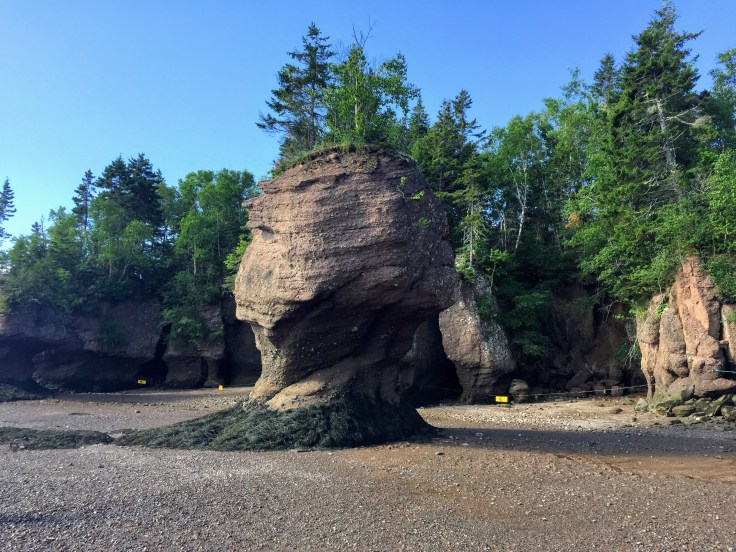
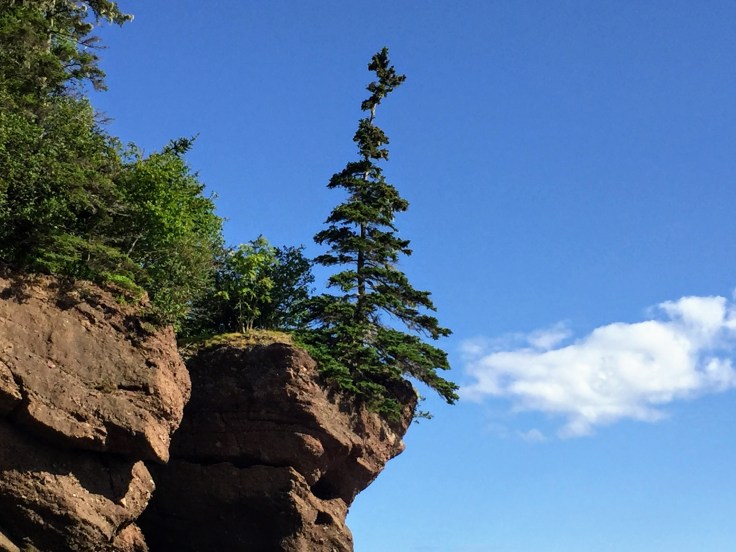
These are the “Flower Pots”; these trees grow out of virtually solid rock:

2017-07-29 Hopewell Rocks 17

2017-07-29 Hopewell Rocks 12

2017-07-29 Hopewell Rocks 04

2017-07-29 Hopewell Rocks 15

At low tide the “beach”, which is actually the ocean floor, is quite muddy:

2017-07-29 Hopewell Rocks 16

A rare photo of the two of us:

2017-07-29 Hopewell Rocks 06

And some of our other intrepid caravanners:

2017-07-29 Hopewell Rocks 07


Just about at low tide the ranger came down and gave his talk. We walked, again, from one end to the other as he explained the rocks, the birds, the towers, and the flower pots.

2017-07-29 Hopewell Rocks 18

Once the tide starts to come in the rangers will place themselves at either end of the “beach” and herd the tourists back to the stairs up. The tides will rise at the rate of about 5 vertical feet per minute, so once the floor is covered, you’re under water quickly.

After all this excitement we needed lunch. We drove south to the tiny town of Alma for some fish and chips…

By the time we returned to The Villa we were exhausted… But I have things to do…

Since internet service in Canada is mostly non-existent, I went to the local Starbucks to catch up on writing and finances. It was nice to be able to work on the computer like it is supposed to be. Next, I went to the local New Brunswick Provincial Liquor store.  I restocked the larder, so to speak, and called it a day.

Happy hours ensued, and an enjoyable time was had by all.

2017-07-28 Nor by Nor’east Caravan – Leaving Campobello Island; Two border crossings, and into New Brunswick

We began our travels off the island by crossing the FDR bridge, towards Maine.  As we waited at Customs, we admired the lovely views:


2017-07-28 Campobello - 2

2017-07-28 Campobello - 1

It took quite some time to get through Customs back into the USA.  First of all, this is a tiny station, normally only serving this tiny island; also, because 25 Airstreams began streaming across the bridge starting at about 9:00… Each trailer was inspected – we had not seen this in our three previous border crossings; apparently they are looking for either animals or people – they opened all the larger cupboards and closets. They also checked the refrigerator, probably for fresh meat or produce.  In any case, they let us back into the USA and we were on our way.

We drove generally north, to the Canadian border, and went through Canadian Customs; similar to our last experience, they seemed mostly concerned with things that we might be bringing into Canada and leaving there.  Again, I refrained from mentioning the contents of our holding tanks, which we intended to empty at the first opportunity…

Moncton, New Brunswick, is a relatively large town; its claim to fame is that it is the largest city near the Hopewell Rocks, the best place to experience the extreme tides of the Bay of Fundy. (More on this tomorrow…)

So we settled into Campers City RV Resort in Moncton, NB, and readied ourselves for the coming days:

2017-07-28 Moncton.JPG

First order of business was to go to Costco and restock the wine and liquor cabinet, since the Canadian Government frowns greatly upon bringing vast quantities of wine and liquor into Canada from the USA.  Also, I live on 5-8 bottles per day of Kirkland Vita-Rain water (fake vitamin water that has even fewer vitamins than real Vitamin Water…).  And we needed plain Kirkland water for coffee and such.  Plus, my daily diet consists mainly of Pure Protein Bars, available only at Costco.

The Costco was only 1.2 miles away; we gleefully set out for our shopping spree.

WORST COSTCO EVER!

First of all, it was backwards… But I could deal with that. But:  NO WATER!  How can Costco NOT have 2-3 aisles of water?  This Costco had NO WATER. No plain water; no sparkling wter; no Gator-Ade; no Vita Rain water.  Nothing!  Next insult?  NO ALCOHOL!!!  No Makers Mark, no wine, nothing. Apparently the Canadian Government thinks only the Canadian Government is capable of selling wine and liquor…

Fortunately for me, we did find my protein bars, so we stocked up on them; we are spending the next 5 weeks in Canada: who knows when we will be able to buy them again…?

In any case, we returned to the campground woebegone and wretched. Our spirits picked up a bit as we set about to arrange happy hour: table clothes on the picnic table, chairs, food, wine, etc.  All set; then:  RAIN!  Giant Rain!  Pouring Rain!  We had checked with Steve Jobs and he had promised: NO RAIN!

We scrambled about, and pulled what we could inside.  And we waited. As they say in these foreign parts, “If you don’t like the weather, wait 10 minutes…”. So, after 10 minutes the rain stopped, and we restarted… Happy hours ensued, and an enjoyable time was had by all…


As is our custom, here are our GREAT grandchildren…

Erin, Roisin, and George, looking on…

IMG_6942


Ian, and his dad, Kevin:

IMG_6946


2017-07-27 Nor by Nor’east Caravan – Campobello Island – FDR and Eleanor…

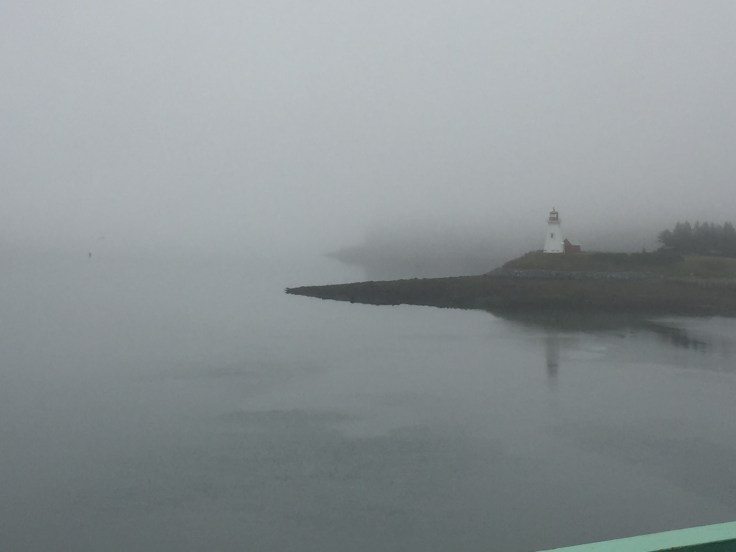
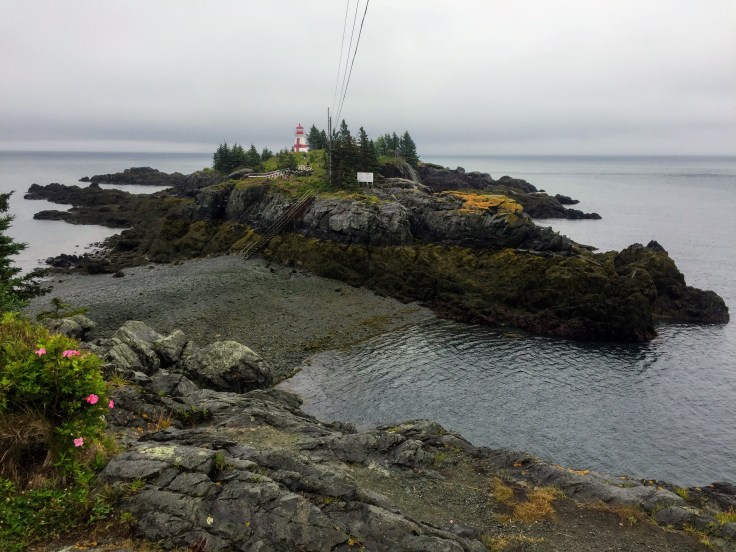
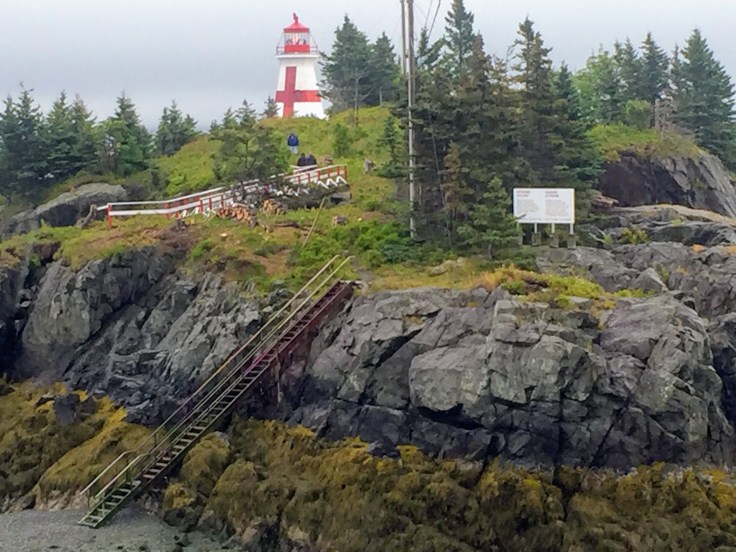
We began our day in the rain.  It was very overcast and foggy.  We drove to the lighthouse:

2017-07-27 Campobello - Quoddy LH 2

The lighthouse is on the northernmost tip of the island, and it is only accessible at low tide; at high tide it becomes its own island. Tides here are about 18′-20′, this being within the Bay of Fundy. (More on that in a few days…)

2017-07-27 Campobello - Quoddy LH 3

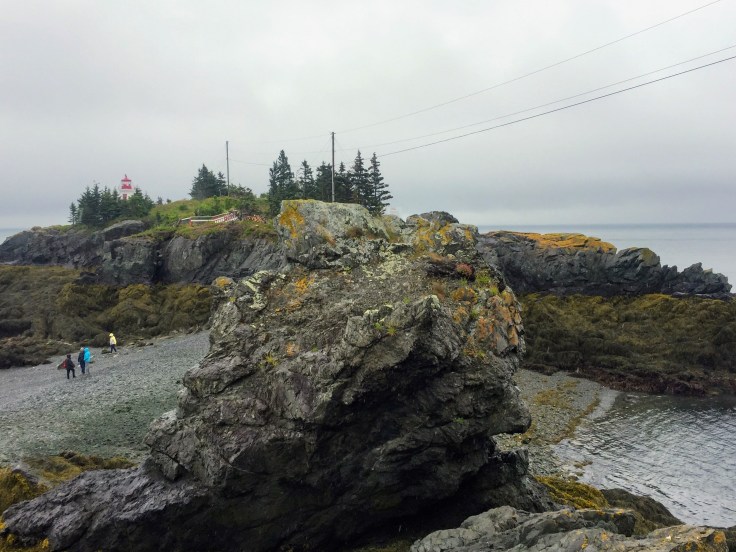
First you have to climb down steep steps to the “beach”, which, at high tide, is the ocean floor…) Then you have to walk across the rocks and seaweed and climb up steep steps on the opposite side to access the lighthouse.

2017-07-27 Campobello - Quoddy LH 1

We’ve seen lighthouses before, and several people had already slipped and fallen by the time we arrived, so we stayed on the safe upper path…

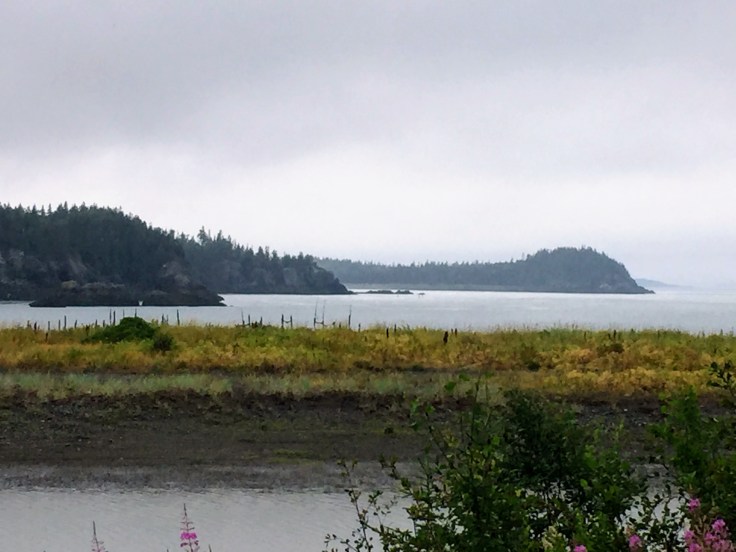
After enjoying the view of the lighthouse we drove through the rest of the northern part of the island. This area is very sparsely populated, and the scenery was beautiful.

2017-07-27 Campobello 03

2017-07-27 Campobello 02

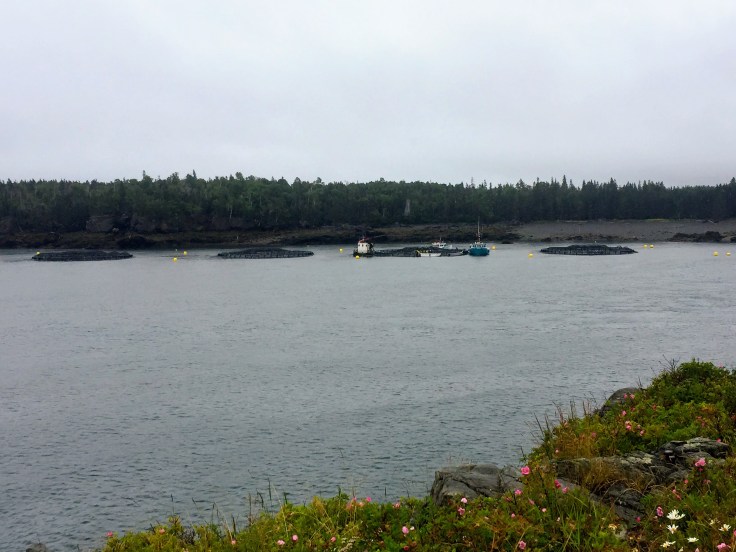
These small “islands” are actually salmon farms:

2017-07-27 Campobello 01


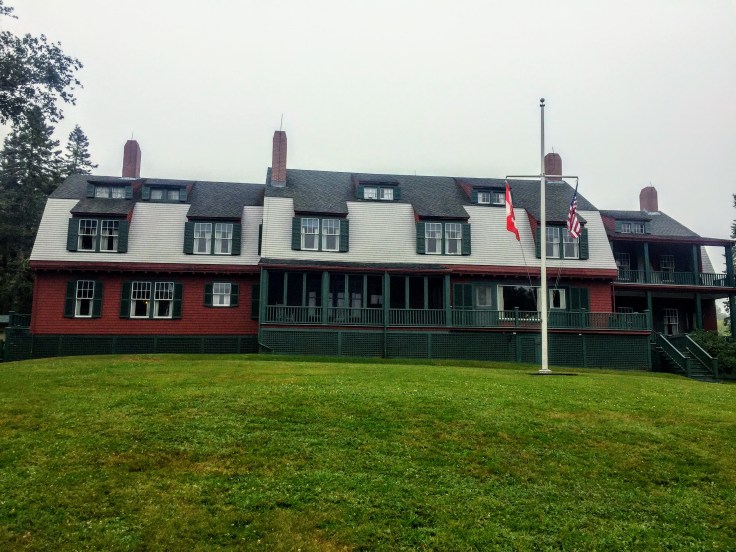
We then headed to the main attraction of the day: Franklin and Eleanor Roosevelt’s “cottage” here on the island…

2017-07-27 Campobello - FDR 01

Franklin Roosevelt spent many enjoyable vacations at his summer home on Campobello Island in New Brunswick’s Bay of Fundy.

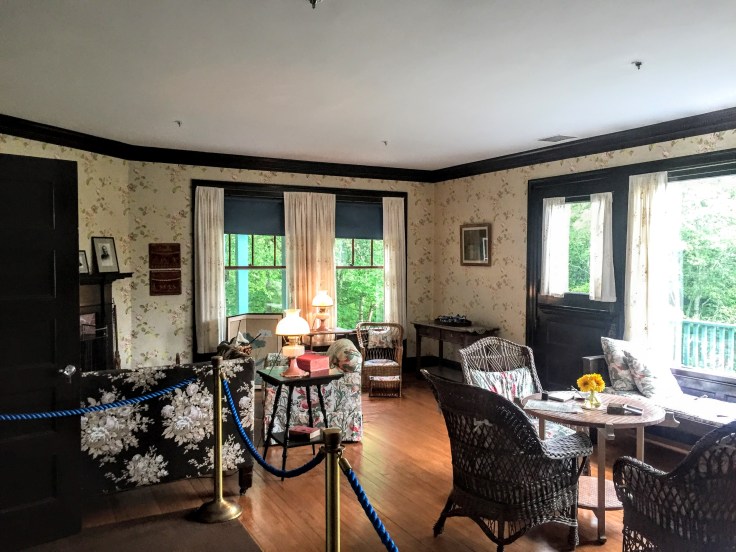
FDR’s “cottage” has been preserved, and is almost exactly as it was in 1920, the summer before Franklin was stricken with polio. We were able to tour the first and second floors of the 34-room memorabilia filled cottage. Guides were stationed throughout the home to offer interpretation and answer questions about the house, its historic furnishings, and the family.  Interestingly, a ramp installed a few years ago provides easy access to the first floor, although FDR never added a ramp to accommodate his wheelchair… (But, then again, he had “people”…)

The “cottage” was built in 1897 for Mrs. Hartman Kuhn, of Boston.  It is next door to the cottage of FDR’s parents, where he summered as a child.  Mrs. Kuhn developed a fondness for Eleanor when Franklin and Eleanor summered at his mother’s cottage next door. A provision in Mrs. Kuhn’s will offered her cottage to FDR’s mother, Sara, for $5,000.00.  Sara purchased the furnished cottage and 5 acres of land in 1909, and gave the cottage to Franklin and Eleanor.  The growing family spent summers in the cottage from 1909 to 1921.  FDR altered the design of the house in 1915, when he added a new wing to provide additional space for his growing family.

2017-07-27 Campobello - FDR 21


2017-07-27 Campobello - FDR 22

FDR’s cottage exhibits design principles of the Arts and Crafts movement, and also elements of early Dutch-American Colonial architecture.  Considerations in the design of summer homes of the era were comfort, orientation to a scenic view and to the sun, and a “picturesque charm” so valued by the Arts and Crafts Movement.

I’m told that the cottage contains 34 rooms, 18 of which are bedrooms and 6 of which are bathrooms, although I didn’t count them.  The third floor, which we didn’t see, contained guest rooms and servants’ rooms, and, I assume, 3 bathrooms… There was even a bedroom on the second floor for Louis Howe, FDR’s political adviser…

The Kitchen:

2017-07-27 Campobello - FDR 26


The Servants Dining, in the Kitchen:

2017-07-27 Campobello - FDR 23


The Laundry:

2017-07-27 Campobello - FDR 25


The Master Bedroom:

2017-07-27 Campobello - FDR 24

The cottage was considered quite modern for its time, but had neither electricity nor telephone.  Kerosene lamps and candles provided light.  Seven fireplaces and kitchen coal and wood-fired stoves provided heat.  It even had hot and cold running water for bathing, cooking, and cleaning.  (Many cottages on the island had neither kerosene lamps nor running water… these people prided themselves as being “rustic”, but they also had servants to feed the fireplaces, light the candles, cook the meals, haul the water, and empty the chamber pots…)    The water came from storage tanks on the third floor of the cottage.  The storage tanks were fed by gravity from a tank atop a nearby windmill. Drinking water came in large bottles by horse and cart, from a spring called Barrel Well.
Every summer, the Roosevelts brought a nurse and a governess to tutor and instruct the children, and several servants to run the cottage.  Campobello residents were hired to help with the daily chores.
The rear of the house (note the screened porch):

2017-07-27 Campobello - FDR 02


The view from the house:

2017-07-27 Campobello - FDR 03


The rear of the house from the water’s edge, at the dock:


2017-07-27 Campobello - FDR 04


Lynda standing on the dock:

2017-07-27 Campobello - FDR 10


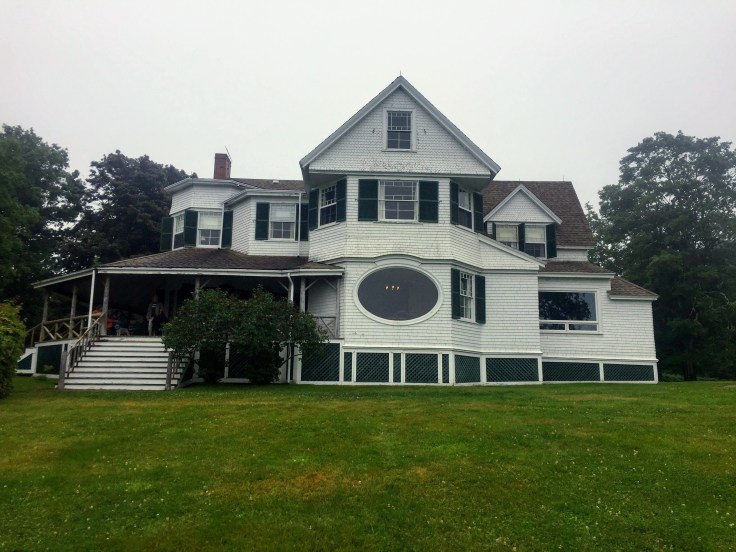
In addition to the Roosevelt cottage we were able to see the Hubbard Cottage… It sits adjacent to FDR’s cottage, on the other side of where FDR’s mother cottage was:

2017-07-27 Campobello - Hubbard 1

(They are working on replacing some siding; thus, the cherry-picker…)

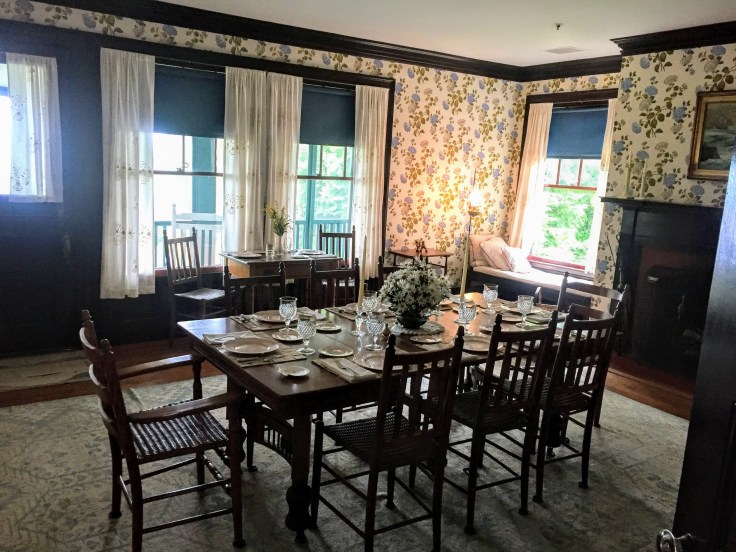
Only the first floor was available to tour, but there were grand rooms to see:

2017-07-27 Campobello - Hubbard 3

2017-07-27 Campobello - Hubbard 4

2017-07-27 Campobello - Hubbard 5


And a grand porch:

2017-07-27 Campobello - Hubbard 2


The rear of the house:

2017-07-27 Campobello - Hubbard 6


We spent the middle of the day at Josie’s porch, a local coffee-house and general community hang-out.  But they had good internet access, so we spent some quality time catching up on important things…

Later that afternoon we had “Tea with Eleanor”. We assembled at the Wells-Shober house; we were led into parlors and dining room where the 49 of us sat and enjoyed tea and cookies. Two docents spoke for about 45 minutes on the life and times of Eleanor Roosevelt.  She had a tough life growing up, losing her parents at an early age and attending boarding schools in England and other parts of Europe.  It was interesting to hear all this; she never sought the limelight, and hated politics, but she did what she knew was right. After FDR was struck down by polio, it was she who went out and gave speeches to keep FDR in the public eye. After FDR’s death she continued to champion women’s rights and civil rights. During WWII she traveled the world, meeting military personnel in hospitals. She wrote personal letters to the families of everyone she met; sometimes she wrote 12-14 hours per day for months on end to give these families some sense of comfort.

She last returned to Campobello Island in 1962 for the dedication of the FDR bridge from Maine onto the island.

The Wells-Shober Cottage:

2017-07-27 Campobello - Tea 01


Waiting to be taken in:

2017-07-27 Campobello - Tea 02


Hilarity ensues as we try to find our places:

2017-07-27 Campobello - Tea 03


The docents, telling their stories:  (The short one is a 10th generation islander…)

2017-07-27 Campobello - Tea 04


After the tea, the ladies of the caravan assembled for a group picture, as is the caravan’s tradition…

2017-07-27 Campobello - Tea 05


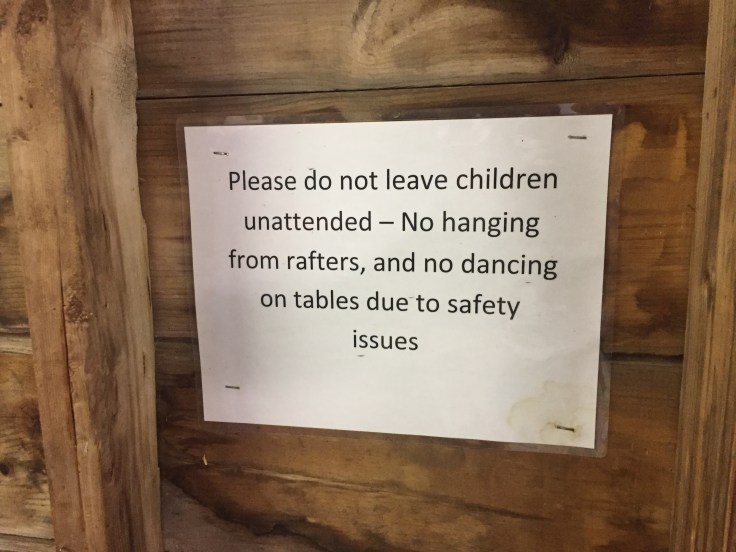
After tea we returned to the campground and readied ourselves for another travel day. We had a “Drivers’ Meeting” to discuss timing and routing.  We met in the campground recreation room; apparently they’ve been having good times, based on this sign…

2017-07-27 Campobello - Sign

As always, an enjoyable time was had by all…


2017-07-26 Nor by Nor’east Caravan – Travel day to Campobello

Today is our last day in Maine. We are moving once again, this time into New Brunswick, Canada, specifically to Campobello Island, the summer home of Franklin Delano Roosevelt.

2017-07-26 Campobello 02


We left the campground in Trenton about 10:00 am, and headed north on highway 1, a small, 2-lane road that leads further and further away from civilization. Finally, after about 2 ½ hours we turned east and drove through the town of Lubec, which claims to be the easternmost city in the USA. Who am I to argue?

We went through customs, with our experience being similar to crossing the border in Niagara Falls, which we did back on June 24.   Once onto the island we found our campground and settled in.

Campobello Island is located at the entrance to Passamaquoddy Bay, adjacent to the entrance to Cobscook Bay, and within the Bay of Fundy. The island has no road connection to the rest of Canada; the bridge we drove over connects it to Lubec, in Maine. Reaching mainland Canada by car without crossing an international border is possible only during the summer season and requires two separate ferry trips, the first to nearby Deer Island, then from Deer Island to L’Etete.

Measuring 8.7 miles long and about 3.1 miles wide, it has an area of 15.3 sq miles; the island’s permanent population in 2011 was 925.

Campobello has always relied heavily on fishing as the mainstay of the island economy; however, the Passamaquoddy Bay region’s potential for tourism was discovered during the 1880s at about the same time as The Algonquin resort was built at nearby St. Andrews and the resort communities of Bar Harbor and Newport were beginning to develop. Campobello Island became home to a similar, although much smaller and more exclusive, development following the acquisition of some island properties by several private American investors. A luxurious resort hotel was built and the island became a popular summer colony for wealthy Canadians and Americans, many of whom built grand estates there.

Included in this group were Sara Delano and her husband James Roosevelt Sr. from New York City. Sara Delano had a number of Delano cousins living in Maine, and Campobello offered a beautiful summer retreat where their family members could easily visit.  From 1883 onward, the Roosevelt family made Campobello Island their summer home.  Their son Franklin D. Roosevelt would spend his summers on Campobello at the family home from the age of one until, as an adult, he “acquired” his own property — a 34-room “cottage” — which he used as a summer retreat until 1939.  It is next door to Sara and James Roosevelt cottage.  You might wonder why he chose to live next door to his mother?  Simple:  She bought the house and gave it to him.

It was at Campobello, in August 1921, that the future president fell ill and was diagnosed with polio, which resulted in his total and permanent paralysis from the waist down. Roosevelt did strive to regain use of his legs but never again stood or walked unassisted.

During the 20th century, the island’s prosperity from its wealthy visitors declined with the change in lifestyles brought on by a new mobility afforded by automobiles, airplanes, and air conditioning in large inland cities. Nonetheless, for President Roosevelt, the tranquility was exactly what he and his family cherished, and the property remained in their hands until 1952 when it was sold by Elliott Roosevelt (Franklin and Eleanor’s fourth child). Elliott decided to sell the house after his mother, Eleanor, had sold it to him. Elliott sold it to Victor Hammer and his brother Armand Hammer of Boston and they owned it up until 1963. However, they said Eleanor was always welcome to come whenever she pleased, and her last visit was in 1962 to attend the opening of the Franklin Delano Roosevelt Bridge connecting Campobello Island to Lubec, Maine. In 1962 the brothers tried to sell it but got no takers; (The were asking $50,000 for it, fully furnished with all the Roosevelt furniture…) they subsequently donated the cottage to the U.S. and Canadian governments in 1963 as an international park. The Roosevelt Campobello International Park is the only one of its kind because it is run by both the Canadian and American governments, the park being located in Canadian territory. The park is now equally staffed by both Americans and Canadians.

In 1960, motion-picture producer Dore Schary and director Vincent J. Donehue made the film Sunrise at Campobello, based on Schary’s Tony Award winning Broadway play of the same name. Starring Ralph Bellamy as Franklin D. Roosevelt, the film covers the years 1921 to 1924 at Campobello Island and events leading up to Roosevelt’s nomination as the Democratic Party’s candidate for president.

So now you know more about Campobello than most Americans do.  (If people DO know about Roosevelt’s time here, they are always surprised to find out that it is in Canada…)

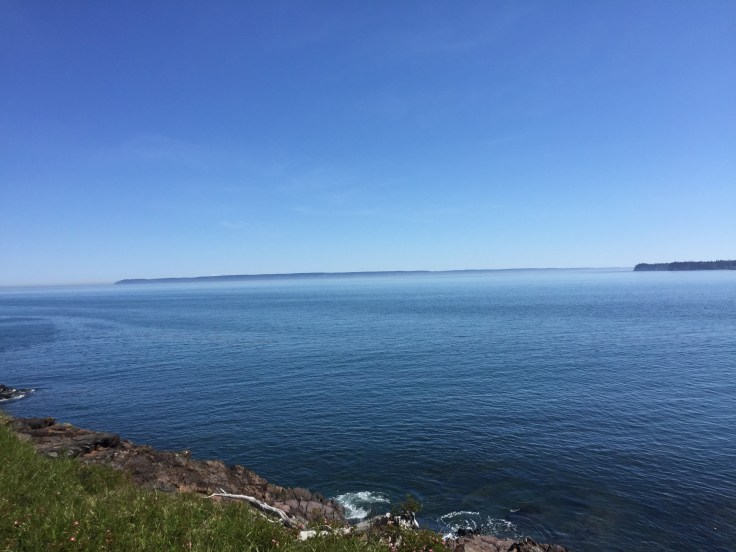
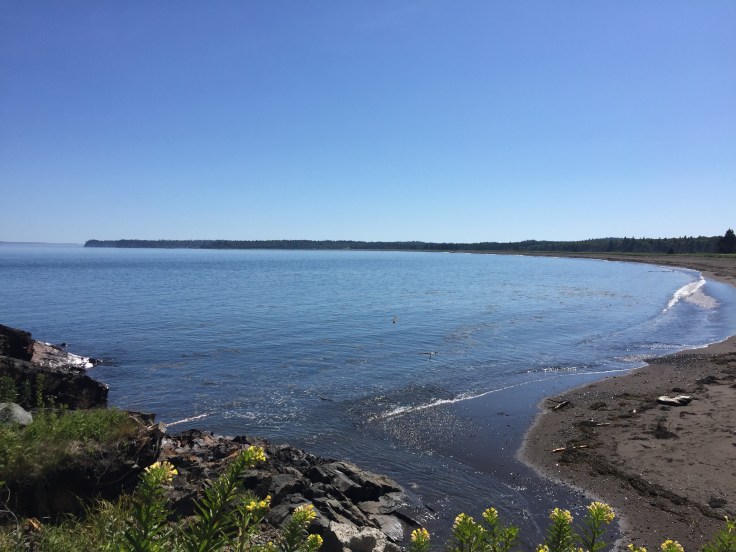
We went for a walk and found a nearby beach on the bay.  The land mass you see in the background is Grand Manat Island; Nova Scotia is beyond that, across the widest part of the Bay of Fundy…


2017-07-26 Campobello 05


2017-07-26 Campobello 03

2017-07-26 Campobello 04


2017-07-26 Campobello 01


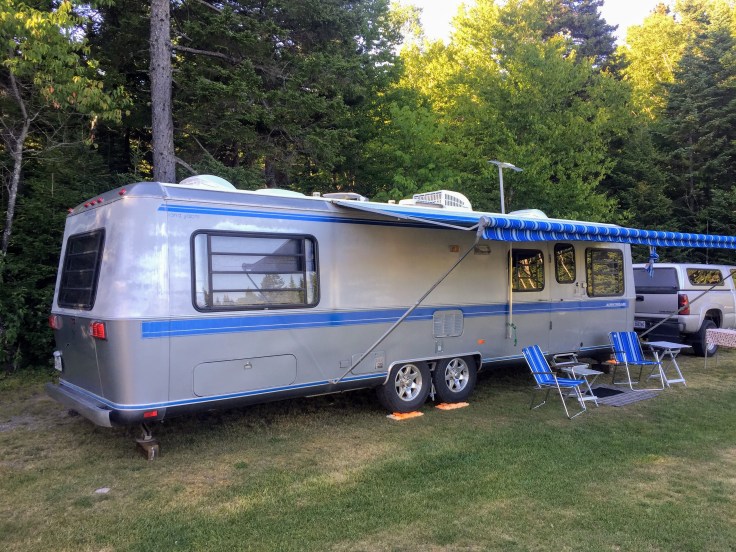
Some folks have asked for a better picture of the Squarestream on this caravan; here it is:

2017-07-26 Campobello - Squarestream

This is a 1989 32′ Airstream Land Yacht. It is aluminum skinned, but instead of rivets they used high-strength epoxy to attach the skins to the frames. It resulted in a much more rigid unit. However, they were not popular with the traditionalists, so the series was dropped a few years later.

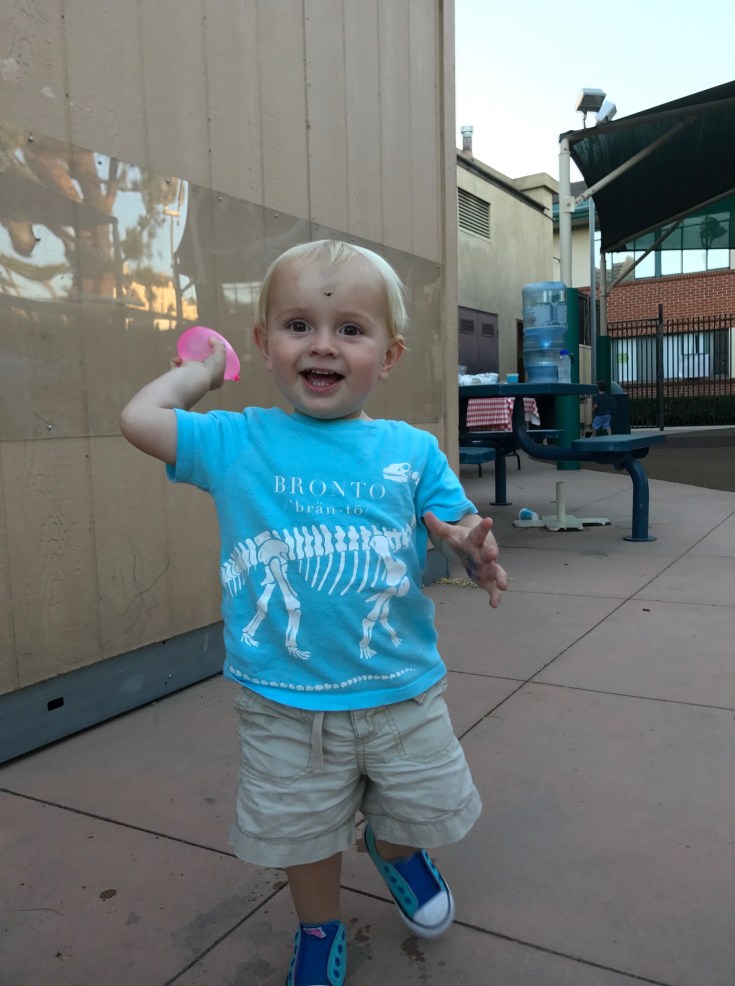
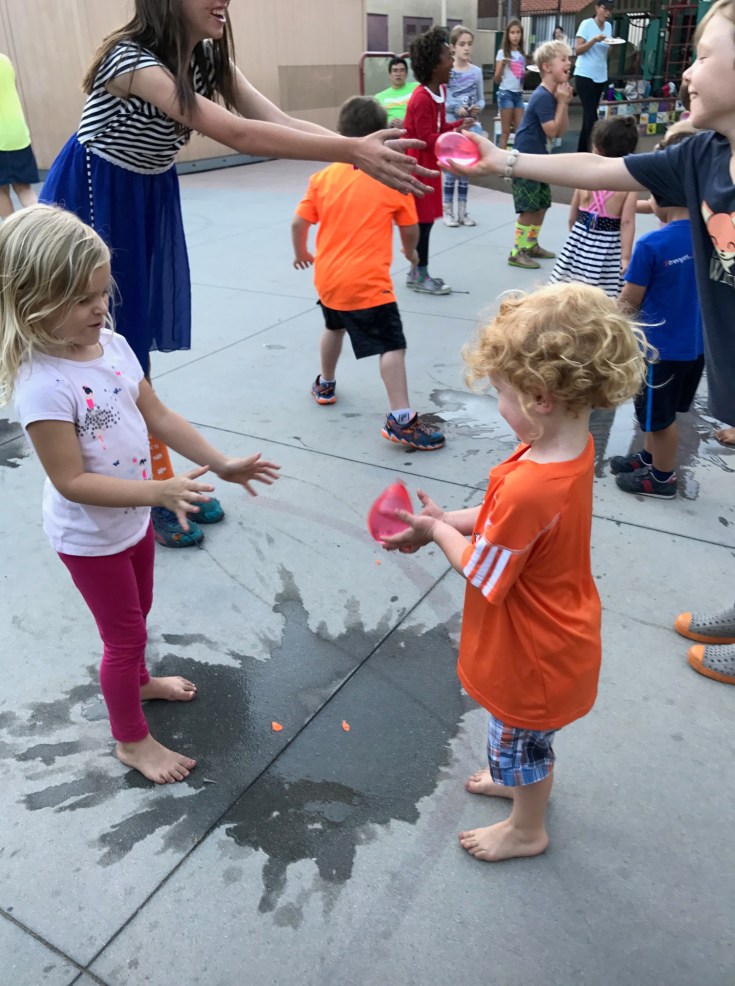
And, as is our custom, here are pictures of our grandchildren, as they learn all about water balloons……

2017-07-26 George

2017-07-26 Ian and Roisin

2017-07-25 Nor by Nor’east Caravan – Maine – Scoodic Peninsula and Seal Cove Auto Museum;

Our adventure at Acadia continued for another day. This time we headed out to the Scoodic Peninsula.

2017-07-25 Acadia Scoodic 13

This place is on the mainland, across the bay from Mt. Desert Island, to the east.  It is about a one hour drive, because you have to drive way north and east before you can begin the drive down the peninsula.  Much of the peninsula is also part of Acadia NP, but there are other towns – many are working lobster towns.  But it was another beautiful drive, very remote and quiet.  We found many great views and quiet towns and harbors.

2017-07-25 Acadia Scoodic 12

2017-07-25 Acadia Scoodic 10

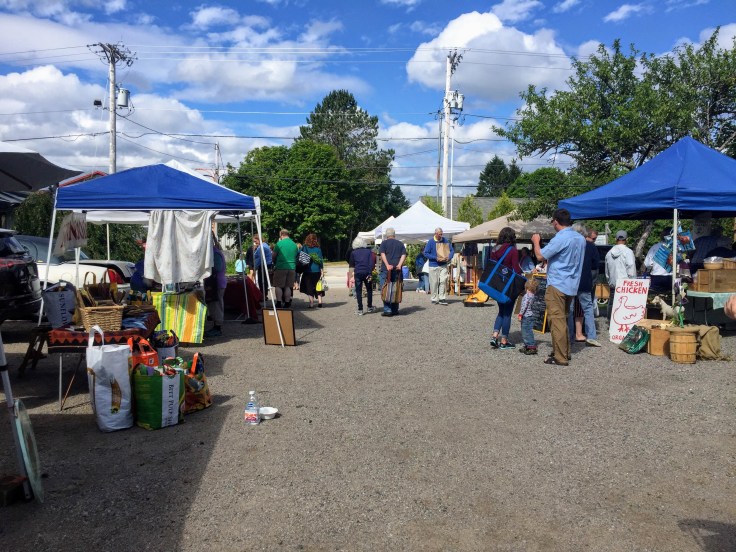
In Winter Harbor we stopped in at their Farmers’ Market and bought blueberry scones for a special breakfast treat (tomorrow):

2017-07-25 Scoodic - Winter Harbor Farmers Market 02

2017-07-25 Scoodic - Winter Harbor Farmers Market 01


There is a sculpture in the bay at Winter Harbor of a stylized whale tail; we saw it at low tide, and later as the tide was coming in:2017-07-25 Scoodic - Winter Harbor Whale Tail Sculpture 01

2017-07-25 Scoodic - Winter Harbor Whale Tail Sculpture 02

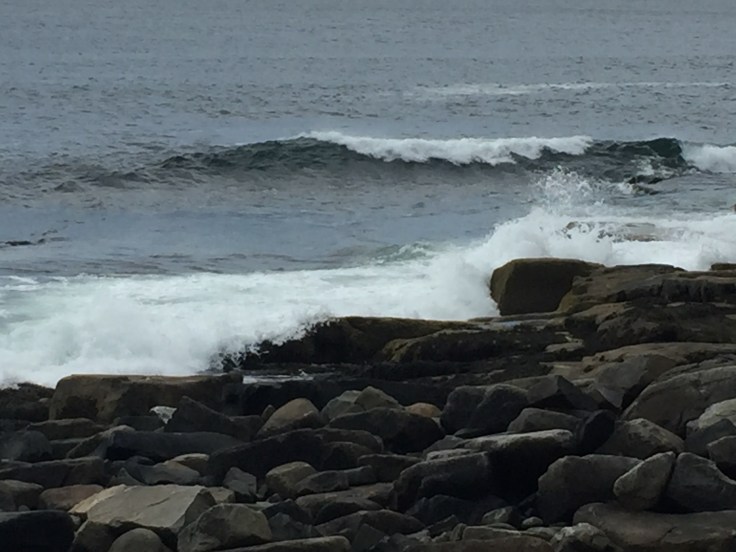
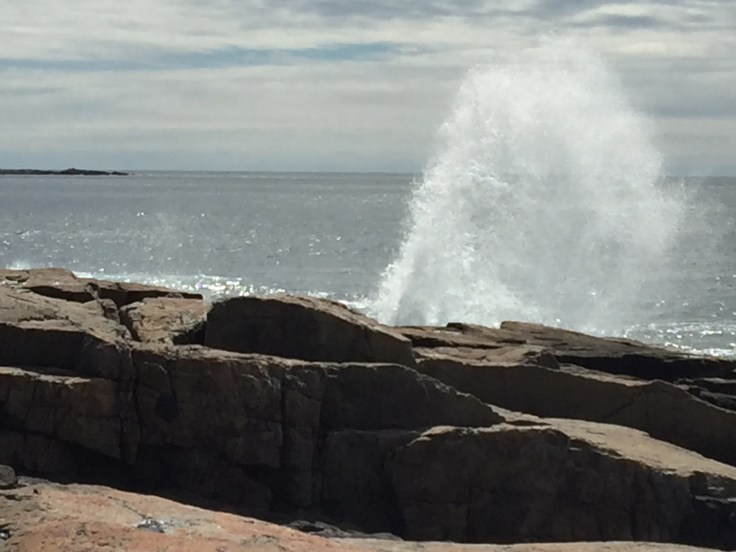
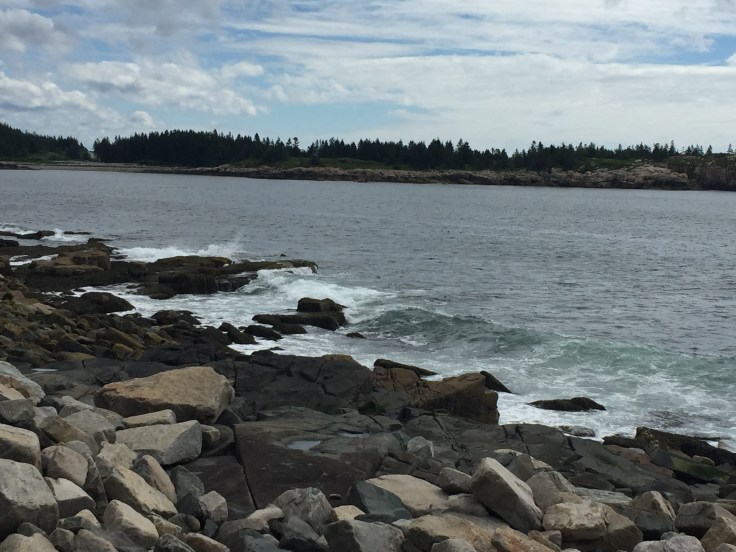
We saw Winter Harbor, Prospect Harbor, and Gouldsboro…  And plenty of rocky shoreline:

2017-07-25 Acadia Scoodic 11

2017-07-25 Acadia Scoodic 09

2017-07-25 Acadia Scoodic 07

2017-07-25 Acadia Scoodic 07


When it was time for lunch, we stopped it at Smokey’s BBQ and Lobster. Texas BBQ here in Maine!  But, we are in Maine, so we had fish and chips instead…

2017-07-25 Smokeys BBQ and Lobster

Our afternoon destination was Seal Cove Automobile Museum, back on Mt. Desert Island.  The museum’s collection is the legacy of Richard Paine, a local resident whose passion for cars and their related history led to his buying and selling many collectible cars throughout his life. Upon his death the collection was culled by selling off duplicate cars to create an endowment to keep the cars that tell the story of the beginning of the automobile age.

The collection features some of the earliest automobiles and motorcycles, as well as clothing and accessories, from 1895 through the early 1920s. The cars represent the stories about invention and innovation, art, design, women’s rights, and social and economic changes that came about through the automobile.  Inventors were experimenting with steam, electricity, and gas-powered engines.  There were no standards – anything that might work was tried.

The current exhibit, Auto Wars: Then & Now, explores the debate a century ago over whether or not to allow cars on Mount Desert Island.  The exhibit is presented in a “choose your own adventure” style, allowing YOU to decide whether you would have been for or against cars on the island.  In a nutshell, the wealthy summer residents, who considered their lifestyle to be “rustic”, were opposed to cars on MDI. The locals, who needed the convenience of easy transportation, were in favor. For many years those opposing cars won out, but finally, in 1916, cars were allowed, and this decision forever changed the nature of MDI.

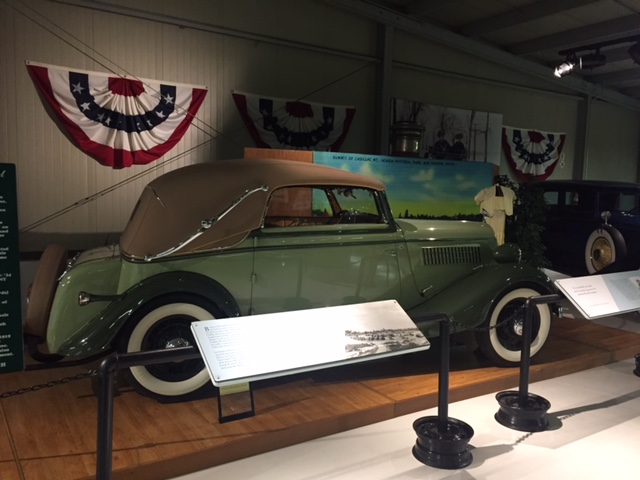
Two cars were of particular interest to me:  A 1934 Ford, with a body custom made in Germany, and custom fitted to a 1934 Ford chassis. It was the design of Edsel Ford, and it was his personal car at his summer cottage on the island.  It became a prototype for the Continental which was released shortly thereafter.

2017-07-25 Seal Cove Auto Museum 22

2017-07-25 Seal Cove Auto Museum 21

Also, while not an old or rare car, I liked seeing the 1991 Mercedes SEL; it belonged to Laurance Rockefeller, and it was the car that he kept at his summer cottage year ‘round.

2017-07-25 Seal Cove Auto Museum 11

2017-07-25 Seal Cove Auto Museum 12

If you recall from an earlier blog post, David Rockefeller also had his favorite summer cottage car, a 1956 Continental, which we saw at Kykuit in Pocantico Hill, New York:

2017-07-01 Kykuit 65

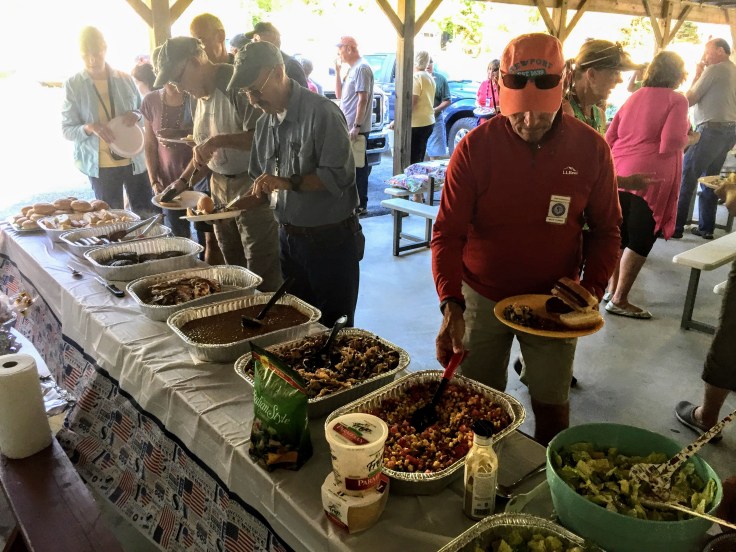
After enjoying the exhibits in the museum we headed back to the Villa. Tonight the caravanners enjoy a BBQ – hamburgers and all the usual sides; we began by finishing off the leftover cheese and wine from Monday’s party… And an enjoyable time was had by all…

2017-07-25 Trenton - BBQ


Blog at WordPress.com.

Up ↑