Search

Adventures in the Villa

Category

Caravans

2017-08-08 Nor by Nor’east Caravan – Alexander Graham Bell and the Gaelic College

Today we learned about Alexander Graham Bell and his life in the town of Baddeck.

2017-08-08 Baddeck Alex Bell Museum 04

We visited the Alexander Graham Bell National Historic Site in Baddeck, which commemorates the genius and compassion of renowned inventor Alexander Graham Bell.  Exhibits here show how he and his associates achieved Canada’s first powered flight with their airplane Silver Dart, produced the world’s fastest boat, advanced recording technology, designed giant kites and, of course, invented the telephone. Original artifacts, films, and family photographs highlight his scientific and humanitarian work.  Situated adjacent to downtown Baddeck, with a superb view of the Bras d’Or Lake, the Site overlooks Bell’s summer home, Beinn Bhreagh, still privately owned by his descendants.

Alexander Graham Bell (March 3, 1847 – August 2, 1922) was a Scottish-born scientist, inventor, engineer, and innovator who is credited with patenting the first practical telephone.

Bell’s father, grandfather, and brother had all been associated with work on elocution and speech and both his mother and wife were deaf, profoundly influencing Bell’s life’s work.  His research on hearing and speech further led him to experiment with hearing devices which eventually culminated in Bell being awarded the first U.S. patent for the telephone in 1876.  Bell considered his most famous invention an intrusion on his real work as a scientist and refused to have a telephone in his study.

Many other inventions marked Bell’s later life, including groundbreaking work in optical telecommunicationshydrofoils, and aeronautics.  Although Bell was not one of the 33 founders of the National Geographic Society, he had a strong influence on the magazine while serving as the second president from January 7, 1898, until 1903.

After he gained wealth and fame through the invention of the telephone, Bell and his wife lived in Washington, D.C.  In 1885 the Bells vacationed on Cape Breton Island in Nova Scotia, spending time right here in the small village of Baddeck.  Returning in 1886, Bell started building a summer retreat on a point across from Baddeck, overlooking Bras d’Or Lake.  By 1889, a large house, christened The Lodge was completed and two years later, a larger complex of buildings, including a new laboratory, were begun that the Bells would name Beinn Bhreagh (Gaelic: beautiful mountain) after Bell’s ancestral Scottish highlands. Bell also built the Bell Boatyard on the estate, employing up to 40 people building experimental craft as well as wartime lifeboats and workboats for the Royal Canadian Navy and pleasure craft for the Bell family.  He was an enthusiastic boater, and Bell and his family sailed or rowed a long series of vessels on Bras d’Or Lake. 

Until the end of his life, Bell and his family would alternate between their two homes, but Beinn Bhreagh would, over the next 30 years, become more than a summer home as Bell became so absorbed in his experiments that his annual stays lengthened. Both Bell and his wife became immersed in the Baddeck community and were accepted by the villagers as “one of their own”.  The Bells were still in residence at Beinn Bhreagh when the Halifax Explosion occurred on December 6, 1917 (see my blog dated 8/1/17).  Bell and his wife mobilized the community to help victims in Halifax.

I had read a lot as a child about Alexander Graham Bell, but most of the books I read stopped at the invention of the telephone.  Today we learned about the hydrofoil boats and airplanes he was working on throughout his life.  He loved triangles and tetrahedrons, so these are represented in the architecture of the Museum.

2017-08-08 Baddeck Alex Bell Museum 05

2017-08-08 Baddeck Alex Bell Museum 02

After we finished enjoying the museum we drove a few miles south to the Royal Cape Breton Gaelic College (in Scottish Gaelic: Colaisde Rìoghail na Gàidhlig).  It is a non-profit educational institution located in the community of St. Ann’s, along the Cabot Trail. Founded in 1938, its focus has been on the perpetuation of Highland Scottish Gaelic culture.

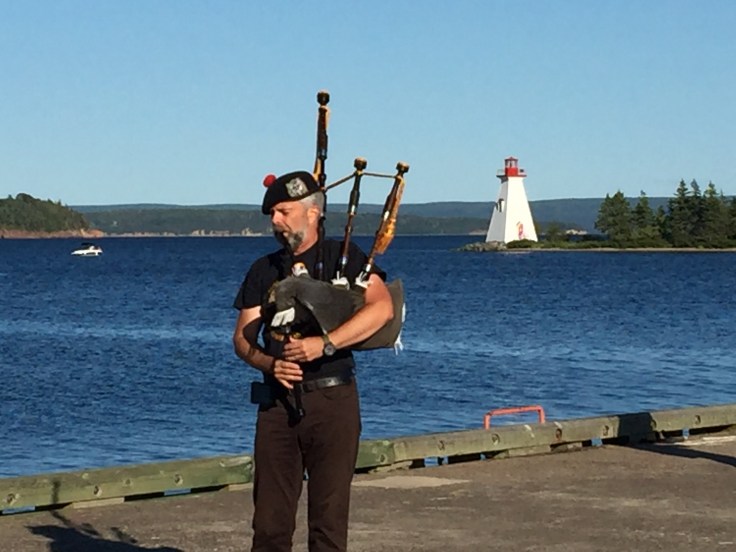
We went for a lunch time ceilidh (pronounced,”Kalie”).  A ceilidh is a social event at which there is Scottish or Irish folk music and singing, traditional dancing, and storytelling.  The college also has lots of public programs; Lynda spent time learning about the Gaelic language. I considered sticking needles in my eyes to avoid going to this presentation, but instead I escaped to the exhibit hall and spent time learning of the Gaelic culture and history.   Then on to lunch and the ceilidh. (By the way, if anyone reading this is considering naming their precious baby girl Ceilidh, be aware that once she is in school she will be forever known as “See-Lid”…)

We enjoyed the music. It was similar to what we heard at the Louisbourg Playhouse and still a lot of fun.

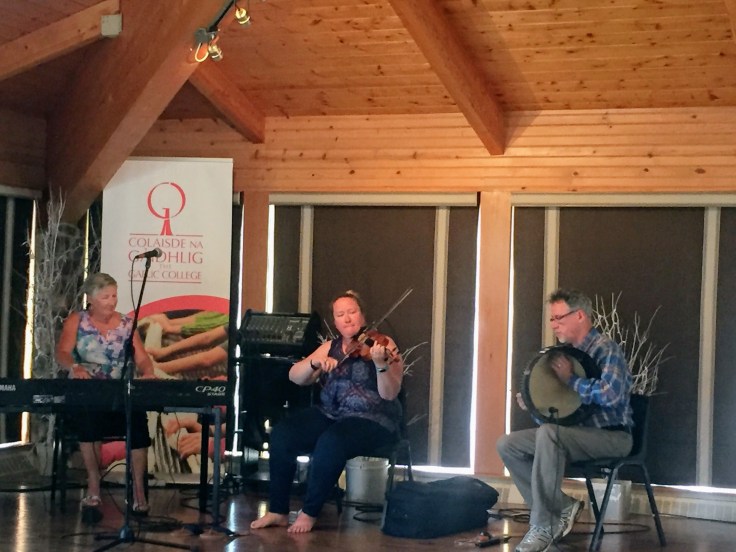
2017-08-08 Gailic College Ceilidh 02


2017-08-08 Gailic College Ceilidh 01

This evening, back at the campground, it started raining. And raining hard.  Some of the caravanners gathered in the Rec Room for games.  Several folks played Mexican Train dominoes; I joined in a rousing game of Spoons, except that we didn’t have spoons, only knives… Hilarity (and torn table clothes and other things) ensued…
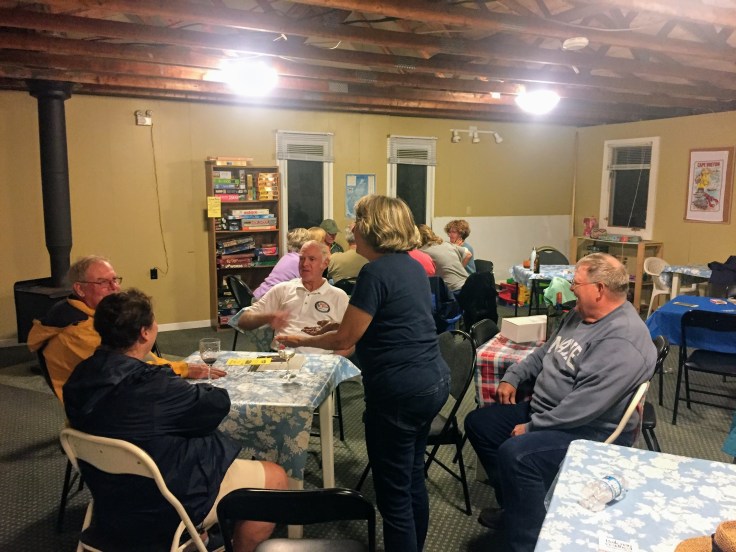
2017-08-08 Baddeck Game Night 01

An enjoyable time was had by all…


2017-08-07 Nor by Nor’east Caravan – Leaving Louisbourg

Today we are leaving Louisbourg, and we are heading to our final campground in Nova Scotia. We are again part of the parking crew, so we are able to leave early.  In this tight campground the hitching-up is like a delicate ballet…

2017-08-07 Louisbourg Airstreams 01

We were soon on the road, along with two other Airstreamers; we stopped to catch a view at a convenient look-out point:

Our drive was uneventful, and we arrived in Baddeck, on the west coast of a large inland lake (technically a river…), called Bras d’Or Lake.

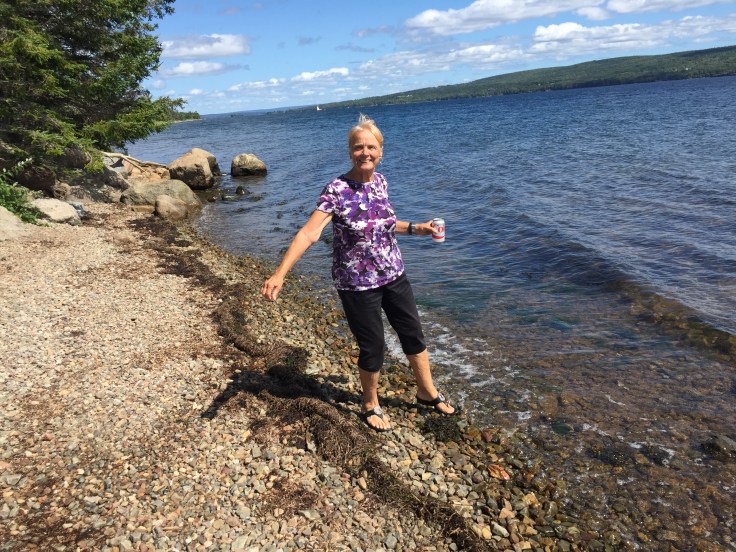
We performed our parking duties, and soon were able to relax. Lynda took in the view of the water, and even tested its temperature:

2017-08-07 Baddeck Campground 13

2017-08-07 Baddeck Campground 12

This evening there is a festival or street fair in the nearby town of Baddeck; we went to see what small Nova Scotia towns do for fun.  It seems that they do about what all towns do: eat junk food, listen to local musicians, and wander about Main Street.

2017-08-07 Baddeck Festival 11

2017-08-07 Baddeck Festival 06

And, being on the water, we can see the lovely shoreline:

2017-08-07 Baddeck Festival 05

2017-08-07 Baddeck Festival 04

We didn’t hang around very long. We went back to the Villa and enjoyed the sunset:

2017-08-11 Cape Breton 02

Tomorrow we go see the Alexander Graham Bell museum…


2017-08-06 Nor by Nor’east Caravan – Louisbourg Lighthouse and the Louisbourg Playhouse

Today we drove along the coast to the Louisbourg Lighthouse:

2017-08-06 Louisbourg Lighthouse Walk 01

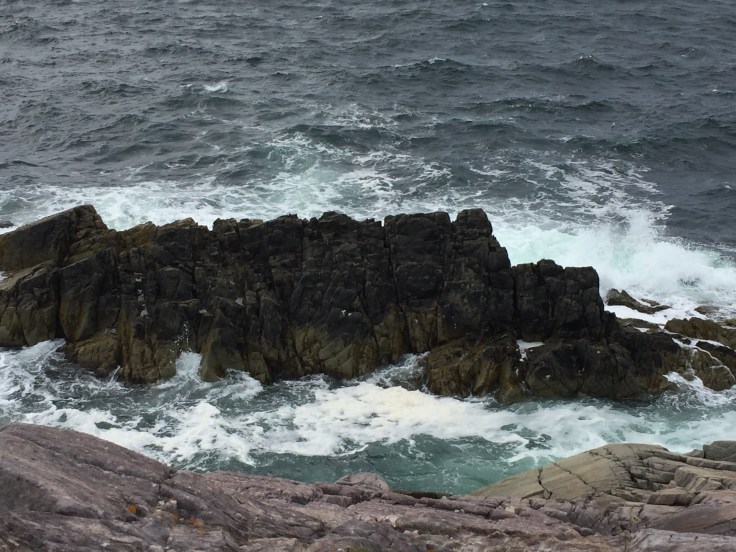
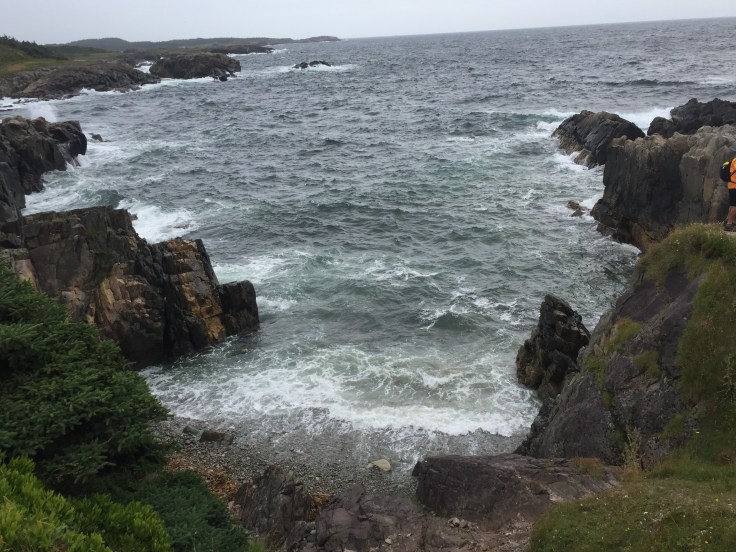
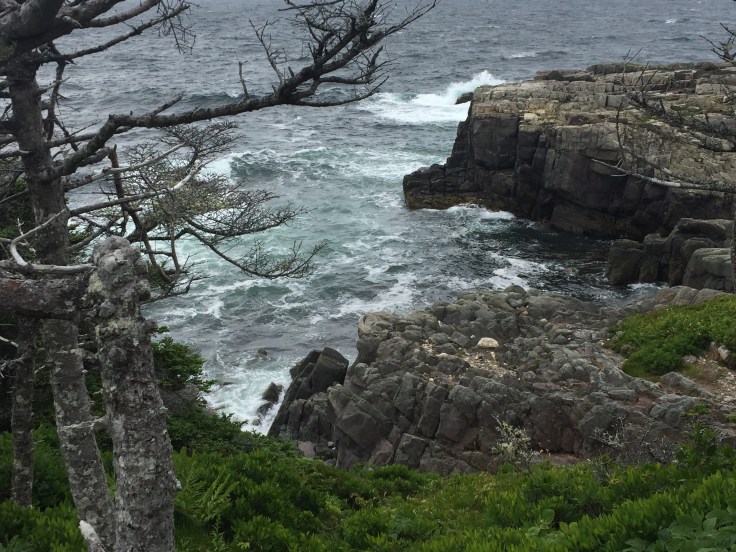
The lighthouse is not unlike hundreds of others along the Atlantic coast, but this one seems more remote than most. It faces the open Atlantic along a very rocky and rugged coastline.  We walked along the “hiking” path:

2017-08-06 Louisbourg Lighthouse Walk 02We took hundreds of photos – every turn revealed another remarkable vista:

2017-08-06 Louisbourg Lighthouse Walk 03

2017-08-06 Louisbourg Lighthouse Walk 05

2017-08-06 Louisbourg Lighthouse Walk 06

As we watched the waves crash and the tides swell, I was struck by the thought that we are enjoying a few minutes of this awesome beauty, yet it has been going on like this 24 hours a day for millions of years… Very awe inspiring!

The hiking path followed the coast for about one mile; it was then interrupted by a stone beach; the sign said, “Path resumes beyond the stone beach”.  We walked a few hundred yards across the stone beach – it was very difficult – 5″ and larger sharp stones – not much smaller. I’m sure Mr. Rainbow didn’t anticipate this when he designed and made my flip-flops…

When we reached the other end of the stone beach we discovered that the hiking path turned into a very small trail through the woods, away from the coast, and it was labeled “only for serious hikers”, which we are not.  We are trekkers and walkers, not hikers, and we have the shoes to prove it.  So we turned around and hobbled across the stone beach again, and returned to the lighthouse along the shore path.  We ran into some of our caravanners, who are braver than we are:

2017-08-06 Louisbourg Lighthouse Walk 09

2017-08-06 Louisbourg Lighthouse Walk 12

2017-08-06 Louisbourg Lighthouse Walk 13

2017-08-06 Louisbourg Lighthouse Walk 16

2017-08-06 Louisbourg Lighthouse Walk 17

2017-08-06 Louisbourg Lighthouse Walk 18

It was an exiting morning.  Unspeakable beauty.  It seemed to us like we were standing at the end of the world…

We returned to the Villa, after stopping off to see the tall ships again.  We found out that you can book a 2-3 week tour with these ships, to be part of the amateur crew.  Pay big money and work really hard…  Such a deal!

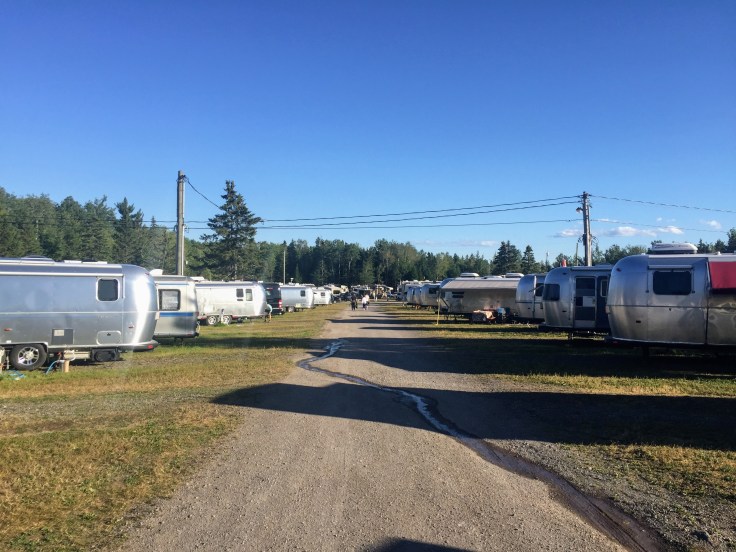
Back at the Villa we relaxed for the rest of the day… Most caravanners were out on various activities:

2017-08-06 Louisbourg Airstreams 01

This evening was another new treat: We attended a show of local musicians playing Nova Scotia music.  This music is a variation of Irish and Scottish folk music, but is a distinct version of it.  Violin, keyboard, guitar, drums, and base, plus vocals.  The Louisbourg Playhouse is quite an interesting place.

Based on London’s 1599 Globe Theatre, an open-air playhouse was constructed at the Fortress of Louisbourg by Walt Disney Studios for the motion picture “Squanto: A Warrior’s Tale”.  The Fortress stood in for the village of Plymouth, MA.  After filming wrapped up, the structure was donated to the city of Louisbourg and relocated to its current location, just off the main street of the town.  Subsequently, the structure was remodeled, with a roof being added, along with back stage facilities.  For such a small town it is quite an impressive facility.  It is booked with shows all Spring, Summer, and Fall.  This particular group was doing six weeks, six nights per week.

It was a fun time.  Lots of toe-tapping.  Best of all, afterwards, we could walk back to the campground; it had been raining, but the rain had died down by the time we left after the show.  But it was foggy, and dark; we realized that we had not been out after dark for many weeks now…

So another day is done; an enjoyable time was had by all…


and the Louisbourg Playhouse

2017-08-05 Nor by Nor’east Caravan – Louisbourg Fortress and the Beggars’ Banquet

What is a Fortress? How is it different from a Fort?

2017-08-05 Louisbourg Fortress 11

A Fortress is a fortified town.  A Fort is a military-only defensive structure.  A Fortress contains both the military and civilians. All the essential operations are of a town – the butcher, the baker, and the candlestick maker – are within the fortress, as well as government and military operations.

2017-08-05 Louisbourg Fortress 01

The Fortress of Louisbourg was a French fortress on Cape Breton Island, Nova Scotia.  Its two sieges, especially that of 1758, were turning points in the Anglo-French struggle for what eventually became Canada.  

The original settlement was made in 1713, and initially called Havre à l’Anglois. Subsequently, the fishing port grew to become a major commercial port and a strongly defended fortress.  The fortifications eventually surrounded the town.  The walls were constructed mainly between 1720 and 1740.  By the mid-1740s, Louisbourg was one of the most extensive (and expensive) European fortifications constructed in North America.  The Fortress of Louisbourg suffered key weaknesses, since it was erected on low-lying ground commanded by nearby hills and its design was directed mainly toward sea-based assaults, leaving the land-facing defenses relatively weak.  A third weakness was that it was a long way from France or Quebec, from which reinforcements might be sent.

Louisbourg was captured by British colonists in 1745, and was a major bargaining chip in the negotiations leading to the 1748 treaty ending the War of the Austrian Succession. It was returned to the French in exchange for border towns in what is today Belgium.  It was captured again in 1758 by British forces in the French and Indian War, after which its fortifications were systematically destroyed by British engineers.  The British continued to have a garrison at Louisbourg until 1768, when it was again returned to the French.

The fortress and town were partially reconstructed in the 1960s and 1970s, using some of the original stonework, which provided jobs for unemployed coal miners.  The site is operated by Parks Canada as a living history museum, much like Williamsburg, VA and the Plimoth Colony in Plymouth, MA.

We were able to walk from the RV park to the Visitors Center, whereupon we were bused over to the Fortress.  We entered through the original gates, where we were met by a “guard” who demanded to know our business here.  We wandered the town, hearing some of the history from our guide. They have a bakery operating in the old bakery building, making fresh bread daily using centuries-old recipes and methods. They also have a few restaurants, serving food of the era… we passed on the opportunity to eat centuries-old food…

They also have daily recreations of various milirary operations… After our tour we walked all the way back to the Villa…

2017-08-05 Louisbourg Fortress 09


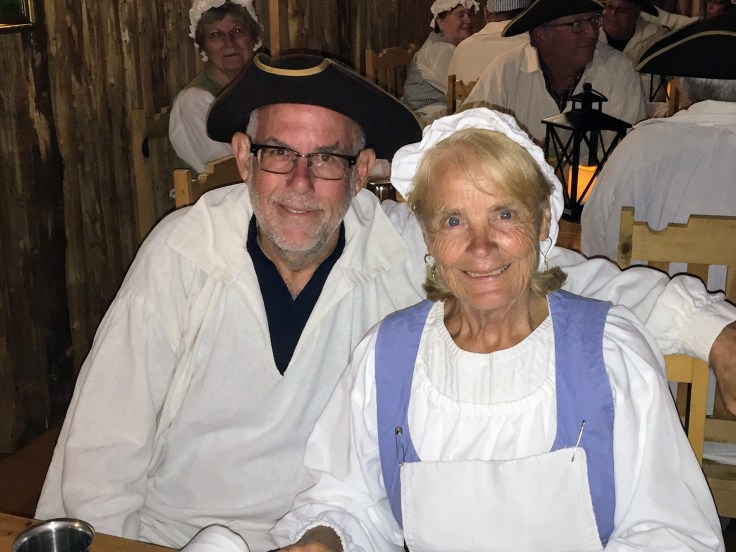
That evening, we were introduced to another fascinating feature of the modern day town of Louisbourg: we learned about what they call “The Beggars’ Banquet”.  We were told nothing about this event, other than we had to pre-select our entree for the dinner – lobster or steak.  This didn’t sound like what beggars normally ate, but we went along with it.  Also, we were told that we would have to dress in period costume, something that always freaks me out…

We arrived at the location of the Beggars Banquet about 30 minutes early, and we were not the first ones there.  This proclivity of being chronically early for all events is an Airstream Club tradition (and curse…).  We were immediately re-dressed in what we assume are “beggars clothes”.  Luckily for me, this consisted of an oversized shirt and a 3-corner hat.  We then were shown to our dining room and invited to buy drinks at the bar.  So far, so good.

2017-08-05 Beggars Banquet 05

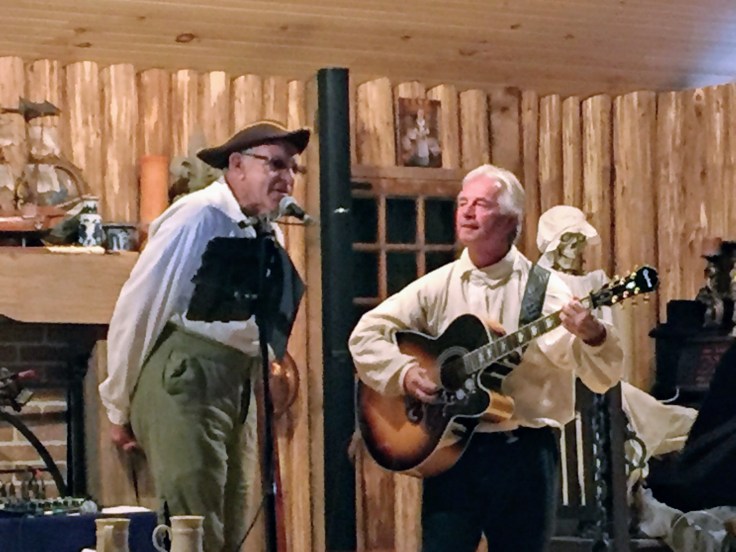
The dinner was quite good, considering the buffet banquet-style operation. There was musical entertainment all through the evening.  One of our members even helped-out at one point in time:

2017-08-05 Beggars Banquet 07

Other members of our group:

The “fun” began about halfway through the evening: A bizarre-looking caricature of a women joined the group and set about selecting men from our group to dance with.  I almost ran screaming running from the room… I vowed to do just that if she approached me… Luckily, she did not…  I must have looked as scary to her as she looked to me…!  (We later found out that she actually is the owner of the place, and this is just her shtick for the evening…)

We again walked back to the Villa.  An enjoyable time was had by all…


2017-08-04 Nor by Nor’east Caravan – Cape Breton Island

Today we traveled off the mainland of Nova Scotia onto Cape Breton Island.  Cape Breton Island makes up about 1/3 of the province of Nova Scotia. Our first stop:  Louisbourg. I’ve seen pictures of California beach towns taken in the 1920s or 1930s; they look similar to Louisbourg today:

2017-08-04 Louisbourg - 03

We left Hammond Plains and the Halifax area and arrived at the appointed time at the campground in Louisbourg.  Parking was in turmoil; the park was very tight.  The parking crew did a great job keeping things in order and eventually everyone was parked successfully.  While the park was tight and it is small, it is located within walking distance of just about everything we need to see here in Louisbourg.

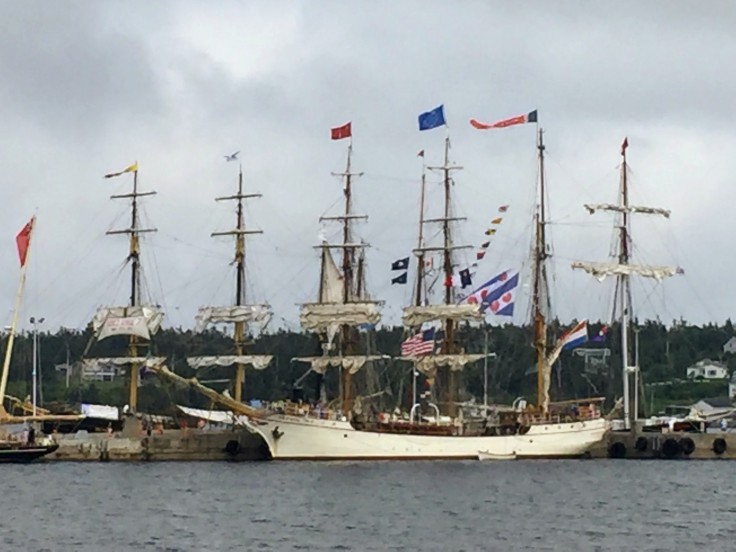
We set up the Villa, and walked about the town; it is very quaint and quiet; there is some fishing industry, but, again, tourism seems to be the mainstay of the town.  We walked towards the docks, and found that the Tall Ships had arrived:

2017-08-04 Louisbourg - Tall Ships 01

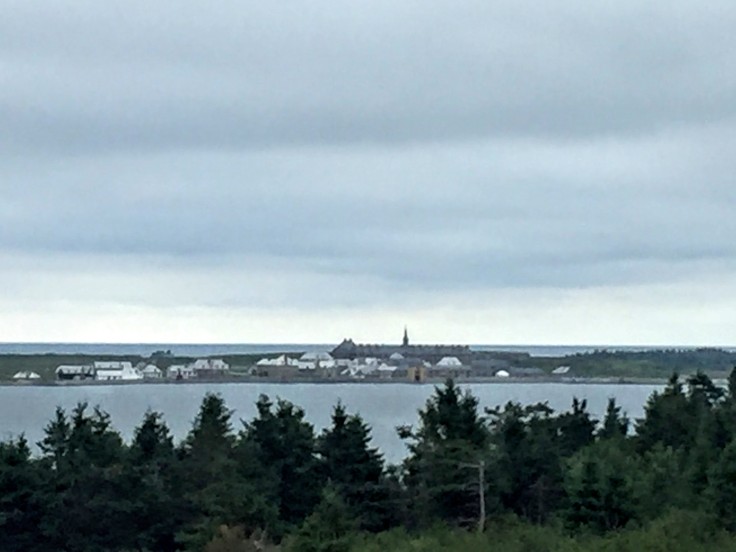
Also on our walk we spotted this place across the bay:

2017-08-04 Louisbourg - 02

It is the Louisbourg Fortress; we are going there tomorrow.

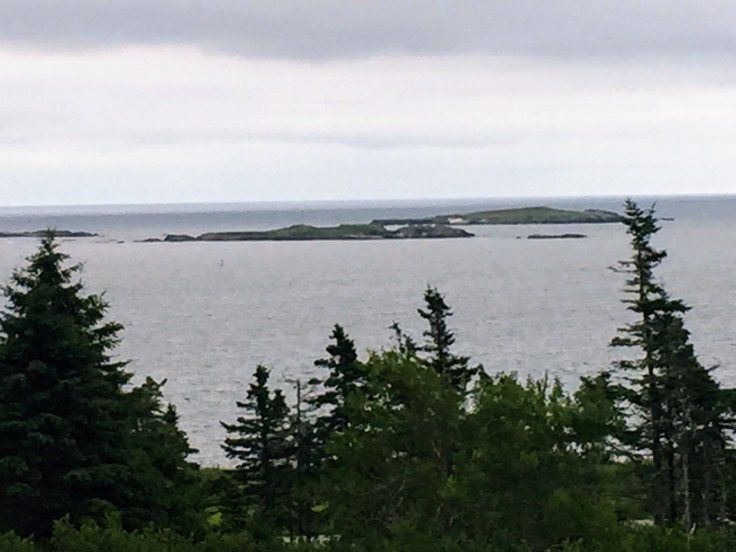
The bay was another Nova Scotia wonder:

2017-08-04 Louisbourg - 01


We walked back to the Villa and prepared for Happy Hours. An enjoyable time was had by all…


2017-08-01 Nor by Nor’east Caravan – Peggy’s Cove, Halifax, Tall Ships, and Four Tragedies…

Most of Nova Scotia is a large peninsula, attached to New Brunswick by a 12 mile wide isthmus. In addition, to the northeast is a huge island, Cape Breton Island. Halifax is on the South Shore of the peninsula; this is where we are going today.

2017-08-01 Halifax Bus

The bus picked us up at the campground at 8:15 this morning. We had a very knowledgeable tour guide, a native of Halifax and a former school teacher.  Shortly we were cruising along St. Margaret’s Bay, a lovely bay on Nova Scotia’s South Shore, lined with picturesque coves.  Unfortunately, we were sitting on the wrong side of the bus, so we have no drive-by photos to show you…

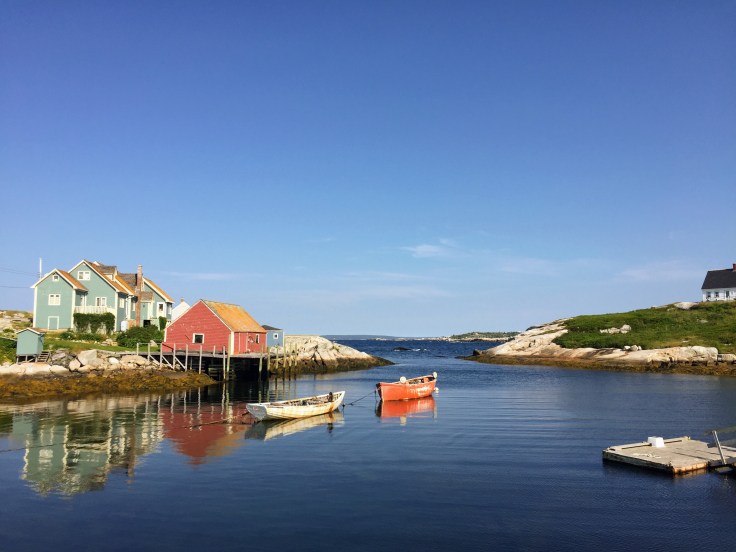
But then we arrived at Peggy’s Cove.  It has picturesque written all over it.  The hamlet of Peggy’s Cove is home to a few hearty lobster fishermen and the required number of down home artists. There are a few shops selling trinkets and puffin-watching boat tours, and a HUGE restaurant, packed on this morning with tourists having breakfast. Oh yes – there is also a lighthouse…

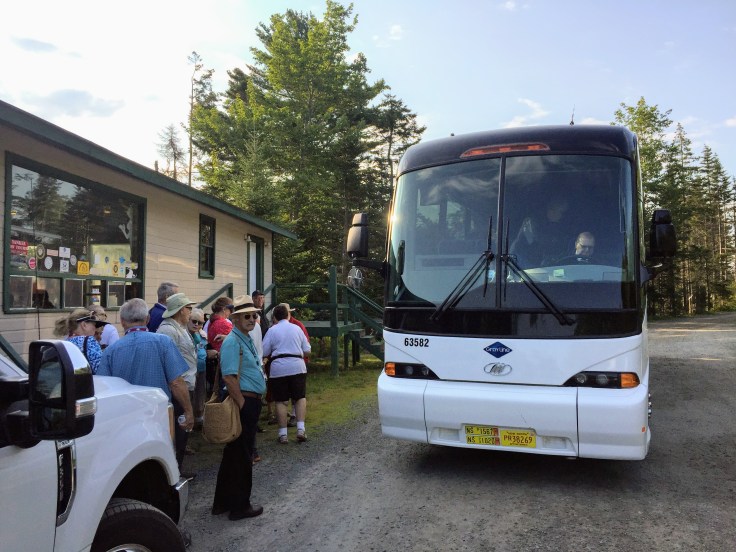
Our bus driver parked our huge bus amongst the other huge tour buses:

2017-08-01 Peggys Cove - Bus

We clamored over the rocks to see the lighthouse up close and personal.  It is a marvelous sight – perched out there on the open Atlantic, anchored into the rock…

2017-08-01 Peggys Cove 10

2017-08-01 Peggys Cove 13

2017-08-01 Peggys Cove 11

2017-08-01 Peggys Cove 01

Signs everywhere warn you to stay off the black rocks – they are submerged at high tide, and thus are wet and slimy and slippery.  So far two people have died this year slipping and falling into the water. Due to rough waves and cold water, rescue is virtually impossible…

Here I am, safely on the white rocks:

2017-08-01 Peggys Cove 02

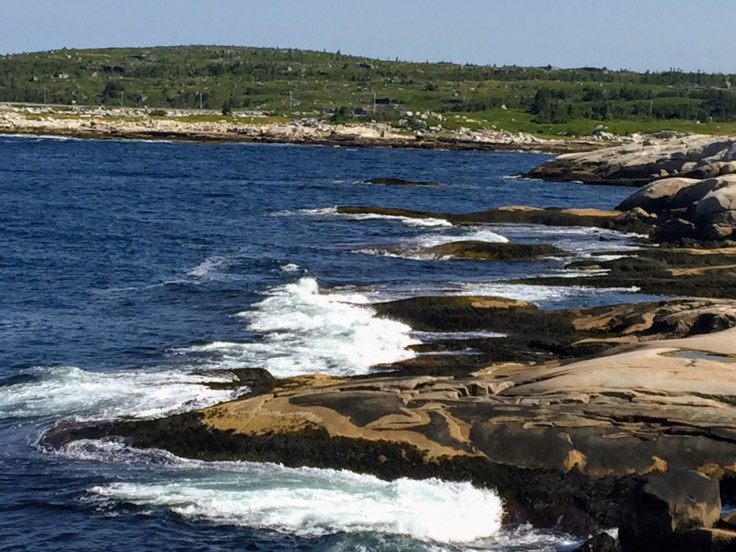
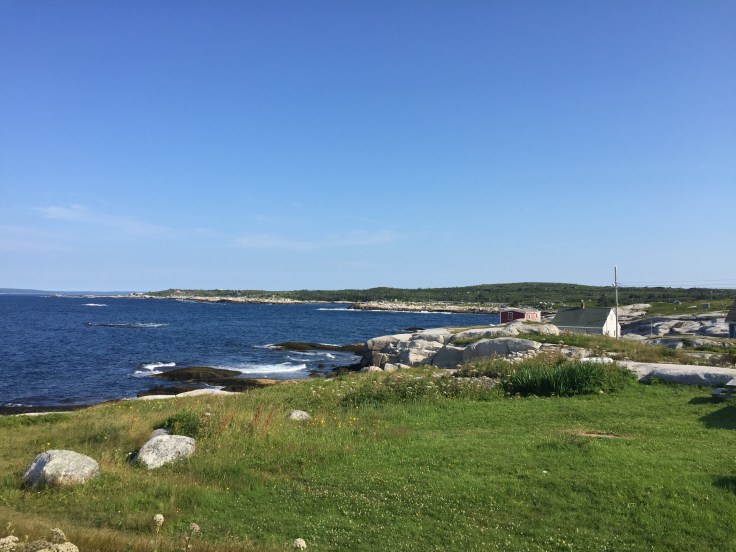
The rocky shore is a sight to behold:

2017-08-01 Peggys Cove 12

2017-08-01 Peggys Cove 09

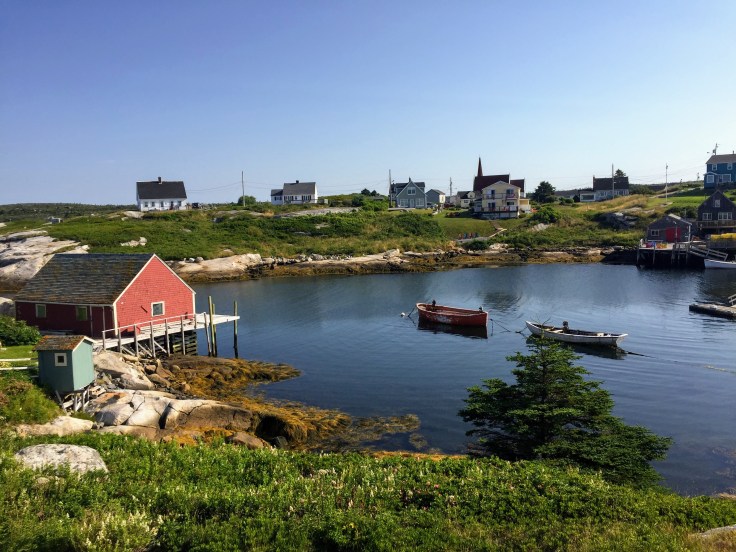
We also walked through the town and found interesting sights:

2017-08-01 Peggys Cove 08

2017-08-01 Peggys Cove 07

2017-08-01 Peggys Cove 06

2017-08-01 Peggys Cove 05

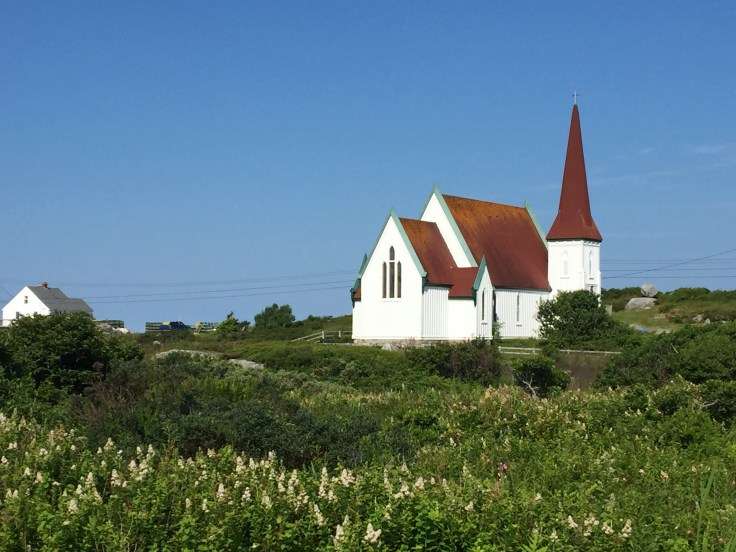
And, of course, the church:

2017-08-01 Peggys Cove - Church

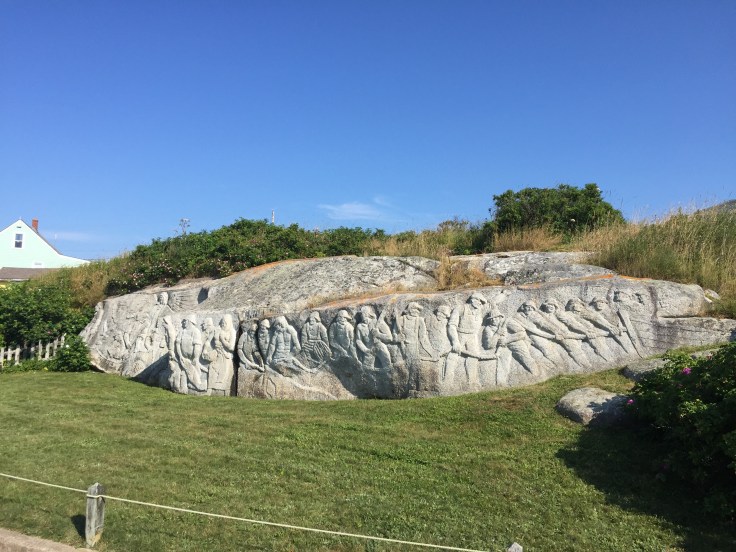
There is a Fishermen’s Memorial, carved by a long time local artist into a wall of solid granite in the side yard of his house:

2017-08-01 Peggys Cove - Fisherman Memorial 2

2017-08-01 Peggys Cove - Fisherman Memorial 1

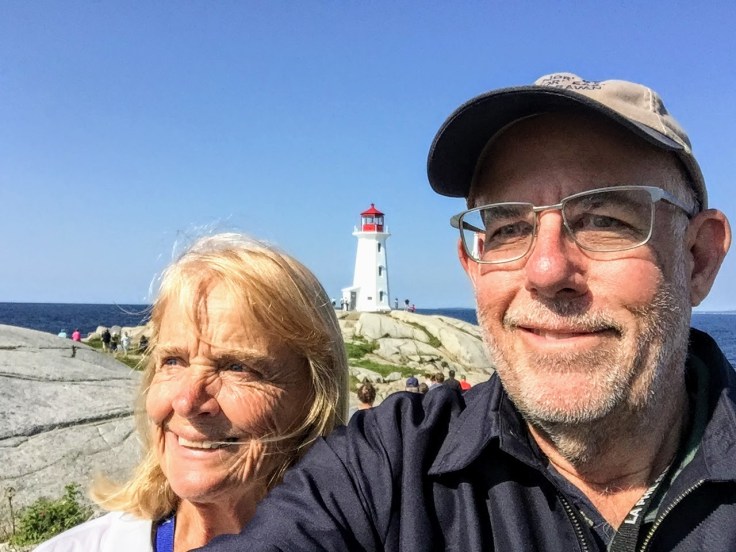
One more selfie at the lighthouse:

2017-08-01 Peggys Cove 04


After 1 1/2 hour, our tour continued as we drove into Halifax. Along the way we heard of the history of the town, and about it’s renowned hospitality to those in need.  We arrived at the Maritime Museum, but we opted not to go in at this time; we walked down to the waterfront to see the Tall Ships parading about the harbor, under full sail.

2017-08-01 Halifax - Tall Ships 05

Halifax has a HUGE harbor – most of it is beyond what we see at this waterfront location. We found a restaurant for lunch and were blessed with a water-front table. As we ate our lunch we could see the ships sail by. They sailed out of the harbor, then back in, getting themselves arranged in some semblance of order, then they circled the harbor once again. On the final trip around, they headed out to sea; they are going to Louisbourg, NS, which is our next stop on this caravan.

They have a lot of construction going on here on the waterfront, so they built a temporary floating boardwalk to keep the waterfront path continuous.  It is a real challenge, especially when a big ship goes by, and its wake hits the floating boardwalk, then everyone sees another Tall Ship and rushes to one side… It feels like it is going to tip over:

2017-08-01 Halifax - Floating Boardwalk

Our lunch at Murphy’s:

2017-08-01 Halifax - Murphys - Lunch

And being photo-bombed by Kathy:

2017-08-01 Halifax - Murphys - Selfie

So after a pleasant lunch and more big sailboats that anyone can handle, we went back into town and toured the Maritime Museum, which was interesting… maybe they should have named it the Disaster Museum…?

Several disasters have impacted the hearts and souls of the residents of Halifax.  In addition to the requisite shipwrecks and fishermen who were lost at sea, in 1912 Halifax was the best port into which to bring both the survivors and the victims of the sinking of the Titanic.  Halifax was chosen because, being on the mainland, it has a direct railroad connection to the rest of North America. (Newfoundland was closer, but, because it is an island, logistics would be a problem…)

The doctors and other personnel devised a system of numbering the victims via toe-tags and keeping records of their statistics and personal effects that is still used today. Because of this, MOST of the victims have been identified; some research with DNA is going on today to identify the few remaining unknowns.  The most remarkable:

2017-08-01 Halifax - Titanic 3

Sidney Leslie Goodwin (9 September 1910 – 15 April 1912) was a 19-month-old English boy who died during the sinking of the RMS Titanic. His unidentified body was recovered by the ship Mackay-Bennett after the sinking, and for decades was referred to as The Unknown Child. His headstone read “Erected to the memory of an unknown child whose remains were recovered after the disaster to the Titanic April 15th 1912”.  Previously, the remains of two other children were tentatively identified, but these proved to be false.  In 2008, mitochondrial DNA testing by the Armed Forces lab revealed his identity. Baby Goodwin is the only member of his family whose body has been recovered and subsequently identified.

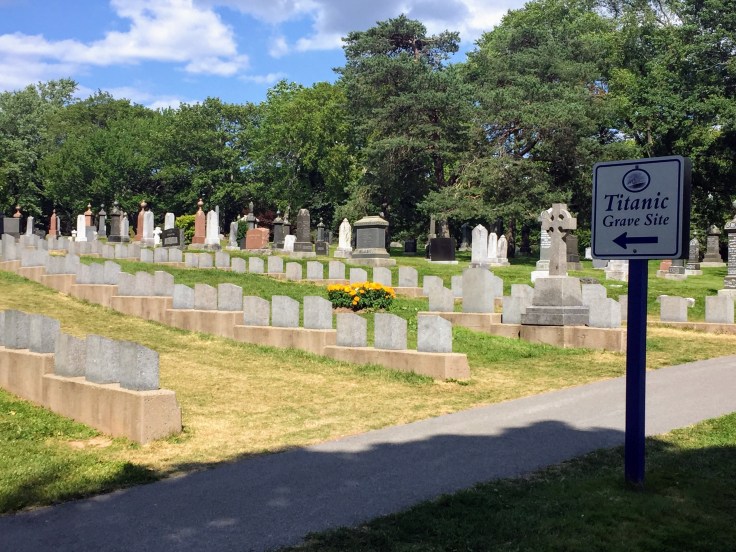
Where did we learn all this?  At the Fairview Cemetery, where 121 victims of the Titanic are buried:

2017-08-01 Halifax - Titanic 1

2017-08-01 Halifax - Titanic 2

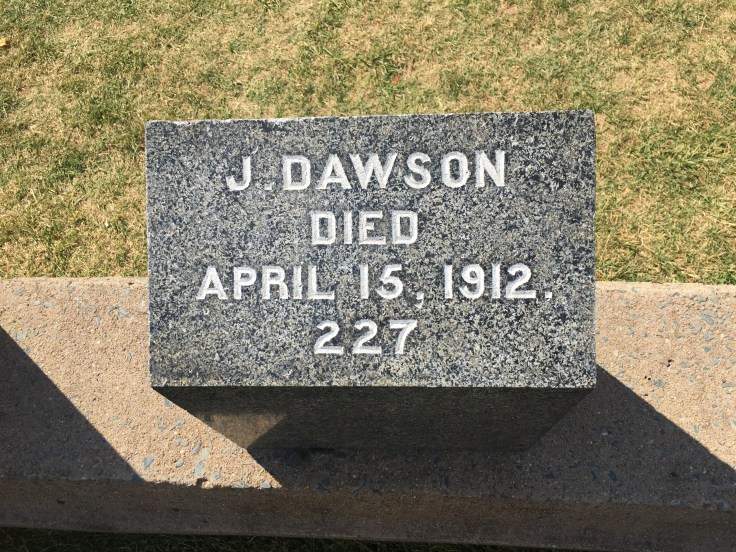
While many of the bodies were shipped home to their families, many were buried here. In addition to the grave of the “unknown child”, here is the grave of J. Dawson:

2017-08-01 Halifax - Titanic 4

No, this isn’t Jack Dawson from the Titanic movie – he is fictional.  This is Joseph Dawson, a crew member who worked below decks as a coal trimmer, about the most lowly shipboard job there is – raking the burning coal that provided the steam to power the engines…

Want more?

On the morning of 6 December 1917, the SS Mont-Blanc, a French cargo ship laden with high explosives, collided with the Norwegian vessel SS Imo in the Narrows, a strait connecting the upper Halifax Harbour to Bedford Basin.  It was a simple fender-bender, but fire broke out on board the French ship; the French crew immediately ran (and rowed) for cover, as the ship drifted towards the docks of Halifax.  The fire ignited her cargo, causing a large explosion that devastated the Richmond district of Halifax. Approximately 2,000 people were killed by blast, debris, fires and collapsed buildings, and an estimated 9,000 others were injured.  The blast was the largest man-made explosion prior to the development of nuclear weapons, releasing the equivalent energy of roughly 2.9 kilotons of TNT.  Many of the injured were blinded by shards of flying glass, moving with such force that the victims were unable to blink.  In addition to the blast, the air was now filled with oil, gunpowder residue, and other chemicals; if you were injured by flying glass or other cuts and abrasions, your wound was infused with this blueish melange; as a result, as the wound healed, the scars took on a blue tint. From then on, victims of the Halifax Explosion were easily identified by their “blue tattoos”…

Once again, the citizens of Halifax responded, caring for the wounded and identifying the dead, using systems devised for the Titanic.  Relief efforts began almost immediately, and hospitals quickly became full. Emergency shelters were erected, but an unexpected blizzard claimed many more lives, adding insult to injury… Many victims of the Halifax Explosion are buried in a mass grave at the Fairview Cemetery.

But wait! There’s more!

Swissair Flight 111 was a scheduled international passenger flight from New York City, to Geneva, Switzerland.  On September 2, 1998, the McDonnell Douglas MD-11 crashed into the Atlantic Ocean southwest of Halifax International Airport at the entrance to St. Margarets Bay, Nova Scotia. The crash site was five miles from shore, roughly equidistant from the tiny fishing and tourist communities of Peggys Cove and Bayswater.  All 229 passengers and crew aboard the MD-11 died.  The ground search and rescue operation was handled by teams from Halifax.  There is a memorial to Swissair Flight 111 near Peggy’s Cove. However, it is intended only for family members, so no parking facilities are provided for tour buses…

And, finally:

After the 911 attacks, the US halted all air traffic over the USA.  Inbound flights needed to land, and over 60 jets filled with passengers landed at Halifax airport.  12,000 passengers were now on the ground; this is over 3 1/2 percent of the population of Halifax.  As all the hotels and motels quickly filled, and as emergency shelters in high school gymnasiums were overwhelmed, Halifax residents opened their doors, inviting the “plane people” to stay in their homes.  Similar situations occurred all over Newfoundland and other parts of Eastern Canada, but we’re in Halifax, so we point out and appreciate their hospitality.

After a moving afternoon in the cemetery, toured the Public Gardens:

2017-08-01 Halifax - Public Gardens

Very formal, very symmetrical, and very Victorian…

We finally returned to campground; Happy Hours ensued and an enjoyable time was had by all.


2017-07-31 Nor by Nor’east Caravan – Leaving New Brunswick and on to Nova Scotia

We left early, along with Trevor and Gale, our leaders, and Skip and Kathy, our other parking crew members. It was a relatively long drive – about 3 1/2 hours. But the road was smooth and we discovered some of the beauty of Nova Scotia. We are staying about 15 miles outside of Halifax, which will give us a base from which to explore the mainland of Nova Scotia.

About 1/4 mile from the entrance to the campground we approached a flagger, stopping traffic.  We sat for 20 minutes, while opposing traffic came through. They were repaving this 2 lane road, and so we waited… Taking advantage of this long wait, Kathy went back to the Airstream to avail herself of the sanitary facilities. When she exited the trailer, she opened the door and just about knocked over a guy on a moped, curb-sneaking along the right side of the road.  While he didn’t hit the door, he had to take evasive action and a string of French swear words emanated from the mouth of this very irritated man…

Upon arrival at the campground the manager showed the three of us where to park. He also wanted to assign all of the other sites as well. The park is a little oddly laid out (aren’t they all?) In any case, our work was limited.  Skip and Trevor stayed back among our allotted sites, whilst I stayed by the office, passing out campground information and telling each Airstreamer what to expect when the manager led them back to their site.

The first caravanners pulled in about 1/2 hour later than we expected because, duh! they were sitting in the stopped traffic out front. By the time the last folks arrived their wait had been over 45 minutes… Anyway, in the mean time, Lynda didn’t really have any assigned duties, and all I had to do in between arrivals of Airstreams was to sit in the shade and watch the 3 teenage girls in the pool across the way…

That evening we had a tourism meeting, explaining our options for exploring the area, and we again hosted Happy Hours, with about 15 people attending.  Several folks drove into Halifax to see the Tall Ships up close… Tomorrow we take a bus tour around the area.

2017-07-31 Halifax - Woodhaven RV Park 03

2017-07-31 Halifax - Woodhaven RV Park 02

2017-07-31 Halifax - Woodhaven RV Park 01


2017-07-30 Nor by Nor’east Caravan – Free day in Moncton, New Brunswick

After our exhausting day at Hopewell Rocks yesterday, today we rest.  We did some reading and writing, and I think I even took a nap.

2017-07-30 Moncton Camper City 02

We did go to a Super WalMart. I had never been in one of these before… As odd as that is, don’t forget that we are in Canada. We will be in Canada for another 5-6 weeks, so we better get used to it!

Shopping was fun, because we didn’t have any idea what they had, and we were not very picky about what we bought. We needed a few staples, but after that, we were able to buy whatever looked good and would fit into the Villa.

We did “host” Happy Hours:  We would invite people to our campsite for Happy Hours, then tell them, “Bring your own chair, bring your own food, to share, and bring your own drink.  We’ll do the rest.”  We do this almost every night.  Sometimes one person will show up, sometimes more. Once, I told 2 people, and 35 people showed up! It doesn’t matter, we all have a good time.


2017-07-30 Moncton Happy Hours 02


2017-07-30 Moncton Camper City 01

We had a drivers’ meeting to learn of tomorrow’s route into Nova Scotia. This will be a new experience for us: we are part of the parking crew.  We leave first in the morning, get to the campground early, and arrange where everyone will park, then we direct them to their spots.  How hard can this be?

So after the meeting we grabbed our bright orange vests and a pair of walkie-talkies, and retired to the Villa. Another uneventful day on our Odyssey.


2017-07-28 Nor by Nor’east Caravan – Leaving Campobello Island; Two border crossings, and into New Brunswick

We began our travels off the island by crossing the FDR bridge, towards Maine.  As we waited at Customs, we admired the lovely views:


2017-07-28 Campobello - 2

2017-07-28 Campobello - 1

It took quite some time to get through Customs back into the USA.  First of all, this is a tiny station, normally only serving this tiny island; also, because 25 Airstreams began streaming across the bridge starting at about 9:00… Each trailer was inspected – we had not seen this in our three previous border crossings; apparently they are looking for either animals or people – they opened all the larger cupboards and closets. They also checked the refrigerator, probably for fresh meat or produce.  In any case, they let us back into the USA and we were on our way.

We drove generally north, to the Canadian border, and went through Canadian Customs; similar to our last experience, they seemed mostly concerned with things that we might be bringing into Canada and leaving there.  Again, I refrained from mentioning the contents of our holding tanks, which we intended to empty at the first opportunity…

Moncton, New Brunswick, is a relatively large town; its claim to fame is that it is the largest city near the Hopewell Rocks, the best place to experience the extreme tides of the Bay of Fundy. (More on this tomorrow…)

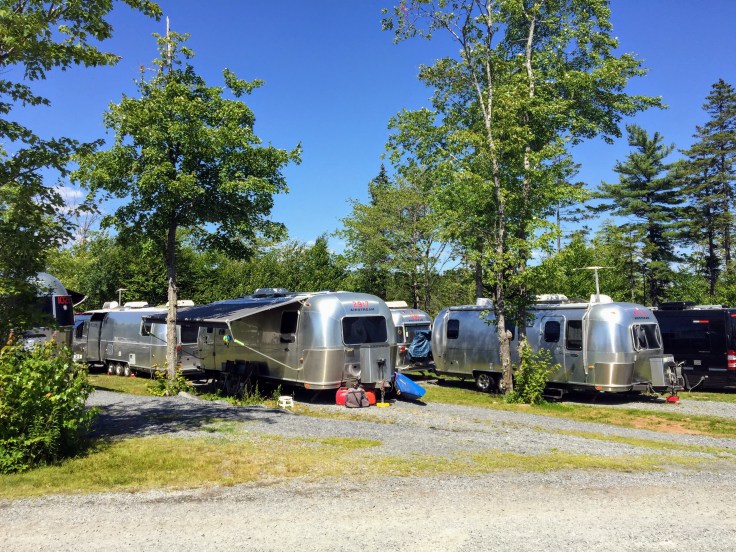
So we settled into Campers City RV Resort in Moncton, NB, and readied ourselves for the coming days:

2017-07-28 Moncton.JPG

First order of business was to go to Costco and restock the wine and liquor cabinet, since the Canadian Government frowns greatly upon bringing vast quantities of wine and liquor into Canada from the USA.  Also, I live on 5-8 bottles per day of Kirkland Vita-Rain water (fake vitamin water that has even fewer vitamins than real Vitamin Water…).  And we needed plain Kirkland water for coffee and such.  Plus, my daily diet consists mainly of Pure Protein Bars, available only at Costco.

The Costco was only 1.2 miles away; we gleefully set out for our shopping spree.

WORST COSTCO EVER!

First of all, it was backwards… But I could deal with that. But:  NO WATER!  How can Costco NOT have 2-3 aisles of water?  This Costco had NO WATER. No plain water; no sparkling wter; no Gator-Ade; no Vita Rain water.  Nothing!  Next insult?  NO ALCOHOL!!!  No Makers Mark, no wine, nothing. Apparently the Canadian Government thinks only the Canadian Government is capable of selling wine and liquor…

Fortunately for me, we did find my protein bars, so we stocked up on them; we are spending the next 5 weeks in Canada: who knows when we will be able to buy them again…?

In any case, we returned to the campground woebegone and wretched. Our spirits picked up a bit as we set about to arrange happy hour: table clothes on the picnic table, chairs, food, wine, etc.  All set; then:  RAIN!  Giant Rain!  Pouring Rain!  We had checked with Steve Jobs and he had promised: NO RAIN!

We scrambled about, and pulled what we could inside.  And we waited. As they say in these foreign parts, “If you don’t like the weather, wait 10 minutes…”. So, after 10 minutes the rain stopped, and we restarted… Happy hours ensued, and an enjoyable time was had by all…


As is our custom, here are our GREAT grandchildren…

Erin, Roisin, and George, looking on…

IMG_6942


Ian, and his dad, Kevin:

IMG_6946


Blog at WordPress.com.

Up ↑